Sewing Machine Table Ideas That Elevate Your Workspace
I started with a wobbly kitchen table and a glue gun, then built sewing machine table ideas that actually uplift your workspace. An IKEA frame with a 30-inch-deep top gave me room for cutting mats, while Dollar Tree trays and bins kept bobbins, needles, and presser feet from vanishing. For tiny rooms, I love a fold-down wall table or thrifted dresser with hidden storage. The best part? A stable, hip-height setup makes sewing feel calmer, and there’s more.
Love cozy DIY projects? 💕
Get free printable guides, exclusive tutorials & surprise craft goodies straight to your inbox.
Disclosure: This post may contain Amazon affiliate links, at no extra cost to you. Content on DiyCraftNest is created with research support from AI tools and carefully reviewed, edited, and fact-checked by the lead author, Daniel Pat, to ensure accuracy and reliability. Learn more
Key Takeaways
- Use a height-adjustable desk or risers so your elbows stay near 90 degrees for comfortable sewing and cutting.
- Choose a 30-inch-deep, stable tabletop with enough width for a machine, cutting mat, and fabric handling.
- Add hidden storage like shallow drawers, pull-out shelves, or a cabinet lift to keep notions and the machine tucked away.
- Maximize small spaces with fold-down, drop-leaf, gate-leg, or wall-mounted tables anchored securely to studs.
- Improve comfort with task lighting, lumbar-support seating, and organized zones for sewing, cutting, and ironing.
Why the Right Setup Makes a Difference
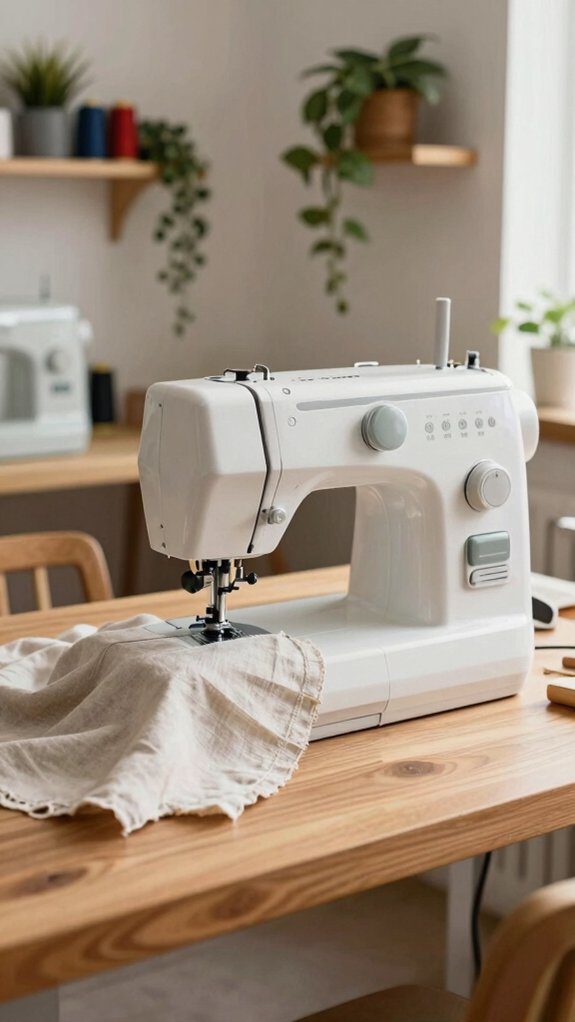
I’ve had better luck when I match my table height to my counter or hip height, especially with a height-adjustable desk like UPLIFT, because I can sit for piecing and stand for cutting without feeling like I need a nap after lunch. That ergonomic workflow helps me move faster and keeps strain prevention real, not wishful.
I learned the hard way with a wobbly IKEA frame and a glue gun fix that looked brave but behaved like jelly. Now I use a 30-inch-deep top, simple Dollar Tree bins, and zones for sewing, cutting, and ironing. My back, and my seams, thank me.
Space-Saving Table Designs
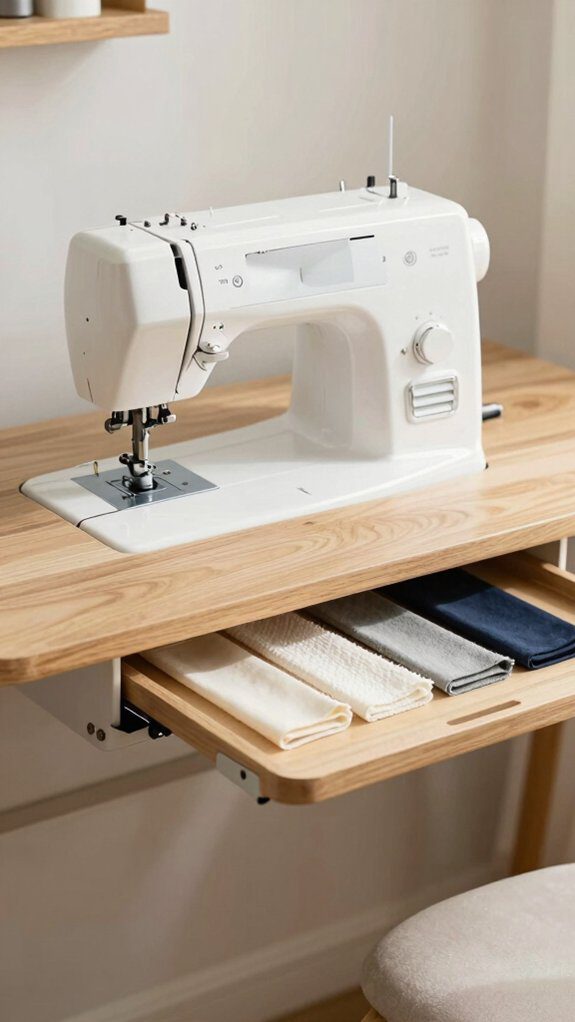
My sewing room used to eat the whole corner of my apartment, so I started trying space-saving table designs that could shrink down fast after I cut fabric and tangled thread everywhere.
I’ve had good luck with foldable table concepts, drop-leaf extensions, and wall-adjacent setups using IKEA frames, a glue gun, and a few Dollar Tree bins—one little gate-leg table even gave me extra room for my machine without making the room feel like a storage closet.
The wall-mounted option surprised me most, though, and I’ll show you why it might be the smartest win if you’re working with a tiny space and a short budget.
Foldable table concepts
When my sewing corner started eating the whole room, I knew I needed foldable table concepts that could work as hard as I do and then disappear like magic. I found portable cabinets with collapsible surfaces that hold my machine, thread, and scissors, then shut like a neat little secret.
I once built a DIY version with an IKEA frame, scrap plywood, and a glue gun; it wasn’t elaborate, but it saved my knees. For tighter spots, I like gate-leg style tables with a narrow footprint. Measure first. The best win? My room finally feels like mine again, not a fabric storm.
Drop-leaf extensions
One simple DIY version uses an IKEA frame, a plywood top, two hinges, and a couple of folding supports from the hardware store. I love drop-leaf extensions because my tiny room stops feeling bossy. With space saving hinges, I flip one side up, and my machine finally gets breathing room.
| Idea | Cost | Feeling |
|---|---|---|
| Single leaf | Low | Relief |
| Gate-leg helper | Mid | Calm |
| Hidden storage | Mid | Pride |
| Portable workstations | Low | Freedom |
I keep the fixed top at hip height, then add 12–18 inches behind the needle. Glue gun, screws, and patience did the trick; my fabric flow stopped fighting me, and my coffee stayed upright.
Wall-mounted solutions
Wall-mounted solutions saved me from tripping over my own sewing habit, and honestly, my tiny room thanked me.
I built mine with IKEA frames, a glue gun, and a little courage. Try these:
- Fold-down table: I used plywood, piano hinges, and a locking bracket. It holds my machine and disappears fast.
- Recessed cabinet: I hid the machine inside, then flipped it down when I sew.
- Floating worktop: I anchored it to studs for a steady, hip-height surface.
Above it, vertical shelving and magnetic strips keep tools close. I finally feel like I belong in my own sewing nook.
Built-In Storage Solutions
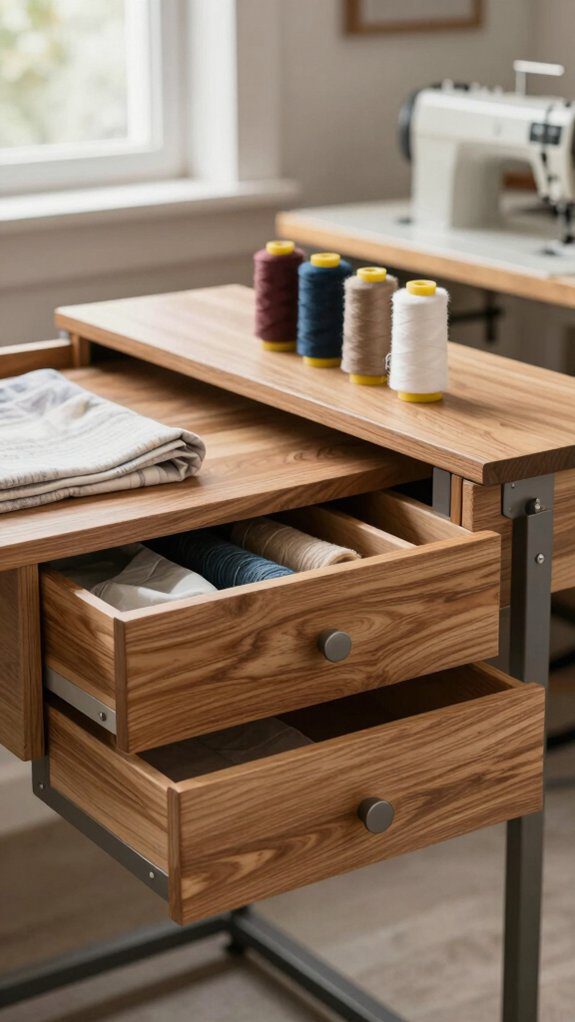
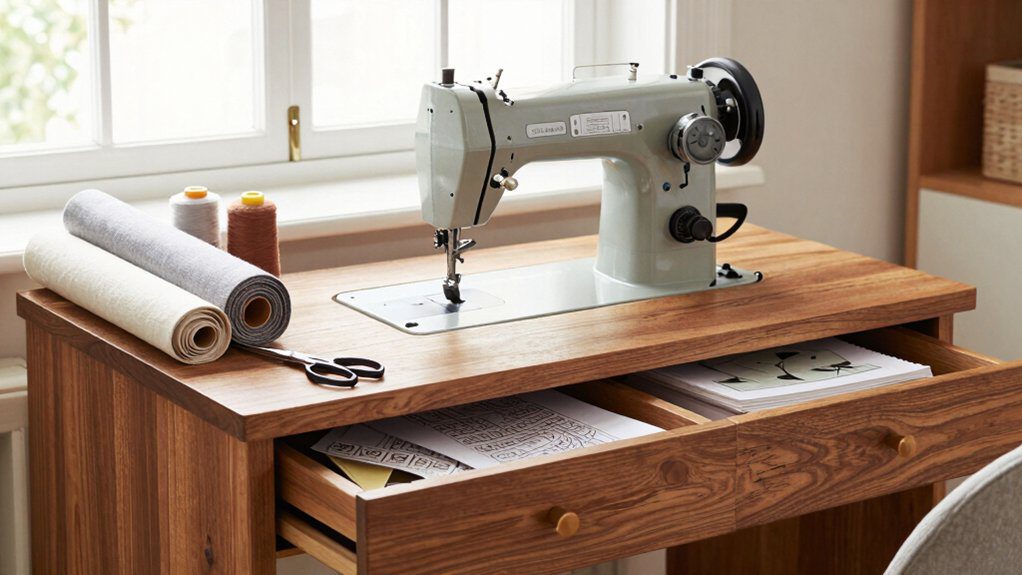
My sewing corner used to swallow bobbins, thread, and every seam ripper I owned, so I started adding built-in storage solutions to my sewing machine table ideas. I like shallow drawers for tiny notions, then hidden compartments or cabinet-style lift tops to tuck the machine away and open up space fast—because nobody needs a needle in the couch, right?
For bigger stuff, I use simple shelves or a rolling cart for thread and fabric, and it’s been the easiest way to keep my table clear without turning the room into a fabric jungle.
Drawer organization ideas
- I slide in shallow drawers from IKEA frames and label them by color; my color coded drawers keep me sane.
- I add Dollar Tree trays plus magnetic strips for scissors and needles, which stops the little black-hole effect.
- I reserve one deep drawer for mats and pattern envelopes, then glue in dividers.
It’s cheap, easy, and honestly feels like joining a tidy sewing club.
Hidden compartments
One of my favorite tricks is a recessed sewing machine lift, either manual or electric, set into a 30″–36″ work surface so the machine drops flush when I’m not using it. It feels like hidden floorboards for my sewing room.
I built shallow 2″ drawers with IKEA frames and a glue gun for pins and bobbins, then added a bamboo pull-out tray. For bigger machines, I used a flip-up panel with a magnetic latch—my own secret springboards.
A slim side pocket holds rulers, and a fold-down mat tucks away neatly. Tiny space, big win.
Thread and fabric storage
- I added shallow drawers with Dollar Tree dividers for bobbins, needles, and presser feet. Cheap, simple, and nothing sinks to the bottom anymore.
- I slid in a 24-inch pull-out shelf with an IKEA frame top. It catches trim scraps and keeps patterns close.
- I used cubbies for color sorting and fabric rolling, then hung scissors on a magnetic strip. Now my sewing corner finally feels like our little club.
DIY Table Ideas for Every Budget
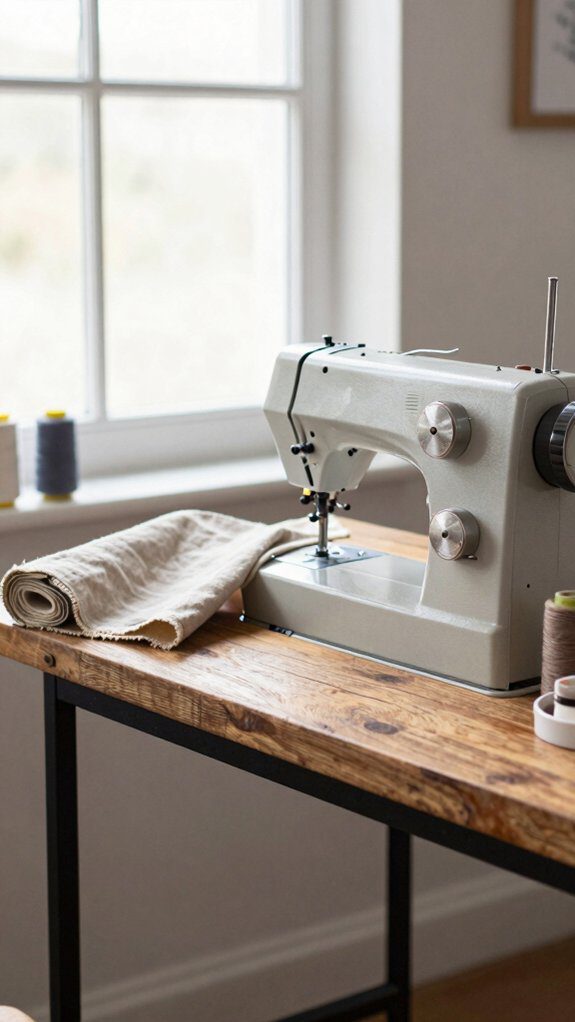
If your sewing corner keeps turning into a clutter pile, I’ve been there, and my favorite Sewing Machine Table Ideas start with what’s already in the house.
I’ve turned an old table into a cut-and-sew station with a snug box and cheap risers, hacked an IKEA desk with a Dollar Tree mat and a rolling cart, and even built a fold-up cabinet that hides the machine like a tiny magic trick.
One of my favorite surprises came from a gate-leg table with a few wall racks—simple, budget-friendly, and just sneaky enough to make me feel very clever.
Repurposed furniture projects
From there, I got a little more creative with old furniture that was already begging for a second life. My sewing machine table ideas started saving space and money fast.
- I turned upcycled dressers and salvaged trunks into hidden storage, using a glue gun, thrifted bins, and a snap-tape skirt.
- I made a machine cabinet from a vintage vanity, added plywood, and kept the drawers for notions.
- My surprise win was a foldable cabinet station; it shut like a secret, and my tiny room finally felt calm.
Try one, and your workspace can feel like it belongs to you.
Simple beginner builds
My easiest win was turning a thrifted rectangular dining table into a sewing station with a few 4×4 leg risers. I measured my hip height first, then used beginner friendly jigs to keep the cuts square.
When I needed more space, I built a no-screw melamine-and-2×4 box for an oval top, and it sat snug as a puzzle piece. For cords and notions, I hacked a basic desk with a centered hole and a shallow bamboo drawer.
My material sourcing tips? Check thrift shops, scrap bins, and Dollar Tree bins. My favorite surprise: a fold-down ironing cart on casters.
IKEA hack inspirations
- I used an IKEA UPLIFT desk with a 30-inch top and bamboo drawer; it felt roomy and calm.
- I hacked a folding cabinet with a hinged top and modular storage, then tucked my machine away.
- I raised an IKEA dining table with bed risers and added a recessed box; cheap, sturdy, and a little ornate.
I kept glue gun fixes, Dollar Tree bins, and fabric clampers nearby. Small space? Same. These wins made me smile.
Table Styles for Different Aesthetics
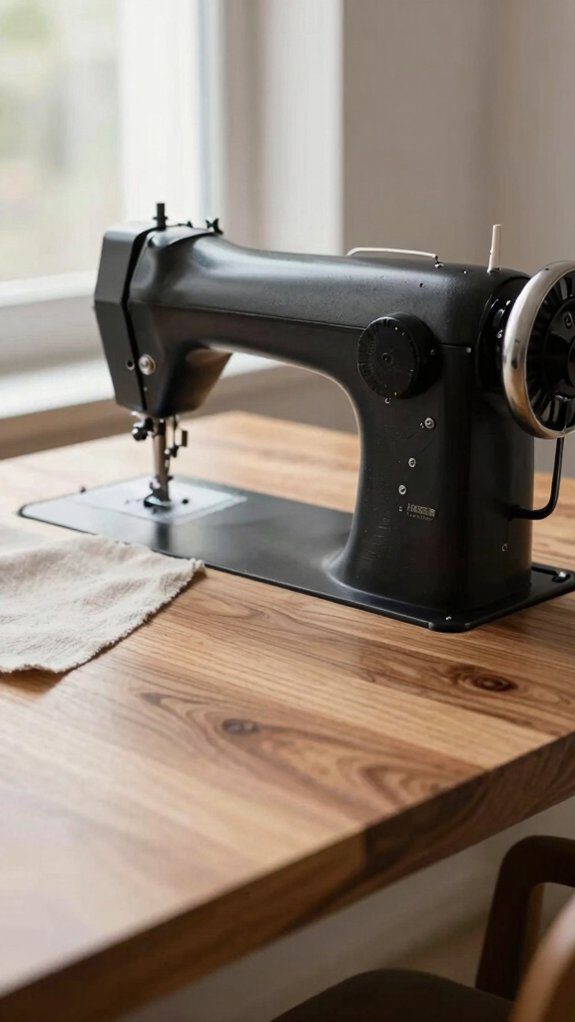
My sewing corner used to look like a junk pile, so I started testing Sewing Machine Table Ideas that actually match the room, not just the machine.
For a clean modern feel, I like IKEA frames with a smooth top; for a cozy rustic look, a wood board, a glue gun, and a quick stain job can turn a plain setup into something warm and homey.
And if you love a vintage vibe, an old Singer-style cabinet can hide the mess fast—plus, it makes me feel oddly elegant when the drawer opens without a squeak.
Minimalist modern looks
I’ve had good luck pairing a sleek height-adjustable frame, like an UPLIFT-style base, with a 60″ wide top so the whole setup stays light and balanced instead of bulky. For minimalist modern looks, I stick to clean lines and calm colors.
- I choose bamboo aesthetics for warmth.
- I pick a birch finish when I want a pale, crisp feel.
- I hide cords with a neat hole and built-in power supply.
I once added a shallow drawer with a glue gun and IKEA frame parts—tiny win. If space gets tight, a fold-up cabinet table disappears fast. Nice and tidy, right?
Rustic wooden finishes
For a simple DIY look, I’ve brushed a plain wood top with a wire brush, lightly sanded the edges, and rubbed on tinted wax for that worn-in feel. My sewing machine table idea starts with reclaimed oak or pine, then a waxed wash to boost grain emphasis.
| Step | Material | Result |
|---|---|---|
| Brush | Wire brush | hand hewn texture |
| Seal | Oil finish | iron proof surface |
| Add | Shallow drawer | tidy notions |
I set mine on an IKEA frame, glued Dollar Tree felt pads, and loved the cozy look. The thick top stayed steady, and the low-sheen finish hid my coffee spill. Suddenly, my nook felt like ours.
Vintage sewing setups
An antique treadle table gave me that cast-iron, old-school look, and all it needed was a quick clean, a sturdy top, and a little glue gun help for felt pads so it wouldn’t scratch the floor.
- I turned a Victorian base into a vintage display with an IKEA frame top.
- I used Dollar Tree bins in a mid-century cabinet, and the hidden machine storage felt like magic.
- My best machine restoration win was a Shaker-style desk, plus a recessed platform for smooth sewing.
I’ve made a few mistakes, sure, but these setups help me feel at home, crafty, and ready.
Ergonomic Setup Tips for Comfort
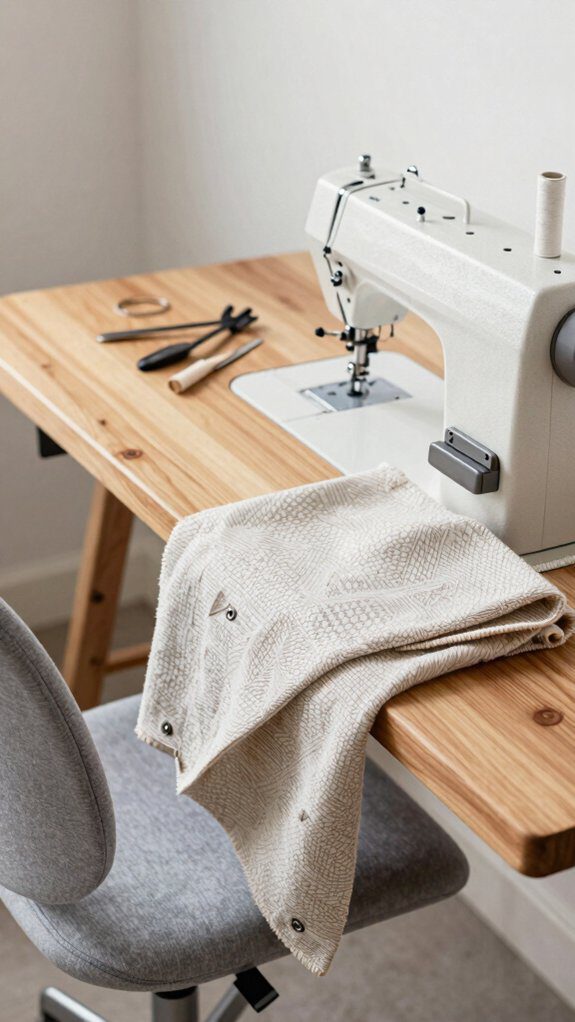
My sewing corner used to leave me with a sore neck and a wobbly pile of fabric, so I started treating sewing machine table ideas like a comfort fix, not just a style choice.
I set the tabletop near hip height, matched my chair so my feet stayed flat and my arms felt easy, then added a bright lamp aimed right at the needle—tiny change, big “why didn’t I do this sooner?” win.
Proper table height
I’ve found that a tabletop around 36–38 inches works well for general sewing when I’m standing, especially if I’m cutting fabric at hip level instead of folding myself in half.
- I measure my elbow clearance first; my forearms should float parallel to the floor.
- For quilting, I drop a deeper table to 34–36 inches so big fabric stays calm.
- When I switch between sitting and standing, I use IKEA frames, risers, and a tape measure for workspace personalization.
One afternoon, I fixed my wobbly setup with Dollar Tree pads and a glue gun. Tiny win, big relief.
Chair and posture alignment
I aim for a chair with adjustable height and decent lumbar support, then I test it with a tape measure and a scrap of fabric.
When my seat feels right, my posture checkpoints click in: feet flat, knees near hip level, and my back tall but calm.
I keep my lumbar positioning steady with a cheap cushion from Dollar Tree and a rolled towel—my tiny “office upgrade,” no glue gun drama.
I like my elbows near 90 degrees, with the machine close enough to skip shoulder shrugging.
That little setup makes sewing feel friendly, not fussy, and my neck finally stops protesting.
Lighting placement
Good posture can still turn into a squinty mess if the light’s wrong, and sewing machine table ideas fall apart fast when shadows creep over the needle. I learned that after a late-night hem job at my IKEA frame desk. For real task placement and shadow control, I keep a daylight LED 12–18 inches above, slightly in front.
- Put the lamp on your dominant-hand side.
- Add under-shelf strip lights at the back edge.
- Swing in a low-glare magnifier for buttonholes.
My Dollar Tree clips and glue gun made it cheap, and wow—fabric colors finally look right.
Who This Works Best For
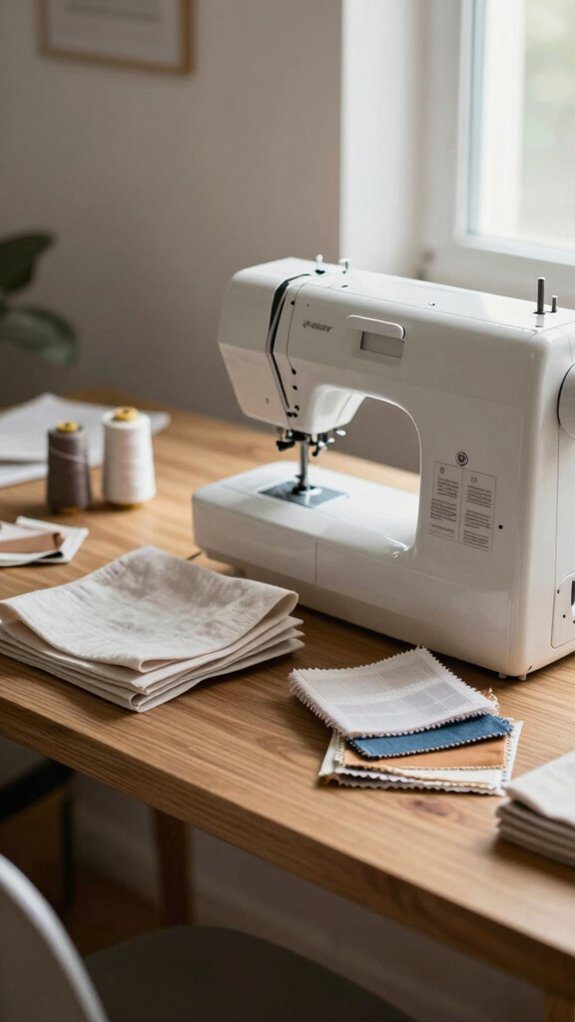
If your sewing machine table ideas keep turning into a pile of clutter, a wobbly card table, or “temporary” setup that’s somehow been there for two years, you’re not alone—I’ve been there with thread spools rolling under the couch like tiny escape artists.
I think this works best for quilters, garment sewists, and multi operator layouts that need space to breathe. It also fits folks doing portable travel sewing, because I’ve squeezed mine into a folding cabinet with IKEA frames and Dollar Tree bins.
If you’ve got back pain, shared rooms, or too many tools, I’d choose adjustability, storage, and a sturdy surface first.
Frequently Asked Questions
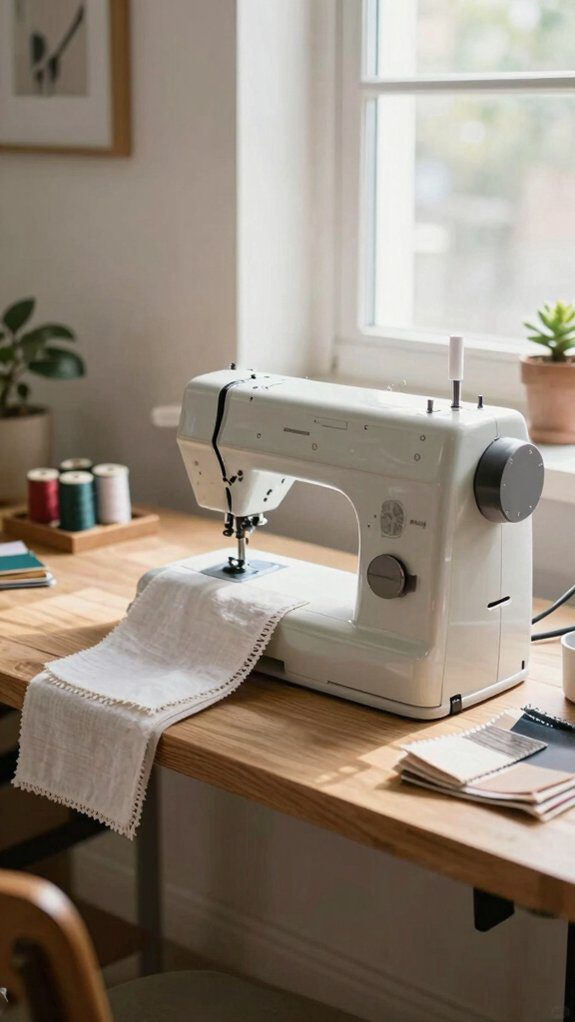
When my sewing corner started eating bobbins, scissors, and half-finished hems, I knew it was time to answer the big sewing machine table ideas questions before the mess won again.
I’ve learned this:
- For workspace ergonomics, I pick a 30″ deep table, and 60″ wide if I’m sharing space with a cutting mat.
- For storage accessibility, I love drawers, shelves, or a Raskog cart under an IKEA frame; Dollar Tree bins help too.
- For tight rooms, I use folding cabinets, then add a glue-gun-fixed skirt. My best win? A height-adjustable desk—my back finally stopped protesting.