Sewing Corner in Bedroom Ideas That Save Space Beautifully
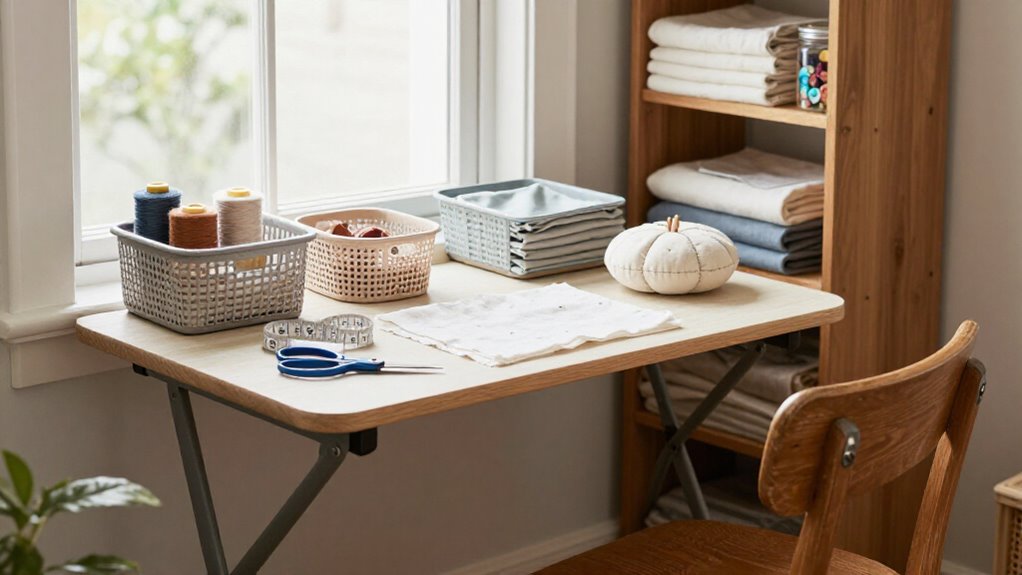
I turned my messy chair-and-bin pile into a sewing corner in bedroom ideas win by giving fabric, scissors, and my glue gun one tiny home. I used IKEA frames, Dollar Tree bins, and a slim desk by the window, then added a chair and shelf so nothing spread like glitter on a bad day. The trick? Keep tools within arm’s reach, leave the floor clear, and save the best layout trick for what comes next.
Love cozy DIY projects? 💕
Get free printable guides, exclusive tutorials & surprise craft goodies straight to your inbox.
Disclosure: This post may contain Amazon affiliate links, at no extra cost to you. Content on DiyCraftNest is created with research support from AI tools and carefully reviewed, edited, and fact-checked by the lead author, Daniel Pat, to ensure accuracy and reliability. Learn more
Key Takeaways
- Create a dedicated sewing zone with a small table, chair, and bins to cut clutter and speed setup.
- Use a corner desk, shallow closet nook, or fold-away table to keep bedroom floor space open.
- Keep a clear workflow with machine, cutting, and pressing areas arranged in a simple line.
- Add vertical storage like pegboards, Billy shelves, and labeled bins to organize tools and fabric neatly.
- Place the sewing corner near a window with layered task lighting for better visibility and less eye strain.
Why a Dedicated Creative Space Matters
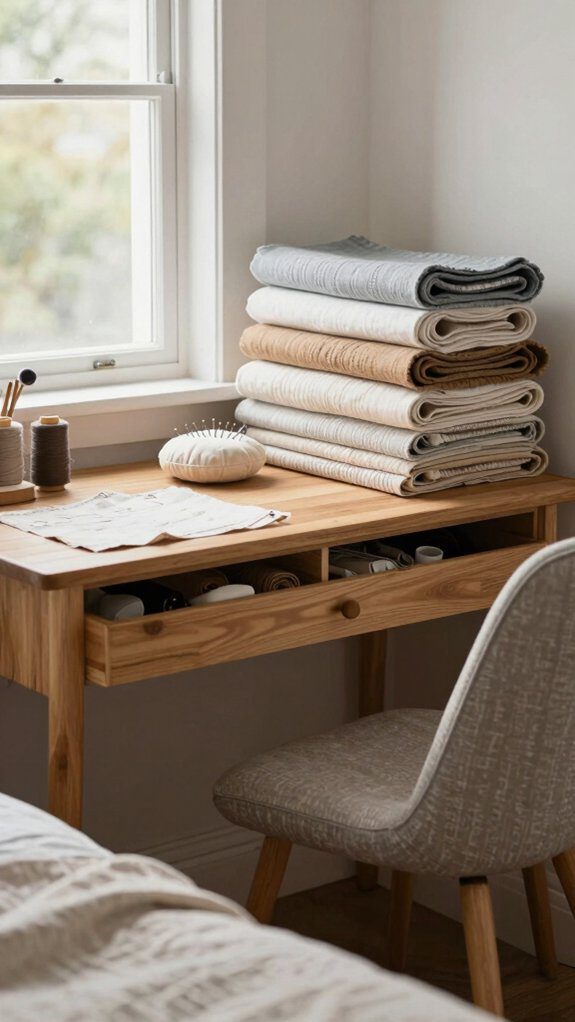
What surprised me most was how much calmer the room felt once I gave my creative stuff one little zone. I used to hunt for scissors, thread, and my glue gun every time I wanted to sew, and honestly, that killed my mood.
Now I keep one chair, a small table, and Dollar Tree bins together, plus an IKEA frame shelf for fabric. Those creative rituals give me mental cues to start fast. I don’t waste time setting up, so I finish more and fight less clutter. The best part? My bedroom still feels like mine, not a craft tornado.
Smart Layouts for Small Bedrooms
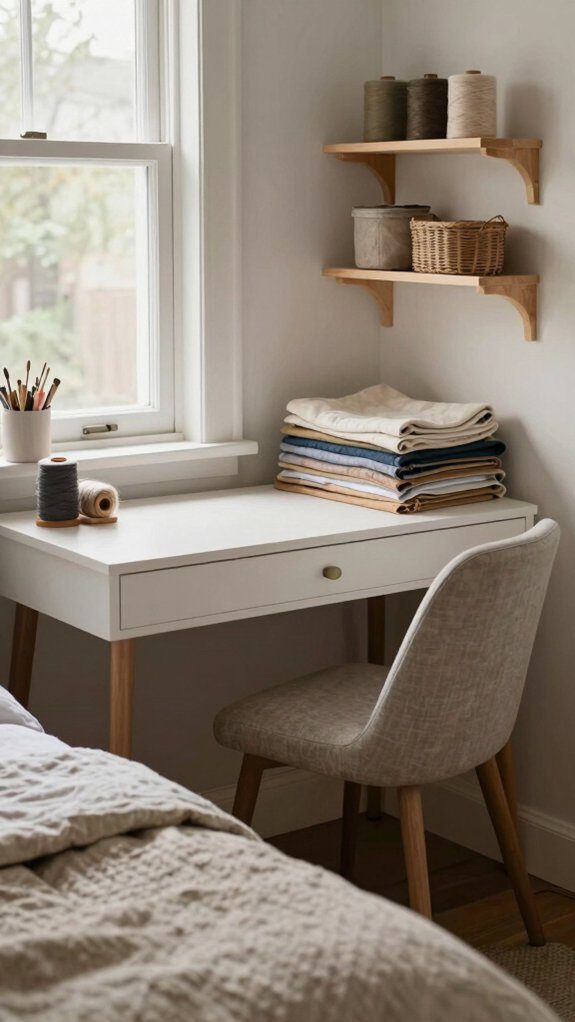
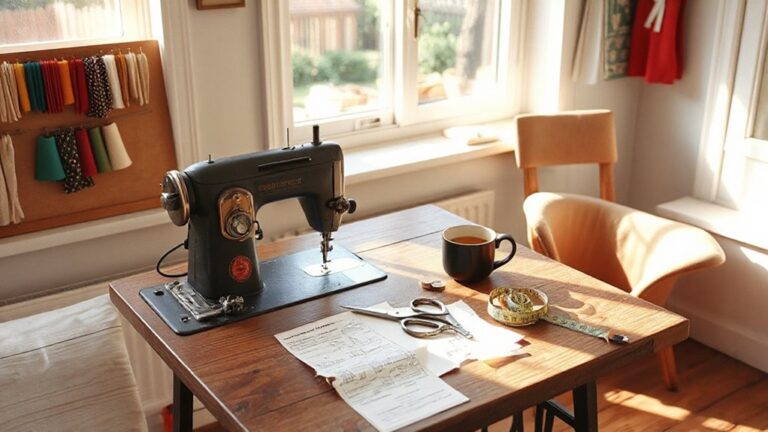
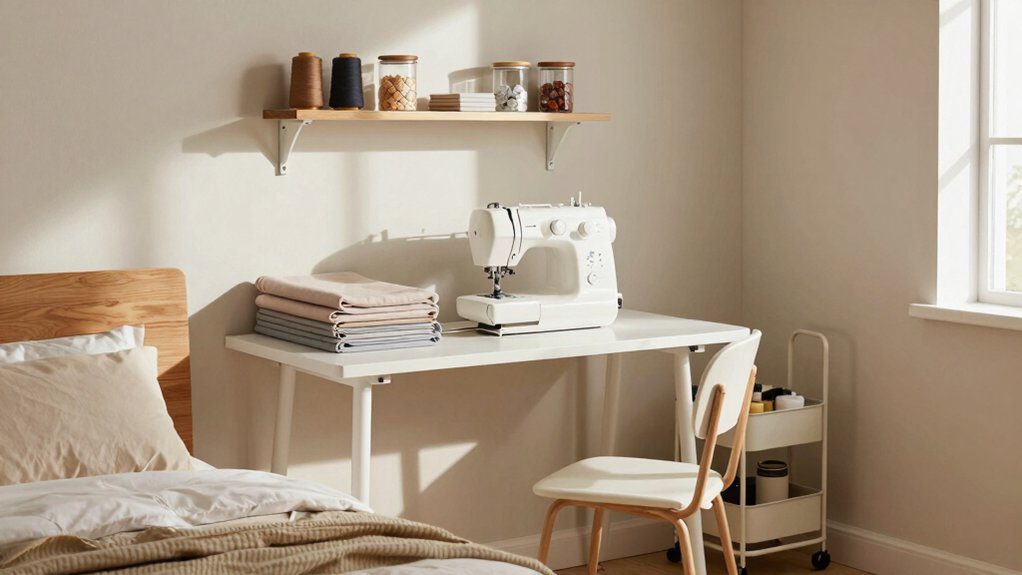
When my bedroom felt like a sewing room had exploded in it, I started using smart layouts for small bedrooms by tucking my machine desk into a corner near the window so I could get bright light and keep the middle of the room clear.
I also turned a shallow closet into a sewing nook with IKEA frames, Dollar Tree bins, and a glue gun for quick fixes, and I made the whole setup work by zoning it without walls—machine here, cutting there, and no tripping over thread in my slippers.
Corner placement strategies
- I use a standard IKEA Linmon/Alex desk so the corner stays open.
- I add skinny Billy shelves and 3M hooks for rulers, thread, and scissors.
- I tuck rolling carts under the desk with Dollar Tree baskets to hide clutter.
- I finish with a butcher-block top and glass-front doors.
That mix feels neat, cozy, and truly mine.
Using underutilized spaces
My easiest win was sliding a compact sewing desk, like an IKEA Alex setup, right under the bedroom window. Suddenly, I’d light, and my floor stopped yelling at me.
I tucked a slim shelf into a hidden alcove, then added a pegboard, Madd hooks, and Dollar Tree jars for scissors and pins. Easy, cheap, done. A folding table for cutting replaced my bulky old one, so I could clear the bed fast. I even used window benches with baskets below for fabric overflow.
Next, I turned a tiny closet into a cozy nook—honestly, it felt like finding bonus room.
Zoning without walls
Then I started building the rest of the layout like a mini workflow instead of random furniture soup. My sewing corner in bedroom ideas for small bedrooms finally clicked when I used visual anchors and floor markers to guide every piece.
- Window desk: I set an IKEA Alex under the window for light; a glue gun and Dollar Tree trays keep tools tidy.
- Long wall run: I joined Linmon sections for cutting and stitching.
- Backdrop storage: Billy bookcases with Oxberg doors hide fabric and machines.
- Linear flow: machine, serger, press, then cut. It feels calm, and honestly, we belong here now.
Furniture Choices That Maximize Function
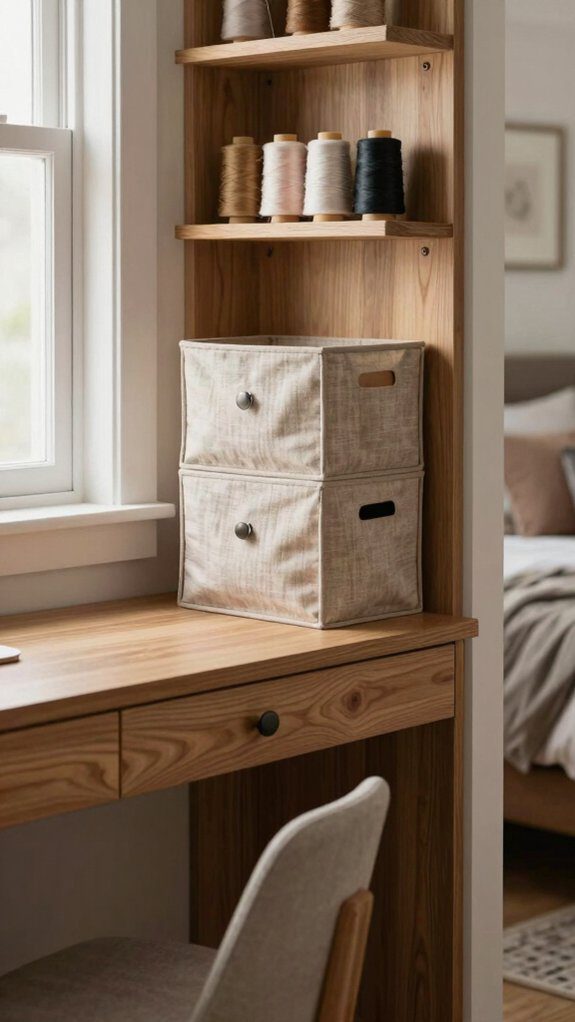
When my sewing corner started eating the whole bedroom, I knew I needed furniture that works harder than I do, so I began with a compact sewing table under the window to grab daylight and cut down on random pileups.
For Furniture Choices That Optimize Function, I like a multi-purpose desk with drawers for my tools and a fold-away workstation made from simple IKEA frames or a tabletop, plus a few Dollar Tree bins so the whole setup feels tidy instead of “creative chaos.” The best surprise? A work surface that folds away can give you your floor back in seconds, which is a tiny miracle when the room also has to hold a bed, fabric, and my ever-growing collection of “I’ll use this later” supplies.
Compact sewing tables
A standard desk works better than you’d think, especially if you pair it with slim legs or a wall-mounted top to keep the floor open. In my tiny sewing corner, I swapped a bulky table for a compact sewing desk and finally stopped bumping my knees into clutter.
- I used an IKEA frame, a Dollar Tree tray, and a glue gun for portable cutting.
- I chose drawers for thread, clips, and scissors.
- I tucked a lap table under the desk for modular nesting.
- I placed it by a window.
That little setup feels calm, friendly, and made for real life.
Multi-purpose desks
I stopped treating my sewing spot like a spare desk and started using a multi-purpose desk, and honestly, that changed everything. My old 7-foot table collected laundry. Now I use an IKEA Alex-style base with a butcher-block top, so my machine, scissors, and thread stay put.
I added hidden storage with Dollar Tree bins and a glue gun label trick. Simple, cheap, tidy.
Under the window, the light’s great, and I still have room for my serger on a slim side surface.
The best surprise? A desk with drop leaf surfaces. It folds out for cutting, then tucks back in. Pretty clever, right?
Fold-away workstations
My favorite simple setup is a wall-mounted drop-leaf table under the window, like an IKEA Norden style piece or a custom butcher-block top with hinges. I fought bedroom clutter for weeks before I tried a wall mounted workstation. It folds flat, so I can breathe again.
- I add a slim Alex drawer unit for thread and bobbins.
- I use hidden storage solutions like Dollar Tree bins on nearby shelves.
- I mounted a flip-up cabinet; my machine disappears fast.
- I keep a fold-down ironing board on the closet door.
It’s practical, cozy, and honestly, a little magic.
Storage Ideas That Keep Everything Tidy
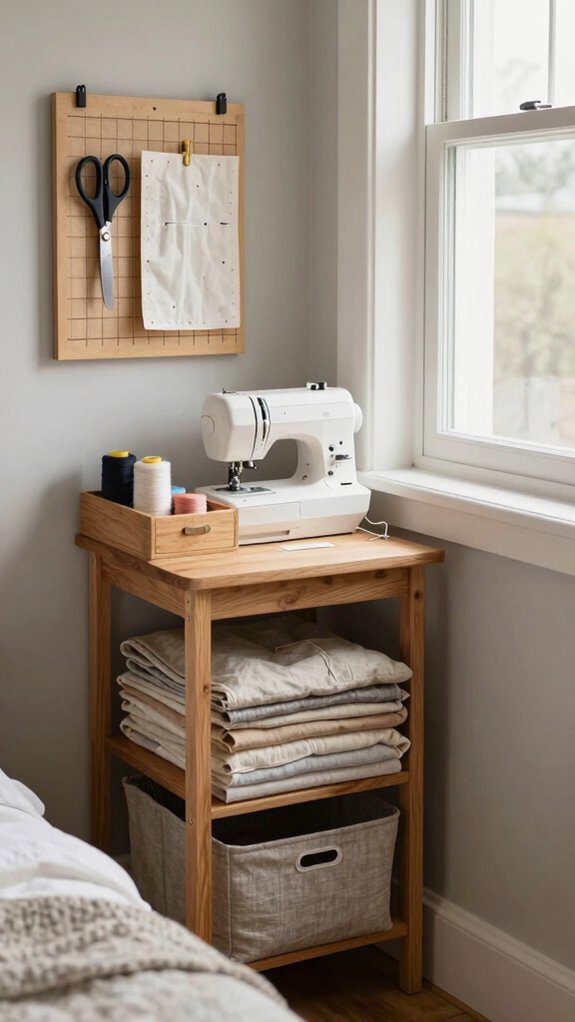
My sewing corner used to look like a fabric tornado hit it, so I started with vertical shelving options that lift boxes, bins, and even my awkward IKEA frames off the floor and onto the wall.
Then I use drawer organizers for thread, scissors, and tiny tools, plus Dollar Tree labels so I’m not rummaging like a raccoon at midnight.
The real game-changer, though, was a pegboard system with simple hooks and a glue gun setup nearby—it keeps my rulers and favorites in sight, and it makes cleanup feel weirdly satisfying.
Vertical shelving options
The easiest fix I’ve found is to build up instead of out. In my tiny sewing corner, vertical shelving options turned chaos into calm, and my floor to ceiling setup made me feel like I finally belonged in my own room.
- I used IKEA Billy frames with Oxberg doors; clear fronts hid cubbies and cut dust.
- A skinny bookcase filled a wall gap for fabric bolts and patterns.
- I mounted pegboard above my table for scissors and rulers.
- On top, labeled bins and a Dollar Tree step stool keep things safe. A glue gun helped secure hooks, and puck lights made everything glow.
Drawer organizers
Drawer organizers saved me when my sewing desk turned into a tiny junk drawer with ambitions. I use shallow modular trays to sort buttons, snaps, and bobbins, and each little cell keeps one thing—no tangles, no mystery piles.
Then I reused clear photo boxes from Dollar Tree for thread, lined up by color, so I can spot the right spool fast. In my desk drawer, bamboo dividers hold scissors, seam rippers, and rulers apart, which feels oddly calming. My favorite trick? A shallow “current projects” bin for portable kits and patterns in magazine boxes. Cleanup now takes minutes, not a whole mood.
Pegboard systems
Pegboard chaos became my wake-up call when scissors, rulers, and seam rippers started staging a little rebellion on my sewing desk. I mounted a small board, and suddenly my corner felt like my own tiny team.
- I used Dollar Tree bins and 3M hooks to hold thread, bobbins, and clippers; labels saved me from guessing games.
- I hung rulers and cutting mats vertically. No floor pile, no tripping.
- I added a narrow strip behind my machine for pressing tools and measuring tapes.
- With a puck light and tool silhouettes, my pegboard art looks cute and works hard.
Lighting Tips for a Comfortable Setup
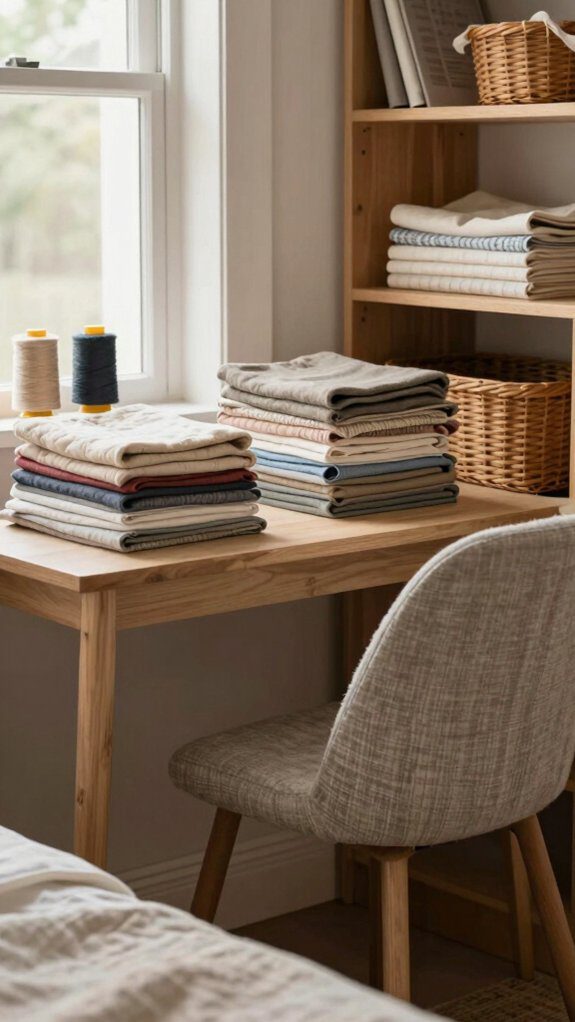
My small bedroom sewing corner used to feel gloomy fast, so I moved my machine and cutting table near a big window and added a simple roman shade to soften the glare.
Then I layered in a warm overhead light, a bright task lamp, and a little swing-arm light beside the needle—because nothing ruins a seam like playing shadow puppet with thread.
I like to keep the lighting mix balanced, with cooler daylight for detail work and warmer light for the rest, and it’s made my sewing nights feel a lot easier on my eyes.
Natural light positioning
I like to keep the machine or cutting mat right beside the window, not shoved way back in the room, and I leave a 2–3 foot clear space in front so I can spread out fabric without turning the sill into chaos.
- I once used IKEA frames and Dollar Tree clips for simple window treatments; cheap, cheerful, and they softened the light fast.
- North- or east-facing windows give me calmer mornings, with less glare control drama and fewer squinty mistakes.
- I keep the sill open for staging pins, scissors, and my glue gun. Handy, not haunted.
- That bright corner feels like mine now. The room breathes, and so do I.
Task lighting essentials
Now I keep a dedicated LED task lamp right beside my machine, usually with a 3,000–4,000K neutral white glow and strong color accuracy, so fabric actually looks like fabric. I learned that after squinting at navy thread and stitching a seam crooked enough to humble me.
I use a swing-arm light with LED diffusers, and it doesn’t hog my tiny IKEA desk. A cheap Dollar Tree clamp and a glue gun helped me mount it fast. For close work, Magnifier lamps save my eyes. I also add puck lights under a shelf, then layer room light for a cozy, easy setup.
Warm vs cool light balance
- I use IKEA frames and a Dollar Tree clip light.
- I keep warm lights soft for relaxing.
- I aim cool light at fabric, not my face.
- I dim both zones for Cool accuracy and less eye strain.
Decor Ideas That Blend with Bedroom Style
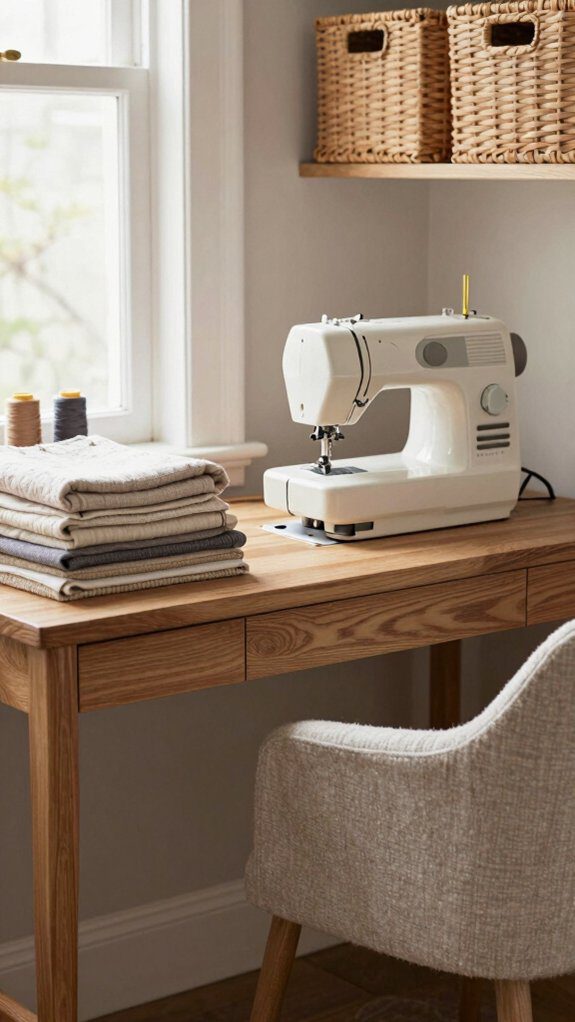
When my Sewing Corner Ideas for Small Bedrooms started looking like a random homework zone, I fixed it with a soft color palette and a few cheap wins from Dollar Tree and IKEA, like linen boxes and simple frames.
I keep the setup minimalist with the desk under the window, a dark wood top, and just one bright chair or fabric accent so it feels cozy, not crowded.
If your bedroom needs to stay calm, I’ve found that matching curtains and a few tucked-away baskets can make the whole nook blend in like it was always meant to be there.
Soft color palettes
- I painted an IKEA frame in cameo pink.
- I added linen textures with Dollar Tree bins.
- I matched a mid-blue pillow with a curtain.
- I swapped my bright top for butcher-block, then hid fabric in wicker baskets.
A little patterned chair kept mine sweet, not loud.
Minimalist setups
Then I swapped the loud white top for a dark butcher-block surface, which was an easy win with a screwdriver and a little patience.
I tucked my compact desk under the window so I’d get daylight and keep the nook feeling like part of the room.
For space saving techniques, I used an IKEA frame, a glue gun, and Dollar Tree baskets to hide thread, scissors, and all the “where did this go?” bits.
My material selection tips: choose darker wood, simple curtains, and one or two blue accents.
A smaller desk kept me honest. No clutter, no drama.
Cozy creative corners
My bedroom used to feel like it was hosting a tiny craft store in secret, and honestly, it wasn’t cute. I wanted cozy creative corners that felt like home, not chaos, so I built one for my sewing and handmade rituals.
- I slid an IKEA Alex desk under the window for light.
- I swapped in a dark butcher-block top.
- I hid fabric in baskets and linen boxes.
- I added blue curtains and a swing-arm lamp.
Now my sewing nook feels like a quiet sensory retreat. It still works hard, but it blends right in.
Common Mistakes to Avoid
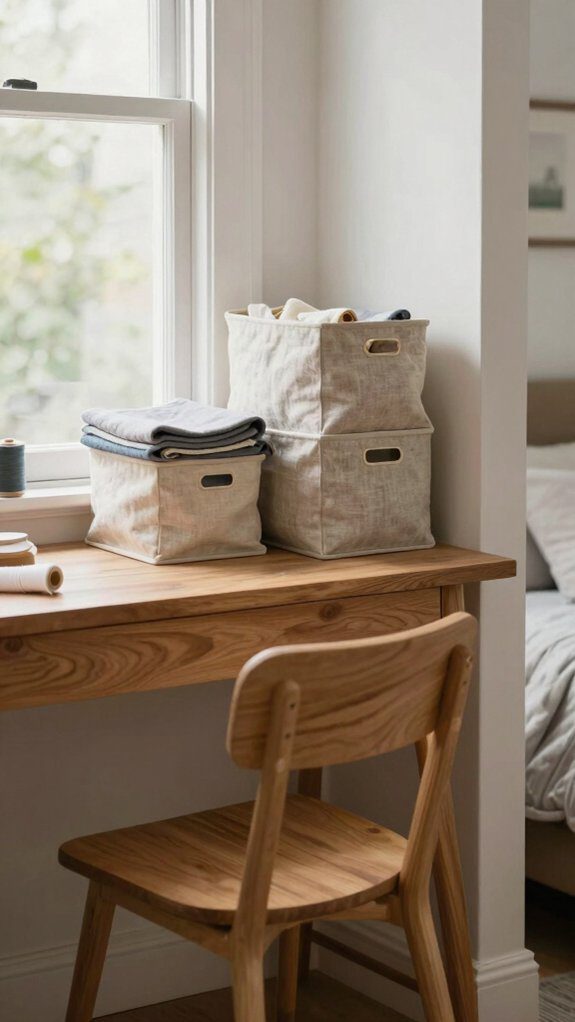
| Mistake | Fix | Win |
|---|---|---|
| Too much surface | Use a desk | Less dumping |
| No clear path | Keep 3 feet open | Safer flow |
| Open shelves | Add baskets | Less dust |
I also purged “maybe” supplies, then gave every item a home. A window helped my stitching, and my ergonomic seating saved my back. Seasonal rotation keeps extras from taking over. Now my little corner feels like it belongs to me—and maybe you too.
Frequently Asked Questions
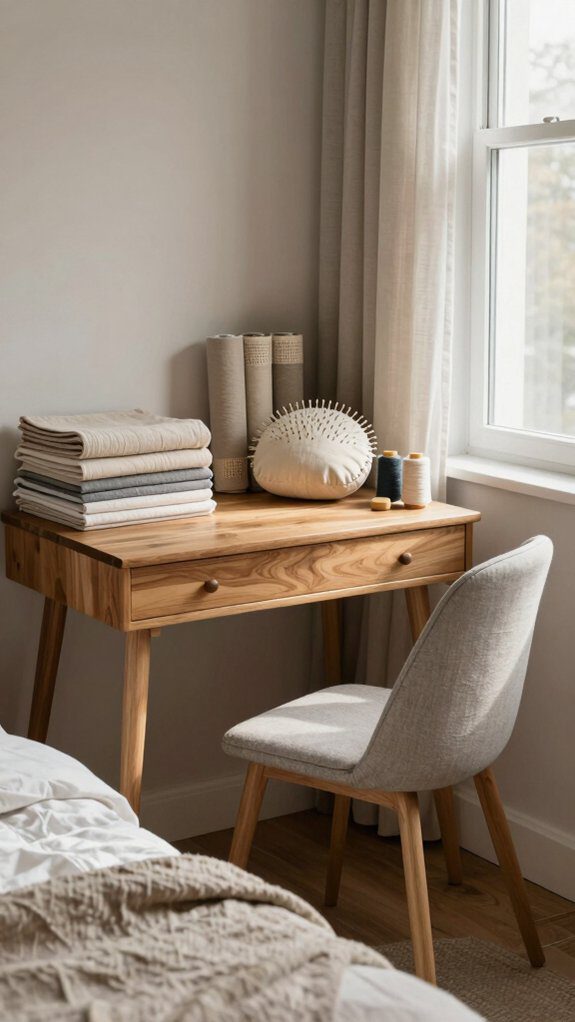
If your sewing corner ideas for small bedrooms sound great on paper but still leave you with tangled thread, nowhere to cut fabric, and a chair that hates your back, you’re not alone. I’ve fixed mine with space psychology and material sustainability.
- I use an IKEA Alex under the window; light helps me sew, and the smaller desk forces real storage.
- I added Billy shelves with Oxberg doors and 3M hooks. Cheap, tidy, easy.
- I stash fabric in Dollar Tree bins and magazine boxes. Quick win.
- My best trick? A dining-table cutting zone and puck lights. Tiny room, big relief.