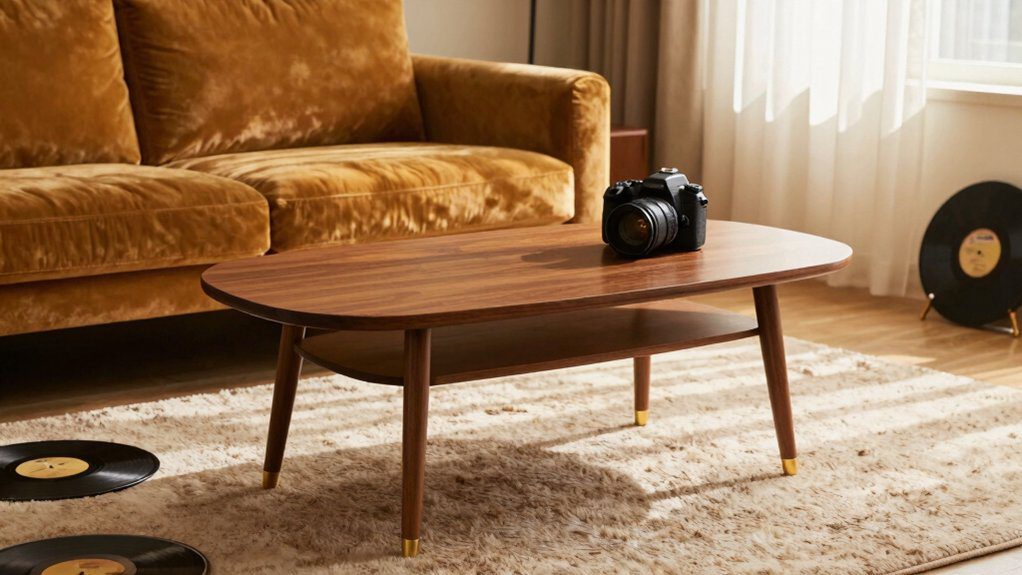
13 Retro Coffee Table Ideas That Bring Vintage Vibes to Your Space
A bland coffee table can make a whole room feel sleepy, so I’ve used 13 retro coffee table ideas to wake mine up fast. I’ve refinished teak with gentle sanding, built round tops with hairpin legs, and even turned a suitcase into storage with a glue gun and plywood. I also love chrome, tile, and color-block paint for easy wins. Keep the styling light with an IKEA frame or Dollar Tree tray, and the best twist comes near the end.
Love cozy DIY projects? 💕
Get free printable guides, exclusive tutorials & surprise craft goodies straight to your inbox.
Disclosure: This post may contain Amazon affiliate links, at no extra cost to you. Content on DiyCraftNest is created with research support from AI tools and carefully reviewed, edited, and fact-checked by the lead author, Daniel Pat, to ensure accuracy and reliability. Learn more
Key Takeaways
- Mid-century teak, walnut, or oak tables with tapered legs and rounded corners deliver a warm vintage look.
- Round, oval, and kidney-shaped tables soften boxy rooms and improve circulation in tight spaces.
- Chrome and glass coffee tables add classic retro shine, especially with lightweight styling that highlights the base.
- Laminate, tile, and color-block surfaces bring bold vintage personality with durable, easy-to-style finishes.
- Upcycled luggage or suitcase tables create unique retro charm while adding hidden storage and character.
Mid‑Century Modern Wood Table
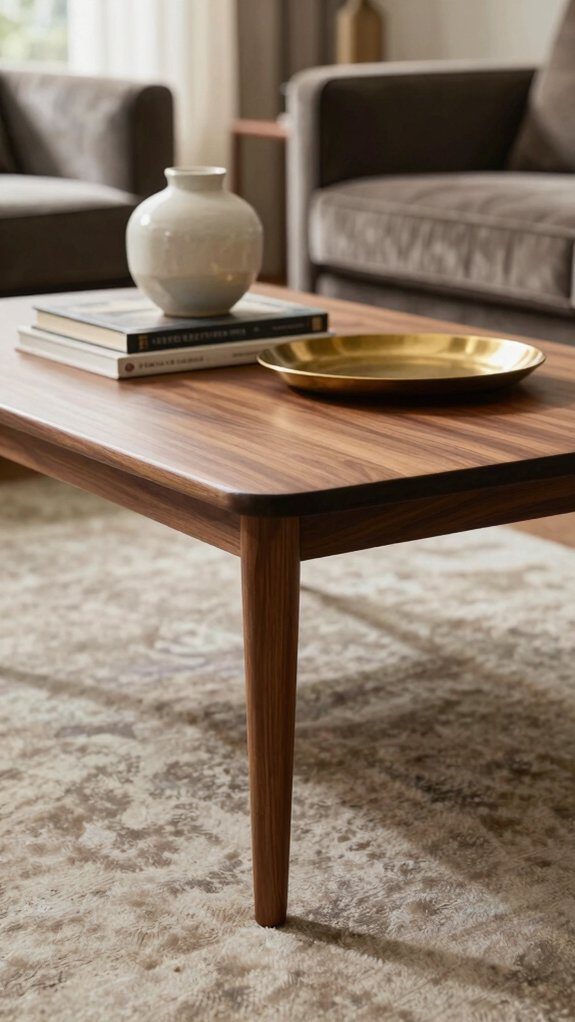
I like starting with a simple DIY mindset here: find a teak, walnut, or oak table with tapered legs, then give it a light clean, a gentle sand if needed, and a finish of Danish oil to bring back that soft matte glow.
I’ve rescued one after coffee rings and wobbles, and teak restoration felt like a small win at home.
I keep it simple: glue gun felt pads, a Dollar Tree tray, and IKEA frames nearby.
For walnut refinishing, I watch the grain come alive.
Look for rounded corners, warm patina, and simple lines.
You’ll fit right in.
Round Retro Coffee Table
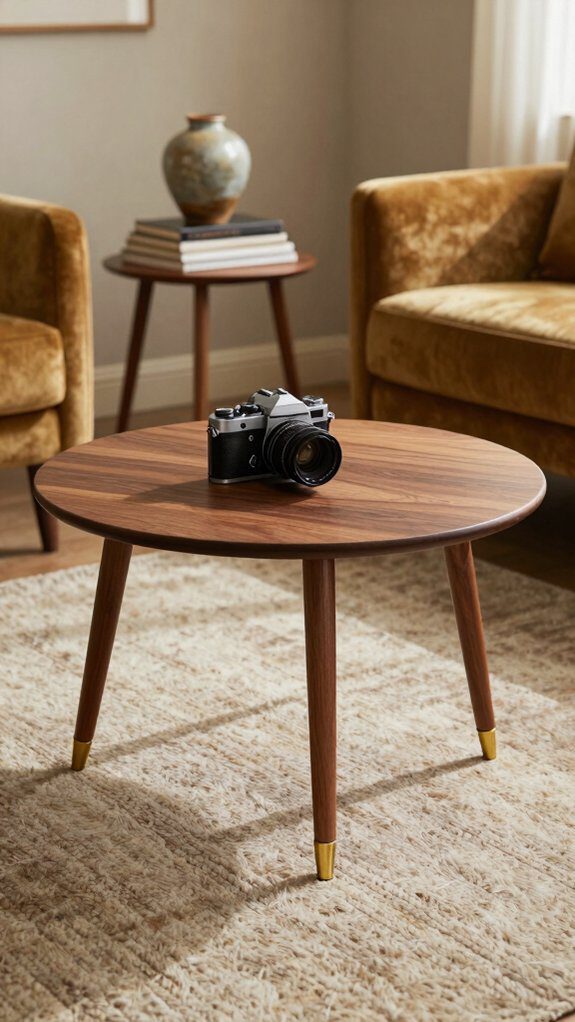
My living room felt boxy until I swapped in a round retro coffee table, and wow—the curved silhouette instantly softened the whole space.
I like pairing a light wood top with a lace doily, a Dollar Tree tray, and a tiny stack of vintage books, because the round shape makes everything feel airy instead of crowded.
If you’re stuck between “cute” and “practical,” this is the easy win I reach for first, and the little brass vase on top usually steals the show without hogging the table.
Curved silhouette focus
For an easy DIY-style refresh, I’ve mixed in pieces from IKEA frames, a Dollar Tree tray, and even a glue-gunned little repair on a wobbly leg once—because, yes, furniture always picks the most inconvenient moment to act up.
- I love curved profiles for easy flow.
- Taper details make legs feel airy.
- A 30–42 inch top fits chats.
- Teak or walnut keeps it warm.
- A lift-top helps real life.
I start with a round retro coffee table and keep it low, about 12–18 inches. Then I add a tray, books, and one vase.
The best part? It feels welcoming, not fussy, and my room finally breathes.
Chrome and Glass Classic
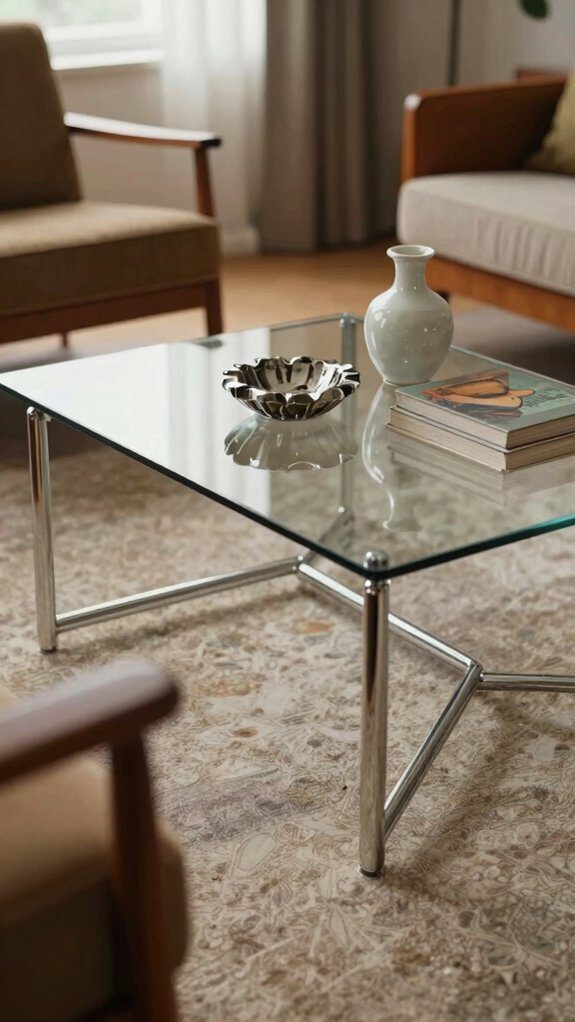
A good one usually has tubular chrome legs and a beveled glass top, and I like the versions that land around 40–48 inches long and 18–20 inches high because they sit nicely with most sofas.
When I found mine, the room felt crowded; this chrome and glass classic fixed it fast. I do gentle chrome restoration with a microfiber cloth and metal polish, never stripping the patina.
For glass styling, I keep one ceramic ashtray, a small book stack, and a brass candleholder. Then I slipped an IKEA frame print under the glass. Easy win, honestly.
Two‑Tone Laminate Retro Design
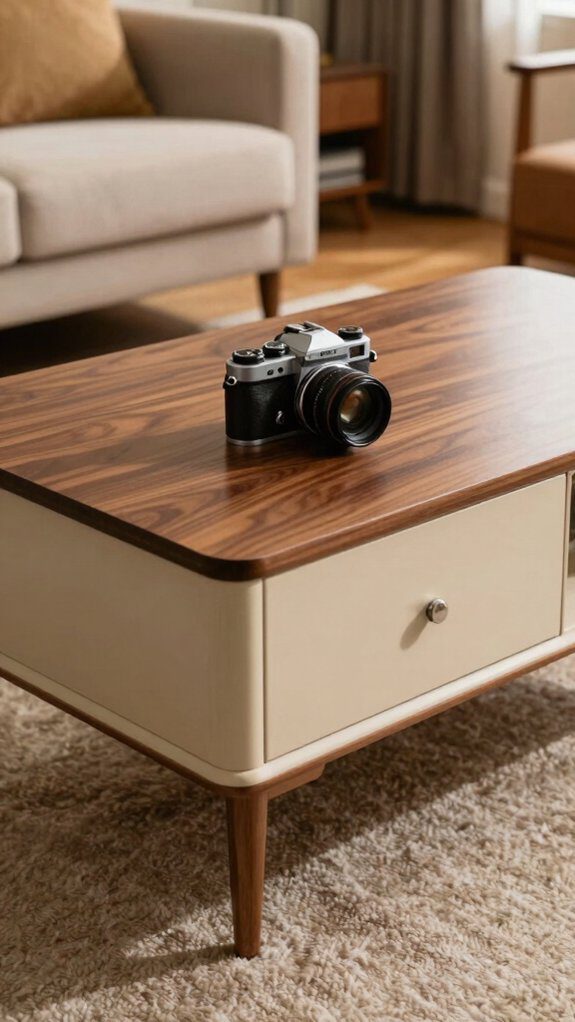
If you’re building or renovating one, I’d keep it simple: grab HPL laminate sheets, contact cement, a utility knife, a sanding block, and some painter’s tape.
My laminate restoration for a two-tone top starts with palette coordination—cream with walnut, or pastel pink with charcoal.
- Cut clean panels
- Test sheen first
- Add chrome trim
- Use a glue gun for temp holds
- Style with one book stack
I once used an IKEA frame and Dollar Tree tape as a mockup; it looked like a tiny diner.
The dark apron makes the light top pop. Keep decor low, and the retro vibe feels like home.
Hairpin Leg Coffee Table
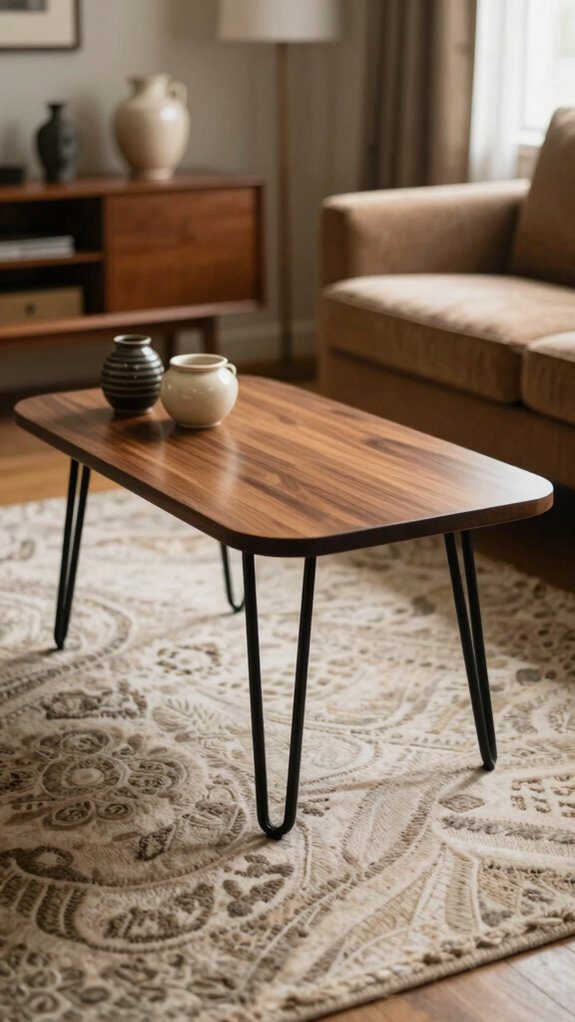
I like this style because it’s easy to build, easy to swap, and it doesn’t need a giant budget to look good.
When my living room felt flat, I tried a hairpin leg coffee table with a pine top and powder-coated steel legs; it instantly felt like my people lived there.
I measured for 8–12 inches between seat and tabletop, then screwed the legs on with a drill.
For DIY variations, I’ve used IKEA frames and Dollar Tree trays under a woven tray.
Hairpin maintenance is simple: wipe the legs, tighten screws, and enjoy the vintage win.
Geometric Shape Table
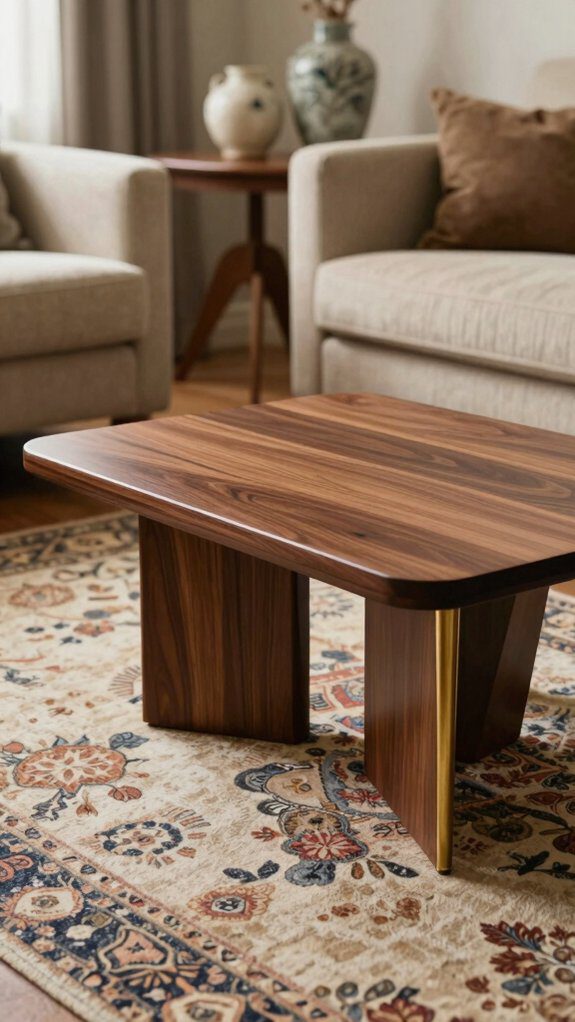
I’ve found the easiest way to test this look is with a thrifted wooden table, a can of light stain, and a cheap glue gun for a quick decor swap.
My living room felt cramped, so I tried geometric tables. I love a hexagonal arrangement because it feels bold but still friendly.
- Teak or oak works best
- Tapered legs keep it airy
- Soft neutrals calm the shape
- Layer ironstone and dried florals
- Check legs before you buy
Oval and kidney shapes are circulation friendly shapes for tight spaces. My best thrift find cost $18, and the wobble fixed fast.
Vintage White Oak Style

Calm can change a room fast, and my living room proved it the hard way when everything started looking too busy for one tiny coffee table. I picked a vintage white oak piece with soft patina and warm grain, then felt instantly at home.
At the thrift store, I checked for sturdy legs and a solid top. Mine cost $140, which felt fair. I wiped it down, then styled it with a woven tray, ironstone plate, and linen layering for that easy, lived-in look.
I keep books and a candlestick nearby. When guests arrive, I lift the tray fast. Tiny win, big vibe.
Retro Mosaic Tile Top
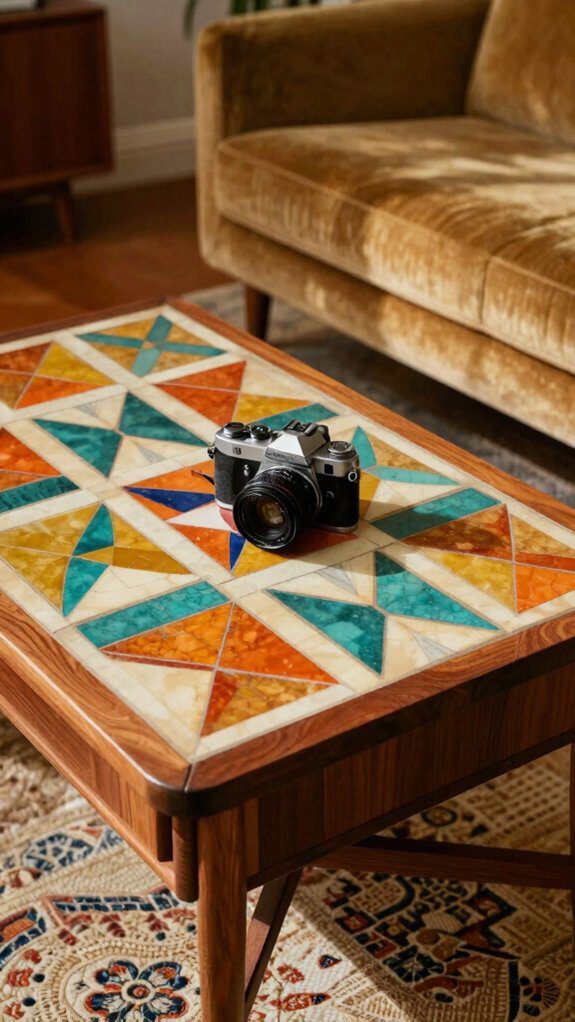
For a beginner-friendly DIY, I’d grab 1/2″ mosaic tiles, thinset mortar, grout, a putty knife, and a wet sponge. My retro mosaic tile top rescued my wobbly coffee table and made my living room feel like a happy ‘70s hangout.
- I picked avocado green and mustard yellow tiles.
- I used an IKEA frame as a test base.
- I mixed thinset, then pressed tiles in.
- I loved the bold grout and pattern variation.
- I sealed it, wiped spills, and smiled.
A glue gun helped with a sample layout. Dollar Tree spacers kept me sane. Cleanup’s easy, and fixes usually cost little.
Teak Wood Vintage Piece
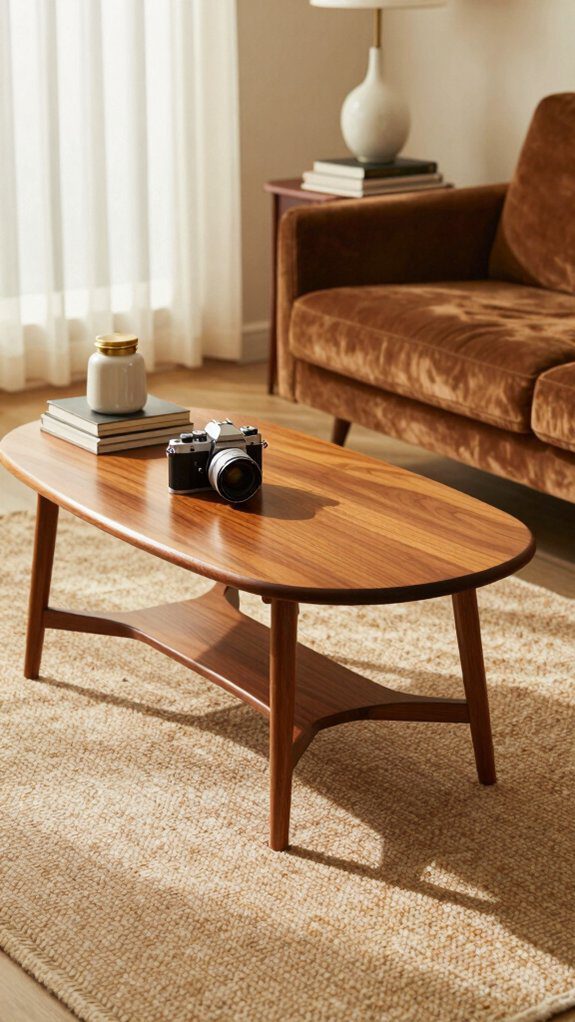
I didn’t strip it or do anything elaborate. I found a teak vintage table with warm golden tones, and its teak provenance made me trust the buy. The seller said it came from a 1960s home, and I believed it when I saw the tapered legs.
I used gentle sanding, then a little teak oil for patina restoration. That’s it. No drama, no mess.
For styling, I added an IKEA frame, a woven runner, and two Dollar Tree vases. The wood looked richer, not louder. Minor wear stayed visible, and honestly, that’s the charm. My living room felt calmer, like the table already knew us.
Sputnik Inspired Base
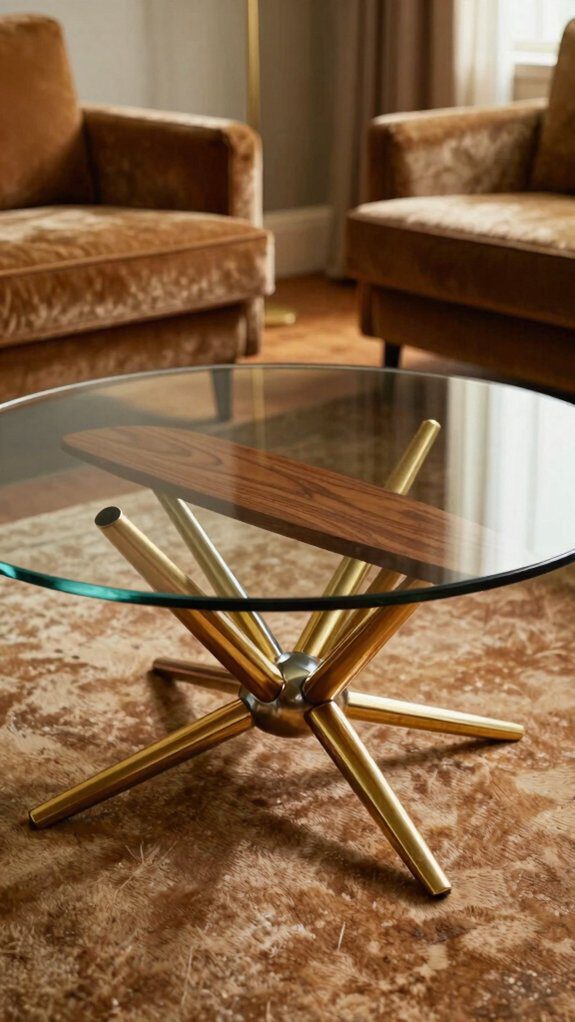
My boring living room finally woke up when I tried a Sputnik Inspired Base under my coffee table, and that space-age look made the whole corner feel smarter in one shot.
I built a simple version with brass-look rods, an IKEA frame, and a glue gun, then topped it with a plain glass top so the starburst shape could do the talking. Keep the surface clean with just one vase or a couple books, because the base is the real show-off here, and honestly, it deserves the spotlight.
Space‑age look
Ever look at a room and feel like the coffee table is doing zero favors? I do, too, so I lean into the space-age look with a Sputnik-inspired base and a round glass top. It feels bold, but still friendly.
- I’ve used Dollar Tree glass gems for sparkle.
- IKEA frames help me mock up size fast.
- A glue gun saves my sanity.
- I like futuristic lighting and orbital motifs nearby.
- Aged brass or chrome gives that real retro wink.
I keep the top light, the styling simple, and the table stable. One atomic vase, and suddenly we belong.
Retro Tile Inlay Table
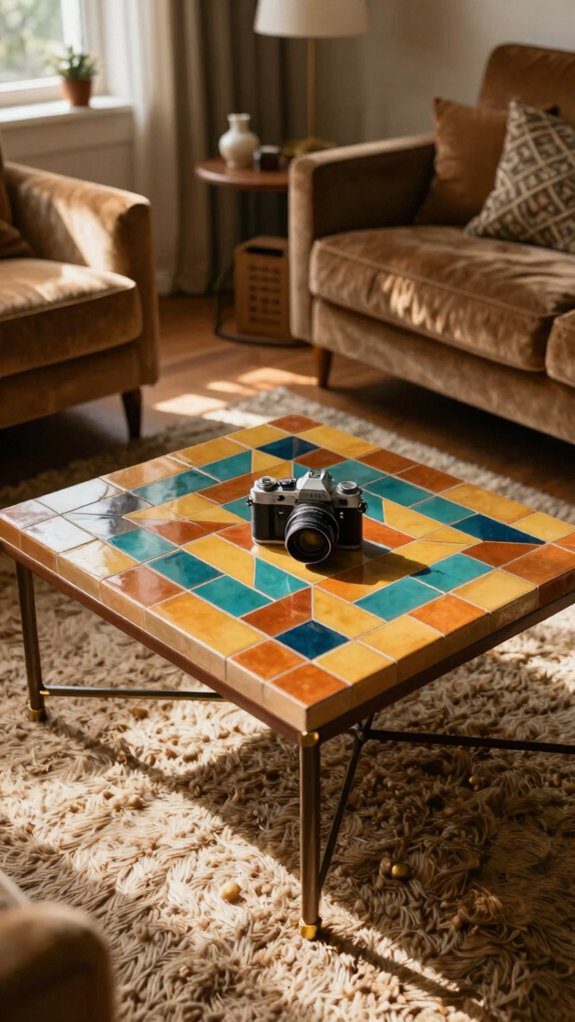
A plain coffee table can make a whole room feel a little sleepy, so I like to wake mine up with a retro tile inlay table.
I go for avocado green, harvest gold, or turquoise tiles in a wood frame, and the mid-century pop feels friendly right away.
When I find a vintage one, I check for crazing, loose grout, and chipped edges.
I’ve done ceramic restoration by swapping in salvaged tiles, then sealing the grout for patina preservation.
For a DIY version, I set 4-inch tiles into an IKEA-style base with thin-set, epoxy grout, and a glue gun.
It costs less, looks bold, and keeps my mug safely in place.
Vintage Suitcase Coffee Table
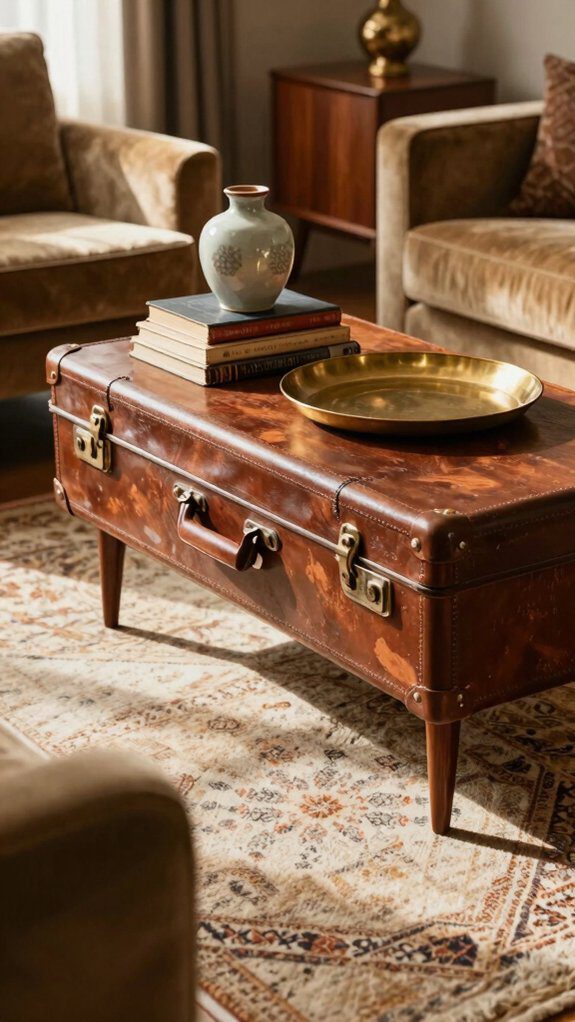
My living room needed a table with storage, so I turned a worn suitcase into a Vintage Suitcase Coffee Table instead of buying another boring box from the store.
I stacked two old luggage pieces, added short legs, and used a little glue gun help with a plywood top, and now I’ve got a sturdy upcycled luggage piece that hides blankets and still looks charmingly travel-worn.
If yours has peeling spots, don’t panic—I learned that a quick sand and seal job keeps the patina, and the brass latches still get compliments, which is honestly better than my last “fancy” DIY.
Upcycled luggage piece
I screwed the suitcase down to simple hairpin legs from IKEA, and suddenly it looked like a tiny travel story with a job to do. My living room finally felt calm, not crowded.
- I picked a sturdy Samsonite at a flea market for $28.
- I added a plywood panel and wood glue for strength.
- I kept the brass latches and old stickers.
- I tucked Dollar Tree trays inside for hidden storage.
- I styled it as travel themed decor with a knit throw.
If you want a win, try this. It’s cheap, easy, and weirdly charming. Mine holds books, snacks, and compliments.
Color Block Retro Table
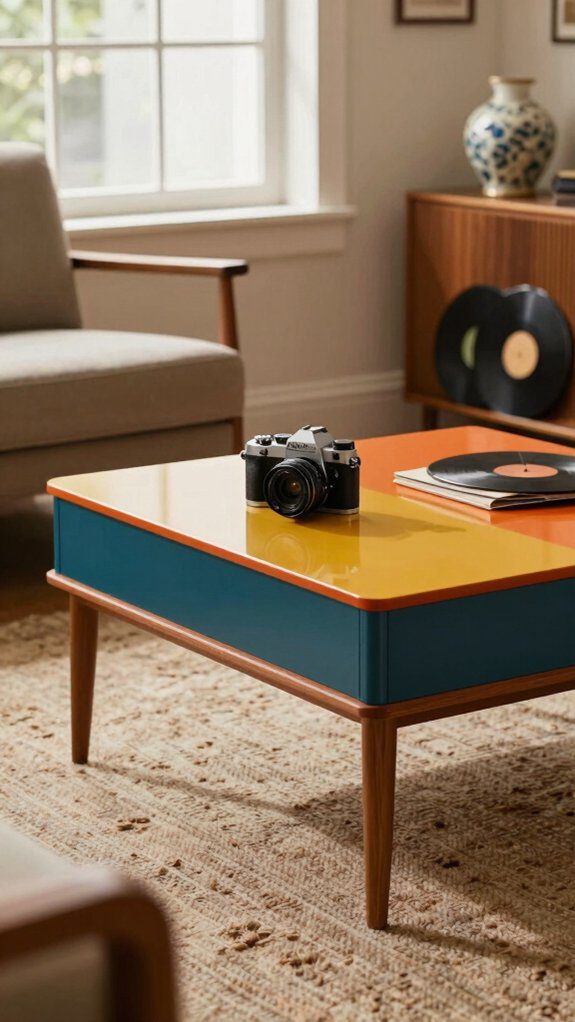
First, I sand the top down to raw wood, wipe off the dust, and brush on a bonding primer so the paint actually sticks. My color block retro table rescued my sad living room fast.
I split the tabletop with a crisp diagonal, then rolled on mustard yellow and avocado green in satin enamel—two coats each. Easy, cheap, and very 60s.
I kept the walnut legs visible, then added a cream edge for balance. A terrazzo sphere and vintage book stack did the styling; felt pads kept scratches away. If you like bold upholstery or abstract stenciling, this table fits right in. Water-based polyurethane sealed my win.