13 Sewing Hot Pad Ideas That Are Easy and Sellable
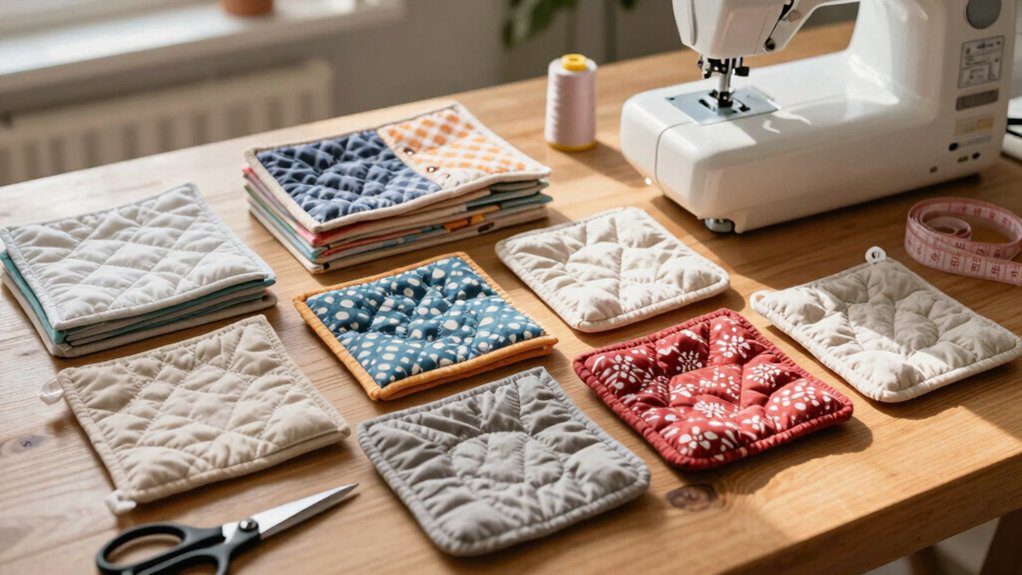
I’d start with 13 easy hot pad ideas, from simple squares and round pot holders to patchwork scraps, farmhouse checks, and festive reversible sets. Use cotton fabric, Insul-Bright, and a sturdy backing, then baste, quilt lines 1 inch apart, and finish with binding or a hanging loop. They sew fast, cost little, and look shop-ready! The best part? A few neat stitches can turn leftovers into gifts, and the prettiest surprise is still ahead, too.
Love cozy DIY projects? 💕
Get free printable guides, exclusive tutorials & surprise craft goodies straight to your inbox.
Disclosure: This post may contain Amazon affiliate links, at no extra cost to you. Content on DiyCraftNest is created with research support from AI tools and carefully reviewed, edited, and fact-checked by the lead author, Daniel Pat, to ensure accuracy and reliability. Learn more
Key Takeaways
- Make 8½-inch square quilted hot pads with cotton fabric, Insul-Bright batting, and straight-line quilting for a beginner-friendly seller.
- Sew round pot holders in 7–9 inches using concentric quilting and bias binding for a polished, heat-resistant finish.
- Use scrap patchwork, color-blocked grids, or stripes to turn leftover fabric into quick, low-cost inventory.
- Offer reversible or bundled sets with towels, care tags, and coordinated prints to raise perceived value.
- Holiday, farmhouse, or personalized versions with names or initials make easy upsells and giftable small runs.
Why Hot Pads Are a Perfect Beginner Sewing Project
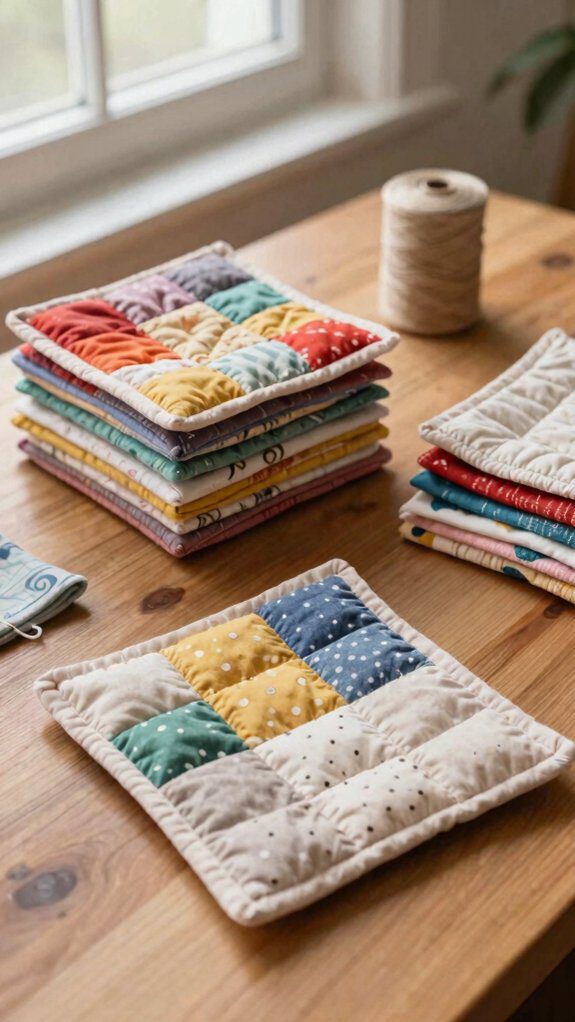
Starting with a hot pad is one of my favorite beginner sewing wins, because it’s small, quick, and forgiving—I can practice straight seams, pressing, and trimming on a piece that’s usually only 8½ to 13 inches across.
I use Insul-Bright, scraps, and a walking foot, then baste the layers, add a few straight quilting lines, and finish with binding or a wrap-around back. That’s one of my favorite beginner friendly techniques, because the result feels sturdy, useful, and totally brag-worthy.
Best part? It’s a confidence building project that teaches real skills fast, and your kitchen gets a win too!
Classic Everyday Hot Pad Designs
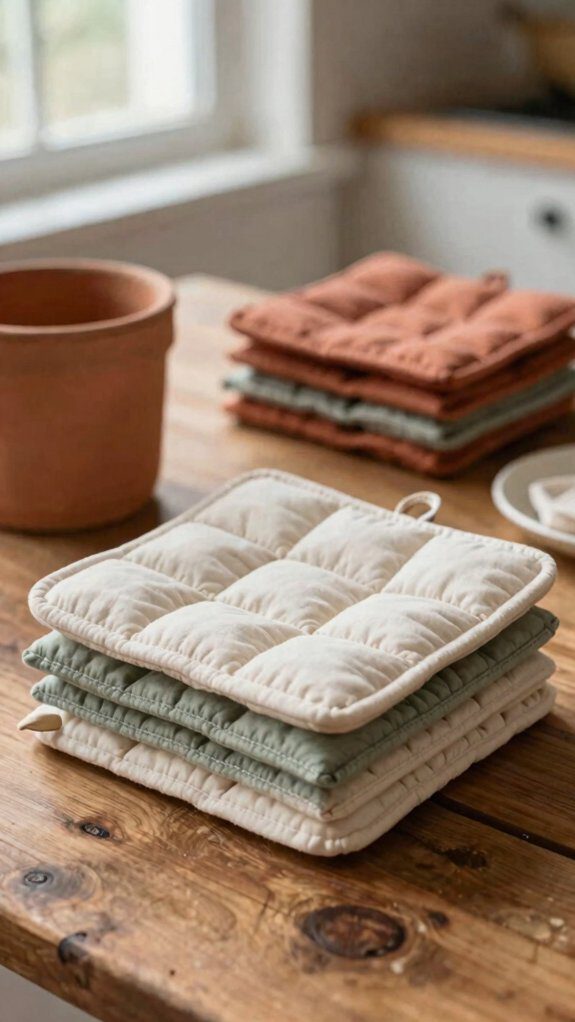
I love starting with square quilted hot pads, because a 9-inch cotton top, Insul-Bright batting, and a quick walking-foot stitch give you a sturdy, easy beginner win.
If you want a softer look, round pot holders are just as simple, and I can keep the cost low by using the same scraps and binding, so the sewing stays fast.
For the best everyday grab-and-go option, I save double-layer heat-resistant pads for last, since two layers and a neat wrap-around edge make them feel extra polished without turning the project into a hassle!
Square quilted hot pads
When I want a hot pad that looks neat, works hard, and doesn’t scare off a beginner, I reach for a square quilted design—it’s the cozy little classic of the kitchen!
I keep mine around 8½ to 9 inches, with a scrappy charm front, Insul-Bright inside, and a 9-inch backing square for that tidy seller look.
Straight-line geometric quilting, 1–2 inches apart, makes layers behave, and a walking foot helps a lot.
- Cut, layer, stitch—fast and beginner-friendly!
- Bind with a folded 2½-inch strip for a clean edge.
- Make matching sets with towels or mitts, then price near $10–$20 too.
Round pot holders
Little circle, big job—that’s how I think of a round pot holder! I sew mine 7–9 inches wide, with cotton outside, Insul-Bright inside, and concentric quilting every inch or so. I pick hand dyed textures when I want warmth, and vintage trims when I want a sweet finish that feels like home.
Then I bind the curve with bias tape, add a hanging loop, and make coordinated sets. That way, my table feels welcome, and I can price each one around $8–$20 without fuss for a friendly little display that sells fast in shops nearby and it still feels easy for beginners, every single time right here.
| Size | Look | Tip |
|---|---|---|
| 7-9in | Roundandtidy | Easytohang |
| Cotton | Handdyedtextures | Vintagefeel |
Double-layer heat-resistant pads
For a hot pad that really pulls its weight, I use two layers of Insul-Bright, a 13″ x 9″ top fabric, and a slightly larger 16″ x 12″ bottom piece that wraps around the edges for that neat, finished look—fancy, but not fussy!
I build the insulating sandwich, then quilt simple diagonals 1″ apart so it stays put.
- I keep the size standard for easy selling.
- I love color-coordinated prints; they feel welcoming.
- I finish with binding techniques and a care tag, so buyers know it’s washable and sturdy.
That’s my sweet spot for fast sewing and happy buyers!
Creative Kitchen Style Ideas
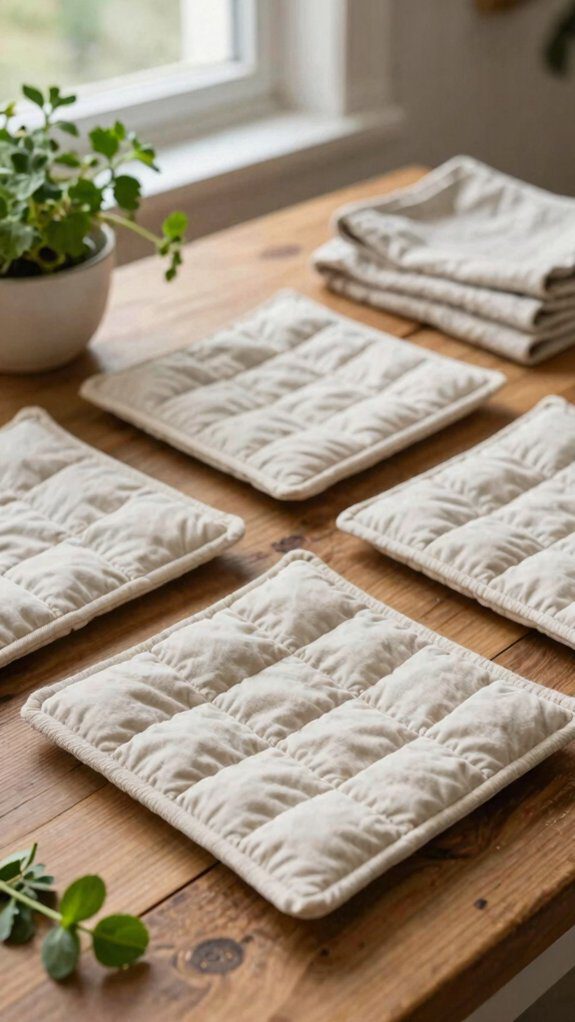
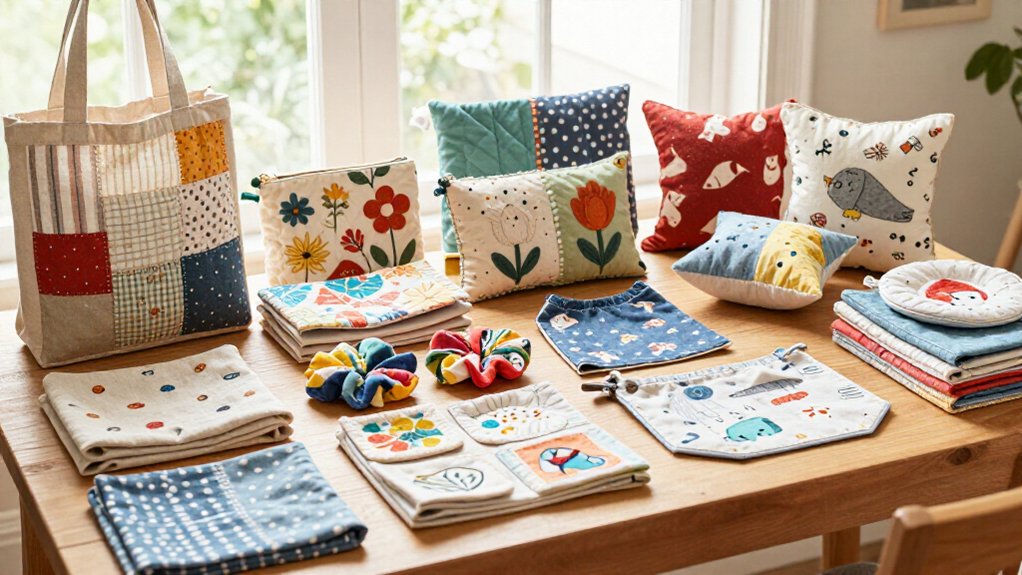
I love how patchwork fabric hot pads can turn a simple scrap pile into a cheerful kitchen upgrade, and you only need fabric squares, batting, and a few straight seams to make them happen!
If you want a cozy vibe, farmhouse-style designs with checks, stripes, and soft neutrals feel warm and easy, while a little hanging loop makes them handy too.
And for a cleaner look, minimalist modern patterns with solid colors and crisp lines come together fast, look sharp on the counter, and honestly play nice with just about any mug or casserole dish!
Patchwork fabric hot pads
Patchwork hot pads are my favorite way to turn leftover fabric into something cute, useful, and just plain fun! I grab six to twelve scraps, play with color contrast and geometric layouts, then stitch an eight and a half inch front with Insul-Bright and backing.
- Keep the top balanced, not busy.
- Quilt two to four straight lines for strength.
- Bind it neatly, and set of two sales feel like a win!
These sell well, wash up nicely, and buyers love matching sets for eight to fifteen dollars, depending on fabric quality, while the clean finish feels boutique at home.
Farmhouse-style designs
When I’m sewing farmhouse-style hot pads, I reach for cream or taupe linen, a little muted sage cotton, and simple prints like buffalo check or ticking stripes, because that cozy, lived-in look sells fast!
I add Insul-Bright, twill tape loops, and a 9-inch finish, so they fit skillets and casseroles.
For charm, I stitch barn silhouettes, roosters, or rustic typography with durable ink, and hand-embroider the edges.
Distressed linens give them that sweet, worn-in feel buyers love.
A matching tea towel bundle can bump your price, too—cute, gift-ready, and easy to make for about twelve bucks! in your shop!
Minimalist modern patterns
After all that cozy farmhouse charm, I like to switch gears and sew a minimalist hot pad with gray, black, white, or warm beige cotton, plus a simple shape like stripes, chevrons, or one off-center rectangle—it looks so clean and modern!
I keep mine 8½” square, stuff it with Insul-Bright, and finish with 2½” binding, because slim edges feel so polished.
- Cut solids or linen textures.
- Stitch monochrome chevrons, then press flat.
- Pair it with a towel for a set, and it can sell for $12–$20, which feels pretty sweet!
I love that clean look—it fits our modern crew.
Quick No-Stress Sewing Projects
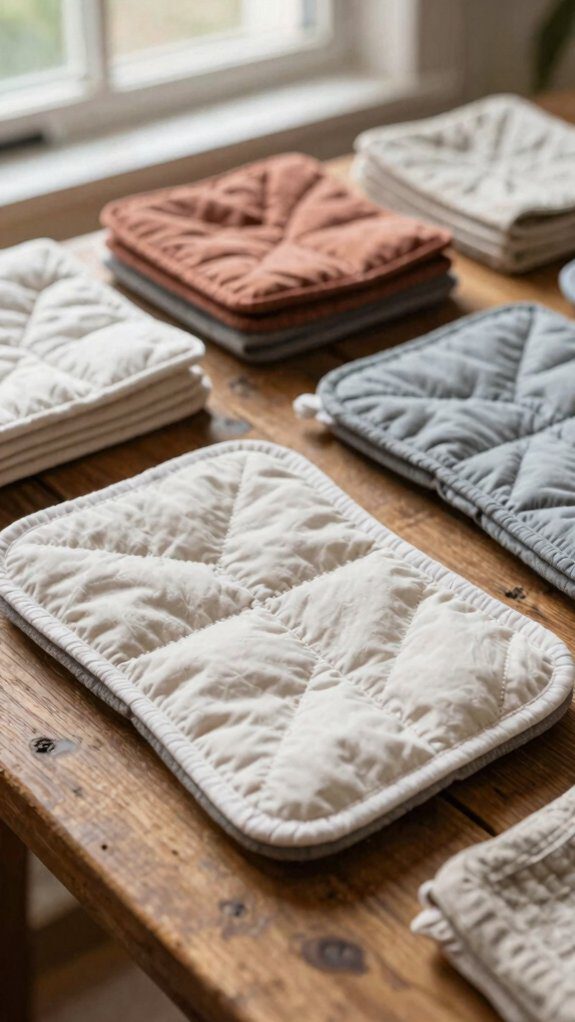
I love quick no-stress projects, and I’d start with scrap fabric hot pads, because you can stitch leftover cotton strips into a neat little square, add batting, quilt a few lines, and end up with a low-cost pad that looks way fancier than it is!
If you want something even simpler, I’d make a plain cotton pad with two fabric squares and a bit of cotton batting, then sew it, turn it, and topstitch for a clean finish that’s beginner-friendly and easy to wash.
For the best stash-buster payoff, I’d make matching square sets, since one pile of scraps can become a whole cute batch of kitchen helpers, and that’s the kind of fast win that makes sewing feel like a tiny party.
Scrap fabric hot pads
Scrap-fabric hot pads are a stitch-and-go project that turns leftover bits into something useful, and I love how fast they come together! You’ll feel right at home making them, because they’re cheap, beginner-friendly, and perfect for using up odds and ends without stress or waste in every little batch.
- I sew scraps side-by-side, pressing as I go, until the front measures about 8½” square.
- I layer backing, Insul-Bright, and the front, then stitch a few lines for a sturdy, heat-safe finish.
- I finish with a 2½” binding, keep the color mixing consistent, and get sellable sets with scrappy charm.
Simple stitched cotton pads
If you liked those scrappy hot pads, here’s a cleaner, faster version I reach for when I want a no-stress sew! I use cotton quilting fabric, Insul-Bright, and a slightly trimmed backing, then I stitch simple straight lines with a walking foot.
Color theory helps me mix prints that feel friendly, and thread selection matters too, because a matching thread makes the finish look polished. These pads cost little to make and often sell for $8–$15.
Add neat double-fold binding, and you’ve got a sturdy, gift-ready pad that feels handmade, not hurried— and buyers usually notice the difference right away.
Beginner-friendly square sets
Usually, I reach for beginner-friendly square sets when I want a cute project that won’t eat my whole afternoon!
I cut 4-inch or 5-inch scraps into tidy grids, layer Insul-Bright inside, and quilt straight lines for easy color blocking or striped layouts.
- 6-inch charm-square pads are quick and neat.
- 8½-inch blocks feel gift-ready with binding.
- 9-inch reversible sets pair with towels.
I price them small, medium, and large, so shopping feels simple, and the finished pads sell fast at craft fairs because everyone likes a clean square that looks polished, works hard, and doesn’t cost much.
Great little crowd-pleasers!
Giftable Hot Pad Sets
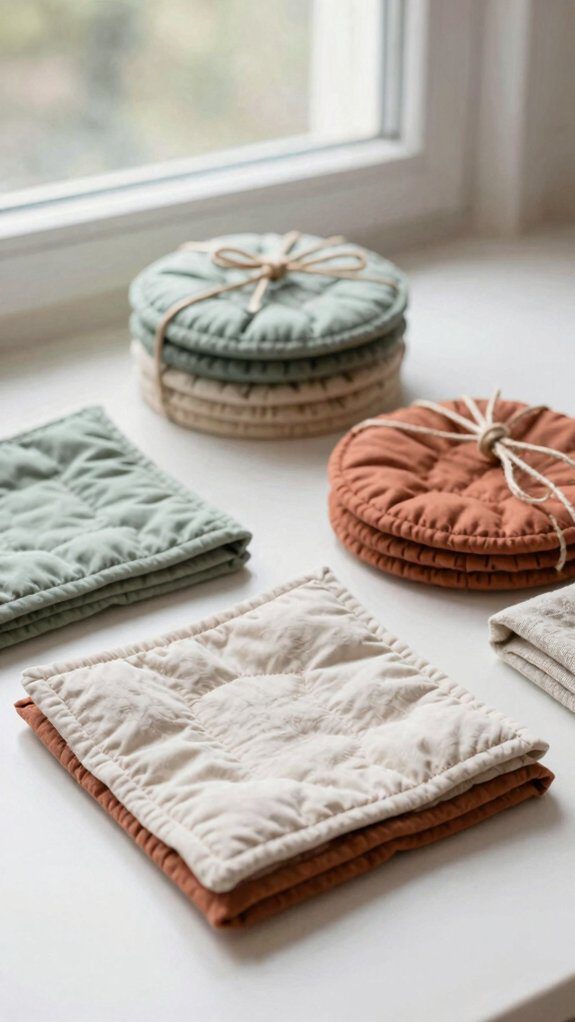
I love making giftable hot pad sets because you can turn a few fabric scraps and some Insul-Bright into a cute matching kitchen bundle fast, and it won’t cost much either—usually under $5 if I’m using leftovers!
For a fun twist, I’ll sew holiday-themed hot pads in cozy reds, greens, or snowy prints, then finish them with simple binding so they look polished and ready to gift, no elaborate wizardry required.
If you want a bigger wow factor, I add personalized fabric designs, like a favorite colorway or monogrammed look, and that tiny detail can make the whole set feel extra special.
Matching kitchen bundles
A few matching kitchen bundles can turn a simple hot pad into a gift people actually grab at a craft fair! I pair two quilted hot pads with a towel, keep the same scrap-fabric collection, and lean on color coordination so everything feels ready to give.
- Single set: budget-friendly and easy to sew
- Mid set: two pads plus towel, great value
- Deluxe: add a pocket, and make limited runs of 5-10
I list Insul-Bright, cotton, and care notes on kraft tags, then tuck them in cello. Buyers love that polished, handmade feel! It keeps your table crew looking coordinated.
Holiday-themed hot pads
Holiday scraps make the cutest hot pads, and they’re such an easy way to turn leftover fabric into gifts people actually use!
I sew 8½-inch reversible squares with Insul-Bright, a festive print on one side and a calm backing on the other, then stitch a few lines so each pad stays quick and sturdy.
I pair two or four together, tuck them into festive packaging with a care tag, and price them with seasonal pricing around $18 to $35.
I love that the set feels gift-ready fast, and I still get a thrill when scraps become a kitchen hello!
Personalized fabric designs
Personal touches can turn a simple hot pad into a little gift that feels extra thoughtful! I print names, dates, or photo transfers on 8–10″ squares, then pair them with Insul-Bright and a pretty backing.
- I batch names in custom fonts for fast orders.
- I add initials or tiny appliqué for a nicer upsell.
- I package two or four pads in clear boxes with a care card.
It’s easy, affordable, and people love seeing their story on something useful. Matching sets of two or four sell fast, and polished looks make your shop feel thoughtful, and easy to trust.
Durability and Heat Protection Tips
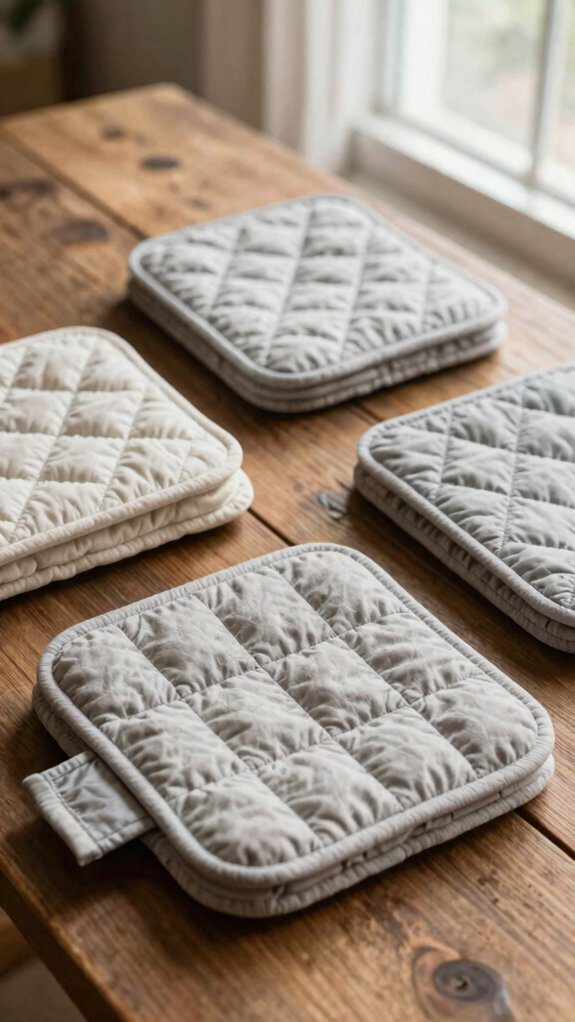
I like to build hot pads with a cotton outer layer, a piece of Insul-Bright or similar thermal batting, and a cozy extra batting layer, because that combo helps block heat and hold up after lots of use—pretty handy, right!
I also stick with safe, heat-friendly materials like 100% cotton and quilt the layers every 1–2 inches so nothing shifts around when you wash them, which keeps the pad feeling sturdy instead of floppy.
For a finishing touch, I bind the edges with a folded strip and reinforce the corners, since that’s the sneaky part that usually takes the most abuse, and it really helps your hot pad last.
Best fabric layers to use
When I’m sewing a hot pad, I reach for a sturdy cotton quilting-weight top, a cotton backing, and just one layer of Insul-Bright in the middle, because that little silver batting reflects heat without making the pad bulky.
- I pair quilting cotton with a sturdy cotton backing for easy washing and a clean finish.
- I keep insulation placement centered, so the heat shield stays smooth and the pad feels neat.
- For the strongest sell, I add dense stitching and wrapped edges, which helps it last longer.
That combo costs little, feels easy, and gives hot pads a polished look!
Safe batting materials
For a hot pad that really earns its keep, I reach for Insul-Bright first, because that metallic-coated polyester batting reflects heat back instead of letting it sneak through to your hand, and wow, that little layer does a lot of heavy lifting!
| Pick | Result |
|---|---|
| Insul-Bright | top heat shield |
| Cotton batt | microwave friendly |
| Foam or down | skip it |
I like layering a thin Insul-Bright sheet with 100% cotton batting for cushion and durability; it keeps material performance strong. Choose tightly woven cotton, and you’ll get a safe, sellable hot pad that feels right at home with insulating materials that last.
Reinforcing edges properly
Lock those layers in place, and your hot pad will feel sturdy right away! I stitch 1/4-inch from the raw edge, then bind with a double-fold strip, so the pad stays snug and heat stays where it should.
- I backstitch every seam, easy win!
- I trim corners into neat mitered edge gussets, then topstitch for less bulk.
- I love fabric cording only if I want an elegant finish, but strong polyester thread wins for busy kitchens.
That extra row near the fold? It’s the secret sauce, and it helps yours survive laundry, grippy hands, and too-hot pans all week!
Frequently Asked Questions
What Fabric Scraps Work Best for Budget-Friendly Hot Pad Batches?
Like a warm patchwork sunrise, I’d pick quilted denim and cotton muslin for budget-friendly hot pad batches; they’re sturdy, cheap, and friendly to sew. You’ll feel right at home making them with our crafty circle.
How Should I Price Handmade Hot Pads for Craft Fairs?
I’d price handmade hot pads by checking market research, then using tiered pricing: simple singles, matching sets, and gift bundles. That way, you’ll fit your crowd, feel confident, and invite buyers into your handmade community.
Can I Sell Hot Pads Made From Licensed Fabric Prints?
Yes—you can if I check the label first: about 60% of crafters face copyright concerns. I stick to licensed permissions so you and I stay in the handmade community with confidence, together, proudly, always.
What Packaging Makes Hot Pads Look More Gift-Ready?
I’d use kraft boxes with tissue paper and ribbon tags because they feel warm, handmade, and gift-ready. You’ll make buyers feel like they’re giving something special, and that sense of belonging boosts appeal right away.
How Many Hot Pads Should I Include in a Seller Bundle?
Two hot pads are the sweet spot for your seller bundle; I’d begin there, because they’re the bread and butter of a cozy set. I’d tweak set quantity with seasonal variations so you belong naturally.