How to Sew Curtains for Beginners Step by Step
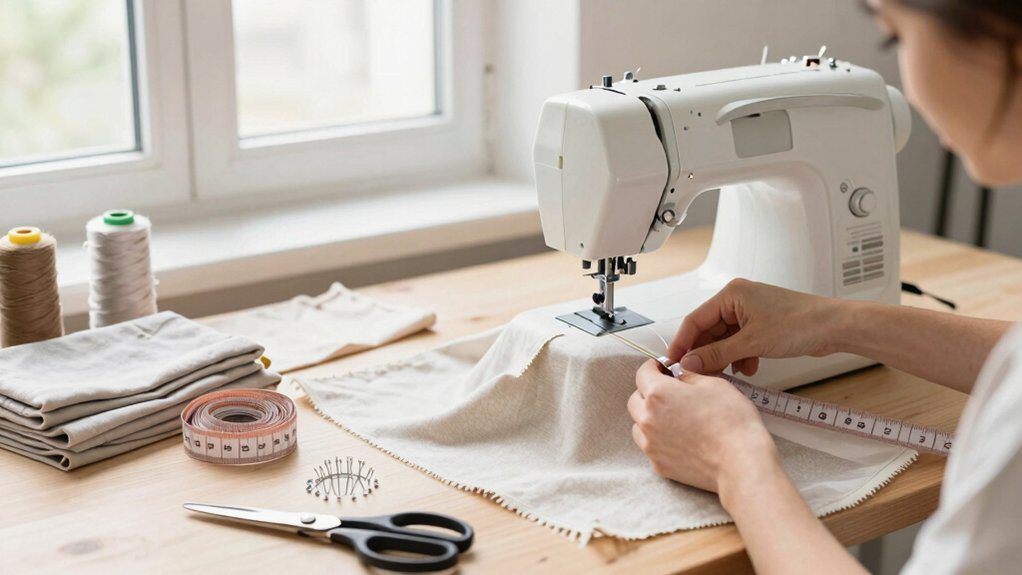
I start by picking a beginner-friendly fabric like medium-weight linen or voile, then I measure the rod, add fullness, and prewash the cloth so it won’t shrink later. Next, I cut straight, press the hems, sew the sides, and make a simple rod pocket or clip top. Hang the panels, pin the length, and tweak the hem until they skim the floor—easy! Stick with me, and I’ll share the trickiest part next, right after this.
Love cozy DIY projects? 💕
Get free printable guides, exclusive tutorials & surprise craft goodies straight to your inbox.
Disclosure: This post may contain Amazon affiliate links, at no extra cost to you. Content on DiyCraftNest is created with research support from AI tools and carefully reviewed, edited, and fact-checked by the lead author, Daniel Pat, to ensure accuracy and reliability. Learn more
Key Takeaways
- Measure your window and rod first, then add fullness, hem allowances, and extra length for shrinkage and pattern matching.
- Pre-wash natural fabrics, dry them fully, and press the fabric so the finished curtains won’t shrink or pucker later.
- Square the fabric, cut panels straight, and match any patterns or stripes before sewing.
- Sew side hems, then make the top heading or rod pocket, keeping lining about 1 inch shorter than the main panel.
- Hang the curtains, pin the bottom hem while in place, then finish with weights or a final stitch for the best drape.
Choosing the Right Fabric for Curtains
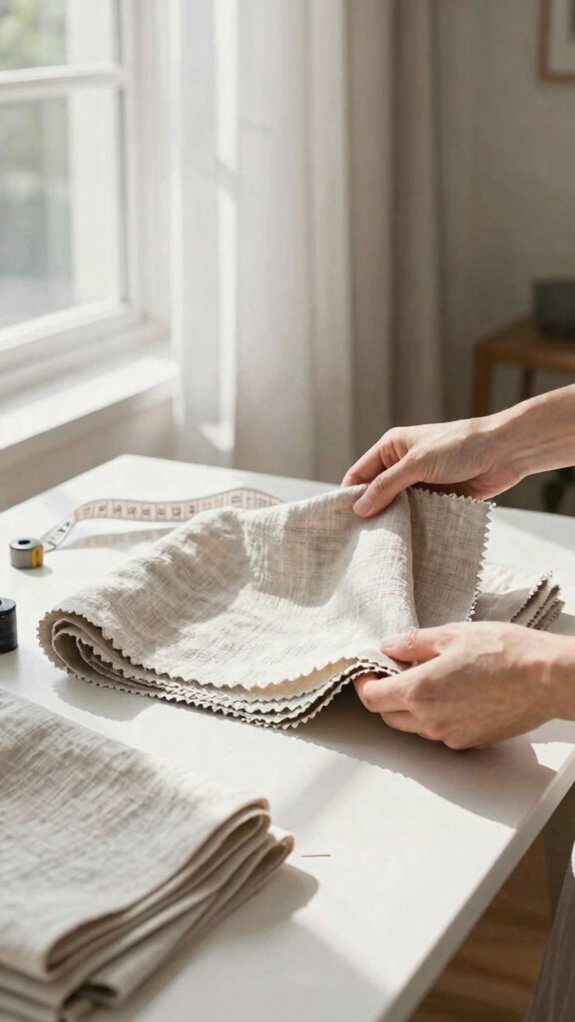
I like to start by asking you how much light you want, because a sheer voile gives a soft, filtered glow, while a heavier or lined fabric works better when you need privacy and a bit more blackout punch—no sneaky sunbeams allowed!
Before you cut, I always pre-wash natural fabrics like linen or cotton, since they can shrink a little, and that quick step helps your finished curtains stay the size you planned.
Then I check the pattern and texture, because a busy print, a nubby weave, or a smooth linen can change the whole look, and choosing the right feel makes the project way more fun!
Light filtering vs blackout fabric
When you’re choosing curtain fabric, I’d keep it simple: light-filtering fabrics like voile or medium-weight linen let in soft, pretty daylight and still give you privacy, while blackout fabrics use a special backing or lining to block almost all the light.
I like medium-heavy cloth, because it hangs nicely, feels cozy, and adds solar privacy plus thermal insulation.
If you want a darker room, I’d pair a pretty face fabric with a separate blackout lining, and that little combo works like magic! You get style, better drape, and nearly total light control, without making your project feel tricky either.
Measuring fabric shrinkage
Measuring shrinkage before you cut is one of those small jobs that saves a big headache later!
I use pre wash testing on a swatch, then I measure it before and after, because fabric stability tells me how much extra length to add.
For cotton and linen, I plan on 3–10% shrinkage, and for silk, about 2–5%.
If I’m using washable blackout fabric, I still check a scrap.
It’s cheap, easy, and way less annoying than curtains that end up too short!
Trust me, a sample now can save your project, and that’s a win for every beginner here today!
Pattern and texture considerations
For most beginner-friendly curtains, I’d reach for a medium-weight linen, because it’s easy to handle, drapes nicely, and lets in soft light without acting like a giant blanket for your window!
After that, I look at fabric scale: small to medium prints feel friendlier on windows, while big bold motifs can overwhelm. I like subtle stripes or a weave with tactile contrast, since they add interest without fuss.
Before you cut, check the pattern repeat and yardage, then pre-wash so the design stays lined. That little extra step saves money, and your curtains end up looking polished, not wobbly!
Measuring Your Windows Correctly
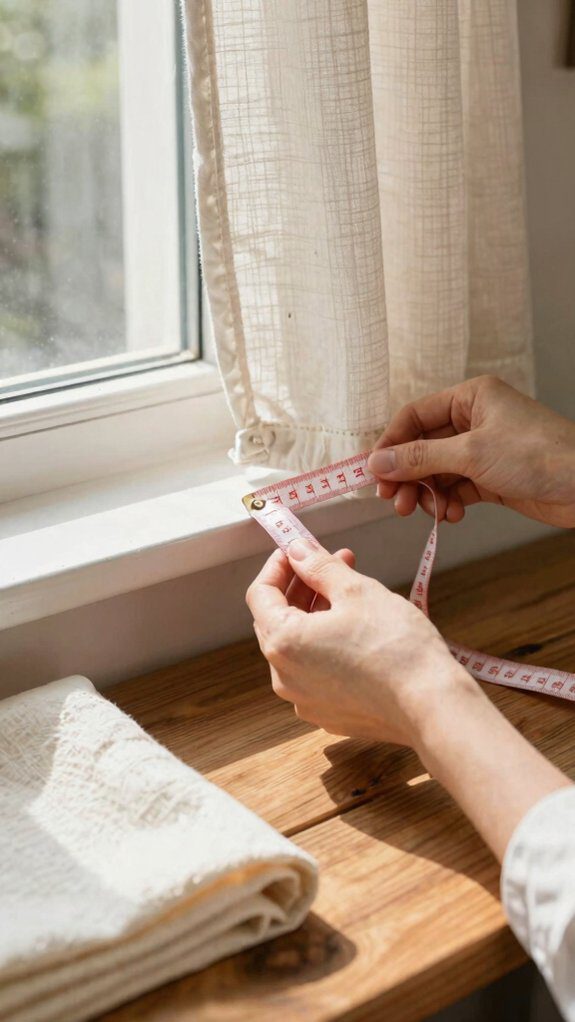
I always start by measuring the rod width, then I add the fullness I want and split it between the panels, because a little extra width makes curtains look nicely gathered, not tight and sad!
Next, I measure from the top of the rod or casing down to the hemline I want, then I add hem and seam allowances so I don’t end up with “oops, too short” curtains. That tiny extra bit matters more than you’d think, and trust me, it’s way easier to trim later than to wish fabric could magically grow!
Width calculation basics
Grab your tape measure and start at the curtain rod, not just the glass—this tiny switch saves a lot of “why are my curtains acting shy?” moments!
I measure the rod placement and rod width, then pick fullness ratios: 1.5 for a relaxed look, 2.0 for cozy, gathered drapes. For a 60-inch rod, I’d need 120 inches total, or 60 per panel on two panels. Then I add 1 inch for seams, plus extra if clips, tabs, or pattern repeats steal space.
If fabric is narrow, I join widths—no shame, tidy seams and a happier window! every time, honestly.
Length and drop measurement
Once you’ve nailed the width, the next big win is getting the length right—because curtains that hang in the wrong spot can look a little awkward, and nobody wants that!
I measure from where the rod will sit, usually a bit above the frame, down to the floor or my chosen hem point. If I’m using ring clips, I include that extra drop, and for lining, I keep it about one inch shorter so it stays hidden.
Want floor pooling? I pin the curtain while it hangs, mark the spot, and sew. Child safe hems feel neat too there.
Allowing for hems and seams
When I measure for curtains, I always start with the finished length—from the top of the rod, including any ring or hook drop, down to the floor or wherever I want the hem to land—because that’s the number I use to plan fabric, not the wishful-thinking version! Then I add my fabric allowance:
| Add-on | What I do |
|---|---|
| Rod pocket | Double the pocket allowance. |
| Hems and seams | Add fabric allowance, seam allowances, and pattern match room. |
That extra space saves headaches, and my curtains hang straight, not shy and squished! Pretty budget-friendly, and I can trim the final hem later.
Cutting Fabric Without Mistakes
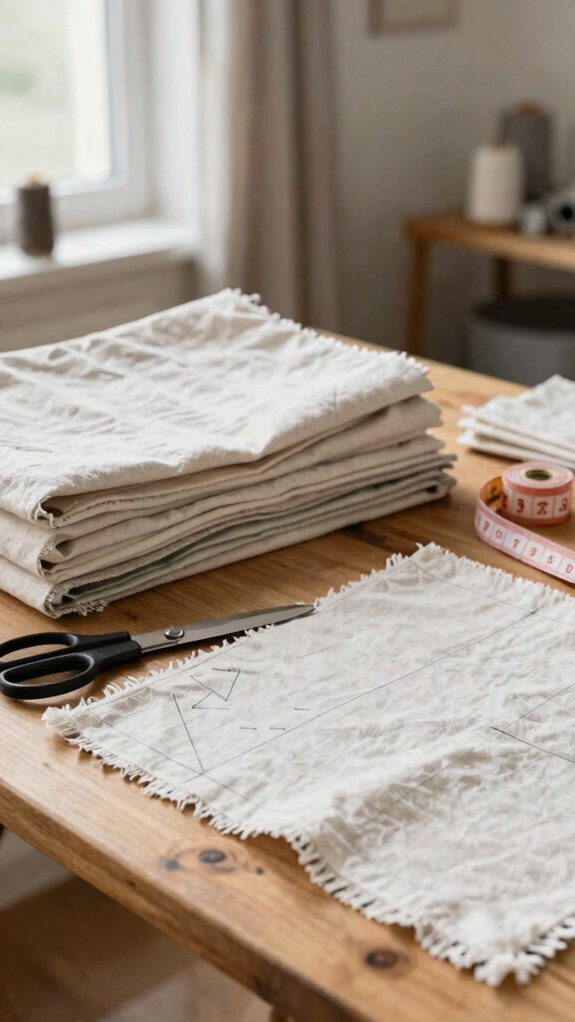
I like to start by flattening the fabric, trimming the selvage, and marking the full panel length with a long ruler or yardstick—trust me, a straight guide beats eyeballing every time!
Then I cut in one smooth pass with sharp scissors on a big flat table, which keeps the edge clean and saves you from wonky curtain drama.
If the fabric has a pattern, I line up the panels right side up before I cut, so the stripes or flowers match across the seams instead of squabbling like tiny fabric cousins.
Straight line cutting tips
Before I touch my scissors, I always strip off the selvage first, because that little edge can mess with your straight-grain measurements and make your curtain panel wander off like it’s late for dinner!
Then I square the cloth by pulling a thread or following the weave, so the cut starts true.
I mark the length in a few spots, keep the fabric flat with pins or weights, and cut in one long, smooth cutting cadence.
That steady move beats short snips every time, especially on bias fabric, and your curtains hang neat instead of wobbly for beginners, too!
Using rulers and guides
Grab a straight ruler or yardstick, a fabric marking tool, and your big scissors, and let’s mark the full panel length first, including the rod pocket and hem allowance—so a curtain that finishes at 100″ might get marked at 112″ total, easy peasy!
| Tool | Why | Tip |
|---|---|---|
| ruler | straight cuts | hold tight |
| chalk | clear marks | stay calm |
I recheck measuring accuracy at several points every 12–18 inches, then I connect them with chalk or pins so the ruler won’t skate. On a table or floor, I keep cutting ergonomics, and for repeat panels, I use a template—my fastest win!
Pattern alignment basics
Patterned fabric can turn curtain sewing into a little matching game, and that’s where smart layout saves the day! I always remove the selvage, square the cloth, and pick one straight grain edge first, so the pattern repeats run true. Then I lay panels right side up, leave extra length for seams, and check motif matching across each width.
- Trim one clean reference edge.
- Match repeats before cutting.
- Stack layers, pin, then cut.
For directional prints, I face every panel the same way. It costs nothing extra, and the finished curtains look polished, not patchwork! That little check-up keeps seams calm, and honestly, it saves me from the zigzag parade nobody invited on match day, easy win today.
Step-by-Step Curtain Sewing Process
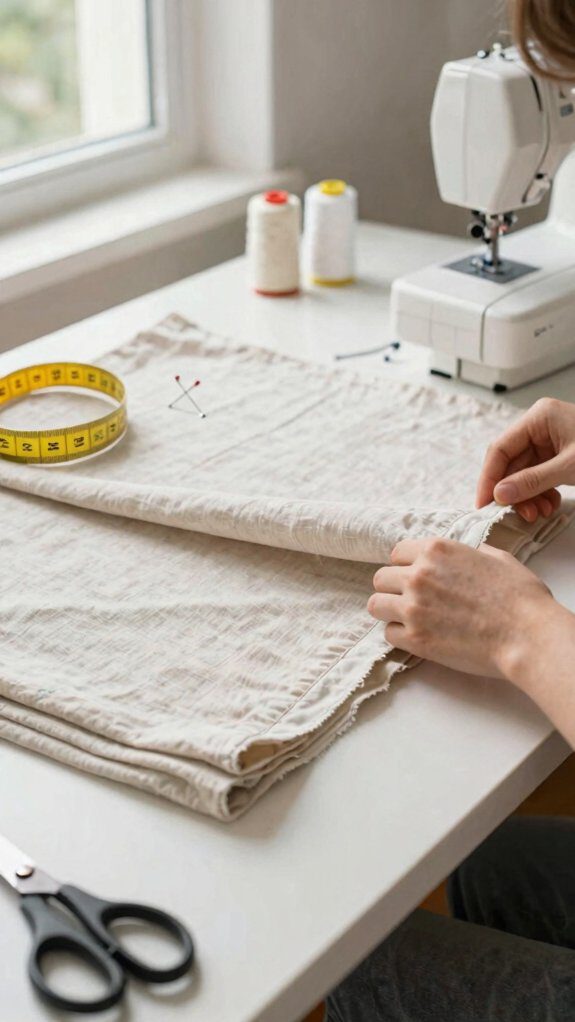
I start by pressing your fabric, then I sew the side seams evenly and hem the edges, because that keeps the panel straight and makes the whole job feel easier than it looks!
Next, I fold and stitch the top edge into a rod pocket or loops, and if you want a little ruffle or extra strength, I add a second line of stitching just below the fold—simple, right?
Once the curtain hangs, I tweak the bottom hem for that floor-grazing finish, and you’ll end up with a clean custom look without spending much, which is pretty sweet!
Hemming the edges
Let’s smooth those edges first, because a neat hem can make homemade curtains look surprisingly polished without costing a fortune!
I press side hems with a double fold, ¼ inch first, then ½ to ¾ inch more, and stitch close to the inner fold.
- Press with steam.
- Hang, then pin.
- Add weights last.
For bottom hems, I use a double 4-inch fold, keep the lining 1 inch shorter, and let curtain weights quiet the sway.
Fabric adhesives and decorative trims can save a wobble, but clips are kinder to delicate cloth, and that’s a win for our crew today!
Creating rod pockets or loops
Measure your rod first, then add 1 to 2 extra inches so the pocket slides on without snagging, because nobody wants curtains acting like they’re stuck in traffic!
I fold the top edge down 1/2 inch, press, then fold again to the pocket depth, 3 inches for thin rods or 4 inches for thicker ones. I stitch close to the lower fold, backstitching ends so tunnel feels strong.
Want flair? Add rod pocket ruching with second line above it. For loop tab alternatives, I use 2×4 strips, space them, and cover ends with header strip. Cute, easy, wallet-friendly!
Sewing side seams evenly
Press those long curtain edges into tidy little tunnels, because neat side seams make the whole panel look custom instead of homemade. I fold each edge twice, then press firmly for a smooth hem.
- Fold twice, press firmly.
- Mind needle tension.
- Stitch close.
I lower the needle when I pause, and I guide the hand wheel around corners gently. That keeps the seam feeding evenly, and it saves you from stretched edges and wavy bumps later, too. It’s beginner-friendly, costs little, and the result feels crisp, calm, and ready to belong in your room, like it was always there.
Finishing the top edge
Now I handle the top edge, and this is where the curtain starts acting like a real curtain! I fold the fabric 1/2” once, press, then fold again to make the pocket size I want, whether it’s 2″, 3″, or 4″ for my rod.
If I’m adding pleated headings or decorative trim, I stitch the ruffle line first, then add a second line for the channel. For ring clips, tabs, or gathering tape, I sew from the back, keep the lining a little shorter, and press everything hard. That neat finish feels like a tiny victory for us together!
Hanging and Adjusting Curtains
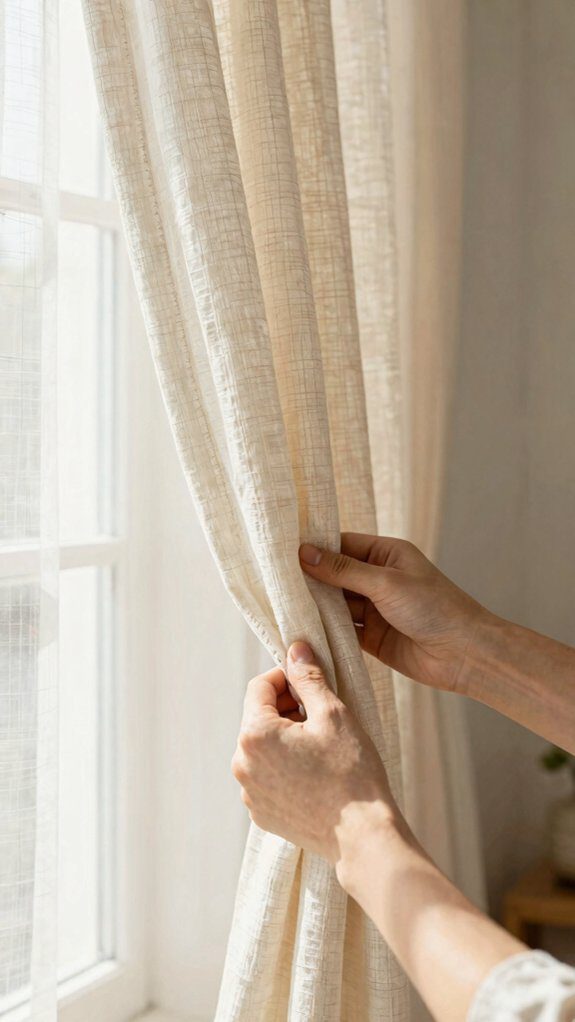
I like to hang the panel on the rod first, and if it’s a rod pocket, I test the fit before I get too cozy with the scissors—no surprise wrestling match needed!
Once it’s up, I spread the gathers or clips so both panels look even and hang in a smooth, happy drape.
Then I let the curtain settle, pin the hem while it’s still hanging, and tweak the length until it just kisses the floor or clears it by a hair.
Rod placement tips
When I’m hanging curtains, I start with a tape measure, pencil, and level, then I mount the rod 4–6 inches above the window casing—or even higher, close to the ceiling, if I want the window to look taller and the panels to slide past the trim like a dream!
- I add 3–6 inches per side, so views stay open.
- For spans over 48 inches, I use a center bracket and extra supports every 36–48 inches; that bracket spacing keeps things steady.
- With rings, I include the drop in my math, then pin hems while curtains hang for a finish.
Achieving even drape
With the rod up, I hang the panels, grab a tape measure, a few pins, and a level, then pin the bottom hem while the fabric’s still hanging so it just grazes the floor—or whatever clearance you want—on both sides.
Then I check fabric slack, and if your folds look shy, I use gathering tape or hooks to spread fullness evenly, about 1.5× the rod width for a cozy, tailored feel.
Tiny weights in the hem corners help with weight distribution, and a quick step back shows me whether both panels mirror each other.
Nice, right? We’re set now!
Fixing length issues after hanging
A too-long curtain isn’t a disaster, promise! I hang it, pin the hem at the right height, and leave 1/2″–1″ for sewing. If it’s still off, I fold a double hem, or use fusible tape for a fast fix.
- Measure both panels from the rod or floor.
- Trim, press, and re-stitch for a clean front.
- Add weights inside the hem for better weight placement and visual balance.
That last step is my secret: the curtain stops billowing, stays even, and looks happily polished. You’ve got this! No elaborate tools, just patience, a ruler, and a cheerful little smile.
Frequently Asked Questions
What Are the Common Mistakes in Hanging Curtains?
Common mistakes include incorrect rodplacement, rods hung too low, panels too narrow, uneven hems, wrong length, and flimsy hardware. I’d help you avoid them so your curtains look polished and feel right in your space.