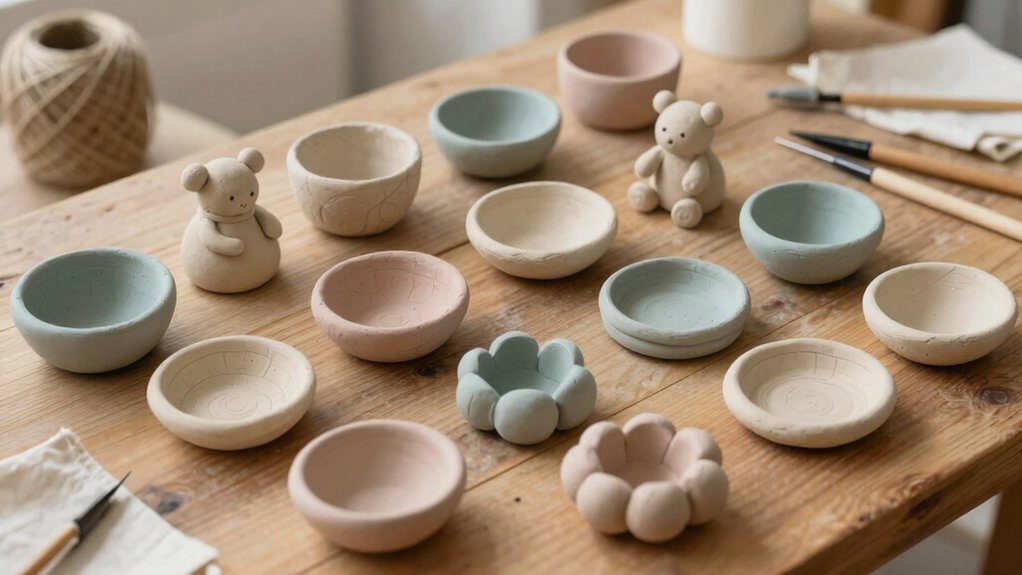
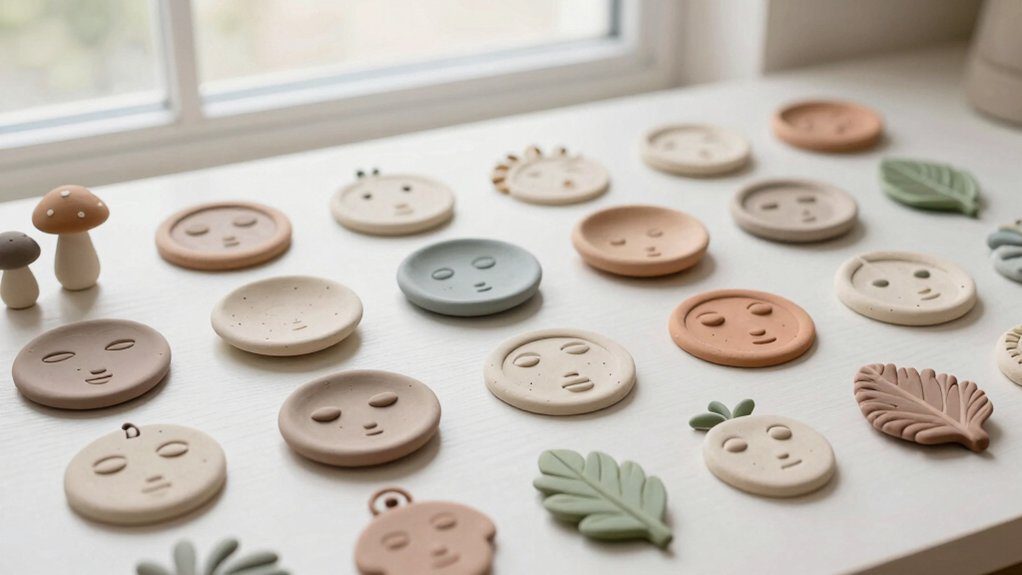
21 Air Dry Clay Art Ideas That Go Viral on Pinterest
I’m sharing 21 air dry clay ideas that look straight out of Pinterest without pricey supplies: flowers, mushrooms, fairy houses, tea light homes, textured tiles, magnets, ornaments, and kid projects. I’d roll, press, score, dry, then paint and seal for a polished finish. Start with clay, a damp finger, and simple tools, and you’ll get cute pieces fast! Stick with me, because the surprise favorite is waiting near the end, with even more ideas ahead.
Love cozy DIY projects? 💕
Get free printable guides, exclusive tutorials & surprise craft goodies straight to your inbox.
Disclosure: This post may contain Amazon affiliate links, at no extra cost to you. Content on DiyCraftNest is created with research support from AI tools and carefully reviewed, edited, and fact-checked by the lead author, Daniel Pat, to ensure accuracy and reliability. Learn more
Key Takeaways
- Make sculptural clay flowers with teardrop petals and textured veins for a delicate, high-aesthetic Pinterest look.
- Create tiny mushroom sets, succulent planters, and marbled coil pots for cottagecore and modern home-decor appeal.
- Shape tea light houses and candle holders with pierced openings to add cozy glow and shareable seasonal charm.
- Design lightweight earrings, bookmarks, tags, and keychains for fast, giftable projects that photograph well.
- Finish pieces with sanding, paint, varnish, mica, or gold accents to make them polished and Pinterest-ready.
Air Dry Clay Flower Sculptures
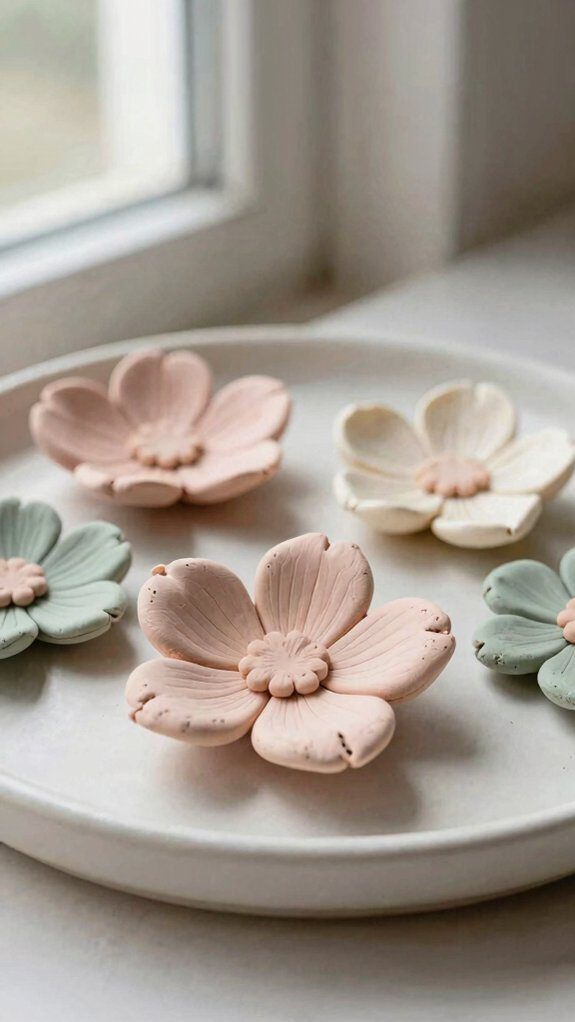
Usually, I grab air-dry clay, a little water, and a cheap rolling pin when I want to make flower sculptures, because they’re beginner-friendly, low-cost, and honestly pretty hard to mess up.
I shape stems with tiny coils, then roll thin teardrop slabs, about one to two millimeters thick, and overlap them around a clay center. Gentle wet fingertips soften the edges fast, giving botanical textures and petal translucency. If you want strength, slip wire inside stems, set it on a breathable surface, and turn it as it dries, usually in one to three days. Paint after, seal, and wow!
Air Dry Clay Mushroom Decor

I reach for air-dry clay when I want to make tiny mushrooms, because they’re the kind of craft that looks elaborate but only needs clay, a toothpick or sculpting tool, and a little sandpaper—easy, cheap, and oddly addictive!
I keep the process beginner-friendly: roll clay, stack a cap, texture the top, and let it air-dry 24-72 hours. Then I paint, speckle, and varnish for a cottagecore finish.
| Size | Use |
|---|---|
| Tiny | Desk |
| Tall | Shelf |
For mushroom displays, I add a coin base so they stay put; under moody lighting, the pierced cap with a tiny LED tea light steals your space, too!
Air Dry Clay Fairy Houses
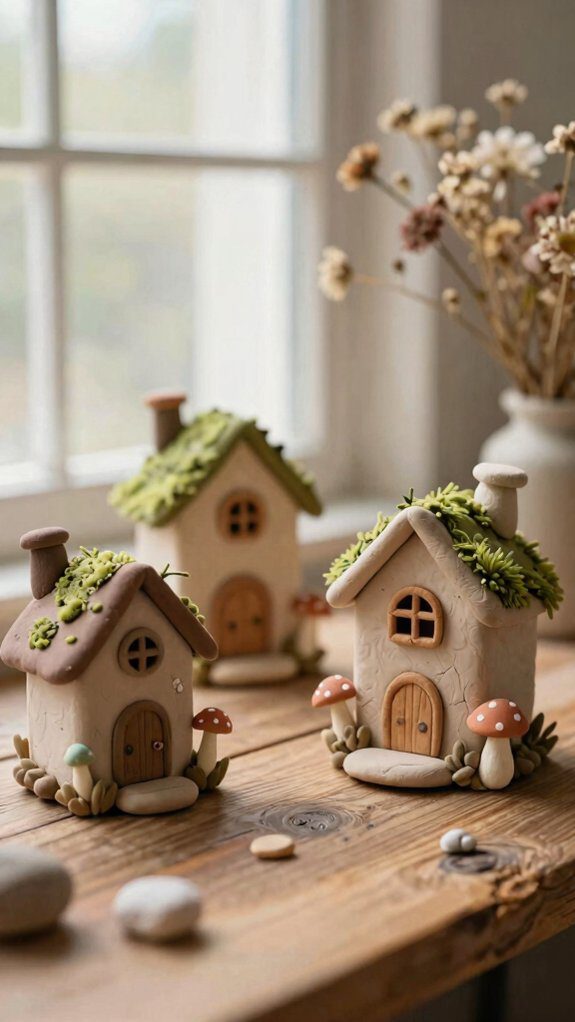
With just air-dry clay and a few household tools, I can build a tiny fairy house that looks way fancier than it is—so satisfying!
I roll 1/4-inch coils for walls, press 1/8-inch slabs for doors, and texture them with a toothpick, a serrated spoon, or mesh. A tiny 2-inch door makes the woodland scale feel real. For bigger pieces, I tuck in wire or cardboard, then let them dry under a damp cloth so they won’t crack.
If you want more wow, you can paint, dust on mica, add moss, and save teacup transformations for grand finale at home!
Air Dry Clay Tea Light Houses
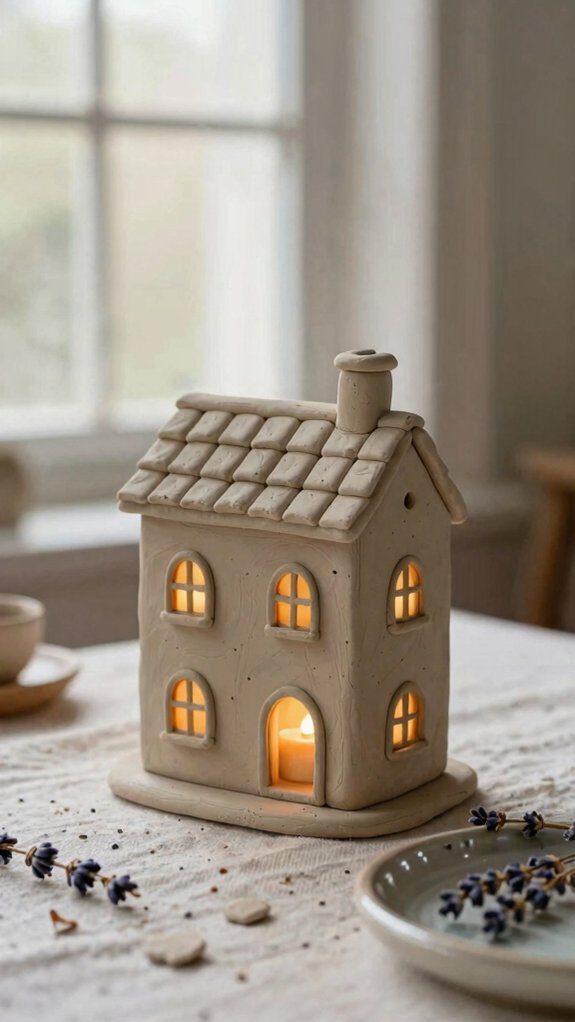
Tiny clay houses get extra magical when I turn them into tea light holders! I build them 2–5 inches tall, with thin walls, and I cut doors and windows before they dry.
- Coiled or slab clay, simple tools, and a flat surface.
- Slow drying, sanding, and a coat of paint or clear varnish.
- Battery LED tealights, so the glow patterns stay safe and cozy.
When I light mine, the tiny openings throw warm glow patterns, like little miniature villages at dusk.
You’ll get a result without much fuss, and the charm makes me smile every time.
Air Dry Clay Textured Wall Tiles
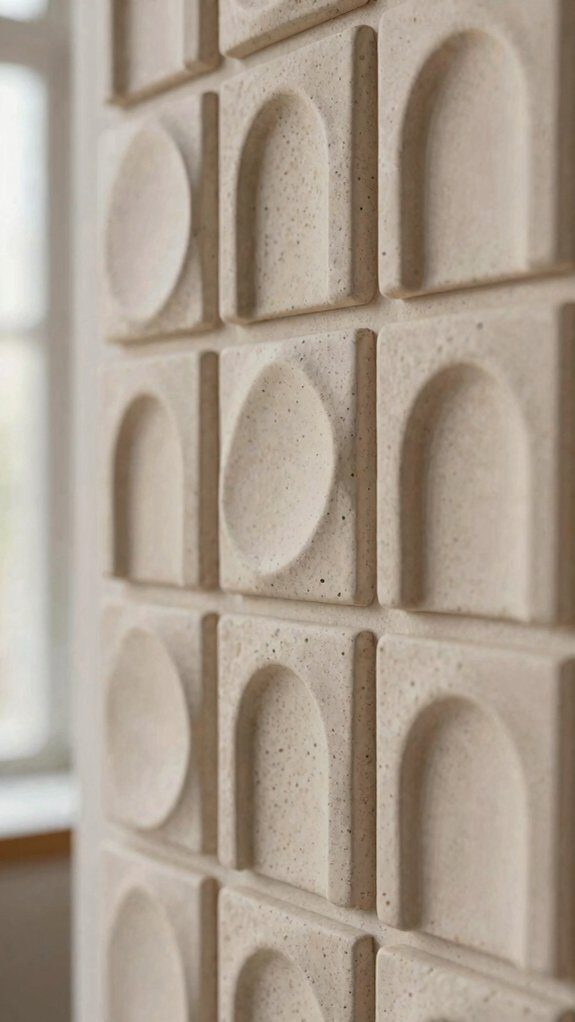
Usually, the magic starts with a rolled-out slab of air-dry clay, and I keep mine about 1/8 to 1/4 inch thick with spacers so the tiles dry more evenly.
I stamp leaves, press fabric, or carve lines for texture variations, then cut 3×3 or 6×6 squares, score-and-slip the backs, and let them dry flat.
After 24 to 72 hours, I sand, prime, paint, and seal with a matte coat.
For easy installation methods, I glue the tiles to plywood or MDF and hang the panel with a hidden cleat.
Cheap, bold, and so satisfying for your cozy little wall.
Marbled Air Dry Clay Hexagon Coasters
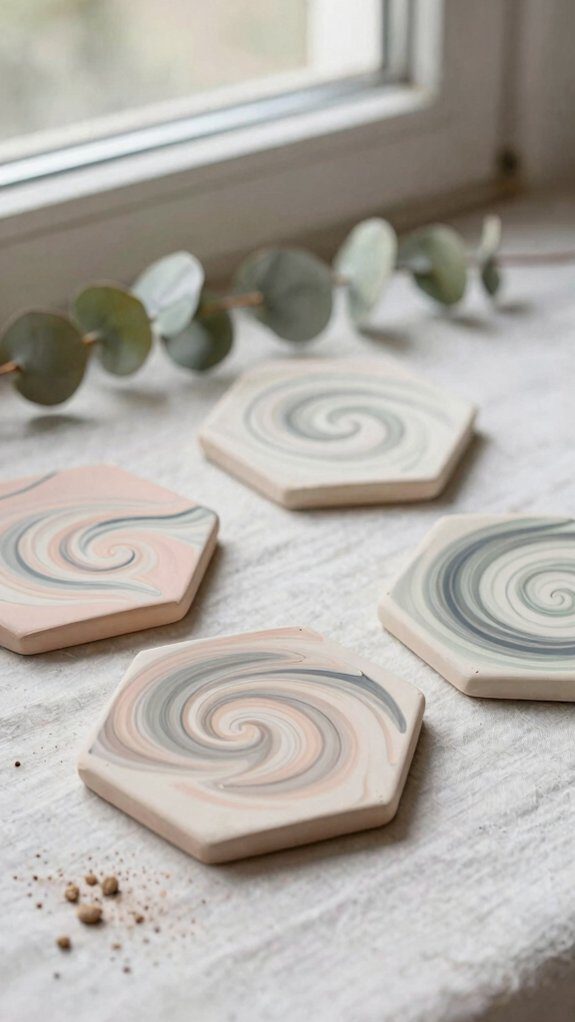
I love mixing two or three thin slabs of air-dry clay into a swirled marble pattern, because a little twisting goes a long way and keeps the colors looking bold and fun!
Then I roll it out to about 3–5 mm thick, cut neat hexagons with a simple template, and suddenly you’ve got a coaster set that looks elegant without the elegant price tag.
After it cures flat, I sand the edges smooth and seal it with two coats, so your pretty little tiles can handle mugs, spills, and the occasional tea disaster.
Mixing Marble Colors
When you want a chic stone look without spending much, I love mixing white, gray, and terracotta air-dry clay into marbled hexagon coasters—it’s easy, cheap, and way more fun than it has any right to be!
I keep my color layering loose, because the best veining techniques come from imperfection, not overmixing. Try this:
- Roll thin snakes of each color.
- Twist them lightly, just enough to buddy up.
- Flatten once, then stop—trust me, the streaks look elegant, not muddy.
That’s it, and the result feels handmade, cozy, and Pinterest-ready for our crafty crew.
Seriously, friends will ask for tips.
Shaping Hexagon Coasters
Grab two marbled clay slabs, about 3–4 mm thick, and lightly twist them together before rolling once more—I like to keep the streaks soft, not muddy, so the veining still pops like little stone ribbons. Then I cut each shape with a hexagon cutter or paper template, leaving a tiny margin for edge finishing after drying.
That buffer helps me sand crisp lines later, and it’s a color theory move too, because clean angles make the marble look polished, not busy. I keep the clay even, and these coasters look really boutique-level without costing much at all for friends!
Sealing For Durability
Now that the hexagon shapes are set, I like to play defense and seal them up so they can handle mugs, condensation, and the occasional oops-spill! For long term waterproofing, I brush on diluted PVA, let it dry, then sand smooth.
- Two thin acrylic varnish coats, 30–60 minutes apart, keep the finish cute.
- I hit edges and undersides with water-based polyurethane for sneaky drips.
- For extra temperature resilience, I use epoxy if I want a glossy, tougher coat.
It’s cheap, beginner-friendly, and honestly, your coasters’ll feel like the cool kids on the table, every coffee break!
Air Dry Clay Trinket Dishes
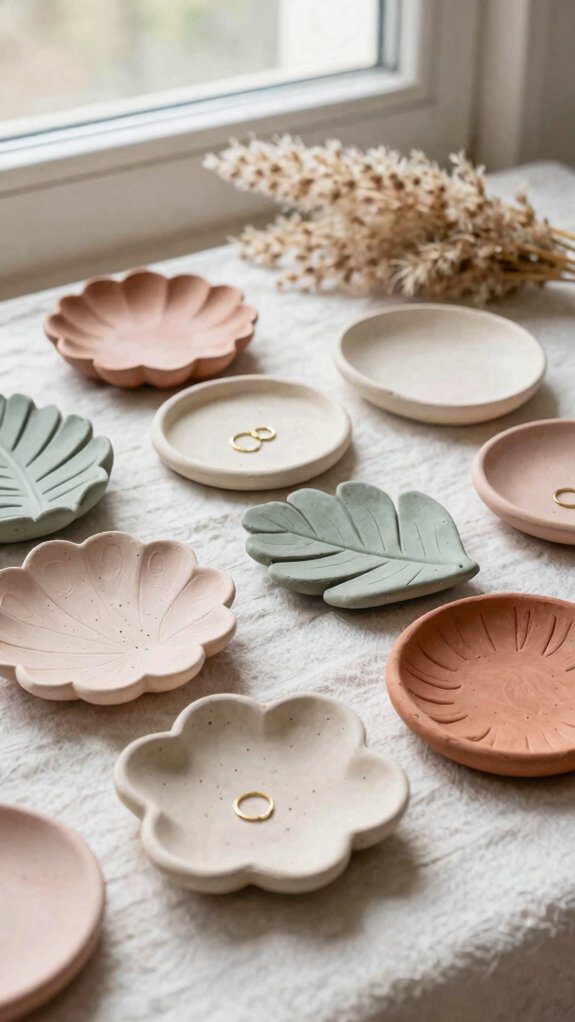
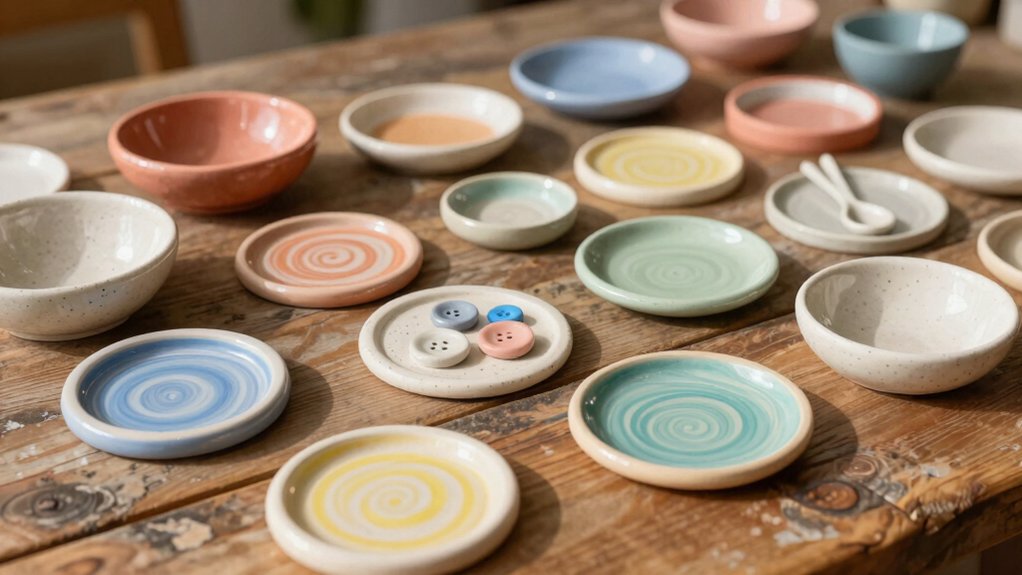
Usually, I start an air-dry clay trinket dish with a small lump of clay, a rolling pin, and a bowl or plate to use as a guide, because this is one of the cheapest and easiest DIYs around.
I keep walls under a quarter-inch, then dry it under a cloth before setting it in air for 24 to 48 hours. Marbling two colors makes gorgeous swirls for minimalist trays, and pressed botanical inlays or a stamped rim give it a polished look. Sand lightly, seal with a water-based coat, and you’ve got a catchall—tiny, sturdy, and giftable! So fun!
Air Dry Clay Ring Dishes
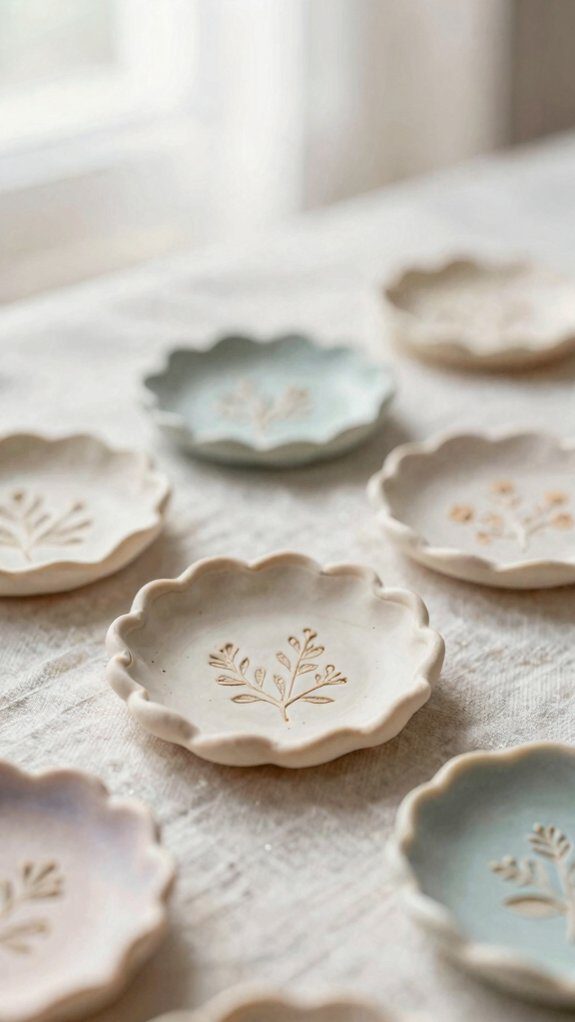
Little ring nests, big charm! I make air dry clay ring dishes that fit a few rings, earrings, and tiny treasures, and they dry flat so they stay neat. For a quick polymer clay comparison, air-dry clay feels more cottage-crafty and costs less.
Try these jewelry storage hacks:
- Marble two clays for swirls.
- Press a leaf or shape a hexagon.
- Sand after a day, then seal it.
Add felt pads or a tiny stamp before varnish, and you’ve got a gift that looks pricey, works fast, and makes your dresser grin! No fuss, just charm, friend.
Air Dry Clay Bud Vases
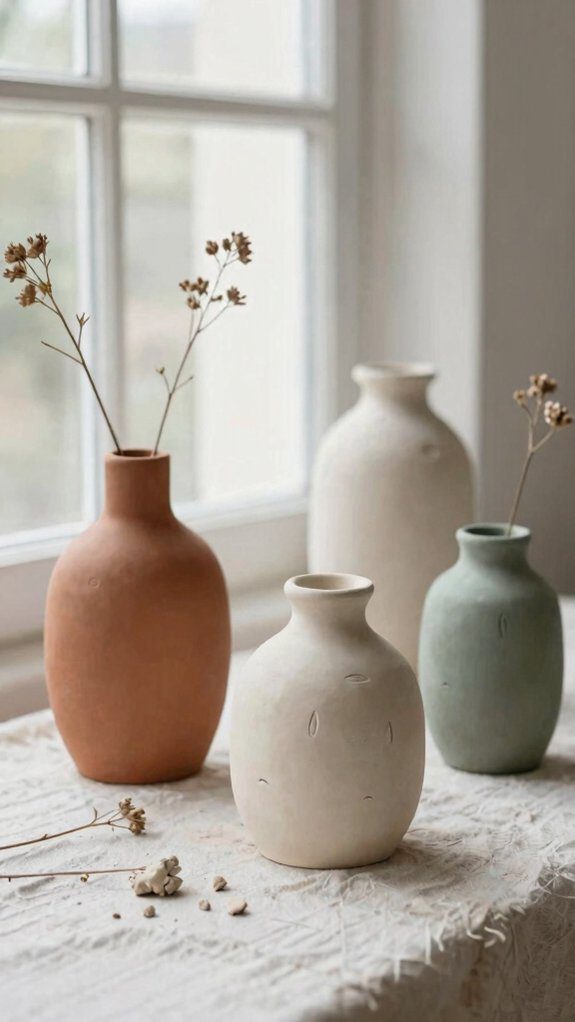
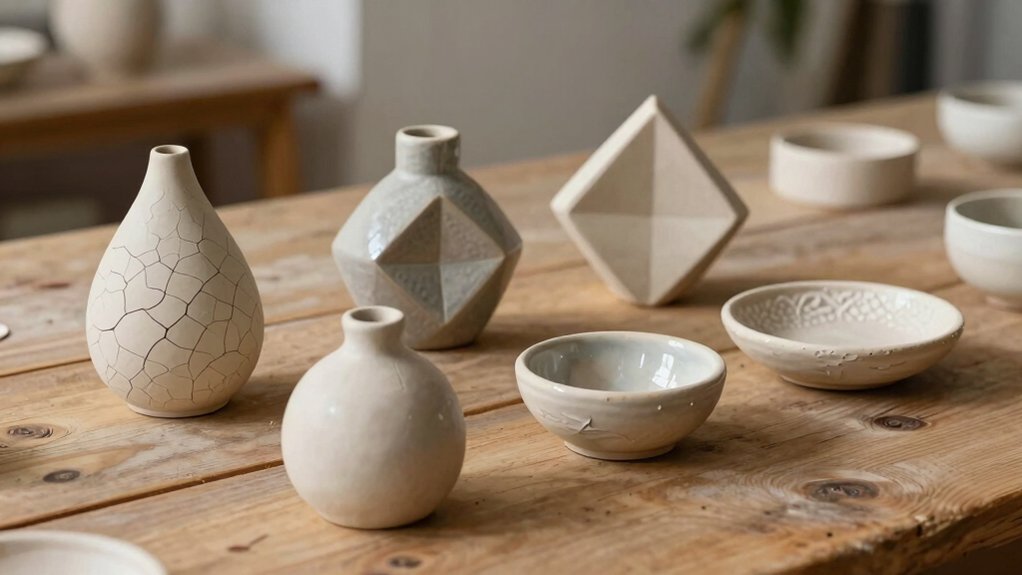
After those charming ring dishes, I like moving to air dry clay bud vases, because a tiny vase can make even one lonely stem look like it hired a stylist! I build miniature vases with coils, and I keep the joins damp so they won’t crack.
| Step | Result |
|---|---|
| Roll 1/4-inch coils | Strong sides |
| Add botanical embossing | Cute texture |
| Dry under plastic, then seal | Fresh or decorative |
This budget-friendly idea feels easy, and if you want fresh stems, prime it and seal it with waterproof varnish; for dried sprigs, I love a matte finish with tiny gold-leaf accents around rims!
Air Dry Clay Planters for Succulents
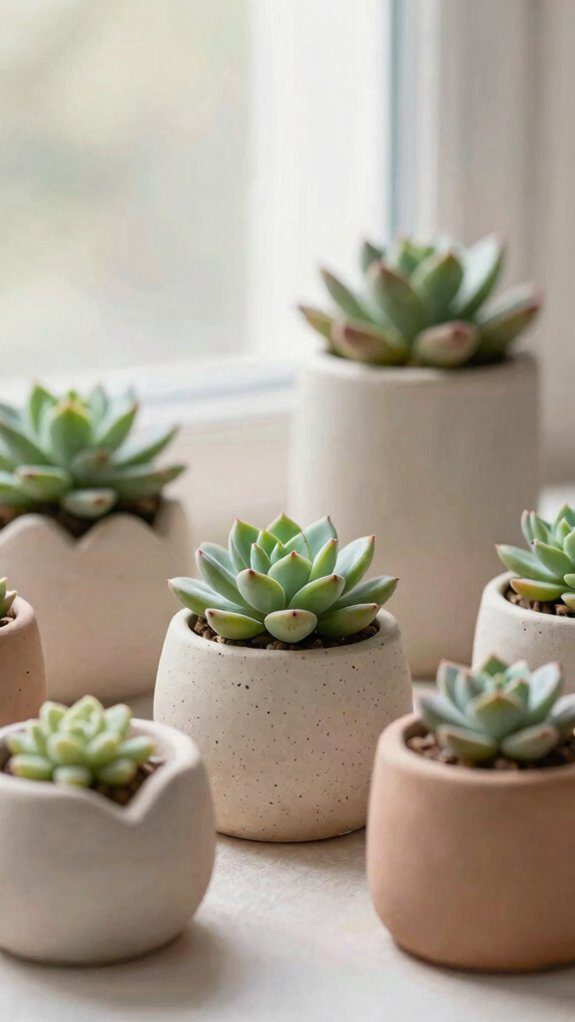
For tiny succulents, I like making little air dry clay planters that feel cute, cheap, and surprisingly sturdy! I roll out clay, add PVA glue, shape 3–5 inch pots, and poke a hole or gravel layer for succulent drainage. Then I seal them, let them cure, and they’re ready in a day or two.
- Marbled swirls look elegant.
- Faceted slabs feel modern and make great gifts.
- Lightweight clays or perlite help lightweight hangers stay easy to hang.
Honestly, my friends ask where I bought them, and that’s the best part—I didn’t shop at all, wow!
Air Dry Clay Coil Pots for Tiny Plants
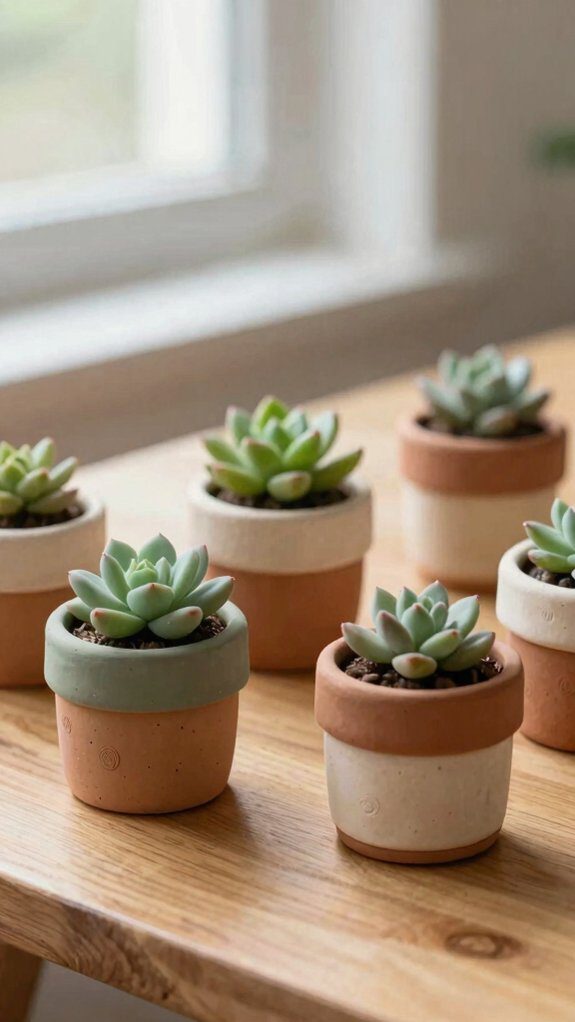
I love making tiny coil pots with just air-dry clay, a little water, and my fingers, because rolling 6–12 mm coils and spiraling them up feels easy, cheap, and honestly kind of relaxing!
If you’re shaping one for a small succulent, I keep it shallow, add a drainage hole with a skewer before it dries, and smooth each coil seam so the little pot stays sturdy instead of acting dramatic and cracking.
Then I let it dry slowly under loose plastic, sand it smooth, and seal it, so the finished pot looks polished and ready for a tiny plant to move in—cute, sturdy, and way less fussy than it sounds!
Coil Building Basics
Roll a handful of air-dry clay into 6–10 mm ropes, press them onto a small slab base, and spiral them upward, and you’ve already got the start of a cute coil pot that doesn’t need elaborate tools or a big budget!
I use damp blending and coil techniques, then:
- Score the base.
- Blend seams with a fingertip.
- Let each 1–2 cm band firm up before adding more.
That keeps the walls steady and helps me stay in the tiny-plant club, not the cracked-pot comedy club!
Finish under 8–10 cm, and you’ll get a sturdy planter too.
Shaping Tiny Planters
Little coil planters are one of my favorite air-dry clay projects, because a few 1/4–1/2 inch coils, a dab of water or diluted glue, and a small slab base can turn into a cute 2–3 inch pot without costing much at all!
| Part | My move | Payoff |
|---|---|---|
| Base | Taper first coil | Flat sit |
| Walls | Keep coil spacing tight | Neat stack |
I stack 6–10 coils, press every seam, and blend with a fingertip. Small rim keeps it tidy, and chunky base reinforcement makes your mini planter sturdy enough right from the very start for tiny succulents, with no fussy craft-store magic!
Drying And Sealing
After the last coil is blended, I switch into patience mode, because drying’s where a cute planter either stays crisp or cracks like a sad potato chip! I set mine on a flat board, slip it under loose plastic for 24–48 hours, and watch slow curing do its magic.
- Poke a tiny drain hole.
- Keep humidity control steady.
- Let it air-dry 7–10 days, then sand, paint, and seal with acrylic or PVA.
For thirsty soil, I add a liner, and the result feels pro, not pricey! Join me, and your tiny pot will look gallery-ready, fast.
Air Dry Clay Candle Holders
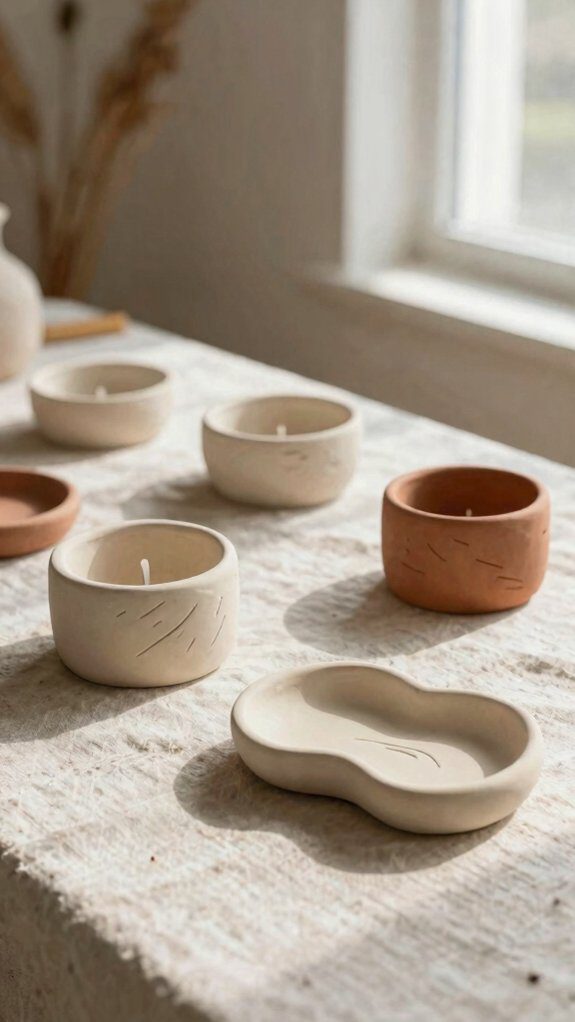
When I want a cute DIY that feels a lot fancier than it is, I make air dry clay candle holders, and they’re a total win for beginners!
I shape 8 to 12 mm coils, score them with slip, and smooth seams so my scented holders don’t crack. For minimalist designs, I let tealight pieces dry 24 to 48 hours, flipping them so they stay straight. Then I brush on acrylic paint or mica, and seal everything before using LED candles—safer and pretty!
For pillar styles, I hide a washer in the base, so the holder feels sturdy.
Air Dry Clay Earrings for Beginners
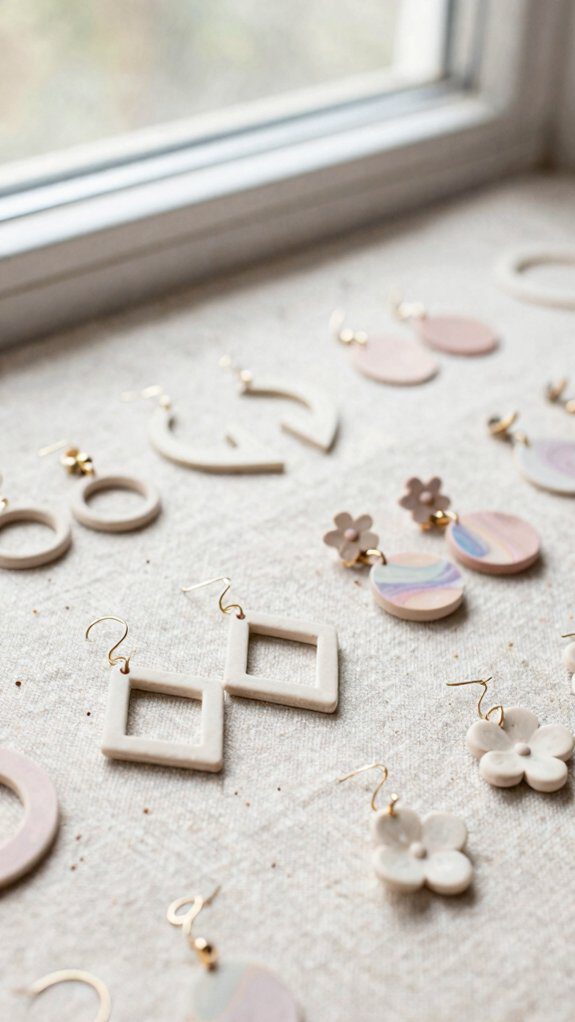
I love starting air-dry clay earrings with easy shapes like circles, teardrops, and tiny arches, because a rolled-out sheet, a cookie cutter, and a damp brush can make you look way more skilled than you feel—fun, right!
After I cut the shapes, I let them dry flat on parchment for a day or two, then I smooth the edges and add a matte sealer so they stay sturdy and don’t get wrecked by a little splash of water.
If you’re new to this, keep each pair light and comfy, and you’ll end up with cute earrings that feel good on your ears and look like you bought them from an elegant little market booth.
Easy Earring Shapes
Roll out your clay into a smooth 2–3 mm sheet with spacers, then cut out easy shapes like circles, teardrops, or tiny rectangles with small cookie cutters, because that’s the quickest, cheapest way to make cute beginner earrings without the drama!
- Circles stay playful, and I add a tiny hole for hoops.
- Teardrops look polished, and I keep them slim for lightweight designs.
- Tiny rectangles feel modern, and I round corners for earlobe comfort.
I stop at 3–4 cm, so they feel friendly, cheap, and ready for your favorite outfit every time, no drama required here!
Drying And Sealing
After you cut those cute shapes, I lay the earrings flat on a clean surface and let them dry for 24 to 72 hours, because air-dry clay gets cranky if you rush it and can crack or warp on you, which is just rude!
Thin pieces need 24 to 48 hours, and thicker ones can wait.
I keep humidity control in mind and use ventilation tips, sand with 220 to 400 grit, wipe away dust, and let them re-dry.
I seal with two thin coats of acrylic varnish or resin, and I cure findings with jewelry epoxy.
They’re ready!
Air Dry Clay Bead Necklaces
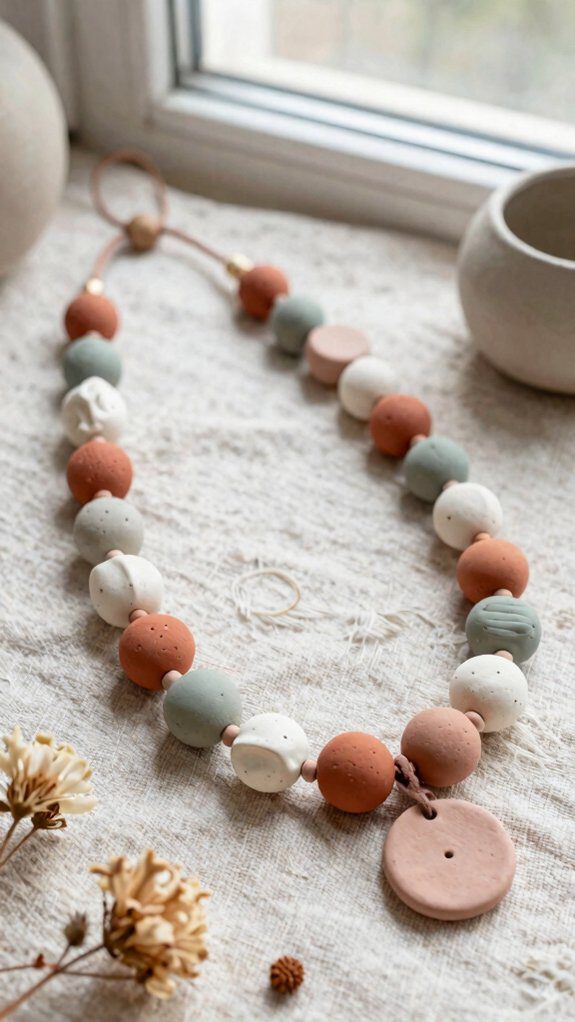
Here’s how I make air-dry clay bead necklaces that look store-bought without the scary price tag!
I roll 8–12 mm beads, poke tiny centers, dry them, then sand and varnish for necklace durability.
- Marbled swirls
- Pastel ombré
- Terrazzo flecks
I use waxed cotton cord or nylon-coated wire, and I check cord compatibility with bead holes 1–1.5 mm wider. That little gap keeps stringing easy and stops wear.
Want the cutest part? Mixed spacer beads make them feel boutique, not crafty.
Honestly, your friends may ask where you shopped!
It’s beginner-friendly when the beads click together perfectly.
Air Dry Clay Keychains
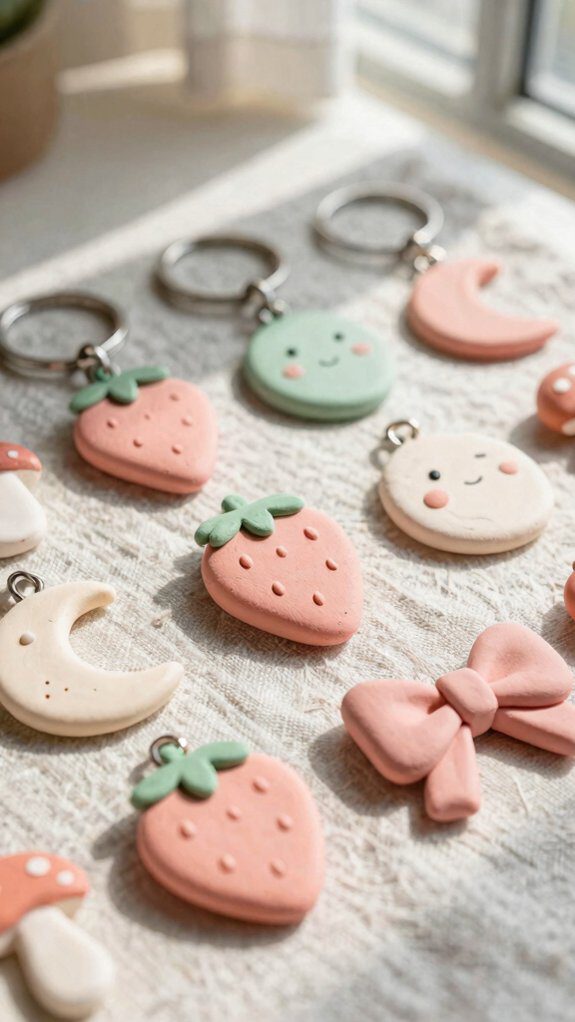
I love turning a small batch of air-dry clay into keychains that look like I bought them at a cute little market booth, not made them at my kitchen table!
I like minimalist shapes, marbled swirls, or food charms with lightweight clay, rolled to two to four millimeters, then cut into pieces three to six centimeters for a keyring-friendly size. I press in an eye pin while it’s leather-hard, or drill a hole later if I missed it, because clay can sulk and crack.
Dry flat, sand, paint, seal, and finish with glow in the dark dots for wow!
Air Dry Clay Gift Tags
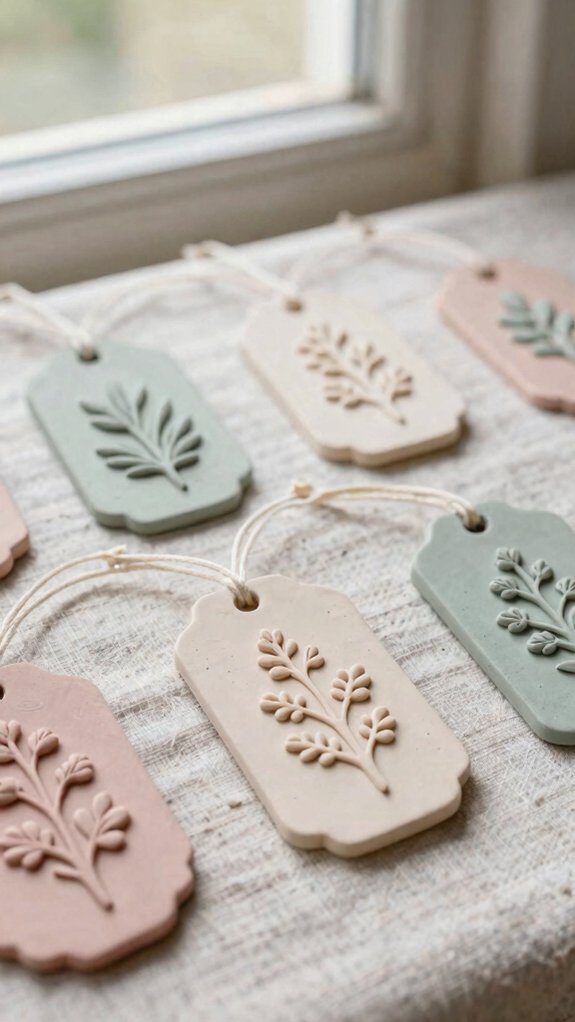
Roll out a plain slab of air-dry clay to about 3–4 mm, and I can turn it into gift tags that make a wrapped present look way fancier than it cost! Use small cookie cutters or a craft knife, press in names with stamps, and punch a hole before drying. I like these personalization techniques because they feel special, and eco materials keep the vibe to the planet.
- Shape, stamp, and hole-punch.
- Dry flat 24–48 hours.
- Sand, paint, and seal twice.
From one 500 g block, I can make 40–60 cute tags—honestly, that’s a gift that gets smiles everywhere!
Air Dry Clay Bookmarks
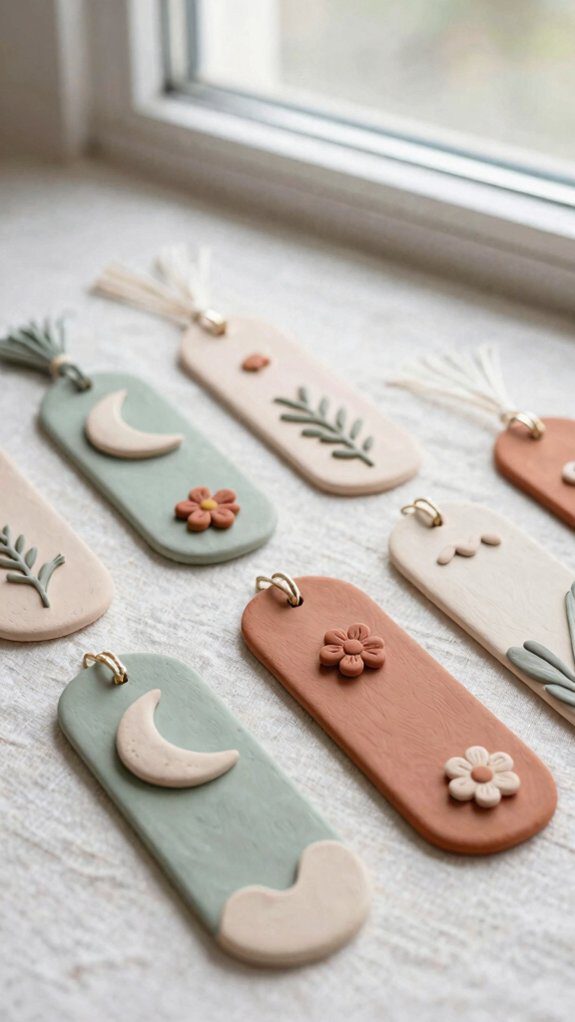
After those cute clay gift tags, bookmarks are another tiny project I love making when I want something useful and pretty!
I keep them slim, about 0.2–0.5 cm thick and 4–7 cm wide, so they’re strong and don’t snap. For larger shapes, I slip in a cardboard sandwich, which keeps things flat—no sad taco bookmarks here! Neutral bookmarks with marbled swirls or stamped initials feel calm and chic, while botanical embeds with pressed flowers bring a look. I seal mine with PVA glue or mod podge, then add an eyelet and tassel for a handmade finish too, honestly.
Air Dry Clay Magnets and Minis
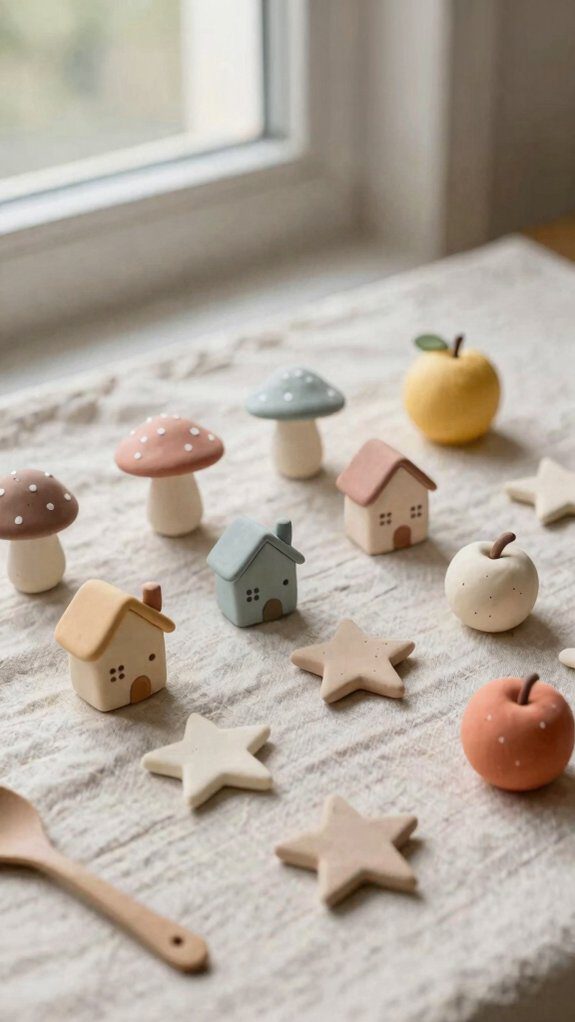
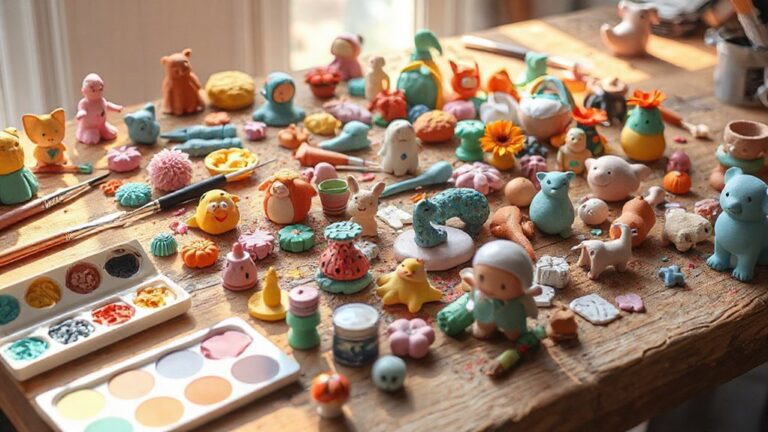
I love making tiny clay magnets and minis, because they’re quick, cute, and super easy to batch into little plant pots, sushi sets, or silly faces that look amazing on a fridge!
I shape the air dry clay, add simple paint or mica powder, and let it dry for about 24–72 hours, so it’s a weekend project that won’t boss you around.
For the best hold, I press a small magnet disc into the back before the clay fully dries, and that one tiny move keeps your mini from making a dramatic fridge crash later!
Tiny Clay Magnets
Tiny treasures for your fridge are one of my favorite air-dry clay projects! I roll lightweight clay into thin sheets, cut hearts or fruits, then plan magnetic placement before it dries.
- Smooth it with fingerprint removal, sanding after drying with 220-grit paper.
- Press in a small neodymium disc magnet, and lock it with PVA.
- Paint pastels, mini donuts, or marbled leaves, then spray-seal it; after 48-72 hours, it’s ready for light notes, and it’s cheap, easy, and totally giftable!
You’ll feel right at home making them, and your fridge gets a cute little smile too today!
Miniature Clay Figures
Mini-figures and magnet-magic are where air-dry clay gets extra adorable, and I love making 1–2 cm cats, mushrooms, strawberries, or sleepy little faces from just a pinch of clay!
I mix a touch of white glue for smoother coils, then use sculpting tools or a toothpick for eyes, buttons, and tiny smiles.
Keep the body hollow if it’s thicker than 6–8 mm, so cracks don’t crash the party, and dry it slowly under a cloth.
Paint after sanding, seal it, and you’ll get lovely scale realism in a tiny friend that feels handmade, not fussy for your shelf display.
Magnet Backing Tips
For a magnet that actually stays put, I press a strong 5–10 mm neodymium disc into the back while the clay’s still wet, then let it cure for 24–48 hours so it can set up without drama.
After that, I roughen the back, then use epoxy bonding, not hot glue, for extra grip. Try this:
- Mark the spot.
- Press magnets flush in a tiny well.
- Seal with acrylic varnish.
For thin minis, I use embedded magnets on a 3–4 mm backing, and they hold like champs! That’s cheap, easy, and the fridge finally gets cute company.
Air Dry Clay Animal Figurines
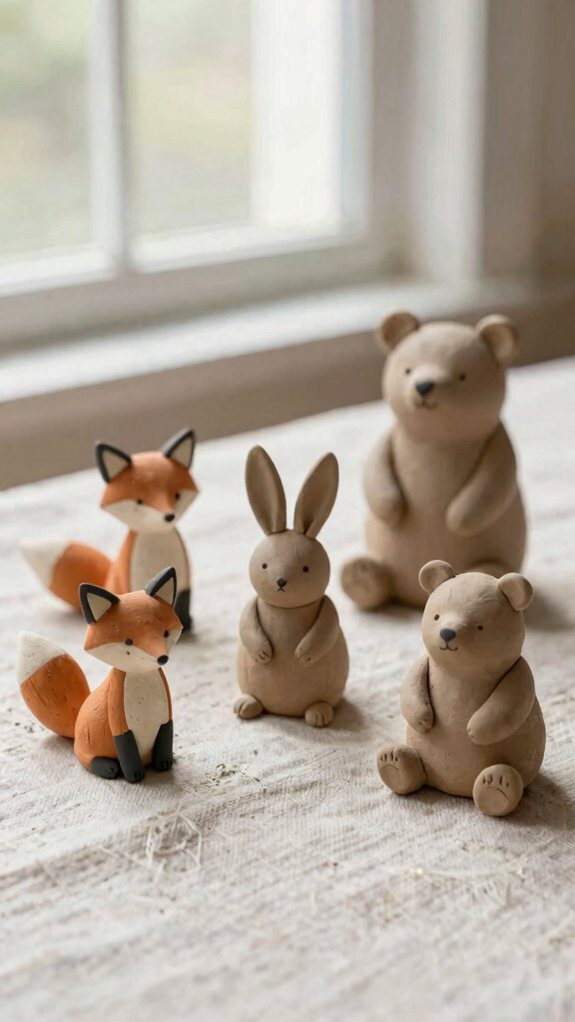
I love turning a lump of air-dry clay into a little fox, bunny, or turtle, because you don’t need a kiln and you can build the whole thing with just your hands, a toothpick, and maybe a scrap of foil or paper.
I pinch the body; you can roll 3–6 mm coils for legs and thinner coils for tails. For texture techniques, I press a toothpick, comb, or ball stylus when clay feels leather-hard, not soggy.
With armature alternatives, I wrap foil or crumpled paper, add 2–5 mm clay, let it cure 24–72 hours, then sand, paint, and seal!
Air Dry Clay Christmas Ornaments

I love making air-dry clay Christmas ornaments with just a rolling pin, a bit of clay, and cookie cutters, because you can cut out stars, trees, or bells in minutes, and it’s easy on the wallet too!
After they dry, I paint them with bright acrylics and brush on a clear sealer so the colors stay fresh, which gives you that polished holiday look without any fuss.
For extra charm, I press in lace, stamps, or tiny coils before drying, and that simple texture can turn a plain ornament into the one everyone wants on the tree!
Simple Ornament Shapes
Roll out a little air dry clay, and I’ve found simple ornament shapes are the fastest way to jump into Christmas crafting! I keep it easy, cheap, and cheerful, so you can make a whole batch that feels like family in no time.
- Stars: cut simple silhouettes with beginner templates.
- Trees: use cookie cutters on 1/4-inch slabs, then add a tiny loop.
- Hearts: press in leaves for a sweet surprise.
Let them dry flat, then sand softly.
The result? Clean little keepsakes that look handmade, not hurried, and they’ll fit right in with your holiday crew.
Painting And Sealing
Before you grab the glitter, let your air-dry clay ornaments cure all the way through, because thicker pieces can need 48–72 hours, and a quick sand with 220–320 grit paper gives you that smooth, paint-friendly finish.
I like acrylic or gouache, plus a thin white base on dark clay, because wow, the color pops!
Brush on thin coats, let each dry, and your paint won’t crack.
For paint longevity, I wait 24–48 hours, then seal with a water-based matte spray.
I always check sealer compatibility first—no one wants a sticky surprise!
It keeps them cheerful, sturdy, and gift-ready too.
Festive Texture Ideas
Now that your ornaments are smooth and sealed, let’s add some festive texture and make them look way more magical! I love using rustic embossing with woodgrain tools, lace, and pine needles, because it costs almost nothing and feels so cozy.
Try:
- Roll 1/4-inch coils, press in bark lines, then dry flat for sturdy trees.
- Stamp snowflakes or stars into 3–5 mm discs, then paint the raised bits.
- Layer thin clay for poinsettias, adding textured trims and a touch of glitter near the top. Your crew will get charming ornaments that look handmade, not fussy either!
Easy Air Dry Clay Projects for Kids
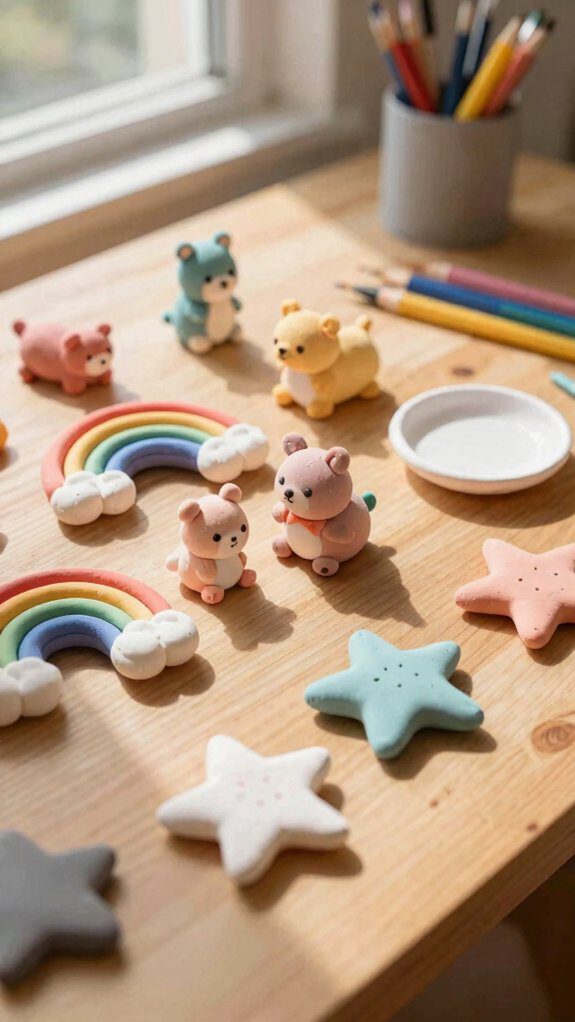
Usually, when I pull out air-dry clay for kids, I start with the easiest wins, like pinch pots and cookie-cutter ornaments, because you probably already have the simple tools at home—just clay, a damp finger, a butter knife, a few stamps, and maybe some string for hanging.
From there, I guide them into tiny pinch pots for sensory play, or stack scored coils for sturdy little bowls; both feel doable and cheap. If I’m teaching classroom projects, I love cookie-cutters and marbled beads, because they dry fast, paint well, and look way fancier than the effort says to me!
Frequently Asked Questions
How Do You Prevent Air Dry Clay From Cracking?
I prevent cracking by keeping your clay wrapped, kneading in proper hydration, and letting it dry slowly with controlled drying. You’ll feel confident when you smooth edges and flip pieces often, like we all do.
What Paints Work Best on Air Dry Clay?
Acrylic paints work best: they’re the sunlit key to your clay’s heart. I use them for bold color, then add watercolor washes for a glow, so you can create pieces that feel like they belong.
How Long Should Air Dry Clay Cure Before Sealing?
I’d wait 24–72 hours before sealing, depending on thickness, dry time, and humidity effects. I check that every part feels cool, light, and firm, so you can seal confidently and keep your piece with the group.
How Do You Photograph Clay Projects for Pinterest?
I photograph clay projects in natural light and use a clean flat lay so your pieces feel inviting. I keep backgrounds simple, add one prop, and angle shots to help your work belong on Pinterest.
Can You Mix Air Dry Clay With Other Materials?
Yes, I mix air dry clay with other materials because apparently one lump must become a society. I use glitter inclusion and fabric embedding sparingly, and I’ll help you experiment without losing your maker tribe.