Basic Sewing Projects for Beginners to Build Real Skills
I start beginners with tote bags, pillowcases, and drawstring pouches, because they’re cheap, useful, and build real skills fast! Grab a basic machine, thread, scissors, pins, and medium-weight cotton, then practice straight seams, hemming, and pressing on scraps first. A pillowcase teaches neat 1/2-inch seams, a tote adds handles, and a pouch sneaks in enclosed edges. Mistakes happen, so keep the seam ripper nearby—tiny hero! Stick with me, and the next step gets even easier.
Love cozy DIY projects? 💕
Get free printable guides, exclusive tutorials & surprise craft goodies straight to your inbox.
Disclosure: This post may contain Amazon affiliate links, at no extra cost to you. Content on DiyCraftNest is created with research support from AI tools and carefully reviewed, edited, and fact-checked by the lead author, Daniel Pat, to ensure accuracy and reliability. Learn more
Key Takeaways
- Start with a simple setup: machine, thread, scissors, pins, ruler, and medium-weight cotton for easy handling and pressing.
- Choose beginner projects like tote bags, pillow covers, dish towels, or scrunchies for quick, forgiving wins.
- Practice straight stitching on rectangles and scraps to build muscle memory, test tension, and learn seam allowance control.
- Use basic techniques like hemming, French seams, and edge finishing to make projects neat and durable.
- Progress from enclosed-seam projects to gathers and zippers as confidence grows and skills become more advanced.
What Makes a Sewing Project Beginner-Friendly
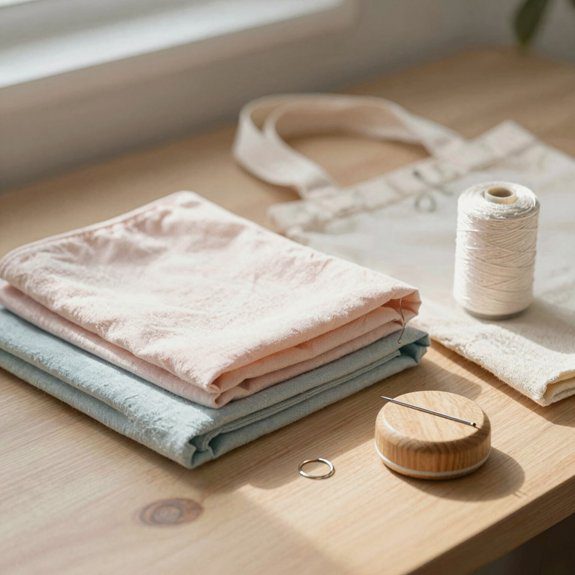
If you’re just starting out, the best sewing projects are the ones that feel calm, not chaotic—think straight seams, simple shapes, and very few extras!
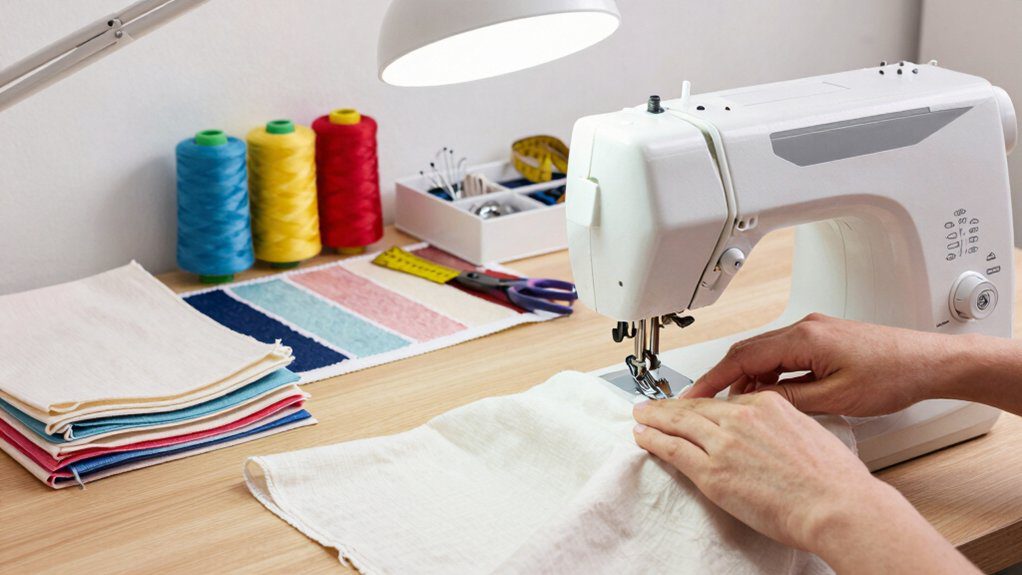
I like Simple equipment basics: a machine, thread, scissors, pins, and a ruler are enough to begin.
For Fabric handling tips, I choose medium-weight cotton or cotton blends because they feed evenly, press nicely, and don’t act slippery and dramatic.
Beginner pieces like tote bags, pillow covers, or dish towels skip tricky fitting, so you can measure, cut, stitch, and smile without wrestling a waistline.
The sweet spot is a project that forgives mistakes. I’ve seam-ripped plenty, and that’s okay—welcome to the club!
A quick pouch or scrunchie gives you a fast win, low cost, and a real finished item.
Projects That Teach Core Sewing Skills
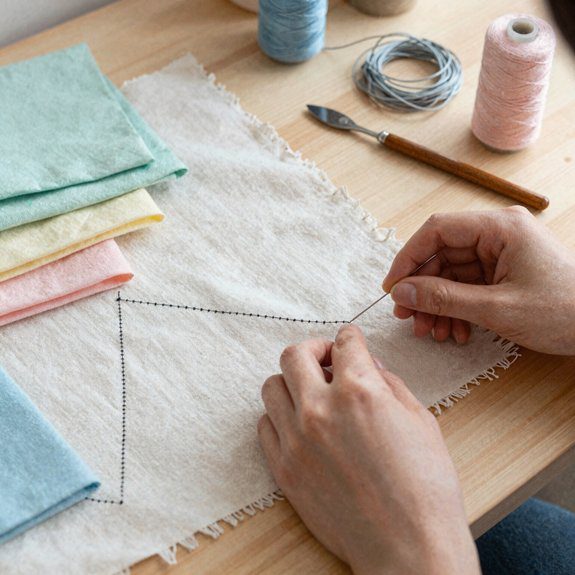
I like to start with straight-stitch projects, like a pillowcase or simple pillow cover, because they let you practice even hems and smooth lines with quilting cotton that behaves nicely under the presser foot.
Then I move to seam-practice ideas, such as an easy drawstring bag with French seams or a basic tote or zip pouch, so you can try enclosed seams, box corners, topstitching, and even your first zipper without feeling like you need a sewing degree—phew!
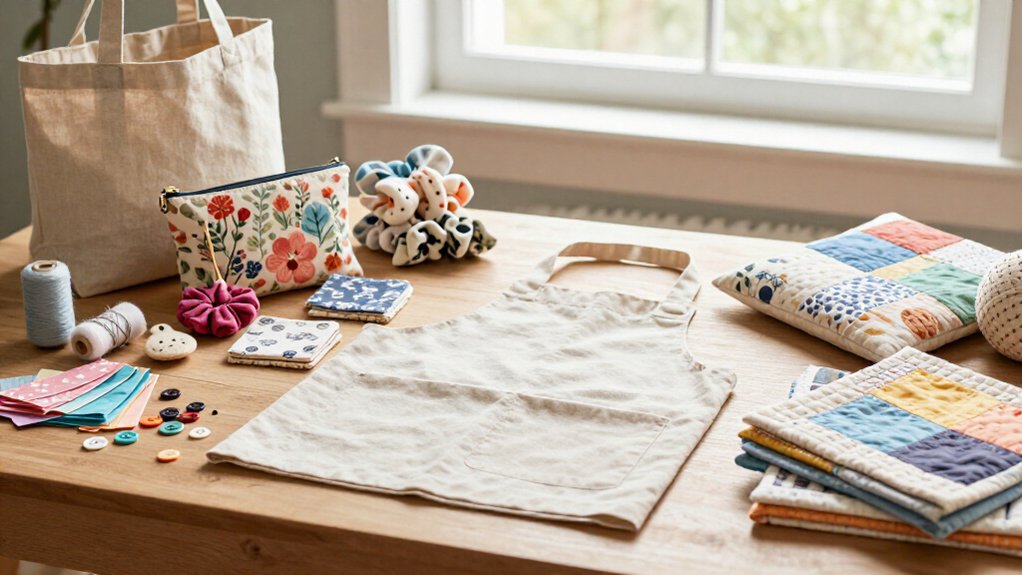
If you’re feeling playful, a scrunchie, fabric-covered button, or mini pin cushion gives you tiny, tidy seams and a quick win you can actually use right away.
Straight stitch projects
Straight stitch projects are where I’d start, because they’re simple, useful, and weirdly satisfying—you get to sew real things without wrestling with tricky curves or intricate fittings! I choose rectangles like pillowcases or drawstring bags, then I test thread tension, fabric selection, and stitch length on scraps first.
- Hem a cloth: fold, press, stitch.
- Make a pouch: sew two straight sides, then turn it.
- Try French seams: they hide raw edges and still keep you on a straight path.
I keep the presser foot edge as my guide and let the machine feed steadily, which builds muscle memory fast. A scrunchie or tube pouch feels like a tiny win, and honestly, that first neat line makes you feel like you belong at the sewing table.
Seam practice ideas
When you’re ready to move past basic lines and really build sewing muscle, seam practice projects are where the magic happens! I start with a pillowcase, because it’s cheap, forgiving, and perfect for a 1/2-inch seam. Use cotton, clip, stitch, and backstitch like a pro.
| Project | Skill |
|---|---|
| Drawstring bag | French seams |
| Dish towel | Hemming corners |
Next, I’d sew a scrunchie, a tiny tube that teaches clean seams and easy elastic closure. Then try a ruffle pillow sham for controlled gathers and neat base seams—surprisingly fun! These projects feel like hand sewing basics with training wheels, and they sneak in seam finishing tips without the homework vibe. You’ll end up with usable stuff, better control, and a real “I made this!” grin.
Easy Projects That Improve Confidence
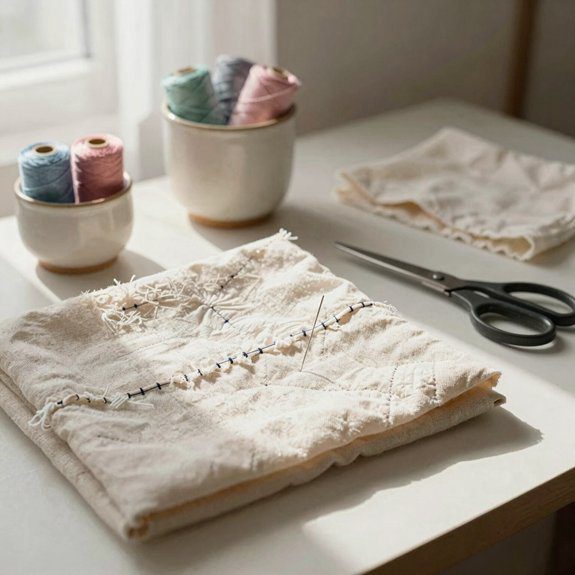
I love starting with pillowcases, because they’re straight-line sewing that lets you practice neat seams, simple fabric, and a finished piece you can actually use right away—pretty satisfying, right?
Tote bags come next, and I like them even more for confidence, since you only need basic fabric, handles, and a few easy stitches to make something sturdy enough for errands, books, or that one snack you always carry.
Best part? Both projects are beginner-friendly, low-cost, and forgiving, so even if your stitches wobble a little, you still end up with something useful and surprisingly cute!
Pillowcases
Because pillowcases are mostly made of straight lines, I love them for beginners, since they let you practice clean seam work without wrestling with tricky curves or weird fitting drama.
For fabric selection, I’d grab budget quilting cotton or a scrap-friendly print, about a yard, and cut two rectangles.
Try this:
- Sew right sides together with a steady 1/2-inch seam.
- Finish the edges for no fray edges, using zigzag, serging, or French seams.
- Turn it, press it, then add quick decoration with topstitching or tiny embroidery.
You’ll finish fast, usually in one cozy session, and that feels so good!
I love how each repeat build confidence, because you’re making something useful and joining the “I can sew!” crowd.
Tote bags
If you’re ready for a project that feels useful right away, a simple tote bag is a fantastic next step! I like starting with a library tote or beach bag, because straight seams and no fitting make it friendly.
| Step | Why it helps |
|---|---|
| Fabric selection | Quilt cotton feeds evenly |
| Sew seams | Practice 1/2″ accuracy |
| Finish edges | Use neat seam finishes |
| Add handles | Try handle reinforcement |
Choose medium-weight woven cotton, and you’ll feel the fabric behave, not fight you. Sew slowly, keep the straps even, then box-stitch the ends so the bag can carry books, snacks, or yarn without drama.
Best of all, this win sets you up for zipper pouch practice next, since you’ve already learned structure. I love that!
How to Progress From Basic to Intermediate
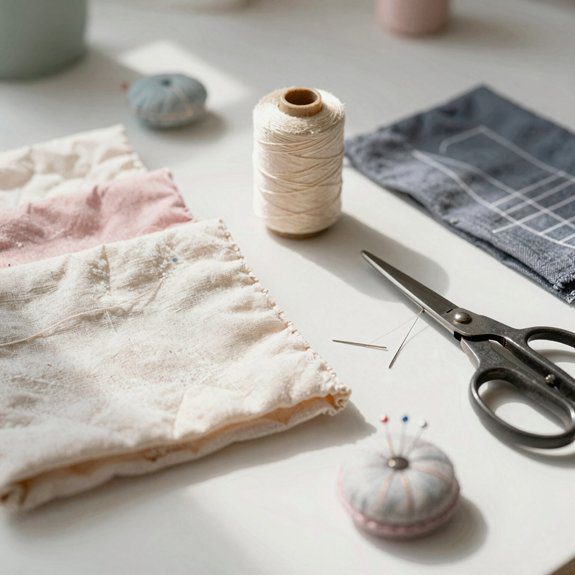
As you move from basic to intermediate sewing, I like to think of it as leveling up with purpose, not just grabbing the next shiny project—start with straight-line, low-piece wins like pillowcases or simple hems, since they help you nail seam allowance and keep fabric feeding evenly through the machine. That’s skill progression, and it builds confidence fast!
- Try enclosed seams next, like a drawstring bag.
- Add gathers or ruffles with a pillow sham, then elastic on a scrunchie.
- Save zippers for last, because difficulty isolation makes troubleshooting way easier.
I also love scrap practice: squares, strips, and circles teach speed without wasting fabric. Follow this intermediate sequencing, and every finish feels like a little cheer from your sewing crew!