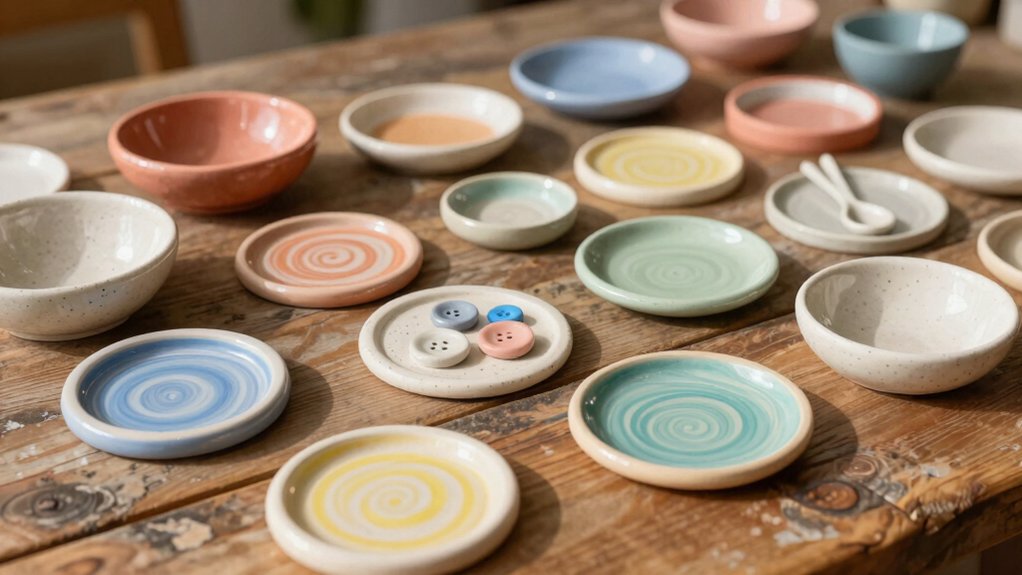
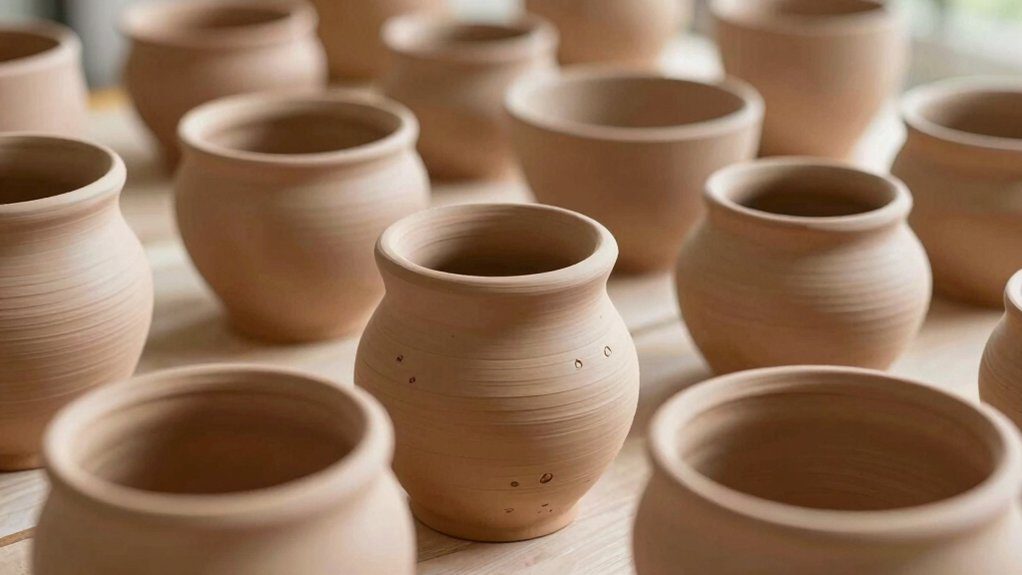
Hand Clay Pottery Ideas That Turn Simple Clay Into Meaningful Art
You can turn simple clay into meaningful art with pinch pots, coil cups, or slab trays, and each one’s beginner-friendly, cheap, and fun! Start with a fist-sized lump, a few basic tools, and a slow pace, then shape, smooth, and add texture like leaves, stamps, or little holes. Dry it under loose cover, bisque fire, then glaze-test for color surprises. The best part? Even a tiny wavy rim can make your piece feel like a story, and there’s more.
Love cozy DIY projects? 💕
Get free printable guides, exclusive tutorials & surprise craft goodies straight to your inbox.
Disclosure: This post may contain Amazon affiliate links, at no extra cost to you. Content on DiyCraftNest is created with research support from AI tools and carefully reviewed, edited, and fact-checked by the lead author, Daniel Pat, to ensure accuracy and reliability. Learn more
Key Takeaways
- Hand-built pottery feels personal because slow, careful making gives each piece a quiet story and unique character.
- Simple techniques like pinching, coiling, and slab building can create forms that feel handmade and expressive.
- Start with beginner-friendly ideas like pinch pots, mugs, trays, bowls, and small sculptural vases.
- Add meaning through texture, organic edges, seams, leaf imprints, and other nature-inspired surface details.
- Dry slowly, bisque fire, and test glazes on tiles to preserve shape, control results, and refine your style.
Why Hand-Built Pottery Feels More Personal Than Wheel-Thrown Pieces
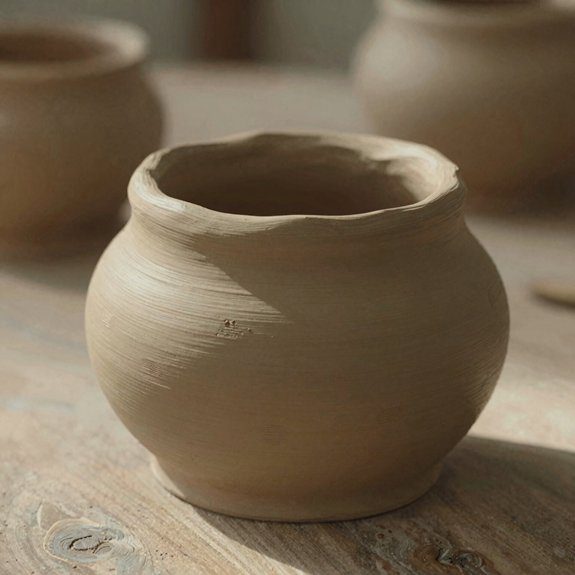
Unlike wheel-throwing, which can feel fast and almost machine-like, hand-building moves at a slower pace, and that’s where the fun starts.
You’re alone with the clay, and that quiet studio uniqueness gives your piece a real heartbeat, wow!
With tactile control, you shape slabs, coils, or pinches with simple tools, then add stamps, rollers, or ruffled edges that feel like you.
The slow drying, the bisque fire, then the glaze fire, all build your story, step by step.
And when the glaze surprises you, those little imperfections don’t ruin it, they make it yours, friend.
The 3 Core Techniques Behind Every Great Clay Idea
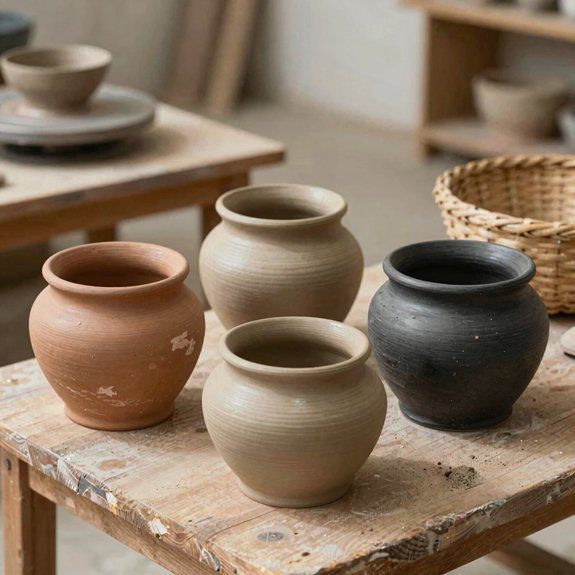
When you want a hand-built clay idea to really work, it usually comes down to three core moves: coiling, slab building, and pinching, and each one gives you a different kind of magic!
With clay safety and smart workspace setup, you can stack coils, press bond pinches, and keep walls strong.
Slabs need even thickness, neat cuts, and clean seams, so your shape stays true after drying and bisque.
Pinching sounds simple, but controlled compression can narrow a mouth and sharpen a vessel fast.
Keep kiln basics and firing basics in mind, because thickness changes everything, friend!
Pinch Pot Creations
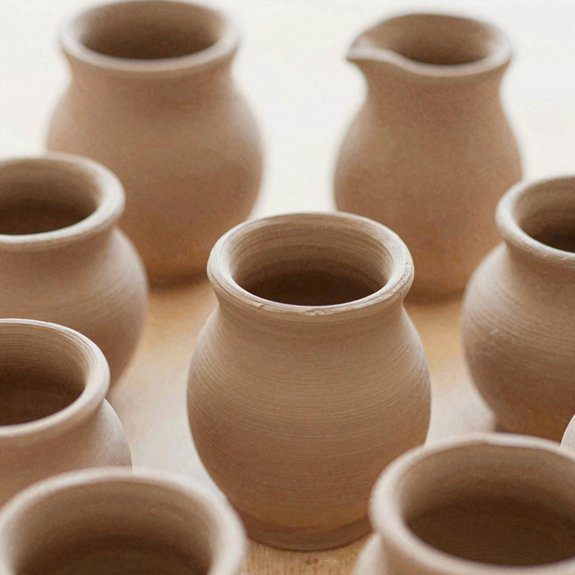
Pinch pots are the fastest way to make clay feel friendly, and honestly, they’re a little addictive! You only need a fist-sized lump, your thumb, and a steady pinch. Rotate the pot as you work, so the walls stay even and the rim doesn’t flop like a tired pancake.
Want a cleaner shape? Use a flat pinch to thin the walls, then add a gentle compression pinch to narrow the mouth.
For extra personality, try textured finishing after drying, and save a tiny piece for glaze testing.
Best part? Your first cup, bowl, or jar can look charmingly handmade, not messy!
Coil Built Forms
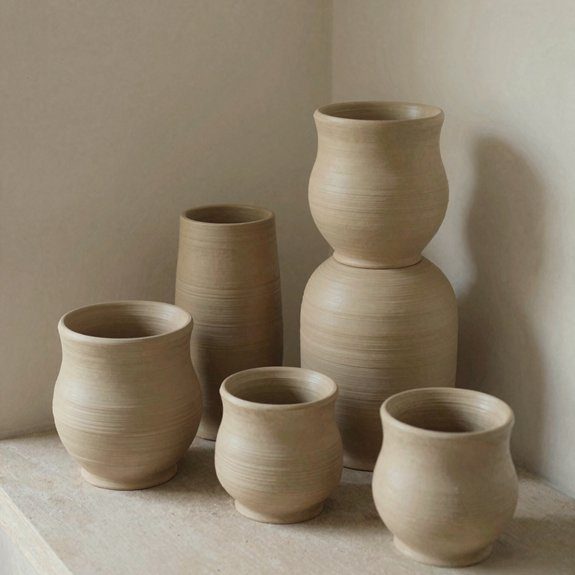
As your hands get comfortable with clay, coil-built forms open the door to taller, more sculptural pieces, and they’re way less fussy than they look! You roll even coils with gentle pressure, stack them, then use a bonding pinch to fuse every seam, so your pot survives drying and firing.
| Step | Tip |
|---|---|
| Roll | Keep coils even |
| Stack | Build in layers |
| Pinch | Seal each joint |
| Scrape | Smooth twice |
| Add flair | Try sgraffito designs |
After that, use a light compression pinch to shape the wall, then test color glaze testing on textured spots. Little wonky? Totally normal—scrape again near leather-hard, and your crew of clay buddies is set!
Slab-Based Designs
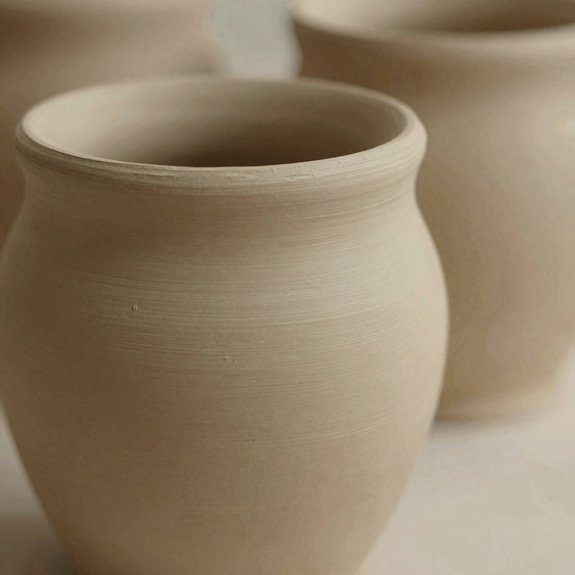
Once you’ve got the hang of clay, slab-based designs feel like paper crafts that got a glow-up!
You roll an even sheet, cut clean shapes with a template, then let your hands do the magic.
Try this:
- Make a color block tray with simple rectangles.
- Press rollers or stamps for surface carving.
- Use a Cricut stencil for sharp patterns.
- Drape a slab over a mold for a small bowl.
- Shape scalloped edges, then add glaze contrasts.
Keep pieces drying slowly so they don’t warp, then bisque fire and glaze for a polished finish.
You’ll fit right in, trust me!
Functional Pottery Ideas You’ll Actually Use Daily
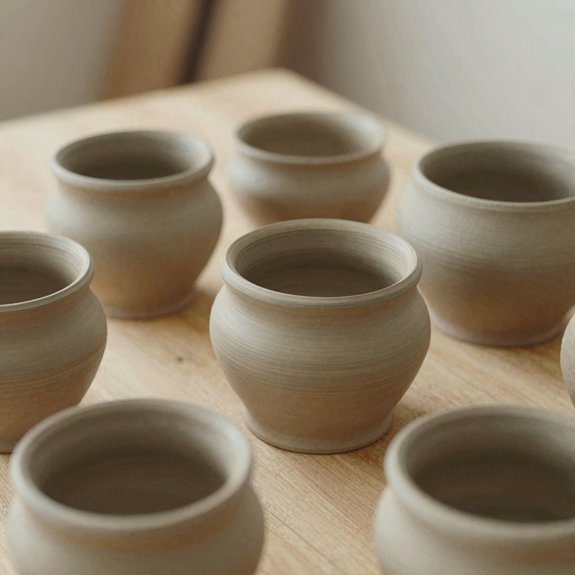
If slab-based designs got you feeling confident, you’re ready for the fun part—making pottery you can actually use every day!
Start with a shallow bowl or fruit dish, using a draped slab and a little trimming. Cheap, easy, and charming, right?
Try a tealight holder or soap dish next, adding tiny holes for light or drainage.
Want a bigger win? Build a small tray with textured stamps, then test glaze testing on scraps first.
Watch for drying shrinkage, because patience saves cracks.
Fire twice, and you’ll get sturdy pieces that feel like yours, not a store shelf clone.
Handmade mugs and coffee cups
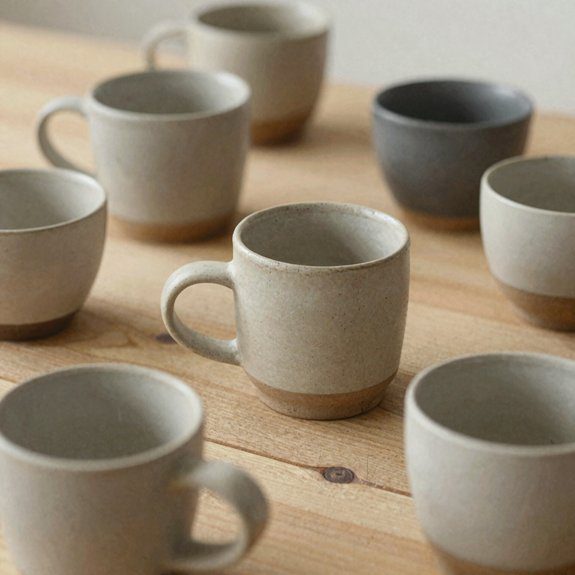
Handmade mugs and coffee cups are a total win, because you can build something tiny, useful, and just plain charming without needing a giant kiln miracle!
Start with a flat base, then add slab walls, and wait before attaching the handle. You’ll feel like part of the clay crew fast!
- Make a cylinder base for a tighter mouth.
- Compress the wall so it won’t flare too wide.
- Add scalloped texture for instant personality.
- Check glaze readiness after biscuit firing.
- Test glaze; drips love handle seams.
For baking safety, let pieces dry fully, then fire twice. Your cup’ll look handmade in the best way—warm, sturdy, and totally yours.
Minimalist plates and serving dishes
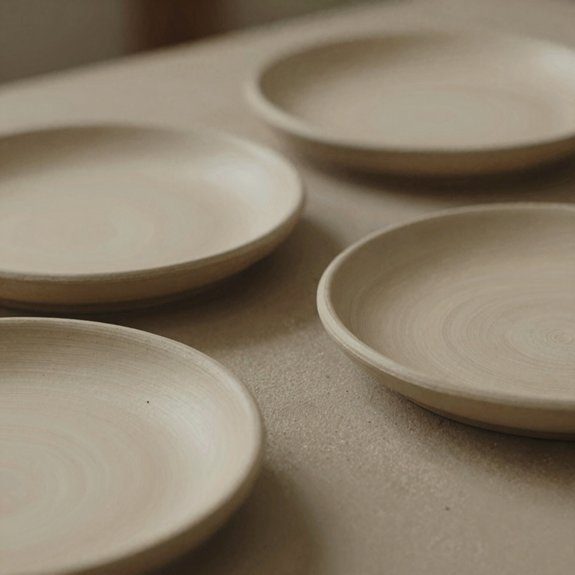
Minimalist plates can look so sleek and calm, yet they’re still super satisfying to make! Roll a slab, cut a simple round, and gently compress the rim so it keeps its shape and improves stacking stability. You’ll need clay, a rolling pin, and a cup or template—easy, cheap, and beginner-friendly!
For serving dishes, drape a slab over a low mold, then trim clean edges and add a tiny foot if you want easier lifting. Keep thickness even with your fingers, or warping may crash the party.
Try a glaze test tile first, because glaze, clay body, and firing can surprise you—nicely, hopefully!
Organic-shaped bowls
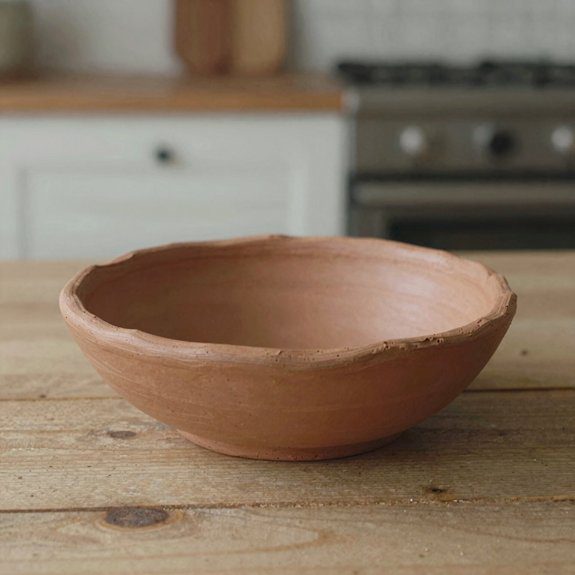
For an organic-shaped bowl, start by slab-draping or pressing clay over a bowl or mold, then cut and pinch the edges into a wavy, hand-formed rim that feels a little wild in the best way!
- Keep the walls even with your fingers.
- Add vine or blossom stamps outside.
- Leave the inside smooth for snacks.
- Dry it slowly to avoid uneven drying.
- Try a colorful glaze on test tiles first.
You don’t need fancy tools, just clay, a mold, and patience. The result feels welcoming, like it belongs right in your hands.
Surprise: slight drips can make it look even more alive!
Decorative Clay Pieces That Add Character to Any Space
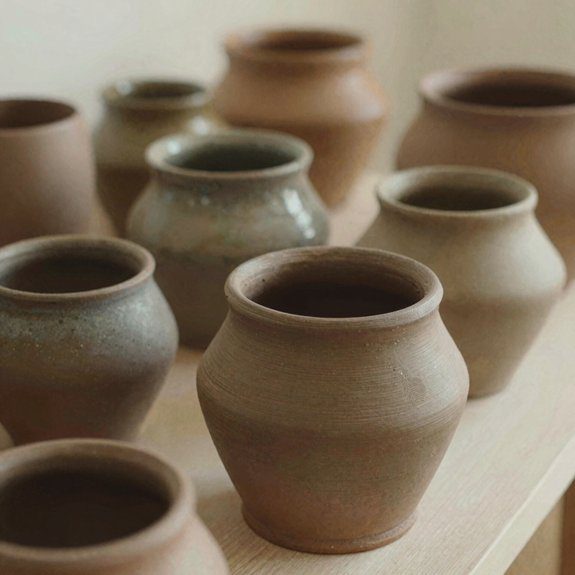
If you loved those wavy bowls, you can carry that same handmade charm into little clay pieces that brighten shelves, tables, and corners in your home!
Try slab-built mini vases, tealight holders, or tiny trays, then press in stamps, rollers, or Cricut-made stencils for easy patterns.
Add ruffled edges or carved cutouts, and suddenly a plain form feels special, wow!
Make a few Glaze Test Tiles first, because glaze can shift with thickness and heat.
Let pieces dry, bisque fire, then glaze fire for that sealed finish.
Your Personal Imperfections? They’re the cozy little proof you made it!
Textured wall hangings
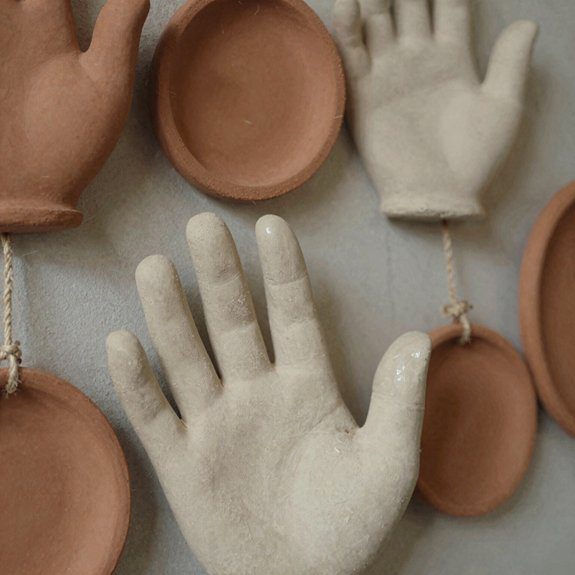
Textured wall hangings bring that cozy handmade magic right up onto your walls, and they’re way easier to make than they look!
You can join coils or slabs into simple shapes, then press in vines and blossoms with rollers, stamps, or stencils.
- Let it reach leather-hard first
- Carve lines or add sgraffito
- Try Glaze Testing on tiles
- Watch ridges for drips
- Use cuts for glowing openings
That’s how you build real Textured Relief without stress.
Dry it fully, bisque fire, then glaze and fire again.
Your piece’ll feel personal, like it belongs in your space, not just on a wall!
Sculptural vases
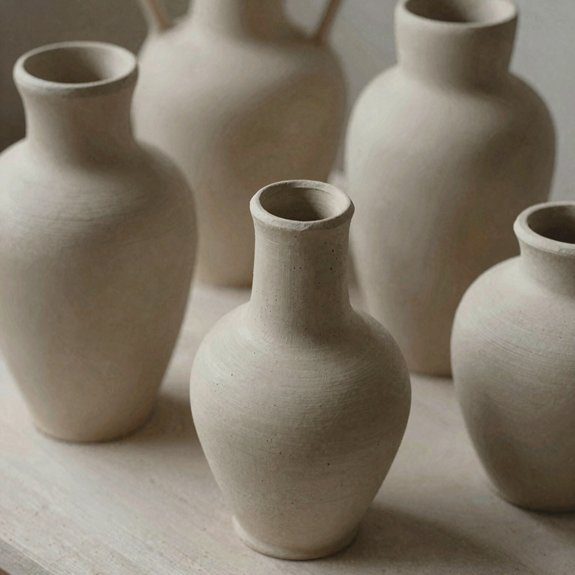
Wall art can hog the spotlight, but sculptural vases bring that same handmade charm down to the table, shelf, or windowsill, and they’re a blast to shape!
Start with stacked slabs, keep an internal support inside, and smooth the seams for a clean silhouette.
Use textured rollers, stamps, or stencils on leather-hard clay, so floral vines and blossoms stay crisp after firing.
Build even thickness first, or your vase may warp, then test a colorful glaze on sample tiles, because results shift with clay and heat.
For kiln safety, follow your studio’s rules, then add ruffled rims for a playful finish!
Abstract clay art objects
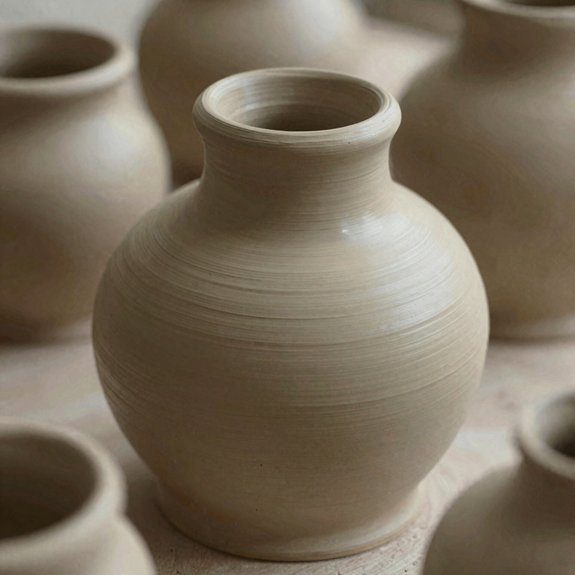
When you want a clay piece that feels more like a tiny sculpture than a container, abstract forms are where the fun really starts!
You can shape one slab into stacked loops or curved pieces, then let clay surface seams show on purpose.
- Try a perched-on-base shape for stability.
- Add a slab footing before joining.
- Smooth the joint lines, not the whole thing.
- Press light textures with stamps or rollers.
- Make test tile glazing samples first.
After greenware, bisque, then glaze firing, your piece may surprise you. That’s the charm!
Drips, thickness, and color shifts can make your art feel truly yours, and you’ll fit right in.
Nature-Inspired Pottery Ideas That Always Look Unique
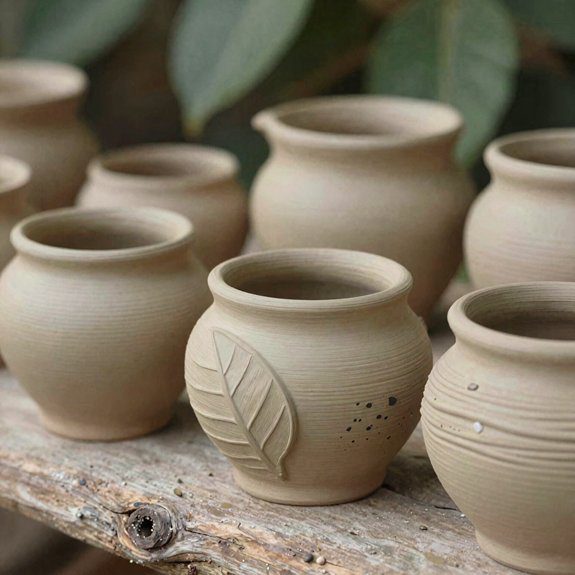
How do you make clay feel like it just wandered out of a garden? Start with a simple slab bowl or tray, then press it with a Textured roller or stamp patterns from vines and blossoms. Cheap tools, easy steps, big charm!
Next, shape ruffled edges or leaf-like cutouts with a cookie cutter and a carving tool. You’ll get tableware that feels friendly, not fussy, and it’s beginner-safe if you go slow.
For color, try Layered glazing on test tiles first, because kiln testing can change everything. Save the sneaky wow moment for a tealight holder with petal holes, glowing like tiny lanterns!
Leaf imprint bowls
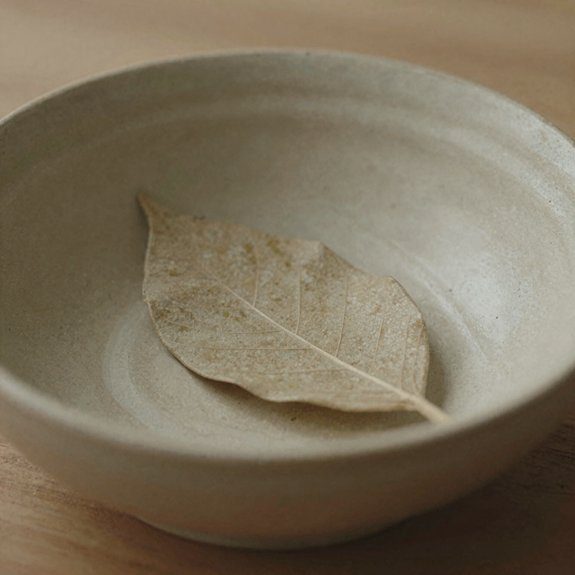
Leaf imprint bowls are one of those clay projects that look way fancier than they are, and that’s the fun part! You can join the clay crowd fast with a few simple tools, real leaves, and kiln safe stamps.
- Roll an even slab, press leaves in
- Cut a circle or bowl shape
- Drape it over a mold
- Trim the rim near leather-hard
- Dry slowly, then bisque and glaze
Keep an eye on glaze testing, since texture depth changes the finish. The result? A cozy bowl with crisp veins and a handmade look you’ll be proud to show off!
Stone and shell textures
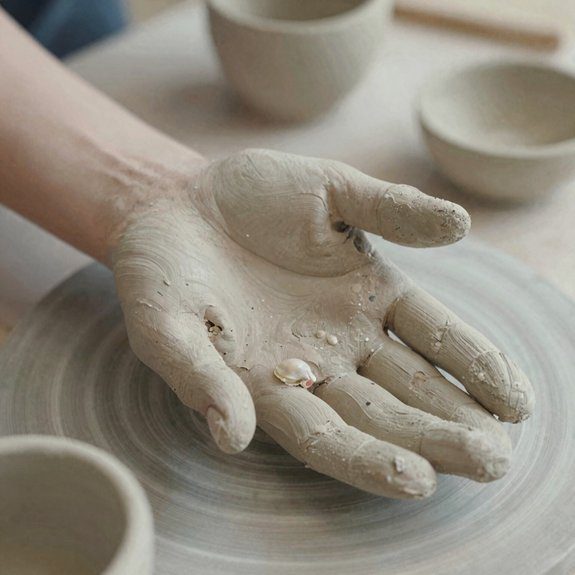
On the surface, stone and shell textures can look super stylish, but they’re actually a really fun way to give hand-built clay a natural, earthy vibe! You’re joining a cozy maker crew when you press in real rocks or scallop shells, or carve lines with slips and tools.
| Idea | Materials | Result |
|---|---|---|
| Rock press | clay, rock | stone grain |
| Shell press | clay, shell | soft ridges |
| Bamboo slip layering | slip, brush | depth |
| Geode glaze effects | glaze, test tiles | sparkle |
| Re-stamp | leather-hard clay | sharper detail |
Keep textures shallow, sponge ridges smooth, and fire carefully so the pattern pops, not mutes.
Organic uneven edges
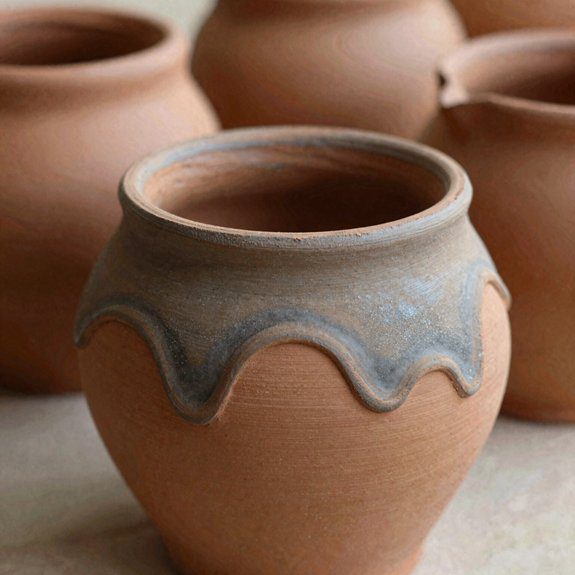
A slightly wobbly rim can make a clay piece feel warm, honest, and totally handmade—like it’s wearing its own little personality!
You don’t need perfect symmetry to fit in here; you just need a few smart moves.
- Trim uneven edges lightly.
- Pinch tiny waves at spaced intervals.
- Oversize slab rims, then let gravity bend them.
- Add leaf or vine texture near the edge.
- Smooth the functional rim, not the outer charm.
Watch Temperature and Thickness so thin spots don’t weaken, and use Rim Stability Techniques to keep it steady.
Let it dry slowly, and your wonky edge stays strong, not cracky—yay!
Modern Aesthetic Clay Ideas (Pinterest-Style)
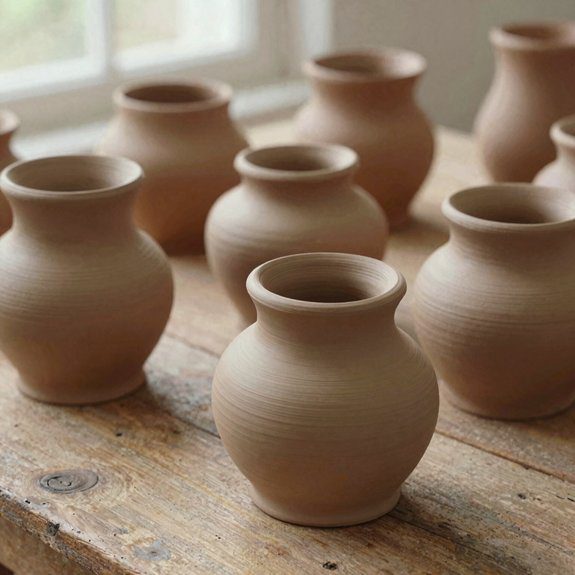
If that softly wonky edge gave your last piece some handmade charm, now you can give it a cleaner, more polished vibe with a modern Pinterest-style look—think sleek trays, low plates, and serving dishes that feel upscale without trying too hard!
Start with slab-built forms, then add slab ruffle edges for a designed silhouette.
Press floral vine patterns with stamps or Cricut-made stencils, and keep the lines crisp.
Do glaze testing on sample tiles with different thicknesses and firing temps, because drips happen!
Bisque first, glaze second, then repeat one motif across a set for that curated, “you totally belong here” finish.
Minimalist neutral pottery
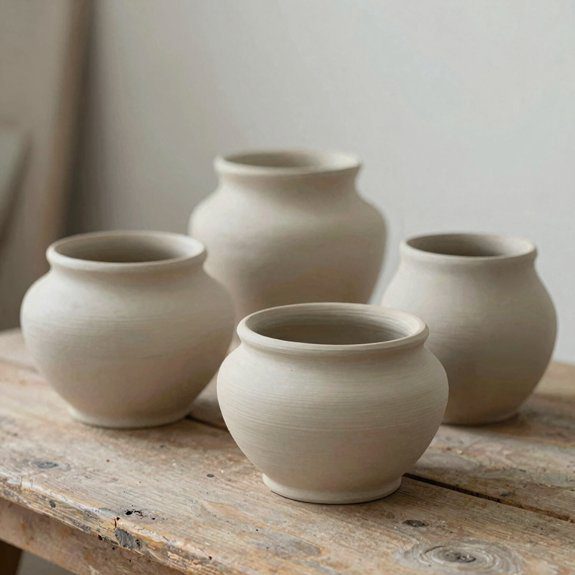
When you want your pottery to feel calm, clean, and quietly elegant, a minimalist neutral palette is the way to go! You’ll fit right in with creamy whites, oatmeal, and stone tones.
- Build slab-built plates with slab consistency.
- Shape a small pinch pot or straight cylinder.
- Add gentle vine texture, not too much.
- Try glaze layering on test tiles first.
- Watch kiln testing for drips and color shifts.
Use two firings: bisque, then glaze. Keep drying slow, loading careful, and the finish food-safe. The best part? Your simple piece still feels special, like it belongs on every table.
Wabi-sabi imperfect forms
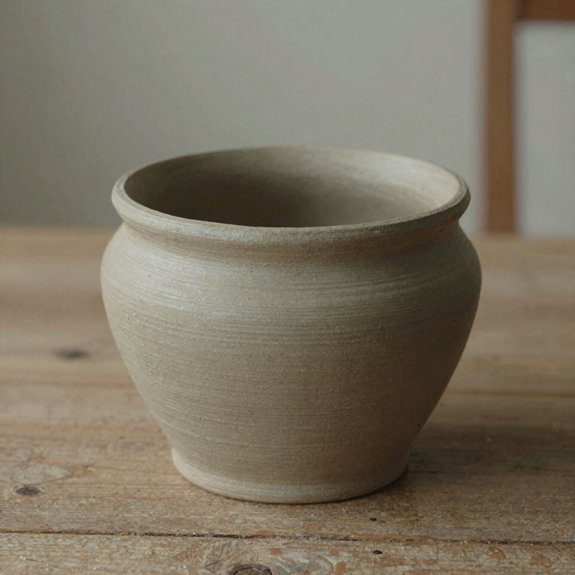
Though it may look a little lopsided at first, wabi-sabi pottery celebrates those charming “oops” moments that make clay feel alive! You’re not fixing flaws; you’re honoring emotional pottery and tactile imperfections that tell your story.
| Stage | Why it matters |
|---|---|
| Slab shaping | Lets you feel the form |
| Drying and bisque firing | Reveals clay behavior |
| Glaze firing | Brings surprise and variation |
| Final marks | Keep handmade character |
Use scraping and stone smoothing near leather-hard, then let cracks, drips, or uneven glaze stay if they feel right. Different clay, glaze, and kiln heat mean every piece looks unique, and that’s the magic!
Soft matte finish designs
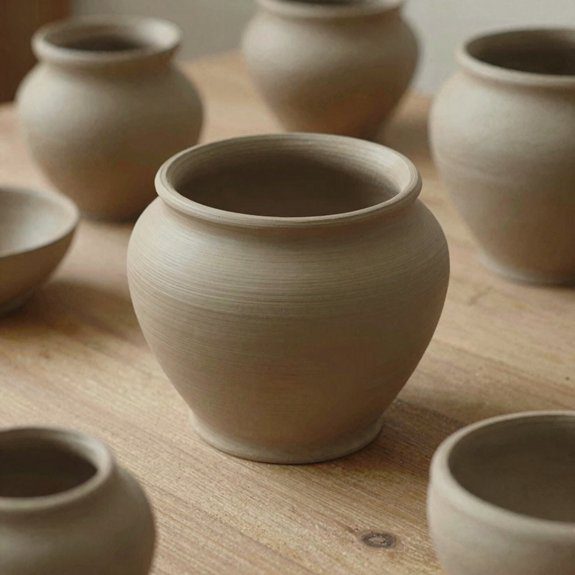
A soft matte finish can make hand-built clay feel calm, cozy, and a little bit elegant, like your piece is wearing a velvet sweater! You’ll fit right in when you choose a slip on bisque, then skip shine with a matte or low-sheen alternative glaze.
- Test kiln-fired tiles first
- Watch firing schedules closely
- Keep glaze thin and even
- Wipe drips before firing
- Smooth the surface well
Thicker spots can darken and lose that soft feel, so stay steady.
If you want a body-through look, leave some areas unglazed after bisque. It’s lovely, but not as food-safe, so keep that in mind, friend!
Creative Small Projects Perfect for Beginners
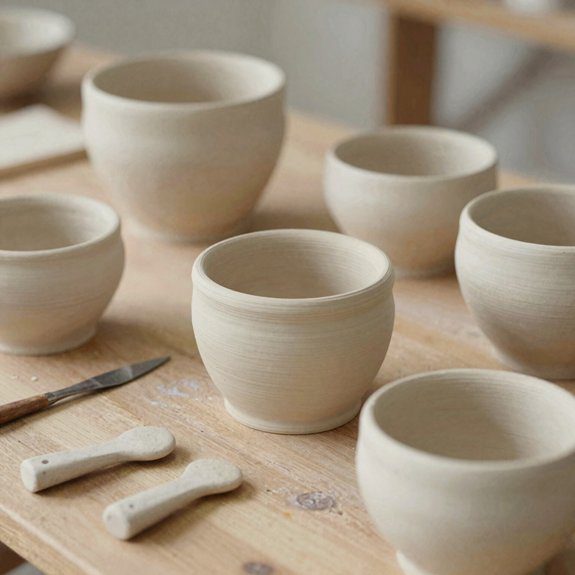
If you’re just getting started, small clay projects are the perfect way to build skills without feeling like you’ve signed up for a pottery marathon!
Try a simple slab bowl first, draping it over a mould; it’s cheap, easy, and teaches form fast.
Then make a tealight holder with a rectangle, a curve, and one tiny hole for glow magic.
Next, craft Textured Miniatures like little bowls or fluted forms, making several so your hands learn rhythm.
Finish with mini vases and Glaze Experiments, since each coat can surprise you.
Or skip glaze and try a desk salt pinch bowl!
Ring dishes
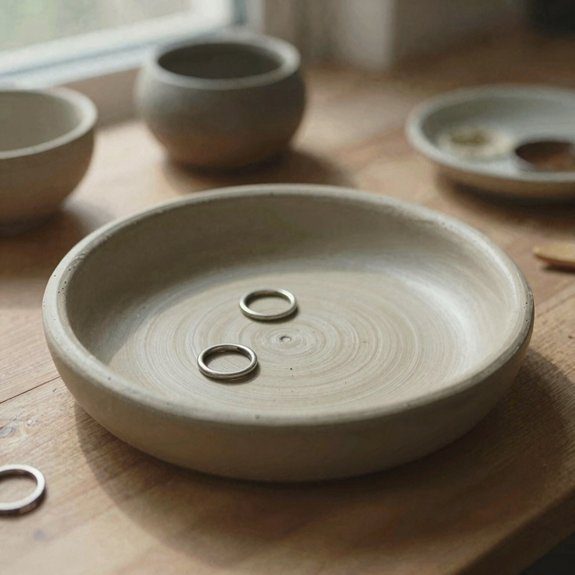
Ring dishes are tiny clay projects with big charm, and they’re perfect when you want something useful without wrestling a giant slab of clay! You’ll fit right in with this beginner-friendly apprentice workflow.
- Roll a slab or pinch a small cup
- Curve it over a bowl, then smooth the rim
- Press a shallow catch pattern inside
- Thicken the center for strength
- Follow clay drying tips: cover it, let it dry slowly
After leather-hard trimming, glaze the inside for a wipe-clean finish.
Costs stay low, the steps feel easy, and your ring spot ends up looking sweet, not fussy—nice, right!
Candle holders
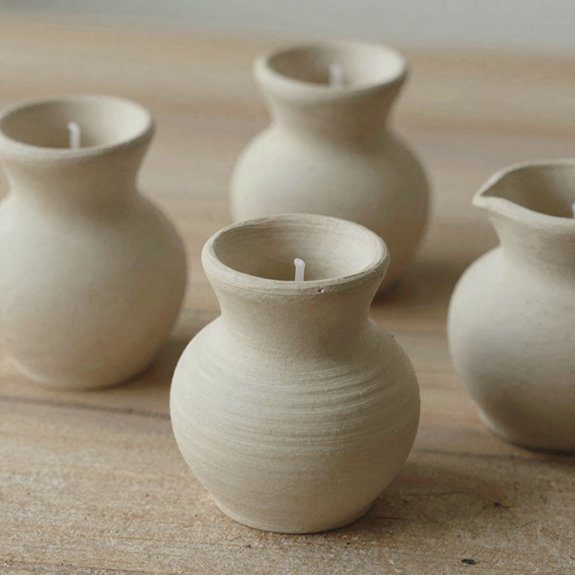
Candle holders are another small clay project that packs a big cozy payoff, and they’re easier than they look!
Cut a rectangle slab, curve it into a tealight shape, and leave a small gap or thumb hole so the glow can peek through.
Want extra charm? Try textured slabwork by carving tiny stars, waves, or a cookie-cutter outline before you join it up.
Keep it cheap, simple, and beginner-friendly, then dry it slowly so it stays stable.
After bisque firing, add glaze if you want, but do kiln safe testing first—glaze can drip or shift.
That surprise finish? Chef’s kiss!
Incense holders
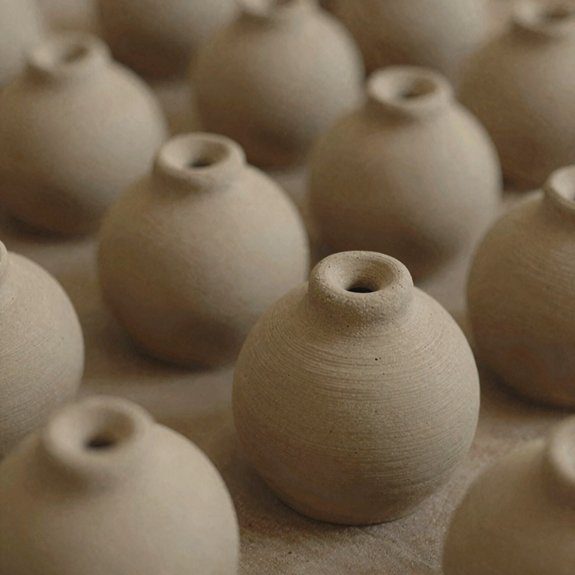
Incense holders are a tiny clay project with a surprisingly big vibe, and you can make one without elaborate tools!
- Cut a small slab base.
- Curve the sides up around it.
- Add a shallow groove for ash management.
- Punch a vent hole or slot.
- Stamp in surface texture for personality.
Keep it beginner-friendly, quick, and cheap, too.
Dry it slowly under loose cover, then bisque fire for kiln safety.
After that, try glazing tests on a tile first, because uneven glaze can drip where ash and heat meet.
Set it on a heat-safe spot, and enjoy the cozy little ritual!
Advanced Ideas That Make Your Work Stand Out
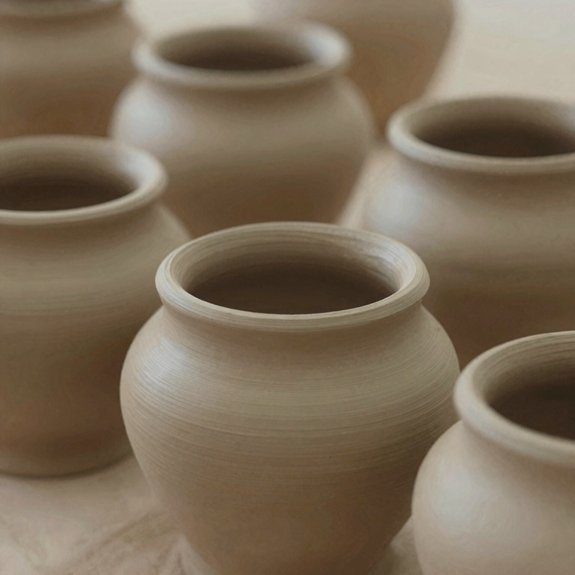
If you want your clay pieces to look less “first try” and more “wow, where did you get that?”, start with repeatable texture systems that you can use again and again. Use textured rollers, stamps, or Cricut-made stencils to press in vines and blossoms, then keep the look clean with seam smoothing.
Try closed-form spheres from joined slabs, or lidded forms made with a simple template, so every fit feels polished.
For extra personality, build one-slab abstract shapes or perched bird pieces.
Test your glazes, note thickness and firing temp, and you’ll get fewer surprises—well, fewer ugly ones!
Layered clay textures
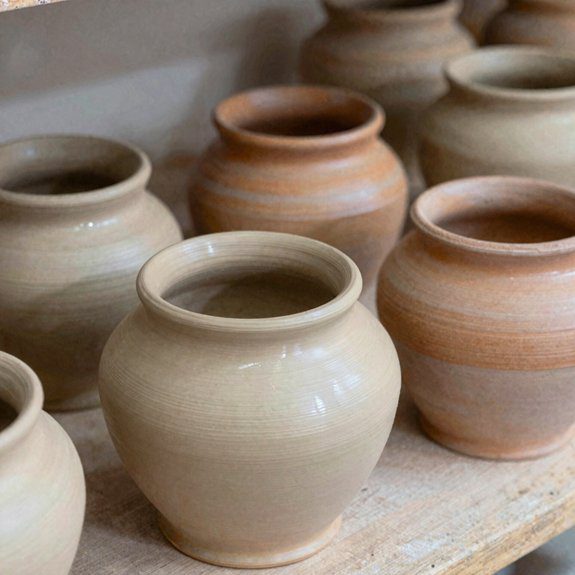
Layered clay textures take those pretty stamped vines and blossoms from “nice” to “whoa, that has depth!” Start with a slab, roll on a textured roller, press in a stamp or Cricut-made stencil, then let that first pattern set up a bit before you add a second one, like fine lines over big leaf shapes, so the surface feels rich and stacked instead of flat.
- Keep it soft for plates and trays.
- Use texture contrast for clear layers.
- Try a glaze test first, always!
- Watch raised spots catch more color.
- Finish with ruffled edges for a polished, friendly look.
Mixed-media pottery (wood + clay)
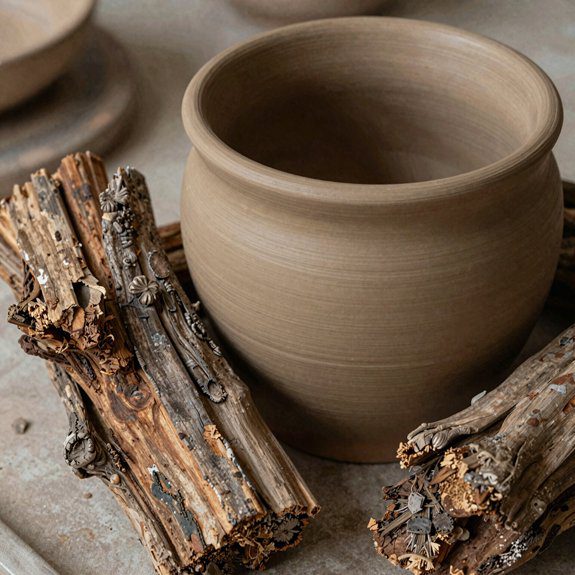
When you want your pottery to feel a little more surprising, wood and clay can make a super cool team!
Keep your clay sturdy first, then add sealed wood for amazing Surface contrast. That keeps glazing stability and kiln safety in check.
| Idea | Materials | Result |
|---|---|---|
| Mug handle swap | slab mug, dowel | cozy grip |
| Bowl accent | ruffled clay, carved block | bold look |
| Pocket form | closed form, wood plug | surprise detail |
Score seams, smooth edges, fire the clay, then add wood after. Use wood sealing so it won’t soak up moisture. It’s cheap, beginner-friendly, and honestly, your shelf will look like it belongs in the cool crowd!
Sculptural storytelling pieces
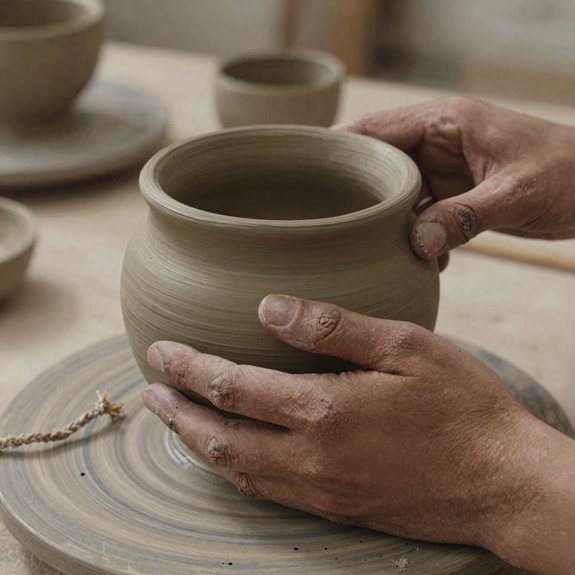
A handful of sculptural pieces can feel like tiny stories you can hold, and that’s exactly the magic here! You shape one slab into narrative silhouettes, then let vessel symbolism guide the mood.
- Cut a base form
- Add layered cutouts
- Press vine-and-blossom imagery
- Join seams smoothly
- Plan a useful accent
You can keep costs low with simple clay, a loop tool, and stamps, so it’s beginner-friendly.
Build perched-on-a-base figures, circles, or little scenes, then polish the joints until they feel meant to be.
After firing, glaze may surprise you, and that’s part of the tale.
Want more charm? Add a dainty handle or gadget stand concept.
How to Add Texture, Detail, and Personality
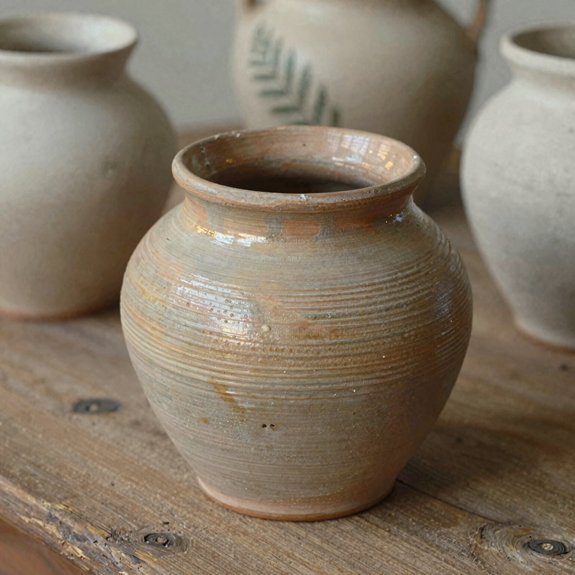
From the first press of a stamp to the last little carve, texture is what makes hand clay pottery feel alive! You can use rollers, stamps, and Cricut-cut stencils on slab or pinch forms before they dry, and your crew of clay buddies will cheer.
| Idea | Result |
|---|---|
| Floral-vine stamp | Sweet repeat pattern |
| Scalloped edge | Crisp, soft finish |
| Leaf veins | Handmade charm |
| Slip and underglaze | Color pops in grooves |
| Test tiles | Better embossing durability |
Try light-to-deep relief, because ridges grab glaze while flat spots stay calm. Add tiny surprises, then let drying do the rest.
Carving techniques
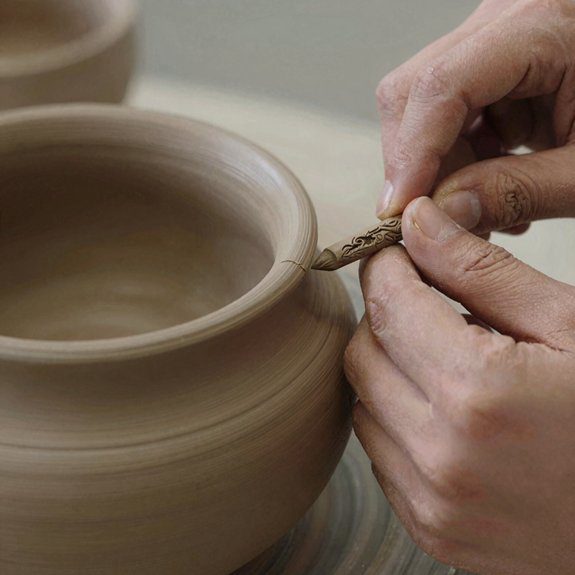
As your piece turns leather-hard, carving is where the magic starts to show! You’re joining a crafty crew when you cut crisp lines that’ll stay after firing.
- Use a small blade or carving tool
- Start with shallow grooves first
- Deepen only for bold shadows
- Carve before final surface finishing
- Keep depth even to avoid cracks
Try carving around stamps or stencils, and let floral vines or leafy edges pop. It’s cheap, beginner-friendly, and makes glaze experiments even more exciting later.
A careful hand now means clean detail, sturdy walls, and a piece that feels uniquely yours—without the pottery drama.
Pressed patterns
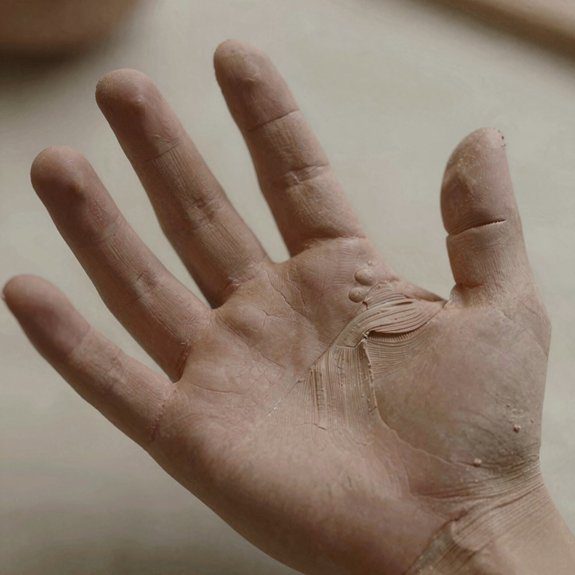
Pressed patterns are where slab clay gets to show off, and honestly, it’s a little addictive! You can use textured rollers, stamps, or stencils to press vines, blossoms, or ruffled edges before the clay dries. Keep a stencil flat, press evenly, and the lines stay crisp instead of tearing.
Try this during shaping, then use drying control so the texture holds its shape. Thicker patterns can glaze differently, so don’t skip a glaze test on small tiles. You’ll save time, avoid drips, and get that handmade look your crew will cheer for!
Attachments and layering
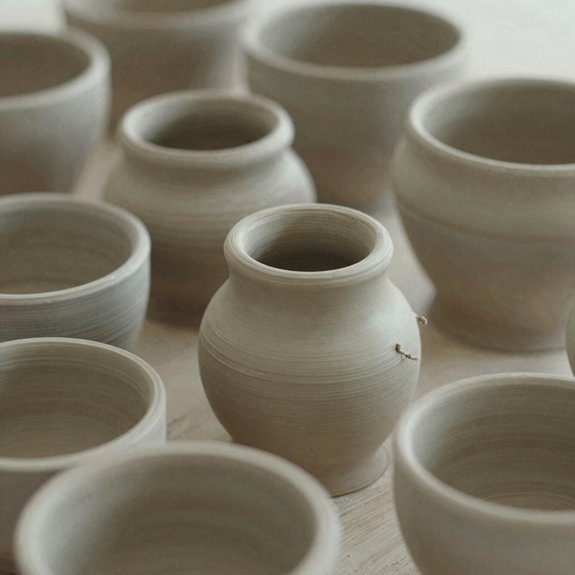
When you want your clay piece to feel a little more alive, attachments and layering are where the magic happens! You’ll fit right in with these simple tricks.
- Score, slip-coat, and press seams hard.
- Add slab relief for quick texture.
- Build only where you want height.
- Keep edges even and sturdy.
- Let extra drying time do its quiet work.
Try floral vines, stamped panels, or tiny pinches that hug a form. These attachments stay stronger in kiln safe designs and help you avoid glaze drips.
Use slip trap tips, like smoothing overlap edges, so moisture doesn’t sneak in. Your piece’ll feel handmade, welcoming, and proudly yours—no elaborate tools needed!
Turning Your Clay Ideas Into Sellable Products
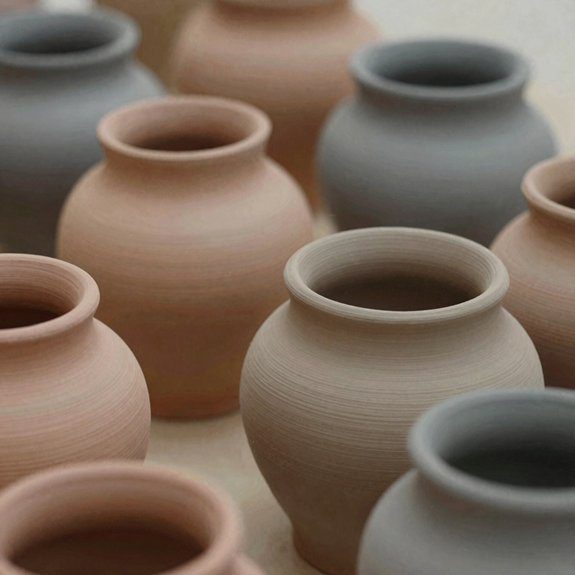
Turn your hand-built clay pieces into little products people can’t wait to pick up!
Start with slab-built plates, trays, and serving bowls, and smooth seams, even the walls, so each one feels like a friendly match set.
Then use pricing workflow planning around drying, bisque, glazing, and kiln time, because your stock can only move as fast as your kiln does.
Test every new glaze on tiles first, so surprises don’t crash the party.
Finally, show Product photography tips in action: clear photos, simple notes, and a “sellable collection” of matching pieces, and buyers’ll feel they belong at your table.
Functional vs decorative balance
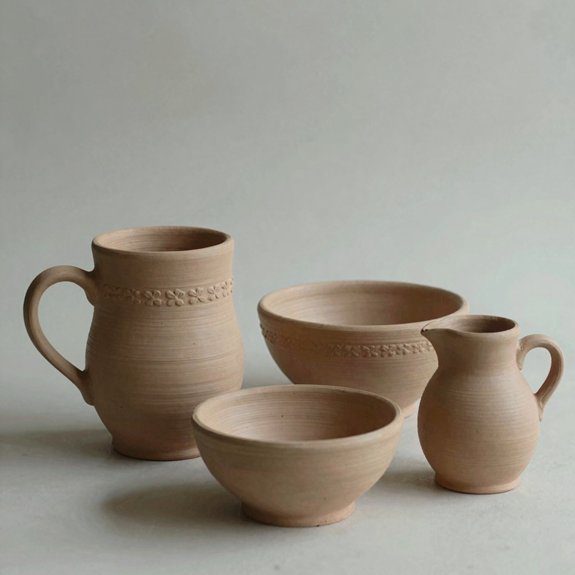
- Shape plates or trays with gentle texture.
- Use floral stamps, rollers, or stencils.
- Try glaze testing on test tiles first.
- Check drying shrinkage control as pieces firm up.
- Finish rims carefully so they stay strong.
Your test tile workflow helps you see surprises before the final fire, because glaze can shift with thickness and clay body.
Save the fanciest detail for last, maybe a light-through cutout or tiny drainage holes, and your piece’ll feel like yours!
Aesthetic trends that sell
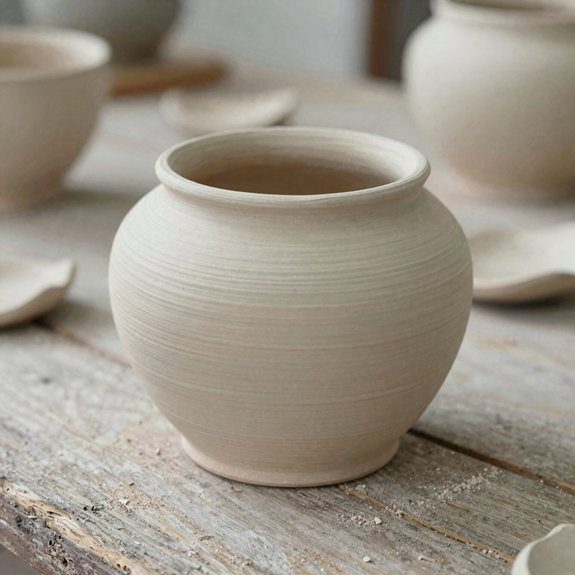
The pieces that tend to sell best usually look like they could live in an upscale shop and still work at breakfast, and that’s great news for beginners!
You can lean into ruffled plates, simple serving bowls, and dinnerware with sellable texture patterns like vines, blossoms, or scallops.
Try textured rollers, stamps, or Cricut stencils, then keep glaze consistency testing at the top of your list, because color shifts with thickness and firing.
Mini vases and espresso cups are tiny crowd-pleasers too, since they let you show off different glaze combos.
Keep notes, repeat wins, and let your clay feel familiar!
Small batch handmade appeal
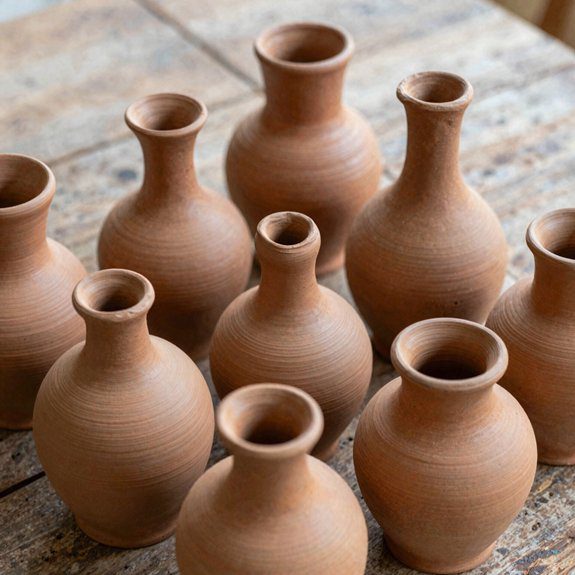
Because small batches let you play and learn fast, they’re one of the best ways to make handmade clay feel exciting instead of stressful! You can shape mini vases or tiny cups, test glaze combos, and still feel like you’re part of the studio crew.
- Roll slabs for mini vases
- Sculpt small cups by hand
- Use Studio test tiles
- Watch glaze variation closely
- Compare bisque and glaze firing results
Studio open time helps you move fast, from drying to firing, without waiting forever. Mistakes stay small, too, so drips and weird spots become lessons, not disasters. That’s the real charm!