17 Useful Things to Make Out of Clay (Practical Ideas)
I love turning a lump of clay into handy little wins: coasters, key bowls, ring trays, sink ring holders, earring holders, fridge magnets, tiny vases, house ornaments, and even a wall clock! I just roll, press, shape, dry, sand, and seal with simple tools and acrylic paint. Most projects are cheap, beginner-friendly, and make real use, not clutter. If you want practical clay ideas that look cute too, stick around—I’ve got a few surprises next.
Love cozy DIY projects? 💕
Get free printable guides, exclusive tutorials & surprise craft goodies straight to your inbox.
Disclosure: This post may contain Amazon affiliate links, at no extra cost to you. Content on DiyCraftNest is created with research support from AI tools and carefully reviewed, edited, and fact-checked by the lead author, Daniel Pat, to ensure accuracy and reliability. Learn more
Key Takeaways
- Make drinkware accessories like coasters, spoon rests, salt spoons, stirrers, and tealight dishes for everyday kitchen use.
- Create storage pieces such as key bowls, ring trays, trinket dishes, and catchalls to keep small items organized.
- Shape jewelry holders and travel cases, including ring cones, earring holders, and compact boxes for portable organization.
- Try desk and display projects like photo holders, card stands, bookends, and wall clocks for practical decor.
- Finish pieces with sanding, paint, and waterproof sealant so they stay durable and easy to clean.
Air-Dry Clay Coasters for Everyday Drinks
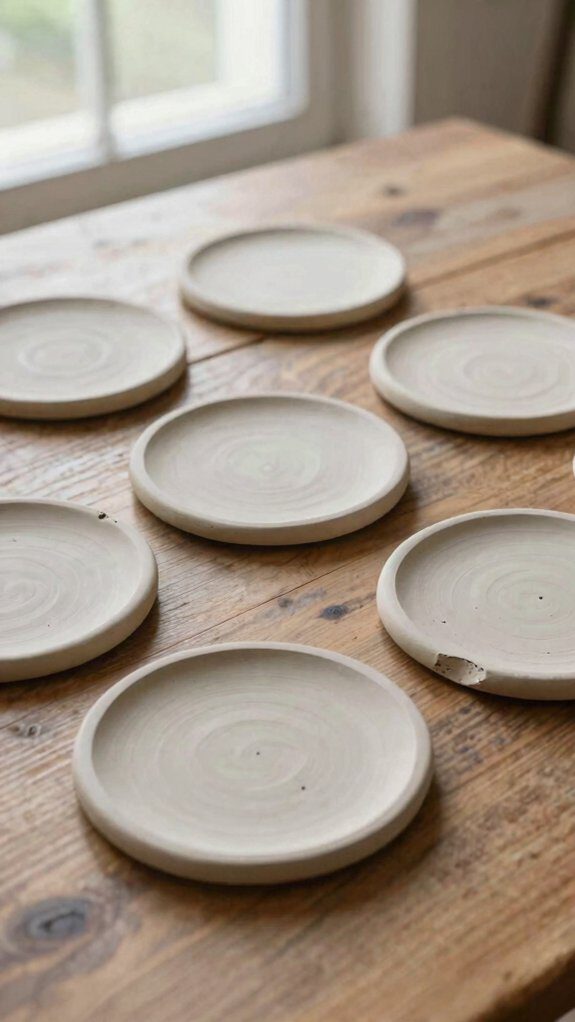
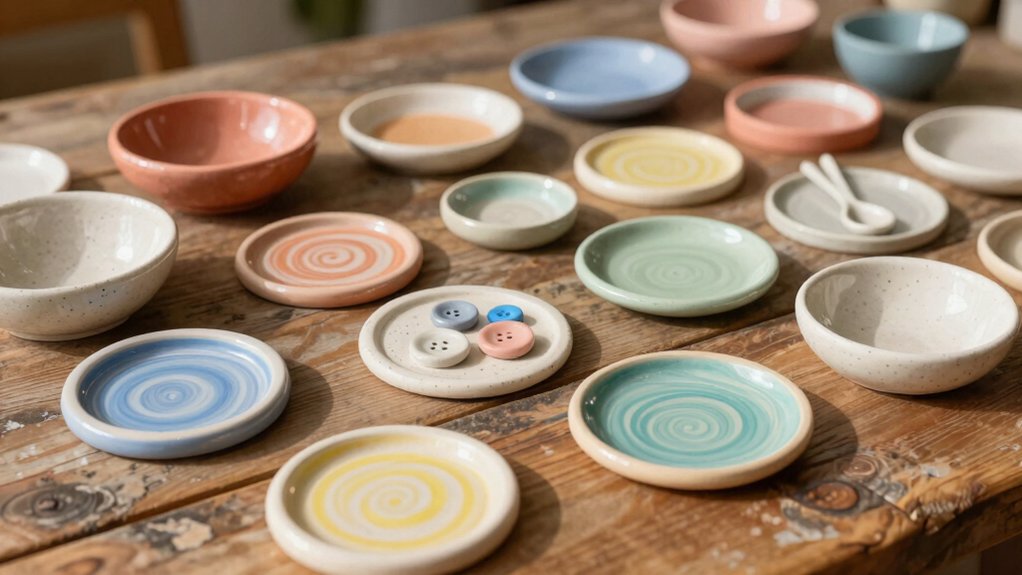
If you’re looking for a beginner-friendly clay project that doesn’t cost much, I’d start with air-dry clay coasters—just clay, a rolling pin, a cup or cutter, and a water-resistant sealant, and you’re off to the races!
I follow thickness guidelines, keeping mine 3–5 mm thick and about 9–11 cm wide, because that helps them dry evenly and stay flat.
Dry them slowly on an absorbent surface for 24–72 hours, flip once, then sand lightly, paint if you like, and finish with two coats of sealant—my coaster maintenance trick for drinks without sweaty rings.
Nice! That’s the magic, too.
Air-Dry Clay Bowls for Keys and Coins
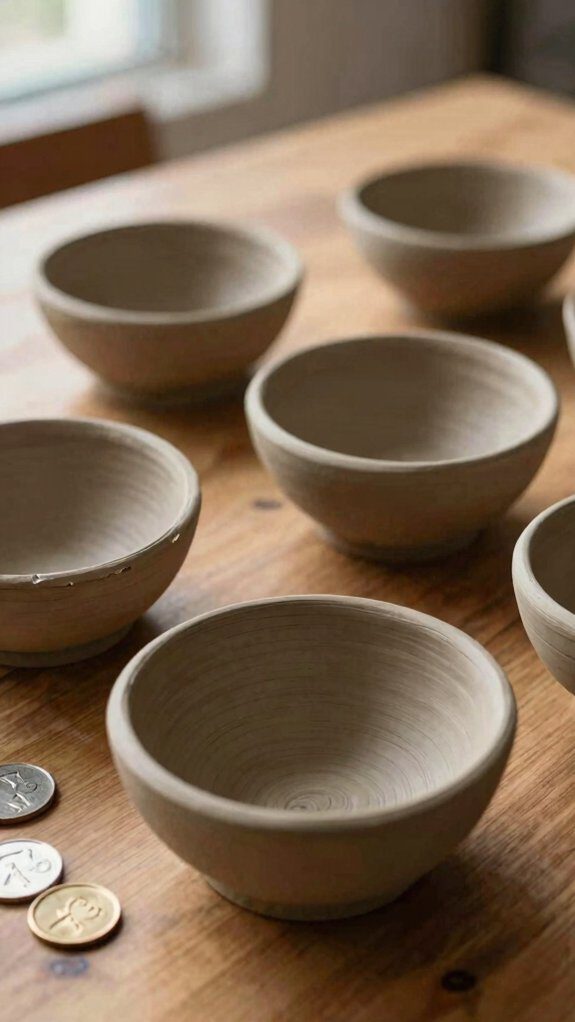
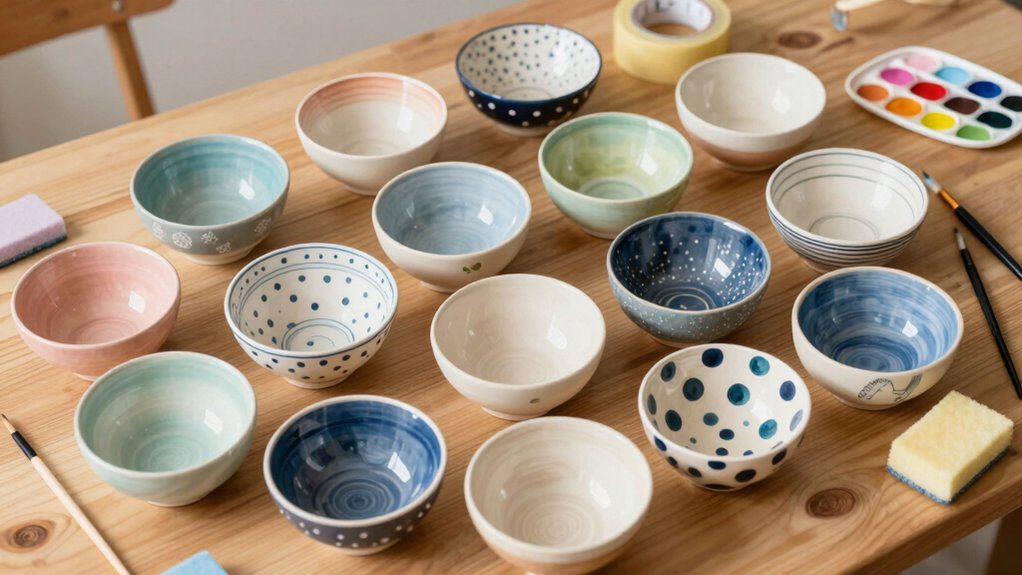
I love making air-dry clay bowls for keys and coins, because they’re quick, cheap, and weirdly satisfying, and you can shape one in just 10–30 minutes with clay, your hands or a rolling pin, and a small bowl or cup as a guide—easy peasy!
I press a 5–7 mm base, smooth seams with a damp sponge, and let it dry flat so it won’t crack. My drying techniques usually take 24–72 hours, depending on thickness and humidity, and then I seal it with varnish. Add tiny ridges for key organization, and felt inside keeps coins quiet—nice! for everyday use.
Air-Dry Clay Jewelry Trays for Rings
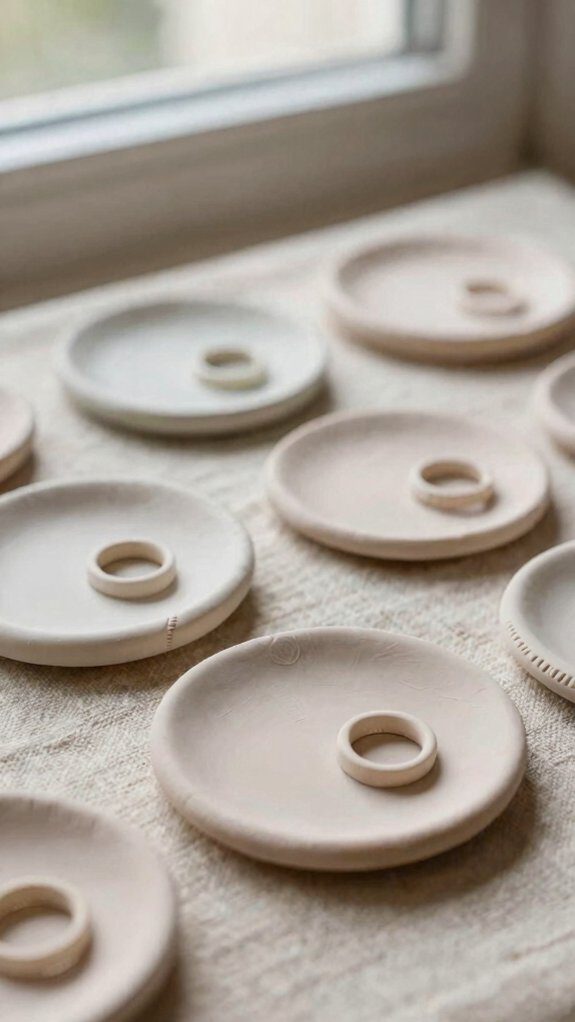
I love making air-dry clay ring trays with you because they’re cheap, beginner-friendly, and you can start with a shallow dish, a little cone, or even a cactus-style rack—each one keeps rings from bumping into each other, which is a tiny win for your jewelry box!
After I smooth the clay with a damp sponge, I let it dry, give it a light sand, and add acrylic paint or a glossy varnish, so the tray looks polished instead of “I made this in ten minutes” polished. For the best result, I also add felt pads on the bottom, and that small extra step keeps the tray steady while your rings sit pretty!
Simple Ring Tray Shapes
A simple ring tray is where I like to start: grab a bit of air-dry clay, roll a 1/4–1/2 inch slab, and cut a 3–4 inch circle or oval, and you’ve got a cheap little catchall that usually dries in 24–48 hours.
I love these minimalist forms because they feel calm, not fussy.
For a ring perch, I press on a small cone, or shape a tiny cactus with textured edges, and it holds rings like a champ.
Want more room? Go 5 inches wide, shallow bowl style, and let your desk crew join in with me all day.
Decorative Finish Ideas
Once your tray’s dry, that’s where the fun really starts!
I like to brush on acrylic paint, then add metallic accents on the rim or little peg for a shine.
If you want a more artsy look, try textured glazes, a touch of gold leaf, or both, stylish without costing much.
Let each layer cure for a full day, then seal it with water based varnish so it can handle rings, lotion, and everyday life.
Honestly, it’s an easy project, and your tray ends up looking like it belongs on a boutique shelf, with zero fuss, I promise, friend!
Air-Dry Clay Ring Holders for the Sink
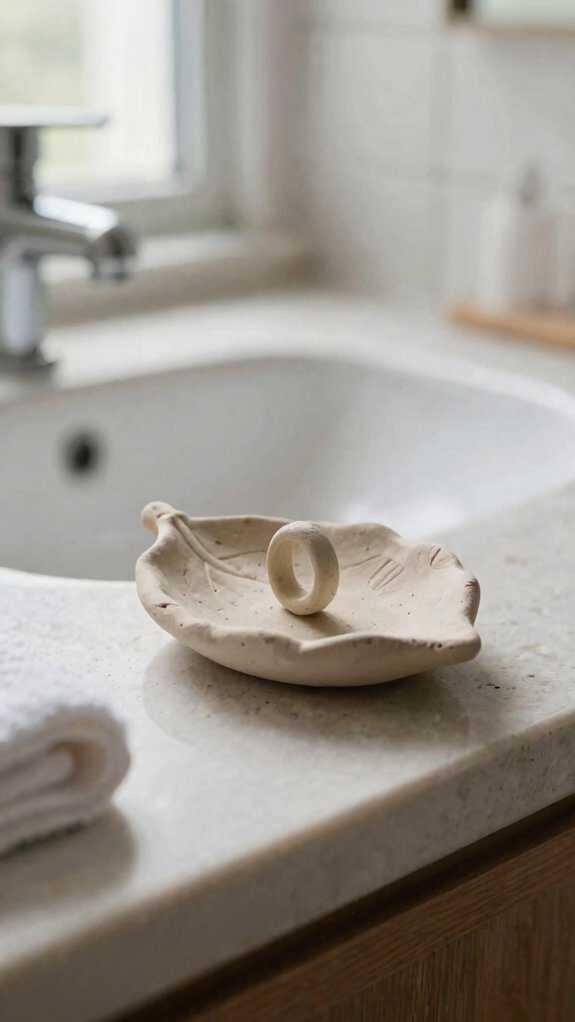
I love a little air-dry clay ring holder by the sink, because it’s an easy, low-cost fix that keeps your rings safe while you wash up!
I start with a tiny cone, cactus, or shallow dish with a central peg, shape it with my fingers and a bit of water, then let it dry, sand it, and seal it so splashes don’t soften it.
If you add a slightly textured base or a shallow dish lip, it’ll look custom and keep your rings from making a sneaky escape toward the drain!
Sinkside Ring Rest
Tiny clay tray, big help! I shape a shallow 2–3 inch dish, add a tiny peg or gentle slope, and you’ve got a sinkside ring rest that feels like a little helper. For a cheap build, I use air-dry clay, a damp sponge, paint, and a waterproof coating.
- Smooth it well.
- Dry 24–48 hours.
- Seal for splash protection.
- Add a lip or rubber pad.
- Enjoy compact drainage.
It keeps rings nearby, slides them on/off fast, and saves my counter from the “where’d I put it?” shuffle! Honestly, it’s beginner-friendly, dries fast, and makes shared sink space feel calmer too.
Custom Clay Shapes
When I want a ring holder that looks a little fancier than a plain tray, I roll air-dry clay into a simple cone about 2–3 inches tall and 1–1.5 inches wide at the base, then smooth it with a damp sponge so rings slide on easily.
Add a tiny groove at the base, so soap residue stays put and rings don’t wander toward the drain—rude!
After I let it cure 24–48 hours, I brush on waterproof varnish or food-safe epoxy outside.
Then I paint personalized initials, or stamp textures for ergonomic contours, and get a cute, splash-proof buddy today.
Air-Dry Clay Earring Holders for Small Spaces
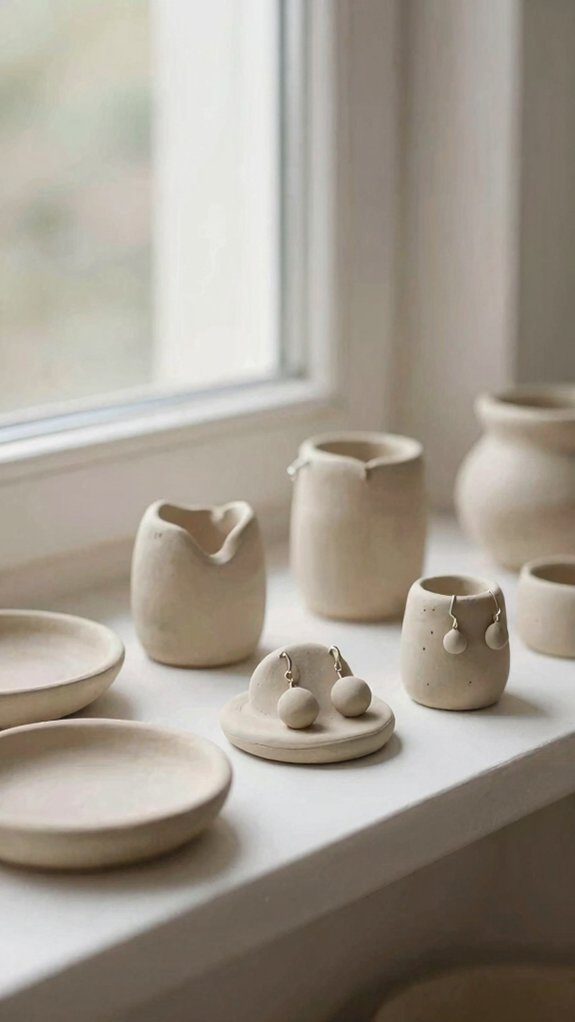
Because small spaces get messy fast, I love making air-dry clay earring holders that do a lot with very little!
Try these compact organizers:
- Tile: clay, hook, drill, hang.
- Dish: slab, cone, let dry.
- Tray: thin layers, stack, save desk space.
- Fridge panel: add magnets, hold studs.
- Travel cases: tiny box, foam, toss in a bag.
I keep mine simple, cheap, and cute, and you can too—tiny wins, big smiles!
They’re beginner-friendly, take little clay, and fit dorm life, bedroom life, or a purse, so your earrings stay close, neat, and easy to grab every single day fast.
Clay Flower Trinket Dishes
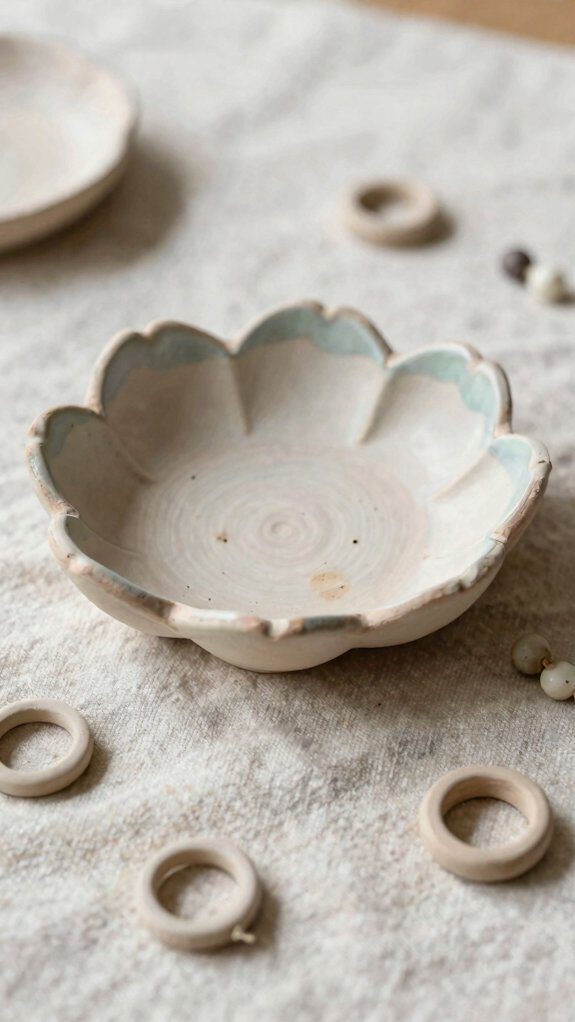
If you’re looking for a sweet little catchall, I love making clay flower trinket dishes that are only about 3–4 inches wide, which makes them perfect for rings, earrings, and those tiny bits that disappear into the couch like magic.
I roll air-dry or oven-bake clay, press a blossom or cutter for petal textures, then trim the edges—easy!
After drying or baking, I sand, seal, and paint with botanical glazing, which feels elegant without costing much.
Add gold leaf or tiny beads, and you’ll get a cheerful dish that looks handmade in the best way for your nook, too!
Air-Dry Clay Spoon Rests for the Kitchen
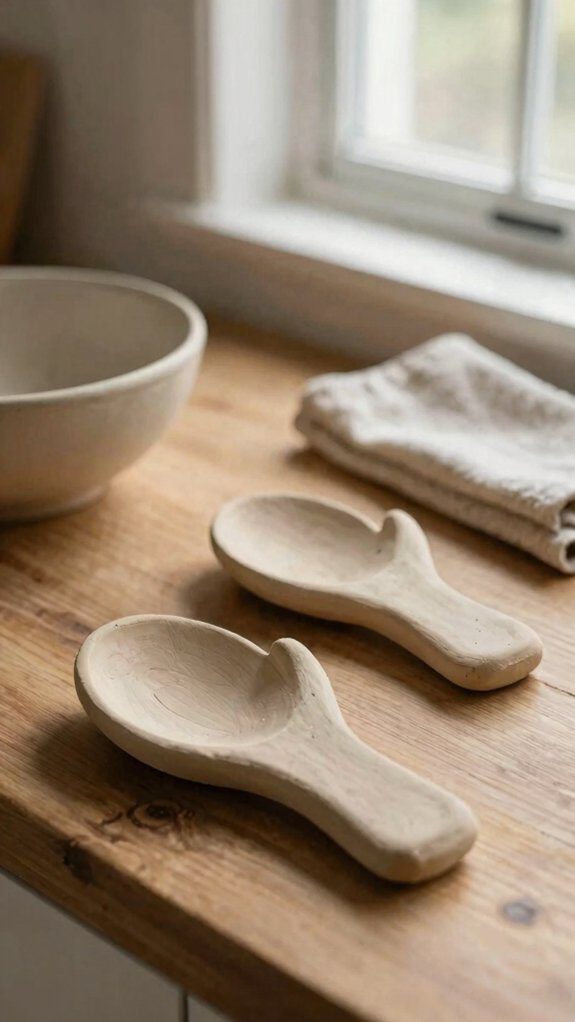
I love making air-dry clay spoon rests because you can roll out a small slab, shape it into a simple 4–6 inch oval or leaf, and boom—you’ve got a handy spot for a spoon or spatula without a messy counter!
If you want a kitchen-friendly twist, I’d press in a little groove, raised lip, or drainage hole, and you only need clay, a bowl, and your fingers to make it work. After that, I’d paint on a fun pattern, then seal it with two thin coats so it wipes clean easily—yes, even a cute marbled one can be practical, which feels like a tiny kitchen win!
Easy Spoon Rest Shape
A humble spoon rest is one of the easiest clay projects I make for the kitchen, and all I need is air-dry clay, my hands, and a little patience to roll a 1/4- to 1/2-inch-thick log about 6 to 8 inches long, flatten it slightly, and curve it into a shallow dish that dries sturdy but still feels lightweight.
- I pinch a lip.
- Kid friendly shapes shine.
- Texture hides tiny scratches.
- Weighted bases stay put.
- Air-dry, sand, then seal.
I keep mine for spoons and cooked food and it’s cheap, neat, and saves my counters from drips every time!
Kitchen-Friendly Custom Designs
For a kitchen project that actually earns its keep, I love making custom air-dry clay spoon rests that fit right by the stove, and you don’t need much more than clay, a damp sponge, and a little creativity!
I shape mine about 5 inches long, add a raised lip, and press in linen, leaves, or seasonal motifs for a cozy look.
If you want a hanger, poke a small hole first.
I let it dry with ventilation considerations in mind, and the result is a sturdy rest that catches drips and keeps my counter tidy.
Cheap, easy, and cute!
Paint And Seal Ideas
Once your clay spoon rest has dried, this is where the fun really starts! I’ve painted mine with acrylics, and a quick gesso coat makes the colors pop.
Let the art cure 24 hours, then seal only the outside with two thin coats of food-safe polyurethane or clear acrylic sealer.
For sealed textures, I dab on a sponge, and for shine I try gentle varnish techniques.
- Start cheap, easy, and fun at home.
- Add dots, lemons, or herbs.
- Keep the center food-safe.
- Let each coat dry.
- For extra water resistance, use water-based polyurethane or epoxy, and cure fully, too.
Air-Dry Clay Salt Spoons for Serving
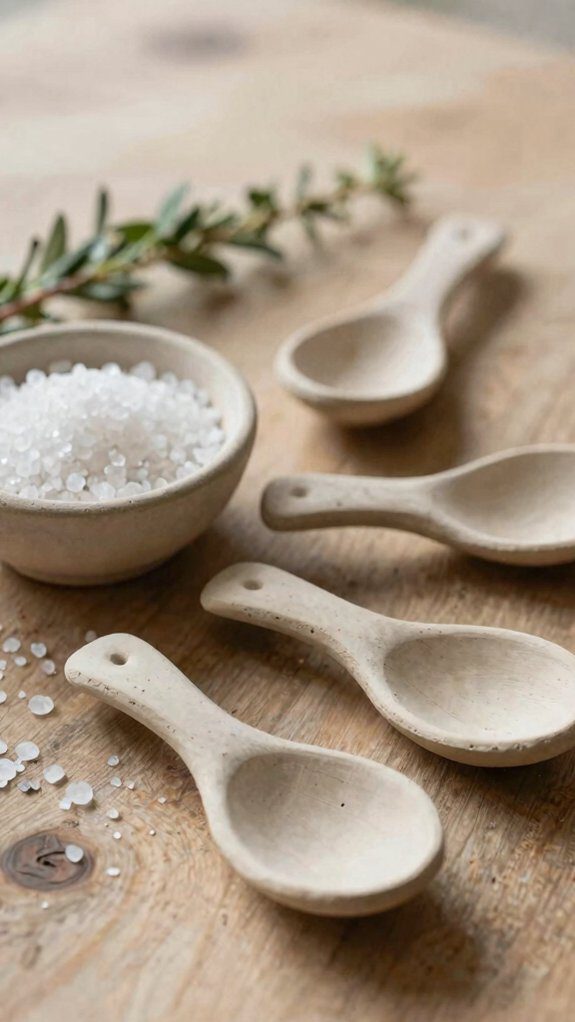
I love making tiny air-dry clay salt spoons, because they’re quick, cute, and surprisingly cheap, and you can shape them by hand or press them into a spoon mold in just a few minutes.
I mix in tools like a butter knife, fine sandpaper, and a toothpick, then compress the clay tightly and smooth seams with a damp finger. After air-drying 24 to 72 hours on a flat surface, I seal them with food-safe varnish, paint them if I want shine, and they become handmade gifts that fit dining etiquette without feeling fussy—tiny, sweet, and ready for salt today!
Air-Dry Clay Photo Holders for Desks
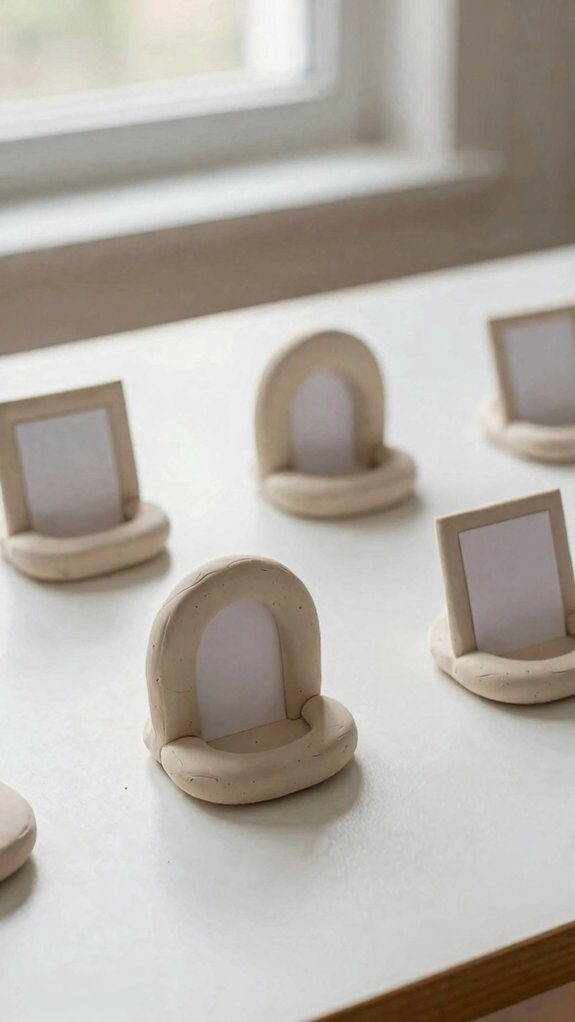
I love making air-dry clay photo holders for desks, because they turn a simple lump of clay into a neat little stand that keeps a favorite photo upright without fuss. I roll out the clay, shape a sturdy base, and add a slit or clip, then I can paint it any color I want, from soft pastels to bright, goofy brights. If you’re looking for a giftable photo accent, this one’s a fun win, since a stamped initial or tiny flower makes it feel personal fast, and it looks way fancier than the effort it takes!
Simple Desk Displays
Grab a little air-dry clay and let’s make a desk photo holder that’s cute, cheap, and way easier than it sounds! I keep it simple:
- Roll a 3×2 slab, fold one edge, and slit it for cards.
- Make a tiny disk, angle the slit, and hold Polaroids upright.
- Stamp lace or a fork for textured risers and grip.
- Smooth edges, then air-dry 24–48 hours so it won’t crack.
- Paint, seal, and add a cork pad or magnet.
These minimalist stands look tidy, stay put, and make your desk feel like yours, which is honestly the whole point every day.
Custom Shapes And Colors
Turn a plain lump of air-dry clay into a desk photo holder that actually looks like yours, not like a sad little craft-store extra! I roll a 1/4-inch slab, cut a 3-inch base, and add ergonomic curves that keep it steady.
| Shape | Feeling |
|---|---|
| Round | calm |
| Angle | modern |
| Blend | shared |
| Stamp | personal |
I use color blending with a tiny splash of paint, so the tint stays soft and strong. After a day or two, I seal it, and the result feels cheap, sturdy, and totally yours. Honestly, it’s a small maker win that makes your desk feel like home again.
Giftable Photo Accent
A little slab of clay can make a surprisingly sweet desk gift! I roll air-dry clay into a 3×3 rectangle, press a top slit, and let it dry firm.
- Clay, sandpaper
- Paint, seal
- Initials, flowers
- Magnetic photo
- Miniature frame
After curing for one to three days, I sand the edges, paint it, and seal it so it feels gift-ready.
If I add a magnet on the back, the holder sticks to metal and turns a note into a magnetic photo moment so your desk buddy gets a handmade piece that costs little, weighs a few ounces, and feels special.
Air-Dry Clay Bookends for Shelves
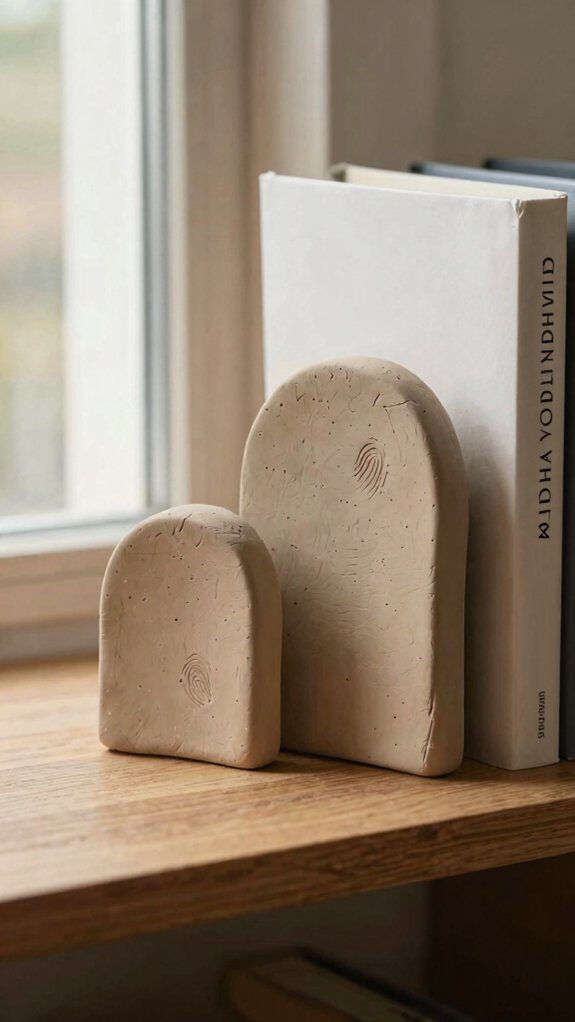
I love making air-dry clay bookends because they’re cute, useful, and surprisingly budget-friendly! I shape two matching L-blocks, about 4–6 inches tall and 3–4 inches deep, so they hug my books nicely.
For extra stability, I tuck in flat stones or a little rice before the clay sets, then smooth the seams with a damp sponge. Add textured patterns, little flowers, or initials, and let them dry, seal, and cure. On a shelf, they look custom-made, and those weighted edges keep paperbacks upright. Tiny craft, big “wow”! I keep mine indoors, and felt pads save both clay and shelves.
Air-Dry Clay Incense Holders for Calm Corners
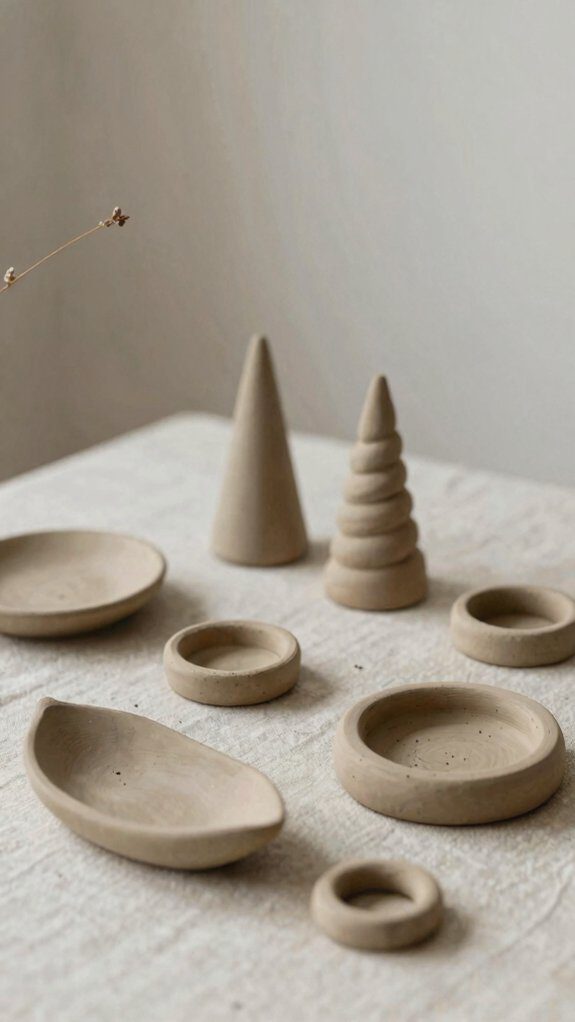
When I want a calm corner that actually smells good, I make an air-dry clay incense holder from a small slab of clay, and it’s one of those tiny projects that feels elegant without costing much at all.
Here’s the setup:
- roll a 1 cm coil,
- flatten it to 10 cm and angle a groove,
- cut a 5 mm hole for the stick,
- keep the base 10 mm thick on a nonflammable spot,
- and, if I’m feeling playful, hide a magnet for minimalist holders that stick to your fridge!
After 72 hours, I paint and seal for meditative textures.
Air-Dry Clay Candle Holders and Tealight Dishes
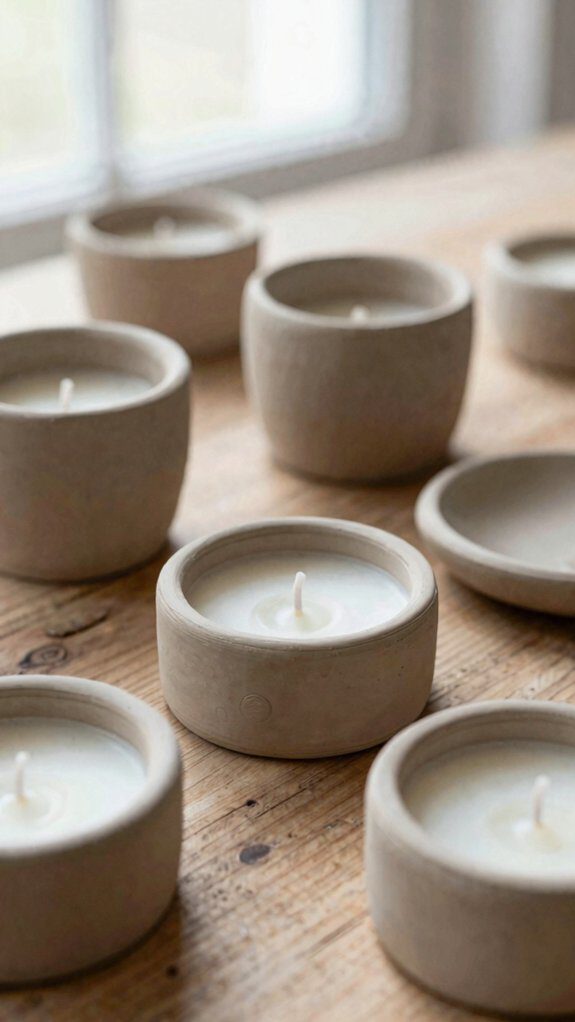
If you want a tiny project that feels way fancier than it is, I love making air-dry clay candle holders and tealight dishes with just clay, a little water, and a bowl or cookie cutter for shaping.
I keep the walls thin, 3–6 mm, so they dry in 24–72 hours and stay firm.
For heat safety, I use tealights in metal cups or LED ones, then seal the piece with waterproof sealer before any use.
I add carved leaves or paint and I tuck in weighted bases with a pebble because a stable little glow feels welcoming and safe.
Clay Drink Stirrers for Parties
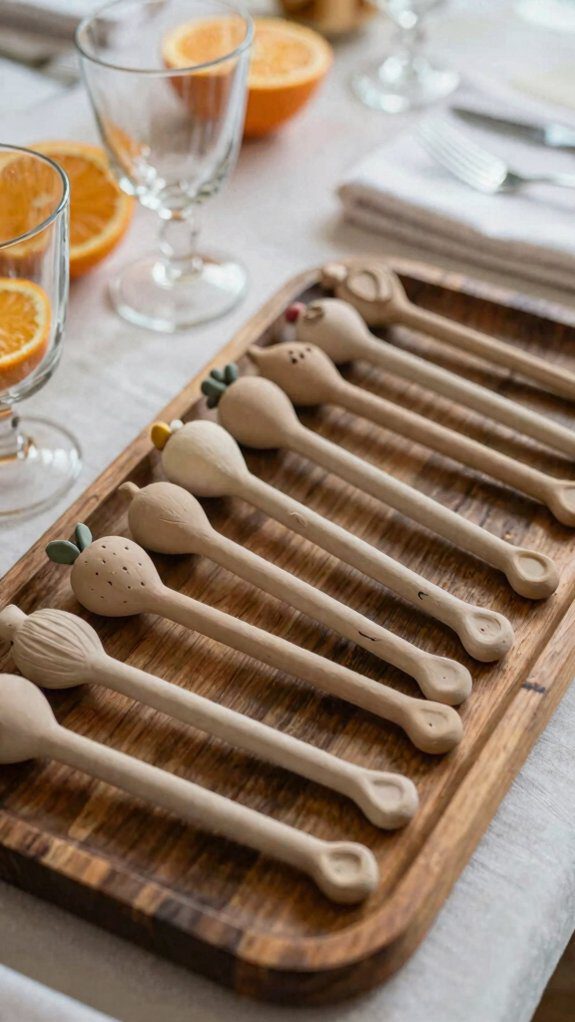
After those little glow pieces, I like making clay drink stirrers for parties because they’re fast, cute, and way cheaper than upscale store-bought ones! I roll 3–5 mm rods, add tiny fruit tops, and keep one end slim for stirring.
- Use party safe materials.
- Bake polymer clay for sturdy, drink-ready results.
- Dry air-dry clay, then seal it gently.
- Make themed topper sets in matching colors.
- Gift a few, and everyone feels included at the table!
I love how they bring a whole crew together, and nobody has to guess which cup is theirs—easy, cheerful, party magic for everyone tonight!
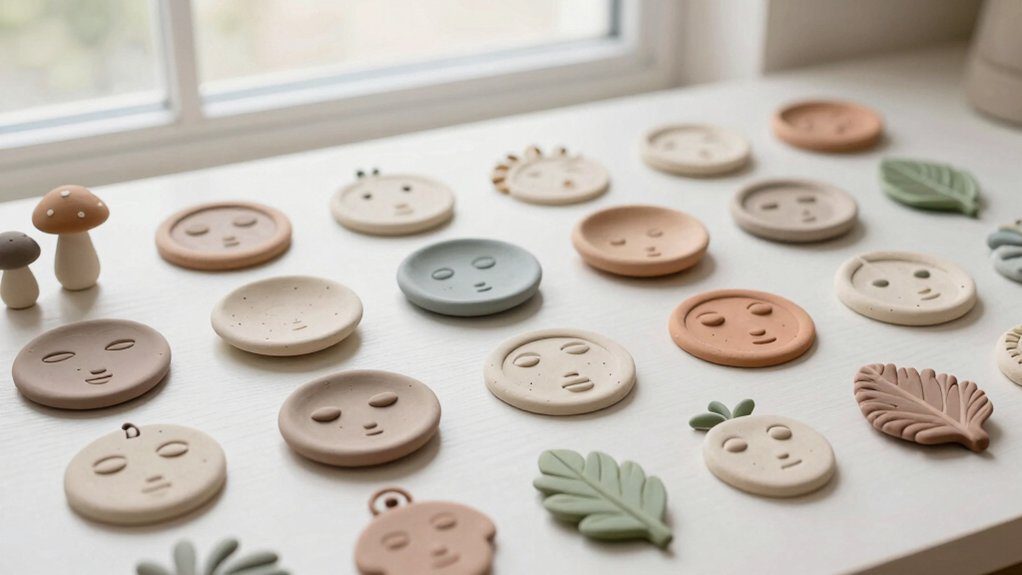
Air-Dry Clay Fridge Magnets With Names
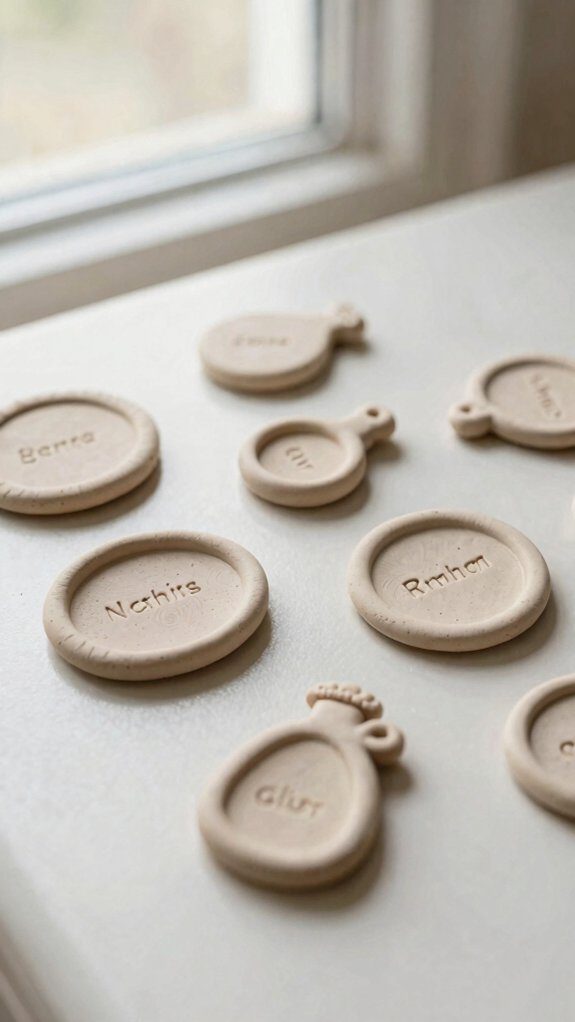
I love whipping up air-dry clay fridge magnets with names because they’re cheap, personal, and way easier than they look!
I roll the clay to 3–5 mm, stamp each name, then press in leaf veins or tiny beads for texture stamping.
After drying 24–48 hours on a flat, airy surface, I flip them once so they stay flat.
Light sanding smooths edges, and a clear sealer helps the finish last.
Then I glue on a magnet backing, and boom, you’ve got a name tag for the fridge, no elaborate tools, just happy, handmade charm every time for your crew.
Clay Tiny Magnetic Vases for Fridge Decor
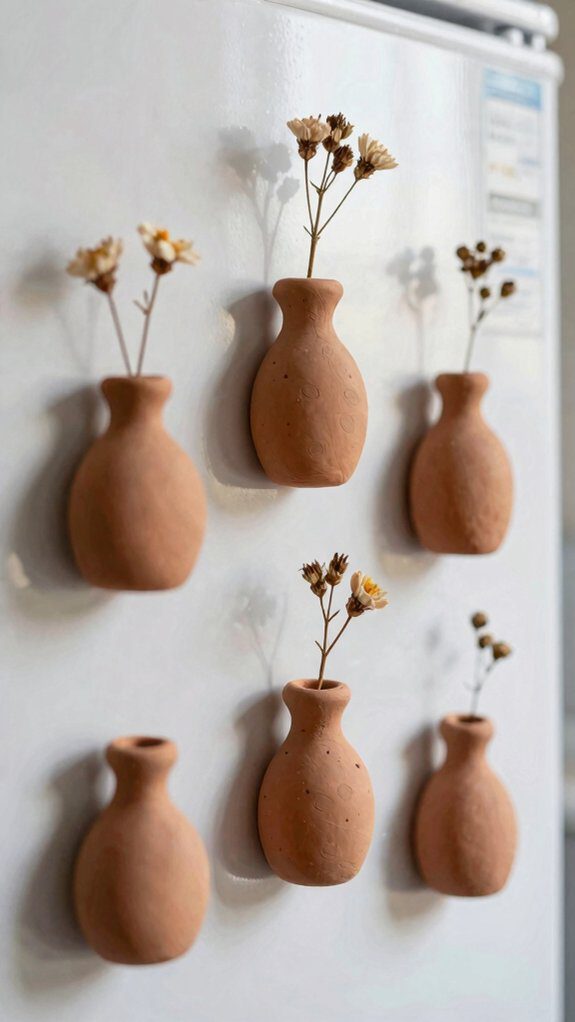
Those name magnets are adorable, but tiny clay vases crank fridge decor up a notch!
I shape air-dry clay into a 2 cm hollow bud, add a neodymium disc magnet, and let it cure. Here’s my quick setup:
- clay
- magnet
- varnish
- paint
- tiny tube
I keep magnet safety in mind, then sand, paint, and seal for moisture proofing. On my fridge, one stem stays put without sliding, and the whole piece costs little.
It’s easy, cute, and makes your kitchen feel like our little maker club! If you’re new, start small; the result feels polished, not fussy, just friendly.
Clay House Ornaments for Keepsakes
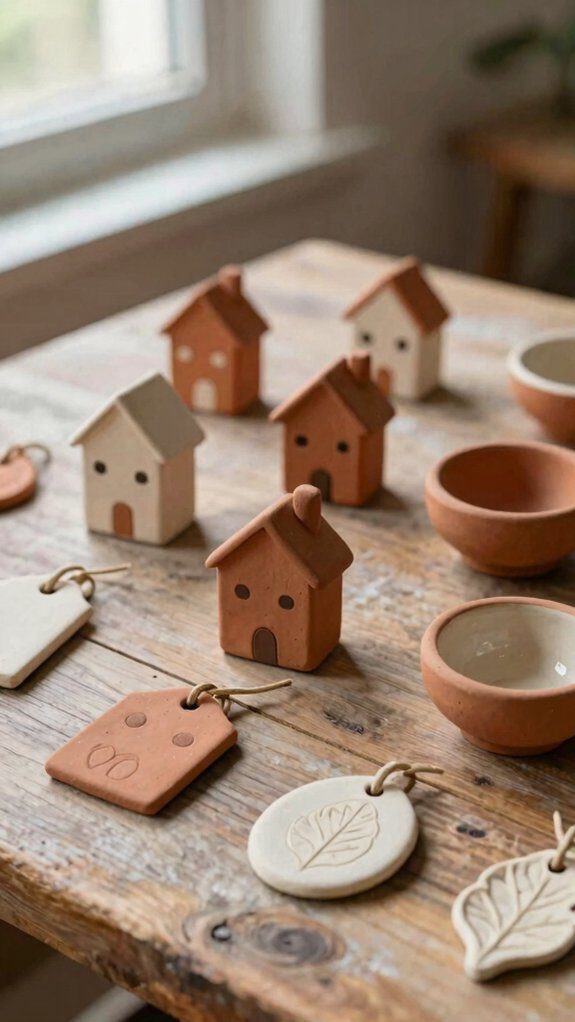
When I want a keepsake that feels sweet instead of fussy, I roll out air-dry clay to about 6–8 mm, cut a tiny house shape with a 5–7 cm cutter, and poke a little hole at the top before it dries, so it’s ready for ribbon and super easy to hang!
| Bit | Why |
|---|---|
| clay | cutter |
| door | window |
| memory tags | – |
| heirloom packaging | – |
I paint mine with acrylics, seal them with glaze, and tie on ribbon, and they feel like tiny home hugs! They’re cheap, easy, and best stored flat in a cool, dry spot, because they’re decorative only for keeps.
Air-Dry Clay Wall Clock for Custom Decor
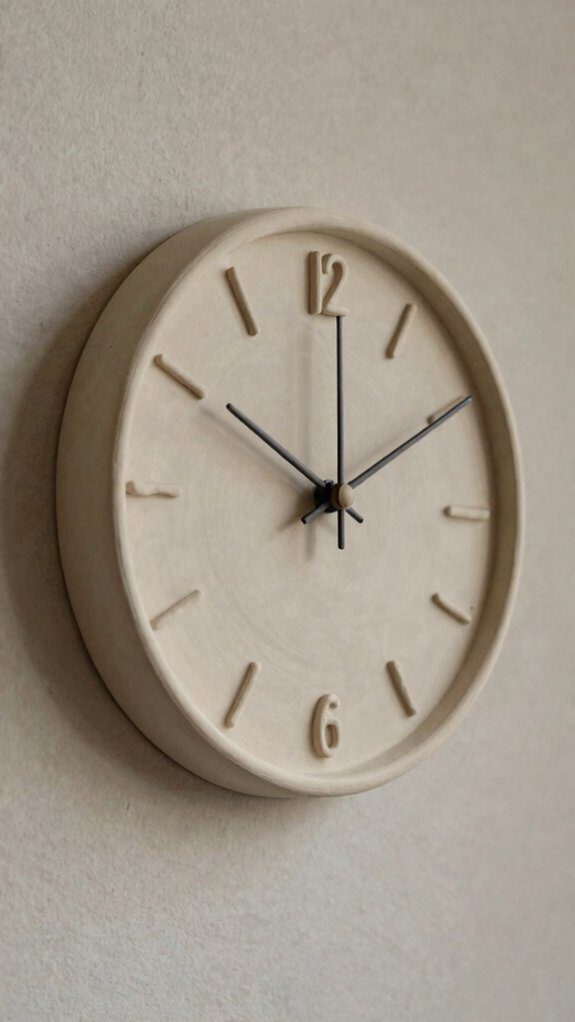
If those tiny clay houses made you smile, here’s a bigger project that still feels playful: an air-dry clay wall clock!
- I roll a 1/4-inch slab.
- You cut a 10-inch circle.
- I smooth the edges.
- We dry it flat, then flip it.
- I add mechanical mounting and a quartz movement.
Paint it with acrylics or metallic leaf, seal it with varnish and let the clock stay light enough for a hook.
I love minimalist designs here, because they look crisp and friendly.
If the shaft matches the clay thickness, you’ll get a custom piece that feels store-bought, only better.
Frequently Asked Questions
How Do You Prevent Air-Dry Clay From Cracking While Drying?
I prevent cracking by drying your piece slowly in even drying conditions, rotating it often, and adding internal support for thicker areas. You and I don’t need to rush; keep edges covered until they’re firm.
What Sealant Works Best for Waterproofing Clay Projects?
I’d use epoxy varnish for the toughest waterproofing, but a silicone coating can help too. If you want lasting results, I’ve found sealing your clay well makes your project feel protected and welcomed with us.
Can Air-Dry Clay Be Painted After Sanding?
Yes, I can confirm air-dry clay paints well after sanding; I’ve tested that theory, and it improves surface finish and color retention. You’ll get a smoother result, and your piece’ll feel beautifully finished right away.
Which Clay Projects Are Safest for Kids to Make?
Kids’ safest clay projects are simple pinch pots, coils, and stamped ornaments with non toxic clays and supervised tools. I’d choose those for you because they’re easy, creative, and let everyone feel included together safely.
How Long Should Finished Clay Pieces Cure Before Use?
I’d wait 24–48 hours—patience is the kiln’s handshake—before using finished clay. I check drying timeframes, adjust for humidity effects, and feel right at home knowing our pieces cure fully together before they’re safe for everyday use.