19 Simple Air Dry Clay Ideas Anyone Can Make
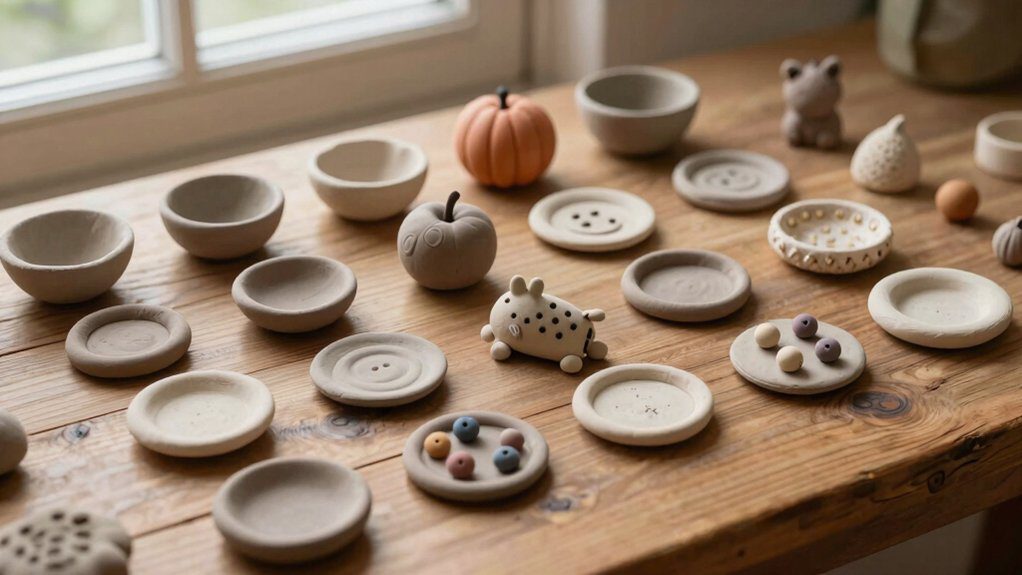
I love how air-dry clay turns into 19 cute projects with just clay, water, a rolling pin, and a little patience! I’d start with flower coasters, house ornaments, tiny magnet vases, photo holders, card clips, earrings, planters, bookends, and a wall clock. Roll, pinch, stamp, poke, then dry, sand, paint, and seal for a polished finish. Most pieces are cheap, beginner-friendly, and surprisingly giftable, and the best surprise’s waiting near the end, just ahead, too.
Love cozy DIY projects? 💕
Get free printable guides, exclusive tutorials & surprise craft goodies straight to your inbox.
Disclosure: This post may contain Amazon affiliate links, at no extra cost to you. Content on DiyCraftNest is created with research support from AI tools and carefully reviewed, edited, and fact-checked by the lead author, Daniel Pat, to ensure accuracy and reliability. Learn more
Key Takeaways
- Make flower coasters, house ornaments, and trinket dishes with 3–5 mm slabs and simple stamped textures.
- Shape tiny vases, mini planters, and incense holders by pinching small pots and poking drainage or stick holes.
- Build ring dishes, earring holders, and photo/card stands from shallow bowls, cones, or cut 10–12 cm shapes.
- Create drink stirrers, salt spoons, and candle holders as easy functional gifts; seal where needed.
- Smooth, dry, sand, paint, and varnish pieces for a polished look and better durability.
Air Dry Clay Flower Coasters
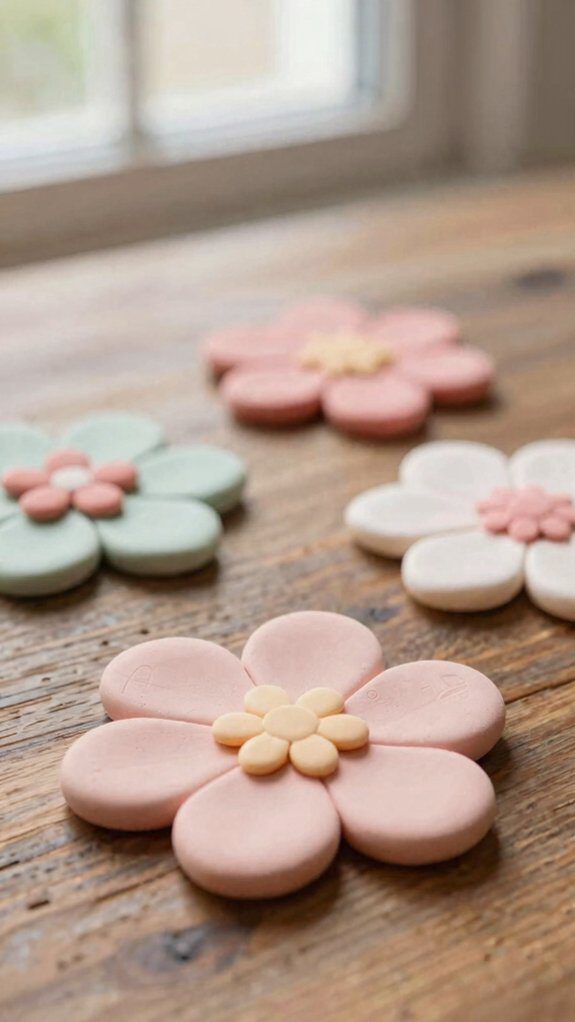
Petal strength, but make it practical! I roll air dry clay to 3–5 mm, cut 9–10 cm circles, and nick petal edges with a knife or cookie cutter. You’ll spend little, and the result feels elegant without the fuss!
Next, I press in botanical textures with a leaf stamp, smooth the rim with a damp sponge, and let each piece dry flat 24–48 hours, flipping once. After that, I paint, seal, and share care tips by gifting sets of four or six in tissue paper. Cute, sturdy, and very us for friends who love easy, handmade, happy table moments!
Air Dry Clay House Ornaments
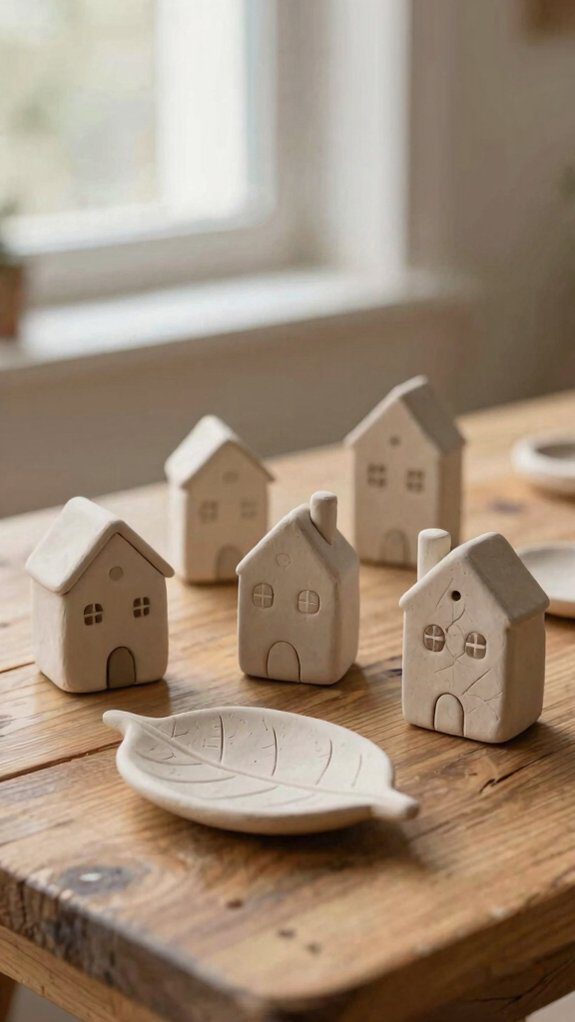
If you loved the cute, handmade feel of those flower coasters, I’d make tiny air dry clay house ornaments next—they’re simple, sweet, and way easier than they look!
I roll clay 3 to 5 mm thick, cut house shapes, punch a hole at the top, and press tiny windows or house numbers before drying. A toothbrush, comb, or leaf gives the roof and walls texture, and after 24 to 48 hours I paint them and seal them, so they last as holiday keepsakes or neighborhood displays.
Thread twine through the hole, add a bead, and you’ve got a gift!
Tiny Air Dry Clay Magnet Vases
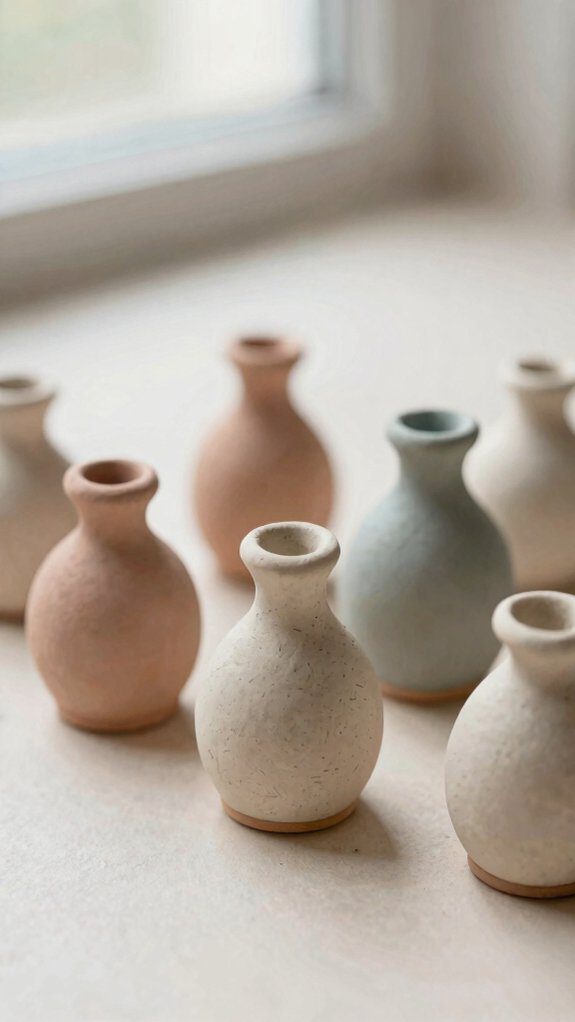
I love making tiny air-dry clay magnet vases, because they turn a plain fridge into a mini display of charm, and they can hold a single bud or even a tiny air plant!
You only need a little clay, a strong disc magnet, and some glue, then I shape a small pinch-pot, let it dry, smooth it out, and attach the magnet once it’s fully dry.
They’re cheap, beginner-friendly, and the fun surprise is how such a tiny piece can look like a real little vase on your fridge—so cute, right?
Tiny Fridge Vases
Usually, I make tiny fridge vases from air-dry clay when I want a cute little project that looks elegant but only needs a few supplies—clay, a damp sponge, and a strong magnet!
I roll a small ball, pinch it into a tiny cup, smooth it with a damp sponge, and let it dry for 24–48 hours; it usually costs almost nothing, which feels like a win!
I keep magnet safety in mind, use waterproofing methods if I want fresh water, and stay under 10 ml so the little vase doesn’t get too heavy; dried flowers look adorable on fridges!
Easy Magnet Attachment
Once your tiny vase is fully dry and painted, I like to finish it with a strong neodymium disc magnet, a dab of E6000 or hot glue, and a little patience! Keep the back clean and dry, then check magnet placement before you glue. If you want choices, here are my favorite adhesive alternatives:
| Step | Tip |
|---|---|
| Magnet placement | Center it on back. |
| E6000 | Strong hold, slow dry. |
| Hot glue | Fast fix, cheaper. |
| Recess trick | Best grip for heavy blooms. |
That little recess makes the magnet feel built-in, and your vase stays put like it belongs on the fridge too!
Air Dry Clay Photo Holders
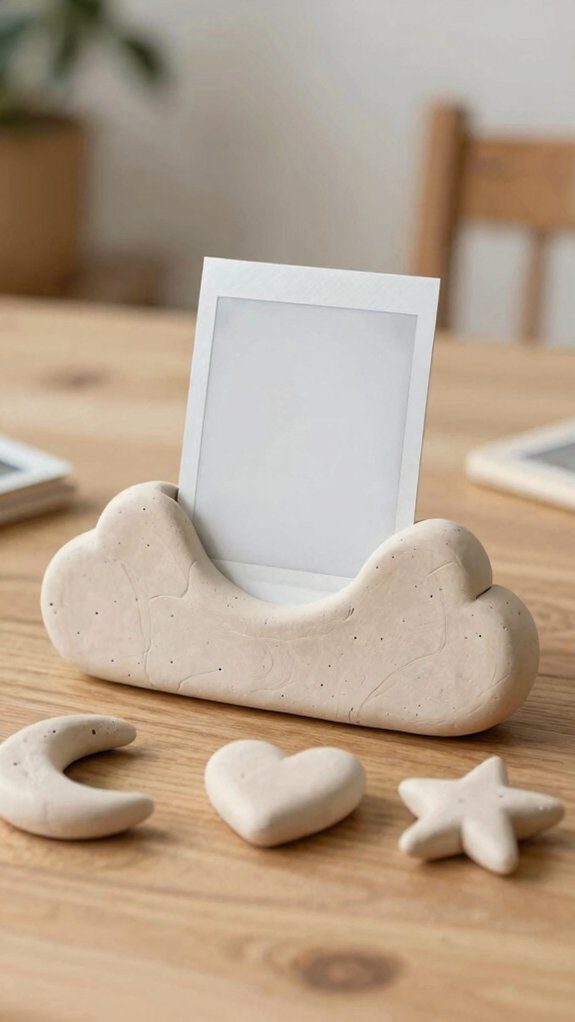
For tiny displays that feel custom, I love air dry clay photo holders—they turn a few dollars’ worth of clay into something that actually gives your photos a little stage!
For desk displays, I start with a mountain cut from a thick slab, slip in wire, and it stands like a tiny trail sign.
If you want rustic stands, press pegs onto a round base, then paint them once dry.
My sneaky favorite? A smooth pebble with a slim groove—it’s simple, sturdy, and weirdly elegant! They cost little, and I can make a whole set in one cozy afternoon.
Air Dry Clay Picture and Card Holders
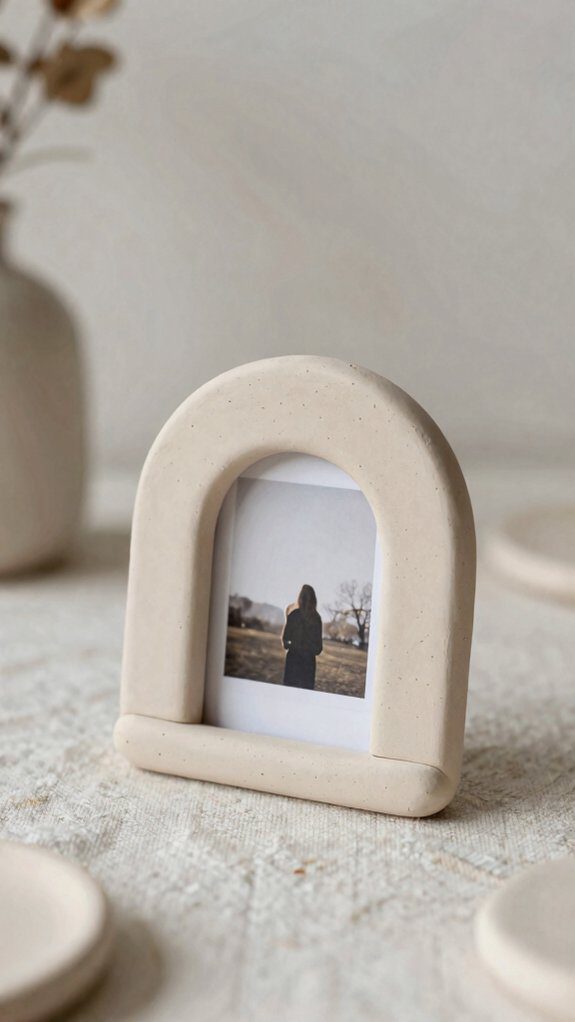
A few simple air dry clay picture and card holders can make your desk or table look instantly more polished, and I love that you only need clay, a cookie cutter or craft knife, and a tiny rolled coil to pull it off.
I press a 1–2 cm slab, cut a shape, then add a thin center coil for photo slotting techniques that keep cards upright. After drying flat 24–48 hours, I sand, paint, and seal it, it’s easy!
For extra balance, I’ve hidden a washer inside. My favorite is a tiny mountain wedge, a hero for minimalist stands!
Air Dry Clay Earring Holder
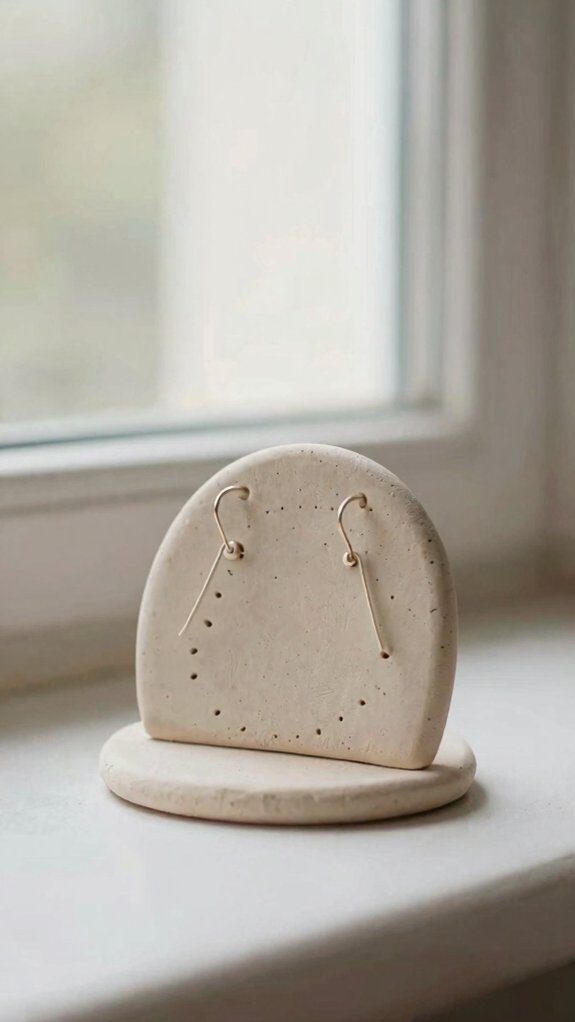
If your earrings keep vanishing into a tiny black-hole of a jewelry drawer, I’ve got a super easy fix: roll air dry clay into a 6–10 mm slab, cut a 10–12 cm circle or oval, then poke neat little holes and slits for studs and hooks before it dries.
I’d dry it flat for about 24–48 hours, then smooth the edges with a damp sponge and sandpaper.
After that, I seal it, add paint or mica, and enjoy breathable storage that looks cute, keeps everything visible, and doubles as a travel friendly organizer for my bag on the go.
Air Dry Clay Ring Holder
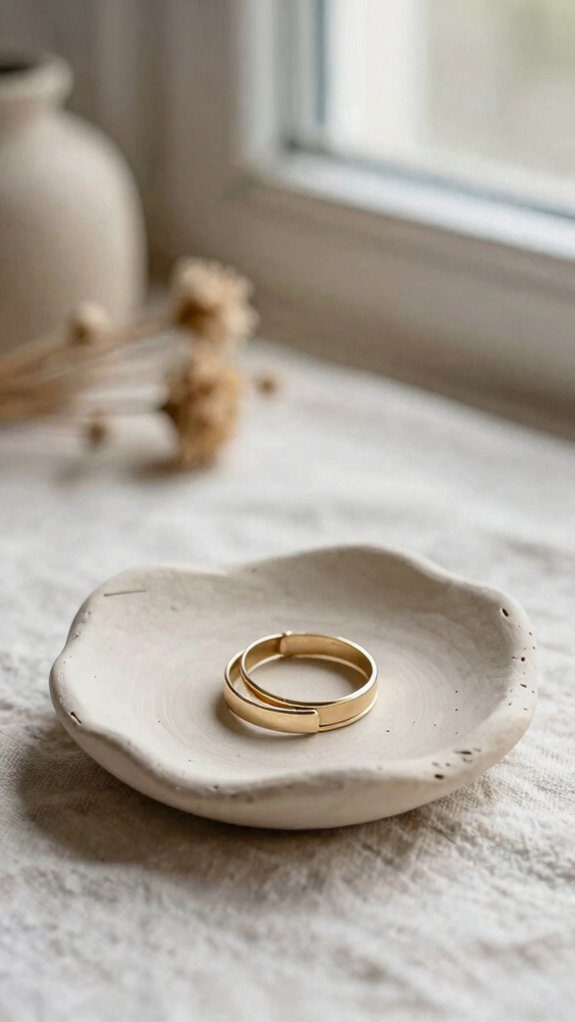
Roll a small ball of air dry clay into a smooth cone, and you’ve got a tiny ring holder that looks way fancier than the cost, which is basically pennies!
I like to keep mine simple: I shape the clay, smooth the seams, and let it dry slowly on a soft towel for a day or two, turning it so it won’t crack.
After a light sanding, I seal it for everyday use. If you want a little flair, try minimalist stands with paint, gold around the base, or even textured cones for a handmade, cozy vibe at home.
Air Dry Clay Ring Display
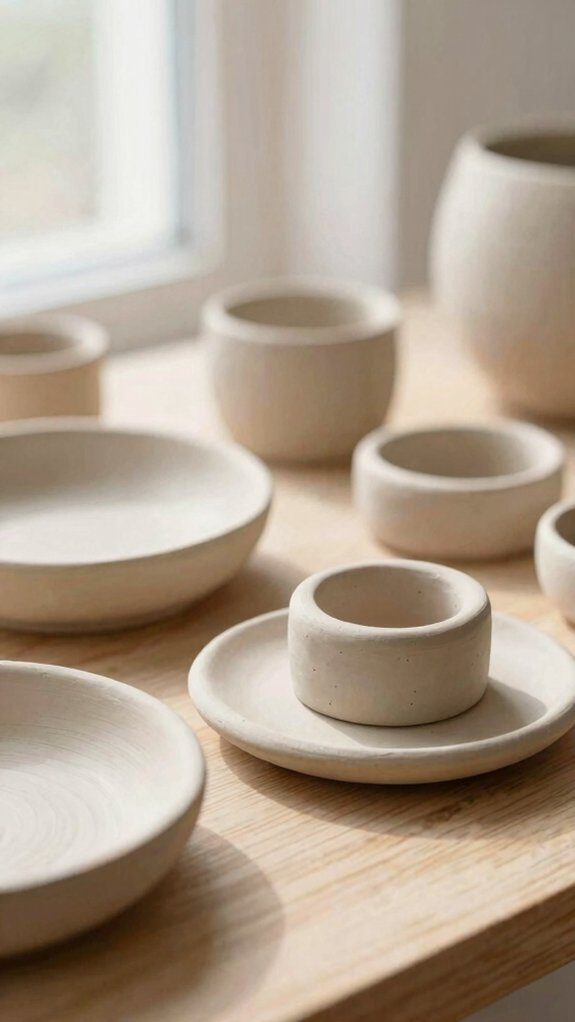
I love making an air dry clay ring display with just a small lump of clay, because you can roll it into a sausage, coil it into a spiral or wave, and end up with a simple stand that keeps rings neat and easy to grab.
If you want a custom look, I’d shape a tiny cone or a little tray next, let it dry for 24–48 hours, then sand and paint it, and it still stays beginner-friendly and pretty cheap.
Best of all, this turns into a gift-worthy jewelry display fast, and with a clear sealer on top, it looks polished enough to fool people into thinking you spent way more effort than you did!
Simple Ring Stand
Tiny but mighty, I love how a simple ring stand turns a small blob of air dry clay into a cute little jewelry display in just a few steps!
I roll a sausage of clay, coil it upright on a flattened base, and smooth the seams with a dab of water.
It’s cheap, beginner-friendly, and has minimal maintenance plus an ergonomic design that keeps rings easy to grab.
- Use a sponge to erase fingerprints.
- Let it dry flat for 24–48 hours.
- Sand, paint, and varnish for a polished finish.
That’s the tiny win I’m really happy to share today!
Custom Shape Ideas
Three easy shapes—heart, cloud, or mountain—can turn a plain slab of air dry clay into a ring display that feels custom-made! I roll a 1–2 cm slab, cut playful silhouettes, and smooth edges with a damp sponge.
| Shape | Mood | Tip |
|---|---|---|
| Heart | Sweet | Add coils evenly |
| Cloud | Soft | Use seasonal motifs |
| Mountain | Bold | Dry flat, then sand |
I keep it 6–10 cm wide, paint accents after drying, and seal it. Cute, sturdy, and very “made with me”! It’s cheap, beginner-friendly, and the result feels like your own corner of the room for rings, not chaos! Trust me, it works every time.
Gift-Worthy Jewelry Display
A clay cone-ring stand is one of my favorite gift-worthy DIYs, because it looks boutique-fancy but starts with just air-dry clay, a damp sponge, and a little patience!
I roll a 2 to 3 cm clay sausage, taper it into a 6 to 8 cm cone, smooth it with a damp sponge, and let it dry 24 to 48 hours. For multiple rings, I press a tiny bowl and add a peg with slurry—easy!
- Sand and seal it so jewelry stays safe.
- Add gold edges, stamps, or personalized monogramming for charm.
- I love display photography after gifting—it’s so polished!
Air Dry Clay Jewelry Tray
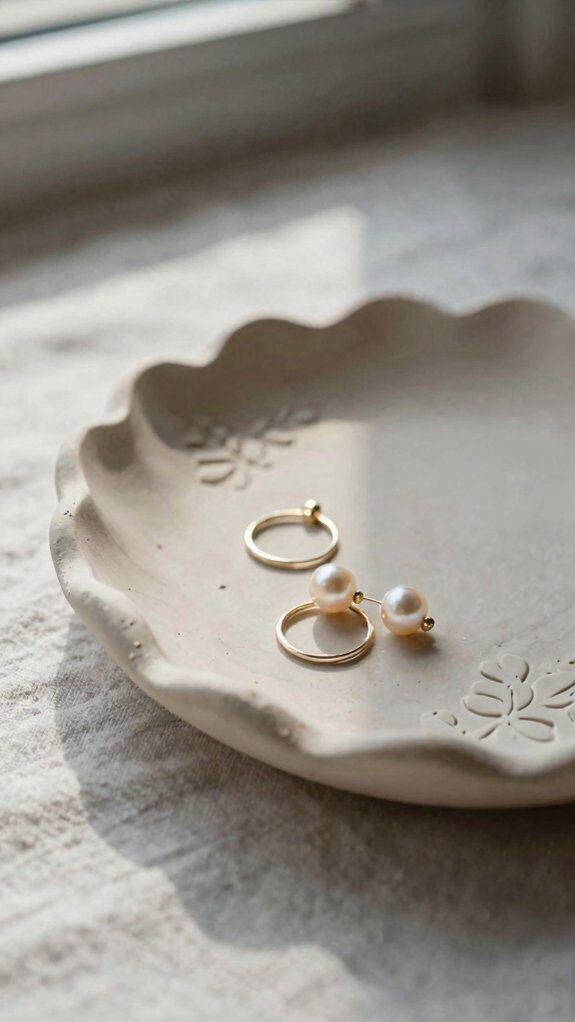
Simple clay magic starts here: I grab a ping-pong-sized ball of air dry clay, flatten it into a disk about 10–12 cm wide and 0.5–1 cm thick, then press the center with a spoon or small bowl so rings and studs stay put instead of rolling off on a wild little adventure!
| Step | Tool | Result |
|---|---|---|
| Smooth | damp sponge | clean edges |
| Dry | 24–48 hrs | sturdy tray |
| Sand | 220–320 grit | polished look |
| Finish | paint, leaf, seal | moisture shield |
I’m using this for minimalist storage by the dresser, and gentle cleaning keeps it pretty; try stamped leaves for surprise texture, okay, friend!
Air Dry Clay Beaded Dishes
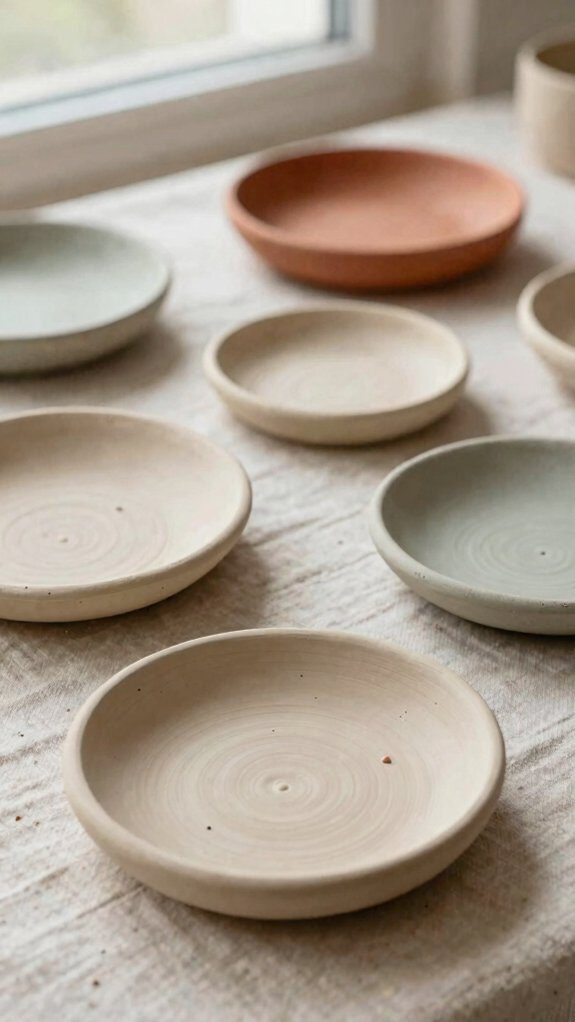
Rolling tiny clay beads is where this project gets fun! I press a 3-inch cutter into clay, then I nudge each bead around the rim with a little water, so bead placement feels easy.
- I keep beads uniform, about 4–8 mm.
- I play with color contrast for a modern look.
- I let the dish dry flat for 24–48 hours, turning it sometimes.
After sanding, I paint and seal it, and suddenly I’ve got a cute ring dish, soap tray, or coin holder. Honestly, this tray makes me feel crafty, not clumsy, and it fits with us.
Air Dry Clay Wavy Trinket Bowl
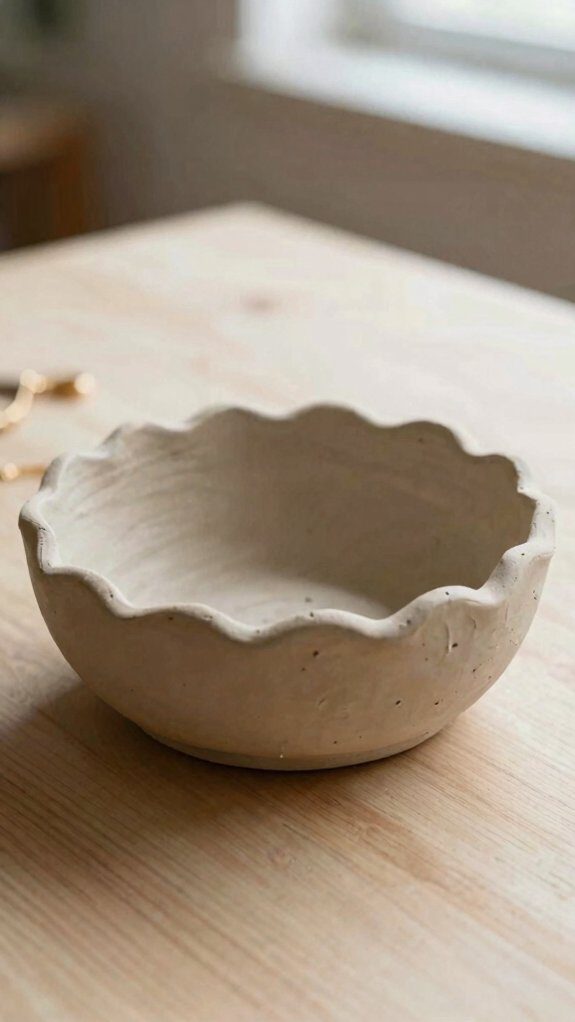
I love turning a simple slab of air dry clay into a wavy trinket bowl, and you only need clay, a rolling pin, and a bowl or small form to get started.
I roll the clay flat, drape it over the form, then pinch the edges into soft waves, and honestly, that’s the fun part—no pottery wheel, no elaborate fuss!
After it dries, I smooth the edges, paint it, and seal it with varnish, so you end up with a tiny catchall that looks cute and works great for rings, keys, or spare change.
Forming The Wavy Bowl
With about 150 to 200 grams of air-dry clay, I roll a small slab to an even 3 to 5 mm thickness, then drape it over a shallow bowl or pinch the edges up by hand until it starts to form those cute little waves—way easier than it looks!
- I smooth seams with a damp fingertip, keeping walls even and crack-free.
- I try texturing techniques, like gentle pinches, for playful edge variations.
- I let it dry flat, turn it once or twice, and the bowl stays sturdy for your rings, keys, and tiny treasures—so cute, and it costs little!
Painting And Finishing
After shaping, I let the bowl dry flat for 24 to 48 hours, because air-dry clay likes patience, not panic, and thicker pieces may need up to 72 hours if I want to avoid those sneaky cracks and wobbly edges.
Then I sand it with 220-grit paper, brush on watered-down white gesso, and it’ll make pastel color mixing look bright and smooth right away!
I paint wavy blocks or gradients, let each layer dry, and seal with one or two thin coats of water-based varnish, choosing matte finishes when I want a finish that fits in and lasts too.
Air Dry Clay Drink Stirrers
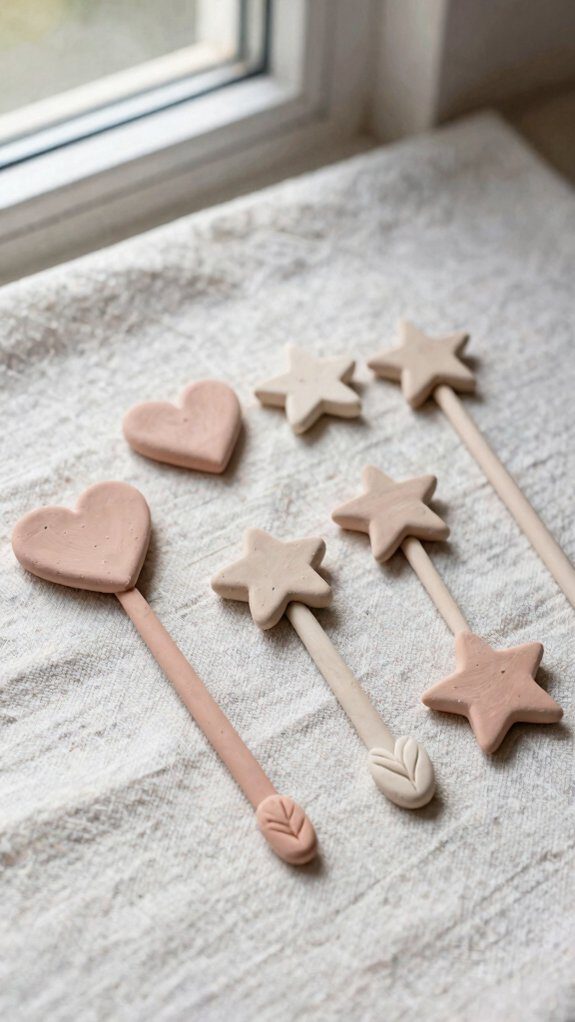
Roll a little air-dry clay into slim rods, and you’ve got the base for the cutest drink stirrers ever! I smooth them with a damp finger, then let them dry flat, and they cost little. I add beads, twists, or paddle ends for fun.
- Mix in clay pigments for marbled or solid colors.
- Seal with drink safe finishes before any use.
- Paint after drying for seasonal stirrers, then hand-wash gently.
Once sealed, they look charming on a tray for any hangout ever, and your friends will think you bought them, which is the funniest little secret at snack time!
Air Dry Clay Salt Spoons
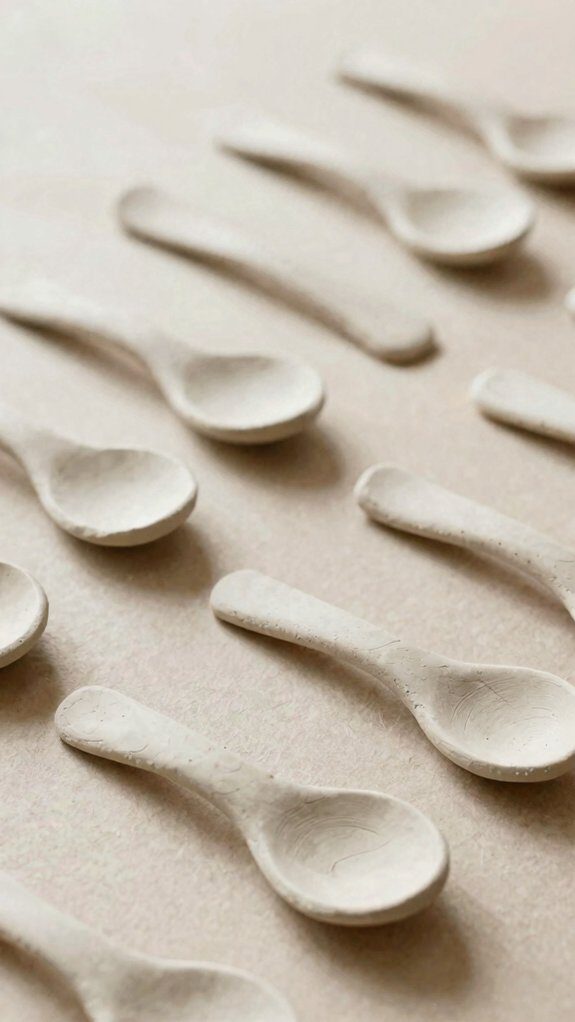
I love making air dry clay salt spoons because they’re quick to shape and look adorable!
I roll a thin handle, press one end into a tiny scoop, and smooth the edges with a little water, so even beginners can make one without much fuss.
After they dry, I like to stamp initials or pair a set with gourmet salts, and suddenly you’ve got a charming gift that feels way fancier than the effort it takes!
Easy Salt Spoon Making
A tiny pinch of air dry clay can turn into a sweet little salt spoon, and I love this project because it’s cheap, easy, and a little bit elegant without trying too hard!
I start with a clay ball, pinch one end into a spoon bowl, and trim the handle for matching sets.
- Roll a small clay ball.
- Pinch one end into a shallow bowl.
- Smooth edges, then dry it one to two days.
After that, I sand, paint, and seal if needed; the result feels tidy, sturdy, and perfect for mini measuring and textured handles for our routines!
Giftable Kitchen Accessory
Tiny kitchen treasures are my favorite kind of gift, and I love turning a lump of air-dry clay into sweet little salt spoons that look elegant but cost almost nothing!
I roll a 1–2 cm handle, add a shallow bowl, then smooth every seam with a damp fingertip. I make a few at once, because they need 24–48 hours to dry, and patience beats crooked spoons every time!
After painting and sealing, I pair 2–4 spoons with gourmet salt, care notes, and sustainable packaging that matches seasonal themes. Honestly, that little bundle feels thoughtful, cozy, and handmade for anyone!
Air Dry Clay Incense Holders
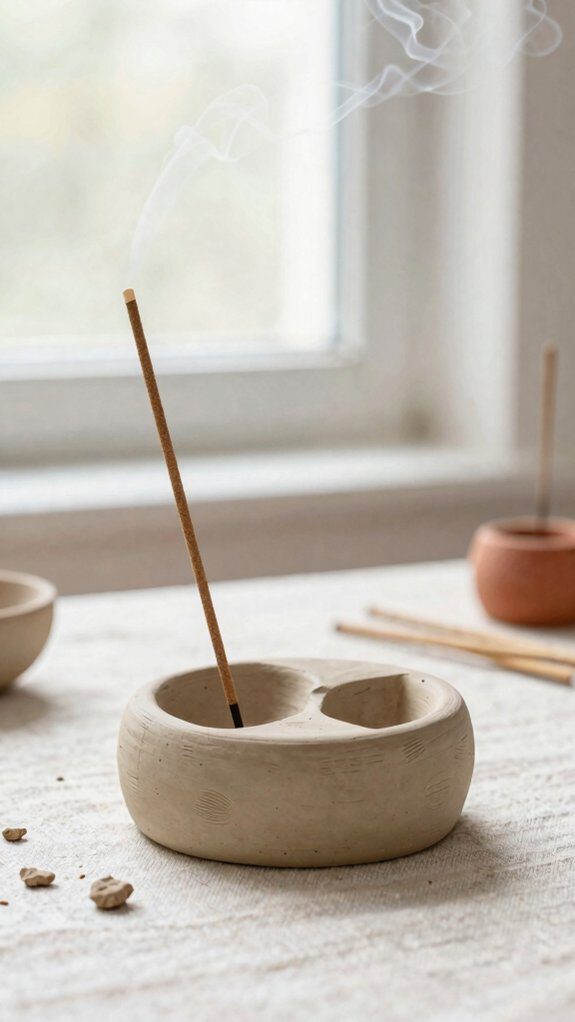
Let’s roll out some air-dry clay and make an incense holder that’s pretty, practical, and way easier than it sounds!
I press a shallow dish, poke a 3–5 mm hole, then let it dry slowly so it won’t crack.
It costs little, takes about an hour, and feels like a clubhouse for your favorite scent pairing.
- Keep walls thin.
- Add stamps, leaf, or a metal washer socket.
- Finish with paint and varnish, plus maintenance tips like gentle dusting.
After 24–48 hours, mine looks polished and holds sticks neatly!
You’ll love how it blends with your space, minus the fuss.
Air Dry Clay Candle Holders
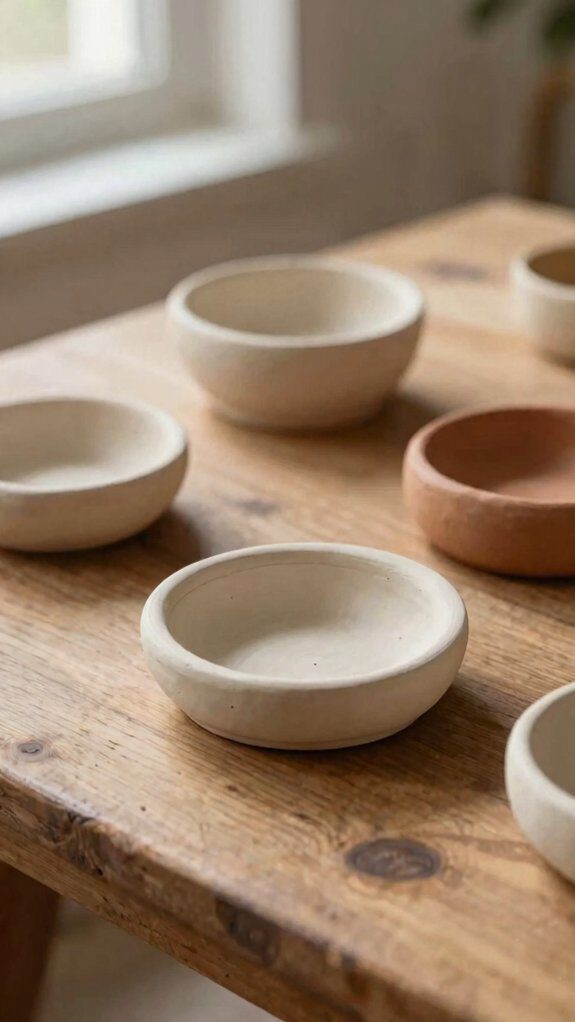
Usually, I keep air-dry clay candle holders super simple: I roll a disc or pinch a little pot, press in a tea light, and shape the walls to about 6–8 mm, so it dries sturdy without cracking and still looks cute on a shelf or table. I let mine dry 24–48 hours on a level, breezy spot, then add texture, marbling, or metallic paint.
Want a little twist? Try scented embeds after drying, plus heat proofing tips: seal with varnish, and use tea lights in metal cups or LED candles. Easy, cozy, and totally giftable for your cozy nook!
Chunky Clay Book Ends
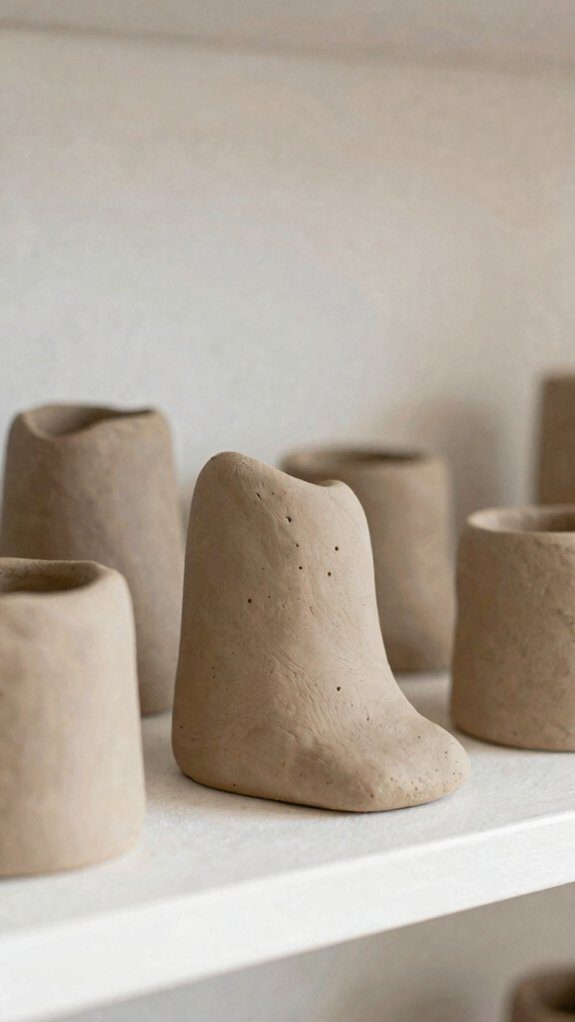
Chunky-clay bookends are one of my favorite easy wins, because I can roll air-dry clay into two thick blocks, about 3–4 inches wide and 4–6 inches tall, and make something that’s both cute and useful.
- I press in a small wooden base for weighted bottoms.
- I marble two colors, then stamp a pattern, easy!
- After drying, I sand, paint, and add book spine labels so my shelf feels like mine.
Honestly, it’s a cheap, simple project, and the result looks sturdy enough to nudge a tiny library into place without wobbling, just let thicker pieces cure fully at home.
DIY Clay Wall Clock
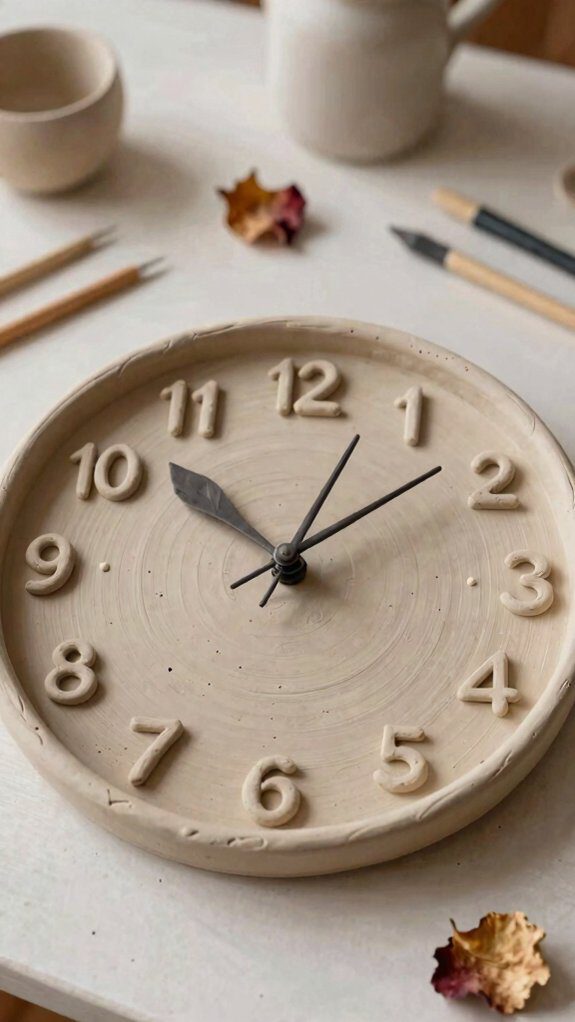
I love this DIY clay wall clock because you can start with a simple slab of air dry clay, shape it into a smooth circle or a fun freeform face, and you’ve already got the basic look down.
Next, I press a small clock kit into the center, make sure the shaft fits snug, and add numbers or little markers so your clock doesn’t look like it’s running on snack time!
After it dries, you can sand, paint, and seal it for a polished finish, and the whole project usually stays under $30.
Shaping The Clock Face
Once you’ve got your clay ready, I like to roll it into a 1/4–1/2 inch slab on a non-stick surface and cut a clean 8–12 inch circle with a bowl or compass—easy, cheap, and way less elaborate than it sounds!
It’s beginner-friendly, and nobody needs ostentatious tools here!
- thickness variations stay subtle
- edge treatments look polished
- score hour marks before drying
I smooth mine with a damp sponge, then add hour marks with a toothpick before it dries.
That tiny taper at the rim makes it look polished, and you’ll get a clock face that feels handmade, not homemade.
Adding Clock Mechanism
To turn that smooth clay circle into a real working clock, I wait until it’s leather-hard, then I mark the center and make a clean hole for the mini quartz movement shaft, usually about 8–10 mm wide.
| Step | My move | Result |
|---|---|---|
| Check | mechanism selection | light and snug |
| Match | shaft sizing | no wobble |
| Fit | washer and nut | stays put |
| Finish | seal and hang | easy smile |
I like a lightweight movement, because it keeps the clock steady, and it doesn’t crack the clay. Score! That tiny choice makes the whole piece feel polished, friendly, and proudly handmade for you at home.
Easy Clay Earrings
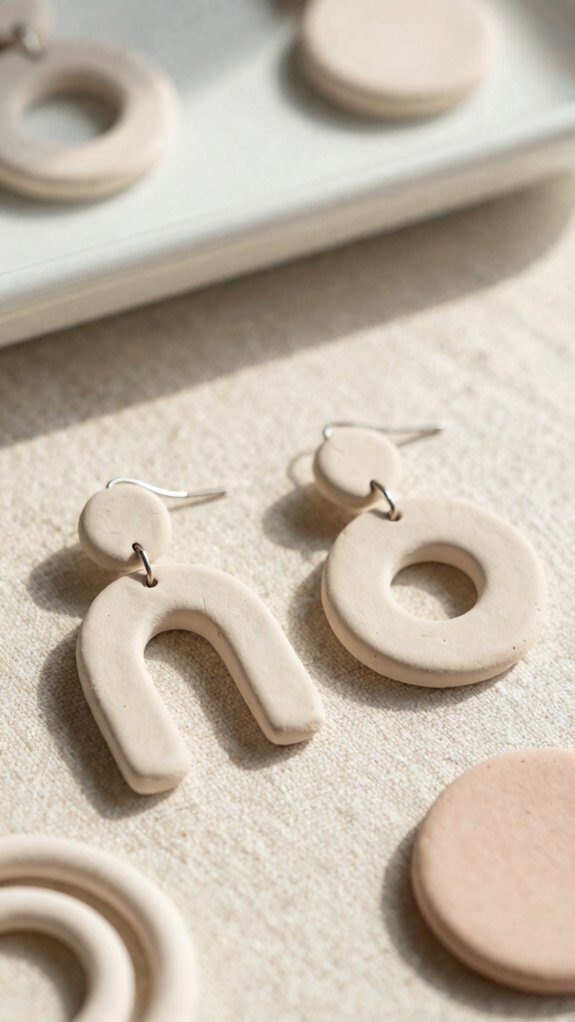
Honestly, I’ve found easy clay earrings are one of the best beginner projects, because you can roll a small bit of air-dry clay into a 2–4 mm disc or shape, cut it with a craft knife or cookie cutter, and smooth the edges with a damp sponge for that neat, store-bought look!
I keep them light, using polymer alternatives or air-dry clay, so a pair usually needs only 10–20 g. Before they dry, I press in posts, or glue statement backs later.
- Paint and seal for lasting color.
- Sand after 24–48 hours.
- Twist two clays for marbling—the crowd-pleaser too!
Mini Clay Planters
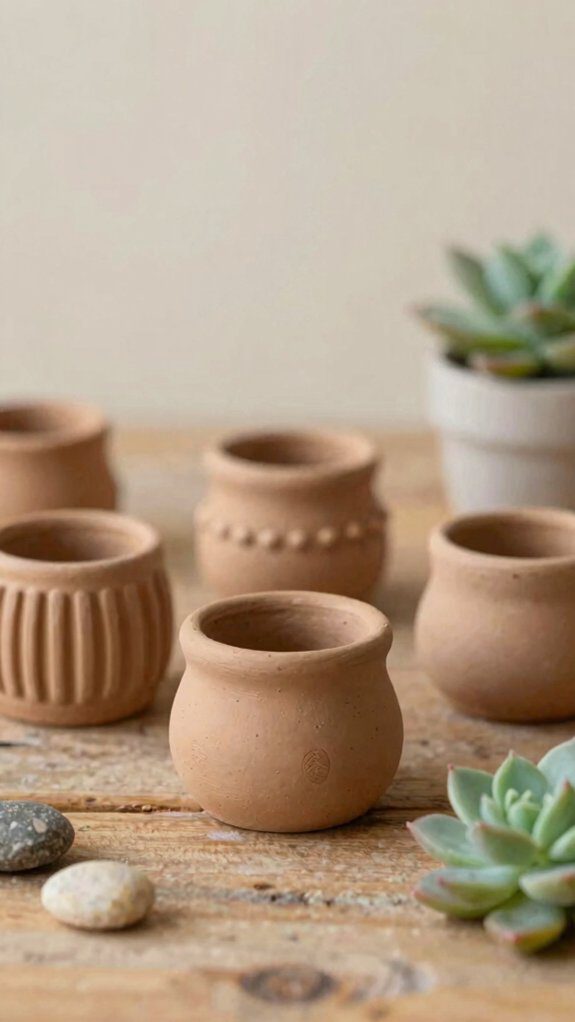
I love making mini clay planters after a batch of clay earrings, because they use the same basic tools, just a little more clay and a lot more dirt-friendly charm!
I pinch a small pot or roll a tiny slab, keeping walls under 1 cm so they dry in 24–48 hours without cracking. I poke a drainage hole with a skewer, then add leaf stamps or paint. These cute pieces cost little, look sweet with succulent companions, and even become tiny terrariums if I leave them unsealed. If I want real soil, I seal the inside and I’m good.
Frequently Asked Questions
How Do I Prevent Air Dry Clay From Cracking While Drying?
I prevent cracking by keeping your piece wrapped lightly, rotating it for even drying, and letting it shrink gradually. I know you’ve got this—smooth, slow drying helps your clay stay strong, crack-free, and ready.
How Long Does Air Dry Clay Usually Take to Fully Harden?
I usually see air dry clay fully harden in 1–3 days, but thickness effects change drying timeframes. I once rushed a tiny dish, and it taught me patience—you’re part of the clay crew too, here.
Can I Paint Air Dry Clay Before It’s Completely Dry?
I wouldn’t paint air dry clay until it’s dry, because I’ve seen color bleeding ruin details. If you’re keen, I’d share paint techniques for sealing and layering that help your piece feel polished and welcome.
What Sealant Works Best for Protecting Finished Clay Pieces?
I’d choose acrylic varnish for most pieces, and I’ll use polyurethane spray when I want extra toughness. You’ll feel confident sealing your clay, and I’ll help you keep your handmade creations looking great together longer.
Is Leftover Air Dry Clay Reusable After Opening?
Yes, I reuse leftover air dry clay after opening if I seal it fast. Try my store tips: wrap it tightly, and use revival methods when it’s stiff, with a few drops of water again.