Sewing Projects for Beginners Anyone Can Finish With Confidence
Start with an envelope pillow cover: use medium-weight cotton, cut two rectangles, stitch three sides, and press the seams for a crisp win. Next, sew a straight-line headband or glasses case with cheap fabric, thread, and elastic or a zipper—keep your seam ripper handy, because it’s everyone’s tiny rescue tool! When you’re ready, try a roomy Breezy Hudson poncho; careful measuring and simple edge stitching create wearable confidence. Keep going for more easy project paths.
Love cozy DIY projects? 💕
Get free printable guides, exclusive tutorials & surprise craft goodies straight to your inbox.
Disclosure: This post may contain Amazon affiliate links, at no extra cost to you. Content on DiyCraftNest is created with research support from AI tools and carefully reviewed, edited, and fact-checked by the lead author, Daniel Pat, to ensure accuracy and reliability. Learn more
Key Takeaways
- Start with straight-line projects like tote bags, simple aprons, pillow covers, or fabric organizers to build cutting and stitching confidence.
- Choose medium-weight cotton or cotton blends because they are easy to cut, press, pin, and sew accurately.
- Try quick accessories such as headbands, bookmarks, or glasses cases to practice seams, elastic, or zippers without complicated fitting.
- Move into beginner-friendly garments with forgiving fits, including loose tanks, simple skirts, or roomy ponchos.
- Read patterns fully, check seam allowances and sizing before cutting, and keep a seam ripper nearby for easy corrections.
Choosing the Right Beginner Sewing Projects
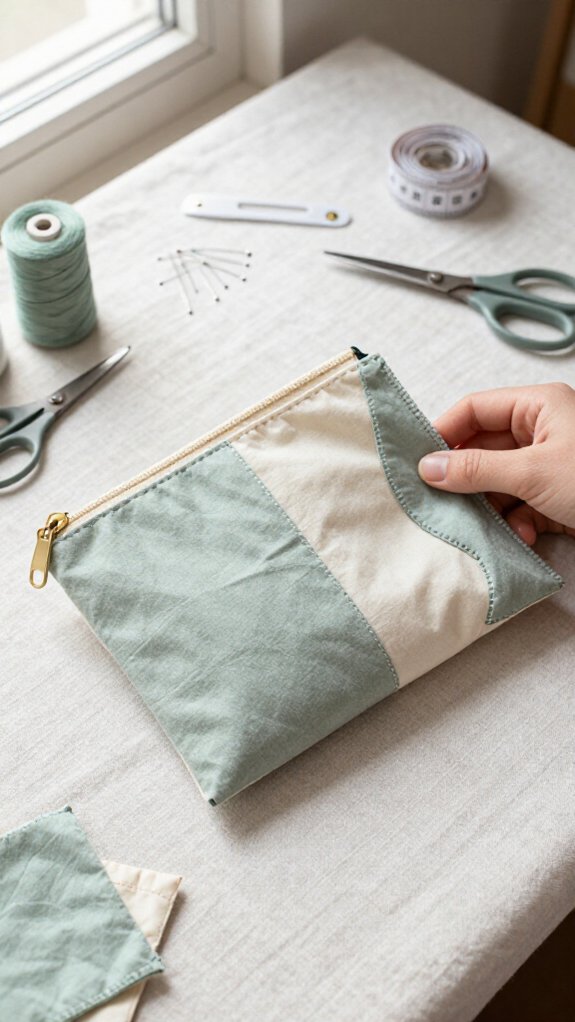
Start with a project that gives you quick wins, not a wrestling match with tricky curves, zippers, or tiny buttons!
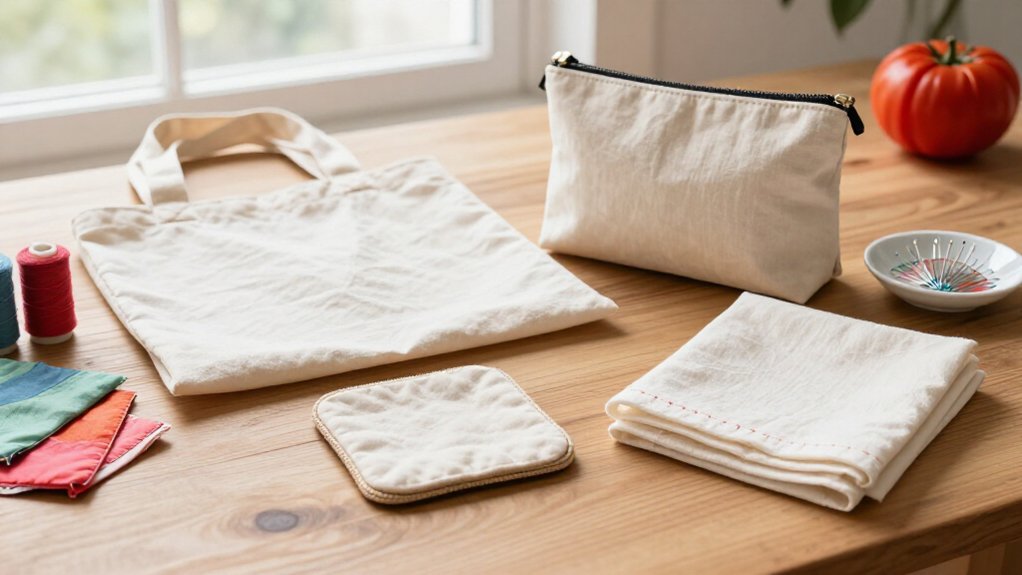
Try a Tyvek tote or simple apron: you’ll measure, fold, and sew straight lines using inexpensive fabric and thread. If you restart, no drama—everyone’s learning here!
Next, choose loose staples like the Mix It tank, Standard Eureka top, or eSkirt. Their forgiving shapes offer confidence building practice without fussy closures.
For low risk garment fitting, make a roomy Breezy Hudson poncho. Measure twice, cut once, then enjoy a wearable win.
Afterward, move from totes and tops to pants with pockets.
Essential Sewing Tools You’ll Actually Use
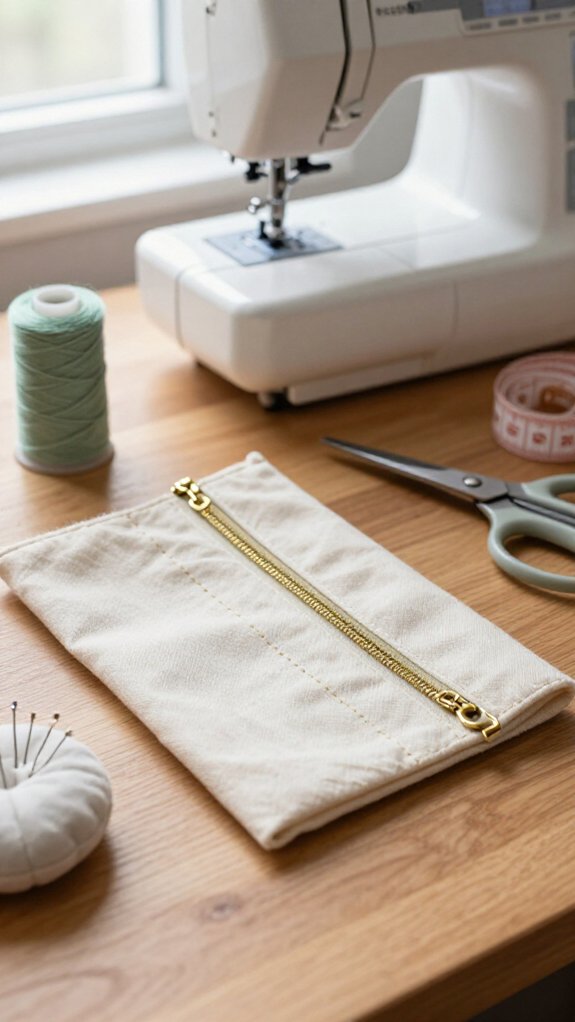
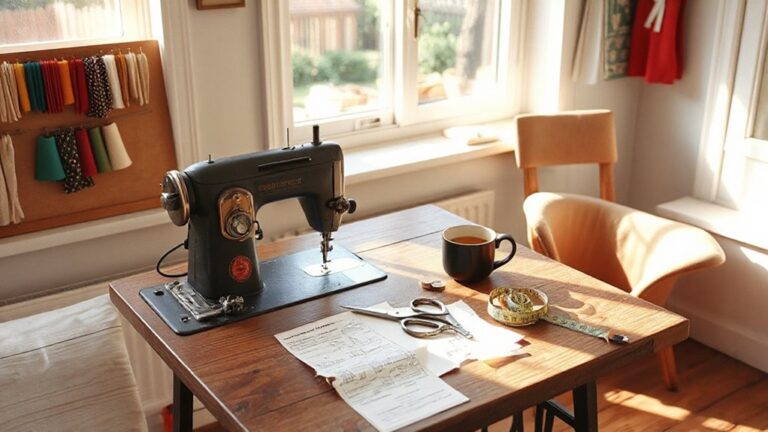
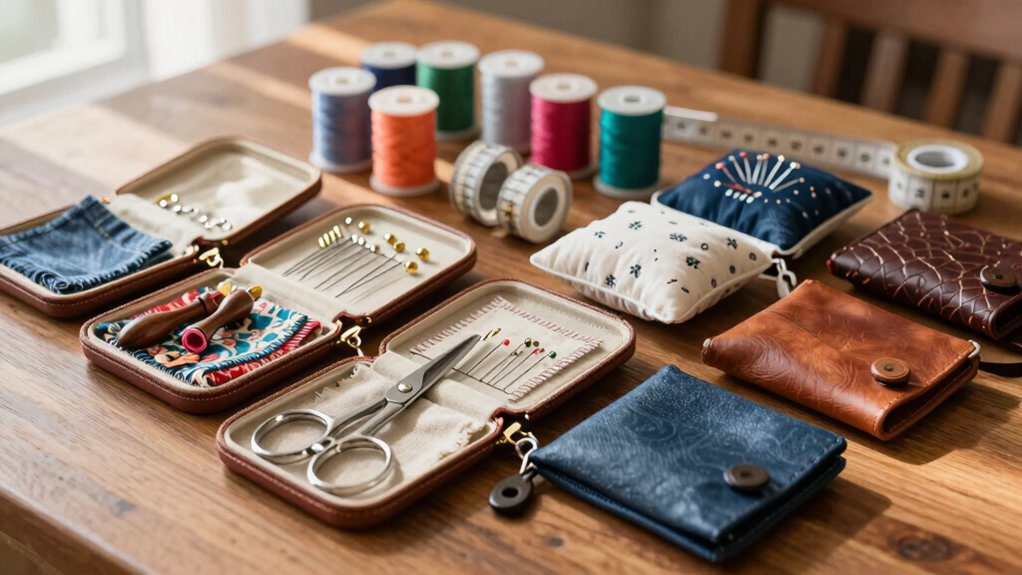
Your sewing toolkit doesn’t need to take over the kitchen table—just grab sharp fabric scissors or a rotary cutter, a ruler and cutting mat, pins, and a seam ripper for those “well, that went sideways” moments!
Pair them with medium-weight cotton or a cotton blend, which behaves nicely while you learn. For Beginner thread basics, use a straight stitch, then test tension and stitch length on scraps.
Keep sewing machine maintenance simple: change needles when dull and clear lint. Guide fabric along your presser foot edge, and seams will look straight!
Simple Home Decor Projects to Start With
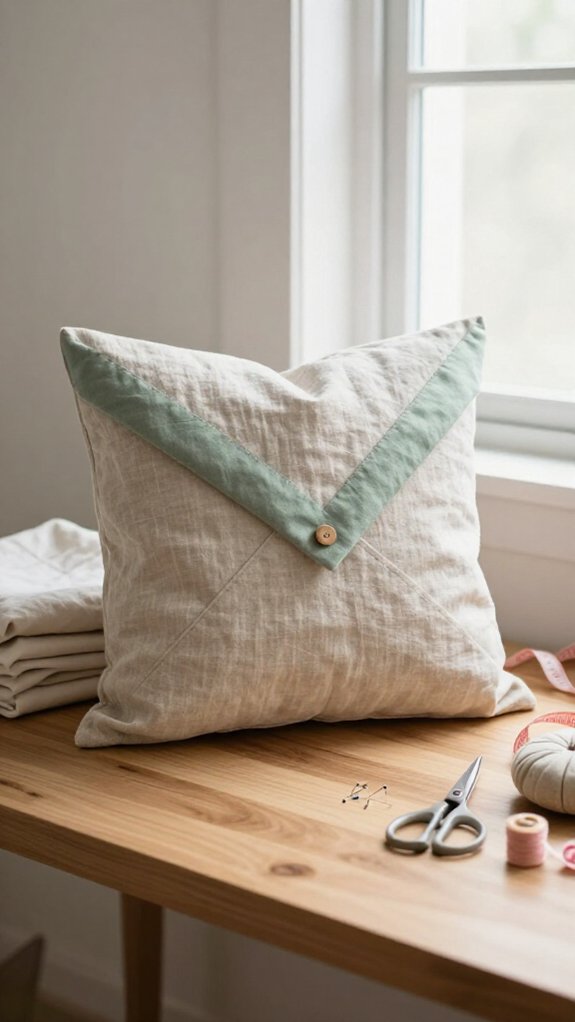
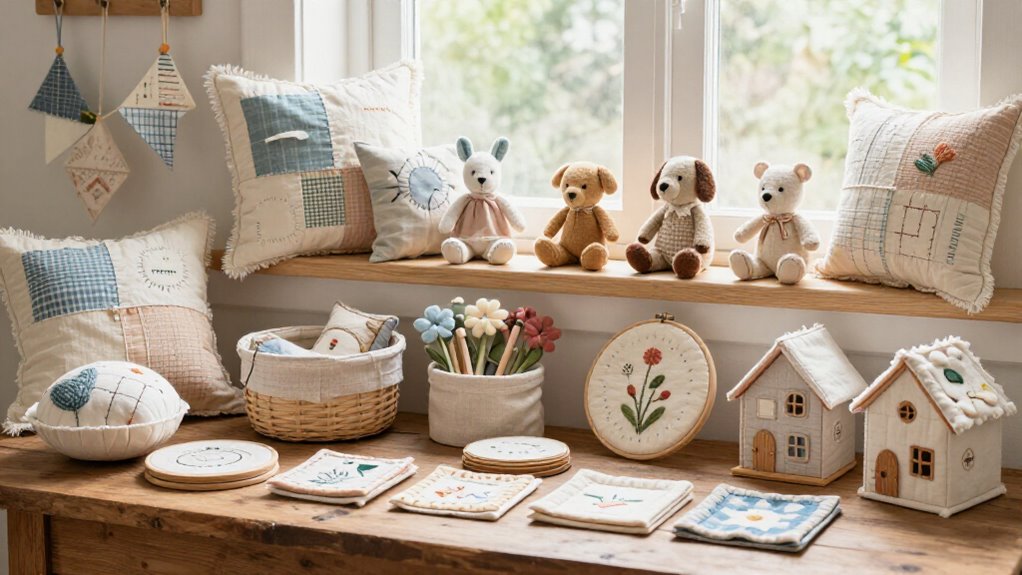
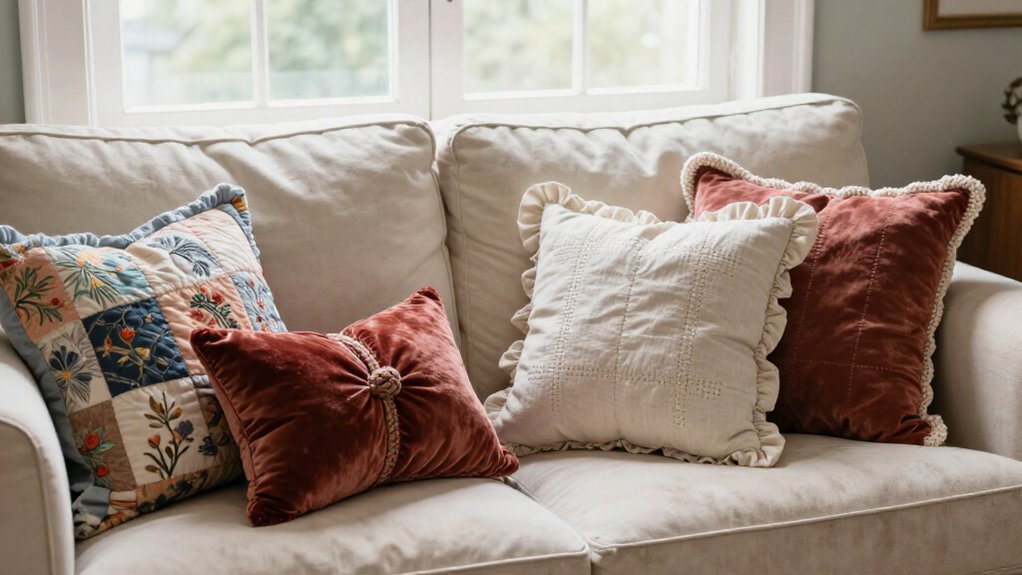
For a cheerful first win, sew a simple pillowcase or envelope-style pillow cover—it’s mostly straight seams, no tricky fitting, and it can brighten a sofa or bed in an afternoon!
Fabric selection: choose medium-weight 100% cotton or a cotton blend; it cuts, stitches, and presses easily. Measure carefully, then use steady seam pressing for a crisp finish.
For quick practice projects, make a small straight-line fabric organizer.
Its pattern simplicity lets you practice even seam allowances, and tiny slips are no disaster—your seam ripper is part of the club!
You’ll create something useful, welcoming, and handmade for your home.
Easy Accessories You Can Sew in an Afternoon
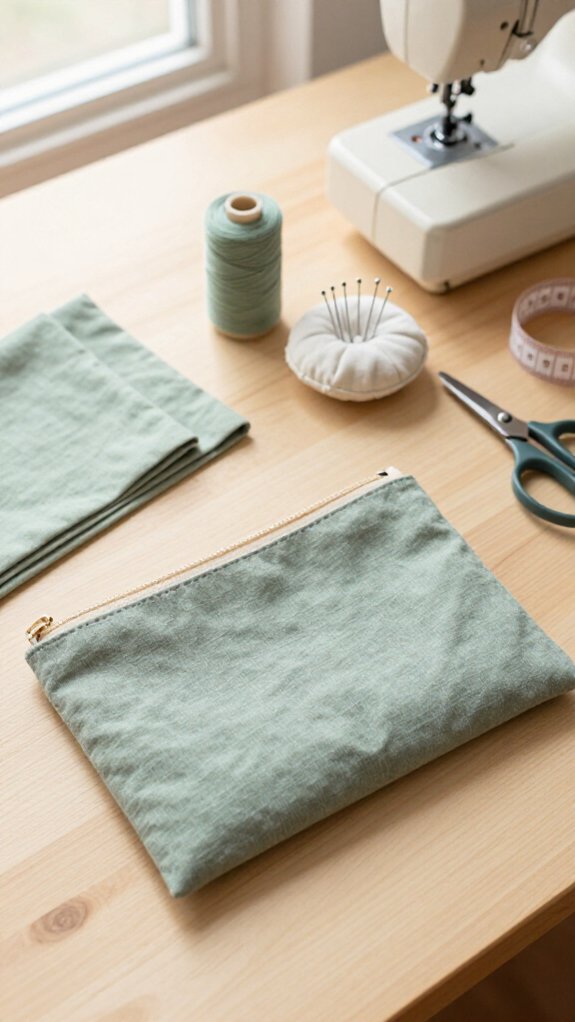
Easy accessories give you a fast, low-stress way to practice sewing skills, and you’ll have something useful by the end of the afternoon—how satisfying is that?
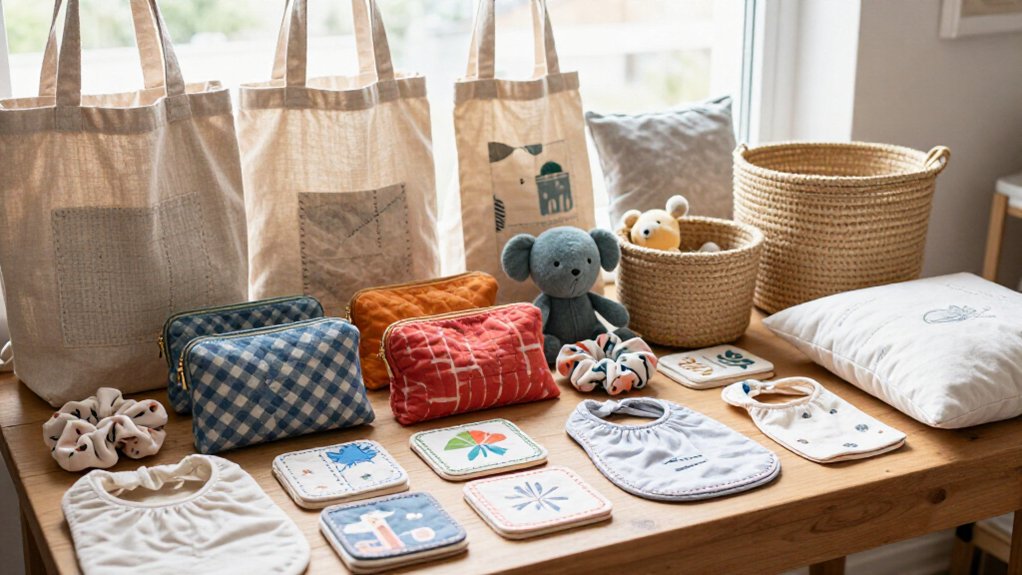
Use Pattern selection tips: pick straight-line headbands, bookmarks, or a glasses case, all inexpensive projects with simple fabric, thread, and a zipper or elastic.
Cut carefully, then guide the fabric beside the presser foot for straighter seams; keep a seam ripper nearby, because everyone in our sewing circle needs one!
Try quick finishing techniques on a drawstring bag, or make a chapstick keychain holder—a tiny, practical gift that feels wonderfully pro! You’ll smile.
Beginner-Friendly Clothing Projects
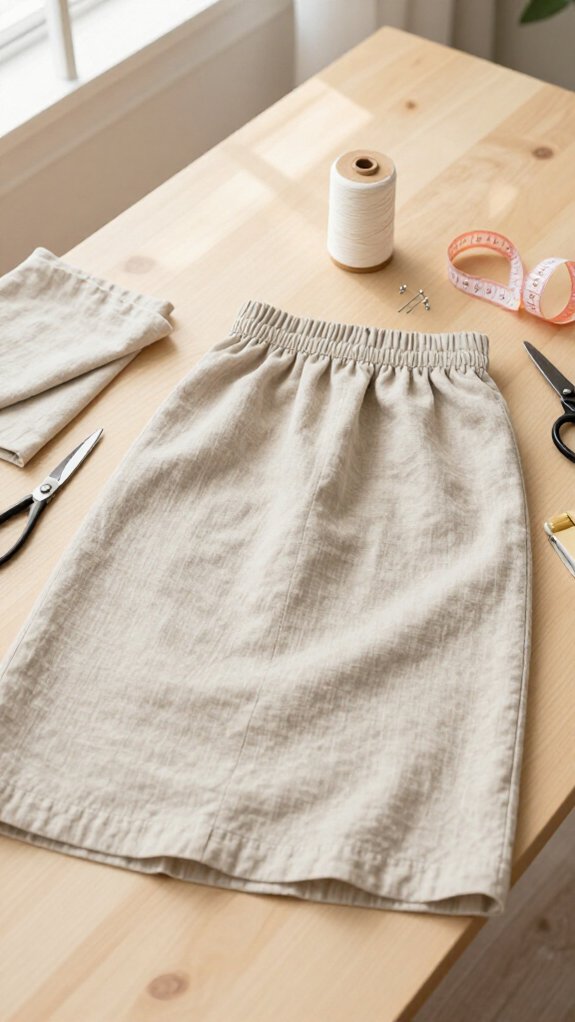
Clothing projects may sound like a big leap, but you can start with relaxed, forgiving pieces that don’t demand perfect fitting—hooray!
Choose the Standard Eureka Top: grab soft woven fabric, follow its full tutorial, and sew the basic seams. It’s super easy and versatile, so you’ll feel right at home among fellow makers.
Next, make a Breezy Hudson Poncho with drapey fabric; measure carefully, cut, then stitch the edges. Check fabric care first so it stays lovely.
Ready for more? An eSkirt uses simple fabric and Velcro; match pattern sizing before assembling its wrap. Hudson Pants, a PDF favorite, await.
Common Sewing Mistakes and How to Avoid Them
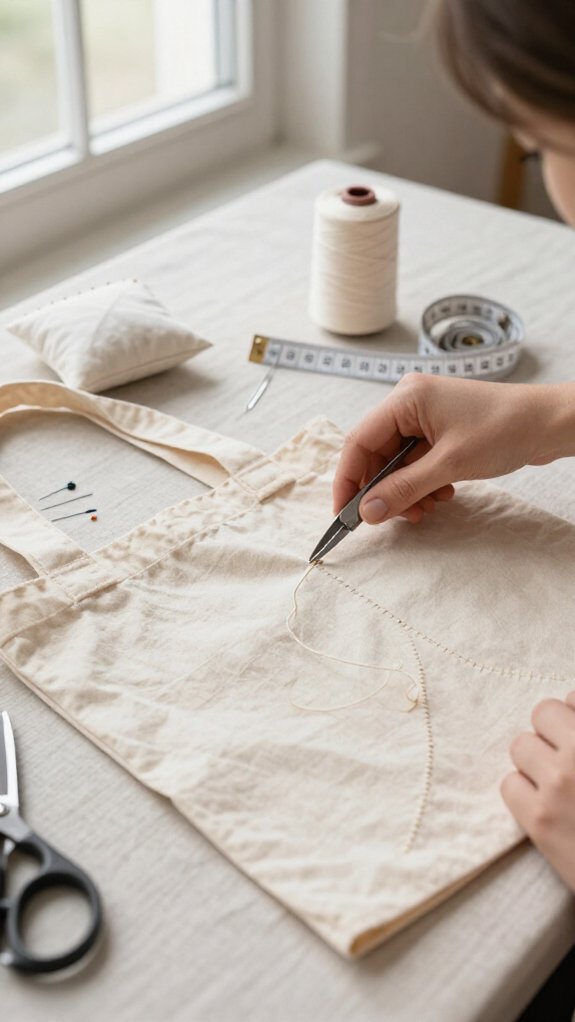
Mistakes happen in every sewing room, even when you’re making a simple tote or pencil case—no panic required!
Read the whole pattern before cutting, and confirm each seam allowance; swapped steps can cause crooked bands or wonky fit.
For fabric accuracy, measure twice, mark visibly, and check again before your scissors swoop in.
Set up your machine with the right needle, thread, tension, and presser-foot guide to prevent puckers and wandering seams.
If a line drifts, use the seam ripper early—everyone in our sewing circle does!
Correcting a stitch now beats pretending it’s “design detail” later.
Building Skills One Project at a Time
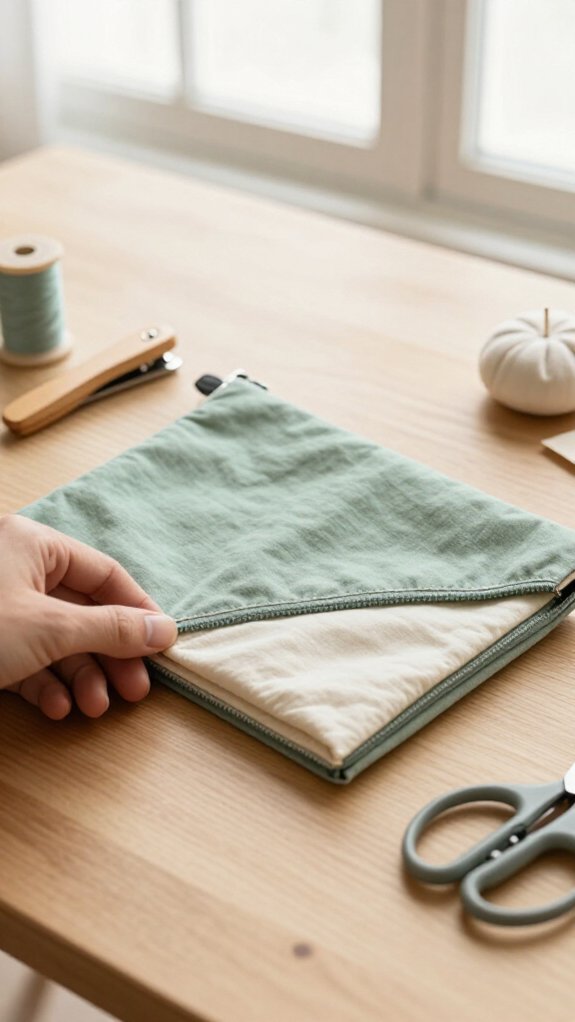
Every finished project builds a new sewing skill, so start small and let your confidence grow—no elaborate fitting or fabric drama required! Start with confidence first projects: a Tyvek tote or drawstring bag. They need inexpensive material, straight cuts, and simple seam practice.
- Measure twice; cut once.
- Fold and stitch straight lines.
- Double-check before curves; use a seam ripper, not surrender.
- Add one new detail, like pockets or pleats, each time.
Then make a pillowcase, apron, or Eureka top, and join the beginner crew. Next, try Hudson pants—your progress will show.
When You’re Ready for Intermediate Sewing
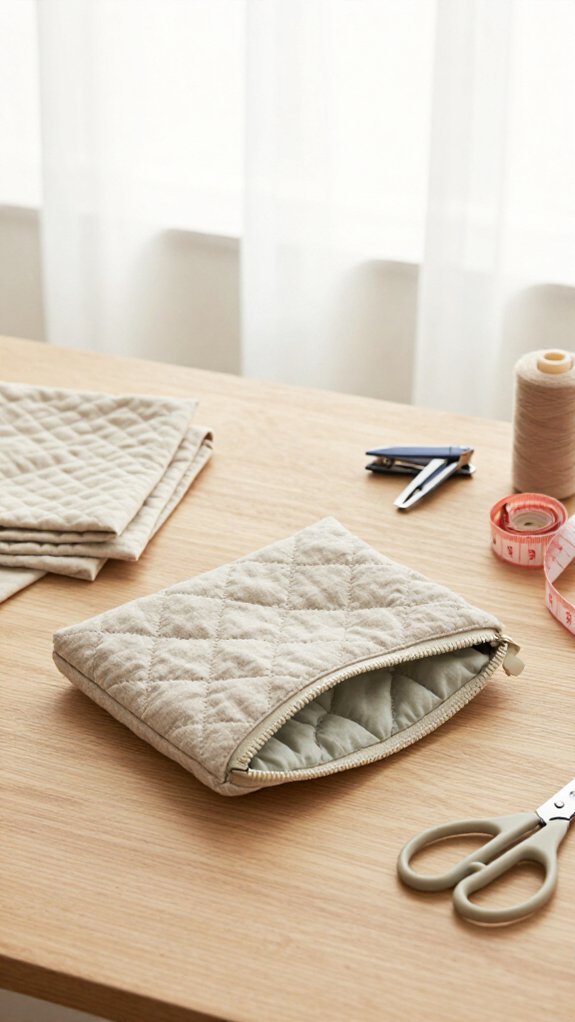
Your straight seams are looking steadier—yay! Build from your favorite easy-win totes, tops, and drawstring bags by adding one fresh skill: a zipper, curved seam, or tidy pocket. You’ll feel right at home with sewists who learn this way.
Before curves, avoid fabric side mistakes: check both pieces, markings, and pins before you stitch. That small pause makes seam arrangement practice far less mysterious!
Next, try pleated pants or pockets for a friendly bridge. Use affordable cotton, measure carefully, and keep your seam ripper nearby—it’s not a defeat wand.
Then graduate from loose tops to structured fits; repeatable assembly follows.
Tips for Staying Motivated as a New Sewist
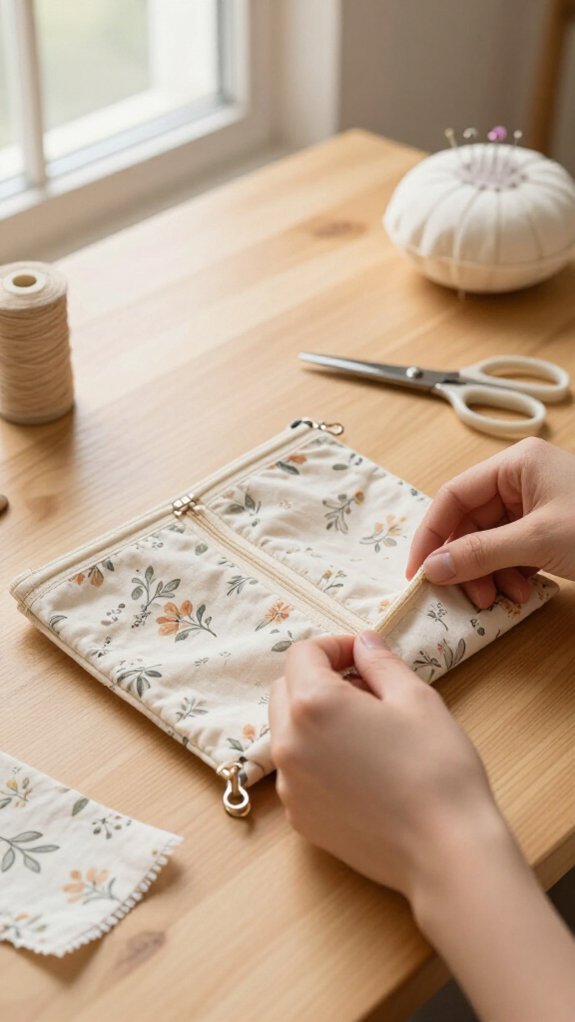
Starting with a low-risk project, like a simple apron, pillowcase, or Tyvek tote bag, gives you a fast win and a useful finished piece—pretty motivating, right?
Keep your momentum going with these friendly routines:
- Sew slowly, using the presser-foot edge to guide straight stitches.
- Pick drawstrings or pillowcases; they skip tricky fitting.
- Keep a seam ripper nearby—every sewist uses one!
- Make a tiny weekly plan, then note what improved.
Those Skill building habits make progress visible. Embrace a mistake friendly mindset: ripping a seam isn’t failure, it’s sewing’s undo button.
Share your wins with fellow beginners, and celebrate better measuring, cutting, or straighter lines. You’ll soon have proof that you belong at the machine!
That little record turns ordinary practice into a cheering section! Keep stitching; you’re getting there!