20 Fun and Easy Craft Work for Kids at Home and School
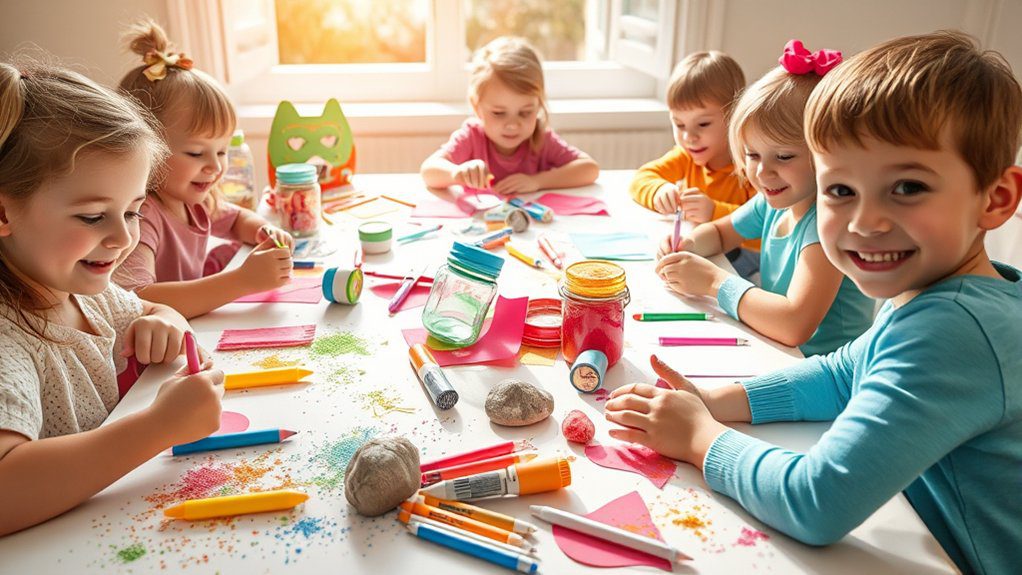
I’ve got 20 easy crafts that work great at home or school with basic supplies: paper plate animals, handprint art, paper cup wind chimes, toilet paper roll characters, and egg carton caterpillars for fun recycling. Add paper masks for pretend play, bead necklaces for pattern practice, sticker collages for quick wins, and handmade bookmarks as useful take-homes. I like to set out markers, glue, and scraps, then let kids mix and match ideas—there’s plenty more ahead.
Love cozy DIY projects? 💕
Get free printable guides, exclusive tutorials & surprise craft goodies straight to your inbox.
Disclosure: This post may contain Amazon affiliate links, at no extra cost to you. Content on DiyCraftNest is created with research support from AI tools and carefully reviewed, edited, and fact-checked by the lead author, Daniel Pat, to ensure accuracy and reliability. Learn more
Key Takeaways
- Try simple paper crafts like paper plate animals, DIY crowns, and paper flower bouquets using basic supplies at home or in class.
- Use handprint and fingerprint projects to make easy keepsakes, like handprint animals or cotton ball snowmen, with minimal setup and mess.
- Recycle everyday items into crafts, such as egg carton caterpillars and toilet paper roll characters, to teach sustainability and creativity.
- Add interactive play with paper bag puppets, cardboard box playhouses, or paper cup wind chimes to combine crafting with storytelling and movement.
- Build skills through quick projects like popsicle stick photo frames, button art canvases, and friendship bracelets that strengthen fine motor control and design.
Paper Plate Animal Craft
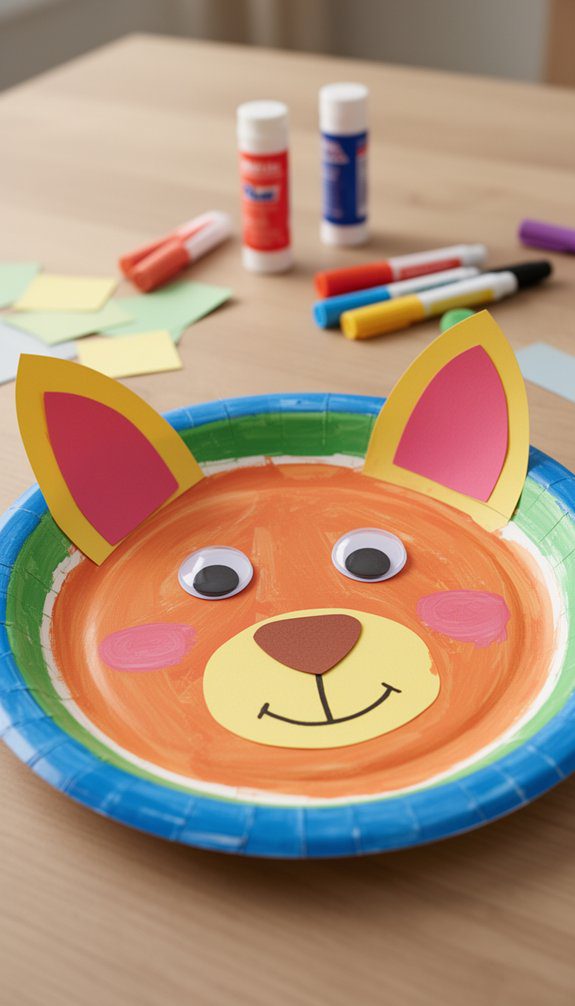
One of my favorite low-prep crafts for kids is a paper plate animal, because it turns a plain plate into something bright and full of personality with just markers, glue, and a few scraps of paper. I invite you to make one with me: pick an animal, then sketch big features like ears, beaks, or whiskers to show animal characteristics. Next, cut simple shapes from paper for spots, feathers, or scales, and glue them on for texture. Finally, add bold colors and details—this is pure creative expression. It builds fine motor skills and fits ages 3–10, at home or school.
Handprint Art Project
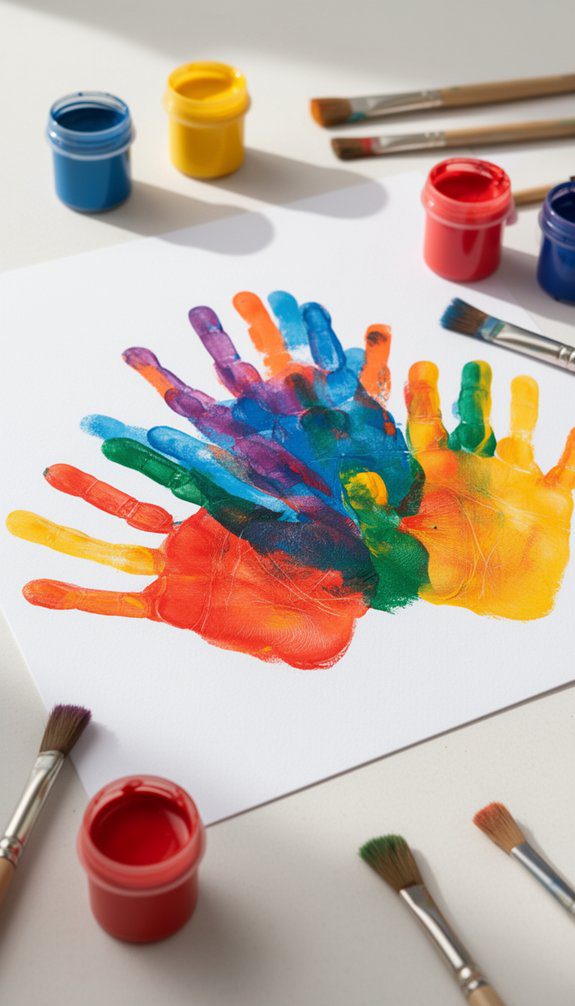
After you’ve had fun turning a plain paper plate into an animal with big features and bold colors, it’s time to use the best tool kids always bring to the craft table: their own hands. I help you spread washable paint, then press a handprint like a stamp. Add eyes, beaks, or fins, and you’ve got handprint animals that feel uniquely yours. For younger kids, I keep shapes simple; older kids can layer prints into trees or abstract patterns. I love doing this together because it builds connection and turns into keepsakes—plus, it’s perfect for seasonal decorations.
Paper Cup Wind Chime
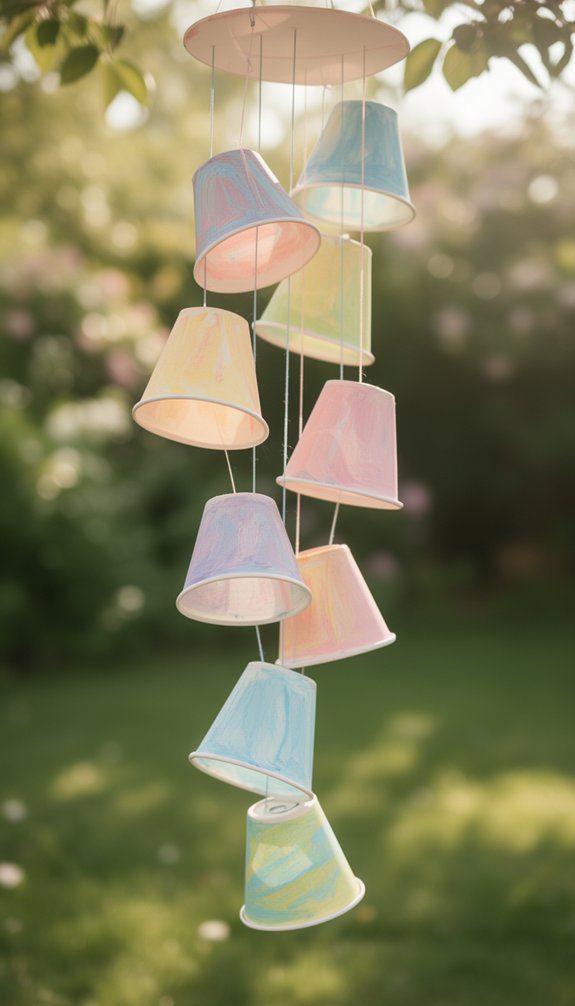
Whenever I need a craft that’s quick, budget-friendly, and still feels magical, I make a paper cup wind chime with kids. We gather lightweight cups, string, and beads, then paint the cups for creative decoration so everyone’s style belongs. I punch holes in each cup’s bottom, thread strings through, and knot beads at different lengths for sparkle and sound.
| Step | What we do | Why it helps |
|---|---|---|
| 1 | Paint cups | Self-expression |
| 2 | Punch holes | Fine motor skills |
| 3 | Thread string | Patience |
| 4 | Add beads | Sound + balance |
Hang it outside; wind chime benefits include learning wind movement.
Toilet Paper Roll Characters
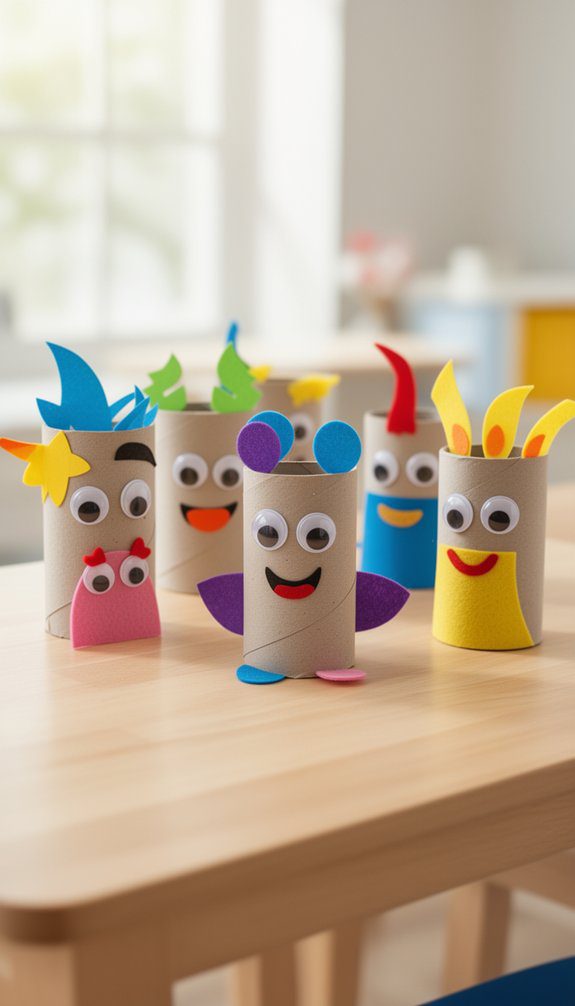
Cardboard tubes can turn into a whole cast of tiny characters in just one afternoon, and I love how toilet paper roll characters feel equal parts silly, clever, and “look what I made!” I start with an empty roll and a simple plan: markers for faces, glue for details, and whatever craft scraps I’ve got—paper, yarn, buttons, cotton balls, even tissue—so kids can build a character that matches their imagination. For ages 3–10, I adjust: preschoolers tear paper; older kids cut shapes. Try an Olaf-inspired friend, then swap voices for creative storytelling together.
Egg Carton Caterpillar
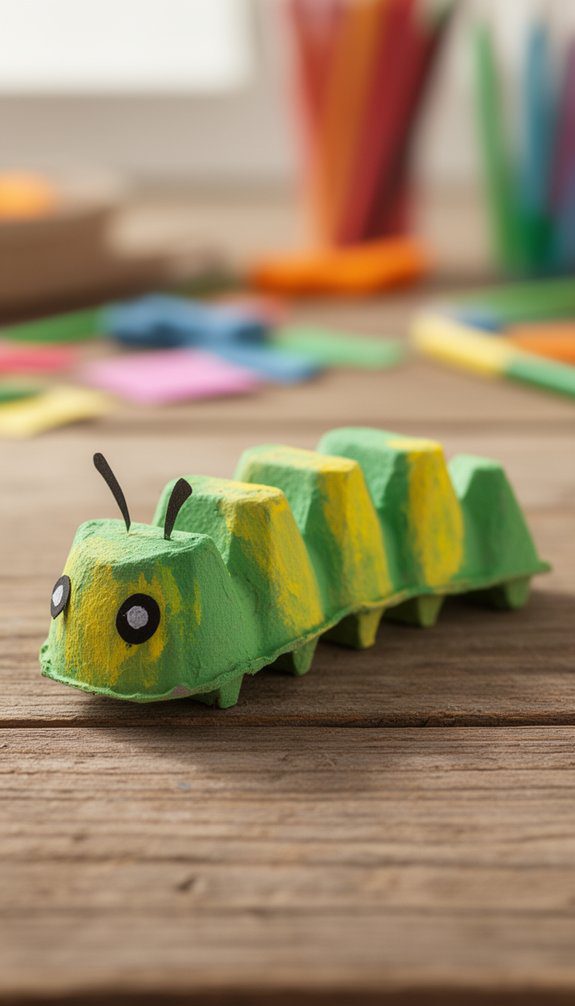
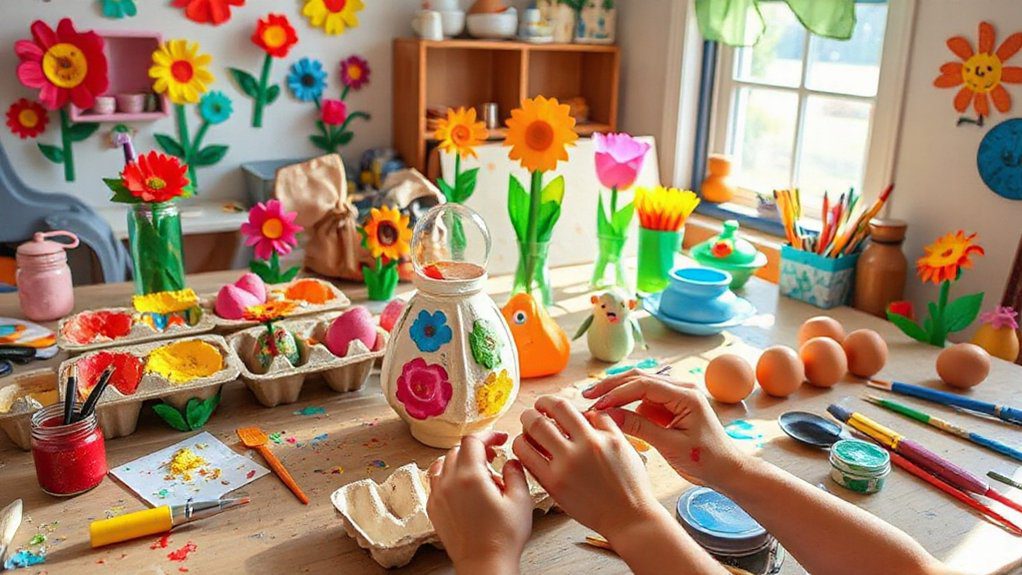
Little sections of an egg carton make the perfect “bumpy body” for a cheerful caterpillar, and I love how this craft turns recycling into something bright and playful. I cut the carton into a row of cups, then you and I paint it with colorful paint, whatever shades feel like “us.” Add googly eyes and pipe-cleaner antennae to match insect characteristics. As we glue and assemble, we build fine motor skills without it feeling like work. If you want more, I tie it to the caterpillar life cycle and talk about butterflies, nature, and change together.
DIY Paper Crown
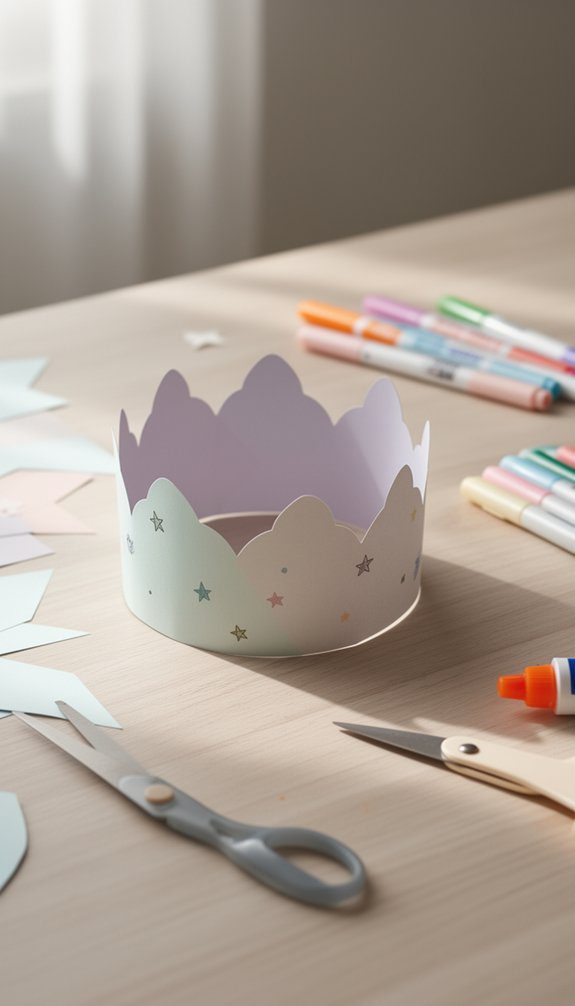
After we’ve painted and pieced together that bright egg carton caterpillar, I like to keep the creative energy going with something kids can actually wear: a DIY paper crown. I grab colored paper, scissors, and glue, then cut a strip to fit your child’s head. Next, I snip points along the top for a regal look, and we add stickers or glitter. For crown decoration ideas, try names, doodles, or favorite colors so everyone feels included.
| Age | Make it work |
|---|---|
| 3–5 | Big points, fewer cuts |
| 6–10 | More shapes, extra bling |
Then we jump into royal theme activities and pretend play.
Popsicle Stick Photo Frame
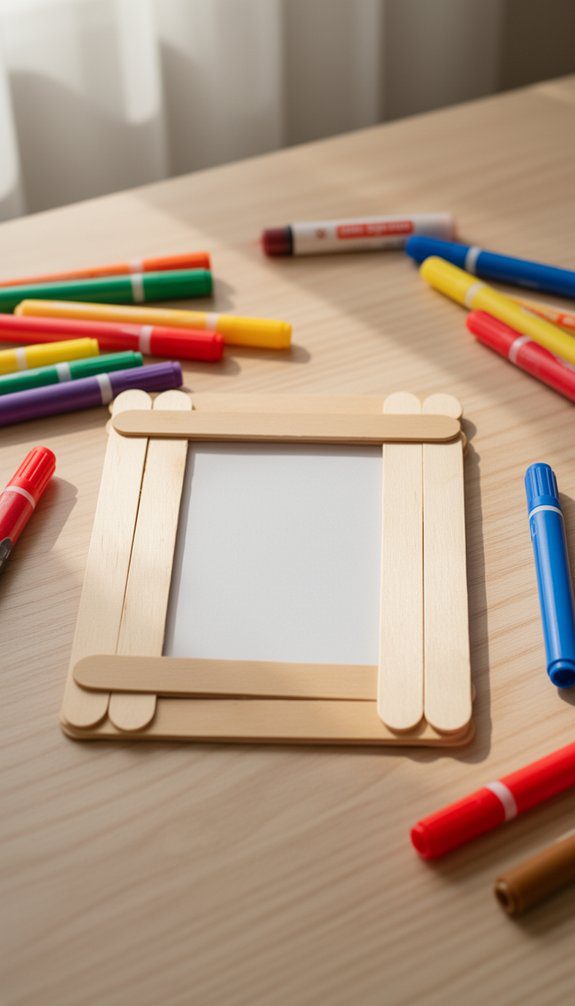
A handful of popsicle sticks can turn into a keepsake-worthy photo frame in under an hour, and I love how this craft feels both easy and special. You and I can build it with sticks, glue, and any decorations you’ve got, and it works great for ages 3+ with help. For popsicle stick creativity, I line up four sticks as a square, glue corners, then add a back support. For photo frame personalization, decorate before you glue. Try:
- bright paint stripes
- glittery stickers
- tiny buttons
- doodled names
- ribbon corners
Slide in a photo or art, and share frames as gifts together.
Cotton Ball Snowman
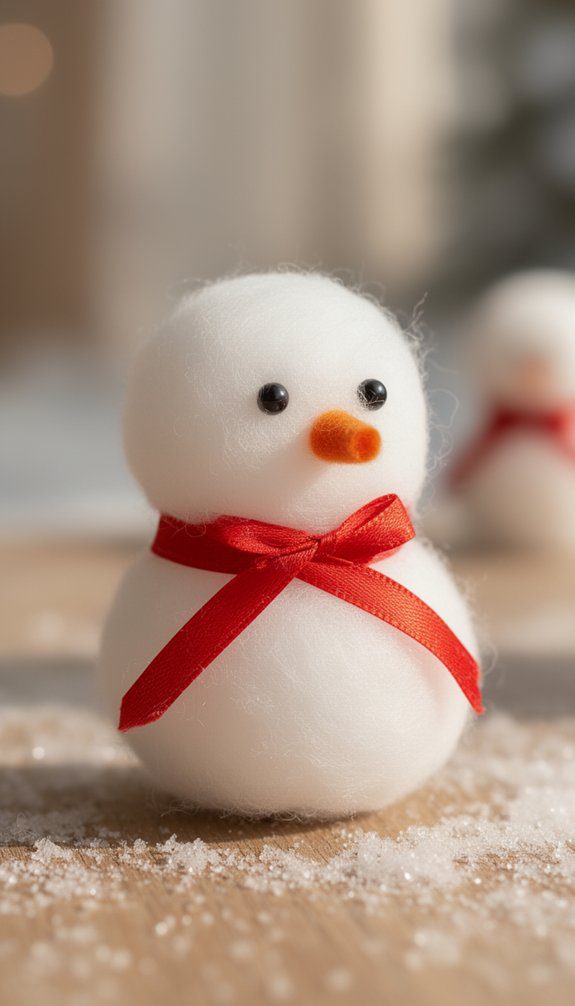
When I’m done making a popsicle stick photo frame, I like switching to something even softer and just as giftable: a Cotton Ball Snowman. You only need cotton balls, construction paper, glue, and a few basics, so everyone can join in at home or school.
First, I stack and glue cotton balls into a body on paper. Next, I add a face with markers, buttons, or fabric scraps, then finish with snowman accessories like a scarf or hat. As you place each cotton ball, you build fine motor skills and confidence. Display yours as winter decorations—you’ll feel part of the season.
Paper Bag Puppet
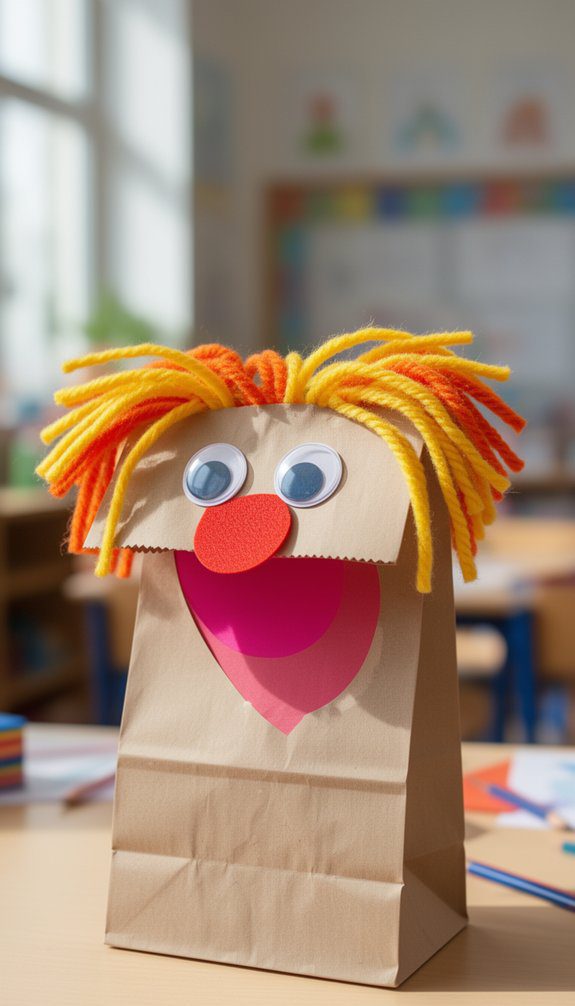
Since I love crafts that turn into instant playtime, I always reach for a paper bag puppet next—it’s low-cost, easy to set up, and kids can make one with a plain brown lunch bag, markers, glue, and any fun extras like googly eyes, yarn, or fabric scraps. I fold the flap down for a mouth, then let you and your kids design a character that feels like “ours,” boosting creative expression and fine motor skills (ages 3–10). Picture:
- wiggly eyes
- yarn hair
- a paper tongue
- fabric cape
- marker freckles
Then we share puppet storytelling together, practicing voices, language, and teamwork.
Button Art Canvas
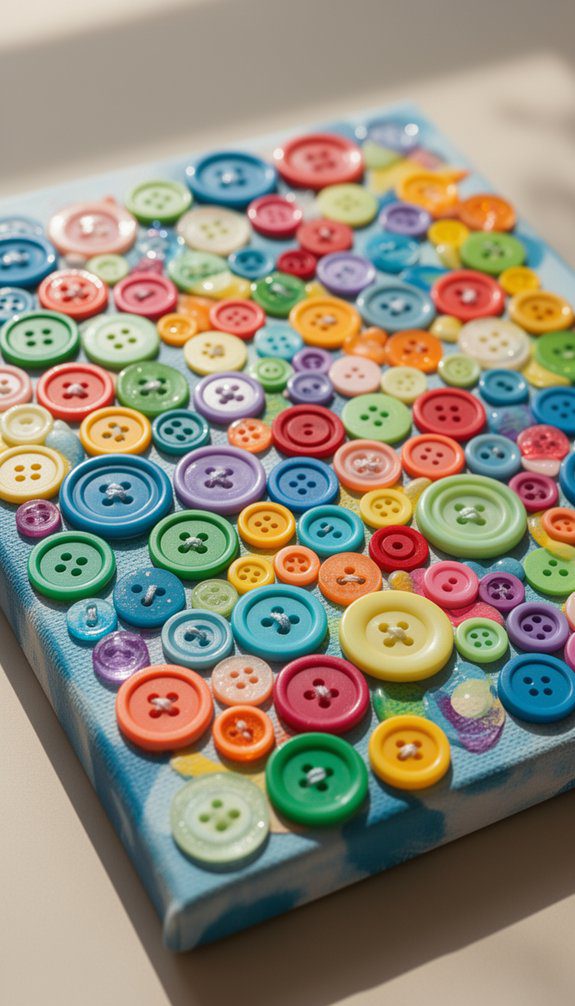
One of my favorite “wow, we made that?” projects is a button art canvas, where you turn a simple canvas (or sturdy cardboard) into a bright design using colorful buttons and glue.
First, I sketch a simple shape—heart, initials, or a tree—so you’ve got a shared goal to rally around. Next, we sort buttons by button color combinations and plan a quick pattern, like light-to-dark stripes. Then I spread glue in small sections and press buttons down, mixing button size variations for texture. As you work, your fingers get stronger and your design sense grows. It’s even better with friends—everyone adds a little magic.
DIY Friendship Bracelet
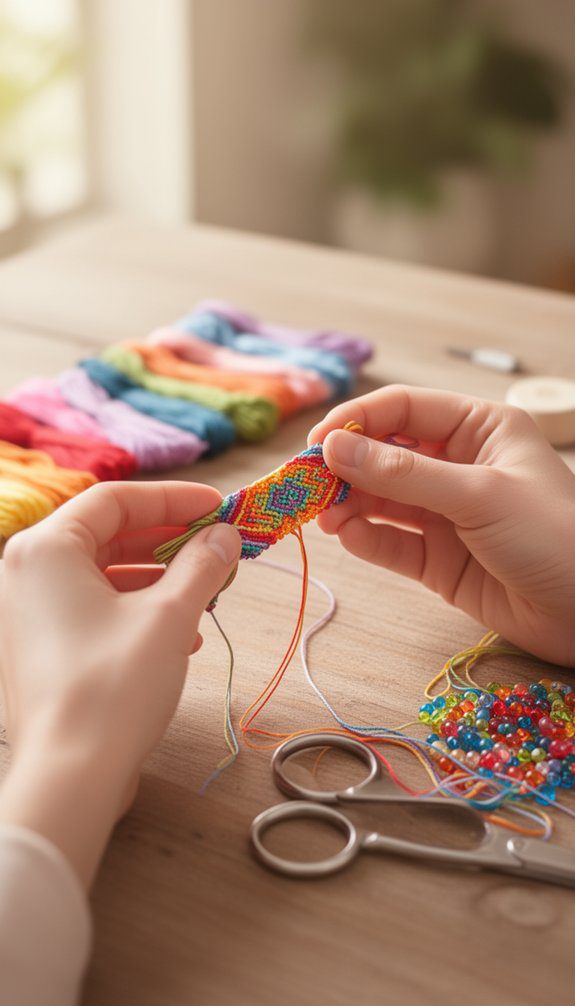
Although it looks like something you’d buy at a cute little shop, a DIY friendship bracelet is surprisingly easy to make with just embroidery floss, yarn, or even a few beads. In my friendship bracelet tutorial, I start with smart crafting materials selection and simple knot tying techniques that boost coordination. Then I invite you to try creative color combinations and pattern design ideas, from age appropriate designs to bold friendship bracelet variations.
- Sunny yellow strands twisted together
- Ocean-blue beads clicking softly
- A tiny chevron forming row by row
- Neat knots snug on your wrist
- Friends gathered for group crafting activities
The gifting bracelets purpose sparks social skills development.
Paper Flower Bouquet
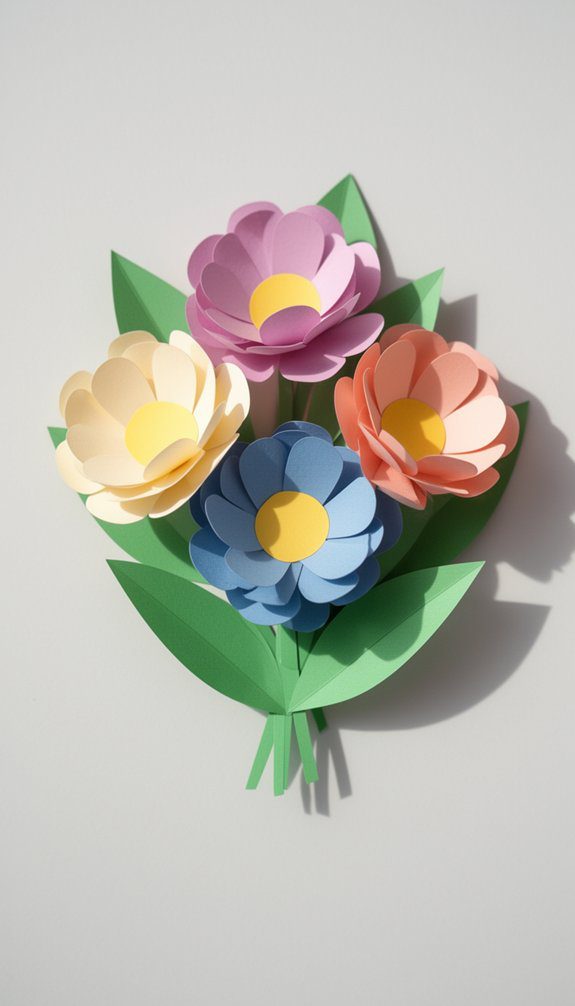
With just a few simple supplies—colorful construction paper, scissors, and glue—you can help kids create a paper flower bouquet that looks bright enough to sit in a vase or star in a handmade gift.
First, I pick 2–3 flower color combinations (pink-yellow, blue-white, or rainbow) so everyone’s blooms feel connected, like our own little club. Next, you’ll cut petals and centers, trying flower shape variations—round daisies, pointy tulips, or layered roses. Younger kids can use bigger shapes; older kids can add fringed edges. Finally, I glue pieces together and make stems from rolled paper. Display it or gift it.
Cardboard Box Playhouse
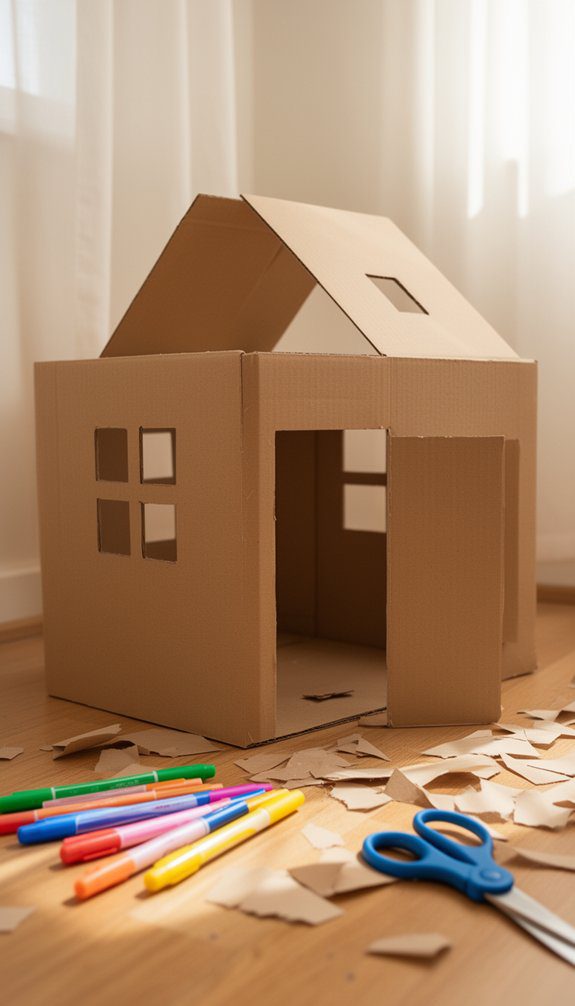
Cardboard castles and cozy little hideouts start with the same magical thing: a big box. I grab scissors and tape, and you can, too—then we sketch simple playhouse designs and cut a door and windows. When friends or siblings join in, the build feels like our own little club, and those careful cuts and folds boost fine motor skills. Next, we decorate and choose imaginative themes together:
- a taped-on mailbox and name sign
- sticker “bricks” around the doorway
- a shop counter cut from a flap
- star windows for a spaceship
- a cozy floor mat inside
Finger Painting Art
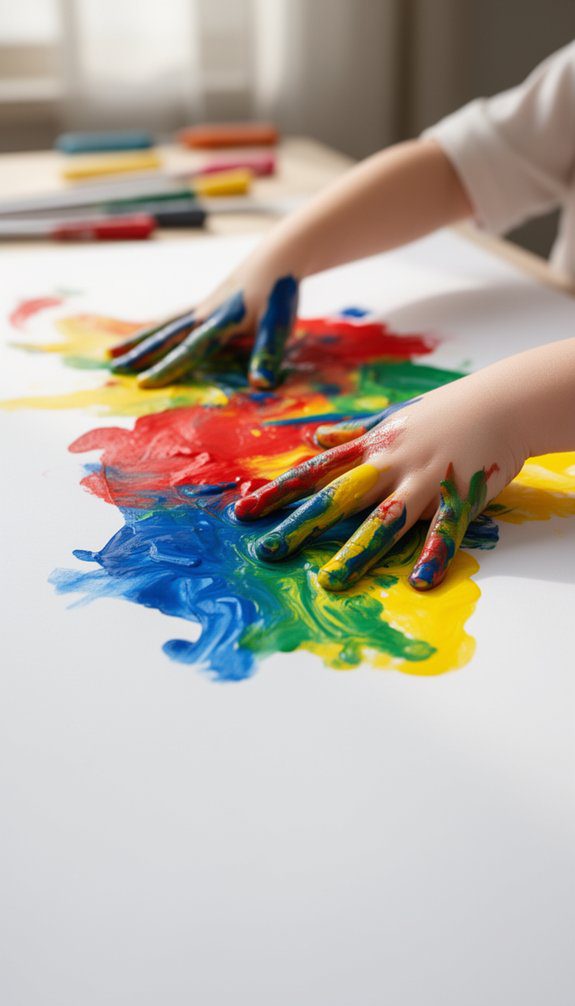
Magic lives in a smear of color, and finger painting is one of the easiest ways I know to let kids investigate it. I set out thick paper, roll up sleeves, and invite everyone to join in, no experience needed. For safe, homemade paint, I simmer water, sugar, and cornstarch, then stir in food coloring and cool it fully. Next comes color exploration: dot, swirl, and blend to see what new shades appear. This messy play boosts sensory development, fine motor skills, and coordination. It also supports color recognition and gives feelings a gentle place to land.
Recycled Bottle Piggy Bank
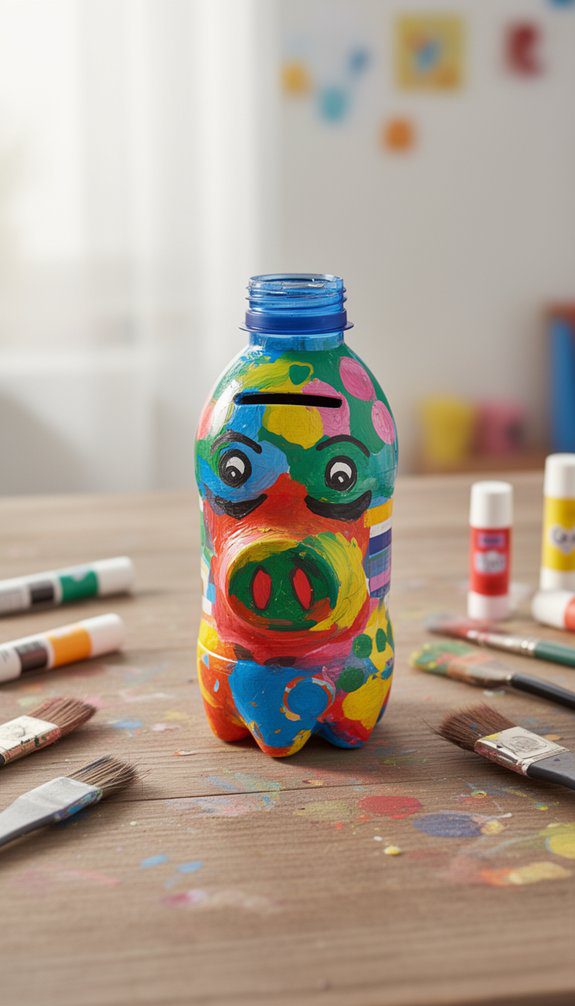
Since most plastic bottles end up tossed without a second thought, I love turning one into a recycled bottle piggy bank that kids can actually use every day. You’ll build environmental awareness through creative reuse, and it’s perfect for ages 5+ in a classroom or at home with friends. Cut a coin slot (I do it for younger kids), then let everyone decorate and feel proud together.
- a clear bottle with a neat coin slot
- bright paint swirls and marker doodles
- shiny stickers spelling your name
- glued-on ears, feet, or buttons
- coins clinking inside, saving up goals
DIY Butterfly Craft
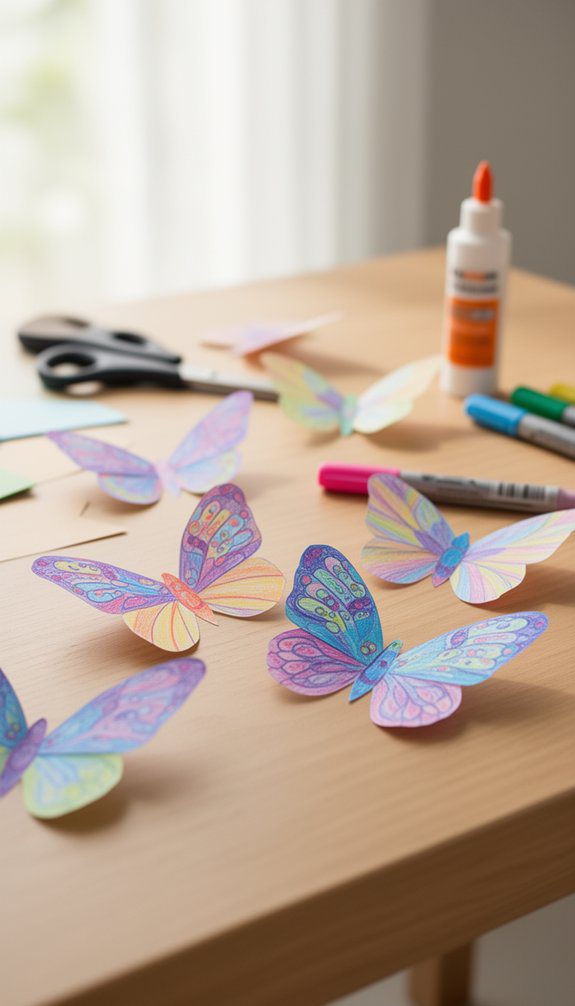
One of the quickest crafts I pull out when kids want something colorful right away is a DIY butterfly made from plain paper, scissors, and crayons or markers. You and I can make it work for ages 3–10, and everyone feels included.
First, fold paper in half and cut a big wing shape, then open it for symmetry. Next, add butterfly anatomy: a simple body, antennae, and wing sections. Now fill the wings with creative patterns—dots, stripes, or rainbow swirls. As you cut and fold, fine motor skills grow. Finally, talk about the life cycle and hang butterflies for stories.
Paper Mask Craft
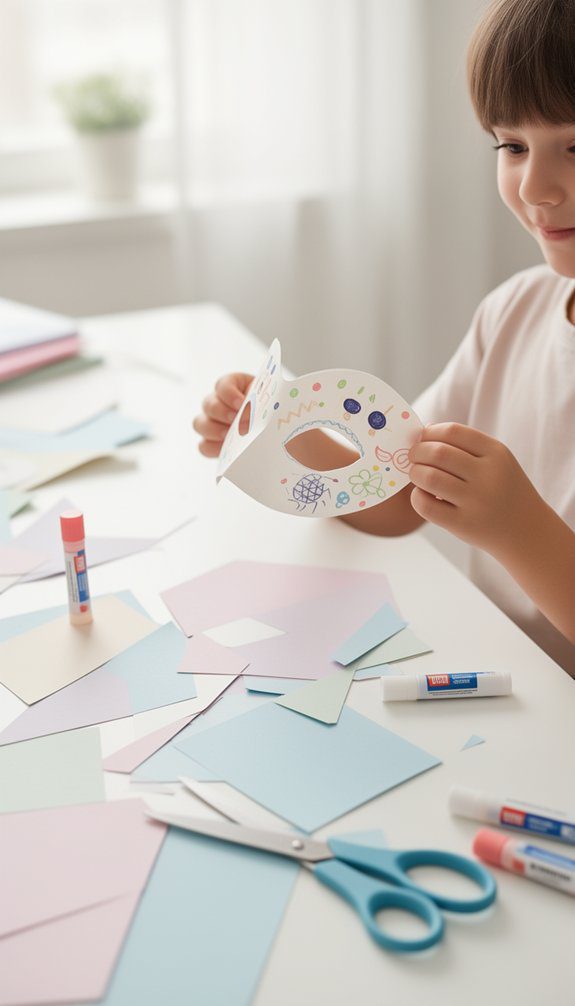
After we’ve filled the room with bright paper butterflies, I like to keep the creative momentum going with a paper mask craft—because it’s just as colorful, even more personal, and it turns into instant pretend play. You and I can grab a paper plate, construction paper, or cardstock, so nobody feels left out. Younger kids can cut simple shapes; older kids can layer details and patterns for new mask design ideas.
- a lion mane in sunny strips
- glittery eyebrows and bold spots
- smooth eye holes edged in marker
- yarn “hair” tied in knots
- a name tag inside for sharing
Then we jump into imaginative play together.
Colorful Bead Necklace
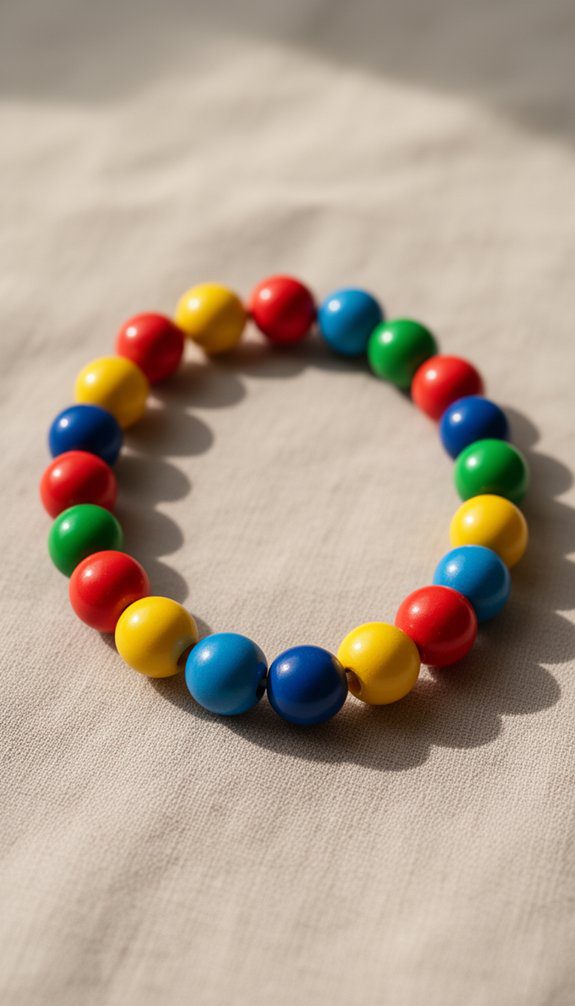
Two handfuls of bright beads and a simple string are all I need to turn our craft table into a mini jewelry studio with big personality. First, I guide your bead selection: wooden feels cozy, plastic is light, and glass looks shiny. Next, we pick string types—elastic for easy on-and-off, cord for a sturdy tie. Then we plan color patterns using size variety, like big-bead “anchors” between small beads. For design inspiration, I borrow holiday themes or birthday colors, or use DIY kits. While you string, you practice crafting techniques, motor skills, and creative expression with our group.
Sticker Collage Art
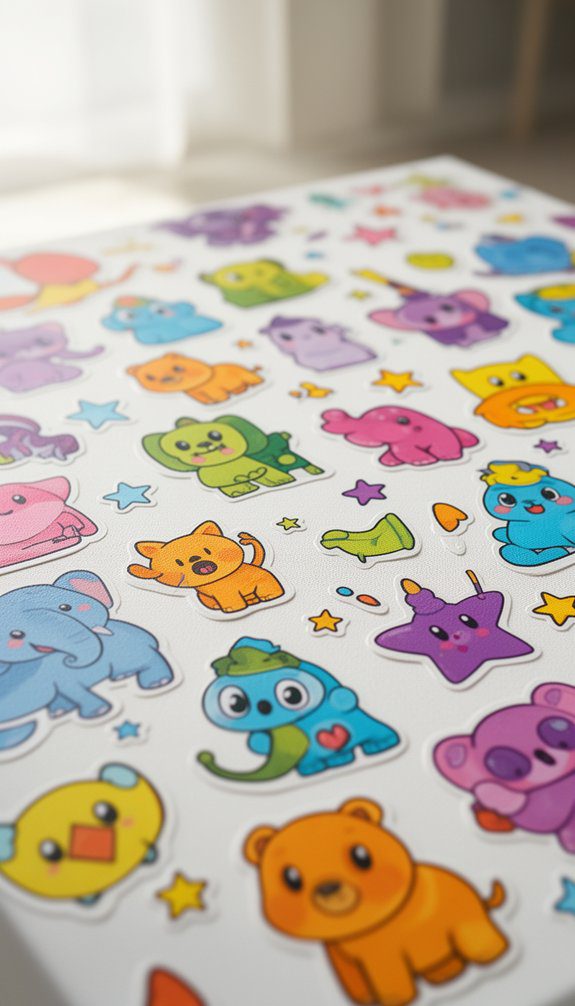
Jewelry-making is a blast, but when I want a craft that’s even quicker to start (and just as colorful), I reach for stickers and a blank sheet of paper. I invite you to pick sticker themes that feel like “us,” then build scenes with storytelling stickers. As you peel and place, you’ll practice fine motor skills and try layering techniques for depth—think sticker layering from big shapes to tiny details. I love customizing collages with seasonal stickers and personal favorites, making creative arrangements that show real artistic expression and spark imaginative play.
- glittery stars
- cozy cabins
- silly monsters
- rainbow borders
- secret maps
Handmade Bookmark Craft
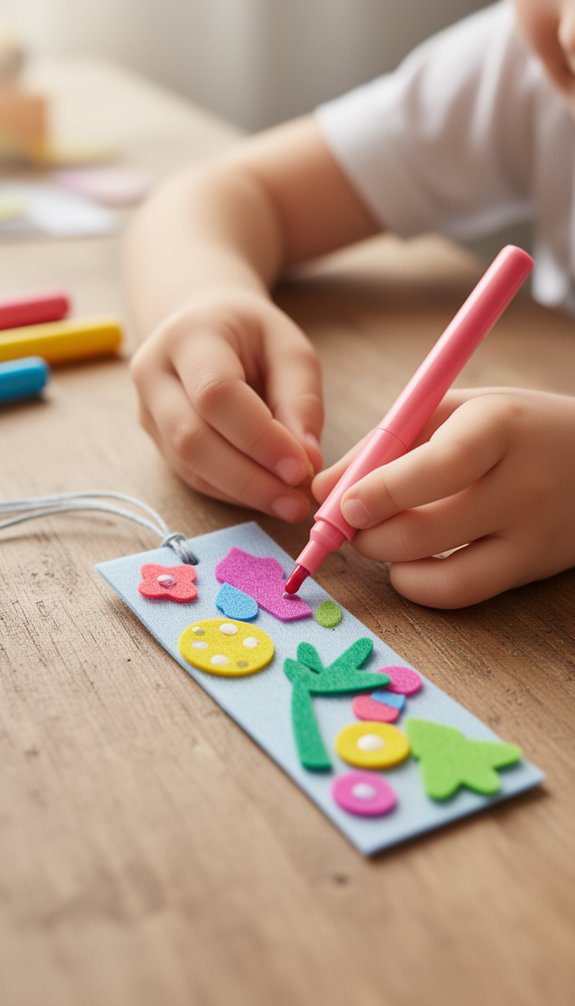
Bookmarks are tiny billboards for your imagination, and I love how fast you can make one with just cardstock, markers, stickers, and a bit of ribbon. Cut a strip, round the corners, punch a hole, and tie ribbon. As you draw favorite characters or add decorative paper, your bookmark design becomes yours, and our little reading crew grows. Gluing, trimming, and pressing stickers build fine motor skills without feeling like “practice.” Make extras as gifts; sharing feels good and earns smiles. Match themes to your current book for extra reading motivation.
| Idea | Theme |
|---|---|
| Character doodle | Fantasy |
| Quote + washi | Classics |
| Sticker collage | Comics |
Frequently Asked Questions
What Age Group Are These Crafts Best Suited For?
I’d say these crafts fit ages 4–10 best, but you can modify by craft age. You’ll see developmental benefits like fine-motor growth and confidence, and your kid’s creativity will feel welcomed here.
How Can I Keep Craft Time Mess-Free Indoors?
I keep craft time mess-free by setting a dedicated craft space with a wipeable tablecloth and tray for tools. Studies show kids spill about 8 times per session, so mess prevention makes us feel included.
What Are Safe Alternatives to Hot Glue for Kids?
I’d skip hot glue and use craft adhesive options like glue sticks, school PVA, washable tacky glue, double-sided tape, or dots; I’ll choose non toxic glues and supervise, so you’ll feel confident crafting together safely.
How Do I Store Leftover Craft Supplies Neatly?
Sort scraps swiftly: I group like items, label small bins, and stack clear boxes. For craft supply organization, I use storage solutions like drawers, jars, and zip bags so you’ll feel included and ready.
How Long Should Each Craft Activity Take to Complete?
I’d aim for 15–30 minutes per craft, adjusting Craft timing to your group’s mood and age. Keep Activity duration short enough to finish happily, with an optional “bonus step” so everyone feels included.