25 Easy DIY Crafts for Kids That Are Fun, Safe, and Creative
When I need fun, safe, creative crafts for kids, I start with simple supplies and big imagination: paper plate animals, handprint art, and toilet paper roll characters for quick wins. Next, I add sensory fun with paper cup wind chimes and DIY slime without borax, using kid-friendly ingredients. For calmer time, I love handmade bookmarks, butterfly life-cycle crafts, bead necklaces, and paper masks for pretend play. Keep scissors blunt, paints non-toxic, and let kids personalize everything—you’ll find even more ideas ahead.
Love cozy DIY projects? 💕
Get free printable guides, exclusive tutorials & surprise craft goodies straight to your inbox.
Disclosure: This post may contain Amazon affiliate links, at no extra cost to you. Content on DiyCraftNest is created with research support from AI tools and carefully reviewed, edited, and fact-checked by the lead author, Daniel Pat, to ensure accuracy and reliability. Learn more
Key Takeaways
- Use paper plates for animal faces with folding, layered cutouts, and kid-safe glue for quick, recognizable wildlife crafts ages 3–10.
- Make handprint and finger-paint art using non-toxic paint to build fine motor skills and create memorable keepsakes children love.
- Recycle toilet rolls, egg cartons, and cardboard boxes into characters, bugs, and playhouses to teach eco-friendly habits and encourage pretend play.
- Add sensory fun with paper cup wind chimes, paper bag puppets, and kid-friendly slime for sound, touch, and storytelling activities.
- Include simple wearables and learning crafts like DIY crowns, friendship bracelets, bookmarks, and butterfly life-cycle projects to boost creativity and confidence.
Paper Plate Animal Craft
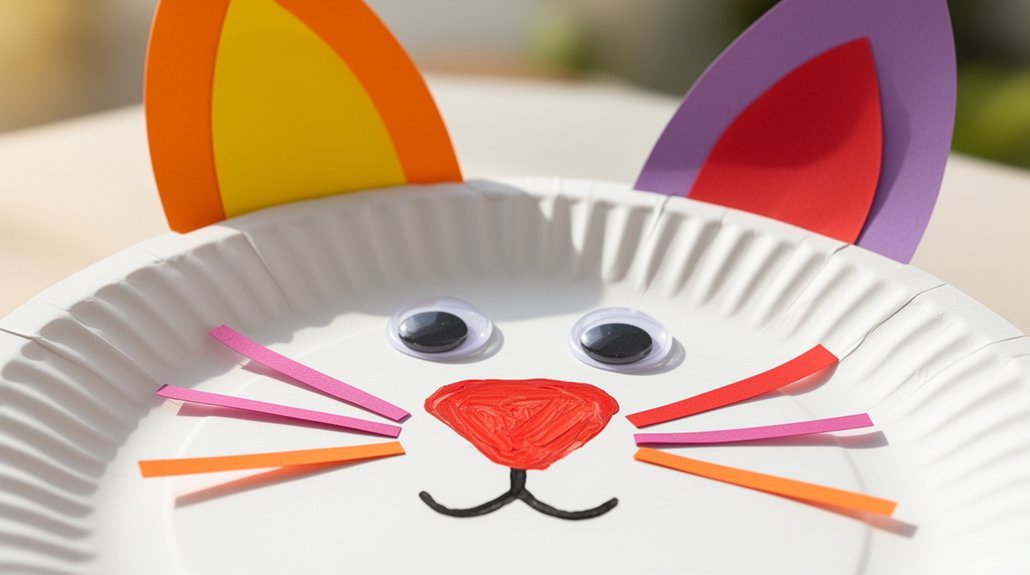
Although you don’t need elaborate supplies to make something adorable, paper plate animal crafts feel extra magical because kids can turn one simple plate into almost any creature they love. I start with a plate, kid-safe scissors, markers, and glue, then invite you to pick an animal everyone recognizes. Next, I show simple animal design techniques: fold for symmetry, cut ears and tails separately, and layer pieces for 3D snouts. Then we lean into creative color choices—bold stripes, shiny spots, or habitat colors. Ages 3–10 can join, and wildlife themes make it feel like our own club.
Handprint Art Project
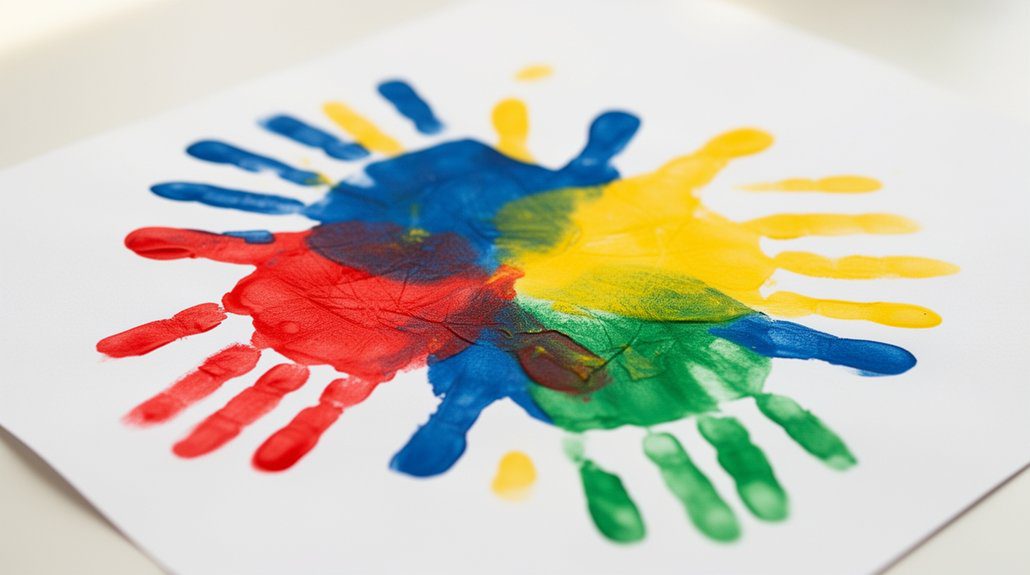
Handprint art is pure kid-magic: one painted palm can become a flamingo, a leafy tree, or a holiday wreath in minutes. I love it because you and your kid can jump in together, and everyone feels included at the table.
First, I lay down paper, pour non-toxic, washable paint, and show a quick “press and lift.” That simple move builds fine motor skills and boosts creative expression. Next, we add details with markers or scraps: beaks, leaves, snowflakes. Finally, I date the page for handprint memories, a sweet keepsake for ages 3–10. Clean-up’s just soap and water.
Toilet Paper Roll Characters
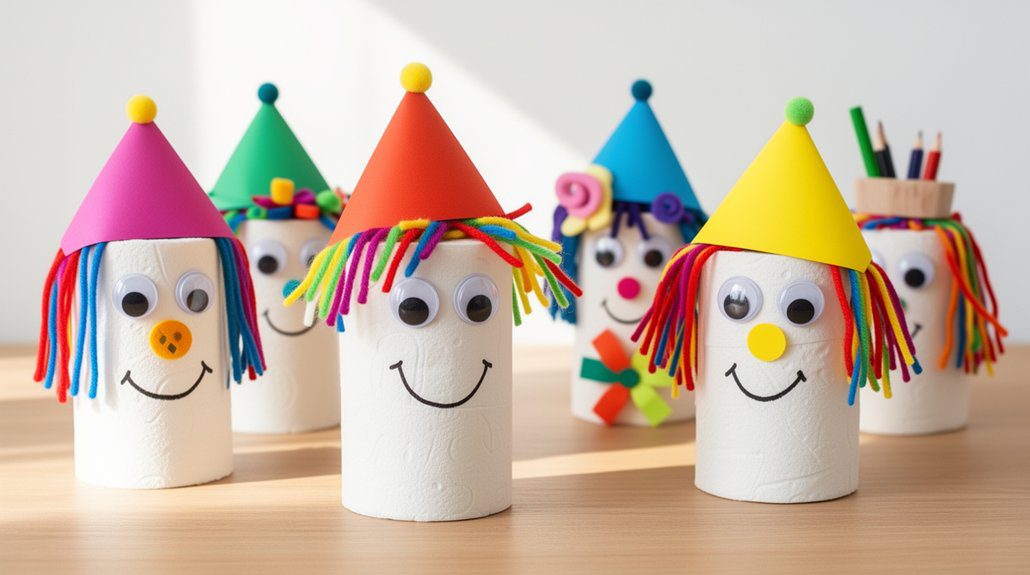
When my craft bin’s running low but my kid still wants something fun to make, I grab a few empty toilet paper rolls and turn them into tiny characters in minutes. I like how we’re reusing something simple, and you’ll feel that “we made this together” pride, too.
First, we paint or color the tube, then add eyes, hair, and outfits with markers, paper scraps, and glue. These easy character design techniques work for ages 3–10 with just a little help cutting. As hands snip and stick, fine motor skills grow. Then we jump into toilet paper roll storytelling—acting out favorite books or brand-new adventures.
Paper Cup Wind Chime
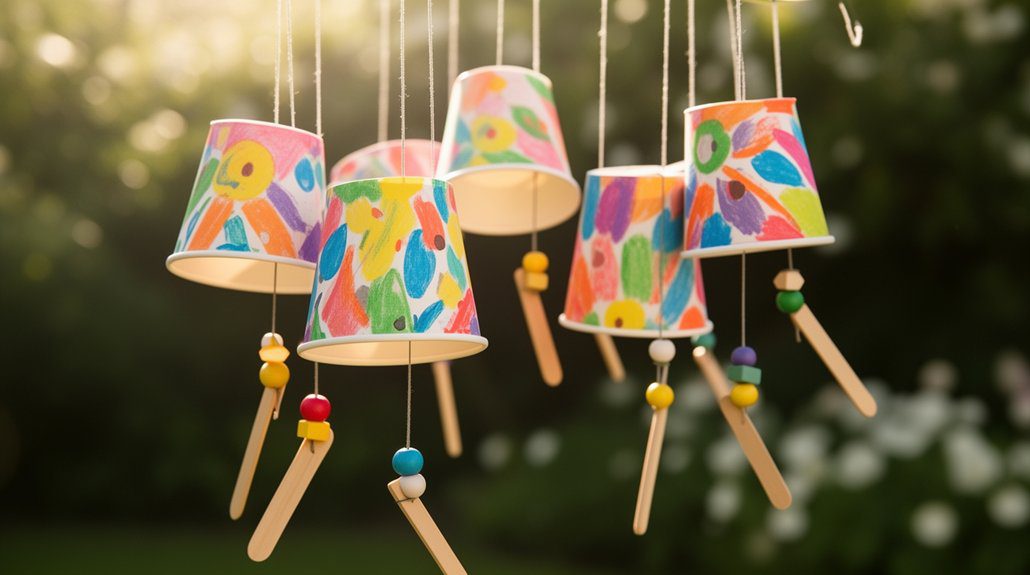
A little breeze can turn a plain paper cup into a cheerful wind chime that kids can actually hear and feel. I love how it invites everyone to join in, because your chime becomes part of the outdoor “music” we share.
First, I let you add colorful decorations with markers, paint, or stickers. Then we poke a small hole, thread yarn or string, and tie it to a branch or wooden dowel. As you cut, glue, and knot, you build steady hands and sharp eyes. Hang it outside and start sound exploration with every gentle tinkle.
DIY Slime Without Borax
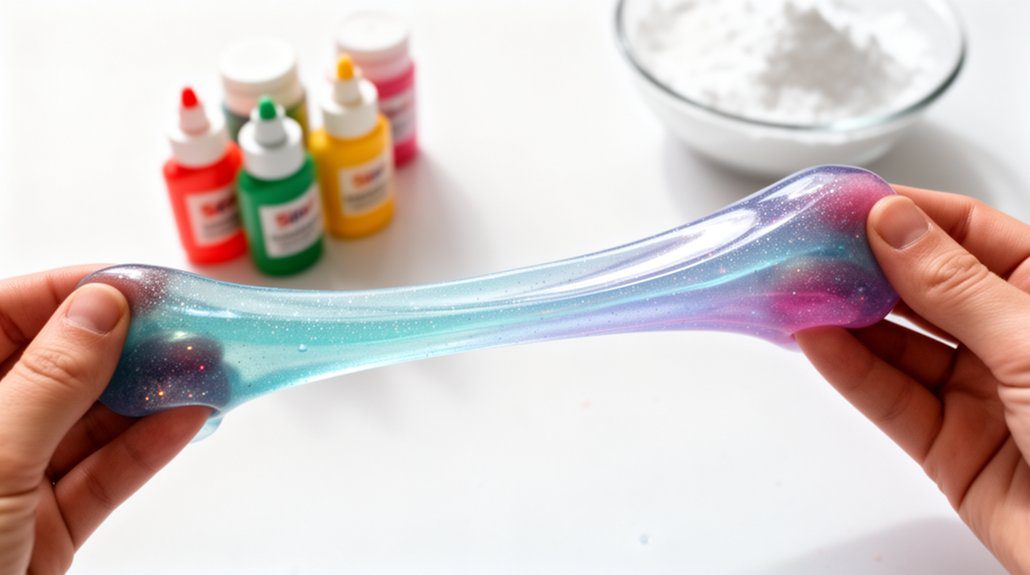
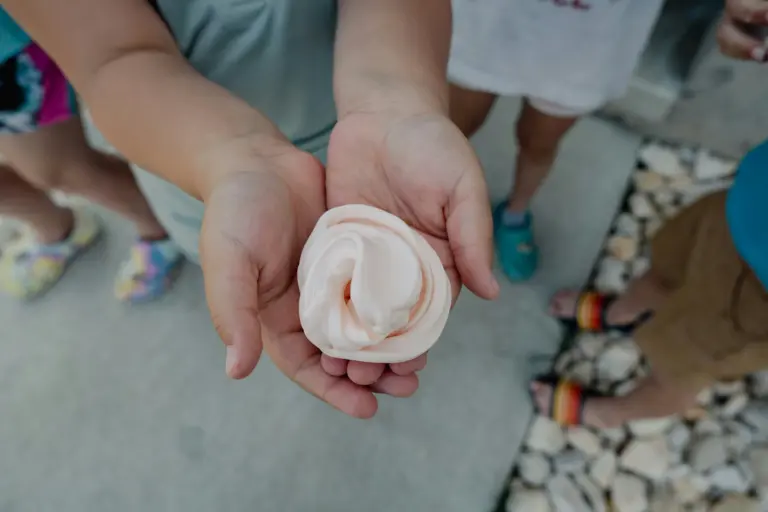
Even if you’d rather skip harsh ingredients, you can still whip up fantastic slime with simple, kid-friendly staples like white school glue, water, and cornstarch. I mix 1 cup glue with 1/2 cup water, then stir in food coloring for bold slime colors that feel totally “our crew” worthy.
| Add-in | What it does |
|---|---|
| Cornstarch | Thickens; changes slime textures |
| Glitter | Sparkle boost |
| Foam beads | Crunchy pop texture |
I sprinkle cornstarch in slowly, mixing until it stretches just right. It’s non-toxic, wipes up fast, and invites everyone to join in.
Popsicle Stick Picture Frame
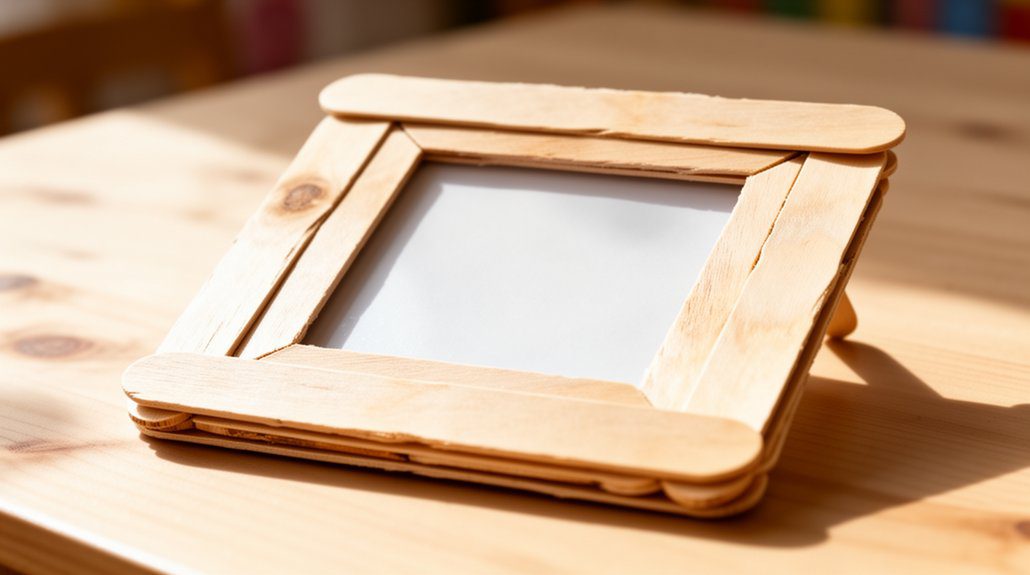
Few crafts feel as instantly satisfying as a popsicle stick picture frame, because kids get to build something sturdy, decorate it their way, and end up with a real keepsake. I like this one because it’s easy, safe, and makes everyone feel included at the table.
Grab 8–12 sticks, line them up into a square or rectangle, and glue the corners. As you build, invite kids to measure, compare lengths, and adjust until the sides match. Then add popsicle stick designs with creative decorations: paint, markers, stickers, or washi tape. Slide in a photo or drawing for a sweet gift.
Egg Carton Caterpillar Craft
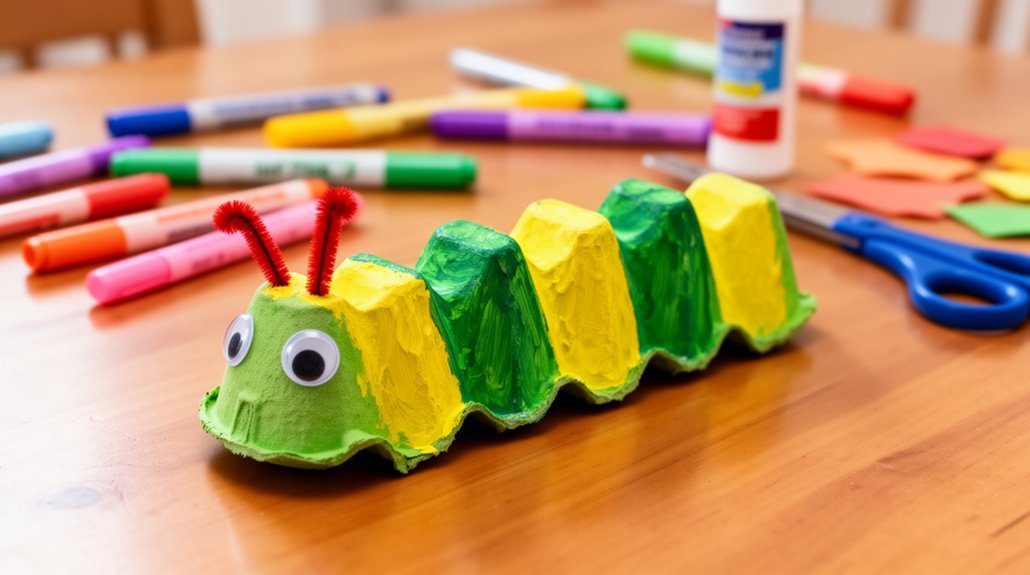
Since you’re probably already saving cardboard bits for rainy-day fun, this egg carton caterpillar craft feels like a win-win: it turns “trash” into a bright little bug while kids practice real skills with their hands. I cut the carton into cups, let you paint each segment, then we glue them in a wiggly line and add pipe-cleaner antennae. Ages 3–10 can join; I make cuts easier for littles and add glitter dots for big kids. It even opens chat about the caterpillar life cycle and eco friendly crafts.
- You’ll feel proud reusing stuff
- Kids feel capable
- Everyone belongs at the table
- Nature feels close
Finger Painting Art Activity
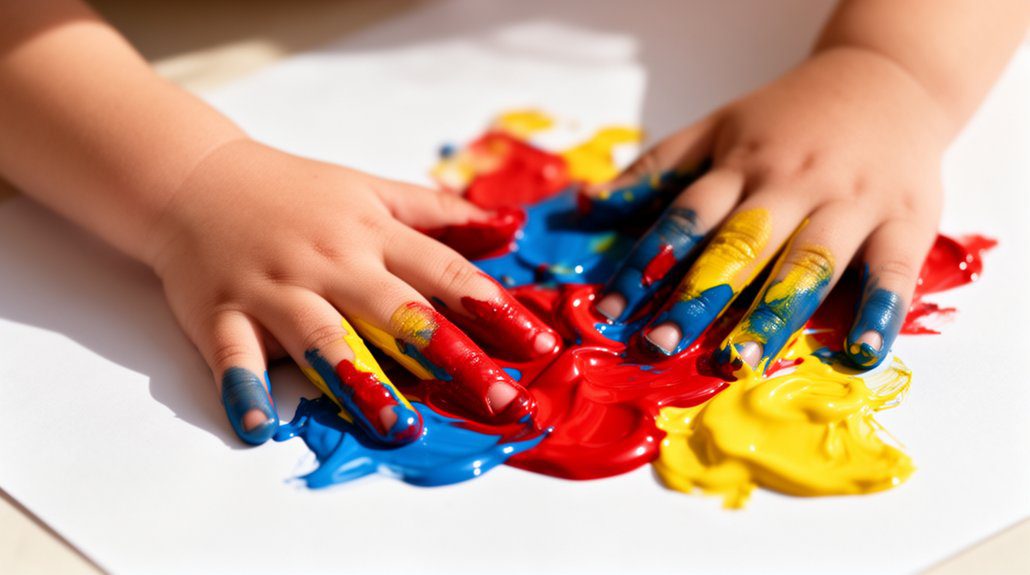
After we’ve built a bright little caterpillar from an egg carton, I love switching to finger painting because it keeps that same “anything can become art” feeling—just with more color and squish. I set out a tray, tape down paper, and keep wipes nearby, so everyone can relax and join in.
For safe, homemade paint, I simmer sugar, water, and cornstarch, then stir in food coloring. Now you’re ready for color exploration and sensory development. Encourage swirls, dots, and handprints to build fine motor skills and hand-eye coordination. Change themes by season, and let pictures tell stories.
DIY Paper Crown
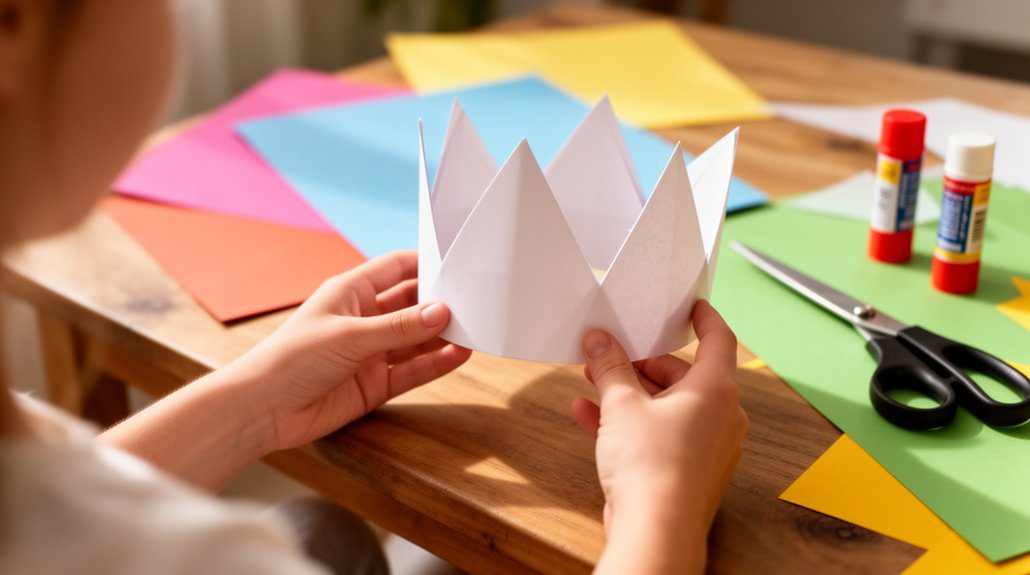
One of my favorite quick-and-mighty crafts is a DIY paper crown, because it turns a plain strip of paper into instant “royalty” with just a few snips and a little glue. I grab colored paper, scissors, and glue, then cut a head-sized strip and trim the top into points. Kids ages 3–10 can safely practice fine motor skills while they decorate. For crown decoration ideas, I set out stickers, markers, and glitter, plus creative embellishments like paper gems. You’ll love how it brings everyone together:
- You feel proudly “seen”
- You share giggles
- You spark imagination
- You celebrate belonging
Salt Dough Hand Ornament
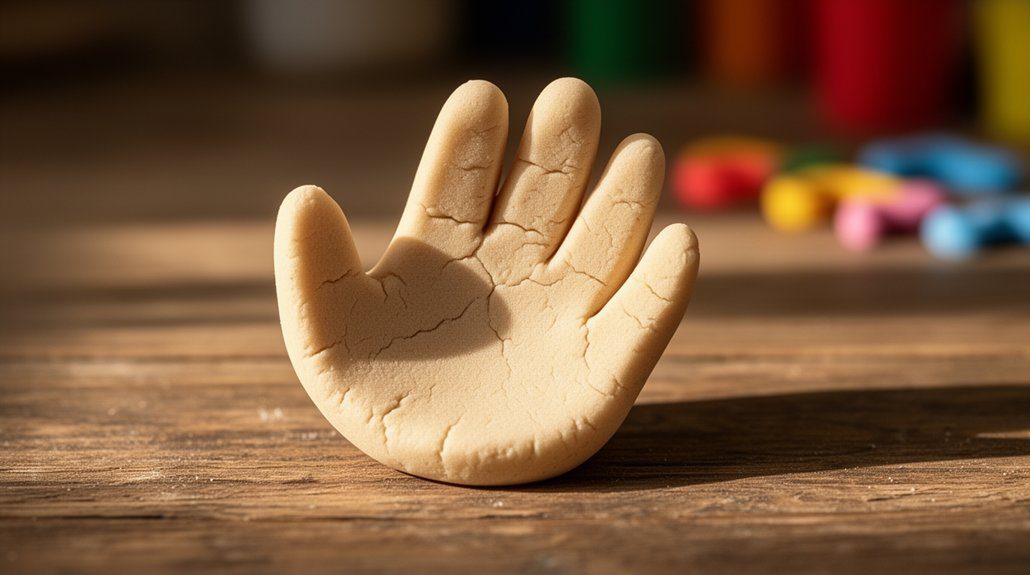
Three pantry staples—flour, salt, and water—are all I need to make a Salt Dough Hand Ornament that feels personal from the very first press of a tiny palm. I mix, roll, and help you press a handprint, then poke a ribbon hole so it can hang with the rest of “our” memories. Let it air-dry for a few days or bake it low and slow until hard.
| Step | What we do | Why it matters |
|---|---|---|
| Shape | Press, smooth edges | Builds fine motor control |
| Dry | Air or low bake | Makes it last |
| Decorate | Ornament painting | Shares your style |
Button Art Canvas
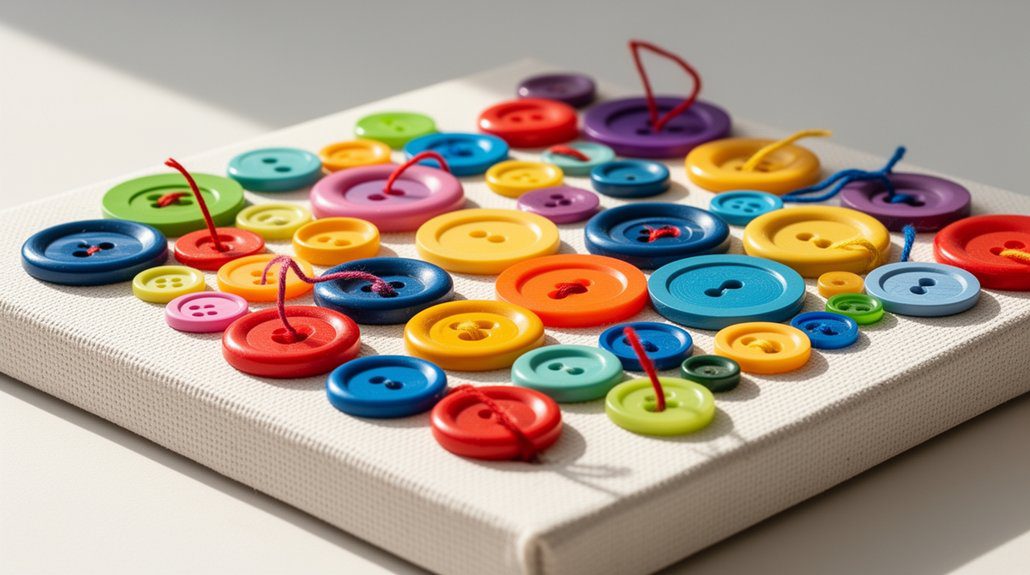
Pressed handprints and drying time feel wonderfully classic, but sometimes I want a craft that’s instant, colorful, and a little sparkly right from the start—so I reach for a Button Art Canvas. I set out a small canvas or sturdy paper, a cup of glue, and a pile of buttons. Then you and I immerse ourselves in button color selection and button shape variety, sorting and placing pieces like tiny treasures. As kids press, coordinate, and commit, fine motor skills grow, plus patience and focus.
- You’ll feel proud together
- Your design looks uniquely yours
- Quiet minutes become cozy
- Everyone belongs in this art circle
Paper Bag Puppet Craft
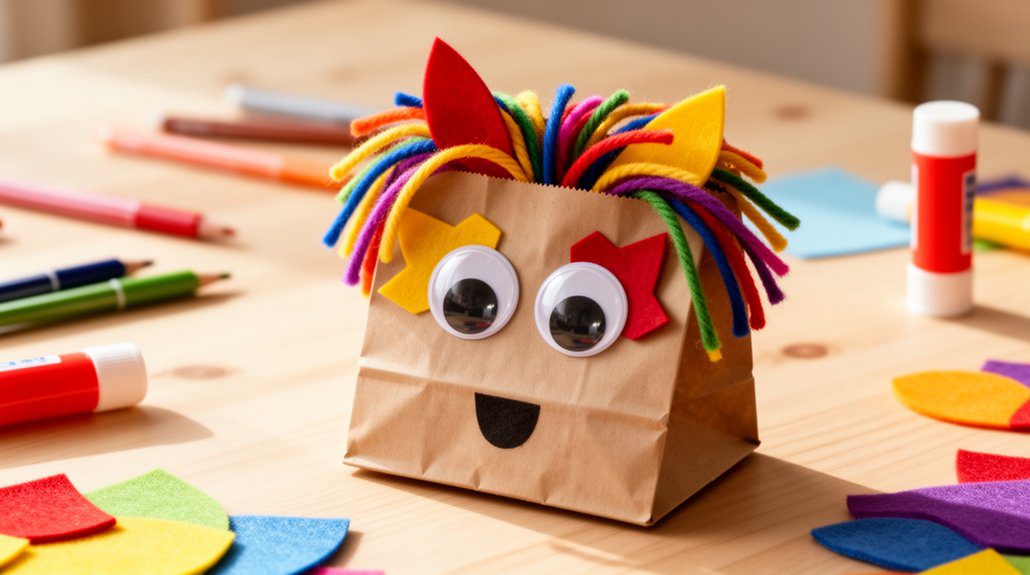
In just a few minutes, I can turn a plain brown (or colorful) paper bag into a character that’s ready to talk, sing, and start a story. I set the flap as the mouth, then invite you to help me dream up who we’re making.
For ages 3–10, I keep it simple or elaborate: markers for patterns, googly eyes for sparkle, and paper scraps for hair or wings. This kind of character customization builds fine motor skills while kids cut, glue, and line things up. Then we gather and try puppet storytelling—mini skits feel better when everyone gets a voice.
Cardboard Box Playhouse
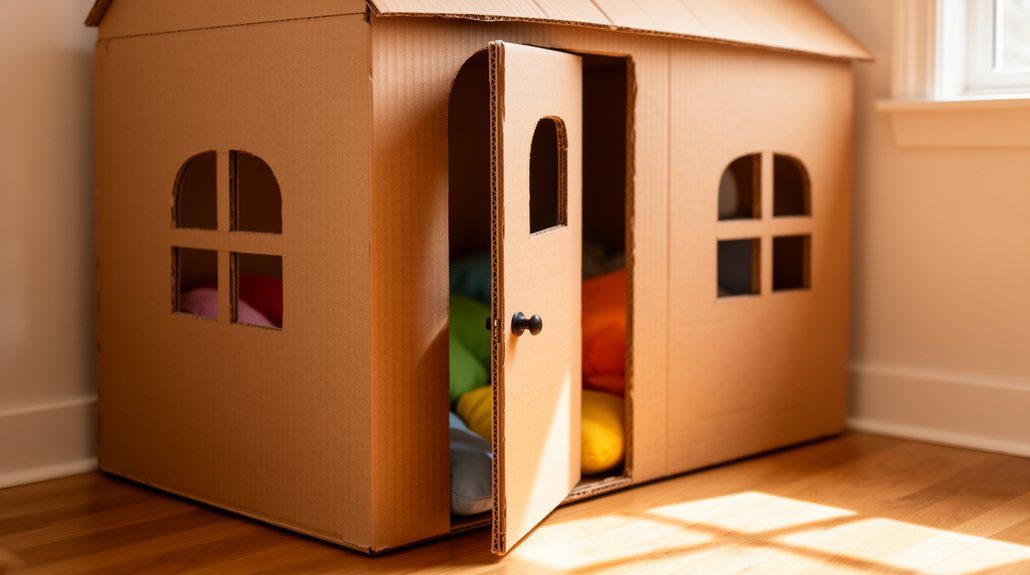
A big cardboard box can turn into a cozy playhouse faster than you’d think, and I love how it invites kids to step straight into pretend play. Grab a large box, scissors, and markers, then cut a door and windows. Next, let everyone plan playhouse designs together, so each kid feels included. Add stickers, drawings, or a little paint for true cardboard creativity. Keep edges smooth and supervise cutting for safety. When kids role-play inside, they practice stories, sharing, and teamwork.
- You belong in the build
- Your ideas shape the “home”
- Your laughter fills the rooms
- Your teamwork makes it magic
Cotton Ball Snowman Craft
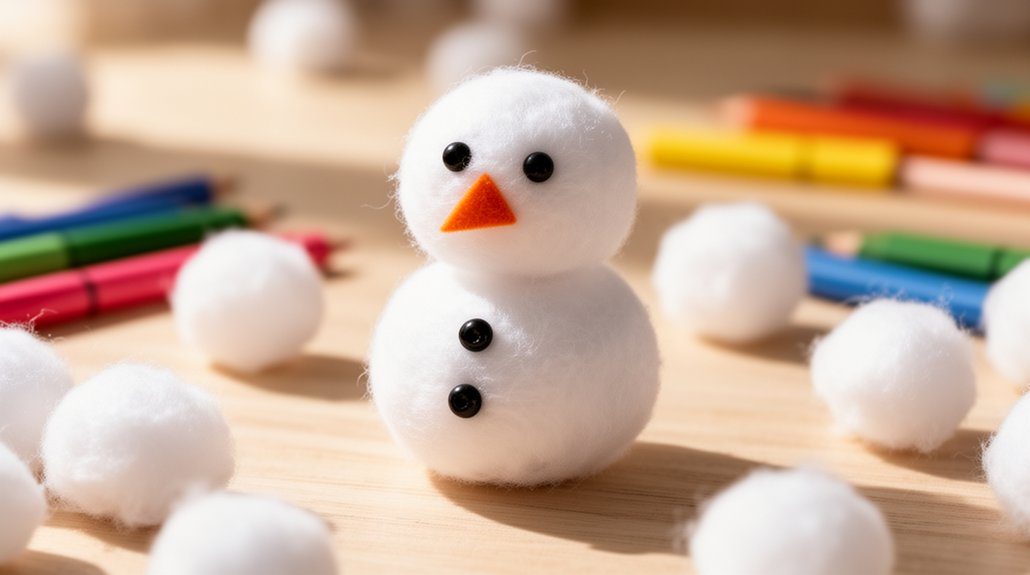
When winter crafts sound fun but you don’t want a big mess, this Cotton Ball Snowman Craft always comes to the rescue. I grab cotton balls, glue, and construction paper, then invite you to build a fluffy body—perfect for ages 3–10.
| Step | What you do | Skill built |
|---|---|---|
| 1 | Glue 3 cotton balls | Pinch control |
| 2 | Add paper buttons | Counting |
| 3 | Cut carrot nose | Scissor safety |
| 4 | Choose snowman accessories | Imagination |
Make it simple or detailed; our creative expressions belong on the fridge or classroom wall.
DIY Friendship Bracelet
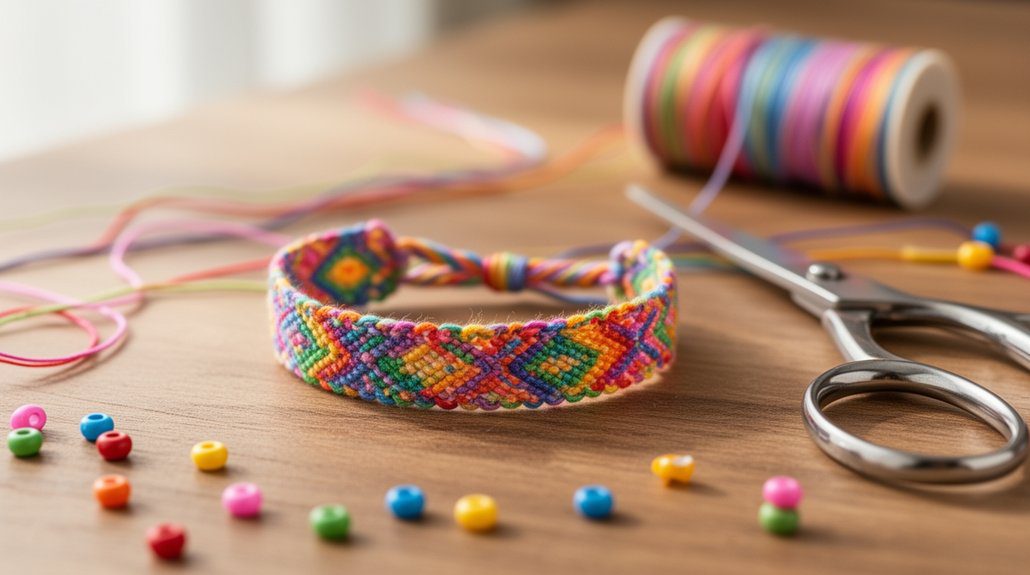
After you’ve glued that fluffy cotton-ball snowman to the paper, it’s fun to switch from “winter wall art” to something kids can actually wear and share—DIY friendship bracelets. I like embroidery floss, beads, or even recycled fabric strips, because you can match colors to your crew. Start with simple bracelet making techniques like braiding, knotting, or easy weaving; kids 6+ can master them fast, and your fingers get stronger too.
- You’ll feel proud seeing a pattern click
- You’ll feel included when friends trade
- You’ll feel brave trying new friendship bracelet designs
- You’ll feel close sharing supplies and ideas
Paper Flower Bouquet
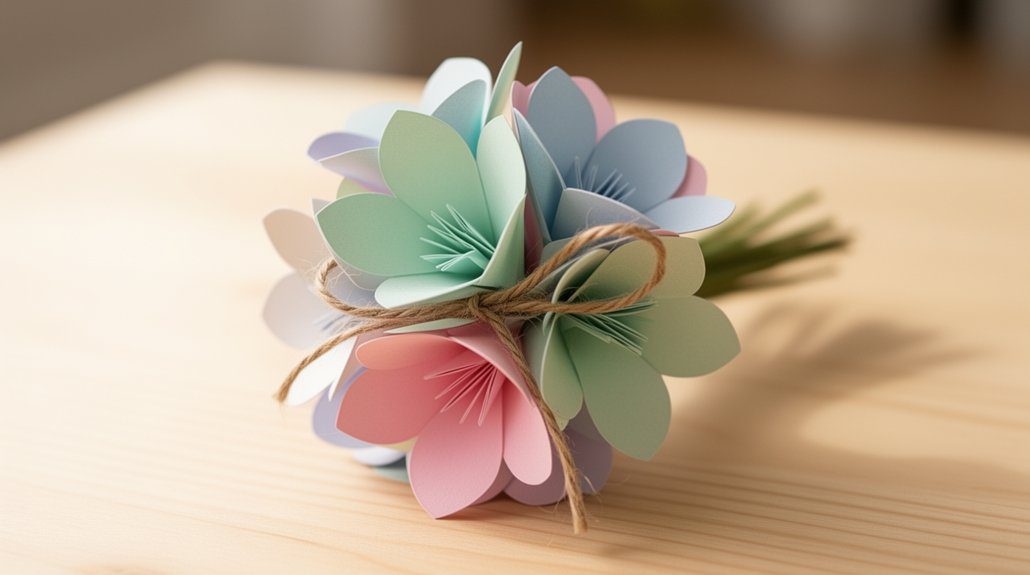
Since bracelets are all about sharing something you can wear, I love switching to a Paper Flower Bouquet—something kids can hold, gift, and proudly display. You’ll just need construction paper, kid-safe scissors, and a bit of tape or glue.
I start with simple spirals for roses, then add folded petals for daisies—easy crafting techniques that build fine motor skills. Let everyone pick flower color combinations that feel like “us,” such as pink-and-yellow or blue-and-purple. Younger kids can cut big shapes; older kids can layer petals and curl edges. Finish with paper stems and bundle them for home décor or heartfelt gifts.
Sticker Collage Art
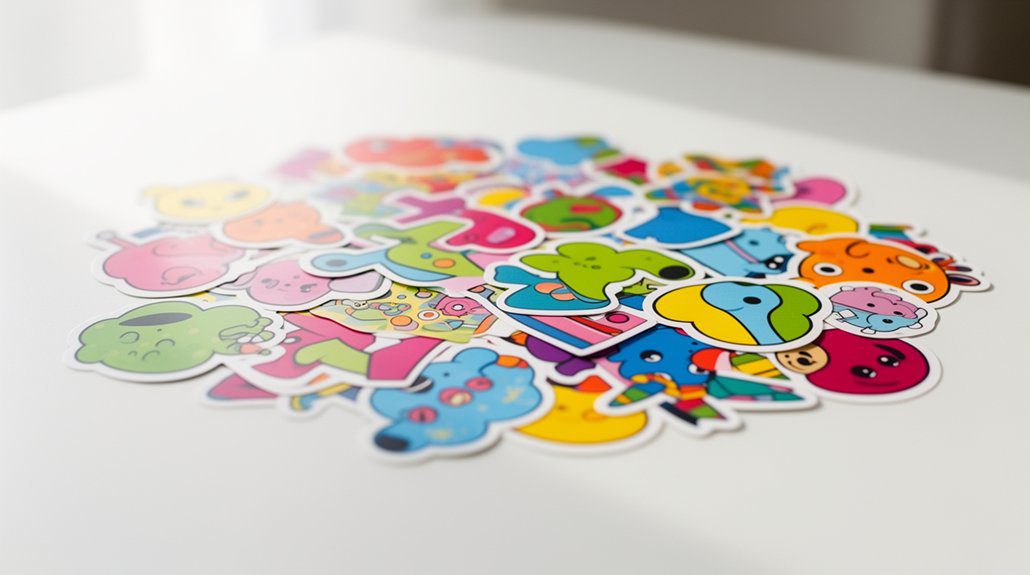
Although it looks almost too easy to count as a “real” craft, sticker collage art quickly turns into a colorful, confidence-boosting project kids love. I invite you to set out paper, cardboard, or an old magazine page, then let ages 3–10 peel and place. For sticker selection tips, I mix big shapes for little hands with tiny ones for extra challenge. Try collage theme ideas like “my dream room” or “underwater friends” to spark stories.
- You belong here, no matter your skill
- Every sticker choice feels like a win
- Little fingers grow steadier each minute
- Finished collages make sweet gifts
Foam Shape Puzzle
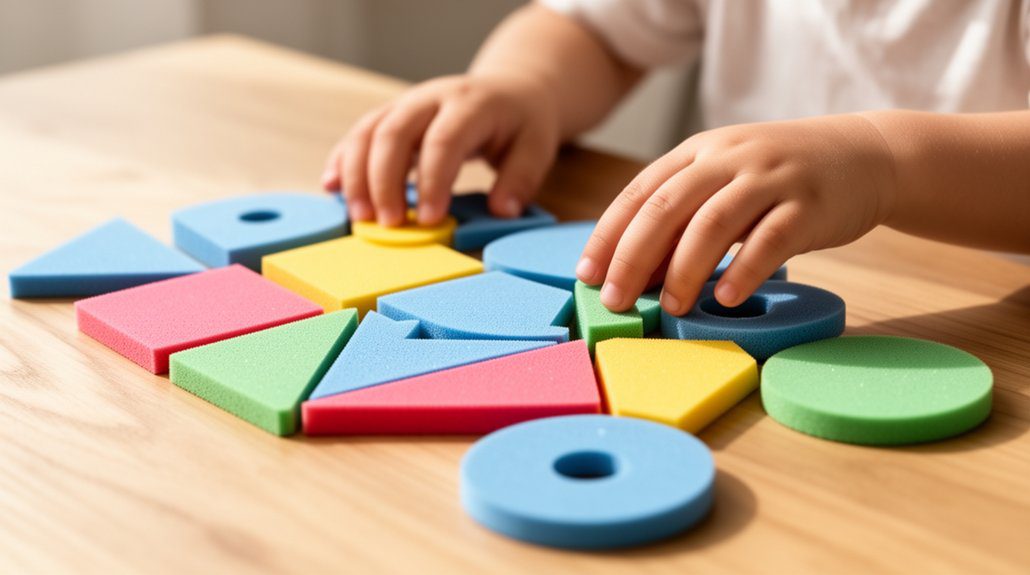
Colorful geometry comes to life when I make a foam shape puzzle with kids. I cut bright craft foam into circles, triangles, and squares, then you and I glue a simple outline onto cardboard as a base. Next, we match pieces to build pictures or patterns, and everyone gets a turn, so no one feels left out.
These foam puzzle benefits are real: small hands practice pinching, turning, and placing, which boosts fine motor skills and patience. I also sneak in educational themes—animals, letters, or numbers—so play feels like belonging and learning at once.
DIY Rocket Ship Craft
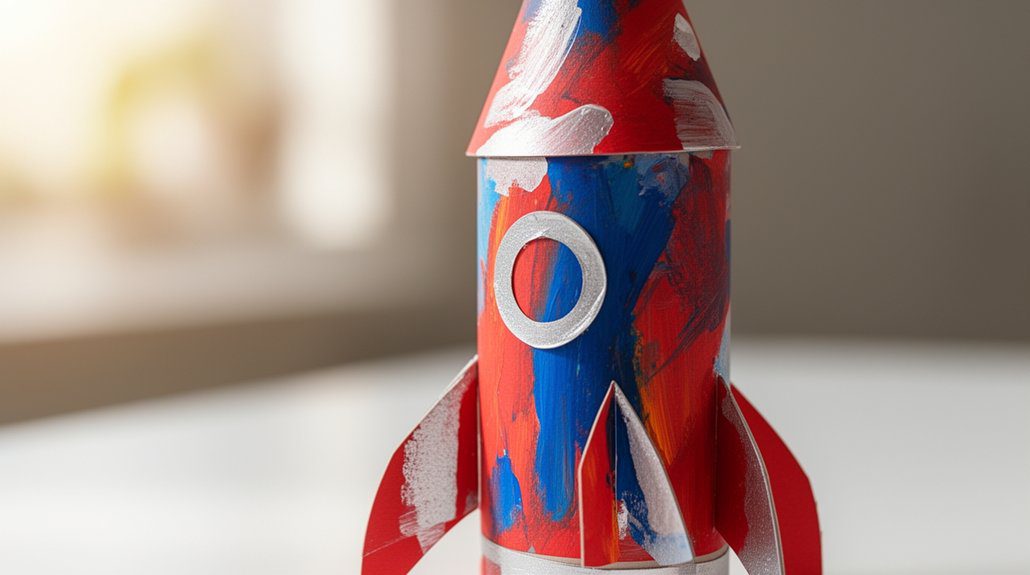
One of my favorite kid-friendly builds is a DIY rocket ship you can make with a cardboard tube, a bit of paper, and some markers—simple supplies that work great for ages 3–10. I help you wrap paper around the tube, cut a cone top, then glue on fins; it’s perfect for practicing steady hands.
- You’ll feel proud watching it stand tall.
- Your child’s creative decoration makes it truly “ours.”
- Rocket ship exploration sparks stories you can share together.
- Everyone belongs on this pretend mission.
When it’s done, set it on a shelf or launch it into playtime adventures.
Recycled Bottle Piggy Bank
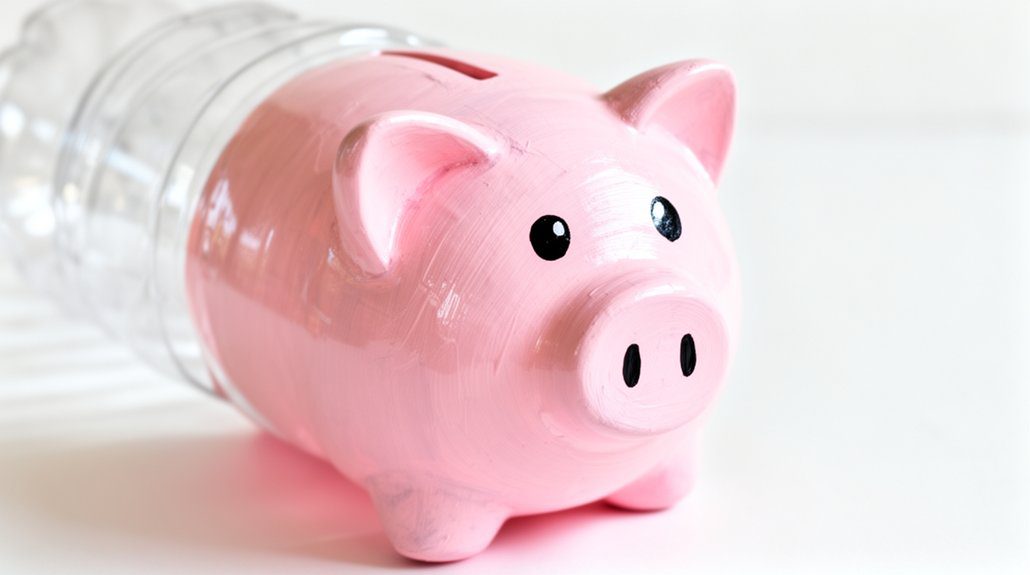
After your cardboard rocket blasts off into pretend space, I like to bring the fun back down to earth with a recycled bottle piggy bank. You and I can grab an empty plastic bottle, scissors, and markers or paint, then cut a coin slot and decorate it for creative expression. It’s cheap, familiar, and it shows real recycling benefits. As you drop in coins or folded bills, you’ll practice saving habits and start friendly chats about financial literacy.
| Focus | What we do |
|---|---|
| Reuse | Choose a clean bottle |
| Build | Cut slot with help |
| Style | Paint your “team” colors |
| Save | Set a weekly goal |
Paper Roll Binoculars
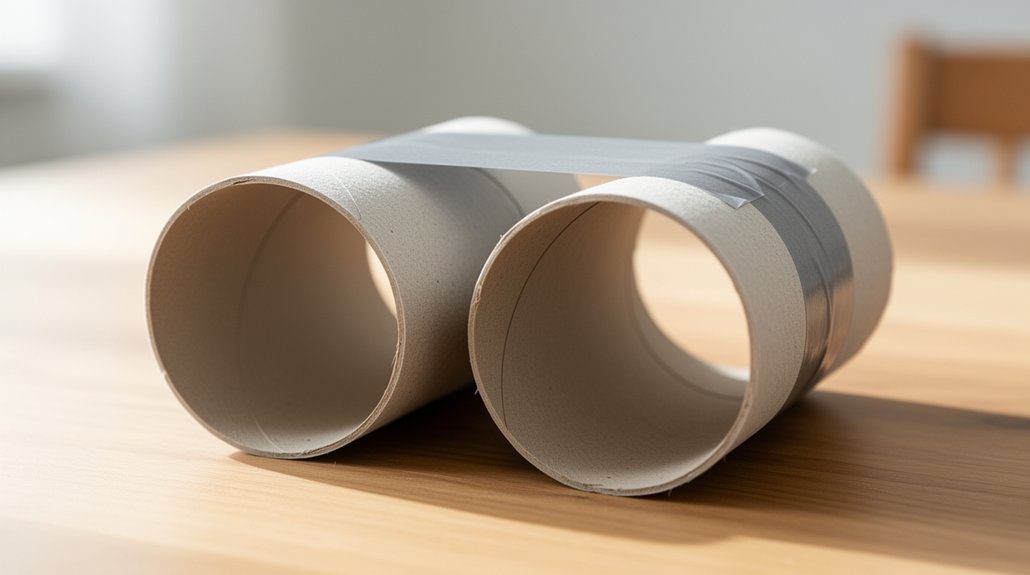
A pair of paper roll binoculars is my go-to craft when I want big imagination with almost zero cost. I grab two empty toilet paper rolls, line them up, and glue them side by side. Then you and I can practice simple crafting techniques: cut a strip for a hand strap, tape it on, and decorate with markers or stickers.
- You’ll feel proud using recycled stuff
- Your hands get steadier with cutting and gluing
- Your design says, “I belong here”
- Your play turns into birdwatching adventures
These are real binoculars benefits—eco-friendly, creative, and ready for exploring.
Handmade Bookmark Craft
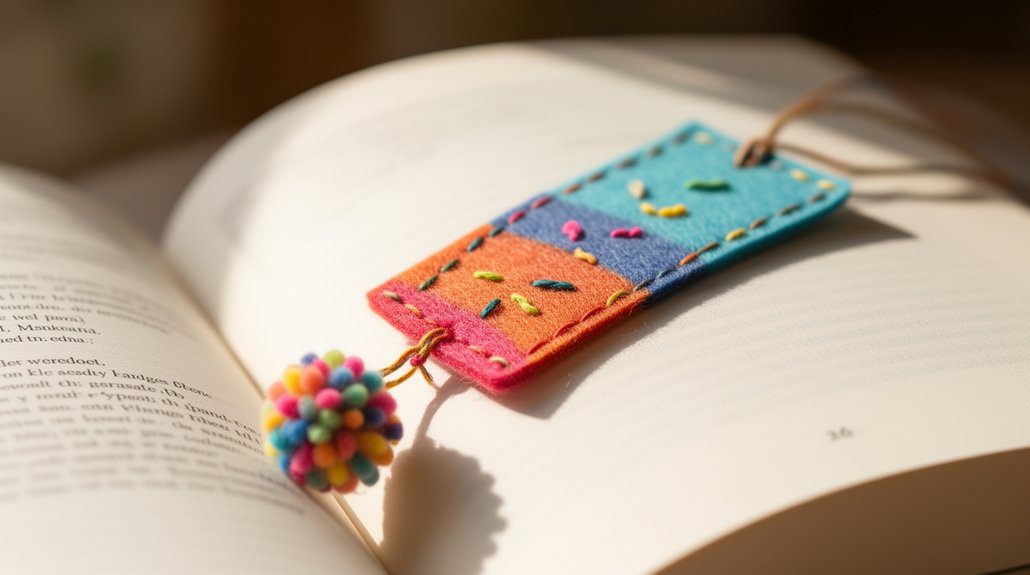
Two simple supplies and a little imagination can turn any reading time into something extra special, and that’s why I love a handmade bookmark craft. Grab cardstock and markers, then add stickers or washi tape for instant personality.
First, cut a strip that fits your favorite book. Next, sketch a quick bookmark design—stars, sports, or cozy patterns—and color it in. Then, decorate and glue pieces carefully; those small moves build fine motor skills fast.
Finally, slide it into your current chapter. When you use something you made, your reading motivation grows, and you feel like you belong in the story.
DIY Butterfly Craft
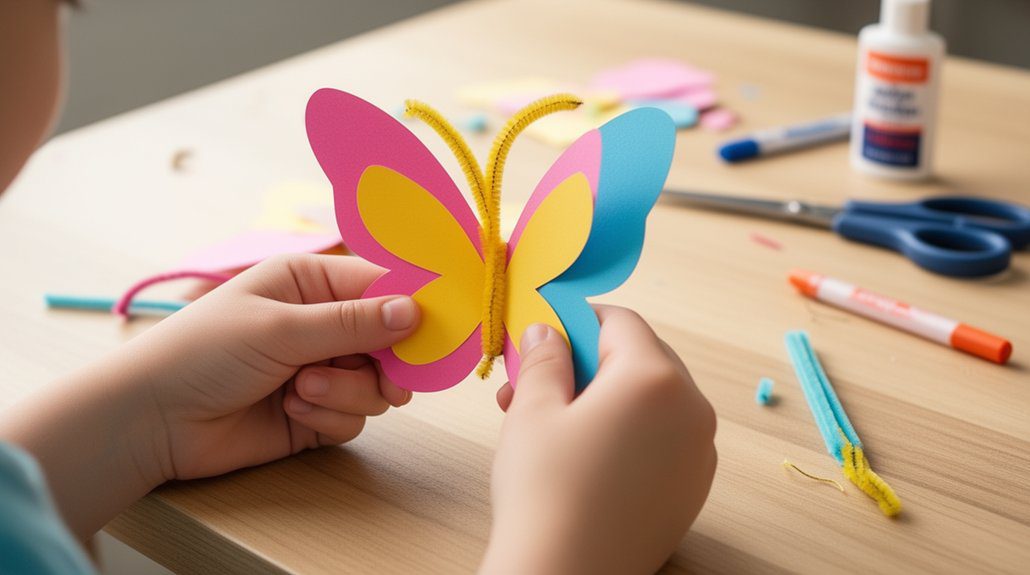
Making something you’ll actually want to look at later feels just as satisfying as slipping a handmade bookmark into your book, and that’s why I’m excited to try a DIY butterfly craft next. Grab paper, scissors, and markers—perfect for ages 3–10. I sketch a simple wing shape, fold paper for symmetry, then cut and open it like a surprise. Next, we add colorful patterns: dots, stripes, and swirls that feel uniquely ours. While we work, I talk about the butterfly life cycle.
- We create together
- We feel proud
- We learn gently
- We brighten spaces
Colorful Bead Necklace
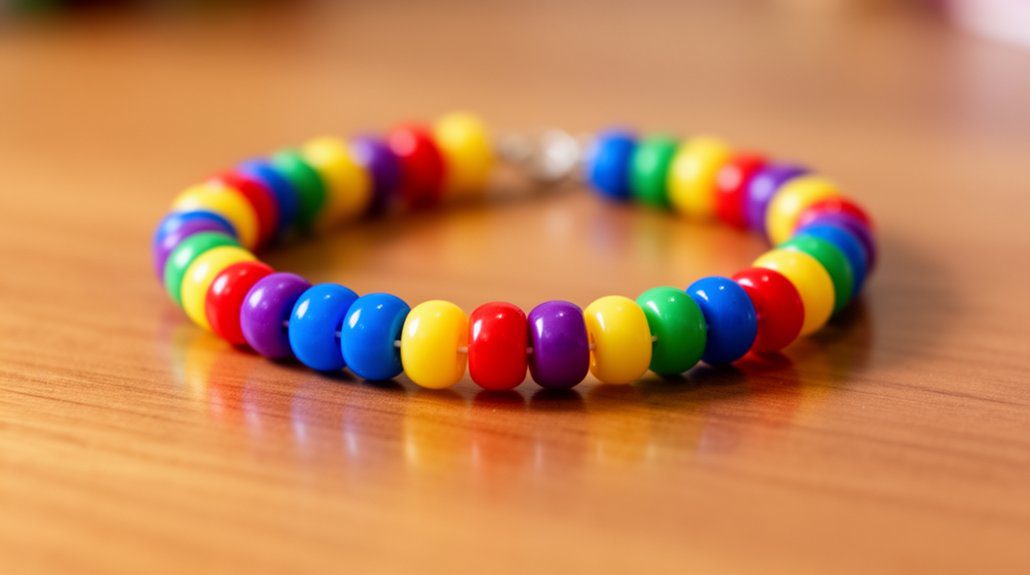
One bright string and a handful of beads can turn an ordinary afternoon into a tiny jewelry studio, and I love how quickly kids get hooked on the color-and-pattern choices.
First, I use simple bead selection techniques: mix wooden, plastic, or glass, then sort by size so threading feels easy and successful. Next, I suggest necklace design patterns like repeating stripes, rainbow fades, or one “statement” bead in the center. As you thread, you’ll build fine motor skills and hand-eye coordination, plus patience as your plan comes together. When you tie it off, wear it proudly or gift it—our little makers’ club shines.
Paper Mask Craft
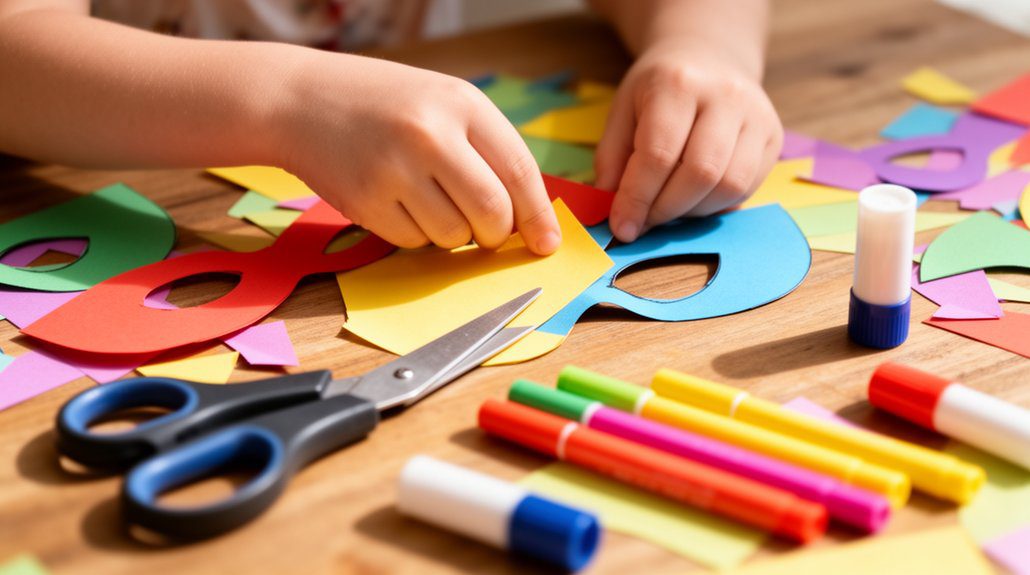
After those bright bead patterns and proud “I made it!” moments, I like to switch to a craft that’s just as creative but even more playful: paper masks. Grab a paper plate, kid-safe scissors, markers, and an elastic band—perfect for ages 3–10. I show you easy mask design techniques: cut eye holes, add bold shapes, then color and glue details. As you craft with friends, you’ll build fine motor skills and feel like part of a team. Then comes character storytelling for Halloween, parties, or plays.
- You’ll laugh together
- You’ll feel brave
- You’ll share ideas
- You’ll shine
Frequently Asked Questions
What Age Range Are These Crafts Best Suited For?
These crafts work best for ages 3–10, depending on complexity. I follow craft age guidelines: toddlers need close help, preschoolers do basics, and older kids handle details. You’ll find a suitable age and feel included.
How Can I Prevent Choking Hazards With Small Craft Supplies?
I prevent choking by choosing larger supplies, following safety guidelines, and keeping tiny pieces sealed away—funny enough, I just found a stray bead. I use parental supervision, count parts, and match ages.
What Are Affordable, Non-Toxic Alternatives to Common Craft Materials?
I use affordable, non-toxic swaps like flour-and-water paste or eco friendly glues, cardboard scraps, and paper tape. I color with natural dyes from beet, turmeric, or spinach. You’ll craft confidently, right alongside us.
How Do I Protect Surfaces and Clothing From Spills and Stains?
I protect your surfaces and clothing by laying surface coverings like kraft paper or a washable tablecloth, and I dress you in an old shirt or apron. I keep stain removers nearby and blot fast.
How Should Completed Crafts Be Stored to Avoid Damage?
Store finished crafts like treasures in a cozy nest: let them dry fully, then use labeled bins and acid-free sleeves for craft organization. Add display options—shadow boxes or corkboards—so our creations stay safe.