Easy Air Dry Clay Projects With Terra Cotta Style (Step-By-Step DIY Guide)
I love easy air dry clay projects, because you can pinch, roll, and press them into cute terra cotta-style dishes, ring holders, or tiny planters with almost no mess! Start with clay, a little water, and a small knife, then shape, smooth, and let it dry for 24–48 hours. Paint warm rusty tones, add simple leaf prints, and seal it matte for a cozy handmade look, plus a few clever finishing tricks are coming next.
Love cozy DIY projects? 💕
Get free printable guides, exclusive tutorials & surprise craft goodies straight to your inbox.
Disclosure: This post may contain Amazon affiliate links, at no extra cost to you. Content on DiyCraftNest is created with research support from AI tools and carefully reviewed, edited, and fact-checked by the lead author, Daniel Pat, to ensure accuracy and reliability. Learn more
Key Takeaways
- Air dry clay is beginner-friendly because it hardens at room temperature without a kiln or hot equipment.
- Terra cotta style works best with warm earthy colors like rusty orange-browns, creamy white, and matte weathered finishes.
- Start by kneading, rolling, and pinching clay into simple forms like pinch pots, ring dishes, tiny planters, or candle holders.
- Smooth details with a damp sponge, then let pieces dry flat for 24–48 hours and flip them occasionally to prevent warping.
- After drying, sand rough spots, paint thin acrylic layers, and seal with matte varnish or polyacrylic for a finished look.
Why Air Dry Clay Is the Easiest Way to Start Crafting
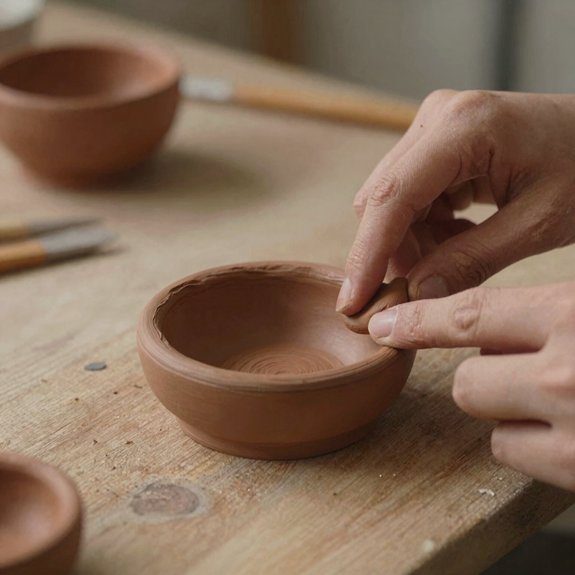
I love how air dry clay makes crafting feel so easy, because I don’t need a kiln or any elaborate tools to get started—just my hands and a little time.
You can shape it into simple projects like pinch pots or tiny dishes, and that beginner-friendly feel takes a lot of pressure off.
Best of all, it’s a fun, low-cost way to start making something real, and that’s a pretty sweet win!
No kiln or special tools needed
Because air dry clay hardens all by itself at room temperature, you can jump right into crafting without renting a kiln or messing with hot equipment—pretty nice, right? I love that I can shape it with my hands, pressing, pinching, and rolling it into simple terra cotta-style forms. No elaborate kit, just me, the clay, and a little imagination!
For a clean look, I use ready-colored clay for easy color matching, then add paint or wax after drying. A light sealer gives surface protection, so the finished piece stays looking good. It’s easy, affordable, and honestly, kind of fun!
Beginner-friendly material
Often, the easiest craft wins are the ones that don’t ask for elaborate gear, and air dry clay is a perfect example!
I knead it until it feels soft, then I roll, pinch, and press it with my hands or a simple tool.
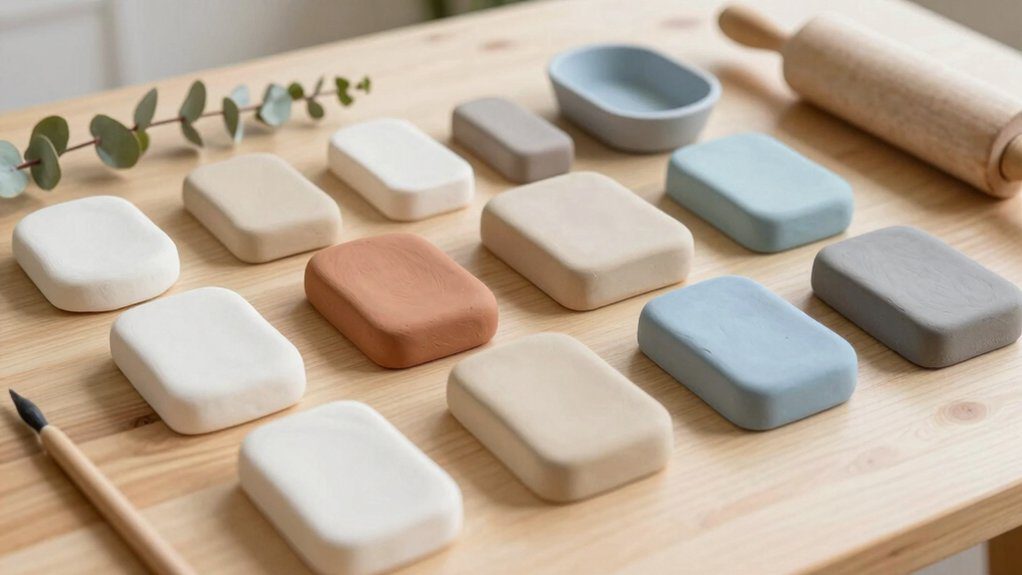
You can start in white or terra cotta, then paint later for that styled finish—easy color mixing makes it fun, not fussy.
I love that it dries on its own in 24–48 hours, so I just turn pieces now and then.
Texture techniques feel natural, the learning curve stays gentle, and it’s non-toxic, which makes beginners feel right at home.
What Makes Terra Cotta Style So Popular Right Now
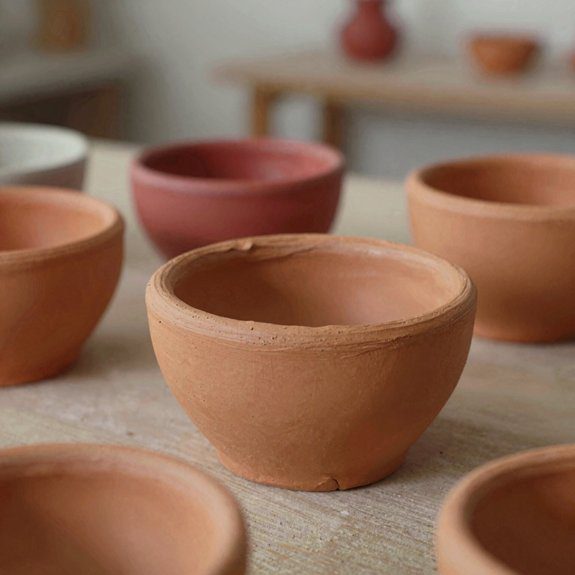
I’m seeing terra cotta style everywhere right now, and it makes sense, because those warm, earthy tones instantly make any clay project feel cozy and timeless.
If you want a look that feels simple but still polished, this minimalist vibe is such a win!
And honestly, it’s hard to beat how easy it’s to get that soft, stylish look with just a little clay and a few basic supplies.
Warm earthy tones
With terra cotta, I get why everyone’s swooning over these warm earthy tones right now—they just feel cozy, calm, and a little elegant without trying too hard!
Pair terra cotta with wood bowls or wicker, and it instantly feels like home, like you belong there too.
I like to use clay in rusty orange-browns and creamy white, then paint on weathered white accents for that handmade look.
Want more depth?
Add sand texture, press in simple patterns, and create subtle crackle effects with lightly distressed paint.
After drying, seal it, and boom—your little pottery piece looks warmly aged, not flat.
Minimalist aesthetic
Terra cotta’s minimalist look is a big part of why it’s so popular right now, and honestly, it’s easy to see why!
I love how Textured Minimalism lets a tiny pinch-pot or leaf ring holder feel special without extra fuss.
- Keep forms simple, then let the clay color shine.
- Add a Neutral Accent, like creamy white or light distressing, for a fresh, vintage touch.
- Seal it with polyacrylic so the matte finish lasts outdoors.
If you want a quick win, try thin stripe dashes or mossy texture.
You’ll get cozy style, low cost, and a handmade look that feels like home!
Essential Tools and Materials to Get Started
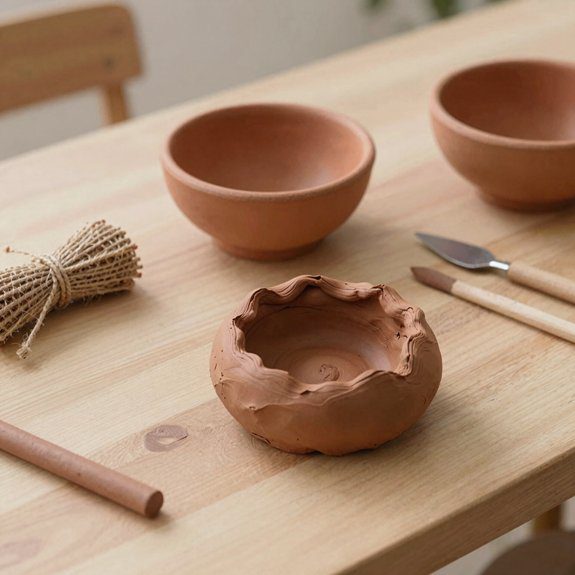
I like to start with a few basic shaping tools, like molds, a small knife, and a sponge with a little water, because they make air dry clay way easier to smooth and shape—no wizard skills required!
You can also grab simple household helpers, like lint-free cloths for cleanup and fine-grit sandpaper for a cleaner finish, which keeps the mess from turning into a full-on clay crime scene.
And here’s the fun part: once you’ve got those basics, a few everyday items can help you polish, decorate, and make your project look way more finished than you’d expect!
Basic shaping tools
A tiny toolbox can make clay feel a whole lot less intimidating! I start with an air-dry clay ball, a rolling pin, and a silicone mat, then I shape with confidence. If you’re new here, you’re in good company.
- Use pinch pot molds or a small bowl for round forms.
- Smooth edges with a damp sponge and a little water.
- Trim seams with a small knife, then sand lightly.
These basics keep projects neat, and they’re cheap, too.
My beginner cleanup tips? Wipe tools right away, stack scraps, and keep a tiny brush nearby.
Soon, your terra cotta pieces look crisp, warm, and ready to paint!
Simple household items
When you want easy air dry clay projects, the best place to start is with simple household items that you probably already have lying around—bonus points if they’re a little dusty and pretty much free!
I grab a small bowl of water, lint-free cloths, and a rolling pin, then I add terra-cotta clay, a craft sealer, and a tiny knife.
For texture, I love a silicone mold, because the pressed pattern benefits show up fast.
A sponge helps smooth edges, and fine sandpaper fixes little flaws.
Silicone mold cleanup is easy, which is a win.
Finish with matte spray, and you’re set!
Easy Clay Projects You Can Make as a Beginner
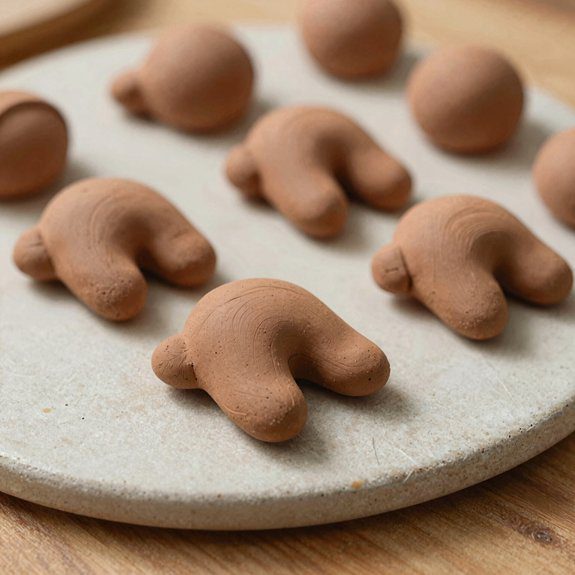
I love starting with ring dishes, because I can pinch a simple little bowl, smooth the walls, and let it dry into a cute spot for keys or jewelry—easy, cheap, and honestly hard to mess up!
From there, small planters are a fun next step, and I usually shape them from warmed clay, add a little texture or a stripe of color, then seal them so they look polished and stay protected.
If you want the most playful project, candle holders are a great surprise at the end, since a mold, a quick press, and a careful dry time can turn plain clay into something that looks like it came from a boutique, not my kitchen table.
Ring dishes
If you’re looking for a tiny project that feels beautiful without being fussy, ring dishes are such a fun place to start! I knead white air dry clay until soft, roll it to 1/4-inch, then cut a 4–5 inch circle with a bowl.
- Smooth the rim with a drop of water.
- Press it into a shallow bowl to dry 24 hours.
- Add leaf veins, then paint them gold for a colorful ring or minimalist shapes vibe.
A little sanding and matte varnish finish it off, and suddenly your dresser feels like a boutique!
Small planters
Tiny planters are one of my favorite easy clay projects, because they look charming on a shelf but don’t ask for much skill at all!
I roll Crayola terra cotta air dry clay into little pots, pinch or drape it over a mini terra cotta-style form, then press in texture before it dries.
Give them 24–48 hours, turning them now and then so they cure evenly.
For Weatherproofing tips, I brush on polyacrylic first, then liming wax if I want that antique glow.
For moss texture options, I tap on fine blended turf.
Keep water out, and your tiny crew will last!
Candle holders
After those cute little planters, candle holders are another beginner win, and honestly, they feel a little chic for how simple they are!
I pinch small cups from terra-cotta-style clay, smooth the rim with a spoon, then let them leather-hard before drying 24–48 hours.
- Add lace or leaf texture effects first
- Sand edges with 220–400 grit
- Paint rust or stripe, then varnish
For safety flame free vibes, I pop in a battery LED tea light.
A matte finish makes them look pottery-like, and the little glow feels like you joined the cozy club!
Step-by-Step Tutorial for a Simple Clay Project
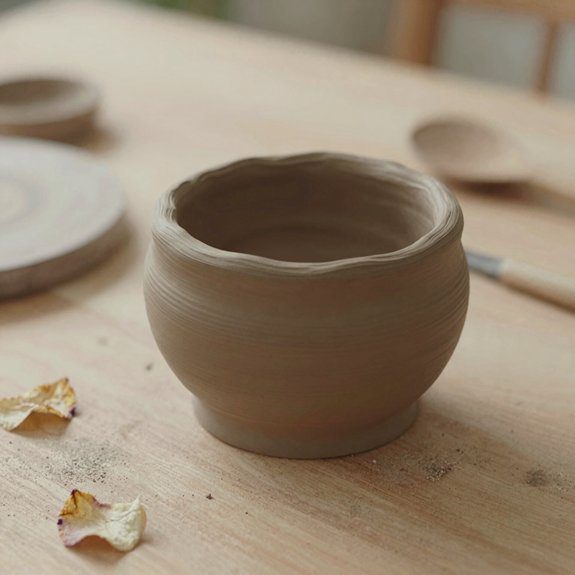
I’ll start by shaping the base, kneading the air-dry clay until it feels warm and easy to press, then I’ll push it firmly into the mold so those little lines show up nicely.
Next, I’ll smooth it out, let it dry on a terra cotta pot so it keeps that curved shape, and yes, patience matters here unless you want a wobbly surprise!
After that, I’ll paint and seal it with polyacrylic, add liming wax for that cozy aged look, and finish with a touch of green turf “moss” for a fun, outdoorsy result.
Shaping the base
Let’s shape this base from the ground up, because this is where your clay project starts looking like something real instead of a wobbly blob!
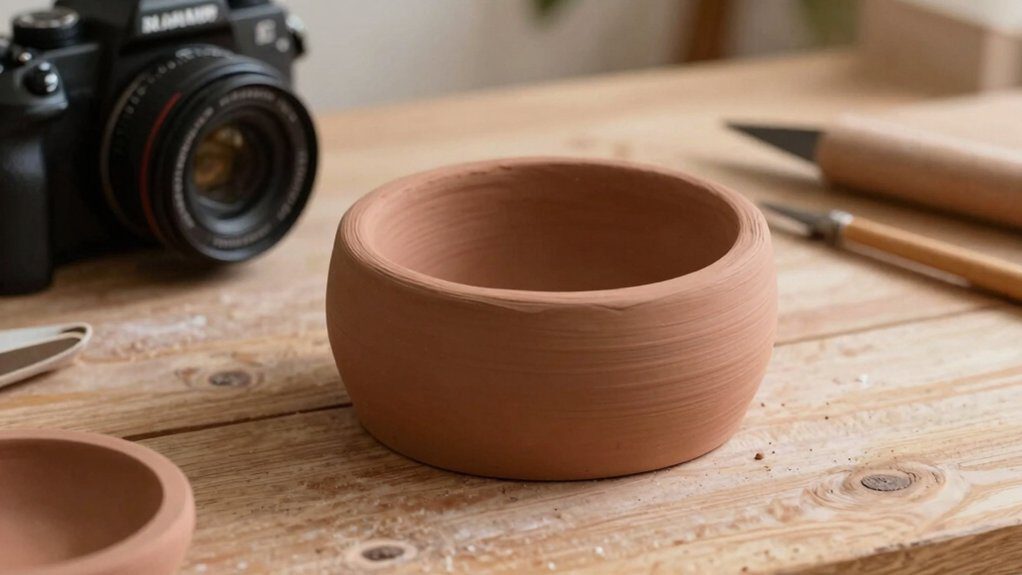
I knead the clay until it’s warm and crack-free, then roll a tennis-ball-sized sphere. With the pinch technique, I press my thumb into the center, keep the walls at even thickness, and gently work them upward.
- Tap the bottom on a table for a flat, steady base
- Pinch the shape into a soft bowl
- Use only a little water if needed
That’s it, friend—simple, sturdy, and ready for the next step!
Smoothing and drying
Once your clay shape looks just right, I smooth it with a damp sponge or even a lightly wet finger, using the tiniest bit of water so I don’t weaken those sweet little details—clay can get a bit dramatic if it’s too wet!
I keep the surface even, because moisture control helps with preventing cracks and weird little warps later.
Then I set it flat on a cool, dry surface for 24–48 hours, and I flip it now and then so the bottom doesn’t race ahead of the top.
If an edge needs extra strength, I gently burnish it when it’s leather-hard.
Painting and sealing
After your clay piece is fully dry, I like to give it a quick once-over with a soft brush or a dry cloth, then I sand away any rough spots so the paint can glide on nicely—tiny prep now saves you from lumpy, grumpy results later!
Next, I brush on thin acrylic layers, pausing 15 to 20 minutes between coats for a smooth terra cotta glow. I keep an eye on color matching, too, so the finish feels warm and real.
- Paint outdoors-bound pieces first
- Seal with polyacrylic
- Try finish testing before the final coat
When it cures, I add liming wax, wipe the excess, then finish with matte varnish for a cozy, weather-ready look.
How to Add Texture and Detail Without Experience
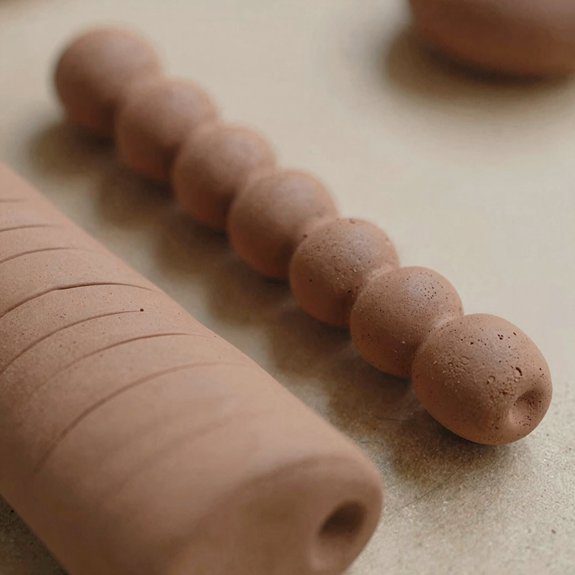
I love starting with pressed patterns because they’re quick, beginner-friendly, and a little magical, especially when I push warm clay into a leaf or butterfly mold and lift it out to reveal a crisp design.
Then I add carved lines with a simple tool or even a toothpick, and that’s where the piece starts looking intentional instead of “I made this in my kitchen,” which is a win in my book!
For the coolest finish, I layer in small bits of clay for bumps, borders, or tiny petals, and that extra depth makes the texture pop without needing advanced skills.
Pressed patterns
Pressed patterns are one of the easiest ways to make air dry clay look stylish without needing any special art skills—seriously, you can turn a plain slab into something that looks store-bought with a little pressure and a good texture tool! I roll my terra cotta clay to about 1/4 inch thick, warm it first, then press in lace, leaves, or a mold.
- Seasonal texture ideas keep it fun
- Unique surface finishes feel custom
- One firm press beats messy dragging
For leaf veins, I press once, peel slowly, and wait. On curved pots, I drape the piece while it dries. Afterward, I rub wax or paint into grooves for a wow finish!
Carved lines
Carved lines are where air dry clay starts to look a little stylish with almost no effort—yep, you can make it feel like carved stone without needing slick sculpting skills!
I knead my terra cotta clay until warm, press it firmly on the form, then grab a pen tip or craft knife and make shallow grooves while it’s leather-hard. That helps with Slump prevention too.
For line consistency, I start with one direction, then add a second for a simple cross-hatch.
If I slip, I fix carving mistakes by smoothing only the edges.
Tiny texture troubleshooting, big payoff, and wow—instant charm!
Layered elements
The fun of layered elements is that they make air dry clay look way more skilled than it really is—no elaborate sculpting background required! I warm my terra cotta clay, press in leaves or molds, then stack thin pieces with a tiny film of polyacrylic. Easy, right?
- Press joins firmly before drying
- Seal, then sand for worn edges
- Add moss with turf powder fast
For color blending, I brush liming wax in a cross-hatch, and the tones mingle like old patio pots. I love how weathered finishes hide beginner wobble.
Finally, I dry-brush grooves, and boom—instant depth!
Painting Techniques for a Terra Cotta Look
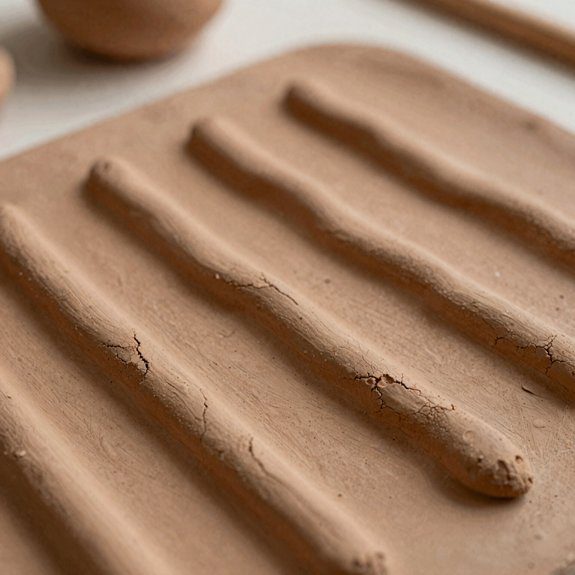
I start with terra cotta-colored clay and a soft, natural paint palette, because that warm rusty look feels cozy right away—no elaborate art degree required!
Next, I brush on a thin base coat, then add tiny dash stripes with a small flat brush, and if you want that old-world charm, a matte finish keeps it looking like a real sun-baked pot instead of a shiny candy shell.
For the best surprise, I let layers dry, scuff a few raised spots, and seal it all up, so your piece ends up looking beautifully worn and ready for display!
Natural color palettes
For a natural terra cotta look, I like starting with a warm clay base, like Crayola’s terra cotta air-dry clay, then adding just a touch of white or cream so the piece still feels like it’s been kissed by sun and age, not dipped into one flat color bucket!
I keep my palette earthy and friendly, so your project feels like it belongs on a sunny shelf.
- Soft rust wash
- Cream dry-brush highlights
- Dark brown in creases
These aged texture tips and organic stripe patterns make easy, low-cost pieces look handmade and lived-in.
A tiny sand rub adds charm!
Matte finishes
A matte finish is where your air-dry clay starts looking like a tiny piece of real terra cotta instead of a craft-store project, and honestly, that’s the magic trick! I brush on thin terracotta or rust acrylic coats, letting each one dry 15 to 20 minutes, so the color builds softly, not streaky.
Then I reach for sandpaper distressing with fine grit, just kissing the corners for that worn, lived-in charm. My matte varnish choice is always a spray, never glossy, because it seals the color and keeps the surface earthy.
For extra depth, I add a watered wash first, and wow—it really sings!
Creative Variations to Try Once You Improve
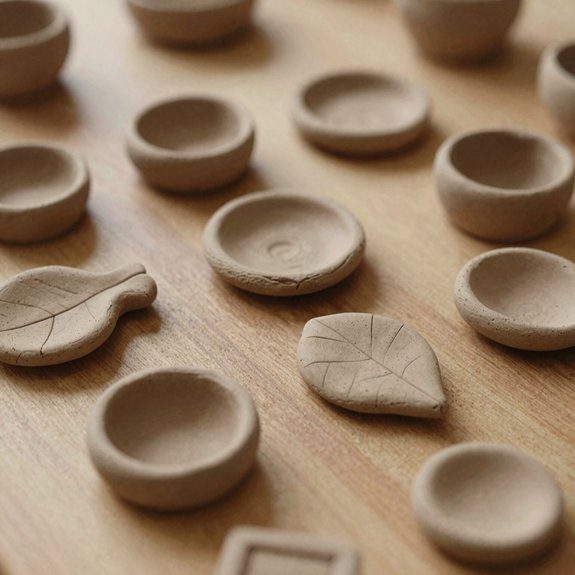
Now that you’ve got the basics, I love switching up terra cotta air dry clay with white clay details to make wall decor, handy home pieces, and even cute giftable crafts feel more special.
For a simple upgrade, I press in leaf or lace textures, seal them, then brush on liming wax in a cross-hatch pattern for that old, cozy look—fancy, but not fussy!
If you want the biggest wow, I save the mossy finish for last by adding fresh polyacrylic and fine turf, and trust me, that little garden vibe makes a plain project look store-bought in the best way.
Wall decor pieces
Once you’ve got the hang of air dry clay, wall decor is where I’d start having real fun—think little art pieces that look elegant without acting elegant! I use terra-cotta clay, press in thin textures, and shape it onto my base while it’s soft so the detail locks in.
- Seal with polyacrylic for dust resistance.
- Brush on liming wax in cross-hatches for age.
- Dry-brush gold to Preserve Detail.
Then I add optional turf for Texture Layering, and, when I’m feeling stylish, I switch to leaf imprints.
Trust me, your walls can join the cool-club too!
Functional home items
If you’re ready to level up from pretty clay art to pieces you can actually use, I’d start with functional home items like plant pots, trays, and little catchalls that still feel handmade and charming!
I use terra-cotta-toned clay, press in a butterfly mold, and shape it right on the pot so it hugs the curve.
For outdoor sealing tips, I glue details with polyacrylic, then seal the whole piece so moisture stays out.
Want vintage texture tricks? I brush liming wax in a cross-hatch, or add mossy turf for a garden-shed vibe.
For indoors, matte varnish keeps things clean and dresser-ready!
Giftable crafts
When I want a simple clay project to feel like a real gift, I lean into little upgrades that look way fancier than they are!
You can make your crew smile with beginner-friendly pieces that still feel special.
- A ring dish gets terracotta stripes: paint, dry, seal, and it suddenly feels vintage.
- For a pressed butterfly accent, mold, attach, and seal it, then wax for that worn-in charm.
- For a plant lover, brush on polyacrylic, add turf, and make tiny mossy magic.
I also love leaf-imprint catch-alls and goofy unicorn magnets.
They’re cheap, quick, and honestly, a little delightful!
How to Make Your Projects Look More Professional
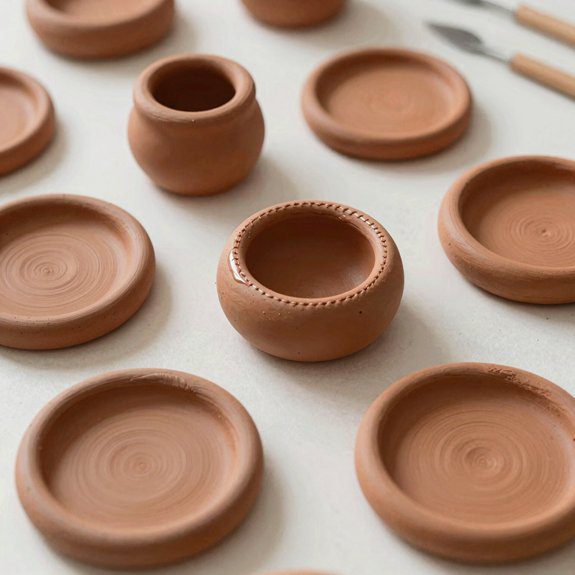
I like to start by cleaning up every edge with fine-grit sandpaper, because neat lines and balanced shapes can make even a tiny clay piece look polished—no one needs a lumpy surprise party on the rim!
Then I keep the color simple, using just one or two shades and controlled paint strokes, so the design feels calm, intentional, and way more pro.
For the final wow, I’ll smooth the joins, seal the piece, and add only a little texture or distressing, which gives it that handmade charm without looking messy.
Clean edges
Clean edges can make a tiny clay project look like it came from a boutique instead of your kitchen table, and the good news is, it’s not hard at all! I wait for Leather hard timing, then use rim smoothing tips that feel like magic.
- Trim with a sharp craft knife or small tool against a bowl or cookie cutter.
- Touch the line with a finger dipped in a tiny bit of water.
- After 24–48 hours, sand rough spots with 220–400 grit, then wipe dust away.
I seal mine in thin coats, and the edge stays crisp, clean, and crumb-free!
Balanced shapes
Those crisp edges are a great start, but balanced shapes are what really make an air dry clay project look polished and professional!
I check symmetry as I pinch, starting from a centered thumb hole and thinning outward evenly, so the rim stays level and the piece won’t rock.
For pinch-pot dishes, I keep the walls about 1/4 inch thick, then work lumpy spots while the clay’s leather-hard.
If I spot wobble, I use Asymmetry fixes by supporting the form on a bowl, letting gravity help, and turning it.
Even rim leveling? That’s my secret sauce—tiny, easy, and wow-worthy!
Minimal color use
When I want a clay project to look more polished, I keep the colors super simple—just one warm terra cotta or rust tone, plus a light neutral like white or creamy clay or paint, and that’s it! It feels like our little handmade club, not a messy paint party.
- Paint in focused bands or dashes.
- Let the clay show through for Negative Space Painting.
- Seal, then add Vintage Texture Sealing with a matte topcoat.
I wait 15–20 minutes between paint layers, then 24–48 hours for curing. That slow dry keeps the finish clean, and the vintage vibe looks totally intentional!