13 Air Dry Clay Projects That Are Easy, Aesthetic, and Fun to Make
I love easy air-dry clay projects like ring dishes, candle holders, plant pots, name tags, wall hangings, picture frames, key holders, spoon rests, and abstract sculptures. I start with basic tools, roll, press, or shape the clay, then let it dry about 48 hours before painting and sealing. Each one looks cute, costs little, and actually gets used. My favorite surprise? The simplest slab can turn into the prettiest decor, and the next ideas get even better!
Love cozy DIY projects? 💕
Get free printable guides, exclusive tutorials & surprise craft goodies straight to your inbox.
Disclosure: This post may contain Amazon affiliate links, at no extra cost to you. Content on DiyCraftNest is created with research support from AI tools and carefully reviewed, edited, and fact-checked by the lead author, Daniel Pat, to ensure accuracy and reliability. Learn more
Key Takeaways
- Air dry clay projects are beginner-friendly, low-cost, and usually require only simple tools and room-temperature drying.
- Easy functional ideas include ring dishes, trinket trays, spoon rests, incense holders, and textured coasters.
- Aesthetic decor projects include candle holders, wall hangings, plant pots, and modern key holders.
- Personalize pieces with stamps, leaves, lace, carved lettering, or soft paint colors for a polished look.
- Most projects dry in about 48 hours and finish well with sanding, acrylic paint, and a clear sealer.
Minimalist Clay Ring Dish
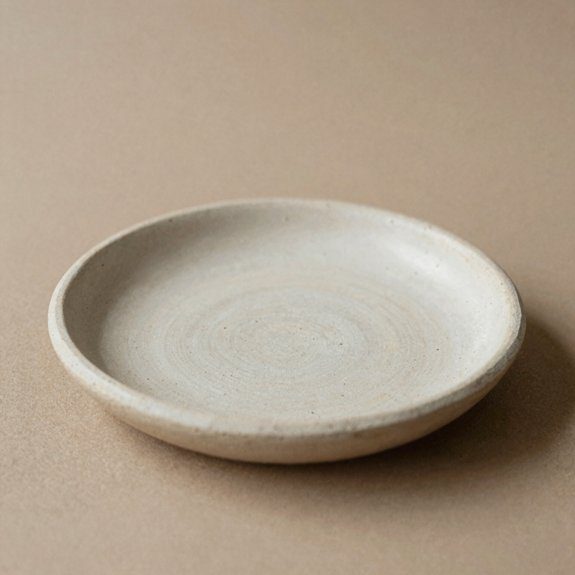
I love how a minimalist clay ring dish can start as a simple round shape, or even a softly uneven one if you want a more organic look—it’s tiny, but it feels stylish!
With just air-dry clay, a cup or bottle for shaping, and a fingertip for that little center nest, I can make a sweet jewelry spot that keeps rings from rolling away like they’ve got places to be.
After it dries, I’ll finish it with a clean neutral paint color, and maybe a light sealer, so your dresser looks neat, calm, and a little more put-together.
Simple round or organic shape
If you want a ring dish that looks calm, clean, and a little stylish without trying too hard, a simple round or soft organic shape is such a good place to start! I roll clay into a disc, smooth the edges, then press a tiny dip in the middle with my finger or a bowl rim. It feels like beginner fun with abstract sculpture energy, and it fits cozy decor fast.
| Step | What I do | Why it matters |
|---|---|---|
| 1 | Shape | Keeps it easy |
| 2 | Texture | Adds personality |
| 3 | Finish | Makes it last |
A leaf print gives personalized textures—so cute!
Perfect for jewelry storage
A simple round shape works beautifully for jewelry storage, and honestly, it makes your dresser look instantly calmer and more put together!
I roll air-dry clay into a thin slab, press it into a small bowl, then smooth the edges with a damp finger.
For ring spots, I press a bead cap or ring tip into the center, and boom, my little catch-all is ready.
It’s cheap, beginner-friendly, and dries flat on a craft mat in about 48 hours.
I keep mine covered if I pause, because nobody likes crumbly clay.
After drying, I paint it, seal it, and I always do texture testing and check kiln firing safety first.
Handmade Clay Candle Holders
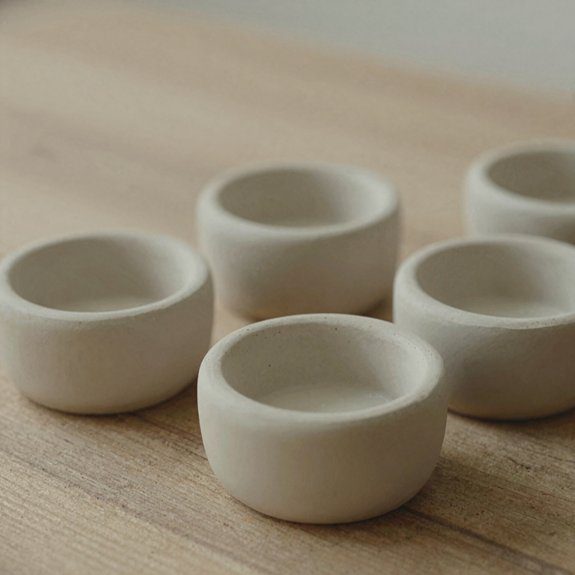
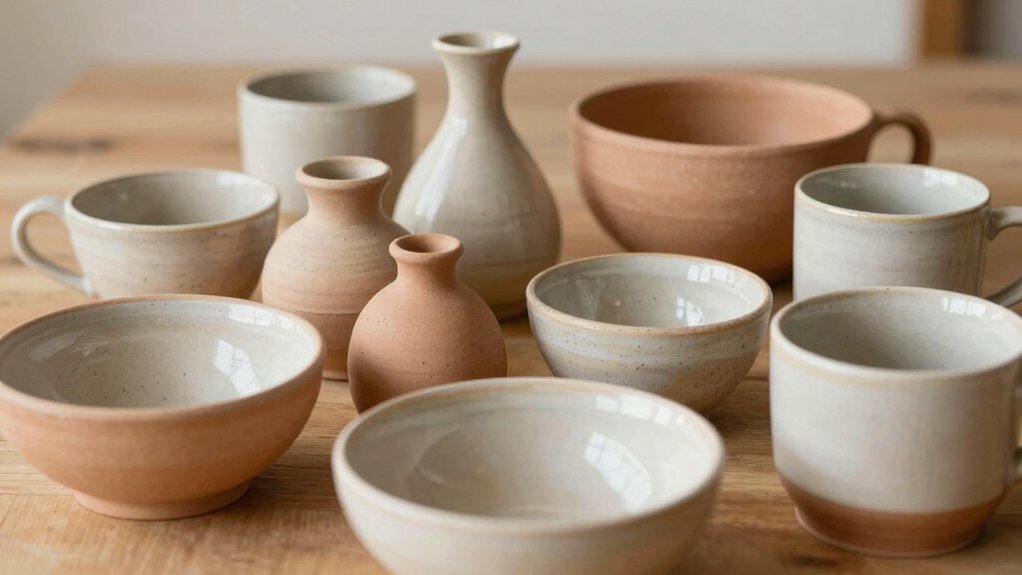
I love making handmade clay candle holders in soft neutral tones, because they bring a calm, cozy feel to any room without shouting for attention.
You can shape one with a simple bowl or cylinder form, press in a candle cavity, and add little carved lines or leaf textures for a charming look that’s super beginner-friendly.
After it dries, a quick sand and a coat of sealant give it a smooth finish, so you end up with a pretty little home accent that feels handmade and polished—nice, right!
Soft neutral tones
Soft neutral tones are my favorite way to make handmade clay candle holders feel calm, cozy, and a little bit elegant without trying too hard!
I pick a soft color palette, then I shape simple bowls or cups and focus on material smoothing while the clay’s still soft.
- Mix beige or greige paint for a warm base.
- Keep the opening sized for a tealight, so the flame stays safe.
- Finish with clear varnish for everyday messes.
These little holders dry in about 48 hours, cost very little, and honestly, they make you feel like “yes, I made this!”
Cozy home decor piece
If you want a cozy home decor piece that feels charming, handmade, and way easier than it looks, these clay candle holders are such a fun project!
I roll the clay into a little base and cup, smooth the edges with a damp sponge, and let it dry for about 48 hours.
Then I paint it with acrylics, add pressed patterns or tiny hand-painted details, and suddenly it feels like something from a cute boutique.
I love pairing them with textured coasters, minimalist clay coasters, or modern kitchen decor.
Seal it after drying, keep the candle snug, and you’ve got a sturdy little glow-up!
Air Dry Clay Plant Pots
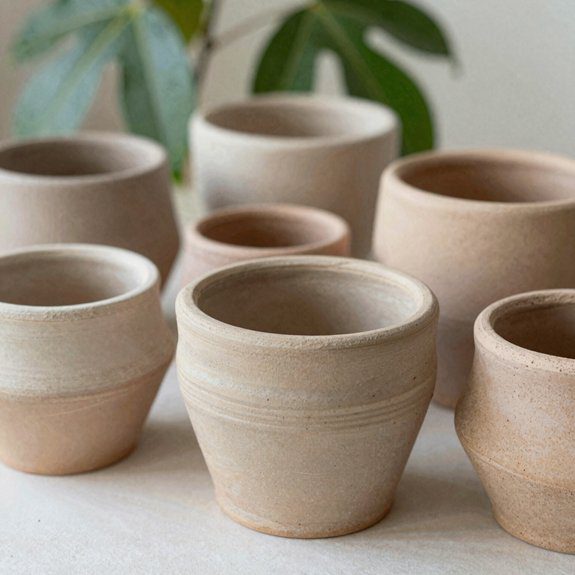
I love making air dry clay plant pots for tiny succulents, because they’re beginner-friendly, low-cost, and don’t need an oven—just let them dry and they’re good to go in about 48 hours!
I usually shape the clay around a cup or bowl, smooth the sides with a little water and a sponge, and then add small drainage holes once it firms up a bit.
Want a cool finish? I like to leave the texture modern and a little artsy, since a clean, hand-made surface can make even the smallest desk planter look surprisingly stylish.
Small succulent planters
A tiny succulent planter is one of my favorite air dry clay projects, because it looks cute fast and doesn’t ask for a ton of skill—just roll your clay into a small pot shape, keep the walls thin-to-medium, and smooth the rim with a damp finger or sponge so it dries cleaner and cracks less.
For our little clay club, I like to:
- Poke a few drainage holes for drainage planning.
- Let it dry 48 hours, then paint.
- Seal it and follow succulent care tips.
I’ve found a leaf press before drying makes it feel extra sweet!
Modern textured finish
Textured plant pots are such a fun step up from those tiny succulent planters, and they still stay beginner-friendly! I roll clay into a slab, wrap it around a cup, and smooth the seam with a damp finger. Then I use clay surface techniques like lace, bubble wrap, rubber stamps, or leaves for pressed texture patterns.
| Step | Tip |
|---|---|
| Make slab | Keep it even |
| Wrap mould | Use a cup |
| Press texture | Try leaves |
| Dry | Wait 48 hours |
| Finish | Paint, seal |
I keep the wall about a quarter-inch thick, so it dries nicely. Want a cute rim? Add a thin ring and match the pattern.
Personalized Clay Name Tags
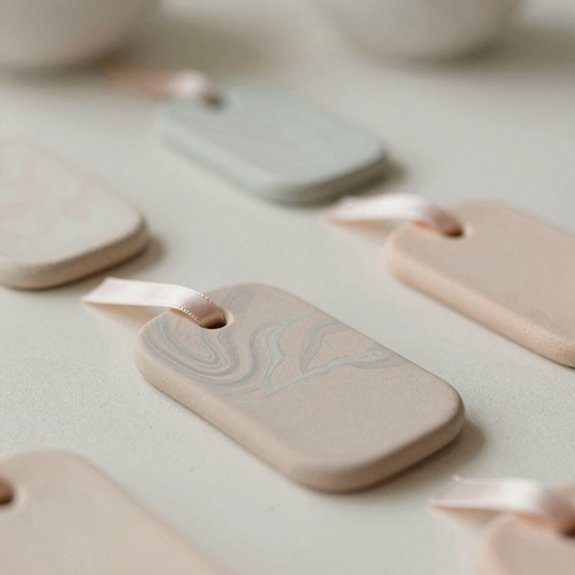
I love making personalized clay name tags because you can carve custom lettering that feels playful, neat, and totally one-of-a-kind!
With just air-dry clay, a craft knife, and a toothpick or stamp, I can shape a simple tag for a gift, a backpack, or even a tidy label for my desk—pretty handy, right?
And if I add a little texture or a ribbon loop near the top, it goes from “nice” to “wow, where’d you get that?” in no time.
Custom lettering
Pressing custom lettering into air-dry clay is one of those tiny DIY wins that feels way fancier than it is! I love making little name tags that help you feel right at home, with Playful text styles and stamp letter techniques that look charming, not perfect.
- Roll clay flat, then cut your shape.
- Press in letters with stamps, or score them with a toothpick.
- Smooth edges with a barely damp sponge, then let it dry fully.
Paint it later for crisp names, and seal it if you want extra strength. The surprise? Clean lettering makes even simple clay feel special!
Great for gifts or organization
A few personalized clay name tags can turn into the cutest little helpers, whether you’re labeling a drawer, dressing up a gift, or making a bag tag that doesn’t get lost in the shuffle! I roll air-dry clay flat, press in letters, smooth the edges, then add a keyring hole or string loop before drying.
| Use | Feel |
|---|---|
| clay storage labels | calm |
| gift tags | thoughtful |
| fridge friendly organization | cheerful |
| family drawers | belonging |
After 48 hours, I paint them, seal them, and suddenly my home feels more “we’ve got this” than “where did I put that?” Tiny win, big joy!
Decorative Clay Wall Hangings
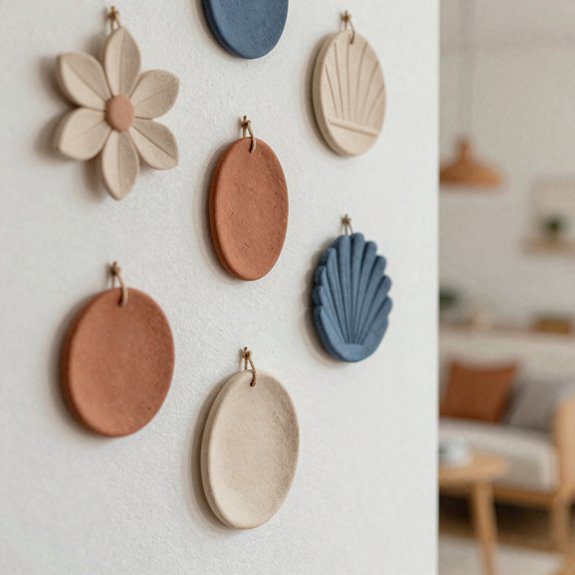
I love making decorative clay wall hangings with abstract shapes, because they add a bold, artsy touch without feeling fussy or hard to make.
I roll out air-dry clay, shape it into a simple plaque, and press in texture, then I let the piece dry and paint it in colors that fit my space.
For the coolest finish, I sometimes add a twine hanger or a tiny pressed flower detail, and honestly, that little surprise can make the whole wall look extra special!
Abstract shapes
Abstract wall hangings are such a fun way to let air-dry clay get a little weird—in the best possible way!
I roll slabs and coils, then build wavy lines, tiles, or freeform blobs on cardboard or foil.
We’re in this together, so keep it simple:
- Press in clay texture tools like fork tines or bottle caps.
- Smooth edges with a damp sponge.
- Dry flat for 48 hours, covered when you step away.
After that, I love color block painting with acrylics.
Wait until it’s fully hard, then add twine or wire.
Cheap, easy, and surprisingly cool!
Adds artistic touch
Decorative clay wall hangings are one of my favorite easy ways to add a little art to a room, and the best part is that air-dry clay hardens at room temperature in about 48 hours, so you don’t need an oven at all!
I roll mine on a silicone mat, press in leaves or fabric textures, then hang it with wire or a string loop.
For a quick polish, I use color theory basics to pick calm or bold paint shades, and I borrow boho styling tips for botanical doodles.
Let it dry, then seal it—so easy!
Clay Incense Holders
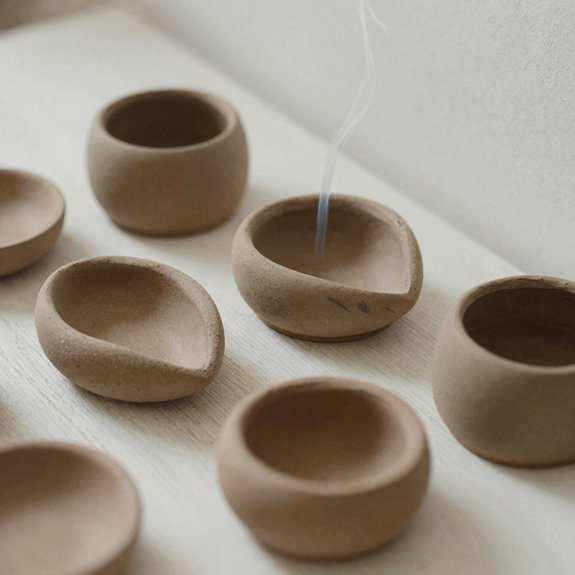
I love making clay incense holders because they’re both pretty and useful, and you can shape one with just air-dry clay in a way that feels totally beginner-friendly.
I usually start with a small tray or stand, then add a groove for the incense stick so it sits steady, and hey, that tiny detail makes a big difference!
Once it dries, I paint and seal it for a longer-lasting finish, so you end up with a simple piece that looks handmade in the best way.
Functional and aesthetic
Need a simple project that looks cute and actually does something useful? I make clay incense holders that fit right into my space, and yours can too! With tool free techniques, I roll a base, press a groove, and smooth it with damp fingers or a sponge.
- Shape it for your stick.
- Let drying time management do its thing for about 48 hours.
- Then experiment with glazing or paint, keeping safety and handling in mind.
I like thicker walls for strength, and a sealed finish helps if you want extra protection. Tiny project, big vibe—join the cozy club!
Easy beginner project
Let’s make an air-dry clay incense holder that’s cute, useful, and super beginner-friendly!
I roll a small base by hand, smooth it with a little water, and press in a channel for the stick.
That’s it—no oven, no kiln, no stress.
If you want extra charm, I steal ideas from a textured coaster design or add pressed leaf patterns for a tiny nature vibe.
I keep a sponge nearby so the clay doesn’t get clingy, ha.
After about 48 hours, I paint it, seal it, and let it dry fully before using, so the smoke can breathe safely.
Textured Clay Coasters
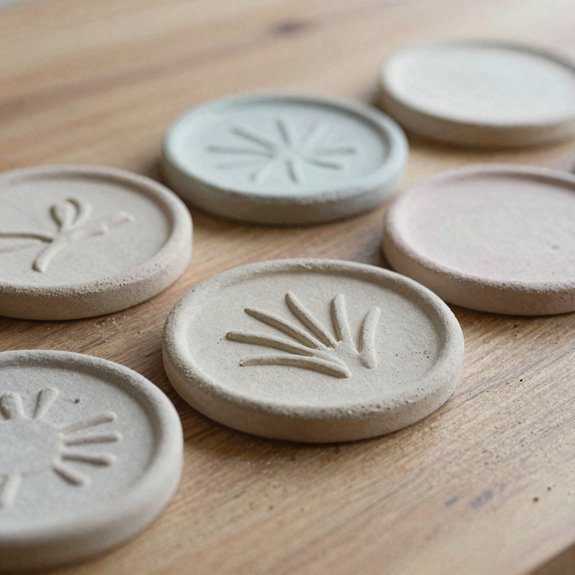
I love making textured clay coasters because I can press in lace, leaves, or a rubber stamp, then trim the clay into a neat shape before it dries.
They’re beginner-friendly, look stylish fast, and once they harden, they’re actually useful for everyday drinks, which feels pretty great!
After a little paint and sealant, you’ve got a small project that’s both pretty and practical, with a tiny wow factor on your table.
Pressed patterns
Want a coaster that looks like it came from a upscale shop, but only took a few simple tools? I roll clay to 3–6 mm, press lace, leaf veins, or a rubber stamp, then trim a circle or square. Easy, right?
- Press firmly, briefly, for crisp pattern.
- Smooth edges with damp fingers.
- Dry 48 hours in a dust-free spot.
After that, I paint with color blending techniques, and the texture really pops!
For sealing for longevity, I brush on clear varnish, because clay isn’t water-proof.
The result feels handmade, cozy, and totally “mine”—like I belong in the cool crafty club!
Practical daily use
Those pressed-pattern clay coasters aren’t just cute little shelf stars, they’re actually handy enough for daily use, too! I make mine with rolled air-dry clay, a lace scrap or leaf, and a cookie cutter, then I smooth the edges with a damp sponge. Easy, right?
After about 48 hours of flat drying, I paint them with acrylics, seal them, and suddenly they’re ready for hot cocoa, iced tea, and all the little spills life throws around.
For coaster care, I keep them dry and wipe them gently, so daily maintenance stays simple. Best part? Each one looks handmade, cozy, and totally “me”!
Clay Jewelry Pieces
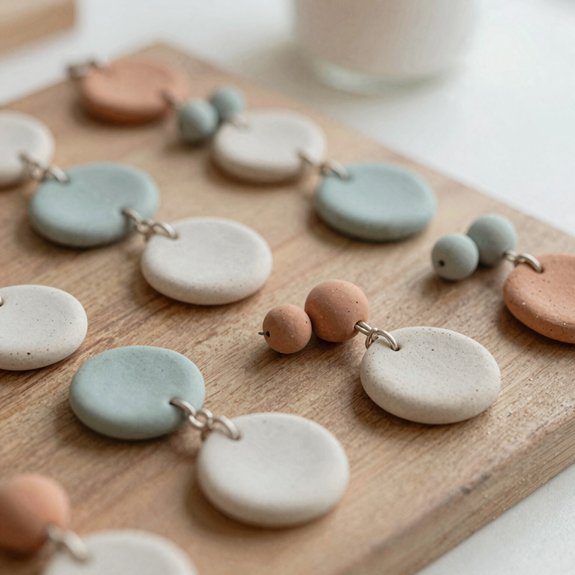
I love making clay jewelry pieces because you can create lightweight earrings and pendants that look stylish without feeling heavy, and that’s a win right away!
I start with simple shapes, add a hole or earring setup while the clay is still workable, then let everything dry so it’s ready for paint, string, or hooks.
The best part? A little clay can turn into something that looks store-bought, even if your first charm is a tiny potato with attitude!
Earrings and pendants
Clay jewelry is one of my favorite easy wins, because you can roll out a tiny slab, shape it into a charm or drop earring, and punch a little hole at the top before it dries—super simple, super satisfying! I keep my clay jewelry storage neat, so nothing gets lost in the shuffle.
Try these:
- Stamp it with simple stamping patterns for instant texture.
- Press it with lace or a toothpick, then let it dry.
- Paint and seal after 48 hours, then add jump rings.
I also tuck on tiny beads with clay slip, and voilà—your pendant looks custom, not chaotic!
Lightweight and stylish
When you want jewelry that feels light, looks polished, and doesn’t need a kiln drama session, air-dry clay is such a fun win!
I roll it thin for pendants or shape tiny beads, then let everything dry for about 48 hours. It’s beginner-friendly, cheap, and honestly kind of addictive.
I smooth the edges with a damp sponge, because nobody wants pokey earrings.
Then I add colorful acrylic paints, or stitch delicate embroidery details into a heart or flower for that handmade-but-stylish look.
For extra charm, I string painted beads into bracelets.
Just keep these pieces dry and wear them like your special little art club badge!
Small Clay Trinket Trays
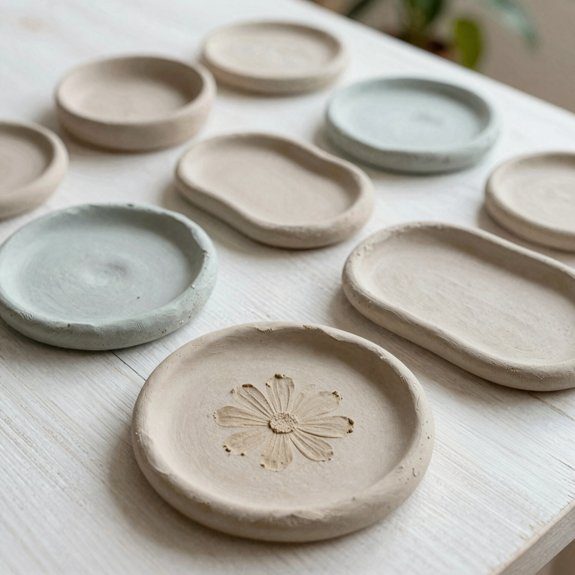
I love making small clay trinket trays because they’re such handy catch-all spots for jewelry, keys, and all those tiny bits that like to wander off!
You can roll the clay, shape it with your hands, and press in a leaf or stamp for a clean modern look that still feels special.
After it dries, I paint mine in soft colors for a neat little tray that looks pricey, but honestly, it’s super easy and beginner-friendly!
Catch-all trays
A few tiny clay trays can do a big job on a messy desk or nightstand! I love using air dry clay for catch-all trays because beginner techniques make them easy, and the result fits a minimalist style.
- Roll clay, then drape it over an upturned cup for a quick mold.
- Add pressed textures or simple patterns, and smooth edges with a little water.
- Let it dry about 48 hours, then use simple finishing with paint and varnish if you want extra protection.
These trays hold rings, keys, and coins, and they’re cheap, cute gifts too!
Clean modern look
Those little catch-all trays are handy, but if you want something that feels a bit sleek, I’d go for small modern clay trinket trays next—so clean and stylish, they look like they came from a upscale boutique instead of your kitchen table!
I roll air-dry clay into an even slab, cut a simple shape with a bowl or cookie cutter, and smooth the edges with a damp sponge.
For a chic touch, I keep a minimal rim and add texture contrast with a tiny stamped spot.
After 48 hours of drying, I paint one or two colors, seal it, and voilà—tiny luxury!
Clay Picture Frames
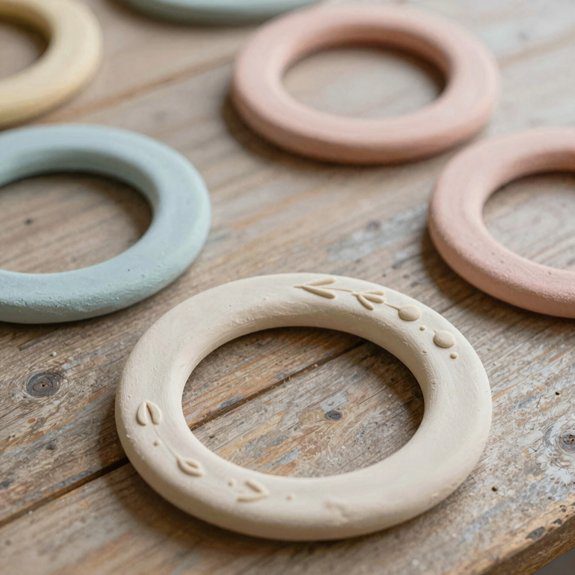
I love making clay picture frames because I can shape a simple border, press in a few fun details, and turn a plain photo into something that feels totally one-of-a-kind!
You’ll only need air-dry clay, a craft knife, and a little water, then I smooth the edges, add a front mat, and let the design do the talking.
Best of all, these handmade frames make easy decor with a personal touch, and yep, they look way fancier than the effort it takes!
Handmade borders
If you want to turn soft air-dry clay into something that looks store-bought but feels totally handmade, clay picture frames are a fun place to start! I roll out air dry clay, cut a window, and shape a raised edge for wall framing that feels cozy and personal.
- Smooth it with a damp sponge, then add ridges or tiny dots.
- Use cookie cutters or stamps for a neat border.
- Poke hanging holes, dry 48 hours, then paint and seal.
It’s cheap, beginner-friendly, and honestly, the border is where the magic happens—like a little hug for your favorite photo!
Unique decor item
What could be more charming than a clay picture frame that turns a simple photo into a tiny piece of art? I make mine by rolling air-dry clay evenly, cutting a rectangle, and shaping a photo window. A damp sponge keeps the edges smooth, so cracking stays away—yay!
Then I press texture into the outer frame with stamps or simple patterns, giving it that unique decor item feel.
After about 48 hours of drying, I paint it with acrylics, add a varnish if I want extra protection, and form a little stand or hanger loop while it’s still soft.
Cute, easy, done!
Air Dry Clay Key Holders
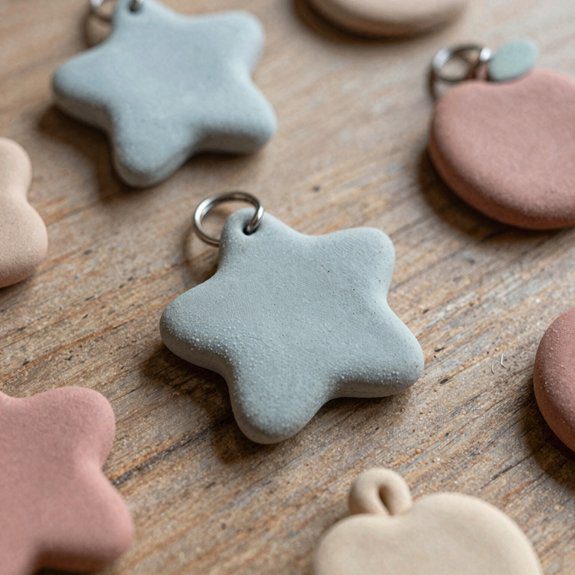
I love making air dry clay key holders because they turn a plain wall into a handy little landing spot for keys—so much better than the “where did I put them?” game!
I usually press the clay into a simple plaque, smooth it out, and add a couple of hooks or a neat loop so it works hard and still looks cute.
After it dries, I paint it up and hang it near the door, and just like that, you’ve got a fun wall-mounted organizer that actually helps keep the chaos under control.
Wall-mounted design
For a wall-mounted air-dry clay key holder, I like to start with a simple slab, because this project looks polished but stays super beginner-friendly!
I roll, smooth, and shape it, then add a few tiny hook points and top holes before drying.
- Use a cookie cutter or hand-shape the silhouette.
- Smooth edges with a damp sponge for smooth finishing.
- Let it dry 24–48 hours, then paint and seal.
These drying techniques keep it sturdy, and a little wall plate can help later.
I love how this makes your space feel welcoming, like you belong there!
Functional organization
On the wall by my door, a clay key holder can do more than just look cute—it can keep your keys from playing hide-and-seek every morning!
I roll air-dry clay into a flat plaque, smooth the edges with a damp sponge, and press in pressed patterns for charm. It’s beginner-friendly, dries in about 48 hours, and paints up fast with acrylics.
Then I add a shallow tray and little hooks, so keys and mail have a home. It feels like making textured coasters, but for real life!
Seal it if you want extra durability, and suddenly your entryway feels organized and welcoming.
Clay Spoon Rests
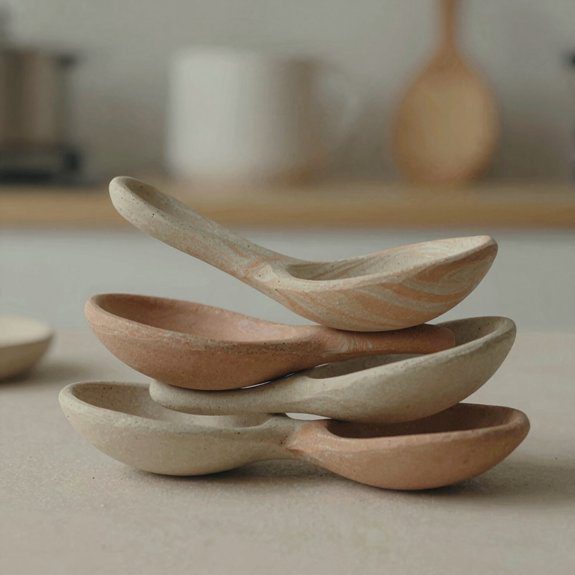
I love making clay spoon rests because they’re such a kitchen-friendly little project, and they don’t need impressive tools or a big budget—just air-dry clay, a spoon, and a bit of patience.
I shape a small dish, smooth the base so it sits flat, and add a tiny raised lip, which helps keep drips where they belong instead of on the counter, oops!
Once it’s dry, I like to paint it and seal it for easier cleaning, so you get a cute, practical piece that works right by the stove.
Kitchen-friendly project
If you want a kitchen-friendly air-dry clay project that’s actually useful, clay spoon rests are a fun little win! I love them for cozy kitchen crafts because they feel handmade, personal, and totally beginner friendly molds can help if you want a neat shape.
- Roll clay into a small base and curve a gentle U.
- Smooth seams with a little water, and keep a sponge close.
- Let it dry about 48 hours, then paint it up!
I’ve found they’re cheap, easy, and perfect for countertop moments. Just let it cure fully, and you’ll have a cute helper!
Easy to clean design
Because kitchen messes happen fast, I like keeping clay spoon rests as simple and easy to wipe down as possible!
I roll a small slab, shape it into a gentle U, then smooth the edges with a damp sponge. It’s quick, beginner-friendly, and honestly, kind of relaxing.
I keep the top flat, with no deep grooves, so crumbs and sauce don’t hide out like tiny kitchen rebels.
After drying about 48 hours, I add waterproof sealing and a food safe finish.
A slightly thicker base helps it stay put when wet spoons land—mess handled!
Abstract Clay Sculptures
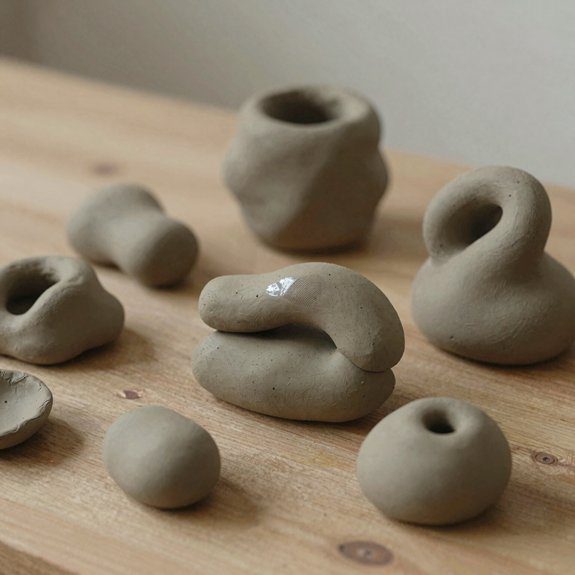
I love making abstract clay sculptures because they let me get a little wild with coils, slabs, and pinch forms, and you don’t need perfect shapes to make something cool!
You can smooth, stamp, and texture the clay while it’s still moist, then let it harden into a bold little piece that can look like modern art for your shelf.
If you want the real wow factor, I’d even add a foil armature inside and finish with a swirled paint effect, because that’s where a simple lump of clay starts acting like statement decor.
Freeform creativity
Abstract clay sculptures are where I like to let air-dry clay get a little weird in the best way! You don’t need skilled skills, just curiosity and a table you don’t mind dusting later.
- Roll, pinch, and smoosh clay into lumps or coils.
- Add water with damp fingers to smooth sticky edges.
- Press in leaves, fabric, or stamps, then let it dry for 48 hours.
After that, I love mixed media touches and color experimentation with acrylic paint. The result feels playful, personal, and totally yours, like your own tiny art club!
Statement decor pieces
A single sculptural piece can turn a shelf, side table, or console into instant “look at me” decor, and air-dry clay makes that feel way less intimidating than it sounds! I like starting with a blob, then rolling, pinching, and shaping while it’s still soft. Clay safety tips: I work on a silicone mat, keep a sponge nearby, and cover extra clay with plastic or a damp paper towel so it doesn’t crust up.
| Step | What I do | Why it helps |
|---|---|---|
| 1 | Press textures | Adds interest |
| 2 | Wait 48 hours | Drying time tricks |
| 3 | Paint and seal | Keeps it fresh |
Cute, right?