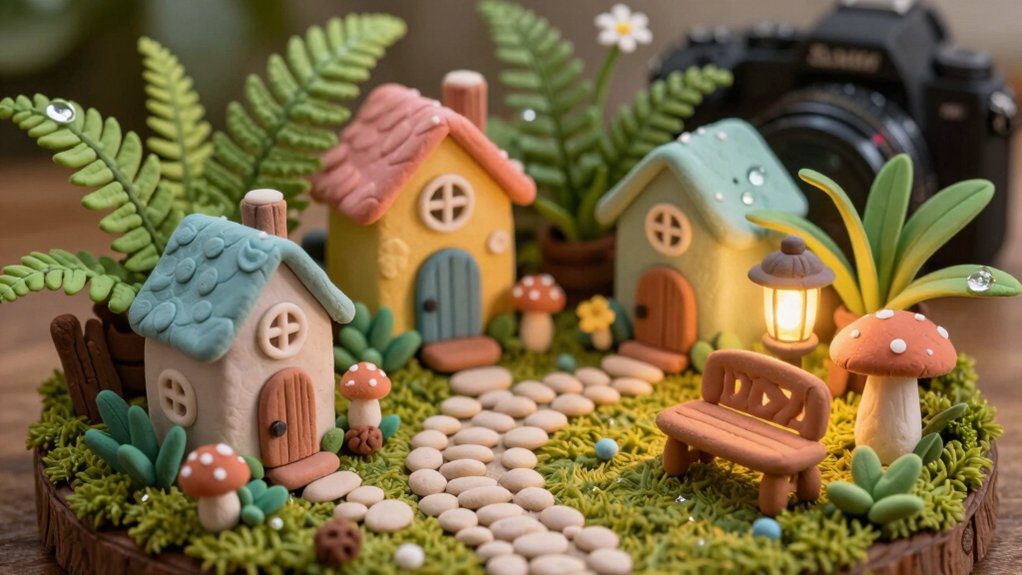
How to Create a Mini Fairy Garden Using Air Dry Clay DIY Projects
I start my mini fairy garden with a shallow container, air dry clay, and a sketch, then I shape tiny houses, mushroom stools, and pebble paths with my fingers and a simple tool. It’s cheap, beginner-friendly, and honestly pretty forgiving! After the pieces dry, I paint them in soft pastels, add moss, sand, and twigs, and seal everything with varnish for a neat finish. Keep the tallest bits in back, because the little surprises get even better next.
Love cozy DIY projects? 💕
Get free printable guides, exclusive tutorials & surprise craft goodies straight to your inbox.
Disclosure: This post may contain Amazon affiliate links, at no extra cost to you. Content on DiyCraftNest is created with research support from AI tools and carefully reviewed, edited, and fact-checked by the lead author, Daniel Pat, to ensure accuracy and reliability. Learn more
Key Takeaways
- Plan the layout first, choosing a theme, container, and focal pieces like a fairy house and path.
- Shape air dry clay into tiny houses, mushrooms, benches, and stepping stones using simple tools and finger details.
- Let clay pieces dry fully, then score seams, glue parts together, and add pebbles, sand, moss, and twigs.
- Paint with thin acrylic layers in soft pastel colors, using dry brushing for texture and highlights.
- Finish with matte varnish, and choose sturdier, weather-ready construction if the fairy garden will stay outdoors.
Why Air Dry Clay Is Perfect for Fairy Gardens
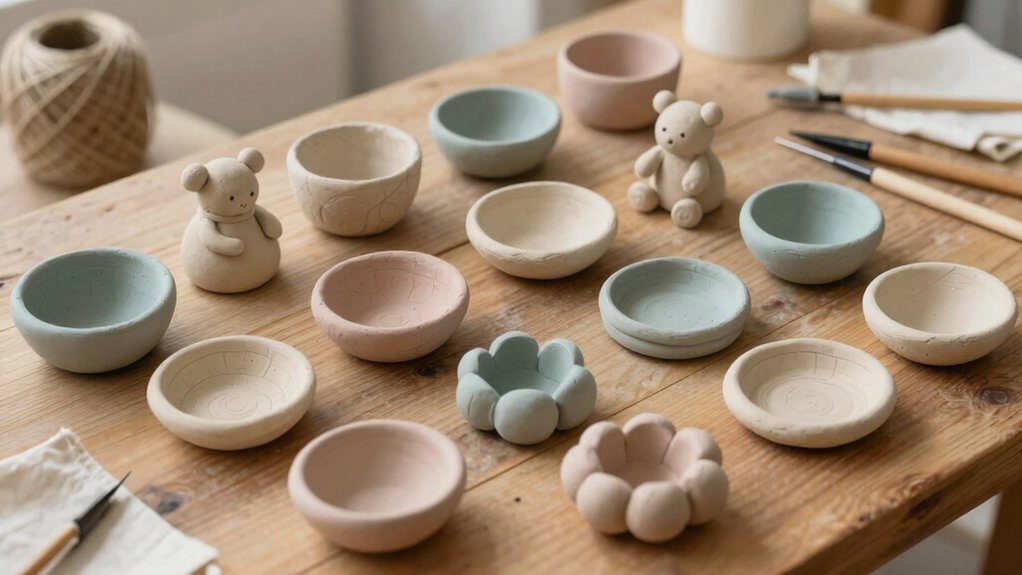
I love using air dry clay for fairy gardens because I don’t need a kiln or oven at all—just shape it, let it sit, and you’re good to go!
It’s super easy to mold into tiny doors, windows, and little roof lines, so even my first try looks charming instead of lopsided.
And honestly, the best part is how it lets me add sweet little details, like pebble paths or leafy textures, with just my fingers and a few simple tools.
No kiln needed
Best of all, air dry clay makes fairy garden building feel easy right from the start, because you don’t need a kiln or oven at all—just shape your tiny house, doors, windows, roofs, and chimneys, then let them dry at room temperature for a few days. I love that beginners and families can jump in together, no fiery equipment drama required!
- Keep pieces thin for faster weatherproof drying.
- Add a painting varnish after drying for a neat finish.
- Watch humidity control, and use cracking prevention by leaving pieces still.
That’s it, and your little garden club feels instantly welcoming!
Easy shaping for tiny details
Tiny fairy details start coming to life fast with air dry clay, and that’s exactly why it feels so perfect for fairy gardens! I love how I can shape doors, windows, pitched roofs, and tiny chimneys without rushing.
| Step | What I Use | Why It Helps |
|---|---|---|
| 1 | thin slabwork | keeps walls sturdy |
| 2 | clay tools | sharpens tiny edges |
| 3 | texture stamping | adds leaf and pebble charm |
| 4 | water slip | helps parts bond |
| 5 | careful drying | gives me time to tweak |
For crisp seams, I score both sides first, then press them together. Honestly, it’s like building a tiny neighborhood with room for all of us!
Plan Your Mini Fairy Garden Layout First
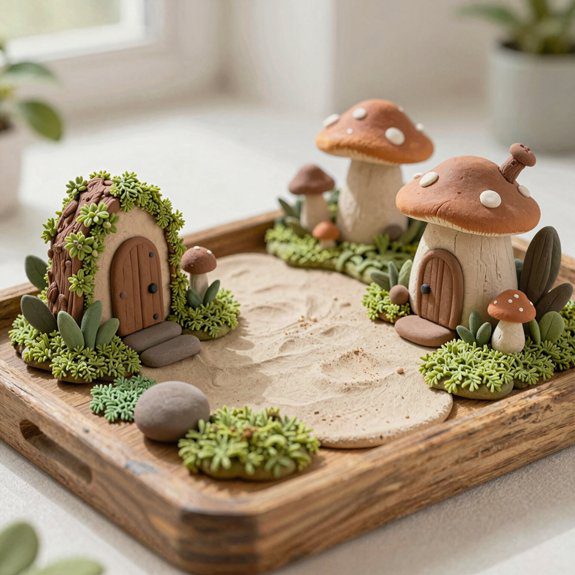
I like to pick my container or base first, whether it’s a little wooden tray, a paper plate, or a sturdy pot, because that one choice helps the whole fairy garden feel balanced right from the start.
Then I sketch a quick layout and choose a theme, like a forest hideaway, a magical nook, or a cozy cottage scene, so I know where the house, path, and tiny extras will go.
If I plan the flow early, I can keep the clay pieces from crowding each other, and that’s when the fun little surprises really start to pop!
Choose container or base
Before you glue anything down, pick your container or base and decide where this little fairy world will live, because that choice changes everything! I start with container size planning, then I think through indoor versus outdoor use, so my garden feels right from the start.
- A shallow planter or wooden tray works great.
- A paper plate is perfect for a test piece.
- Sand, stones, and bark add outdoor charm, while a craft base suits indoor scenes.
I use base stability tips: build a thick clay layer, about 1/2 inch.
Don’t forget drying space considerations—air-dry clay needs days, not minutes, to settle!
Decide theme (forest, magical, cottage)
If you pick a clear theme first, the whole mini fairy garden starts to feel like a real little world, not just a pile of cute stuff! I like choosing forest, magical, or cottage, then matching every piece to one Color palette for themed harmony.
I map the main attraction first, usually the fairy house, then add a chimney, door trim, a tree, or toadstools around it. That keeps the woodland mood cozy and balanced.
Next, I plan my path early with pebbles or tiny steps, so textures fit and entrances stay open.
If I’m using air dry clay, I size details small and let the house dry before placing it.
Create Tiny Clay Houses and Structures
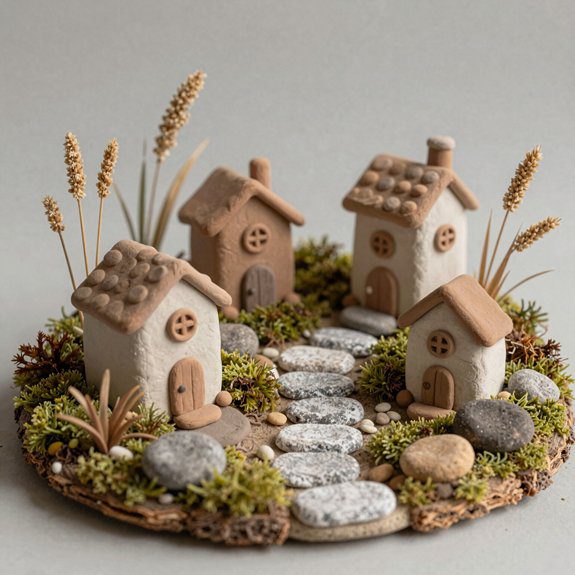
I love making tiny clay houses for a fairy garden, and I always start by deciding whether they’ll live indoors or brave the outdoors—because a little twig, bark, or stone base can save you a lot of wobbly drama!
For the house itself, I press air dry clay into a thick base, shape the walls, then cut tiny doors and windows that look adorable without making the structure collapse.
And here’s the fun part: small openings, a snug roof, and a few simple textures can turn a plain lump of clay into a real mini home that feels ready for fairy tenants!
Mini fairy houses
For my mini fairy houses, I start with a thick base of air-dry clay pressed right onto a paper plate, then I roll out a slab about 1/2-inch thick and curl it into a tiny round wall—yes, it looks a little like a clay cinnamon roll at first, and that’s part of the fun!
I score the seams, add a little water, and press in a thin coil for strength.
I love using natural textures from leaves, and I can even add simple hinges later.
- Tiny tools, big charm!
- Keep it beginner-friendly and low-cost.
- Let it dry, then decorate happily!
Small doors and windows
A tiny door or window can make a clay house feel instantly alive, and I love how easy this part is once you know the trick! I roll a 1/2-inch slab, cut openings while it’s soft, and use a skewer so nothing cracks.
| Step | What I do |
|---|---|
| Score | Scratch edges |
| Slip | Add water clay |
| Press | Seal firmly |
| Detail | Add window frame detailing |
| Support | Coil inside walls |
I tuck tiny coils around openings, then blend thin sill borders so they look built in. These weatherproofing tips help too: let everything dry for several days, because rushed windows warp fast.
Make Clay Accessories That Bring the Scene to Life
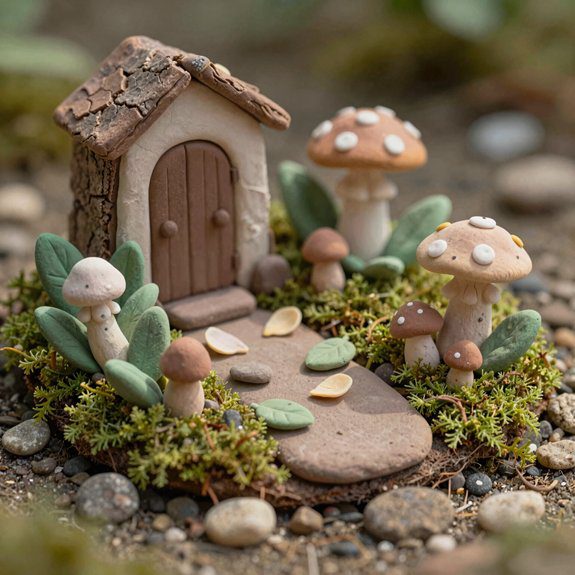
I love adding little clay accessories that make a fairy garden feel alive, and I’d start with simple mushrooms and stones because they’re easy, cheap, and super charming!
Then I’d shape tiny benches and winding pathways, using a little water to smooth the clay and keep everything looking neat while the details dry.
The best part? A few scored lines, a dab of paint, and suddenly your garden looks like fairies really moved in!
Mushrooms and stones
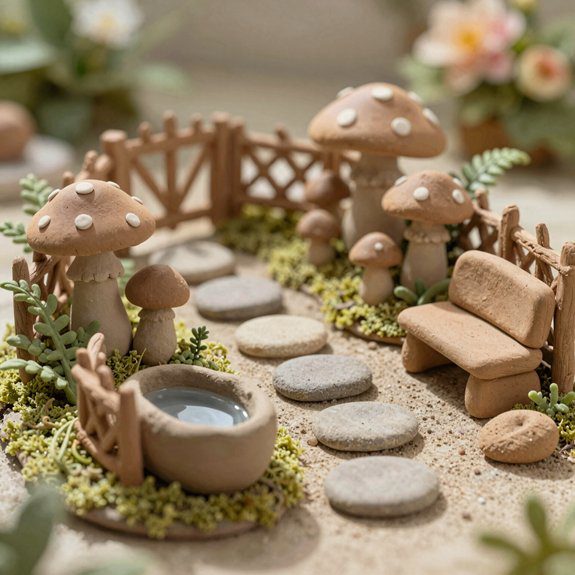
Once the base of your mini garden is ready, I love adding tiny mushrooms and stones, because they make the whole scene feel alive, like a little forest tucked into a pot! I roll clay stems, pinch little caps, and blend the seam so each mushroom dries as one piece.
- I use Texture detail techniques with a dry brush tip for brush speckling effects.
- I shape stones from thin slabs, then add grooves or dots for cracks.
I let everything dry for a few days, then paint red, cream, or brown, and add light highlights.
It’s simple, cheap, and totally charming!
Benches and pathways
If your fairy garden needs a spot to rest, a tiny bench and a little pathway can make it feel instantly more magical!
I press clay onto a base for the bench, smooth the edges with wet fingers, and score a few lines before it dries, so it looks cozy instead of clunky.
For the path, I flatten clay into a thin layer, then tap in pebbles or stone lines with a toothbrush for texture finishing.
I trim shallow borders with a skewer, add little legs with slip if I want more detail, and finish with waterproof sealing.
Let it dry fully, and your scene feels charming!
Add Natural Elements for Realism
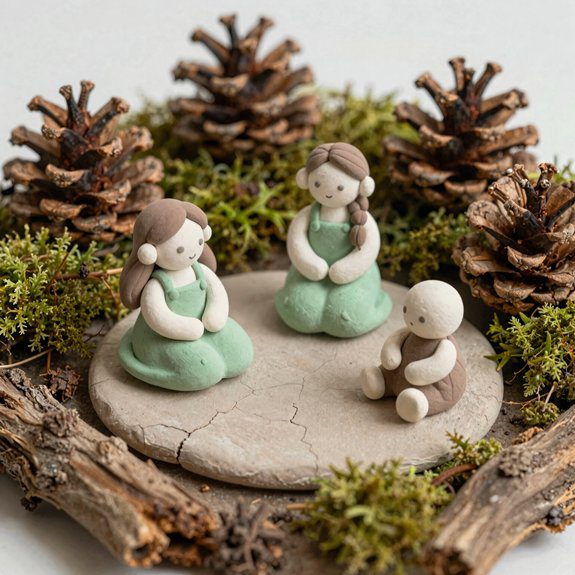
I like adding moss, tiny plants, sand, pebbles, and little wood pieces to my fairy garden, because they make the clay scene feel alive right away!
I press in a sandy path, tuck pebbles along the edge, and use small bits of wood or bark for fences and steps, which is cheap, easy, and honestly pretty magical.
If you want the real wow factor, try a soft moss patch or a pebble border last, since that’s the part that makes everything look like it grew there on its own!
Moss and small plants
How do you make a tiny fairy garden look like it’s really alive? I press small clumps of craft moss onto wet glue after my clay pieces dry, and wow, it changes everything!
Texture layering and color blending help me soften the look, so the garden feels cozy and real.
- Tuck tiny leaves or herb bits along the edges.
- Place moss in shaded corners, then thin it toward the center.
- Pat on little plant clusters near scored paths and grass marks.
If you want an outdoor setup, choose weather-ready moss and glue it well. That’s the secret little touch!
Sand, pebbles, and wood
Once the moss and little plant bits are in place, I like to make the ground look just as lively, because a fairy garden needs more than green fluff to feel real!
I press pebbles into a thin clay paste for a path, mixing bigger stepping stones with tiny gravel so nothing looks too neat.
Then I sprinkle dry sand over the base and tap off the extra after it sets, which gives me that weathered grounding I love.
For fences and tiny details, I tuck in sticks and twigs, then let everything dry for a few days.
That natural scattering keeps it charming!
Paint and Finish for a Magical Look
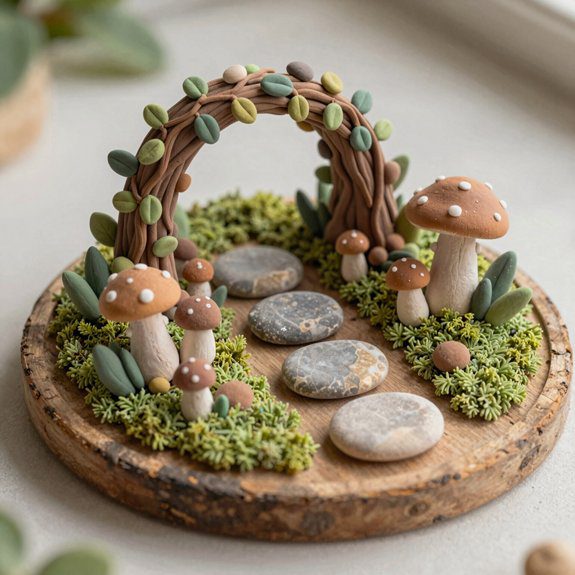
I like to start with soft pastel tones, because they make a tiny fairy garden feel dreamy, sweet, and just a little bit whimsical—like it wandered in from a storybook!
Then I brush on thin layers of acrylic paint and use a dry brush effect, so the raised textures catch the color and give your clay pieces that cozy, aged look.
If you want the real magic, add a few lighter highlights at the end, and wow, those tiny details can make a simple garden feel enchanted!
Soft pastel tones
When your fairy garden pieces are fully dry for a few days, I like to bring in soft pastel paint—think pale pink, mint, sky blue, and lavender—for that dreamy little “did a fairy live here?” look!
I start with Pastel palette planning, so every house, roof tile, and tiny prop feels like it belongs. Then I brush on thin coats, letting each one dry, because nobody wants a chalky surprise.
- Add lighter edges for sweet soft glow accents.
- Keep colors matched across pieces for a cozy mini world.
- Finish with matte, then a touch of shine on little details!
Dry brush texture effect
After your air-dry clay pieces have dried for a few days, I like to add the magic with a dry brush texture effect, and it’s honestly one of the easiest ways to make tiny fairy details pop! I use a flat brush, a little acrylic paint, and a paper towel, then wipe almost all the paint off before brushing over ridges, bricks, and pebbles.
This paint layering trick adds texture depth fast, and it’s super cheap, too. Try light gray over stone or pale green over grass, and don’t forget a tiny toothpick for clean edges. Once dry, a soft matte seal can finish the look!
Arrange Everything for a Balanced Composition
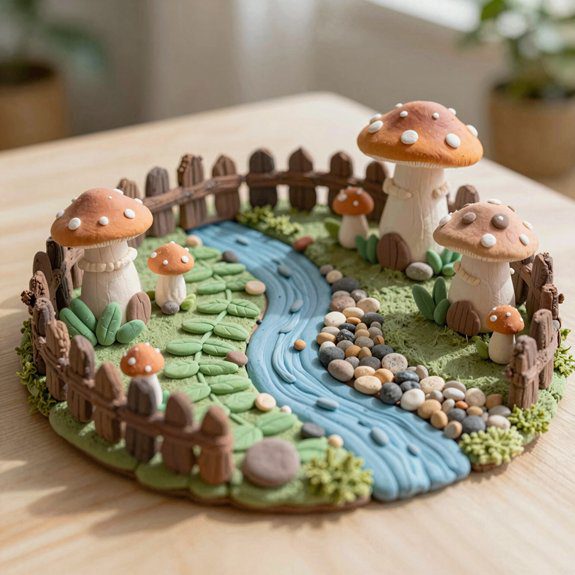
I start by placing my anchor pieces first, like the fairy house, toadstool, and little path, because that gives your garden a clear focal point right away—easy and neat, no tiny chaos monster here!
Then I tuck in smaller details like grass tufts, mushrooms, and window bits around them, so the scene feels full without getting crowded.
After that, I balance the whole setup with a few taller pieces at the back and a little open space between clusters, which keeps the house visible and makes the layout look calm, playful, and perfectly mini.
Focal point placement
For a mini fairy garden that feels magical instead of messy, I like to start with just one focal feature—usually a tiny fairy house or a cluster of toadstools—and place it a little off-center so the whole scene feels natural, not stiff like a school photo! That off center harmony helps me keep visual balance, and it makes the focal balance feel easy and calm.
- I keep the house tallest, then add grass or slab steps around it.
- I tuck taller trees behind it, and let the front taper down.
- I repeat a few colors, leaving breathing space so the center of attention shines.
Layering small details
Once the focal feature is in place, I start layering the tiny details around it like I’m setting up a little stage! I put the big pieces first, like the roof, base, and any toadstools, then I tuck in mushrooms, grass tufts, and stair slabs so nothing feels crowded.
I like clustering details near one spot, because that creates a clear path and nice color contrast. Then I build height slowly, from ground texture to doors and chimneys, and finish with roof petals up top.
A few repeated accents add texture depth, and I keep stepping back—tiny fixes now save big oops later!
Easy Variations to Try
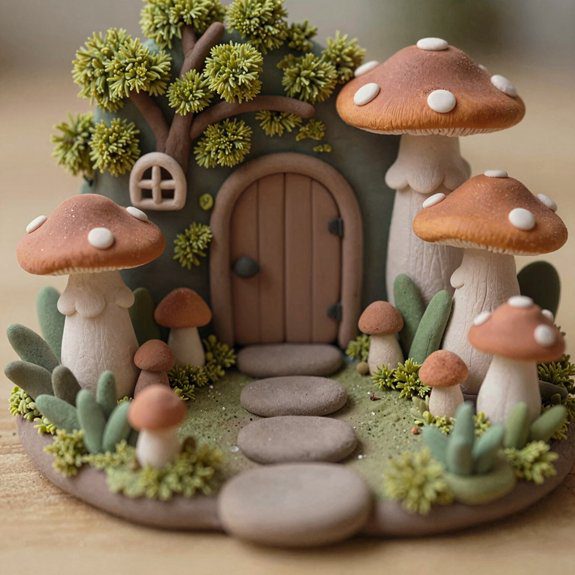
I love how easy it’s to switch up a mini fairy garden, and I can make an indoor version with air dry clay for a cute shelf display, or build an outdoor one with weather-safe touches if I want it to live among real plants!
For a simple start, I grab clay, a few basic tools, and tiny bits like twigs or pebbles, then I shape doors, windows, and little roofs, which keeps the cost low and the steps friendly for beginners.
And if I’m feeling extra playful, I’ll try seasonal themes too—think spring flowers, spooky fall doors, or a snowy winter nook—because that’s where the real “wait, this is adorable!” moment shows up.
Indoor fairy garden
If you want to bring fairy magic indoors, I’d start with a tiny scene that can sit happily on a shelf, desk, or windowsill—think a mini house, a teacup garden, or even a little garden in a jar, all made with air dry clay since it doesn’t need baking or firing.
I keep it beginner-friendly, and it feels like a little welcome home for your imagination!
- Shape thin walls and roofs, then let them dry for a few days.
- Cut small windows or doors, score the edges, and join with a dab of slip.
- Add pebble paths, leaf trees, and handmade fairy lighting for a cozy indoor display.
Outdoor weather-safe version
For an outdoor fairy garden that can handle a little real-world weather drama, I like to keep the design sturdy, simple, and a bit chunkier than the indoor version—air dry clay still works beautifully, but it needs a few days to dry fully, so patience is the secret sauce here!
I press in grass, pebbles, and tiny stick textures while it’s soft, then build thick walls and a snug roof.
For weatherproofing tips, I skip flimsy overhangs and keep openings small.
A sand-and-stone base gives great base stability, and it stops soggy puddle trouble, too.
Cute, tough, and ready for rain!
Seasonal themes
When the seasons start showing off, I like to give a mini fairy garden a quick mood change with just a few tiny clay tweaks—easy, cute, and way less dramatic than repainting your whole porch!
- Spring: I pick a bright seasonal palette, pinch bloom textures from clay petals, score them in place, and my little path feels fresh fast.
- Summer: I press leaf and fruit bits onto roofs or bases, then add toothpick lines for lively texture, and the garden looks sun-kissed.
- Fall and winter: I shape pumpkins for harvest accents, or make winter snow effects with white sparkle and a tiny snow path—so cozy!