17 Sewing Projects for Beginners You’ll Actually Want to Make
Start with a cotton tote: cut two rectangles, stitch, press, and you’ve got a grocery-ready win! Next, make a zipper pouch, fabric basket, pillow cover, drawstring gift bag, baby bib, or laptop sleeve using straight seams, 5/8-inch allowances, and your presser-foot edge as a guide. They’re cheap, useful, and forgiving—keep a seam ripper nearby, because everyone zigzags sometimes. Finish with a patchwork cushion cover, then stick around for more quick projects and confidence-building tips.
Love cozy DIY projects? 💕
Get free printable guides, exclusive tutorials & surprise craft goodies straight to your inbox.
Disclosure: This post may contain Amazon affiliate links, at no extra cost to you. Content on DiyCraftNest is created with research support from AI tools and carefully reviewed, edited, and fact-checked by the lead author, Daniel Pat, to ensure accuracy and reliability. Learn more
Key Takeaways
- Start with straight-seam projects like tote bags, drawstring gift bags, aprons, and reversible placemats to build confidence quickly.
- Choose medium-weight cotton or cotton blends because they are affordable, stable, and easy for beginners to feed through a machine.
- Use 5/8-inch seam allowances, presser-foot guides, slow stitching, and backstitching to create neat, durable beginner projects.
- Practice zipper installation with a simple pouch, pinning or basting first and stitching close to zipper teeth with a zipper foot.
- Make practical home and gift items, including fabric baskets, pillow covers, laptop sleeves, bibs, key fobs, and patchwork cushions.
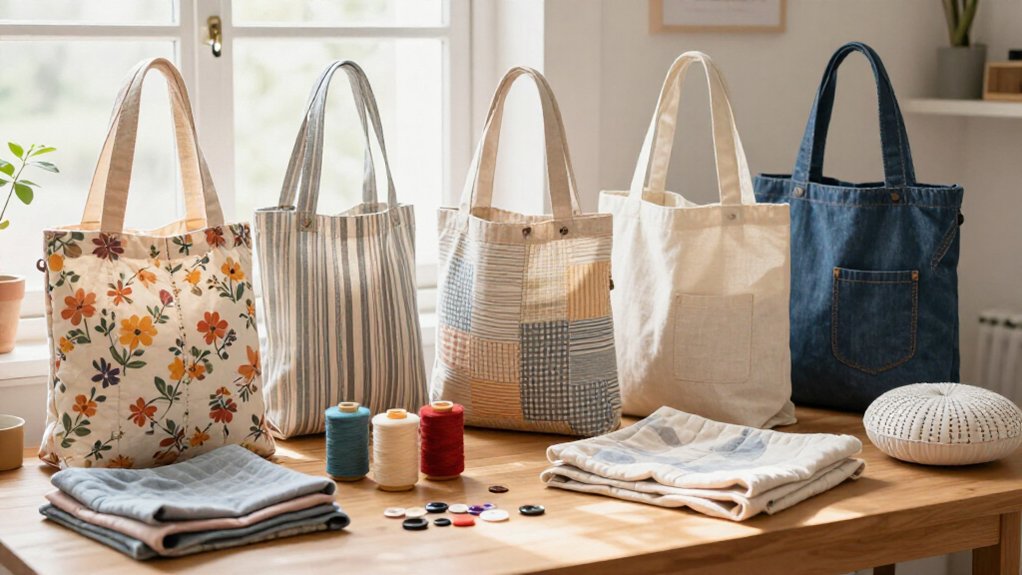
Simple Tote Bag
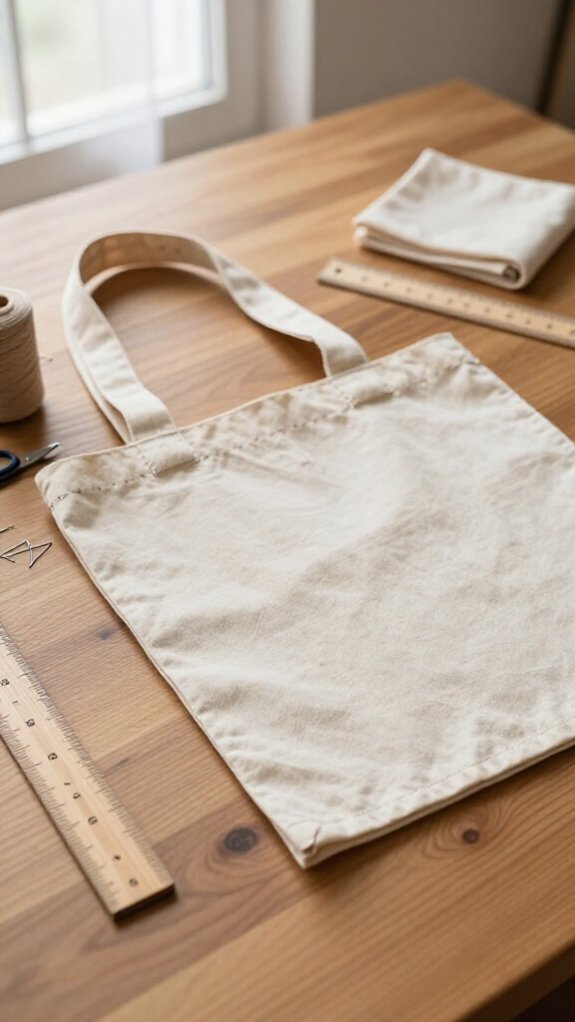
A simple tote bag is the perfect first sewing project because you’ll mostly sew straight lines—no tricky curves, elaborate fitting, or fabric drama involved!
Start with medium-weight cotton or a cotton blend; beginner fabric selection matters, since it feeds smoothly and keeps costs friendly.
Cut two rectangles and straps, then press everything flat.
Follow the needle-plate markings for a 1.5 cm (5/8 in) seam allowance, and position your presser-foot edge with the guide line.
Sew, trim, press, and try simple seam finishing methods.
Oops? Seam ripper saves you; fixes vanish after pressing, and you’ll carry your handmade tote proudly!
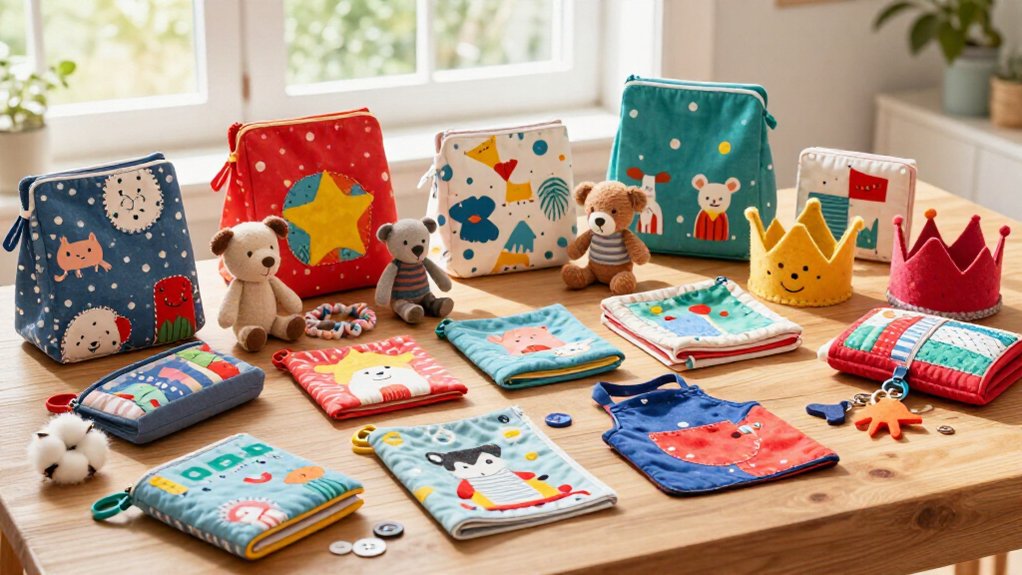
Zipper Pouch
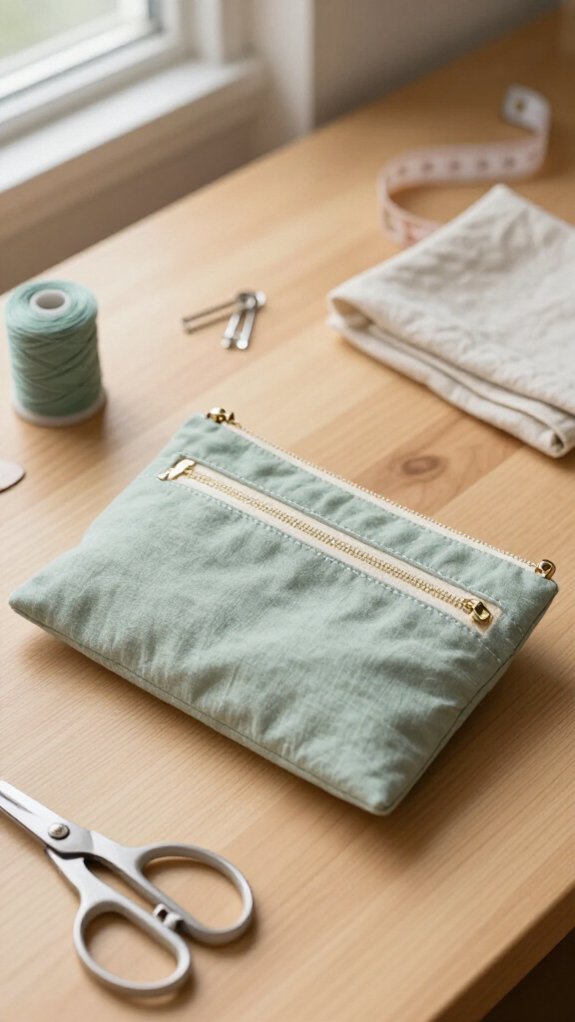
Ready for your next sewing win? A zipper pouch lets you join the confident beginner crowd with a useful little bag—no skilled skills required!
Choose medium-weight cotton or a cotton blend, a zipper, pins, thread, and a seam ripper.
Mark a 5/8-inch seam allowance, then line up the zipper for Seam allowance accuracy.
For Zipper foot practice, pin or baste first, then stitch close to the teeth without hitting them. Backstitch at both ends. If it wanders, unpick it—everyone does!
Soon you’ll unzip a sturdy pouch that holds pens, snacks, or tiny treasures, and looks wonderfully polished.
Fabric Basket
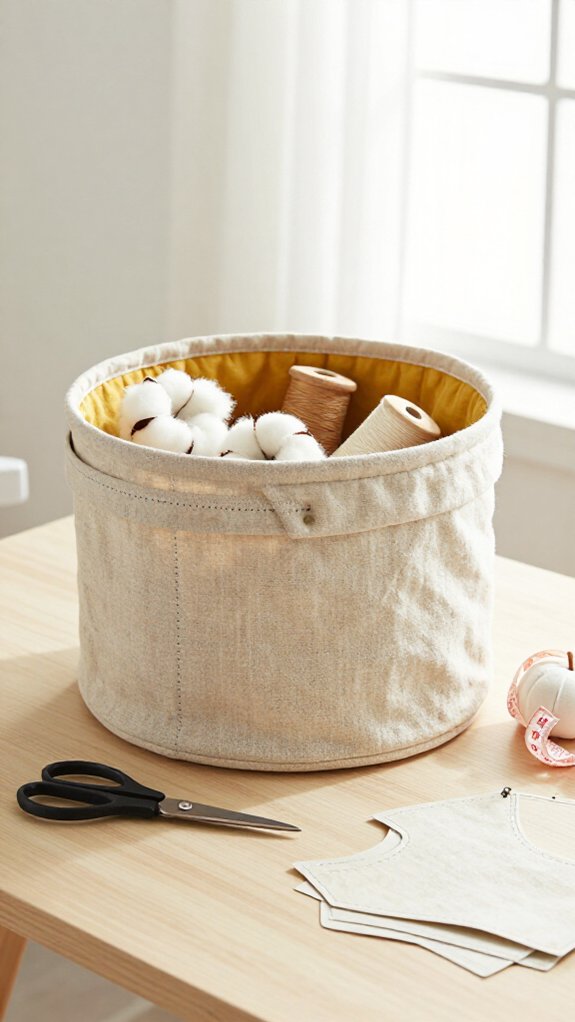
Turn a few tidy seams into a cheerful fabric basket, perfect for holding sewing clips, mail, snacks, or that mysterious pile of tiny things on your desk!
Choosing fabric is easy: choose medium-weight 100% cotton or a cotton blend, which behaves nicely and helps your basket keep its shape.
Most beginner patterns use straight seams, so you’ll practice steady stitching and a consistent seam allowance. Follow sizing guidance, line edges up with your presser-foot guide, and use seam finishing with stitching or a hem.
Want it upright? Add light interfacing or a stiff base—look at you!
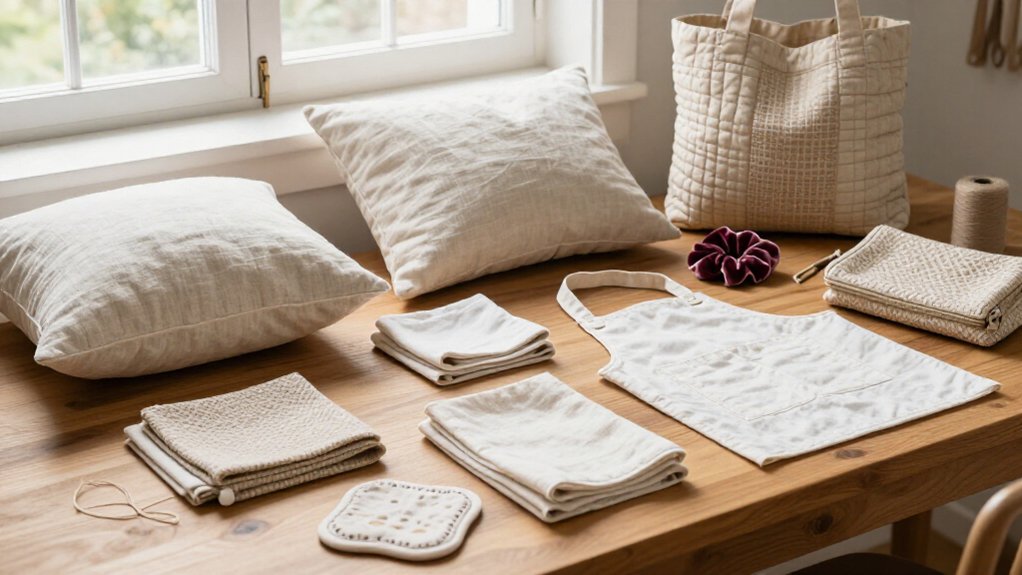
Pillow Cover
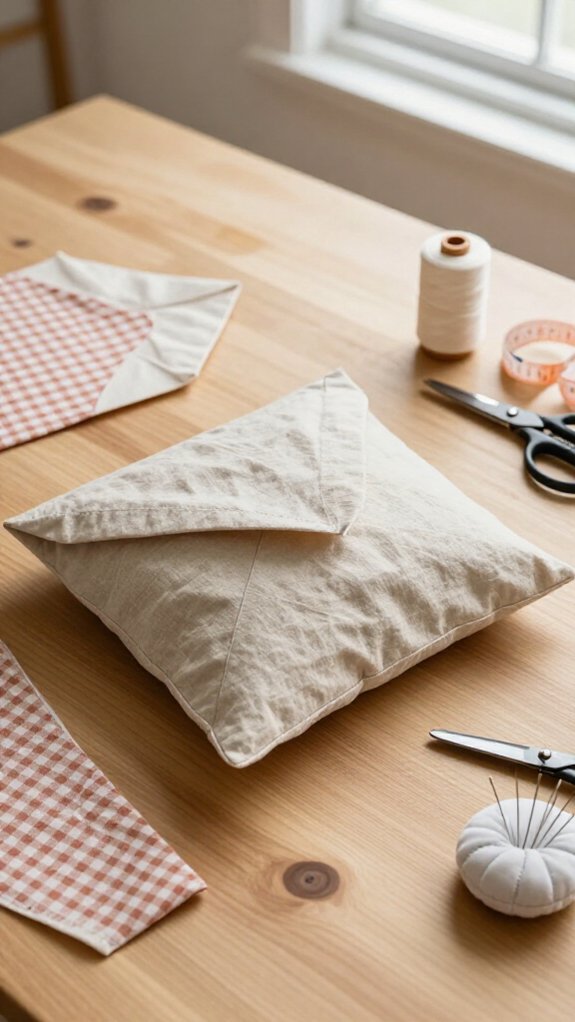
One simple pillow cover can make your sofa, bed, or reading chair feel brand-new—no elaborate skills required!
You’ll need a small piece of cotton or cotton blend, plus thread and your fabric needle basics. Choose a print that feels like you belong in the room—stripes, florals, or cheerful dots!
Follow the pattern’s measurements, fold the one-piece cover, and stitch mostly straight seams with an accurate allowance. Clear directions keep the cost low and the learning easy.
Then admire those beginner friendly finishes! Once you’ve nailed this cozy win, use the chart to resize covers—your home team will notice too.
Drawstring Gift Bag
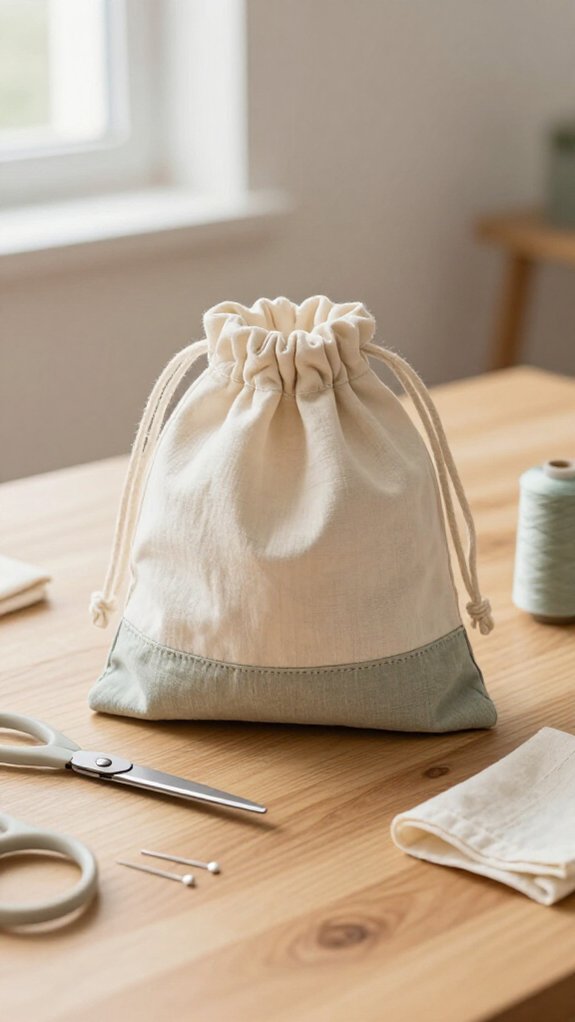
A drawstring gift bag gives you a cheerful, reusable wrap option, and you can sew it with mostly straight lines—great news for new stitchers!
You’ll feel right at home using medium-weight cotton or cotton blends; these fabric options stay steady. Beginner patterns usually use a 5/8-inch seam allowance, so cut, stitch the bag, fold the top, and sew a casing opening.
| Step | Do this | Why |
|---|---|---|
| 1 | Match edges | Straight |
| 2 | Stitch sides | Secure |
| 3 | Fold casing | Neat |
| 4 | Thread cord | Ta-da! |
Use your presser-foot edge as a guide. Then add cord, pull tight, and share your polished gift bag!
Reversible Placemat
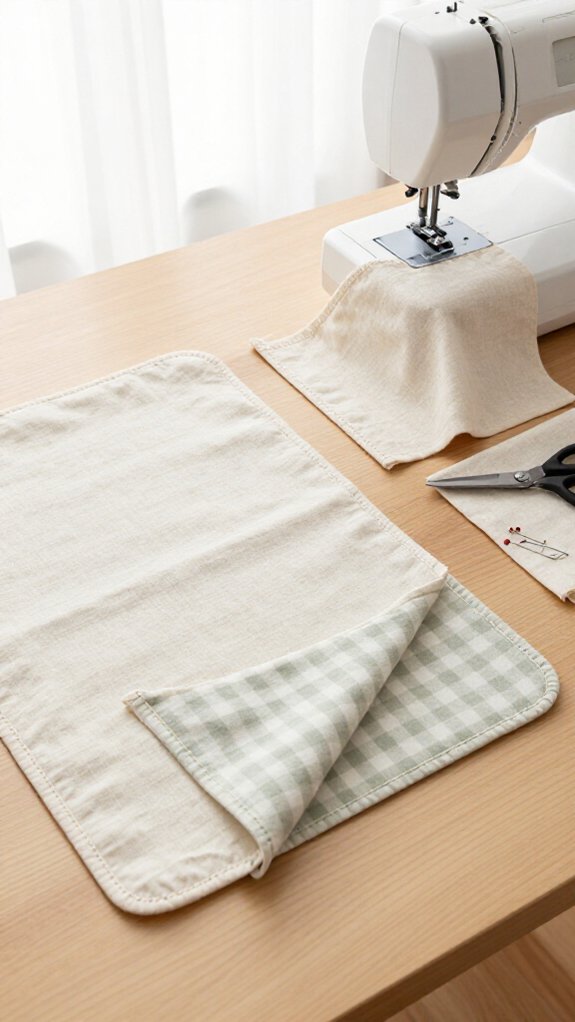
Ready for a project that looks polished on both sides? You’ll feel right at home making a reversible placemat—it’s simple, useful, and dinner-table worthy!
Choose two medium-weight 100% cotton or cotton-blend rectangles; they’re easier to guide than slippery synthetics, and affordable for your first try. Practice straight stitches on scraps, including two layers, before cutting.
Place right sides together, follow your needle-plate guide with a 5/8-inch (1.5-cm) seam allowance, and leave an opening to turn it. Seam Finishing keeps edges tidy; then use Pressing Techniques to flatten corners.
Topstitch if you’d like—this forgiving final touch makes both sides shine.
Fabric Coasters
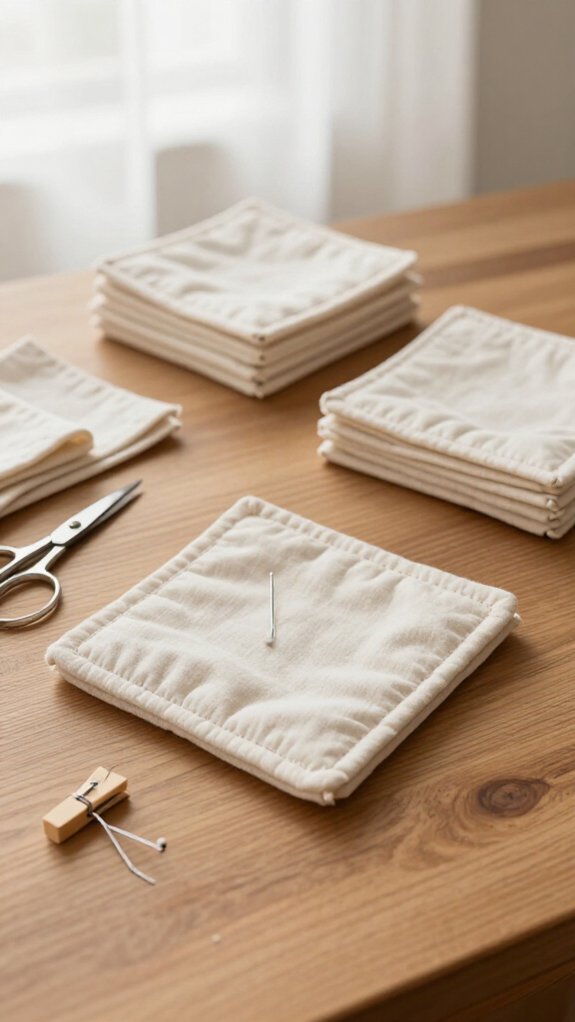
Fabric coasters give your fabric scraps a useful new job, and you’ll build straight-stitch confidence while making something cute—win-win!
Choosing fabrics is easy: pick medium-weight cotton, plus cotton batting or wool felt if you want extra body.
Stitch around two layers with a 1/4- to 5/8-inch allowance, following the needle-plate lines, and let the feed dogs work—no tugging!
Your seam finishing comes next: trim corners or clip curves, then use a careful turning technique.
Pressing basics make the edges crisp, so topstitch them for a polished finish.
Mix scraps into cheerful gifts; thick felt makes them surprisingly durable!
Scrunchies
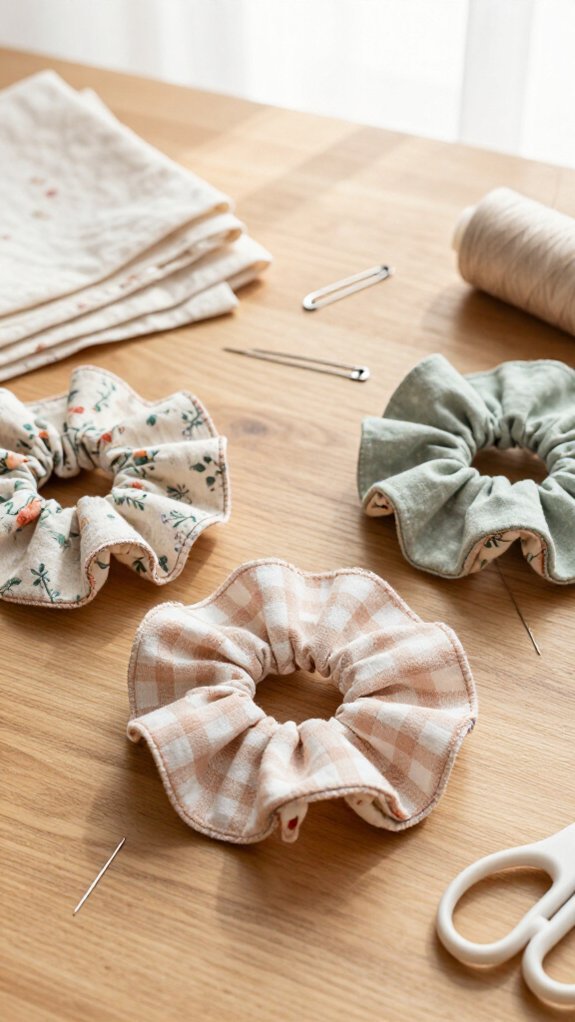
Scrunchies are another happy way to turn leftover fabric into something you’ll actually use, and they’re wonderfully beginner-friendly—no tricky fitting or elaborate pattern pieces required!
Choose lightweight cotton jersey, and you’ll join a friendly crew making soft, useful hair accessories. First, cut a strip, sew straight seams into a tube, and turn it right-side out.
Next, thread Beginner friendly elastic through the casing with a safety pin, then stitch the ends securely. Practice on a scrap first if you’re nervous—your seam ripper is as good as your tiny rescue buddy!
Adjust the fabric length for kid-sized loops or a adult statement.
Bowl Cozy
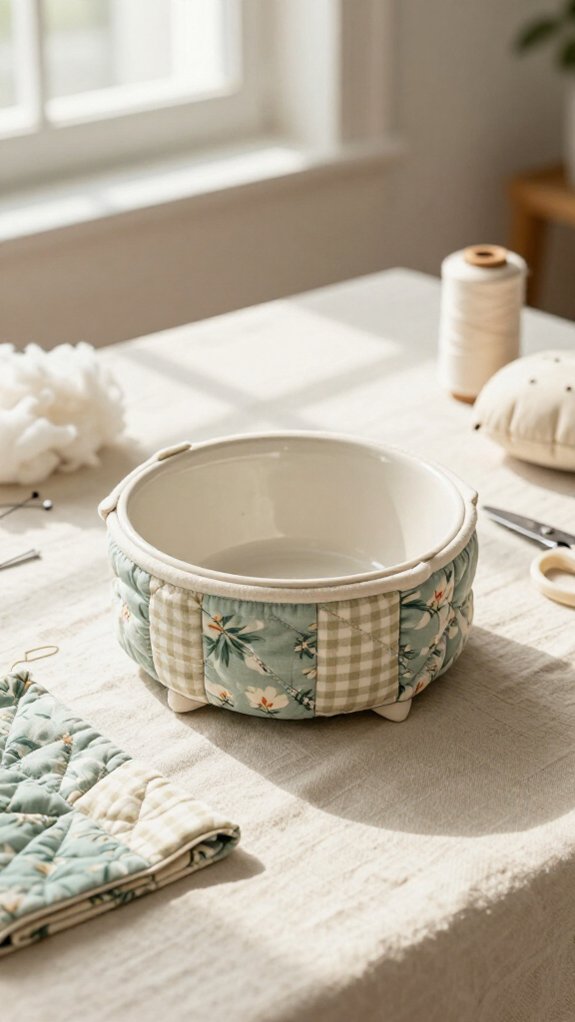
A bowl cozy brings a little homemade comfort to your kitchen, wrapping a mixing bowl in soft cotton so food stays warm while you prep, bake, or serve—pretty handy, right?
Start by choosing fabrics: medium-weight cotton or a cotton blend behaves nicely under your machine. Cut the pattern pieces, then use beginner friendly patterns with a roomy 5/8-inch seam allowance for reliable bowl cozy sizing.
Stitch straight, backstitch at each end, and press for simple seam finishing. Soon, you’ve made a reusable, zipper-free gift for your baking crew—warm bowls, happy hands, and serious “you made that?” pride!
Book Sleeve
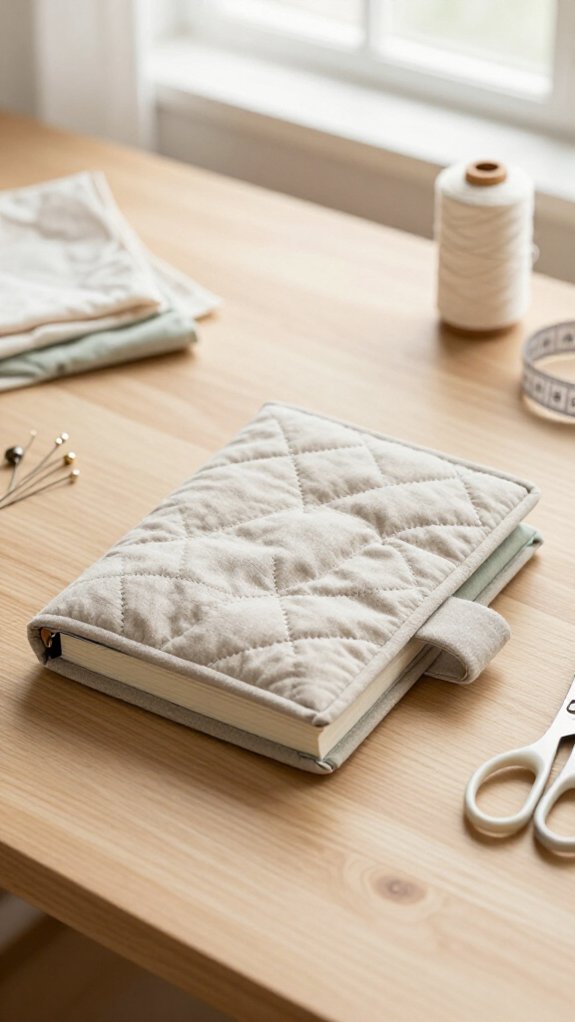
Your favorite paperback or notebook deserves more than a loose ride in your tote bag, and a simple book sleeve gives it a soft, handmade shield from scratches, bent corners, and mystery crumbs—because bags are wild places!
Choose cotton fabric, thread, and a closure if you’d like one.
Cut a rectangle, stitch the sides with a 5/8-inch seam allowance, then press the opening crisp.
Simple seam finishing techniques make the inside feel polished, even if your lines wiggle a bit.
For a snug, club-worthy finish, survey Fabric closure options: a flap or Velcro keeps your read from slipping out.
Glasses Case
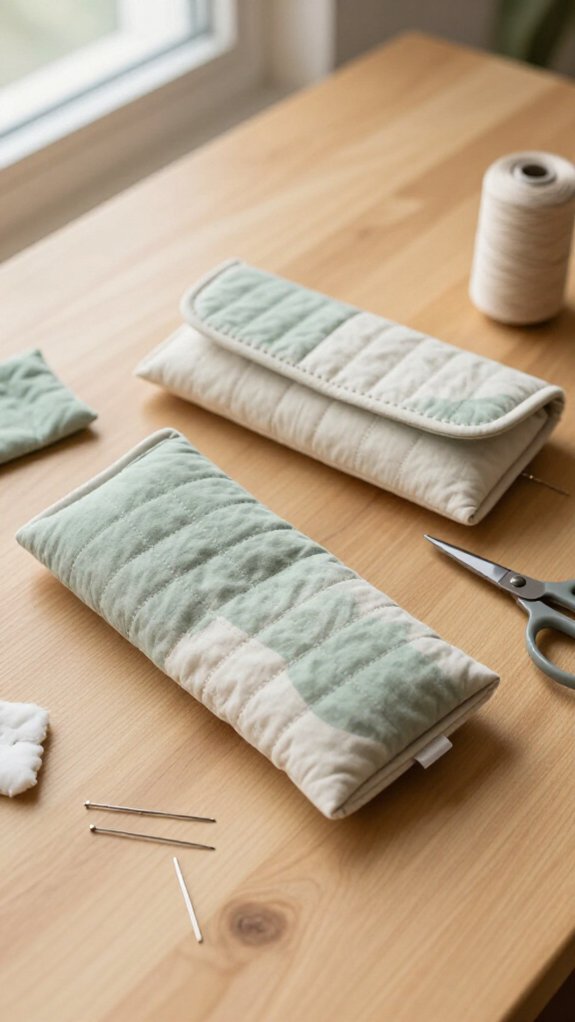
After protecting your books, give your glasses a cozy little parking spot, too!
This beginner sewing project is a simple zippered pouch, so you can learn zipper basics without wrestling a giant garment. Gather cotton, a zipper, thread, and optional felt or cotton batting for cushy protection.
Cut pieces using your pattern’s measurements, then practice straight seams on scraps. Stitch with a 5/8-inch seam allowance, following your needle plate guide and keeping the presser-foot edge steady.
Turn it right-side out, zip it closed, and voilà: a snug case that guards lenses from scratches and everyday bumps. You made it!
Reusable Snack Bag
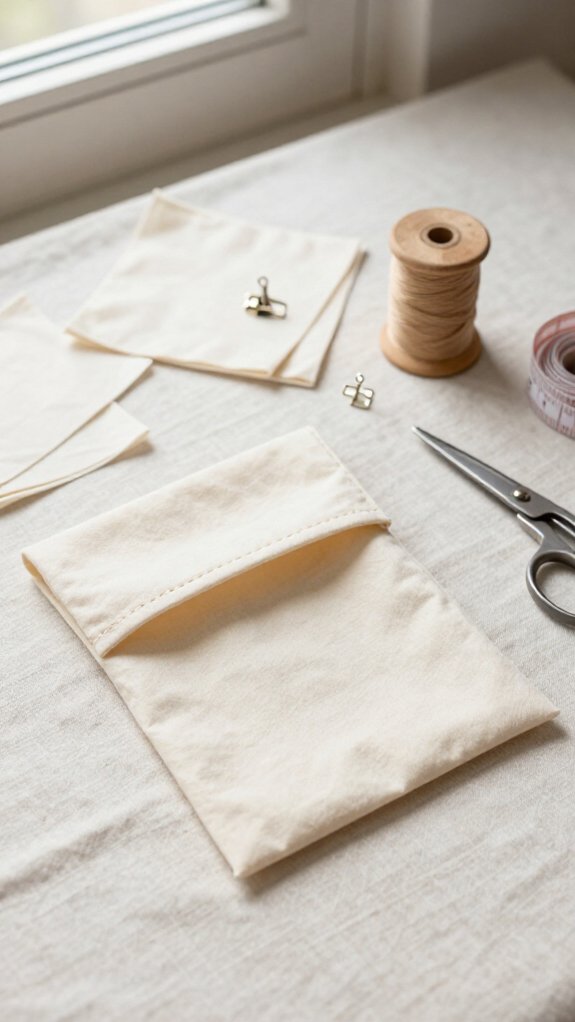
Turn snack time into a tiny sewing win with a reusable bag that’s simple, sturdy, and far less likely to vanish under a pile of crumbs!
Join beginners by turning cotton or a cotton-blend exterior and a wipeable Snack bag lining into a cracker-ready pouch. You’ll need fabric, lining, pins, thread, and a drawstring or easy top-stitched opening.
First, practice straight seams on scraps, then stitch the layers with steady seam allowance tips: keep them at 5/8 inch (1.5 cm). Turn it right-side out, press the top edges, and topstitch them for strength.
Soon, you’ll have a crumb-taming companion.
Apron
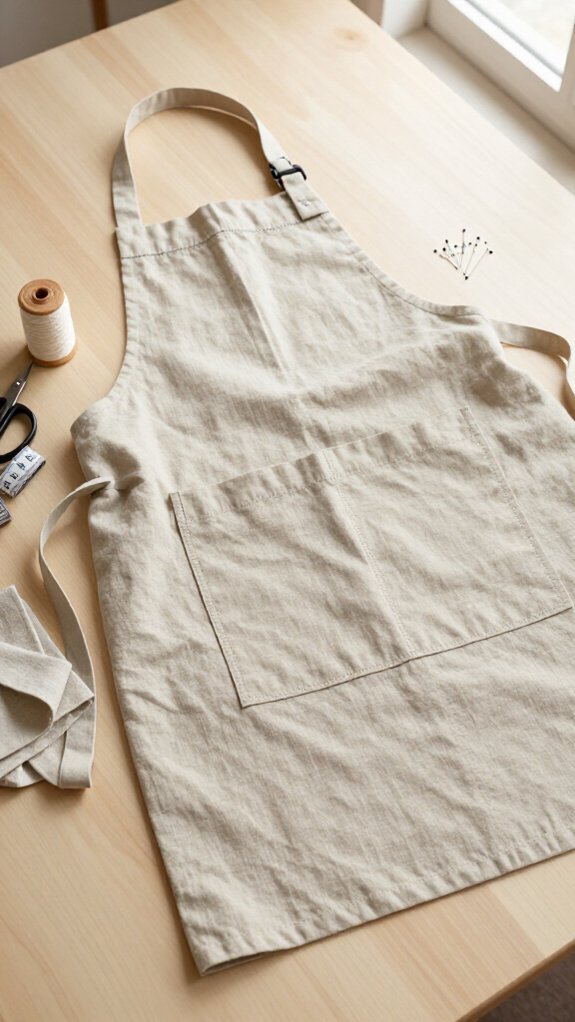
Stitch up a simple apron, and you’ll have a cheerful first project that’s useful from the very first flour spill!
Choose medium-weight cotton or a cotton blend; it handles easily and helps you follow straight lines with your presser-foot edge.
Practice on scraps, then cut body, pocket, and straps with one standard 5/8-inch seam allowance.
Sew each section slowly, backstitching at every start and finish.
Beginner seam finishing feels less intimidating when you press edges as you go—your sewing crew would approve!
Add a patch pocket for cards or sneaky crumbs.
Easy strap adjustment fits you perfectly.
Fabric Key Fob
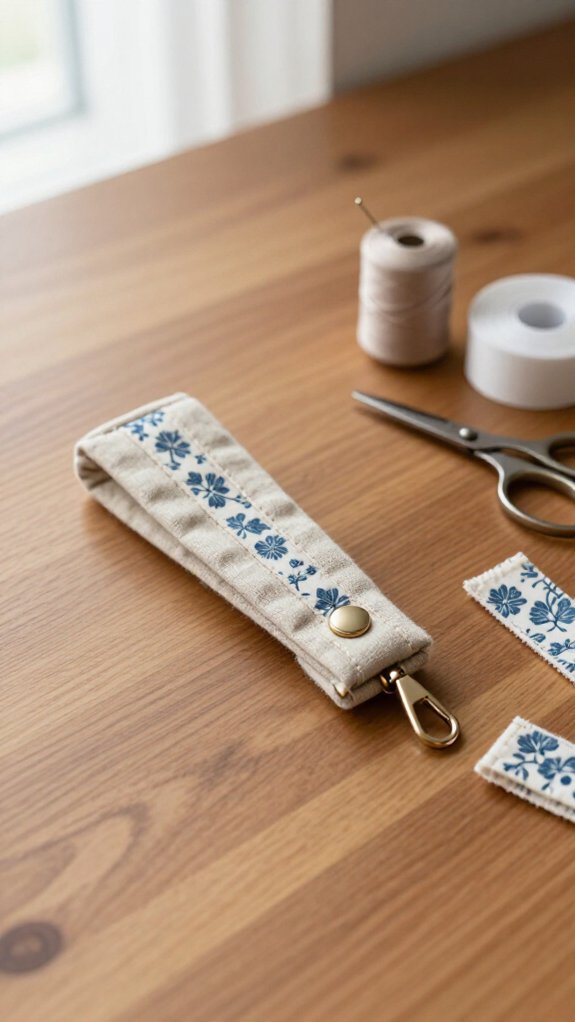
A fabric key fob makes a fast, cheerful follow-up to your new apron, and it’s a great way to use the cotton scraps you couldn’t bear to toss—smart save!
Choosing fabrics is easy: pick sturdy cotton, then cut strips, fold them into a narrow strap, and pin or baste the layers. Center one edge with your presser-foot guide and sew an even 5/8-inch seam.
Backstitch both ends—tiny steps, big payoff!
At final assembly, add key ring attachments with a sewn loop or clip. Try a scrap first; your seam ripper makes mistakes feel like practice, not punishment, ever!
Baby Bib
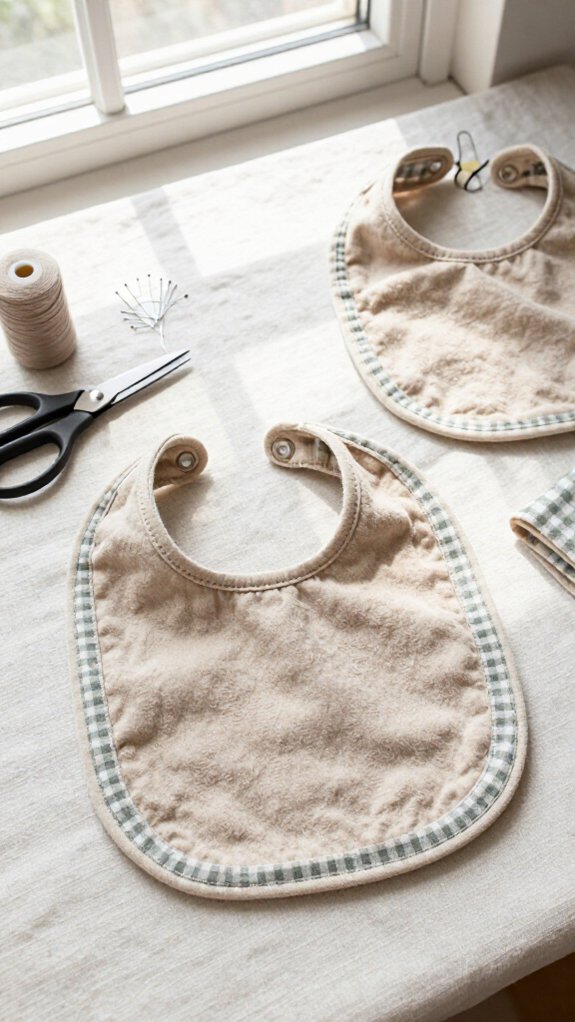
Because baby bibs use simple shapes and straight seams, you can sew one from inexpensive cotton scraps in an afternoon—sweet, useful, and far less intimidating than it sounds!
- Choose medium-weight cotton poplin or jersey, a Beginner friendly fabric that washes well.
- Cut a front and optional flannel backing for thirsty little spills.
- Practice straight lines first, using your presser-foot guide.
- Stitch layers, then backstitch at both ends for strength.
- Try easy edge finishing with a hem or topstitching; you’ll make a washable gift your crew will cheer for!
It looks polished, costs little, and handles snack-time chaos beautifully too!
Laptop Sleeve
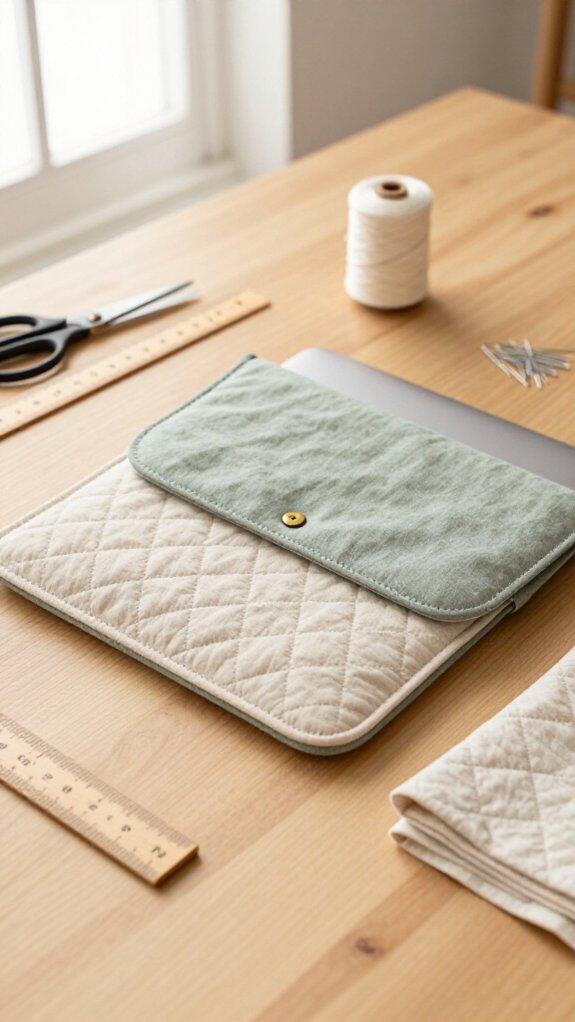
Turn a few sturdy fabric pieces into a custom laptop sleeve, and you’ll get a practical project that builds straight-seam confidence—no tricky sizing or elaborate curves required!
Choose medium-weight cotton or a cotton blend; it feeds smoothly and holds its shape. You’re part of the maker crew already!
| Focus | Your move |
|---|---|
| Seam allowance | Use 5/8 inch (1.5 cm) |
| Straight seams | Follow presser-foot edge |
| fabric closure options | Pick overlap or zipper |
Measure your device, cut with easy beginner patterns, then watch the guides—not the needle—as you stitch. The zipper finish delivers a snug, protective win. Delectable? A little. Doable? Absolutely!
Patchwork Cushion Cover
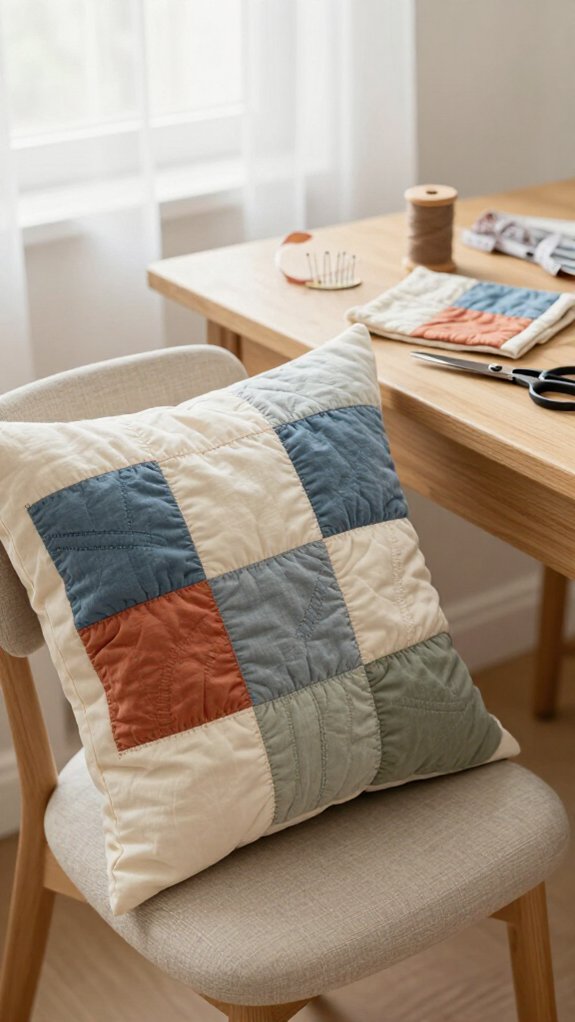
Patchwork cushion covers let you mix cheerful squares or rectangles into a cozy, one-of-a-kind accent, and you’ll practice mostly straight seams while you do it—score! You’ll join a friendly tradition, turning simple cotton pieces into something that looks wonderfully at home on your sofa.
- Medium-weight 100% cotton or blends feed evenly.
- A ruler for choosing fabric sizes.
- Pins to line up edges.
- An iron for pressing.
- Thread that matches your colors.
For Beginner patch seams, keep a 5/8-inch seam allowance, then press every strip as you go. Match front to an envelope back—your cushion feels proudly yours too!
Tips for Choosing Your First Sewing Project
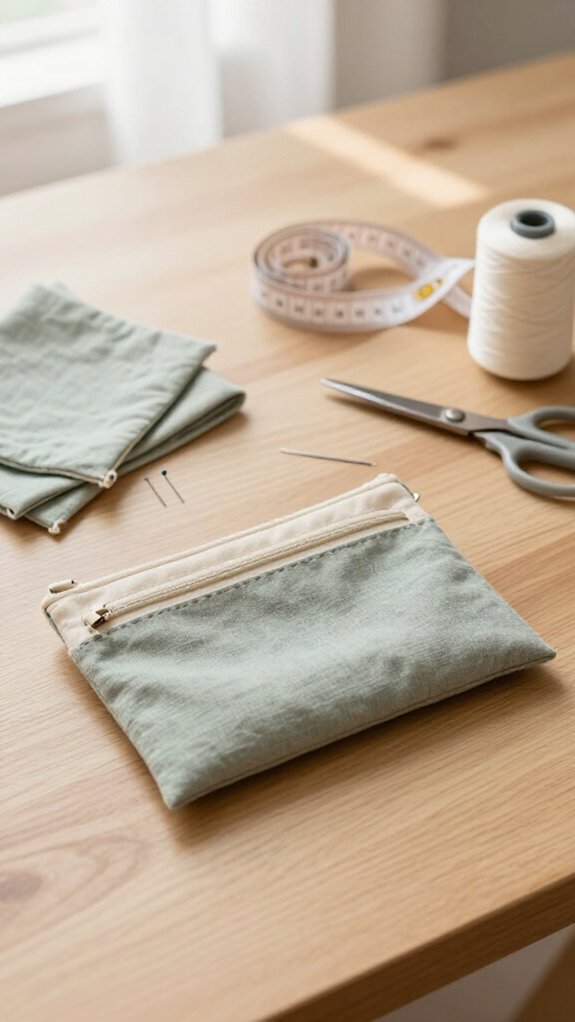
Your first sewing project should feel more like a small win than a final exam, so choose something with straight lines, little or no fitting, and a finish you can reach in an evening—yay!
Pillowcases, drawstring bags, and simple totes welcome you into the sewing club while keeping tiny wobbles from stealing your joy.
For Beginner fabric selection, grab medium-weight 100% cotton or a cotton blend; slippery fabric behaves like it has weekend plans. Do seam allowance practice on double-layer scraps, following presser-foot and needle-plate guides. Then choose elastic or drawstrings, skip zippers, and finish tonight!
You’ll feel capable!