17 Kangaroo Art Ideas for Kids Inspired by Australian Crafts
I’ve put together 17 kangaroo art ideas that mix handprints, footprints, paper plates, collages, recycled sculptures, cotton-ball texture, and Aboriginal-inspired dot patterns, so you can pick projects by age and materials. I’ll give step-by-step tips for paints, cutting, gluing, and safe reuse of toilet rolls and rocks, plus ways to add storytelling, habitat scenes, and fine-motor skill practice. Try simple stamps for preschoolers or layered collages for older kids, and keep going to investigate even more techniques.
Love cozy DIY projects? 💕
Get free printable guides, exclusive tutorials & surprise craft goodies straight to your inbox.
Disclosure: This post may contain Amazon affiliate links, at no extra cost to you. Content on DiyCraftNest is created with research support from AI tools and carefully reviewed, edited, and fact-checked by the lead author, Daniel Pat, to ensure accuracy and reliability. Learn more
Key Takeaways
- Use handprints and footprints to create kangaroo shapes, adding a painted pouch for a joey and simple facial details.
- Combine recycled materials (toilet rolls, paper plates, popsicle sticks) to teach reuse while building kangaroo anatomy.
- Introduce Aboriginal dot-painting techniques and ochre-inspired colors to connect crafts with Australian artistic traditions.
- Offer texture variations—cotton balls, torn paper, painted rocks—to explore sensory art and durable outdoor displays.
- Turn projects into learning moments about kangaroo behavior, habitats, conservation, and family roles through storytelling and group play.
Kangaroo Handprint Art Project
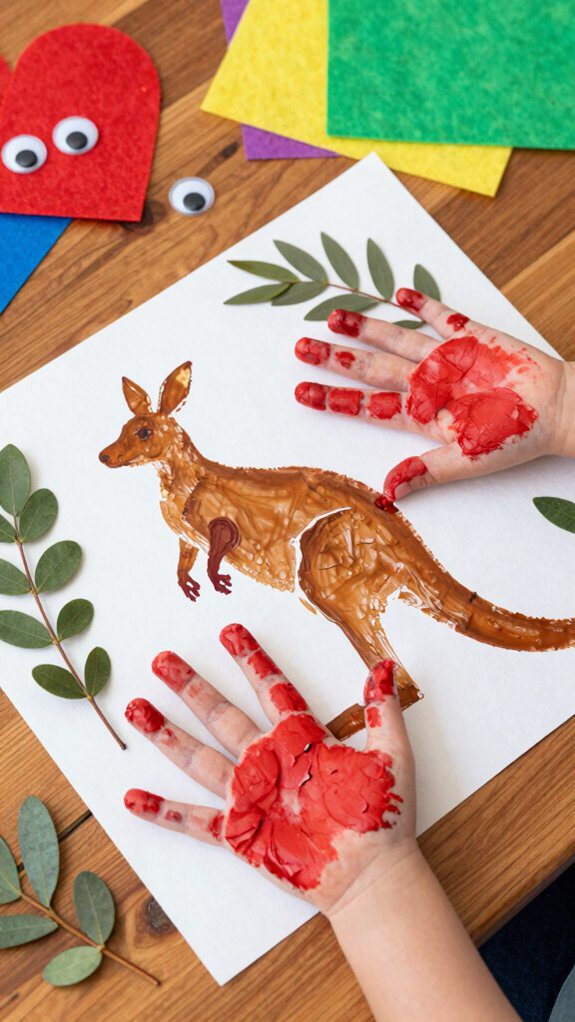
1 fun way to get kids excited about art is the Kangaroo Handprint Art Project, and I’ll walk you through how it works and why it’s great. I invite you to try simple handprint techniques that turn painted palms into a kangaroo’s body and tail; I’ll describe each step so everyone feels included. Start with color choices—earthy browns or playful pastels—and compare them so kids pick what speaks to them. Guide them to press firmly for clear prints, then add a pouch, eyes, and a joey outline for storytelling. This activity builds fine motor skills and hand-eye coordination, and you can link it to short lessons on kangaroo behavior. It’s creative, social, and perfect for sharing.
Paper Plate Kangaroo Craft
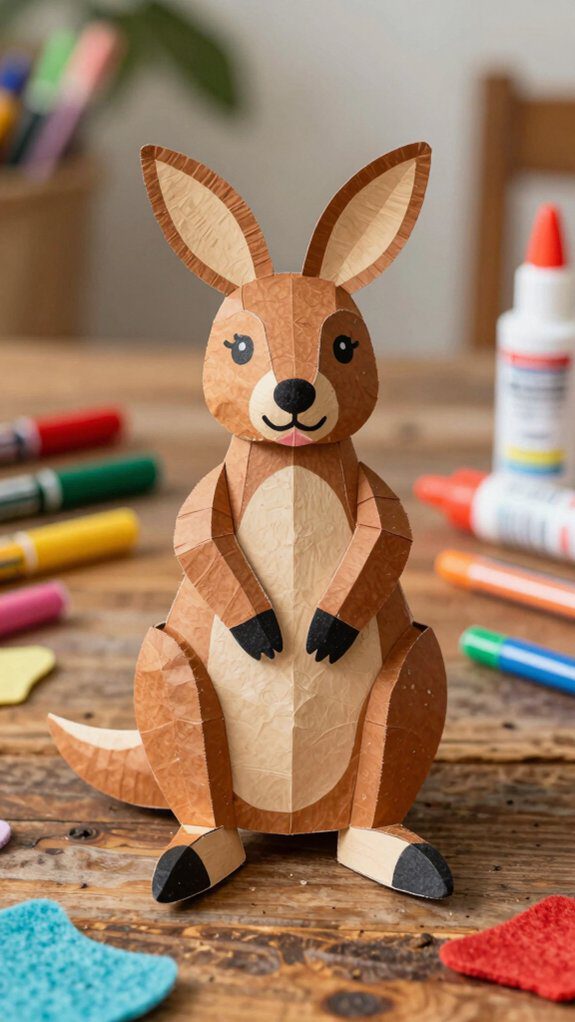
Grab a 9-inch coated paper plate and let’s turn it into a hopping mama kangaroo—I’ll walk you through cutting, painting, and decorating so the craft stays fun and manageable. I guide you step-by-step: cut the plate for the body, paint with a pompom for texture, and add a joey in the pouch to practice fine motor skills and storytelling. This craft invites kangaroo symbolism exploration and a warm family interactions discussion as kids make a mama and baby, learning behavior and belonging.
| Step | Skill Focus | Tip |
|---|---|---|
| Cut body | Scissor control | Trace first |
| Paint | Texture play | Use pompom |
| Pouch | Storytelling | Add joey |
| Decorate | Personal touch | Let kids choose |
| Discuss | Symbolism | Talk Australia |
Kangaroo Paper Collage Activity
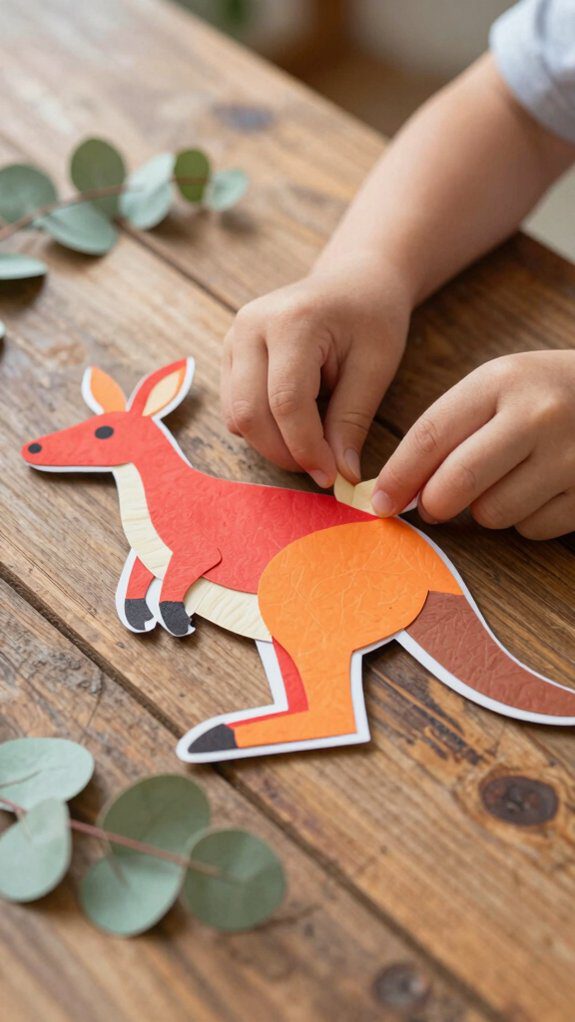
One simple way I like to introduce the Kangaroo Paper Collage Activity is by laying out a stack of colorful, recycled papers and inviting kids to build their own layered marsupial—this gives them an immediate, hands-on way to investigate shape, texture, and color. I guide a kangaroo characteristics discussion next, pointing out pouches, strong hind legs, and long tails so everyone feels included and confident. Then we move into collage texture exploration: torn versus cut edges, tissue for softness, corrugated scraps for roughness. I offer step-by-step tips—start with body shapes, add a pouch pocket, finish with facial details—and compare simple silhouettes to layered versions. The process boosts fine motor skills, sparks storytelling about habitats, and celebrates sustainable creativity together.
Cotton Ball Kangaroo Art
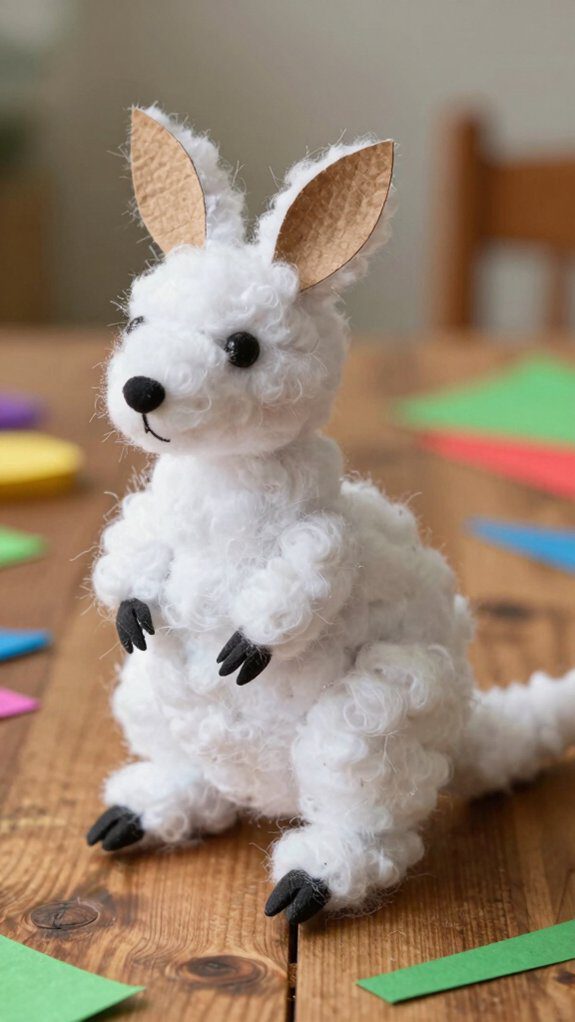
I love using cotton balls to make a fluffy kangaroo because the texture is irresistible and the process is super kid-friendly, so I usually start by printing or drawing a simple kangaroo outline and letting children glue cotton balls inside the shape to build up the body, pouch, and tail. I explain cotton ball techniques like teasing fibers for shading, layering for dimension, and using tweezers to improve fine motor skills. We talk about kangaroo symbolism and Australia while crafting, which helps everyone feel connected and included as we share stories. Below is a quick activity guide:
| Step | Tip | Result |
|---|---|---|
| Trace | Use cardstock | Sturdy base |
| Glue | Dab, don’t drown | Fluffy texture |
| Decorate | Add eyes/pouch | Personalized keepsake |
Kangaroo Toilet Paper Roll Craft
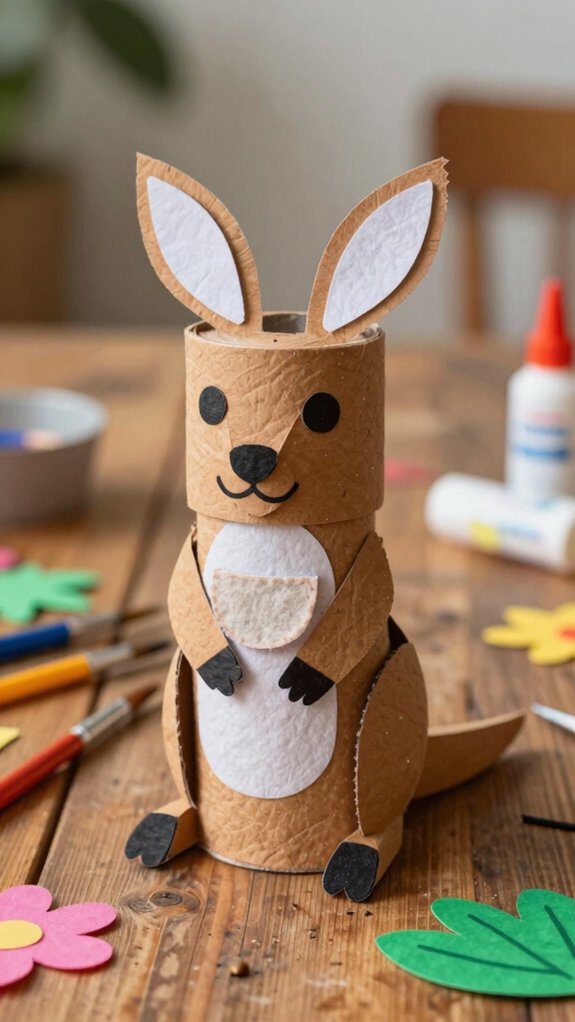
Recycling can be fun and creative, so I like turning empty toilet paper rolls into playful kangaroos that teach kids about reuse, anatomy, and storytelling all at once. I gather rolls, cardstock for ears and legs, glue, paint, and yarn for tails; then I show kids how folding and cutting the roll forms a pouch to explain kangaroo anatomy and marsupial behavior—how mothers carry joeys. Work step-by-step: paint the roll, attach ears, glue legs, and tuck a tiny paper joey into the pouch. This develops fine motor skills and sparks imaginative play. For group sessions, set up stations for cutting, painting, and assembly so everyone helps and shares ideas. It’s eco-friendly, educational, and perfect for classroom bonding and storytelling.
Kangaroo Mask Craft for Kids
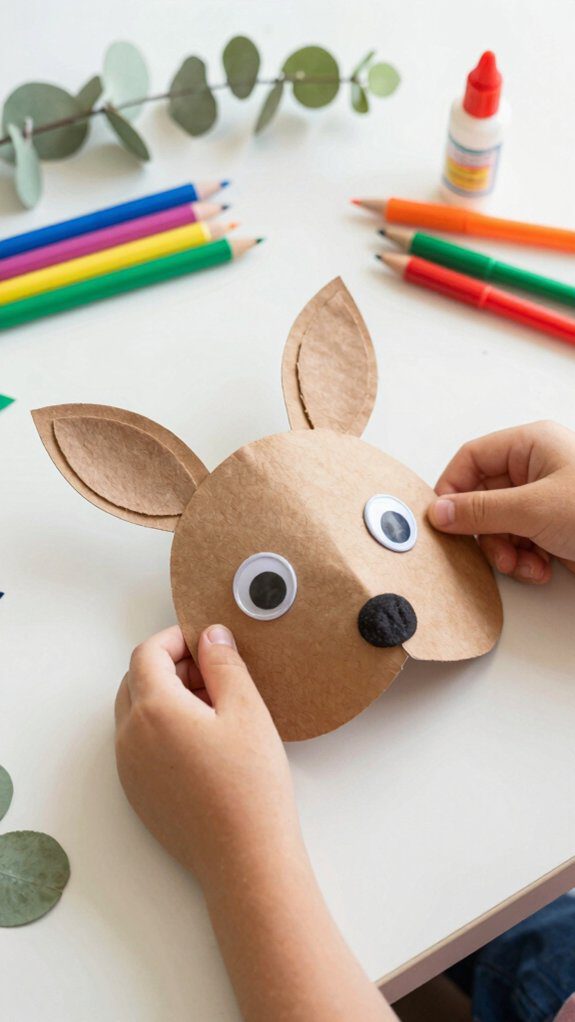
Make a kangaroo mask with simple supplies like brown construction paper, elastic, and markers, and you’ll have a fast, hands-on project that teaches kids about kangaroo features and behavior while they play. I love guiding groups through this because it blends practical skills with belonging: everyone customizes ears, snouts, and pouches and feels part of the same creative circle. First, trace a face shape, cut eye holes, and add big ears and a long snout; use pom-poms or markers for texture. Tie elastic to fit each child. As we craft, we talk about kangaroo behaviors like hopping and pouch-carrying, and we use creative storytelling to turn masks into characters. This builds fine motor skills, sparks conservation conversations, and invites shared play.
Kangaroo Rock Painting Activity
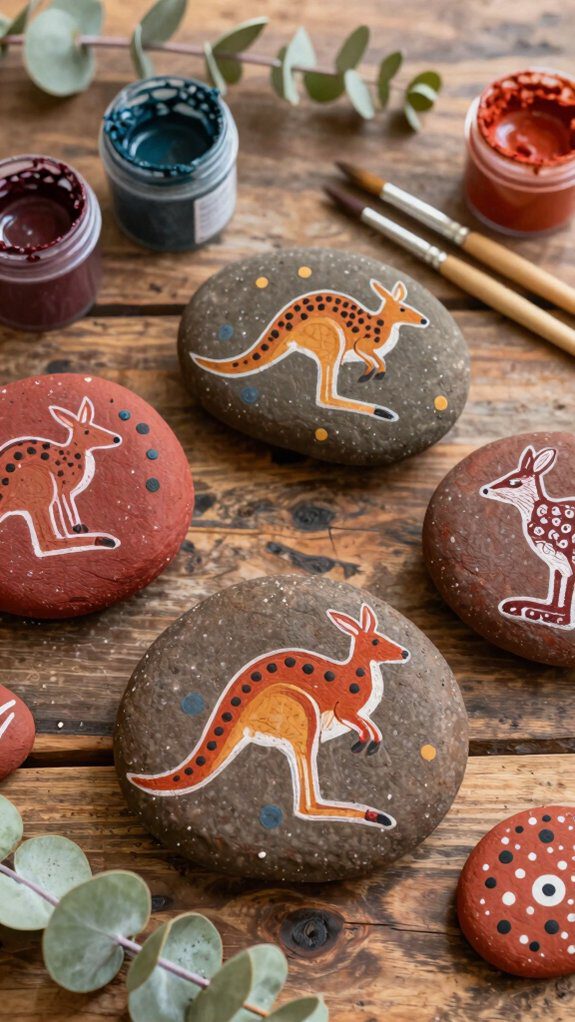
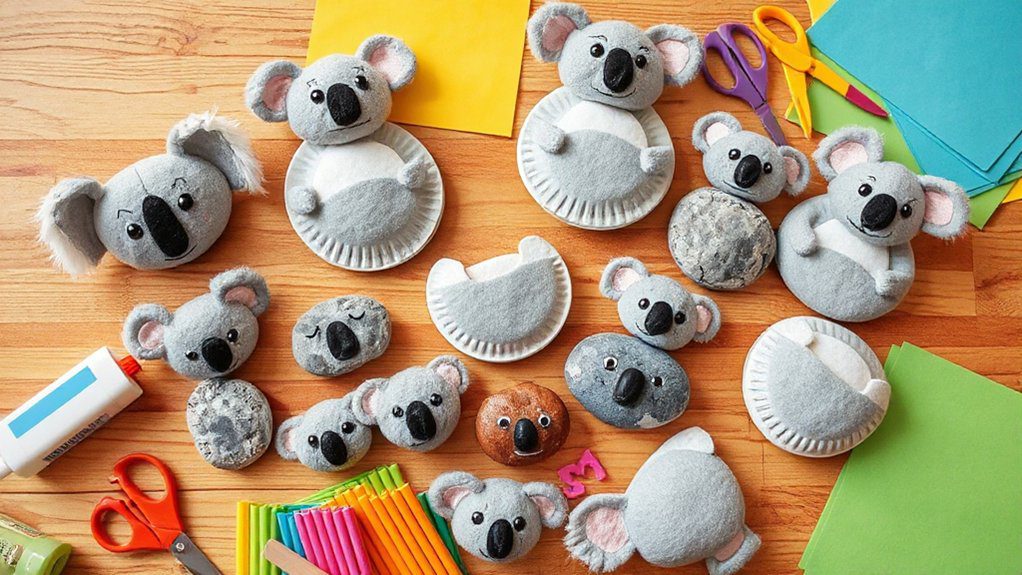
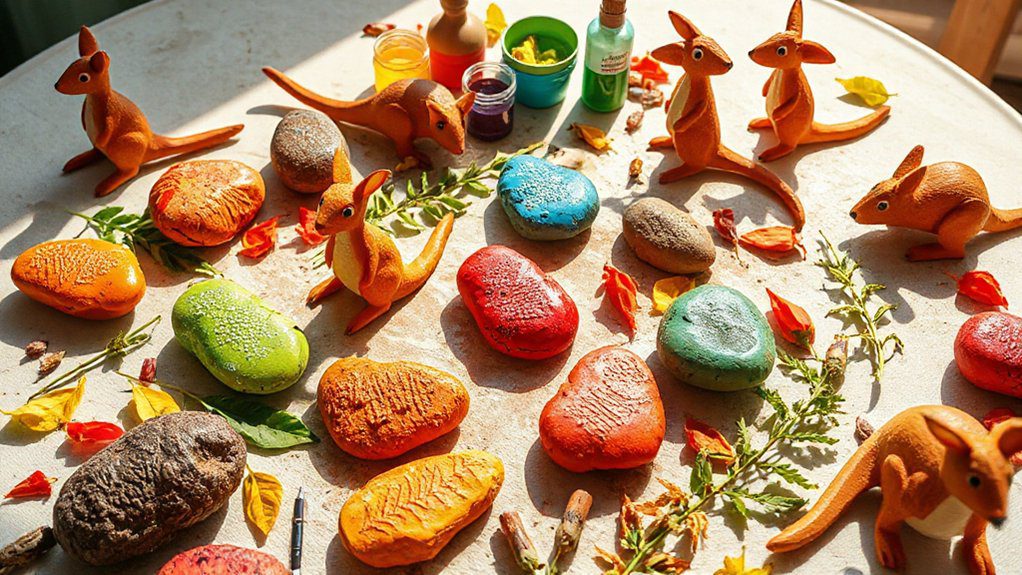
A few smooth stones, some acrylic paints, and a dash of imagination are all you need to turn plain rocks into hopping kangaroo art that’s built to last outdoors. I love guiding groups through simple rock painting techniques: start by cleaning stones, sketch a kangaroo silhouette in pencil, then layer base colors with a flat brush. For detail, try dot painting or fine brush strokes—dot work brings an Aboriginal-inspired texture, while strokes add fur and facial features.
As we paint, I share wildlife education facts about kangaroo habitats and behavior so kids connect art to nature. This activity encourages teamwork—kids swap colors, tools, and tips—and creates durable pieces you’ll proudly display in gardens or paths.
Kangaroo Paper Bag Puppet
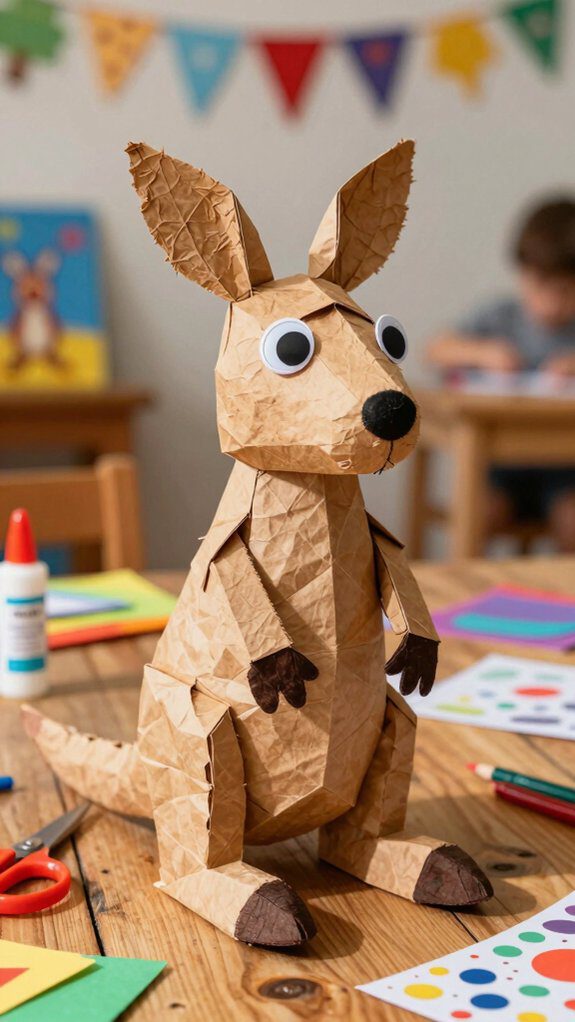
After painting rocks into bouncing kangaroos, I like to bring that same playful energy to a kangaroo paper bag puppet that kids can actually hold and perform with. I walk readers through simple steps, explaining how this kangaroo puppet storytelling activity sparks imagination and belonging in a group. The craft shows kangaroo craft benefits: fine motor practice, learning about pouches and joeys, and easy role-play that builds confidence.
- A plain paper bag becomes the body and pouch.
- Cut ears, legs, and a tail from construction paper.
- Glue pieces on; add a drawn face for personality.
- Slip a small toy joey into the pouch for dramatic play.
- Use it in short skits to teach animal behavior.
I encourage sharing puppets to deepen connection and learning.
Kangaroo Dot Painting Inspired Art
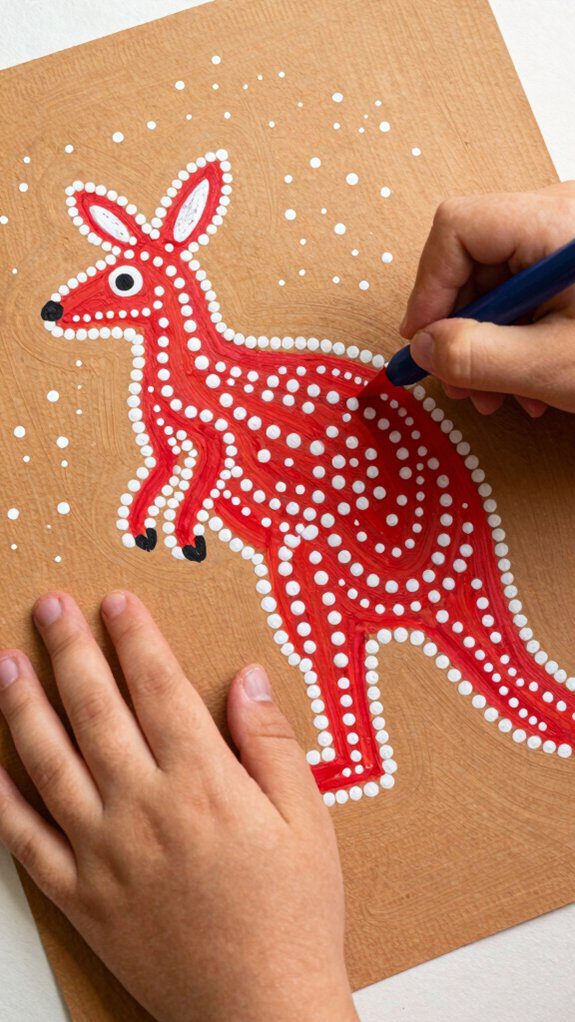
When I teach kangaroo dot painting inspired by Indigenous Australian techniques, I start by explaining how tiny dots can build texture, pattern, and a sense of movement—perfect for showing a kangaroo’s strong legs and hopping rhythm. I invite students to reflect on kangaroo symbolism and why this animal matters to Australia, creating a shared respect for cultural significance. First, we paint a simple brown silhouette of a kangaroo, then use the eraser end of a pencil or small brushes to add dots. I show Art color blending by layering warm earth tones into the dots so shadows and highlights appear. We compare dense versus sparse dot fields to suggest fur or motion, and I encourage questions so everyone feels included.
Kangaroo Popsicle Stick Craft
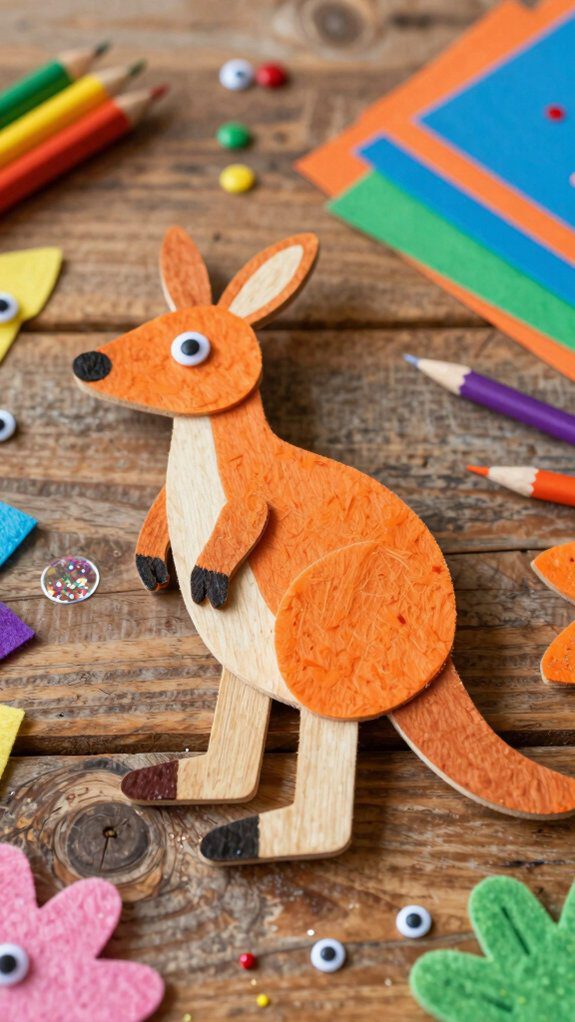
Grab some colored popsicle sticks and let’s build a hopping kangaroo together—it’s a hands-on craft that mixes simple geometry with playful storytelling. I love guiding groups through this; we glue sticks into a body, lean a few for legs, and add a paper tail and eyes. It’s great for practicing fine motor skills, and it sparks talk about kangaroo symbolism and Australian wildlife so everyone feels connected.
- Choose shades of brown for a realistic look
- Arrange sticks in layers for depth and sturdiness
- Use construction paper for ears, tail, and face
- Paint details after gluing to avoid smudges
- Create a small backdrop to inspire stories
This project works solo or in groups, and it welcomes every maker.
Kangaroo Footprint Art Idea
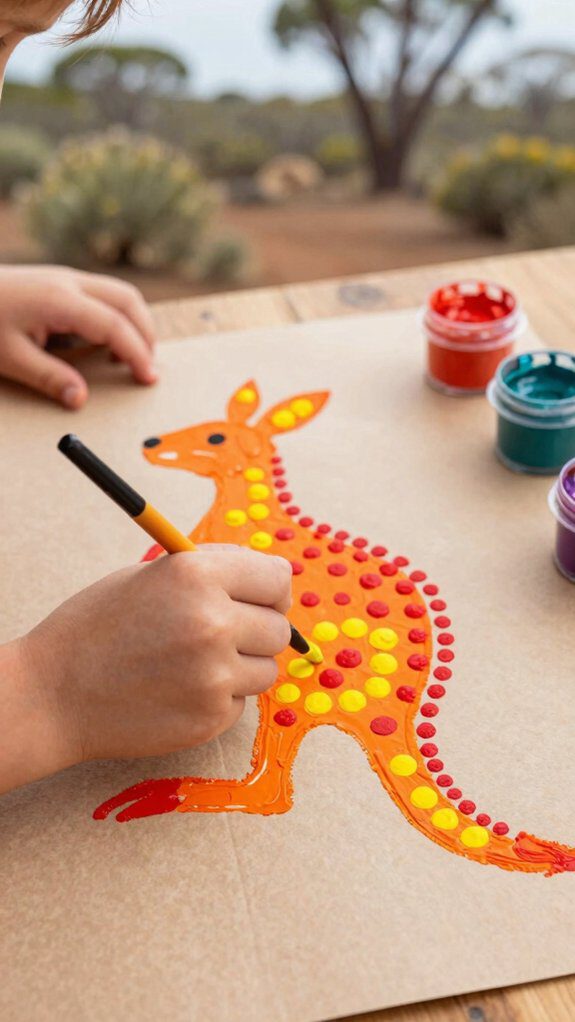
If you want a hands-on, slightly messy project that ties art to animal science, I’ll show you how to turn a child’s footprint into a kangaroo impression that’s both playful and educational. I press a painted foot onto paper to mimic that iconic hindprint, then we compare it to photos to investigate kangaroo anatomy—how long toes and a strong heel help hopping and travel. We add colors and dot patterns inspired by Aboriginal designs to connect the piece to Australian culture, and I suggest talking about kangaroos’ role in ecosystems and as national symbols. Finally, we invent short stories about the footprints, which boosts creativity and helps everyone feel included in learning about wildlife.
Kangaroo Shape Cut-and-Paste Craft
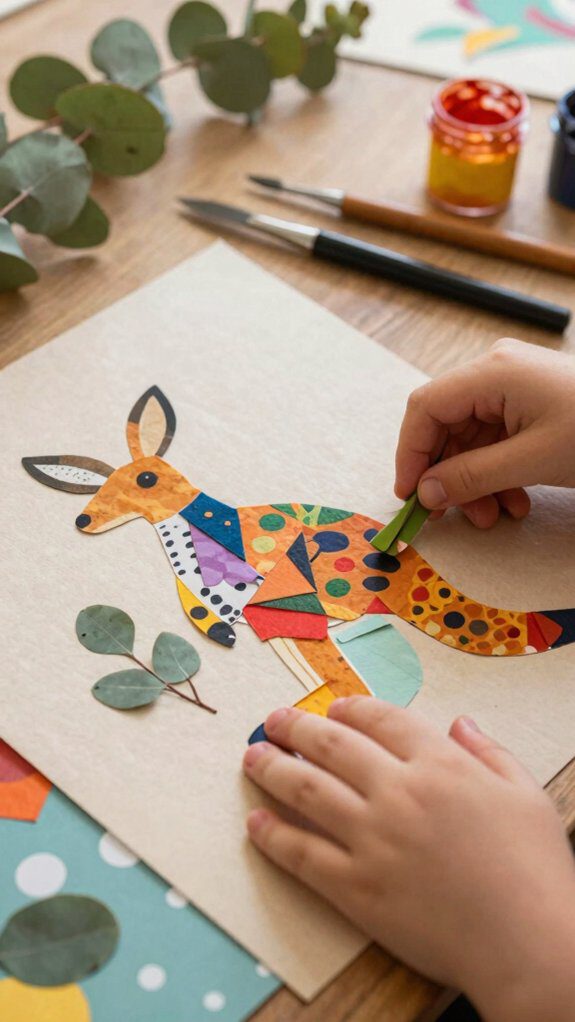
Let’s make a kangaroo collage that’s simple, hands-on, and ready to teach—I’ll walk you through cutting kangaroo shapes from colored paper, arranging them into a lively scene, and adding small details that bring each marsupial to life. I’ll guide you step-by-step so everyone feels included, whether you’re crafting with friends or a classroom.
- Cut varied kangaroo silhouettes: joeys, adults, jumping poses.
- Glue shapes onto a habitat background showing grass, trees, and distant red earth.
- Add patterns inspired by Aboriginal art for cultural texture.
- Share fun facts about kangaroos, like jumping up to six feet high.
- Vary shape complexity for different ages and skill levels.
This craft blends fine motor practice, kangaroo symbolism, and playful learning about kangaroo habitats.
Kangaroo Coloring and Craft Combo
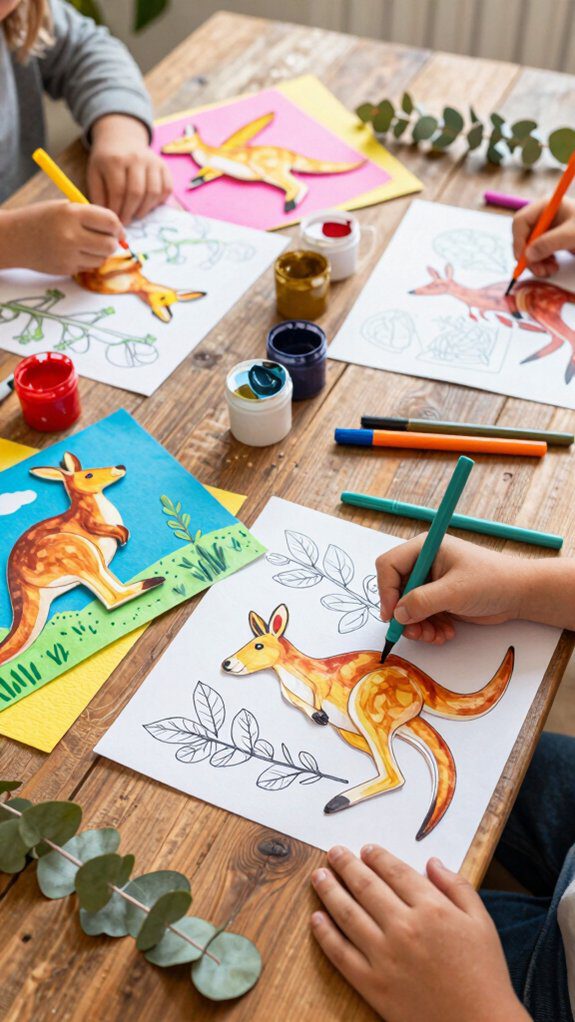
Combining kangaroo coloring with a hands-on craft is a perfect way to mix calm creativity and active making, and I’ll show you how to do both so every kid feels successful—whether they prefer filling pages with color or building something they can play with. I like to start with coloring pages that include simple facts, so kangaroo behavior education and kangaroo habitat exploration become part of the fun; kids color while we chat about hopping, pouches, and where kangaroos live. Then we move to a paper bag puppet or a 3D paper model made from toilet paper rolls and scrap paper, which boosts fine motor skills and sustainability. Try pairing a factual prompt with each craft step so learning and making stay connected.
Kangaroo Habitat Art Project
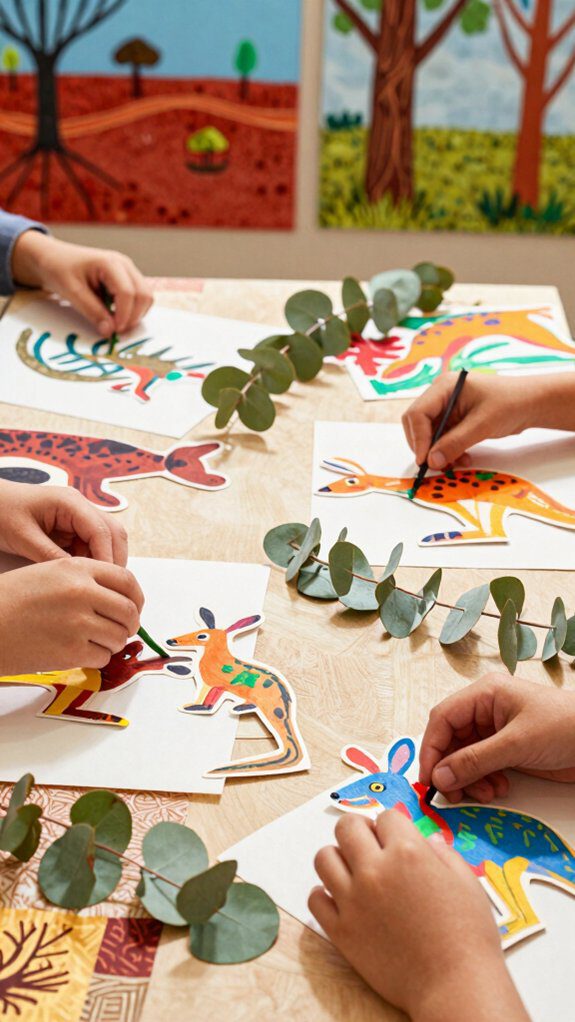
Because thinking about where kangaroos live helps shape our art, I like to start the Kangaroo Habitat Art Project by asking kids to imagine open grasslands, forests, and scrublands and then translate those scenes into color, texture, and shape. I guide them to think about food sources, shelter, and how mobs move with the seasons, so our pieces reflect habitat conservation and ecosystem balance. We work together, so everyone feels included and capable.
- soft golden grasses for grazing
- dappled forest light and leafy textures
- low scrubland shapes with warm ochres
- seasonal watering holes and shadowed shelter
- scattered seeds and native plants for diversity
I suggest mixing paints, collage, and natural materials to show connections and care.
Kangaroo Headband Craft Activity
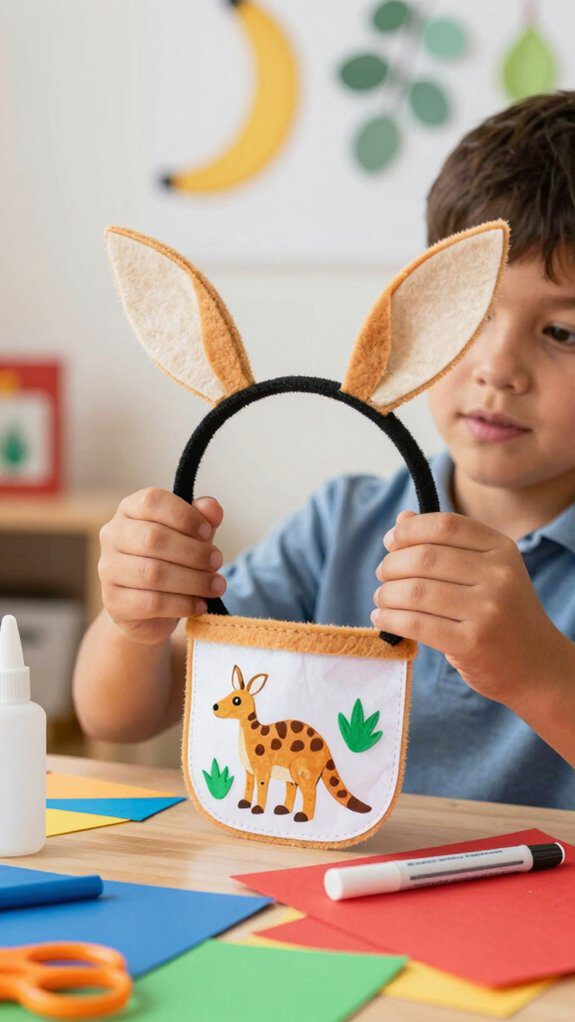
A simple headband can turn a quiet classroom into a lively mob of kangaroos, so I start this activity by showing kids how easy it is to make ears, a pouch, and a comfortable band that fits any head. I invite everyone to cut soft cardstock for ears, fold and glue a small pouch, and attach pieces to a strip that stretches; this builds fine motor skills and confidence. Next, we role-play kangaroo behavior, moving as a group and practicing gentle hops, then use short stories to investigate maternal care and marsupial biology. I also highlight animal communication—thumps and soft calls—as cues during play. Tips: pre-cut templates, adjustable bands, and paired storytelling keep kids connected and proud.
Recycled Materials Kangaroo Craft
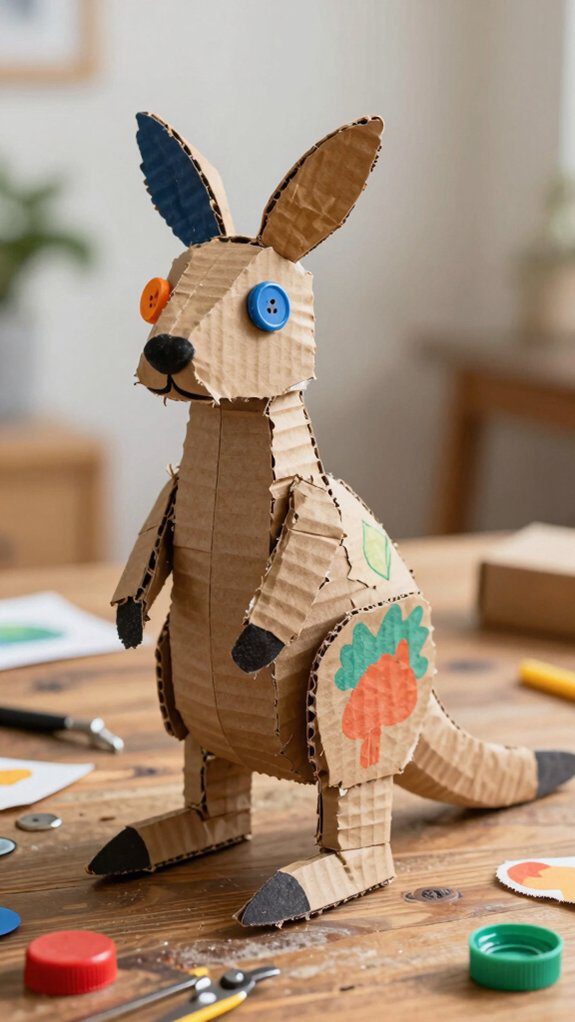
If you want a craft project that’s eco-friendly, hands-on, and just a little bit silly, try turning toilet paper rolls and other recyclables into kangaroos — I promise it’s easier than it sounds. I love recycled crafting because it teaches resourcefulness and brings us together; we’ll learn kangaroo anatomy while practicing cutting, gluing, and assembling. This project works great for small groups, and it’s a gentle form of environmental education that makes conservation feel doable.
- Gather toilet paper rolls, scrap cardboard, bottle caps, and yarn.
- Cut ears, tails, and pouches; glue pieces onto the roll body.
- Paint or wrap with paper for patterns and texture.
- Label parts to teach behavior and anatomy.
- Share finished kangaroos and celebrate teamwork.
Beginner-Friendly Kangaroo Art for Kids
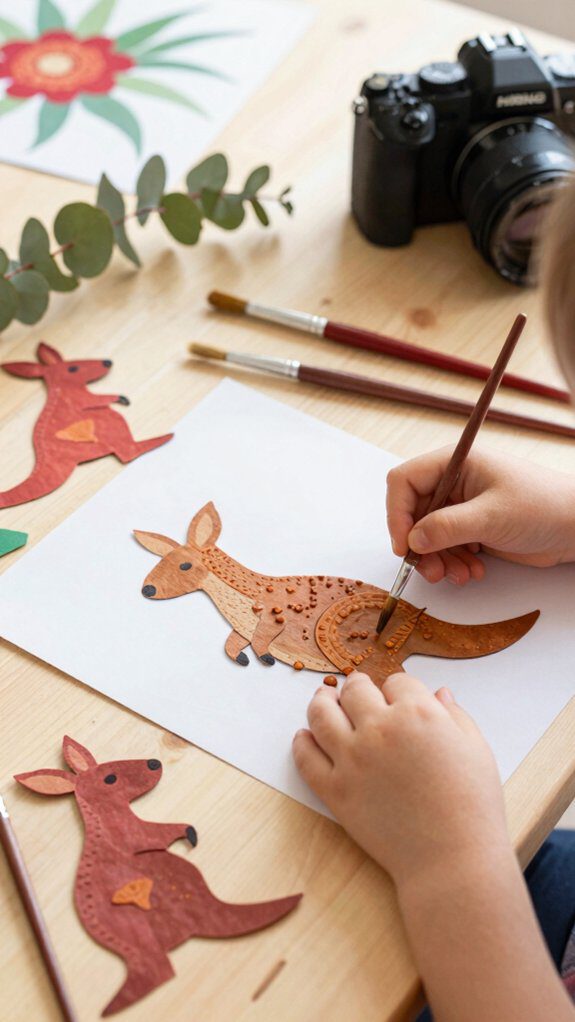
I loved making those recycled-roll kangaroos, and now I want to show you some beginner-friendly projects that are even quicker and just as fun—perfect for classroom activities or a rainy afternoon at home. Start with paper plate kangaroos to practice cutting, gluing, and painting; these boost fine motor skills and let kids personalize colors and faces using basic art materials. For sustainability, reuse toilet paper rolls to craft standing figures, and compare textures and strength between paper and cardboard. Try dot painting with pencils (flat top erasers) to introduce Aboriginal styles and kangaroo symbolism gently, explaining respect for culture. Paper bag puppets encourage storytelling, and printable templates make designs easy for beginners while still inviting individual creativity.