27 Busy Boxes for Toddlers and Preschoolers Activities
Disclosure: This post may contain Amazon affiliate links, at no extra cost to you. Content on DiyCraftNest is created with research support from AI tools and carefully reviewed, edited, and fact-checked by the lead author, Daniel Pat, to ensure accuracy and reliability. Learn more
Love cozy DIY projects? 💕
Get free printable guides, exclusive tutorials & surprise craft goodies straight to your inbox.
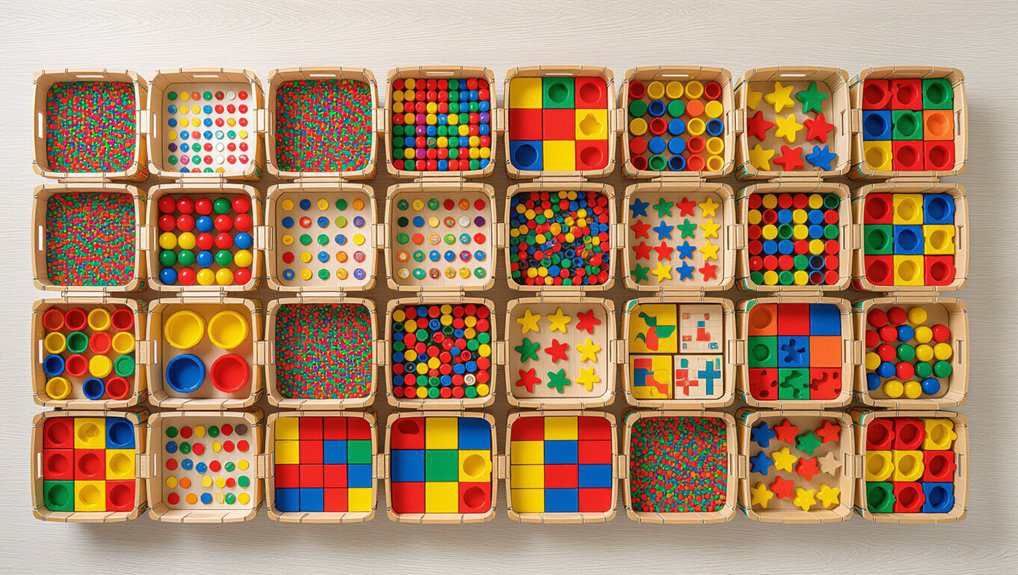
If you’re looking for busy box ideas that keep little ones involved, try activities like Counting Bear Color Match to boost color recognition, or Letter Building with Playstix for fine motor skill and alphabet practice. Pom Pom Color Match and Pipe Cleaner threading add hand-eye coordination fun, while Puzzle Card Matching sharpens mental skills. Adding sensory play with exploration bottles or fabric sorting rounds it out nicely. These hands-on activities balance learning and play, and there’s plenty more to spark creativity and growth ahead.
Key Takeaways
- Include color recognition activities like Counting Bear Color Match and Pom Pom Color Match to enhance learning and fine motor skills.
- Use fine motor skill builders such as Letter Building with Playstix, Nuts and Bolts, and Lego Creator Sets for hands-on development.
- Incorporate cognitive skill challenges like Puzzle Card Matching and Playing Cards with Clothespins to boost problem-solving and sorting abilities.
- Add creative play options like Paper Bag Puppets and Lego Storytelling to foster imagination and language growth.
- Provide sensory exploration tools including Sensory Fidget Boxes, Kitchen Utensil Exploration, and Recycled Lids Stacking for tactile engagement.
Counting Bear Color Match
When you’re looking for a fun way to boost your toddler’s or preschooler’s color recognition and fine motor skills, the Counting Bear Color Match activity is a fantastic choice.
I love how it combines colorful counting bears with craft sticks marked by dot stickers, making color matching exciting and hands-on. Kids not only improve their color recognition but also develop fine motor skills by picking up and placing the bears carefully.
You can easily adjust the challenge by creating simple or complex color patterns, making it perfect for different skill levels and helping your little one feel confident and included.
Letter Building with Playstix
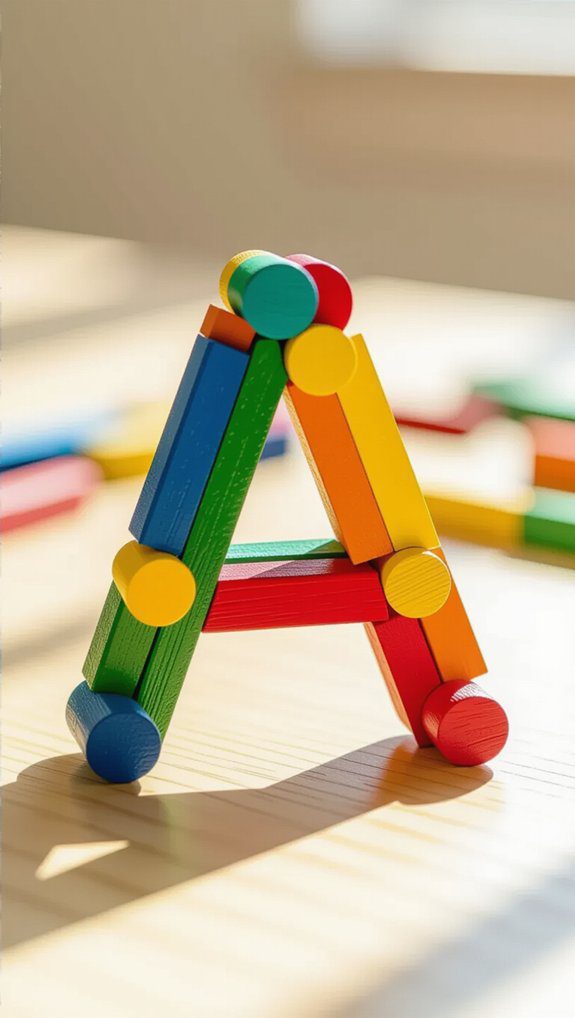
Grab a handful of Playstix and watch your child’s creativity soar as they build letters from scratch. This activity boosts letter recognition, spatial awareness, and fine motor skills through guided construction. Kids experiment with shapes, encouraging imaginative play and adjusting skills to their level. Try using note cards with letters to support learning.
| Skill Focus | Activity Benefit | Modification Tip |
|---|---|---|
| Letter Recognition | Strengthens memory | Use simple letters first |
| Spatial Awareness | Improves visualization | Add complexity gradually |
| Fine Motor Skills | Improves dexterity | Offer larger sticks initially |
Pipe Cleaners and Plastic Straws

Pipe cleaners and plastic straws make a fantastic combo for keeping little hands busy while sharpening important skills.
I love how this activity blends color matching with fine motor development perfectly. Kids thread pipe cleaners through straws, matching colors as they go, which boosts hand-eye coordination and dexterity.
Cutting pipe cleaners to fit the straws adds a hands-on twist that challenges their precision. Plus, it’s easy to adjust for different ages or skill levels—just swap colors or lengths.
This simple, creative play feels like a cozy group project, where everyone learns and grows together, one colorful strand at a time.
Pom Pom Color Match
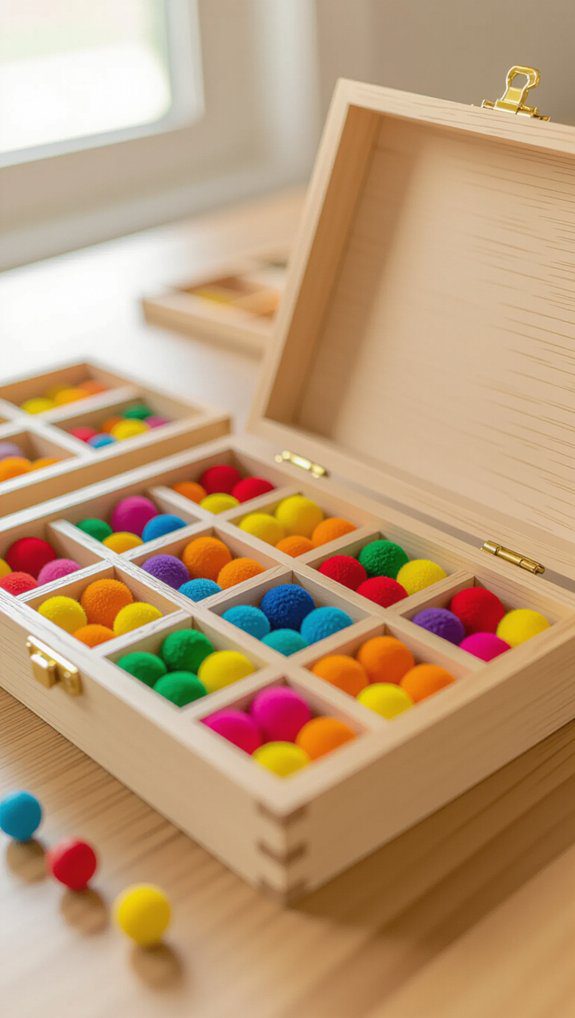
Pom Pom Color Match is a delightful way to blend play with learning, and I think you’ll love how simple it’s to set up.
Just tape colored sticky notes to a surface and gather matching pom poms along with tweezers. Kids use the tweezers to pick up and move pom poms onto the corresponding colors, boosting their color recognition and fine motor skills.
This hands-on game also sharpens hand-eye coordination. You can easily adjust difficulty by adding more colors or mixing tasks.
It’s a fun, sensory-rich activity that helps children feel confident and connected as they learn.
Puzzle Card Matching
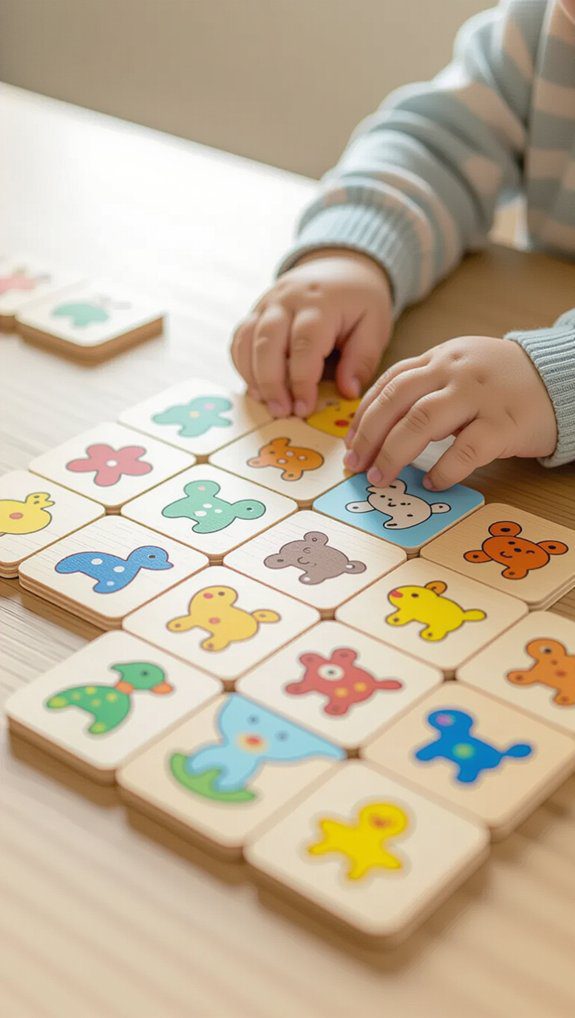
Puzzle card matching is a fantastic way to sneak some learning into playtime while keeping things fun and captivating.
I love how visual cues in these cards help boost my child’s mental skills by encouraging them to spot similarities and differences. Offering theme variety—like animals or vehicles—keeps their interest alive and supports matching concepts naturally.
Plus, handling the pieces develops fine motor skills, and setting up busy boxes promotes independent play. Choosing age-appropriate puzzles guarantees puzzle success, building confidence.
Using these involvement strategies, I see my little one enjoy learning while feeling proud and included every step of the way.
Nuts and Bolts Fine Motor
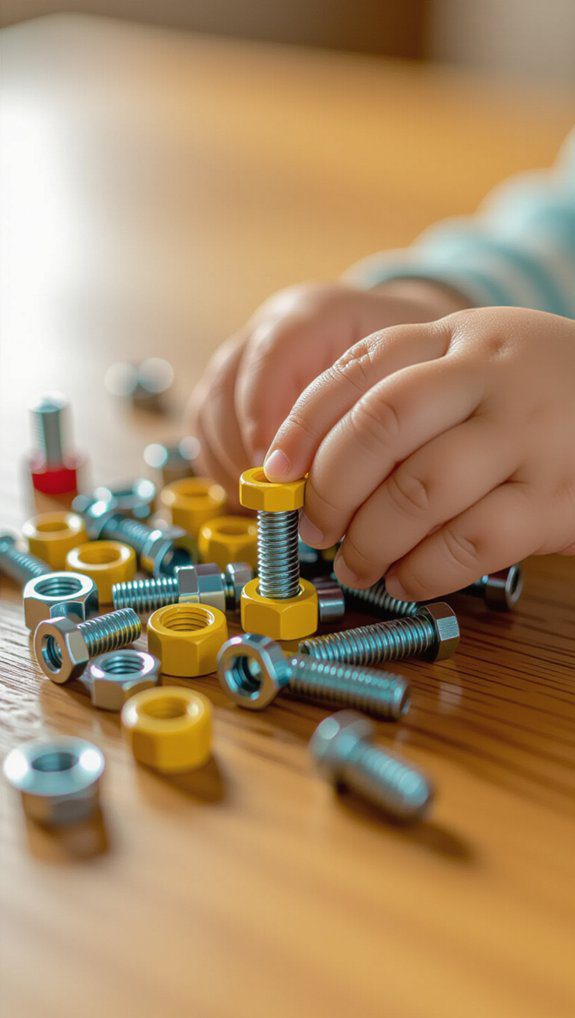
After enjoying the visual and mental challenges of puzzle card matching, I’ve found that nuts and bolts activities offer a wonderfully hands-on way to boost my child’s fine motor skills.
Nut manipulation involves twisting and turning different sizes and colors, which sharpens hand-eye coordination and dexterity. Plus, it introduces basic engineering concepts, sparking curiosity about how things fit and work together.
I love how this open-ended play encourages creativity and problem-solving, making it perfect for busy boxes. Adding a variety of nuts and bolts not only keeps things interesting but also supports sorting and color recognition.
Foam Alphabet Letters
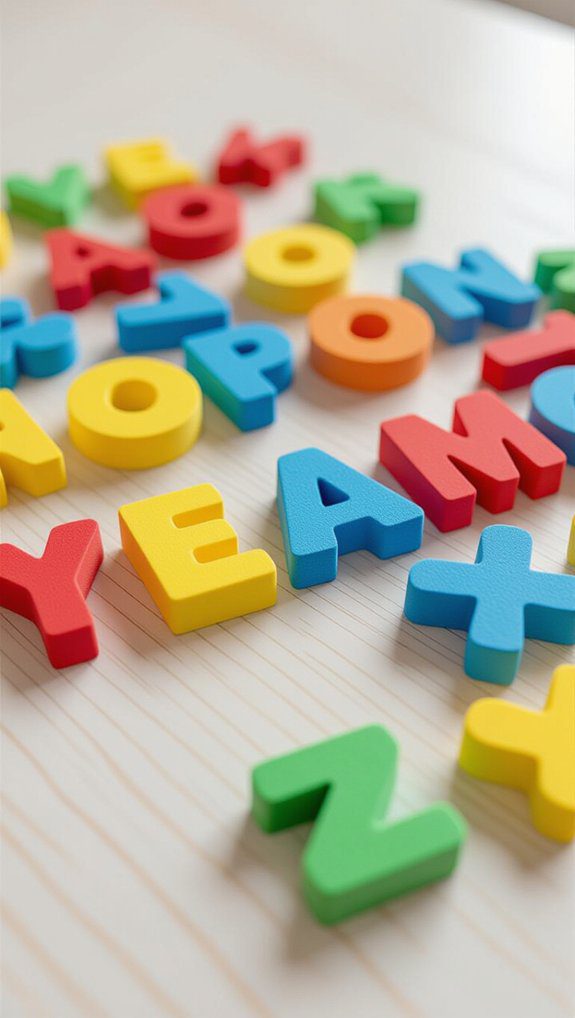
While exploring new ways to support early literacy, I’ve uncovered that foam alphabet letters are a fantastic addition to any busy box. These lightweight, colorful letters invite toddlers to participate in foam letter games and sensory letter sorting, improving recognition and fine motor skills. Plus, they float—perfect for bath time learning! Here’s a quick look at their benefits:
| Feature | Benefit | Activity Idea |
|---|---|---|
| Lightweight | Safe for toddlers | Spelling simple words |
| Bright colors | Improves visual learning | Sensory letter sorting |
| Floats in water | Fun bath-time play | Foam letter games |
| Easy to clean | Convenient for parents | Tracing and matching |
They truly make learning feel like play.
Playing Cards and Clothespins
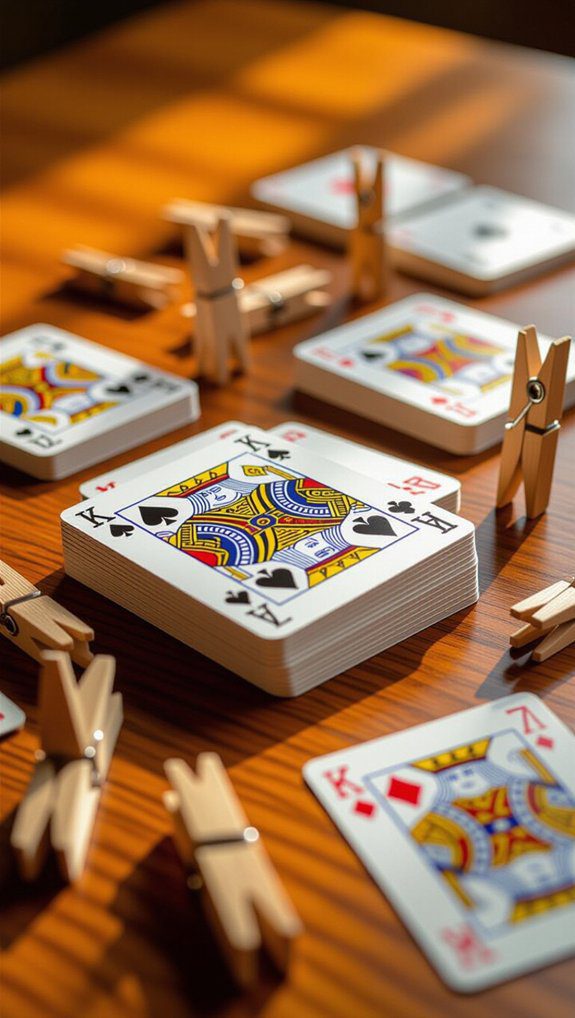
A simple set of playing cards paired with colorful clothespins can open up a world of fun and learning for toddlers and preschoolers.
I love how this combo turns into a busy box staple, perfect for educational activities like color sorting and number matching. Kids clip clothespins onto the right cards, boosting mental skills and encouraging independent play.
Plus, it’s fantastic for fine motor development—practicing that pinching action builds hand strength and dexterity.
These creative games are easy to set up and super affordable, making them a go-to for parents and educators wanting engaging, hands-on learning.
Paper Bag Puppets
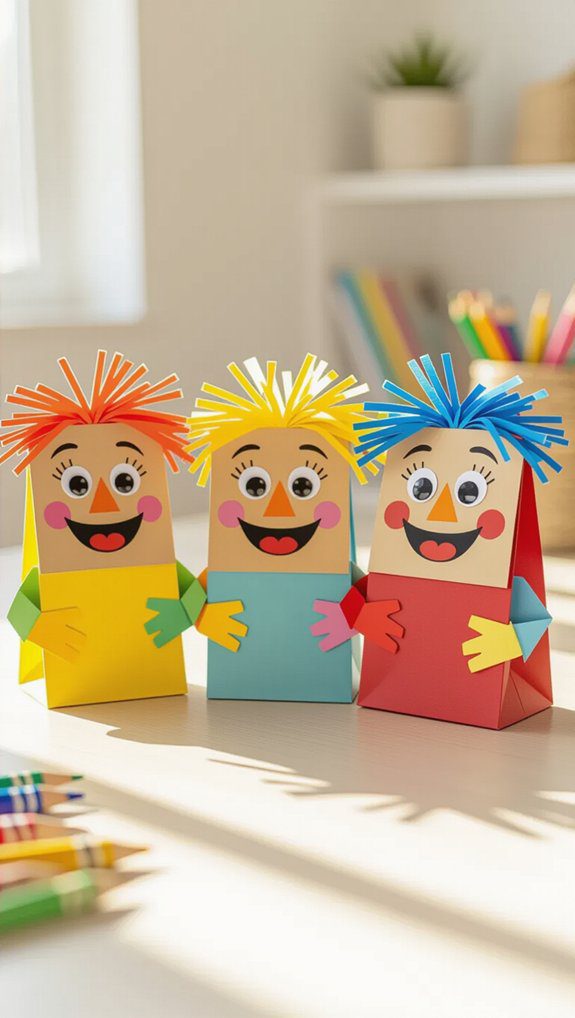
Three simple items—paper bags, markers, and a handful of decorations—can spark hours of imaginative fun with paper bag puppets.
I love how this easy craft invites children to immerse themselves in puppet storytelling, turning simple bags into characters full of personality. By drawing faces, adding eyes or hair, kids investigate creative expression while sharpening fine motor skills.
It’s more than just play; it’s a shared adventure of imagination and language development. Whether toddlers or preschoolers, everyone feels included, crafting unique puppets that bring stories to life.
Try it—you’ll be amazed at the joyful connections that follow!
Lego Creator Sets
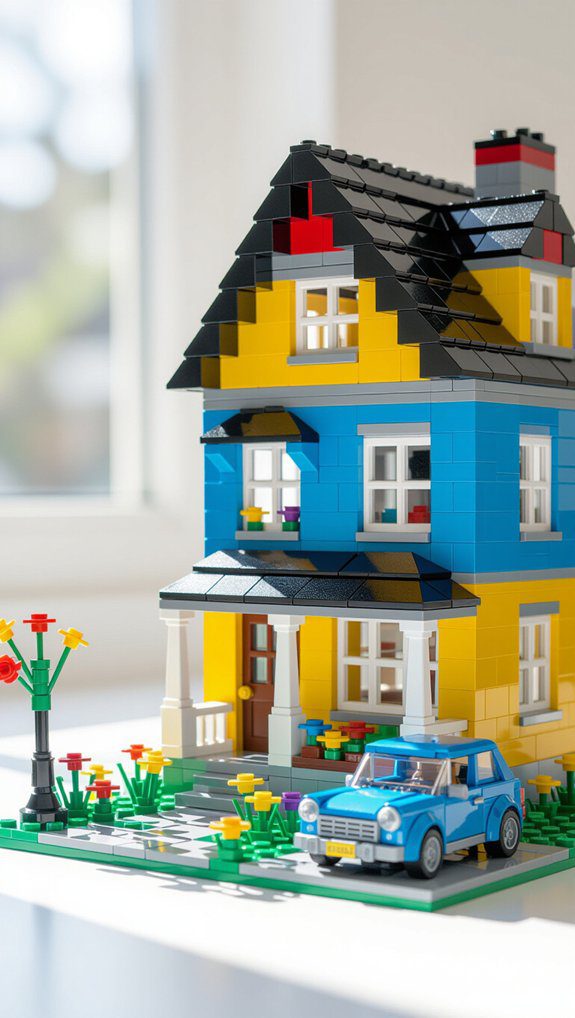
Because Lego Creator Sets offer so much variety in one box, they quickly become a favorite activity for toddlers and preschoolers alike. I love how these sets spark Lego creativity while presenting fun building challenges that keep little hands busy. They’re perfect for honing fine motor skills and spatial awareness, all while promoting problem-solving. Here’s a quick look at what makes them special:
| Feature | Benefit | Why It Matters |
|---|---|---|
| Multiple Builds | Variety in play | Keeps kids involved |
| Colorful Bricks | Sensory stimulation | Boosts color recognition |
| Different Themes | Appeals to all interests | Cultivates belonging |
| Difficulty Levels | Age-appropriate fun | Builds confidence |
| Instruction Guides | Step-by-step support | Encourages independence |
Lego Storytelling
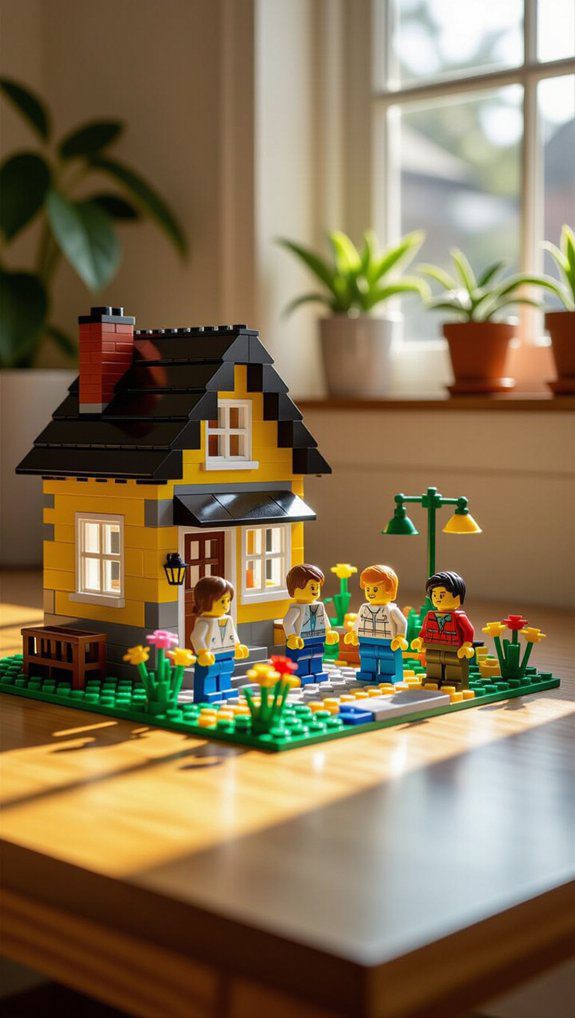
Lego sets don’t just stop at building cool structures—they open up a whole world of storytelling, too. I love how Lego storytelling sparks Lego narrative development by turning simple bricks into characters and scenes.
When kids face creative building challenges, they don’t just build—they imagine, solve problems, and share stories that bring everyone closer. It’s a joy watching toddlers and preschoolers practice fine motor skills while crafting tales, growing their language skills as they explain their ideas.
Try adding themes or prompts to inspire fresh stories; it’s a fun way to connect and build confidence together.
Paper Punch Collage
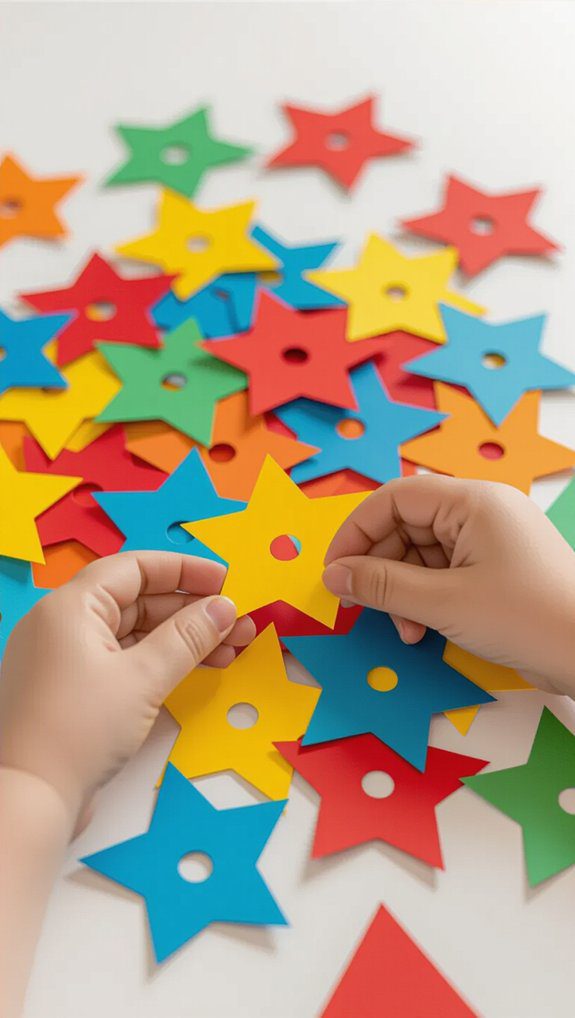
A paper punch collage is a fantastic hands-on activity that lets toddlers and preschoolers investigate shapes, colors, and creativity all at once. It’s perfect for developing fine motor skills and improving color recognition. Set up a busy box with colorful paper, punches, and glue sticks, and watch kids focus as they assemble their designs. Here’s a simple guide to get started:
| Tool | Purpose | Benefit |
|---|---|---|
| Paper Punch | Creates shapes | Improves fine motor skills |
| Colored Paper | Offers variety | Promotes color recognition |
| Glue Stick | Assembles collage | Develops hand-eye coordination |
Try it—you’ll belong to a joyful creative circle!
Sensory Fidget Box
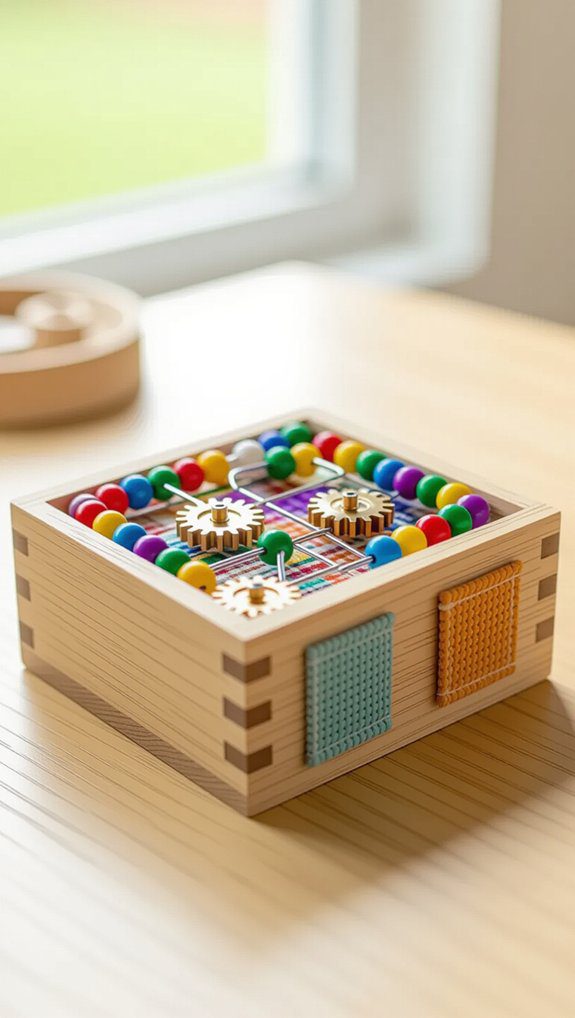
After enjoying the colorful creativity of paper punch collages, you might want to investigate ways to involve your little one’s senses even more.
A sensory fidget box offers a perfect chance to do just that by combining tactile toys like textured balls, squishy items, and sensory bottles. The beauty lies in fidget box customization—selecting colors, textures, and shapes your child loves improves sensory exploration benefits, boosting focus and emotional calm.
Plus, manipulating these objects sharpens fine motor skills and hand-eye coordination. Sharing this box creates a warm, inclusive space where your child feels understood and supported every step of the way.
Travel Game Box
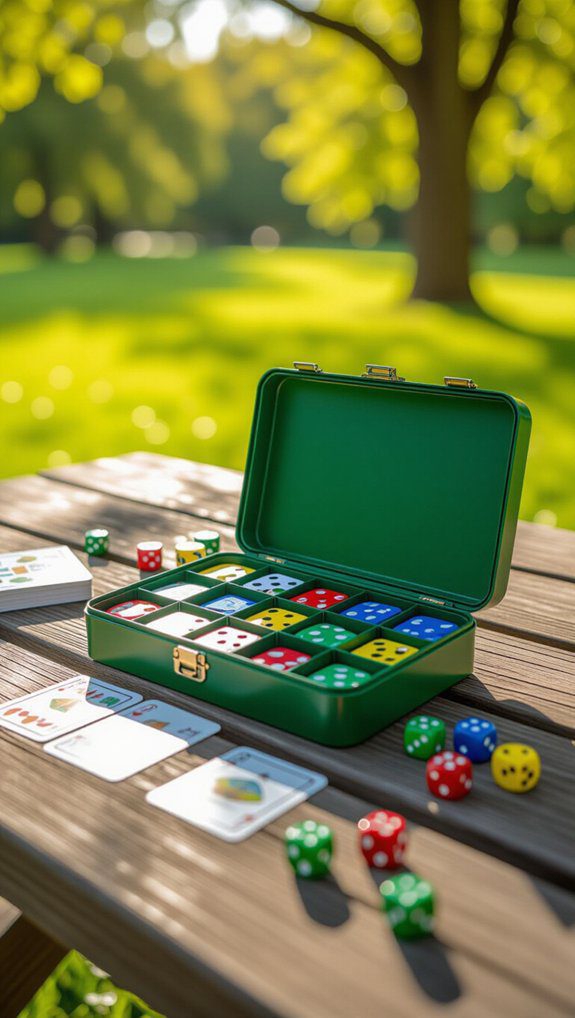
Whenever we hit the road with toddlers or preschoolers in tow, I find that having a well-packed travel game box makes all the difference between a peaceful trip and a cranky meltdown.
I pack compact activities like magnetic puzzles, mini board games, and coloring books—these travel game ideas keep little hands busy without creating mess. I also include quiet options like sticker books and flashcards that mix fun and learning effortlessly.
Keeping everything lightweight and easy to store guarantees quick access during delays. Updating the box regularly keeps my kids excited for every expedition ahead.
Fabric Scraps Exploration
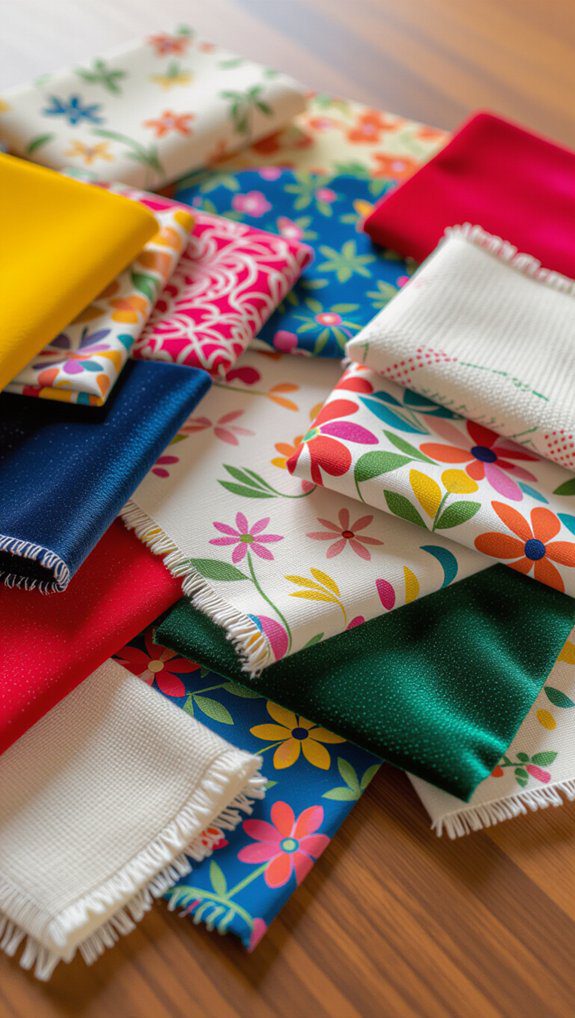
Three simple fabric scraps can open up a world of fun and learning for toddlers and preschoolers, and I’ve found they make a fantastic addition to any busy box.
Exploring different fabric textures encourages sensory exploration while boosting fine motor skills through fabric sorting and pattern matching. Kids love creating imaginative costumes and engaging in cooperative play, which builds social bonds.
Plus, fabric scraps are perfect for creative projects that promote artistic expression and color recognition. Sourcing scraps from old clothes or craft stores is easy and affordable, making this activity both practical and enriching for your little ones.
Stuffed Toys Play
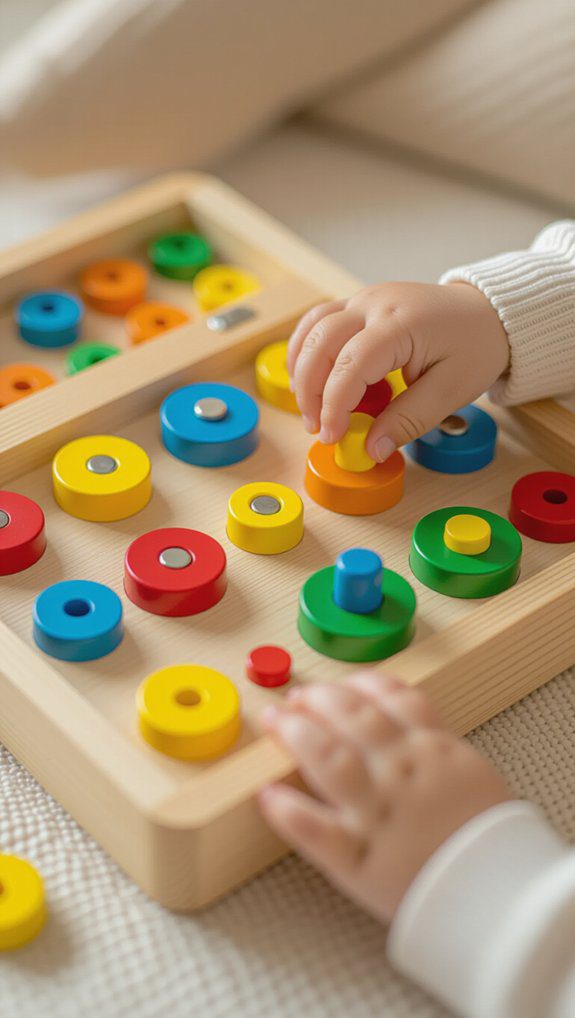
Stuffed toys play a wonderful role in a toddler’s world, offering comfort and companionship that can ease their emotions and spark imaginative adventures.
When kids involve themselves in stuffed animal storytelling, they not only express plush toy emotions but also build empathy and social skills. These cuddly friends become characters in tales, helping little ones practice sharing and cooperation during playdates.
Plus, manipulating their toys—dressing or arranging them—boosts fine motor skills. Including stuffed toys in busy boxes guarantees a familiar, soothing presence, making changes smoother and quiet moments more enjoyable for toddlers craving connection and creativity.
Musical Instruments

Moving from the cozy world of stuffed toys, let’s examine how musical instruments can add a lively spark to your busy boxes.
Toddler instrument play invites little ones to investigate musical rhythm exploration through shakers, tambourines, and xylophones. These instruments boost fine motor skills and hand-eye coordination as kids grasp and shake.
Plus, they encourage mental growth by helping children recognize patterns and remember beats. Sharing instruments during play also nurtures social skills, promoting a sense of belonging.
Including musical instruments in busy boxes makes learning engaging, joyful, and a wonderful way to bond with your toddler.
Recycled Lids Stacking
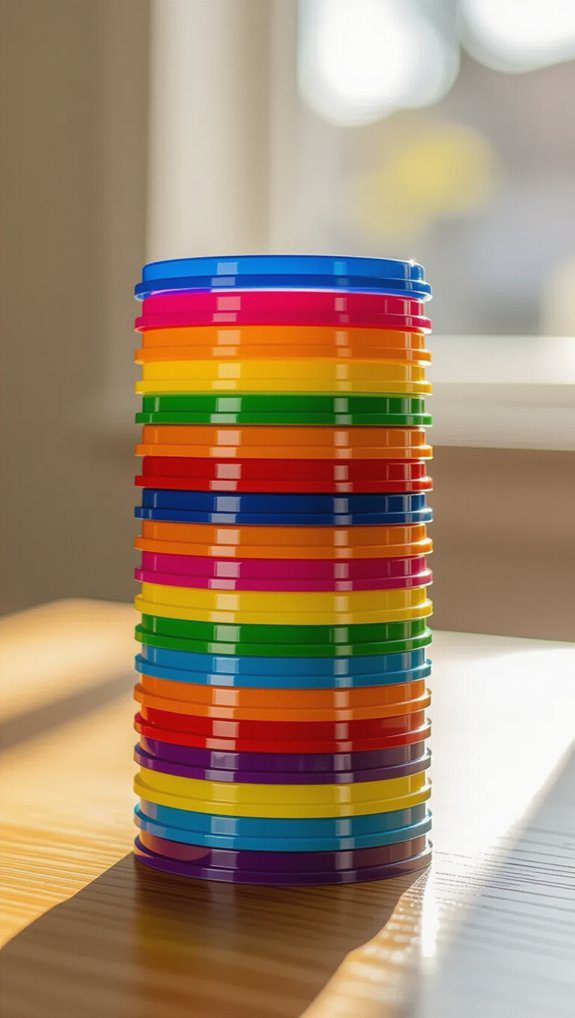
One of my favorite activities to include in busy boxes is recycled lids stacking, and I think you’ll love it too. Using lids from jars and bottles, this activity is eco-friendly and fun.
Kids naturally improve fine motor skills as they grasp and balance different sizes and shapes. Plus, by encouraging color sorting and shape recognition, it becomes a significant tool for mental development.
I love watching little ones problem-solve how to stack lids without toppling them, building spatial awareness. Offering the freedom to create patterns or towers, it turns learning into joyful, open-ended exploration.
Wooden Toys
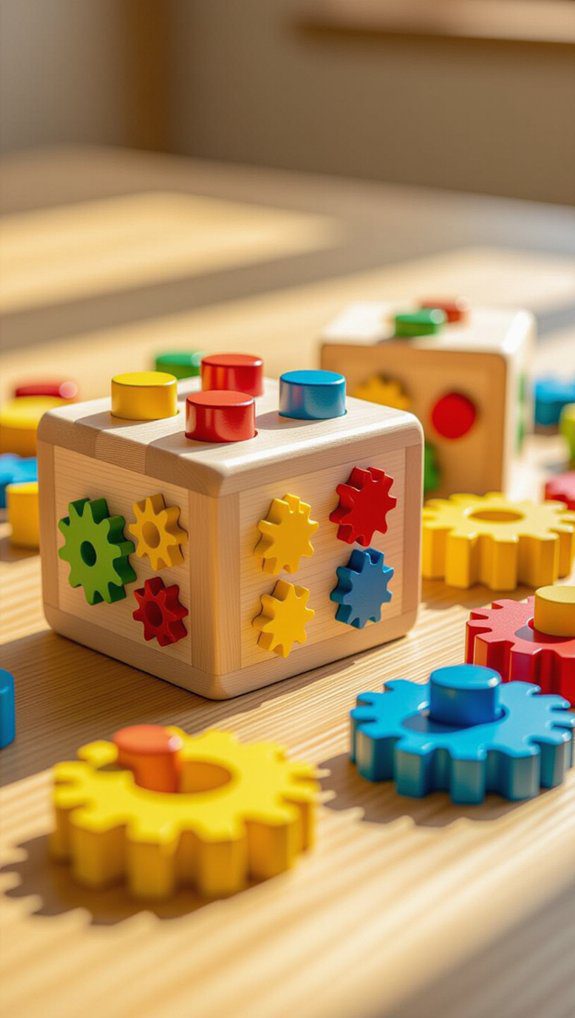
Wooden toys have a timeless charm that I find endlessly appealing, especially when it comes to keeping toddlers and preschoolers happily occupied. These eco friendly toys invite imaginative play and sensory exploration, helping kids build fine motor skills with wooden puzzles and shape sorting. Plus, they’re educational toys that teach color recognition and creative building. Durable playthings like these last through years of fun, making them a smart family choice.
| Benefit | Example |
|---|---|
| Fine motor skills | Wooden puzzles |
| Creativity | Creative building sets |
| Learning | Shape sorting games |
| Durability | Classic wooden blocks |
Kitchen Utensil Exploration
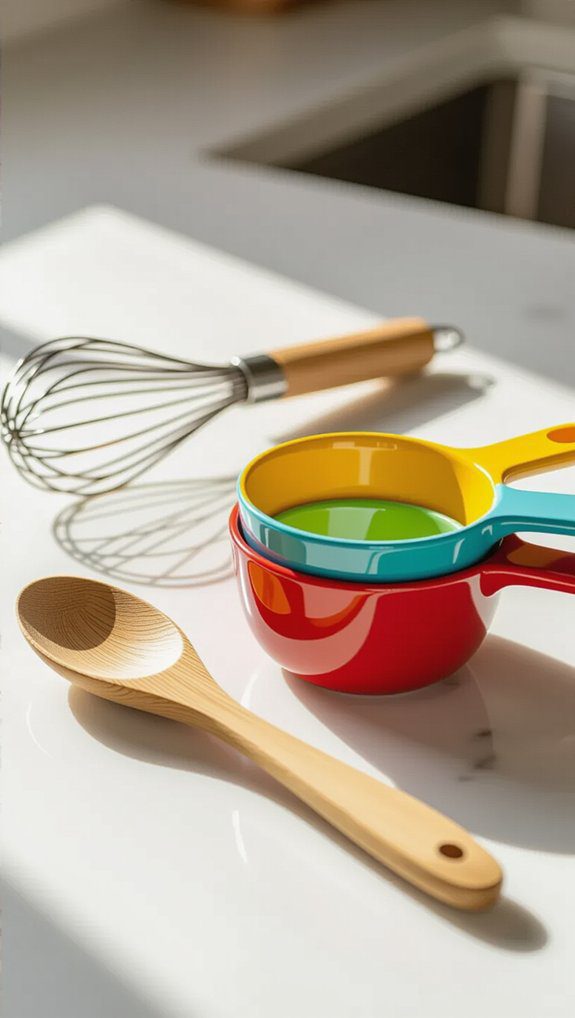
Exploring kitchen utensils offers a fantastic way to keep toddlers and preschoolers busy while helping them learn through play.
I love how utensil sorting sparks their curiosity, and sensory exploration with wooden spoons, whisks, and spatulas really involves their little hands.
Here’s how you can make the most of it:
- Encourage kids to sort utensils by size, shape, or function
- Let them feel different textures and weights
- Use measuring cups for pouring practice
- Promote imaginative cooking play
- Always supervise to keep it safe
This activity builds fine motor skills and invites joyful learning together.
Board Books Mini
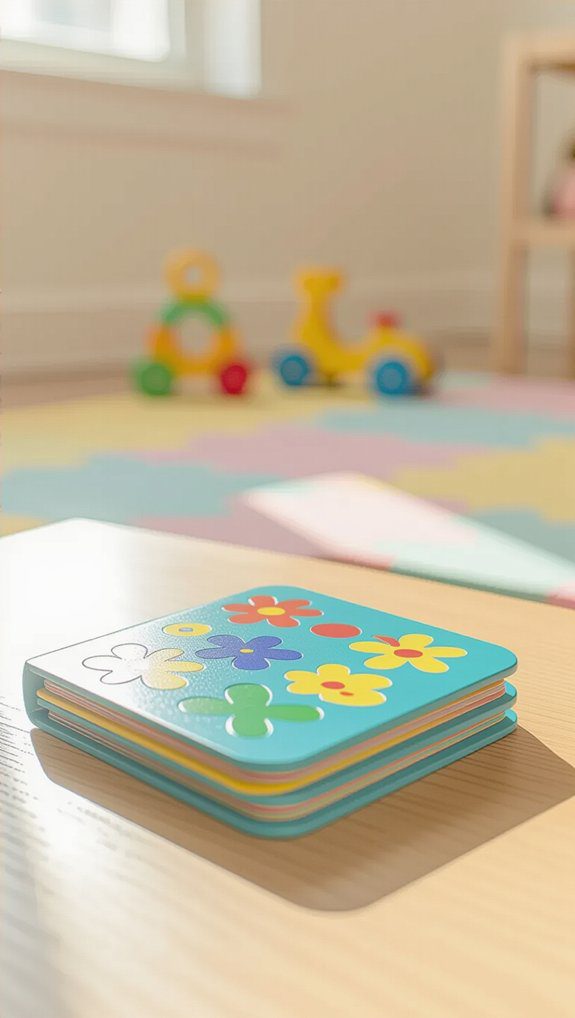
When I pick up a board book with my little one, I’m always amazed at how those thick, sturdy pages invite tiny hands to investigate without worry.
Board Books Mini are perfect for storytime sessions, offering vibrant illustrations and simple text that spark curiosity. I love how engaging reading with these books encourages my child to discover colors, shapes, and animals while building vocabulary.
Their durability means we can enjoy countless moments together, nurturing a shared love of stories. Including board books in busy boxes creates a cozy, educational space where toddlers feel safe and inspired to learn.
Bead Sensory Play
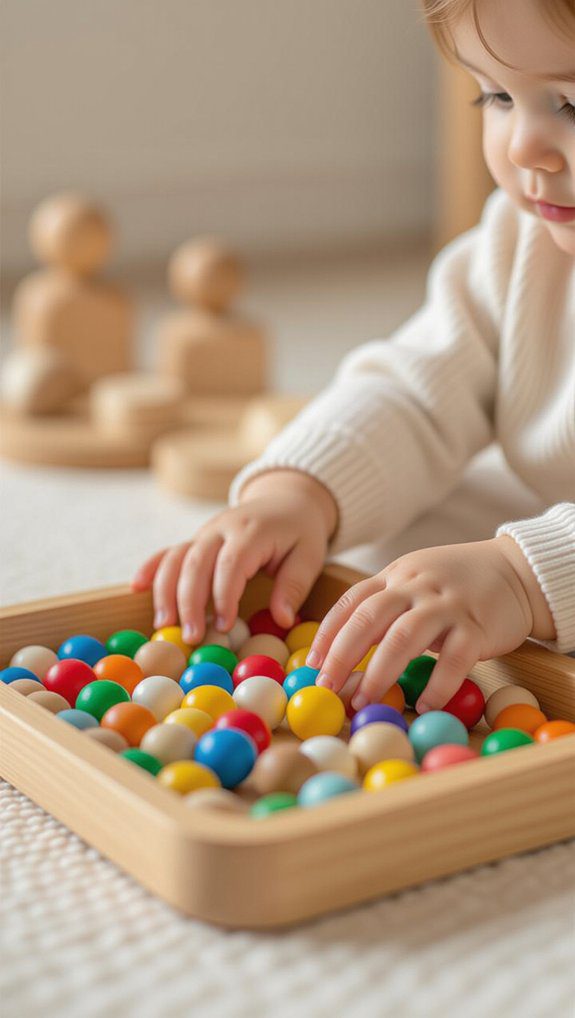
Although bead sensory play might seem simple at first, it offers a rich world of learning and fun for toddlers and preschoolers. I love how it encourages bead color recognition and bead shape sorting, turning playtime into a vibrant learning adventure.
Here’s why I think it’s so great:
- Improves fine motor skills with different bead textures
- Boosts hand-eye coordination using tools like tweezers
- Sparks creativity through themed bead storytelling
- Supports early math skills by sorting shapes and colors
- Requires close supervision to keep little ones safe
This activity truly connects learning with joyful exploration.
Colorful Balls
Colorful balls bring a vibrant boost to any busy box, and I’ve found they’re fantastic tools for helping toddlers and preschoolers learn while having fun.
Using them in color recognition games makes identifying hues exciting and engaging. Their varied sizes and textures offer rich sensory exploration activities, encouraging little hands to roll, catch, and sort.
These playful moments not only develop fine motor skills but also promote gross motor coordination. Plus, integrating counting or color-themed scavenger hunts turns learning into a lively group experience.
Trust me, colorful balls truly brighten both playtime and early education.
Discovery Bottles
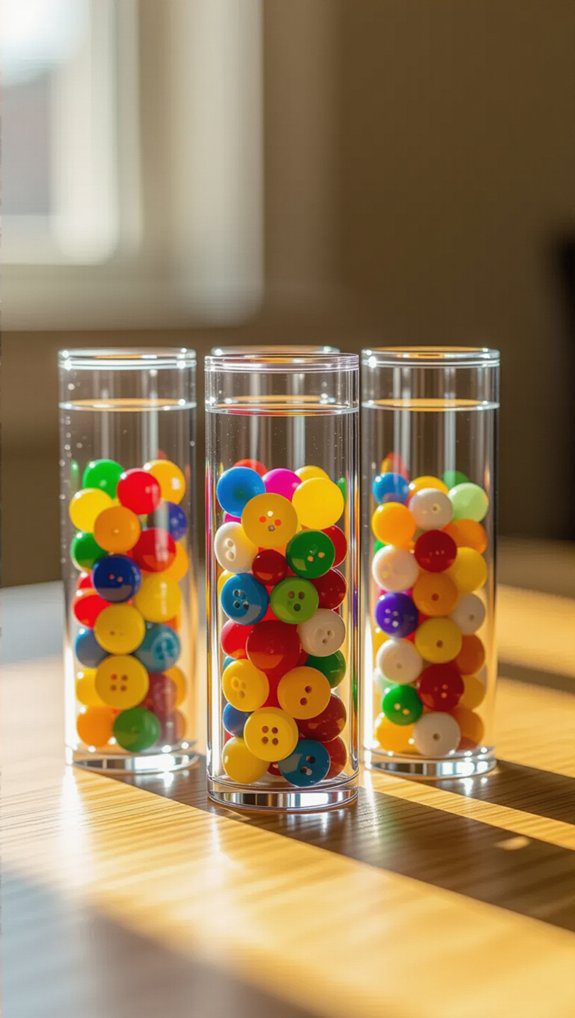
Adding exploration bottles to your busy box brings a whole new level of sensory fun that kids absolutely love.
These exploration bottles invite toddler participation through sensory play, combining fine motor skills with visual tracking. I enjoy DIY projects that let me creatively customize each bottle for themed exploration, sparking educational discussions about nature or seasons.
Plus, they’re perfect for examining cause effect as little ones shake or roll them. Here’s what I include:
- Water, glitter, and beads for sensory exploration
- Small toys for themed exploration
- Recycled bottles for creative customization
- Opportunities to develop fine motor skills
- Visual tracking challenges
They’re simple, fun, and wonderfully educational!
Fabric Circles Sorting
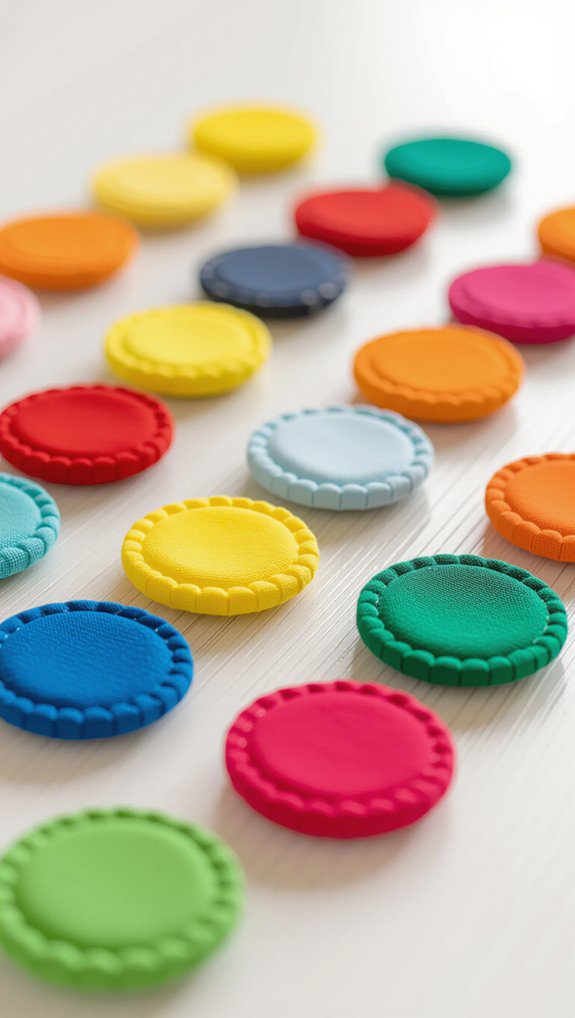
One of my favorite activities to include in a busy box is fabric circles sorting, which really helps toddlers sharpen their color recognition skills while having fun.
I love how kids can investigate different fabric circle patterns, sorting by color, size, or texture. This sensory fabric investigation not only boosts their fine motor skills but also encourages creativity as they create unique designs.
To keep things fresh, I rotate colors and add new textures, keeping little hands involved. It’s a simple, inviting way to support learning and playful revelation together, building confidence and belonging in every sorting session.
Playdough and Tools
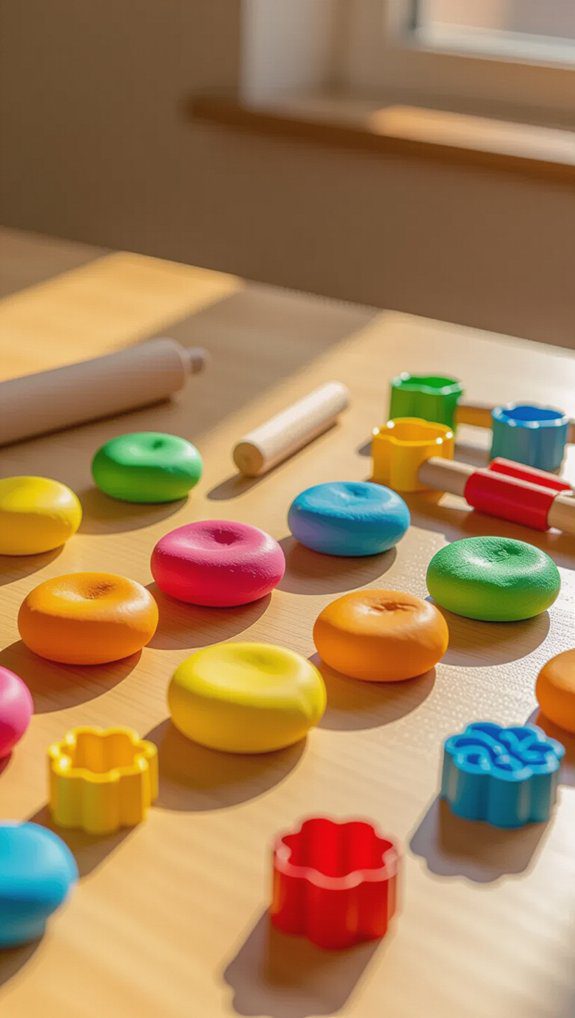
Playdough offers an amazing sensory experience that invites toddlers and preschoolers to investigate their creativity while developing important skills.
Adding tools like rolling pins and cookie cutters turns simple dough into a playground of textures and shapes. Mixing playdough colors and scents keeps things fresh and exciting, while themed sets encourage learning through play.
Here’s how I like to make these moments special:
- Experiment with different playdough recipes to find your favorite texture.
- Use a variety of tools for cutting and shaping.
- Incorporate playdough themes to connect with learning.
- Store dough properly for easy cleanup.
- Turn play into games to boost benefits and fun.
Farm Animal Barn Set
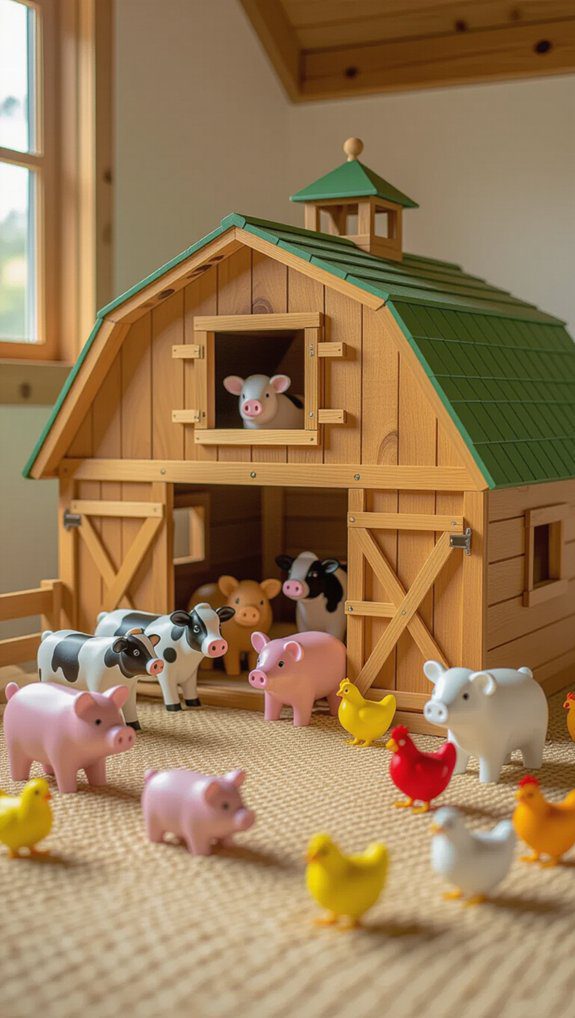
Farm animal barn sets bring a slice of the countryside right into your toddler’s playroom, sparking imagination and hands-on learning in a way that feels natural and fun. These sets boost animal recognition and encourage imaginative storytelling, helping little ones build vocabulary and social skills. Plus, manipulating the figures strengthens fine motor skills. Here’s a quick look at what makes these sets so special:
| Feature | Benefit |
|---|---|
| Mini animal figures | Enhances animal recognition |
| Barn structure | Improves spatial awareness |
| Storytelling play | Sparks imaginative storytelling |
| Cooperative play | Builds social skills |
It’s a cozy way to learn together!