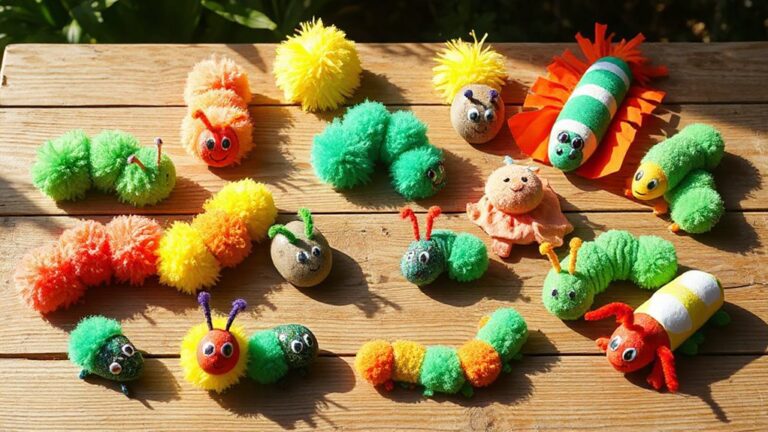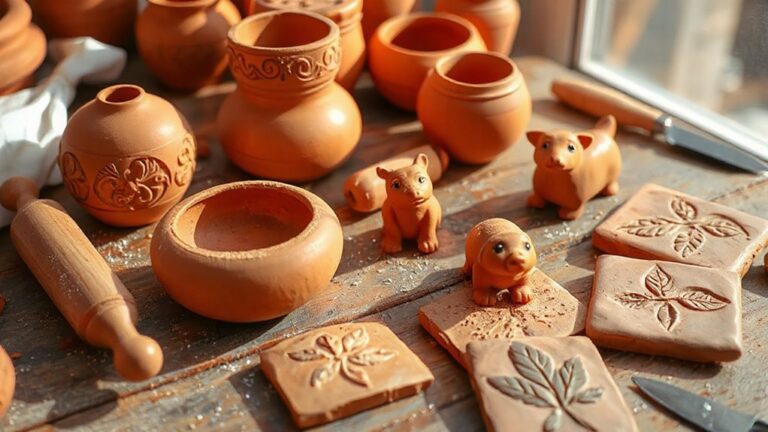
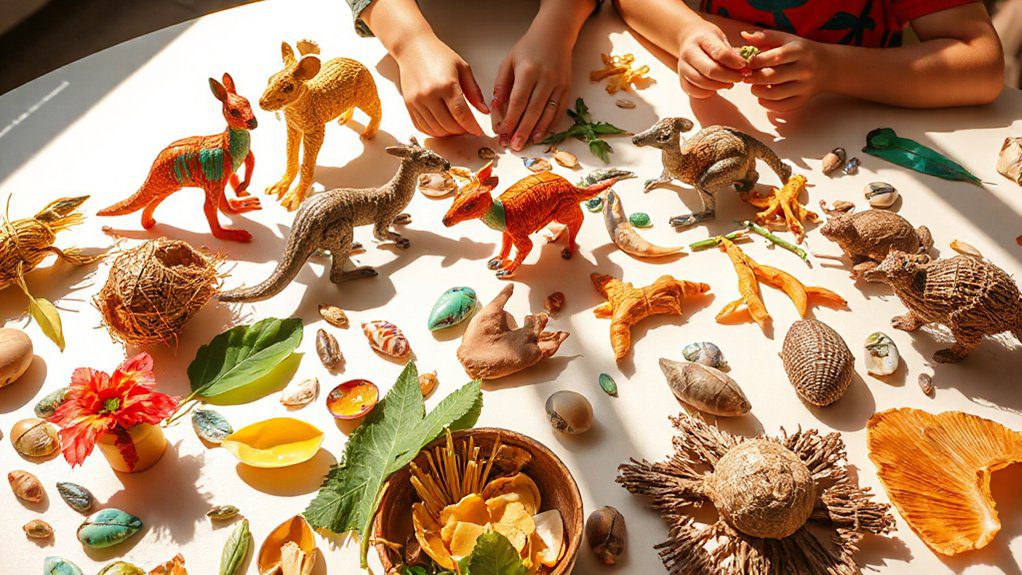
19 Australian Crafts for Kids Inspired by Animals and Nature
I’ve put together 19 Aussie crafts that blend animals, scenery, and Indigenous patterns into hands-on fun for kids; start with a koala paper-plate face, kangaroo handprints, emu collages and a wombat toilet-roll, then try a platypus paper bag, animal masks, a rainforest diorama and dot-painted Aboriginal-symbol pieces. I give clear steps, texture and material tips, and conservation talking points so projects teach as they entertain. Keep going and you’ll find templates, variations, and lesson links to expand each activity.
Love cozy DIY projects? 💕
Get free printable guides, exclusive tutorials & surprise craft goodies straight to your inbox.
Disclosure: This post may contain Amazon affiliate links, at no extra cost to you. Content on DiyCraftNest is created with research support from AI tools and carefully reviewed, edited, and fact-checked by the lead author, Daniel Pat, to ensure accuracy and reliability. Learn more
Key Takeaways
- Include a variety of animal crafts (koala, kangaroo, wombat, emu, platypus) using common recycled and craft materials.
- Pair each craft with a short natural-history fact or habitat detail to build environmental and cultural awareness.
- Offer simple step-by-step instructions and age-appropriate adaptations (preschool, early elementary, older kids).
- Incorporate Indigenous-inspired techniques (dot painting, Aboriginal symbols) respectfully, with context and acknowledgement.
- Add conservation and action ideas (reef protection, tree planting, reducing plastic) linked to each craft.
Koala Paper Plate Craft
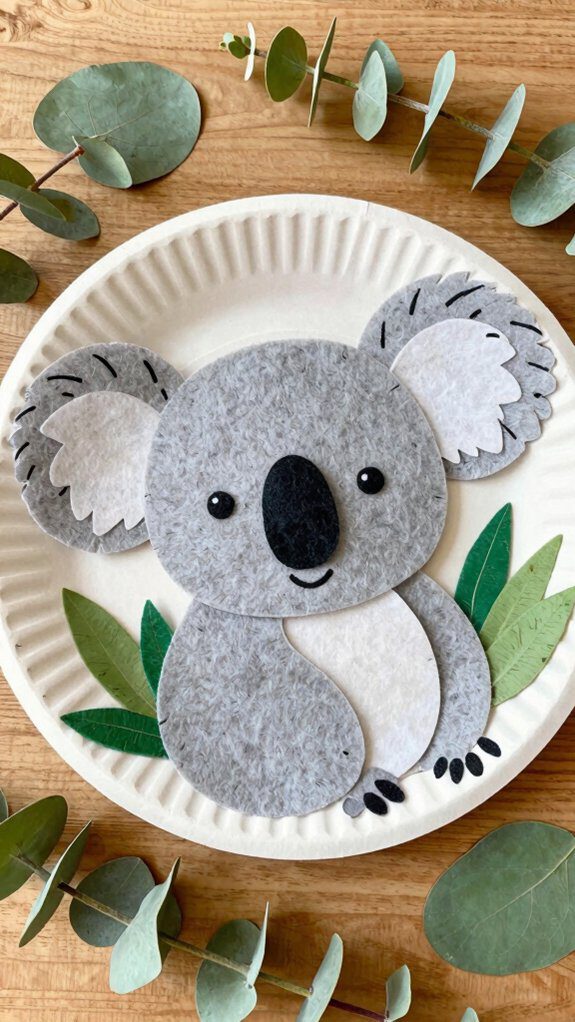
I’m excited to share a Koala Paper Plate Craft that brings us together to learn about koala habitat and wildlife conservation while we create.
First, use a paper plate for the round face, add fluffy ears from scrap paper or cotton, and a black oval nose—this helps kids notice koalas’ unique features.
I’ll show cutting and gluing steps distinctly: trace ear shapes, glue them symmetrically, then attach the nose and eyes.
Along the way, I’ll talk about eucalyptus forests, why habitat matters, and simple conservation actions we can model.
For variety, compare a flat paper ear to a fluffy one so you can choose texture.
We finish by displaying our koalas to celebrate teamwork and care.
Kangaroo Handprint Art
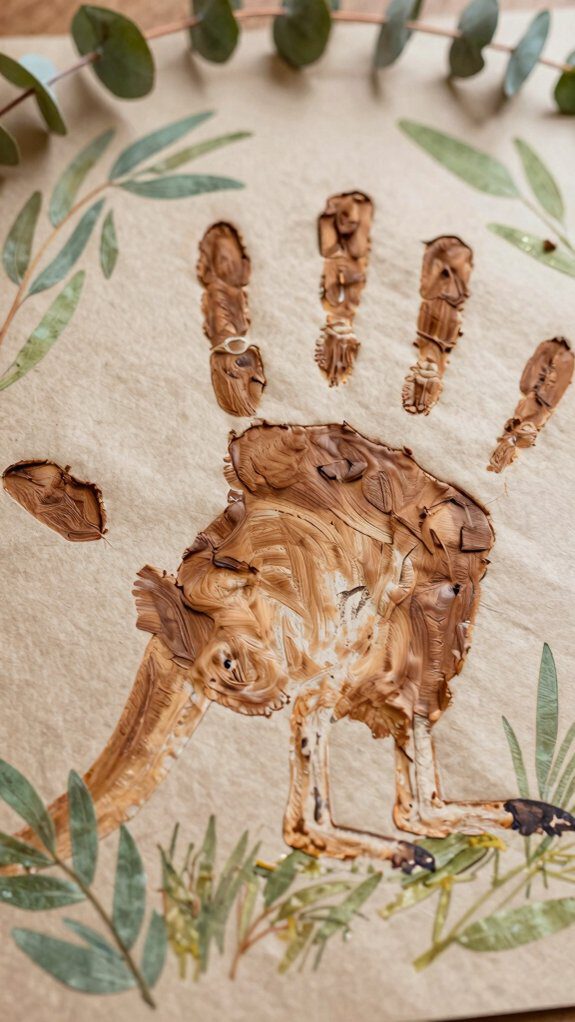
I love making kangaroo handprint art because it turns something as simple as paint on your palm into a bouncy little marsupial you can proudly display; I’ll walk you through it step by step so it’s easy to follow.
First, gather non-toxic paint, paper, and markers. Paint a child’s palm and fingers to form the kangaroo body and hind legs, then stamp onto paper; the thumb becomes the head.
Add ears, eyes, and a pouch with markers. As we craft, I’ll point out kangaroo characteristics like strong hind legs for hopping and social mobs, tying in marsupial behavior so kids learn while they play.
Finish with a background and a short story about the kangaroo’s habitat. It’s creative, social, and great for fine motor skills.
Emu Paper Collage Craft
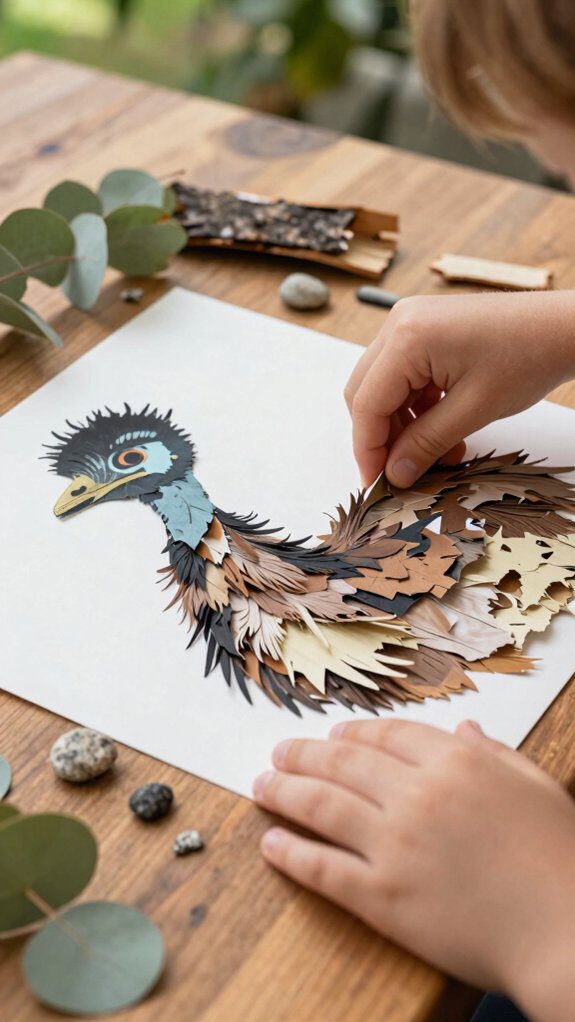
While we’re gathering supplies, let’s talk about the emu so the project feels both fun and meaningful: I’ll show you how to build a textured paper collage that highlights the bird’s long neck, soft brown feathers, and three-toed feet. I invite you to join in; we’ll investigate emu habitat ideas and emu modifications as we craft, so everyone feels included and curious.
| Materials | Purpose |
|---|---|
| Paper strips, feathers | Create layered feathers |
| Markers, glue | Add details and attach pieces |
| Scissors, cardboard | Shape neck & feet |
Start with a cardboard base, add torn brown strips for texture, then shape the long neck and three-toed feet. Mention the emu’s speed and flightless life as we work, linking art to nature and culture.
Wombat Toilet Paper Roll Craft
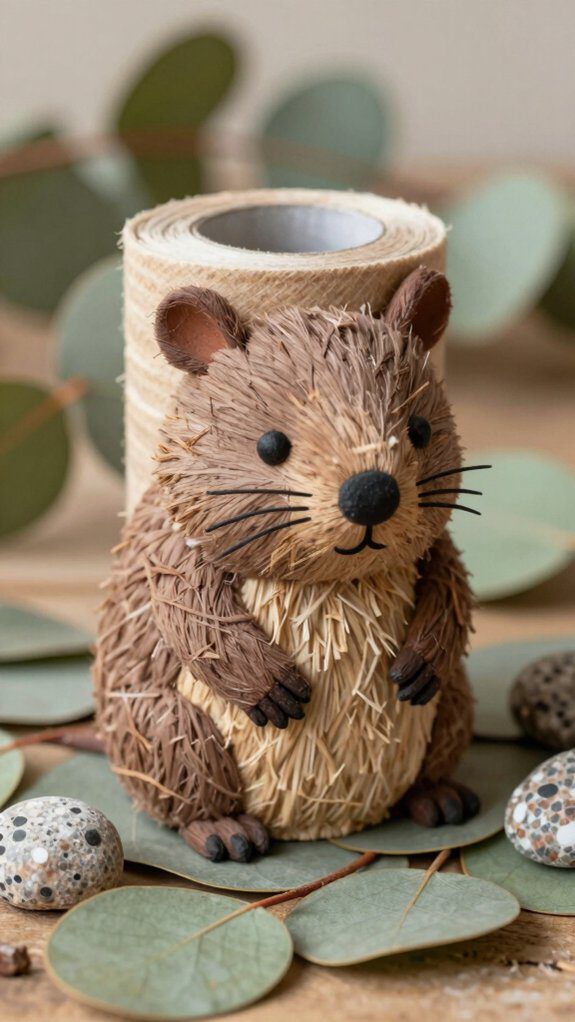
Because wombats are such sturdy little diggers, I love turning an empty toilet paper roll into a chunky, burrowing marsupial that kids can hold and decorate; it’s eco-friendly, tactile, and a great way to talk about their cube-shaped droppings, nocturnal habits, and grassy diet.
I guide you through simple steps: cover the roll with brown felt or paper for fur, add stubby legs and a flat nose, and glue on a little cardboard tunnel to suggest wombat habitat.
While crafting, we chat about wombat diet—grasses and roots—and why burrows matter for shelter. Encourage kids to personalize colours, texture, and a small scene showing soil and grass.
It’s collaborative, hands-on, and builds connection to nature.
Platypus Paper Craft for Kids
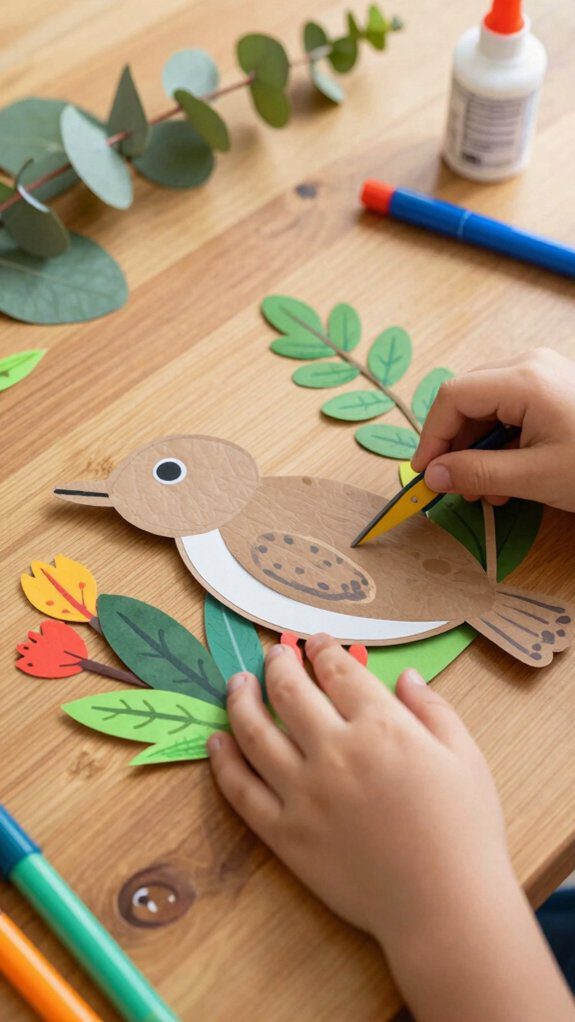
If you enjoyed turning a toilet paper roll into a burrowing wombat, you’ll love making a paper-bag platypus next — it’s another low-cost, hands-on project that highlights a truly unusual Australian animal.
I’ll walk you through simple steps that build skills and connection: gather craft materials like paper bags, construction paper, glue, scissors, and markers, then cut a duck-like bill, webbed feet, and a beaver-style tail.
As we work, I share platypus facts — egg-laying mammal, nocturnal habits, spends lots of time in water, and males even have venomous spurs — so kids learn while crafting.
I suggest demonstrating each cut, encouraging teamwork, and celebrating mistakes; that keeps everyone included and confident as we create a lovable platypus puppet.
Kookaburra Coloring Craft
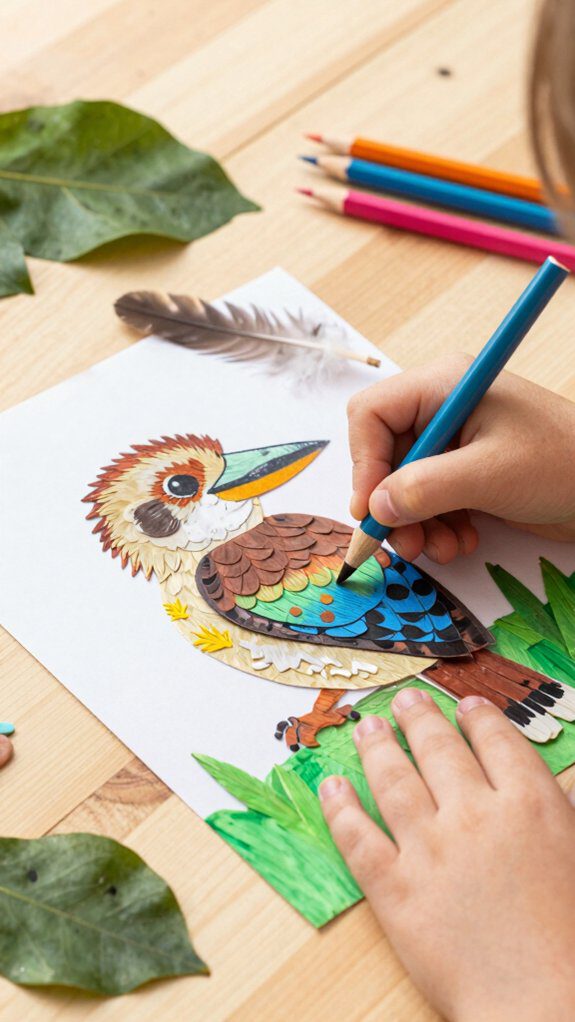
When you bring a kookaburra coloring craft to your table, you get more than a pretty picture—you get a chance to hear about that famous laugh and learn what makes this bird special.
I like to start by inviting everyone to notice the bird’s big head and stout body, then we talk about kookaburra habitat—woodlands, forests, and open areas—so kids imagine where to place trees and posts on their page.
Next I describe kookaburra diet: insects, small reptiles, even snakes, and suggest adding little prey sketches for realism.
For materials, I use bold markers, textured paper, and reference photos. We color together, compare markings, and celebrate each child’s choices, building connection and curiosity as we create.
Crocodile Paper Bag Puppet
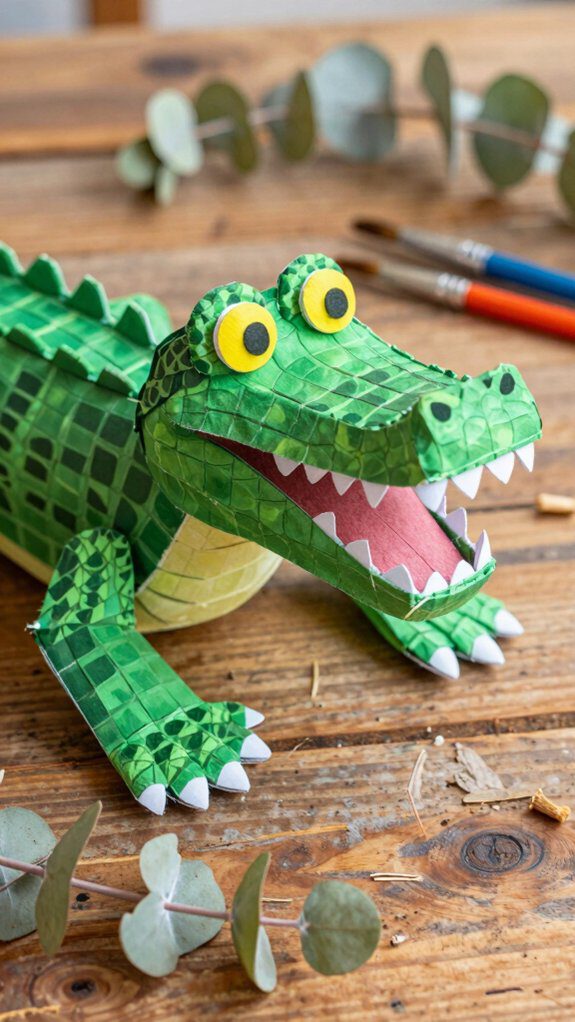
After our kookaburra coloring, I like to move to something a bit rowdier: a crocodile paper bag puppet that lets kids act out the swampy world of Australia’s top predator.
I invite you to join me as we cut teeth from construction paper, draw scales with markers, and attach the jaw to the bag so it snaps—simple materials, big imagination.
I explain crocodile behavior while we craft: formidable bite, aquatic hunting, apex role in wetland ecosystems, and compare size to familiar objects so kids grasp “over 20 feet” without fear.
Then we rehearse short puppet storytelling scenes about diet and habitat, using friendly voices to teach conservation.
This activity is inclusive, hands-on, and great for group sharing and confidence-building.
Australian Flag Craft Activity
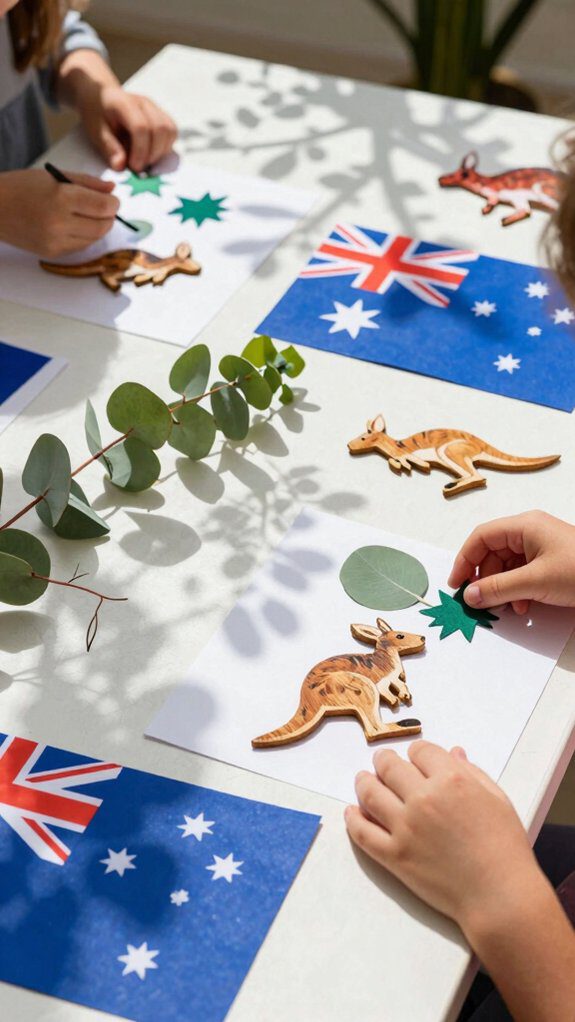
Since national symbols tell stories, I like to start our Australian flag craft by talking about what each part means and laying out the materials—blue paper, a small Union Jack print or stencil, white paper for the Commonwealth Star and the four Southern Cross stars, scissors, glue, and markers.
I guide kids through flag symbolism first, explaining the Union Jack, the five-point Commonwealth Star and the Southern Cross, and mention the 1901 design origin so they feel connected.
Then I demonstrate simple craft techniques: trace and cut stars, position the Union Jack in the canton, and glue from left to right for balance.
I offer tips on using fabric or markers for texture, encourage questions, and celebrate each child’s unique version.
Didgeridoo Tube Craft for Kids
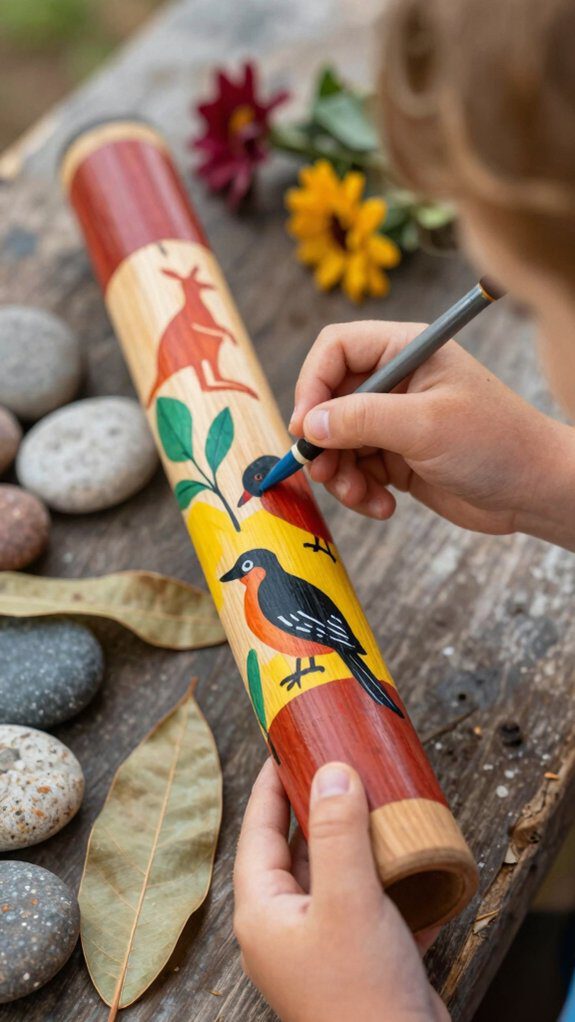
Because I love hands-on projects that mix art and sound, I’m excited to guide you through a simple didgeridoo tube craft that uses ordinary cardboard tubes to investigate the shape, function, and cultural story of this iconic Australian instrument.
I invite you to build, decorate, and play while we touch on didgeridoo history respectfully, noting its origins in Indigenous communities and ceremonial use.
Start by choosing a sturdy tube, add length or tape for resonance, then paint Aboriginal-inspired patterns with markers or tempera—compare how patterns tell stories.
Encourage kids to try different mouth shapes and rhythms for sound exploration, listen for deeper tones in longer tubes, and talk about music, tradition, and belonging as you create together.
Boomerang Art Craft Project
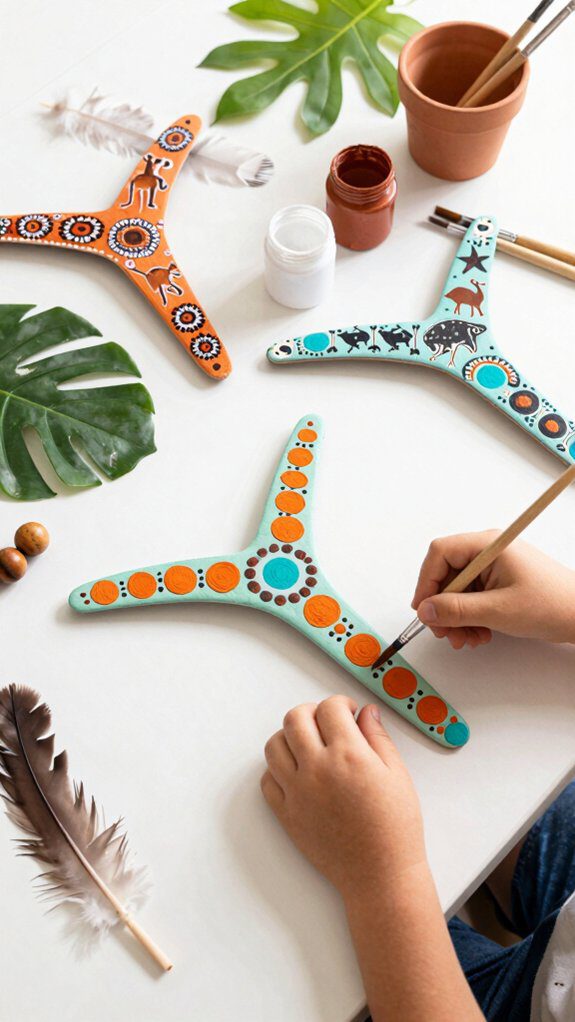
If you enjoyed making sound with cardboard didgeridoos, you’ll love switching gears to a hands-on boomerang art project that blends craft, culture, and basic physics.
I invite you to join me as we investigate boomerang history and make decorated wooden shapes that celebrate Indigenous storytelling and connection to country.
First, I’ll show simple templates and safe carving or cutting alternatives, then tips for painting vibrant patterns inspired by traditional motifs.
We’ll compare how wing shape and throw angle affect flight, so kids learn aerodynamics while creating.
I’ll also suggest discussion prompts about Australian wildlife and respect for cultural sources, plus ways to display finished pieces proudly.
Together we’ll craft, learn, and belong to a curious, respectful group.
Dot Painting Inspired Craft for Kids
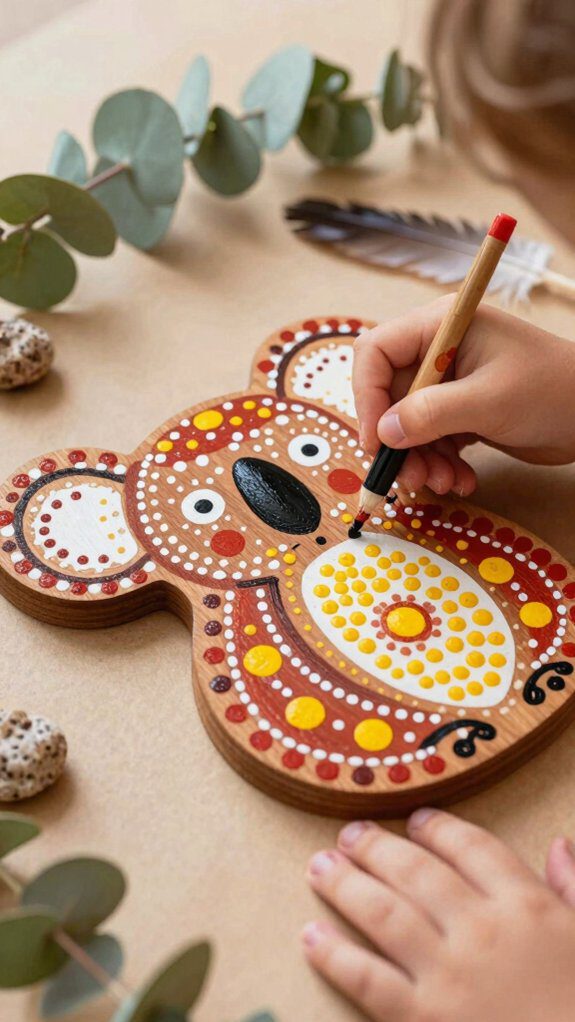
I love how dot painting turns simple dots into beautiful stories, so let’s investigate a kid-friendly version you can try at home or in the classroom.
I’ll guide you through a respectful, joyful activity that honors the cultural significance of Indigenous art while keeping things hands-on and fun. Use cotton swabs, small brushes, or fingertips to learn artistic techniques and build fine motor skills.
- Gather paper, tempera paints, cotton swabs, and a palette.
- Start with a simple outline of an animal—kangaroo or koala—and fill with dots.
- Teach a brief story about the scene, linking dots to paths, water, or tracks.
- Display works together and celebrate each child’s unique pattern and voice.
Great Barrier Reef Coral Art
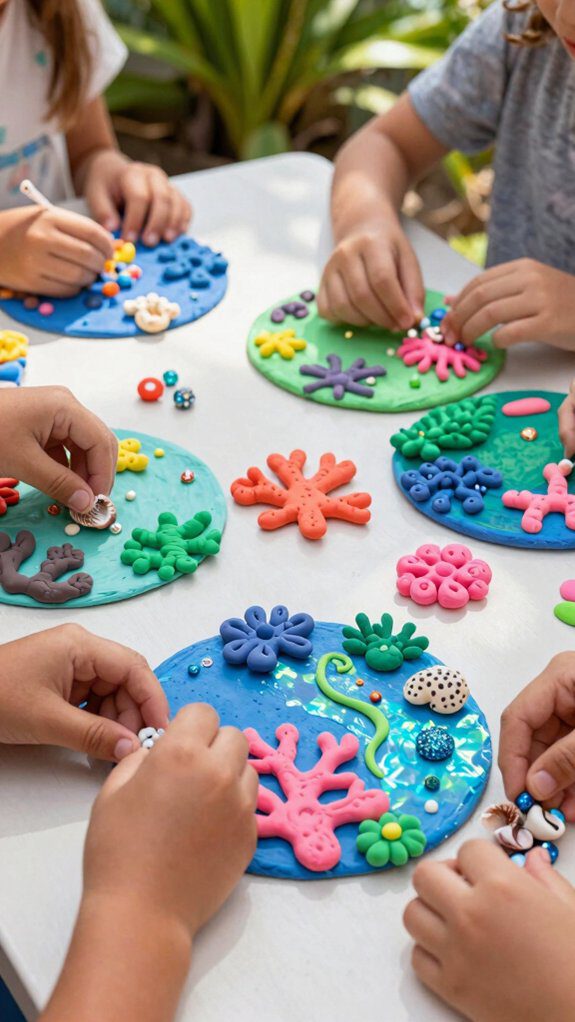
After exploring dot painting with kangaroos and koalas, let’s take our creativity underwater and make Great Barrier Reef coral art that’s just as colorful and meaningful.
I invite you to join me as we recreate ribbon corals, brain corals, and branching forms using tissue paper, paint, and recycled plastic, so each child feels part of a shared reef project.
First, sketch simple coral shapes, then layer colors and textures—tissue for softness, painted cardboard for sturdiness. I’ll show easy assembly and how to label pieces to teach that a thriving coral ecosystem supports countless fish and invertebrates.
We’ll discuss threats like warming and pollution, and finish with a pledge to small actions that support marine conservation, building connection and purpose together.
Outback Landscape Art Project
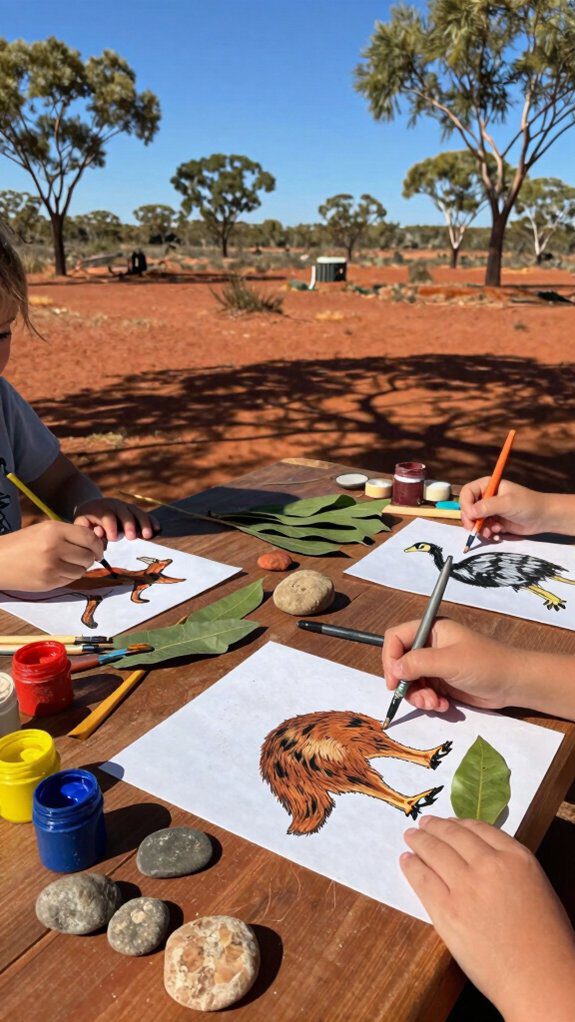
Let’s start with three bold elements—the red sand, a lone rock formation, and a silhouette of wildlife—to anchor our Outback scenery art project, and I’ll guide you through simple steps to bring them to life.
I’ll show you how to blend Indigenous techniques like dot painting with Natural materials—sand, leaves, small rocks—for rich texture and cultural respect. Together we’ll teach kids about Outback conservation and Wildlife education while creating art that feels like it belongs to our community.
- Sketch horizon, place rock formation (Uluru-like) and wildlife silhouettes.
- Apply glue, sprinkle sand for foreground texture.
- Use dot painting patterns to decorate sky and rocks.
- Add leaves or twigs; discuss habitat and protection steps.
Sydney Opera House Paper Model
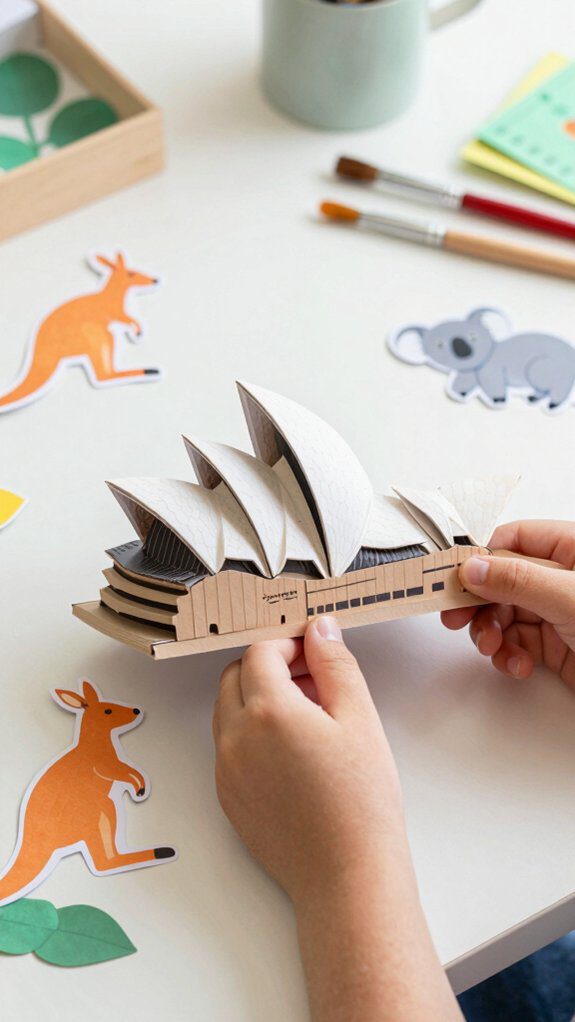
Moving from the wide ochres and dot patterns of the Outback, we can bring that same hands-on spirit to the harbour by building a Sydney Opera House paper model together—I’ll walk you through making its sail-like shells, folding and shaping paper to echo the building’s curved roofs.
I’ll start by showing how simple templates become the iconic shells: cut rounded triangles, score the center, and curl edges to mimic those boat-like sails inspired by Sydney architecture.
We’ll layer a base platform, attach shells in a staggered row, and add tiny paper tiles with a pencil texture to suggest the real roof tiles.
Along the way I’ll explain its cultural significance, invite your voice, and share tips for steadier gluing.
Eucalyptus Leaf Art Craft
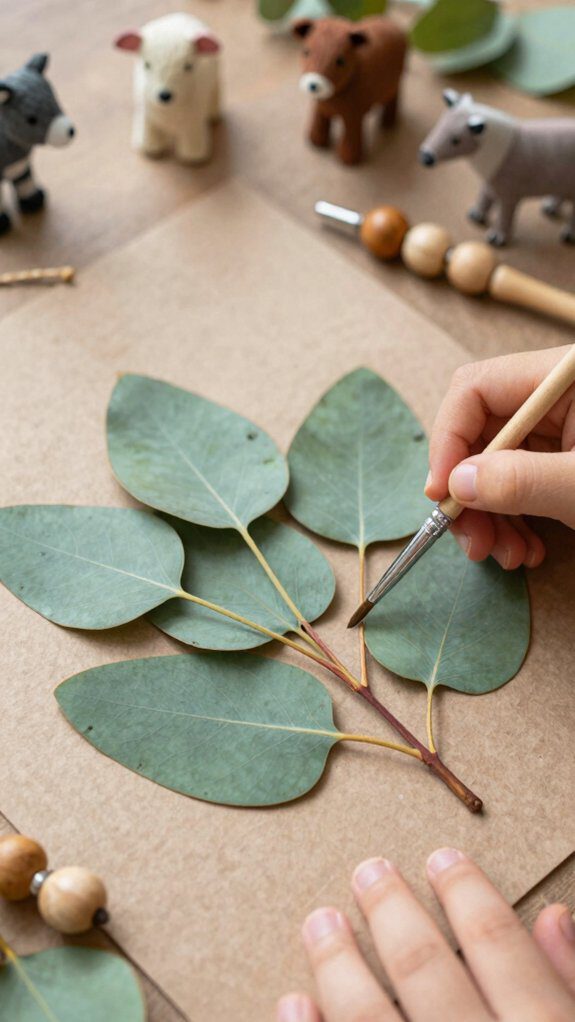
Eucalyptus leaves are small treasures you can find on walks, and I want to show you how to turn them into simple, striking art that teaches as it creates.
I love collecting fallen leaves, then making prints, rubbings or collages that invite kids to notice shape and texture while learning about koalas and native plants.
We’ll talk about eucalyptus leaf symbolism and basic artistic techniques so everyone feels included and capable.
- Gather varied leaves, press flat, and sort by size.
- Try crayon rubbings, then compare results to paint prints.
- Arrange collages to show biodiversity and tell a local story.
- Discuss cultural uses respectfully, linking craft to stewardship.
These steps are practical, clear, and perfect for group creativity.
Aboriginal Symbol Art Activity
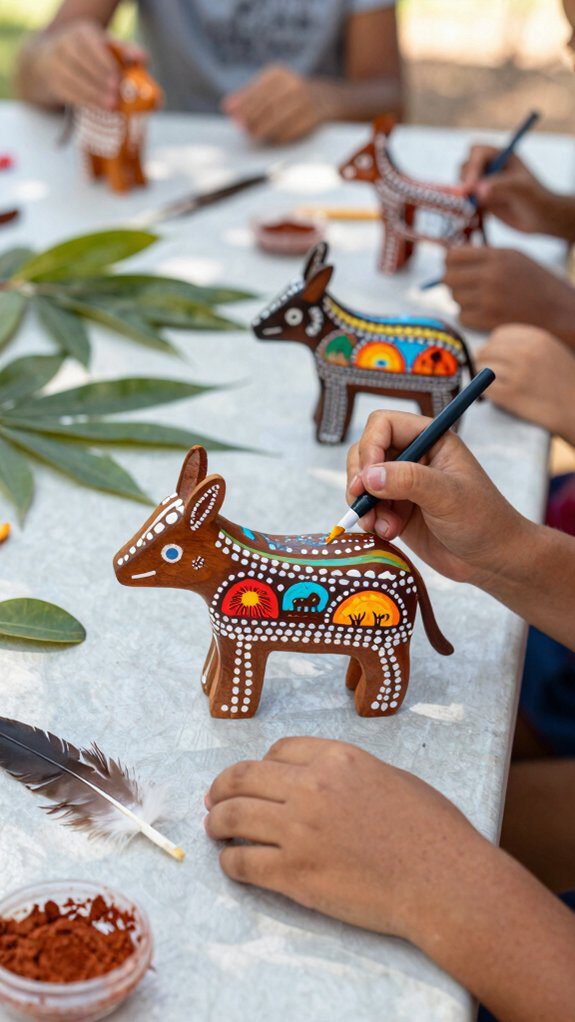
When you try an Aboriginal symbol art activity with kids, I recommend beginning by talking about the meaning behind the symbols—what a kangaroo or an emu can stand for—so the art becomes a story, not just pretty shapes.
I invite you to gather simple materials and show examples of dot painting and bark painting, explaining symbol meanings like strength, movement, and place.
Start with a short chat about cultural significance and nature connection, then demonstrate storytelling techniques: sketch symbols, arrange them to tell a scene, add dots for texture.
Emphasize art traditions respectfully, and pause to discuss ecological awareness—how animals fit into environments.
Finish by sharing reflections, so every child feels included and learns with care.
Australian Animal Mask Crafts
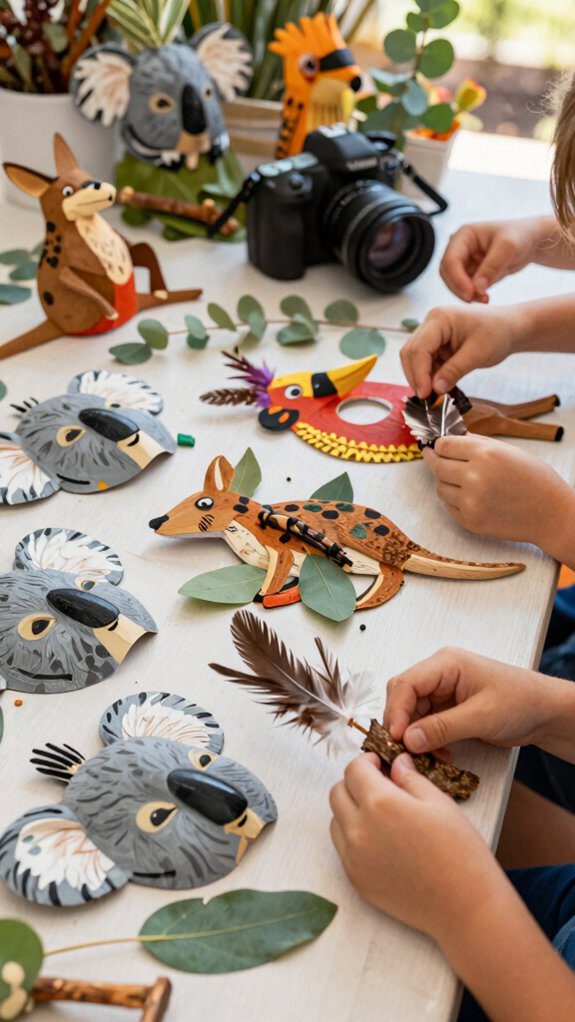
Try making three or four different animal masks to give kids choices and keep the activity lively—I like starting with a kangaroo, koala, and emu because each has distinct features that are easy to recreate.
I’ll guide you through simple steps that build skills, spark creative storytelling, and invite a sense of community among kids exploring Australian wildlife. Use paper plates, cardboard, or felt and encourage discussion about habitats and animal conservation while crafting.
- Cut and shape: outline distinct ears, snout, or beak for each animal.
- Texture and color: compare painting, felt, or collage for realistic fur or feathers.
- Attach straps: use elastic or ribbon for comfort and durability.
- Role-play: act out stories that honor cultural links and conservation.
Rainforest Habitat Diorama
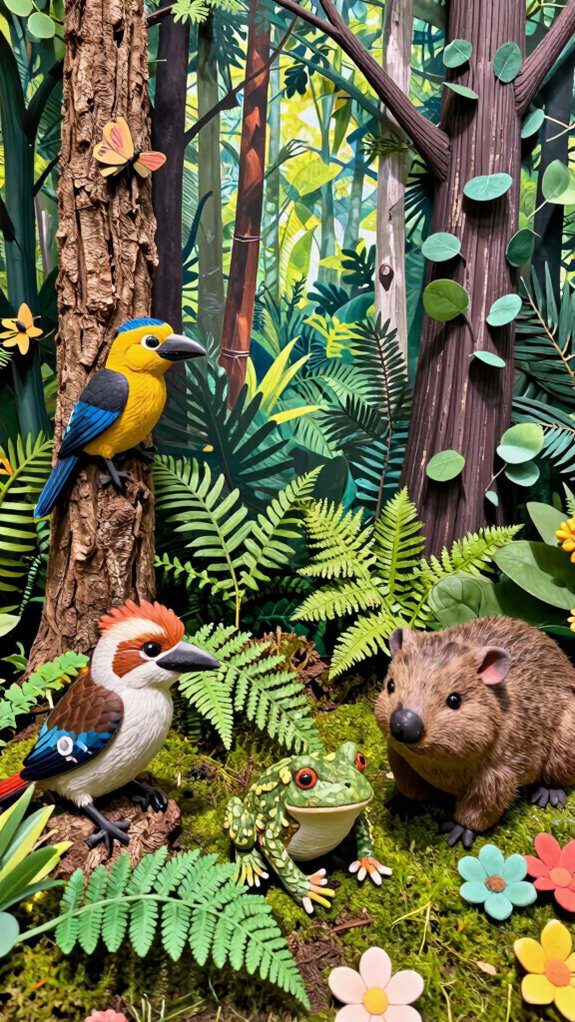
One great way I like to bring Australia’s rainforests into the classroom is by building a hands-on diorama that shows the layers of the forest and the animals that live there.
I tell students about rainforest biodiversity, pointing out species like the tiny Southern Corroboree Frog and colorful tropical birds, then we plan layers: canopy, understory, forest floor.
We use recycled boxes, paper plants, mini figures, and painted backgrounds to compare dense vs. open areas. I add engaging bits—movable vines or simple sound clips—so everyone can touch and listen, which boosts involvement and belonging.
Along the way we discuss conservation awareness, how deforestation threatens habitats, and simple actions kids can take to care for these ecosystems.
Beginner-Friendly Australian Craft Project
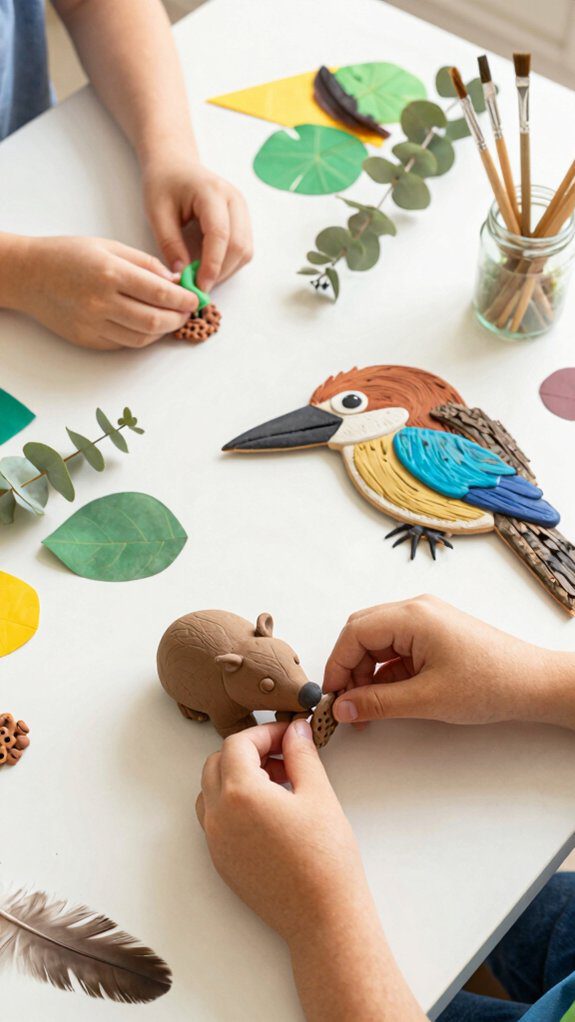
If you’re looking for a quick, beginner-friendly Australian craft, I love using a plain paper bag to make a playful platypus — it’s simple, cheap, and kids usually finish it in one class period.
I guide students through cutting a bill, adding webbed feet, and gluing on googly eyes, all while we talk about the platypus habitat and its unique features. This activity builds confidence and belonging; everyone can succeed together.
- Supplies: paper bag, brown paper, scissors, glue.
- Steps: trace bill, fold bag, attach feet, decorate.
- Teach: egg laying reproduction, venomous mammals fact, nocturnal habits.
- Extend: discuss Australian wildlife and conservation awareness.