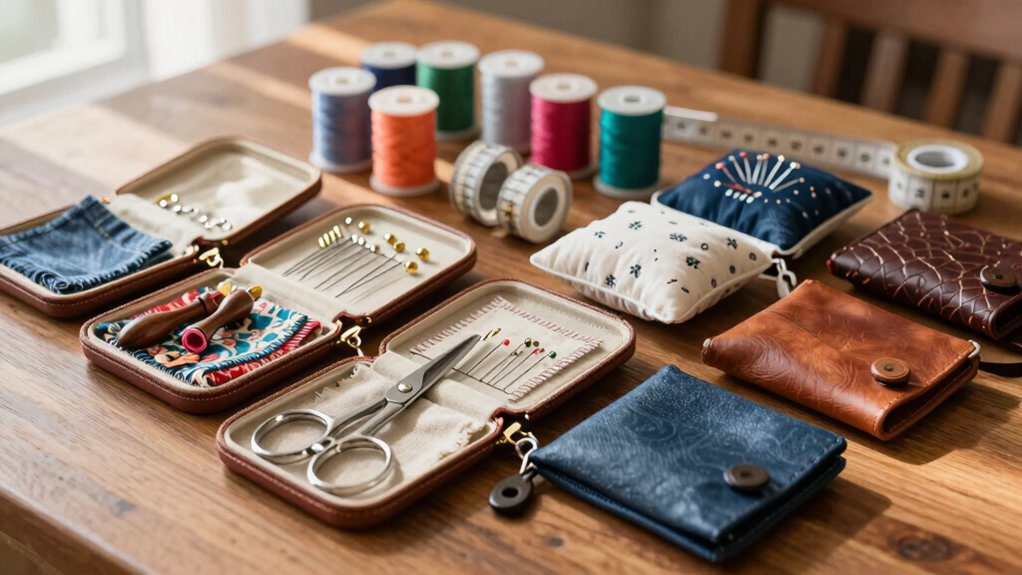
19 Vintage Sewing Patterns That Never Go Out of Style
You can sew timeless style with shirt, wrap, and tea dresses, plus ruffled aprons, frame purses, baby pinafores, pillow covers, and table runners—wow! Start with cotton, thread, pins, and a complete pattern; pre-wash fabric, follow grainlines, and test fit with muslin. Check envelope dates, measurements, and missing pieces before buying, since vintage sizes can be sneaky. Use sturdy interfacing for bags, then uncover the clever classic that makes every project shine.
Love cozy DIY projects? 💕
Get free printable guides, exclusive tutorials & surprise craft goodies straight to your inbox.
Disclosure: This post may contain Amazon affiliate links, at no extra cost to you. Content on DiyCraftNest is created with research support from AI tools and carefully reviewed, edited, and fact-checked by the lead author, Daniel Pat, to ensure accuracy and reliability. Learn more
Key Takeaways
- Shirt dresses, wrap dresses, and tea dresses remain timeless for their flattering silhouettes, practical details, and easy day-to-evening wear.
- Choose vintage patterns by measurements, not modern sizing, and check envelopes, tissue pieces, and instructions for completeness.
- Pre-wash fabric and follow grainlines carefully to prevent shrinkage and achieve polished drape, fit, and durability.
- Classic aprons, children’s rompers, pinafores, and bonnets offer beginner-friendly projects with enduring vintage charm.
- Frame purses, market totes, and picnic bags become useful retro accessories with sturdy interfacing, firm linings, and quality closures.
Vintage Dress Patterns
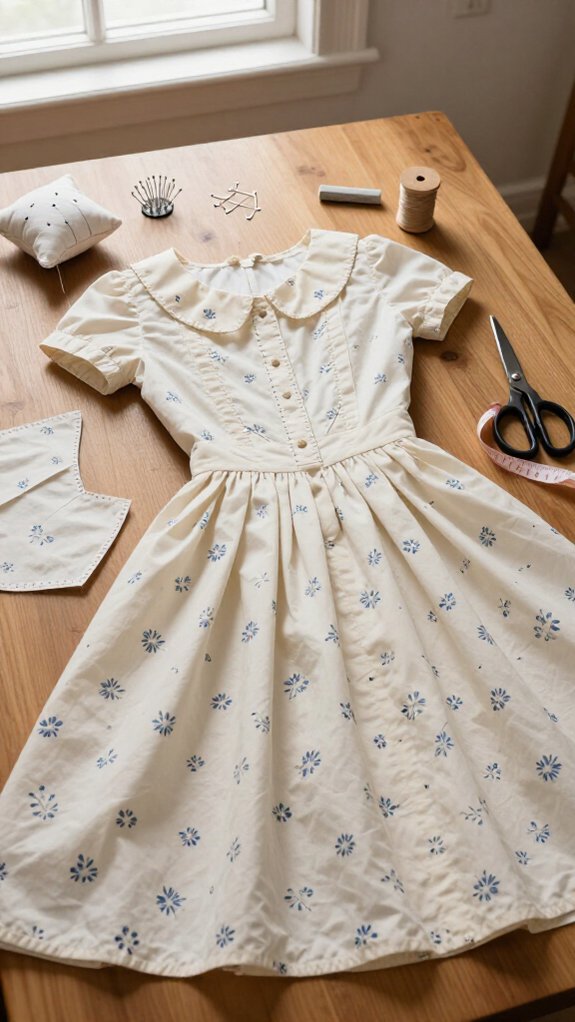
You can sew a crisp shirt dress, a flattering wrap dress, or a sweet tea dress, then make each one your own with fabric, buttons, and a few fun trims!
Start with a pattern that matches your skill level, and pre-wash your fabric so your new favorite dress won’t shrink after its first wash.
Best of all, you can turn the same vintage-style shape from casual daytime wear into party-ready charm—no time machine required!
Shirt Dresses
Shirt dresses are one of vintage sewing’s happiest little secrets: they can look polished for lunch, practical for errands, or downright glamorous with the right belt and shoes!
Join fellow makers with these smart basics:
- Start Pattern dating research early.
- Do envelope accuracy checks.
- Match measurements, not modern sizing.
- Pre-wash cotton, rayon, or blends.
- Check collar and shoulder ease.
Crisp poplin gives you a tidy daytime shape, while soft rayon drapes with relaxed charm. Older Butterick patterns may include separate Deltor sheets, so don’t panic—follow along step by step! Best of all, one well-fitting shirt dress stays stylish across decades, making it a true sewing-circle favorite.
Wrap Dresses
Vintage wrap dresses bring instant polish with a clever, body-friendly fit—just tie, adjust, and you’re ready to swish out the door! You’ll join a stylish sewing crowd with wardrobe styling that feels personal.
| Pattern | Feature | Tip |
|---|---|---|
| Vogue 1548 | Reversible wear | Check measurements |
| Vogue 1549 | Collar, cuffs | Pre-wash fabric |
| Any wrap | Clean grainline | Stitch carefully |
Try modern wrap hacks: use a soft knit, pins, and matching thread. Cut on-grain, follow the guide, then test the tie—easy, beginner-friendly magic! For collectors, uncut patterns matter. Vogue 1548 reportedly sold for $127.50, while 1549 reached $222.50. Tiny details, big excitement!
Tea Dresses
A tea dress brings easy elegance to your sewing table, with a fitted bodice, a modest flared skirt, and enough swish to make errands feel a little glamorous!
Join the vintage-loving crowd with these smart choices:
- Choose Simplicity for beginner-friendly pieces.
- Try Butterick for tailored, detailed sections.
- Pre-wash fabrics for tea to stop surprise shrinkage.
- Set grainlines so your skirt hangs beautifully.
- Use seam finishing tips for a polished inside.
Pick a clean neckline, contoured waist, and flattering skirt, then let modern cotton or rayon refresh the look. You’ll get comfortable movement, 1950s charm, and a dress that feels wonderfully yours—pockets make it even better!
Classic Apron Patterns
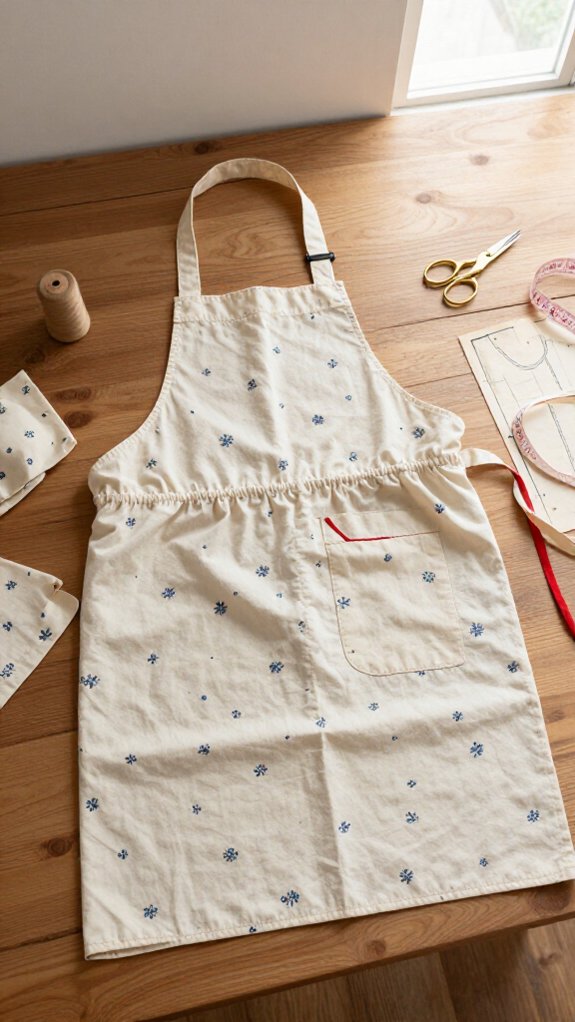
You can sew a ruffled apron for cheerful kitchen flair, choose a half apron for quick, pocket-ready coverage, or make a cottage apron for cozy full-body charm—fun, right?
Start with pre-washed cotton or linen, pin your simple pattern pieces carefully, and let the ties and pockets do the hard work.
Best of all, you can swap prints or add a ruffle, and suddenly your practical apron becomes a charming outfit piece!
Ruffled Aprons
Ruffled aprons bring instant charm to everyday chores, adding a little swish and movement while still keeping your clothes safe from flour, paint, or the occasional spaghetti-sauce ambush!
You’ll feel right at home in this vintage favorite. Try:
- Colorfast cotton or a linen blend
- Pre-washing to prevent shrinkage
- Sharp scissors for even edges
- Careful ruffle gathering
- 1960s-inspired easy sewing patterns
Follow the envelope grainline, then stitch slowly so your ruffle hangs smoothly. You can choose cheerful checks for daily cooking or polished trim for hosting friends.
Best of all, one simple pattern lets you join generations of makers who knew practical can still look wonderfully festive!
Half Aprons
Half aprons earned their classic status in the mid-20th century because they shielded the spot most likely to catch flour, paint, or a sneaky splash of sauce, while letting the rest of your dress move freely. You’ll fit right in wearing one!
| Feature | Try this | Result |
|---|---|---|
| Fabric | Gingham cotton | Timeless charm |
| Ties | Add length | Easy fit |
| Pockets | Stitch one on | Handy storage |
| Care | Pre-wash fabric | Less shrinkage |
Vintage Simplicity, Butterick, and McCall patterns make great beginner projects. Follow grainlines, use cotton fabric recommendations, and check Care instructions. Customize length or pockets—your apron becomes uniquely yours, without losing its classic silhouette!
Cottage Aprons
Cottage aprons bring cozy vintage charm to the kitchen without demanding expert sewing skills—hooray! You’ll feel right at home with these forgiving classics.
- Choose Simplicity or Butterick patterns.
- Try easy, few-piece Jiffy-style shapes.
- Use cotton, linen, or feed-sack prints.
- Add wide ties and covered closures.
- Do a fabric prewash before cutting.
For gingham styling, pick cheerful checks and simple body panels; you can finish one without a huge budget or elaborate tools.
Change the fabric, and your apron shifts from sweet 1960s kitchen helper to bold modern favorite.
Best of all, those long ties and tidy hems will still fit beautifully after washing—no shrinkage surprises, thank goodness!
Retro Bag Patterns
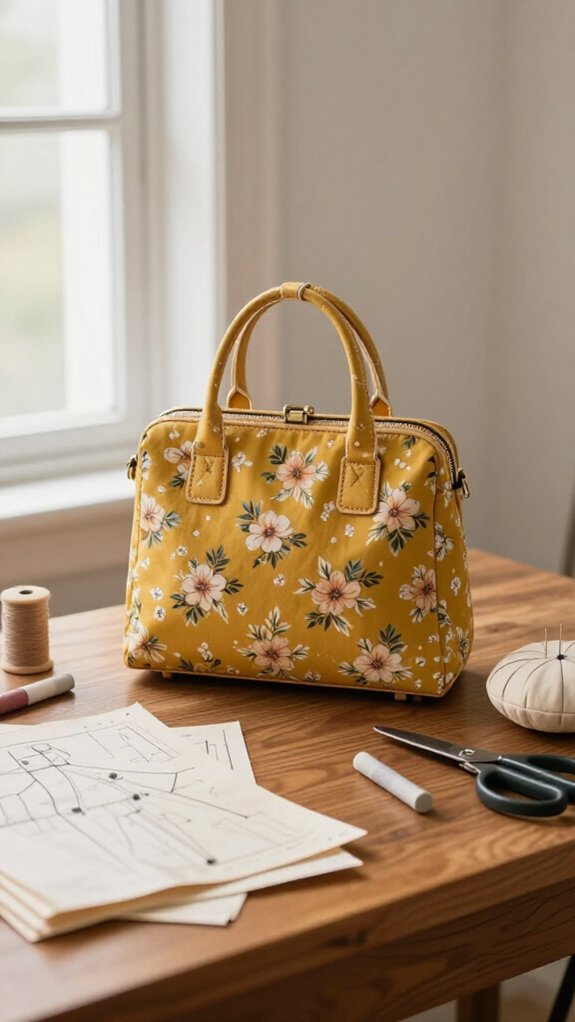
You can stitch a charming frame purse, a roomy market tote, or a sunny picnic bag with a retro pattern—what a fun upgrade!
Check the pattern’s copyright date, pre-wash your fabric, and use sturdy interfacing so your bag keeps its crisp shape.
Best of all, modern zippers and hardware can give a 1950s–1970s design a reliable finish without stealing its vintage charm.
Frame Purse
Although trends come and go, a vintage frame purse keeps its polished, click-shut charm—equally at home with jeans, a party dress, or a dramatic coat collar!
You’ll fit right in with fellow vintage makers when you choose a pattern with clear printed cutting diagrams. Start simply, then enjoy that satisfying snap!
- Check tissue pieces for damage or missing parts.
- Pre-wash outer fabric to prevent surprise shrinking.
- Choose firm lining for crisp, formed corners.
- Study frame hardware basics before attaching the clasp.
- Use Purse lining tips to keep seams smooth.
A 1940s-style pattern can offer the best surprise: sturdy inserts help your purse hold its elegant shape, even after a busy night out!
Market Tote
A retro market tote brings everyday errands a little vintage sparkle, and it’s one of the friendliest old-school bag patterns to sew! You’ll fit right in at markets with sturdy panels and wide straps.
| Choose | Why it helps |
|---|---|
| Clear instructions | Easy, beginner-friendly assembly |
| Canvas | Holds its shape |
| Magnetic snap | Adds modern ease |
Prewash fabric first, then cut rectangles, stitch sides, and finish the top edge. Follow the pattern’s interfacing notes—no floppy-bag sadness! Add an inner pocket if you’d like, but keep the classic silhouette. Your finished tote becomes a useful, charming companion for shopping, beach days, and shared weekend adventures.
Picnic Bag
For sunny park lunches and backyard spreads, a retro picnic bag adds cheerful style while keeping your snacks, napkins, and little extras neatly packed—so charming!
You’ll find your crew’s perfect match in 1950s–1960s patterns, with crisp shapes and happy prints. Try these smart touches:
- Pre-wash and press cotton prints
- Match grainlines carefully
- Choose handles, straps, or crossbody options
- Add sturdy interfacing
- Include an inner pocket
Use Color matching tips to pair gingham with bright canvas, and investigate vintage lining ideas for a surprise inside.
Modern zippers or clasps keep outings easy, while the original shape stays delightfully retro. It’s beginner-friendly, affordable, and picnic-ready—no soggy sandwich drama!
Children’s Vintage Clothing
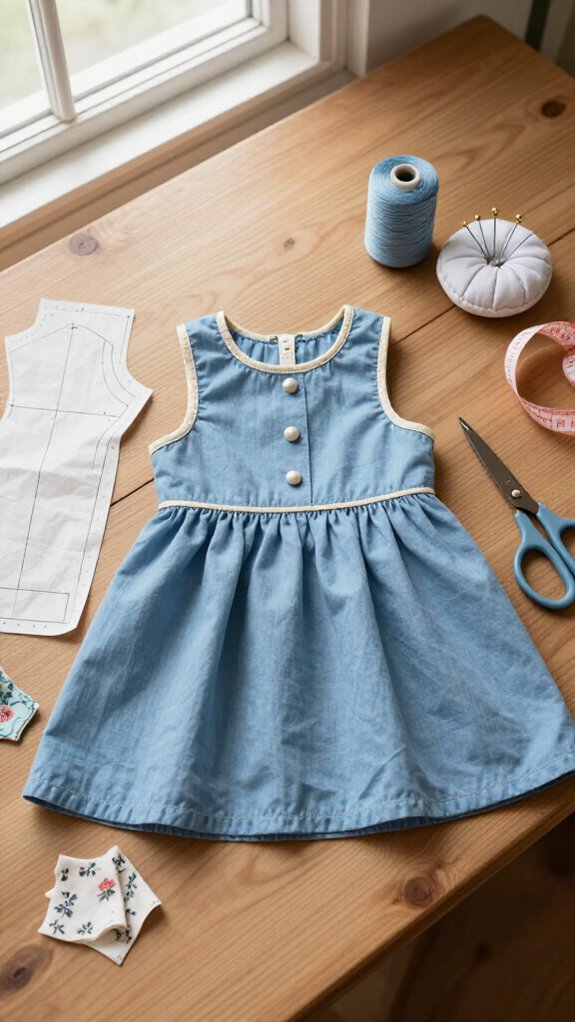
You can stitch sweet baby rompers, crisp pinafores, and tiny bonnets from vintage patterns with simple cotton, thread, and a little patience—no elaborate sewing-room magic required!
Check the envelope’s copyright date and size range before you begin, then choose a complete pattern with clear diagrams to keep the project beginner-friendly.
Best of all, you can pair those classic shapes with tough modern fabrics, so your little one gets vintage charm without treating the outfit like a museum piece!
Baby Rompers
Baby romper patterns offer a charming, practical way to sew tiny overalls, sunny playsuits, and button-up one-pieces with real vintage personality—so cute!
Join fellow stitchers by choosing usable classics, then make them your own.
- Seek Butterick, McCall’s, Simplicity, or Vogue tissues.
- Start with Vintage baby sizing and your child’s measurements.
- Do pattern condition checks: confirm every piece is present.
- Check envelope copyright and patent dates before dating it.
- Pre-wash fabric, then follow the grainline carefully.
Printed tissue instructions often signal a later, friendlier format—hooray! You’ll get a comfy, wearable romper that feels handmade with love, not costume-y.
Pinafores
Pinafores bring instant storybook charm to children’s sewing, but they were hardworking clothes first: their apron-like fronts protected dresses and blouses while letting busy little ones move, climb, and play—hooray!
Join fellow vintage lovers by choosing a multi-size pattern and fitting proportions, not age alone. Try Sewing ease checks before cutting sturdy cotton, denim, or brushed cotton; these layers work beautifully over blouses.
For fabric drape tips, save softer cloth for gentle gathers and use denim for crisp shape. Check the envelope’s copyright date to date it, then choose instruction formats that suit your skill.
A simple pinafore can become the family’s most-worn handmade layer—quite a victory!
Bonnets
From sturdy pinafores to sweet little bonnets, vintage children’s patterns offer another quick, charming make—no tiny tailored jacket required!
You’ll feel right at home sewing one, especially when you check:
- packet copyright or patent dates
- bonnet sizing tips against head measurements
- uncut, gently handled tissue pieces
- pre-washed cotton or linen blends
- vintage trim handling around lace edges
Choose lightweight lining or interfacing for modern comfort, then follow the original curved silhouette.
It’s affordable, beginner-friendly, and delightfully fast—no sewing marathon needed!
A softly ruffled brim frames a child’s face beautifully, while the updated inner layer adds structure without changing the period look.
Your little one gets a wearable keepsake, and you join a cheerful circle of makers preserving handmade history.
Vintage Home Decor
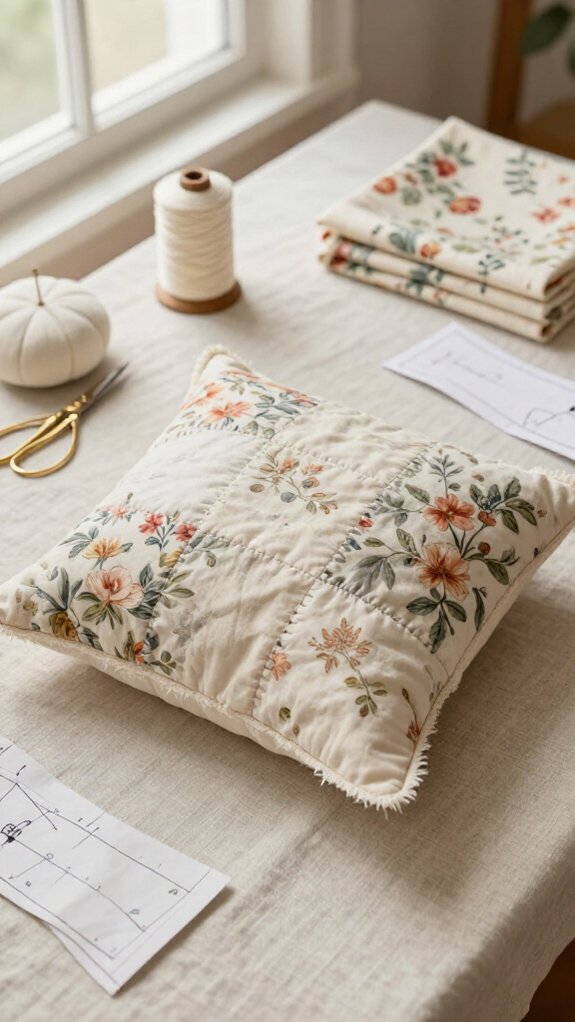
You can turn vintage pattern shapes into cheerful pillow covers, chair cushions, and table runners with fabric, thread, and a little patience—no elaborate sewing room required!
Start with a simple Jiffy-style pattern, pre-wash your fabric, and follow the grainline so your cushions sit straight instead of doing a slow slump.
Then try a wrap-style bodice curve on a table runner for a surprisingly stylish touch—your table may look dressed better than you do!
Pillow Covers
Vintage pillow covers let you bring home that cheerful late-1950s-to-1970s charm without tackling a whole dress project—hooray for a finish line you can actually see!
Choose a simple two-panel pattern, then prewash your fabric for a crisp, friendly result. You’ll feel part of the vintage-sewing crowd fast!
- Cotton or barkcloth fabric
- Matching thread
- Centered zipper
- Sewing pattern notches
- Fabric grain matching
Cut along the grainline, match notches, and sew the seams using the envelope allowance. Pick buttons, an overlap back, or a zipper closure. Best surprise? One thrifted sheet can make a whole coordinated set for your sofa—instant room refresh!
Chair Cushions
Chair cushions offer a quick, cheerful way to give an old dining chair or porch seat its vintage personality back—no full furniture makeover required!
Check copyright dates and printed pieces; they help you find your era’s crowd.
| Try | You’ll need |
|---|---|
| Simple cover | Cotton print, pins |
| Boxed corners | Scissors, thread |
| Ties | Ribbon, needle |
| Flap closure | Buttons, loops |
With Sewing equipment basics, you can reuse the old cushion form, sew straight seams, and add a tie closure—easy, affordable, and welcoming!
Pre-wash fabric, then use pattern alteration tips to match grain with the seat. The surprise? Multiple-size patterns let your mismatched chairs look charmingly matched, not like a yard-sale rebellion!
Table Runners
A vintage-inspired table runner can make an ordinary table feel party-ready in an afternoon—no elaborate sewing degree required!
You’ll feel right at home with these easy, welcoming details:
- Check envelope art and copyright dates.
- Match pattern sizing to your table.
- Pre-wash cotton or linen first.
- Keep Grainline accuracy for crisp drape.
- Choose heavier fabric for tailored shape.
For 1950s charm, use structured cotton and simple lines; for boho flair, try bold prints. Cut the length to fit, hem the edges, then add bias tape, cording, or fringe. It’s affordable, beginner-friendly, and wonderfully flexible.
Best of all, one classic pattern can become a cozy everyday runner or a festive showstopper just by changing trim!
Where to Find Vintage Sewing Patterns
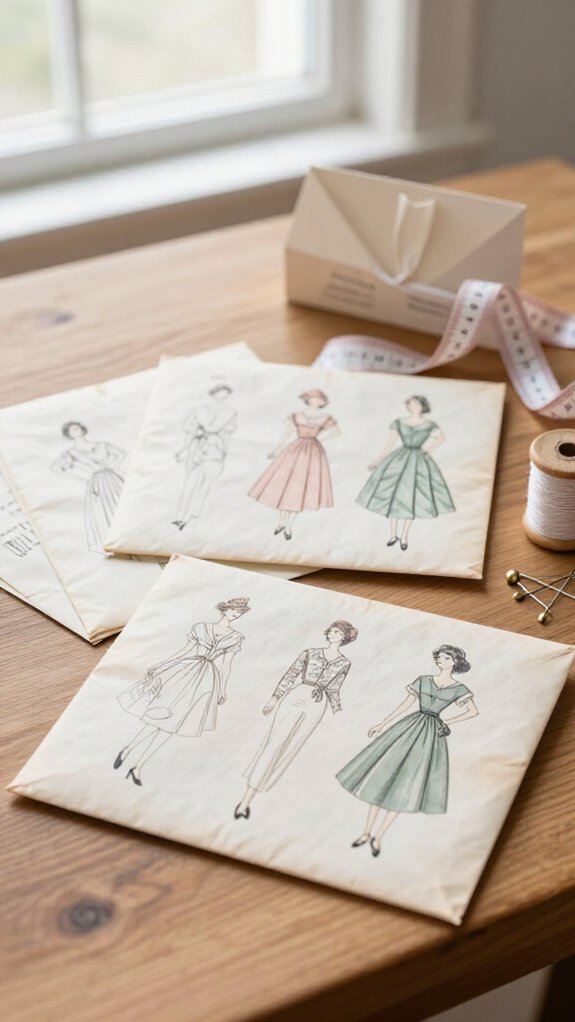
Start close to home: thrift stores, estate sales, and vintage sewing fairs can hide wonderful pattern stashes in dusty boxes or bargain tubs. You might score a whole collection for $20—what a find!
For bigger hunts, browse eBay and pattern dealers. Use brand, era, and size filters, then do a quick price comparison. These online buying tips help you skip costly patterns that won’t fit.
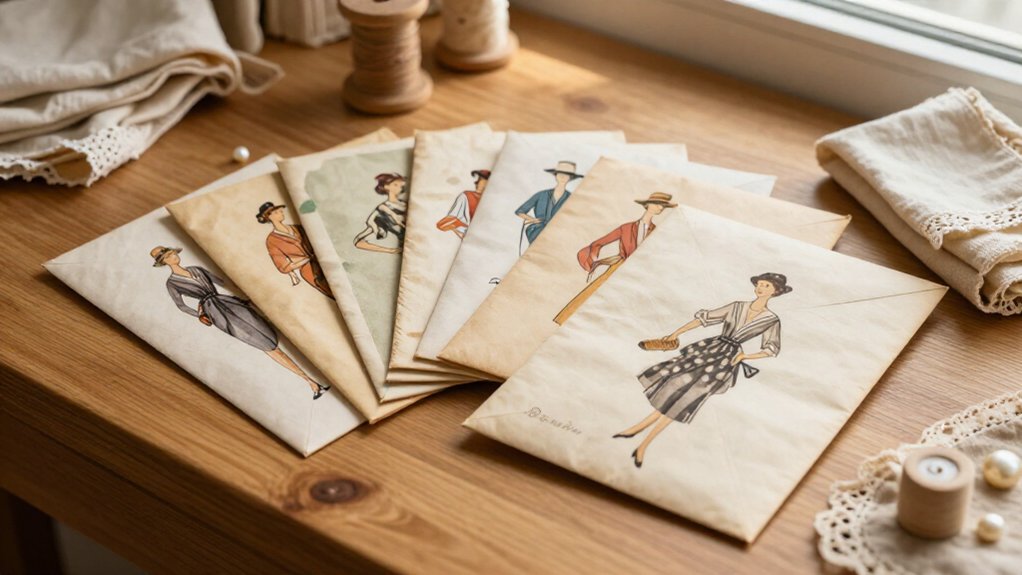
Check photos for uncut tissue, complete instructions, and intact envelopes. Copyright dates usually tell the true era better than patent dates.
Join the hunt with fellow makers, and look for Butterick, McCall, Simplicity, or Vogue. Simplicity is especially friendly for beginners!
Choosing Vintage Fabrics
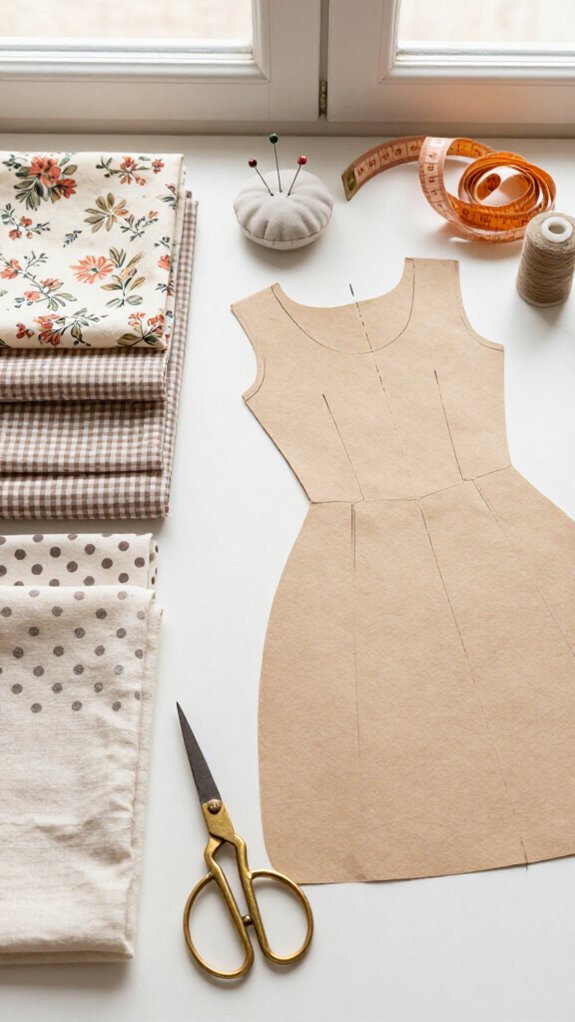
Choosing fabric for a vintage pattern is where the outfit really starts to come alive—so don’t grab the prettiest bolt just yet!
Join fellow stitchers by checking these necessities:
- Start with Pre shrinking care: wash cottons and rayons first.
- Match weight: 1950s tailoring loves medium wovens.
- Choose crepe or knits for breezy 1970s drape.
- Cut delicate cloth with sharp scissors; don’t tug.
- Check fabric grain alignment for crisp seams and coats.
Then pair findings and interfacing with the fabric’s body, so nothing pulls or turns cardboard-stiff. Your careful choices create a garment that looks like it belongs in the era—and in your wardrobe. Magic!
Resizing Old Patterns
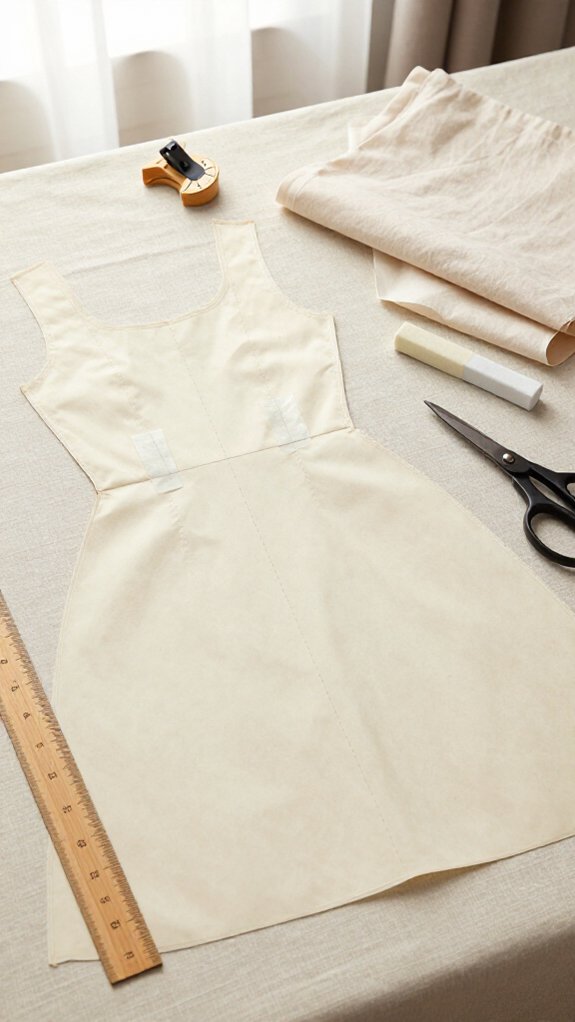
Before you size up or down, pull out the pattern envelope and compare your bust, waist, and hip measurements to its original size chart—vintage numbers can play sneaky tricks!
| Check | Why it matters |
|---|---|
| Size pieces | Avoid wrong tissue choices |
| Muslin | Catch Pattern fit issues |
Check the copyright date, too; it hints at the era’s shape. Trace the correct pieces, then adjust shoulder width, waist placement, and length lines together—not just the bust. Pre-wash fabric, and revise your fabric yardage planning after changes.
You’re part of a clever sewing crowd, so test a muslin first. That small, inexpensive step saves your pretty fabric from a dramatic plot twist!