19 Seashell Painting Ideas for Kids That Are Actually Fun
I love turning plain shells into mini masterpieces, and I’ve got 19 kid-friendly ideas that are colorful, simple, and actually fun. Start with rainbow stripes or soft watercolor washes, try dot art with cotton swabs, or make marbled shells using shaving cream or nail polish; add galaxy swirls, tiny rock-garden scenes, ornaments, frames, and even clay-based sculptures. I’ll share tips on brushes, droppers, layering, and gifting so you can pick the perfect project and try more.
Love cozy DIY projects? 💕
Get free printable guides, exclusive tutorials & surprise craft goodies straight to your inbox.
Disclosure: This post may contain Amazon affiliate links, at no extra cost to you. Content on DiyCraftNest is created with research support from AI tools and carefully reviewed, edited, and fact-checked by the lead author, Daniel Pat, to ensure accuracy and reliability. Learn more
Key Takeaways
- Offer a variety of techniques (dot art, drip, marbling, watercolor wash, stencils) so kids can pick what interests them.
- Use safe, vibrant media like liquid watercolors or acrylics and simple tools (cotton swabs, droppers, sponges).
- Choose age-appropriate projects: simple dot patterns for younger kids, mandalas and stencils for older kids.
- Turn finished shells into gifts, garlands, ornaments, or a Kindness Shell Hunt to encourage sharing.
- Emphasize process over perfection: experiment with layering, tilting, and color mixing for playful learning.
Rainbow Stripe Seashell Painting Ideas with Bright Kids Colors
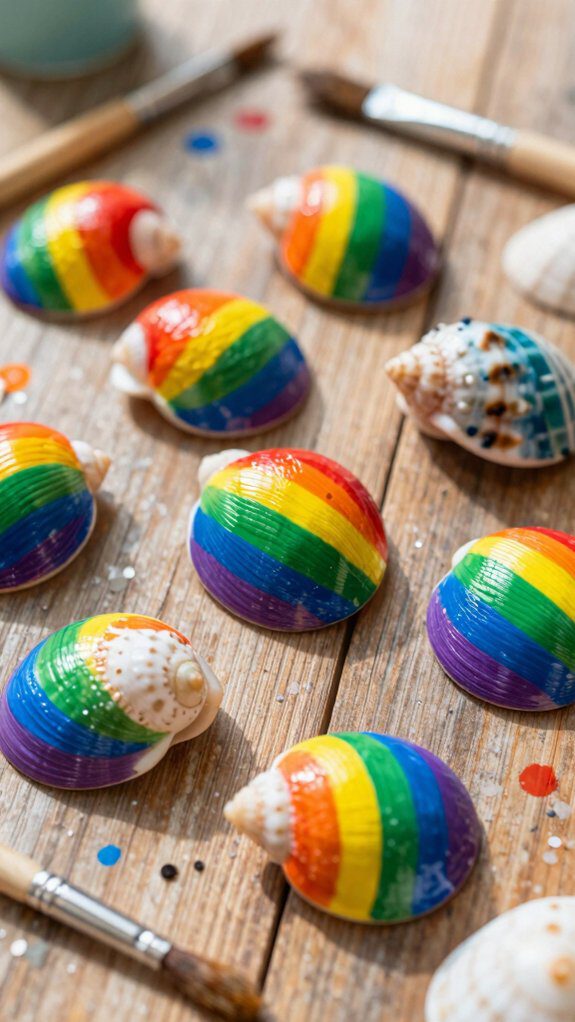
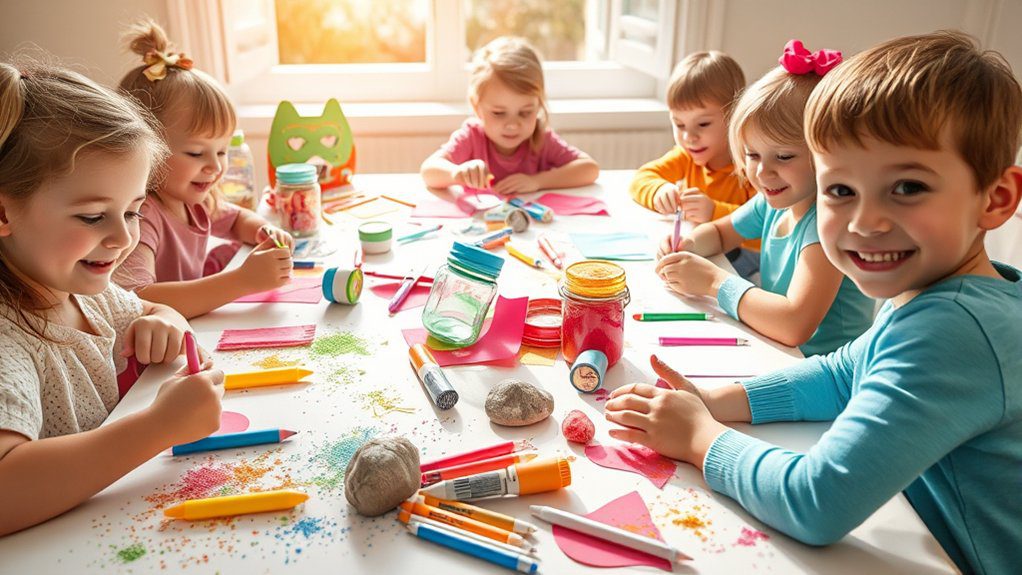
Ready to brighten a beach day? I’ll walk you through rainbow stripe seashell painting with bright kids colors so we can create together. First, gather clean, dry shells and liquid watercolors; you’ll see how colorful storytelling starts when kids name each stripe. Use different brush sizes for crisp lines — thin brushes for narrow bands, wider ones for bold color, and practice creative brushwork to build fine motor skills. Try drip painting with an eye dropper for flowing blends, then compare controlled stripes versus drips to investigate color mixing and gravity. Encourage kids to describe their shells and trade ideas, which builds belonging and confidence. Finished shells make sweet gifts, garlands, or tiny decorations for shared displays.
Dot Art Seashell Painting Ideas Using Cotton Swabs and Q Tips
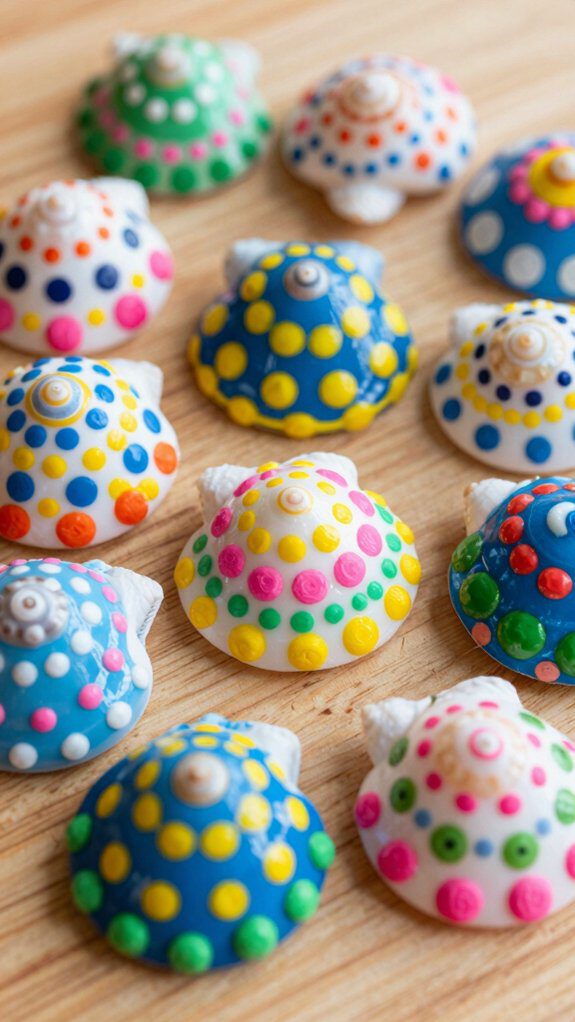
If you liked the bright stripes, you’ll enjoy how dot art lets you make tiny, precise patterns with just a cotton swab and a steady hand. I love guiding kids through color theory basics—contrasting dots pop, analogous hues soothe—and watching them gain confidence as they practice texture exploration with layered dots. Use acrylics or liquid watercolors for vivid spots; dip, dot, and rinse between shades. Start with simple concentric circles, then try rows, spirals, or animal-inspired patterns. It’s tidy, skill-building, and perfect for sharing in groups or gifting.
| Pattern idea | Tip |
|---|---|
| Concentric dots | Start center to edge |
| Rows of dots | Use same swab for consistency |
| Spiral dots | Turn shell gently |
| Animal spots | Vary sizes for realism |
Watercolor Wash Seashell Painting Ideas with Soft Blended Tones
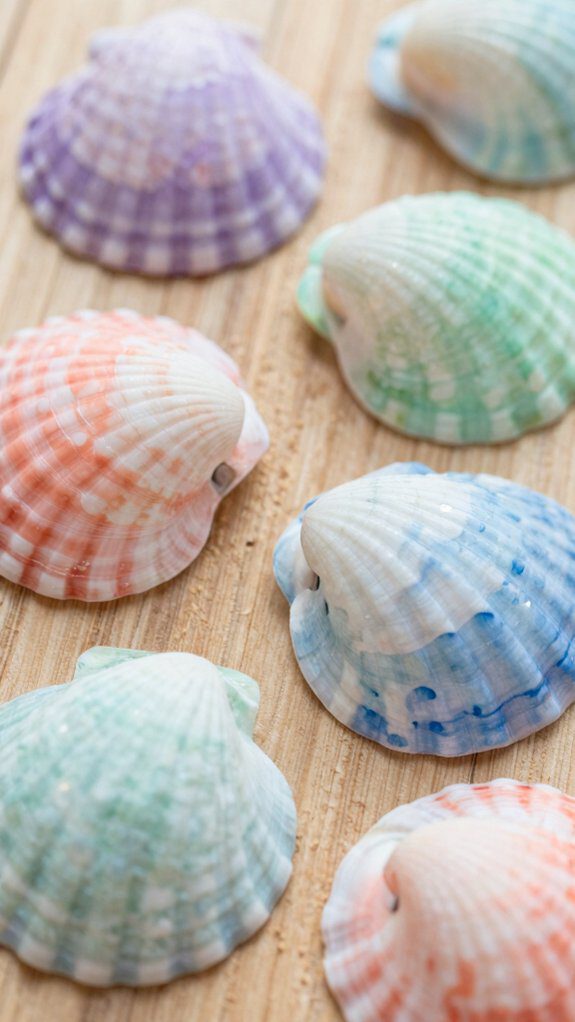
Watercolor washes are a gentle, playful way to turn plain shells into soft, dreamy keepsakes, and I’ll walk you through how to get those smooth, blended tones without fuss. I start with clean, dry shells and liquid watercolors so the translucent paint lets the shell’s texture show through. Teach kids simple color mixing by diluting small amounts, then use a wet brush to pull a gradient across the curve. For more depth, try layering techniques: let one wash dry, then add a lighter or darker wash on top to build soft shifts. Eye droppers create fun drips that mingle colors unpredictably, which kids love. These steps build creativity, fine motor skills, and a sense of shared exploration we all want.
Marbled Seashell Painting Ideas Using Shaving Cream or Nail Polish
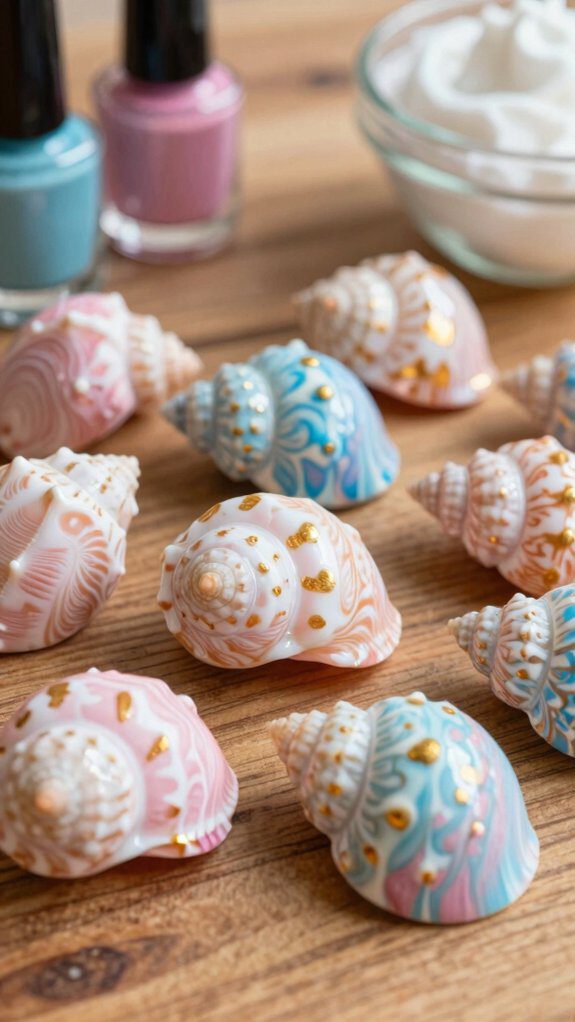
While marbling might sound elaborate, I’ll show you two easy ways to get gorgeous, swirled designs on shells using stuff you probably have at home: shaving cream or nail polish. I love shaving cream techniques because they’re tidy and vivid—fill a tray, add food coloring drops, swirl with a skewer, then press clean, dry shells into the pattern and wipe excess with a paper towel. For a glossier look, try nail polish marbling: drip colors into a shallow water dish, swirl gently, then dip shells for instant, multi-colored shine. Both methods suit kids ages 3–8, help build fine motor skills, and let everyone experiment with color mixing. Try both and compare results; you’ll find a favorite together quickly.
Galaxy Seashell Painting Ideas with Stars Planets and Swirls
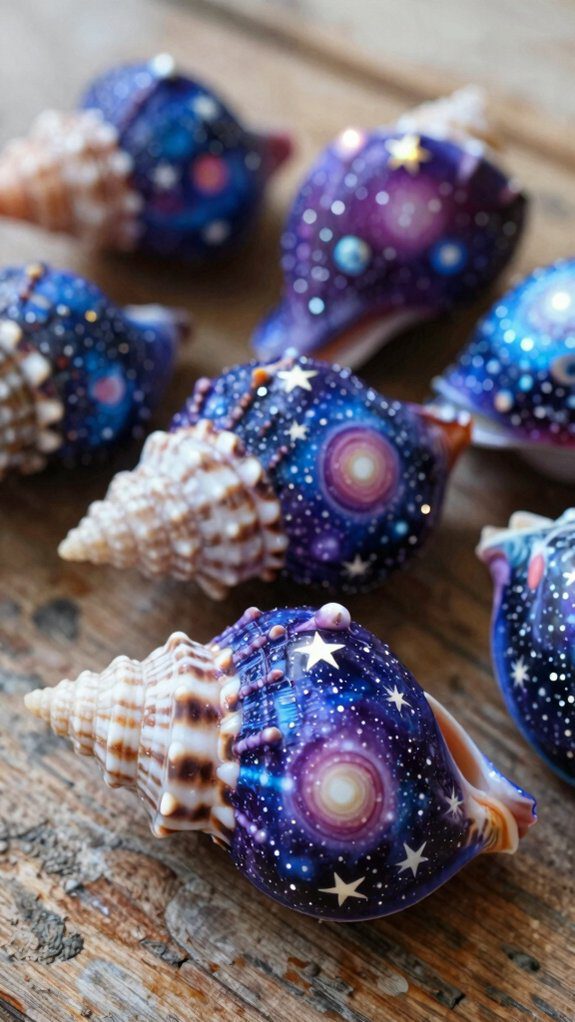
Because a shell makes such a perfect tiny canvas, I love turning them into little galaxies that sparkle with stars, planets, and swirls. I start with dark liquid watercolors as a base, then show kids how to swirl in lighter hues so the nebulae form naturally—those galaxy techniques make blending simple and magical. Next, we dab on stars and planets using small sponges or fine brushes; white or neon creates bold contrast against the dark. For distant twinkles I use eye droppers to drip tiny dots, letting paint flow and mix. Glitter or metallic paint adds shimmer, and finally a clear varnish protects the piece and boosts cosmic colors. These steps help everyone feel capable and connected while creating.
Under the Sea Seashell Painting Ideas with Fish Coral and Bubbles
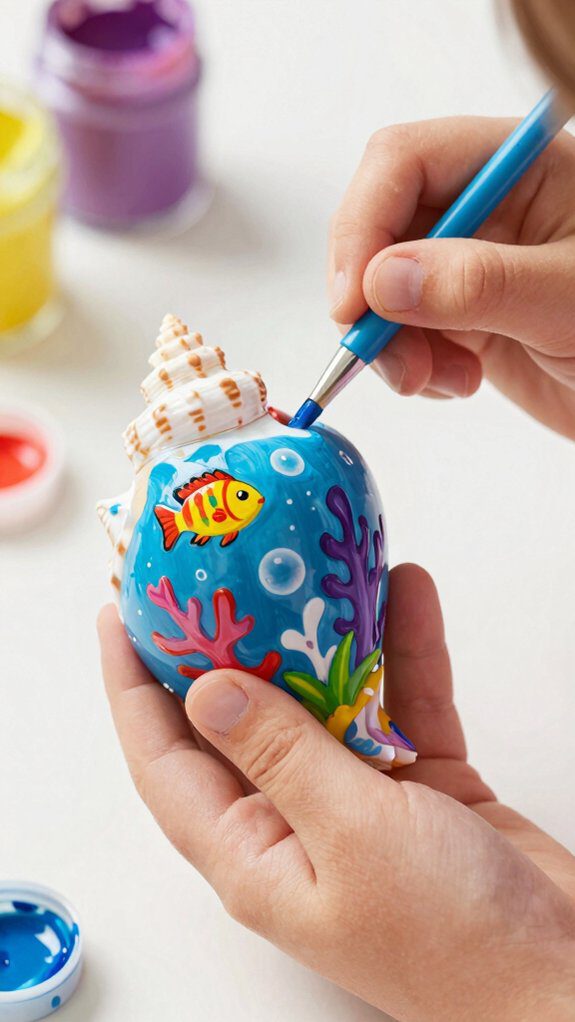
If you want to bring a tiny reef to life, paint seashells as little underwater scenes with fish, coral, and bubbly accents—it’s a great project for kids and adults alike. I love turning shells into an underwater adventure: larger shells become coral reef designs, smaller ones are colorful fish with fins and scales, and I add bubbles with white or light blue dots. I invite you to join in, share ideas, and tell stories about each painted creature.
| Shell Role | Painting Tip |
|---|---|
| Large shell | Layer bright corrals (use texture) |
| Small shell | Paint fish with varied species colors |
| Medium shell | Add coral branches patterns |
| Accent | Use white dots for bubbles |
Try mixing shapes, compare textures, and tell little reef tales together.
Pastel Ombre Seashell Painting Ideas for Calm Beachy Vibes
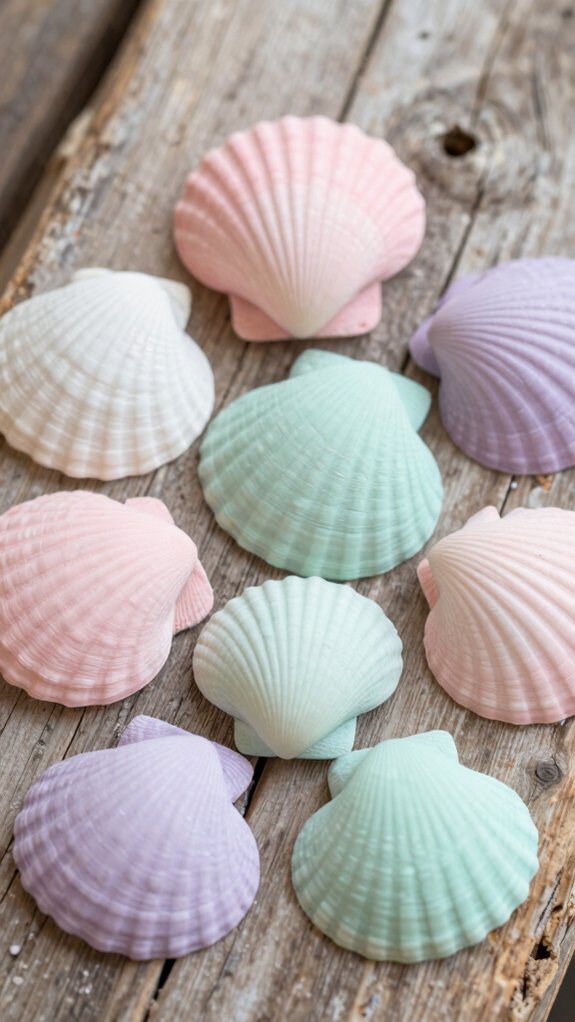
Soft pastel ombre shells bring a calm, beachy vibe to any craft table, and I’m excited to show you how simple they are to make: start with a white clam-shell base to make colors pop, lay down a light base coat of your palest shade (think blush pink, powder blue, or lavender), then gradually blend slightly deeper tones with a damp brush or sponge to create smooth shifts that look like a gentle sunset or rolling wave. I love using liquid watercolors for soft layering and to respect natural shell textures as you work. Try these steps:
- Prime with white, let dry.
- Apply palest wash.
- Blend midtones with sponge.
- Add final soft edges.
This is relaxing, inclusive, and great for kids who want calm creativity.
Metallic and Glitter Seashell Painting Ideas for Sparkly Treasure Shells
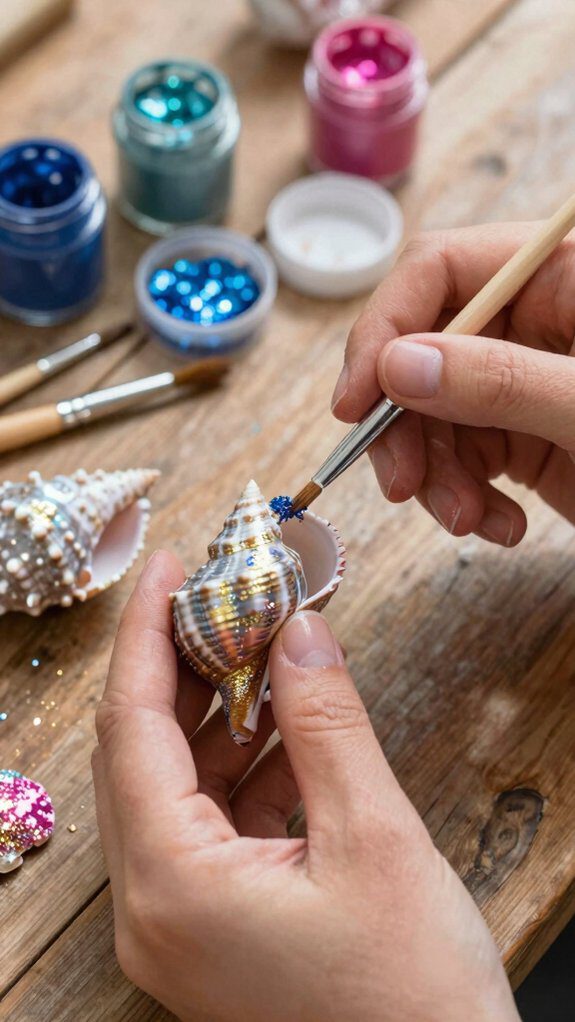
When you add metallic paints and a sprinkle of glitter to a seashell, it instantly turns into a tiny treasure that catches the light and invites imagination, so I’ll show you simple ways to get that wow factor without a mess. I love sharing metallic painting techniques that are easy for kids: basecoat with matte acrylic, dry-brush metallic highlights, or gently buff a pearl finish for shimmer. For glitter application tips, add glitter to wet paint or use a thin glue layer and press fine glitter on top, then seal. I explain layering—darker base, lighter metallic top—to show how light plays across ridges. These sparkly shells make cozy decor and start conversations about reflection, color mixing, and creativity we all share.
Animal Face Seashell Painting Ideas Cats Turtles and Unicorns
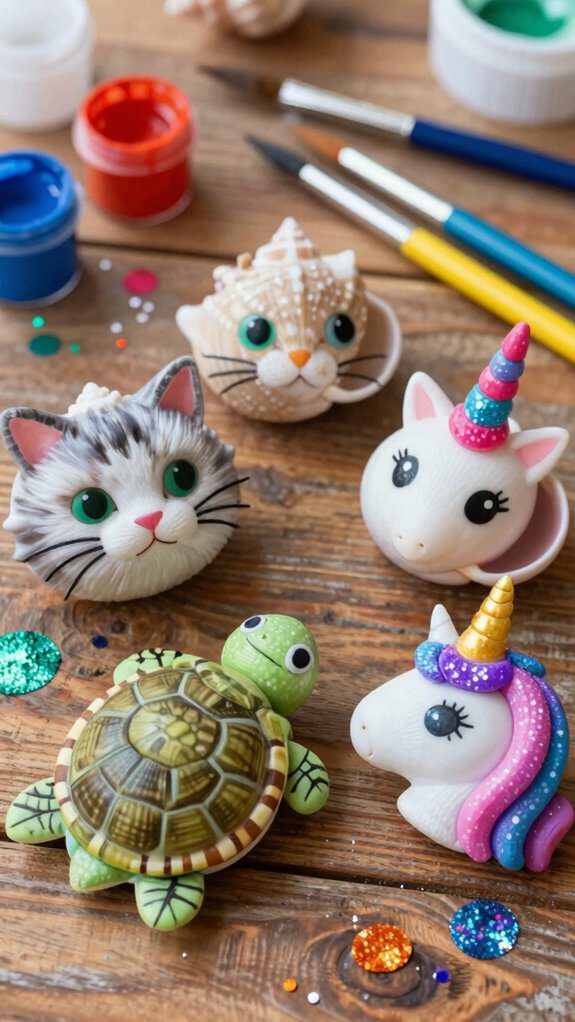
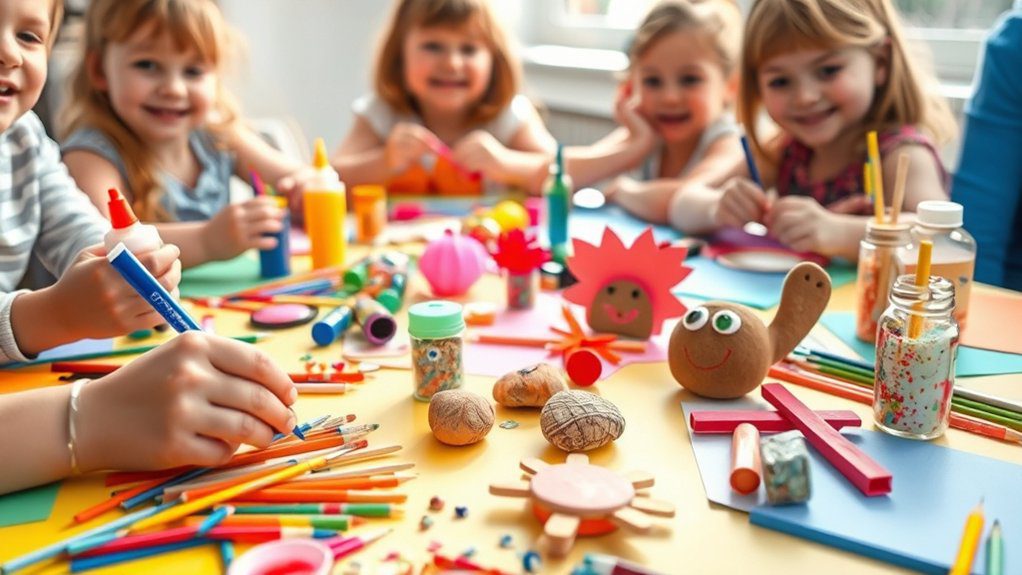
Because animal faces are simple shapes and little details, you can turn any seashell into a playful cat, turtle, or unicorn in just a few steps, and I’ll walk you through easy ways to make each one pop. I love guiding kids toward whimsical animal designs that build belonging and spark creative storytelling techniques. Use vibrant liquid watercolors for fur, shell patterns, or magical manes, and add googly eyes or tiny horns to bring characters alive.
- Paint base color—cats: warm tones, turtles: greens, unicorns: pastels.
- Add simple facial features with a fine brush.
- Glue on accessories like eyes, sequins, or tiny shells.
- Seal with varnish for durability.
These become room decor, gifts, or toys that teach ocean care gently.
Alphabet and Number Seashell Painting Ideas for Learning Games
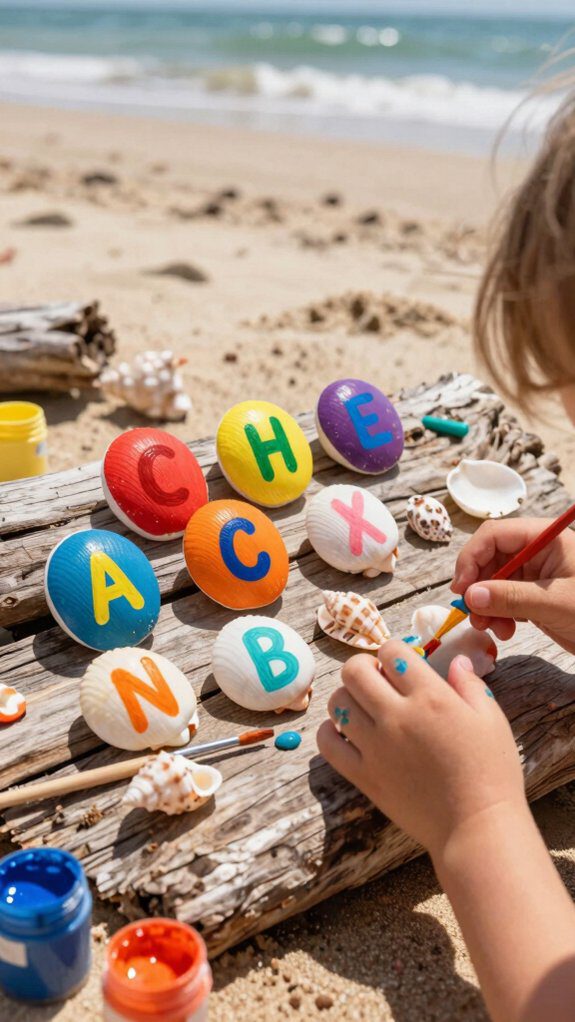
If you want to turn a beach scavenger hunt into a hands-on learning lab, painting letters and numbers on seashells is a playful, low-cost way to teach literacy and math; I’ll show you how to make sets that are clear, tactile, and ready for games. I like to paint bold uppercase letters for letter recognition and use bright, different colored paints for each numeral so number games feel distinct and inviting. Start by sealing shells, sketching characters with a pencil, then painting with acrylics. Try matching activities where kids pair shell letters to word cards or sort number shells by color and value. Add storytelling prompts using a few shells to build sentences, and include sensory play by encouraging children to trace textures as they learn.
Kindness Message Seashell Painting Ideas to Hide at the Park
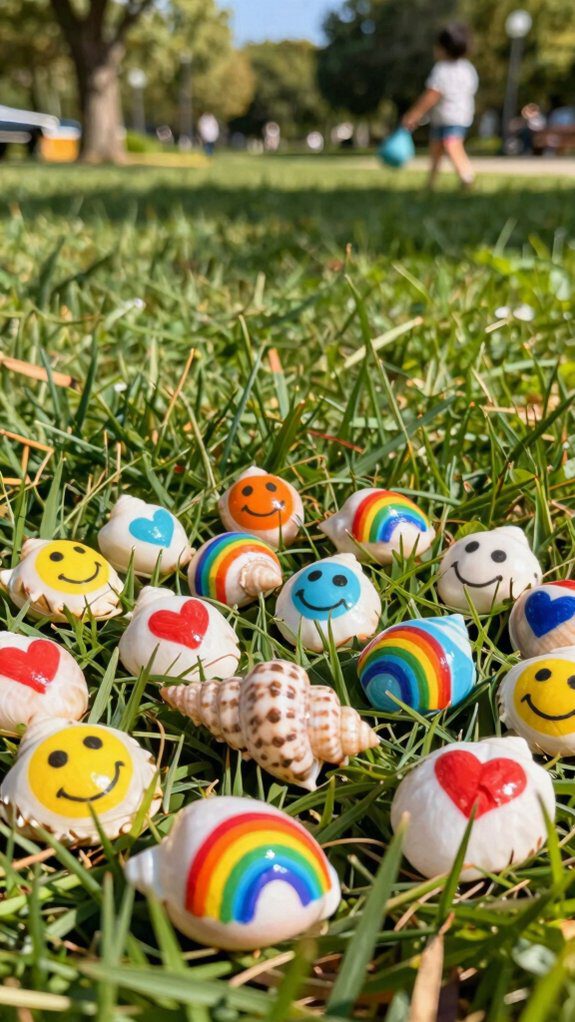
I’ve found that a handful of painted seashells can turn a regular park stroll into a small, surprising spark of joy, so I like to guide kids through making bright, kind messages that are easy to spot and safe to leave for others to find. I talk with them about kindness quotes and how short phrases like “You are loved” or “Smile” can start conversations and build connection. We use vibrant liquid watercolors so shells really pop, then choose visible spots to place them.
- Pick short, positive phrases.
- Paint bold backgrounds, write in contrasting ink.
- Discuss why joy spreading matters.
- Organize a Kindness Shell Hunt to share and find.
It’s simple, social, and deeply rewarding.
Mandala and Pattern Seashell Painting Ideas for Older Kids
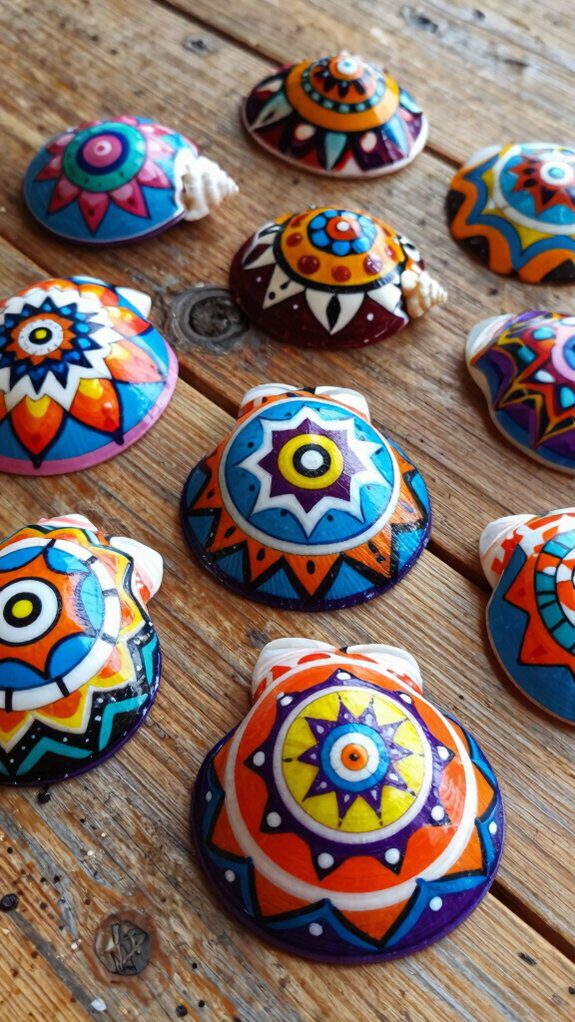
After spreading kind shells around the park, you might want to try something a little more focused and artistic—mandalas and patterns are perfect for older kids who enjoy detail and patience. I’ll walk you through mandala techniques that are easy to teach: start with a center dot, build concentric rings with dot painting using brush ends or cotton swabs, and layer liquid watercolors for crisp colors. For pattern exploration, try geometric repeats or leaf and wave motifs, matching designs to spiral or flat shells so form guides composition. Encourage symmetry practice and mixed media—tiny beads, sequins, or a touch of glitter—to add texture. These steps help kids feel creative and connected while sharpening fine motor skills.
Drip and Splatter Seashell Painting Ideas for Process Art Fun
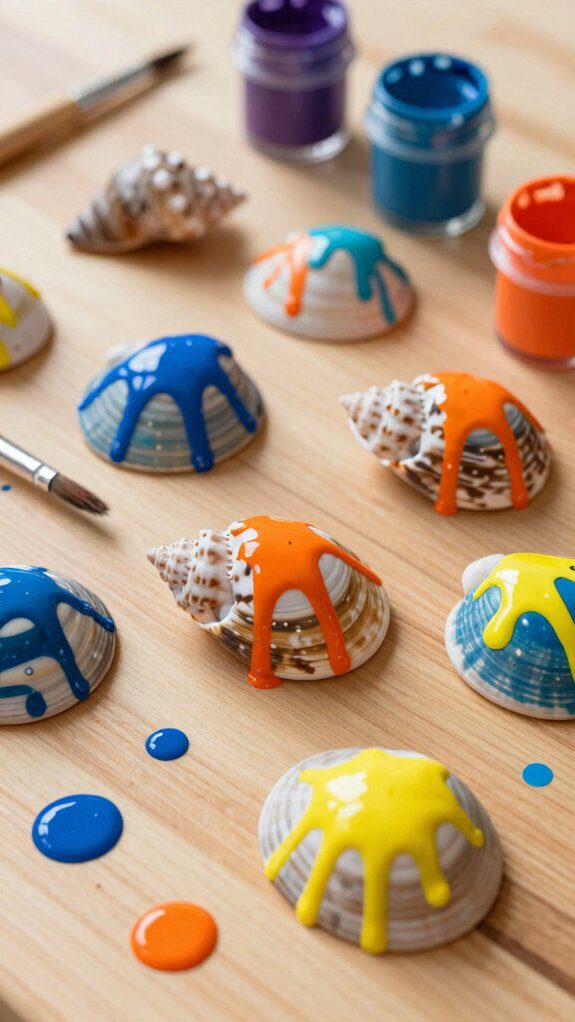
Let’s get messy and curious: drip and splatter painting turns seashells into bold, unpredictable works of art that celebrate process over perfection. I love guiding kids to investigate drip patterns with droppers or squeeze bottles, watching colors merge and run across ridges. We use shallow trays of liquid watercolor so everyone can experiment and feel supported, not judged.
- Try different nozzle sizes to change flow and control.
- Tilt shells gently to see gravity pull pigments into new shapes.
- Add quick flicks of a brush for lively splatter techniques.
- Layer drips and splatters after drying for depth and surprise.
These steps boost fine motor skills and wonder, and they make a warm, shared creative space.
Stencil and Stamp Seashell Painting Ideas with Simple Shapes
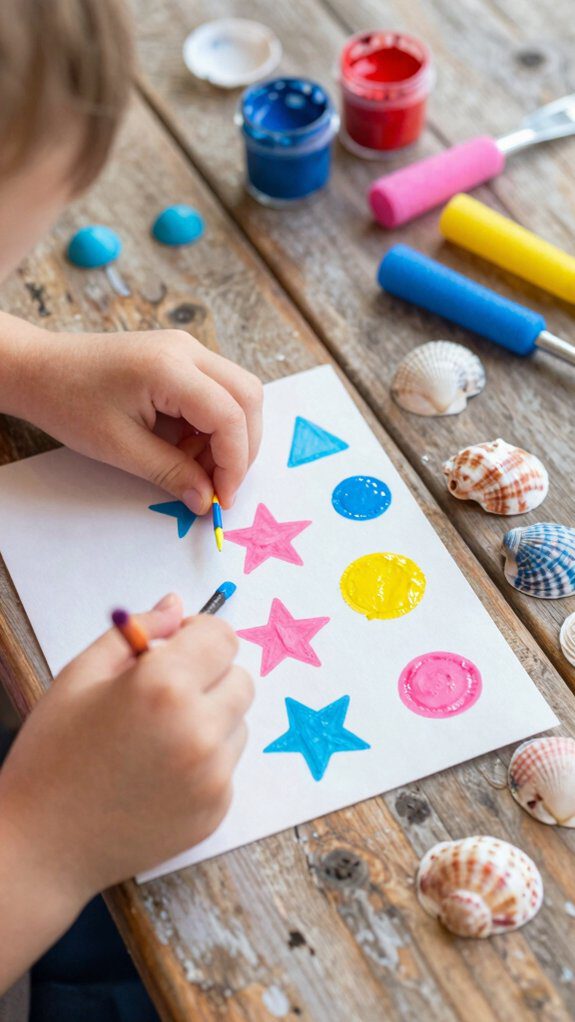
A simple stencil or stamp can turn a plain seashell into a tiny canvas, and I love how this method mixes control and surprise so kids feel confident while still experimenting. First, choose stencil shapes like stars, hearts, or fish; you can cut them from cardstock or use pre-made stencils so everyone joins in easily. Next, try stamp techniques with sponge brushes or foam stamps dipped in liquid watercolors for vivid, textured prints. I guide kids to layer colors so they learn basic color mixing and see how hues change. Encourage positioning practice to build spatial awareness — simple overlaps, edges, or centered motifs work well. These steps create shared successes and let every child’s design shine.
Glow in the Dark Seashell Painting Ideas for Nighttime Play
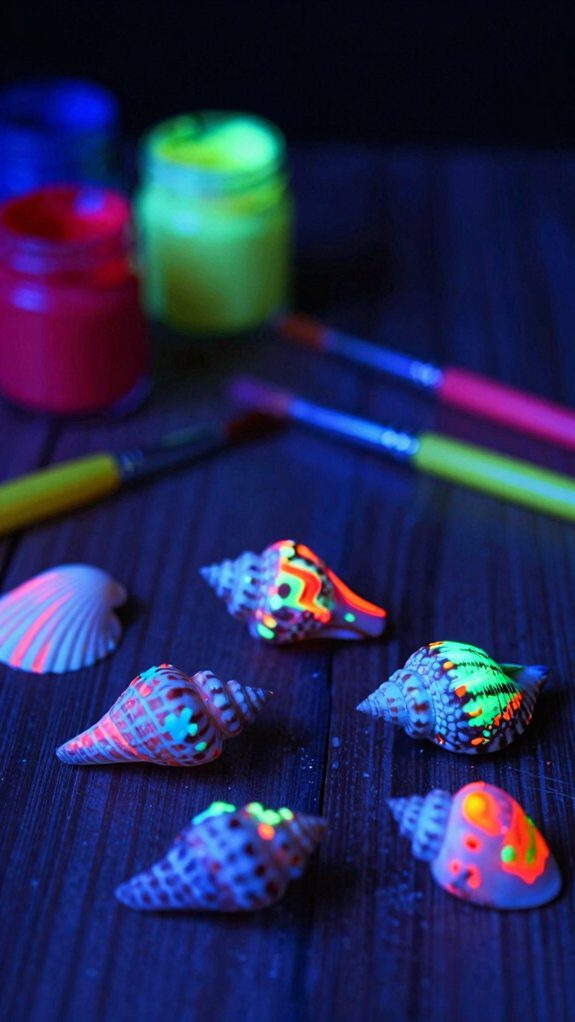
Wondering how to turn ordinary seashells into glowing treasures for nighttime play? I love guiding a group through simple steps that build confidence and community, so we start by cleaning shells and painting a white base coat to make the glow pop. Then I show kids how to create luminescent patterns with brushes or sponges, comparing dots, stripes, and swirls for different effects.
- Paint white base coat for brighter glow.
- Apply glow-in-the-dark paint in patterns.
- Let shells dry fully before glow charging.
- Use them for nighttime play or party décor.
I remind everyone to charge shells under a lamp or sunlight, test brightness, and swap ideas—this keeps play collaborative and fun for all.
Mini Seashell Rock Garden Painting Ideas with Tiny Scenes
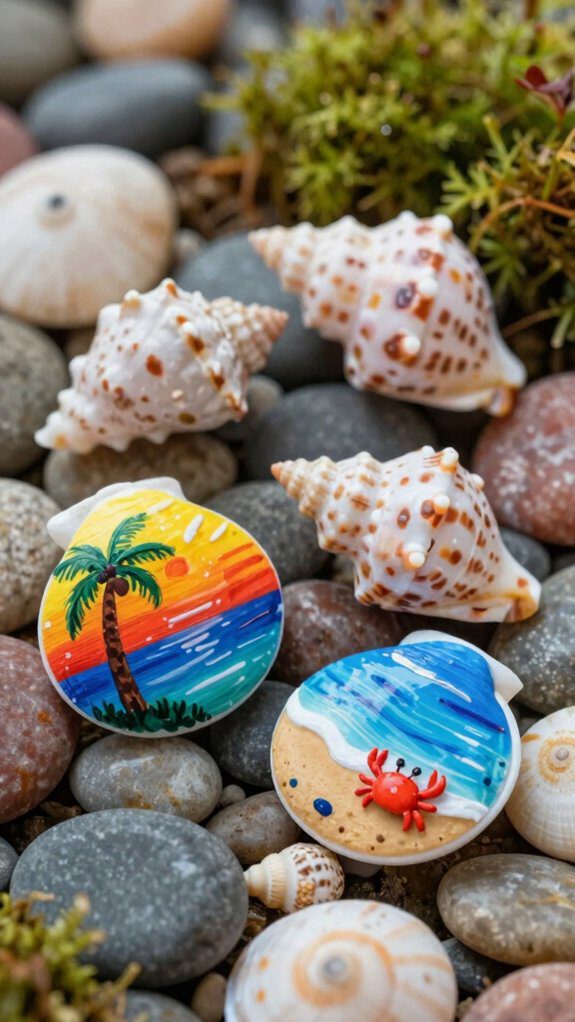
When I set out to make a mini seashell rock garden, I start by choosing a handful of small shells and rocks that already have interesting shapes and textures, because those natural features make tiny scenes feel believable right away. I paint shells with vibrant liquid watercolors, mixing colors on a palette to suggest sand, sea, or moss, then let kids try combinations to build confidence. Next I arrange shells and tiny rocks on a shallow tray, adding miniature figurines or faux plants to create storytelling scenes—use a small brush for details and tweezers for placement. I explain simple scenery ideas like pathways or tide pools, compare color balances, and encourage shared tweaking so everyone feels included. Finished gardens decorate shelves or patios.
Seashell Ornament Painting Ideas for Christmas and Holidays
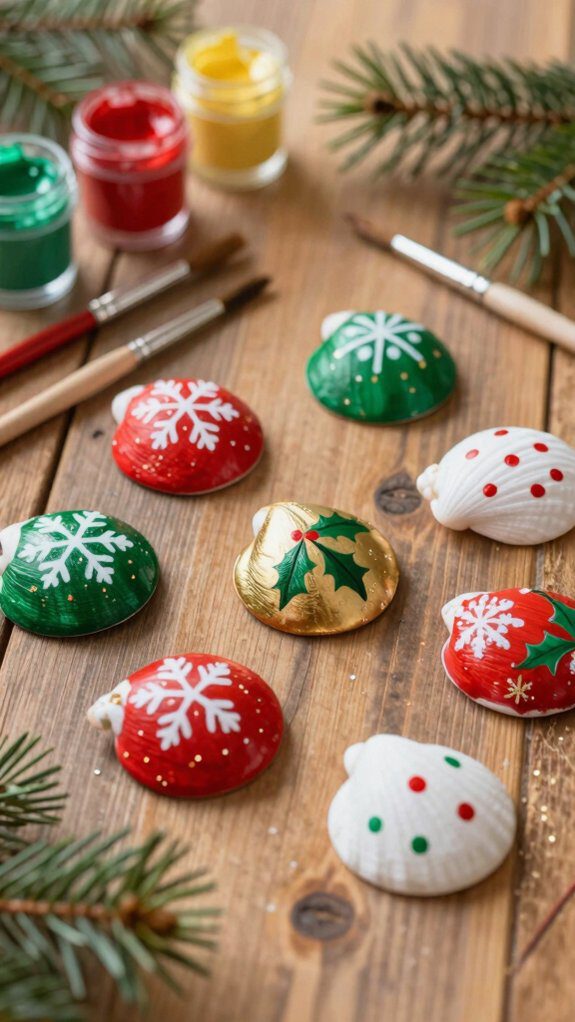
After arranging tiny scenes in a shallow tray, I like to bring that same hands-on energy to making seashell ornaments for the holidays—they’re a great way to turn beach finds into bright, festive keepsakes. I use red, green, and gold paints, and kids enjoy liquid watercolors or acrylics to practice fine motor skills while telling stories about each shell’s origin. Add glitter or sequins for sparkle, then seal the paint so ornaments last.
- Paint base colors first, let dry, then add details.
- Glue sequins/glitter into wet paint for secure sparkle.
- Drill tiny holes or hot-glue loops for twine or ribbon.
- String shells into garlands or wreaths for festive seashell displays.
These holiday seashell crafts make everyone feel included and proud.
Seashell Picture Frame and Collage Painting Ideas for Keepsakes
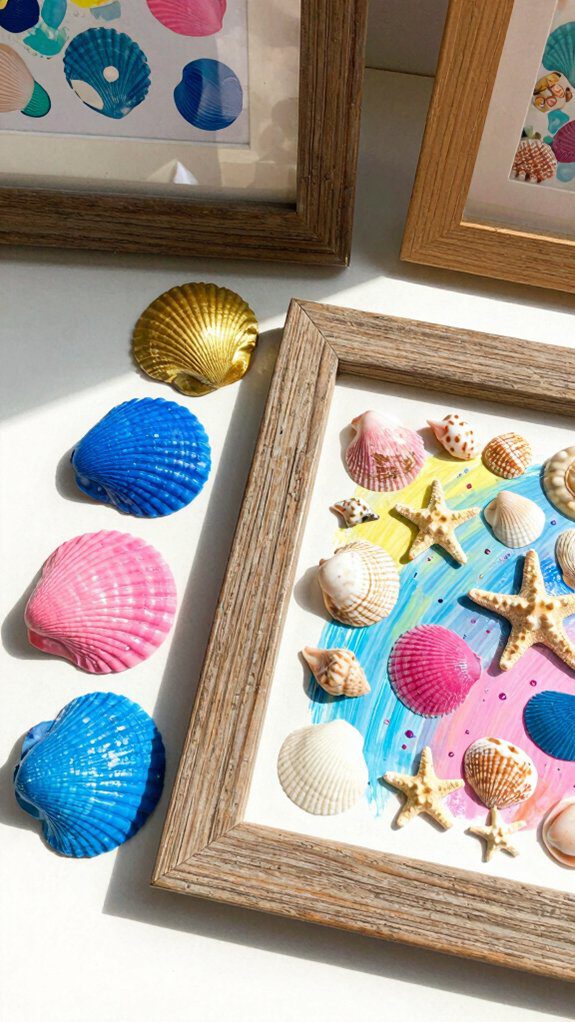
One of my favorite keepsake projects is turning beach finds into a personalized picture frame or collage that families can treasure, and it’s easier than it sounds. I start by cleaning shells, then we paint and glue them around a simple wooden or cardboard frame; kids pick shells that match a beach memory, which makes each frame personal. For collages, we arrange painted shells on canvas or sturdy paper, adding sand and small pebbles for texture. I ask children to share seashell storytelling as they choose pieces, which builds language and meaning. Displaying frames or gifting them to relatives keeps memories alive. Tip: let kids experiment with color and layout first so the final keepsake feels intentional and loved.
Seashell Sculpture and Clay Base Painting Ideas for 3D Art
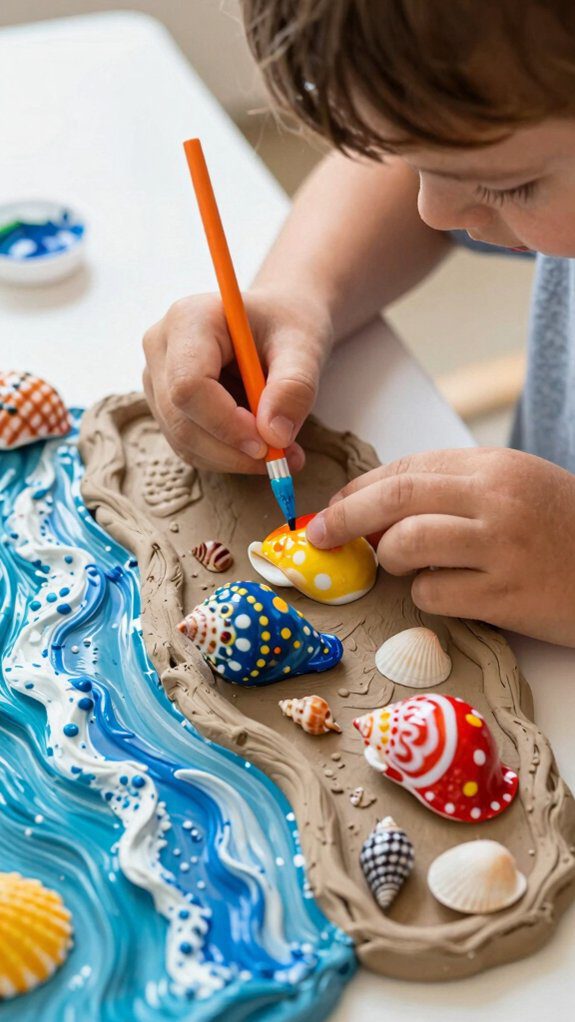
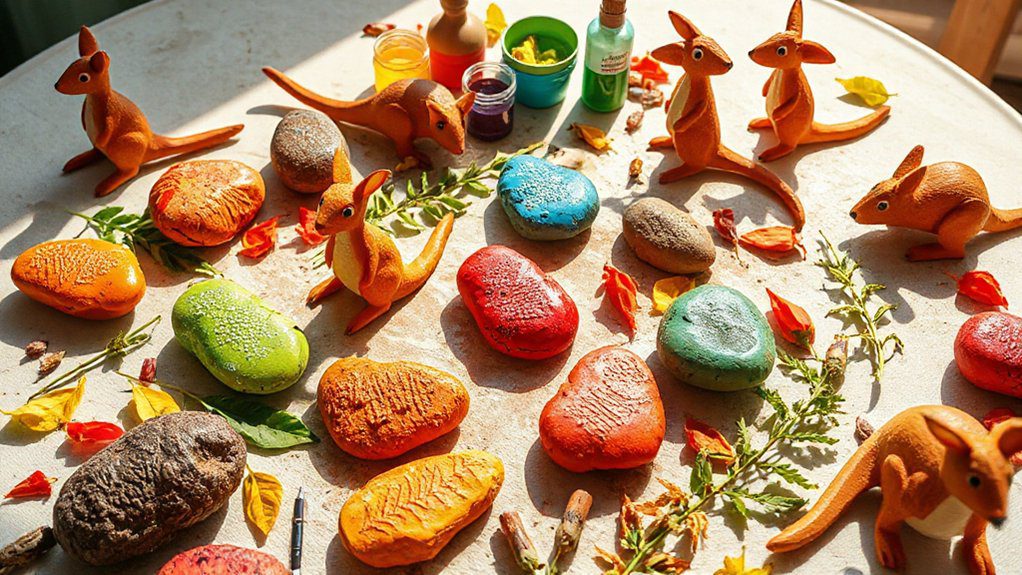
Because I love hands-on projects that turn beach treasures into mini works of art, I often start seashell sculptures by giving kids a lump of air-dry modeling clay and a simple prompt—build a sea creature, a tiny garden, or an abstract mound for shells to perch on—and then we let their imaginations guide the shapes. I show them how to press shells gently into the clay so the clay texture holds them, then paint the base with vibrant colors that complement each shell. I encourage mixed media additions—sand, small stones, googly eyes—for extra texture and story. Practical tips:
- Score surfaces for stronger adhesion.
- Paint clay before or after attaching shells.
- Seal for durability.
- Display proudly to celebrate creativity.