21 Pottery Vase Painting Ideas for Creative Home Decor
Disclosure: This post may contain affiliate links, at no extra cost to you. Content on DiyCraftNest is created with research support from AI tools and carefully reviewed, edited, and fact-checked by the lead author, Daniel Pat, to ensure accuracy and reliability. Learn more
Love cozy DIY projects? 💕
Get free printable guides, exclusive tutorials & surprise craft goodies straight to your inbox.
Transform your plain pottery vases into stunning art pieces with these creative painting techniques! From minimalist line designs to boho geometric shapes, you’ll uncover endless possibilities. Try cobalt blue chinoiserie, marble effects, or nature-inspired abstracts. Experiment with metallic accents, texture techniques like baking soda mixtures, and bold color blocking. Whether you’re a beginner or a seasoned crafter, these ideas will spark your imagination and turn ordinary ceramics into extraordinary home decor. Stick around for more inspiring details!
Key Takeaways
- Explore minimalist line art techniques using fine-tip paint pens to create elegant, single-line designs with high-contrast monochrome color schemes on ceramic vases.
- Experiment with geometric abstract patterns by using painter’s tape to mask bold brush strokes, creating contemporary color-blocked vase designs with textured finishes.
- Incorporate nature-inspired botanical motifs like leaf silhouettes and delicate flower designs, utilizing stencils and soft pastel ombre blending techniques for organic decor.
- Develop unique texture effects by mixing baking soda with acrylic paint to achieve stone-like finishes, adding depth and visual interest to pottery surfaces.
- Utilize metallic accents, marble-inspired swirling techniques, and varying paint sheens to transform plain vases into sophisticated, conversation-starting decorative pieces for modern home styling.
Minimal Line Art Designs
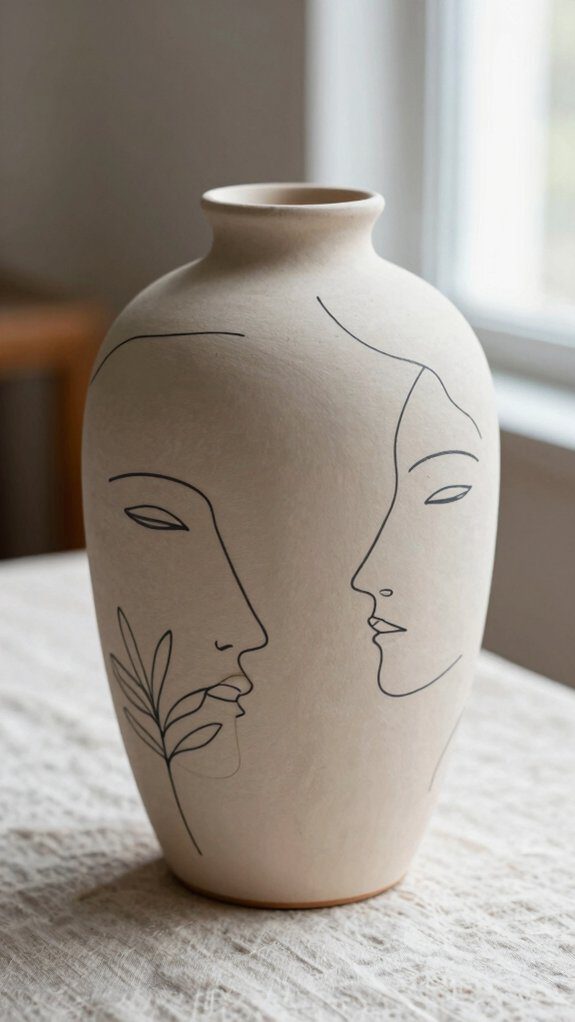
Ready to transform a plain pottery vase into a stunning piece of minimalist art? Continuous contour line art is your secret weapon! With a fine-tip paint pen or tiny brush, you’ll create elegant single-line designs that bring ceramic surfaces to life. The key is consistent stroke width—aim for 1–2 mm lines that dance gracefully around your vase.
Negative masking techniques will help you achieve crisp, professional-looking edges. Pro tip: Use low-tack painter’s tape to create geometric breaks and protect areas you don’t want painted. By dividing your vase visually into thirds, you’ll naturally create balanced compositions that catch the eye. High-contrast color schemes like matte white with black lines will make your minimalist design pop, turning an ordinary vase into a modern art statement.
Abstract Brush Stroke Patterns
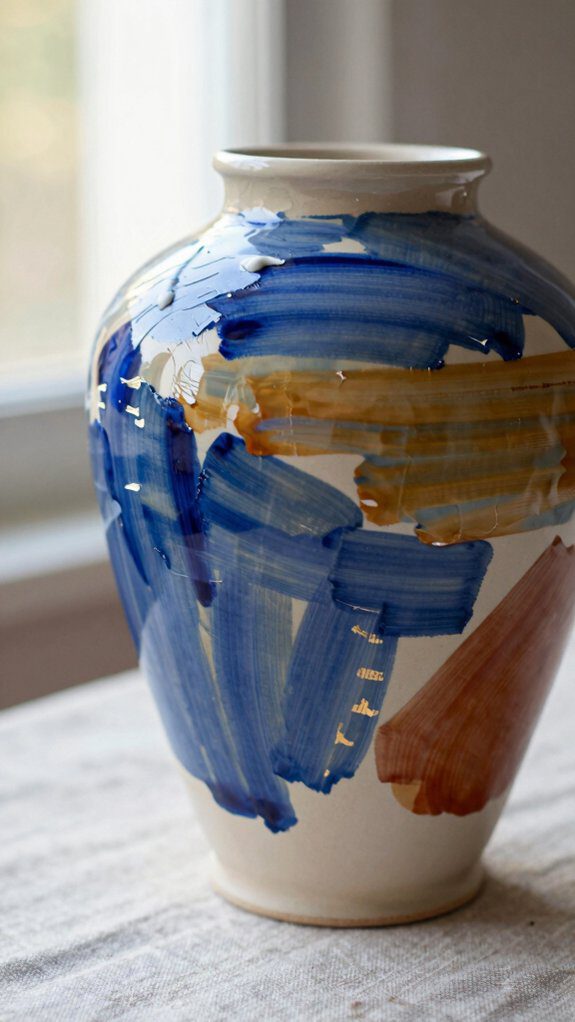
I’ve fallen in love with modern color blocking for abstract pottery vase designs, which lets you create stunning visual art with just a few strategic brush strokes. By using a limited color palette and intentional mark-making techniques, you can transform an ordinary ceramic surface into a vibrant, contemporary art piece that catches everyone’s eye. The key is honing brush control, selecting harmonious colors, and playing with texture—techniques I’ll walk you through so you can confidently create your own expressive pottery artwork.
Modern color blocking style
Modern color blocking transforms ordinary pottery vases into stunning statement pieces with abstract brush stroke patterns that seize contemporary design sensibilities. I love creating tactile contrasts by masking geometric sections with painter’s tape and applying unexpected color combinations. By using flat synthetic brushes and heavy-body acrylic paints, I can achieve bold, uneven strokes that give each vase unique character.
The secret to crisp edges is careful tape placement and strategic paint application. I’ll start with a neutral base like Classic White, then mask and layer textured sprays or chalk paints. Alternating between smooth and textured finishes adds depth and visual interest. A final matte sealer preserves the color-block sharpness, ensuring my vases remain eye-catching decorative pieces that reflect modern design sensibilities.
Floral Hand-Painted Motifs
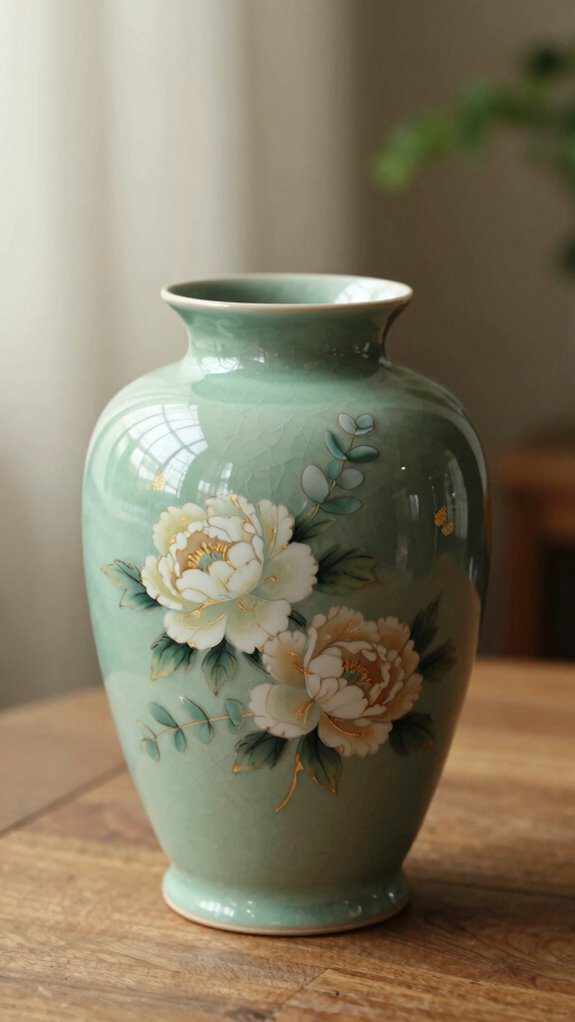
Floral hand-painted motifs transform ordinary pottery vases into stunning artistic pieces that seize nature’s delicate beauty. Whether you’re dreaming of vintage botanical designs or experimenting with hand-painted buddleia, these artistic techniques are easier than you might think! Start with a crisp white base coat, then discover beginner-friendly flower styles like delicate cherry blossoms or simple daisies. Fine brushes and paint pens let you add intricate details like flower veins and stamens, while larger brushes help create soft petal washes. Pro tip: mix a touch of baking soda into your acrylic paint for a rustic, textured finish that adds dimension to your design. With practice, you’ll create personalized vases that bring organic elegance to any home decor.
Terracotta White Contrast Look
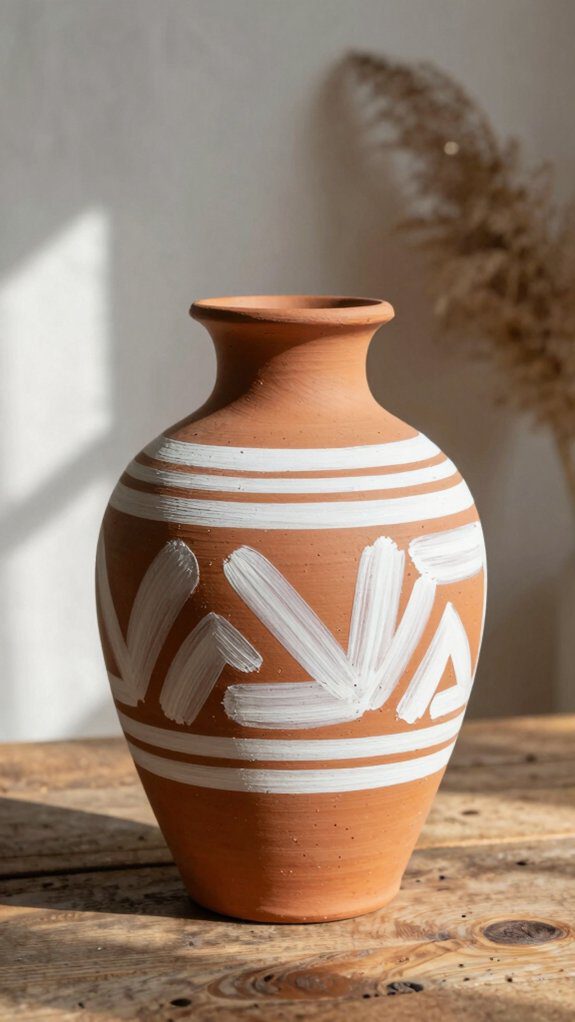
When I want to transform a classic terracotta vase into a stunning Mediterranean-inspired piece, the white contrast look is my go-to technique for adding modern elegance. This approach beautifully highlights the warm, earthy tones of terracotta while introducing a crisp, clean aesthetic that can instantly upgrade any home decor style. By strategically painting and revealing the underlying clay texture, you’ll create a sophisticated design that feels both contemporary and timeless.
Mediterranean aesthetic
Sunlight-drenched landscapes whisper the core of Mediterranean pottery design, where terracotta’s warm embrace meets pristine white in a timeless dance of color and texture. I love how these sun-drenched motifs seize the heart of coastal living, blending rustic glazing techniques with pure, clean aesthetics. By using a 70/30 ratio of terracotta to white, you’ll create a balanced look that feels authentically Mediterranean. The key is in the details—think minimalist olive branch silhouettes, horizontal stripes, and carefully applied white paint that highlights the clay’s natural warmth. Scuffing the surface and adding texture with baking soda mixed into paint brings depth and character, transforming an ordinary vase into a piece that tells a story of sun-baked shores and timeless artistry.
Boho Geometric Shapes
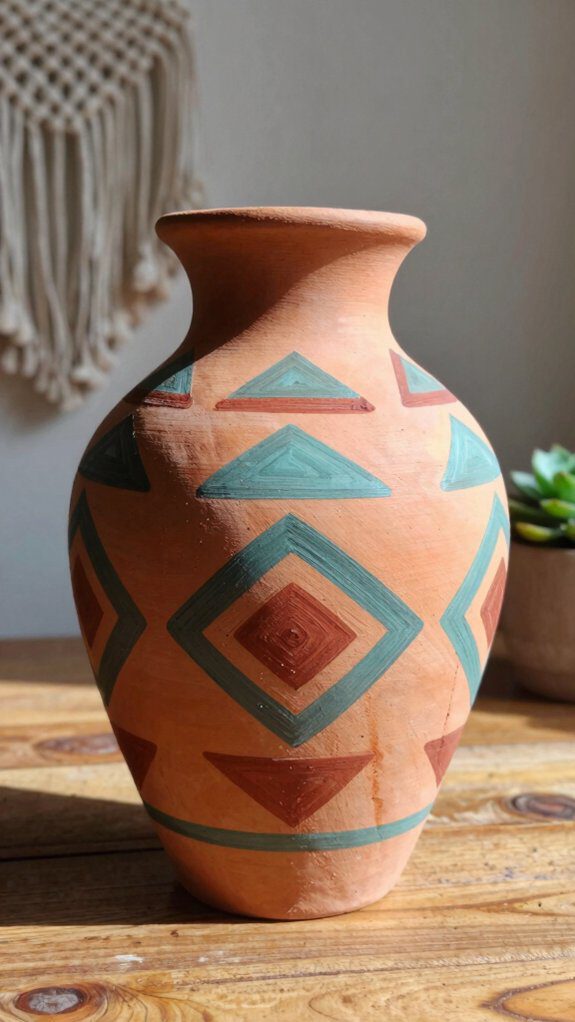
Because boho geometric shapes transform ordinary pottery into artistic statements, these designs offer a contemporary twist on traditional vase painting. Sunset geometrics and boho tessellation create visual rhythms that seize the spirit of relaxed, eclectic style. I love how triangle and diamond patterns can turn a simple ceramic piece into an enchanting home decor element. The key is balancing larger geometric blocks at the vase’s base with delicate, smaller motifs near the neck. By using a limited palette of 3–4 colors and layering textures like matte chalky bases and Fine Stone finishes, you’ll achieve a sophisticated yet playful look. Stencil-cut masking tape and paint pens help create crisp, precise geometric designs that feel both modern and warmly inviting. A matte sealer preserves the artistic integrity of your creation.
Pastel Ombre Finish
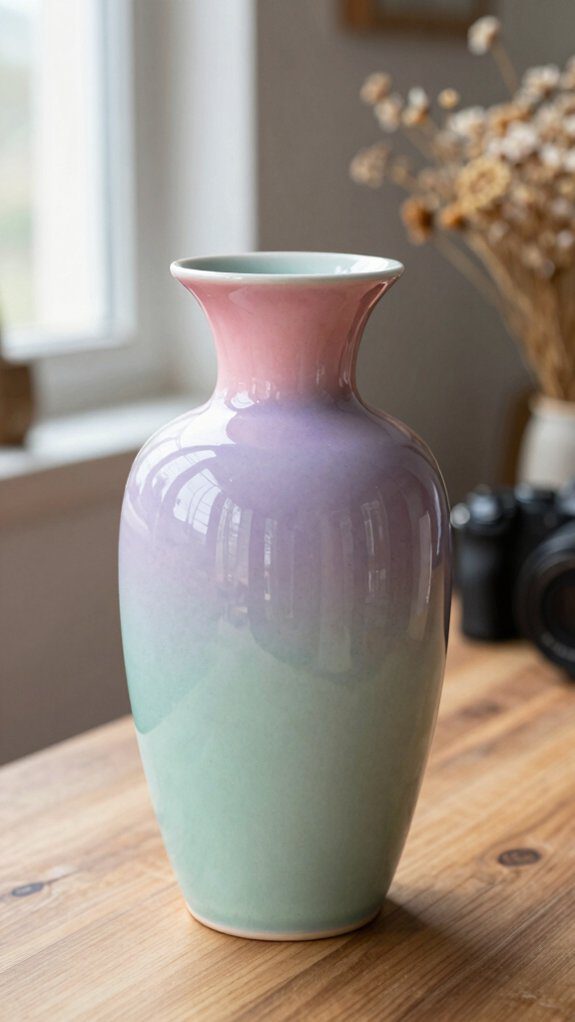
Pastel ombre finishes transform ordinary vases into dreamy, soft-hued masterpieces that blend colors like a watercolor painting. I’ll show you how to create a stunning gradient effect using three complementary pale shades that shift smoothly from light to dark across your ceramic surface. Whether you’re a beginner or a seasoned crafter, this technique lets you play with color in a way that’s both elegant and surprisingly simple to achieve.
Soft gradient effect
Ceramic artists often fall in love with the ethereal charm of soft gradient effects, and the pastel ombre finish offers a delightful way to transform ordinary pottery into mesmerizing art pieces. By using pastel stippling techniques and gentle ombre masking, you can create breathtaking color shifts that make your vases truly unique. I’ve uncovered that the secret lies in layering translucent paint and blending edges while they’re still wet. A damp sponge or wide synthetic brush helps soften color transitions, creating a dreamy, ethereal look. Working with soft, complementary shades like blush pink, mint, and lavender allows you to craft a gentle gradient that looks professionally executed. The key is patience—building color gradually and allowing each layer to merge effortlessly into the next.
Botanical Leaf Silhouettes
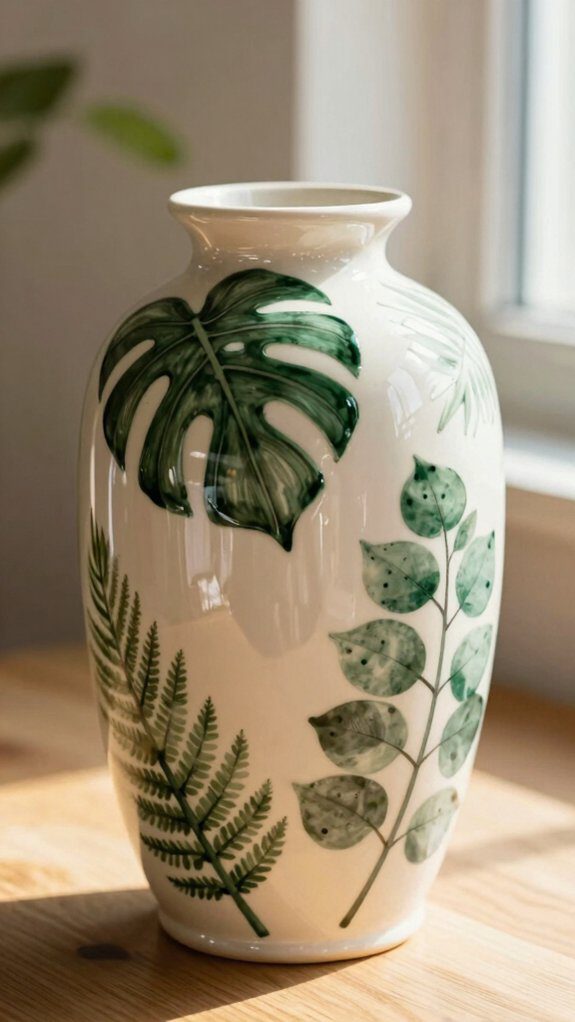
Nature’s elegant silhouettes transform pottery into living art, turning a simple vase into a canvas of botanical beauty. Stenciled botanical designs convey the essence of foliage through precise negative space techniques. I love creating these stunning leaf impressions by tracing real leaves onto masking paper and carefully cutting out intricate stencils. The magic happens when you spray or dab acrylic paint through these cutouts, revealing crisp leaf shapes that dance across your ceramic surface.
Choose contrasting colors to make your leaf silhouettes pop—imagine deep green leaves against a matte white vase or black outlines on a warm terracotta base. Add subtle veining with a fine paint pen to bring depth and realism. Vary the leaf sizes and orientations to create a natural, rhythmic composition that feels both intentional and effortlessly organic.
Vintage Blue and White Style
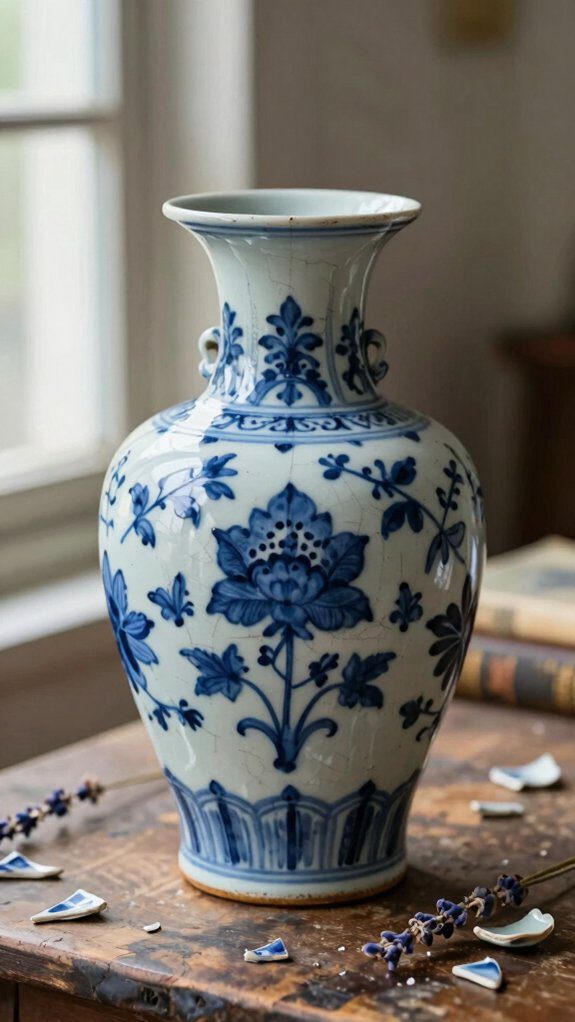
If you’re dreaming of creating stunning ceramic pieces that seize the timeless elegance of traditional Chinese porcelain, the vintage blue and white style is your perfect artistic destination! I’m absolutely in love with the way cobalt blue designs dance across pristine white backgrounds, creating intricate patterns that tell stories of ancient craftsmanship and cultural heritage. By understanding the classic motifs and techniques used in Ming and Qing dynasty ceramics, you’ll be able to transform ordinary pottery into extraordinary works of art that celebrate centuries of beautiful design traditions.
Classic ceramic inspiration
Timeless elegance whispers through the delicate brushstrokes of blue-and-white ceramic art, a tradition that’s seized my imagination for years. Imperial porcelain from China’s Ming dynasty inspired generations of artisans, creating stunning Ming motifs that continue to captivate decorative arts lovers. The deep cobalt blue against pristine white surfaces tells stories of cultural exchange and fastidious craftsmanship, where every brushstroke matters.
I’m fascinated by how these ceramics blend intricate storytelling with geometric precision. Delicate peonies, scrolling acanthus, and detailed chinoiserie scenes dance across vases and plates, each piece a canvas of historical artistry. Whether you’re drawn to traditional techniques or modern interpretations, blue-and-white ceramics offer a connection to a rich, global artistic heritage that transcends time and culture.
Speckled Neutral Texture
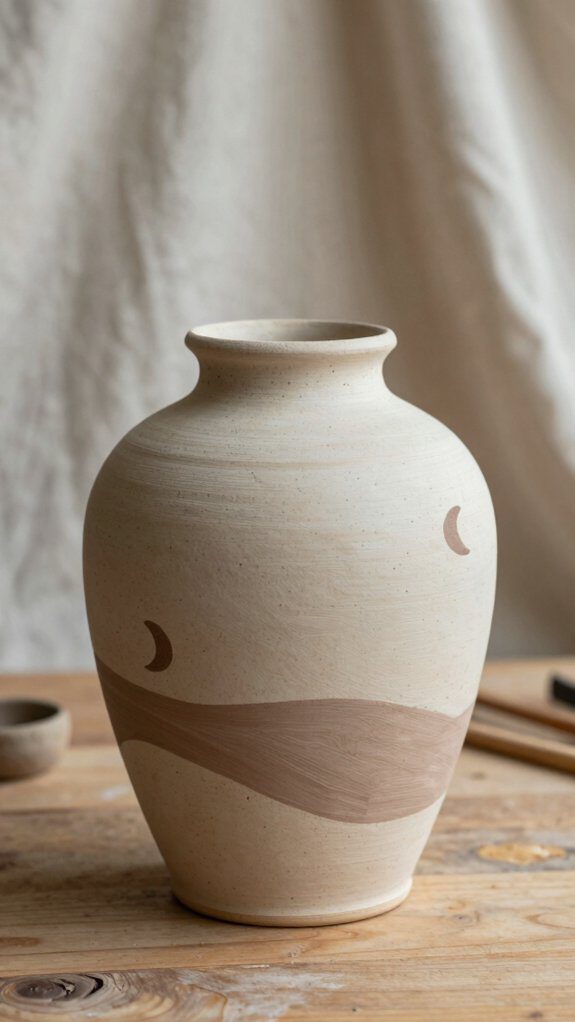
Ceramic artists often gravitate toward speckled neutral textures because they transform ordinary vases into sophisticated design statements with minimal effort. I’ve uncovered an incredible texture technique using baking soda mixed into matte acrylic paint that creates a subtle, stone-like finish. By combining three to four teaspoons of baking soda with a cup of neutral paint, you’ll achieve a hummus-like consistency that adds depth and character to ceramic surfaces.
For a professional faux stone look, I recommend applying three light coats, allowing each to dry for 20-30 minutes. A gentle sanding reveals beautiful variations in texture. When you want extra dimension, try dry-brushing with a contrasting neutral shade or using a spray sealer for consistent results. It’s an easy way to enhance your home decor with artistic flair.
Gold Accent Detailing
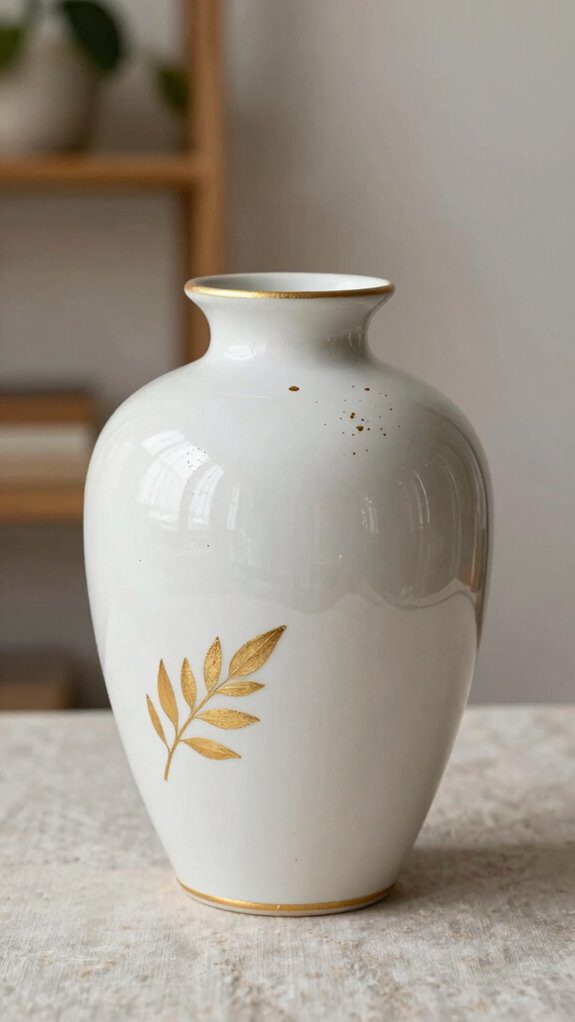
I love how a subtle touch of gold can transform an ordinary pottery vase into something extraordinary. By using precise metallic accents, you can raise your ceramic piece from simple to stunning with just a few strategic brushstrokes or strategic applications. Whether you’re highlighting edges, adding delicate speckling, or creating geometric inlays, gold detailing brings a luxurious, artisan-crafted feel that catches the light and draws the eye.
Subtle metallic touch
Gleaming softly against ceramic surfaces, gold accent detailing transforms ordinary pottery vases into elegant statement pieces. I love using micro foil and subtle stippling techniques to create delicate metallic highlights that catch the light just right. By applying thin gold lines sparingly—think less than 15% surface coverage—you’ll achieve a sophisticated look that doesn’t overwhelm the vase’s original design.
My go-to method involves a fine-point paint pen or tiny round brush with metallic acrylic paint. Pro tip: Practice your technique on scrap ceramic first to steady your hand. I recommend focusing on strategic areas like vase lips, handles, or single raised ridges for maximum visual impact. A clear sealant spray will help protect and preserve your gorgeous metallic accents, ensuring your artistic touch remains beautiful for years to come.
Scandinavian Minimal Dots
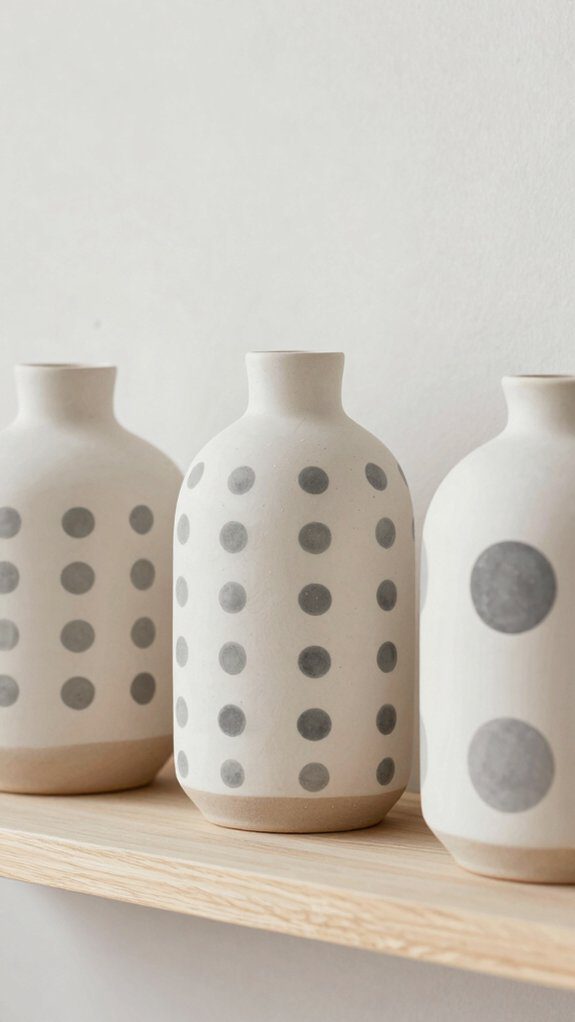
Minimalist dot patterns have become a hallmark of Scandinavian design, transforming ordinary pottery vases into stunning pieces of modern art. I love how the muted dotwork creates a serene, sophisticated look that perfectly complements neutral interiors. By carefully planning your spacing grid, you can achieve an elegant, understated design that feels both intentional and effortless.
The key is choosing soft, harmonious colors like dusty blue or sage, and applying small dots ranging from 3-15 mm. I recommend using a paint pen or dowel for precise application, and always practice your pattern on paper first. Working from top to bottom prevents accidental smudging and guarantees a clean, crisp finish.
Sunset Color Blend Vase
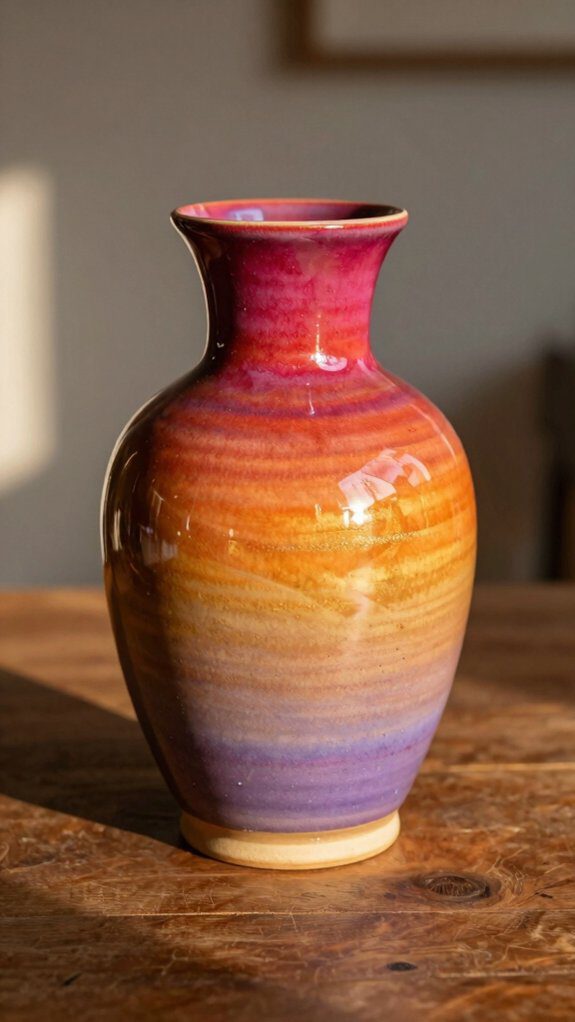
When sunset colors dance across a pottery vase, they transform an ordinary ceramic piece into a breathtaking work of art that seizes the magical shift from day to night. I’ll show you how to create an ombré glazing technique that captures the sun’s dramatic descent. Sunset stippling allows you to blend colors from deep magenta to pale yellow, creating a mesmerizing gradient.
| Color | Technique | Effect |
|---|---|---|
| Magenta | Wet blending | Base intensity |
| Orange | Soft brushwork | passage zone |
| Peach | Diluted paint | Soft midtones |
| Yellow | Light layering | Upper highlights |
| Black silhouette | Fine paint pen | Accent details |
Black Matte with Gloss Patterns
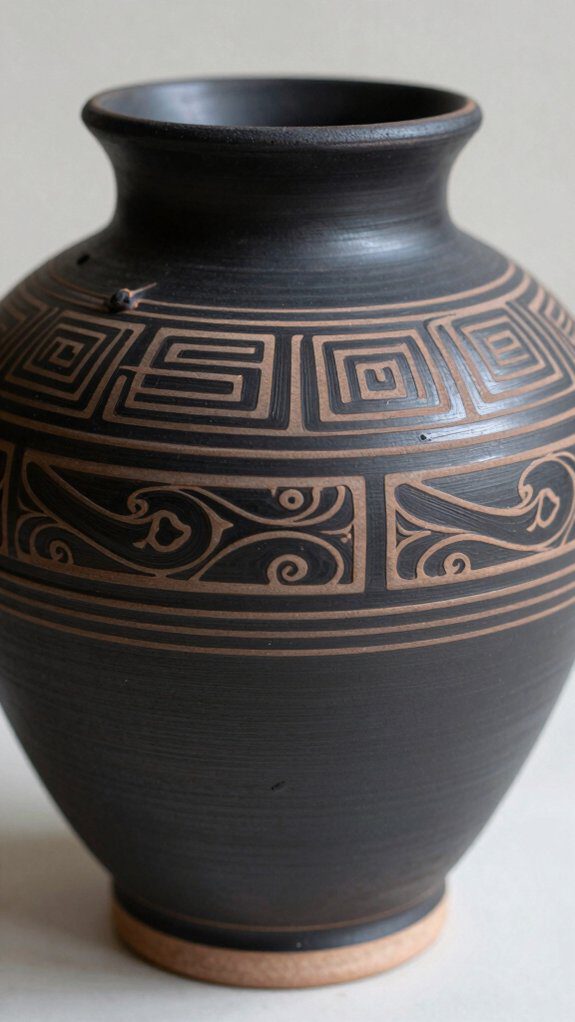
I love how texture contrast can transform an ordinary vase into a stunning piece of art, and the black matte with glossy patterns technique is perfect for creating visual drama. By using a chalky black base and strategically adding shiny details, you’ll create a design that catches light and draws the eye in unexpected ways. The key is playing with different finishes—think matte black as your canvas and glossy accents as your bold, eye-catching highlights that make the piece truly pop.
Texture contrast design
Transforming a plain pottery vase into a striking design marvel begins with honing texture contrast, particularly using black matte with glossy patterns. Tactile layering creates a mesmerizing surface interplay that catches the eye and invites touch. By applying a matte base coat and strategically masking geometric shapes, you’ll achieve a sophisticated look that lifts your home decor. The key is careful preparation: scuff the surface, clean thoroughly, and use a primer for reliable adhesion. Simple masks like stripes or diamonds can create crisp boundaries between matte and glossy finishes. After applying your gloss layer, remove the tape carefully to preserve sharp edges. The result? A vase that’s not just a container, but a conversation-starting piece of art that reflects your creative vision.
Tribal Pattern Inspiration
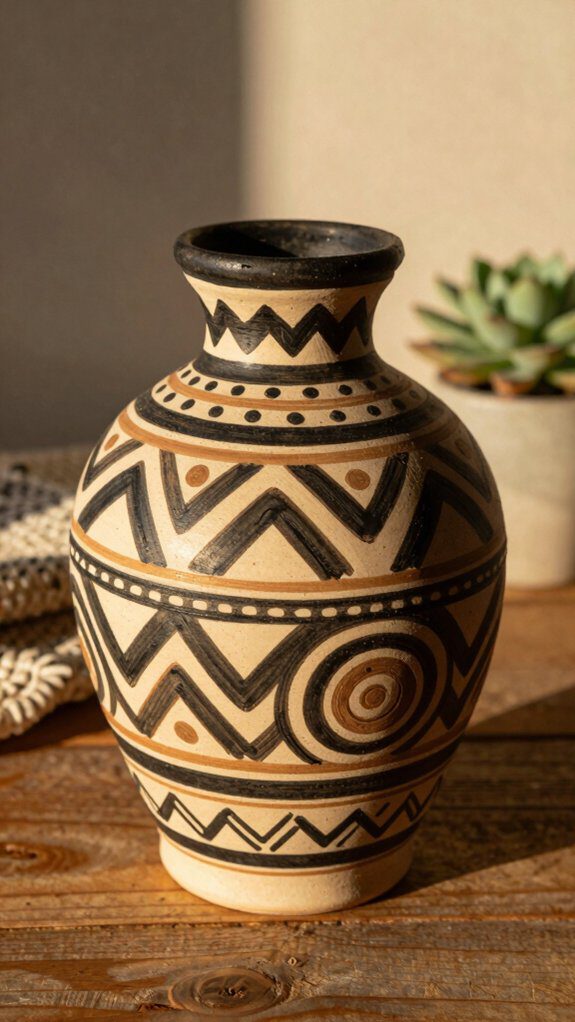
Plunge into the world of tribal patterns, where ancient artistic traditions come alive on ceramic surfaces. I love how symbolic motifs transform ordinary vases into storytelling canvases, using band proportioning that creates mesmerizing visual rhythms. By carefully selecting earth-toned colors like burnt sienna and ochre, you’ll capture the core of traditional designs while adding contemporary flair.
When painting tribal patterns, consider your vase’s shape carefully. Narrow-necked vessels shine with intricate, densely repeated details, while wider vases demand bold, sweeping symbols that maintain design legibility. Pro tip: Use low-tack painter’s tape for crisp chevrons and stencils to guarantee precise geometric motifs that wrap smoothly around curved surfaces.
Your tribal-inspired vase will become a stunning art piece that connects you to rich cultural traditions.
Monochrome Statement Piece
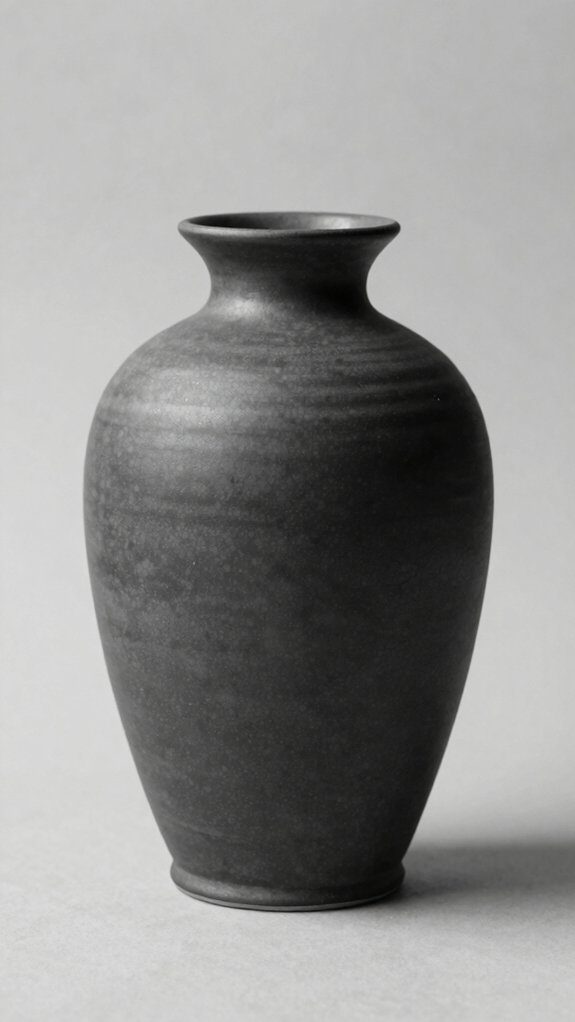
When designing a monochrome statement piece, you’ll uncover how a single color palette can transform an ordinary vase into an extraordinary work of art. By playing with different finishes, you can create depth and intrigue within a single hue. Let’s investigate some exciting techniques!
| Finish Type | Texture Effect | Recommended Use |
|---|---|---|
| Matte | Soft, chalky | Base layer |
| Satin | Subtle sheen | Mid-tone accent |
| Gloss | Reflective | Highlight details |
| Textured Stone | Rustic feel | Dimensional interest |
I love masking geometric bands and using varying sheens to make a vase pop. Try spraying the lower two-thirds in a matte finish, then add a glossy top section in a slightly lighter shade. Mix textures like acrylic with baking soda for a pottery-inspired look that’ll turn heads and spark conversation in any space.
Watercolor Wash Effect
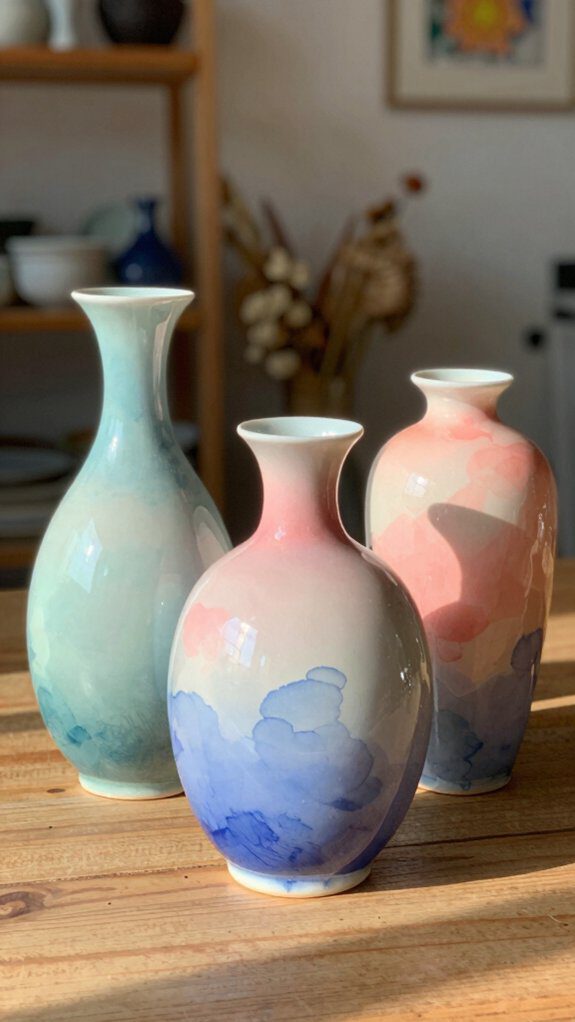
I’ve always loved the dreamy, soft look of watercolor wash effects on pottery, and with just a few simple techniques, you can transform an ordinary vase into an artistic statement piece. By thinning acrylic paint with water and applying it in translucent layers, you’ll create a beautiful, gradient-like finish that catches light and adds incredible depth to your ceramic surface. The key is patience—working slowly with soft brushstrokes, tilting your vase to encourage natural blending, and allowing each layer to dry completely before adding the next will help you achieve those stunning, ethereal color shifts.
Soft layered paint
Ceramic artists frequently love the ethereal, dreamy quality of watercolor wash effects on pottery vases, and recreating this delicate style is easier than you might think. Soft glazing involves translucent layering that builds depth through gentle, semi-transparent washes.
| Technique | Tips | Result |
|---|---|---|
| Water Ratio | 30-50% water | Flowing pigment |
| Application | Horizontal strokes | Soft edges |
| Drying Time | 10-20 minutes | Color gradation |
I recommend using a wide, soft synthetic brush to create feathered shifts between colors. Blot excess paint with a paper towel to achieve that dreamy, watercolor-like appearance. The key is patience—allowing each layer to dry completely prevents muddying your colors. By building 2-4 translucent layers, you’ll create a stunning, sophisticated vase that looks professionally crafted and uniquely yours.
Earthy Clay Tones
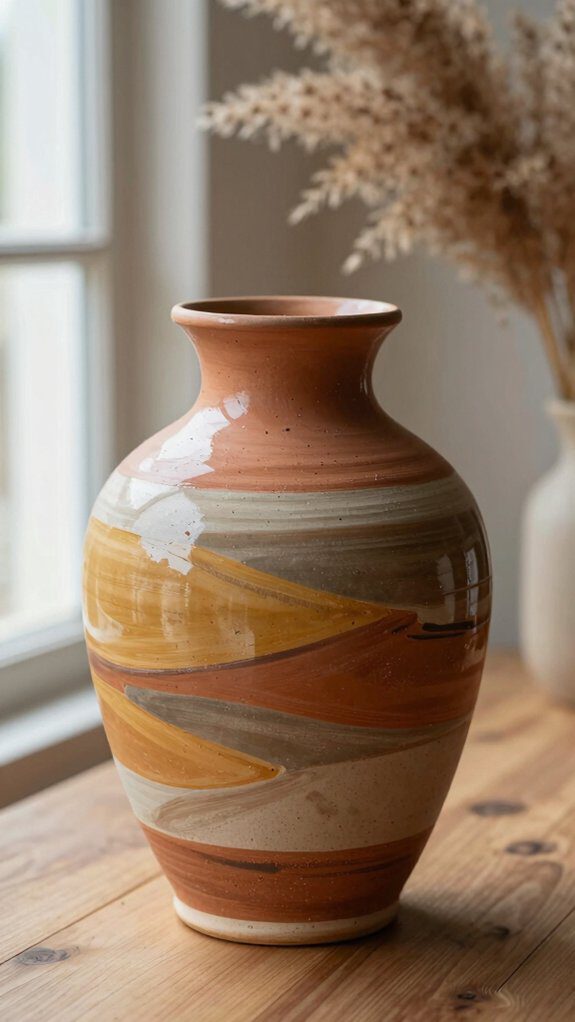
Nearly every pottery enthusiast knows that earthy clay tones represent the heart of authentic, timeless ceramic design. When I’m crafting vases with raw ochre and kiln patina, I love exploring these rich, sun-baked colors that connect us to ancient ceramic traditions.
My favorite approach involves creating depth through strategic color selection:
- Choose terracotta (#E2725B) as a base tone
- Layer with warm sienna and umber
- Highlight with soft beige accents
- Use dry-brushing techniques for texture
The magic happens when you mix paint with a touch of baking soda, creating subtle texture that mimics fired clay. These earthy tones aren’t just colors—they’re a connection to natural warmth, inviting a sense of comfort and grounded elegance into your home decor. Paired with neutral greens and natural textures, clay-toned vases become stunning statement pieces.
Handwritten Quote Design
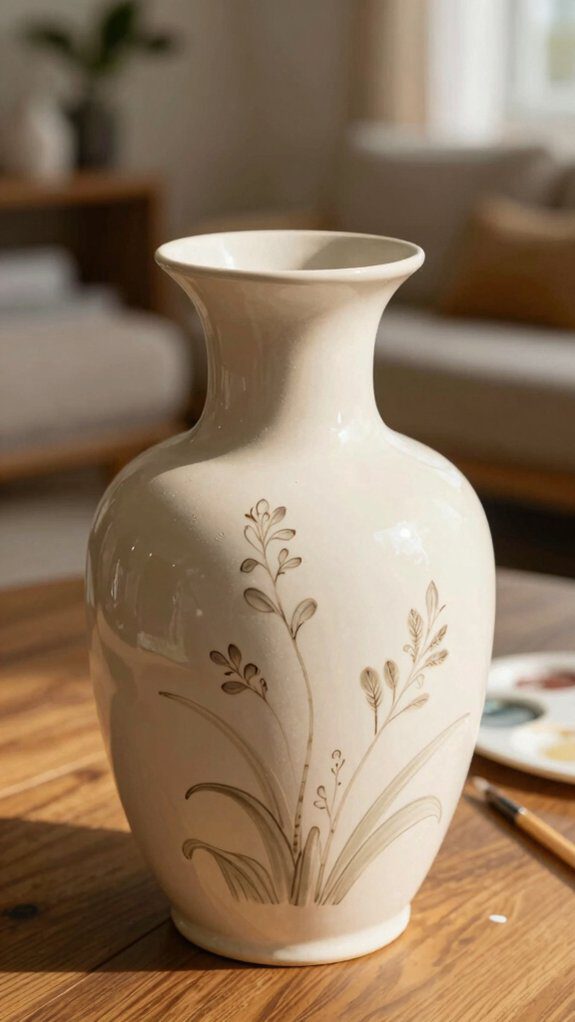
I love how a personalized quote can transform an ordinary vase into a meaningful piece of home decor that reflects your unique style and spirit. Whether you’re inspired by a favorite song lyric, a motivational phrase, or a heartfelt message, handwritten quotes let you turn simple ceramic surfaces into personal art statements that speak directly to you and your guests. By carefully selecting your words, font style, and painting technique, you’ll create a custom vase that’s not just a container, but a conversation piece that conveys emotion and adds personality to any room.
Personalized decor
When you want to transform a plain pottery vase into a meaningful piece of art, personalized quote designs offer a fantastic way to express creativity and sentiment. Custom inscriptions turn ordinary memory vases into cherished keepsakes that tell a story. Here’s how to make your vase uniquely yours:
- Select a quote that resonates deeply with your heart
- Choose a paint pen with permanent acrylic ink
- Sketch placement carefully on the curved surface
- Practice your handwriting style beforehand
The magic happens when you combine thoughtful words with artistic technique. By handwriting quotes in varying letter sizes and styles, you’ll create a piece that’s not just decorative, but emotionally meaningful. Whether it’s a favorite saying, a meaningful lyric, or a personal mantra, your vase becomes a canvas for self-expression.
Marble Effect Finish
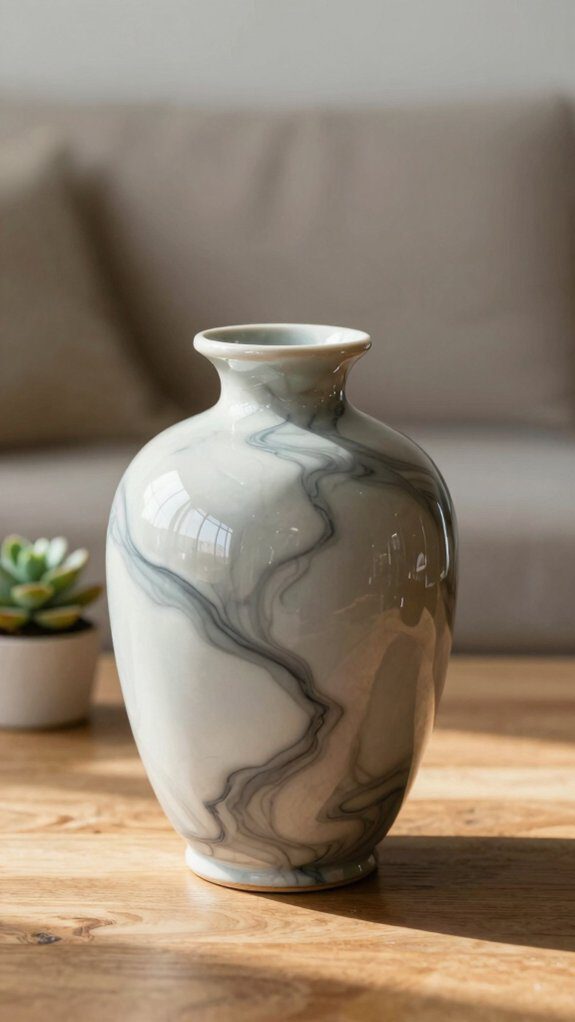
Creating a marble effect on your pottery vase transforms an ordinary piece into an elegant work of art that mimics the luxurious look of natural stone. I’ve found that achieving stunning marble veining requires some clever painting techniques. Start by selecting two or three complementary paint colors like white, gray, and metallic gold. Use a small silicone brush or toothpick to swirl colors gently, creating organic patterns that resemble natural mineral streaks. For best results, work quickly before the paint sets, allowing each color to blend flawlessly. After your design dries completely, choose a sealant that matches your desired finish—matte for a soft, refined look or glossy for a polished appearance. Pro tip: Adding a few fine metallic veins with a paint pen can improve the marble’s realism, making your vase truly unique.
Coastal Stripe Pattern
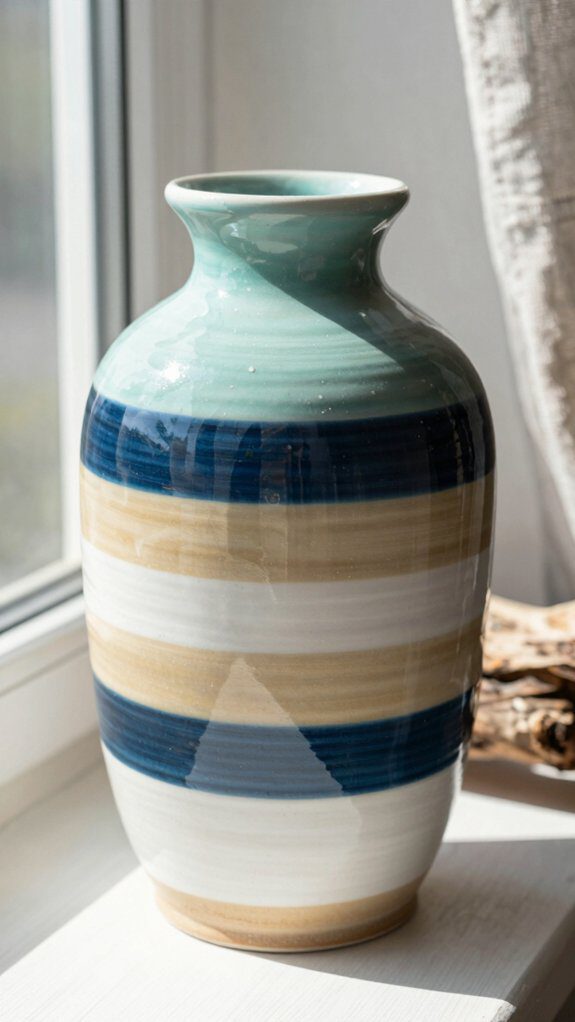
If you’re dreaming of bringing a breezy, nautical vibe to your home decor, coastal stripe painting is your perfect go-to technique for transforming plain pottery vases. I’ll show you how to create those crisp, beach-inspired stripes that’ll make your vase look like it’s straight out of a seaside cottage design magazine. With just a few simple materials and some painter’s tape, you’ll craft a stunning piece that conveys the relaxed, sun-washed elegance of coastal living.
Nautical decor vibe
Coastal vibes transform ordinary pottery into seaside-inspired masterpieces through classic nautical stripe patterns that evoke memories of breezy beach walks and maritime adventures. Seizing that shipwreck patina requires strategic painting techniques that bring maritime charm right into your home decor.
Create your nautical vase with these essential steps:
- Select navy and white colors reminiscent of nautical knots
- Use painter’s tape for crisp, clean stripe edges
- Apply thin, even spray paint coats
- Lightly sand edges for a weathered, vintage feel
The key is layering textures and colors that whisper seaside stories. By mixing techniques like adding baking soda for a sand-like finish, you’ll craft a vase that looks like it’s been gently kissed by ocean waves, transforming simple pottery into a maritime treasure that seizes coastal elegance and wanderlust.
Nature-Inspired Abstract Art
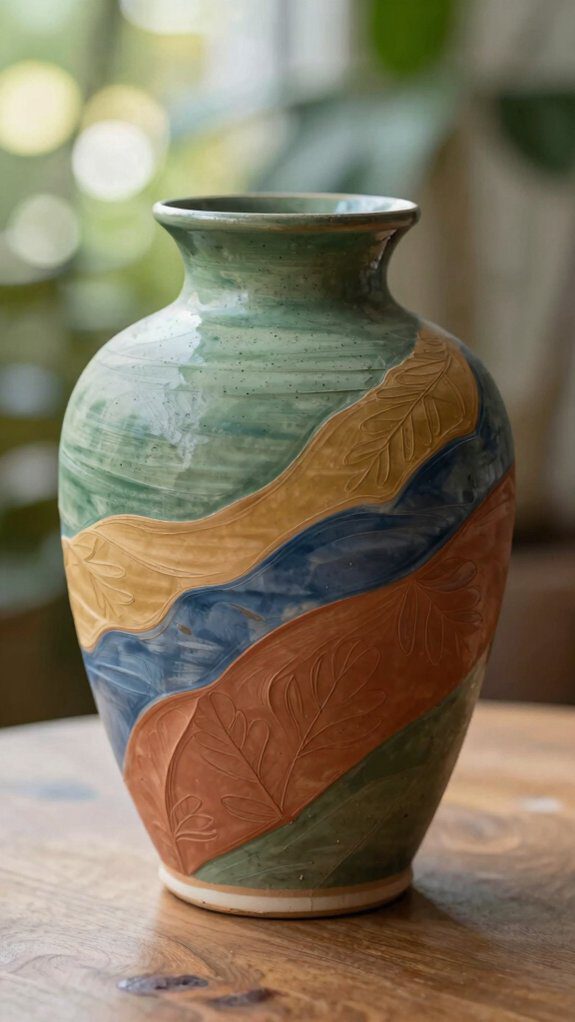
When nature whispers its artistic secrets, pottery becomes a canvas for abstract scenery interpretations that transform ordinary vases into breathtaking artistic expressions. I’ve unearthed that creating a minimalist mossscape or layered fogscape isn’t just about painting—it’s about capturing terrain cores through intentional techniques. By using muted earth tones like sage green and terracotta, I can drag brushstrokes across ceramic surfaces, forming organic silhouettes that echo natural landscapes. Adding texture with baking soda mixed into acrylic paint creates depth that mimics rock or bark surfaces. The key is balance: incorporating natural motifs that occupy about one-third of the vase, then highlighting edges with contrasting paint pens for definition. A satin sealer preserves these delicate, nature-inspired abstractions, turning simple pottery into stunning artistic statements.