
Natural Homemade Laundry Detergent Recipe (Easy DIY Guide)
Disclosure: This post may contain Amazon affiliate links, at no extra cost to you. Content on DiyCraftNest is created with research support from AI tools and carefully reviewed, edited, and fact-checked by the lead author, Daniel Pat, to ensure accuracy and reliability. Learn more
Love cozy DIY projects? 💕
Get free printable guides, exclusive tutorials & surprise craft goodies straight to your inbox.
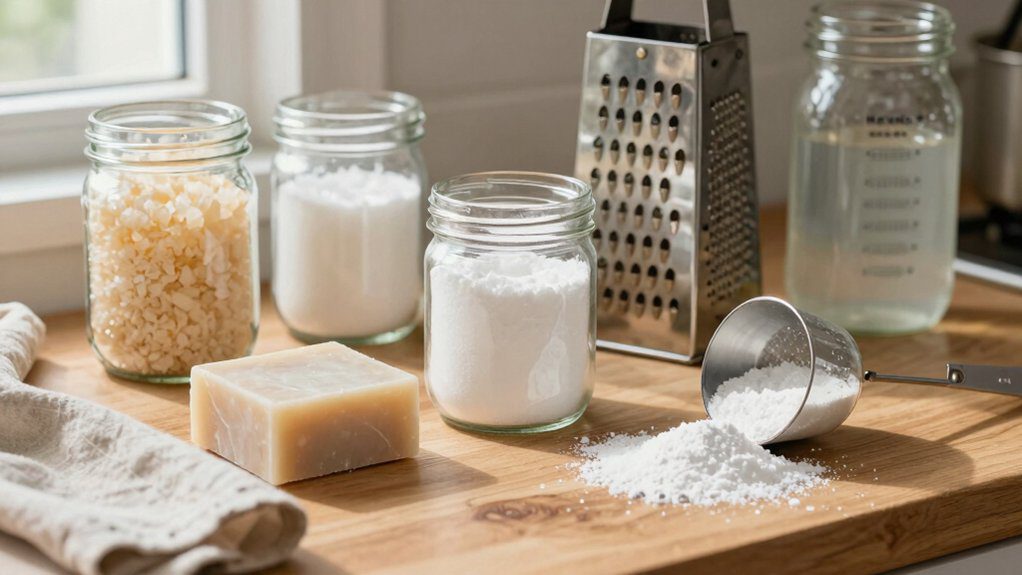
Making your own laundry detergent is easier than you’d think! You’ll need just a few ingredients: Castile soap, washing soda, baking soda, and borax. Mix them in simple ratios—about equal parts of the dry ingredients—then grate your soap bar finely to blend everything smoothly. Use just one to two tablespoons per load, or a quarter cup for heavily soiled clothes. It’s budget-friendly, gentler on sensitive skin, and works great in regular and HE machines. Stick around to uncover the exact measurements and scenting tricks that’ll transform your laundry routine.
Key Takeaways
- Mix one cup each of baking soda, borax, and washing soda with grated Castile soap for balanced homemade laundry detergent.
- Grate bar Castile soap finely using a box grater to prevent clumping and ensure even mixing with dry powders.
- Use one to two tablespoons powdered detergent per standard load; increase to ¼ cup for heavily soiled laundry.
- Dissolve borax and washing soda in hot water, melt grated Castile separately, then combine and dilute to one gallon for liquid detergent.
- Store powdered detergent in airtight containers away from moisture; shake liquid detergent before each use to maintain consistent effectiveness.
Why Choose Natural Laundry Detergent
When you’re standing in the laundry aisle surrounded by brightly colored bottles filled with mysterious chemical names, it’s easy to wonder if there’s a better way—and there really is.
Natural homemade detergent protects your family by reducing chemical exposure from VOCs, synthetic fragrances, and harsh additives linked to health risks—especially important for sensitive skin and babies.
You’ll also shrink your environmental impact by eliminating plastic waste from store-bought containers.
Plus, you’re joining a community of people who’ve found that simpler, cleaner solutions work beautifully while saving money.
Making your own detergent means you’re choosing health, sustainability, and smart economics all at once.
Ingredients You Will Need
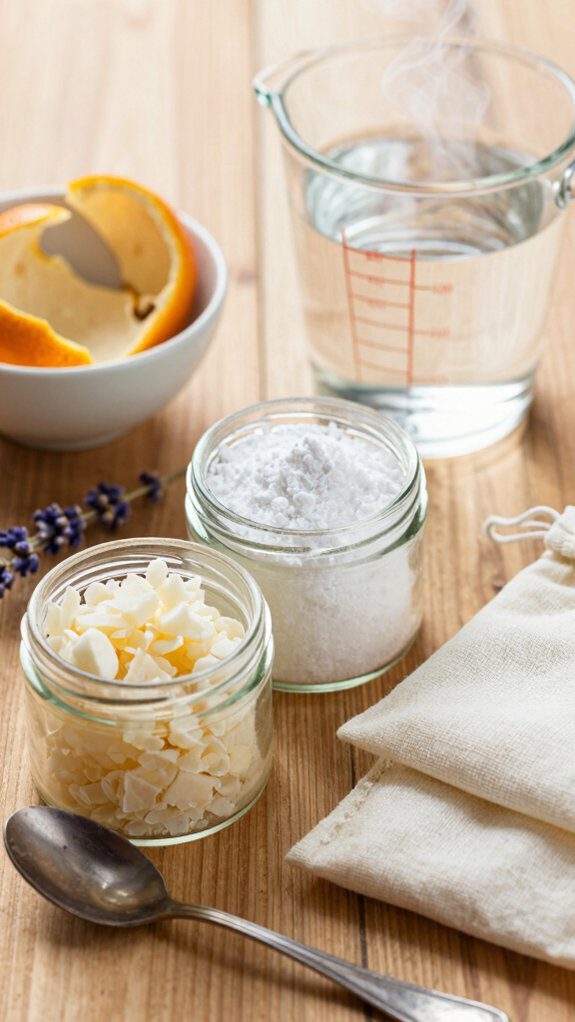
I’ve gathered just a handful of simple ingredients that you probably already have at home or can easily find at any grocery store. The base of any homemade detergent starts with a natural soap—like castile soap—combined with washing soda and baking soda to boost cleaning strength. If you want to add a personal touch, a few drops of aromatic oils can give your laundry that fresh, custom scent you’re after.
Natural soap bar or castile soap
You’ll find that castile soap—a vegetable-oil-based soap that’s become a staple in DIY laundry recipes—offers a simple, plant-based foundation for your homemade detergent.
I recommend Dr. Bronner’s, which you can grate into bars or melt for mixing. One bar yields roughly one cup of soap solids, and most recipes call for one to four cups per batch.
Understanding soap chemistry helps you appreciate why grated bar soap works better than liquid in powdered recipes—it prevents clumping.
Look for eco-certified options when possible.
This natural approach lets you create effective detergent while joining a community of mindful, DIY-savvy cleaners.
Washing soda
Now that you’ve got your castile soap base sorted, it’s time to meet washing soda—the dynamo ingredient that transforms your mixture into a true cleaning powerhouse.
Unlike baking soda, this sodium carbonate powerhouse is roughly three times more alkaline, making it exceptional at breaking down grease and softening hard water.
Understanding carbonate chemistry helps you appreciate why it’s so effective.
When handling this ingredient, avoid inhalation and prolonged skin contact—treat it with respect.
You’ll need about one cup per gallon of liquid detergent.
Look for “Arm & Hammer Super Washing Soda” at most stores, and always store it dry in a sealed container.
Baking soda
While washing soda brings serious alkaline strength to your detergent mix, baking soda plays a different but equally important role—it’s the gentle dynamo that softens water, neutralizes odors, and brightens your clothes without creating unnecessary suds.
I typically use 1–3 cups of this sodium bicarbonate in my batches, depending on size. What I love most is how it handles odor neutralization naturally, making my clothes smell fresh without overwhelming perfumes.
Arm & Hammer’s a trusted choice, though aluminum-free options work wonderfully too. Since baking soda won’t damage HE machines or septic systems, it’s genuinely practical for any household.
Essential oils (optional)
If you’d like your homemade laundry detergent to smell amazing and gain a little antimicrobial boost, essential oils are a fantastic optional addition. I recommend using 30–50 drops for small batches or 80–90 drops for larger 5-gallon recipes.
Lemon, lavender, and lime create wonderful aromatherapy benefits while freshening your clothes naturally. You can experiment with seasonal blends—think pine for winter or citrus for summer—though keep in mind that pine oils can harm pets.
Add oils to concentrated soap before diluting, shake well before each use, and test on fabric first if you have sensitivities. Pure, high-quality oils work best for optimal outcomes.
Tools and Supplies
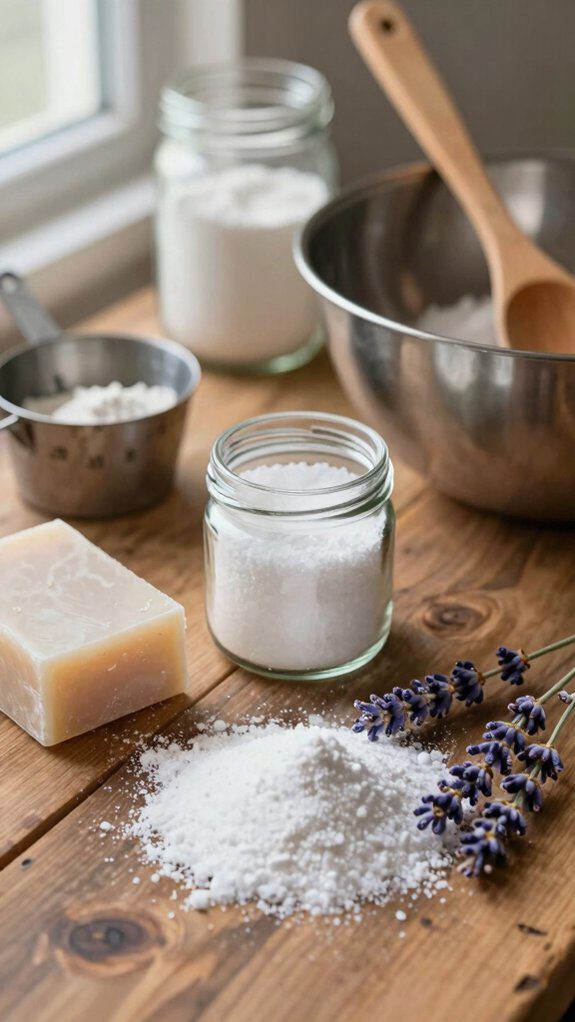
Before you plunge into mixing your first batch, let’s gather everything you’ll need to make this project smooth and enjoyable. You’ll want dry measuring cups for powders and a liquid measuring cup for larger batches. A fine box grater or food processor helps you shred Castile soap evenly. Grab a large pot with ergonomic design and a long-handled spoon for stirring hot water with washing soda and borax. Stock airtight jars or buckets for powder storage and glass jugs for liquid detergent. Label everything plainly. Optional additions include wool dryer balls, key oil droppers for sustainable sourcing of scent, and funnels for easy transfer.
Step 1: Prepare the Soap Base
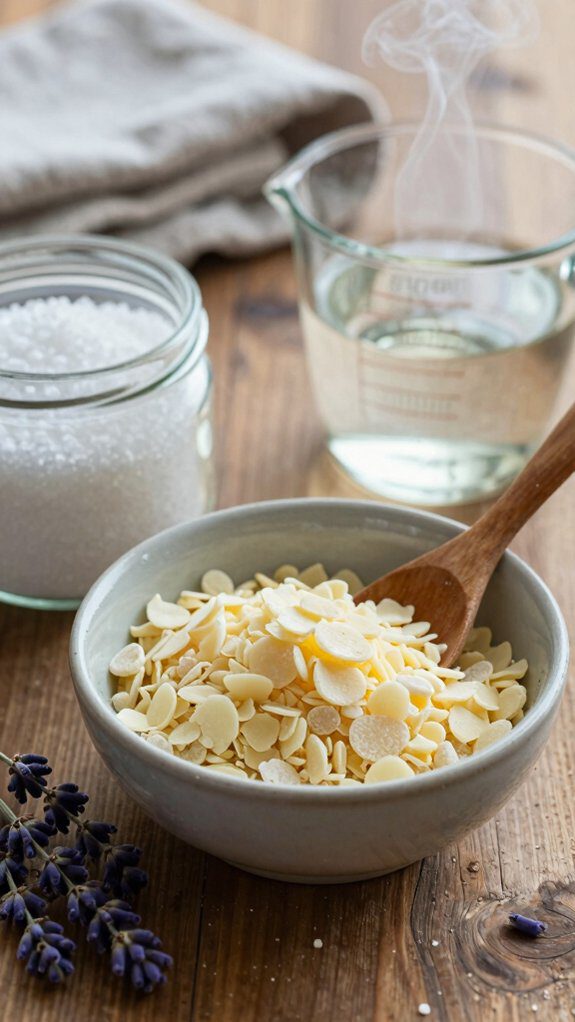
Now’s the time to get your soap base ready, which is honestly the most important step in making your detergent work well.
You’ll need to decide whether you’re going with grated bar soap or liquid Castile soap, since each one requires a slightly different approach to prevent clumping and guarantee everything mixes smoothly.
Let’s walk through how to prep whichever option you’ve chosen so your homemade detergent turns out perfectly.
Grate or measure liquid soap
The soap you choose becomes the foundation of your entire batch, so let’s get it ready properly. If you’re using bar soap, grab a box grater or food processor and grate two bars until you’ve got fine shavings—this soap consistency matters because it’ll mix evenly with your dry ingredients. For liquid soap, measurement accuracy is key: use one cup per gallon batch. The difference? Liquid soap dissolves directly into warm water, while grated bar soap needs gentle heating first. Label your container with what you used so future batches stay consistent. Either way, you’re creating a solid foundation for clean laundry.
Step 2: Mix the Dry Ingredients
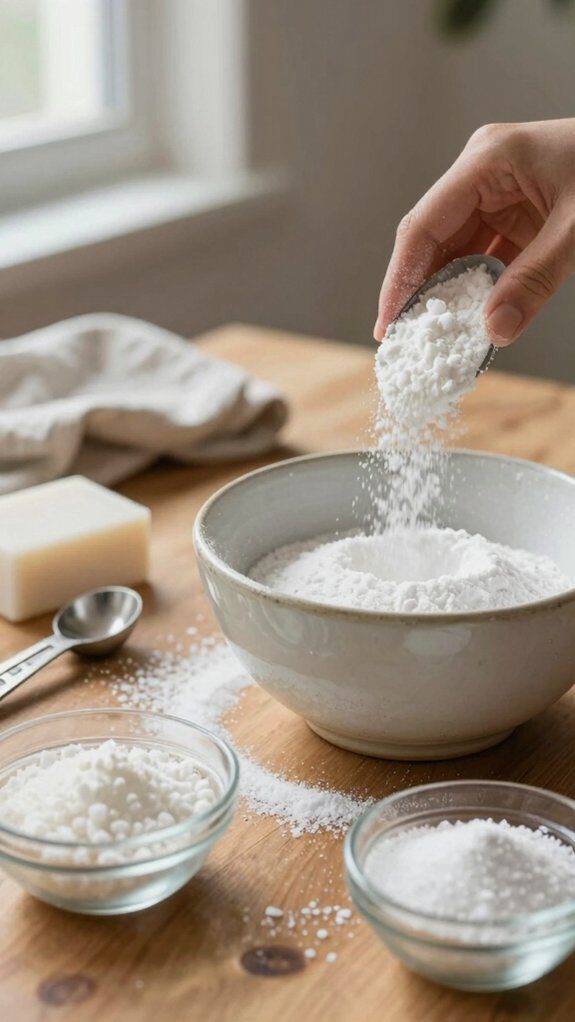
Now comes the part where ratios really matter—I’m mixing three cups each of baking soda, borax, and washing soda, which creates that perfect balance for effective cleaning potency. You’ll want to measure these precisely because getting the proportions right is what transforms your homemade detergent from just okay to actually impressive. This 1:1:1 ratio guarantees no single ingredient overpowers the others, so your laundry gets clean without any residue or harsh streaking.
Proper ratio balance
Once you’ve gathered your ingredients, getting the proportions right is what transforms a random pile of powders into actual detergent that’ll clean your clothes. I’ve learned that maintaining balance is vital for effectiveness and textile longevity.
Here’s what I do:
- Mix equal parts baking soda, borax, and washing soda (1:1:1 ratio)
- Add grated Castile soap proportionally to your batch size
- Keep phosphate avoidance in mind by using only these natural ingredients
- Blend thoroughly to guarantee even distribution
This balanced approach gives you detergent that works beautifully without damaging fabrics. You’ll notice your clothes stay fresher longer when proportions are precise.
Trust me—consistency matters tremendously!
Step 3: Combine and Blend Thoroughly
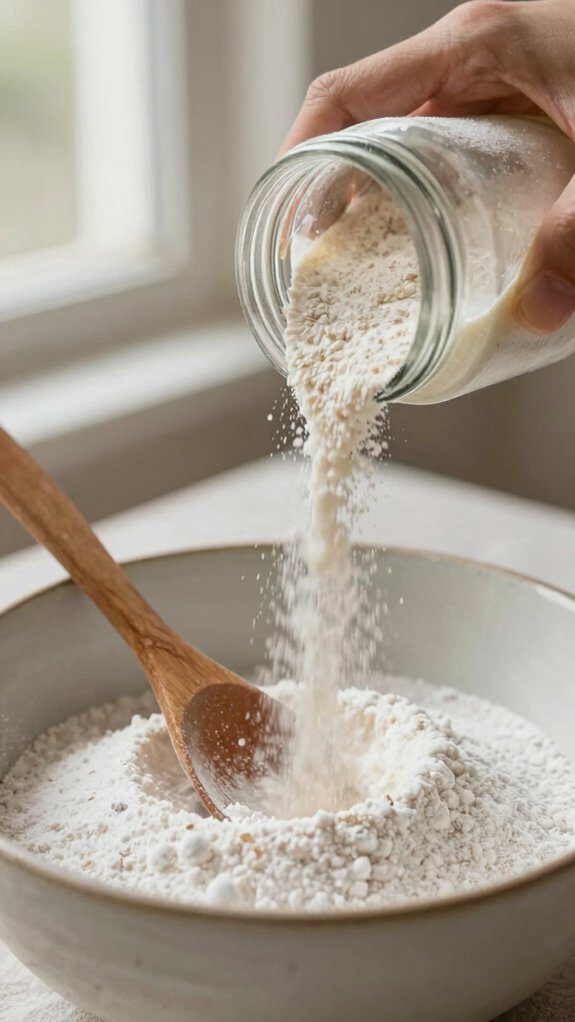
After you’ve gathered and measured all your ingredients, it’s time to bring everything together—and this is where patience really pays off. I’ll use a large bowl and sturdy spoon to combine my dry ingredients with the grated soap, stirring until everything’s evenly distributed. For scent distribution, I’ll mix aromatic oils directly into the soap before blending.
Then I’ll stir everything thoroughly to achieve homogeneity testing—checking that each scoop contains the same proportions. If I’m making liquid detergent, I’ll combine my dissolved solutions carefully, then stir well before storing in airtight containers. This careful blending guarantees my detergent works reliably every time.
Step 4: Store in an Airtight Container
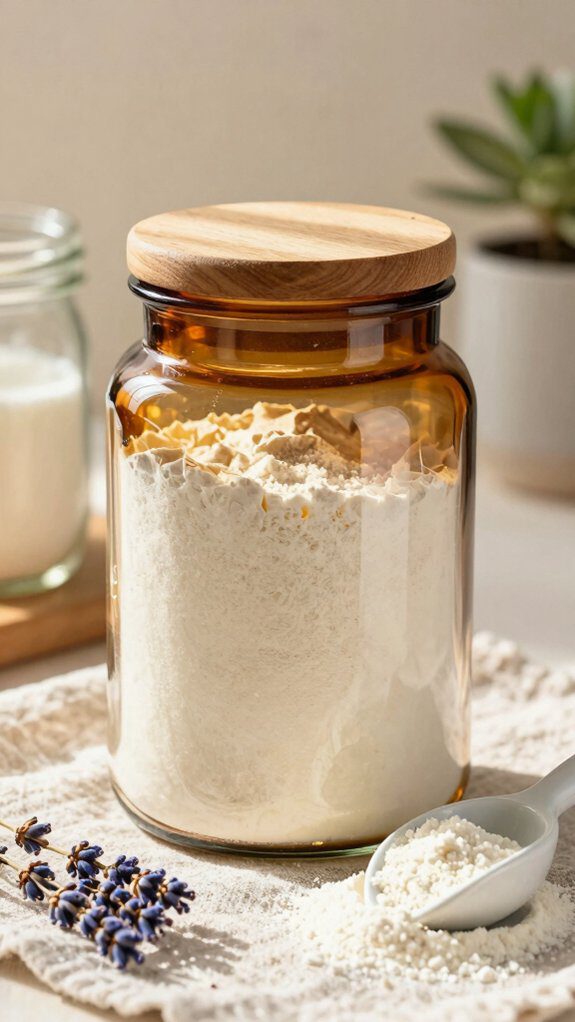
Your freshly blended detergent is ready for its new home! I’ve found that proper storage makes all the difference in keeping your homemade cleaner effective and fresh. Here’s what I recommend:
- Choose airtight aesthetics—glass mason jars, plastic jugs, or sealed buckets work wonderfully
- Label containers with recipe name, batch date, and dosing instructions for easy tracking
- Store in cool, dry places away from direct sunlight and humidity
- Add humidity indicators to monitor moisture levels inside containers
I keep mine in my pantry where it stays protected. For liquid detergent, I use squeeze bottles and shake before each use.
This simple step guarantees your detergent stays potent for months!
How to Use This Natural Detergent
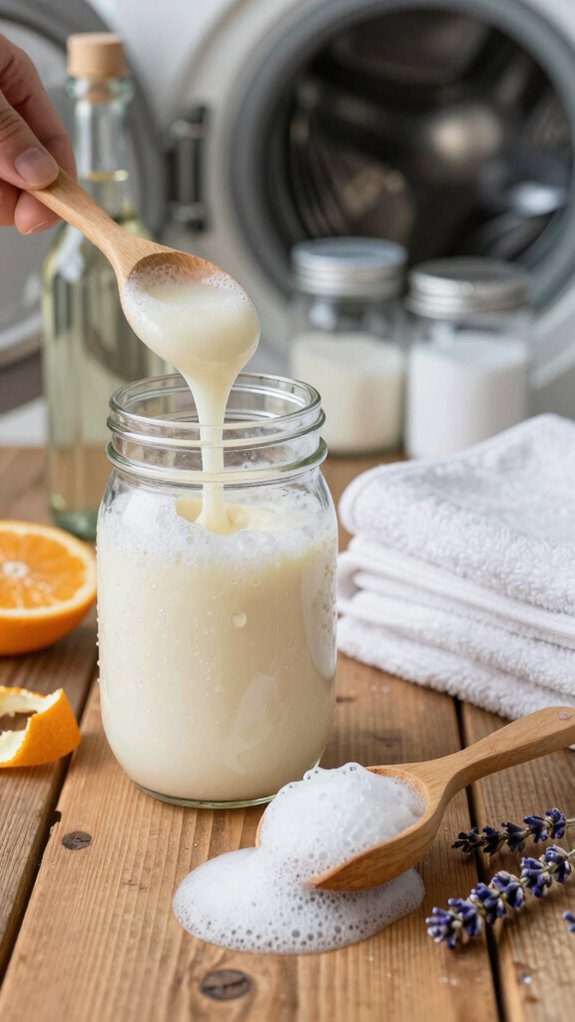
Now that you’ve got your homemade detergent ready to go, I want to walk you through exactly how much you’ll actually need for each load.
For standard loads, I use about 1–2 tablespoons of the powdered version, but if you’ve got a really big load or some seriously stubborn stains, bump it up to 1/4 cup.
If you’re working with an HE machine like I do, stick to the lower end of that range (just 1 tablespoon powdered) to keep the suds from going wild, and always check what your machine’s manufacturer recommends, since they know their equipment best.
Standard load measurement
Getting the right amount of homemade detergent into each load is simpler than you might think, and I’ve found that measuring correctly makes a real difference in how clean your clothes come out.
Here’s what I’ve learned about portion control and load sizing:
- Use 1–2 tablespoons of powdered detergent for standard loads
- Increase to ¼ cup for large or heavily soiled loads
- Measure ¼–½ cup of liquid detergent depending on load size
- Use the lower end for HE machines to prevent excess suds
Start with these amounts, then adjust based on your results. You’ll quickly find your sweet spot!
HE machine compatibility
If you’ve got a high-efficiency washing machine at home, I’ve got good news: most homemade detergent recipes work great in them!
Our low suds formulas are particularly designed for front loading machines. Just remember to follow your manufacturer guidelines—they’re your best friend here.
Start with 1–2 tablespoons per load and adjust as needed.
Since HE machines are prone to mold, I recommend running a maintenance cycle monthly and keeping your door open between washes. This simple habit prevents buildup and keeps your machine fresh, ensuring your homemade detergent performs beautifully every single time.
Liquid Version Alternative
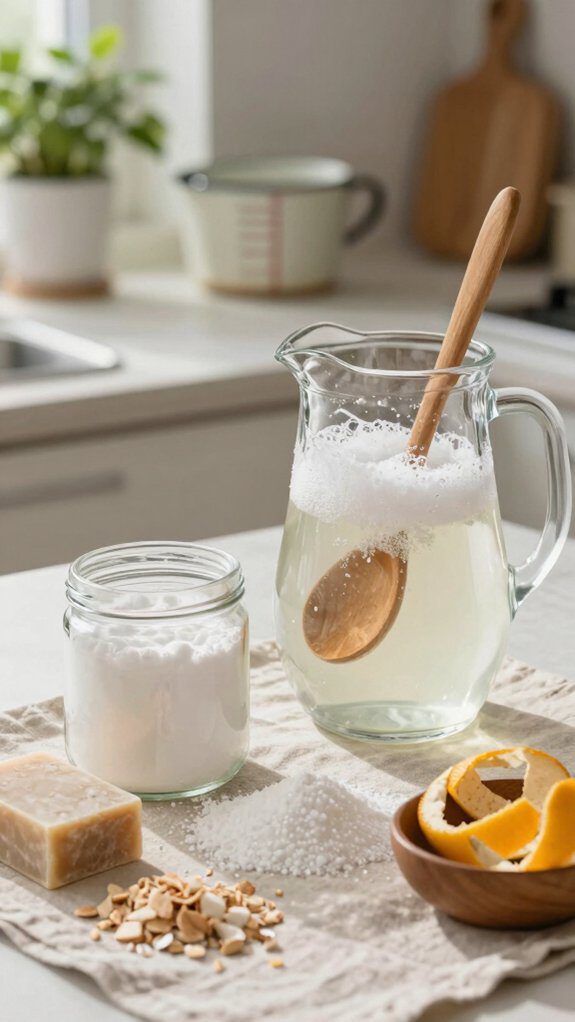
If you’d rather skip the bar soap grating step, I’ve got great news—you can make a liquid version that’s just as effective!
The key is dissolving your borax and washing soda in hot water first, which helps everything break down smoothly and prevents clumping later.
This method gives you a detergent that’s ready to go after one overnight sit, and you’ll get consistent results every time you shake that bottle before use.
Dissolving method with hot water
Creating liquid laundry detergent at home transforms three simple ingredients into a potent cleaning solution, and the hot water dissolving method makes the process straightforward and satisfying. I’ll walk you through this hot infusion technique:
- Heat 1/2 gallon water until nearly boiling
- Dissolve 1 cup borax and 1/2 cup washing soda together
- Melt one grated Castile soap bar separately in hot water
- Combine both solutions, then dilute to one gallon
After rapid cooling overnight, your detergent gels beautifully.
Add 30–50 drops vital oils during mixing for custom scents.
Stir well, shake before use, and you’ve created an effective, budget-friendly cleaner that joins countless households choosing natural alternatives.
Best Essential Oils for Fresh Scent
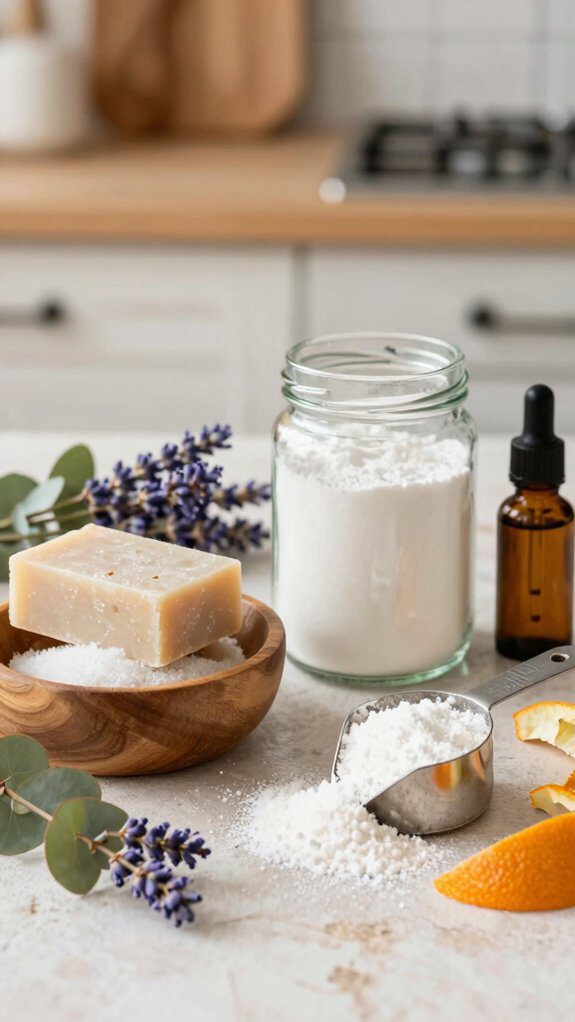
I’ve found that lavender, lemon, and tea tree oils are my go-to choices for homemade laundry detergent because they each bring something special to the table.
Lavender gives you that calming, floral vibe that makes your clothes smell like a spa day, while lemon and lemon’s citrusy cousin provide a fresh, zesty scent that practically erases any funky odors lurking in your fabrics.
Tea tree oil rounds out the trio with a clean, medicinal punch and even throws in some mild antimicrobial benefits—though I always keep an eye on how much I’m using if I’ve got pets at home.
Lavender
Because lavender’s calming scent pairs beautifully with clean laundry, it’s one of my go-to choices for homemade detergent recipes. I love how this versatile oil transforms ordinary wash days into aromatherapy moments. Here’s what you need to know:
- Add 30–40 drops to powdered detergent or 30–50 drops to liquid recipes
- Apply 2–3 drops to wool dryer balls for subtle, longer-lasting fragrance
- Blend with citrus or tree oils for custom scent profiles
- Avoid undiluted oil on fabrics and monitor pet sensitivities
From lavender cultivation to aromatherapy safety, this beloved oil deserves respect. You’ll appreciate how sparingly using it keeps your laundry fresh without overwhelming your senses.
Lemon
A sunny bottle of lemon essential oil might just become your secret weapon for laundry that smells like you’ve just stepped into a fresh citrus grove.
I love using lemon because its natural limonene actually cuts grease—a bonus beyond just fragrance!
Through aroma chemistry, lemon’s citrus extraction creates that energizing scent we all crave.
I add 30–40 drops per gallon of detergent, or pair it with lavender for balance.
Since citrus oils oxidize quickly, I store everything in opaque containers and add extra drops for lasting freshness.
It’s perfect for joining the homemade detergent community with results that feel genuinely luxurious.
Tea tree
While lemon brings that bright, uplifting citrus energy, tea tree oil steps in as the powerhouse when you’re after serious disinfecting might.
I love adding 10–20 drops per gallon batch for natural antimicrobial protection and odor control.
Here’s what you need to know:
- Mix tea tree with citrus or lavender at 0.5–1% concentration for balanced fragrance
- Always test laundered fabric on your skin first—it can irritate sensitive skin
- Add oil during mixing, not directly onto clothes, for even dispersion
- Keep pets away; tea tree’s toxic to dogs and cats in high amounts
Start small, join our community of conscious cleaners, and find your perfect balance.
Is It Safe for Sensitive Skin?
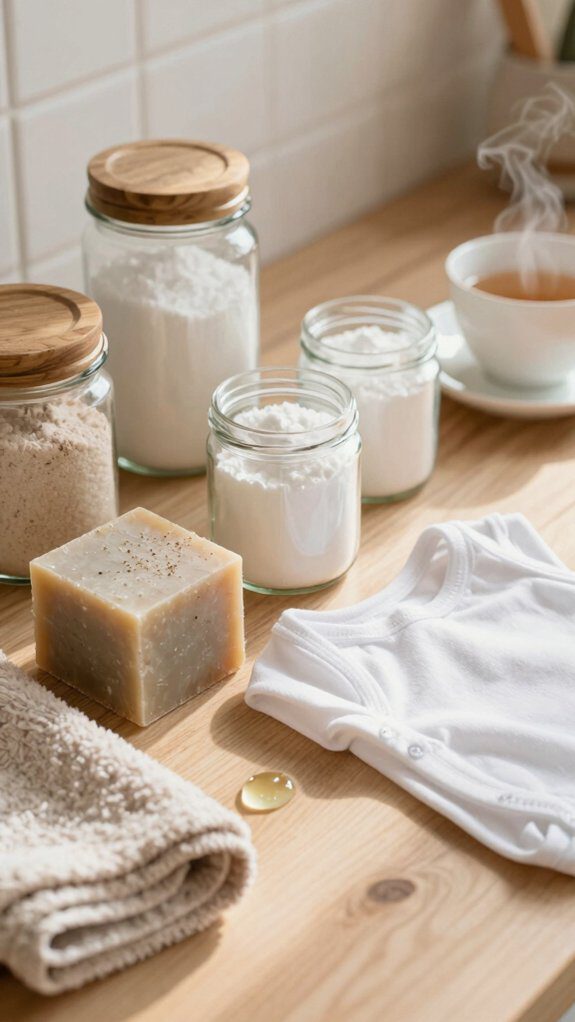
If you’ve got sensitive skin, you’re probably tired of checking ingredient labels and worrying about which products will trigger a reaction—and that’s exactly where homemade laundry detergent really shines.
I love that I can control every ingredient, ditching synthetic fragrances and dyes that cause allergic contact dermatitis. For patch testing, I apply diluted solution to a small clothing area first. I choose hypoallergenic additives like baking soda and unscented Castile soap, avoiding borax if needed. Adding white distilled vinegar during the rinse naturally softens fabrics while removing soap residue. You’re building a gentler routine that actually respects your skin’s needs.
Shelf Life and Storage Tips
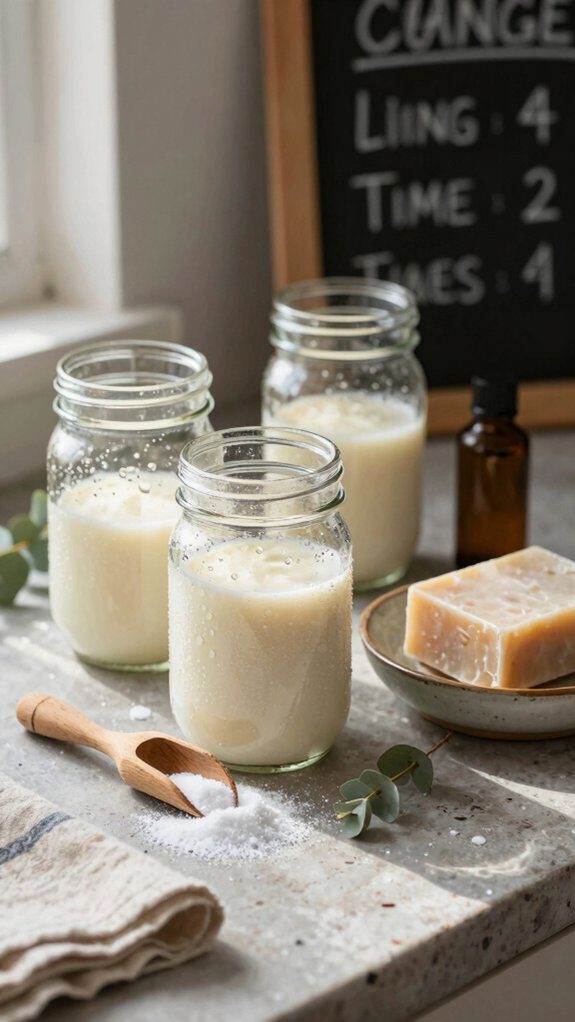
Once you’ve crafted your perfect batch of gentle detergent, you’ll want to keep it in top shape so it works just as well on load number fifty as it did on load one.
I’ve learned that proper storage makes all the difference in maintaining your homemade cleaner’s effectiveness.
Here’s what I recommend:
- Store powdered detergent in airtight glass or plastic jars away from moisture and heat
- Keep liquid detergent sealed in half-gallon containers and shake before each use
- Label containers with batch dates and ingredients for airtight labeling and seasonal rotation tracking
- Discard if you notice odor, color, or texture changes indicating spoilage
Your investment in homemade detergent deserves careful attention.