19 Flower Crochet Grid Pattern Ideas for Modern and Vintage Projects
Disclosure: This post may contain affiliate links, at no extra cost to you. Content on DiyCraftNest is created with research support from AI tools and carefully reviewed, edited, and fact-checked by the lead author, Daniel Pat, to ensure accuracy and reliability. Learn more
Love cozy DIY projects? 💕
Get free printable guides, exclusive tutorials & surprise craft goodies straight to your inbox.
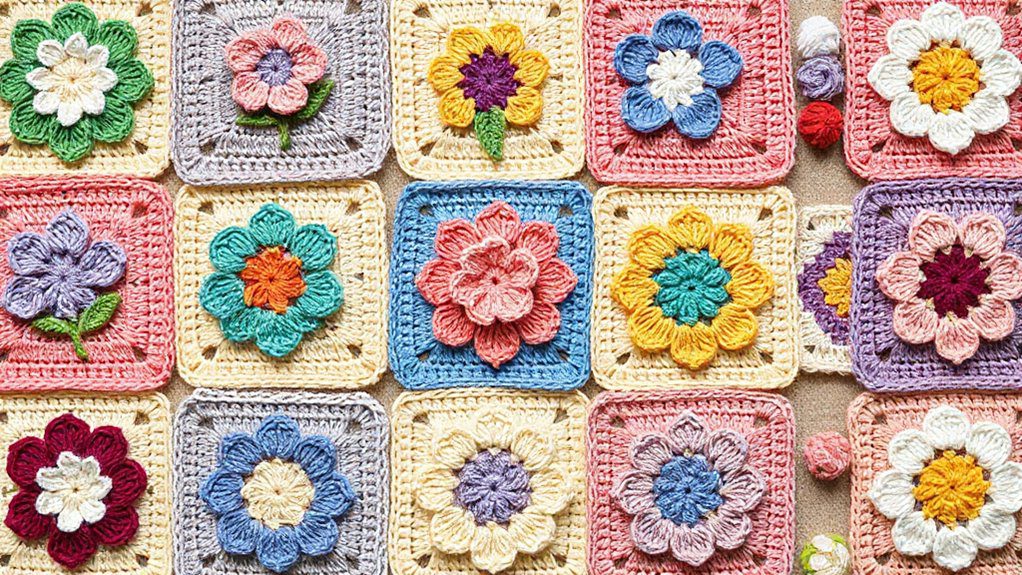
I’ve put together 19 flower crochet grid ideas that mix classic granny blooms, vintage-inspired squares, modern geometrics, and quick motifs so you can make blankets, pillows, and garments with confidence. I’ll show simple Tulip and Sunflower squares for beginners, textured popcorn and Water Lily options for depth, plus high-contrast palettes and minimalist layouts for a modern look. I’ll also cover joining, blocking, and color planning with practical tips so you can keep going and learn more.
Key Takeaways
- Mix classic motifs (Tulip, Sunflower, Dainty Rose) with modern geometric squares for versatile vintage-to-minimal projects.
- Plan a neutral background with two accent colors to unify varied flower grids across blankets or garments.
- Use beginner-friendly motifs (Sunflower, Tulip, Poppy) to build skills before attempting intricate, high-contrast squares.
- Incorporate textured stitches (popcorn, layered petals) to add depth and vintage charm to modern layouts.
- Test small swatches and block motifs to ensure consistent gauge, drape, and color balance in larger projects.
Classic Granny-Style Flower Grids
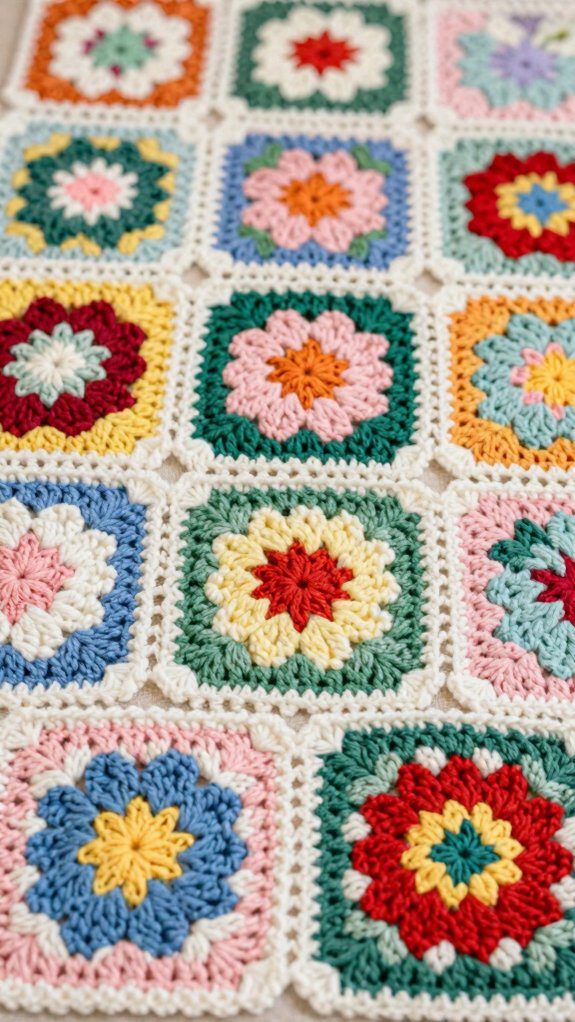
When you want a go-to project that’s both soothing and striking, I reach for classic granny-style flower grids because they balance easy repeats with pretty detail.
I love how granny square techniques let you mix motifs like the Tulip, Sunflower, or African Flower into blankets, bags, or pillows, so everyone feels included around the finished piece.
Start with a simple round flower—Tulip for beginners, Sunflower for bold 3D petals—and join squares as you go.
For cozy cohesion, plan flower color combinations ahead: pick a neutral background, then rotate two accent hues.
I also use vintage motif collections for inspiration and diagram guidance.
These practical tips help you create readable, connected grids that welcome makers of every level.
Minimal Floral Grid Crochet Designs
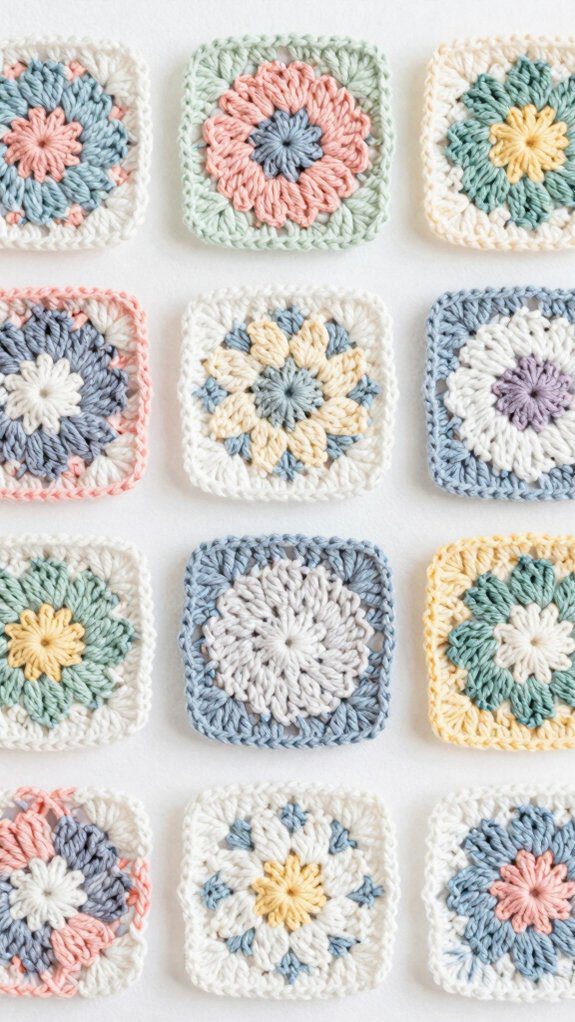
If you’ve enjoyed the cozy familiarity of granny-style flower grids, you’ll find minimal floral grid designs a rejuvenating, modern follow-up that keeps the charm but pares back the fuss. I love how textured flower grids use simple shapes and fewer color changes, so projects finish faster and still feel thoughtful. Try a Sunflower Granny Square for quick satisfaction — under 40 yards and about an hour — or the Blooming Flower Square when you want bold lines. Repetitive motifs scale easily for blankets or cushions, and unique color palettes let us belong to a shared aesthetic while staying personal.
| Petal | Center | Border |
|---|---|---|
| 3D | Solid | Clean |
| Raised | Contrast | Simple |
Vintage-Inspired Crochet Flower Squares
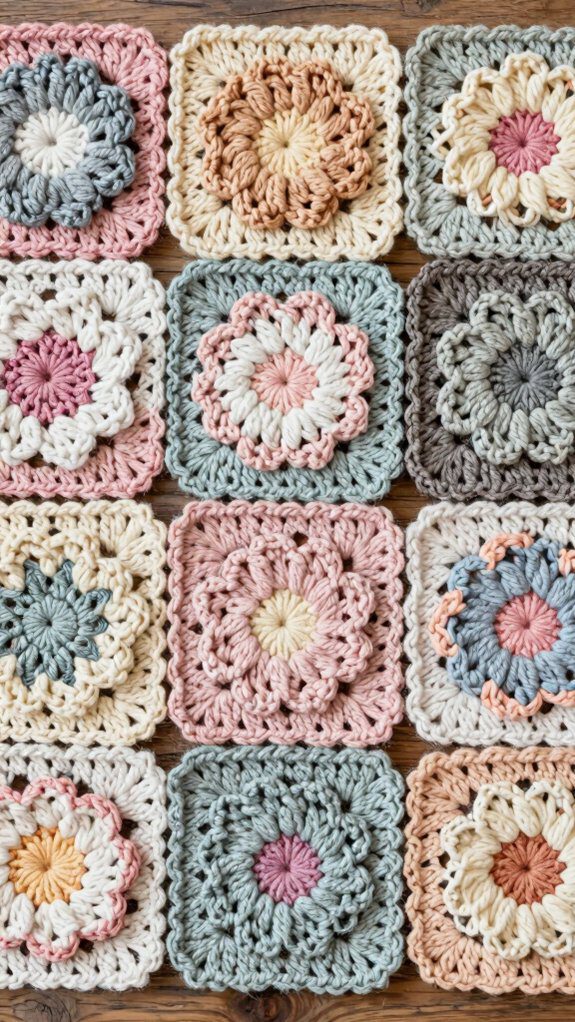
Although vintage-inspired crochet flower squares can look elaborate, I’ll show you how their beauty comes from a few repeatable techniques you can learn quickly; start with popcorn stitches, layered petals, and thoughtful color changes, and you’ll get that old-world charm without feeling overwhelmed.
I love mixing vintage colorways—muted rose, sage, cream—so each square feels like part of a shared story.
Begin with a simple motif such as the Dainty Rose Blanket or Ester Square for structure, then add textured petals or a popcorn center for depth.
Use traditional crochet techniques to customize size and colors, and try Hydrangea or Oriental Flower motifs when you’re ready for complexity.
I’ll guide you step-by-step so you feel confident and connected to every stitch.
Modern Geometric Flower Grid Patterns
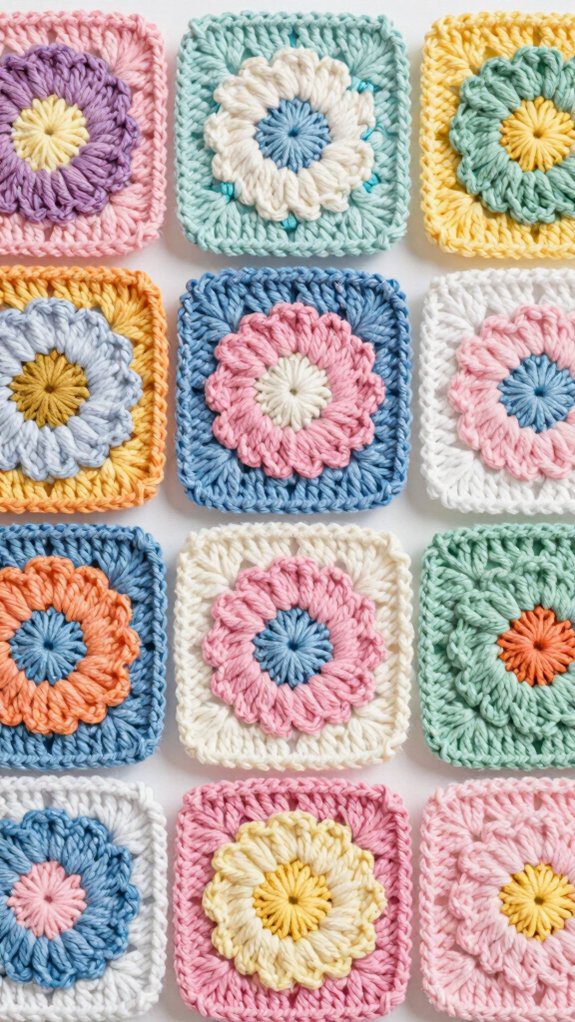
Because I love bold shapes and bright colors, modern geometric flower grid patterns feel like a fresh way to reinvent classic motifs, and I’ll show you how to make them striking without getting fussy.
I choose geometric colorways that pop—contrasting shades highlight petals and negative space, so a simple two- or three-color scheme reads like a statement.
I mix abstract motifs with repeatable squares to keep stitching meditative; that rhythm helps beginners and intermediates build confidence while creating cohesive blankets, bags, or wall hangings.
I recommend digital downloads for instant patterns, then swapping one color to personalize.
For practical tips: test a small swatch, balance warm and cool tones, and block pieces before joining.
You’re welcome to experiment; we grow together.
Small Motif Flower Grid Layouts
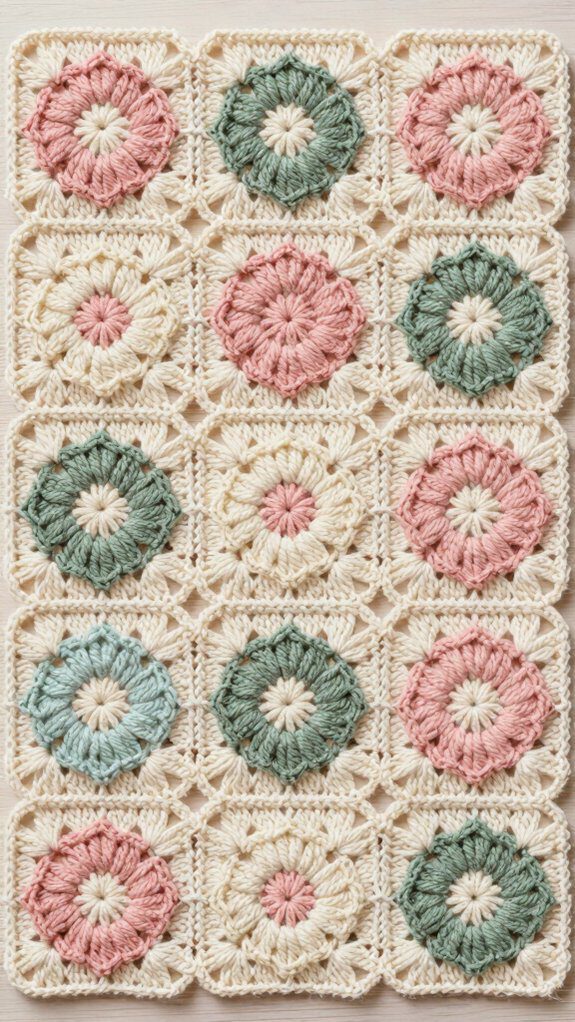
Small floral motifs bring big personality to a grid layout, and I’ll show you how to pick and place them so your project feels balanced and lively.
I like starting with easy squares—Daisy or Tulip granny squares—because they crochet up fast and build confidence. For a cohesive flower grid, alternate simple Tulip blocks with more detailed Hydrangea or 3D Flower Granny Squares to create texture and rhythm.
Try grouping three similar motifs, then one contrasting square, so motif variation reads intentional, not random.
Plan placement on paper or with layout tiles, stepping back often to check balance. Mix flat and 3D pieces for depth, and swap colors between repeats to personalize.
Small motifs make a big, welcoming statement.
Colorwork Flower Grid Crochet Ideas
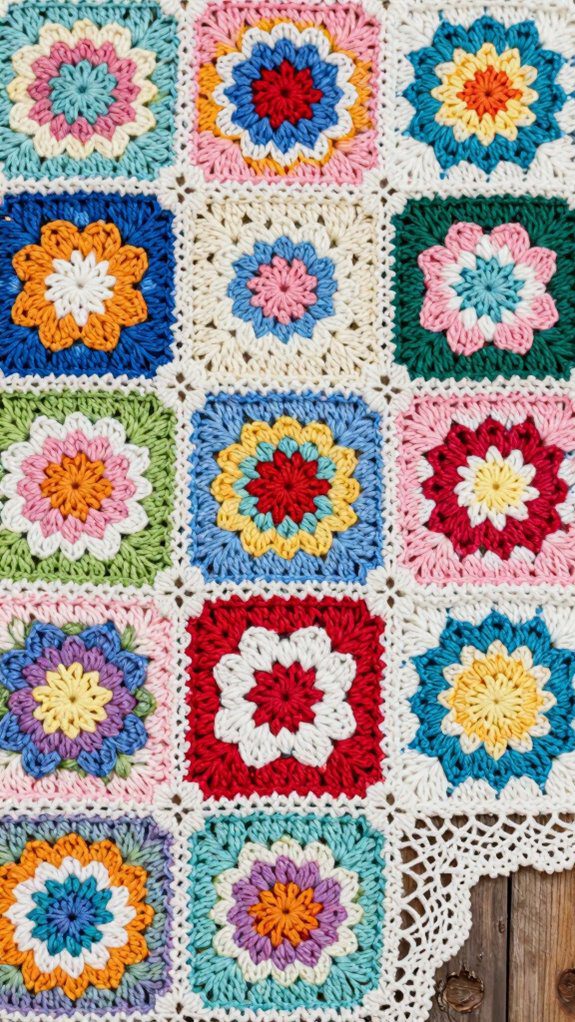
Colorwork flower grids are one of my favorite ways to make a blanket or wall hanging feel bold and joyful, and you can get striking results even with a few well-chosen techniques.
I love mixing colorwork techniques like C2C and tapestry crochet to build large Sunflower or Rose Swirl motifs; C2C makes shaping simple, while tapestry gives crisp edges.
Start with a Daisy Crochet Graph or Tulip Granny Square to practice, then modify colors from floral color palettes—soft pastels for vintage feels or saturated hues for modern impact.
Try swapping a center or petal shade to see how one change shifts the whole piece.
I’ll guide you through layout choices, joining methods, and yarn contrast tips so you’ll feel confident and supported.
Boho Aesthetic Floral Crochet Grids
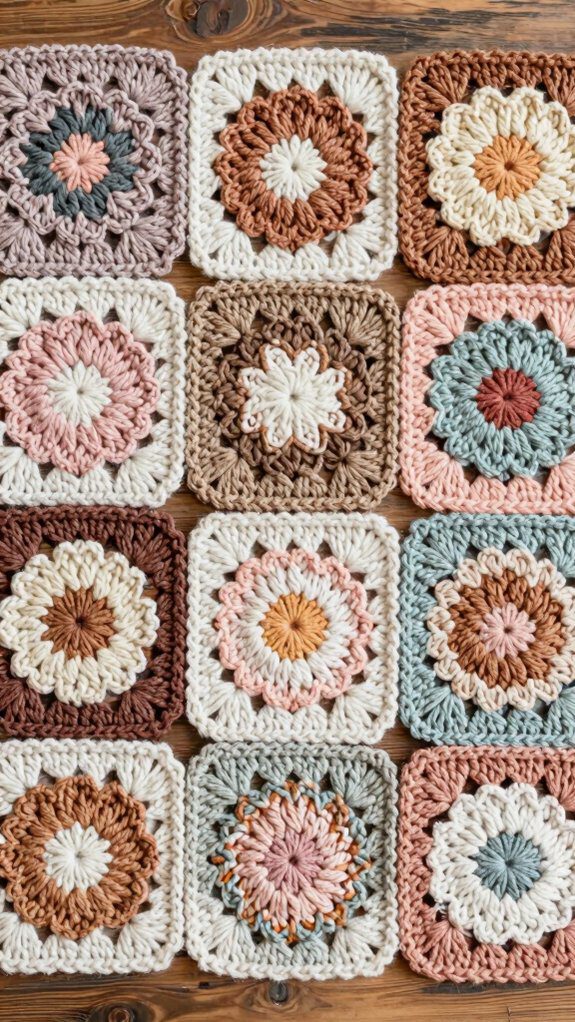
If you enjoyed mixing C2C and tapestry techniques in your flower grids, you’ll love bringing a boho vibe into those same ideas—I often swap in earthier yarns and oversized motifs to get that relaxed, layered look. I pick boho color palettes like rust, mustard, sage, and cream, then mix vivid flowers for warmth. Granny squares let me combine Sunflower Granny and Blooming Daisy Square patterns, so each piece feels personal and communal. Use natural fibers for texture and durability.
| Feeling | Tip |
|---|---|
| Cozy | Use chunky yarn for oversized motifs |
| Connected | Mix vintage flower squares with modern layout |
| Proud | Personalize colors for shared gifts |
| Calm | Add tassels or fringe for a welcoming finish |
Monochrome Flower Grid Patterns
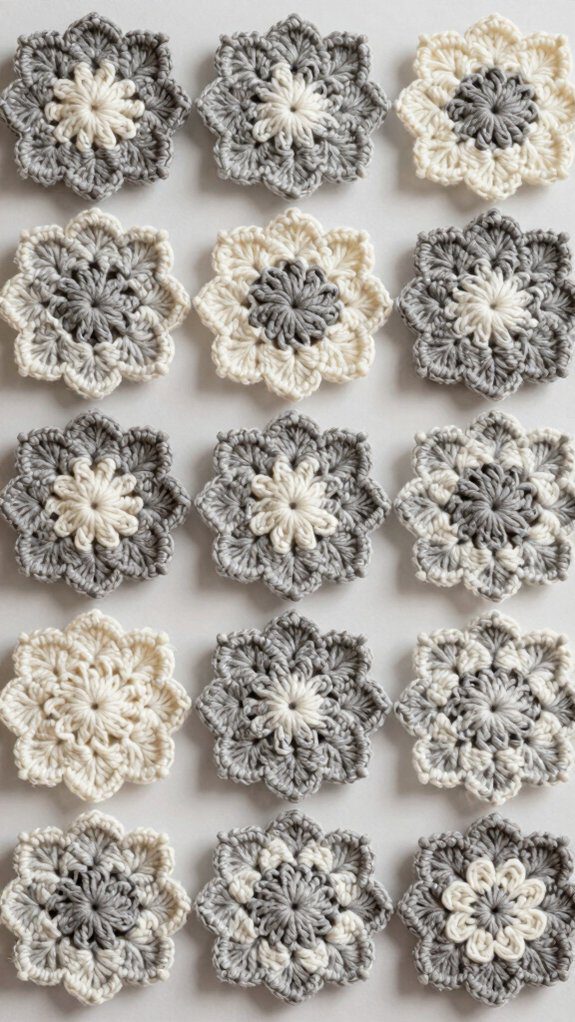
When I switch to a monochrome palette, I’m always surprised by how much personality a single color can carry—so don’t think one hue means one mood.
I love monochrome colorways because they make crochet texture techniques sing: popcorns, cables, and raised petals read distinctly without competing colors. For practical stitch variation exploration, try combining dense and airy stitches to create visual contrast emphasis that reads like relief sculpture.
Design coherence benefits are immediate—you’ll match decor easily and keep a unified look between modern and vintage pieces. I see each piece as an artistic expression showcase, where subtle shifts in tension and stitch height become the statement.
Note the project versatility potential: blankets, cushions, and decor all gain enhanced aesthetic appeal analysis with simple, elegant results.
Patchwork-Style Flower Crochet Layouts
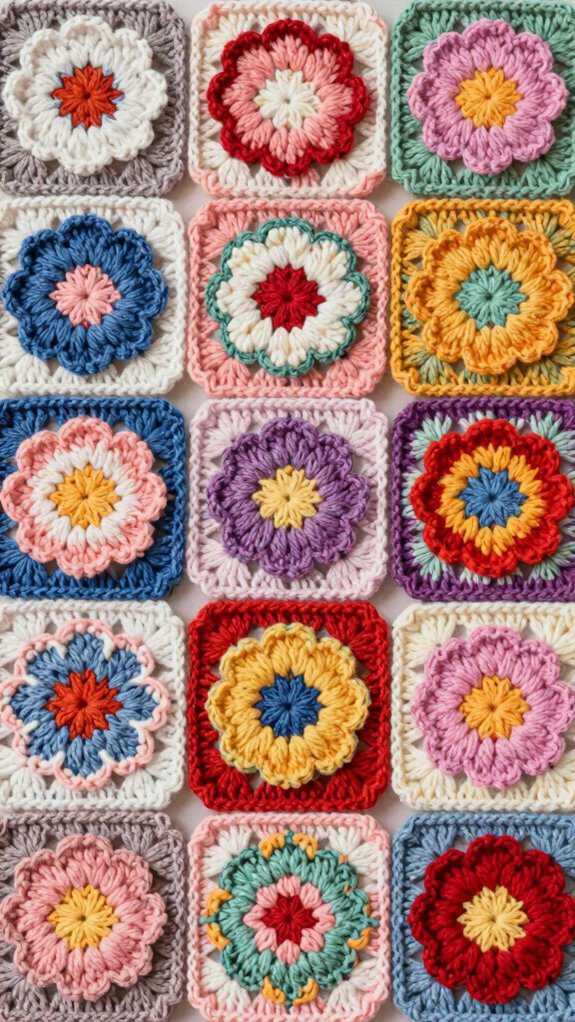
Because I love mixing motifs, patchwork-style flower crochet layouts feel like giving each square its own voice while still composing a choir, and I’ll show you how to make those voices sing together.
I gather granny squares, Sunflower Granny motifs, Dainty Rose pieces, and floral appliqués, then arrange them by color palette and size so similar tones sit near each other for balance.
I mix texture variety—flat squares, 3D petals, and lacy stitches—to add rhythm across the blanket.
Plan a rough grid, swap pieces until the flow feels right, and use a unifying border to bind styles.
Invite friends to contribute; differing skill levels make the project richer and more meaningful.
Experiment, trust your eye, and enjoy the shared creative warmth.
Beginner-Friendly Flower Grid Designs
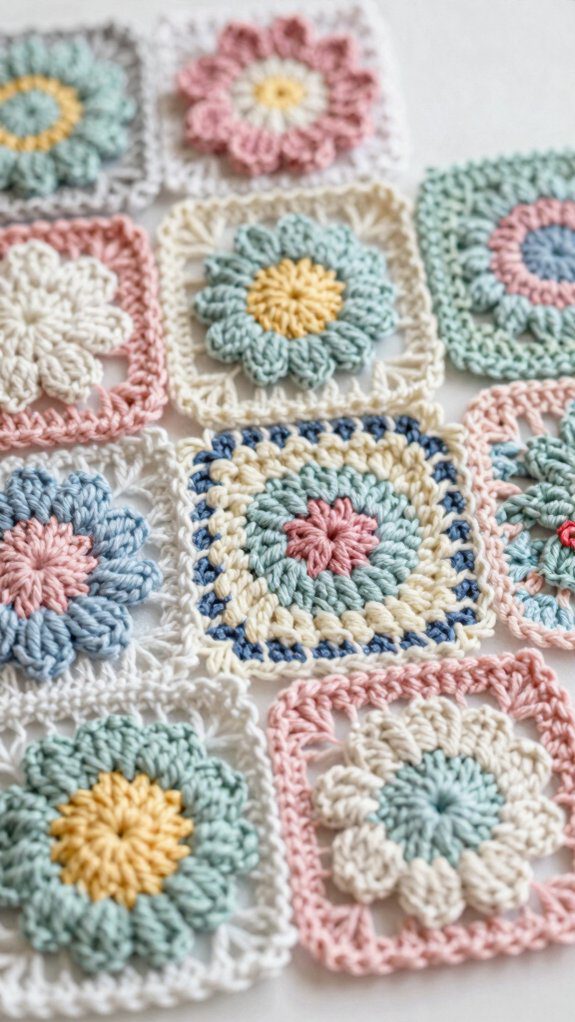
Starting a beginner-friendly flower grid is a great way to build confidence and make something beautiful quickly, so I’ll walk you through easy motifs that teach core skills while keeping the project fun.
I love starting with Sunflower Granny Squares—under 40 yards and about an hour each—so you feel success fast. The Tulip Granny Square works in the round to form petals and leaves at once, and Poppy Flower Squares let you add rounds to change size as you learn.
The Water Lily gives a realistic bloom without complex stitches, while Dainty Rose squares bring a vintage vibe you can mix or wear.
Focus on basic flower grid techniques and simple yarn color choices; try two-contrast palettes to highlight petals and practice joining squares confidently.
Intricate Floral Grid Crochet Patterns
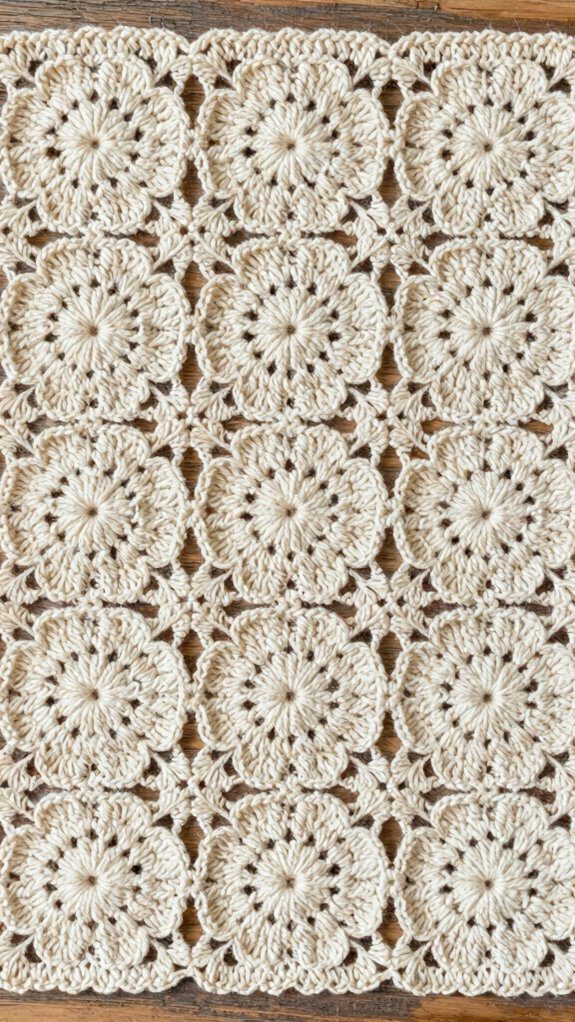
Although intricate floral grid patterns look elegant, I promise they’re totally doable once you break them into steps, and I’ll walk you through what to expect and how to tackle them. I love patterns like the Baroque Triumph Floral Square, Hydrangea Crochet Square, Dainty Rose Blanket squares, and Poppy Flower Square because they blend floral texture with varied crochet techniques. You’ll feel part of a creative community as you learn surface crochet, 3D elements, color changes, and size customization.
| Pattern | Skill tip | Outcome |
|---|---|---|
| Baroque Triumph | Practice abstract motifs | Elegant square |
| Hydrangea | Test color combos | Vibrant gift |
| Dainty Rose | Precision colorwork | Versatile pieces |
Start small, follow charts, and enjoy making each square your own.
Spring-Themed Flower Grid Projects
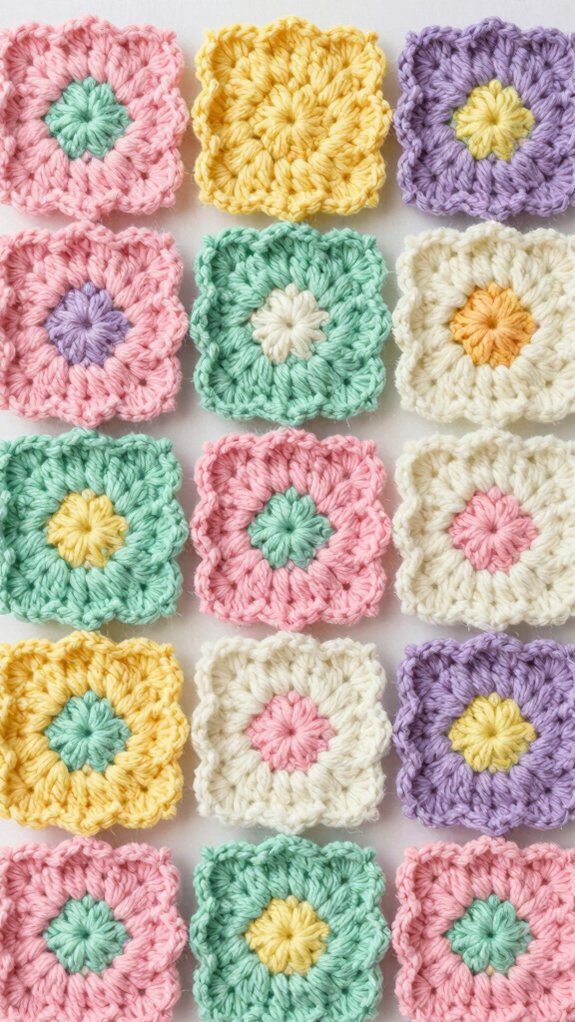
If you enjoyed working through those intricate floral grid squares, you’ll find spring-themed flower grid projects just as rewarding and a bit more playful—think bright colors, cheerful motifs, and pieces that cheer up a room or nursery.
I love mixing spring color combinations like mint, lemon, and coral for a fresh throw; soft pastels make baby blankets feel cozy, while brighter hues cheer up cushions.
Try Tulip Granny Squares for beginner-friendly work, then add Daisy or Water Lily squares for variety.
Use Flower Stitch Sampler Throw patterns to learn new flower motif variations, and download instant patterns to keep momentum.
Join a crochet group to swap ideas, mix squares, and build a project that truly feels like ours.
Bold and High-Contrast Flower Grids
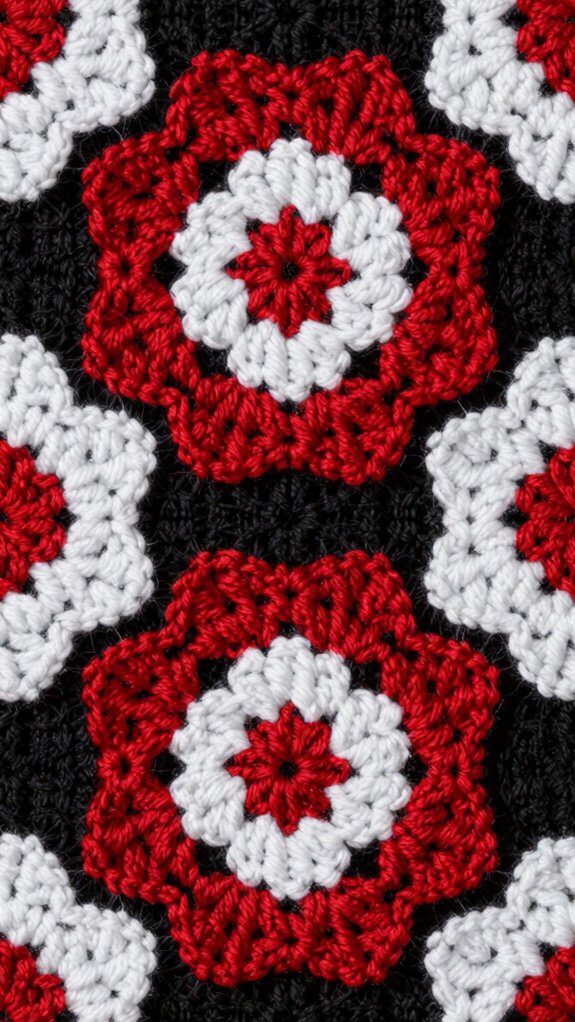
Color makes a statement, and I love how bold, high-contrast flower grids instantly turn a simple square into something electric and memorable.
I recommend pairing high contrast color combinations like bright yellow with deep purple or rich red with striking green to guarantee impact. Use vibrant texture techniques—popcorn stitches, surface crochet, and raised petals—to add depth and keep each flower lively.
For projects, try a Sunflower Granny Square or Happy Crochet Sunflower Square; they show how bold hues lift seasonal decor and gifts. These patterns are often beginner-friendly, so you and your crafting circle can experiment without fear.
Use them in blankets, bags, or wall hangings to mix modern punch with vintage charm that feels welcoming.
Soft Pastel Flower Grid Crochet Ideas
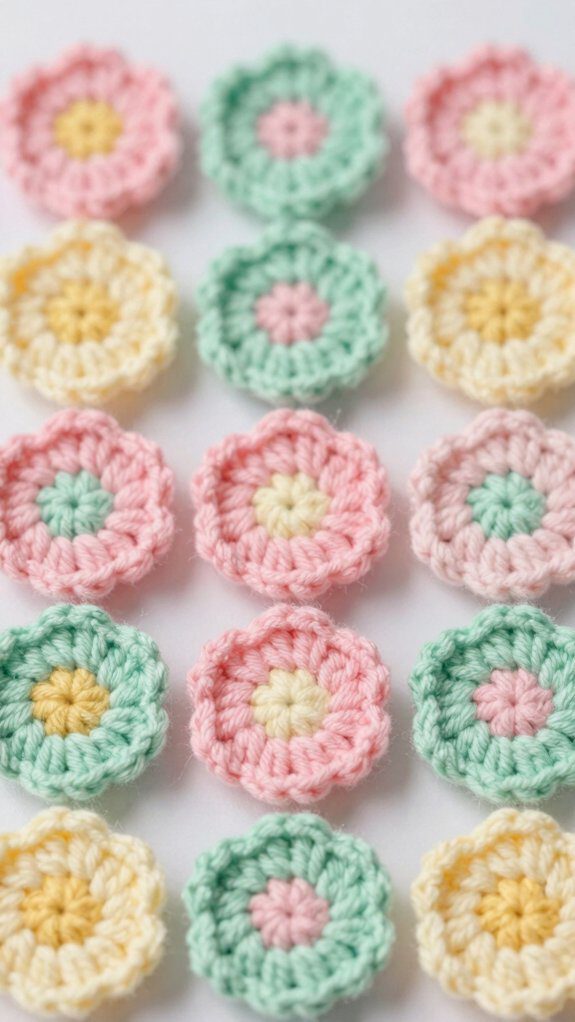
When I want something soft and inviting, I reach for pastels—mint green, blush pink, and lavender blend together like a gentle spring morning and make flower grids feel calm and cozy.
I love using pastel color palettes to build gentle contrasts: a blush center, mint petals, and a lavender border can bring depth without loudness. I follow basic crochet color theory—balance warm and cool tones, limit accents, and repeat hues for unity—so motifs like Sunflower Granny or Daisy Crochet Graph read distinctly in soft shades.
Try the Blooming Daisy square for whimsy, and mix different flower patterns for variety. I recommend testing small swatches, noting yarn weight and tension, and arranging motifs before sewing for cohesive, welcoming results.
Floral Grid Patterns for Blankets and Throws
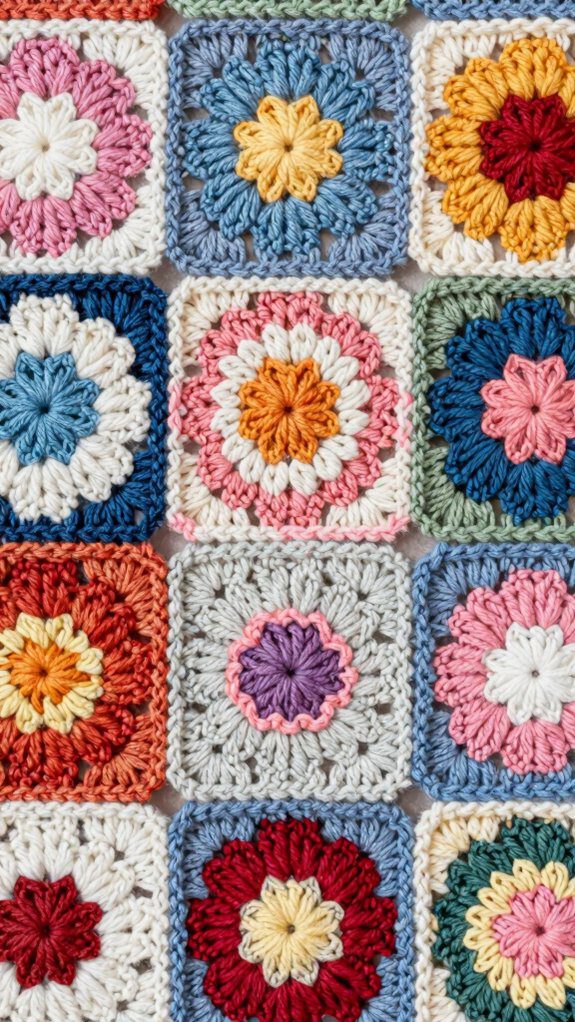
I’ve loved playing with soft pastels, but for blankets and throws I also reach for bolder floral grids that hold up across a whole piece—mixing motifs like African Flowers, Sunflower Granny, and Blooming Daisy lets you balance texture, color, and pace so a blanket reads as a unified design rather than a jumble.
I choose flower square techniques that suit scale: sunflower granny for dramatic 3D petals, African Flowers for calm repeating motifs, and Blooming Daisy when I want speed.
Use crochet color theory to plan contrast and harmony; pick a dominant hue, a grounding neutral, and one accent that pops.
I suggest laying squares out before joining, adjusting colors for rhythm, and embracing small swaps to make a throw that feels like home.
Decorative Flower Grid Ideas for Pillows
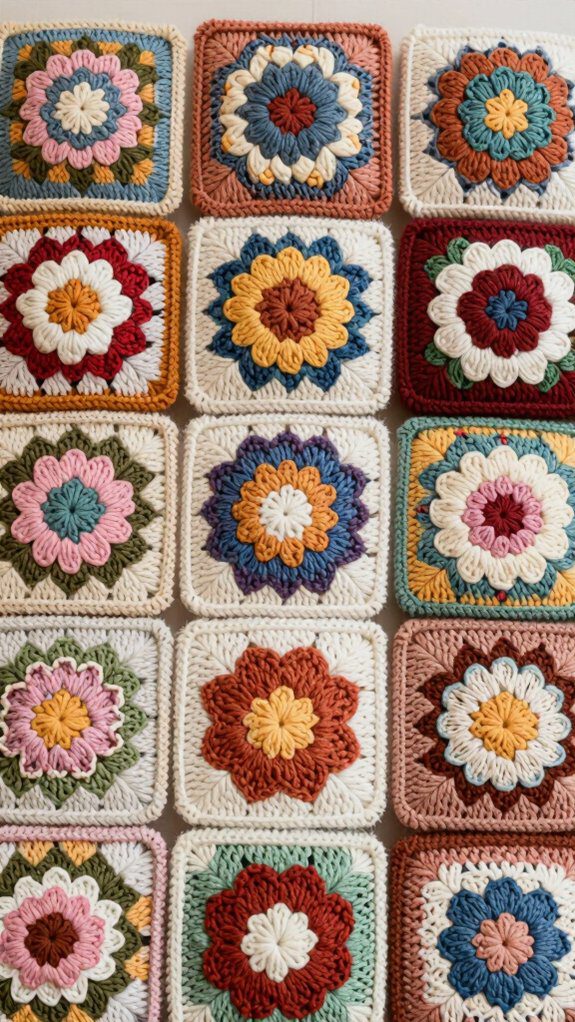
Because pillows are small canvases, I love using flower grid patterns to make bold, tidy statements that still feel cozy, and I’ll walk you through practical ways to do it.
I pick beginner-friendly motifs like the Sunflower Granny Square or Daisy Crochet Graph when I want quick, hour-long projects, and I balance them with one Baroque Triumph Floral Square as a focal point.
I layer vintage and modern motifs for timeless charm, choosing floral color palettes that unite varied squares.
For construction, I join grids into a single front panel and compare stuffing options—plush polyester for squish, down for softness—so pillow stuffing techniques match the look.
Together we create colorful, welcoming pillows that fit any home.
Reusable Flower Grid Motifs for Garments
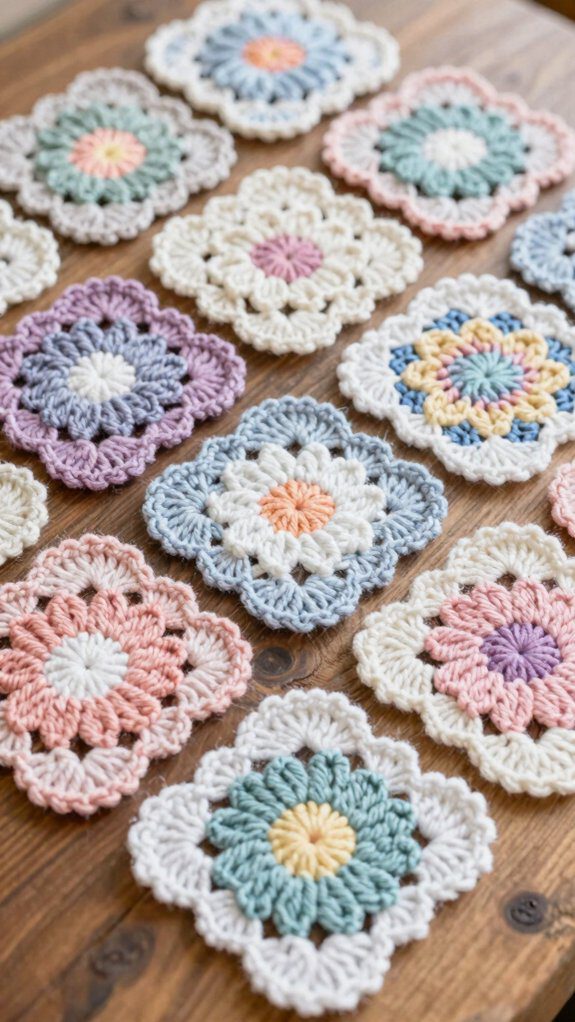
A few well-placed flower grid motifs can completely transform a garment, and I’ll show you practical ways to use them so your pieces stay wearable and wash-ready. I love combining Tulip and Sunflower Granny Squares to honor flower motif history while embracing crochet pattern evolution; they’re beginner-friendly and mix well across jackets, vests, and skirts.
| Motif | Technique | Use |
|---|---|---|
| Tulip Granny | Classic granny | Borders, pockets |
| Sunflower | Layered center | Front panels |
| 3D Flower | Raised petals | Statement yokes |
| Mixed Color | Varied yarns | Scarves, trims |
| Digital Pattern | Instant download | Faster planning |
I recommend testing yarn blends and blocking motifs before assembly so garments drape nicely and belong in any wardrobe.
Texture-Focused Crochet Flower Grids
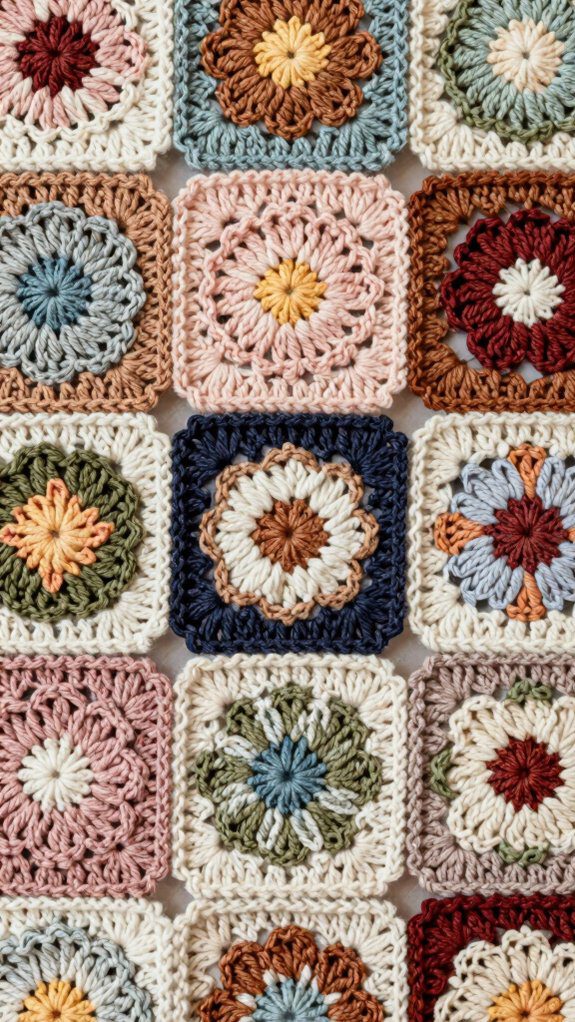
When you want your crochet to pop off the fabric, texture-focused flower grids are the trick I reach for most—using popcorns, bobbles, and surface crochet to build up petals and centers that actually sit proud of the square.
I love mixing crochet techniques like popcorn stitch for bold petals and surface crochet for veins; that texture manipulation gives each square a sculptural feel.
Try a Sunflower Granny Square for vibrant 3D petals, or the Baroque Triumph Floral Square when you want abstract structure—both adjust well to blankets, wall art, or wearables.
Start simple: practice a single bobble round, then add color changes.
Mix motifs from vintage collections to investigate texture, and swap stitches to find your favorite tactile combinations.
How to Join and Block Flower Grid Squares
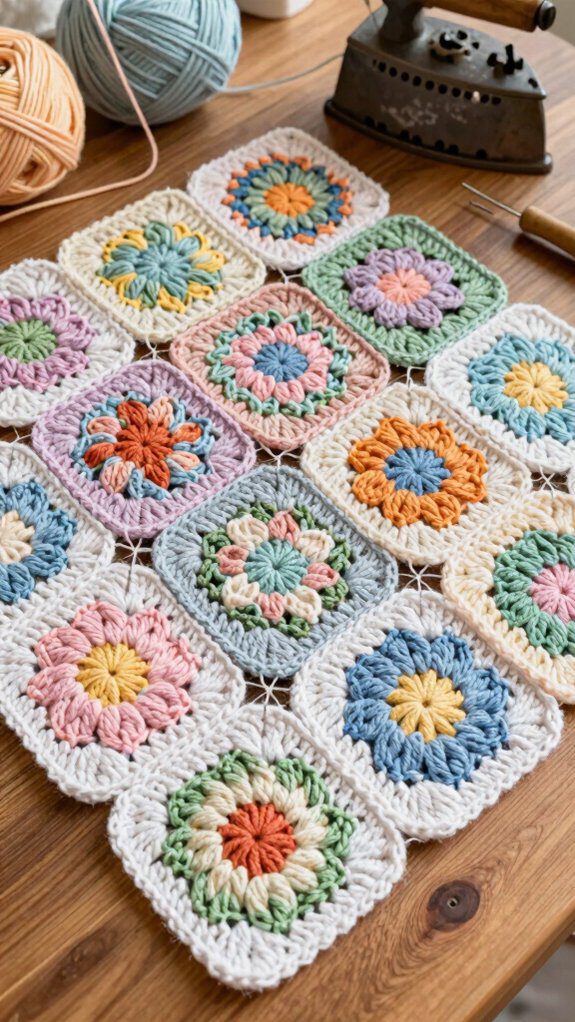
If you want your flower grid to look as polished as it feels, I’ll walk you through neat joining and careful blocking so each square sits right and the seams don’t distract from your motifs.
First, pick a joining technique: slip stitch gives a flat, machine-like seam, while whip stitch hides joins inside and feels softer. I prefer whip stitch for vintage vibes and slip stitch for crisp modern edges.
Next, blocking methods—wet blocking works best: soak squares, gently reshape to measurements, and pin on a blocking board with rust-proof pins. Use natural fibers when possible, since cotton and wool tolerate blocking well; synthetics need extra care.
Let everything dry completely before sewing final seams to avoid stretching.