24 DIY Home Repair Hacks Easy Fixes for Homeowners
I’ve found 24 simple DIY home repair hacks that really save time and cash. Start by unclogging drains with baking soda and vinegar, then fix leaky faucets by swapping washers carefully. Patch drywall holes using spackle and sanding smooth for a flawless wall. Don’t forget to check smoke detectors monthly and inspect for leaks behind sinks. Cleaning gutters twice a year also keeps water damage away. If you want to keep your home cozy and safe, these easy tricks get you there—and there’s plenty more helpful tips ahead.
Love cozy DIY projects? 💕
Get free printable guides, exclusive tutorials & surprise craft goodies straight to your inbox.
Disclosure: This post may contain Amazon affiliate links, at no extra cost to you. Content on DiyCraftNest is created with research support from AI tools and carefully reviewed, edited, and fact-checked by the lead author, Daniel Pat, to ensure accuracy and reliability. Learn more
Key Takeaways
- Unclog drains naturally with baking soda and vinegar, followed by hot water flushing for easy maintenance.
- Fix leaky faucets by replacing washers and gaskets after shutting off the water supply.
- Use spackle and sanding to fill and smooth wall holes, then paint for seamless repairs.
- Reduce floorboard squeaks by applying talcum powder and securing loose boards with screws.
- Remove adhesive residue using a vinegar-water mix or rubbing alcohol for gentle, effective cleaning.
Unclogging Blocked Drains
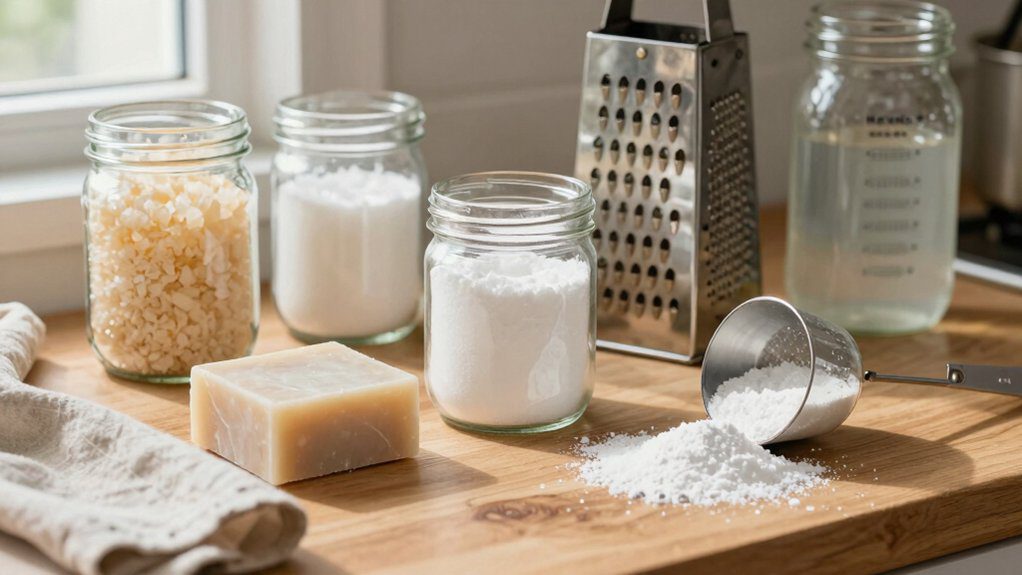
When it comes to unclogging blocked drains, I’ve found that a simple mixture of baking soda and vinegar works wonders and is surprisingly easy to use. Just pour half a cup of each down your drain, let it fizz for 30 minutes, then flush with hot water. This natural unclogging method breaks down buildup gently yet proficiently.
For ongoing drain maintenance tips, try monthly treatments to keep things flowing smoothly. Also, don’t forget strainers—they catch hair and food before they cause trouble.
These simple steps help us all feel more in control of our home’s health, don’t they?
Replacing Old Screws

After clearing out those stubborn drains, it’s a good feeling to tackle the smaller details that keep your home in tip-top shape—like replacing old screws.
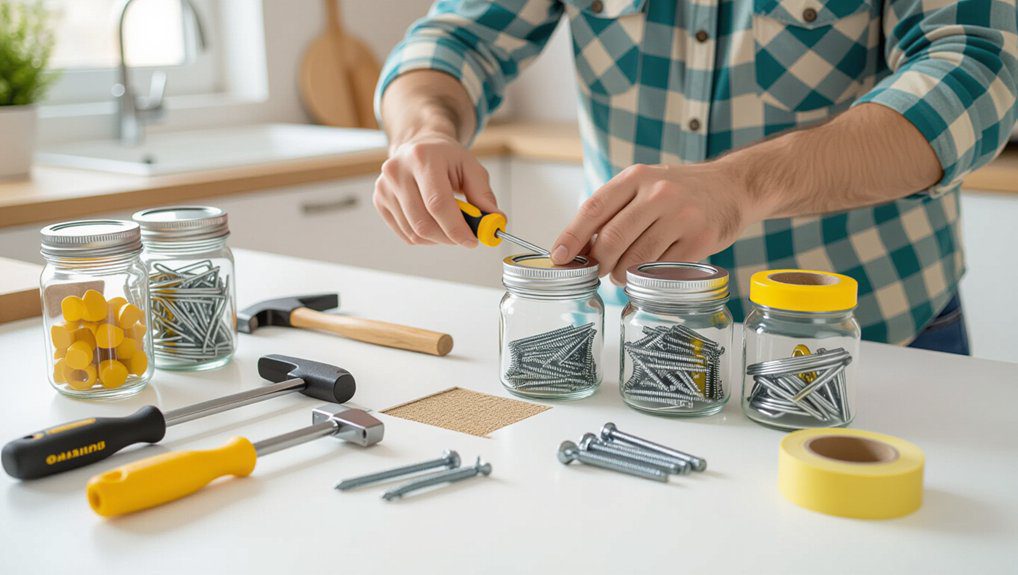
First, match the screw types and length to the originals for a perfect fit. For stripped screws, I use a rubber band to boost grip, making removal easier.
Always pre-drill pilot holes, especially in hardwood, to avoid splitting. Choose corrosion-resistant screws like stainless steel for damp spots.
Finally, tighten each screw following the torque specifications—this keeps everything secure and prevents loosening over time. These simple steps really make a difference!
Patching Drywall Holes
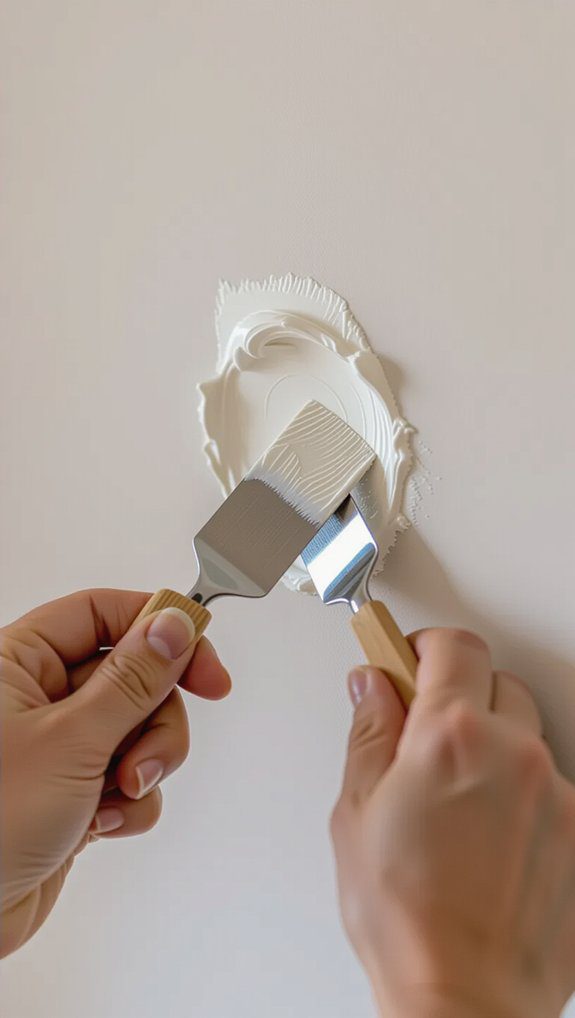
Fixing drywall holes is one of those satisfying projects that can instantly freshen up any room, and it’s easier than you might think.
Using simple drywall repair techniques, here’s how I tackle it:
- Apply spackle with a knife, filling the hole completely for a smooth finish.
- Let it dry, then sand gently with fine-grit paper to blend edges.
- For bigger holes, cut and screw in a drywall patch, then cover seams with tape and joint compound.
- Finish by matching paint for a flawless look.
These spackle application methods keep your walls looking fresh and damage-free!
Fixing Leaky Faucets
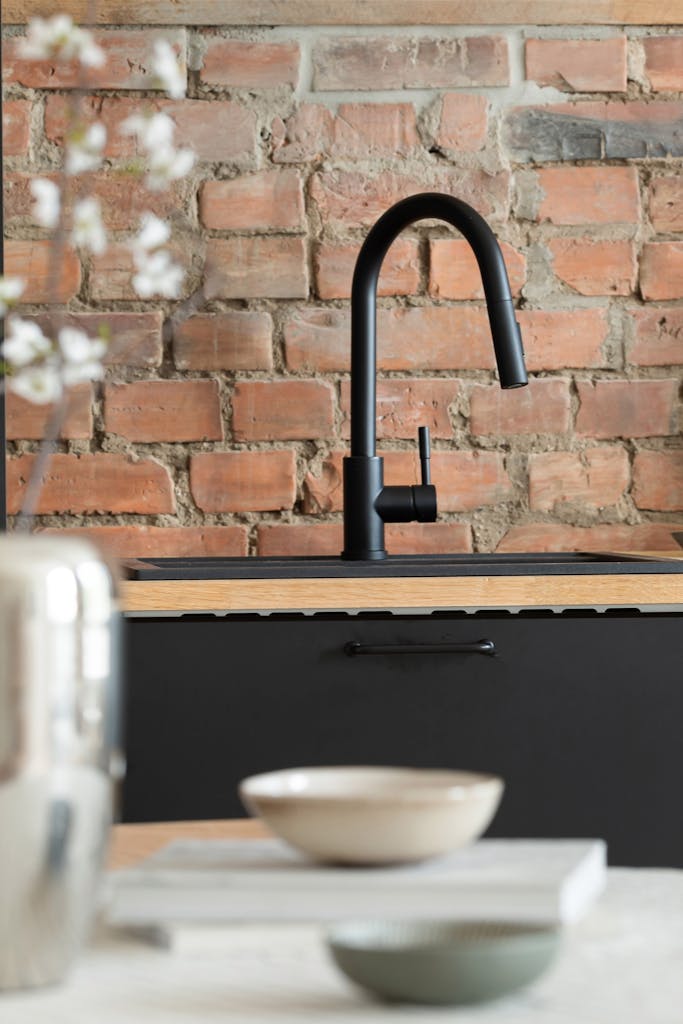
A single leaky faucet might seem like a small annoyance, but it can waste a surprising amount of water—almost 900 billion gallons nationwide every year! Fixing leaks is easier than you think with some basic faucet repair techniques and plumbing maintenance tips. Start by turning off the water, then check washers, gaskets, and O-rings for wear.
| Step | Tool Needed |
|---|---|
| Turn off water supply | Wrench/pliers |
| Disassemble faucet | Allen wrench |
| Replace worn parts | New washers/O-rings |
Quick repairs save water and cut your water bill, helping us all conserve!
Unstop a Toilet Tank
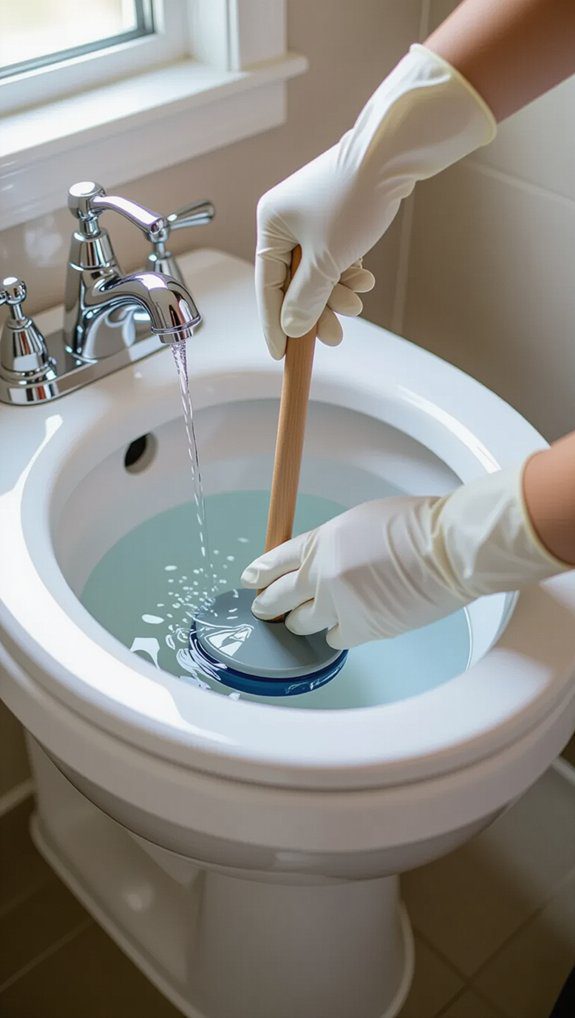
One of the most common annoyances in any bathroom is a toilet tank that just won’t stop running or seems clogged, but don’t worry—I’ve got some simple tricks to help you unstop it quickly.
- Check for toilet flapper issues; sometimes it doesn’t seal right, causing water to run.
- Adjust the chain connecting the flapper—too tight or loose can create problems.
- Pour some dish soap into the bowl to loosen clogs before plunging.
- Clean and maintain tank parts regularly to avoid big headaches later.
With these steps, you’ll save money and feel confident tackling this fix!
Unjam Garbage Disposal
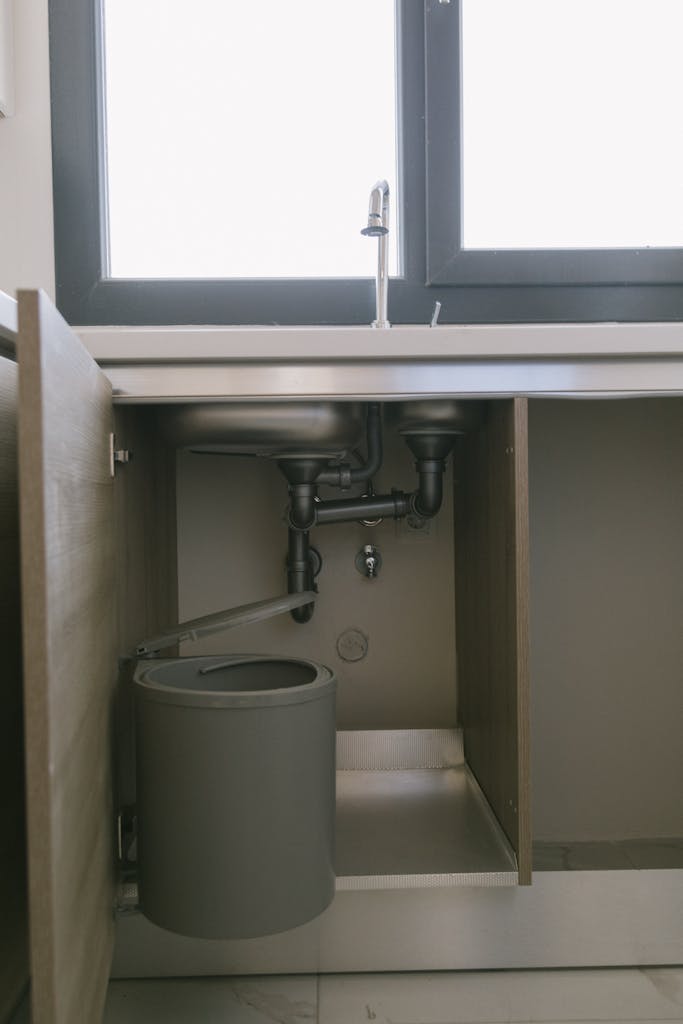
Whenever your garbage disposal jams, it can quickly turn kitchen cleanup into a frustrating chore, but don’t worry—I’ve got some straightforward steps to get it spinning again.
First, always unplug the unit or turn off the electricity for safety.
Then, grab a 1/4-inch hex wrench and insert it into the hole underneath the disposal. Crank it back and forth to free the blades.
For garbage disposal maintenance, run cold water while using it and avoid overloading.
These disposal troubleshooting tips help prevent jams caused by fibrous foods or foreign objects.
If problems persist, call a pro.
Replace HVAC Filters
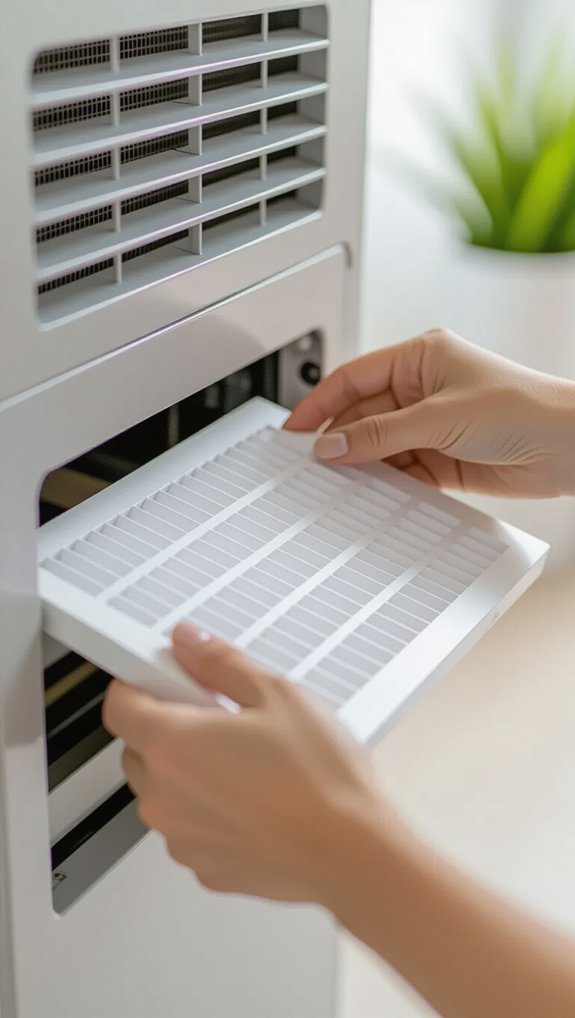
Replacing your HVAC filters every 1 to 3 months can make a huge difference in both your home’s air quality and your system’s efficiency.
I’ve found that good filter maintenance not only keeps the air fresh but also saves money on energy bills.
Here’s how I handle it:
- Check the filter size label to buy the right replacement.
- Choose a HEPA filter for excellent air quality.
- Mark your calendar to remind yourself when it’s time.
- Swap out clogged filters quickly to avoid system strain.
You’ll breathe easier and feel proud keeping your home cozy and clean!
Weatherstrip Doors and Windows
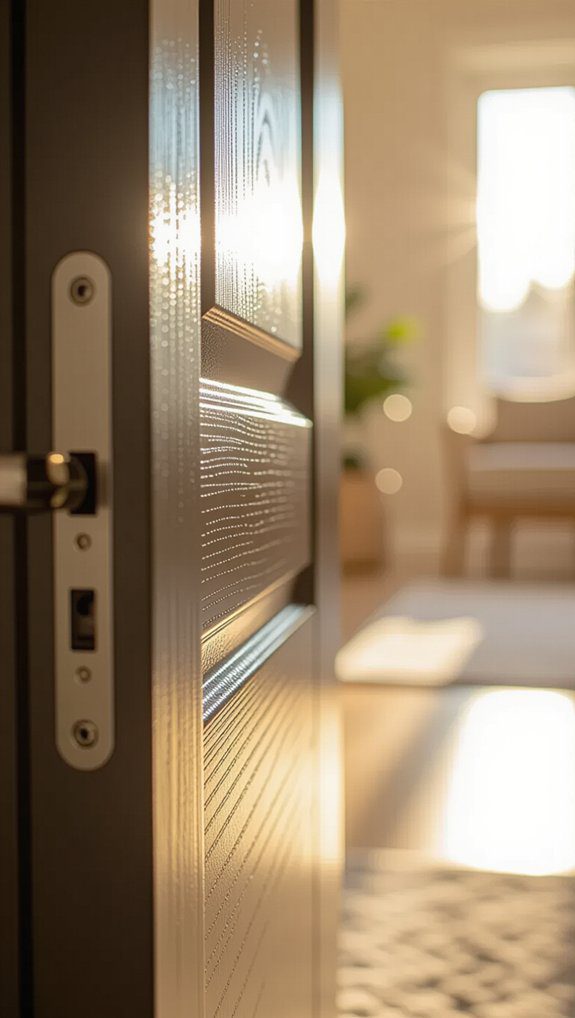
Since drafts can sneak in through even the tiniest gaps around your doors and windows, weatherstripping is a simple trick I’ve come to rely on for keeping my home cozy and cutting down energy costs.
Using weatherstripping materials like foam tape, V-strip, or door sweeps, I’ve improved my home’s energy efficiency without breaking the bank. These materials are easy to find and install—plenty of online tutorials helped me measure and apply them correctly.
Regularly checking and replacing worn weatherstripping not only keeps cold air out but also protects my doors and windows from water damage.
Give it a try!
Caulk Windows and Doors
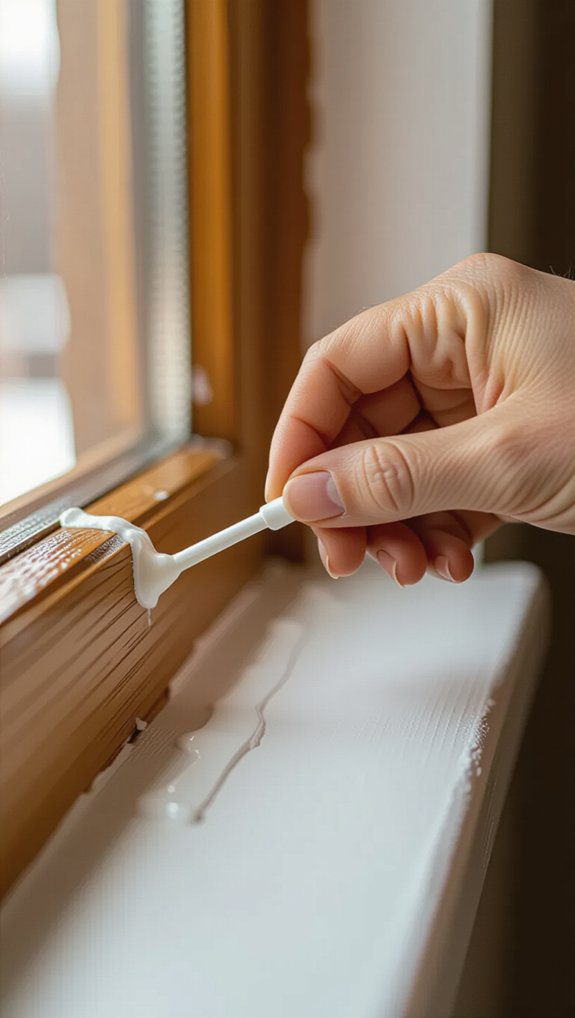
One of the easiest and most effective ways I’ve found to keep my home cozy and cut down on energy bills is by caulking windows and doors.
This simple fix can save you up to 10% annually by stopping air leaks. Here’s how I approach it:
- Choose the right caulk types—silicone for wet areas, acrylic for indoors.
- Remove old caulk with a utility knife for a clean surface.
- Apply steady, even lines using a caulking gun.
- Smooth the bead with a damp cloth for a tight seal.
Mastering sealing techniques keeps your home comfy and protected!
Repaint Interior Walls
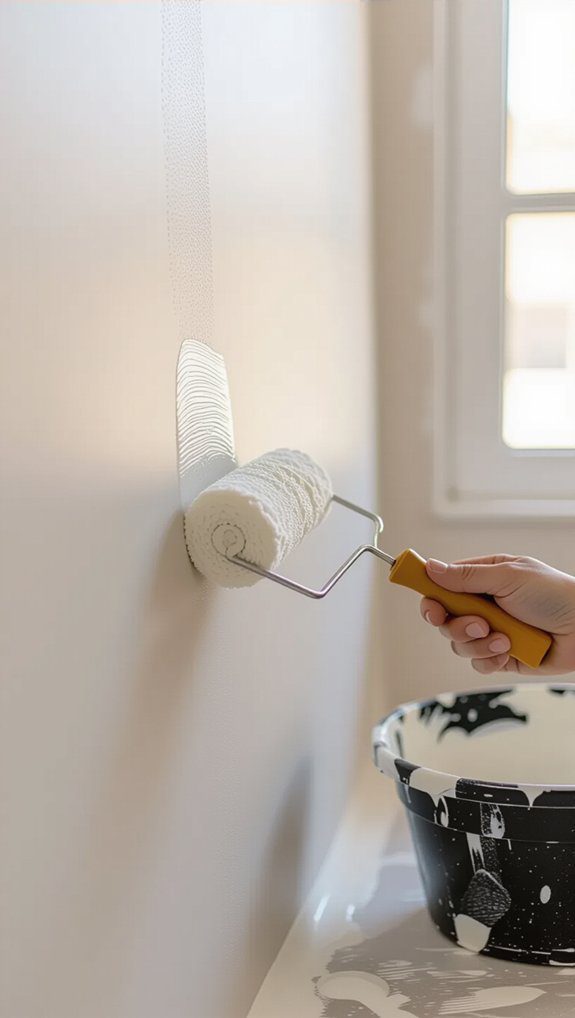
Although repainting interior walls might seem like a big job, it can totally transform the look and feel of any room—and I promise it’s easier than you think.
Start by choosing your color selection carefully; lighter shades open up space, while darker tones add coziness. Don’t forget about finish types—matte hides imperfections, satin adds subtle shine, and semi-gloss is perfect for trim.
Prep your walls by cleaning and patching holes, then use painter’s tape for crisp edges. Roll large areas and brush corners for even coverage.
With patience and the right steps, your room will feel fresh and inviting!
Touch Up Appliances
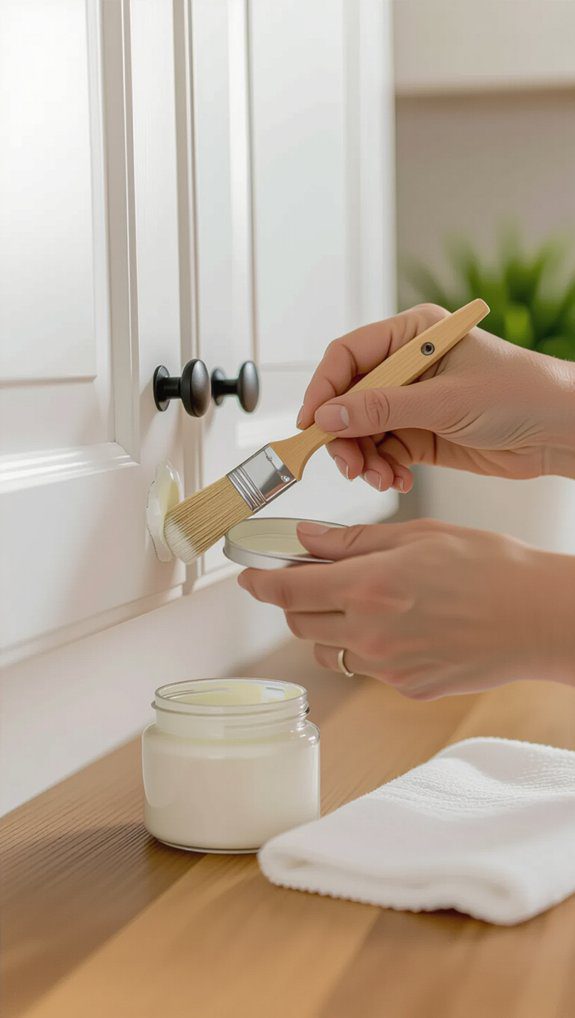
After giving your walls a fresh coat of paint, you might notice that some of your appliances could use a little love too.
Appliance painting is a fantastic way to refresh your kitchen without breaking the bank. Here’s how I approach a stainless steel makeover:
- Clean the surface thoroughly to remove grease and dirt.
- Use Rust-Oleum spray paint for small metal appliances—it’s durable and easy to apply.
- For heat-producing appliances, try liquid stainless steel paint to mimic that sleek finish.
- Let everything dry completely before using to guarantee a smooth, lasting look.
This quick fix really ties the room together!
Re-grout Bathroom Tiles
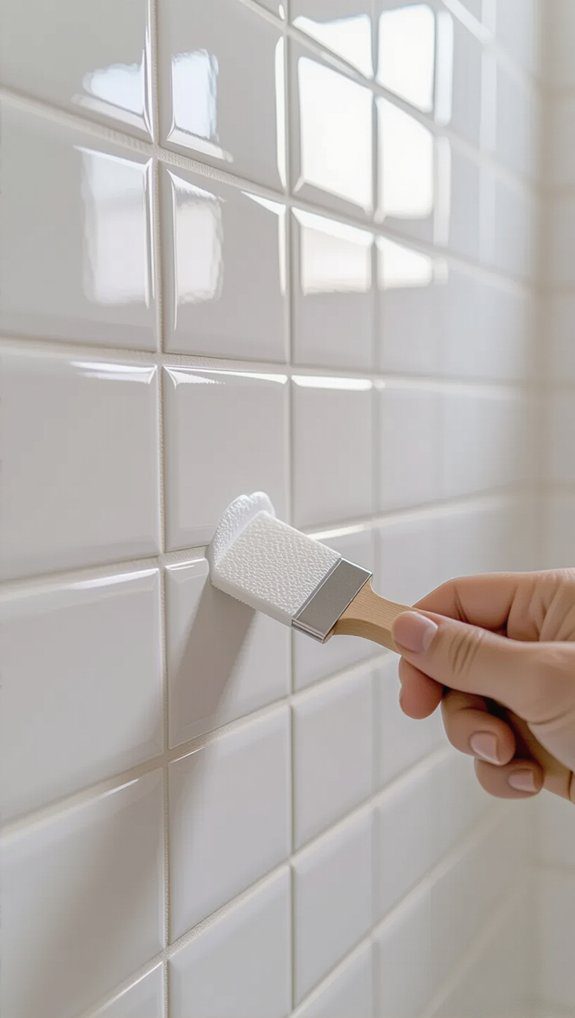
Grout lines are like the unsung heroes of bathroom tiles—they hold everything together and keep moisture at bay.
When I re-grout my bathroom tiles, I start by carefully removing the old grout with a grout saw—it takes some patience but is worth it.
Choosing the right grout color matters; lighter shades brighten the space but need more upkeep, while darker ones hide stains better.
After applying new grout, sealing grout is essential to protect against water damage and mold.
This simple step makes my bathroom look fresh and keeps everything lasting longer, making the effort totally worth it.
Clear Water Stains
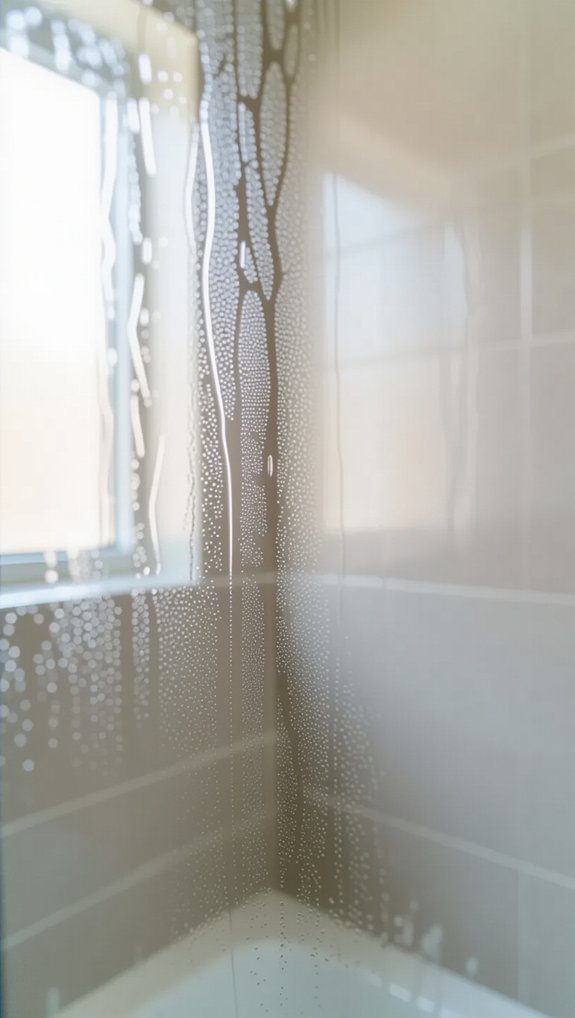
When water stains show up on your ceiling, they can be pretty stubborn and frustrating, but don’t worry—I’ve got a simple, effective trick that usually does the job without needing to repaint.
For water stain removal and ceiling maintenance, try this:
- Mix a 10% bleach solution with water.
- Apply it carefully to the stained area.
- Let it sit for 1-2 days—patience pays off here.
- For tough stains, use a mildew remover suitable for flat or textured ceilings.
Adjust Door Hinges

Tackle that squeaky or misaligned door by adjusting its hinges—you’ll be amazed at how much smoother it can operate with just a few simple tweaks.
Start by checking the door hinge positioning: tighten or loosen screws with a screwdriver to lift or lower the door for a perfect fit. If it drags on the floor, slip a thin cardboard shim behind the hinge to raise it slightly.
Don’t forget hinge maintenance tips like inspecting pins for wear and replacing them when needed. Regular adjustments keep your doors working well and extend their lifespan.
You’ve got this!
Tighten Loose Fixtures
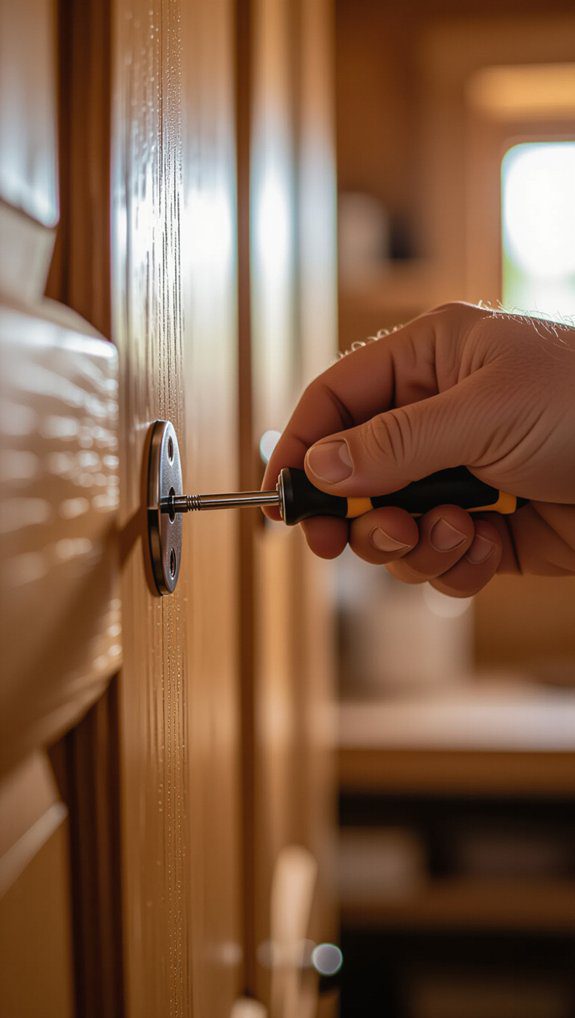
Just like adjusting door hinges can make your doors swing smoothly, tightening loose fixtures around your home can bring back that fresh, well-kept feeling.
Here are some fixture maintenance tips to get you started with easy tightening techniques:
- Grab a Phillips-head screwdriver for cabinet handles or light switches.
- Check fixtures regularly to avoid bigger repairs later.
- Use a wrench for kitchen or bathroom plumbing connections to prevent leaks.
- Tighten slowly and test for stability—you’ll save money and boost your home’s look.
Trust me, these small fixes create big satisfaction!
Fix Squeaky Floorboards
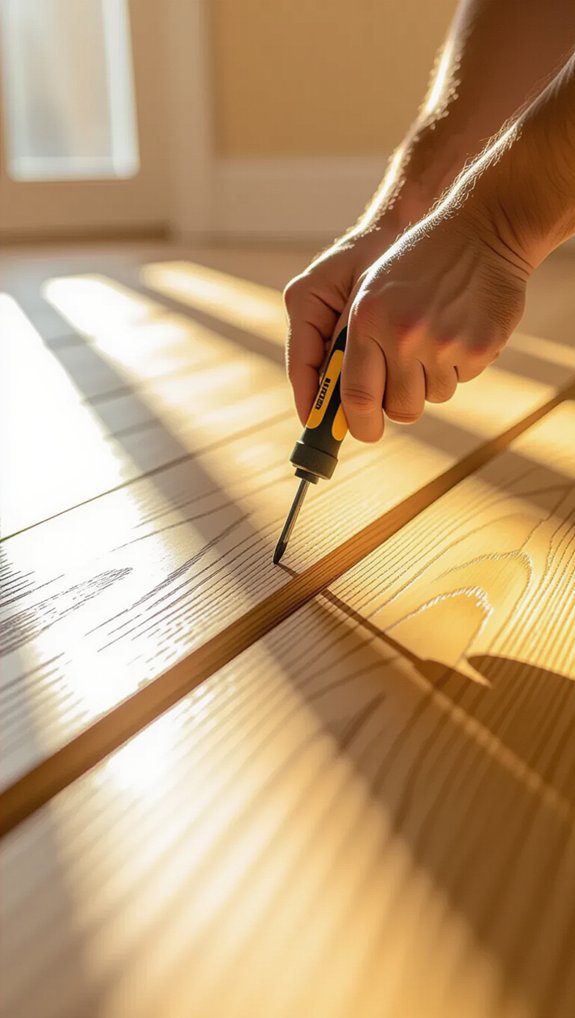
Although squeaky floorboards can be annoying, especially when they creak underfoot at the worst moments, fixing them is easier than you might think. I’ve found that simple squeaky floorboards solutions like sprinkling talcum or graphite powder between boards reduce friction and silence those troublesome creaks. For a longer-lasting fix, securing loose boards with wood screws works wonders. Here are some floorboard maintenance tips I follow:
| Action | Benefit |
|---|---|
| Powder between boards | Reduces friction, stops noise |
| Use wood screws | Secures boards firmly |
| Tighten regularly | Prolongs floor life |
| Add shims/blocking | Stabilizes from below |
| Inspect often | Catches issues early |
Try these—I promise your floors will thank you!
Remove Sticky Residue

When sticky residue from labels or tape refuses to budge, I’ve found that a simple homemade mixture of equal parts vinegar and water works wonders if you let it sit for a few minutes before wiping.
Here are some sticky label removal tips that really help:
- Use rubbing alcohol to break down the adhesive gently.
- Apply a bit of cooking oil to loosen stubborn residue.
- Try peanut butter—the oils dissolve adhesive surprisingly well.
- For tough jobs, a commercial adhesive remover speeds things up.
These adhesive cleaning techniques make cleanup easy and satisfying!
Repair Chipped Stone
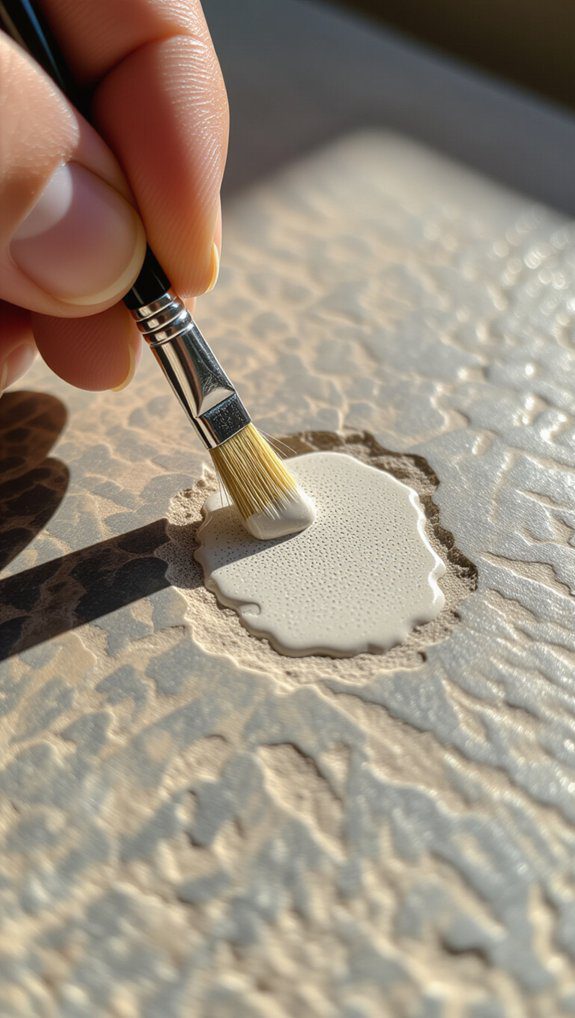
If you’ve ever noticed a chip on your stone countertop or a cracked spot on a decorative stone piece, don’t worry—it’s easier to fix than you might think.
Start by cleaning the area with soap and water to remove dirt.
Then, choose from epoxy filler options that match your stone’s color for seamless stone repair techniques.
Use a putty knife to fill the chip completely, overfilling slightly.
After it cures, sand gently with fine-grit paper for smoothness.
Finally, seal the repair to protect and keep your stone looking great.
You’ve got this!
Paint Trim Work
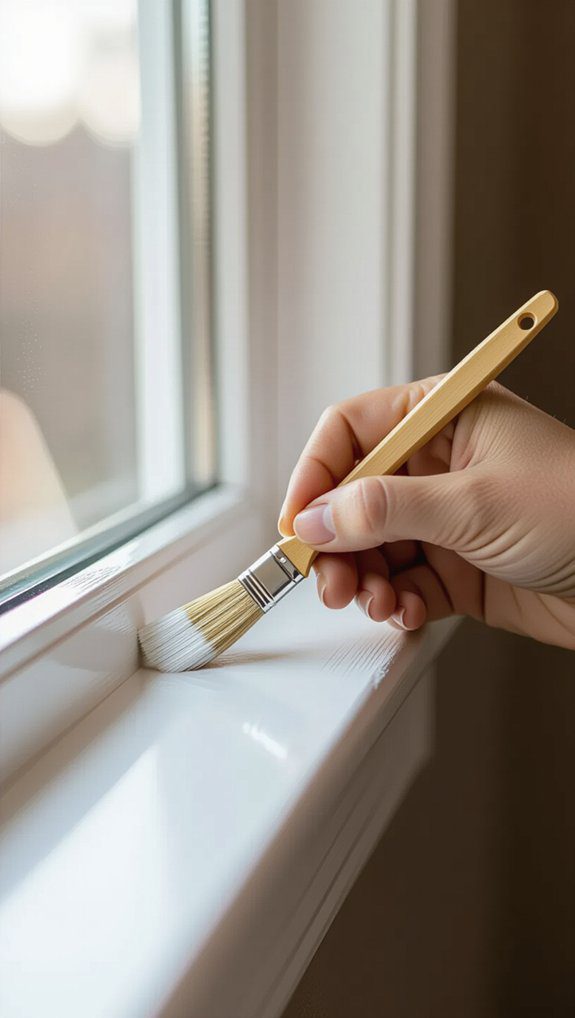
Fixing up stone surfaces is just one way to refresh your home, but painting trim work can really pull a room together and make everything feel polished.
When I tackle trim, I focus on paint finish techniques and the right trim painting tools to get smooth, crisp edges. Here’s my go-to process:
- Sand and clean the trim to prep the surface.
- Use painter’s tape for clean lines.
- Apply multiple thin coats of semi-gloss or satin paint.
- Let each coat dry fully (2-4 hours).
This method gives your trim a durable, professional look you’ll love.
Check Smoke Detectors
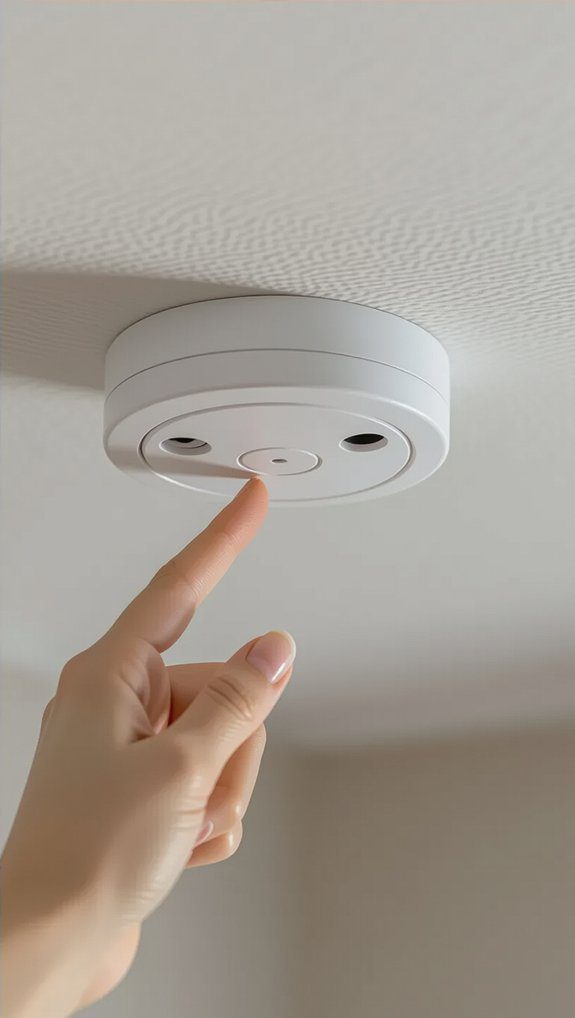
Every month, I make it a point to check my smoke detectors because they’re one of the simplest yet most important tools for keeping my home safe.
Smoke detector maintenance is vital during fire safety checks. I press the test button to confirm the alarm sounds loud and clear. If not, I replace the batteries or the entire unit if it’s over ten years old.
I also swap batteries yearly or whenever I hear that annoying chirp. Having detectors outside bedrooms and on each floor creates an early warning system that helps protect everyone inside.
Inspect for Leaks
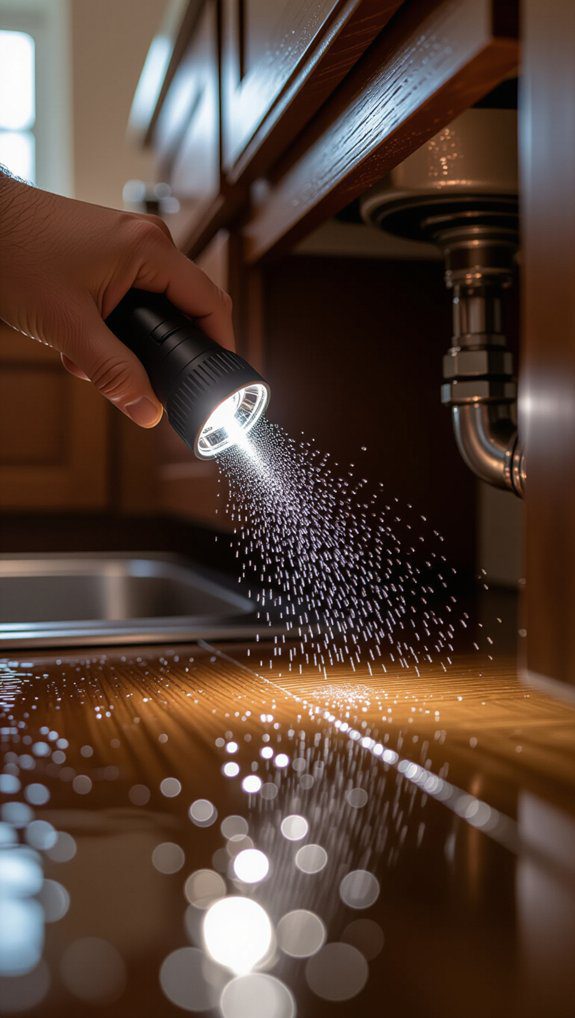
Since leaks can quietly drain a lot of water and cause serious damage, I make it a habit to inspect my home regularly for any signs of plumbing trouble.
Leak detection is key to smart plumbing maintenance, and here’s how I do it:
- Check sinks, toilets, and faucets for drips or pooling water.
- Look for water stains on ceilings and walls that signal hidden leaks.
- Inspect under sinks and around water heaters for moisture or puddles.
- Use a water meter test by noting the meter before and after no water use.
These steps help keep my home leak-free and cozy!
Clean Gutters

Although cleaning gutters might seem like a chore, I’ve found it’s one of the smartest ways to protect my home from water damage.
Twice a year, during seasonal maintenance in spring and fall, I clear leaves, twigs, and dirt to keep my gutter protection effective.
Using a stable ladder and sometimes a friend’s help makes the job safer.
After clearing, I run water through the gutters with a hose to check for clogs.
This simple step saves me from costly repairs and helps my home stay strong.
Trust me, regular gutter cleaning is a game-changer!
Reupholster Furniture

After taking care of your gutters, turning your attention indoors can be just as rewarding—especially when it comes to reupholstering furniture.
I love how this project breathes new life into old pieces while saving money. Here’s how I approach it:
- Choose your fabric selection carefully—durable, stain-resistant materials work best.
- Pick simple, straight-lined furniture like dining chairs to start.
- Use a staple gun for staple application, securing fabric tightly.
- Follow online tutorials to guide your steps confidently.
Together, we can transform our homes with personal touches that truly belong.