19 Creative Upcycle Garden Ideas Using Everyday Items
I love turning everyday junk into garden charm, and I’ll show you 19 easy upcycle ideas that save money and cut waste. Start with raised planter boxes or tire beds for big veggies, hang bottle planters for herbs, and mount pallets or old drawers as vertical gardens. Use rain boots, wheelbarrows, tins and crates as quirky planters, edge paths with stones, and add jar lanterns for ambiance. Try a few swaps and you’ll want to see the rest.
Love cozy DIY projects? 💕
Get free printable guides, exclusive tutorials & surprise craft goodies straight to your inbox.
Disclosure: This post may contain Amazon affiliate links, at no extra cost to you. Content on DiyCraftNest is created with research support from AI tools and carefully reviewed, edited, and fact-checked by the lead author, Daniel Pat, to ensure accuracy and reliability. Learn more
Key Takeaways
- Turn recycled bottles into hanging planters with drainage holes and staggered heights for efficient vertical gardening.
- Repurpose wooden pallets or ladders into vertical living walls or tiered plant displays to maximize small spaces.
- Upcycle teacups, rain boots, tins, or watering cans into unique planters after adding drainage and fresh potting mix.
- Convert old tires, wheelbarrows, or chairs into raised beds or sculptural planters to add height and character.
- Use reclaimed stones, crates, and glass jars for pathways, flexible shelving, and ambient lighting to finish the space.
Raised Planter Boxes
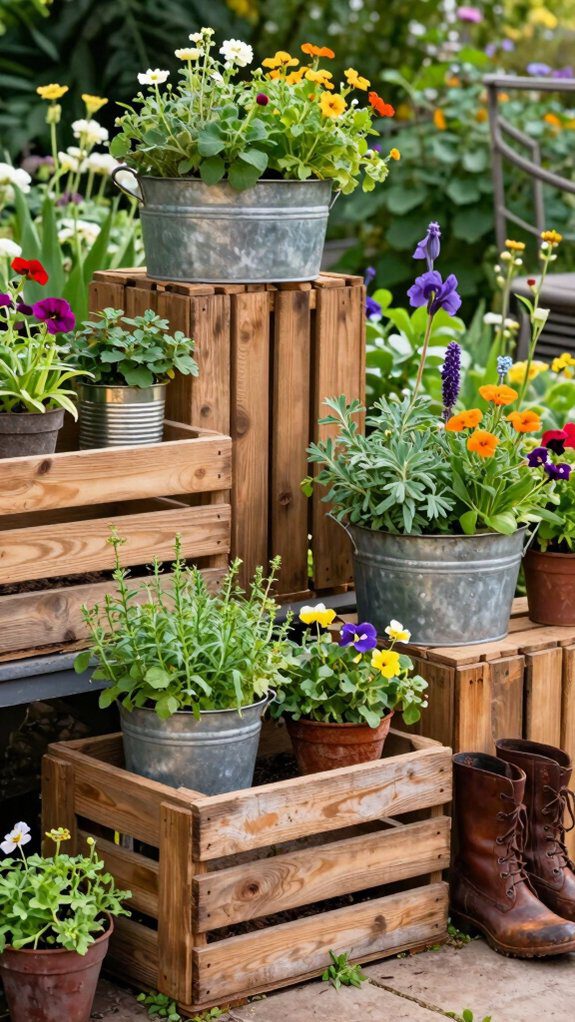
If you want a garden that’s easier to care for and kinder to the planet, try raised planter boxes—I’ve built several from old pallets and a few forgotten crates, and they’ve made gardening simpler and more fun. I use sustainable materials like untreated wood and cinder blocks to cut waste, and I’ll show you why that matters: recycled parts lower cost and give rustic charm. Raised beds improve drainage and soil quality, so plants thrive, and because they lift beds off the ground they boost garden accessibility for everyone in our little community. Start by choosing size and height for your space, fill with rich compost, and mix veggies, herbs, and flowers for beauty and fresh food.
Hanging Bottle Planters
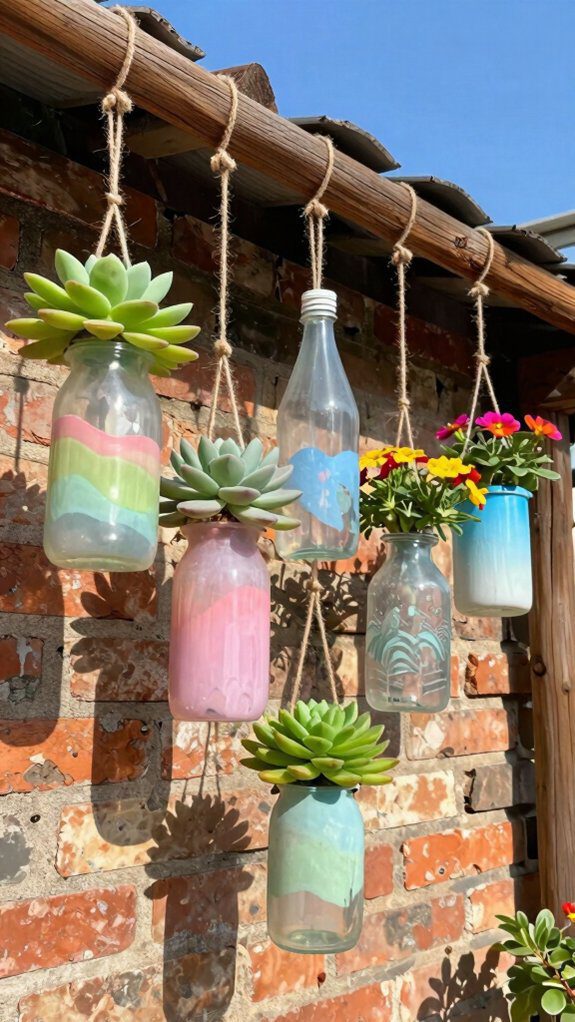
I love using hanging bottle planters to build a vertical garden because they let me stack herbs and flowers without taking up patio space. I usually cut recycled bottles, poke drainage holes, and hang them with twine at staggered heights so sunlight and water reach each plant evenly. You can paint or decorate them to match your space, and I’ll show simple ways to arrange and care for a tidy, space-saving display.
Vertical garden use
When I want to make the most of a tiny balcony or a narrow wall, I reach for empty bottles and a bit of rope to build a hanging bottle planter that saves space and looks cheerful. I’ll walk you through vertical garden use so we both feel capable and connected: bottle planter benefits include space-saving display, easy watering, and eco friendly gardening by upcycling plastics or glass. Cut bottles, fill with soil, and hang them horizontally for trailing herbs or vertically for succulents; clear bottles let you spot soil moisture without digging. Arrange tiers for sunlight gradients, secure with sturdy hooks, and group plants with similar needs. These vertical gardens boost air quality and welcome beneficial insects, creating a small shared oasis.
Tire Garden Beds
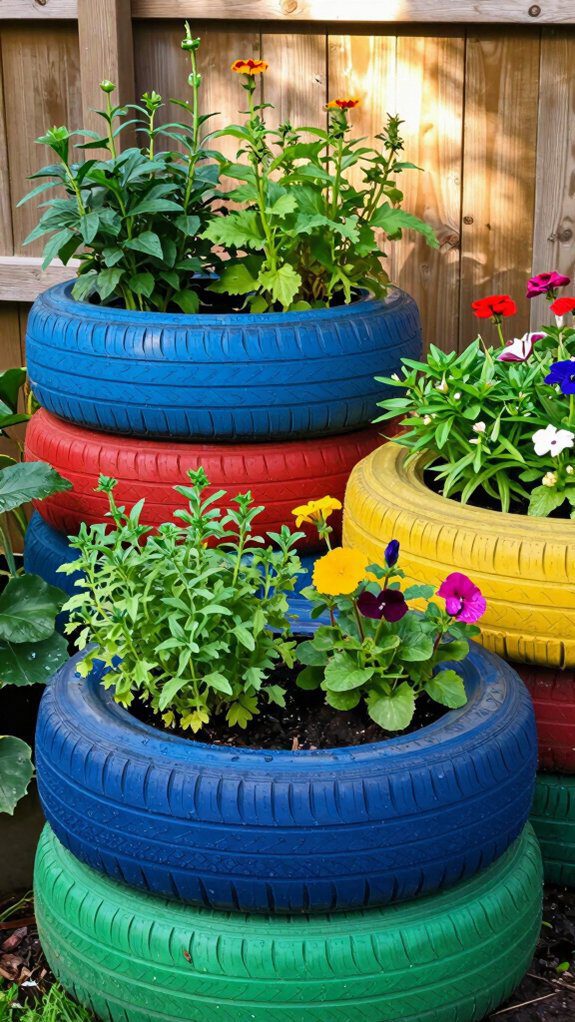
I love using old tires as durable outdoor planters because they hold up to sun, rain, and seasons better than many makeshift beds. You can stack them for taller, space-saving beds or lay them flat for single-level planters, and they warm the soil while providing good drainage and aeration for veggies and flowers. Paint them bright or keep them classic black—either way, they give you a long-lasting, weather-resistant option that also cuts down on landfill waste.
Durable outdoor planters
Five simple tires can turn a forgotten curbside find into a lively, durable planter that lasts for years. I love using tire garden beds because they pair sustainable gardening with eco friendly materials, and they make our shared spaces feel welcoming. Start by stacking or arranging tires, paint them bright or natural, then add drainage holes and quality soil; the thick rubber keeps moisture and temperature steady, so plants thrive. Use them for flowers, herbs, or compact veggies when space is tight. Compare single versus stacked beds: single is portable, stacked gives deeper roots. With basic care—sunnier placement, occasional soil refresh, and protective paint—you’ll have a resilient outdoor planter that reduces waste and invites community pride.
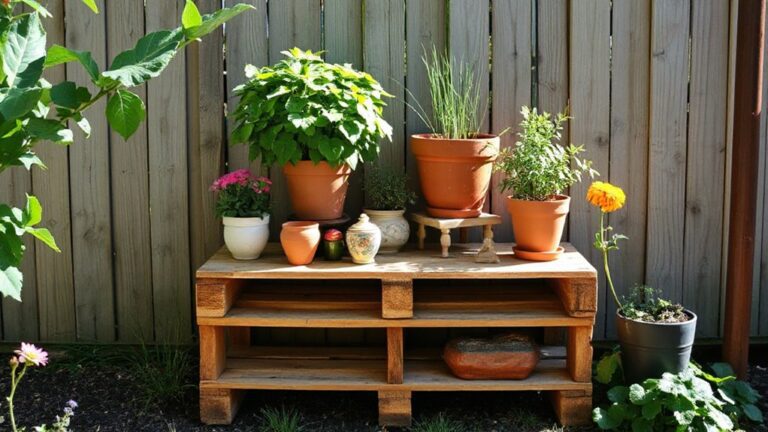
Pallet Vertical Garden
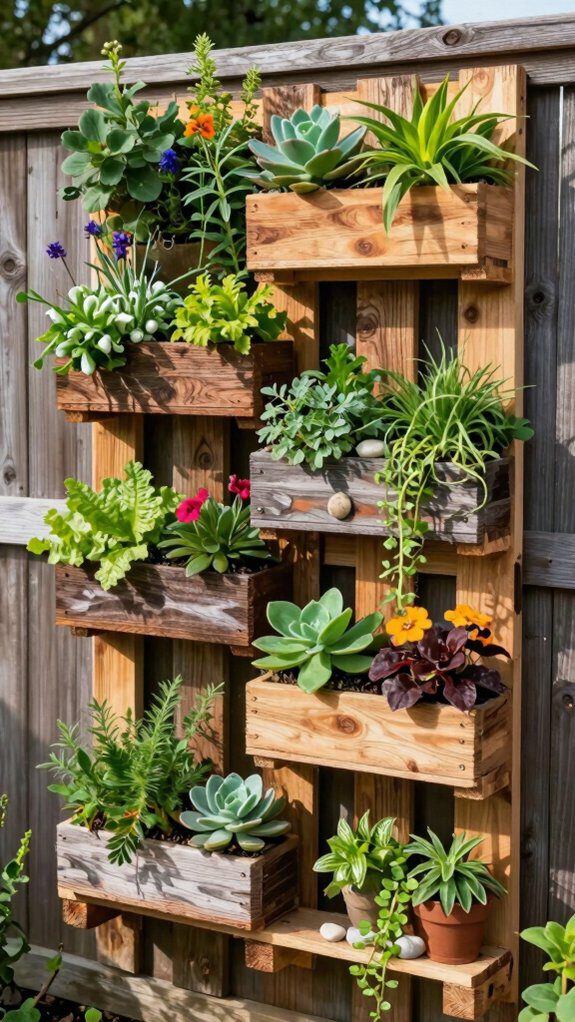
Pallet gardens are a clever, space-saving way I’ve found to turn an ordinary wooden pallet into a living wall of herbs, flowers, or even small vegetables. I love sharing pallet garden benefits with neighbors who want more green but less ground space; they’re eco-friendly, visually charming, and boost air circulation and sunlight for healthier plants. First, secure the pallet to a sturdy wall or fence and check drainage. Use vertical planting techniques like filling slats with soil or lining with terrain fabric to hold soil neatly. Plant herbs and compact veggies where they’ll get sun, water from top down, and monitor moisture. With simple maintenance, a pallet vertical garden becomes a lasting, shared focal point in our outdoor area.
Old Drawer Plant Boxes
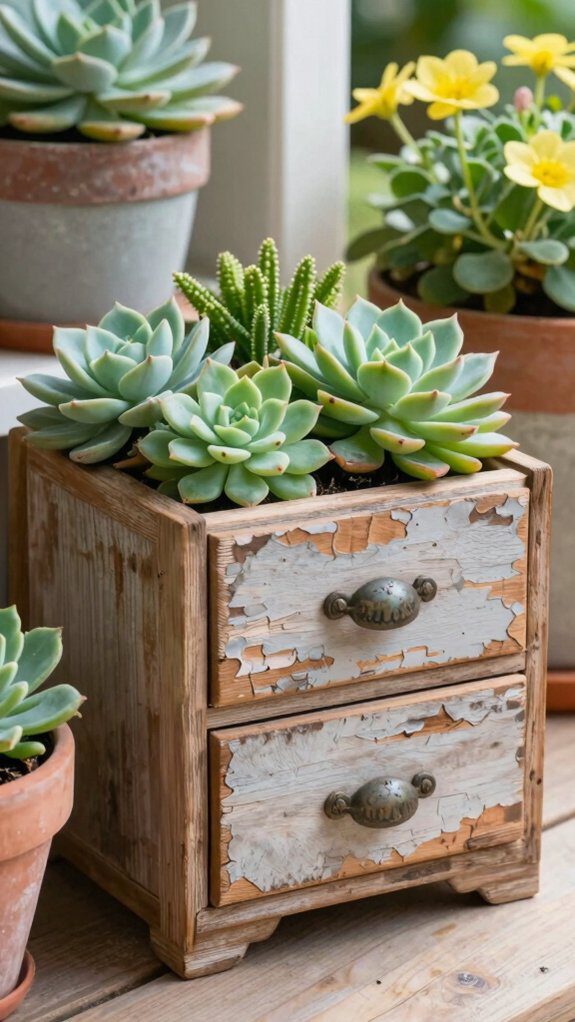
If you liked the idea of a vertical pallet garden, you’ll probably love turning old drawers into plant boxes because they give the same space-saving benefits with extra charm. I often rescue drawers, drill drainage holes, line them with landscaping fabric, and fill them with potting soil—it’s simple, and the drawer aesthetics immediately warm a patio. I stack or arrange them for vertical planting, which helps us optimize small spaces and feel connected to our shared gardening community.
| Tip | Why it helps |
|---|---|
| Drainage holes | Prevents root rot |
| Paint or decorate | Personalizes and protects wood |
| Line with fabric | Keeps soil in, improves longevity |
These upcycled plants showcase herbs, flowers, or little veggies with personality.
Teacup Succulent Planters
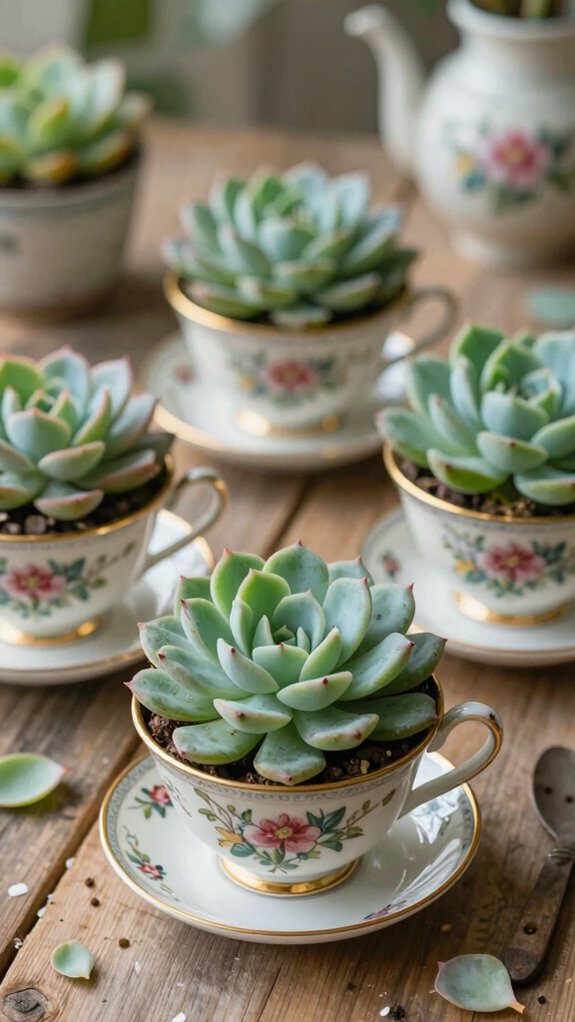
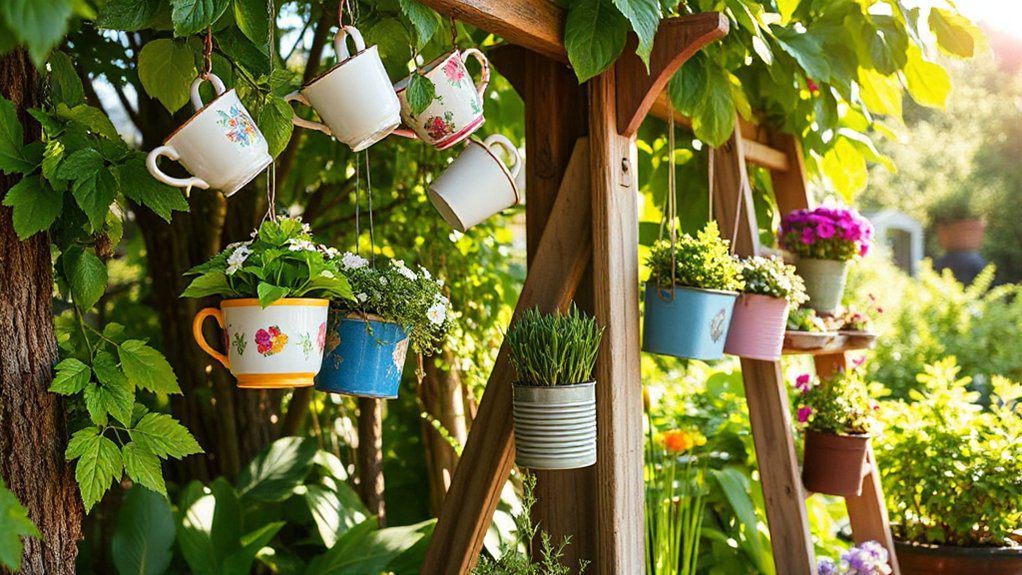
Teacup succulent planters are a cheerful way to upcycle chipped or mismatched cups into tiny, low-maintenance gardens that brighten a windowsill or desk; I love hunting thrift stores for cups under $10 and imagining each one’s new life. I pick teacup varieties by size and style—delicate porcelain for singles, larger mugs for small clusters—and compare drainage options. I usually drill a tiny hole for runoff, but when I can’t, I place a layer of pebbles and water very sparingly. For succulent care I choose drought-tolerant species, use well-draining soil, and place them where they get bright, indirect light. These planters fit small spaces, invite conversation, and make me feel like I belong to a creative, caring community.
Tin Can Herb Garden
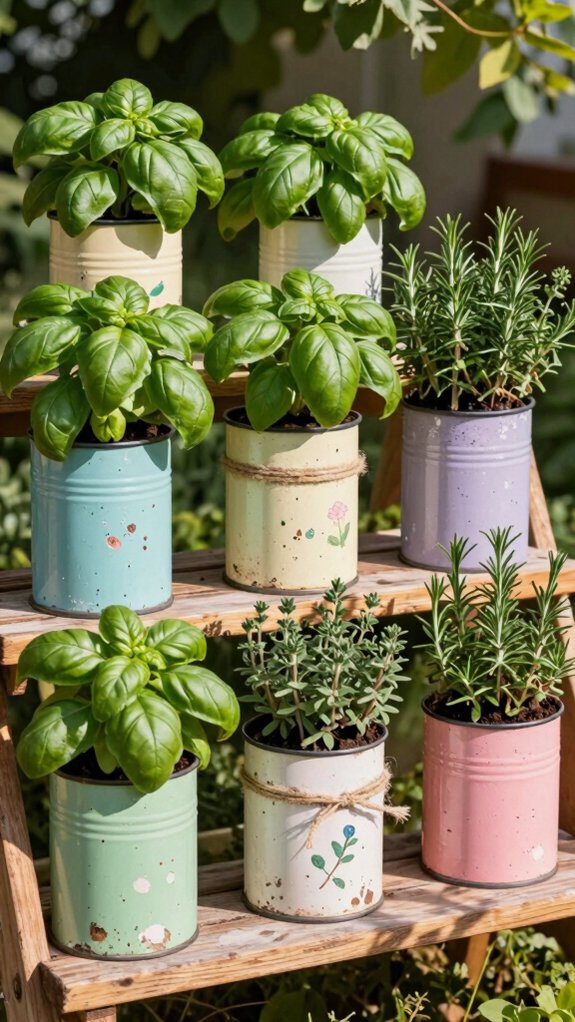
I love turning old tin cans into compact kitchen herb stations because they give you fresh basil, parsley, or mint right by the stove. I clean the can, drill a drainage hole, add potting mix, and often paint or label each one so I can grab the herb I need without fuss. If space is tight, I hang a row on a wooden board or use hooks to save counter space and keep everything within arm’s reach.
Compact kitchen herbs
Because even the tiniest kitchen can host a fresh herb patch, I love turning old tin cans into a compact garden that’s both practical and charming. I’ll walk you through simple, friendly steps: clean cans, drill drainage holes, add gravel, quality potting mix, and plant basil, parsley, or cilantro. I share these herb garden benefits because having fresh herbs nearby saves money, brightens meals, and connects us to nature even in apartments. For visual appeal, paint or decorate cans, then hang them or line a sunny windowsill. As urban gardening tips, choose compact varieties, rotate cans for even light, and trim regularly to encourage growth. This method fits balconies and counters, making community and fresh flavor easy to enjoy.
Broken Pot Fairy Garden
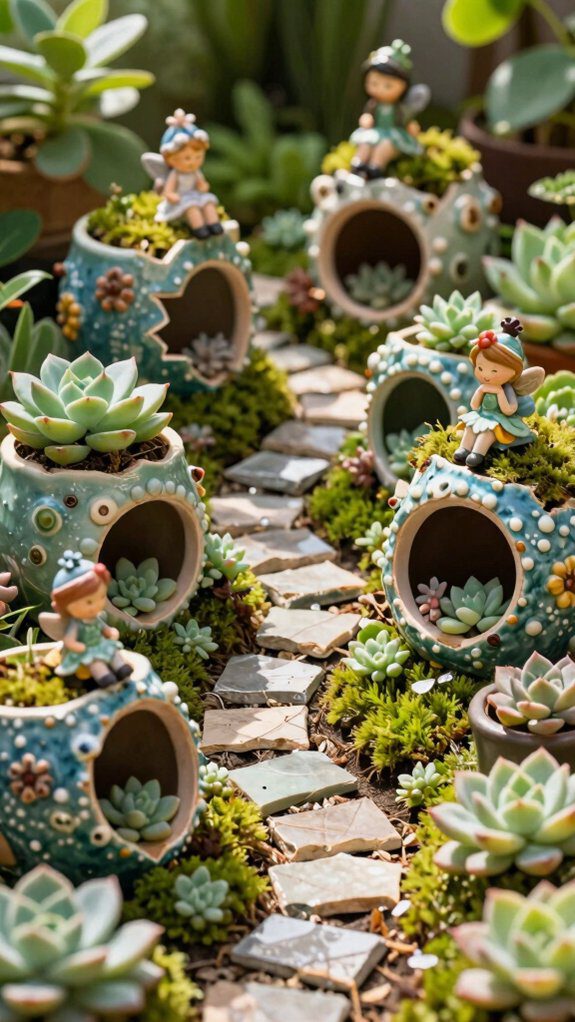
When a favorite clay pot cracks, you don’t have to toss it out — you can turn those jagged pieces into a tiny, magical world instead. I love using shattered ceramics to build whimsical settings; I start by arranging larger shards as a sturdy base, then layer smaller pieces to make paths, raised beds, or tiny walls. Add moss and pebbles for texture, and tuck in succulents or ground cover for low-maintenance greenery. I place small figurines—fairies, gnomes, or animals—to personalize the scene; kids enjoy helping with placement. For safety, sand sharp edges or hide them with soil. This upcycle practice feels inclusive and practical: we reuse broken things, reduce waste, and create a cozy, shared project anyone can join.
Ladder Plant Display
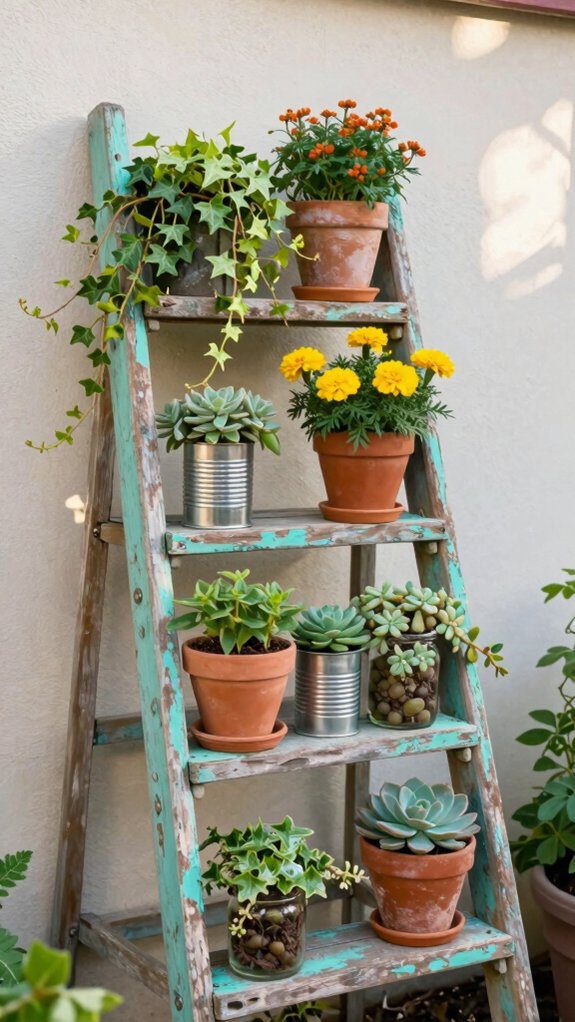
I love using an old step ladder as a tiered greenery setup because it gives each plant its own level and creates an eye-catching display, whether the ladder’s set up in an A-frame or leaned against a wall. You can add wooden planks between rungs for extra shelving—just secure them well so the pots stay steady—and once it’s painted or stained it becomes a whimsical focal point that matches your garden’s style. Start with larger, heavier pots on the bottom and lighter trailing plants higher up, and I’ll walk you through simple step-by-step tips to balance weight, spacing, and color.
Tiered greenery setup
If you’ve got an old step ladder gathering dust, don’t toss it—turn it into a tiered plant display that saves space and looks charming. I love how a ladder instantly boosts vertical gardening: lean it or open it A-frame style, then add wooden planks to create shelves tailored to plant size. This gives me plant variety and great space optimization, especially on balconies or small patios. Secure the ladder, anchor heavier pots low, and spread weight evenly to avoid tipping. Below is a quick guide I use when building mine.
| Step | Tip |
|---|---|
| Position | A-frame for stability, lean for style |
| Shelving | Add planks for larger pots |
| Safety | Anchor and balance heavy pots |
Watering Can Planters
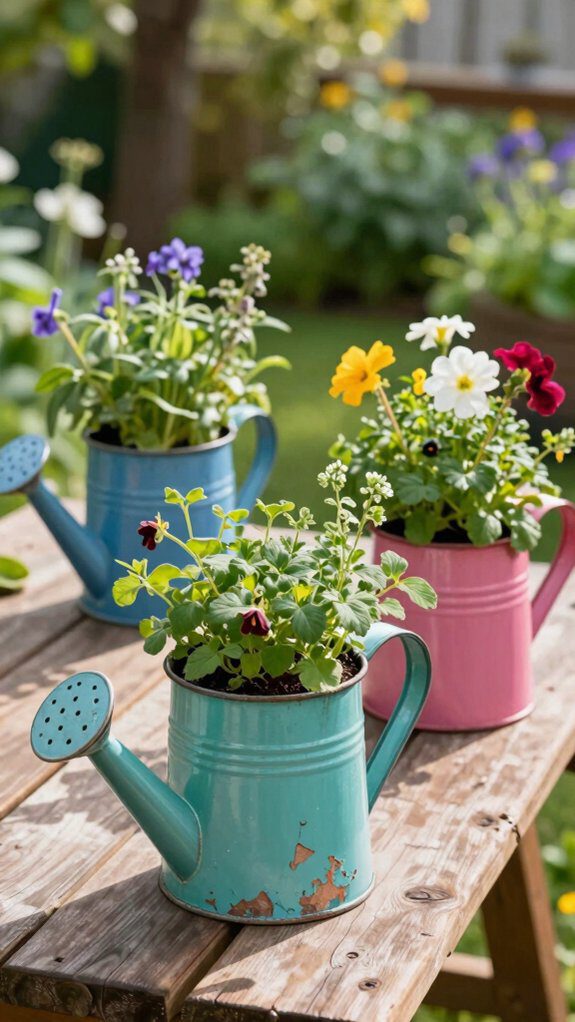
A rusted watering can or a bright vintage tin can become instant garden stars when you turn them into planters, and I’ll show you how to make one that looks great and helps your plants thrive. I love how watering can history surfaces in this simple upcycle—what was once a tool becomes a decorative home for greens, and that shared story makes a garden feel welcoming. Start by drilling drainage holes, add fresh potting soil, and think about plant selection: succulents for low care or trailing flowers for a cascading look. You can hang cans or place them on tables; vintage colors add pizazz. This project feels sustainable, personal, and easy to modify, so join me and make one today.
Crate Garden Shelving
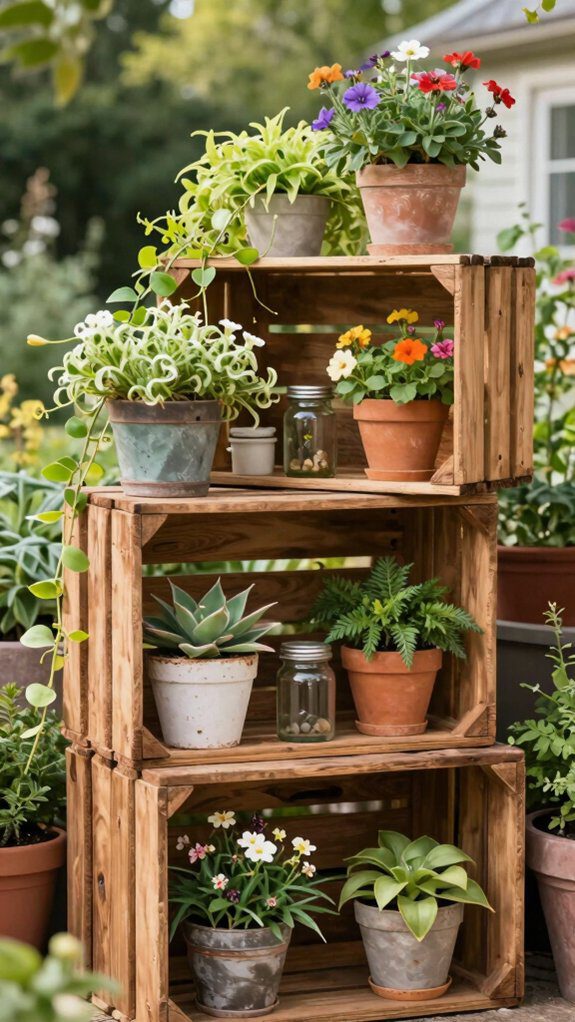
When you stack wooden crates into shelving, you get an instant, flexible garden display that’s both practical and charming. I love how crate organization turns a corner into a communal nook where plants and tools belong together. Start by securing crates with screws or ties, then paint or stain to match your crate aesthetics—bright for playfulness, natural for calm. Crates’ slatted sides give built-in drainage, so pots sit happily without fuss. Arrange heights to suit trailing vines, medium pots, and tall herbs; you can reconfigure them when seasons change.
- Secure stacks for stability.
- Paint/stain for cohesive style.
- Use slats for drainage.
- Mix heights for plant variety.
This setup feels welcoming and useful, and it’s eco-friendly.
Old Chair Flower Stand
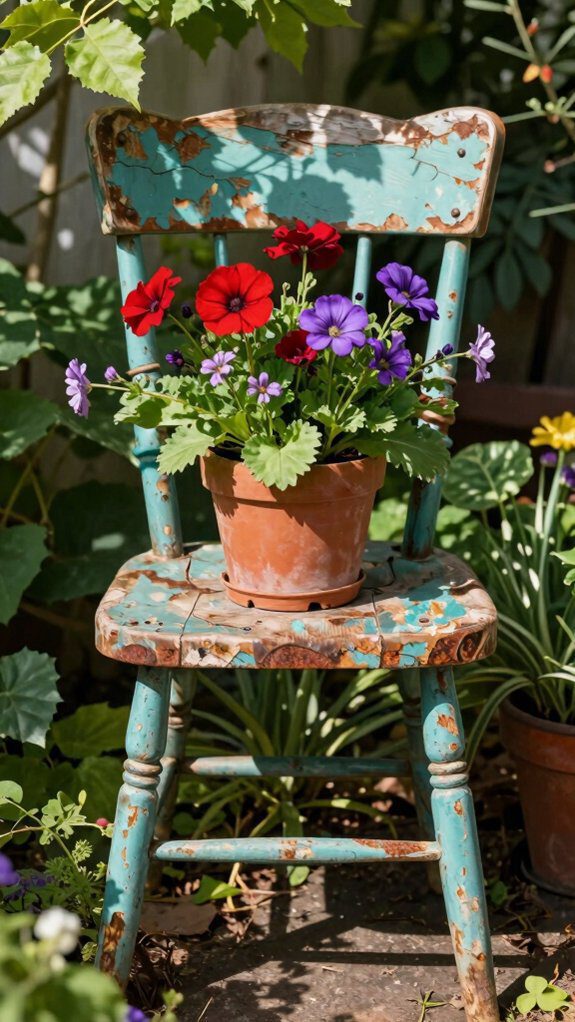
I love turning an old chair into a sculptural garden accent by removing the seat and arranging pots or trailing plants on and around the frame, because it instantly adds height and personality to a corner or pathway. Paint it bright or distress it for a weathered look so the piece either pops or blends with your beds, and consider clustering different pot sizes to create pleasing shapes and balance. It’s an affordable, sustainable project that’s easy to customize—grab a thrift-store find, measure your pots for stability, and secure them with twine or brackets so the display stays sturdy through wind and rain.
Sculptural garden accent
Even a battered old chair can become the centerpiece of your garden if you remove the seat and fill the hollow with soil and plants—I tried this and loved how quickly it changed the space. I treated the project as both chair restoration and sculptural garden accent; painting the frame to match my garden aesthetics made it feel like it belonged. The chair’s legs give height, so vines can cascade while compact flowers brighten the seat area. It was simple, and anyone can do it.
- Choose a sturdy chair and remove the seat.
- Drill drainage holes and add garden fabric.
- Fill with potting mix and plant a mix of trailing and upright species.
- Paint or decorate to match your space.
Glass Jar Lanterns
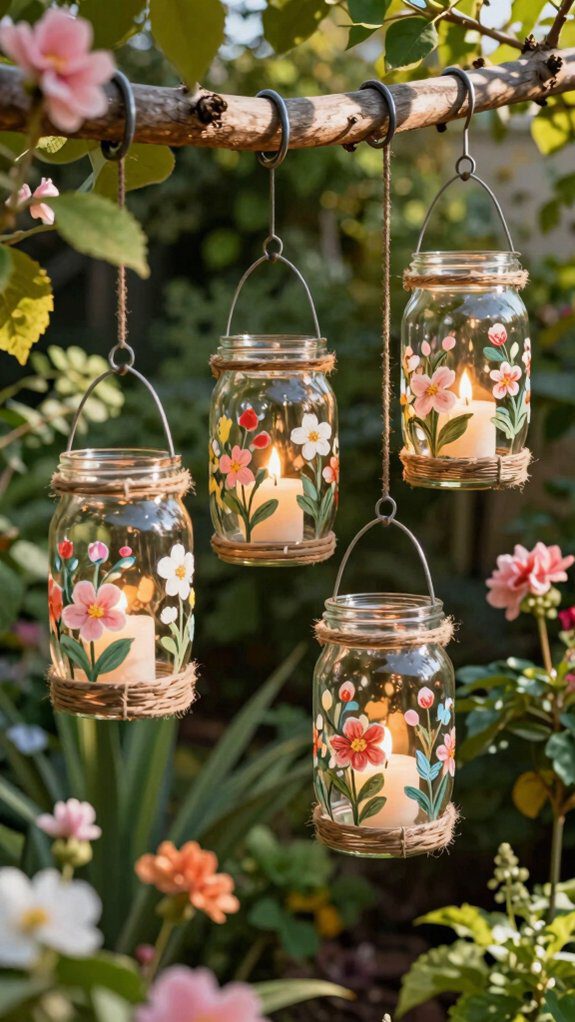
I love using glass jar lanterns to turn my evening garden into a cozy, glowing space, and you can do the same with simple candles or LED lights. Try painting or wrapping jars with twine for a rustic look, or use mason jars with lids so wind won’t blow out the flame, and hang them from trees with wire or jute for a whimsical touch. They’re also eco-friendly because they repurpose jars you might otherwise toss, so you get safe, charming lighting that’s both pretty and practical.
Evening garden lighting
When dusk falls and the garden starts to whisper, I love turning ordinary glass jars into glowing lanterns that lift the whole space—it’s an easy, eco-friendly trick that looks far fancier than it is. I’ll walk you through practical steps that make us feel at home and ready for outdoor events.
- Fill jars with sand or pebbles, then add candles or LED lights for stability and candle safety.
- Try solar options: small solar puck lights charge by day, offer long life, and remove fire risk.
- Use twine, paint, or etching for jar customization and decorative elements that match your theme.
- Hang clusters with wire or twine—mix hanging techniques for layered evening ambiance.
These choices use eco friendly materials and bring us together.
Tool Storage from Buckets
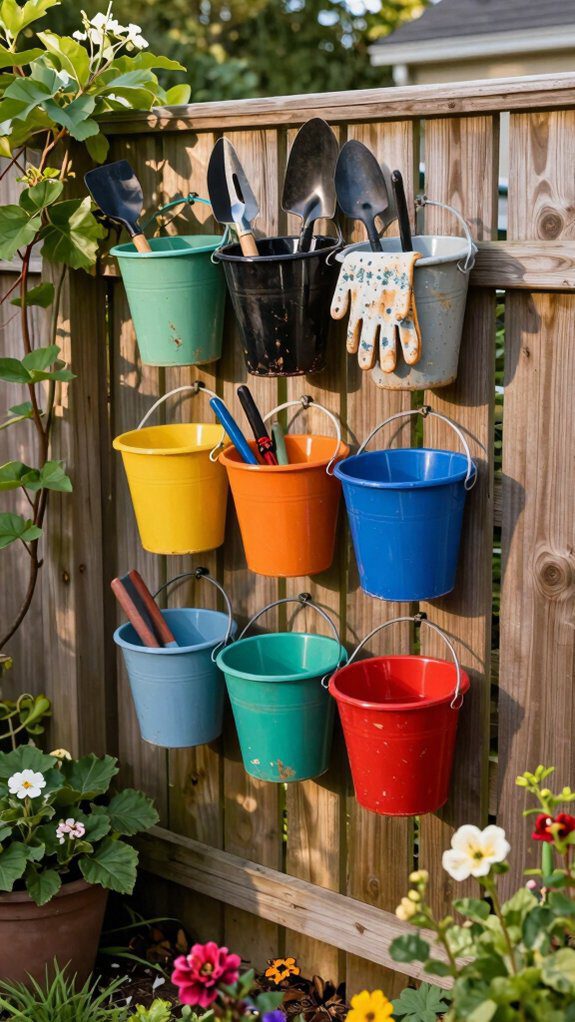
You can turn a few old buckets into one of the handiest pieces of garden gear you’ll ever own, and I’ll walk you through how to do it simply and cheaply. I love repurposing buckets for tool storage because they’re affordable and promote eco friendly storage—just drill drainage holes, add labels, and you’ve solved clutter instantly. Start by deciding if you’ll stand buckets on a shelf or hang them; bucket modifications for hanging need sturdy hooks and reinforced rims. Paint or decorate to match your garden, then sort tools by type—pruners, trowels, twine—so everyone in our group knows where to look. Vertical hanging saves space on fences, looks cheerful, and keeps tools dry and easy to grab.
Bird Feeder Creations
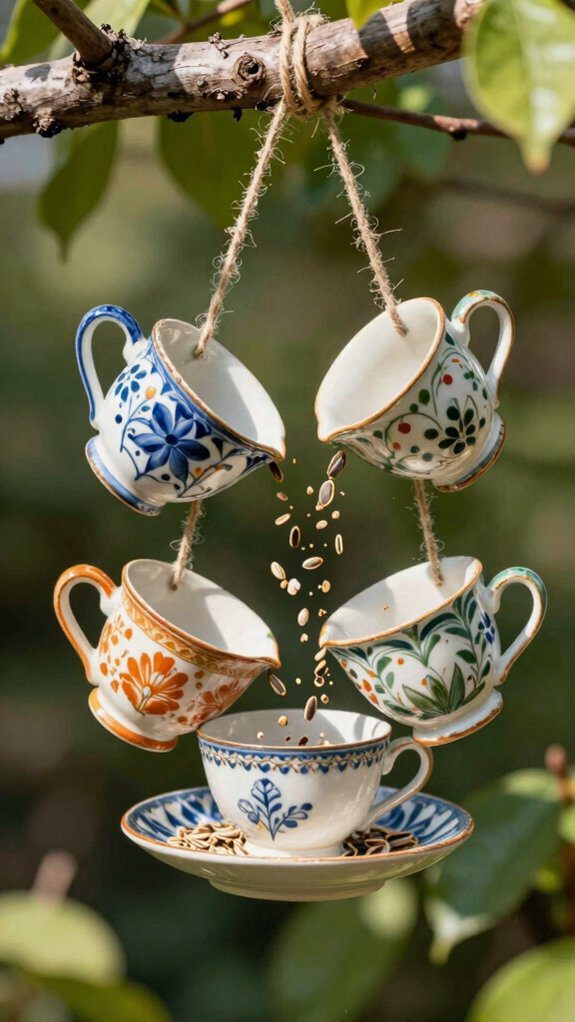
I love turning old kitchenware and thrifted finds into garden-friendly features that bring birds right to my yard. For example, I’ll glue a teacup to its saucer and hang it as a petite feeder for finches, or shape a license plate into a rustic birdhouse for wrens, and I’ll always drill drainage holes in jars or bowls so seed stays dry. These simple, practical swaps not only add charm but make it easy to compare materials—lightweight cups for small birds, sturdy plates for shelter—so you can pick what works best for your space.
Garden-friendly feature
Because gardens come alive with movement and song, I love turning everyday cast-offs into bird feeders that both feed wildlife and decorate the yard. I’ll share practical, welcoming ideas that celebrate birdwatching benefits and help you welcome local bird species. These projects are simple, communal, and let us connect over shared care for our garden friends.
- Repurpose thrifted snack sets into hanging trays—easy to fill, lightweight, and charming.
- Glue broken teacups and saucers, add twine, and hang for a whimsical, vintage touch.
- Drill drainage in glass jars for refillable feeders that keep seed dry and critter-free.
- Build multi-tier pallet feeders or license-plate birdhouses for shelter and layered feeding.
Try one, then invite a neighbor to join—gardens and friendships grow together.
Fence-Mounted Planters
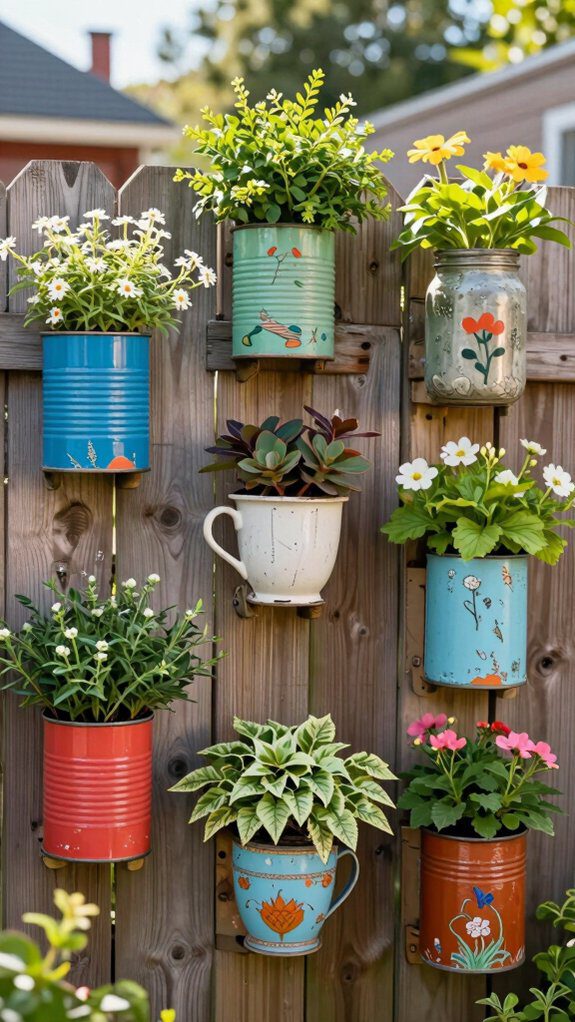
When a fence gets more than just paint, it can turn into a living wall that saves space and brightens the whole yard; I’ll show you how fence-mounted planters make that happen. I use simple fence planter materials like old pallets, wooden crates, and recycled plastic containers to build sturdy holders. The vertical garden benefits are clear: more plants in less space, eye-level beauty, and a cozy shared spot for neighbors to admire. I drill drainage holes, secure containers to studs, and stagger heights for variety. Water dries faster up high, so I check soil often and mulch lightly. With these steps, anyone in our little garden community can craft a living fence that’s practical and welcoming.
Wheelbarrow Flower Bed
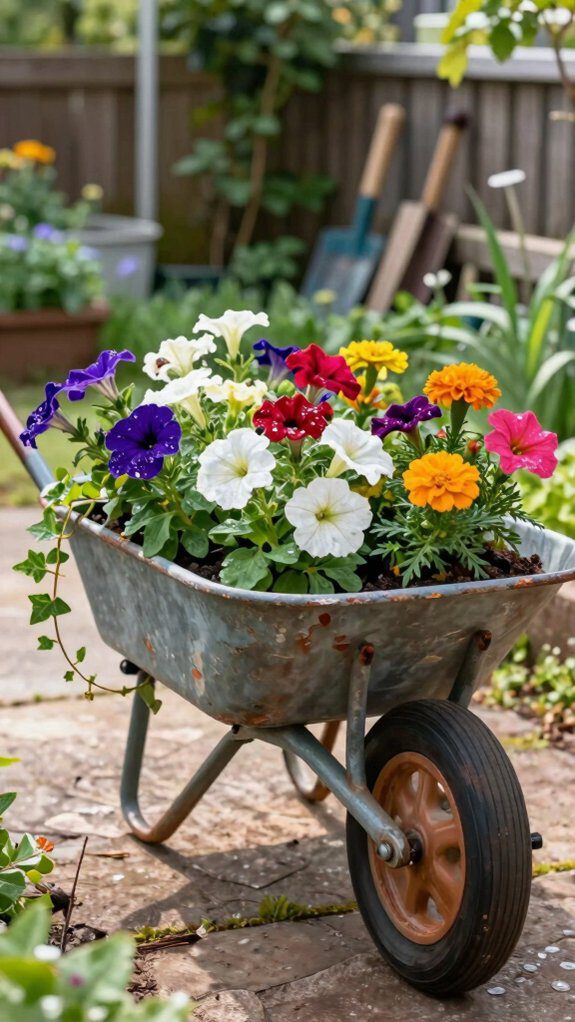
I love turning an old wheelbarrow into a mobile garden focal point because it lets me move a burst of color wherever the season or a party needs it. I drill drainage holes, fill it with good potting mix and a mix of seasonal, pollinator-friendly flowers, and then I wheel it onto the patio, driveway, or next to a path to compare how different spots change the view. If you want, I can suggest flower combinations and show how to anchor it so it stays steady yet still rolls when you want to reposition it.
Mobile garden focal point
A rusty wheelbarrow can become the star of your garden, and I’ll show you how to make it a mobile focal point that’s both practical and charming. I turned an old barrow into a mobile garden to welcome neighbors, and you can too. It’s one of my favorite upcycled planters because it moves where you need color most.
- Clean and stabilize the wheelbarrow, then add drainage holes and quality potting soil.
- Choose complementary flowers and herbs for continuous blooms and scent.
- Position it on lawns, patios, or paths to change sightlines; raise for better drainage.
- Paint or decorate to match your style and signal it’s loved, not abandoned.
This invites others in—our shared spaces feel cozier with a playful, living centerpiece.
Rain Boot Planters
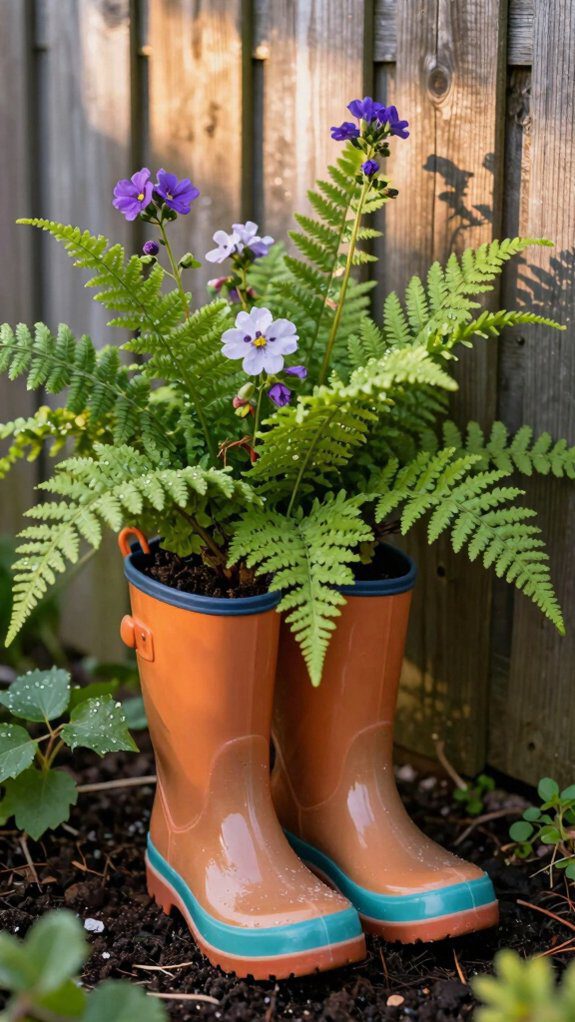
Colorful rain boots make charming planters, and they’re one of my favorite easy upcycle projects because they turn something you’d toss into a cheerful garden feature. I love how rain boot customization lets me match patterns or colors to a theme, and it’s a simple way to share a whimsical garden design with friends and neighbors. First, drill drainage holes, then add potting soil and your chosen flowers or herbs; boots are durable so they handle weather well. For placement, group mismatched boots for a playful cluster or line identical pairs for tidy impact. Kids can help paint or decorate, making it a bonding activity that reduces waste and invites everyone to garden together.
Stone Pathway Borders
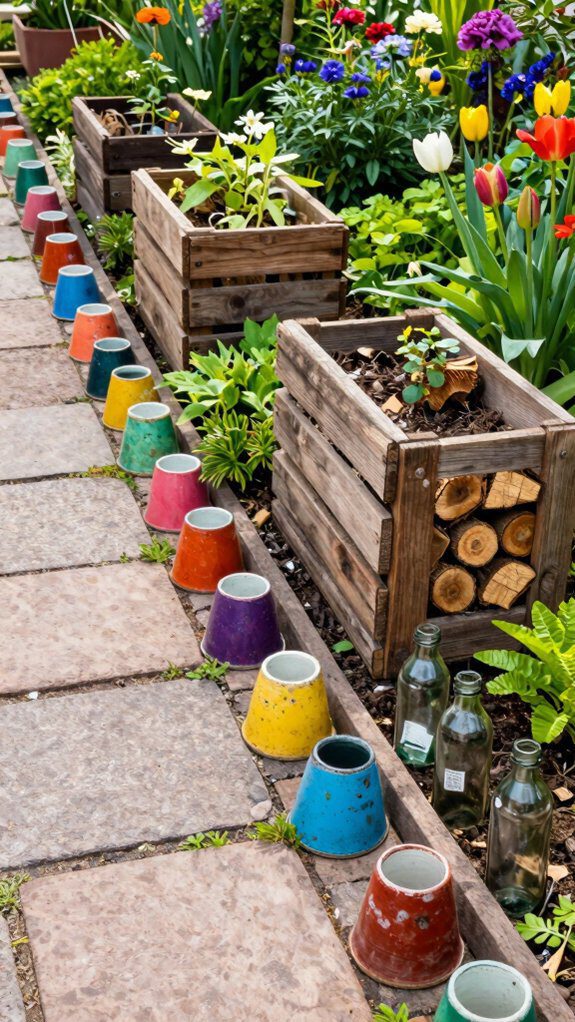
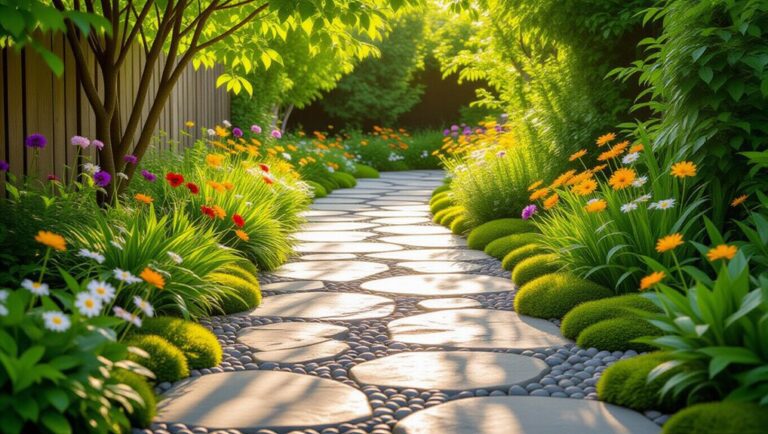
I love using reclaimed stones or old bricks to create a natural walkway edge because they give paths a rustic, grounded look and help keep mulch and soil from spilling onto the path. Start by laying flat stones end-to-end to define the route, or mix sizes and shapes for extra texture—old concrete pieces work great and cost nothing. This simple edging not only looks charming but also slows erosion and weeds, so your path stays neat with less work.
Natural walkway edge
While you’re planning paths through your garden, think about using stones or gravel to create a natural edge that’s both pretty and practical. I love how natural stone and a gravel path offer rustic aesthetics while serving the walkway definition we need. I’ll share practical tips we can use together.
- Choose locally via regional sourcing to cut cost and match soil tones.
- Mix sizes for texture variety — pebbles, cobbles, and a few larger rocks.
- Place bigger stones to mark edges, aid erosion prevention, and add interest.
- Lay terrain fabric beneath to suppress weeds yet let water through.
I want you to feel at home creating a path that’s durable, beautiful, and truly ours.