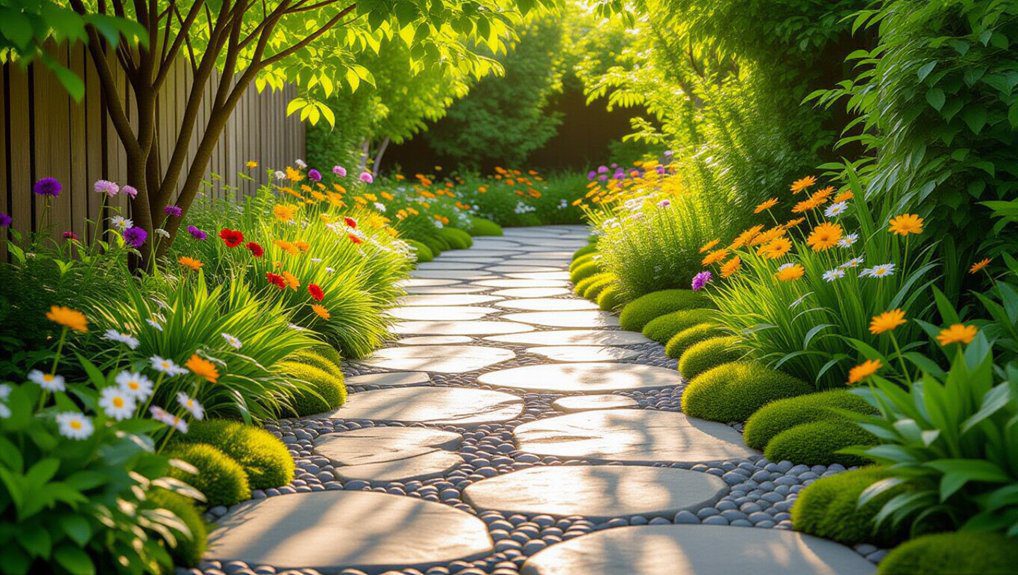
26 Cheap Walkway Ideas | Easy & Affordable Backyard Designs
If you want budget-friendly garden paths, start with gravel for a cozy, easy base or grab some stepping stones to set natural, charming steps. Recycled brick adds eco-friendly style, while wood slices bring rustic warmth. Concrete pavers offer durable looks, and geo hex grids stabilize loose soil. Permeable pavers handle water smartly, and boulder arrangements create natural flair. Finish with a jute rope edging for charm. Stick around—there’s plenty more creative ideas to make your pathways pop!
Love cozy DIY projects? 💕
Get free printable guides, exclusive tutorials & surprise craft goodies straight to your inbox.
Disclosure: This post may contain Amazon affiliate links, at no extra cost to you. Content on DiyCraftNest is created with research support from AI tools and carefully reviewed, edited, and fact-checked by the lead author, Daniel Pat, to ensure accuracy and reliability. Learn more
Key Takeaways
- Use gravel paths with crushed stone base for an affordable, cozy garden walkway requiring minimal materials and easy maintenance.
- Create DIY stepping stone paths by mixing concrete and adding decorative elements, costing between $1-$5 per stone.
- Lay recycled bricks or salvaged wood slice logs on compacted bases for eco-friendly, budget-friendly pathways with natural charm.
- Incorporate natural materials like crushed granite, moss ground cover, or shell-embedded stones for inexpensive, low-maintenance paths.
- Define path edges cheaply with natural jute rope or mulch to enhance appearance and keep walkways tidy.
Gravel Path Installation
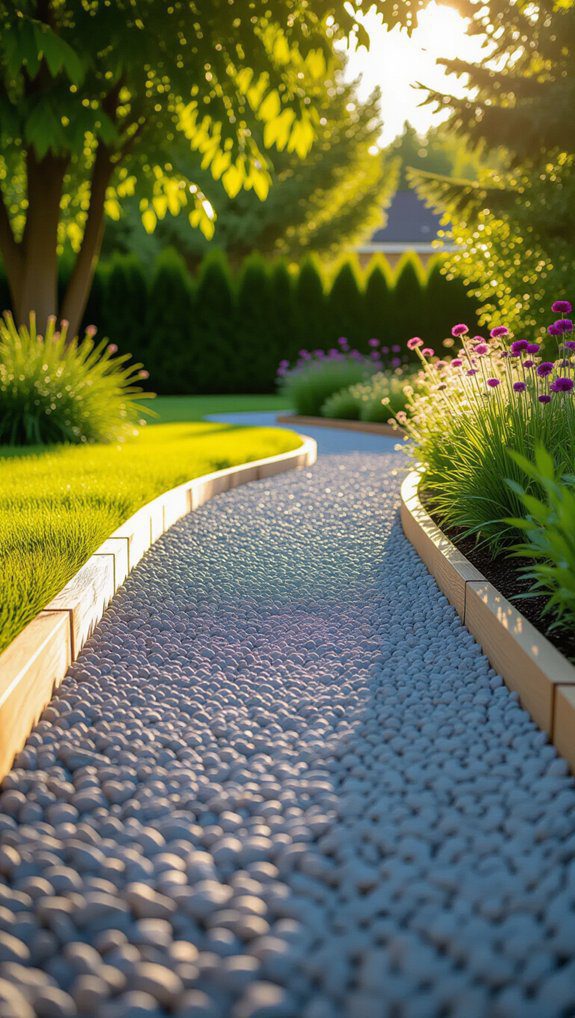
When I first decided to install a gravel path in my garden, I found that breaking the process into simple steps made it a lot less overwhelming.
I started by marking the shape and digging a 4-inch trench, then added crushed stone for a solid base.
Choosing gravel color options helped me match the path to my garden’s vibe—earthy tones felt just right.
For path maintenance tips, I regularly rake to keep gravel even and check the edging to prevent spreading.
It’s budget-friendly and rewarding, creating a cozy space where friends and I love to gather.
Stepping Stone Pathway

Adding a stepping stone pathway to your garden can bring both charm and function, giving you a neat way to stroll through your plants without disturbing the soil. Start by planning stone placement carefully—spacing stones so your steps feel natural and avoid stepping on gravel. Dig shallow lines to level each stone, then use gravel filling between stones for stability and a polished look. You can build your path gradually, making it a fun DIY project. Here’s a quick cost and material guide to get you started:
| Item | Approximate Cost |
|---|---|
| Large Stones | $8 each |
| Pea Gravel | $5 per bag |
| Installation | DIY-friendly |
Recycled Brick Walkway
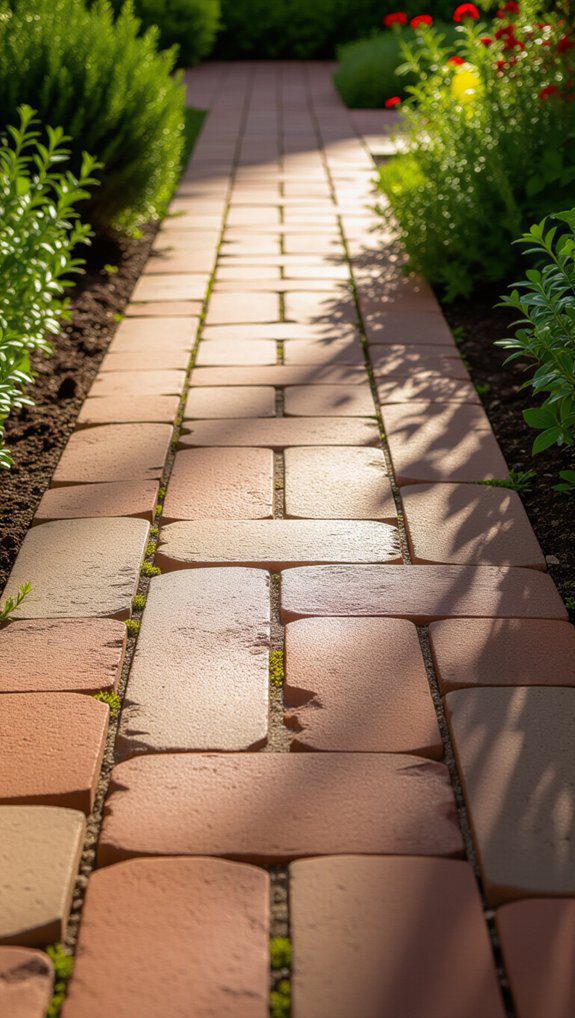
Recycled brick walkways offer a fantastic way to add character and eco-friendly charm to your garden without breaking the bank.
I love choosing brick pattern designs like herringbone or circular layouts to create a unique look that feels truly personal.
Start by laying bricks on a compacted base, filling gaps with sand or gravel for drainage and stability.
For walkway maintenance tips, keep an eye out for weeds and replenish sand regularly to maintain both beauty and function.
Using salvaged bricks not only saves money but also helps us create a welcoming, sustainable outdoor space together.
Wood Slice Log Path
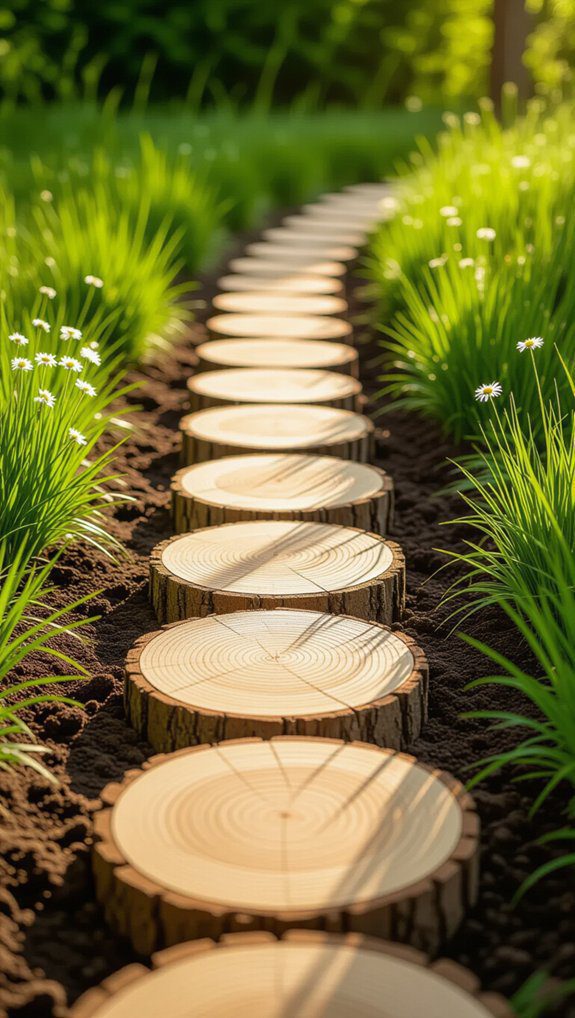
Wood slice log paths bring a charming, rustic feel to any garden, and they’re surprisingly easy on your budget.
I love using fallen tree trunks, cutting them into circular slices to create unique wood slice patterns. These natural aesthetics blend beautifully with greenery, making your path feel like part of the scenery.
To keep things sturdy, I lay the slices on compacted gravel or soil—this prevents sinking. Don’t forget to seal the wood regularly to protect against rot and check for uneven spots.
It’s a simple, creative way to make your garden walkway welcoming and budget-friendly.
Concrete Paver Route
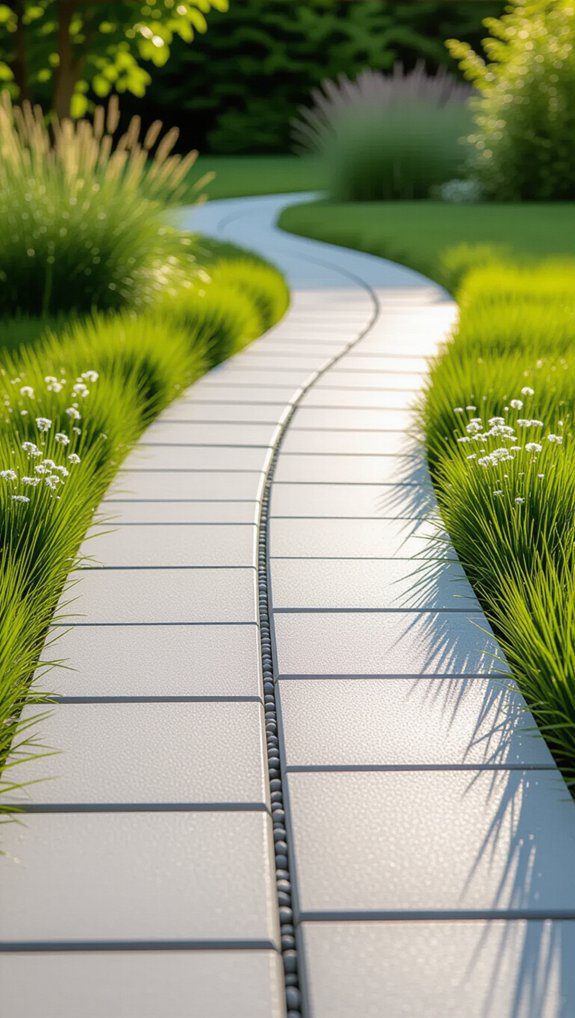
Concrete pavers offer a fantastic way to create garden paths that are both sturdy and stylish. I love experimenting with different paver patterns—herringbone or basketweave add such charm!
Adding decorative borders with contrasting colors or shapes really frames the path nicely, making it pop in your garden. The best part? You prep a leveled base, lay the pavers, and fill gaps with sand or gravel to keep everything steady.
If one cracks, swapping it out is easy. Plus, the solid surface helps with drainage, so no muddy shoes. It’s a budget-friendly, durable choice that feels like home.
Mulch Trail Design
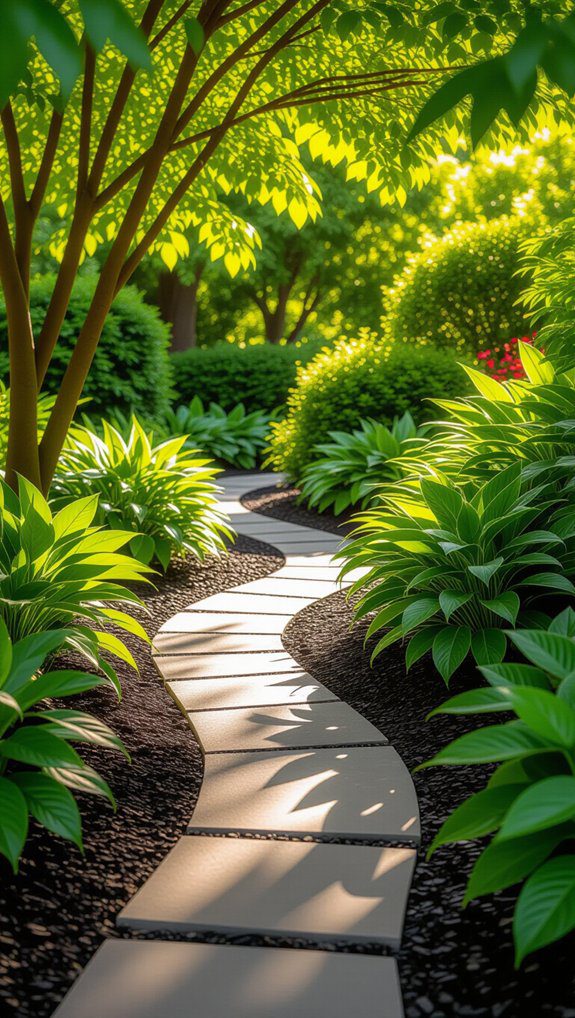
One of the easiest and most budget-friendly ways to create garden paths is by using mulch trails. I love how mulch benefits my garden—not only does shredded wood or bark define the trail distinctly, but it also enriches the soil as it breaks down.
To start, I lay down ground cover fabric to stop weeds, then add a thick layer of mulch for great coverage and drainage. Trail maintenance is simple; just replenish mulch when it settles or decomposes.
This keeps the path neat and mud-free while enhancing the garden’s natural charm. It’s a cozy, inviting way to connect with your space.
Crushed Stone Edging
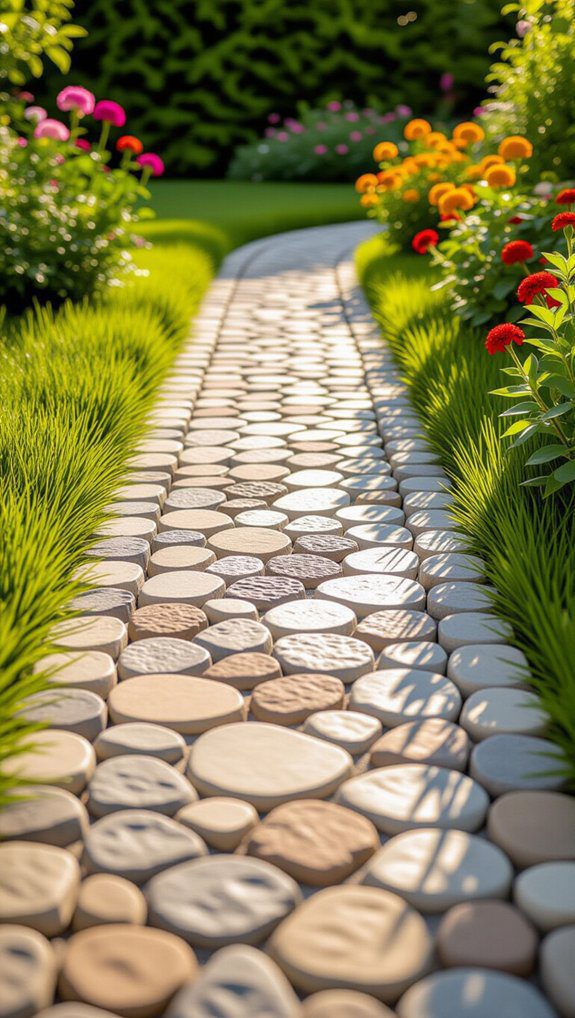
If you’re looking to add a clean, sturdy border to your garden path, crushed stone edging might just be the perfect solution.
It’s affordable, easy to install, and offers great crushed stone aesthetics that blend naturally with your garden.
Here’s why I love it:
- Simple trench installation—just 2 to 3 inches deep
- Helps keep gravel contained and tidy
- Complements various landscaping styles beautifully
- Low crushed stone maintenance with occasional raking and topping off
Flagstone Arrangement
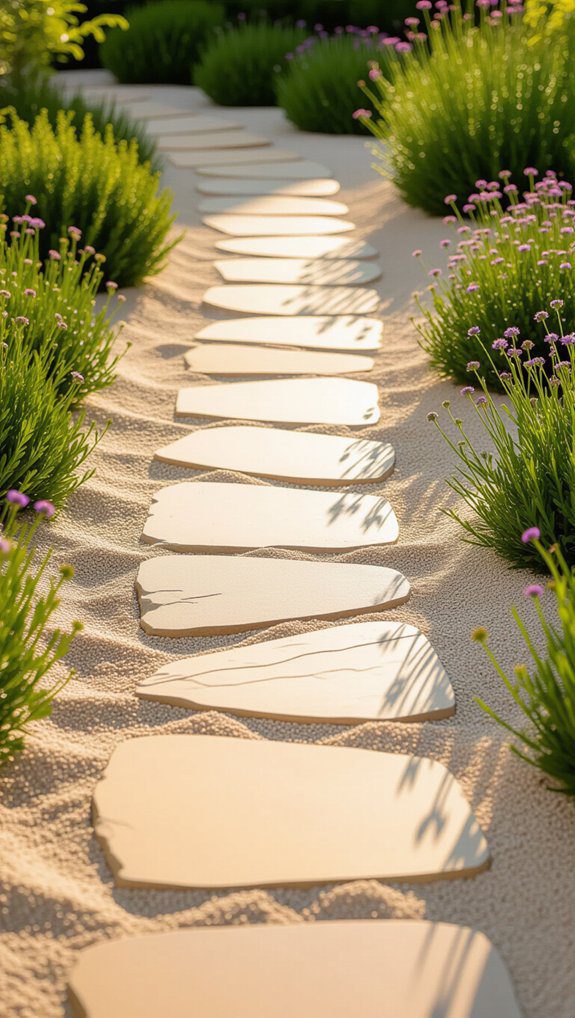
Arranging flagstone for your garden path can be a fun and creative project that transforms your outdoor space with natural beauty.
I like starting by choosing a random layout to embrace the stones’ irregular shapes, which blend nicely with greenery. If you want cleaner lines, some flagstone cutting helps create neat edges for a structured grid.
Before laying stones, I make sure the base is compacted and level, filling gaps with sand or gravel to keep everything stable.
Afterward, flagstone sealing protects the stones from weather, making your path last longer while looking great. It’s a simple way to add charm and durability!
Tar and Chip Surface
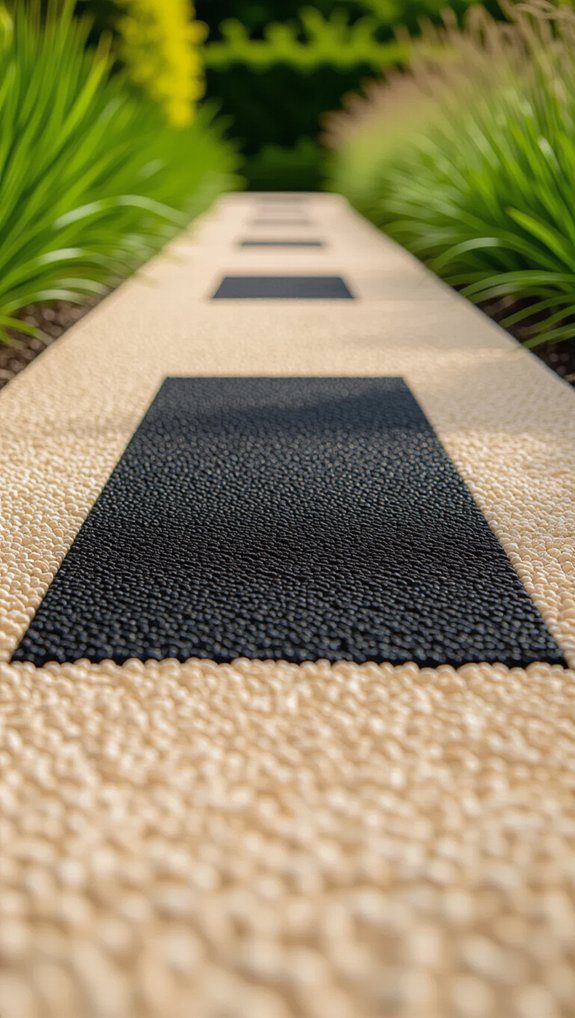
A tar and chip surface offers a fantastic, budget-friendly way to create a sturdy and attractive garden path that you can install yourself over a weekend.
I love how simple tar application techniques make this project doable for anyone. Plus, chip color options let you personalize your path to blend with your garden’s vibe.
Here’s why I recommend it:
- Strong, slip-resistant surface perfect for busy spots
- Easy DIY with basic tools
- Water drains well, cutting down on puddles
- Low maintenance—just top up chips and reseal now and then
It’s a welcoming, practical choice for your outdoor space!
Mowed Grass Path
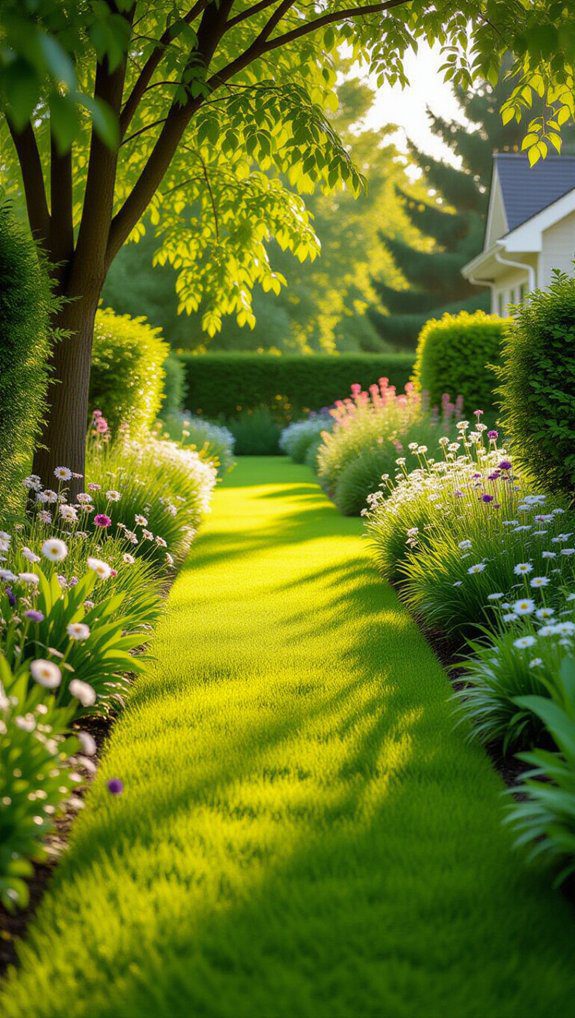
One of the easiest and most budget-friendly ways to create a garden path is by mowing a clear route through your grass. It’s quick, requires minimal materials, and lets your garden’s natural beauty shine. With simple grass maintenance, regularly mowing the edges keeps your path sharp and tidy—perfect for larger gardens where you want a seamless look. Here’s a little table to inspire your path design expedition:
| Feeling Connected | Easy to Maintain | Natural Beauty |
|---|---|---|
| Walk together | Simple mowing | Green and fresh |
| Share stories | Quick upkeep | Blends in well |
| Enjoy nature | Saves money | Invites calm |
| Belong in your space | Smooth access | Cozy and warm |
Recycled Concrete Walkway
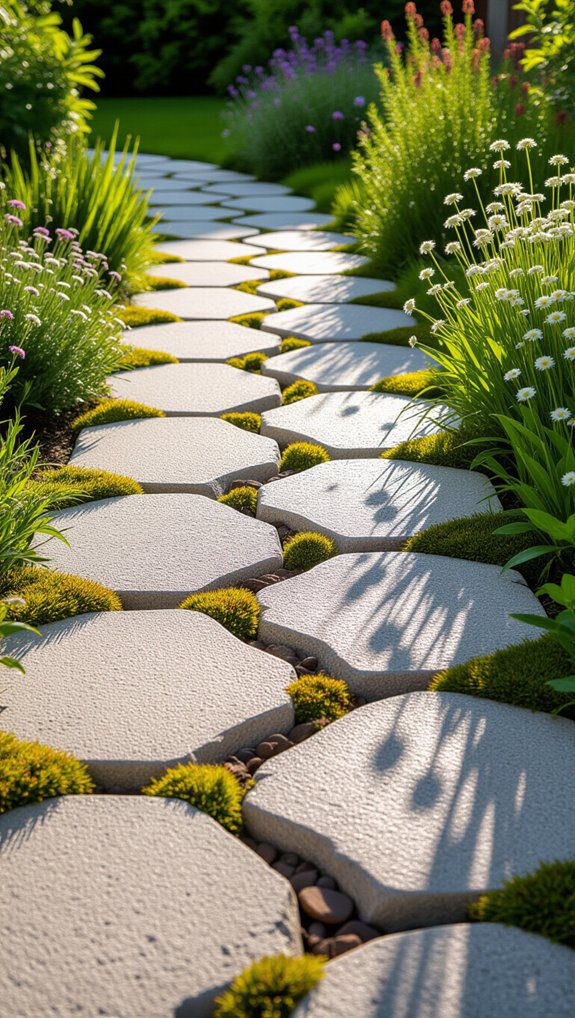
Recycled concrete walkways offer an eco-friendly and budget-friendly way to add character to your garden while keeping things sturdy underfoot.
I love how using broken slabs not only saves money but also highlights concrete recycling benefits by reducing landfill waste. Plus, the rough texture offers great traction.
Here’s why you might try this:
- Durable for heavy foot traffic
- Various walkway design patterns for unique styles
- Minimal cost sourcing from construction leftovers
- Gaps filled with gravel or plants blend the path naturally
It’s a fantastic DIY that welcomes both creativity and sustainability into your garden!
Pea Gravel Border
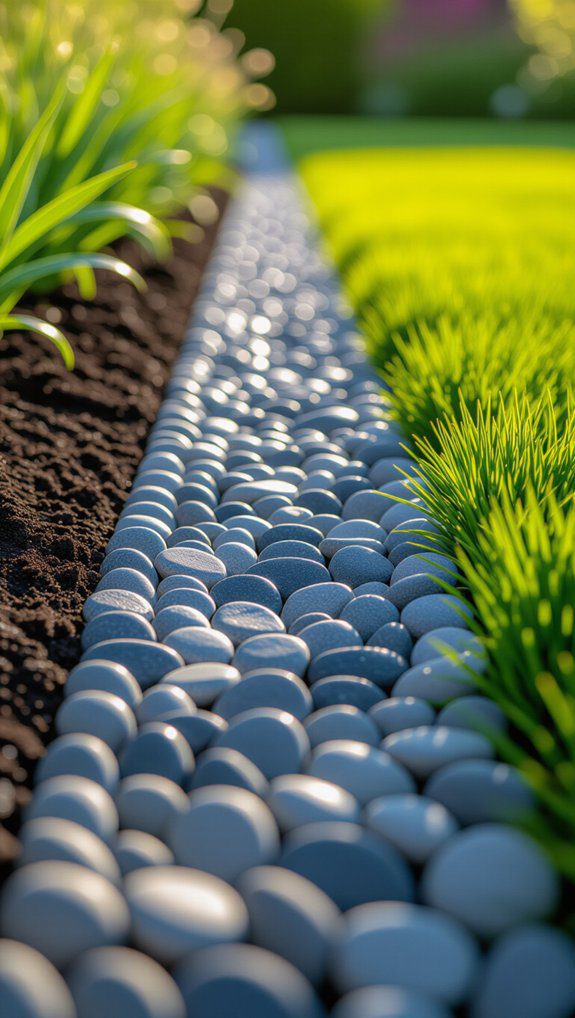
Although garden paths can be dressed up in many ways, I find that adding a pea gravel border really brings a charming, natural touch without draining your wallet.
It’s affordable—each bag costs about $5—and simple to install by digging a shallow trench for even depth. For a neat border design, I level the gravel and place large stepping stones to protect the surface and make walking easier.
Pea gravel maintenance is easy: just rake it regularly to keep it even and add fresh gravel when it thins out. It’s a welcoming way to define your garden paths beautifully.
DIY Concrete Stepping Stones
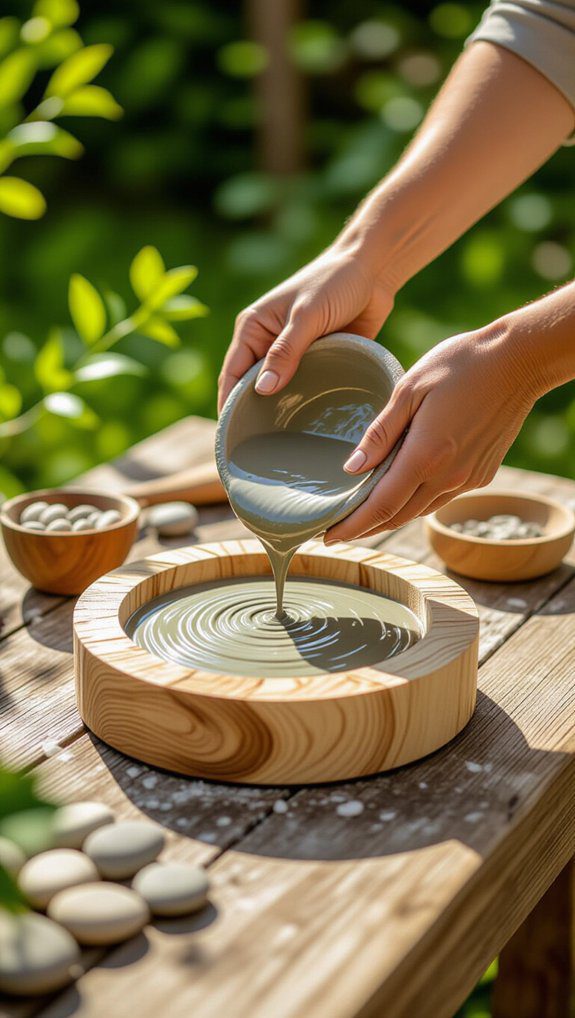
Adding concrete stepping stones to your garden path offers a fantastic way to personalize your outdoor space while staying on a budget.
Using decorative molds, you can create personalized designs that reflect your style. Here’s what I found helpful:
- Mix concrete following package directions for consistent results
- Use molds or recycle trays/cardboard for cost efficiency
- Add pebbles, leaves, or other decorations to customize each stone
- Allow stones to cure for about 24 hours before placement
These DIY stepping stones usually cost just $1 to $5 each, making them an affordable, creative way to build a welcoming path you’ll love.
Shell Embedded Stones
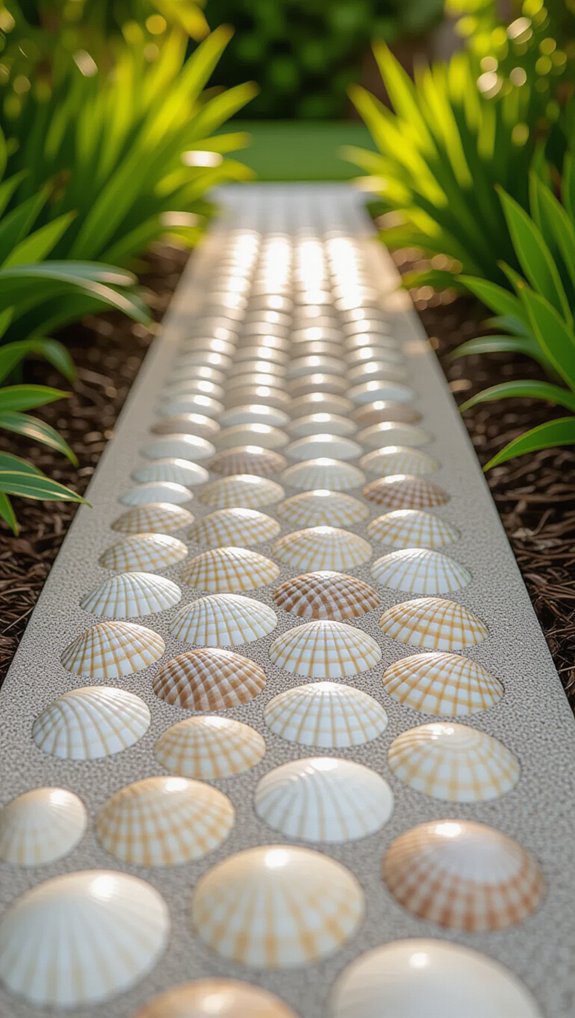
Picture a garden path dotted with stones that sparkle with seashells embedded right into the concrete—those are shell embedded stones, and they’re a fantastic way to bring a bit of the beach to your backyard.
Start by choosing shells carefully: smooth, colorful ones work best—these shell selection tips guarantee your stones look stunning.
Next, mix your concrete just right; using proper concrete mixing techniques keeps it strong but workable.
Pour the mix into molds and press your shells gently before it sets.
The result? Durable, charming stones that add unique style and coastal vibes to your garden path.
Crushed Granite Path
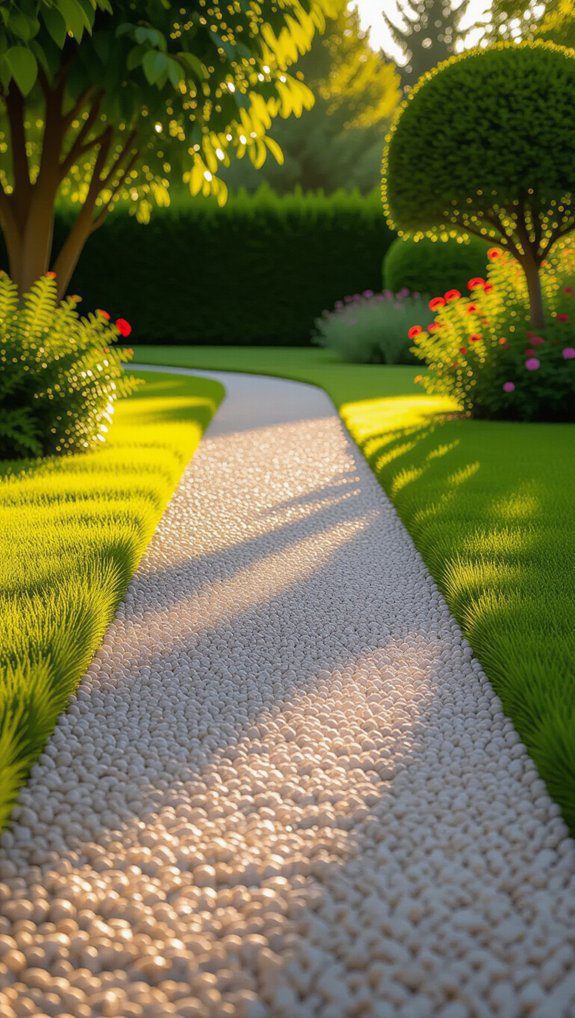
If you enjoyed the creative vibe of shell embedded stones, you’ll love how a crushed granite path brings a different kind of natural charm to your garden.
The crushed granite benefits are impressive—it’s affordable, drains well, and blends beautifully with many styles. Here’s why I think it’s a winner:
- Easy to install with just a bit of digging and compacting
- Offers customizable color and texture options
- Supports good drainage, avoiding mud in wet areas
- Requires simple crushed granite maintenance like raking and topping up
This path invites you to create a cozy, welcoming space that lasts.
Landscape Fabric Base

While it might seem like a small step, laying down ground fabric before your gravel path can make a huge difference in how well your garden walkway holds up over time.
I’ve found that the ground fabric benefits go beyond just stopping weeds—it stabilizes gravel and improves drainage by letting water through while keeping soil in place.
For easy ground fabric installation, just cut it to fit, lay it flat over your compacted base, and pin it down with staples.
This simple step saves you from future headaches and keeps your path looking neat and lasting longer.
Creeping Thyme Walkway
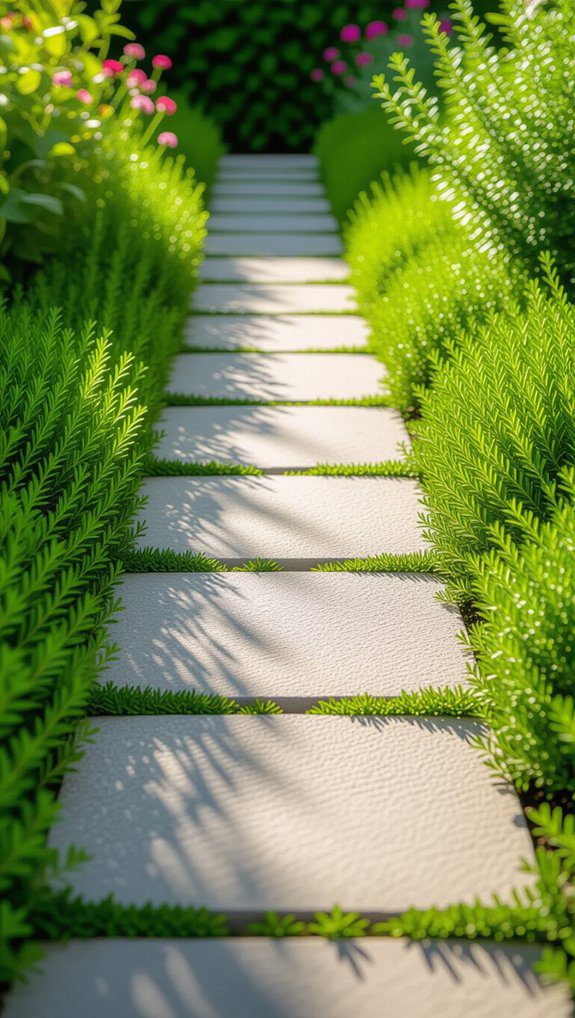
Anyone looking to add a charming, natural touch to their garden path will love using creeping thyme as a walkway option. Its thyme benefits include a fragrant, green carpet that tolerates light foot traffic and attracts pollinators with tiny purple blooms.
Here are some planting tips to get you started:
- Use well-drained soil for best growth
- Space plants close to encourage quick spreading
- Trim occasionally to maintain tidiness
- Water moderately until established; then it’s drought-resistant
This low-maintenance, budget-friendly choice creates a welcoming path that feels like part of your garden’s family.
Moss Ground Cover
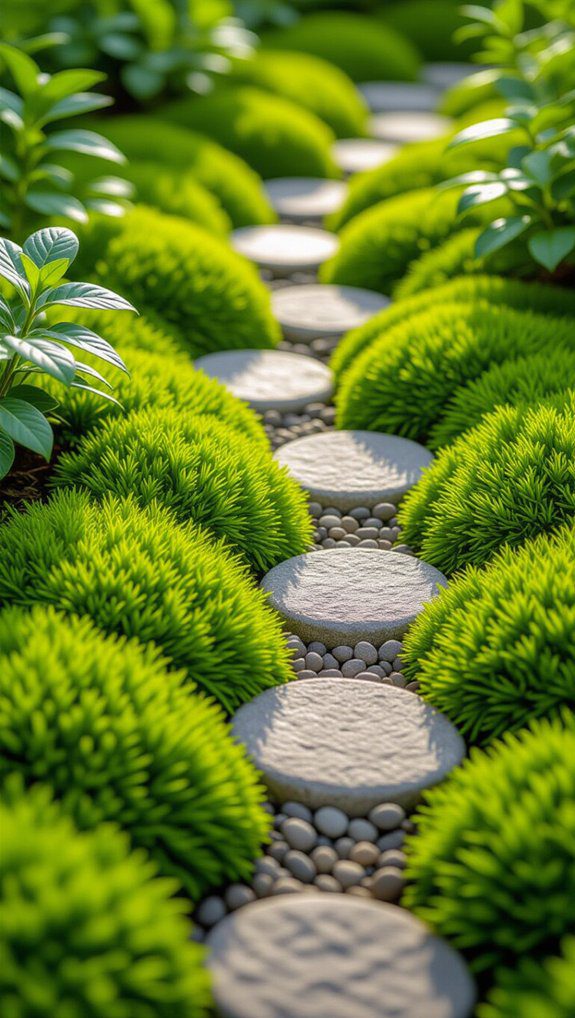
After enjoying the fragrant charm of creeping thyme, you might want to investigate another green path option that thrives in shady spots—moss ground cover. Moss varieties like Irish Moss and Sheet Moss create soft, inviting walkways without much fuss. Proper soil preparation is key: aim for a pH between 5.0 and 6.0 and keep the area moist. Moss paths are eco-friendly, low-maintenance, and budget-friendly. Here’s a quick guide:
| Moss Variety | Light Preference | Maintenance Level |
|---|---|---|
| Irish Moss | Partial Shade | Low |
| Sheet Moss | Full Shade | Very Low |
| Cushion Moss | Shade to Partial | Low |
| Rock Cap Moss | Shade | Moderate |
Winding Hose Pattern

One of the easiest and most charming ways to create a garden path is by using a winding hose pattern. This garden path design uses flexible materials like rubber hoses to lay out organic curves that guide your footsteps naturally.
Here’s how I approached it:
- Lay the hose in your favorite winding shape
- Mark the outline for digging
- Add gravel or mulch for the base
- Place stepping stones for stability and flair
This method feels welcoming and personal, and with some regular upkeep, your path will stay inviting all season.
It’s a simple way to blend function with beauty.
Slate Slab Trail
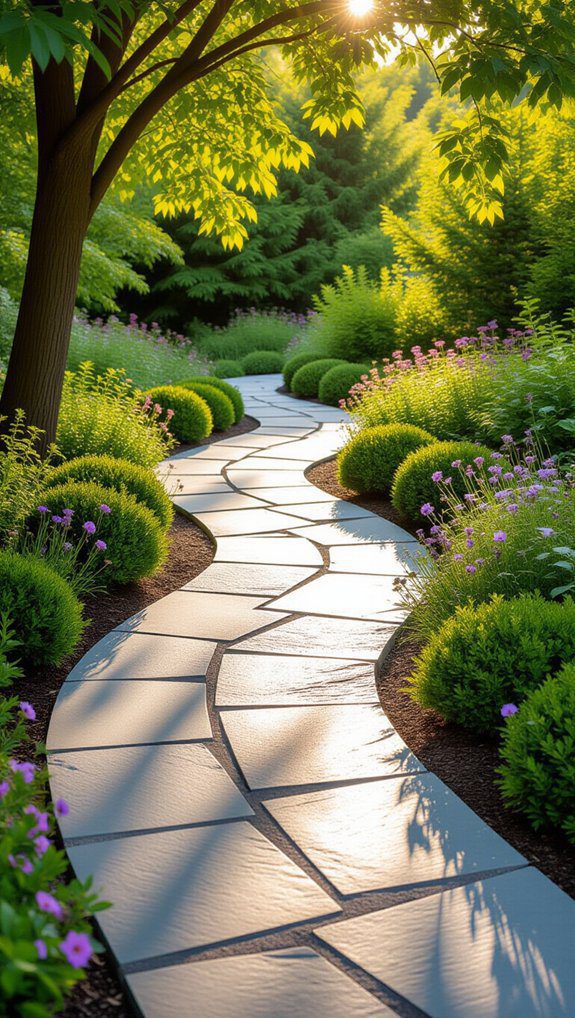
If you’re looking to add a sturdy and stylish touch to your garden, slate slabs make a fantastic choice for creating a trail. One of the biggest slate slab benefits is their natural texture and color, which bring character to any path.
When it comes to slate installation tips, start by laying slabs on a compacted base and make sure each one is level for safety. You can find slate easily at local stores, making it budget-friendly.
With simple upkeep like clearing debris and checking stones, your slate trail will stay beautiful and strong for years.
Cardboard Layer Method

While slate slabs bring a polished look to your garden path, sometimes you want a simpler, more budget-friendly way to create a neat walkway.
The cardboard layer method offers a fantastic eco friendly pathway option with lots of cardboard benefits. Here’s how I do it:
- Lay overlapping sheets to block weeds and sunlight.
- Cover with mulch, gravel, or wood chips for stability.
- Enjoy low-cost, easy setup perfect for beginners.
- Watch cardboard break down, enriching soil over time.
This method feels like joining a community of gardeners who care about the earth and their budget.
Give it a try!
Wood Chip Driveway
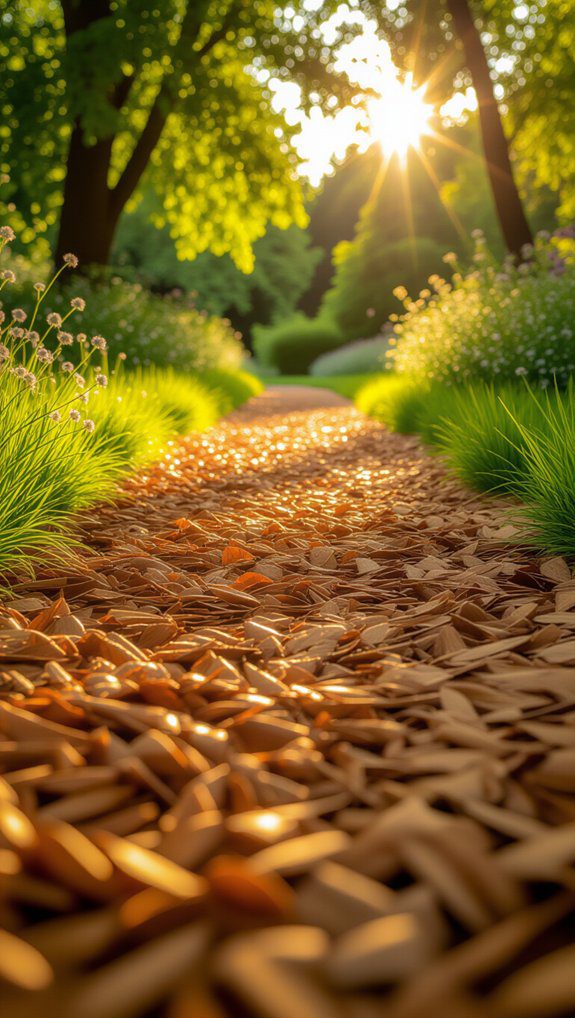
Choosing a wood chip driveway can transform your outdoor space with a natural, budget-friendly charm that’s hard to beat.
One of the best wood chip benefits is how easy it’s to install—just lay down ground cover fabric and spread 3-4 inches of chips. It’s an eco friendly driveway option that encourages drainage, so you won’t deal with mud puddles.
Keep in mind, wood chips need occasional raking and topping up, especially since they decompose. I recommend using treated or hardwood chips to keep your driveway looking great longer and reduce those bothersome maintenance chores.
Geo Hex Grid Stabilizing
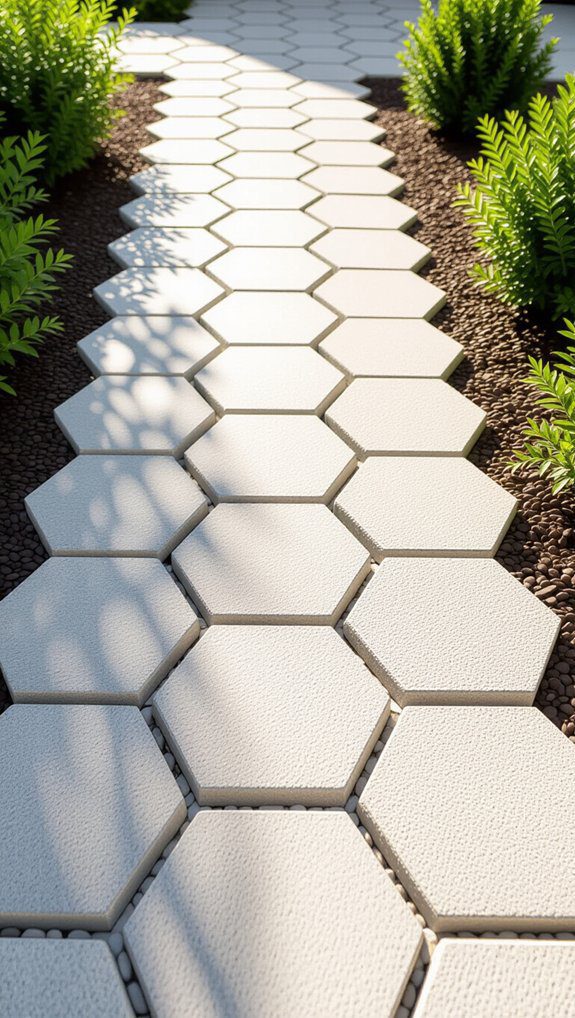
When you want a garden path that stays sturdy and neat without constant upkeep, geo hex grid stabilizing systems are a fantastic option to contemplate.
I love how these grids offer so many geo hex grid benefits like preventing soil erosion and keeping gravel in place. The installation techniques are straightforward: lay the hex grids on a firm base, fill with gravel, and enjoy lasting stability.
Here’s why I recommend them:
- Durable, eco-friendly material
- Stops soil compaction and movement
- Allows excellent drainage
- Minimizes weed growth
It’s a smart, budget-friendly way to create lasting garden paths.
Permeable Paver Path
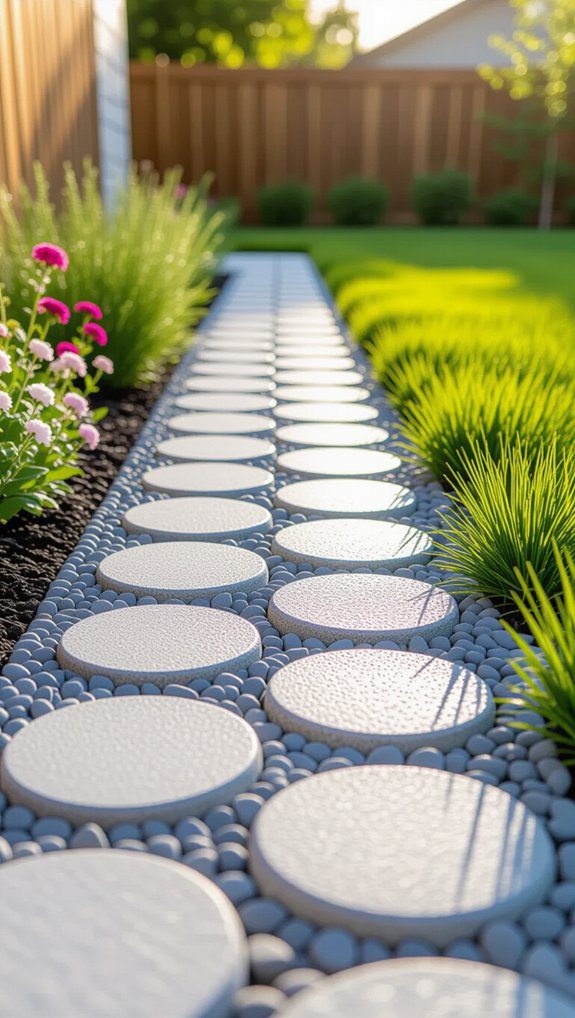
A permeable paver path offers a wonderful way to combine beauty with smart water management in your garden. The permeable benefits include letting rainwater seep through, reducing runoff, and helping groundwater recharge.
For installation tips, start with a compacted base and a layer of aggregate to guarantee good drainage. Choose interlocking pavers with gaps filled by gravel or grass for a natural look.
It’s a simple DIY project that adds charm and sustainability to your space. Just remember to clean and refill the gaps occasionally to keep everything working smoothly and looking fresh.
Boulder Rock Arrangement

Imagine turning your garden path into a natural work of art by arranging big boulders as stepping stones.
Boulder rock arrangement uses boulder layout techniques to blend natural stone aesthetics with functionality. Here’s what I’ve learned:
- Pick boulders of varying sizes and shapes for visual interest and stability.
- Space them to guide footsteps while letting grass or moss peek through.
- Surround rocks with gravel or mulch to define the path and keep weeds down.
- Source local stones to cut costs and keep your path authentic.
This approach creates a welcoming, organic walkway that truly belongs to your garden’s story.
Rope Edging Border
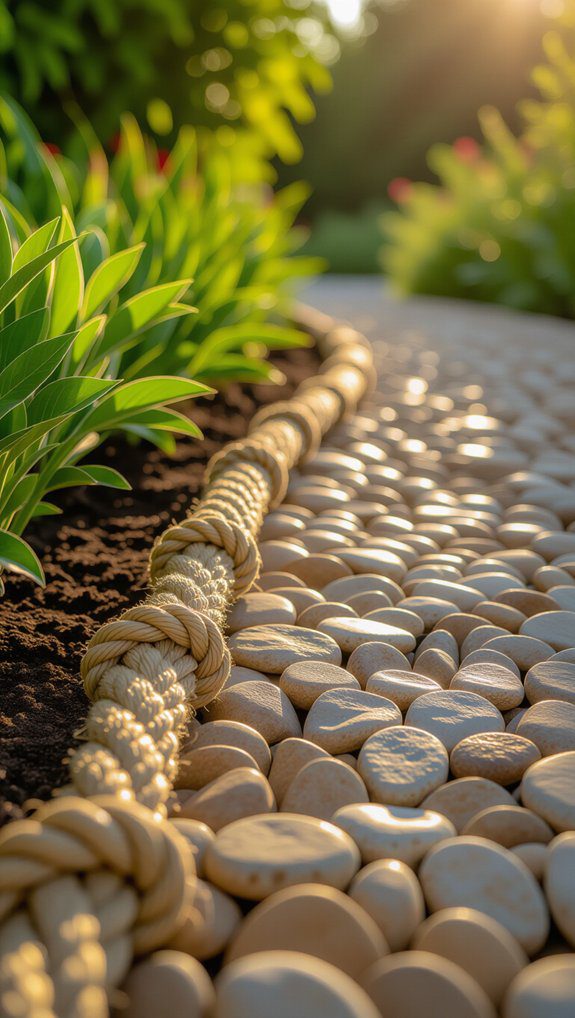
Although it might seem simple, adding a rope edging border can completely transform your garden path by giving it a neat, charming outline that feels both natural and intentional.
I love using natural jute rope because it’s budget-friendly and fits rustic or modern styles alike. You can secure it with stakes or bury it slightly for stability.
Try decorative knot techniques to add personality and keep the rope snug. Don’t forget rope maintenance tips: check for wear, keep it taut, and replace frayed spots to keep your path looking fresh and inviting all season long.