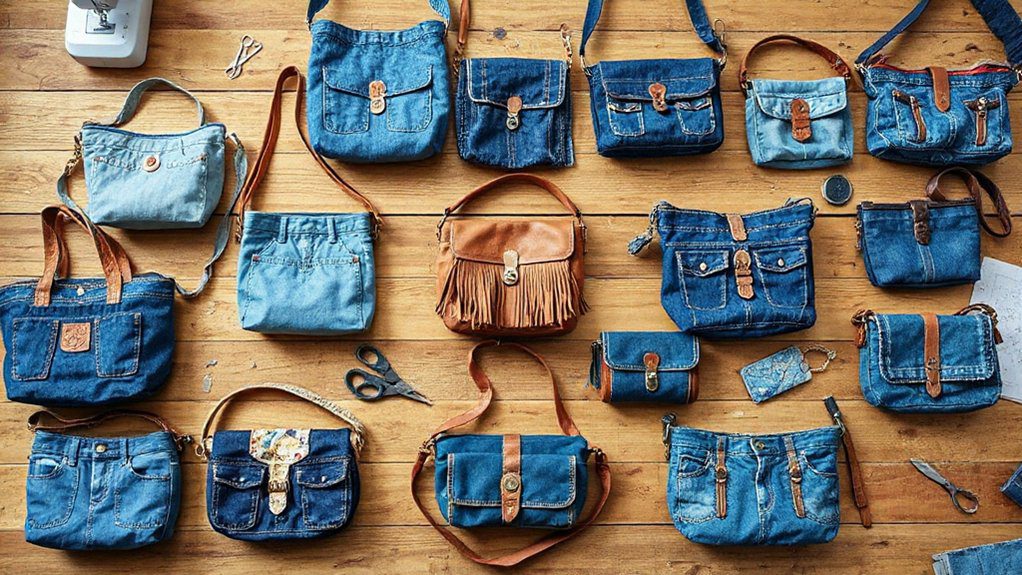
15 Upcycle Jeans Bag Ideas Using Old Denim
I’ve gathered 15 clever ways to turn old jeans into useful bags you’ll actually use. Start with roomy totes and market bags using the waistband as an opening, then try a crossbody or waist bag that keeps pockets handy. Make a mini handbag, drawstring pouch, or coin pouch from a leg. For structure, add interfacing for a laptop sleeve, backpack, or boxy bag, or stitch scraps into a patchwork tote. Keep going and you’ll learn step-by-step tips and variations.
Love cozy DIY projects? 💕
Get free printable guides, exclusive tutorials & surprise craft goodies straight to your inbox.
Disclosure: This post may contain Amazon affiliate links, at no extra cost to you. Content on DiyCraftNest is created with research support from AI tools and carefully reviewed, edited, and fact-checked by the lead author, Daniel Pat, to ensure accuracy and reliability. Learn more
Key Takeaways
- Convert jeans into versatile tote or market bags by using the waistband as the opening and reinforcing bottoms for heavy loads.
- Make hands-free crossbody or waist bags by repurposing original pockets and using the waistband or belt loops for straps.
- Create small accessories like drawstring pouches or mini handbags from cut leg sections, retaining pockets for quick access.
- Build structured pieces—laptop sleeves, boxy bags, or backpacks—by adding interfacing, padding, and reinforced seams for shape and protection.
- Stitch patchwork bags combining denim scraps of different shades for visual interest, durability, and personalized embellishments.
Tote Bag Design
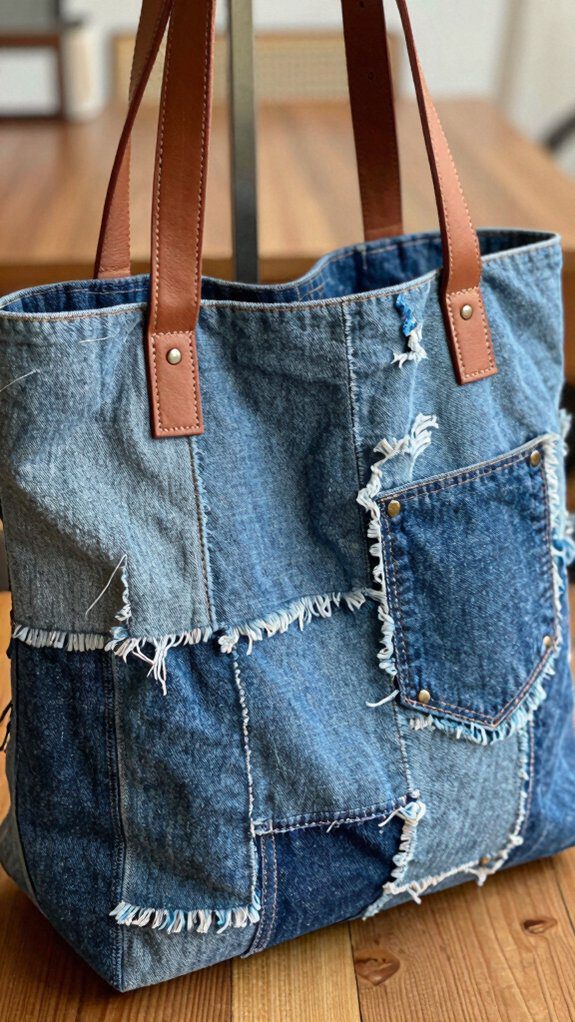
When I design an upcycled denim tote for everyday carry, I think about roomy interiors and sturdy straps that can handle a laptop, water bottle, and a few small extras. I usually reinforce the base by sewing across the bottom and pinching the corners for a flat, stable shape, and I like adding a repurposed pocket or patch for quick-access storage. If you want a lighter, casual look keep the panels simple, but for more structure and durability go for doubled denim or a reinforced lining.
Everyday carry style
I love how a simple denim tote turns old jeans into a reliable everyday bag, and I’ll show you how the sturdy fabric and original pockets make it both useful and stylish. I make totes that feel like belonging—practical, familiar, and made with sustainable fashion in mind. Using creative upcycling, you can keep things simple or customize with digital patterns.
- A front pocket holds keys and phone, while a larger pocket keeps your water bottle upright.
- Thick straps from the waistband distribute weight, so your shoulders don’t ache.
- Add a zip or button closure for security, or leave it open for easy access.
Start with basic sewing skills, compare patterns, and pick what fits your daily rhythm.
Crossbody Bag Style
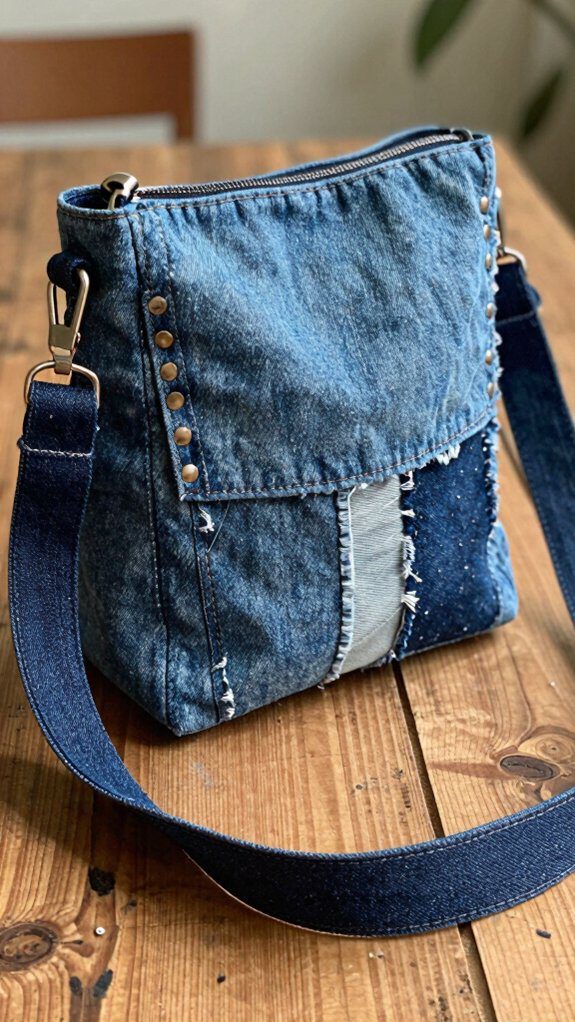
I love using old jeans to make a crossbody because it gives me a hands-free option that’s perfect for errands or travel. I usually keep the original pockets and add an adjustable strap so my phone and keys stay easy to reach without carrying anything bulky. If you want, you can customize the flap or distress the denim for a unique look that still feels sturdy and practical.
Hands-free option
Because you want your hands free and your pockets full of things that matter, I love turning old jeans into a sturdy crossbody bag that’s perfect for errands, travel, or a quick coffee run. I make bags with functional features like secure pockets and zipper closures, and I mix in trendy designs with patches or studs so we both feel seen. Use the waistband as the bag top for strong strap anchors, or reuse belt loops for length; compare a new strap to repurposed denim for comfort. I follow simple DIY patterns, tweak pocket placement, and test strap length across my chest. Picture these cozy details:
- A roomy front pocket with snap closure.
- An interior zip pocket for keys.
- A wide, adjustable denim strap.
Mini Handbag Shape
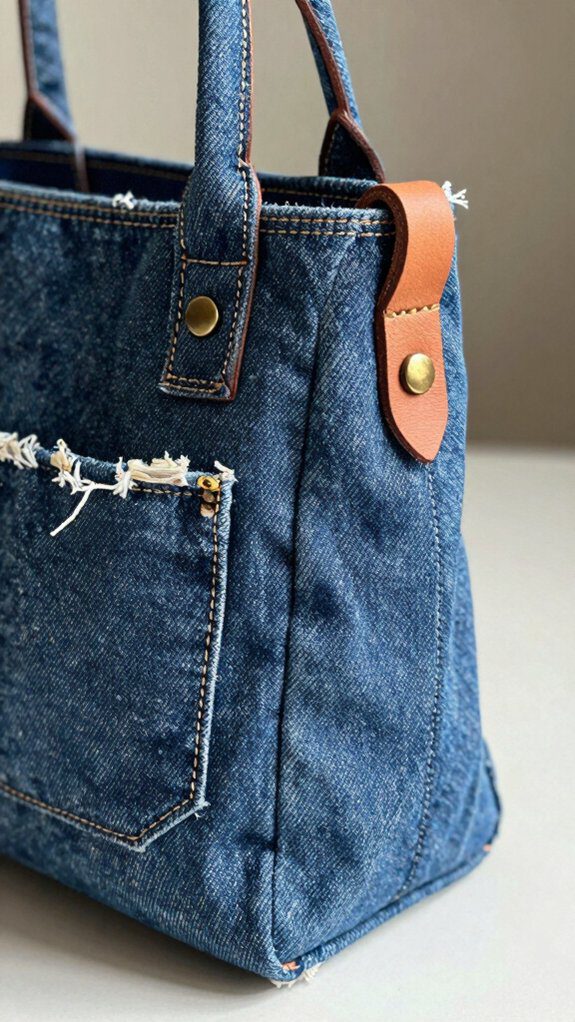
A little transformation can turn a worn jean leg into a chic mini handbag, and I’ll walk you through the simple steps so you can make one that actually holds your necessities. I cut the leg shorter, remove inner seams, and trim the crotch so the front and back sit flat; that basic shape is the backbone of mini bag styling. Keep one original pocket or two for quick-access phone and cards, and choose sturdy denim so the bag lasts through daily use. For personality, add denim embellishments, patchwork, or a touch of dye—each choice makes the bag feel like ours. Finish with reinforced topstitching and a comfortable strap; small details lift function and style together.
Drawstring Pouch Bag
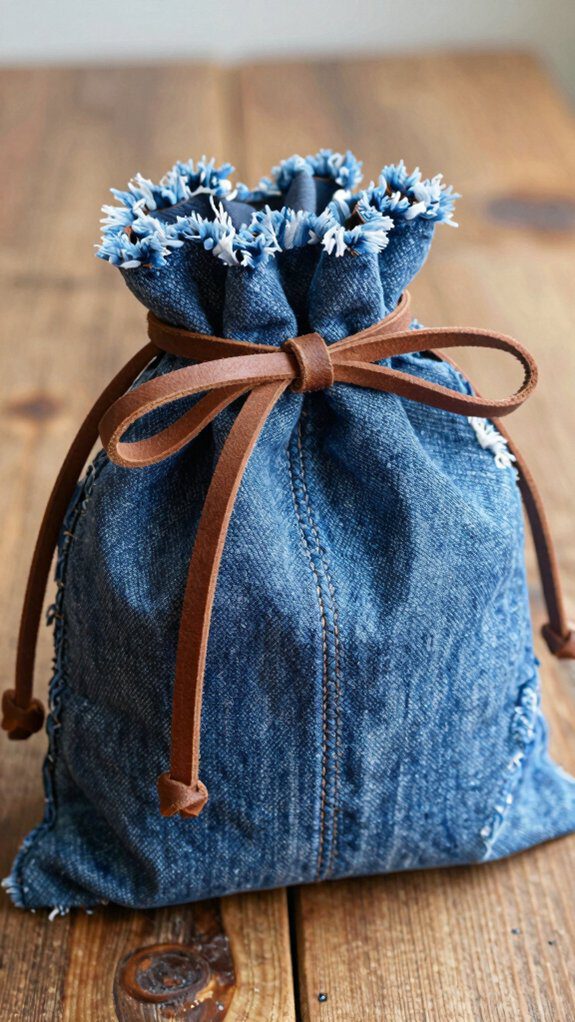
Think of a worn jean leg turning into a cozy little pouch that holds your keys, lip balm, or earbuds—it’s surprisingly easy and really satisfying. I love how the drawstring bag benefits show up immediately: simple closure, compact carry, and a soft-but-sturdy feel. I cut the denim to size, leave room for a drawstring casing, then fold and sew the top to reinforce it. For the drawstring, I use leftover denim or a woven cord.
- small everyday items tucked safely,
- rugged texture with soft lining,
- quick gift that says you care.
I add patches or simple stitching as pouch customization options to make each piece belong to someone. This project is beginner-friendly and welcomes you in.
Patchwork Denim Bag
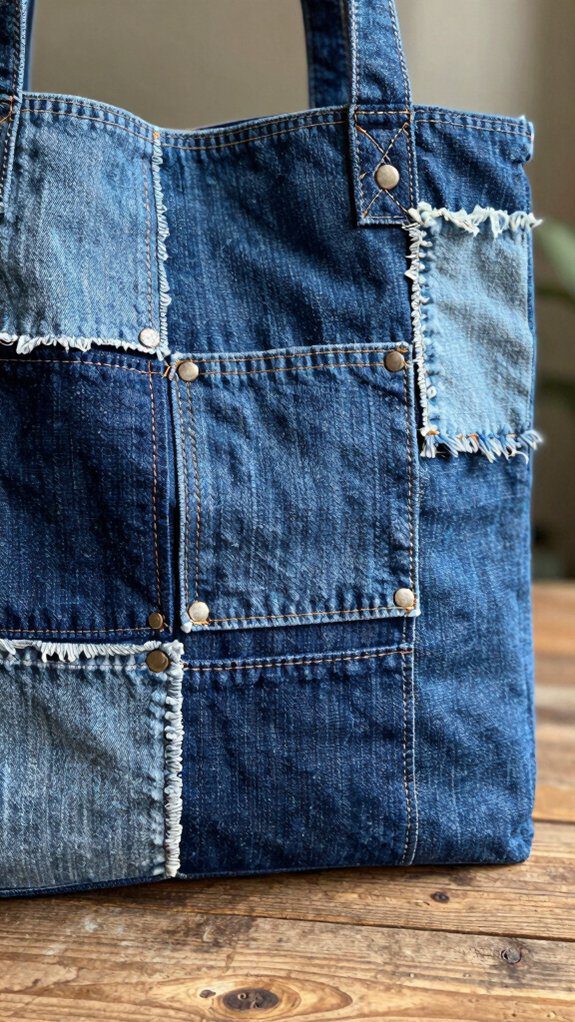
I love how mixed shades of denim make a patchwork bag pop, so I usually sort my scraps by color and texture before I start cutting. I’ll pair dark indigo with faded blues and a few lighter patches for contrast, then stitch them in a way that balances pattern and strength—more seams where the bag will take wear. If you want a cleaner look, stick to two or three shades; for a bolder, playful bag, mix many tones and add topstitching or small embellishments for extra personality.
Mixed shades look
Because mixing different denim shades creates instant visual interest, I love using scraps from old jeans to build a patchwork bag that feels both playful and polished. I choose color combinations that speak to me—deep indigo with faded blue, black denim with stonewash—to create contrast and a sense of belonging in each piece. I also pay attention to texture contrasts, like raw selvedge beside soft worn denim, so the bag invites touch.
- square patches arranged like a quilt,
- long strips for a chevron feel,
- tiny scraps stitched into a mosaic.
I add reinforced stitching, decorative topstitching, and occasional buttons or embroidery for durability and personality. This method celebrates creativity and sustainability while making a bag that’s truly yours.
Back Pocket Purse
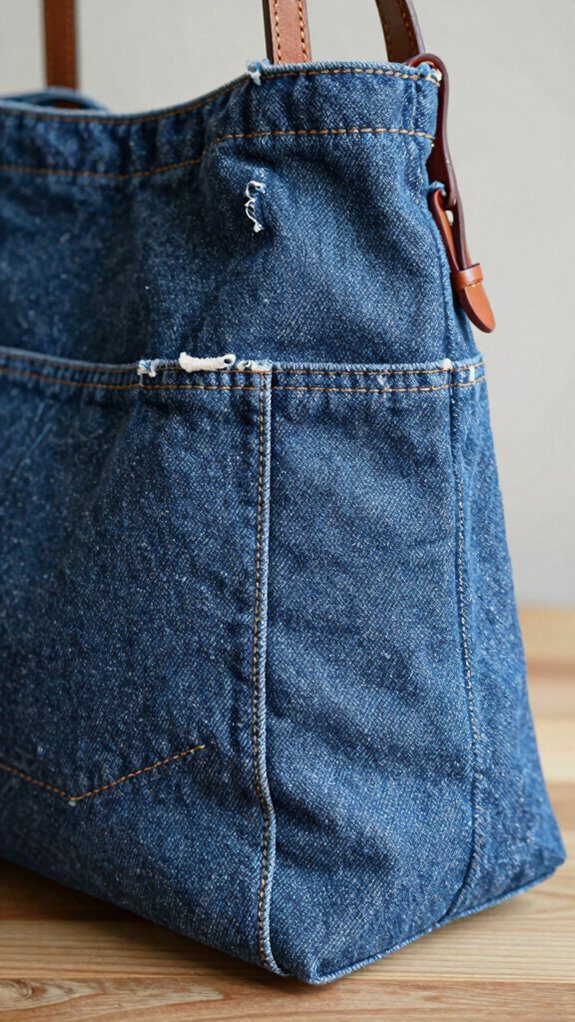
I love using a back pocket purse because that little pocket is an iconic jeans detail that brings instant character and history to a tiny bag. You can cut the pocket out, reinforce the edges, and add a strap in minutes, and the original stitching and rivets give it a look you can’t fake with new fabric. For a personal touch, I like to compare pockets from different jeans—contrast colors, worn fades, or decorative stitching—and pick the one that suits the outfit or the person I’m gifting it to.
Iconic jeans detail
There’s something satisfying about turning a well-worn back pocket into a little everyday hero; I love how a pocket’s stitching, rivets, and faded patches become the main feature of a tiny purse that’s both sturdy and stylish. I’m drawn to the iconic jeans detail because it celebrates jean pocket functionality and current denim fashion trends while letting us belong to a crafty, eco-aware community. Try imagining:
- A pocket with bold contrast stitching, roomy for a phone and keys.
- A faded pocket with rivets, clipped to a canvas strap for hands-free wear.
- A colorful patched pocket, sewn onto a fabric base for extra strength.
I’ll walk you through selecting pockets, attaching straps, and finishing edges so your purse feels personal and reliable.
Bucket Bag Form
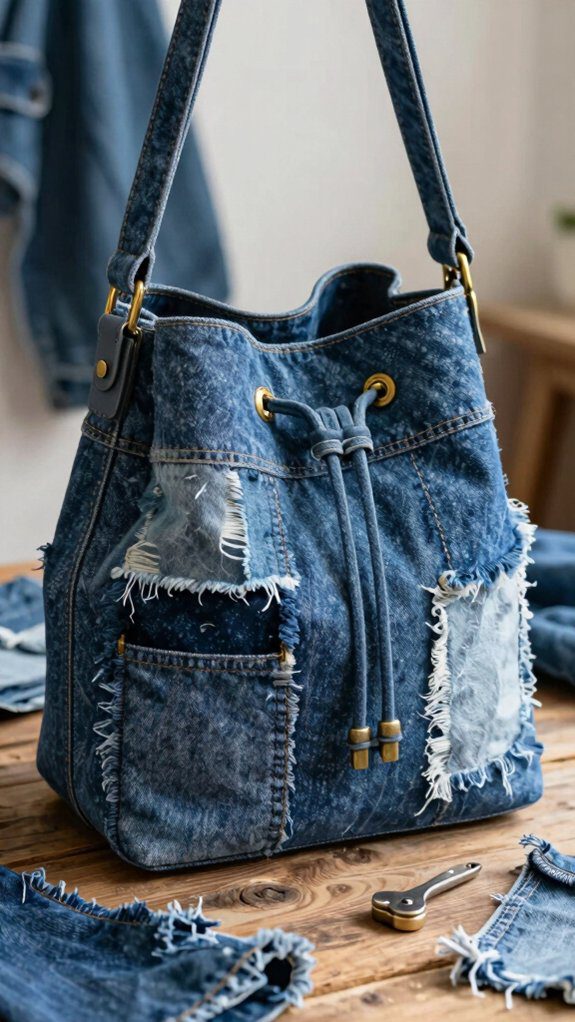
A roomy, reliable bucket bag starts with a clear shape: a round base, straight sides, and a drawstring top that keeps everything secure. I love turning old jeans into a bag that feels like home; bucket bag features like reinforced bottoms and sturdy denim make it practical and comforting. I’ll walk you through cutting legs, sewing sides, and strengthening the base, plus tips for patches and mixed shades so your bag reflects you. Try different strap lengths and closure styles to examine bucket bag variations that suit errands, school, or a casual night out.
| Feel | Practical Tip | Result |
|---|---|---|
| Warmth | Use soft lining | Cozier carry |
| Pride | Add patches | Personal story |
| Comfort | Padded strap | Less strain |
| Joy | Mix shades | Visual interest |
Zippered Makeup Bag
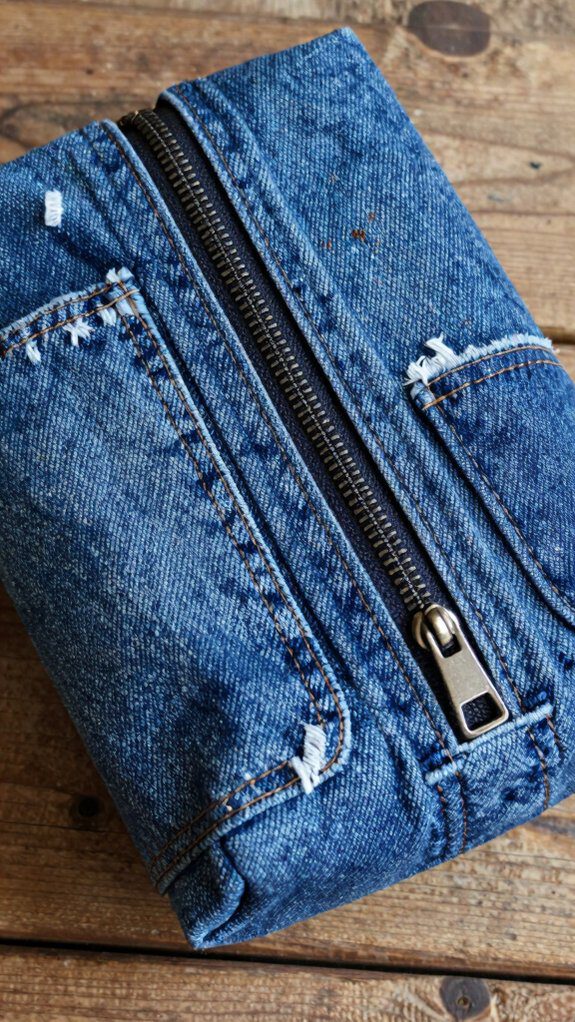
If you liked the roomy feel of the bucket bag, a zippered makeup bag gives you compact, organized storage that still uses the same sturdy denim you’ve already been working with. I love how denim patterns add character, so I pick two matching pieces, cut them to size, and sew them right sides together for strength. I often reuse a zipper from old jeans for zipper customization and sustainability.
- Smooth lining to protect brushes and powders.
- Sturdy seams where the denim meets the zipper.
- A small patch or embroidered name for belonging.
Finish by topstitching and flipping inside out. The result is durable, travel-ready, and distinctly yours—practical, eco-friendly, and easy to gift to friends.
Laptop Sleeve Case
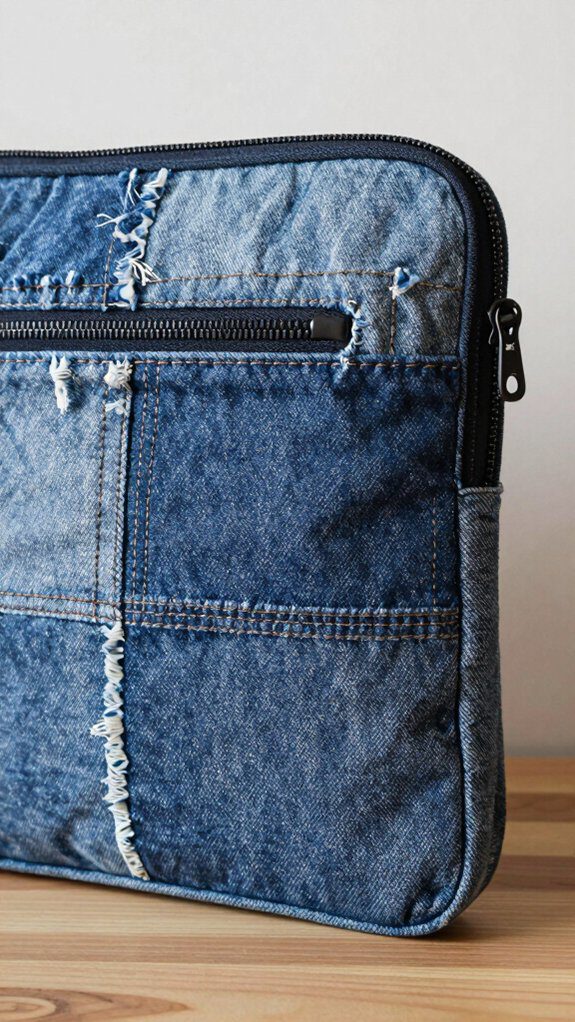
I love making a padded laptop sleeve from old jeans because the denim gives great structure while a few layers of batting or foam add real shock protection. I’ll show you how to cut pieces slightly larger than your laptop, sandwich the padding between denim layers, and topstitch the edges so it fits snugly but still slides in easily. You can add a zipper or a magnetic flap and a pocket for chargers, which keeps it practical and totally unique.
Padded denim layers
Because you want your laptop to stay safe without buying something new, I’ll show you how padded denim layers make a tough, cozy sleeve that’s perfect for everyday use. I start by cutting multiple thick denim panels sized to your laptop, leaving a little extra room for padded protection and a snug fit. I add a fleece or cotton lining between layers so the screen won’t scratch, and I use old pockets as handy accessory pouches — it feels like the jeans are welcoming your tech into the family.
- thick denim exterior for denim durability
- soft fleece lining for gentle cushioning
- reinforced seams with zigzag stitching and a denim needle
Follow these steps and your sleeve will be sturdy, warm, and personal.
Market Shopping Bag
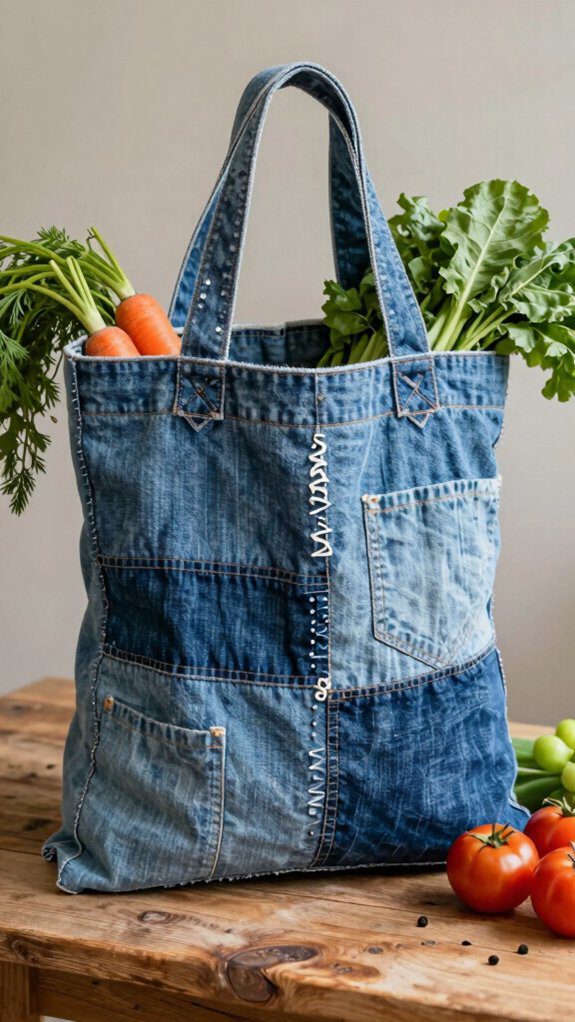
Let’s make a market shopping bag from an old pair of jeans that’s sturdy, useful, and a little stylish—you’ll be surprised how quick it is. I cut off the legs, keep the waistband as the bag opening, and use the remaining tube as the body, which feels solid compared to flimsy plastic. I stitch front and back panels with a machine or by hand, reinforcing seams so heavy groceries don’t sag. I leave pockets intact for keys and coupons — practical and charming. You can dye or add small embellishments to personalize it, joining others who choose sustainable fashion and eco friendly materials. This simple project reduces waste, saves money, and connects us through shared creativity.
Denim Backpack Style
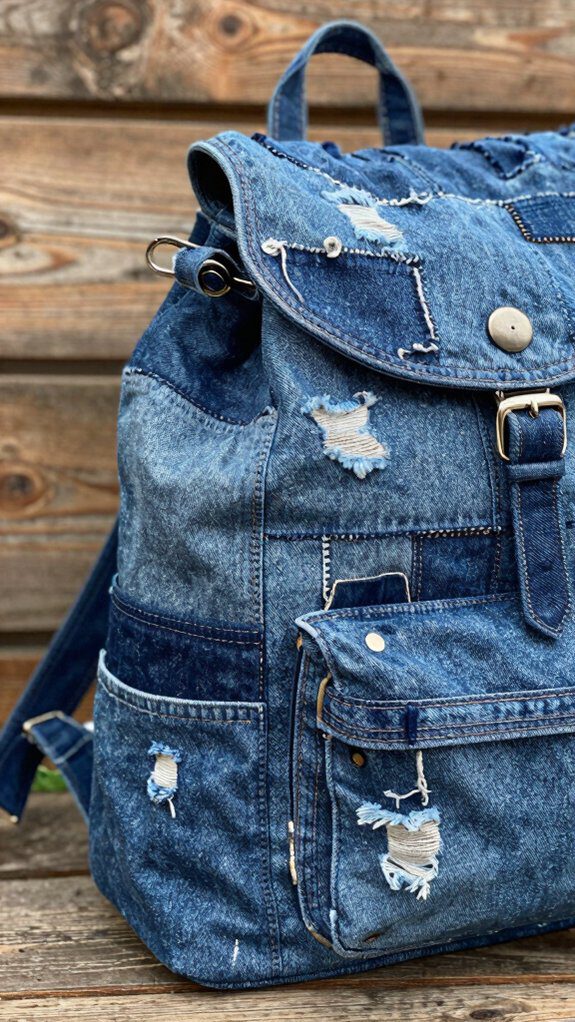
I love turning old jeans into a denim backpack for casual daily use because the sturdy fabric and built-in pockets make it both tough and handy. I usually cut panels to keep pockets visible, use belt loops or leftover denim for straps, and add a contrasting lining so the bag holds its shape and lasts longer. If you want a personal touch, try patches or dye—those small changes make a backpack that’s practical for school, errands, or quick weekend trips.
Casual daily use
If you want a durable, everyday bag that still feels personal, turning old jeans into a denim backpack is a perfect project — and it’s easier than you might think. I made one for casual daily use and loved how functionality improvement and style versatility come together. Cut and sew pant legs into a roomy body, keep the original pockets for organized storage, and reinforce seams with a lining so it lasts.
- Imagine a front pocket holding your phone and keys securely.
- Picture an inside pocket for your wallet and a side pocket for a water bottle.
- See straps made from waistbands for comfy, sturdy wear.
Customize with dye or patches to belong to your style and community.
Waist Bag Conversion
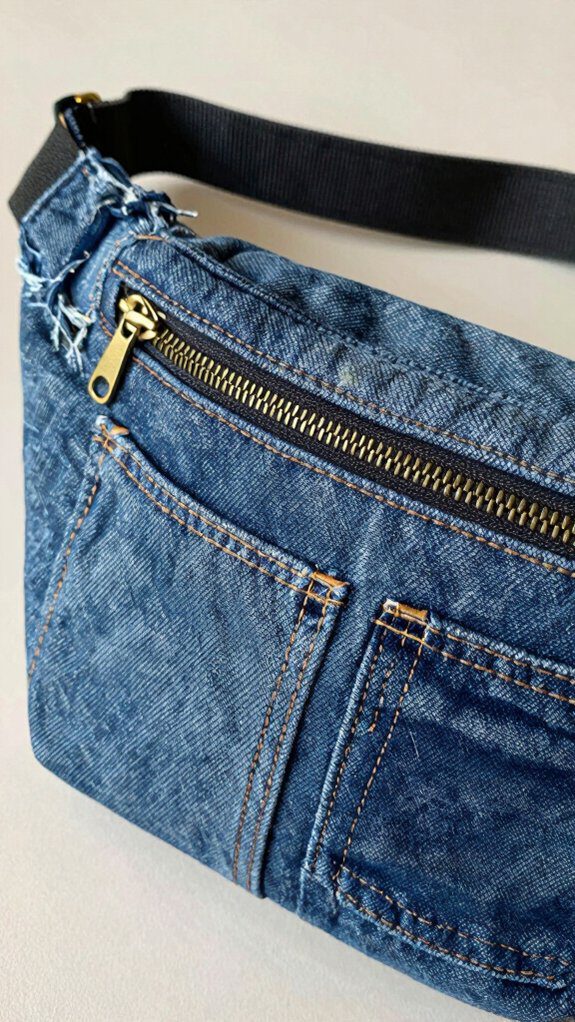
When you want a fast, practical project that turns worn denim into something you’ll actually use every day, I’ll show you how to convert a pair of old jeans into a sturdy waist bag. I start by choosing waist bag materials from the legs and keeping the back pocket as a ready-made compartment for necessities, so you feel confident carrying what matters. Remove inner seams at the crotch and trim fabric until the shape lies flat; this makes sewing simpler and the bag more reliable. Use zigzag stitches or a serger to reinforce edges, and consider adding simple embellishments or dye to personalize it. Finally, repurpose the original waistband as an adjustable strap for comfort, securing ends with strong stitching.
Fringed Edge Bag
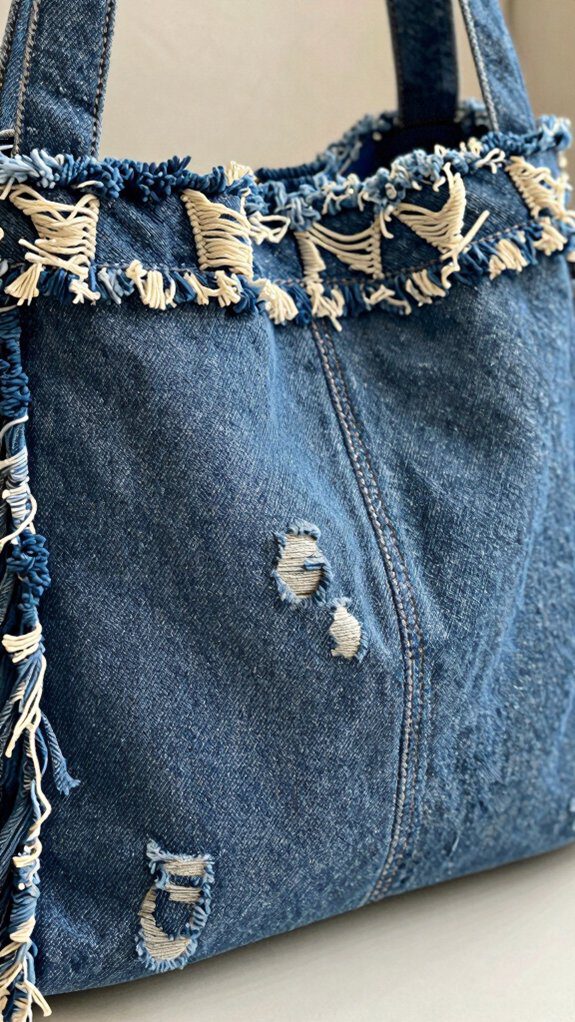
I love how a raw hem finish gives a fringed edge bag a relaxed, slightly undone look that still feels intentional, and I’ll show you how to get that clean-for-now feel without making a mess. Start by cutting even strips from the bag’s bottom and then tug gently at the fabric to encourage soft fraying, comparing different denim washes to see which fray pattern you like best. For a neater option, sew a shallow line above the cuts to hold the raw edge in place, or leave it loose and add beads or embroidery for a personal touch.
Raw hem finish
Because a raw hem finish lets the denim speak for itself, I love using a fringed edge to give upcycled jeans bags a relaxed, on-trend vibe that works for totes, hobos, or crossbody styles. I use simple fringed edge techniques and gentle denim fraying methods to make each bag feel personal and lived-in. Cut to length, then wash and dry to encourage natural fray—it’s quick and satisfying.
- Short fringe for subtle texture, good for work or school.
- Medium fringe for weekend totes, playful but tidy.
- Long fringe for festival-ready hobos, bold and free.
I explain step-by-step, compare looks, and offer tips so you and our craft group can create durable, stylish pieces together.
Structured Boxy Bag
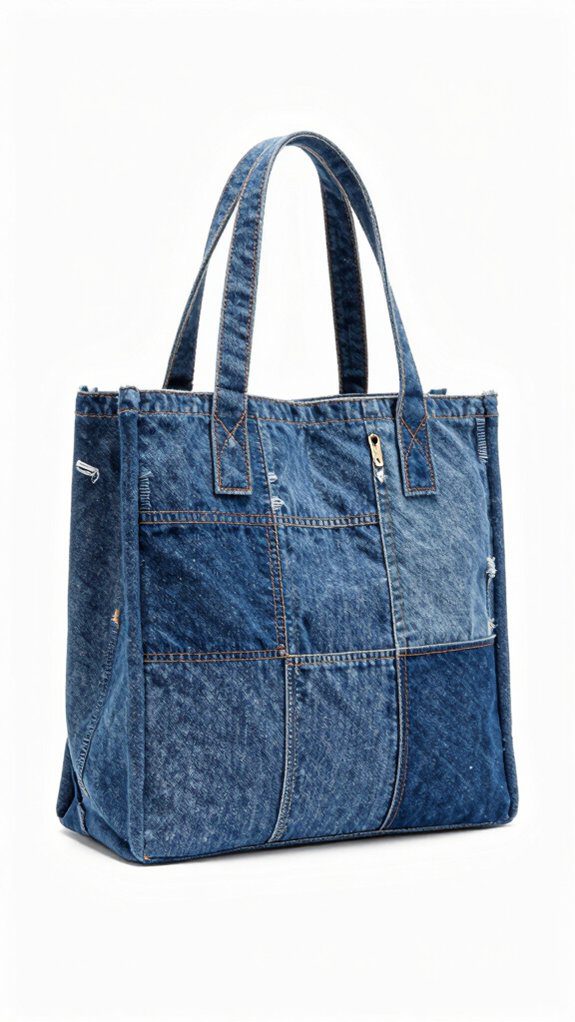
If you want a bag that stands up on its own and holds everything neatly, try making a structured boxy bag from old jeans—I’ll walk you through the basics. I love how this piece blends sustainable fashion and denim upcycling, and you’ll feel proud carrying something sturdy and stylish. First, cut the jeans to your desired length and remove inner seams so the fabric shapes cleanly; it’s like giving the denim a fresh start. Pinch and sew the corners for a flat bottom—that’s the trick that adds volume and makes it functional. Fuse interfacing to panels to keep it upright and stop sagging over time. Finally, personalize with patchwork or embellishments so your bag truly belongs to you.
Scrap Denim Coin Pouch
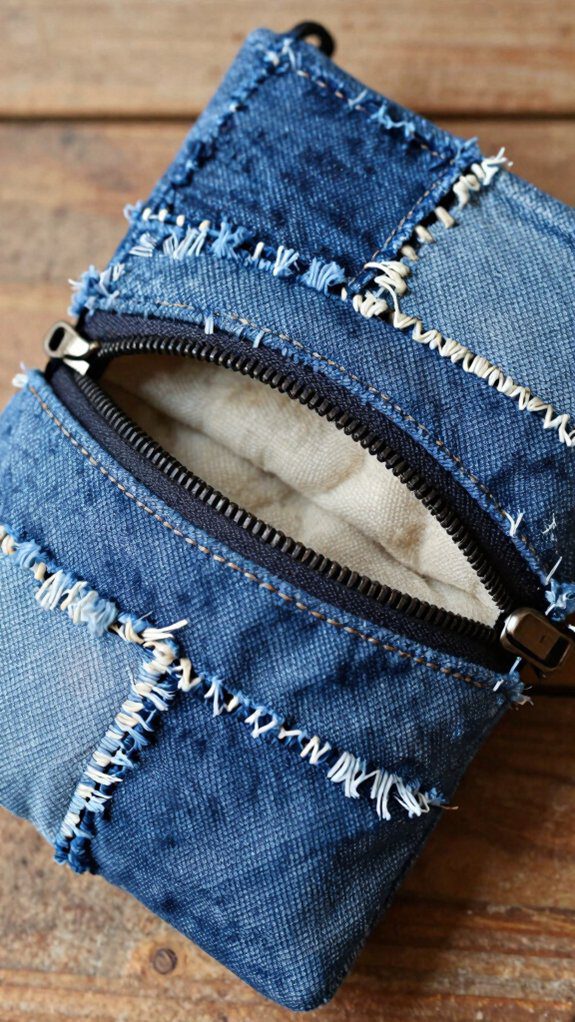
When you’ve got a pile of denim scraps, a coin pouch is one of the quickest, most satisfying projects you can make—so let’s turn those leftovers into something useful. I like to pick scraps with interesting seams or pockets, then layer a bright lining so coins are easy to spot. Use denim patching techniques—visible mends, decorative stitches—to make each pouch feel personal and sturdy.
- corner patches that echo old pockets
- zigzag-reinforced seams for durability
- contrasting lining for easy coin finding
For construction I sew right sides together, backstitch at stress points, and zigzag raw edges to prevent fray. Add coin pouch embellishments like buttons or embroidered initials to create gifts that say, “you belong here,” while staying practical and stylish.

![10 Best Diy Crafts With Scrap Fabric [2026]](https://diycraftnest.com/wp-content/smush-webp/2026/01/1768600426164.jpg.webp "10 Best Diy Crafts With Scrap Fabric [2026] 34")