15 Small Wooden Projects to Sell That Are Easy and Profitable
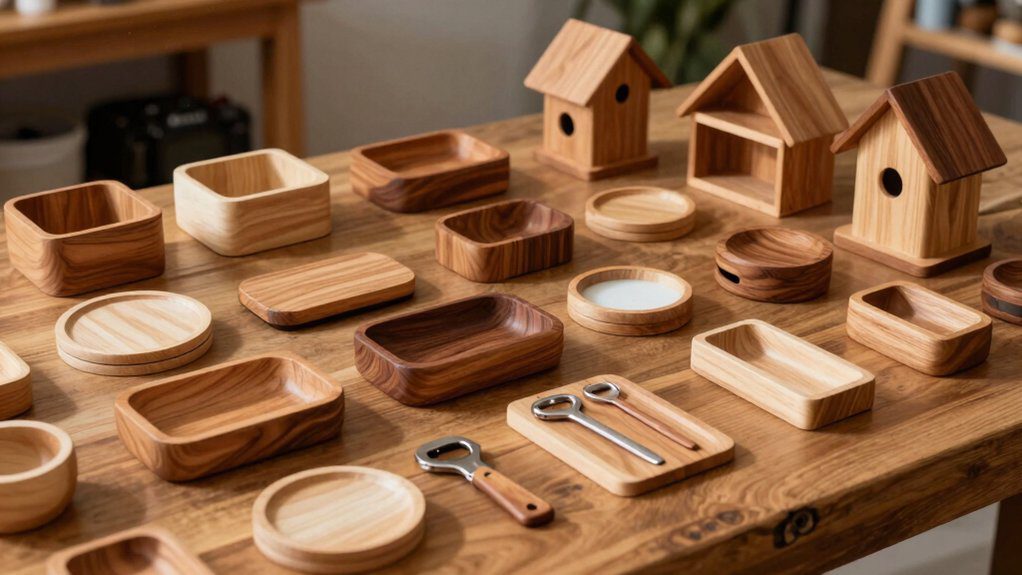
Got a scrap-wood pile and a cluttered bench? I did, too. I started making 15 small wooden projects to sell that are easy and profitable with a glue gun, saw, and Dollar Tree bits: coasters, phone stands, candle holders, mini signs, shelves, bookends, trays, and crates. I batch-cut blanks, sanded smooth, and used oil or wipe-on poly for a clean finish. The bottle opener and tray sold fastest, and the best part’s still coming next.
Love cozy DIY projects? 💕
Get free printable guides, exclusive tutorials & surprise craft goodies straight to your inbox.
Disclosure: This post may contain Amazon affiliate links, at no extra cost to you. Content on DiyCraftNest is created with research support from AI tools and carefully reviewed, edited, and fact-checked by the lead author, Daniel Pat, to ensure accuracy and reliability. Learn more
Key Takeaways
- Focus on small, repeatable projects like coasters, mini signs, phone stands, and key holders for fast production and low material waste.
- Sell higher-margin decorative items such as rustic candle holders, picture frames, and wooden trays with personalized engraving or painted customization.
- Make functional home goods like plant stands, floating shelves, bookends, and small crates, which buyers pay more for than raw lumber costs.
- Add simple upgrades like felt lining, cork pads, metal hooks, brass hardware, and wipe-on finishes to increase value and appeal.
- Batch-produce from scrap hardwoods, pine, maple, walnut, or plywood using basic tools to keep labor low and profits strong.
Wooden Coasters
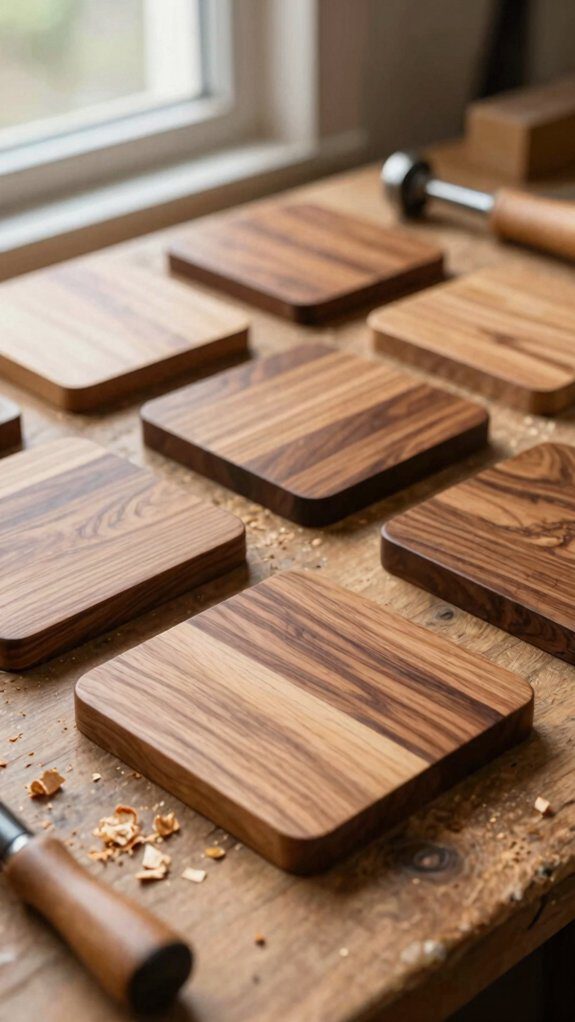
If your coffee table keeps ending up with ring marks and mystery stains, I’ve got a tiny fix that can turn into cash: wooden coasters.
I make mine from maple or walnut scraps, cut 4-inch rounds, and sand them smooth in minutes. A cheap wipe-on finish and cork pads keep them table-friendly. Plain sets sell well, but laser engraving lets me add names, jokes, or pet faces for more money. I’ve even glued up blanks for faster stack-cutting, which saves time. One set on my shelf sold before my coffee cooled. Those drink rings don’t stand a chance.
Mini Plant Stands
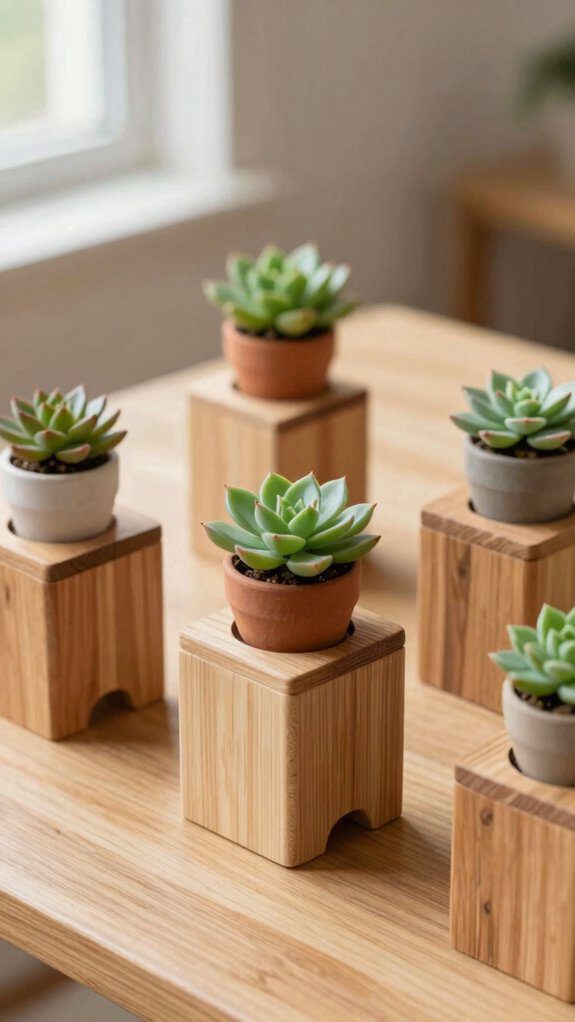
My easiest version uses scrap hardwood for the top and cheap pine legs, glued and doweled together with a simple three-leg design.
When my sad corner needed a lift, I built mini plant stands in under an hour and felt like my living room finally had friends.
I use DIY dowel joinery, a glue gun for quick layout, and a 1×10 board or plywood scraps.
Two heights sell fastest: 8 and 12 inches. With interchangeable tabletops, I match 4″ to 8″ pots.
A clear oil finish looks warm; milk paint adds charm.
I’ve sold them for $35, and buyers always smile.
Rustic Candle Holders
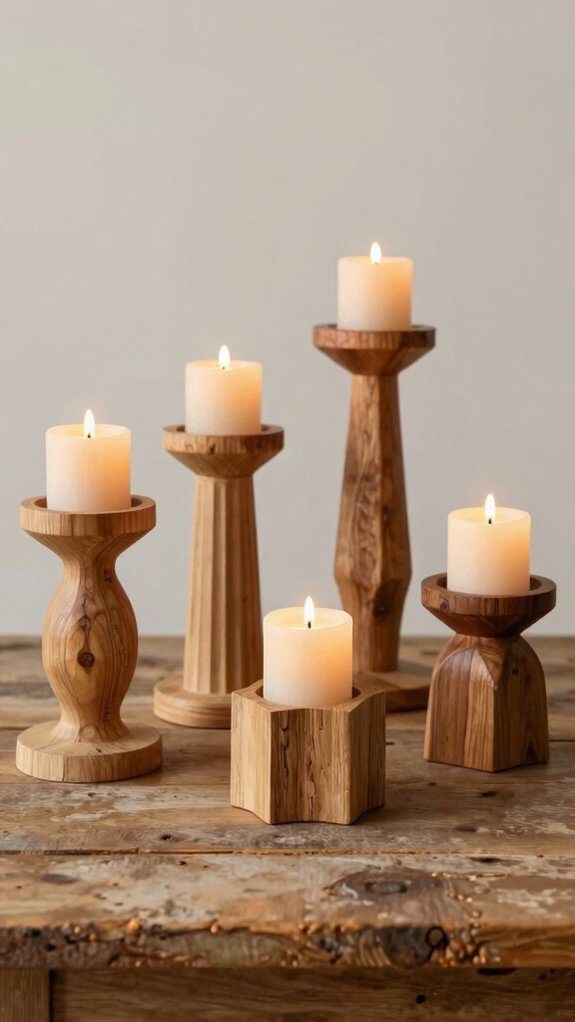
If your shelf feels a little too plain, I’ve found that rustic candle holders can warm it up fast with that cozy farmhouse style everyone seems to love.
I like making mine from reclaimed pine scraps or cedar offcuts, then adding a quick beeswax finish and a tiny metal accent—cheap, simple, and way nicer than the plain stuff I used to buy at IKEA.
A set of three usually looks best on a table, and honestly, that little trio can turn a boring corner into the kind of spot people notice first.
Farmhouse style
I cut 4–6 inch blocks, drill snug candle holes, and seal them with matte polyurethane.
I’ve sold bundles of three at farmers markets, and people love the handmade feel.
Bonus: one board makes plenty, so my profit smile stays real.
Wooden Phone Stand
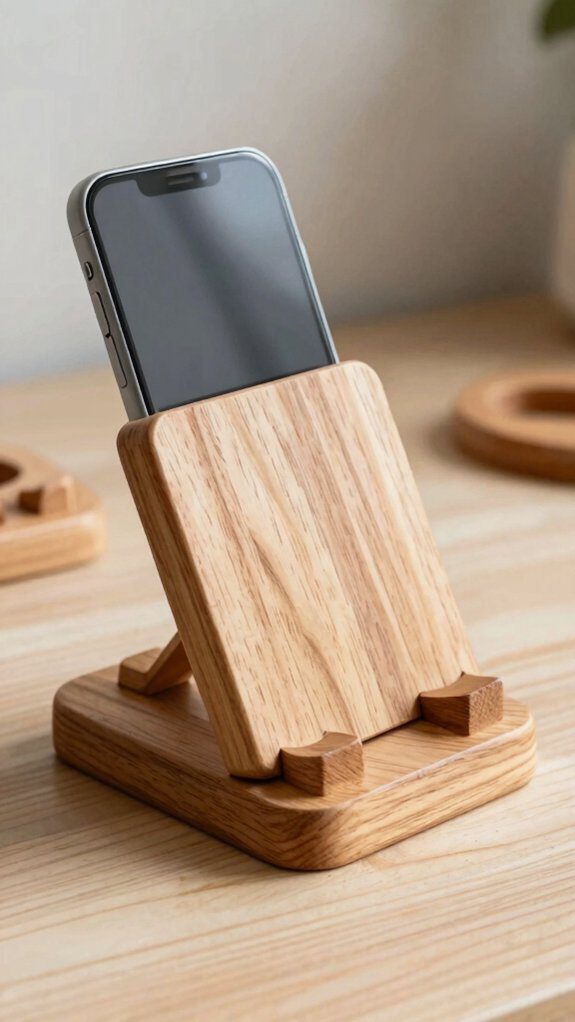
For a simple version, I grab a 4″ x 6″ x 3/4″ board from walnut, cherry, or maple, then cut a slot about 1/2” from the front edge with a slight rear tilt so the phone sits up nicely.
I keep it at an ergonomic angle for phone photography and late-night scrolling.
A 3/8″ rear notch lets the charging cable sneak through, which feels like a tiny miracle.
I sand, oil, and sometimes add initials with a glue gun stencil.
It takes me 15 minutes, costs a few dollars, and sells fast at craft fairs.
People love practical stuff.
Small Floating Shelves
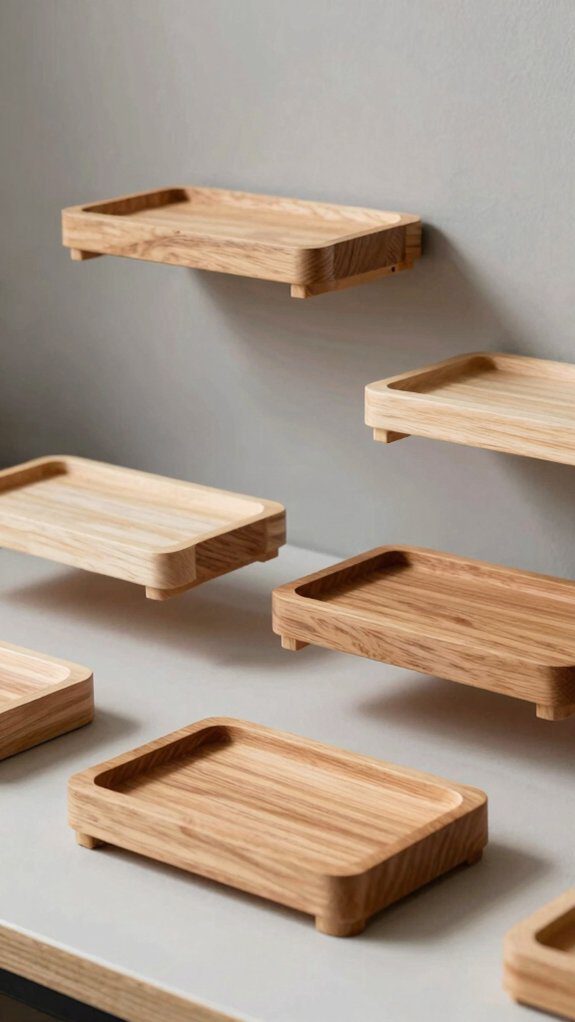
The trick is keeping the build clean and sturdy. I make small floating gallery shelves that fix clutter fast and look sharp over my couch. I use a 1×8 oak board, plywood box, glue, and hidden brackets; materials run about $10–$25.
| Build | Why it works |
|---|---|
| 24″ shelf | Easy to batch |
| Stain + poly | Fast, smooth finish |
| Set of 2 | Sells quicker |
I cut, rabbet, glue, and screw, then finish with wipe-on poly. They hold 20–50 lbs when anchored right. I’ve even used one as an under bed organizer. Add live-edge or custom stain, and buyers grin.
Wooden Key Holders
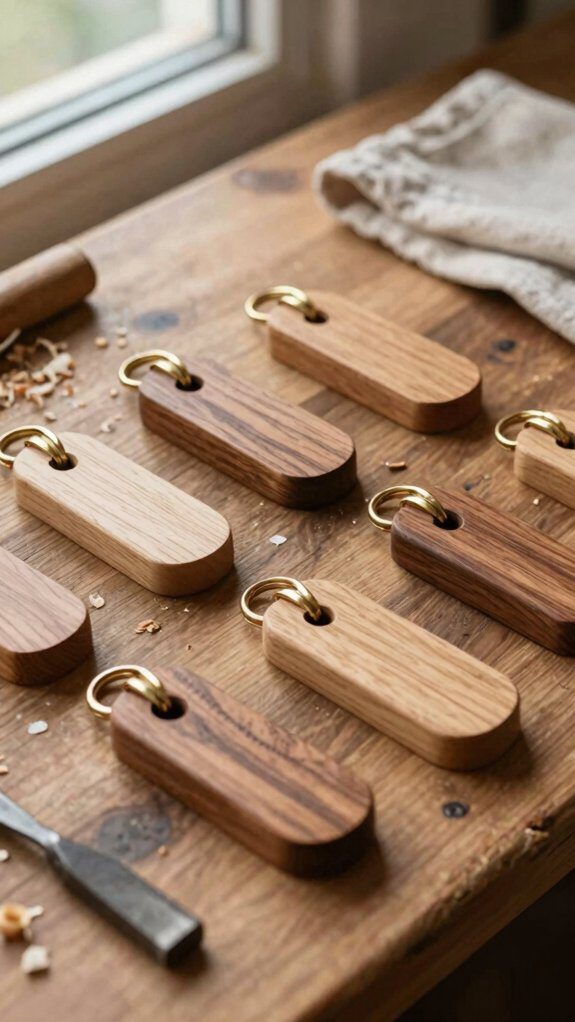
A messy counter can make a whole house feel scattered, and that’s why I started making wooden key holders after my floating shelves cleaned up my walls. I love the instant entryway organization they bring.
I cut a 12×6 oak board, added 3 hooks, and finished it with food-safe oil. Easy win.
After pre-drilling and countersinking, I batch-made a few in one evening. I tried one with a tiny mail slot, and buyers loved it.
Key customization like engraving or a magnetic strip helps me charge more, and honestly, it feels like I’m selling calm, not just wood.
Handmade Picture Frames
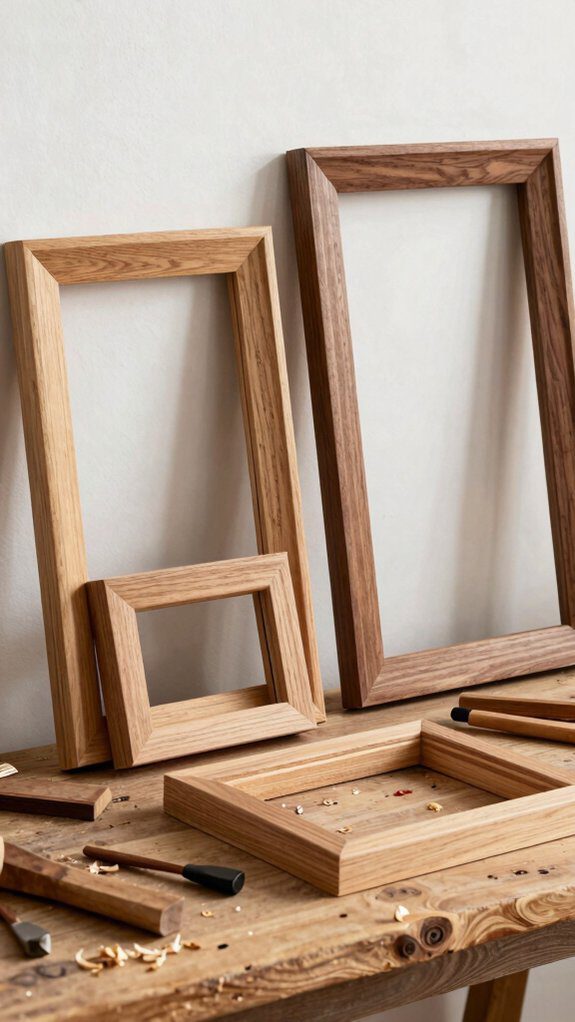
I’ve turned plain handmade picture frames into little gift-makers by adding names, dates, or a favorite quote, and it’s amazing how fast a $3 frame can feel special.
I usually start with simple wood, a glue gun, and a sanded finish, then I add the custom touch last so I don’t mess it up like I did once with crooked lettering—yikes.
If you’re looking for a small project that feels personal, sells well, and gives you room to get creative, this one’s got real charm.
Personalized option
A 5×7 frame takes me about 40 minutes and costs under $10 in wood, but it can sell for $30 or more.
I’ve even used IKEA frames and Dollar Tree mats for quick mockups.
The best part? Buyers smile when it feels made just for them.
Wooden Jewelry Organizer
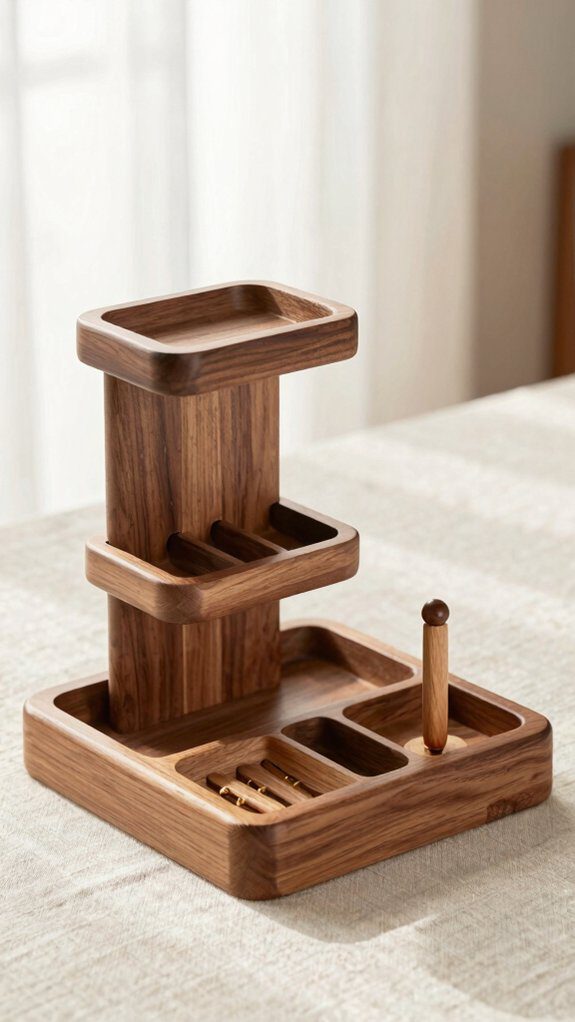
Cluttered dresser, tangled chains, and one lonely earring hiding like it pays rent—yep, that was my starting point before I built my first wooden jewelry organizer. I used poplar, a glue gun, and a little patience.
I made compact storage with ring rolls, small square spots, and one shallow tray, then lined everything with felt so pieces wouldn’t scratch. The box-style build was easy: glue, clamp, and add a few brad nails.
Mine cost about $6 in materials and sold for $35 at a craft fair. With eco friendly finishes and a name engraving, it felt personal—and profitable.
Mini Wooden Signs
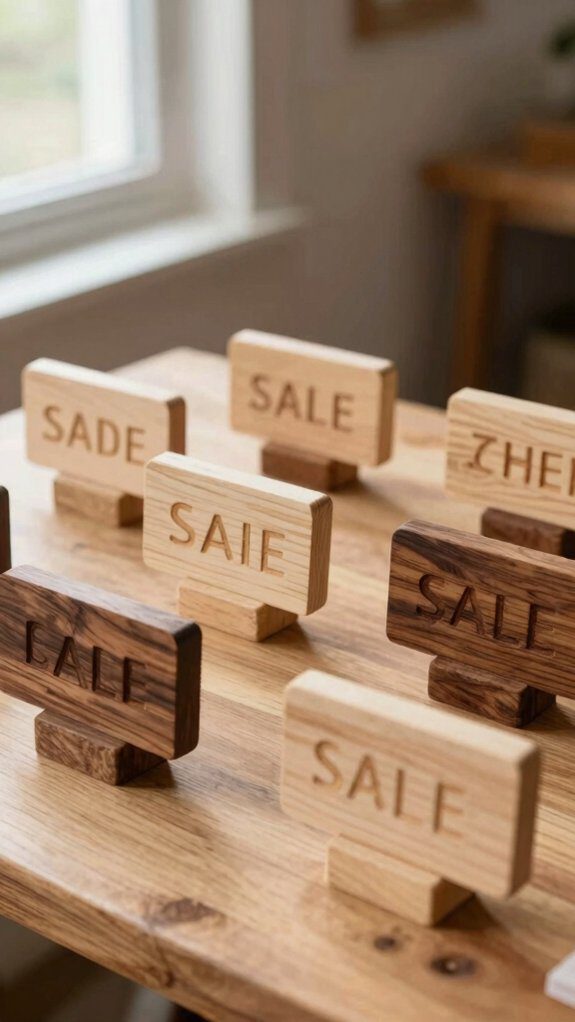
Tiny blank walls can go from “meh” to “wait, where’d you get that?” pretty fast, and that’s exactly why I started making mini wooden signs. I cut scrap pine, add hand-painted lettering or vinyl, then seal with weatherproof finishes.
| Size | Cost | Price |
|---|---|---|
| 4×6 | $2 | $12 |
| 5×7 | $2 | $18 |
| 8×10 | $2 | $30 |
| custom | $2 | +$15 |
| seasonal | $2 | repeat |
I use a glue gun, Dollar Tree paint, even IKEA frames for display. Seasonal typography and pet names sell fast. At markets, folks smile, point, and say, “That’s us.”
Wooden Spoon Set
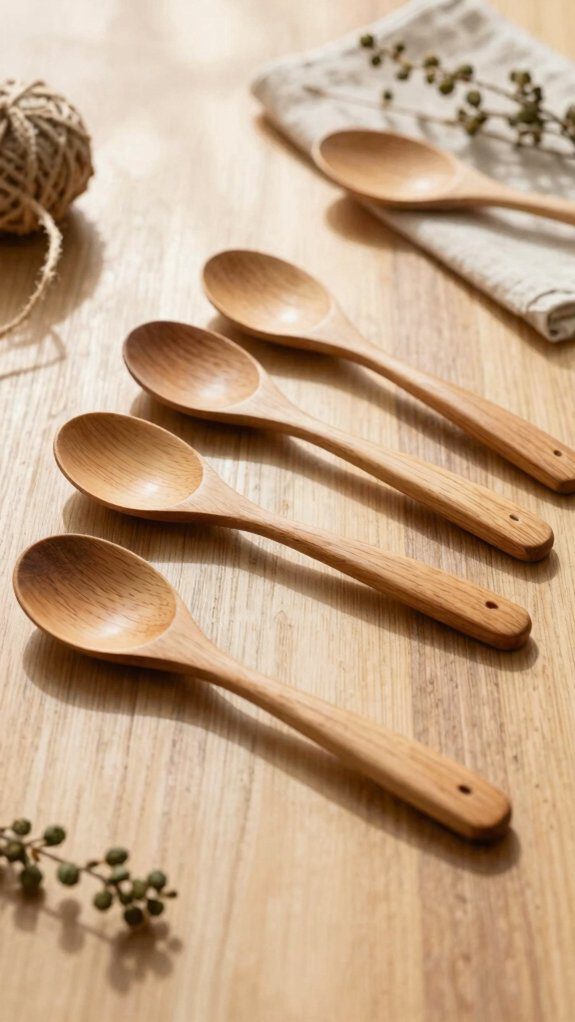
I keep it beginner-friendly: trace a spoon shape, cut the blanks, then carve each one in stages so I’m not wrestling the whole set at once.
When my kitchen needed a prettier stirring tool, I made a wooden spoon set with a 1″ gouge and spokeshave.
I use maple or cherry, sometimes scrap hardwood from bigger projects, because sustainable sourcing keeps costs low and feels right.
A 24″ board can yield three to five spoons for about $5–$10.
I sand to 220–320 grit, then brush on mineral oil and beeswax.
The ergonomic handles feel good, and buyers pay $20–$60.
Batch carving saves my sanity.
Essential Oil Storage Box
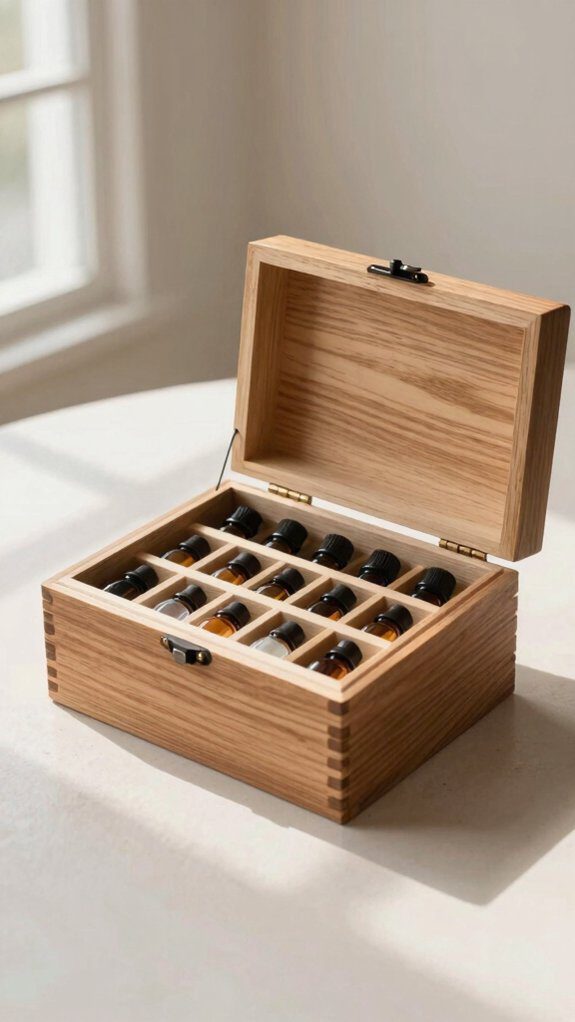
I’ve watched tiny vital oil bottles take over my shelf like they pay rent, so an indispensable oil storage box feels like a smart fix and a giftable one too.
I’d build mine from birch plywood, add felt-lined slots, and use a glue gun plus a few Dollar Tree touches so it looks polished without getting elaborate.
If I added a lid with a simple brass hinge, I’d have a neat little present that smells nice, stores well, and makes people think I spent way more than I did.
Giftable item
My bathroom counter used to look like a tiny oil spill had happened there—little glass bottles rolling around, caps missing, and me muttering while I hunted for lavender before bed. So I built an indispensable oil storage box from maple scraps and a Dollar Tree hinge, and it felt like a small win.
I cut snug dividers, added a magnetic lid, then labeled the top with my glue gun and a simple diffuser icon. It now works as a travel case and scent sampler, too. At markets, people reach for it like it belongs in their home, not mine. That’s the sweet spot.
Wooden Bookends
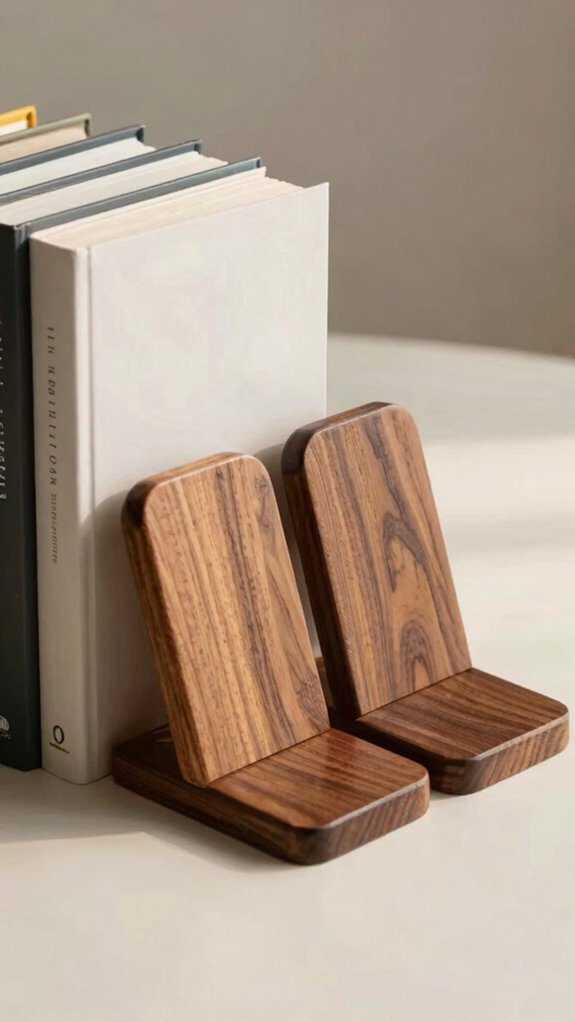
Tired of books sliding around like they’ve got somewhere better to be? I make wooden bookends that feel like they belong in a cozy, organized home, not a random pile.
I use oak, maple, or walnut scraps, 3/4-inch stock, glue, and my table saw; a rabbet joint keeps it simple. A quick coat of tung oil makes the grain glow.
I’ve sold pairs for $30 to $45 at craft fairs and Etsy. Add a brass strip, bevel, or live edge, and buyers notice. Batch-cut blanks, and suddenly your shop feels less like chaos and more like a tiny victory.
Wall-Mounted Bottle Opener
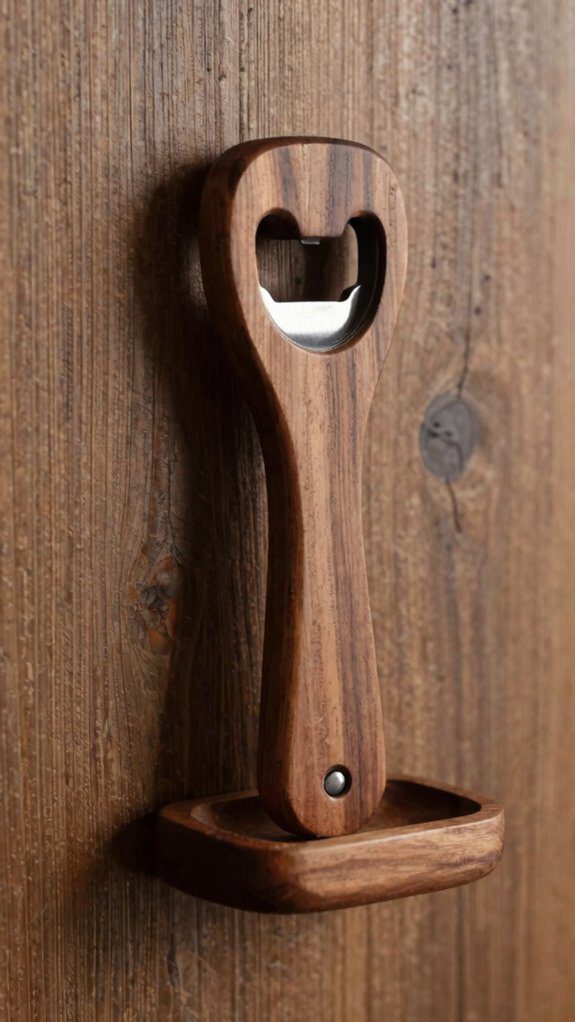
A plain wall can turn into a tiny money-maker with one good wall-mounted bottle opener—and it’s easier than it looks. I like using oak scraps, a cast-iron opener, and a little cap-catcher so the piece feels finished, not cheap.
With a saw, drill, and sander, I can build one in 15 minutes, then brush on oil.
My DIY variations keep buyers curious: live-edge, engraved name, or a dual-opener setup. I’ve even tested a bar top installation style for home hangouts. Price it at $25–$40, and the smiles usually come first.
Wooden Tray with Handles
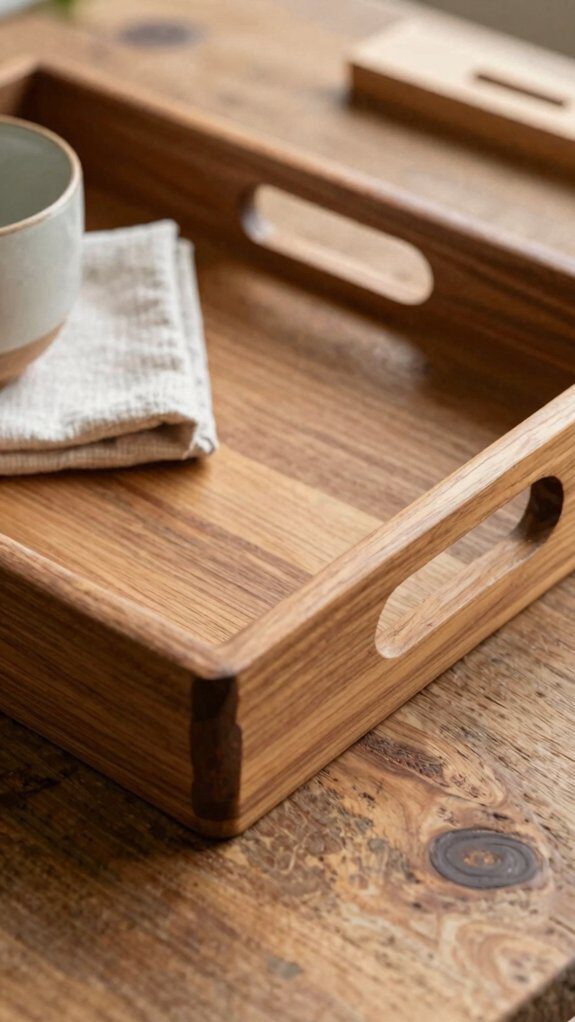
When my coffee table started looking like a junk drawer, I made a wooden tray with handles to turn the mess into a neat serving decor piece.
I used pine, wood glue, and a couple of Dollar Tree handles, and even my first wobbly cut looked good once I sanded it smooth and gave it a quick coat of finish.
It’s a simple build, sells well, and has that “I meant to style this” look that makes people smile before they even pick it up.
Serving decor piece
I like using ¾” hardwood like maple or walnut for the sides, then building a 12″×18″ tray that feels sturdy without getting too heavy. When my coffee table looked lonely, this serving decor piece fixed it fast.
| Item | Cost | Note |
|---|---|---|
| Wood | $15–$25 | Glue-up top |
| Handles | $6–$16 | Brass or bronze |
| Finish | $0–$10 | Food-safe oil |
| Labor | Low | Fast build |
| Sale price | $45–$75 | Plain version |
I rout finger joints, glue, and add countersunk screws. Then I get playful with hand painted motifs or charcuterie styling. Two coats of wipe-on poly? Done. Tiny win, big smile, and yes, the tray finally earns its spot.
Small Wooden Crates
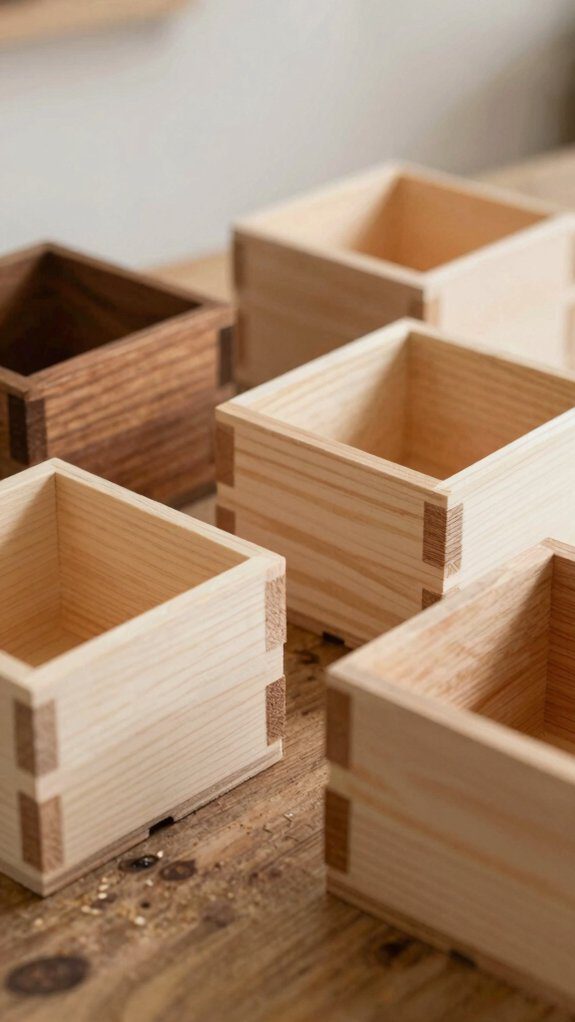
I’ve built them from plain 1×4 pine boards with just a saw, wood glue, and a nail gun, and the whole thing can come together fast once the cuts are laid out.
When my entryway turned into a shoe pile, these small wooden crates saved the day. I use a stackable design and ergonomic handholds, then glue and pin the sides in 20 minutes or so.
Scrap slats keep lumber under $8, and a little sanding plus clear coat gives that cozy market look. I’ll sell mine for $20-$40, with brand burns or stencils nudging repeat orders fast.