10 Simple Ceramic Bowl Painting Ideas Using Acrylic Paint
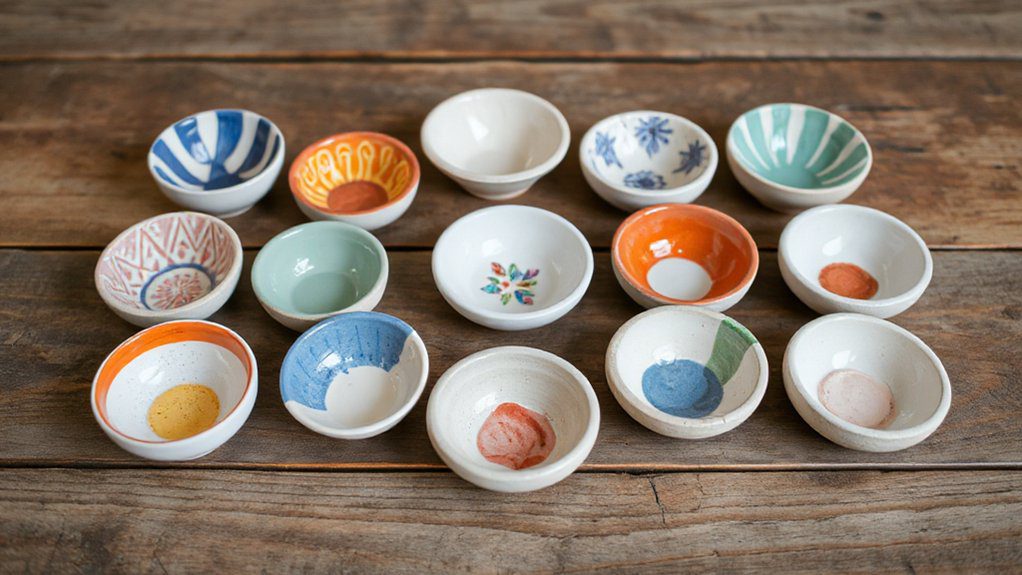
I’ll keep this easy: start with a bisque ceramic bowl, clean and degrease it, and use non-toxic, water-based high-flow acrylics. Try 10 simple ideas—crisp taped stripes, bold color blocks, triangles, chevrons, half-dipped ombré, polka dots, dotted rims, quick florals, mini mandalas with paint pens, or a galaxy splatter. Paint thin coats, let each dry 30–60 minutes, then seal after 24–48 hours with Mod Podge or spray sealer. Stick around for extra prep and sealing tricks.
Love cozy DIY projects? 💕
Get free printable guides, exclusive tutorials & surprise craft goodies straight to your inbox.
Disclosure: This post may contain Amazon affiliate links, at no extra cost to you. Content on DiyCraftNest is created with research support from AI tools and carefully reviewed, edited, and fact-checked by the lead author, Daniel Pat, to ensure accuracy and reliability. Learn more
Key Takeaways
- Paint a simple floral rim using thin acrylic layers on clean bisque ceramic for smooth, charming edges.
- Use painter’s tape to create crisp stripes or geometric blocks, then peel after drying for sharp modern lines.
- Add playful polka dots, dashes, or confetti marks with a round brush or paint pen for quick, cheerful patterns.
- Try a basic mandala: dot concentric circles from the center outward, letting each thin coat dry before layering.
- Finish with a food-safe clear sealer after 24–48 hours curing to protect the design and keep cleanup easy.
Choose the Right Ceramic Bowl and Acrylic Paint
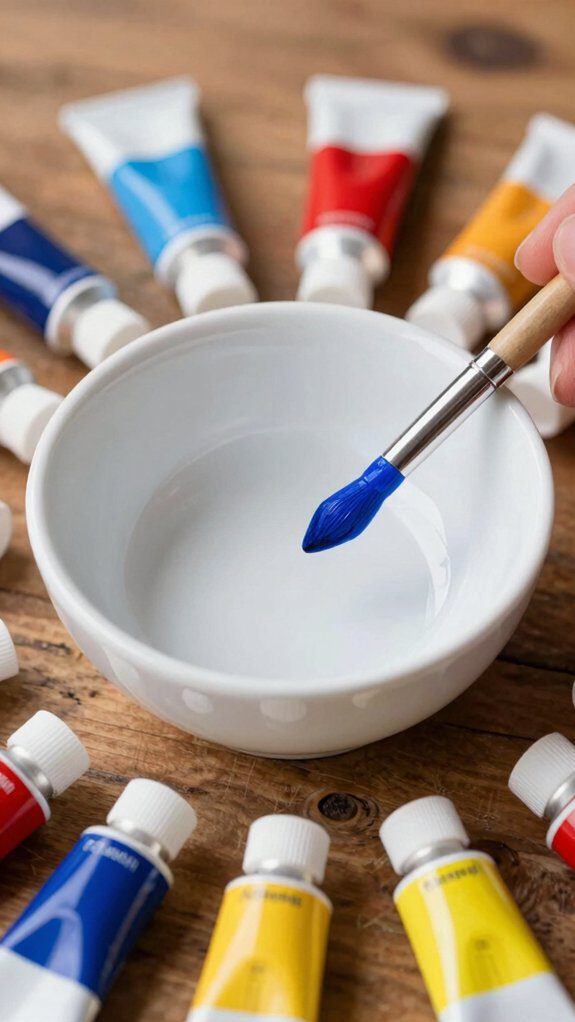
First things first, I always start by picking a bisque ceramic bowl, because that slightly chalky, porous surface grabs acrylic paint like a sponge and helps the design last. When you’re browsing ceramic types, look for “bisque” or “unglazed,” not shiny glazed bowls, since slick surfaces can make paint slide.
Next, I match the bowl with the right paint types. I choose water-based, non-toxic acrylics because they’re safer to use and easy to clean up. For the smoothest, most durable color, I reach for high flow acrylics; they soak in instead of sitting on top like a thin skin.
Before any color goes on, I wipe the bowl clean and degrease it so we all get great results together.
Gather Supplies: Brushes, Pens, Tape, Sealer
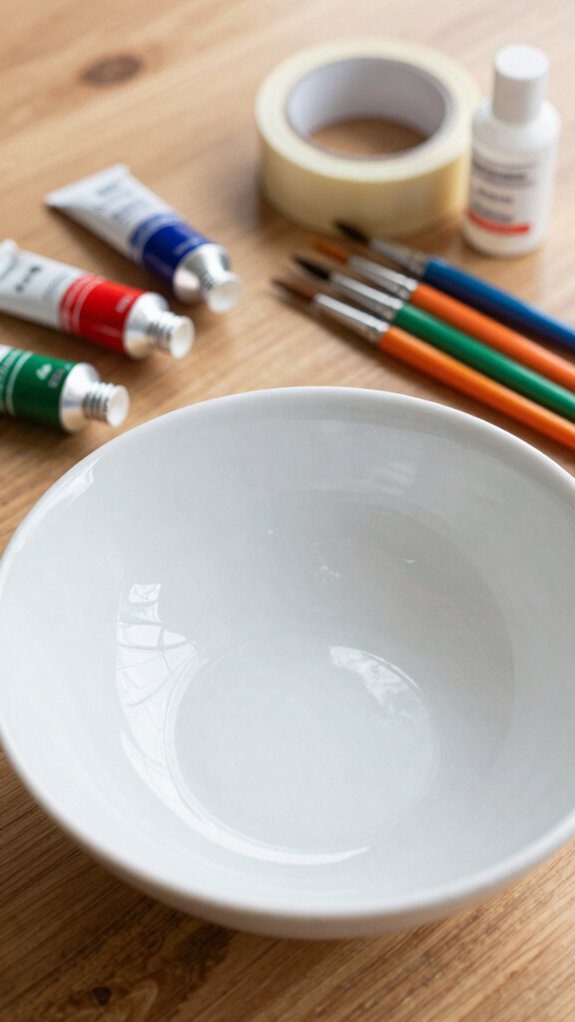
Before I paint a single stroke, I like to set out a small “tool buffet” so I’m not hunting for supplies with wet paint on my fingers. Grab a mix of brushes: a fine-tip for tiny dots and lines, plus a wider brush for smooth fills—different brush techniques make your bowl feel intentional.
| Supply | Why I use it |
|---|---|
| Fine + broad brushes | Details vs. coverage |
| Ceramic-safe paint pens | Crisp lettering and tiny shapes |
| Painter’s tape | Sharp lines and easy geometry |
| Sealer (ex: Mod Podge) | Protects and strengthens |
I also match tools to paint types: acrylics love soft brushes, and pens should cure for durability. Finally, I double-check everything is non-toxic and food-safe, so our little art club can actually serve snacks from these bowls.
Prep the Bowl: Clean, Sand, and Plan Your Layout
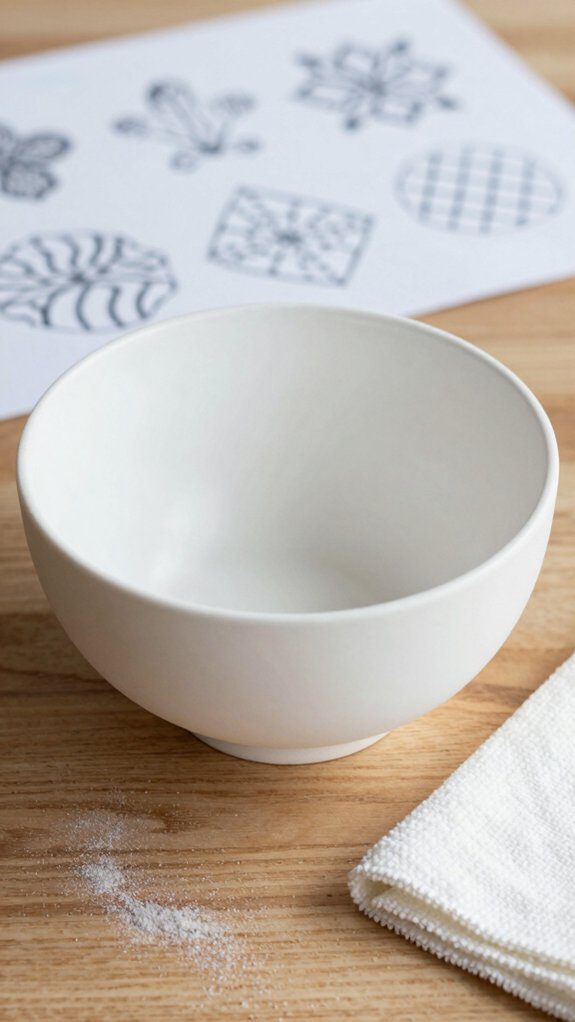
With my little tool buffet ready to go, I turn to the bowl itself—because even the prettiest paint won’t stick well to a slick, dusty surface. First, I use simple cleaning techniques: warm water, a drop of dish soap, and a good rinse to lift oils from hands and kitchen air. Then I dry it completely with a towel and let it air-dry, too, so nothing sneaky stays damp.
Next come my sanding tips. I lightly scuff the bowl with fine-grit sandpaper, especially if it’s glossy, just enough to feel a soft “tooth,” not scratches. Finally, I plan the fun part: I sketch ideas, try a template, and use painter’s tape to map crisp edges so your design looks intentional.
Paint Clean Coats: Drying Time, Layering, and Fixes
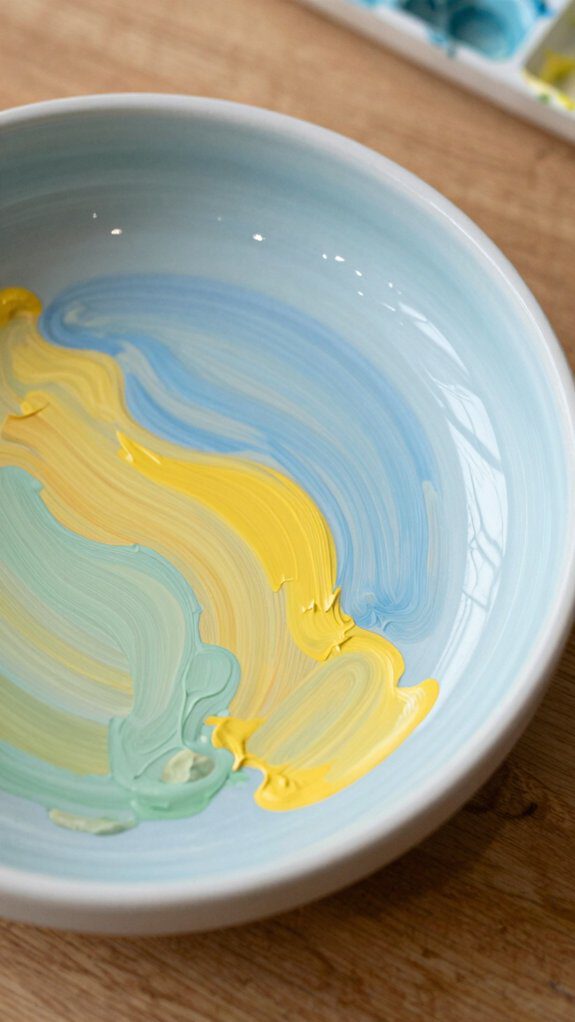
Although it’s tempting to load up your brush and strength through, clean coats are what make painted ceramics look smooth, bright, and “made on purpose.” I paint in thin, even layers of acrylic and give each one a real chance to dry—usually 30 minutes to an hour—so the next coat doesn’t drag, smear, or peel up the one underneath.
For reliable paint adhesion, I stick to thin coats and smart layering techniques. If the first pass looks patchy after it’s dry, I lightly sand with fine-grit paper, wipe away dust, and repaint. That tiny reset makes the next layer look silky.
When fixing mistakes, I wait until the paint is fully dry, then gently scrape with a craft knife or sand, clean, and touch up. After the final coat, I respect drying times: 24–48 hours.
Seal Acrylic Paint on a Ceramic Bowl (What to Use)
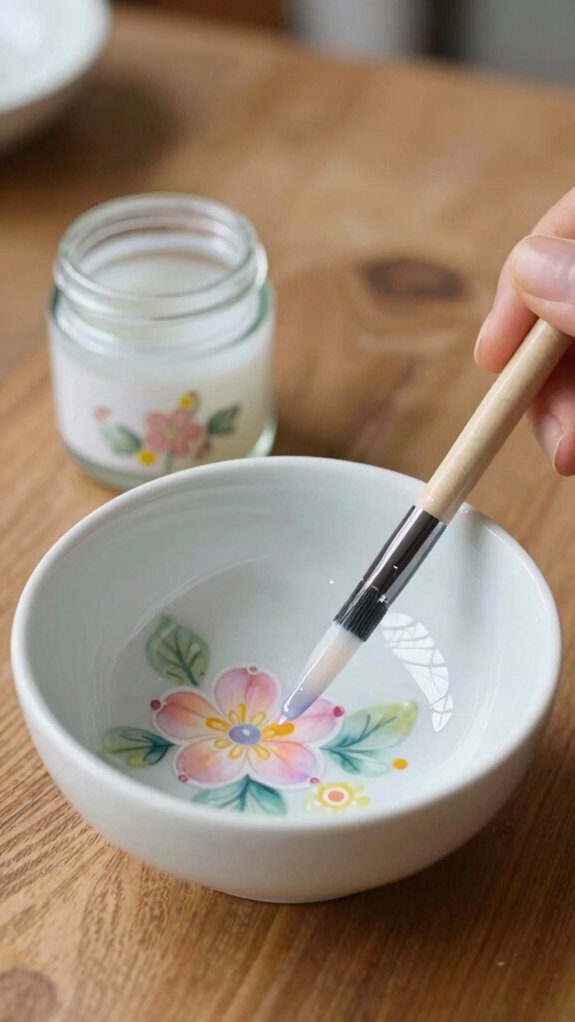
Three sealers cover almost every acrylic-painted ceramic bowl I make: Mod Podge for a simple, classic topcoat, a clear spray sealer for quick and even coverage, and a two-part epoxy when I need a tough, waterproof finish.
First, I let the paint dry all the way—no shortcuts—so the sealer sticks and lasts. For Mod Podge, I brush on thin, smooth coats in a well-ventilated spot, letting each layer dry before the next. If you want fast and tidy, I grab a clear spray sealer and mist light passes, turning the bowl as I go. For maximum durability, I mix a two-part epoxy and spread it carefully for a glossy shield. One more note: for bowls meant for eating, check food safety—most paints and sealing methods aren’t food-safe.
Paint a Simple Floral Rim (Easy Beginner Design)
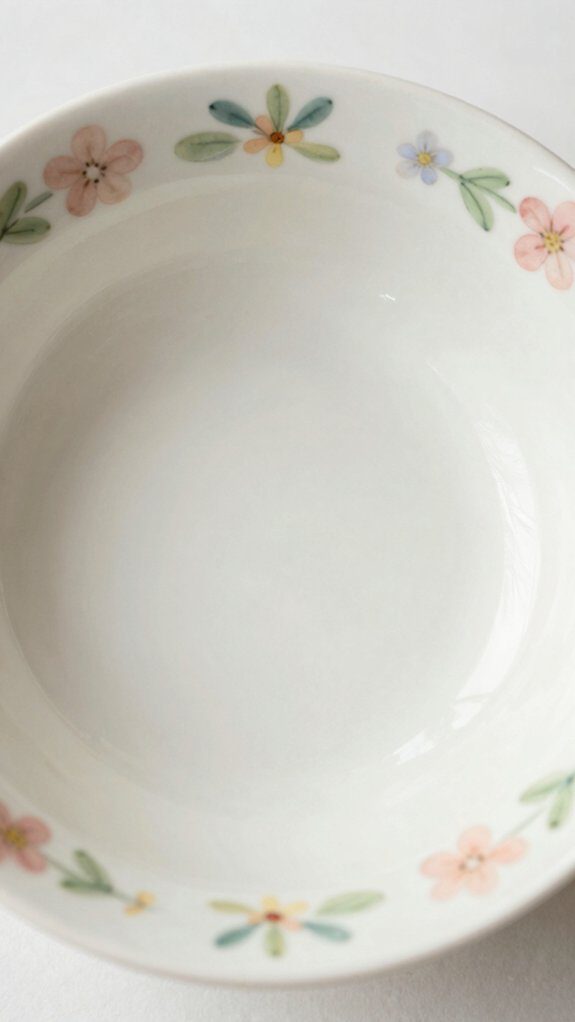
One of the easiest ways to make a plain ceramic bowl look charming is to paint a simple floral rim. I start by picking soft acrylics for a romantic vibe—think pastel pinks and gentle greens—so your bowl feels like it belongs in our cozy craft circle.
Next, I practice a few flowers on paper first. It helps me get smooth petals and leaves before I move to the bowl. Then I use a fine-tip brush or paint pen to outline small blooms around the rim, spacing them evenly like a friendly little garland.
For extra floral inspiration, I play with color mixing and tuck in an unexpected shade, like coral or mint, for a whimsical pop. Let it dry fully, then add clear sealer.
Paint Modern Geometric Shapes (Minimalist Look)
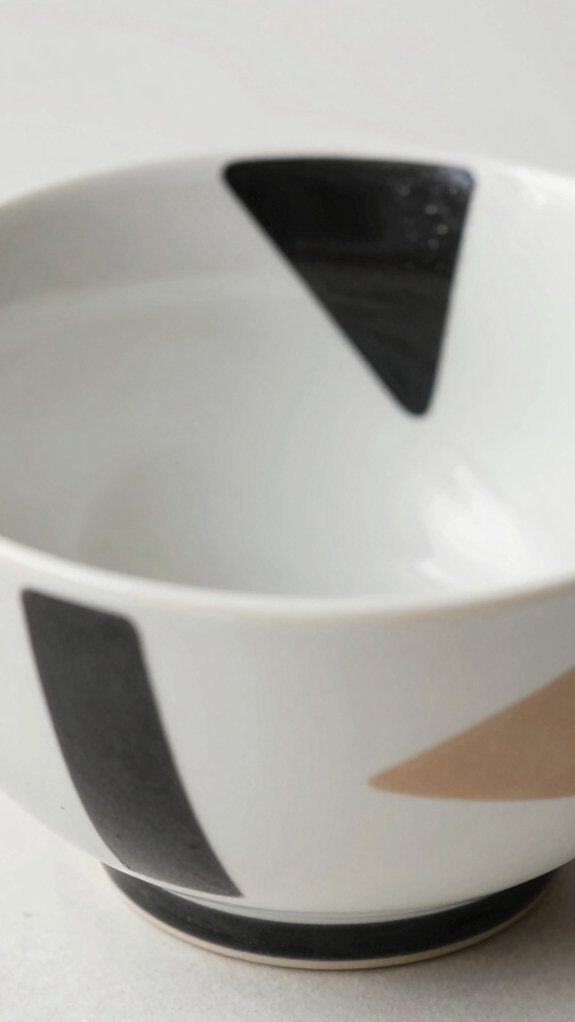
When I’m craving a clean, modern vibe, I reach for geometric shapes—think crisp triangles, neat squares, and simple circles—and keep the layout symmetrical so the bowl looks sleek instead of busy. I pick a tight palette (2–3 colors), then lean on color theory: one main shade, one contrast, and plenty of negative space so everyone’s design feels calm and confident.
| Element | Easy choice | Why it works |
|---|---|---|
| Shapes | Triangles | Sharp, modern energy |
| Shapes | Squares | Steady, balanced feel |
| Shapes | Circles | Softens the look |
| Lines | Thin + thick | Simple, still interesting |
| Palette | Bold or muted | Clean contrast, minimalist |
For geometric inspiration, I sketch lightly, then use painter’s tape to protect edges for crisp shapes. Let each layer dry.
Paint Crisp Stripes With Masking Tape
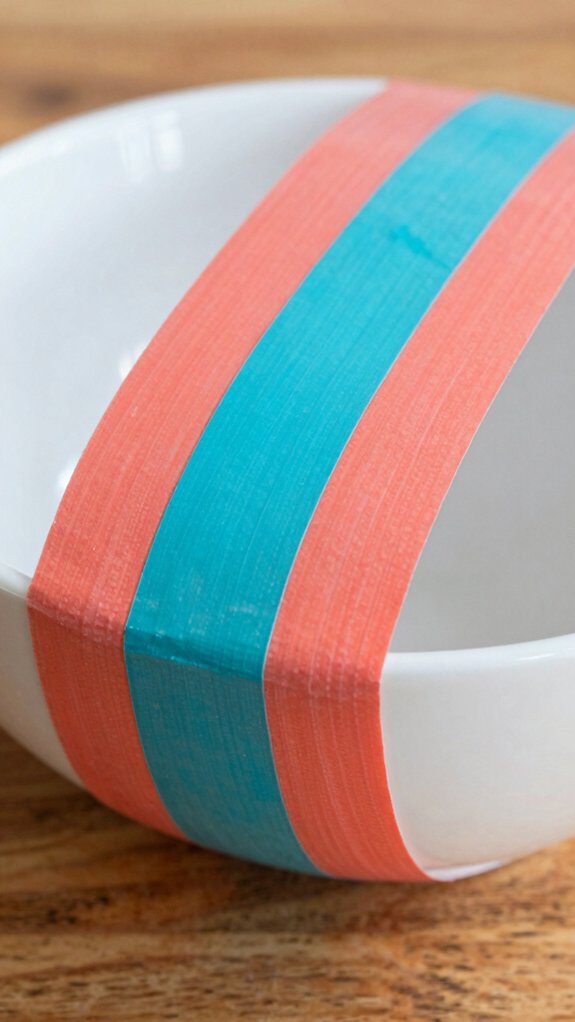
If you want stripes that look sharp enough to feel store-bought, masking tape is my go-to trick for turning a plain ceramic bowl into something bold and modern. First, I clean the bowl with a degreaser so paint sticks like it should—no weird slick spots. Then I lay down high-quality tape, pressing the edges firmly with a fingernail for clean lines. These masking tape techniques help our projects look “real,” like something you’d proudly set out for friends.
Next, I pick two contrasting acrylic colors for strong impact. I brush on several thin coats, letting each one dry fully. When the paint’s dry, I peel the tape back slowly for crisp stripes. For finishing painting tips, I seal it with clear acrylic sealer for decorative durability.
Add Polka Dots and Dashes (Fast, Playful Pattern)
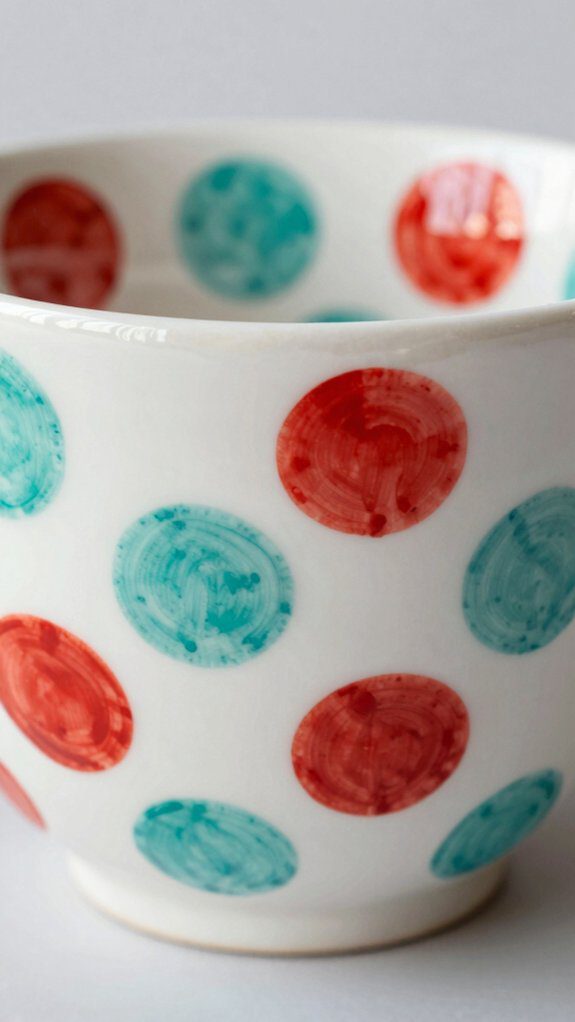
Although stripes look sleek and modern, I reach for polka dots and tiny dashes whenever I want a bowl to feel instantly fun and cheerful. This is one of my favorite polka dot techniques because it’s beginner-friendly and fast, so you can jump in and feel like you belong at the craft table.
| Look | Vibe |
|---|---|
| Even, same-size dots | Clean and calm |
| Mixed big and small dots | Whimsical and lively |
| Bright dots + short dashes | Kid-friendly cheer |
| Tool-made dots vs freehand | Neat vs artsy |
I dip a dotting tool or the back of a brush for round dots, then add quick dash marks between them. Bright colors push the playful patterns even more. Let it dry, and you’re done.
Try Two Bold Looks: Mandala Pens or Galaxy Splatter
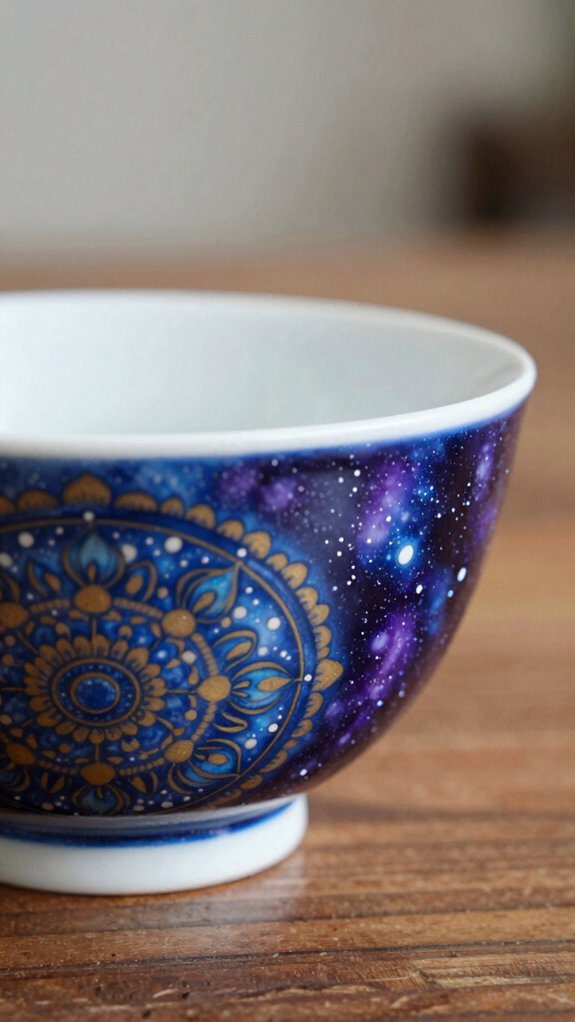
Polka dots and dashes are my go-to for quick fun, but sometimes I want a bowl that stops people in their tracks, so I switch to two bolder looks: mandala pen designs or a galaxy splatter. On bisque ceramic, acrylic grips well, so your art stays bright. For mandala designs, I grab fine-tip paint pens and build tiny dots and petals in calm circles—great for a cozy, “we made this together” vibe. For galaxy effects, I splatter deep blue, purple, and black, then flick white paint for stars.
- Center dot, then ring by ring
- Steady wrist, slow breathing
- Dark base coats, layered splatter
- White star flicks with a toothbrush
- Clear acrylic sealer to finish