19 Pottery Painting Ideas With Flowers for Beautiful Handmade Decor
Transform your ceramic pieces into botanical masterpieces with these stunning flower painting techniques! From delicate wildflower patterns to bold sunflower statements, you’ll uncover endless ways to personalize mugs, vases, and plates. Whether you’re drawn to vintage roses, tropical hibiscus, or minimalist Scandinavian designs, there’s a floral style that’ll make your pottery pop. Stick around, and you’ll unearth the secrets to creating your own ceramic garden.
Love cozy DIY projects? 💕
Get free printable guides, exclusive tutorials & surprise craft goodies straight to your inbox.
Disclosure: This post may contain Amazon affiliate links, at no extra cost to you. Content on DiyCraftNest is created with research support from AI tools and carefully reviewed, edited, and fact-checked by the lead author, Daniel Pat, to ensure accuracy and reliability. Learn more
Key Takeaways
- Create delicate wildflower patterns using thin brushes and seasonal color palettes to achieve a soft, natural meadow-inspired ceramic design.
- Design vintage-inspired rose and daisy motifs with asymmetrical scattering, muted colors, and gentle distressing techniques for an antique aesthetic.
- Craft bold tropical statements with vibrant sunflowers and hibiscus using layered techniques, complementary colors, and dynamic brushwork on pottery surfaces.
- Explore cultural floral styles like blue-and-white ceramic traditions, Scandinavian minimalism, and folk art symmetrical patterns for sophisticated handmade decor.
- Experiment with abstract and monochromatic floral designs using strategic brush strokes, negative space, and a harmonizing color palette to create unique ceramic art.
Delicate Wildflower Pattern
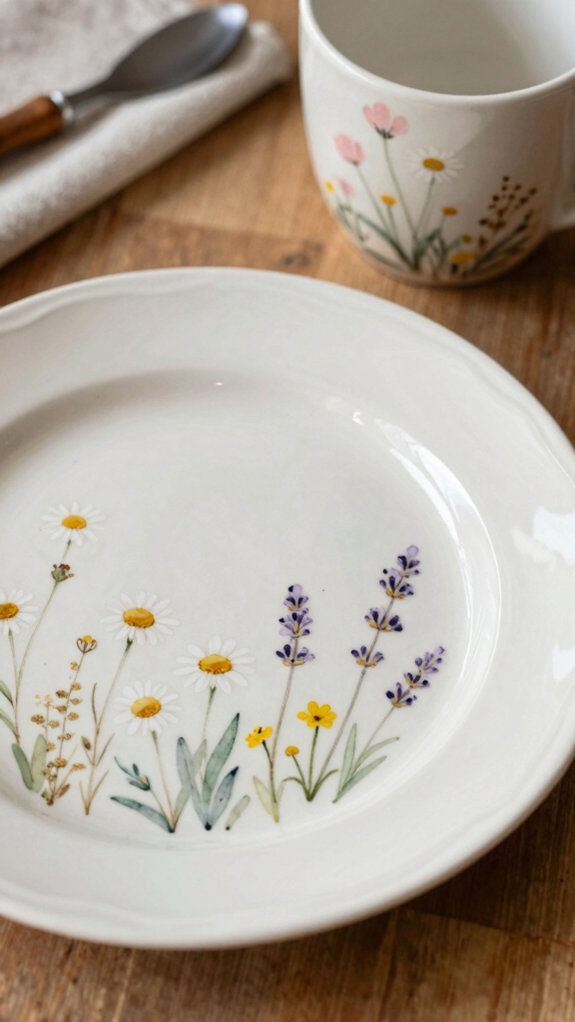
Seizing the ethereal beauty of a meadow on pottery begins with perfecting the delicate wildflower pattern—a design that transforms ordinary ceramic pieces into miniature vistas. I’ve uncovered that brush maintenance is key to creating these intricate designs. A thin round brush (sizes 0-2) lets you craft fine stems and tiny 2-5 petal blooms that dance across your piece. Seasonal palettes help me choose soft, harmonious colors that reflect nature’s gentle hues—think dusty pinks, sage greens, and warm browns. By spacing clusters about 1-2 inches apart and using semi-transparent washes, I create an airy, natural look that feels like a seized moment from a tranquil meadow. Each delicate stroke brings ceramic surfaces to life with whispered botanical elegance.
Bold Sunflower Design
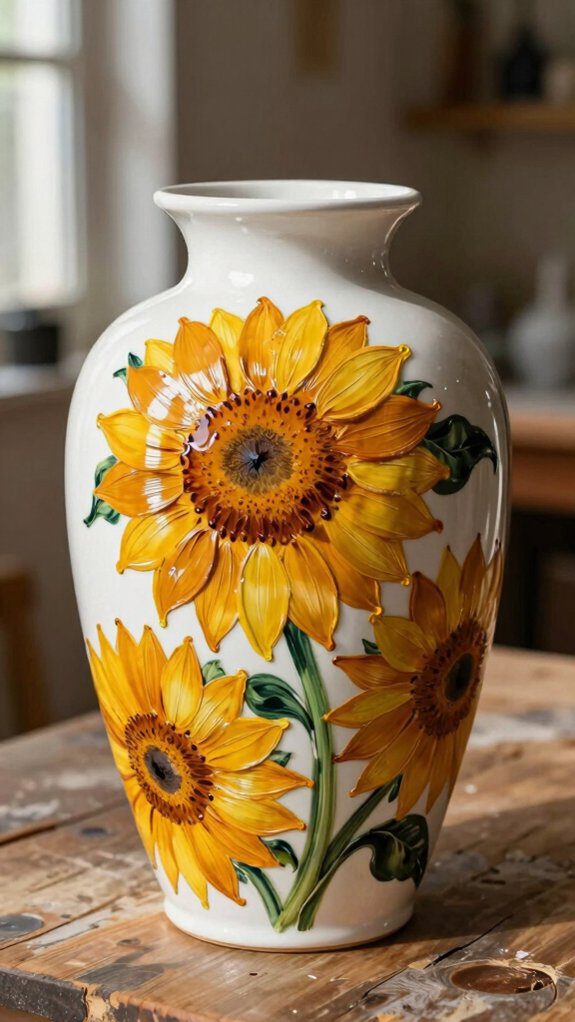
If you’re looking to make a pottery piece that really pops, a bold sunflower design is your go-to statement bloom that’ll instantly grab attention. I love how these flowers command space with their vibrant yellow petals and rich, textured centers, creating a dramatic focal point that transforms an ordinary mug or vase into a stunning piece of art. By playing with layered color techniques and strategic placement, you can bring a sunflower to life that feels both energetic and naturally beautiful.
Large statement bloom
Let your ceramic mug become a canvas for a breathtaking sunflower that commands attention and transforms an ordinary piece into a stunning work of art. When creating a large statement bloom, focus on sunflower scale and petal texture to make your design pop. I start by using a wide flat brush to layer 3-4 bold strokes per petal, creating depth and dimension. The secret is building intricate layers—beginning with a rich burnt sienna center, then adding stippled rings of ochre, lemon yellow, and a touch of cadmium orange toward the petal bases. Highlighting with a lighter yellow glaze and feathering edges brings realistic sunlight reflection, making the sunflower look like it’s bursting with life. Your handpainted mug will become a cherished piece of functional art.
Blue and White Floral Style
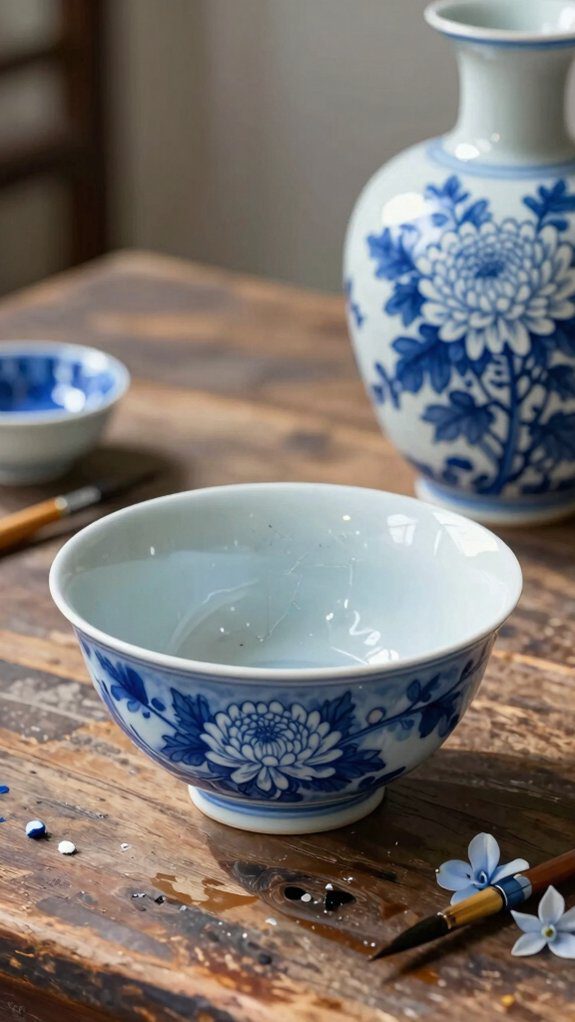
When I first uncovered blue-and-white ceramic art, I was instantly captivated by its timeless elegance and rich cultural heritage that stretches back to ancient Chinese porcelain. The classic combination of crisp white backgrounds and vibrant cobalt blue creates a stunning visual palette that transforms ordinary pottery into extraordinary pieces of art. Whether you’re painting delicate cherry blossoms or bold geometric designs, this traditional style offers endless possibilities for ceramic artists looking to create something both classic and personally expressive.
Classic ceramic look
The timeless blue-and-white ceramic style has captivated pottery enthusiasts for centuries, drawing inspiration from rich cultural traditions that transform simple ceramics into stunning art pieces. When sourcing cobalt for these classic designs, I look for pigments that’ll create that signature deep blue against crisp white backgrounds. Traditional kilns help me achieve the perfect finish, ensuring the intricate floral designs pop with remarkable clarity.
I love how delicate brush techniques can bring these pieces to life, using fine sable brushes to create intricate petals and leaves that dance across the ceramic surface. Drawing from Ming dynasty and Delftware influences, I carefully balance negative space and symmetry, creating compositions that feel both historic and contemporary. With the right techniques, anyone can capture this beautiful artistic tradition.
Lavender Field Motif
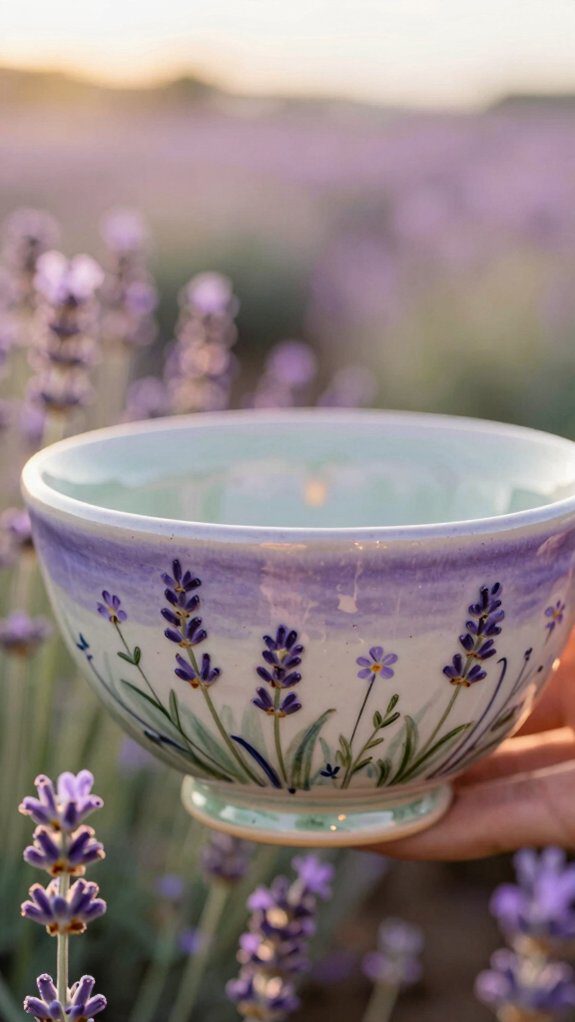
Because lavender fields are a timeless symbol of serenity and natural beauty, they make an enchanting motif for pottery painting that’ll transport your ceramic piece into a dreamy scenery. The lavender scent practically drifts from your brushstrokes as you create delicate stems in soft sage-green, layering highlights to convey the ceramic texture of a gentle meadow. I love creating this design by painting slender stems in muted purple, adding tiny darker dots to mimic authentic flower clusters. By blending a pale sky-blue to warm cream background, you’ll create depth that suggests a distant vista. Strategically place three to five stems at varying heights, ensuring a natural rhythm across your pottery. A final white dot on each flower cluster adds just the right touch of ethereal beauty.
Cherry Blossom Branch Art
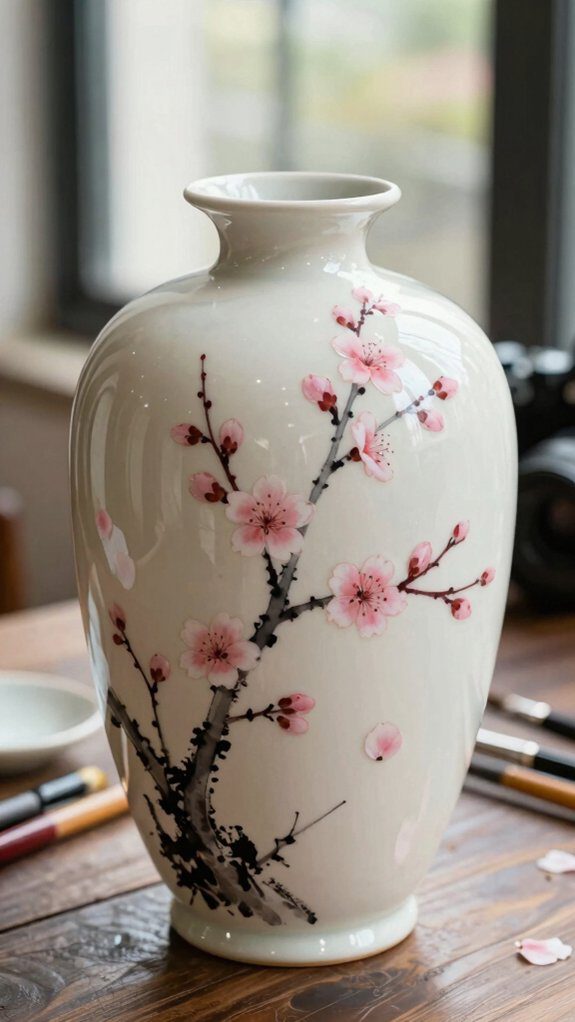
When it comes to pottery painting, cherry blossom branches offer a dreamy, soft aesthetic that’ll transform your ceramics into delicate works of art. I love how the pale pink tones create a gentle, romantic feel that’s perfect for mugs, plates, and other decorative pieces. By using a light touch and soft color palette, you can convey the ethereal beauty of these iconic Japanese flowers, making each brushstroke feel like a whisper of springtime.
Soft pastel tones
Soft pastel cherry blossom branches often whisper elegance across ceramic surfaces, transforming ordinary pottery into delicate works of art. When creating these ethereal designs, I focus on developing a pastel gradient that captures the subtle beauty of spring. The petal texture becomes essential, requiring careful layering of pale pink tones from #FFDCE6 to #FFB3C7, which creates depth and softness. By using a small round brush and gently dabbing mid-tones, you’ll achieve a naturalistic approach that makes each blossom feel uniquely handcrafted. The key is maintaining light, airy strokes that allow negative space to breathe between delicate branches and clustered flowers. With practice, you’ll master the technique of creating ceramic pieces that feel like gentle whispers of botanical beauty, inviting warmth and sophistication into any space.
Minimal Daisy Scattering
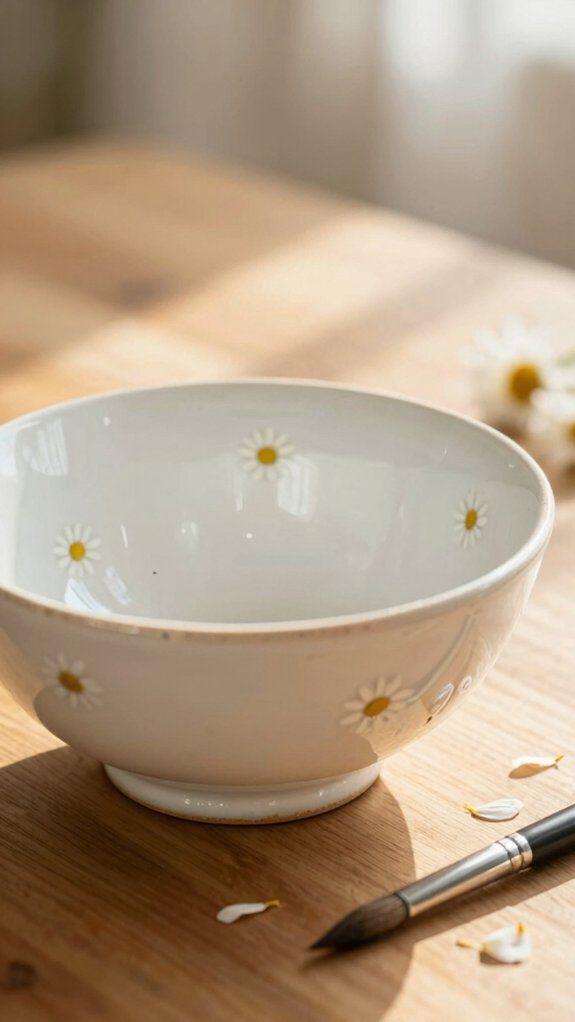
Minimalist daisy scattering transforms an ordinary ceramic piece into a delicate, artful design that catches the eye without overwhelming the surface. When placing daisies on a mug, I love creating an asymmetrical pattern that draws the eye naturally. Scale variation is key—I’ll paint some daisies slightly smaller or larger to add visual interest, keeping the brushstroke rhythm consistent with 5-7 narrow white petals per flower. The secret’s in the details: warm yellow centers around 4-6 mm wide, petals precisely 8-12 mm long, and strategic placement that’s denser near the rim. I’ll often add subtle pale green dot leaves or tiny stems to create depth, ensuring my daisy design feels intentional and elegant. The result? A personalized piece that feels both whimsical and refined.
Roses with Vintage Shading
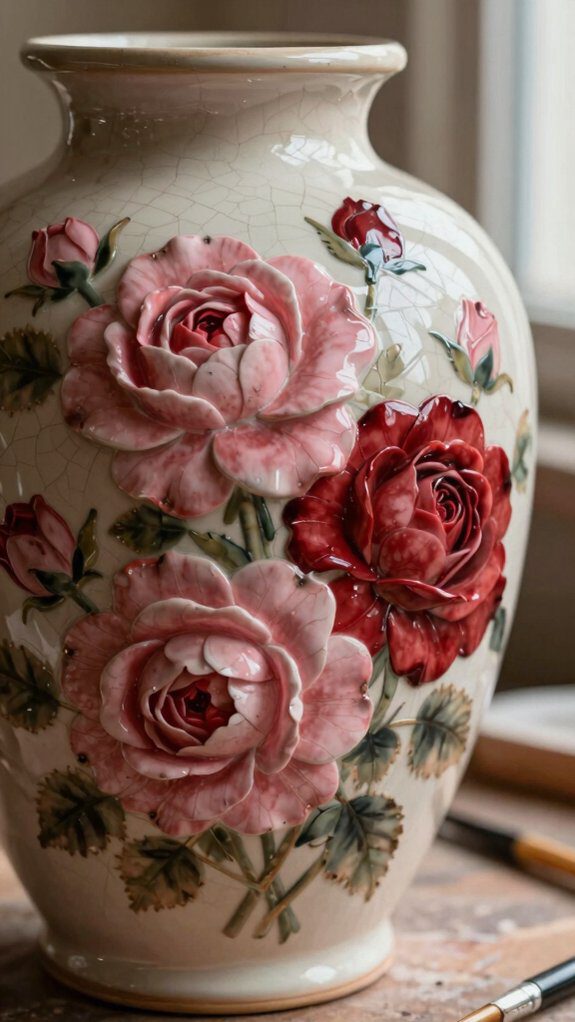
If you’re yearning to transform your pottery into a piece that looks like it came straight from a vintage china cabinet, vintage-shaded roses are your perfect artistic destination. I’ll show you how to create soft, dreamy rose petals that look like they’ve been lovingly painted decades ago, using muted color palettes and gentle glazing techniques that bring depth and age to every brushstroke. By carefully layering thinned paints, employing soft dry-brushing, and highlighting with pale cream tones, you’ll craft roses that whisper stories of antique elegance and timeless beauty.
Antique-inspired finish
Antique-inspired pottery painting often transports us to a world of delicate, timeworn beauty, and roses with vintage shading seize this aesthetic perfectly. By applying patina techniques, I can transform a simple ceramic piece into a stunning work of art that looks like it’s been treasured for generations. The key is layering muted tones like dusty rose and sepia, then using glazing methods that mimic ceramic conservation practices.
I love creating depth by blocking base colors, then adding thin glazes and darker umbers in petal creases. A translucent brown or gold wash, diluted 50–70%, helps age the surface beautifully. Gentle distressing with fine steel wool or sandpaper reveals subtle underlayers, while a satin varnish preserves that soft, vintage luster that makes each piece unique.
Tropical Hibiscus Theme
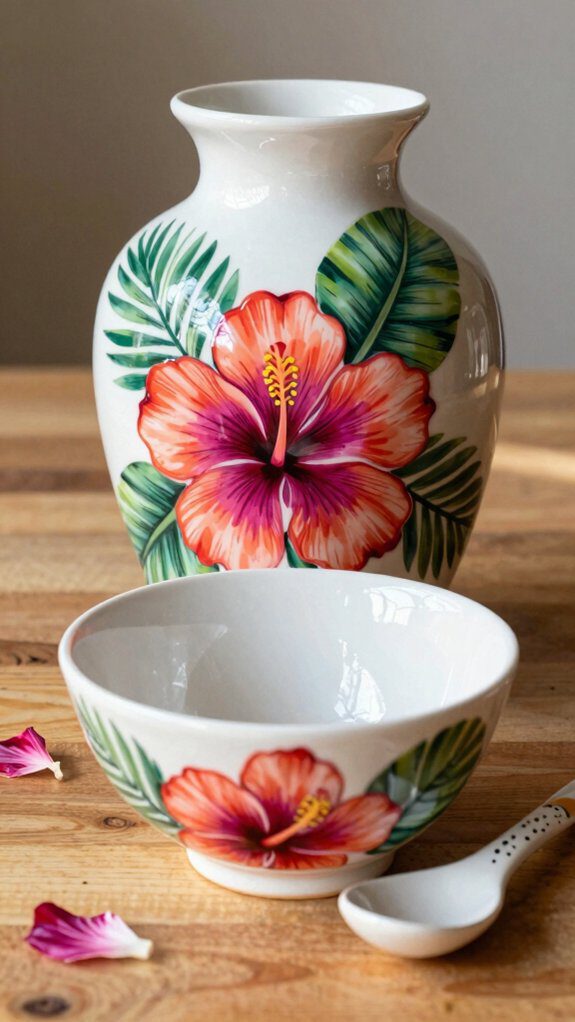
When tropical vibrancy calls, the hibiscus flower offers ceramic artists a stunning design inspiration that seizes the core of paradise. I love creating curved compositions with these lush blooms, focusing on their distinctive five-petal structure and glossy stamen. By layering scarlet, coral, and sunset orange, you’ll evoke the flower’s vibrant spirit on pottery surfaces. The key is blending wet-on-wet techniques to achieve soft petal gradients that flow beautifully across mugs and vases.
Pro tip: Incorporate complementary green palm or monstera leaves to balance your design. Vary the hibiscus sizes—a large focal bloom on a pitcher, smaller blossoms on matching cups—and stick to a consistent color palette. Metallic ceramic-safe accents on stamen and petal veins can add that perfect dimensional highlight, transforming your pottery into a tropical masterpiece.
Pressed Flower Inspired Art
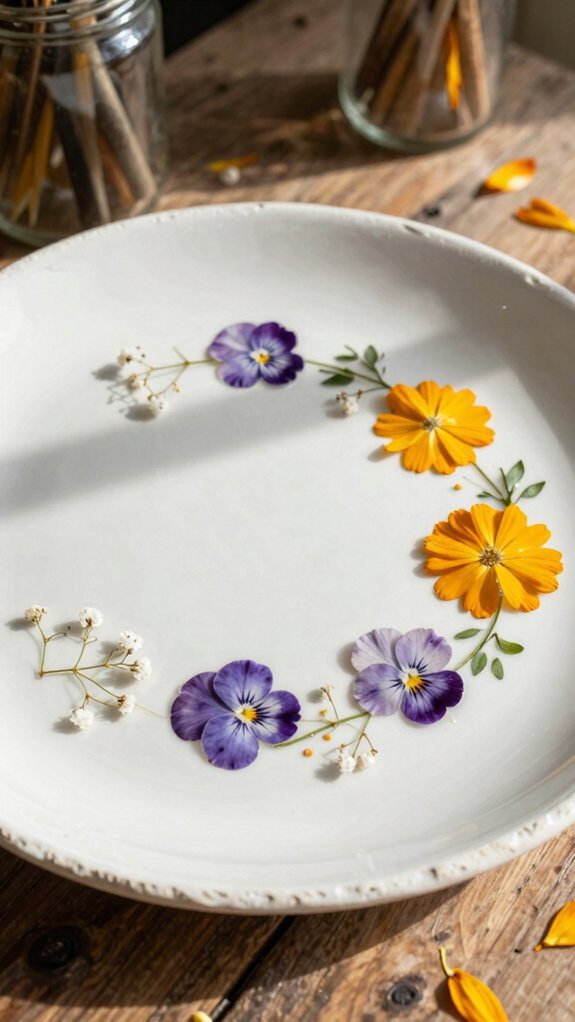
When I first uncovered pressed flower pottery, I was completely captivated by its ethereal botanical aesthetic—it’s like capturing a moment of natural beauty forever on ceramic surfaces. These intricate artworks transform ordinary pottery into stunning canvases that showcase delicate flowers preserved in timeless elegance, creating pieces that are both functional and breathtakingly artistic. By carefully selecting thin, low-moisture blooms and using precise application techniques, you can create pottery that looks like it’s been kissed by nature itself, with each piece telling a unique floral story.
Botanical aesthetic
Breathing life into pottery through pressed flower-inspired art transforms ceramic pieces into delicate, nature-inspired masterpieces. The botanical aesthetic celebrates the intricate beauty of pressed foliage, turning simple ceramics into a botanical collage that captures the core of natural elegance.
Key elements that make this art style truly special include:
- Delicate pressed flowers that preserve nature’s fleeting beauty
- Careful placement of lightweight botanical elements
- Precise layering techniques that showcase each bloom’s unique character
When creating these stunning pieces, I carefully select smaller blooms and gentle foliage, ensuring they’re no thicker than 1-2 mm. This approach allows me to transform ordinary pottery into extraordinary works of art that whisper stories of gardens and gentle scenery. The result is a piece that feels both personal and profoundly connected to the natural world.
Abstract Floral Brush Strokes
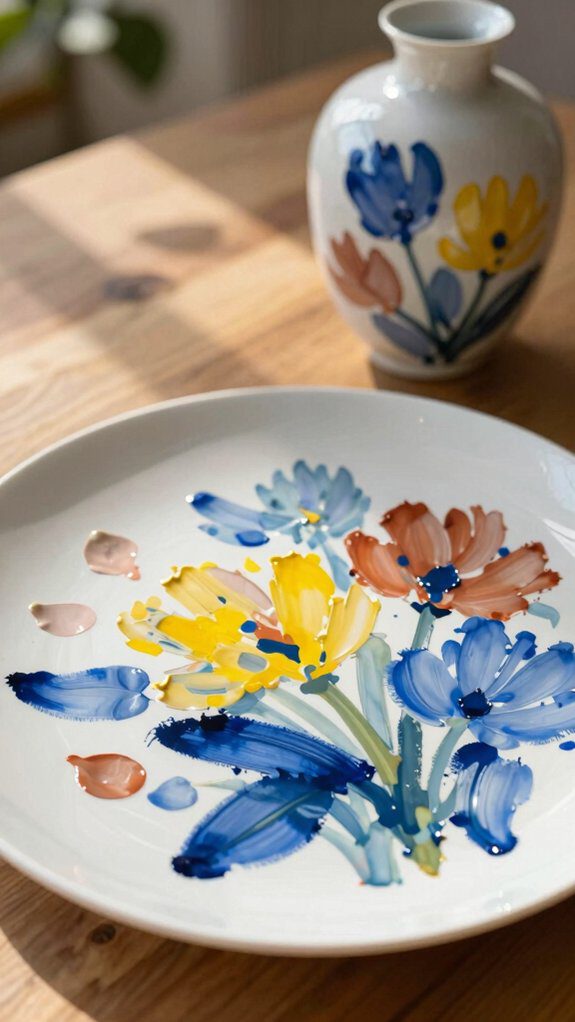
Set free your inner artist with abstract floral brush strokes that transform ordinary pottery into mesmerizing canvases of color and movement. By playing with brush rhythm and negative space, you’ll create elegant botanical designs that whisper rather than shout. Start with a medium-width synthetic brush, making confident sweeping strokes that suggest petals—each one a gentle dance across your ceramic surface. Choose a harmonizing palette of 3–4 colors like blush pink, coral, and sage to maintain an airy, abstract feel. Layer your strokes strategically: begin with broader, lighter base marks, let them dry briefly, then add smaller, darker accent strokes for depth. Vary your brush angle and pressure to create tapered petal shapes that feel organic and spontaneous. Finish with delicate dot centers that hint at stamens, completing your artistic expression.
Tiny Meadow Flowers
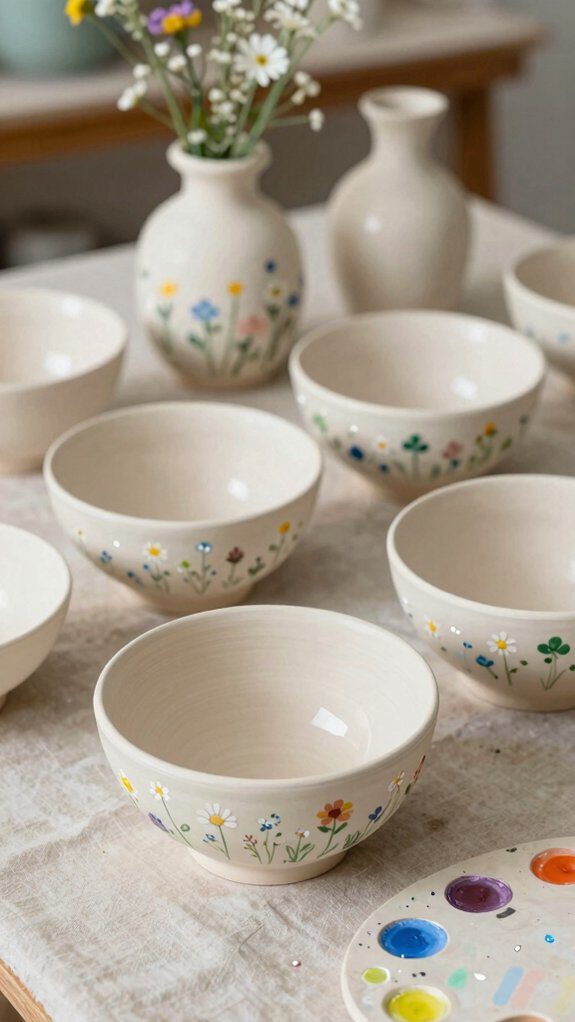
If you’re looking to add a touch of whimsy to your pottery, tiny meadow flowers are the perfect fine detail technique to transform ordinary ceramics into stunning art pieces. I’ll show you how to create intricate, lifelike blooms that look like they’ve just been plucked from a sunlit field, using nothing more than a small brush and a few carefully chosen colors. By becoming proficient in these miniature floral designs, you’ll be able to paint delicate, airy motifs that bring a sense of natural beauty and elegance to mugs, plates, and vases.
Fine detail technique
Release the delicate magic of tiny meadow flowers on pottery by perfecting ultra-fine brush techniques that transform ceramic surfaces into miniature botanical terrains. Mastering micro foliage requires precision and patience, with subtle stipple texture bringing life to each delicate petal.
Key techniques for creating stunning floral details include:
- Use a size 00 sable brush for petals as small as 2–4 mm
- Start with diluted stem mix and liner brush for foundational details
- Layer flower centers and petals with gentle, controlled strokes
I’ve learned these techniques through countless hours of practice, understanding that each tiny stroke contributes to a breathtaking vista. By working methodically and allowing layers to dry completely, you’ll create intricate meadow scenes that look almost impossibly realistic—transforming ordinary pottery into extraordinary botanical artwork.
Watercolor Peony Effect
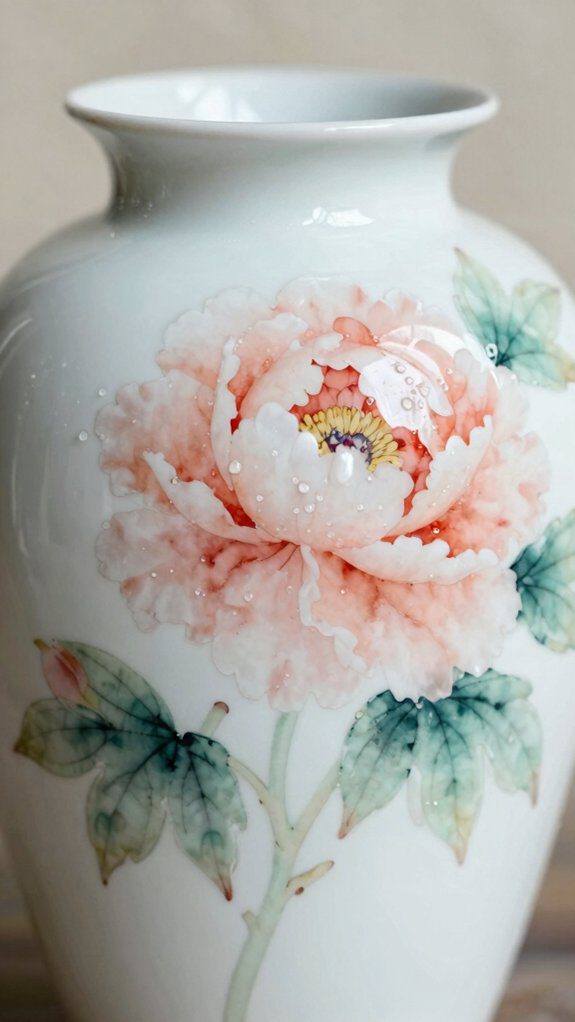
Set free the delicate beauty of watercolor peonies on your pottery by perfecting a technique that transforms ceramic surfaces into artistic canvases. Through translucent layering and wet on wet blending, you’ll create stunning floral designs that seem to dance across your piece. Start with a light pink base wash, then gradually build depth by adding rose and magenta tones while the previous layer remains slightly damp. This approach allows soft, feathered edges that mimic natural petal movements. A soft round brush works beautifully for creating petal shapes, while a fine liner helps add intricate inner details. Pro tip: lift paint with a damp sponge to create highlights and dimension. The result? A breathtaking ceramic piece that looks like a blooming garden depicted in gentle, flowing strokes.
Monochrome Floral Silhouette
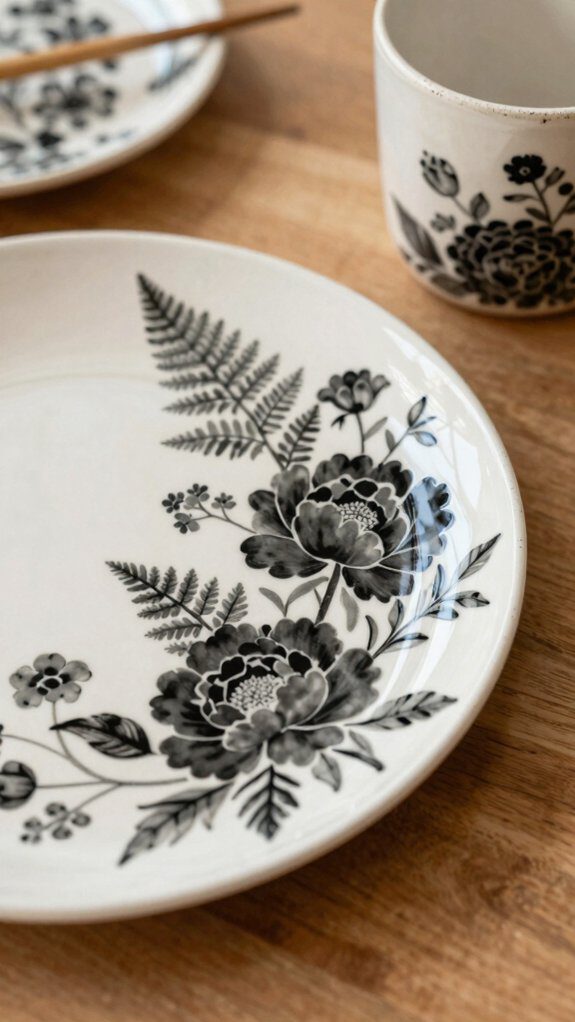
I love the modern elegance of black floral silhouettes—they’re like graphic art meets ceramic design, transforming plain pottery into stunning statement pieces. By using a single bold color like black against a crisp white background, you’ll create dramatic flower shapes that pop with incredible visual impact. Whether you choose a single rose stem or a sweeping cherry blossom branch, these monochrome designs let you turn ordinary mugs, vases, and plates into sophisticated artistic canvases.
Modern black outline
Transform your ceramic pieces into contemporary art with monochrome floral silhouettes—a sophisticated painting technique that breathes modern elegance into pottery design. Creating striking black outline designs requires strategic approach and careful technique:
- Use fine-tip ceramic paint pens for crisp, graphic stems
- Trace designs lightly with pencil to establish clean negative space
- Select 2-3 oversized botanical shapes for visual impact
The key is streamlining flower forms into large, flat silhouettes that make bold statements. By focusing on clean lines and minimalist compositions, you’ll achieve a sophisticated look that uplifts ordinary ceramics into artistic statements. Experiment with different flower shapes like roses, peonies, or eucalyptus to find your unique style. Remember to seal your design with ceramic sealer or fire according to paint instructions, ensuring your artwork remains durable and beautiful.
Colorful Garden Mix
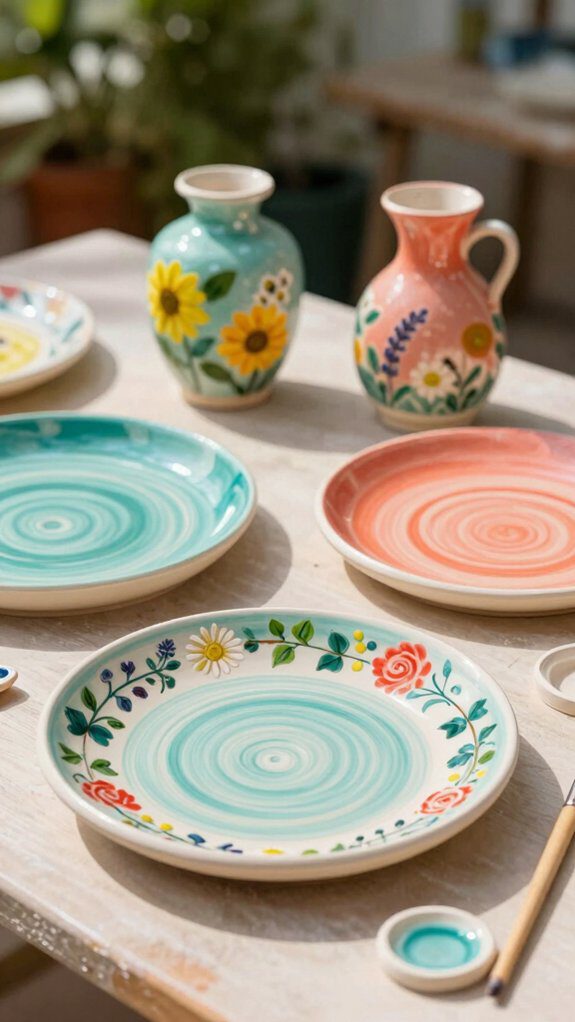
A vibrant garden bursts to life on ceramic surfaces with the Colorful Garden Mix technique, where pottery becomes a canvas for botanical brilliance. Garden mapping lets me transform ordinary pieces into extraordinary floral landscapes by strategically placing complementary flower motifs. My palette layering technique brings depth and energy, selecting 5-8 vivid acrylic colors that dance across petals and leaves.
I love creating asymmetrical clusters with one focal bloom capturing about 30% of the space, then radiating smaller flowers outward. Tiny accent elements like miniature leaves and delicate dots fill empty spaces without overwhelming the design. By mixing opaque and translucent glazes, I guarantee each piece tells a unique botanical story—transforming plain pottery into a blooming masterpiece that feels alive and inviting.
Scandinavian Floral Simplicity
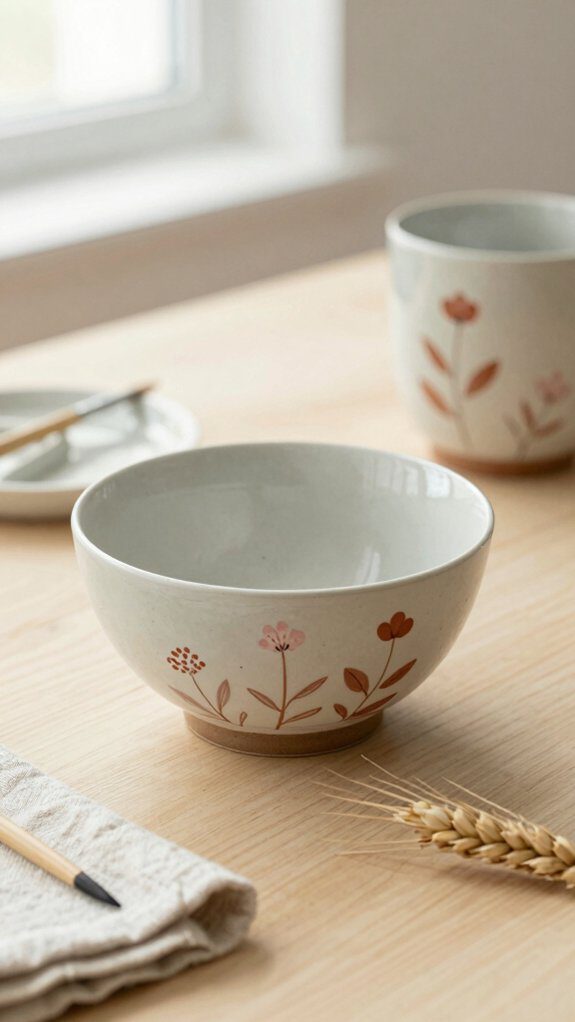
Where vibrant garden scenes burst with color, Scandinavian floral pottery whispers elegance through restrained, purposeful design. These Nordic stems embody beauty through minimalist expression, transforming ceramic surfaces into tranquil art pieces. The style embraces simplicity with signature techniques:
- Delicate brushwork creating tiny, uniform blossom motifs
- Muted color palettes featuring soft grays and dusty blues
- Strategic negative space highlighting each gentle design element
My approach to these muted sprigs involves careful tool selection—fine round brushes and precision dotting techniques—ensuring each ceramic piece tells a quiet, refined story. By leaving 30-50% of the surface unpainted, the design breathes with understated charm. The result? Pottery that feels both intentional and effortless, perfectly complementing natural wood and linen spaces with its satin, handcrafted finish.
Folk Art Flower Patterns
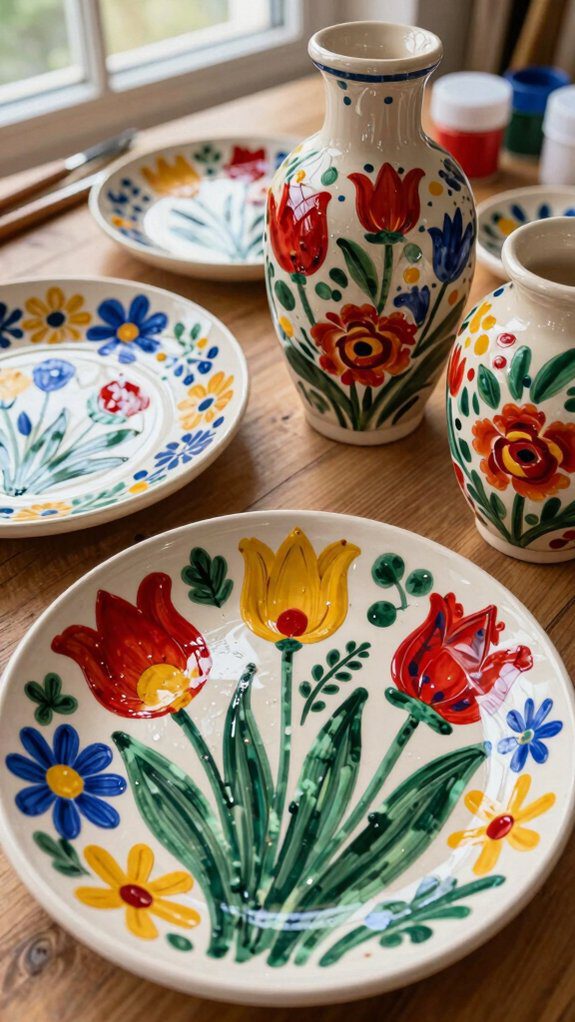
Folk art flower patterns are all about creating visual symmetry that catches the eye and makes your pottery pop! I love how these designs use strategic placement of petals and shapes to create balanced, almost mathematical compositions that feel both intentional and playful. By arranging flowers in perfect rows or radial layouts, you’ll transform an ordinary ceramic piece into a stunning work of art that looks like it came straight from a traditional craftsperson’s workshop.
Symmetrical layout
Because symmetry transforms ordinary pottery into mesmerizing art, flower-based folk patterns offer a stunning way to create balanced, eye-catching designs. When applying symmetry techniques, I focus on precise axis placement to make certain my flower motifs look harmonious and intentional.
My favorite symmetrical layout strategies include:
- Dividing the pottery surface exactly in half
- Mirroring each floral element with precision
- Maintaining consistent spacing between design elements
Half-and-Half Floral Design
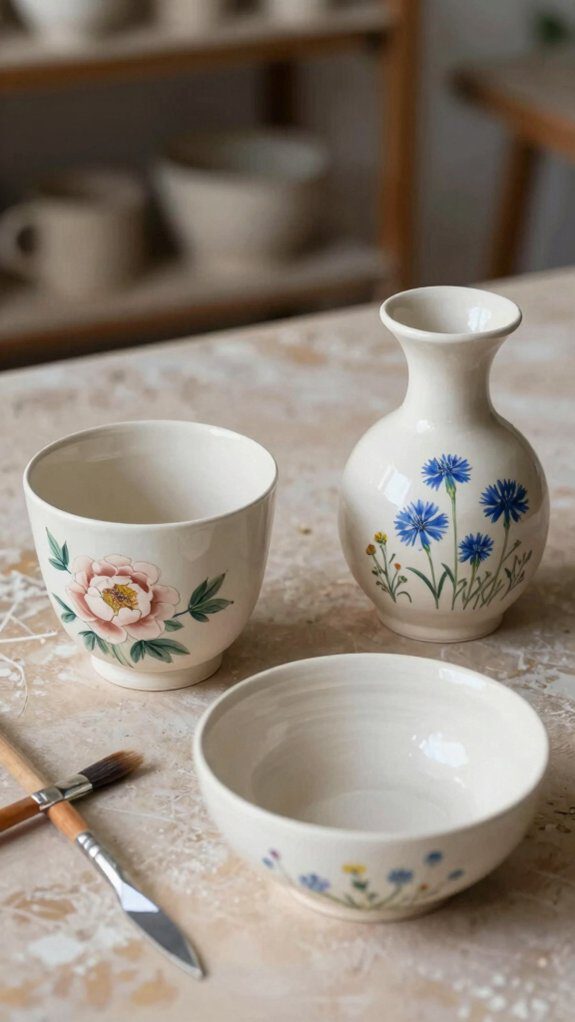
If you’re looking to create a pottery design that’s both eye-catching and sophisticated, the split composition style might be your perfect artistic solution. I love how a half-and-half floral design lets you play with color, pattern, and visual balance, transforming an ordinary ceramic piece into a stunning work of art. By carefully dividing your pottery and featuring intricate flowers on one side with a solid, complementary color on the other, you’ll craft a piece that’s sure to grab attention and showcase your creative skills.
Split composition style
When you’re looking to create a stunning pottery design that catches the eye, the split composition style offers a bold and elegant approach to floral artwork. By embracing split symmetry and asymmetrical florals, you’ll transform ordinary ceramics into extraordinary pieces.
This design technique allows for incredible visual creativity through:
- Vertical division highlighting contrasting artistic elements
- Balanced composition with dense and minimalist sections
- Strategic color placement that draws the viewer’s attention
The magic happens when you intentionally divide your pottery surface, using one half for intricate hand-painted flowers and the other for solid color or subtle texture. I love how this approach creates immediate visual interest while maintaining a cohesive design. By carefully selecting complementary colors and using precise painting techniques, you can craft a pottery piece that feels both modern and timeless.
Earthy Botanical Tones
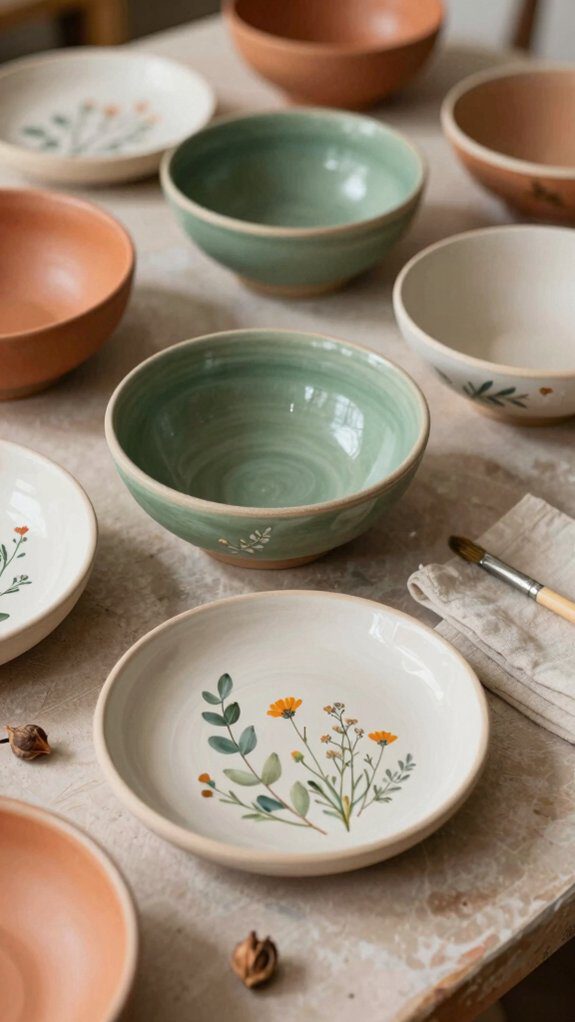
While nature offers an endless palette of inspiration, earthy botanical tones bring a serene and grounded aesthetic to pottery painting that feels simultaneously sophisticated and organic. I love how these muted contrasts create depth and visual interest, especially when working with soft sage greens, warm terracotta, and rich ochre hues. By layering these earthy textures, you’ll transform simple ceramic surfaces into stunning botanical vistas. The key is balancing color intensity—use darker olive tones as anchors and lighter blush accents to create gentle movement. Pro tip: choose a matte or satin glaze that allows your brushstrokes to shine, and consider adding thin dark-brown linework to define delicate flower stems and leaf veins. Your pottery will feel like a living, breathing piece of natural art.
Gold-Outlined Flower Accents
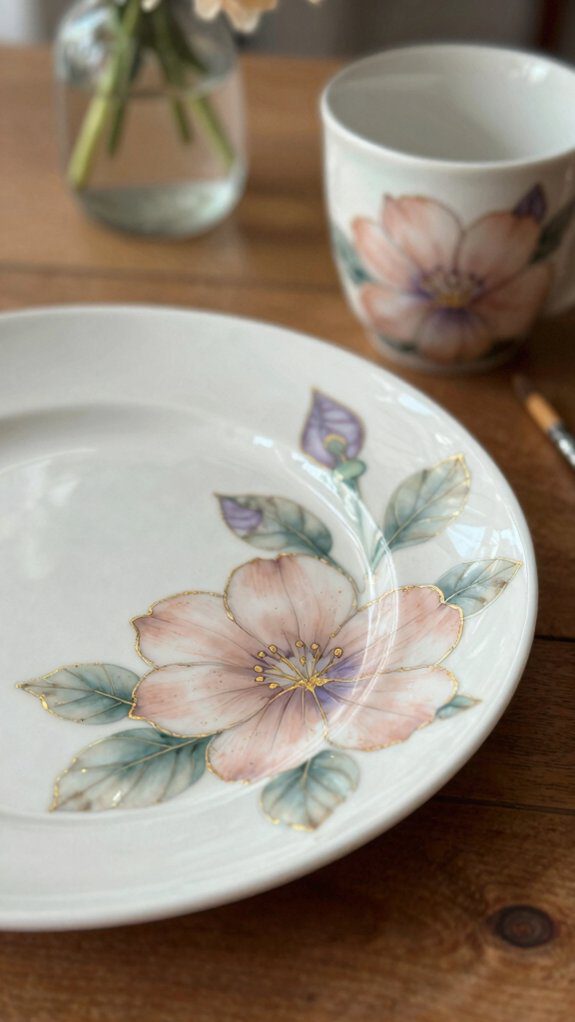
I love how a subtle gold outline can transform an ordinary ceramic flower design into something truly extraordinary. By tracing delicate petal edges and veins with a fine metallic brush or paint pen, you’ll create stunning visual depth that catches the light and draws the eye. These golden accents work magic, especially when paired with soft, muted floral backgrounds, turning your pottery piece from nice to absolutely breathtaking.
Subtle metallic detail
Lift your pottery painting with the delicate shimmer of gold-outlined flower accents, transforming ordinary ceramics into extraordinary art pieces. Subtle shimmerlines can uplift your design from simple to stunning with just a few strategic touches. The key is using muted metallics sparingly and strategically.
Consider these techniques for elegant gold detailing:
- Outline select flower petals with thin, precise gold lines
- Use deep background colors like navy or emerald for maximum contrast
- Apply metallics with a fine liner brush or specialized gold paint pen
I’ve found that keeping lines between 0.5–1 mm creates the most polished look. When tracing petal edges, practice on scrap ceramic first to master your technique. Remember, less is more—a few carefully placed gold accents can transform your entire piece, making it feel both sophisticated and personally crafted.