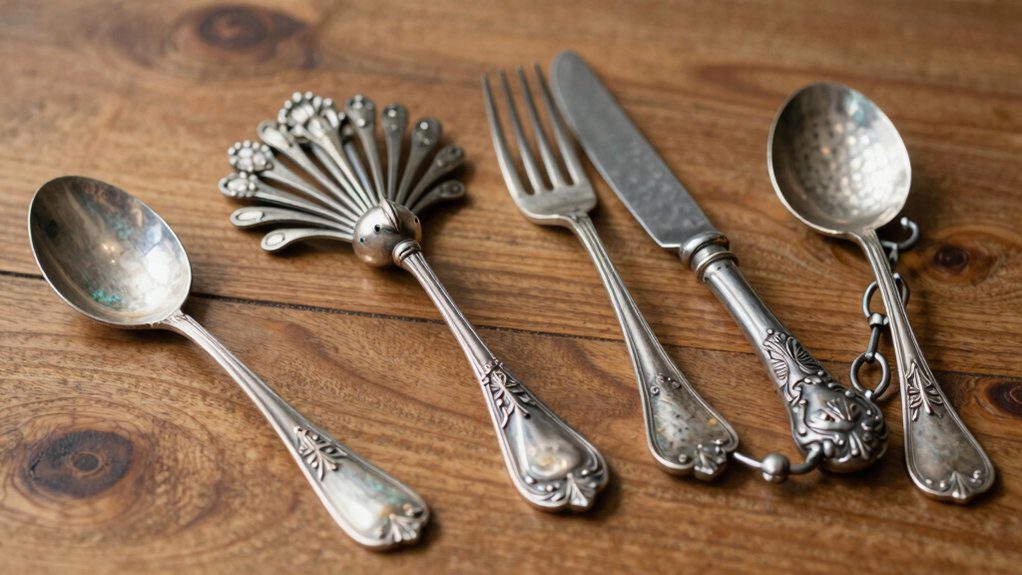
18 Old Silverware Crafts That Turn Vintage Utensils Into Art
You can transform dusty vintage silverware into stunning art pieces for your home and garden. Hand-stamp spoon handles to create weather-resistant plant markers, bend fork tines into wall hooks for coats and keys, or craft elegant pendants sealed with clear lacquer. Fashion wind chimes from hanging strands of flattened spoons, shape metal flowers with bent bowls, and repurpose handles as cabinet pulls and serving tray grips. Each project requires basic tools like pliers, hammers, and drills. Learn exactly how to execute each of these eighteen creative transformations.
Love cozy DIY projects? 💕
Get free printable guides, exclusive tutorials & surprise craft goodies straight to your inbox.
Disclosure: This post may contain Amazon affiliate links, at no extra cost to you. Content on DiyCraftNest is created with research support from AI tools and carefully reviewed, edited, and fact-checked by the lead author, Daniel Pat, to ensure accuracy and reliability. Learn more
Key Takeaways
- Transform vintage spoons into personalized garden markers by hand-stamping plant names and securing them into soil or stakes.
- Upcycle silverware into decorative candle holders, mirror frames, and lighting accents by bending, flattening, and arranging pieces with adhesive or screws.
- Create wearable jewelry including rings, pendants, and bracelets by cutting, flattening, and shaping spoon handles around mandrels with hammers.
- Bend and arrange spoon bowls into petal shapes to craft durable metal flowers for lasting garden displays and outdoor art.
- Seal all finished pieces with clear lacquer or outdoor polyurethane to protect against tarnishing, weathering, and preserve vintage engraved details.
Bent Spoon Garden Markers
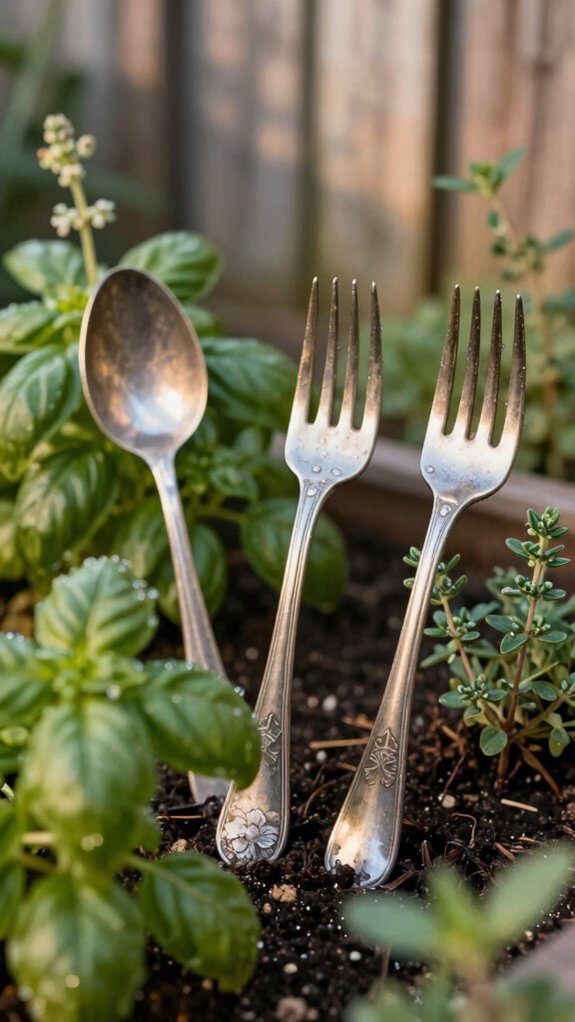
Transform vintage silverware into charming, functional garden markers that’ll make you smile every time you check on your plants.
I flatten spoon heads with a rubber mallet, creating stable surfaces for handle embossing plant names using metal letter stamps. After drilling holes in the handle, I secure each marker to wooden stakes or bend the ends for direct soil insertion. This recycled signage adds personality while keeping plants organized. I space markers 6–12 inches from stems for visibility and use longer handles for deeper beds.
Two coats of outdoor polyurethane protect against weather, preserving those beautiful stamped details and transforming ordinary utensils into garden art.
Fork Photo Holders
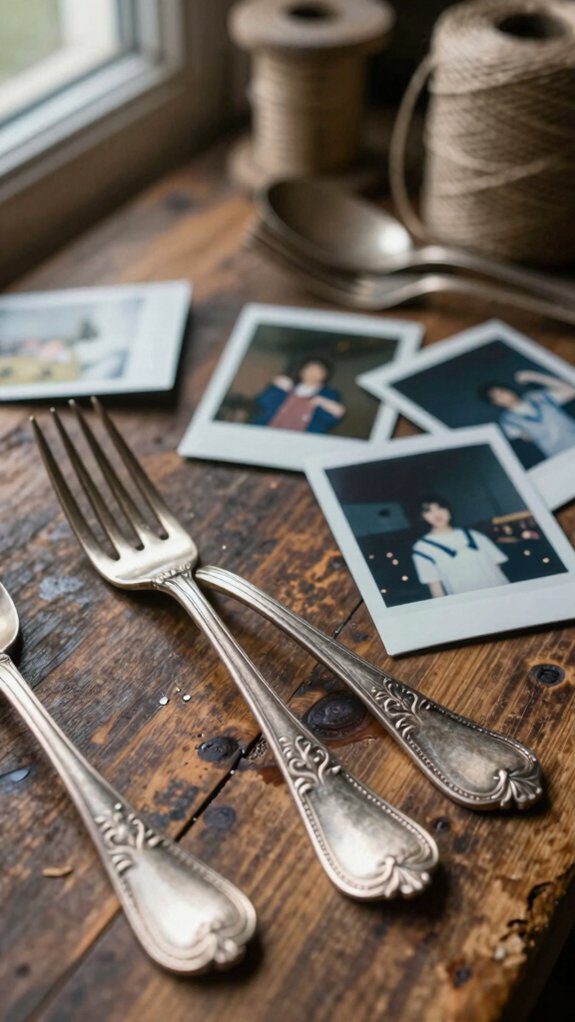
I’ve found that twisting your fork handles adds real personality to this project—it’s honestly one of my favorite customization tricks! You can create those gorgeous spiral effects by clamping the fork handle in a vise and carefully rotating it with a wrench, which takes just a few extra minutes but transforms a basic holder into something that looks professionally crafted. This twisted design not only catches the light beautifully but also gives you extra grip points for anchoring your wire, making the whole assembly even sturdier.
Twisted handle design
Creating twisted-handle fork photo holders lets you turn ordinary flatware into a charming display piece that holds your favorite photos upright. I grab sturdy silverplated forks and use needle-nose pliers to bend the handles into spirals—this twist technique creates natural tension that grips photos securely.
The handle ergonomics matter; thick tines resist bending and feel satisfying to work with. I protect the finish by wrapping cloth around pliers before twisting. Once anchored to a wooden base with epoxy, these forks stand wobble-free. Sliding photos between the tines takes seconds, making them perfect for rotating seasonal memories or card displays.
Silverware Wind Chime
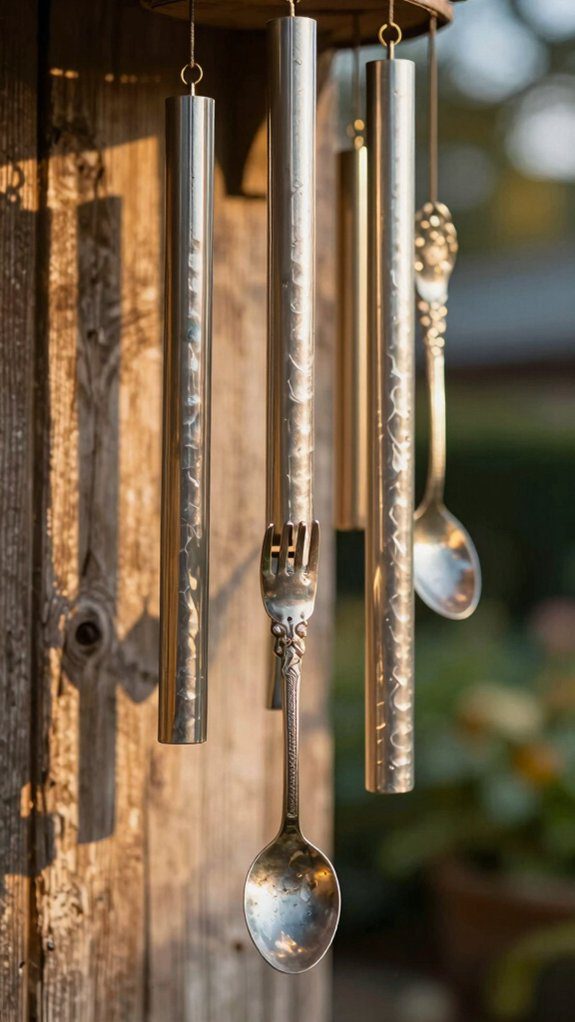
With a handful of vintage forks and spoons, you’ll create a charming wind chime that doubles as functional art for your outdoor space.
I gather 12–20 utensils and bend handles with needle-nose pliers for tone tuning. Flattening spoon bowls with a ball-peen hammer changes each chime’s sound beautifully.
I drill small holes near handles and string pieces on fishing line, spacing them 1–2 inches apart with bead spacers. A driftwood hanger holds multiple strands at varying lengths so chimes catch breezes without tangling.
Finally, I seal metal pieces with outdoor spray sealer for patina preservation, then hang my creation in a sheltered spot where it’ll sing whenever the wind blows.
Spoon Jewelry Pendants
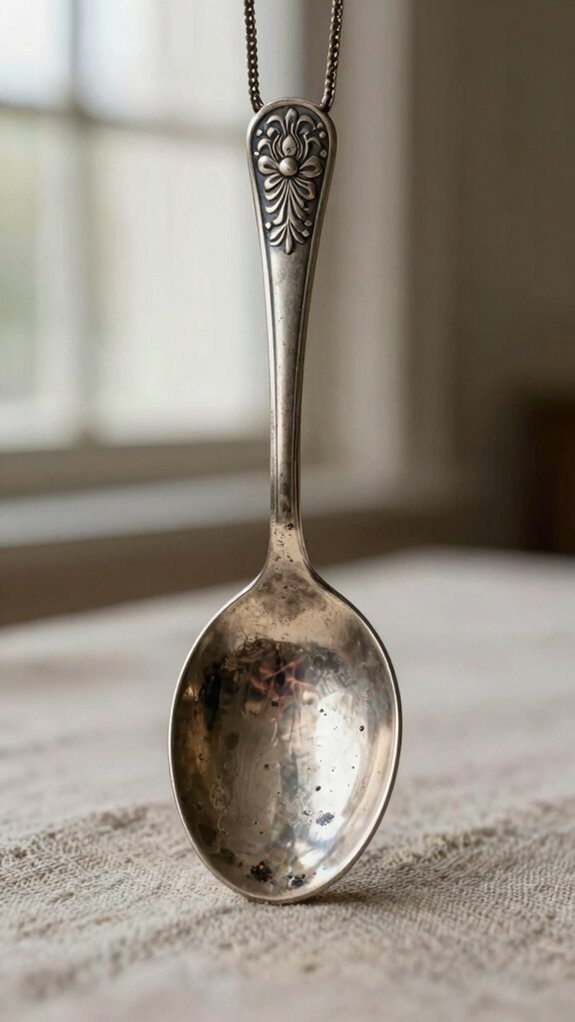
Transforming vintage spoon handles into wearable art is one of my favorite ways to honor old silverware while creating something you’ll actually wear.
I love selecting pieces with heirloom patterns—those gorgeous floral and scrollwork designs that survived decades.
After cutting and filing the handle to size, I drill a small hole for the jump ring.
For cameo-style pendants, I flatten the bowl and use epoxy techniques to secure vintage cameos, creating elegant statement pieces.
Sealing everything with clear lacquer protects against tarnishing, ensuring your pendant remains beautiful for years.
Fork Wall Hooks
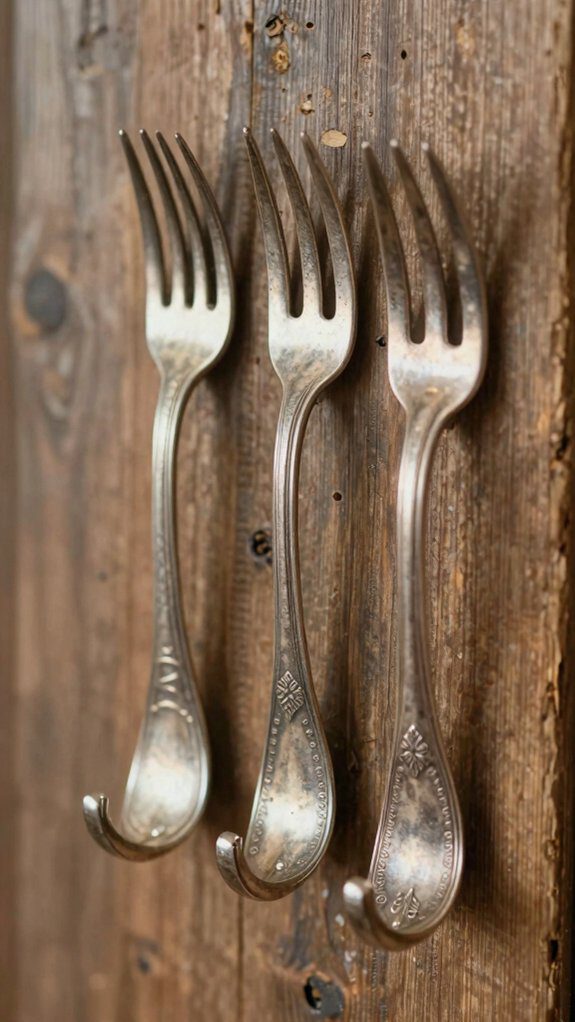
If you’re looking to transform your entryway into something both functional and charming, fork wall hooks offer the perfect rustic solution.
I’ve found that flattening vintage fork tines and mounting them on reclaimed wood creates a welcoming spot to hang coats, leashes, and keys—all while adding genuine character to your space.
You’ll love how this project combines practicality with that warm, lived-in aesthetic that makes a house feel like home.
Rustic entryway idea
Fork wall hooks are one of my favorite upcycling projects because they’re genuinely practical and look fantastic doing their job. I mount four to six vintage forks onto reclaimed wood, spacing them a few inches apart for coats, keys, and leashes.
Pre-drilling holes prevents damage to silverplated pieces, and I use rounded-head screws for a polished touch. For entryways exposed to moisture, I seal the wooden backing with outdoor polyurethane for lasting durability. Adding weatherproof finish protection guarantees your creation withstands humidity.
Pair your rustic rack with entry lighting to showcase those beautiful vintage utensils, creating a welcoming focal point that’s both functional and charming.
Spoon Ring DIY
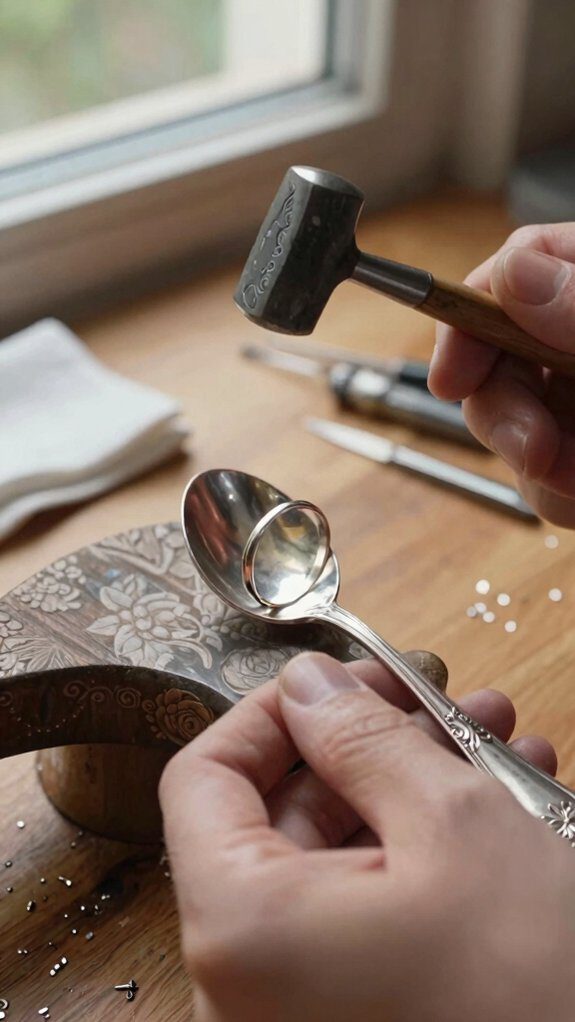
You can transform a simple vintage spoon into a wearable ring that’s both beautiful and meaningful.
Start by selecting a silverplated spoon with a pattern you love, then flatten the handle gently using a ball-peen hammer.
Measure your finger size with a ring mandrel, then carefully bend the handle around it to create a comfort fit.
If the metal resists, try heat treatment through annealing to increase flexibility.
Smooth any rough edges with needle files, then overlap the ends and trim excess.
Finally, polish with silver polish and apply clear lacquer to preserve its shine and protect your skin.
Silverware Keychains
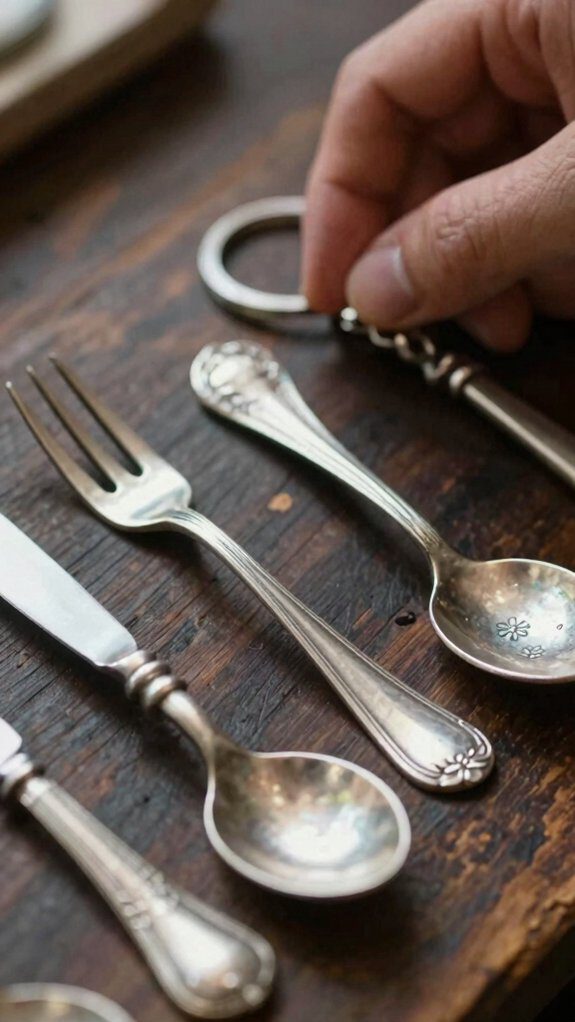
Transforming vintage spoon handles into personalized keychains is one of my favorite silverware projects because it combines creativity with practicality—and the results make fantastic gifts.
I love hunting thrift shops for souvenir spoons with interesting embossed designs and vintage patina.
After cutting the handle to length and filing edges smooth, I drill a small hole for the key ring.
Hand stamped personalization makes each keychain uniquely meaningful—I’ll add initials or special dates into the flattened silver.
Finally, I polish everything and seal it with clear lacquer for protection.
These keepsakes cost under five dollars and become treasured reminders of special people and places.
Vintage Spoon Plant Stakes
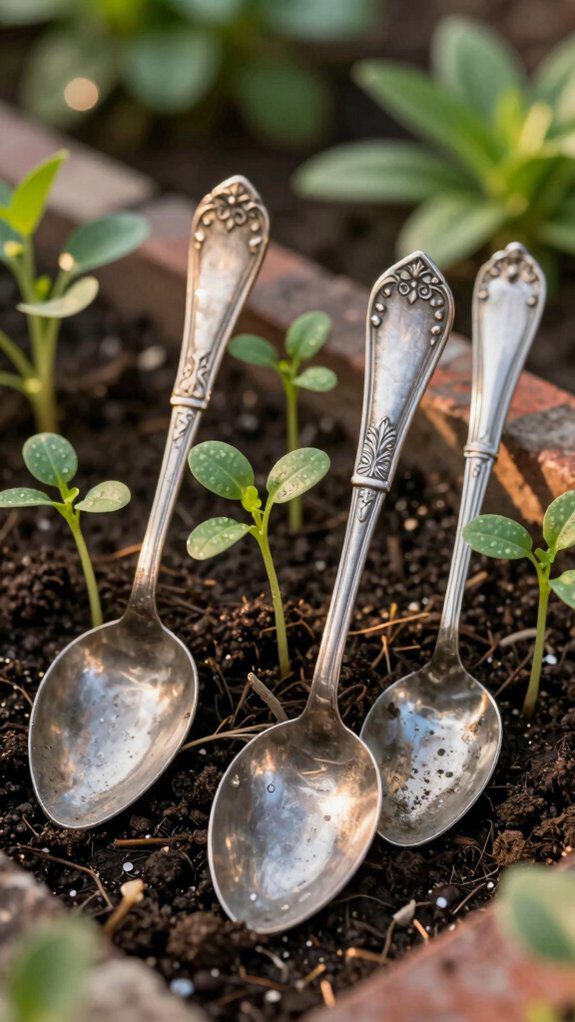
While silverware keychains live in our pockets and purses, vintage spoon plant stakes belong right in the garden where they’ll work hard marking herbs and flowers season after season.
I flatten antique engraving on spoon handles and seal them with outdoor polyurethane for durability. Using heat tempered shaping with needle-nose pliers, I bend each handle into a stake and push it into soil.
For better visibility among multiple markers, I pair them against darker wooden backings. Hand-stamping plant names like “Basil” and “Thyme” creates charming, functional garden labels that resist weathering while adding rustic character to your growing space.
Fork Napkin Rings
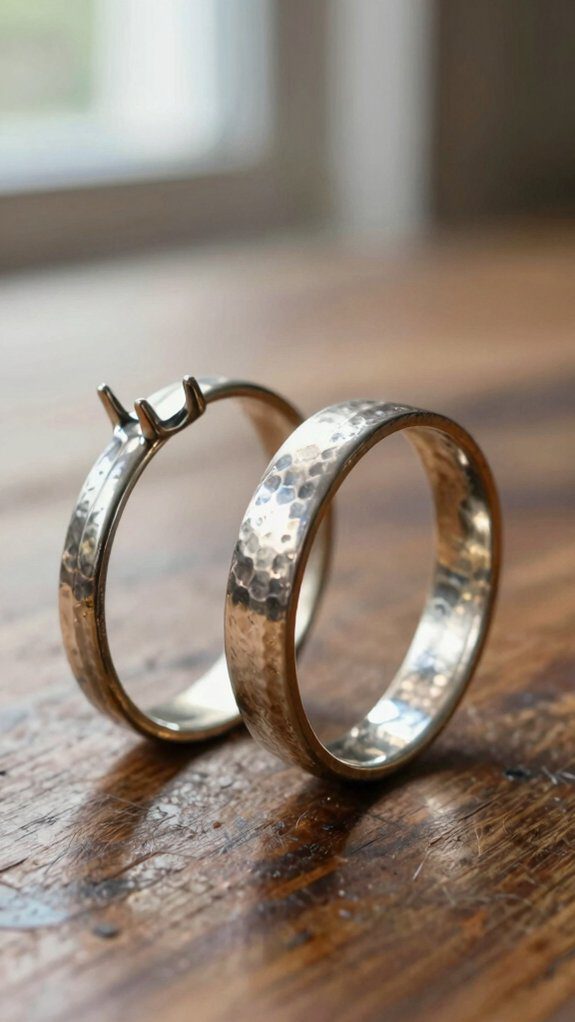
Once you’ve mastered spoon plant stakes, you’re ready to transform those vintage forks gathering dust in your drawer into stunning table decor accents that’ll make your formal dinners feel extra special.
I love how fork napkin rings combine functionality with craftsmanship—they’re practical enough to actually use while looking polished enough to impress your guests.
With just a hammer, some basic tools, and a little creativity, you can create personalized napkin holders that turn an ordinary place setting into something truly memorable.
Table decor accent
Because vintage forks have such beautiful, decorative tines, they’re perfect candidates for creating elegant napkin rings that do double duty as both functional table accessories and charming conversation starters.
I’ve found that hand-tied napkins wrapped in these fork rings instantly enhance any table setting. The ruffled tines create stunning visual interest against linen textures, while the metallic gleam catches candlelit ambiance beautifully.
By flattening handles slightly and securing overlapping ends with screws or adhesive, you’ll craft durable pieces that anchor your centerpiece ambiance.
Adding personalized touches—like stamped initials or tiny beads—transforms ordinary utensils into treasured heirlooms that guests will absolutely love.
Silverware Candle Holders
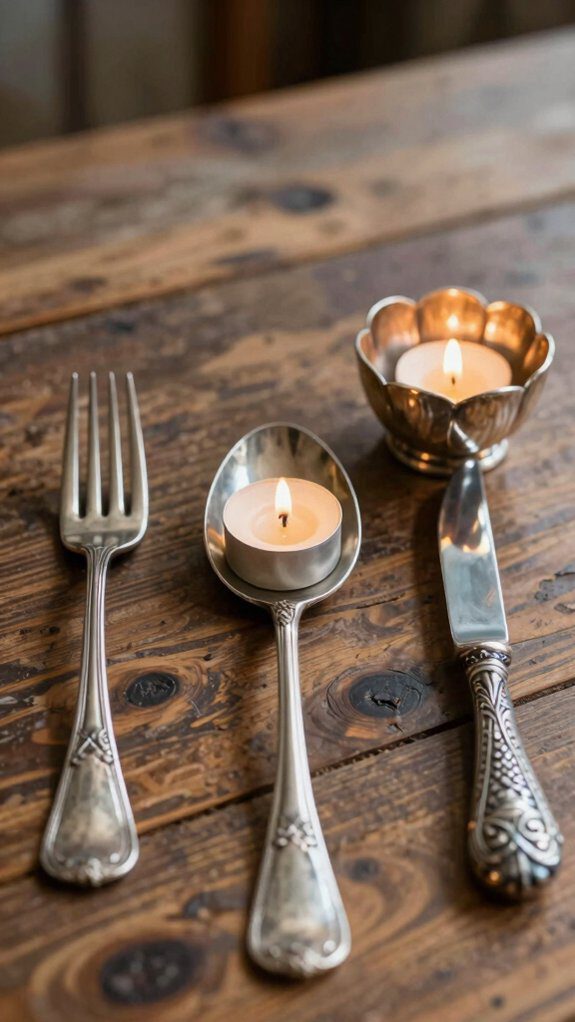
Transform your dusty silverware drawer into charming candlelit décor by upcycling vintage spoons and ladles into functional holders that bring warmth to any room.
Ladle restoration starts with gentle cleaning and flattening the bowl slightly using a rubber mallet. Drill a small drain hole if needed, then mount the handle onto reclaimed wood for stable display.
For spoon-handle votives, bend handles into ring supports and glue them to plywood bases sized for standard glass votives.
Tea light safety matters most—use LED lights instead of flames to protect delicate metal.
These rustic pieces create meaningful conversation starters while honoring vintage craftsmanship.
Stamped Spoon Garden Labels
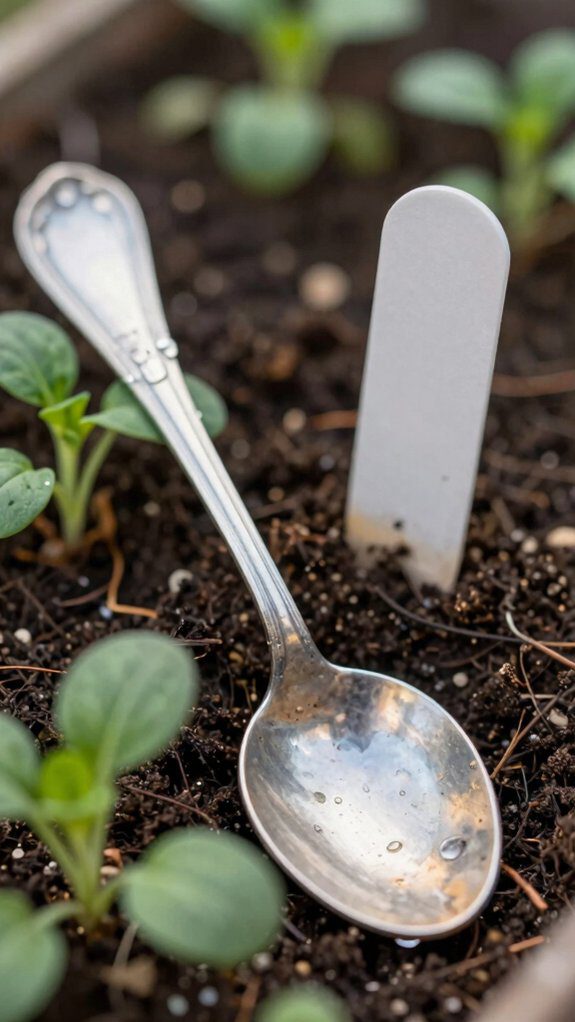
I love how stamped spoon markers transform your garden into a personalized space that reflects your plant collection and gardening style.
When you hand-stamp plant names or zone numbers onto vintage silverware, you’re creating one-of-a-kind labels that tell the story of what you’re growing and why it matters to you.
These custom markers add character and charm that store-bought plastic tags simply can’t match, making your garden beds feel intentional and thoughtfully planned.
Personalized detail
One of the most satisfying ways to personalize your vintage silverware crafts is by transforming old flatware into custom garden markers that’ll make your herb and vegetable beds look intentional and charming.
You can add heirloom engraving or custom monograms to create truly one-of-a-kind labels. I recommend choosing short, high-contrast plant names like “Basil” or “Rosemary” using 1/8″–1/4″ metal stamping characters for readability.
Hammer your vintage silverplate spoon flat first for stable stamping.
Once stamped, seal everything with clear exterior polyurethane to protect against tarnish and weather.
These personalized markers transform ordinary gardens into heirloom-quality spaces.
Fork Bracelet Craft
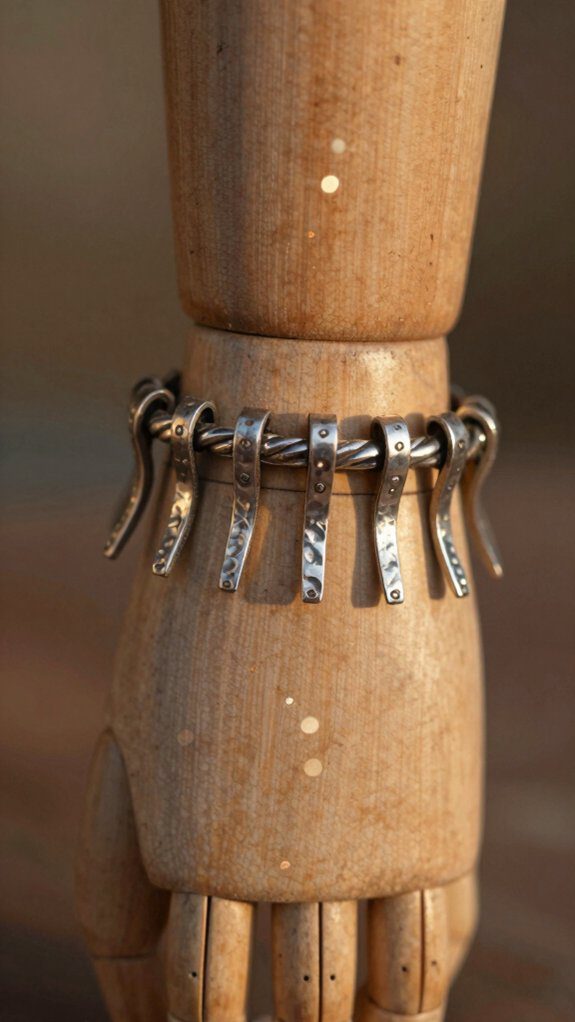
Bending a vintage fork into a wearable bracelet might sound tricky, but it’s actually one of the most satisfying silverware crafts you can tackle. I’ve found that ornate, heavy handles work best—they’re sturdy and malleable enough to shape beautifully. You’ll need a mandrel, pliers, and a hammer to transform your fork into a personalized cuff.
| Step | Tool | Result |
|---|---|---|
| Flatten fork head | Ball-peen hammer | Smooth base |
| Bend around mandrel | Needle-nose pliers | Even curves |
| Polish & seal | Metal file & lacquer | Professional finish |
The whole process takes under an hour, creating a unique piece you’ll treasure.
Spoon Mirror Frame Accent
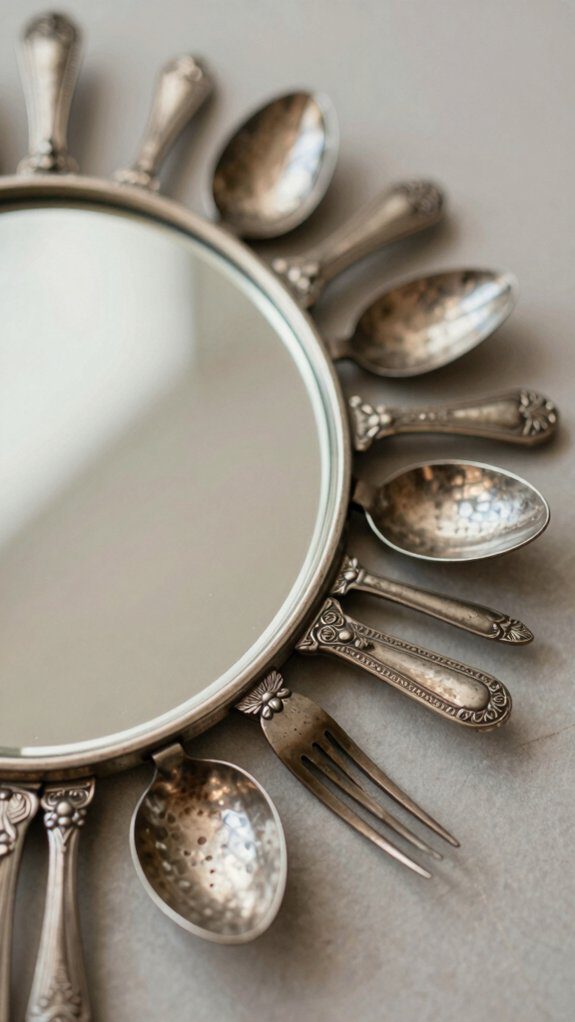
While fork bracelets let you wear your creativity on your wrist, spoon mirror frames bring that same silverware magic right to your wall.
I arrange twelve spoons evenly around a small round mirror to create a reflective radial design that catches light beautifully.
Flattening overlapping handles with a hammer lets them sit flush against the backing.
I attach them with hot glue for clean lines or screws for rustic charm.
Mixing metals and adding accent beads between handles creates visual rhythm in this mirror mosaic.
Hanging it in your kitchen transforms ordinary silverware into stunning wall art you’ll love showing off.
Silverware Drawer Pulls
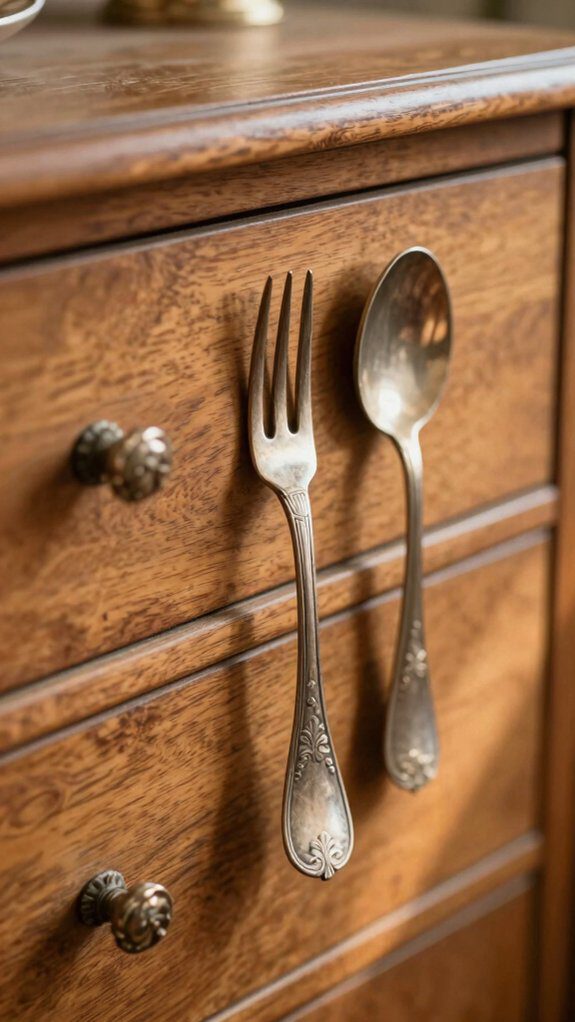
I’ve found that transforming vintage silverware into cabinet hardware is one of the most satisfying upcycling projects you can tackle, and it’ll completely transform how your kitchen or bathroom looks and feels.
By repurposing ornate spoon handles as drawer pulls, you’re not just upgrading your cabinet hardware—you’re adding genuine character and a touch of nostalgia that no store-bought pull could ever match.
Let me walk you through how to turn those forgotten flatware pieces into functional, beautiful hardware that’ll make every time you open a drawer feel just a little bit special.
Cabinet hardware upgrade
Transform your kitchen cabinets with a surprisingly simple upgrade: vintage silverware becomes stunning drawer pulls. I’ve discovered that choosing heavier, ornate pieces like vintage Oneida or hammered ladles guarantees durability through repeated use.
Flatten spoon heads with a rubber mallet, leaving subtle ridges for character, then bend handles into comfortable pull shapes. Vintage forkbacks offer unique aesthetics too.
Here’s what I recommend:
- Drill mounting holes and secure with rounded-head screws for that industrial look
- Space handles 3″ or 6″ center-to-center using standard measurements
- Match finishes to darker stained or chippy paint for contrast
- Test placement before permanently fastening
This transformation raises your space affordably.
Fork and Spoon Sculpture Art
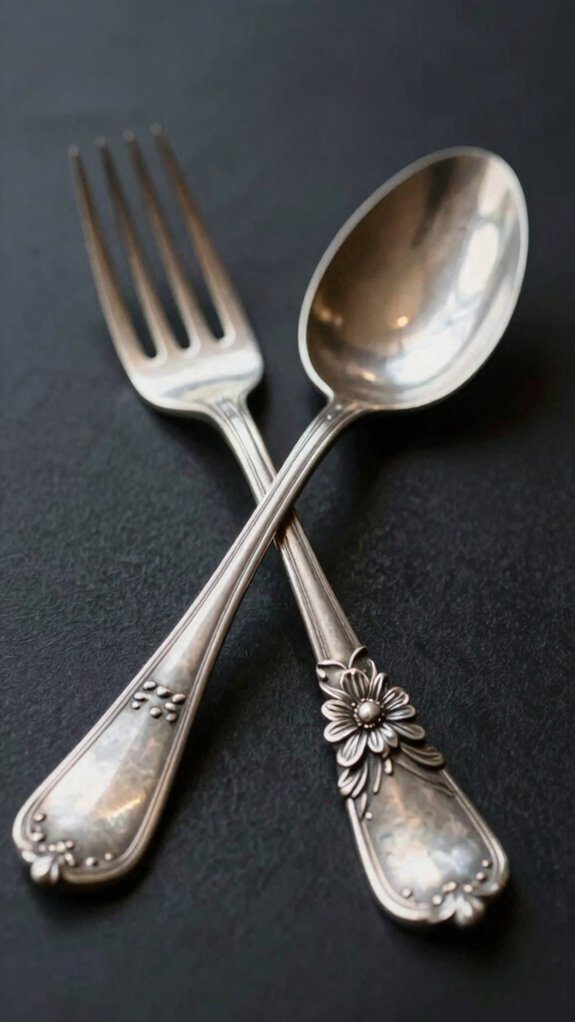
Creating fork and spoon sculptures lets you bend, hammer, and arrange vintage silverware into eye-catching wall art that’s equal parts quirky and elegant. I flatten spoon bowls and hammer fork tines with a ball peen hammer, overlapping pieces to form letter-like shapes.
Using thicker silverplate like vintage Oneida, I bend handles with pliers for three-dimensional mixed media designs. Combining varied utensils—flattened spoons for petals, fork tines for texture, butter knives for rays—I create starbursts and animal motifs.
Spacing handles roughly 1–2 inches apart creates rhythm. I drill holes and use E6000 adhesive to attach pieces to dark beadboard, then seal everything with polyurethane for lasting kinetic sculptures that captivate any room.
Antique Spoon Bookmark
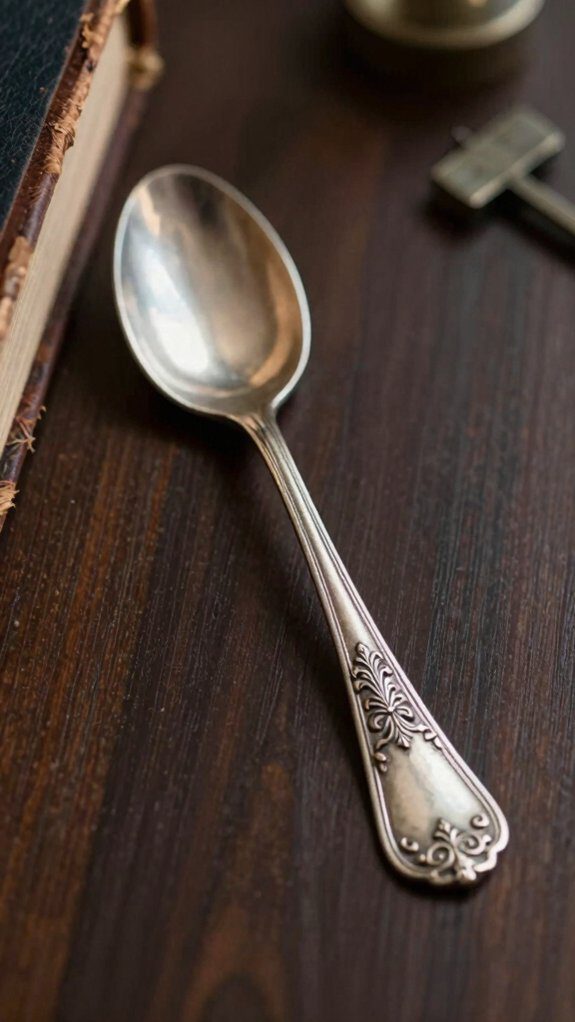
One of my favorite upcycling projects transforms a single vintage spoon into a functional bookmark that’s both practical and charming. I start by flattening the handle with a ball-peen hammer, then file it smooth to prevent catching on delicate pages—essential for book page preservation. Vintage engraving on souvenir spoon handles becomes a beautiful focal point.
Here’s what you’ll need:
- Ball-peen hammer and metal files
- Needle-nose pliers for shaping
- Small drill for decorative holes
- Clear lacquer sealant for protection
The finished bookmark slips gracefully over pages while protecting them from damage, making it a treasured addition to any reader’s collection.
Silverware Serving Tray Handles
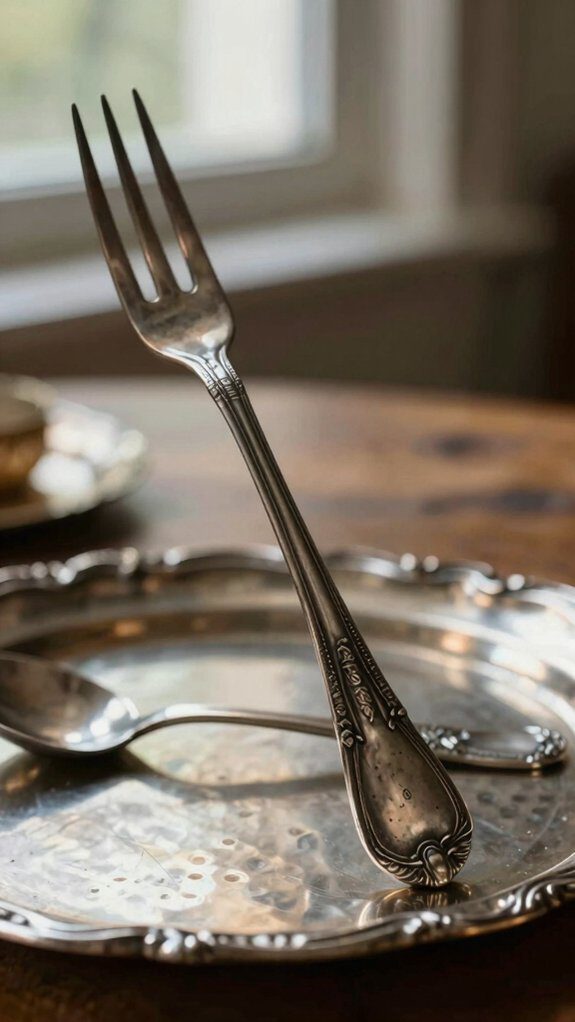
I love taking old silverware and giving it a second life as serving tray handles because it’s both practical and beautiful.
When you transform flattened spoon and fork handles into grips, you’re not just creating something functional—you’re turning forgotten flatware into a conversation-starting detail that actually makes carrying your tray easier.
It’s the kind of upcycle that feels elegant but won’t break your budget or require elaborate metalworking skills.
Functional upcycle
Transform vintage silverware into stylish serving tray handles—and you’ll breathe new life into both pieces while creating something genuinely useful for your kitchen. This repurposed cutlery project combines sustainability with style with ease.
- Salvage sturdy vintage spoon or fork handles and trim to 4–6 inches for comfortable grip
- Flatten handle ends with a mallet, then drill pilot holes for secure fastening
- Attach handles symmetrically using short rounded-head screws and waterproof adhesive
- Match ergonomic grips with your tray’s aesthetic—ornate silverplate suits rustic wood, while stainless steel complements modern designs
You’re joining a creative community that values resourcefulness and beauty together.
Metal Flower Garden Art
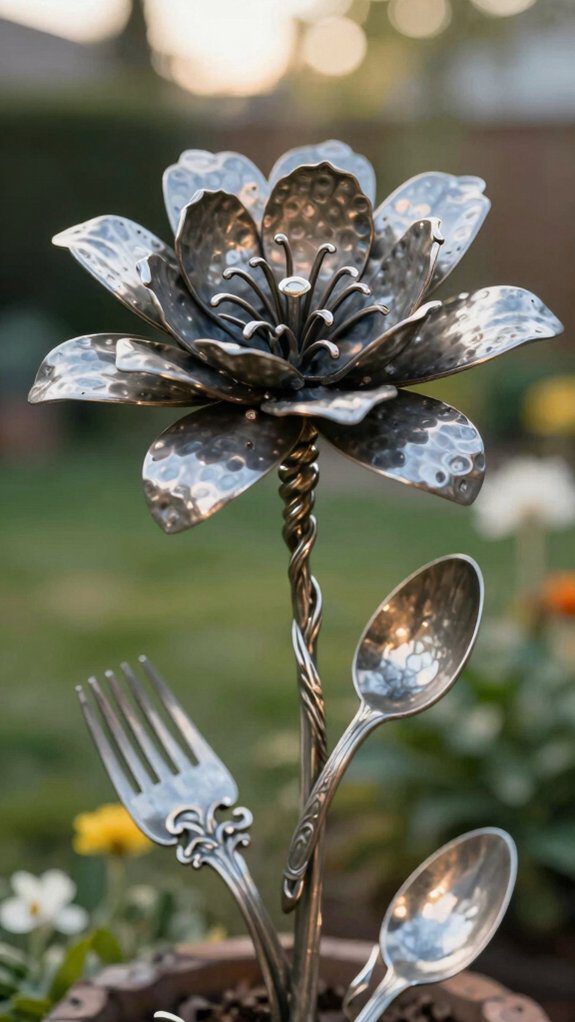
Creating metal flowers from vintage silverware is a fantastic way to transform your garden into an eye-catching display that’ll last for years. I bend spoon bowls into petal shapes using pliers, then arrange 5–8 petals around a central piece to craft stunning blooms. Using repurposed cutlery transforms forgotten treasures into outdoor art.
| Component | Material | Purpose |
|---|---|---|
| Petals | Spoon bowls | Visual appeal |
| Center | Hammered spoon | Focal point |
| Stem | Heavy-gauge fork | Support structure |
| Base | Rebar stake | Ground anchoring |
| Finish | Outdoor spray paint | Weather protection |
My metal petal assembly process involves drilling holes and fastening pieces with weatherproof screws or stainless-steel rivets. I prime everything with rust-inhibiting primer, then apply two coats of outdoor paint for lasting durability.