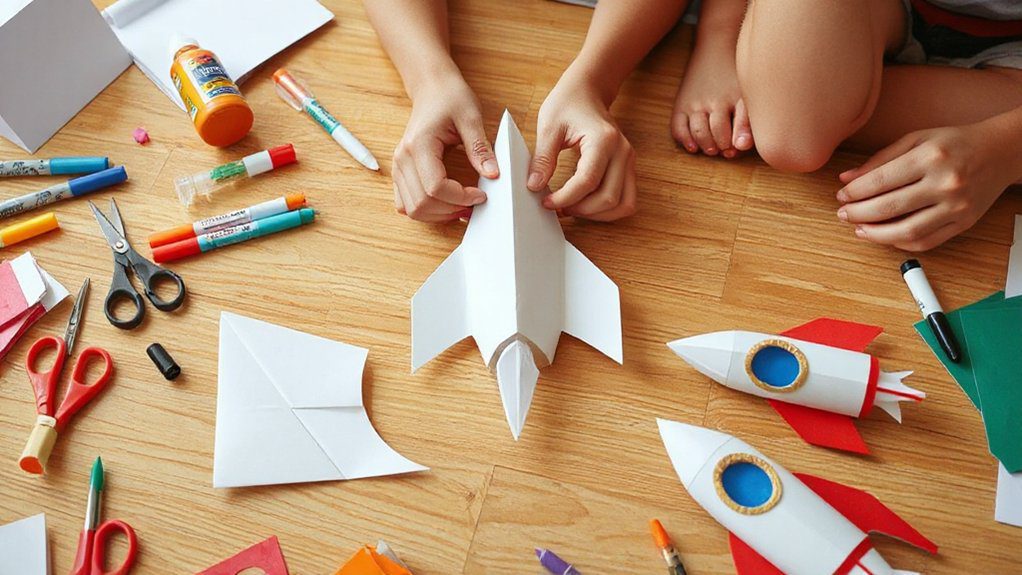
How to Make a Paper Rocket Ship Craft Step by Step
I start with a toilet paper tube (or a paper towel roll for bigger rockets) and cover it with paint or aluminum foil. Next, I make a nose cone by cutting a cardstock circle, snipping out a wedge, then overlapping the edges into a point and taping or gluing it on snug. Then I cut 3–4 matching cardstock fins, add small tabs, and glue them evenly around the base. Add windows, stickers, and flames, and there’s more ahead.
Love cozy DIY projects? 💕
Get free printable guides, exclusive tutorials & surprise craft goodies straight to your inbox.
Disclosure: This post may contain Amazon affiliate links, at no extra cost to you. Content on DiyCraftNest is created with research support from AI tools and carefully reviewed, edited, and fact-checked by the lead author, Daniel Pat, to ensure accuracy and reliability. Learn more
Key Takeaways
- Gather a toilet paper tube, cardstock, scissors, and a low-temp glue gun; add paint, foil, or stickers for decoration.
- Make the rocket body by trimming the tube edges smooth, then wrap or paint it for a sturdy, colorful cylinder.
- Create a nose cone by cutting a cardstock circle, removing a wedge, and overlapping edges until it forms a point.
- Cut 3–4 matching cardstock fins, add fold tabs, and glue them evenly around the base for balance and stability.
- Decorate with paper windows, wings, stripes, and glitter; press seams firmly and let glue dry before play or display.
Materials Needed for a Paper Rocket Ship Craft
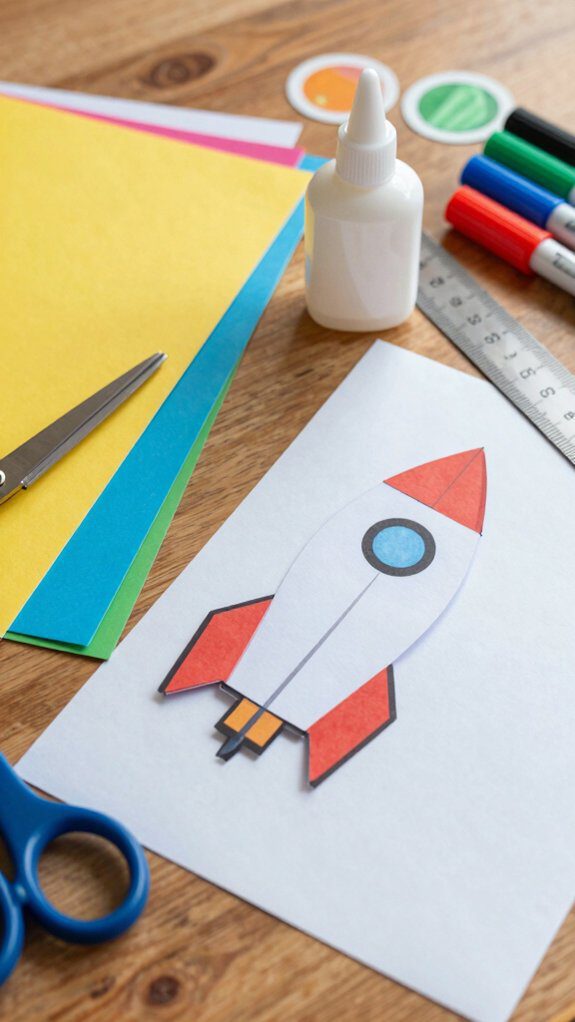
A simple stack of supplies is all it takes to launch this paper rocket ship craft. Grab a toilet paper tube for the body (or swap in a paper towel roll if you want a bigger rocket). For decorating, I like acrylic paint and a small paintbrush, but aluminum foil works great when you want a shiny, space-ready look.
Next, choose cardstock or construction paper for the cone and wings. If you’re making the cone, trace and cut a circle, then overlap the cut edges until it forms a point, and glue it down. Scissors help you shape clean parts, and a low-temp glue gun makes the build sturdy. Finish with stickers or extra details for creative inspiration and fun crafting techniques we can share together.
Basic paper supplies
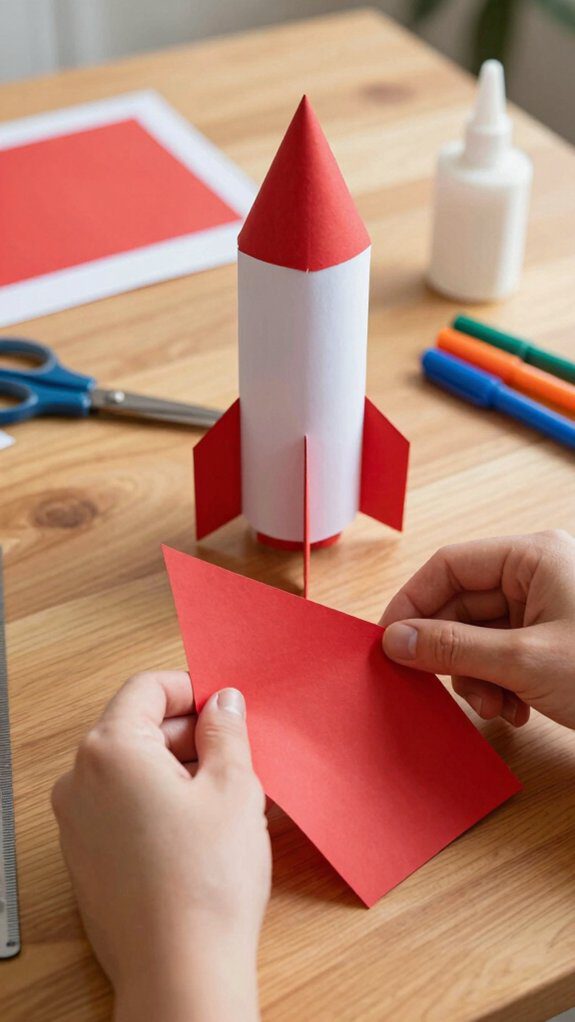
Think of basic paper supplies as your rocket’s “mission control”—they keep the build simple, sturdy, and easy to customize. I like starting with cardstock or construction paper for the body and fins because it holds shape better than thin paper. For the nose cone and windows, regular paper works great and folds cleanly, which feels like real paper engineering (without the rocket science headache).
- Cardstock or construction paper: strong body, crisp fins
- Toilet paper tube: instant cylinder base that won’t collapse
- Scissors + low-temp glue gun: clean cuts, durable joins
I’ll cut each piece slowly so everything fits snug, then I’ll tack fins and wings with low-temp glue for a solid bond. Finally, I’ll add markers or stickers so your rocket feels uniquely yours, part of our crew.
Optional decorating materials
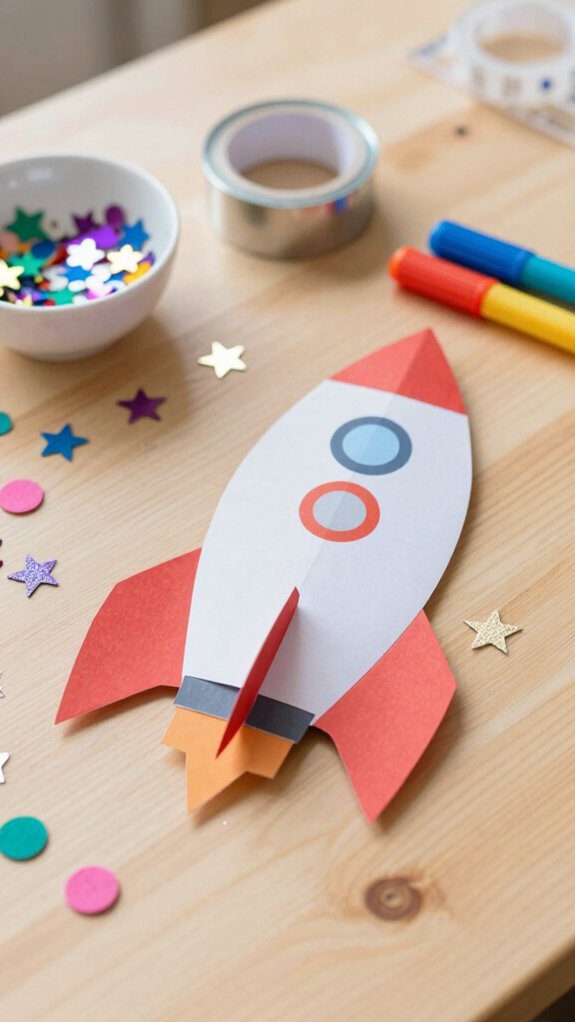
Once the rocket’s basic shape is solid, I like to add a few optional decorating materials to make it look like it’s ready for launch. You and I can make it feel like “our crew” built it by mixing sticker options, markers, and different glitter types for sparkle that pops. I also love adding ribbons or thin strips of colored paper as fins, bands, or streamers.
| Material | How it changes the look |
|---|---|
| Stickers/markers | Names, stars, and bold control panels |
| Glitter | Shiny exhaust trails and galaxy shimmer |
| Ribbons/paper strips | Racing stripes and fluttery flames |
| Aluminum foil | Metallic body panels with space realism |
| Paint + cut shapes | Bright color blocks, windows, and hatches |
Choosing the Right Paper for Your Rocket Craft
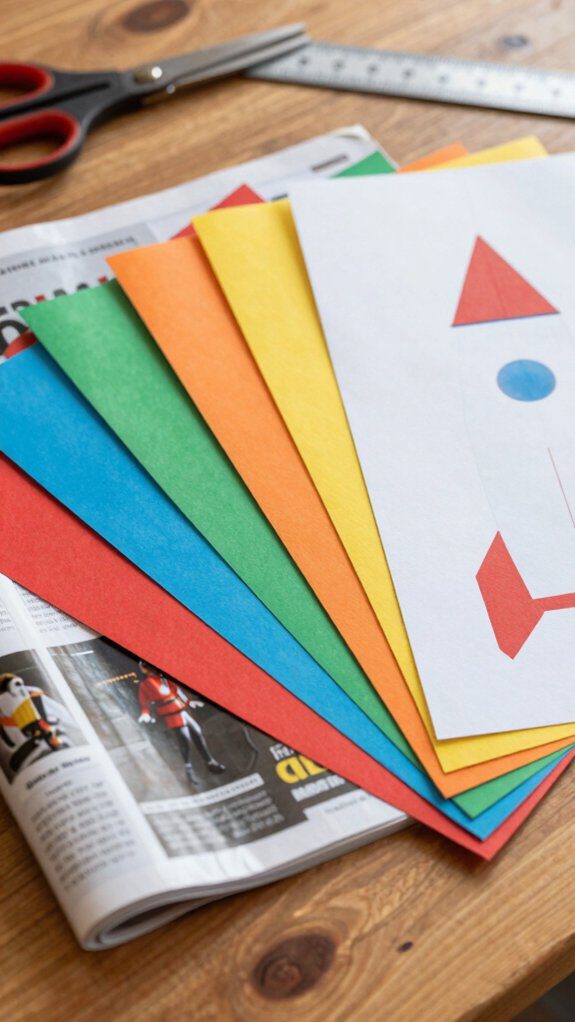
Because the paper you choose decides whether your rocket stands tall or flops mid-launch, I always start by picking a base that’s sturdy but not heavy. I check paper weight first: heavier paper holds shape, but too much makes launching harder. Cardstock is my go-to for the body and fins because it stays crisp and boosts craft durability through takeoff and landing. If you prefer a lighter build, construction paper works, but I reinforce folds or include an additional layer where the fins attach. For sparkle, I wrap small sections with aluminum foil, treating it like a decorative skin since it can dent. I also love recycled magazine pages for cool textures and a “we’re in this together” feel.
- Cardstock for strong structure
- Construction paper with reinforcement
- Recycled paper for unique style
Best paper types for kids
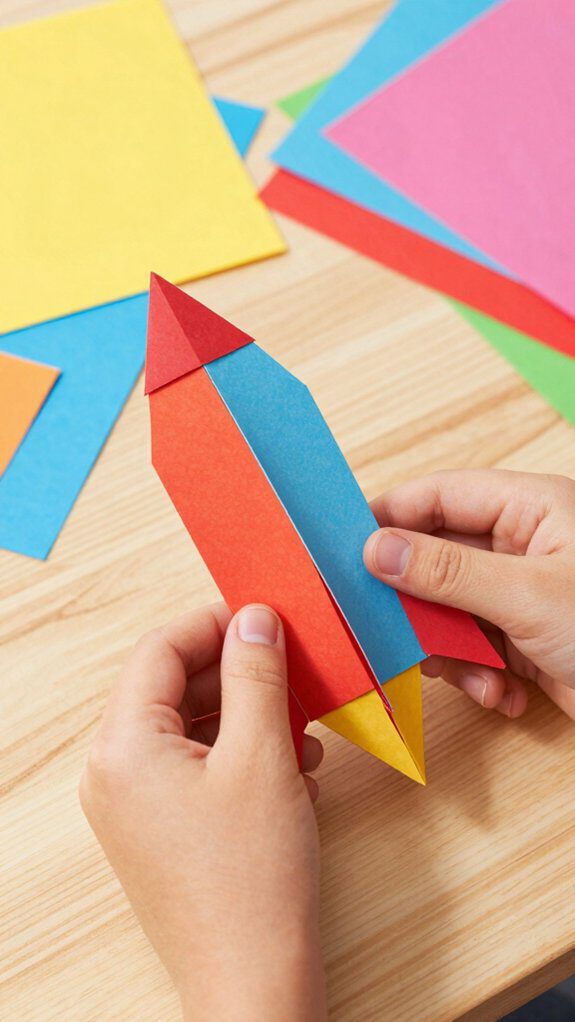
Paper choice matters even more when kids are the builders, since the best rocket paper needs to cut easily, fold neatly, and forgive a few wiggly scissors lines. I like smooth printer paper for beginners because it’s light, cheap, and great for practicing basic crafting techniques like clean folds and crisp cones. Construction paper works too, and the slightly heavier paper weight helps little hands shape fins without tearing.
If you want a sturdier rocket body, I reach for cardstock. It holds its form better, so your rocket stays straight and flies more reliably. For decorations, I add tissue paper as flames, windows, or bands of color, since it boosts style without weighing the rocket down. Pick smooth sheets whenever you can for sharp edges.
Recycled paper options
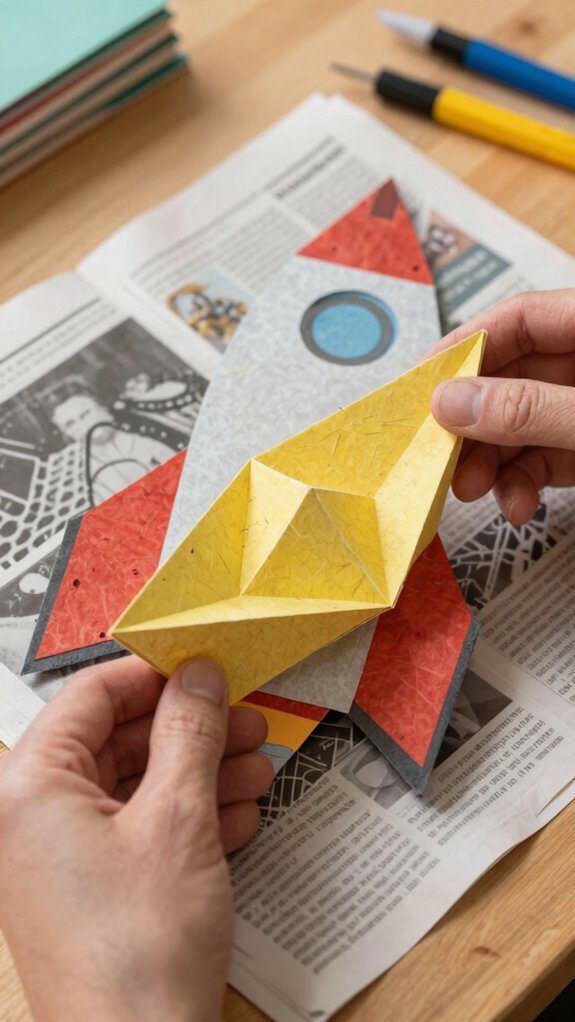
If you’re trying to keep your rocket craft budget-friendly and low-waste, recycled materials can be your secret weapon. I love how creative recycling makes every rocket feel like it belongs to our little maker crew, not a cookie-cutter kit. Try old magazines, newspapers, or scrap paper for bold patterns and fun textures.
- Old magazines and newspapers for instant designs
- Scrap paper for mix-and-match layers
- Cereal-box cardboard for extra strength
Before you start, I check that the paper is clean and not too glossy, because shiny coatings can fight glue or paint. For color without extra trash, I grab leftover wrapping paper or even gift bags and cut them into panels or stickers. Mixing papers is the heart of eco friendly crafts, and your rocket will look truly yours.
Step 1: Preparing the Rocket Body
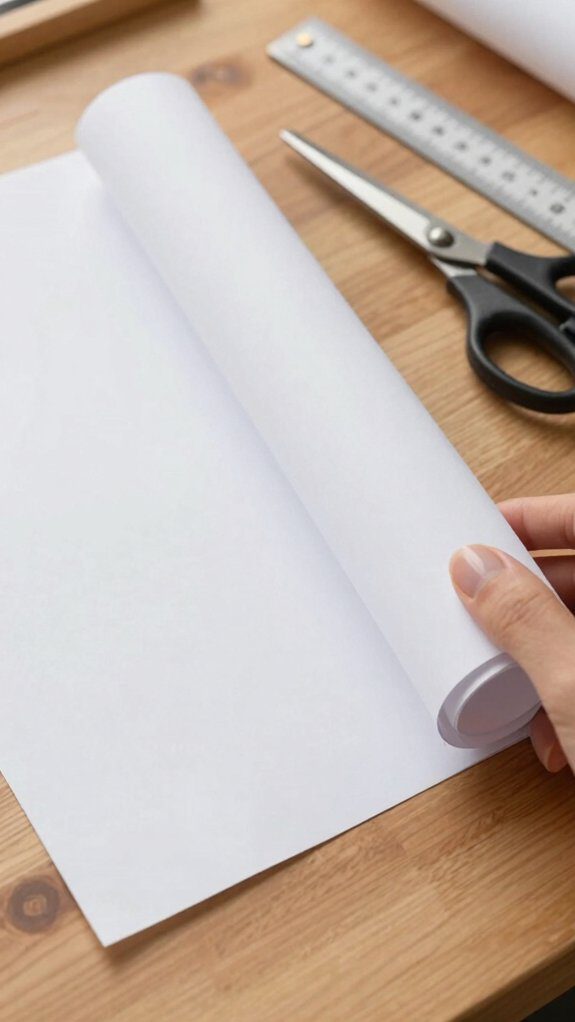
With your recycled sheets picked out, it’s time to turn them into a rocket body that’s smooth, sturdy, and ready to fly. I start with the template and cut right on the outlined edges, because clean lines help our rocket design feel “official.” As you cut, keep your scissors steady so the sides stay even—those small choices support aerodynamics principles.
| Do this | Why it matters | Quick tip |
|---|---|---|
| Cut on the outline | Cleaner airflow | Turn paper, not scissors |
| Roll into a cylinder | Strong body | Roll around a pencil first |
| Tape and reinforce seams | Stays together | Add a second tape strip |
Now roll the piece into a neat tube and tape it closed. I measure the length after shaping to match our shared plan.
Cutting the main rocket shape
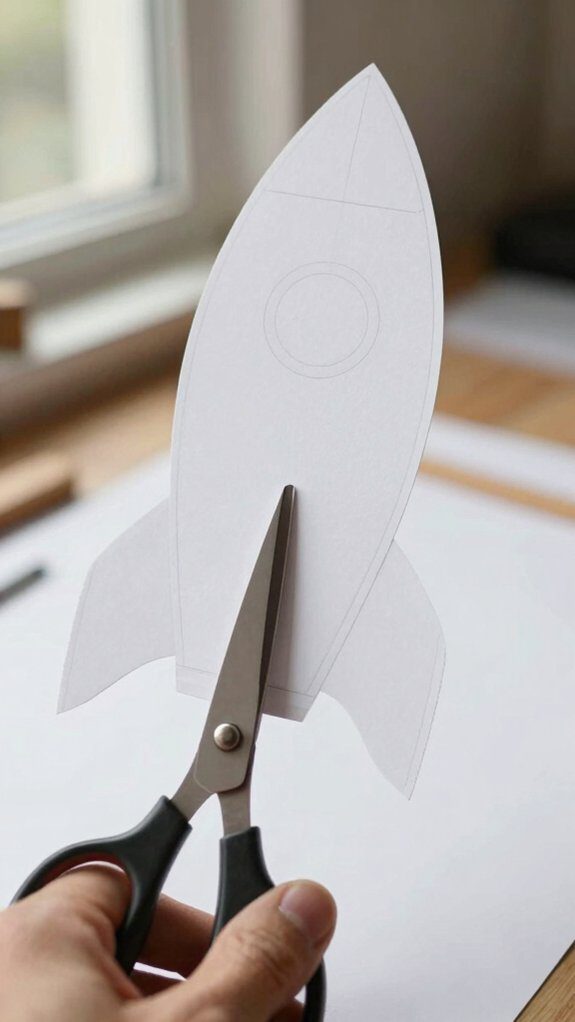
Grab your rocket template and let’s carve out the main shape like we mean it. I lay the template on sturdy cardstock or construction paper, then trace it carefully so you and I stay on the same path. Pay attention to rocket dimensions: I aim for a body about 6–8 inches long, giving room for the nose cone and fins later.
- Trace with a sharp pencil so your outline stays crisp
- Use slow, steady cutting techniques to follow every curve
- Smooth out any jagged spots so the rocket looks ready to launch
Next, I cut right on the line with scissors, keeping the edges clean. Once it’s free, I roll the body into a cylinder and tape the seam so it holds its shape.
Folding techniques for structure
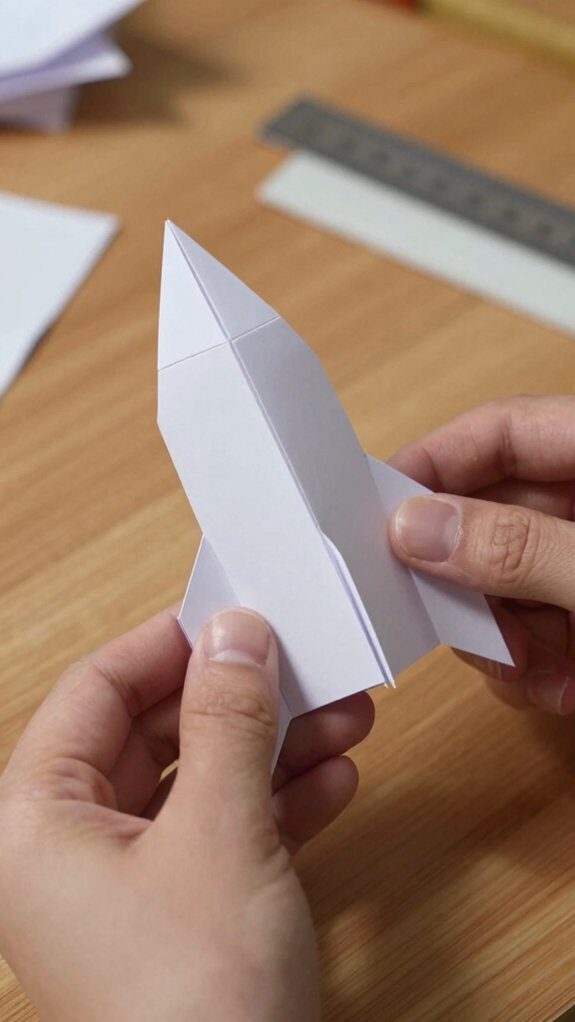
Now that the rocket body’s cut, rolled, and taped into a neat cylinder, I switch gears to folding—because sharp, consistent creases are what make a paper rocket hold its shape and fly straighter. I run a fingernail or ruler along every fold line so we’re all getting the same crisp edges and real structural integrity.
First, I pinch and twist the top of the body tightly, then tape it down so it stays compact and smooth, which cuts air resistance. Next, I focus on fins: I fold each fin’s base to a clean right angle so it hugs the rocket body and adds stability. If you want to test, try slightly longer fins or a different angle and compare flights. These folding techniques help our rockets feel “team-built” and reliable.
Step 2: Making the Rocket Nose Cone
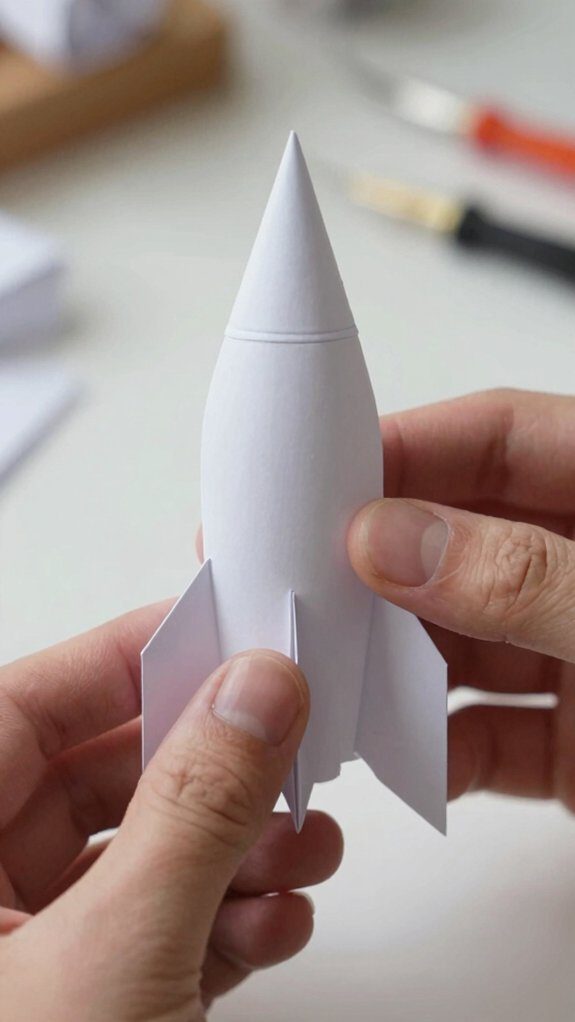
Step 2 is all about giving your rocket a sleek nose cone, and it’s easier than it sounds. I trace a circle on cardstock (construction paper works too), cut it out, then gently overlap the edges to form a cone and glue it so it holds its shape. You’re officially part of the rocket-build crew now.
- Try small and large circles to investigate fun design variations
- Test the fit so it sits snugly on your rocket body
- Add stickers or paint to make it feel uniquely yours
Circle size matters: a wider circle makes a taller cone, while a smaller one can boost cone stability and feel sturdier. Before the glue sets, I check positioning, then press the seam firmly so it won’t pop open later.
Simple cone folding method
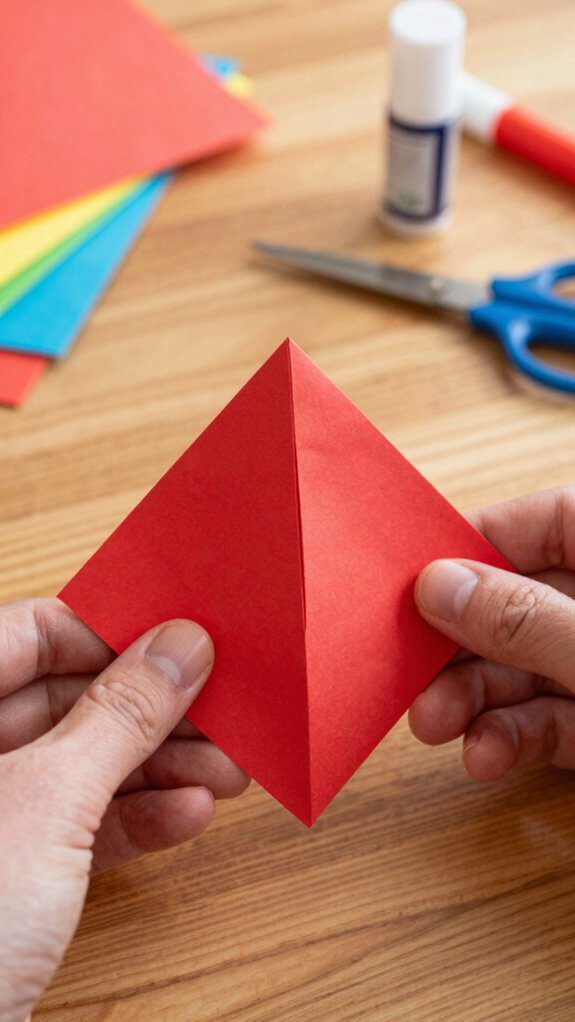
A nose cone doesn’t have to be elaborate to look sharp, and my favorite way to get a clean shape fast is the simple cone folding method. I start by cutting a neat circle from cardstock or construction paper—this becomes your cone’s base, and you’re officially on the team.
Next, I cut a wedge from the edge straight to the center, like a slice of pizza. Then I overlap the cut edges until it forms a smooth point. These cone construction techniques are super forgiving, so don’t stress if your first try looks a little wonky.
For cone size adjustments, I slide the overlap more for a slimmer, taller cone, or less for a wider one that matches your rocket body. Finish by decorating with markers or stickers.
How to secure the top properly
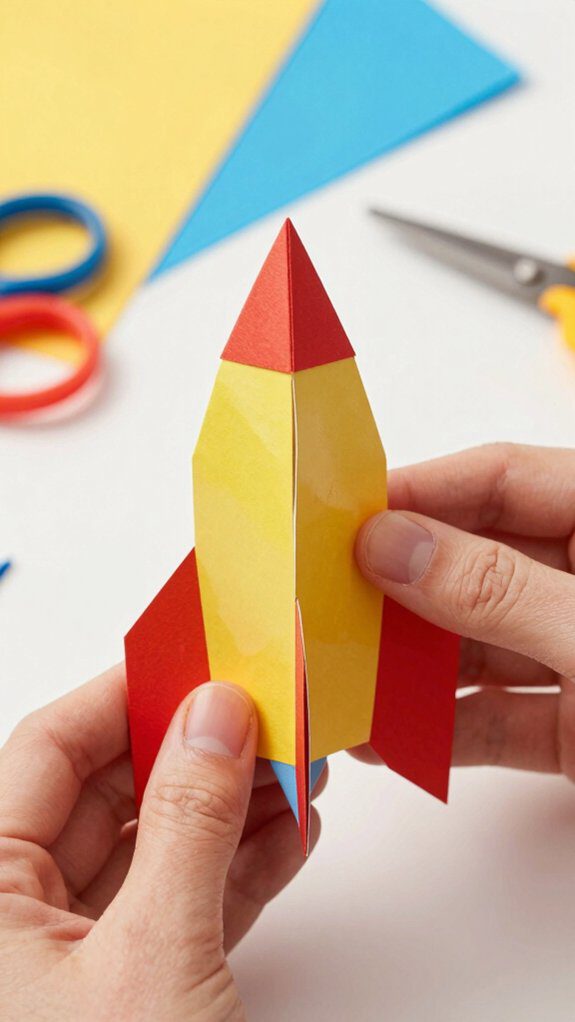
Once you’ve formed that nose cone, securing the top is what keeps your rocket looking sleek instead of popping apart mid-flight. I twist the top of the rocket body tightly until it forms a sharp point that fits snugly, because that snug fit boosts rocket aerodynamics and helps nose cone stability.
- Wrap tape around the base where the cone meets the body for a strong “belt.”
- If you used cardstock, tape or glue the overlapping seam so it can’t unravel.
- Want extra confidence? Add a tiny bead from a low-temp glue gun at the base.
Before you launch with the crew, I always do a gentle tug test. If it doesn’t wiggle, you’re in the club—and your rocket’s ready to fly.
Step 3: Creating Rocket Fins
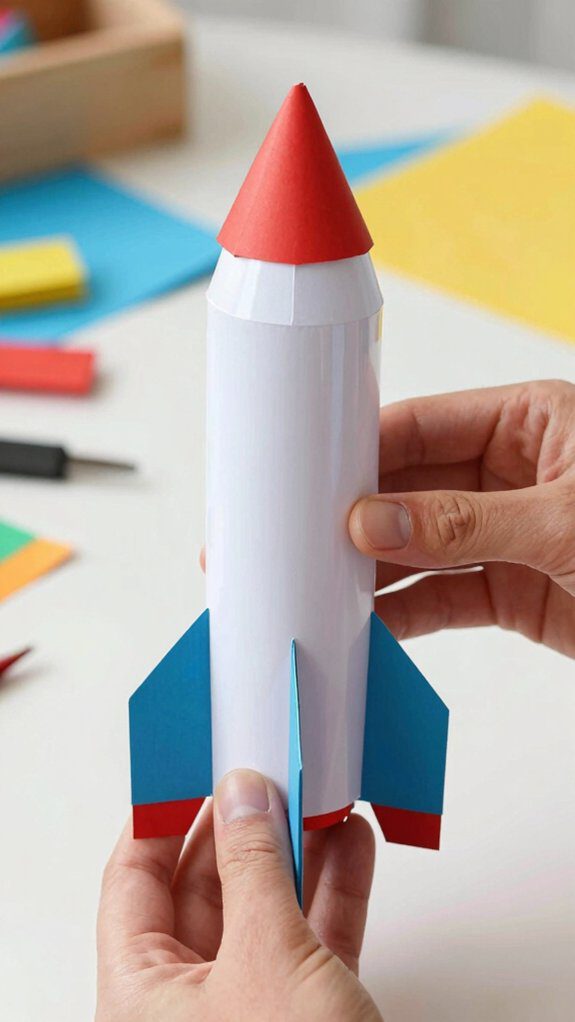
With the nose cone snug and tug-tested, I like to give the rocket some “feet” so it flies straight instead of wobbling—this is where fins come in. I cut the fins from the template and double-check they match, because symmetrical fin design keeps our rocket balanced like a good team.
Next, I tape the fins evenly around the base, spacing them like points on a compass. For extra strength, I make a “fin sandwich” by taping a second fin right on top of each one, smoothing seams so air slips past. Then I bend each fin outward at a right angle to the body. These stability techniques help prevent spinning. Finally, I press along every tape edge and sight down the rocket to confirm everything’s coordinated and secure.
Easy fin shapes for beginners
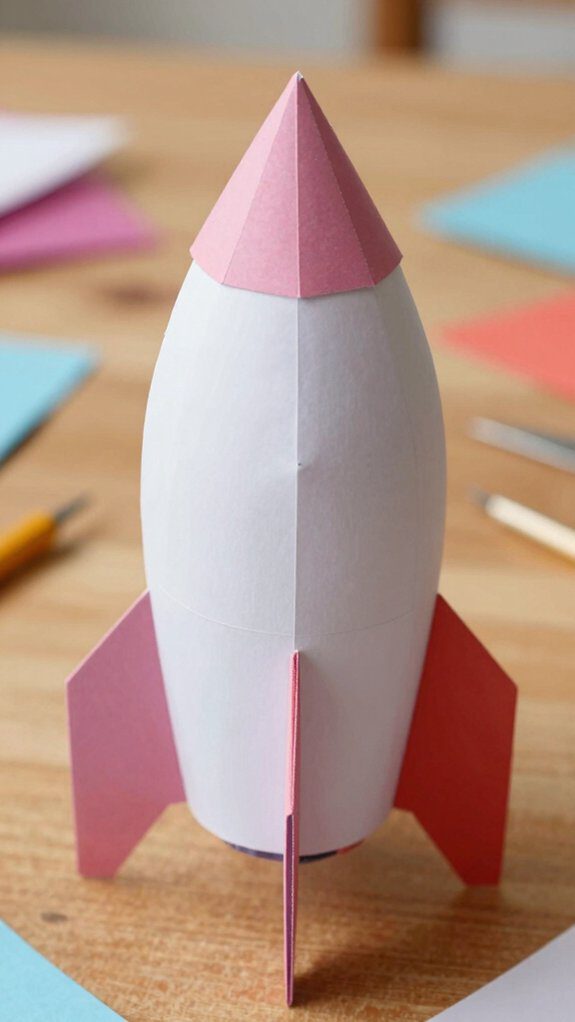
Paper fins are like the rocket’s little steering paddles, and picking an easy shape makes the whole build feel way less intimidating. When you and I keep the fin design simple, we learn faster and still get great results. I focus on stability factors like a wide base and clean edges, so our rockets feel steady and “team-ready” together.
- Triangle fins: Cut an isosceles triangle from cardstock; this classic shape often gives the best stability.
- Rectangle fins: Cut a strip, then fold a right-angle tab to make a sturdy base that’s hard to mess up.
- Trapezoid fins: Cut a trapezoid that’s wider at the base for extra lift and a cool, custom look.
Choose one style, trace it, and cut multiple matching pieces for a confident finish.
Attaching fins evenly
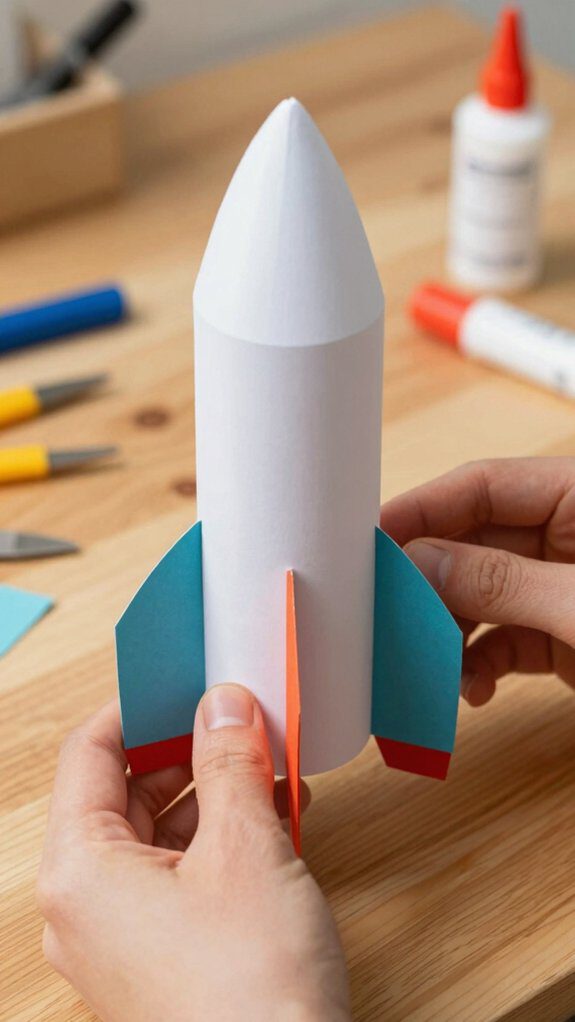
Now that you’ve picked a simple fin shape you can cut cleanly, I’m going to help you place those fins so your rocket doesn’t wobble like it’s trying to dance in midair. We’re in this together, and a few careful marks make a big difference.
First, wrap a ruler along the rocket body and lightly mark equal spacing for each fin. Think “pizza slices”: even gaps give better fin stability. Next, set each fin so it meets the body at a right angle, not leaning left or right. I like to press the fin flat against the tube, then check the corner with the ruler edge.
Tape each fin firmly so it won’t shift. Finally, pause for a quick fin positioning check and nudge anything straight.
Step 4: Assembling the Paper Rocket Ship
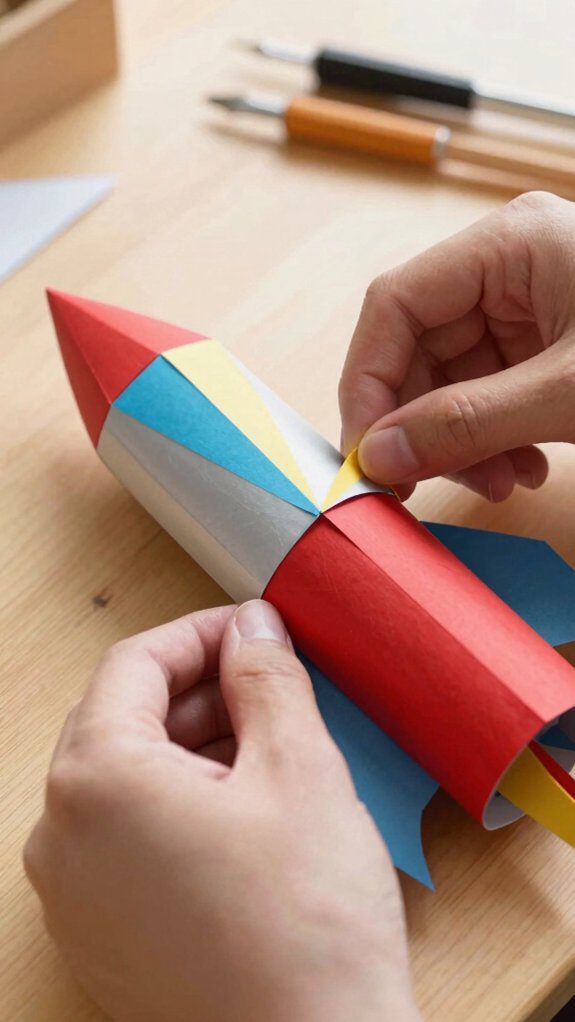
Grab your template and let’s turn those flat pieces into a rocket that actually holds its shape. First, I cut out the rocket body and gently curl it until it forms a neat cylinder—your hands are the best tool here. Then I line up the fins around the body, spacing them evenly so our crew’s rocket flight stays balanced.
- Shape the body into a smooth cylinder for a clean roll and sturdy feel.
- Add each fin, then make a “fin sandwich” by layering a second fin on top for extra stability.
- Bend every fin to a right angle from the body to help it slice the air.
To finish, I twist the top into a nose cone. That optimized tip makes paper crafts feel like real engineering.
Gluing vs taping
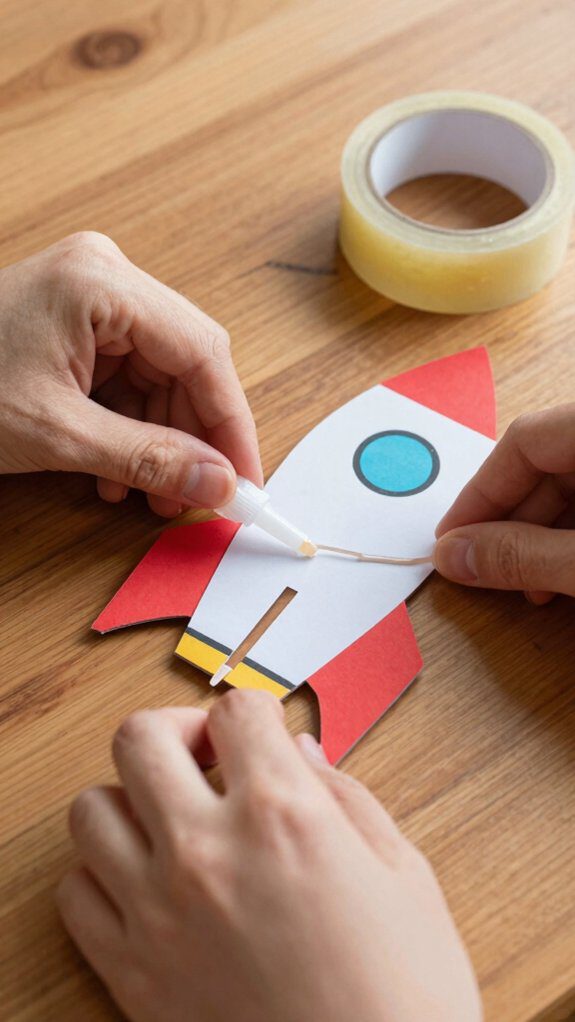
Once your rocket body is rolled and the fins are bent into place, the big question is how you’ll fasten everything so it stays put: glue, tape, or a bit of both. I like gluing techniques when I want a strong, permanent bond—especially on seams and fin bases. Hot glue grips fast and tough, but it’s hot, so I stay careful; cold glue is safer, though it needs more drying time.
| Option | When I use it |
|---|---|
| Glue | Strong holds, finished parts |
| Tape | Quick fixes, easy adjustments |
The taping advantages shine when you’re still tweaking the look, because you can peel and reapply without wrecking the paper. For a team-perfect build, I often tape to position, then add a small glue line to lock it in.
Keeping the rocket balanced
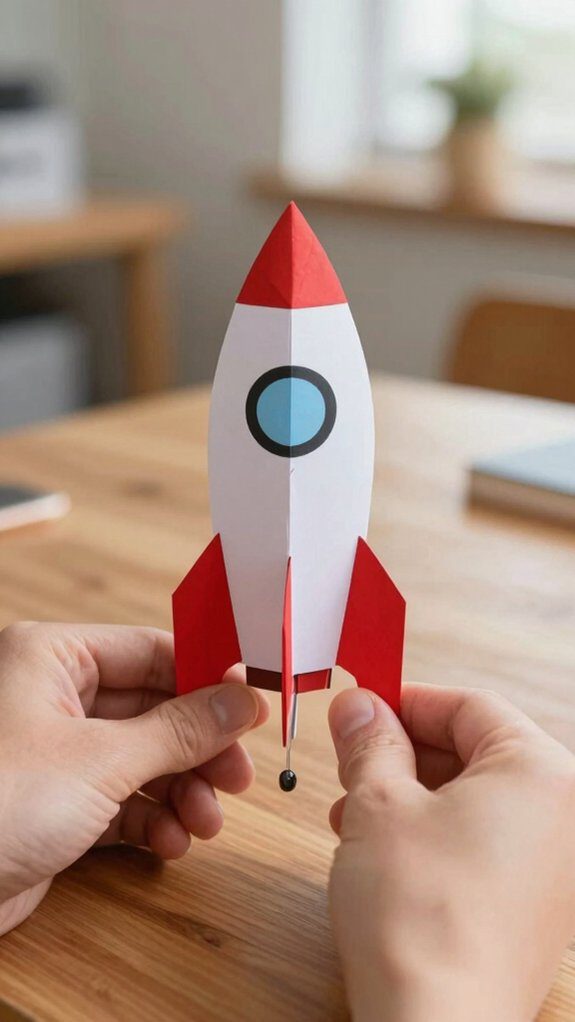
Even if your paper rocket looks awesome on the outside, it won’t fly straight if it’s lopsided, so I always take a minute to balance it before I call it finished. I want your launch to feel like you’re part of the “we nailed it” club, not the “why did it veer?” crew.
- Check fin placement: space fins evenly, symmetric around the body.
- Bend each fin to a right angle so airflow pushes the same on every side.
- Aim for smart weight distribution: the nose cone should feel proportionate, not too heavy.
If your rocket still wobbles, I use a fin sandwich—attach a second matching fin to spread weight evenly. After each tweak, measure and jot down flight distance so you can see what changed and why.
Step 5: Decorating Your Paper Rocket Ship
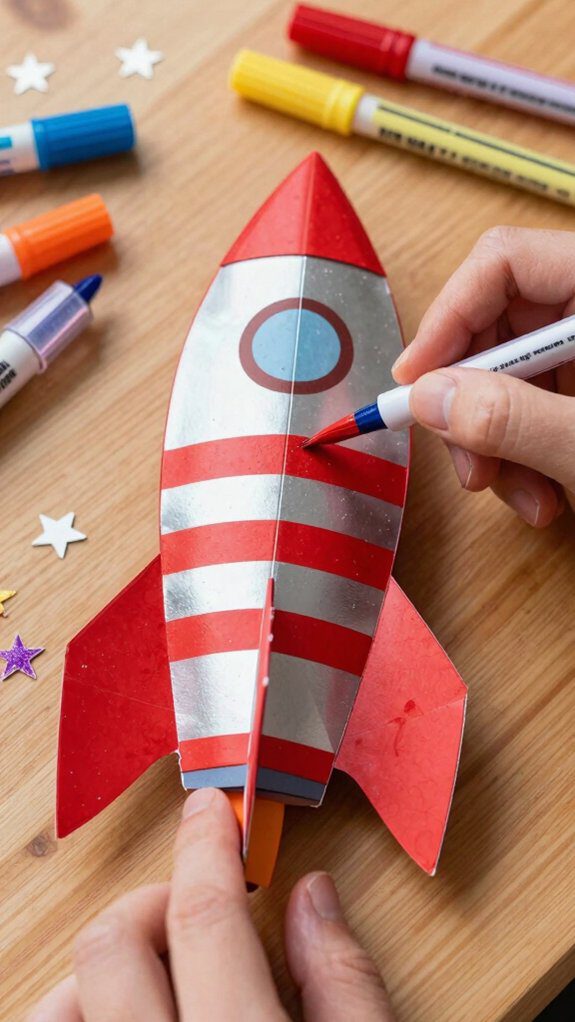
Next, I add windows by cutting small cardstock circles and gluing them on. Then I attach wings from cardstock or construction paper; place them evenly on both sides so the rocket stays steady. For sturdier work, I use a low temp glue gun, especially on wings and heavier decorations. Finally, I personalize with stickers, drawings, and other unique design elements so your rocket stands out on launch day.
Painting and coloring ideas
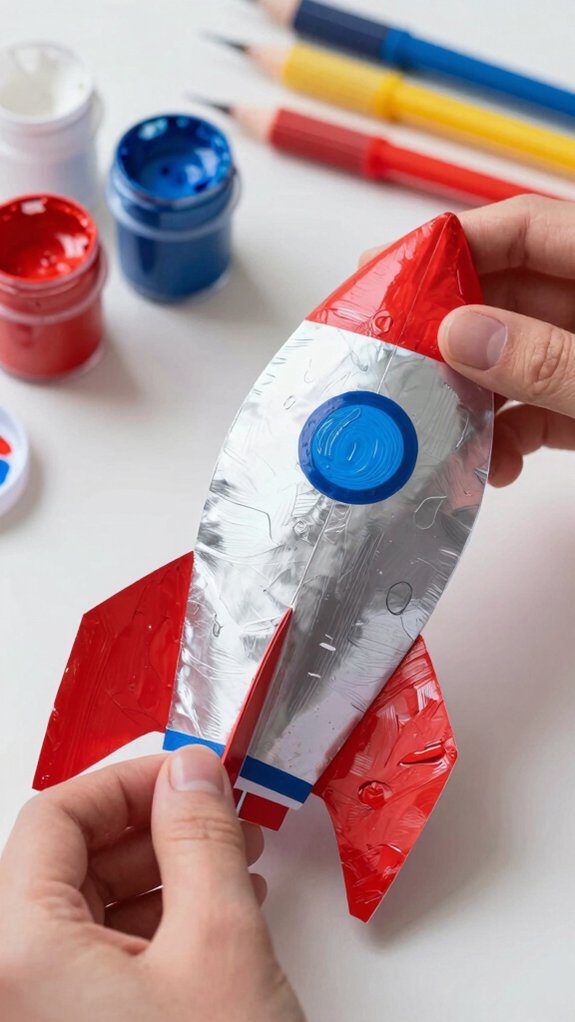
After you’ve glued on the windows, wings, and any fun extras, paint and color are what really make your rocket look like it’s ready for liftoff. I like acrylic paint because it grabs onto the toilet paper tube and stays bright, so your design pops for everyone to admire. If you want a sleek “space-speed” look, try color blending techniques: start with a dark shade near the bottom, then mix in lighter paint as you move up for a smooth gradient.
- Blend two colors while they’re still wet for a soft fade.
- Add metallic accents or glitter paint for futuristic shine.
- Finish with markers, colored pencils, or stickers for personalized patterns.
When we all compare rockets, your choices help you feel like part of the crew.
Adding windows, flames, and details
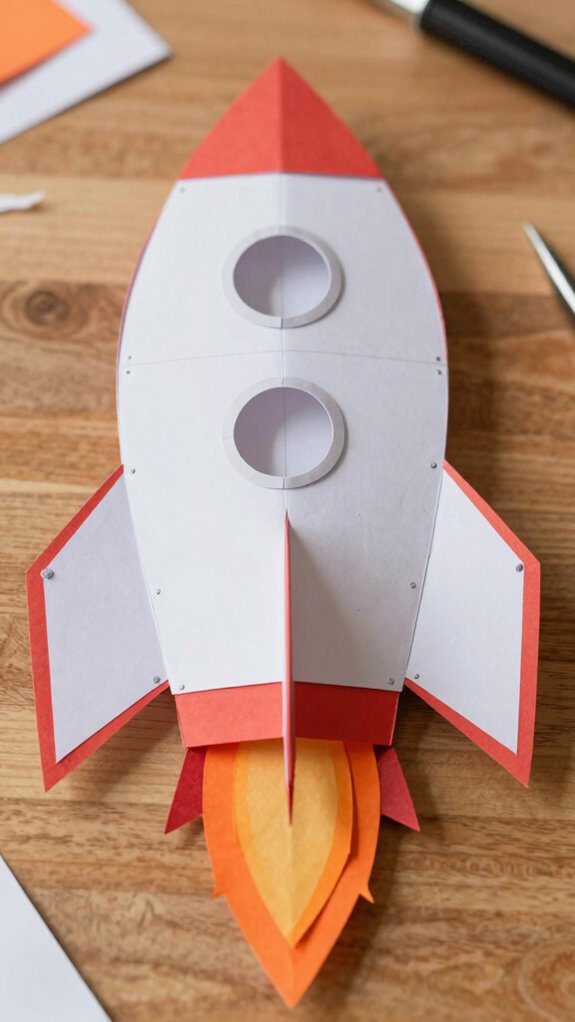
Once your rocket’s paint is dry, I like to bring it to life with windows, flames, and a few space-age details that make it feel ready to blast off. First, I cut circular windows from cardstock or construction paper and glue them on. Try different window designs—three tiny portholes in a row feels playful, while one big circle looks like a cockpit.
Next, I make flame effects by cutting strips of orange, red, and yellow paper. I layer them at the bottom, starting with yellow in the center, then red, then orange for a fiery look. If you want extra pop, fold little tabs on the flames or windows before gluing.
Finally, I add metallic marker lines, glitter accents, and small stars or planets so your rocket feels like part of our crew.
Paper Rocket Ship Craft for Different Age Groups
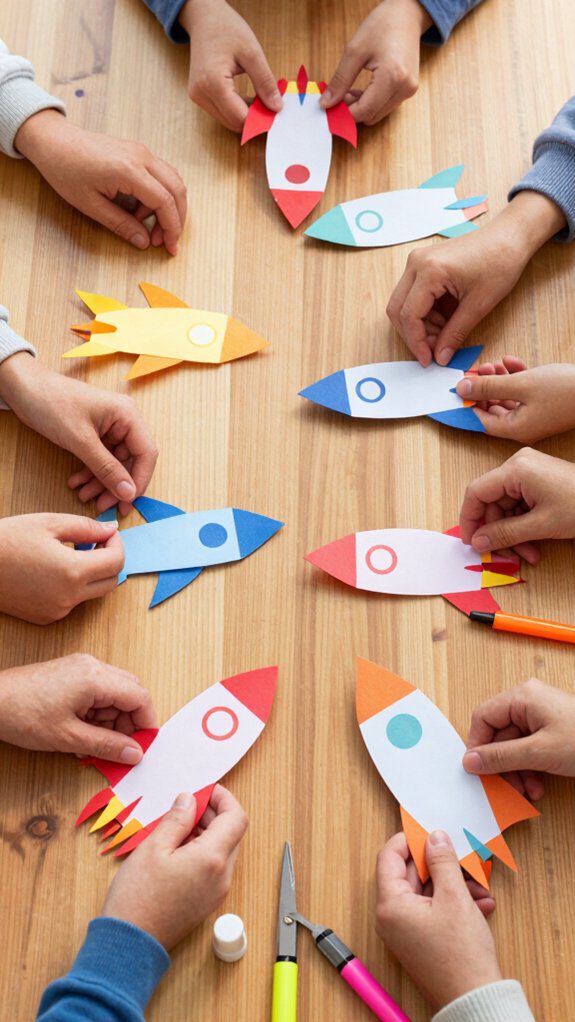
Because kids (and teens!) learn best when a project feels “just right,” I like to tweak this paper rocket craft based on age so everyone stays safe, successful, and excited to keep creating. You and your crew can still share the same table, then adjust the rocket design and crafting techniques to fit.
- Ages 4–6: I prep pre-cut shapes, then kids go big on stickers and markers for instant wins.
- Ages 7–10: I let them cut fins and nose cones, and we talk about balance and “what might happen if…?”
- Ages 11–13: I encourage material swaps and flight tests, measuring distance and writing notes to improve.
For ages 14–18, I add LEDs or tiny motors for an engaging build. No matter what, personalization makes everyone feel proud and included.
Preschool-friendly version
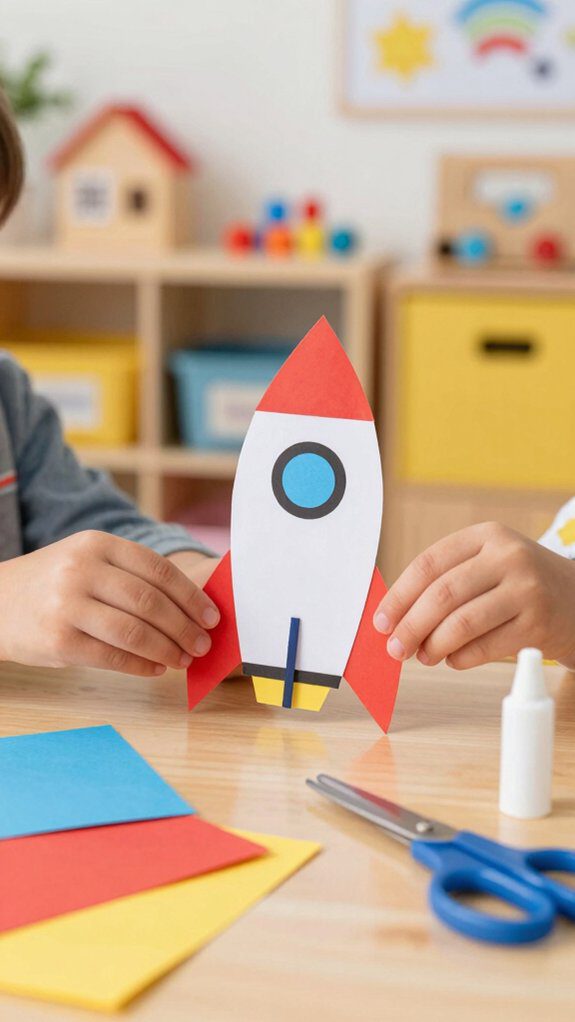
Three things make a preschool-friendly paper rocket work every time: big pieces, simple steps, and lots of room to decorate. I like starting with a toilet paper tube, because it fits little hands and feels like “real” rocket science without the fuss. Cover it in bright paint or wrap it with aluminum foil for that outer-space shine.
Next, I trace a circle on cardstock, cut it out, and overlap the edges to form a cone top, then glue it in place. For windows, I punch or cut paper circles and let you stick them wherever you want. Add two or three cardstock wings on the sides so it stands proud. Finally, pile on stickers, drawings, or ribbons—this is where our imaginative play really takes off together.
More detailed version for older kids
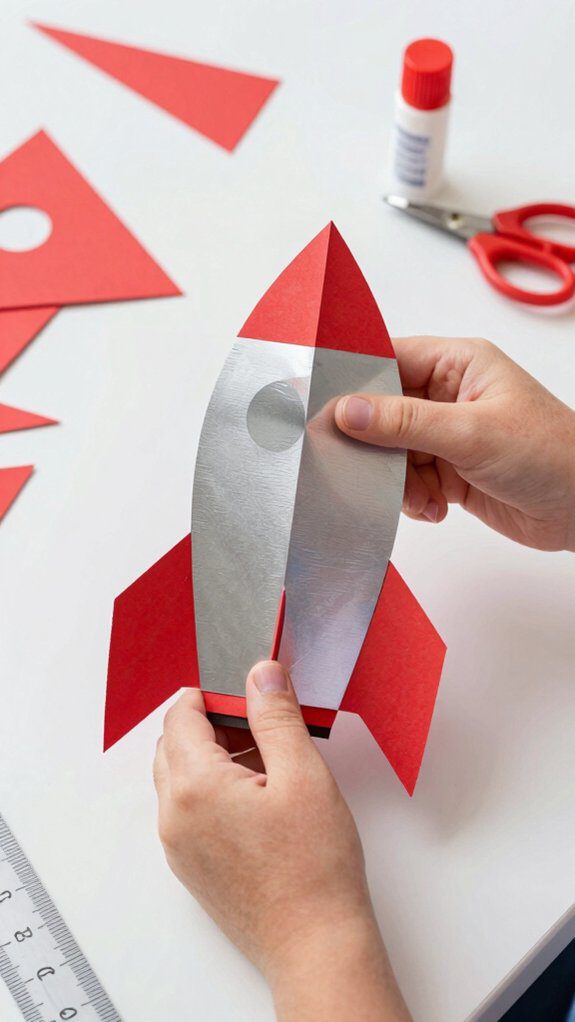
If you’ve got an older kid who’s ready for a bit more “real build” time, I like leveling up the classic toilet paper tube rocket with sharper details and sturdier parts. Start with a tube body, then wrap it in aluminum foil or paint bold panels for a creativity boost that still feels doable.
- Swap in a paper towel roll for a bigger, more detailed rocket
- Make a cardstock nose cone: cut a circle, overlap edges, glue tight
- Add cardstock wings and round windows, then finish with stickers
I tell you to dry-fit pieces before gluing so everyone feels confident. This version’s perfect for a small group—one person cuts, one glues, one decorates—so you build teamwork skills and end up with a rocket that looks proudly “club-made.”
Common Problems and How to Fix Them
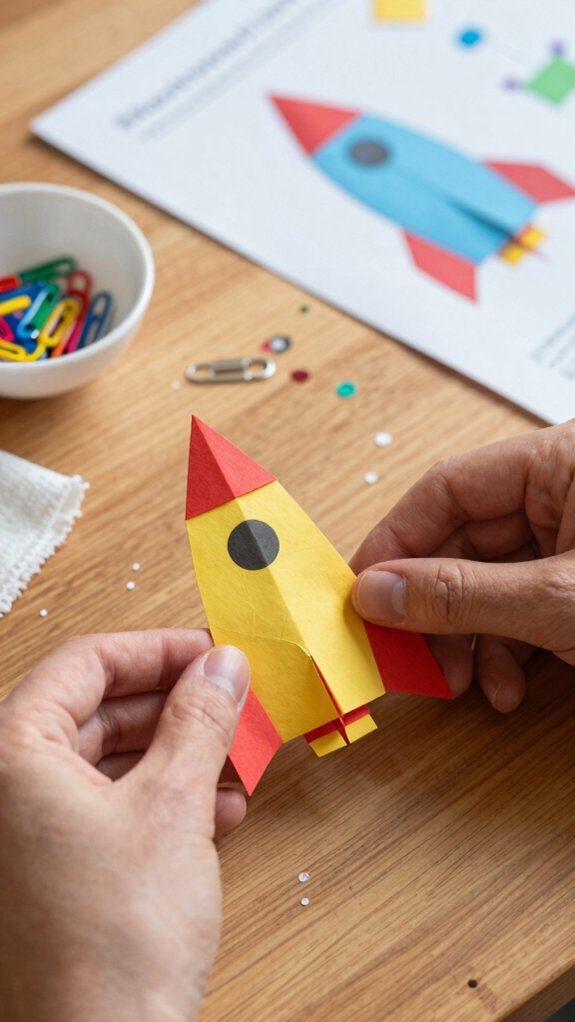
Even with a rocket that looks awesome on the outside, a few small build hiccups can make the launch wobble, dive, or flop—and that’s totally fixable. If your lift-off looks messy, I start with rocket stability: I press the fins down firmly and re-crease them so they sit at a clean right angle. Next, I check fin placement; if one fin’s higher or crooked, the rocket will pull to that side.
If it won’t glide smoothly, I rebuild the nose cone so it’s even and snug, then tape it tight. For low flight distance, I try tiny design changes—slightly bigger or smaller nose cone, or adjusting fin weight—one tweak at a time. Finally, don’t ignore straw quality; a bent, soft straw steals energy. I write results so we can improve together.
Rocket not standing upright
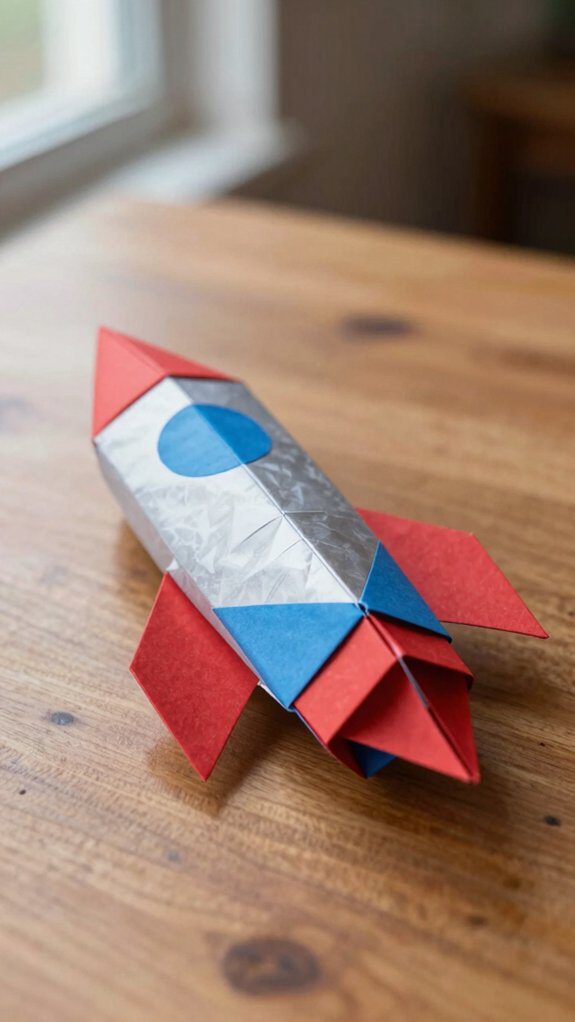
A wobbly paper rocket on your table is like a toddler learning to balance—cute, but not ready for liftoff yet. I’ve been there, and you’re not alone; our little launch crew can fix this together with a few quick tweaks for rocket stability.
- Bend and secure the fins at a right angle so they act like steady “feet.”
- Build a thicker base with extra cardstock layers to add weight down low.
- Shrink or shift the nose cone so the center gravity drops and the body stops tipping.
If it’s still leaning, I widen the base by making bigger fins or a slightly wider rocket body. Then I test it on a flat surface and nudge pieces until it stands tall, ready for launch.
Paper tearing or bending
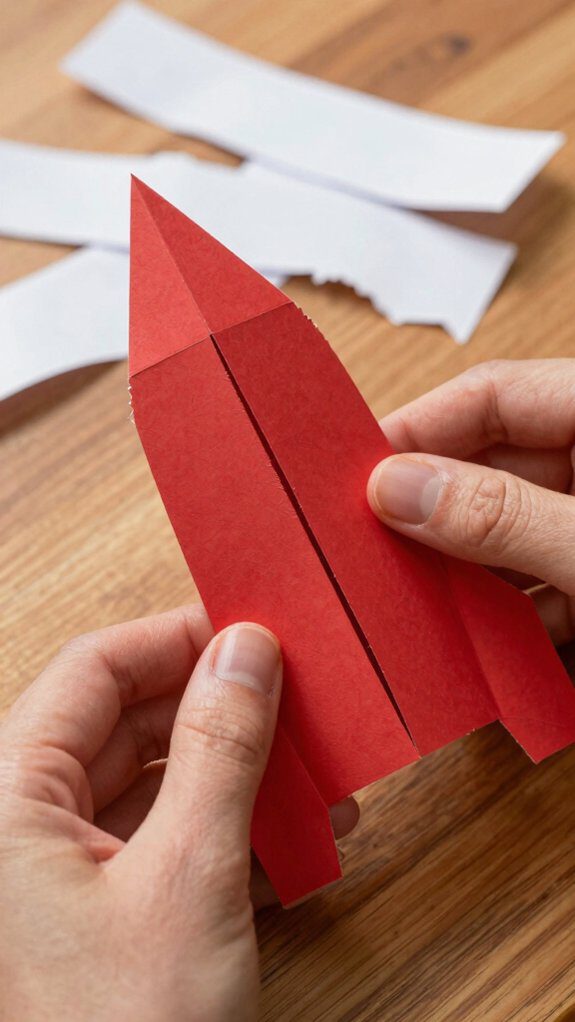
Paper has a sneaky way of tearing or creasing right when you’re trying to make your rocket look sleek, but you can keep it under control with a few smart moves. For clean rocket aerodynamics, I try to cut instead of tear, because jagged edges can steal paper stability and make flights wobbly. If you’re using a template, I tear slowly right on the lines so everyone’s rockets come out uniform and fair.
| Issue | What I do |
|---|---|
| Jagged tears | Trim to smooth edges |
| Weak body bends | Curve gently, press lightly |
| Floppy fins | Bend to a right angle |
When I build fins, I crease them sharply at 90° during assembly; that simple bend helps the rocket hold its trajectory. Then we can experiment—small bends, big results!
Safety Tips When Making Paper Rocket Crafts with Kids
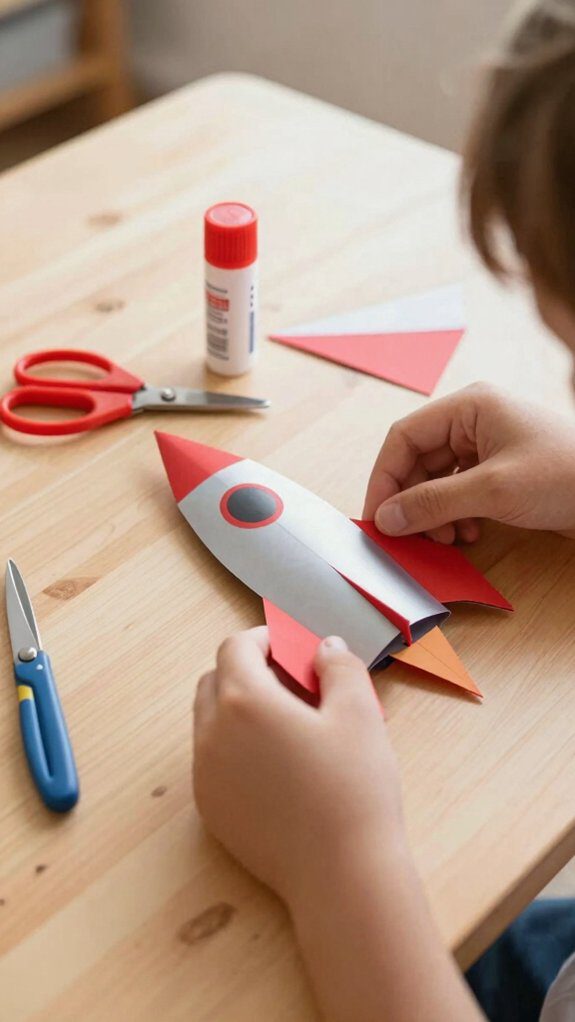
When I’m building rocket crafts with kids, I treat safety like part of the mission plan, not an afterthought. I stay close during cutting, because good scissors safety means guiding hands, not just giving warnings. I also choose non-toxic basics—washable glue and child-safe paint—so material hazards don’t sneak into our fun.
- Keep a clear, shared workspace: no clutter, no tripping, easy “launch lane.”
- Protect eyes: pop on safety goggles if sharp edges or tiny pieces could flick up.
- Match materials to ages: skip small parts for little kids to prevent choking risks.
I like to set simple team rules first, then we craft together. That way everyone feels included, confident, and protected.
Turning the Paper Rocket Ship into a Learning Activity
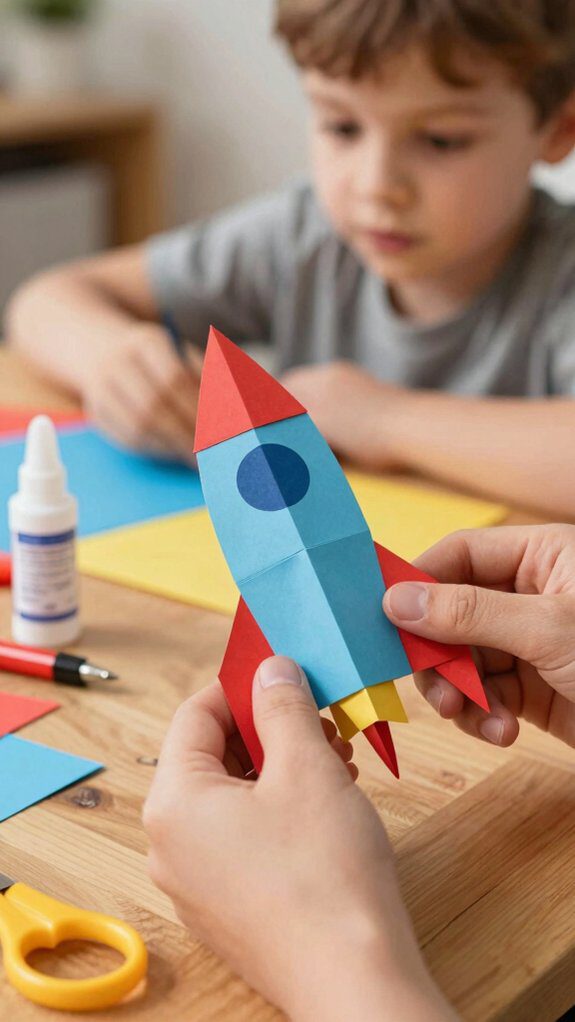
How do you turn a simple rocket craft into a mini science lab without ruining the fun? I treat your launch like a team challenge: we’re all testing rocket physics together, not trying to “get it perfect.” First, we launch from the same spot each time, then do distance measurement with a meter stick or measuring tape. I have you jot results in a quick data log: design, launch angle, and distance.
Next comes design experimentation. I invite you to tweak one thing at a time—nose shape, fin size, or a sturdier paper—and compare flights like a friendly tournament. Finally, I lean into imaginative exploration by asking, “What would you change for thinner air?” Share photos and distances with #VirtualMoonshot for collaborative sharing.
Space and planet themes
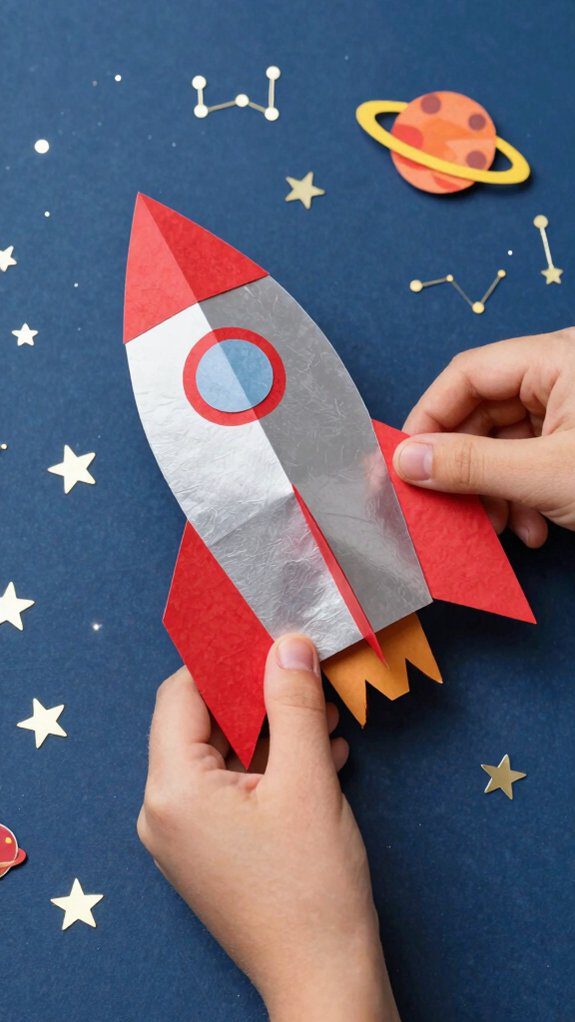
Although the rocket itself is the star of the show, I like to wrap the whole craft in a space-and-planet theme so your launches feel like a real mission, not just a quick fling across the room. I invite you to join my “crew” by decorating together, then naming your spacecraft like real space exploration teams do. I map a simple backdrop: stars, a galaxy swirl, and a few planets, so everyone’s rocket has a home base.
- Color-code worlds by planet characteristics (rocky Earth/Mars vs. stripy Jupiter/Saturn)
- Add atmosphere layers as bands near “Earth” to set the scene
- Create mission patches so each person belongs on the launch roster
When you launch, imagine harsh outer space and brave astronauts carrying tools and hope.
Simple STEM explanations
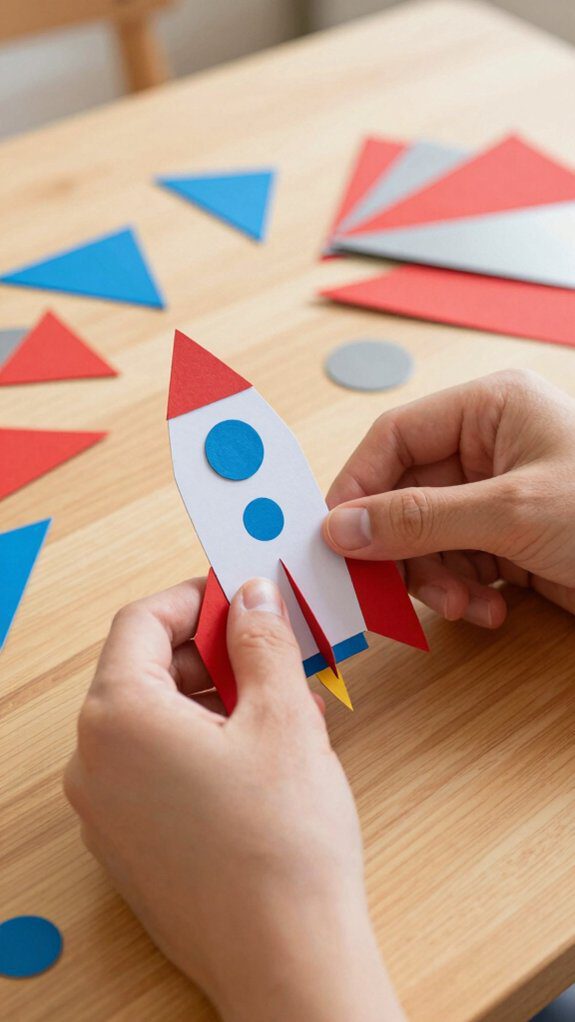
Because this paper rocket is more than a cute craft, I use it as a quick, hands-on STEM mini-lab where you can see science and engineering in action. In STEM education, we learn by doing, and you’re part of the crew from the start.
First, I point out aerodynamics principles: thrust pushes the rocket forward, drag slows it down, and “lift” can come from fins that keep it steady. Then I invite you to try design modifications, like a sharper nose or bigger fins, and make a guess about what’ll fly farther.
Next, we follow the scientific method: test one change at a time, launch from the same spot, and keep careful data recording of distances. Finally, sharing results builds collaboration skills, and everyone belongs.
How to Store or Display Paper Rocket Ship Crafts
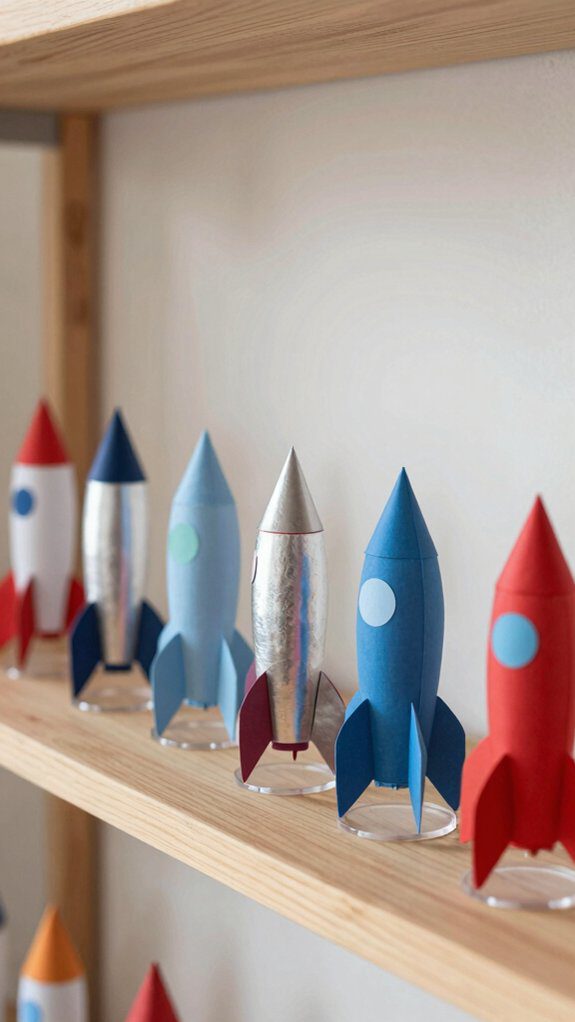
A finished paper rocket deserves a landing spot that keeps it safe and still looks awesome on display. I like picking display options that feel like part of our little space club, not just “stuff on a desk.” A shadow box or clear display case shows off your folds and colors while blocking dust. For a launch vibe, I hang rockets from the ceiling with fishing line so they “float” midair.
- Shadow box/display case: protected, polished, easy to admire
- Ceiling hang with fishing line: dramatic, playful, saves space
- Shelf or sunny window sill: simple, bright, and curated
When it’s time to pack them away, I use sturdy storage solutions: a crush-proof box or container with labels. If you’ve got a fleet, try a themed corner or a corkboard so everyone’s rockets get a turn.
Frequently Asked Questions About Paper Rocket Ship Crafts
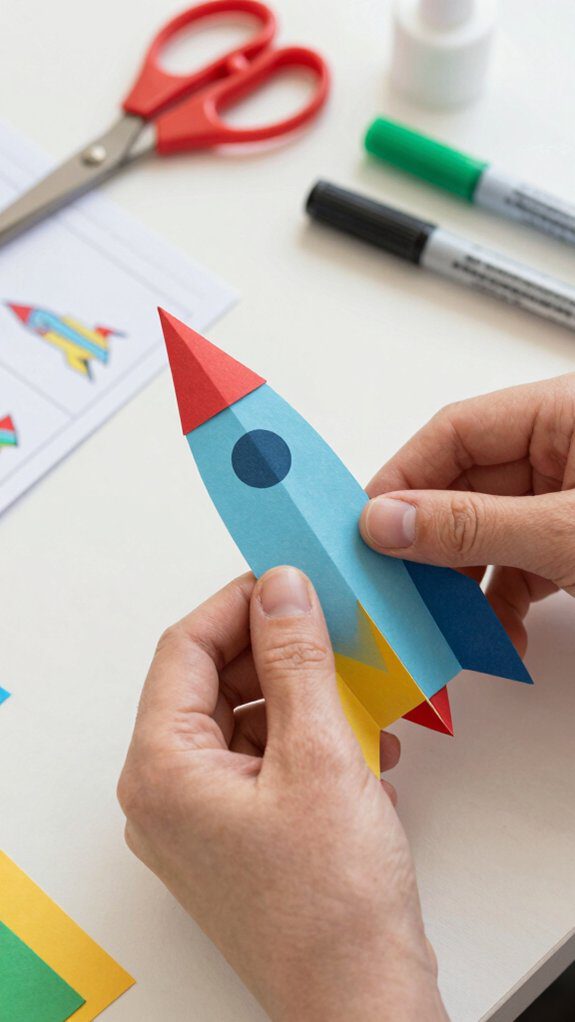
Once your paper rocket ships are stored safely or proudly displayed, a few questions usually pop up—especially when kids start planning their next “mission.” I’ve pulled together the FAQs I hear most, from what materials work best (toilet paper tubes, cardstock, and acrylic paint are my go-tos) to how to get a cone that actually stays put and wings that don’t flop.
Q: What if my cone won’t stick? A: Use a glue stick for positioning, then add a tape ring inside the tube for a snug fit.
Q: How do I stop wings from drooping? A: Fold a small tab, glue the tab, and press until set.
Q: Can we customize? Absolutely—stickers, foil, and bold paint are perfect. This mix of rocket science and creative play helps everyone feel part of the crew. Pinterest adds fresh ideas, too.