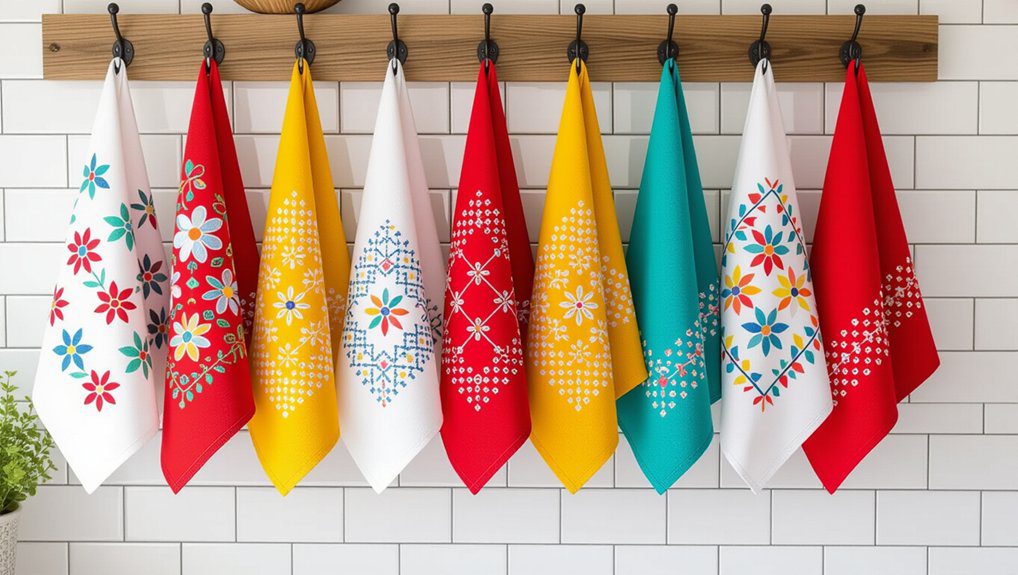
20 How to Make Hanging Kitchen Towels DIY Pattern
I love turning a regular tea towel into a chic hanging kitchen towel—here’s how you can too! Start with a 19×26-inch towel and cut it in half lengthwise. Pick a coordinating fabric for the top band, cut it into two specific pieces, and sew them with careful pleats for a neat look. Add a hanging loop or snap for easy use, then topstitch all edges for a crisp finish. It’s simple, practical, and instantly upgrades your kitchen—stick around to find out all the handy details!
Love cozy DIY projects? 💕
Get free printable guides, exclusive tutorials & surprise craft goodies straight to your inbox.
Disclosure: This post may contain Amazon affiliate links, at no extra cost to you. Content on DiyCraftNest is created with research support from AI tools and carefully reviewed, edited, and fact-checked by the lead author, Daniel Pat, to ensure accuracy and reliability. Learn more
Key Takeaways
- Select a 19×26-inch absorbent tea towel and coordinating fabric for the hanging band to match your kitchen decor.
- Cut the towel in half lengthwise and prepare two band fabric pieces, ensuring accurate measurements with a quilting ruler.
- Interface band fabric, sew folded sections with notches, and press edges for a crisp, stable hanging band.
- Pleat the towel evenly, pin it to the band, and top stitch edges for a polished, secure finish.
- Add optional buttons or snaps on the band and towel for easy hanging and a customizable look.
Gather Materials and Supplies
Before you start cutting and sewing, it’s important to gather all the materials and supplies you’ll need to make your hanging kitchen towels. Good material selection is key—I use a tea towel about 19 by 26 inches, plus fabric pieces for the top band.
Organizing supplies like a quilting ruler, chalk for marking, pins, and a sewing machine makes the process smooth and fun. Don’t forget matching thread and an iron to press those pleats and seams neatly.
Taking time with supply organization helps everything feel manageable and inviting, like crafting alongside friends.
Select Tea Towel Size
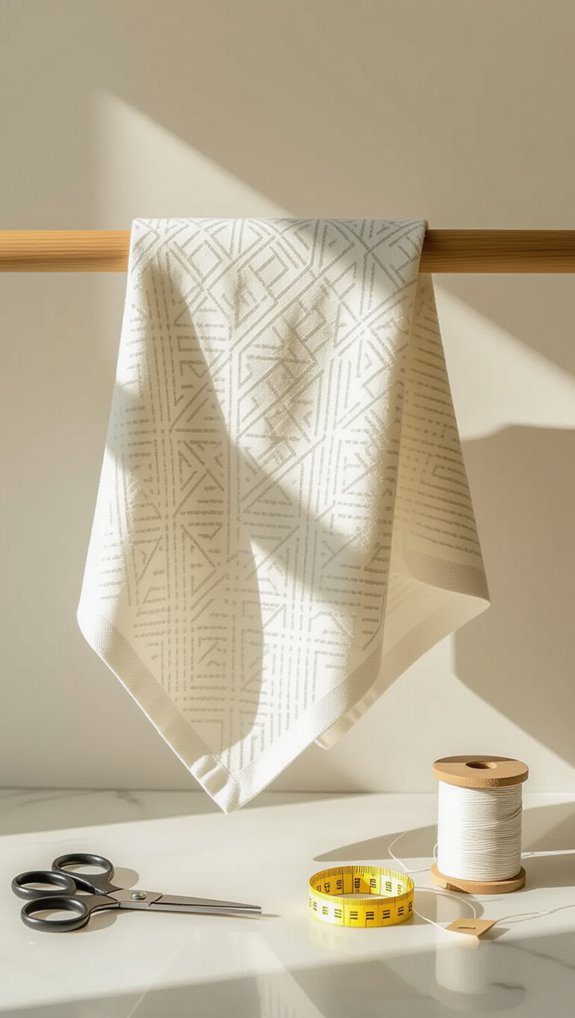
Choosing the right size for your tea towel sets the foundation for a perfect hanging kitchen towel, and I find that a 19-by-26-inch towel works best for this project.
When making your tea towel selection, look for absorbent fabrics that fit well in your kitchen decor, whether you prefer bold colors or subtle patterns.
If your towel has a hanging loop, don’t worry—we’ll remove it later. Sometimes, larger towels can be trimmed to size, giving you flexibility.
Picking the right size and style helps your kitchen feel cozy and coordinated, making the space truly yours.
Cut Towel in Half Lengthwise
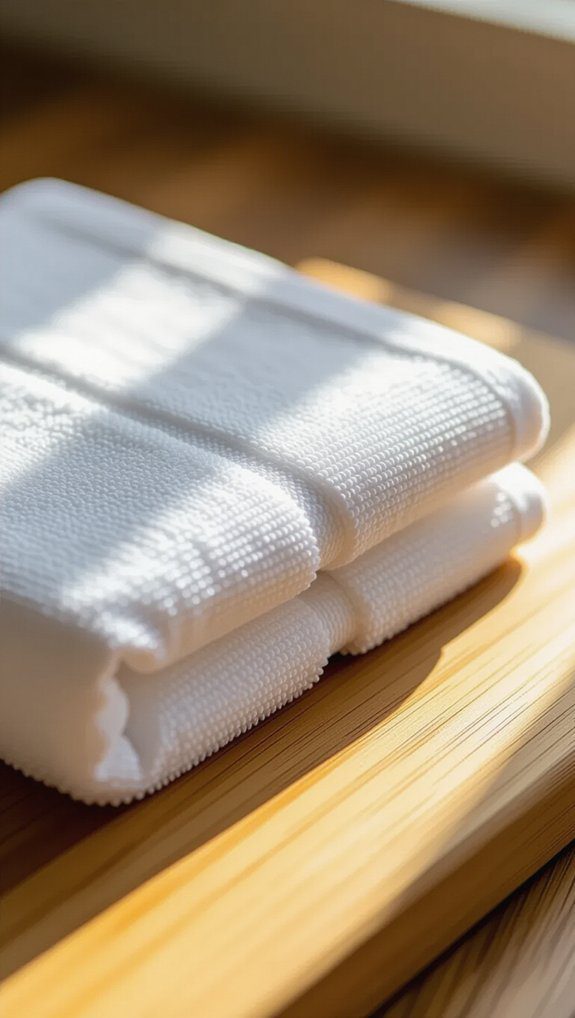
I like to start by taking a clean, 19-by-26-inch tea towel and folding it lengthwise so the edges line up perfectly.
This neat fold helps me apply precise cutting techniques, ensuring the fabric types I’m working with don’t fray or stretch unevenly.
Before cutting, I remove any existing hanging loops for a smooth edge.
Using sharp scissors, I cut down the center fold carefully, creating two equal halves measuring 9.5 by 26 inches each.
This step sets a solid foundation, making sure both pieces are ready for the next fun part—marking pleats and adding your personal touch!
Choose Fabric for Band
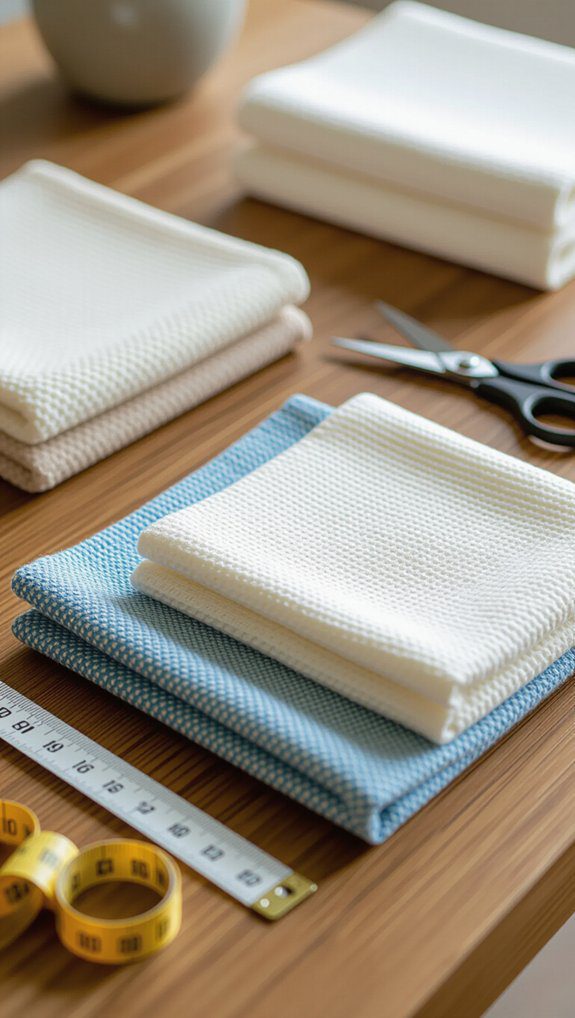
Picking the right fabric for your towel’s band can really bring the whole look together, so I always take a moment to find something that complements the tea towel’s colors and patterns.
I focus on fabric types with a bit of weight, like cotton canvas or denim, because they hold shape well and add durability. Color coordination is key—I choose shades that either match or beautifully contrast the towel.
When the fabric has a directional design, I cut carefully using a quilting ruler to keep everything straight and neat. This attention makes the band both functional and charming.
Create Pattern Template
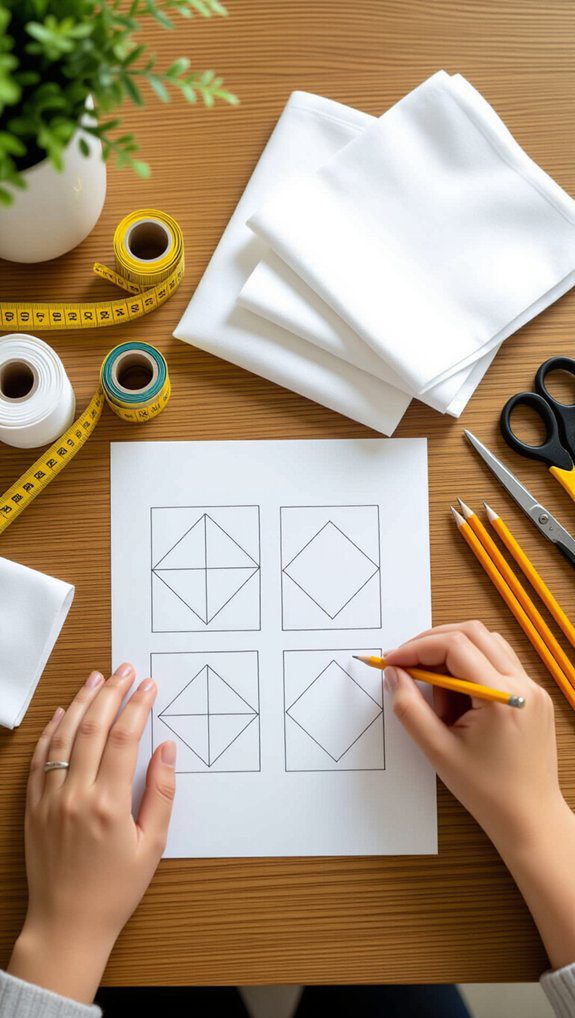
Now that you’ve picked the perfect fabric for your band, it’s time to create a pattern template that will help keep everything neat and organized.
Start by cutting a 7.5 by 8-inch piece to include seam allowances for a clean finish. If your fabric types have directional prints, make sure to mark your pattern orientation carefully — this prevents any awkward twists.
Fold your band fabric lengthwise and notch the center to guide stitching later. Mark pleat centers on your towel with chalk or pen, so every piece fits perfectly.
This step makes sewing straightforward and satisfying for all of us crafting together!
Cut Band Pieces
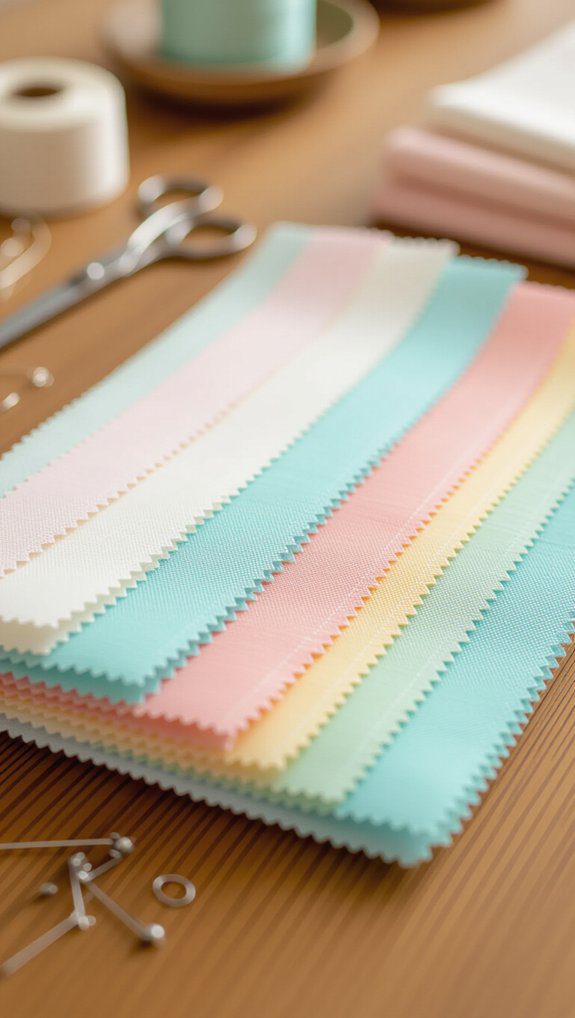
Although it might seem straightforward, cutting the band pieces with care is key to a polished final look. Here’s how I do it to guarantee everything fits perfectly and looks great:
- Cut the first band fabric piece measuring 7 x 15 inches for the towel’s top section.
- Prepare a second band fabric piece, 7.5 x 8 inches, for a neat finish.
- Fold the band fabric lengthwise and notch the center to help with coordination.
- If your fabric has a directional design, make a pattern piece so the design stays oriented correctly.
Precision matters!
Interface Fabric Pieces
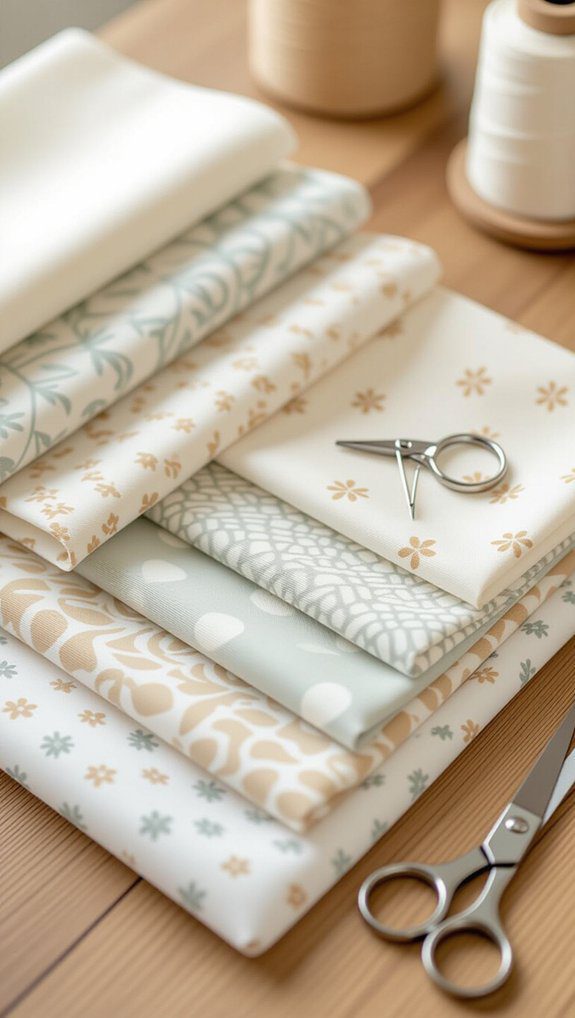
Adding interfacing to your fabric pieces is a game-changer when it comes to giving your hanging kitchen towels structure and durability.
I always cut my interfacing pieces to match the fabric exactly; this fabric stabilization prevents any unwanted stretching or sagging. I prefer lightweight fusible interfacing types because they fuse smoothly with a quick iron press.
Just be sure to follow the manufacturer’s instructions carefully—temperature and timing matter to avoid damaging your fabric. Position the interfacing precisely, then press well to remove wrinkles.
This step sets a solid foundation, making your towels look professional and last longer.
Sew Band Sections

Start by cutting your band fabric into two pieces: one that measures 7 by 15 inches and a smaller one at 7.5 by 8 inches for the top attachment. This band design lets you showcase your favorite fabric choices beautifully.
Here’s how I sew the band sections:
- Fold the longer band lengthwise and notch the center for positioning.
- Divide the fabric into four equal sections to ease folding and stitching.
- Use a seam allowance to topstitch edges, giving a polished look.
- Position corners with the tea towel’s notches and secure with holding stitches.
This method keeps everything neat and ready for assembly!
Fold and Press Edges
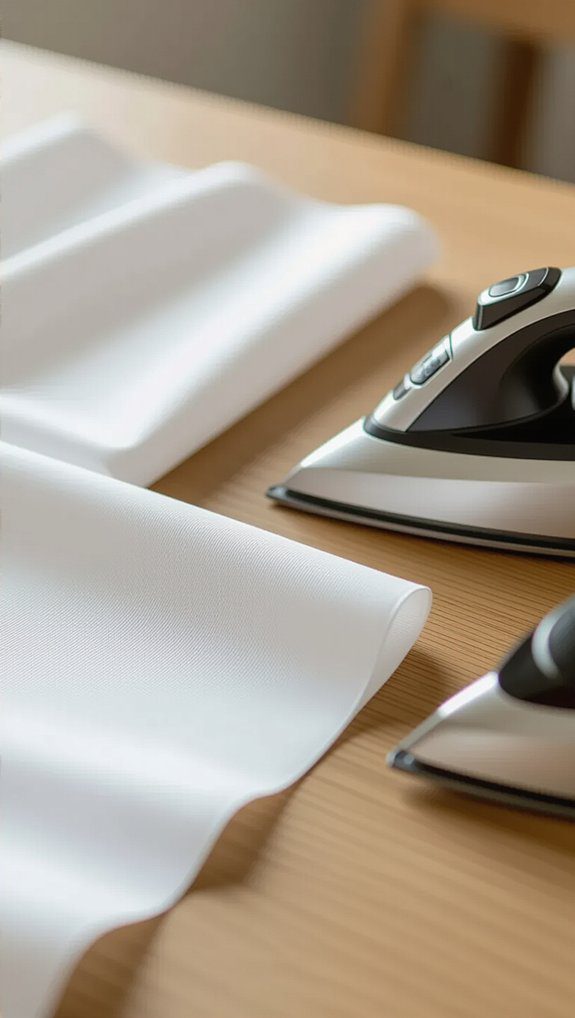
Pressing the edges of your tea towel and band fabric really sets the stage for a polished, professional look.
Start by folding the edges using precise folding techniques—press the band’s side edges inward by ¼ inch to keep things neat. Then, position the band with the towel and fold the towel’s top edge under the same amount, pressing firmly to create a crisp seam allowance.
Don’t forget to press any pleats or notches carefully; these pressing methods keep your dimensions accurate and stitching even. This attention to detail makes your DIY hanging kitchen towel look just right.
Attach Loop to Band
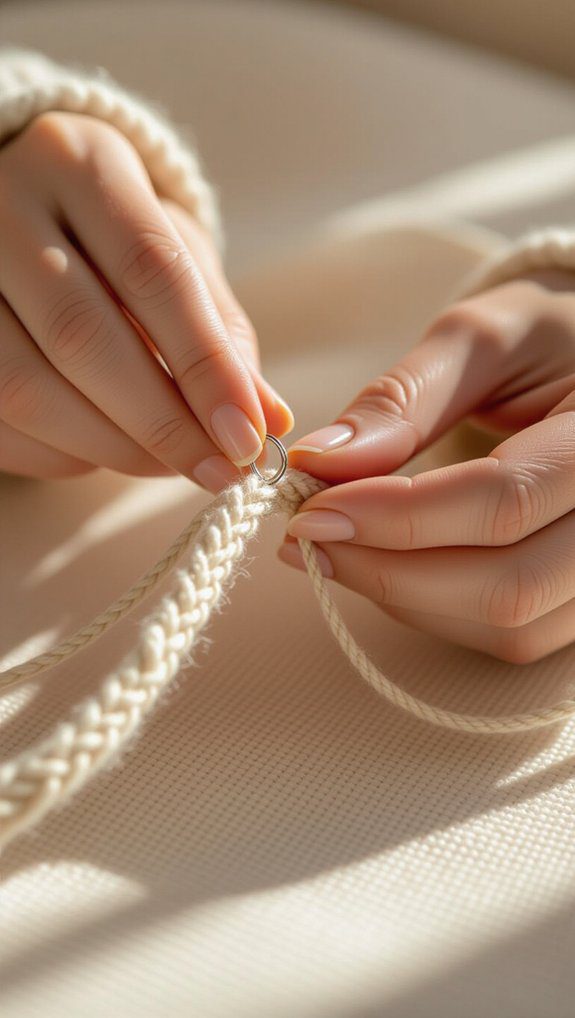
Creating the hanging loop is a simple but important step that really brings your kitchen towel to life. Here’s how I attach the loop to the band, focusing on loop placement and loop materials:
- Cut a 2×6 inch piece of fabric for the loop.
- Fold it lengthwise, right sides together, and stitch a 1/4 inch seam.
- Turn it right side out, press flat, then position the loop with the band’s center notches.
- Secure with holding stitches, fold the band over the towel, and topstitch to firmly attach the loop.
This guarantees your towel hangs perfectly and feels like part of your kitchen family!
Position Towel Placement
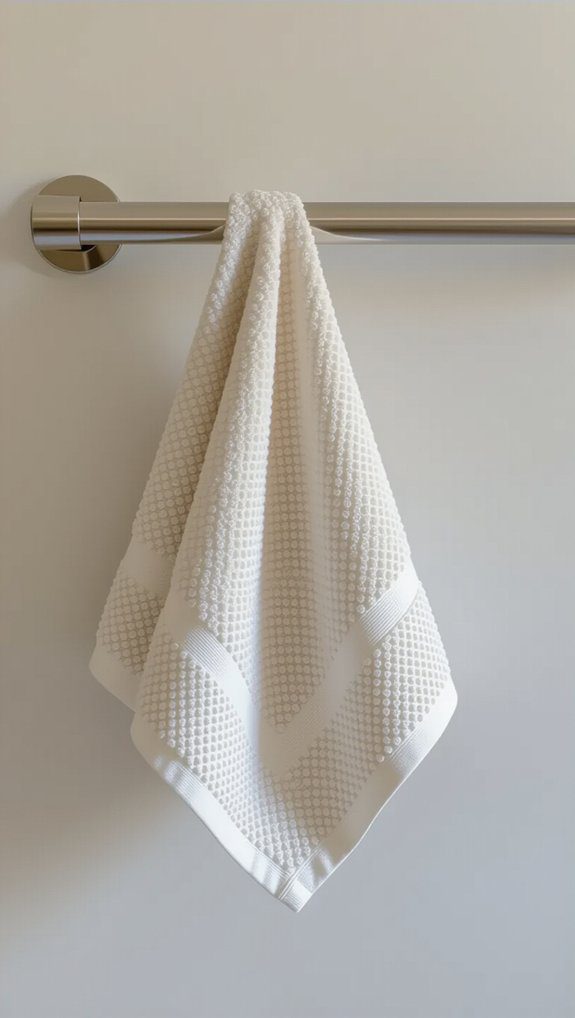
When it comes to positioning your towel on the band, getting the arrangement just right makes all the difference in how polished your finished piece looks.
Start by marking the center of both the towel and band to guarantee perfect towel alignment. Folding the towel lengthwise helps you find this center and creates natural pleats.
Use chalk to mark pleat spacing evenly, so your towel drapes beautifully without looking messy. Make certain the towel hangs freely, not covering the band’s design.
With these steps, your hanging kitchen towel will look balanced and inviting every time.
Gather Towel Fullness
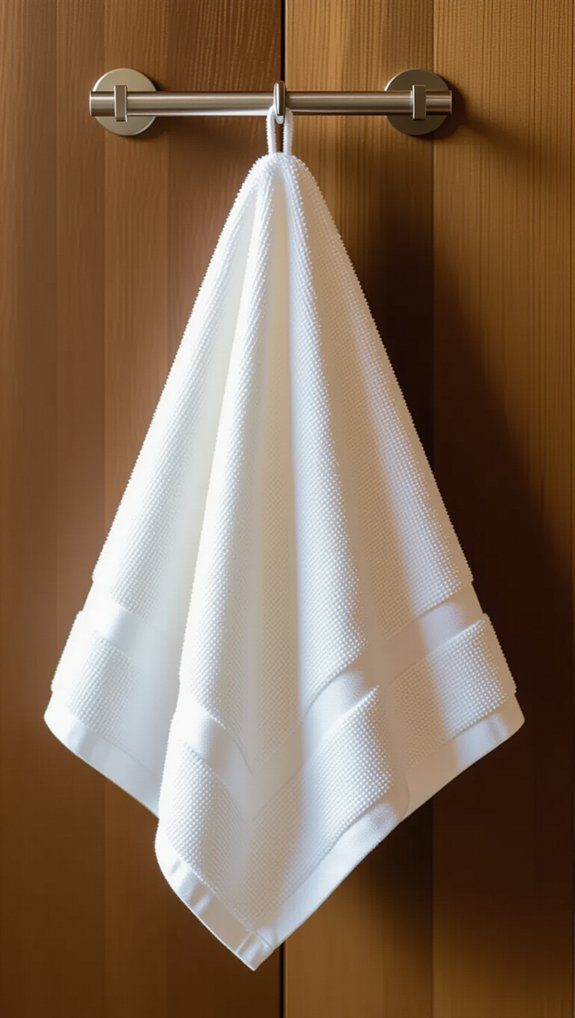
Although gathering towel fullness might sound tricky at first, it’s actually a straightforward step that really brings your hanging kitchen towel to life.
Here’s how I do it using pleat techniques and careful fullness measurement:
- Fold the towel lengthwise, mark its center with chalk.
- Divide the width into equal sections for even pleats.
- Sew a loose gathering stitch along the top edge and gently pull to create pleats.
- Press the pleats lightly to hold their shape, matching the fullness to your band fabric’s width.
This way, your towel fits snugly and looks beautifully gathered!
Pin Everything Securely
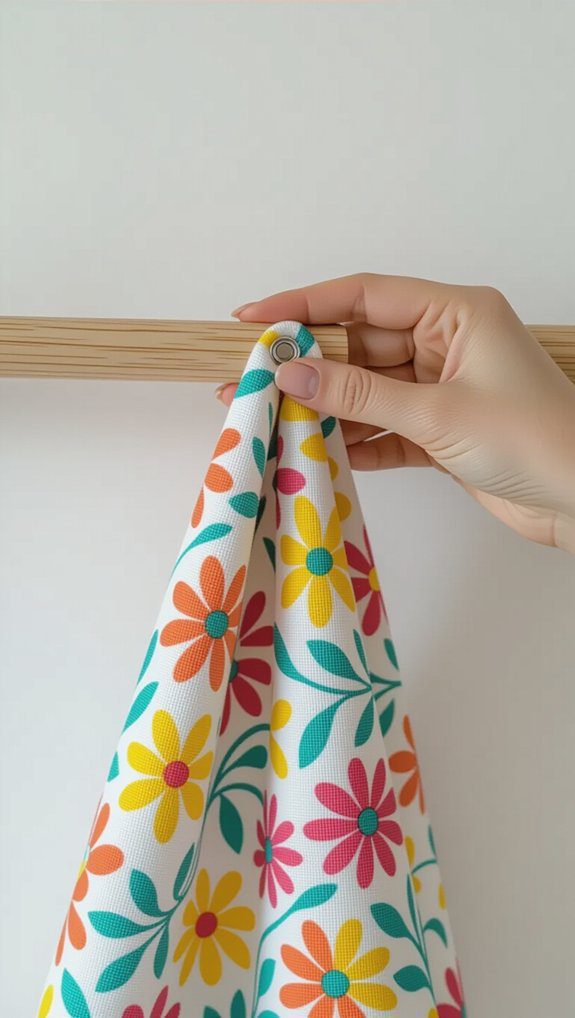
A handful of well-placed pins can make all the difference when securing your tea towel to the band fabric. I always focus on fabric alignment first—matching edges carefully and using the notches as guides guarantees everything lines up neatly.
My favorite pinning techniques include placing a pin every 3 to 4 inches along the edges to keep layers from moving. Don’t forget to pin pleats firmly in place so they hold their shape evenly across the towel.
Just make certain the fabric stays taut but not stretched; this balance keeps your hanging towel looking polished and professional.
Stitch Band to Towel
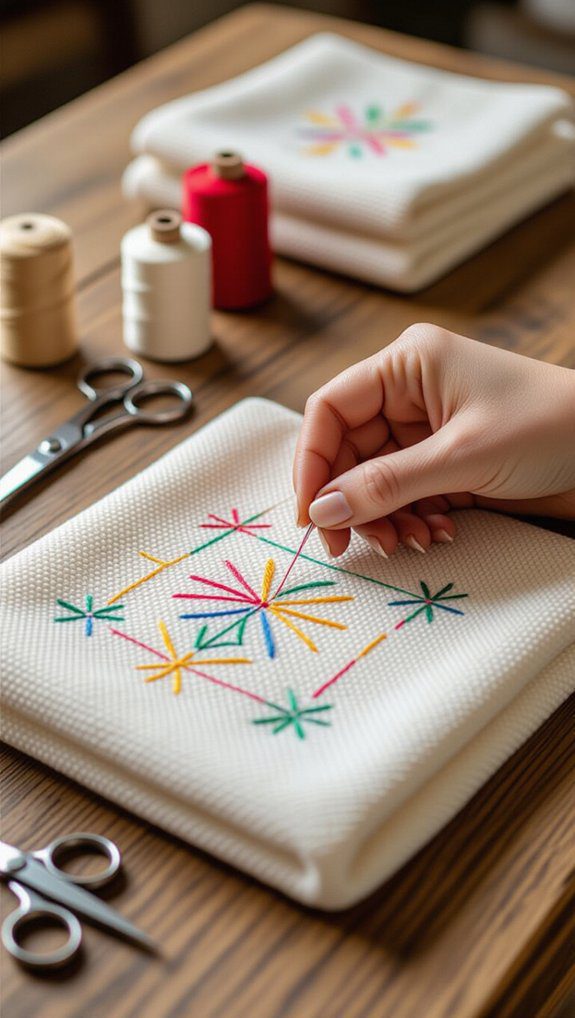
Start by folding your band fabric into four equal sections, then notch the center so it corresponds perfectly with your tea towel.
For smooth band arrangement and towel stitching, follow these steps:
- Match the band’s notches with the towel’s edges carefully.
- Use holding stitches at each corner to keep everything secure.
- Top stitch along the band edges using your sewing machine, staying within the seam allowance.
- Fold and stitch the band edges neatly, then finish with a final top stitch to lock it all in place.
This keeps your towel looking polished and ready to hang!
Add Optional Button
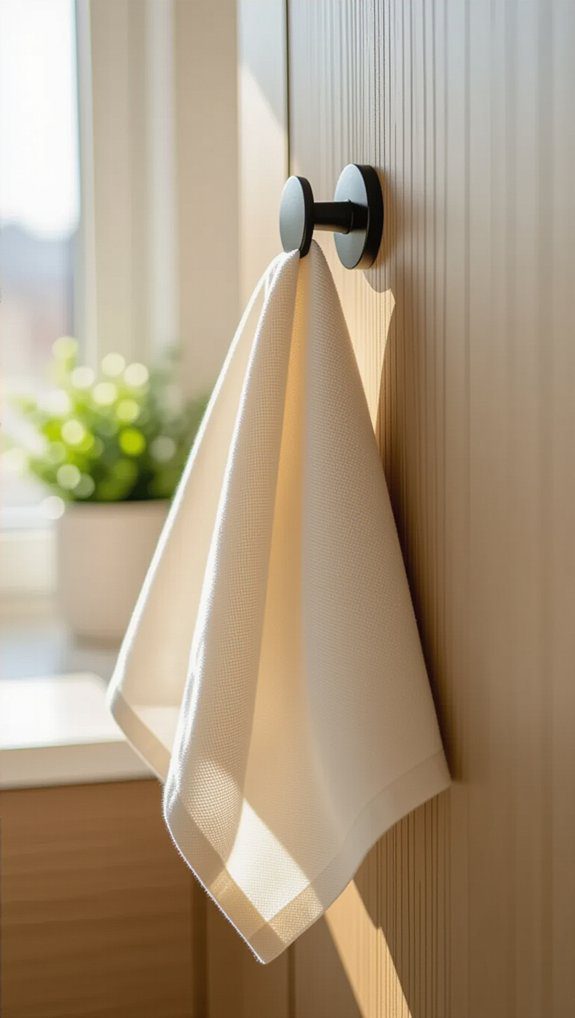
Adding one or two buttons to your hanging kitchen towel can really step up both its style and function.
First, choose button styles that complement your fabric—think colors and textures that blend well.
Next, carefully plan button placement on the band, spacing them evenly and positioning above the pleat for easy access.
Sew the buttons securely with needle and thread, then create a matching buttonhole just big enough for the button to slip through snugly.
Finally, test the button and buttonhole to guarantee your towel hangs neatly on a hook or bar without slipping.
It’s a small touch that makes a big difference!
Use Fabric Snaps Method
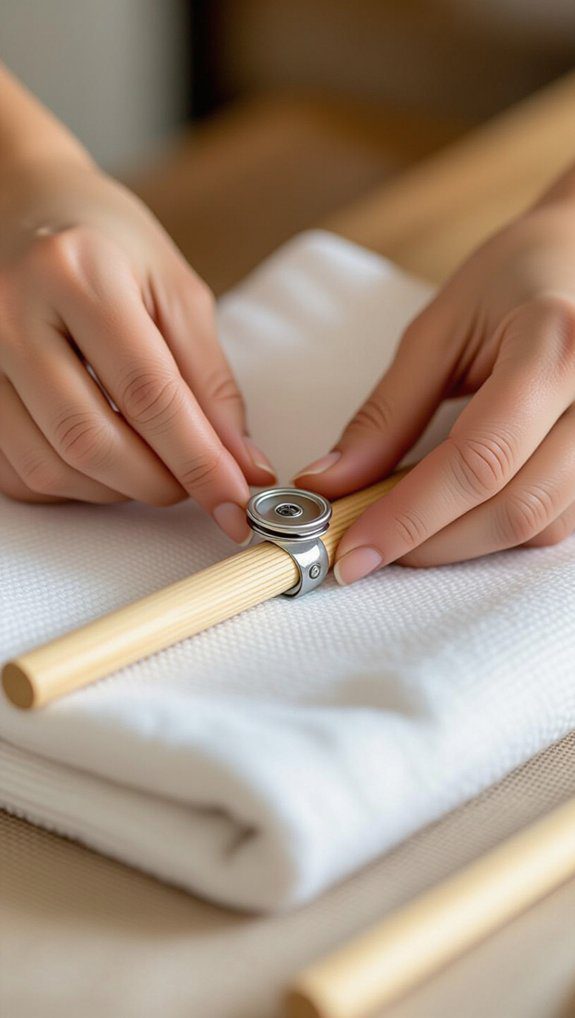
Although fabric snaps might seem like a small detail, they can make hanging your kitchen towel super easy and secure.
The fabric snap benefits include durability and a neat look that blends well with your towel.
Here’s how I use snap attachment techniques:
- Cut a small slit near the towel’s top edge.
- Sew one side of a heavy-duty snap through the slit, reinforcing with extra stitches.
- Mark and sew the matching snap on the fabric band.
- Snap your towel onto a bar or hook for quick hanging.
This method feels reliable and adds a cozy, homemade touch!
Apply Velcro Alternative
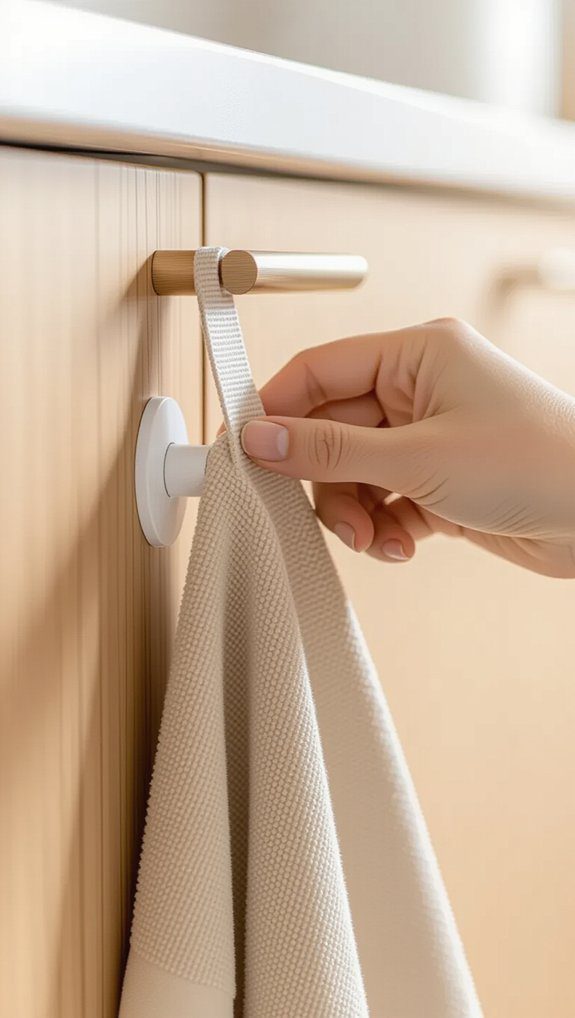
If you like the idea of a secure attachment but want to avoid the bulk or wear that Velcro can bring, I’ve found some great alternatives that keep things looking neat and stylish.
Loop methods offer a simple, classic option—you just sew a sturdy loop on the towel and a button on the band, making hanging easy without extra bulk.
Magnetic closures are another favorite; by sewing small, flat magnets into the band so they correspond perfectly, you get a clean, durable hold.
Both options blend beautifully with your towel’s design while keeping everything practical and polished.
Turn Right Side Out
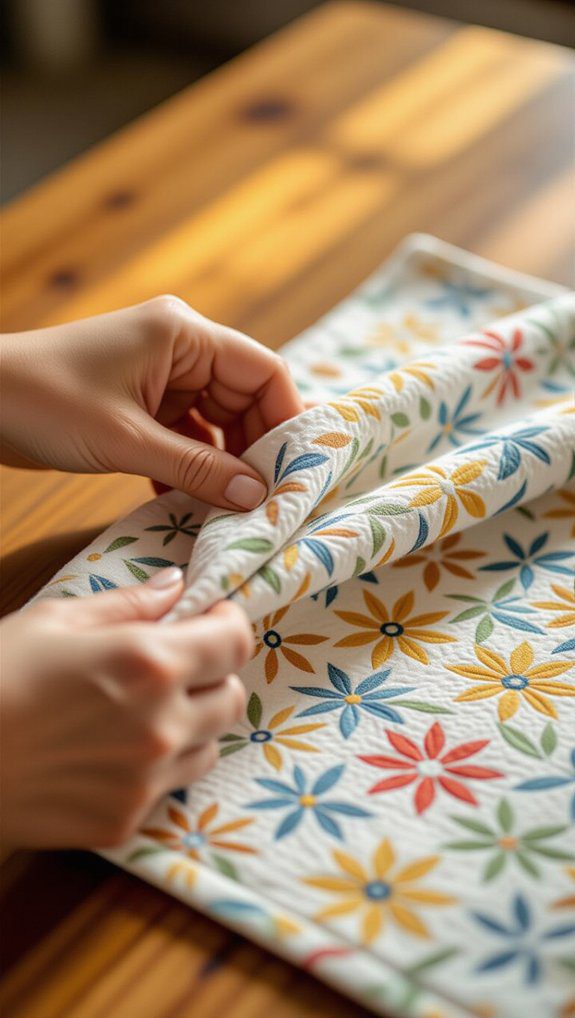
Once you’ve stitched the band to your kitchen towel, it’s time for one of the most satisfying steps: turning it right side out.
This is where your sewing techniques and choice of fabric types really shine. Here’s how I do it:
- Gently pull the fabric through the opening, being careful not to stretch delicate fabrics.
- Use a point turner to push out all corners fully for a crisp, clean look.
- Check that seam allowances are tucked in neatly to avoid bulky edges.
- Press the towel and band flat to smooth out wrinkles and set the shape.
Enjoy this rewarding step!
Top Stitch Final Seams

Now that your towel and band are turned right side out and pressed flat, it’s time to give those edges a neat and finished look with some top stitching. Folding the seam allowances and using a consistent 1/4 inch seam allowance guarantees your final seams shine. Coordinate corners with the tea towel notches for a perfect fit. Here’s a quick guide for top stitching techniques and seam finishing methods to keep you on track:
| Step | Tip | Result |
|---|---|---|
| Fold seams | Fold 1/4 inch seam allowance | Clean edges |
| Coordinate corners | Match band corners to notches | Proper fit |
| Top stitch edges | Sew close to edge | Polished, secure look |
Hang and Enjoy
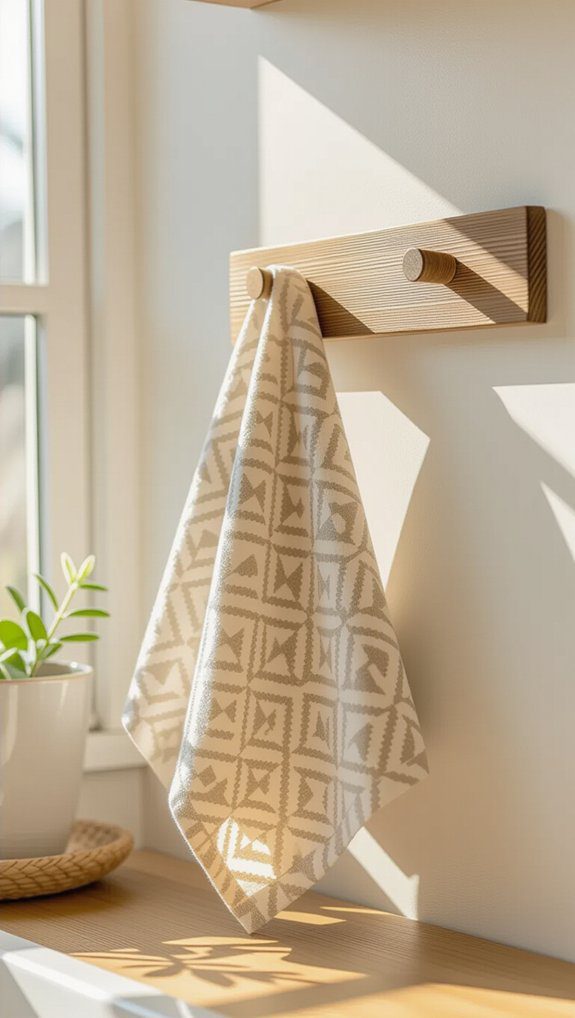
A perfectly finished kitchen towel deserves a spot where it can shine and be handy every day. Here’s how I hang and enjoy mine:
- Fasten the towel to a bar or rod for easy access and quick drying.
- Use decorative fabric for the hanging band to add charming decorative accents.
- Confirm all edges are top-stitched for a clean, professional look.
- Display it so you can remove and replace it with ease, boosting kitchen organization.
This simple touch makes your kitchen feel welcoming and keeps your towels functional and stylish—plus, it’s a lovely gift idea!