17 Hand Painted Furniture Ideas That Transform Old Pieces
I’ve revived old dressers, tables, and cabinets with 17 hand-painted ideas that anyone can try, from floral dressers and stencil-friendly geometric cabinets to chalk-painted vintage tables and two-tone modern pieces. I’ll show prep steps—sanding, priming, sealing—and quick techniques like stenciling, freehand florals, ombré fades, and gentle distressing. Each project suits a scale from small nightstands to full murals, and I’ll offer tips for durability and style so you can pick the right approach and learn more.
Love cozy DIY projects? 💕
Get free printable guides, exclusive tutorials & surprise craft goodies straight to your inbox.
Disclosure: This post may contain Amazon affiliate links, at no extra cost to you. Content on DiyCraftNest is created with research support from AI tools and carefully reviewed, edited, and fact-checked by the lead author, Daniel Pat, to ensure accuracy and reliability. Learn more
Key Takeaways
- Choose a painting style (floral, geometric, chalk, abstract, distressed) that matches the furniture’s shape and your room’s aesthetic.
- Prep surfaces thoroughly: sand, prime, and clean to ensure smooth paint adhesion and a long-lasting finish.
- Use stencils, painter’s tape, or freehand techniques to add unique patterns and personalized details.
- Layer paints and glazes, then sand selectively to create depth and vintage or distressed effects.
- Seal with an appropriate topcoat (wax, poly, or lacquer) to protect the piece and enhance durability.
Floral Painted Dressers
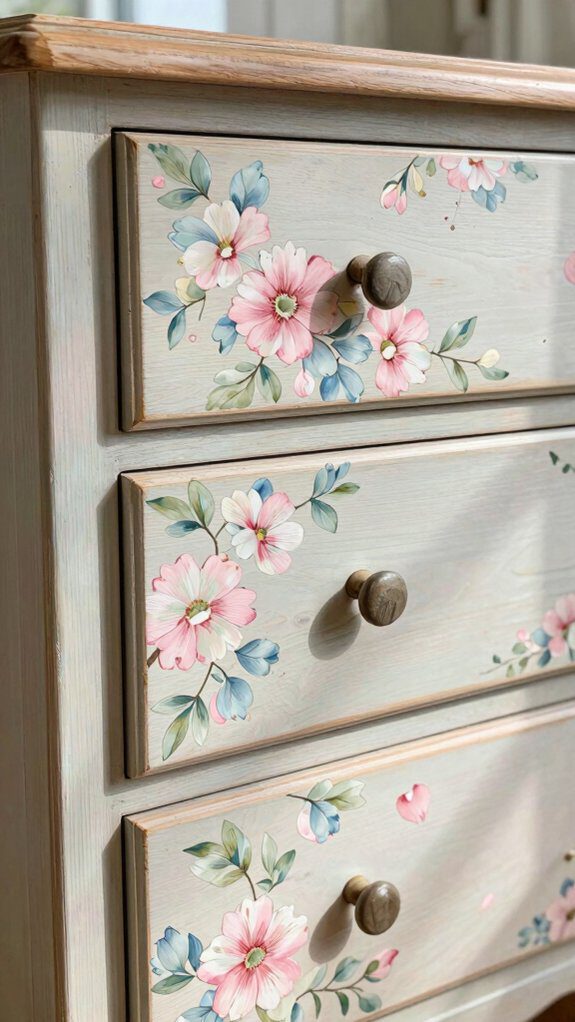
Picture a plain dresser transformed into a cheerful focal point—I’ve found floral painted dressers do exactly that, turning ordinary furniture into something personal and inviting. I start by choosing floral painting techniques that fit my skill level: simple stencils for beginners, freehand blossoms for more practice, or layered glazing for depth. I’ll sketch designs, pick colors that match the room, and test combos on scrap wood. My personalized design choices include placement of blooms—corners, drawer fronts, or a full botanical wrap—and coordinating hardware for cohesion. I walk you through prep, base coats, sketching, painting petals and leaves, sealing, and subtle distressing. With each step clear and friendly, you’ll feel confident making a unique, welcoming piece.
Geometric Pattern Cabinets
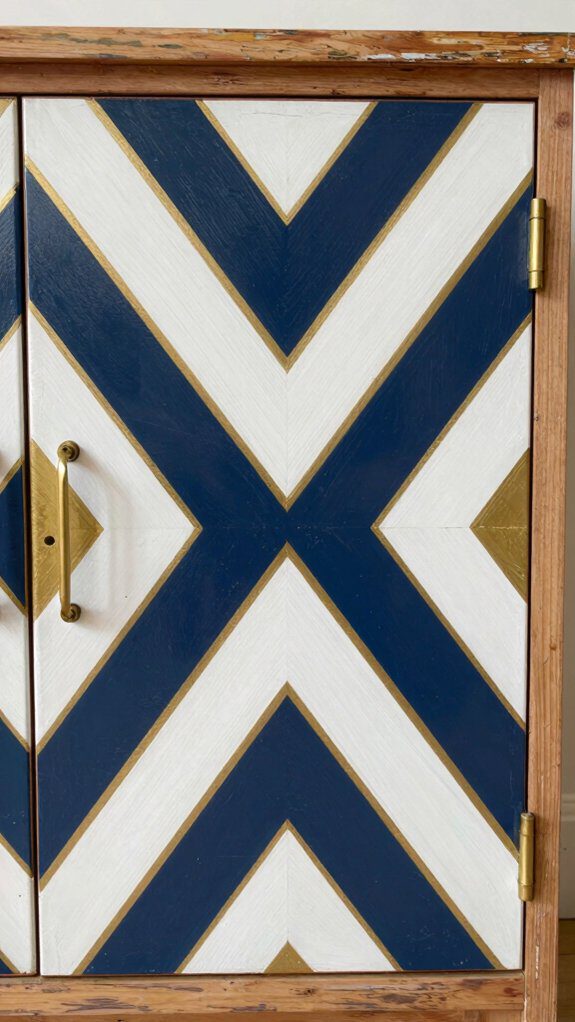
If you loved the soft, organic feel of floral dressers, you’ll enjoy taking a sharper turn with geometric pattern cabinets—I find the contrast invigorating and modern. I’ll walk you through simple cabinet pattern techniques that make a big impact: prime, base coat, then use painter’s tape for crisp shapes. I like pairing contrasting geometric color schemes like white and navy or soft pastels to suit a shared space; you’ll feel proud making pieces that belong with your home.
| Step | Tip |
|---|---|
| Prime | Sand and clean surface |
| Base Coat | Choose neutral base |
| Tape | Measure, tape precisely |
| Paint Shapes | Layer colors carefully |
| Finish | Seal with clear coat |
This weekend project feels doable and deeply satisfying.
Two-Tone Painted Furniture
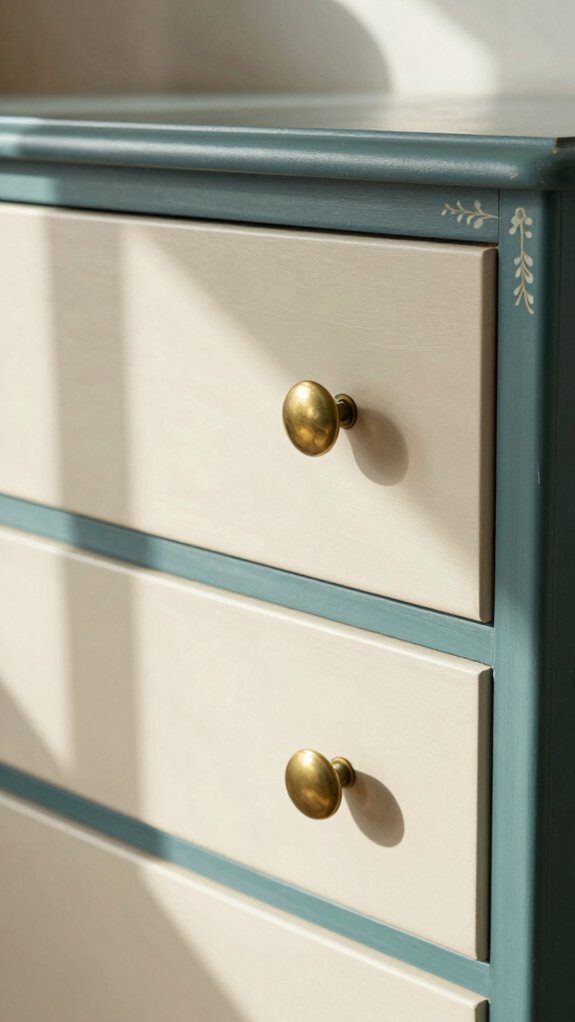
I love the clean punch you get from modern contrast looks in two-tone painted furniture, where a deep body color meets a crisp lighter accent to make the shape pop. Try pairing a charcoal frame with soft cream drawers or a walnut top with matte black legs, and always start with a quality primer so the lines stay sharp and the finish lasts. You can keep the look sleek or add subtle distressing for character, but the trick is choosing one dominant color and one accent so the piece reads as intentional, not busy.
Modern contrast looks
When I want a piece to stand out without shouting, I reach for a two-tone scheme that balances a neutral base with a punchy accent—think a soft white body paired with stained drawer fronts or bold navy legs against a warm oak top. I like modern contrast looks because they create color harmony and design balance, and they let you belong to a style that feels personal. Start by choosing a neutral main color, then pick an accent for legs, drawers, or trim. Test swatches together to verify they complement your room. Below is a simple planning table to compare options and decide what fits your home.
| Area to Paint | Neutral Option | Accent Option |
|---|---|---|
| Body | Soft white | Navy |
| Legs | Natural oak | Charcoal |
| Drawers | Stained wood | Mustard |
Chalk Paint Vintage Tables
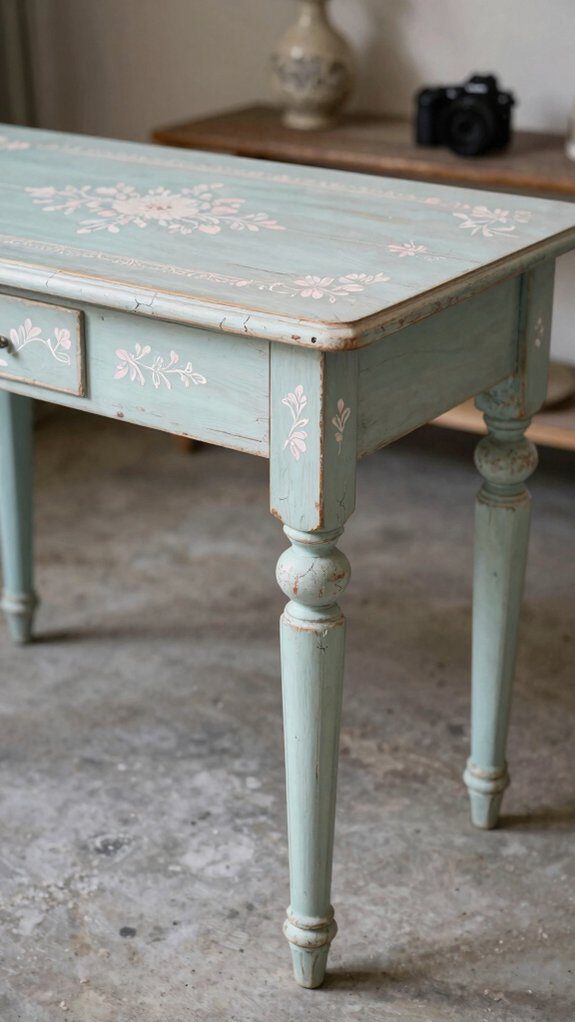
Because chalk paint sticks to almost any surface without a lot of sanding or priming, I’ll often reach for it when I want to give a vintage table a fresh, characterful look fast. I love sharing chalk paint techniques that are simple: wipe the table clean, apply thin coats—two usually do it—and sand lightly between if you want softer edges. For vintage table transformations, choose a matte color that fits your room and plan where to distress for natural wear. The quick drying time lets me work in one afternoon, and sealing with wax or a clear coat protects the finish so it lasts. I’ll compare wax versus poly: wax feels softer, poly is tougher. Together, these steps welcome the table back into daily life.
Boho Style Hand Painted Furniture
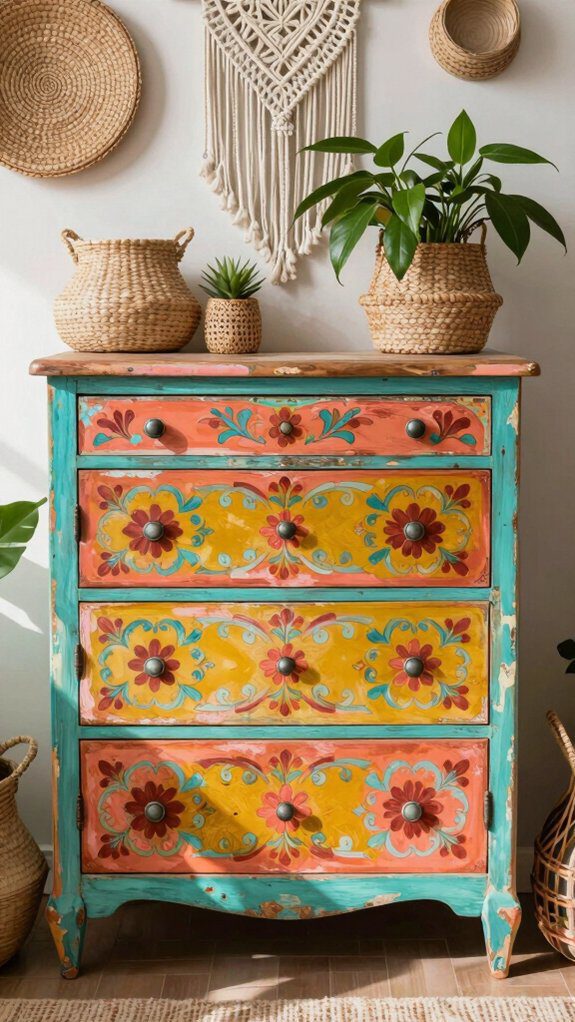
I love using earthy colors and natural motifs to give furniture a relaxed boho vibe, so I often reach for terracotta, deep greens, and rich blues as my base. I’ll mix in leaf, floral, or simple geometric patterns—stenciled or freehand—and add small metallic accents or woven tassels to bring texture and depth. If you’re upcycling an old piece, start with a muted earth tone, sketch your motifs lightly, and build layers slowly so the colors and patterns feel balanced rather than busy.
Earthy colors and motifs
If you want a piece that feels warm and grounded, try a Boho palette of terracotta, sage green, and warm ochre—I’ll often mix those with creams to keep the look balanced rather than muddy. I like to begin by choosing one dominant tone and two accents, then test swatches on hidden areas. For motifs, I favor nature prints and simple florals or geometric bands that echo handmade textiles. Texture matters: add earthy textures through light distressing, layering paints, or using a dry brush for grain. I always use non-toxic, water-based paints for safety and sustainability. Finish with subtle metallic highlights in gold or copper to lift the palette. These steps help you create a welcoming, unified Boho piece you’ll love.
Stenciled Furniture Designs
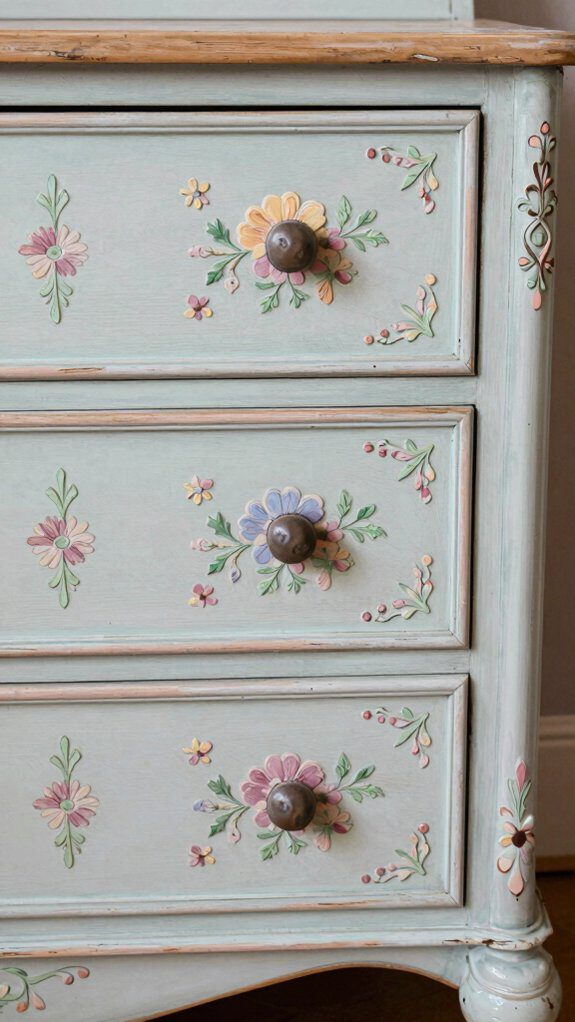
When you want to add personality to a dresser, table, or chair without needing elaborate brush skills, stenciled designs are a perfect choice and I’ll show you how to get crisp, stylish results. I love how stencil techniques let anyone create patterns that match a room, and you’ll feel connected to your space when a piece reflects your taste. Use adhesive stencils and the right paint types—acrylic or chalk—so edges stay sharp and bleed is minimal. Color choice matters: pick hues that harmonize with your palette. You can update looks by changing patterns or colors. Try these steps:
- Clean and prime surface.
- Secure stencil with low-tack adhesive.
- Apply paint sparingly with a stipple brush.
- Peel carefully and touch up.
Hand Painted Nightstands
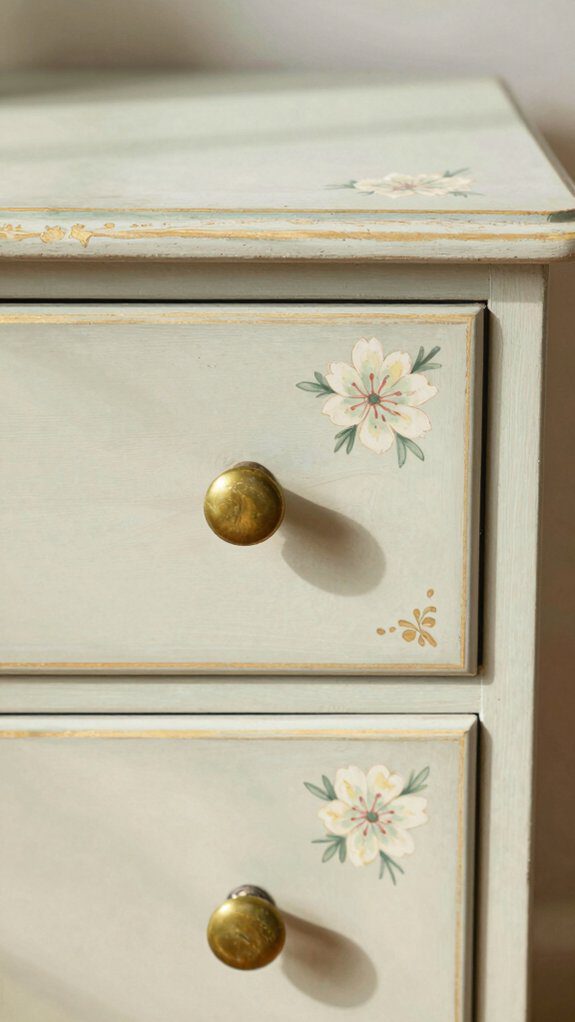
Stenciling looks great on dressers, but painting a nightstand by hand gives you even more chance to show personality in a small, everyday piece. I love guiding you through prepping: clean, sand, and prime for an even base. Choose chalk paint or acrylics for a durable matte finish that handles nightly use. Then pick colorful motifs or subtle vintage designs depending on the vibe you want; bright, whimsical patterns lift a kid’s room, while muted florals suit a cozy adult space. Try distressing edges for character, or add decorative transfers sparingly to avoid clutter. Work in stages—base coat, detail work, sealing—and test colors on scrap wood. Together, we’ll make a nightstand that feels like it belongs in your room.
Color Block Painted Chairs
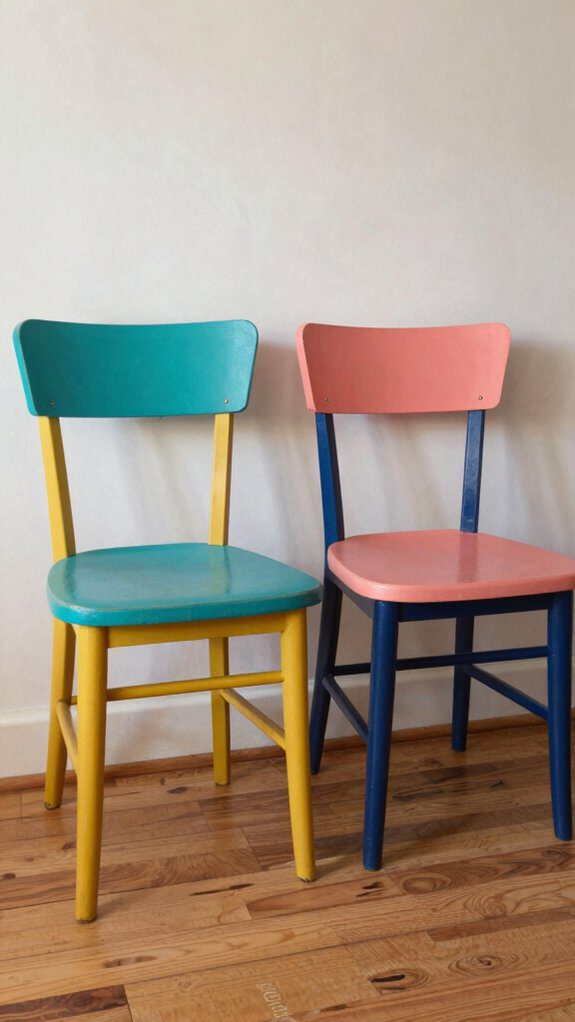
Want to give a tired chair a fresh, modern twist? I love color block painted chairs because they turn old pieces into playful focal points while keeping the process simple and welcoming. I’ll walk you through clear color selection tips and application techniques so you feel confident.
- Choose a scheme: pick complementary or analogous colors that match your room’s vibe; test swatches together.
- Plan sections: decide whether seat, backrest, and legs get distinct colors for balance and contrast.
- Prep and tape: sand lightly, prime if needed, and use painter’s tape for crisp lines.
- Paint and finish: use acrylic or chalk paint, apply thin coats, let dry, then seal.
You’ll end up with a unique piece that feels like yours.
Botanical Motif Furniture
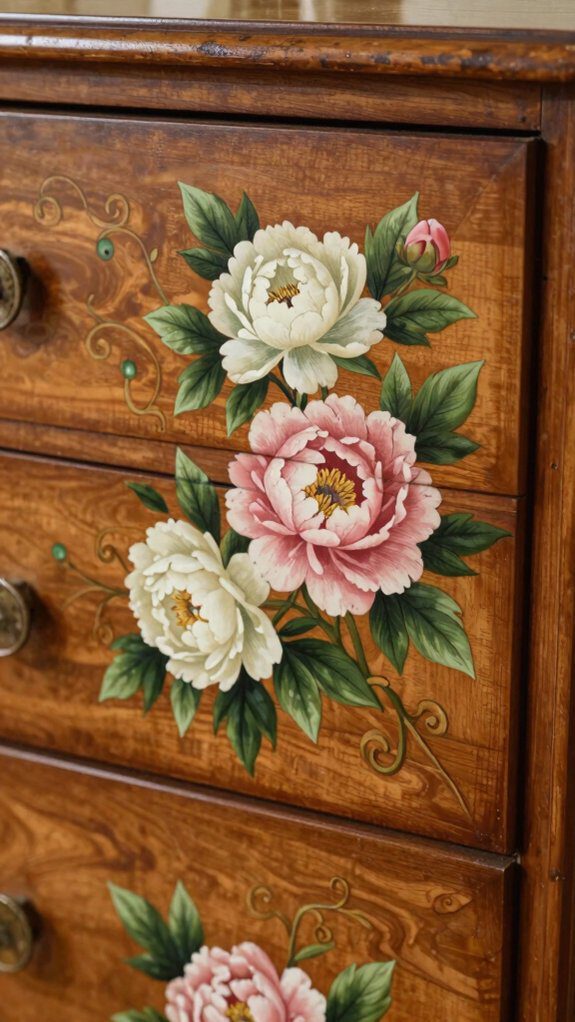
A painted rose or a trail of leafy vines can instantly change a plain dresser into a piece that feels lived-in and loved, and I’ll show you how to make that transformation approachable. I like to start by choosing botanical color palettes that match the room; muted greens, soft blushes, and warm neutrals create calm, while brighter hues add cheer. Use high-quality acrylic or chalk paint for lasting color, and try simple stencils or transfers if freehand feels scary. Paint flowers and leaves on dressers, tables, or chair backs, varying scale for balance. Finish with a clear coat for protection. These nature inspired designs invite creativity and connection, turning furniture into personal statements that welcome everyone into your space.
Distressed Painted Wood Furniture
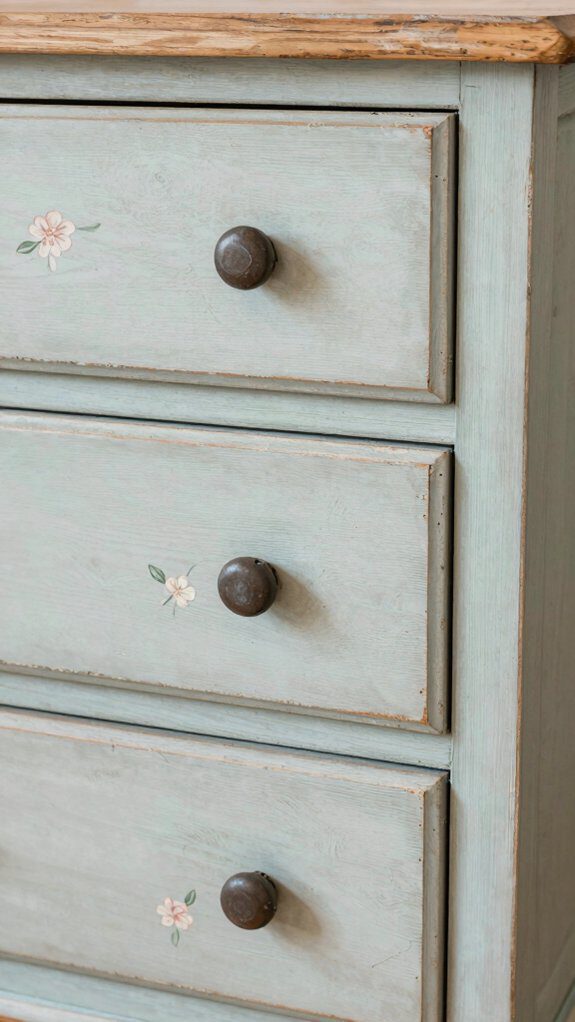
I love how distressed painted wood furniture fits the farmhouse aesthetic, because the worn edges and soft colors make pieces feel cozy and lived-in. I usually start with a chalk or latex base coat, add a contrasting top coat, then sand key spots like corners and drawer fronts to reveal that vintage charm—wax or glaze finishes deepen the look and protect it. If you’re new to this, it’s beginner-friendly: pick a simple table or chair, practice where to sand, and compare light versus heavy distressing to find the right level of rustic character for your home.
Farmhouse aesthetic
When you want furniture that feels lived-in and welcoming, distressed painted wood is a perfect fit for the farmhouse aesthetic—I’ll show you how simple techniques can turn plain pieces into cozy focal points. I love combining chalk paint in soft whites, muted grays, or earthy tones with basic methods to create warmth and belonging in a room. Try these steps:
- Sand edges gently to expose the wood grain and create natural wear.
- Dry brush a contrasting color sparingly for subtle depth.
- Apply a glaze and wipe back to highlight crevices.
- Seal with matte wax for durability and a true farmhouse finish.
Pair finished pieces with farmhouse accessories and rustic decor to unite dining tables, chairs, and cabinets into a comforting whole.
Hand Painted Coffee Tables
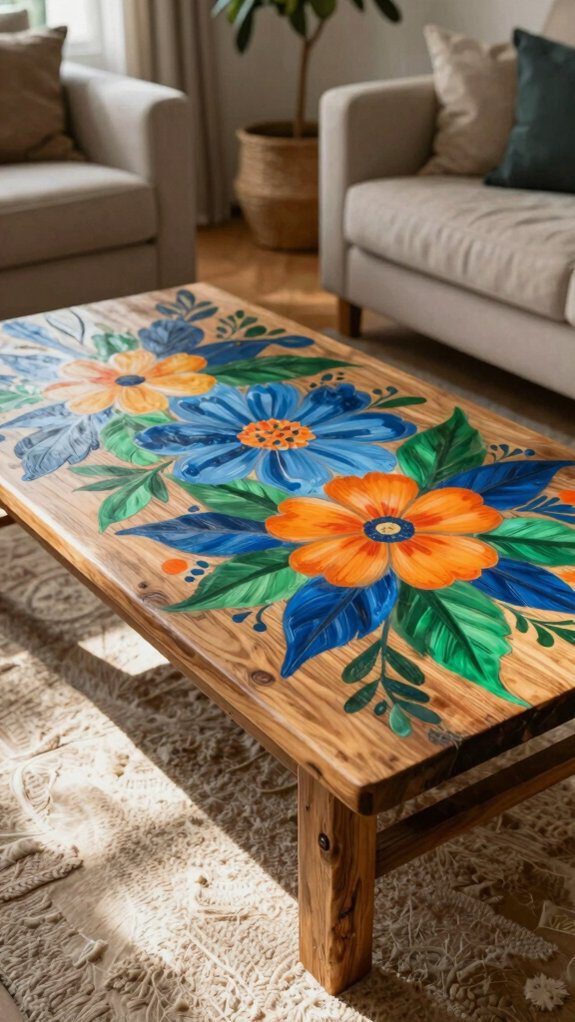
Because coffee tables sit at the center of a living room, I love using hand painting to turn them into personal statement pieces that match whatever mood I’m going for. I’ll start by choosing vintage color schemes or a single chalk paint hue for easy coverage and a matte look, then decide between simple solid coats, distressing, or stenciling to build character. For a cozy feel, I often layer colors, sand edges for a worn charm, and add small motifs that reflect our home. Protective topcoat is nonnegotiable — it keeps the finish durable against spills and scratches. Whether you want an understated piece or something more detailed, these artistic techniques let anyone transform an old table into a warm, shared centerpiece.
Abstract Art Furniture Pieces

Moving from cozy, worn-in coffee tables to bolder pieces, I love using abstract art to make furniture that really pops and sparks conversation. I tap into abstract expressionism and simple color theory to choose palettes that feel like home, so pieces invite people in. I use sponges, brushes, or spray paint to layer colors and build texture, then seal with durable paint and a tough finish so it lasts.
- Pick a mood and two to three main colors.
- Test shapes—geometric or fluid—on scrap wood first.
- Layer paints for depth, scraping or sponging between coats.
- Seal and inspect edges for wear.
These tips help old furniture feel modern, personal, and proudly shared.
Painted Furniture with Gold Accents
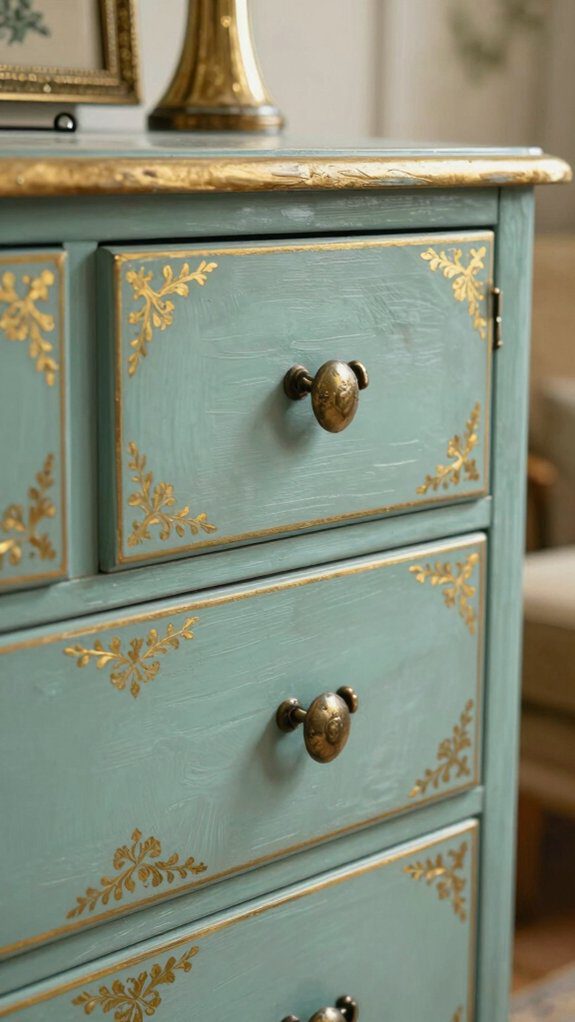
I love using metallic detailing to lift a painted piece, so I’ll share a few practical tips on how to get crisp, lasting gold accents that actually look professional. Start by planning where the gold will go—edges, hardware, or carved details—and choose a complementary base like navy, deep green, or blush so the warmth of the gold sings without overpowering the piece. For a polished result, sand and prime the area, use either gold leaf for shine or high-quality gold paint for control, seal everything with a clear topcoat, and test on a scrap to compare finishes before committing.
Metallic detailing tips
If you want to give a hand‑painted piece an instant lift, adding gold accents is one of my favorite tricks — it makes even simple furniture look luxe without a remodel. I’ll walk you through metallic detailing tips that create lasting beauty and a sense of shared creativity. Start with surface preparation tips: clean, sand, and prime so gold adheres smoothly. I use either gold leafing techniques for delicate edges or metallic spray for hardware and bold strokes.
- Clean and sand thoroughly for even adhesion.
- Use gold leafing techniques on trim; apply adhesive then lay leaf.
- Spray small hardware or stencil with metallic paint.
- Seal with a clear topcoat to protect the finish and enjoy.
Kids Room Hand Painted Furniture
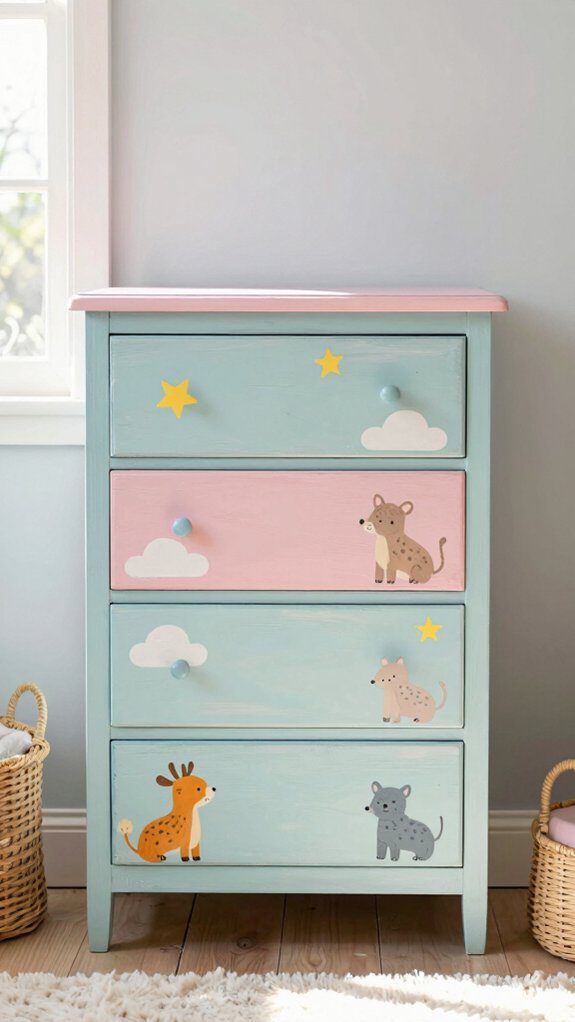
One of my favorite ways to brighten a child’s room is by hand-painting a dresser or toy chest with bold colors and playful motifs, and I’ll show you how to make it both safe and stylish. I use non-toxic, child-safe paints and involve kids in simple steps so they feel proud and connected. Choose playful designs that match their interests and add personalized touches like names or favorite animals. Below is a quick project plan:
| Item | Paint Type | Tip |
|---|---|---|
| Dresser | Non-toxic acrylic | Sand, prime |
| Toy chest | Water-based enamel | Seal edges |
| Nightstand | Chalk paint | Stencil motifs |
| Shelves | Milk paint | Match room palette |
| Chair | Safe varnish | Smooth finish |
These pieces become functional art that grows with your family.
Ombre Painted Furniture Effects
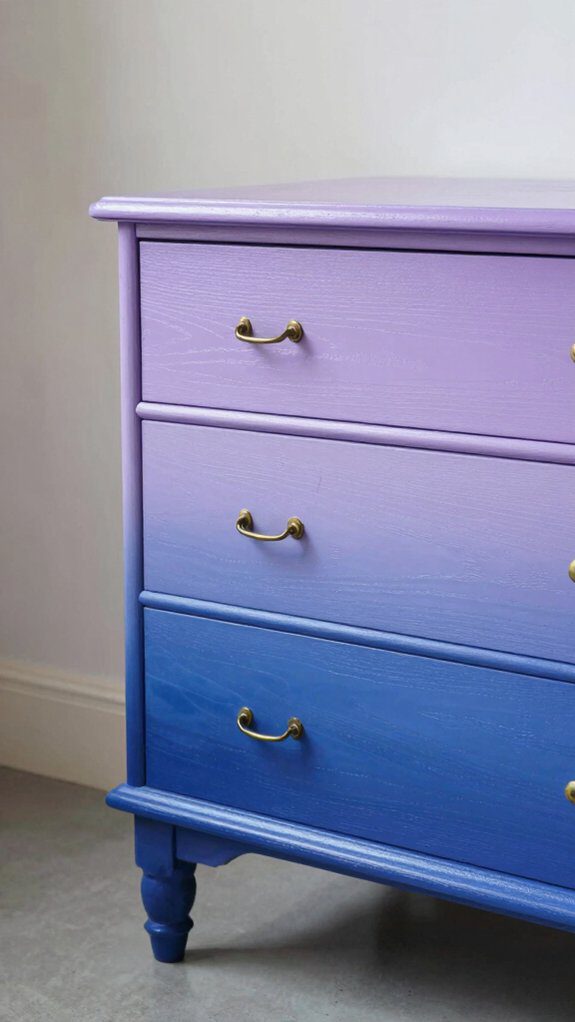
When you want a fresh, eye-catching update that still feels elegant, I love using an ombre effect to transform a dresser or table from plain to polished—it’s like giving furniture a gentle sunset that never fades. I’ll walk you through ombre color blending and simple gradient painting techniques so you feel confident joining in and making a piece your own. Start with a base coat, then gradually mix in the second color while brushing or sponging for smooth shifts. Seal the finish to protect colors and keep vibrancy. Larger surfaces show the gradient best, and you can match decor easily.
- Prep: clean, sand, base coat
- Mix: small increments of second color
- Blend: brush or sponge strokes
- Seal: clear protective topcoat
Mural Style Painted Furniture
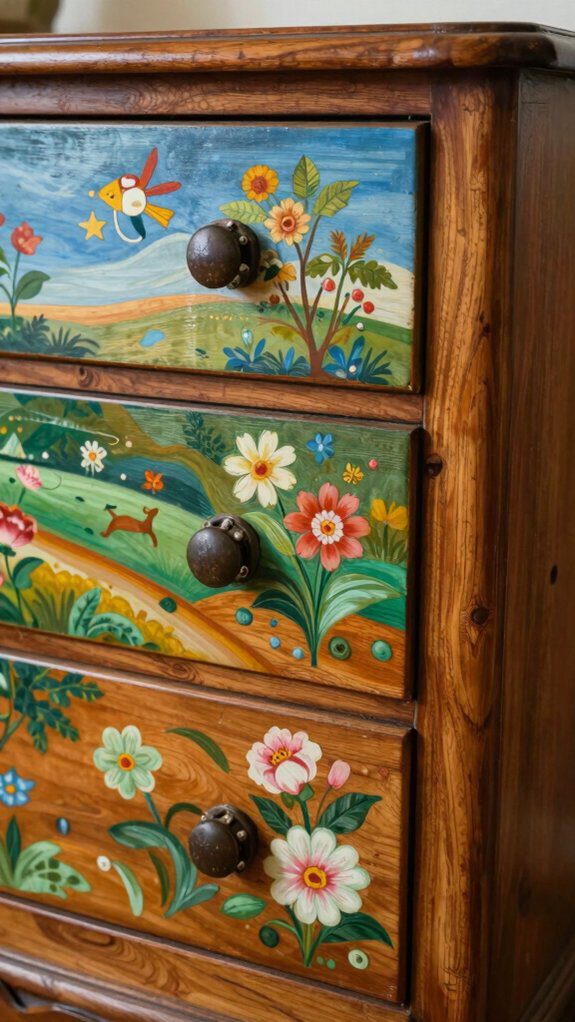
I love turning a plain dresser or table into a statement focal piece by painting a mural that tells a story or sets a mood. Start by choosing a theme—like a nature scene for a calm bedroom or bold geometric shapes for a modern living room—then clean, sand, prime, and use high-quality acrylics so the colors stay vibrant. Finish with a clear sealant to protect the artwork and you’ll have a functional piece that looks like a gallery showstopper in your home.
Statement focal pieces
A painted mural can turn a simple dresser or table into a jaw-dropping focal piece, and I love how it makes a room feel instantly personal and alive. When I plan a statement focal piece, I think through mural techniques and color theory so every brushstroke connects to the room and to you. I prep the surface—clean, sand, prime—so paint adheres and lasts. I choose high-quality acrylics for vibrancy, then seal the work to protect it.
- Sketch a design that reflects your story.
- Layer colors thoughtfully for depth.
- Use durable paints for indoor/outdoor use.
- Finish with a clear sealant to preserve the art.
You’ll find the process uniting creativity and home, and it welcomes others in.
Hand Painted Furniture for Small Spaces
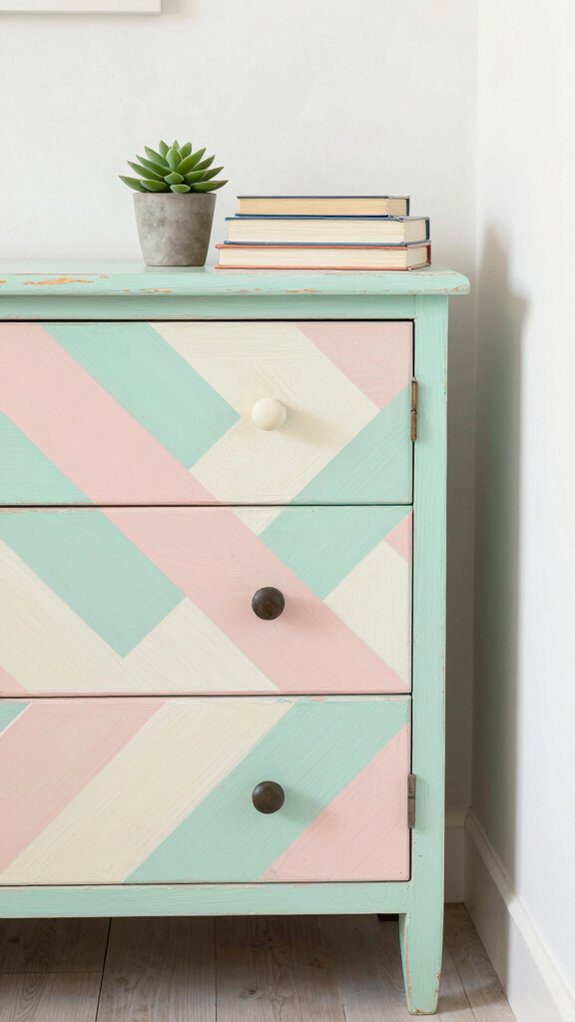
Even in the tiniest rooms, I’ve found that a hand-painted piece can change the whole mood, so let me show you how to pick and paint furniture that makes small spaces sing. I choose a colorful accent—like a slim side table or stool—so your eye has one joyful place to land. Think compact creativity: pick lighter hues or delicate patterns to make areas feel airy, or go bold on a piece that doubles as storage to enhance function. Try floral painting for charm or the Slap-It-On-Paint method for speed; both suit small surfaces and give smooth results. Sand, prime, and seal for durability. With simple steps and the right scale, your little room will feel personal and inviting.