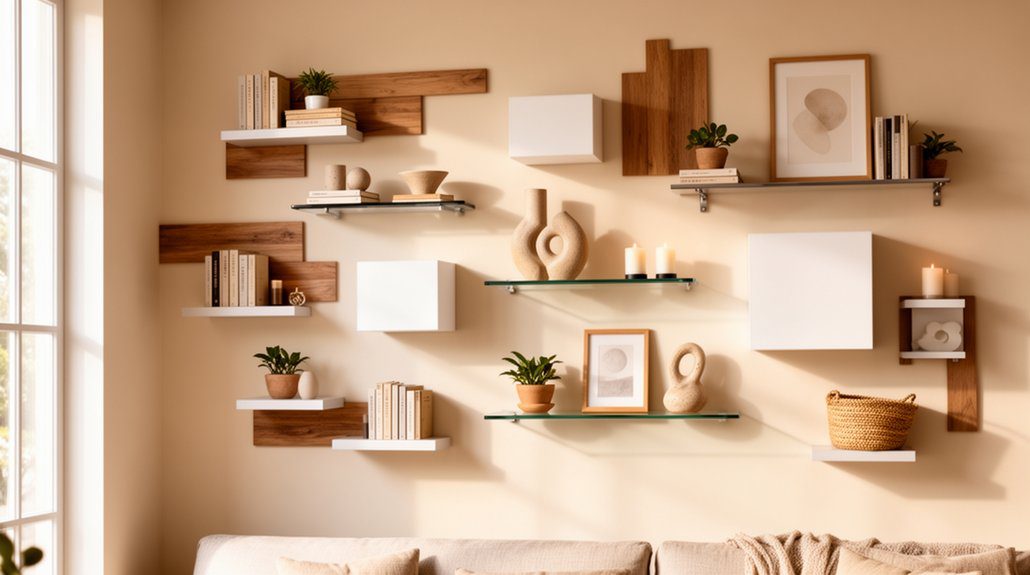
14 Floating Shelf Ideas to Elevate Your Space With Style and Function
I’ve watched blank walls transform into functional design statements with floating shelves—and honestly, it’s the easiest upgrade you can make. The secret? Matching your shelf depth to what you’re storing: ten to twelve inches for kitchens, six to ten for bathrooms. Anchor into studs for security, style with three to five curated pieces per shelf, and suddenly your space feels intentional instead of cluttered. Whether you’re going minimalist white, rustic wood, or moody black, there’s a setup that’ll lift your home without breaking the budget—stick around to uncover which one fits your style.
Love cozy DIY projects? 💕
Get free printable guides, exclusive tutorials & surprise craft goodies straight to your inbox.
Disclosure: This post may contain Amazon affiliate links, at no extra cost to you. Content on DiyCraftNest is created with research support from AI tools and carefully reviewed, edited, and fact-checked by the lead author, Daniel Pat, to ensure accuracy and reliability. Learn more
Key Takeaways
- Design & Material Selection: Choose finishes (white satin, rustic wood, black matte) and depths (6–12″) that match your room’s function and aesthetic.
- Strategic Spacing & Layout: Mix shelf lengths (12–72″) and space vertically 8–15″ apart; stagger heights to create visual interest and balance.
- Load-Bearing Installation: Anchor into studs for 45–100 lb capacity; use concealed brackets for 24–30″ shelves to achieve a seamless built-in look.
- Curated Styling Approach: Limit displays to three to five objects per shelf; layer textures and rotate items regularly to maintain intentional, clutter-free aesthetics.
- Specialized Displays: Customize shelving for kitchens (matching dishes, grouped glassware), bathrooms (matching jars, vertical baskets), and above-bed (lightweight items, ambient lighting).
Minimalist White Floating Shelves
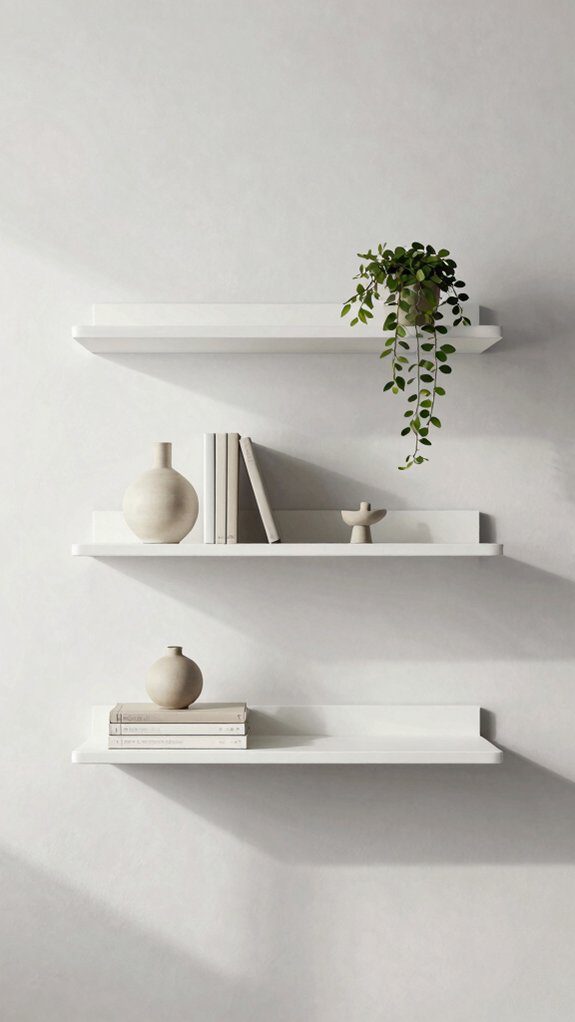
Envision this: you’re staring at a blank wall, and you want it to feel open and calm instead of cluttered and heavy. White floating shelves transform any space into airy backdrops that don’t compete for attention.
I’ve learned that the magic happens when you style them thoughtfully—creating curated vignettes rather than stuffing them full. I keep shelves at 10–12 inches deep for balance, painting mine in satin white for that wipeable, durable finish.
The real win? Anchoring them securely into studs so I’m not stressed about weight limits. Three to five objects per shelf feels right—a plant, something sculptural, maybe a book. It’s minimal. It’s calm. It works.
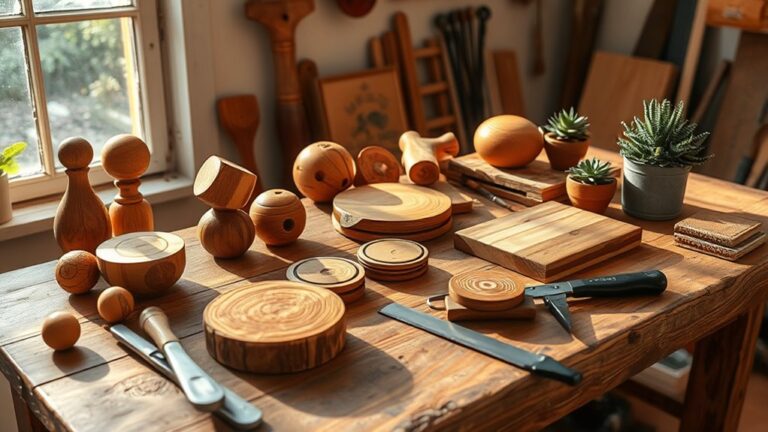
Rustic Wood Wall Shelves
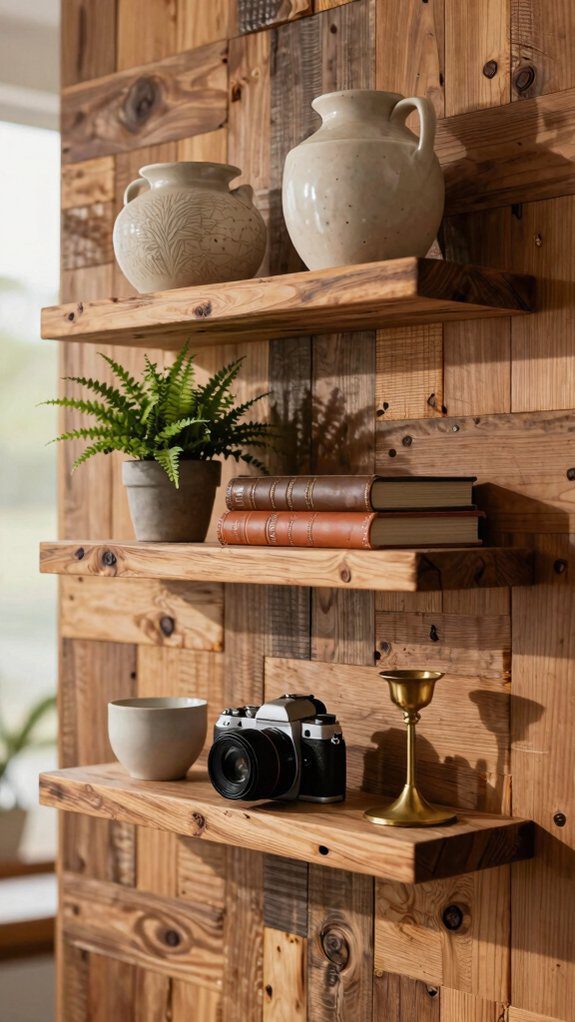
If white shelves feel too sterile for your style, rustic wood wall shelves might be calling your name—they’re the antidote to that minimalist calm we just talked about.
I’ve fallen for reclaimed walnut and white oak. Their natural knots and grain preservation create warmth that mass-produced shelves can’t touch. Before installation, I inspect thoroughly for hidden nails, rot, or lead paint—safety first.
Reclaimed maintenance matters. I seal everything with water-resistant varnish to combat kitchen spills and bathroom humidity. Match thickness to purpose: thicker slabs handle heavy cookware, while 8–12″ depths work perfectly for displaying jars.
Mount securely using heavy-duty brackets rated for your load. One stud holds 45–50 pounds. Two studs? One hundred.
Corner Floating Shelf Setup
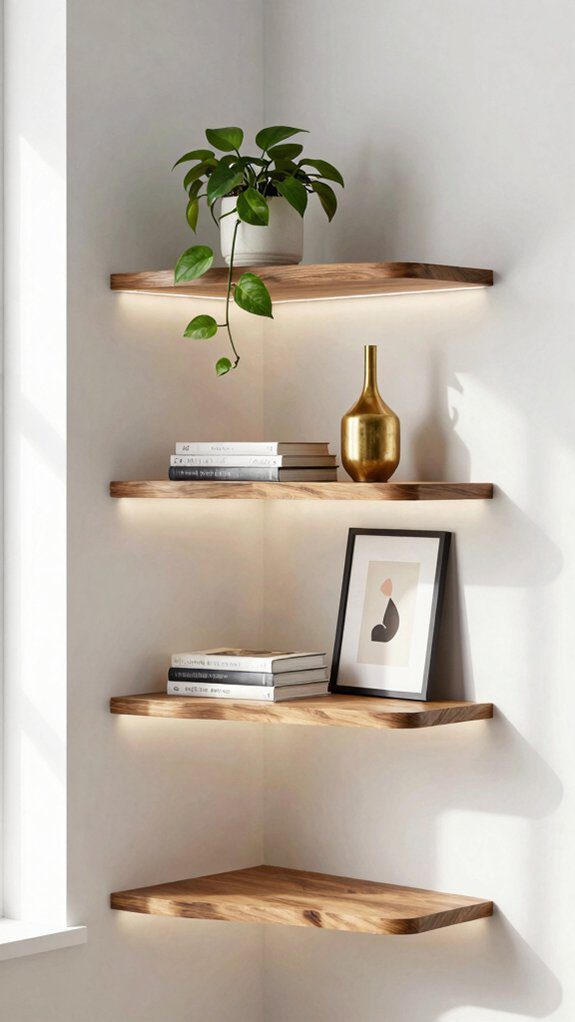
I’ve watched too many corners in my apartment collect dust and dead air space, but then I realized that a corner floating shelf setup could be my secret weapon for actually using those awkward zones.
You’d be surprised how much breathing room you gain when you stack a trio of shelves at different heights instead of cramming one bulky unit into that tight spot.
It’s the kind of space-saving solution that makes you wonder why you didn’t think of it sooner—especially when you’re juggling plants, decorative pieces, and kitchen stuff all in one small footprint.
Space-saving solution
Those awkward corners gathering dust in your kitchen or bathroom? I’ve transformed mine into compact niches that actually work. Three staggered shelves—spaced 8–12 inches apart—became my secret weapon for vertical organizers without sacrificing floor space. I installed floating brackets with proper stud support (two studs handle ~100 lb), then arranged categories: plants on top, daily mugs middle, baskets below. It sounds simple, but suddenly I’m not hunting for spices anymore. The real magic? My tiny bathroom feels intentional now, not cramped. Even my partner noticed how much cleaner everything looks.
| Shelf Level | Best For | Spacing |
|---|---|---|
| Top | Plants, art | 8–10″ |
| Middle | Daily items | 10–12″ |
| Bottom | Baskets | 12″+ |
Floating Shelves with LED Lighting
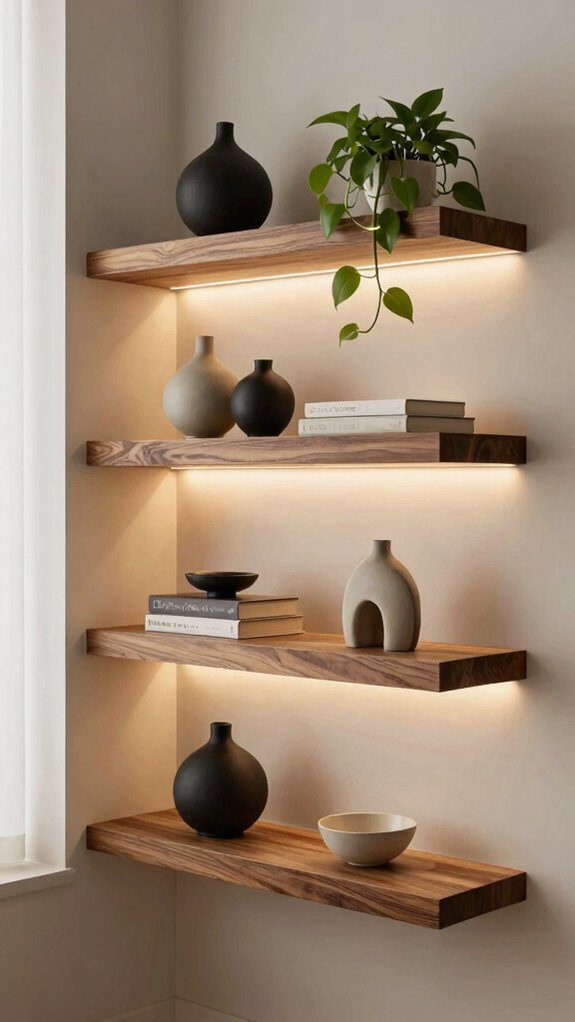
When I first installed floating shelves in my kitchen, they looked great during the day—but at night, they just disappeared into shadow. That’s when I uncovered LED strip lighting changes everything.
I mounted warm dimming strips underneath, and suddenly my shelves became functional and inviting. The 2700K color temperature makes everything look cozy—perfect for evenings.
What really sealed the deal? Adding wireless controls. Now I adjust brightness from my phone or use motion sensors that automatically light up my coffee bar.
The adhesive backing made installation painless. Running wires through the bracket kept things clean. My shelves finally feel complete—stylish *and* practical.
Kitchen Open Shelf Display
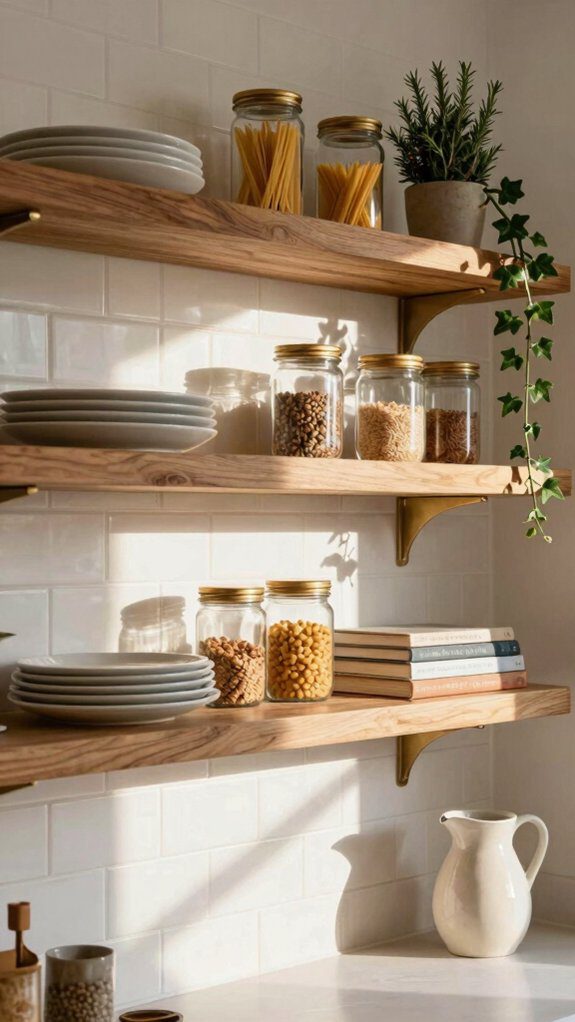
Open shelves in the kitchen can feel like beautiful blank canvases—or honestly, they can look like a chaotic mess if you’re not intentional about what goes up there. I’ve learned that open shelf styling is really about showing restraint. You’re fundamentally curating a gallery of your everyday necessities.
Here’s what actually works for visible pantry organization:
| Item Type | Best Practice |
|---|---|
| Dishes | Display matching sets only |
| Glassware | Group by size and color |
| Staples | Use clear glass jars |
| Cookbooks | Stand upright, spine out |
| Décor | Limit to 2-3 pieces |
Replace those cramped upper cabinets with walnut or white oak floating shelves. Store bulk staples in reusable clear glass jars—this creates that nostalgic, intentional look while keeping contents visible. You’ll actually use what you see.
The secret? Keep only necessities visible. Your kitchen becomes functional art.
Bathroom Floating Shelf Styling
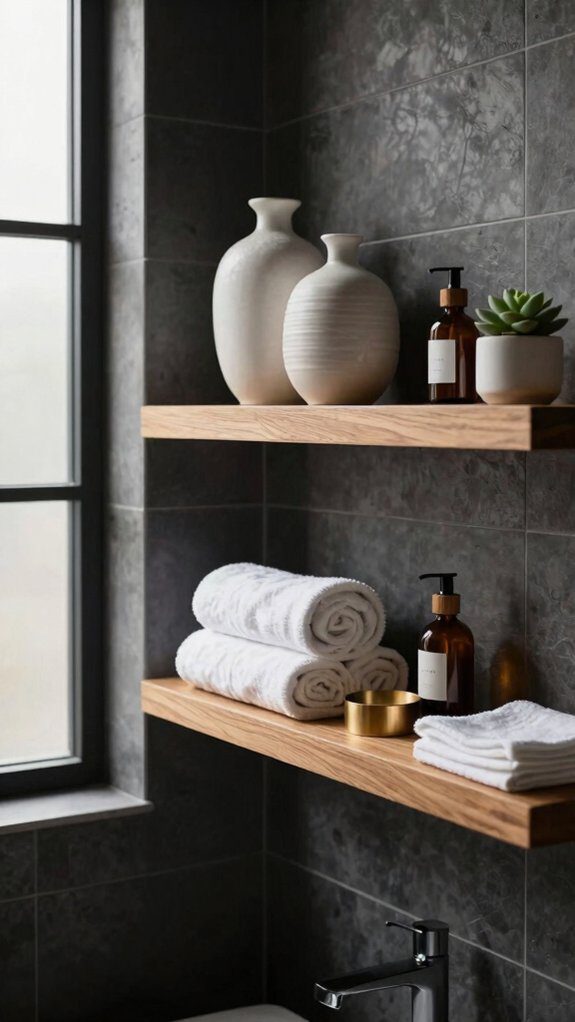
When I first tackled my cramped bathroom, I realized floating shelves weren’t just pretty—they were my secret weapon for small space storage that actually works.
I started corralling Q-tips and cotton pads in matching glass jars (honestly, the Dollar Tree ones look just as good as upscale containers), which immediately made my counter feel less chaotic and way more spa-like.
The real game-changer? Keeping daily necessities on lower shelves within arm’s reach while stashing backup supplies up top, so I wasn’t digging through clutter every morning.
Small space storage
Bathrooms always seem to overflow with stuff—and I’m talking about the tiniest apartments and master baths alike.
I’ve learned floating shelves are game-changers for small spaces. Here’s what actually works:
- Shallow shelves (6–10 inches) keep items visible and reachable without cramping your bathroom
- Vertical baskets corral cotton balls and Q-tips, maintaining that decluttered look I crave
- Under-shelf lighting adds function while creating spa vibes
I pair mine with a towel bar beneath for extra storage.
Skip the medicine cabinet clutter—these shelves let me display what I actually use daily while protecting everything from humidity with water-resistant materials like sealed wood.
Black Modern Floating Shelves
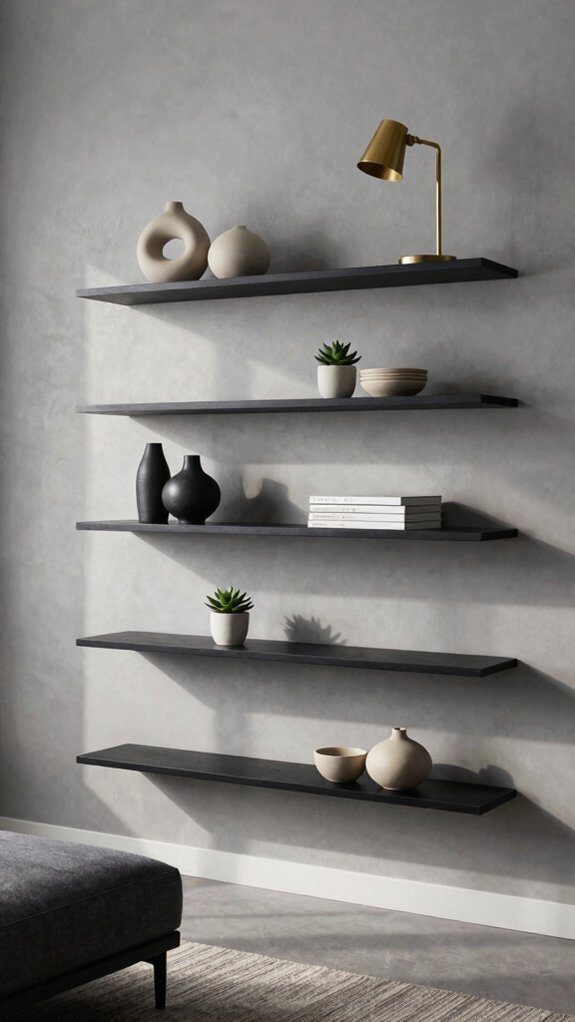
The magic lies in contrast pairing. I paired my black shelves with warm walnut wood and gray tile, balancing that modern edge with real warmth.
The matte finish doesn’t scream—it whispers confidence. I mounted them at staggered heights, added LED strip lighting underneath, and suddenly my cluttered corner felt intentional, curated, even gallery-worthy.
Layered Shelf Wall Design
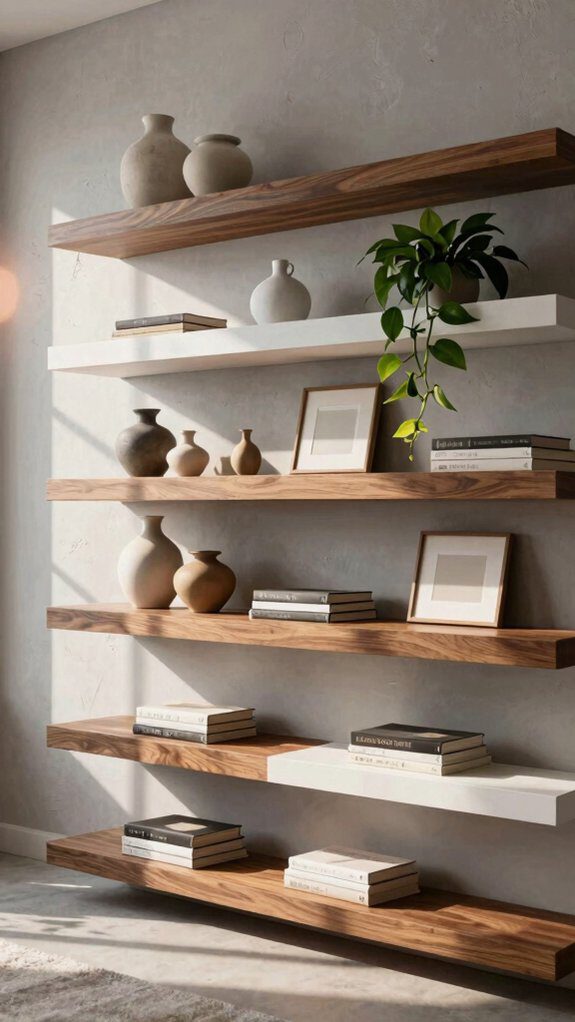
Once you’ve nailed the modern elegance of black shelves, you’re ready to think bigger—literally stacking your way up an entire wall. I’ve uncovered that layering shelves vertically transforms blank spaces into galleries.
Here’s my winning formula:
- Space shelves 10–14 inches apart across varied heights
- Mix lengths (48–72 inches anchors paired with shorter 12–24 inch shelves)
- Layer items strategically: tall objects back, smaller pieces front
The magic happens when you add textural contrasts—pairing smooth ceramics against rough wood. Ambient backlighting underneath each shelf creates depth that honestly stopped my guests mid-conversation. It’s surprisingly doable, and your wall becomes the room’s showstopper.
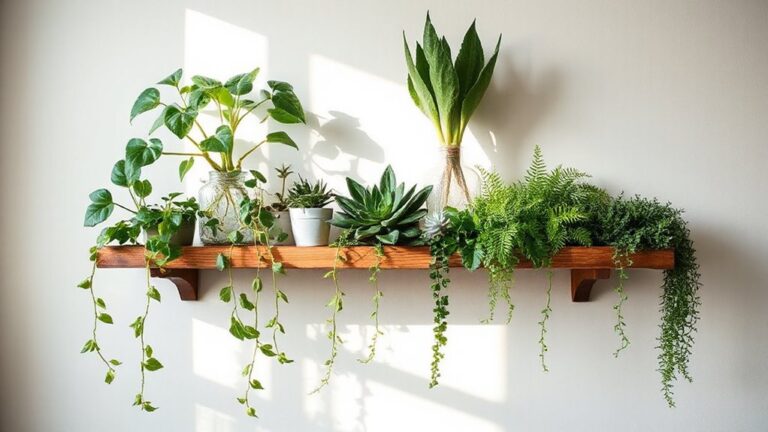
Floating Shelves with Plants
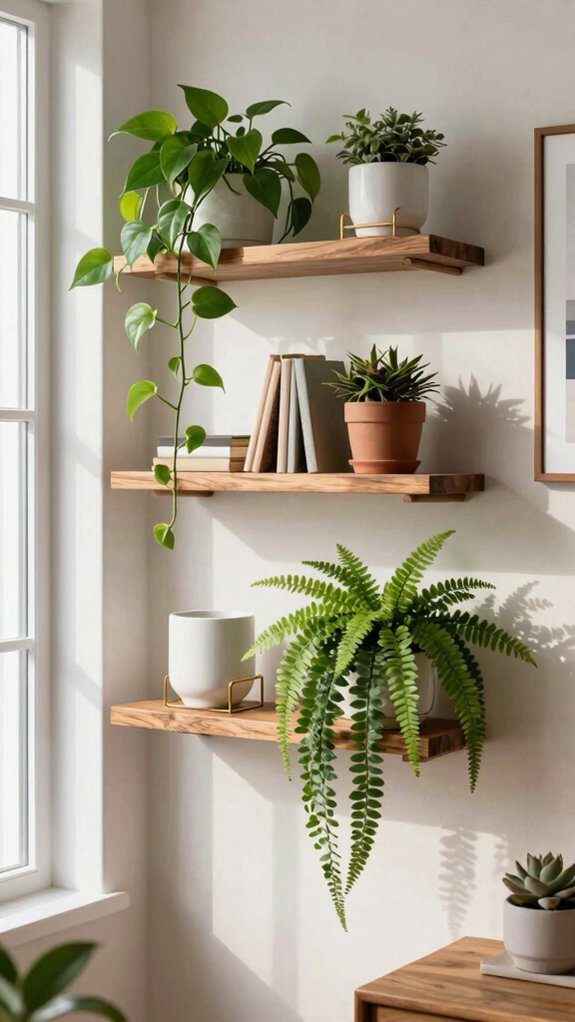
Plant-shelf magic is honestly where floating shelves stop being just wall décor and start becoming a living, breathing room transformation.
I’ve uncovered that humidity plants like pothos and ferns thrive on bathroom shelves, while trailing displays cascade beautifully down living room walls. The secret? Install shelves with incorporated rope hangers for trailing setups—they handle concentrated weight better.
Match humidity-loving varieties with water-resistant finishes to protect wood from moisture damage.
Arrange sun-lovers near windows, shade-tolerant plants lower down.
Rotate your displays regularly to prevent clutter and keep growth balanced.
Trust me, your guests will notice this living, curated approach instantly.
Above Bed Shelf Decor
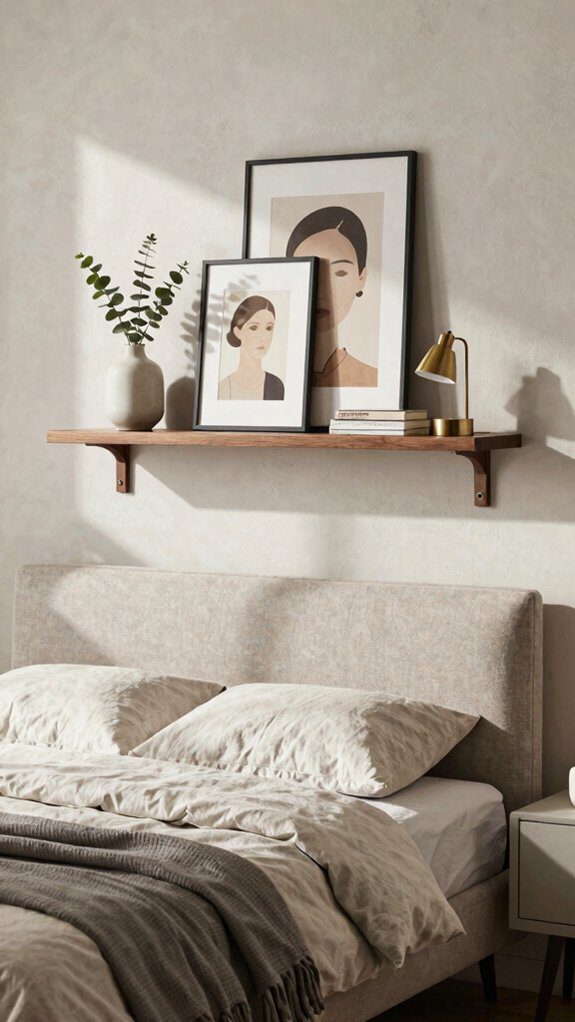
I learned the hard way that floating shelves above your bed aren’t just another decorating spot—they’re either your bedroom’s sleek focal point or a visual headache waiting to happen.
I keep mine intentional with these safety guidelines:
- Mount shelves 6–12 inches above the headboard using stud anchors rated 50–100 lbs
- Display only lightweight items (under 5 lbs total) like framed photos and small plants
- Avoid breakables directly overhead—trust me, midnight startle moments aren’t fun
I limit styling to three curated pieces, rotating seasonally.
Adding ambient lighting beneath the shelf creates warmth without clutter. The key? Less is genuinely more when you’re decorating the zone where you sleep.
Floating Bookshelf Wall
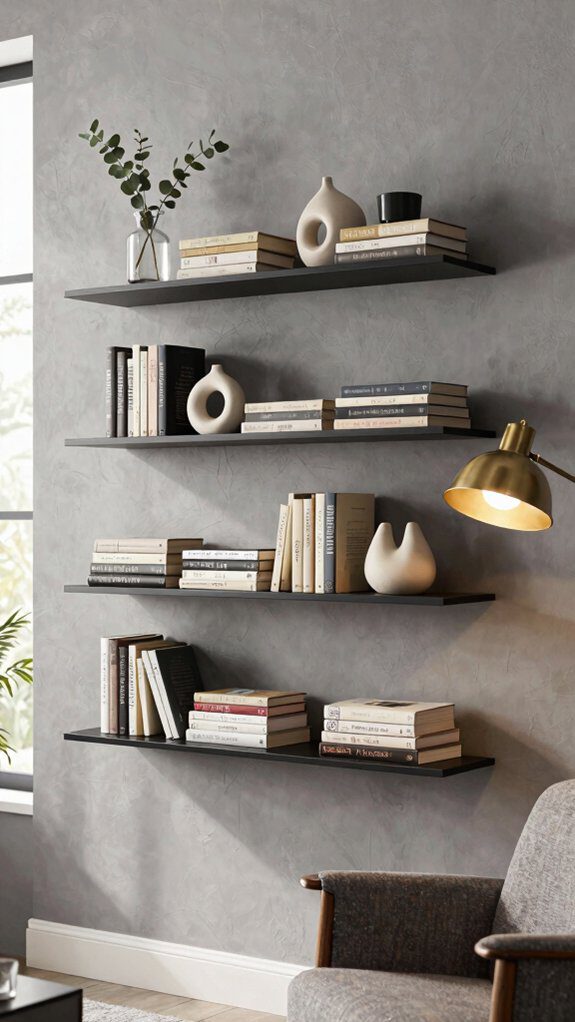
A wall full of books used to mean cramped bookcases taking up floor space, but floating shelves? They’re game-changers.
I’ve created my built-in aesthetic using concealed brackets supporting 24–30 inch shelves that hold serious book weight rating—we’re talking 100 pounds when anchored into studs. Space shelves 12–15 inches apart for hardcovers, 6–8 for paperbacks. Break monotony with plants, art, and bookends between runs. Warm walnut finishes match my cabinetry perfectly, making everything feel intentional. It’s like furniture designed expressly for my space, without the floor footprint headache.
Entryway Floating Shelf Setup
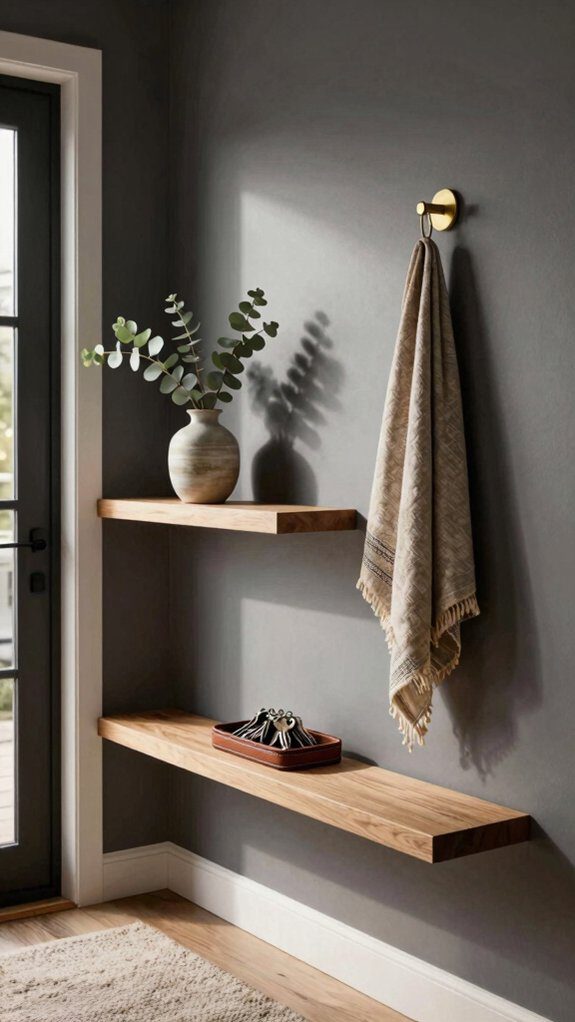
I used to toss my keys on whatever surface was closest—usually the couch—until I finally installed an entryway floating shelf that actually works as a functional drop zone.
You’d be shocked how much chaos a single shelf at eye level can prevent when you pair it with hooks below and a small tray on top. I’m talking keys, mail, sunglasses, and that random change all in one spot instead of scattered everywhere.
Functional drop zone
Stop me if this sounds familiar: you walk through your front door, and your keys, mail, and wallet scatter across whatever surface is closest—the console table, the floor, even the coat rack. I’ve been there.
That’s where a functional drop zone shelf changes everything.
Mount a 10–12 inch deep floating shelf at arm height (42–48 inches) using concealed brackets anchored into studs. This becomes your entry vital command center.
Here’s what transforms it:
- Corral loose items in baskets sized to your shelf depth
- Add wall hooks 3–6 inches below for coats and leashes
- Install LED puck lighting for evening mail organization
Done. Chaos solved.
Mixed Material Shelves
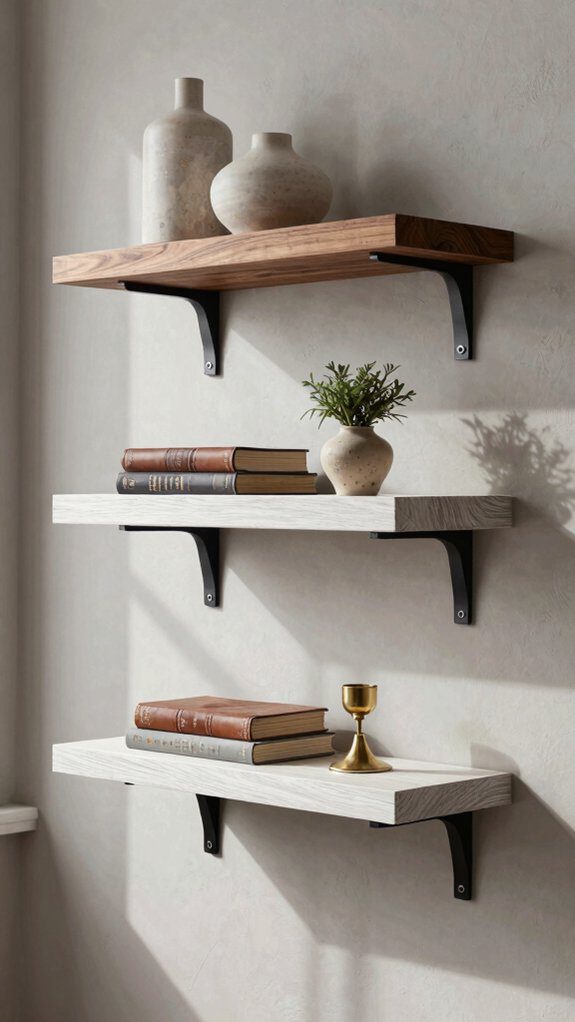
I’ve learned that pairing wood and metal creates shelves that actually *work* in real homes—they’re tougher than wood alone and way warmer than cold steel brackets.
The combo gives you that industrial vibe without making your space feel like a warehouse, plus the materials balance each other out so nothing looks too heavy or too slick.
When I mounted walnut shelves with matte black steel brackets in my entryway, I finally had something that could handle my clunky boots *and* look intentional doing it.
Wood and metal combo
The marriage of warm wood and cool metal might sound like a design clash, but wood and metal combo shelves are secretly one of the best ways to nail that balanced, sophisticated look without breaking the bank or your walls. I’ve uncovered that bracket selection makes all the difference here.
Consider these winning combinations:
- 1–2″ natural walnut slabs with black powder-coated steel brackets for that industrial farmhouse vibe
- Reclaimed wood paired with galvanized metal for eco-conscious design
- Concealed welded brackets that let wood grain shine as your focal point
Kitchen shelves? Go stainless steel. Load capacity hits 45–50 lbs when mounted properly.
Symmetrical Shelf Arrangement
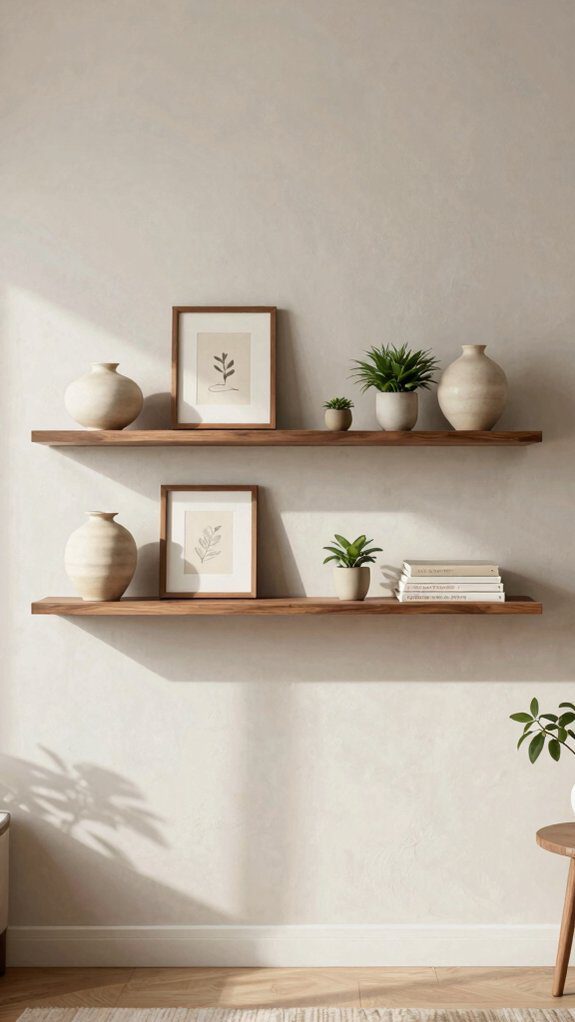
When you’ve got mismatched shelves scattered across your wall like a Pinterest accident waiting to happen, it’s time to bring real balance back. I’ve learned that evenly spaced shelves with mirrored brackets transform chaos into calm.
Grab a level and tape measure—mark matching heights on both sides, typically 24–36 inches apart center-to-center. Use identical materials: same wood thickness, same finishes. This intentional symmetry tells your guests you’ve got your space figured out.
Balance displayed items by weight too—stack books opposite plants. It’s that simple shift that makes your wall feel genuinely put-together, not accidentally coordinated.