14 Fabric Bookmark DIY Free Pattern Ideas for Easy Sewing Projects
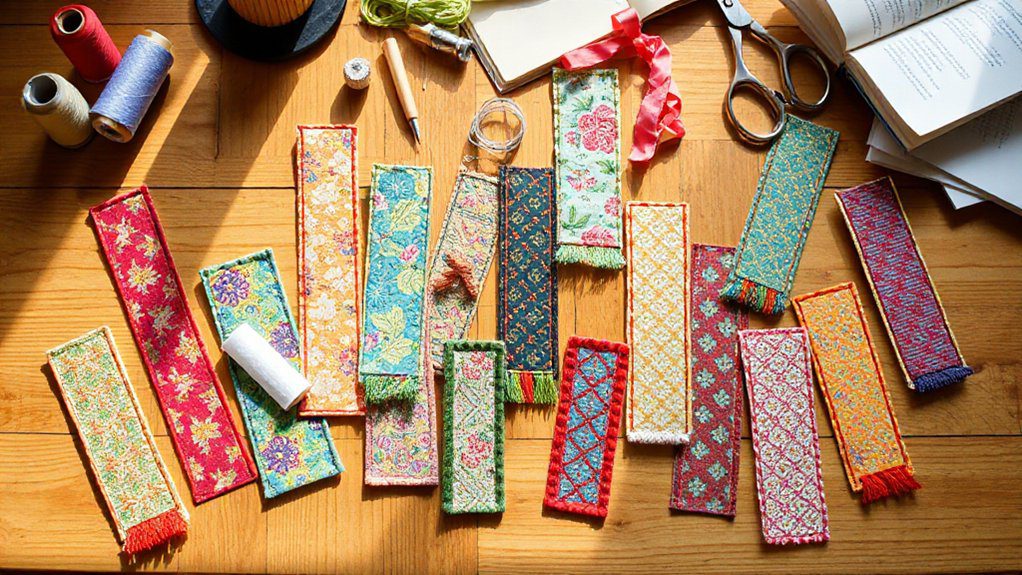
I’ve collected 14 easy fabric bookmark patterns you can sew in an afternoon, from simple rectangles and corner pockets to quilted, magnetic, elastic-strap, and reversible styles. I’ll give clear measurements (like 2½” x 6½” or 3″ x 5½”), step-by-step stitching tips, and finishing ideas—tassels, buttons, lace, or pockets for notes—so you can compare sturdiness, bulk, and gift potential. Start with scraps and a fusible interfacing, and keep going to see more techniques and variations.
Love cozy DIY projects? 💕
Get free printable guides, exclusive tutorials & surprise craft goodies straight to your inbox.
Disclosure: This post may contain Amazon affiliate links, at no extra cost to you. Content on DiyCraftNest is created with research support from AI tools and carefully reviewed, edited, and fact-checked by the lead author, Daniel Pat, to ensure accuracy and reliability. Learn more
Key Takeaways
- Offer 14 varied free patterns including simple rectangle, corner, reversible, quilted, magnetic, and elastic-strap bookmarks.
- Provide clear cutting dimensions, seam allowances, and interfacing or batting recommendations for each pattern.
- Include step-by-step sewing instructions: stitch lines, turning gaps, pressing, and topstitching for polished finishes.
- Suggest personalization options: appliqué, embroidery, tassels, buttons, ribbons, and scrap-patch layouts.
- Recommend suitable fabrics and techniques for durability, plus quick gift-ready finishing tips.
Simple Rectangle Bookmark Pattern
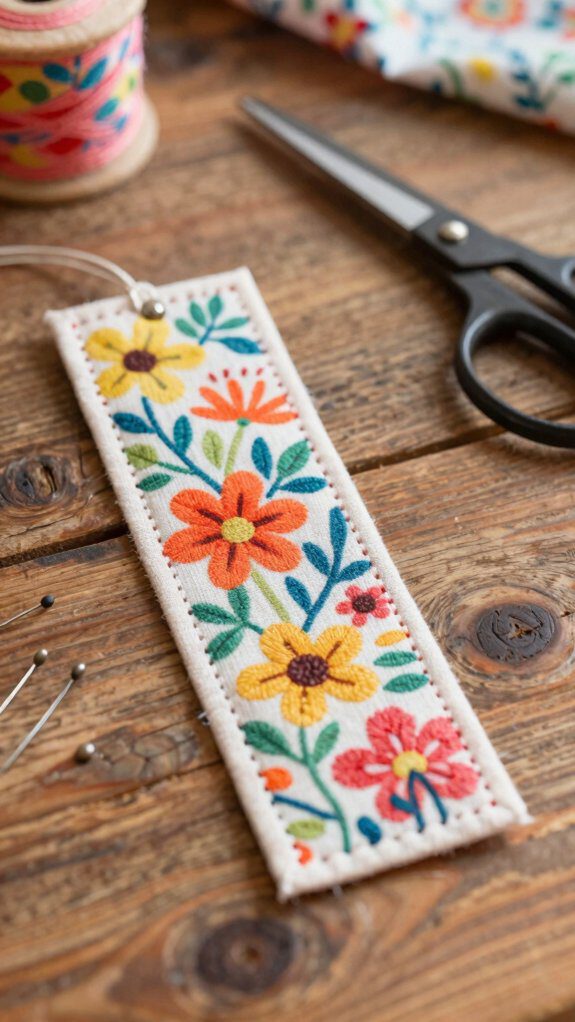
I’ll walk you through a beginner-friendly simple rectangle bookmark pattern that’s perfect if you’re just starting with fabric crafts. Start with a 3” x 5½” fabric piece (or any bookmark-sized rectangle) and add medium-weight fusible interfacing for sturdiness, then experiment by stitching together scraps for a scrappy, textured look. I’ll show clear, step-by-step tips—pin pieces, stitch appliqués two or three times for texture, back the fabric, sew around the bookmark twice, and trim close to the edge for a neat, polished finish.
Beginner friendly design
When you’re ready to try a simple, satisfying project, this rectangle bookmark is a perfect place to start because it uses easy cuts and basic sewing steps that build confidence fast. I’ll walk you through the beginner friendly design so you feel part of a helpful sewing community. Cut two fabric pieces 2″ x 6.5″ and a medium-weight fusible interfacing 1.5″ x 6″ for structure—good fabric selection makes a big difference. Place right sides together, sew with a 1/4″ seam allowance, leaving a small opening for turning. After turning and pressing, topstitch around the edge to secure the opening and add durability. Add a raw-edge appliqué or a yarn tassel at the top for personality. These sewing techniques are simple and satisfying.
Corner Bookmark Style

I love how the folded fabric technique makes corner bookmarks both sturdy and simple to sew, and I’ll walk you through the key steps so you can make one in about 15 minutes. Start with a 4×4 inch square and matching interfacing, fold it into a neat triangle, stitch the edges leaving a gap, then turn and press for a crisp corner that slips right onto your page. You can personalize the folded pocket with tiny appliqués, ribbon tabs, or fabric markers to match the book or the person you’re gifting it to.
Folded fabric technique
Although it looks elegant, I can show you a folded fabric corner bookmark that’s quick to make and perfect for using up scraps. I start with two 4×4 inch squares and fold one diagonally, then fold each top corner down to meet the center crease so it forms a neat triangle. These corner bookmark techniques are simple: sew around the edges with a 1/8 inch seam allowance, leave an opening, turn it right side out, then top-stitch for strength and polish. I like fabric corner ideas that mix patterns and solids so each bookmark feels personal and fits into my collection. Follow these clear steps, and you’ll have cozy, durable bookmarks that welcome you back to reading.
Quilted Fabric Bookmark
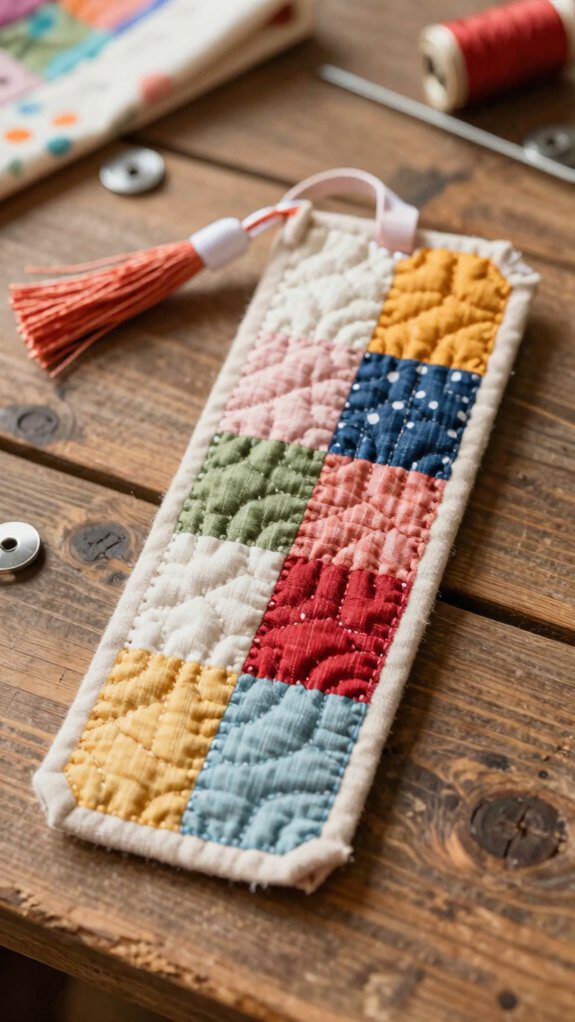
I love how layered stitching detail turns a simple quilted bookmark into a tiny textured masterpiece, so I’ll walk you through the key steps. Start by fusing interfacing to one 2.5″ x 6.5″ fabric piece, layer the second fabric on top, then stitch straight lines or fun patterns to create texture and stability. Leave a small opening to turn it right side out, press and topstitch the edges, and consider adding a yarn tassel or appliqué for a personal touch.
Layered stitching detail
Three layers make a quilted fabric bookmark feel both cozy and sturdy, and I’m excited to show you how layered stitching brings that extra pop of texture and personality. I start by sandwiching thin batting between two fabric layers to get that soft, cushioned feel and obvious quilted texture. Next, I switch to a walking foot so my sewing machine feeds all layers evenly; that simple change prevents puckers and keeps lines straight.
For stitching techniques, I try straight lines for a classic look, zigzag for more edge interest, or decorative stitches to make a statement. Each choice changes durability and style, so experiment with patterns and fabrics — you’ll find combinations that feel like home.
Elastic Strap Bookmark

I love how the elastic strap bookmark turns a simple fabric strip into a wrap-around book holder that stays put on an 11-inch notebook, and I’ll show you the exact pieces you need. You’ll cut two 2½ x 8-inch strips and a 2½ x 10-inch pocket, add a 1-inch by 14-inch elastic (which you can shorten for smaller books), then fold, stack, and sew, leaving the bottom open for the elastic. I’ll also point out where to topstitch to secure the elastic and make a pencil spot, so you can follow each step easily and get a tidy, useful holder.
Wrap-around book holder
A simple elastic strap bookmark can be one of the handiest sewing projects you’ll make, and I love how it keeps a book closed and your place at the same time. I’ll walk you through the wrap-around benefits and why elastic versatility makes this project a favorite in my circle. Start with two fabric strips sized for your notebook and a longer elastic piece that fits snugly around the cover. Sew the fabric pieces together, sandwiching the elastic at the top so it catches pages and lies flat. It’s beginner-friendly, so choose fun fabrics for gifts or personal use. Try slightly longer elastic for chunky journals, shorter for thin notebooks, and test fit before final stitching.
Tassel Edge Design
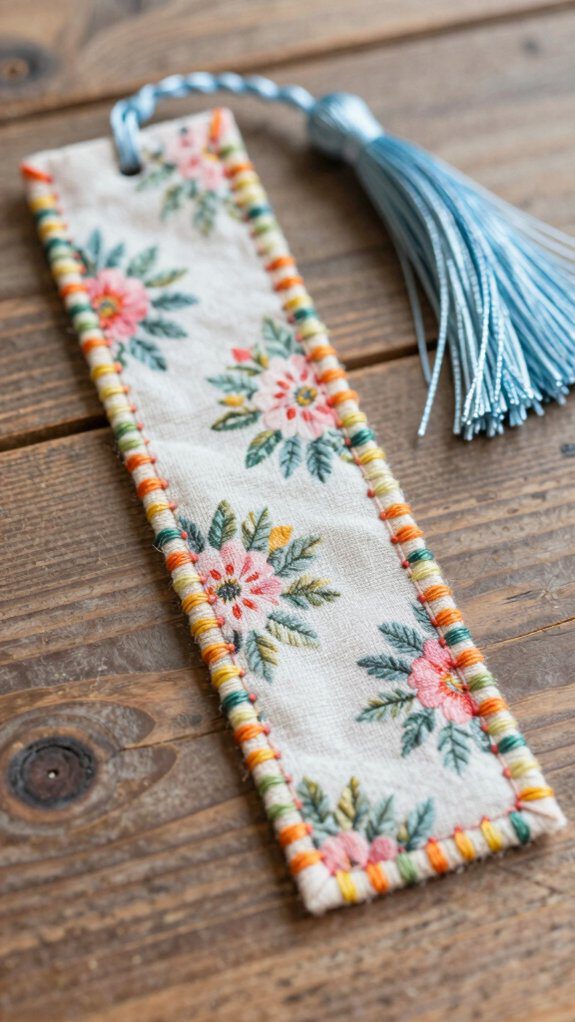
I love adding a tassel edge to a fabric bookmark because a neat decorative thread finish instantly makes it look handmade and polished. Start by wrapping about 30 inches of yarn around your fingers roughly 30 times, secure the loops, cut the bottoms with sharp scissors for fringe, then trim the strands even so the tassel sits tidy at the top. For extra flair, try attaching the tassel through a fussy-cut image or small patchwork piece so the thread finish complements the bookmark’s design.
Decorative thread finish
One simple way to give your fabric bookmark a polished, handmade look is to add a tassel edge—I’ll show you how to make one that’s neat, sturdy, and pleasantly tactile. I like to talk about tassel variations and yarn selection up front: thicker yarn gives a chunkier tassel, while fine yarn makes a delicate fringe. Start by wrapping yarn around your fingers about 30 times to form the body, then use a 5–6 inch piece to tie the loops tightly for the neck. Cut through the loop bottoms with sharp scissors, trim uneven strands, and secure the tassel at the bookmark top so the loop faces the center. It’s a tactile, charming finish that feels like a shared little gift.
Embroidered Fabric Bookmark
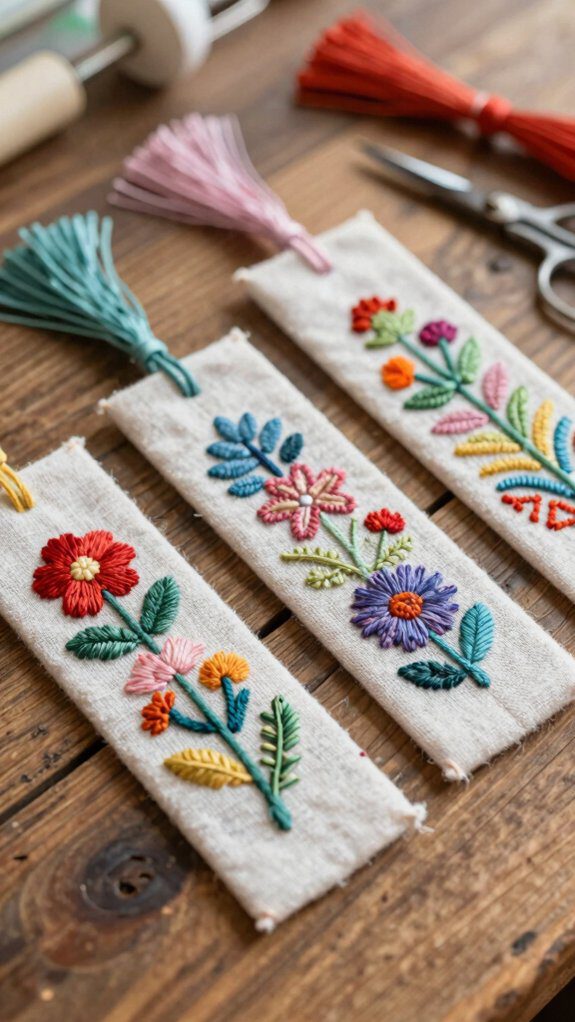
I love using personalized stitching to turn a simple fabric strip into a bookmark that feels uniquely yours, whether you embroider a name, a favorite quote, or a small motif. I usually pick sturdy cotton or linen, add a tear-away stabilizer to prevent puckering, and aim for about 2.5″ x 8″ so it fits most books easily. After stitching, I sew on a backing, leave a gap to turn it right-side out, then topstitch the edges for a clean, durable finish.
Personalized stitching
Although machine embroidery might sound sophisticated, I’ll show you how it makes a fabric bookmark feel truly personal and professional. I like to use personalized patterns and custom designs—names, short quotes, or small motifs—and the result invites readers into a shared craft. Start with a fabric strip at least 2½” × 8″, hoop a stabilizer behind it, and choose colorful threads and stitch types that match your mood.
- Pick a meaningful word or icon
- Use a medium-weight stabilizer for clean stitching
- Test stitches on scrap fabric first
- Leave a small opening for turning and top-stitch later
- Try varied thread colors for texture
Finish by sewing normally; the bookmark will feel both handmade and thoughtfully shared.
Patchwork Scrap Bookmark
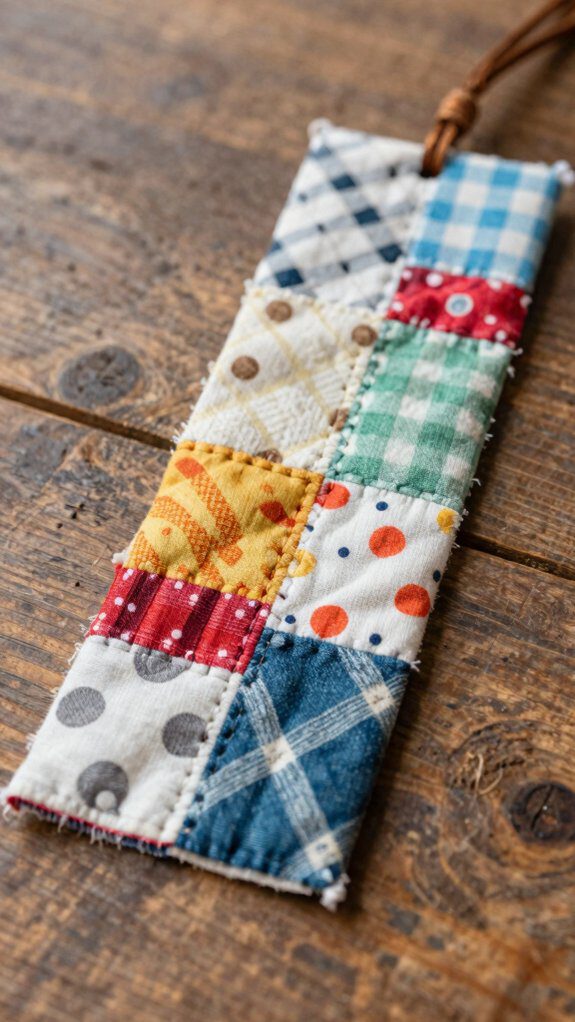
I love using leftover fabric to make a patchwork scrap bookmark because it’s a great way to turn tiny bits into something useful and pretty. Start by cutting scraps into roughly 3″ x 5½” rectangles, arrange them until the colors and patterns please you, then fuse and stitch them together for strength and texture. Finish with a slightly larger backing so the bookmark feels sturdy in your book and will last through many reads.
Use leftover fabric
A patchwork scrap bookmark is a fun little project I love because it turns tiny leftover fabric pieces into something useful and colorful, and you can make one in an afternoon. I gather fabric scrap bits, think about color combinations, and plan textured designs before I cut. I use a 3” x 5 1/2” rectangle as my base, fuse pieces with double-sided fusible webbing, and stitch each appliqué two or three times for durability.
- Use regular scissors or pinking shears for a scrappy edge.
- Try upcycling techniques to keep things sustainable.
- Mix small prints and solids for striking color combinations.
- Add custom embellishments like stamped names or quotes.
- Embrace this easy DIY for creative projects and belonging.
Felt Applique Bookmark
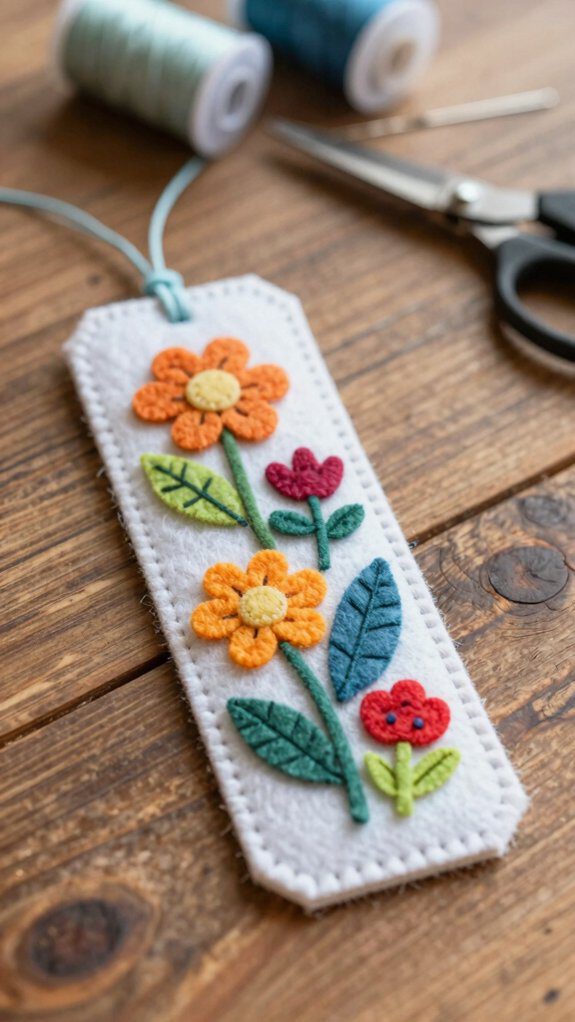
I love using soft layered felt to build bookmarks that feel cozy in hand and look like tiny fabric collages. Start with a 3″ x 5½” base and layer shapes with double-sided fusible webbing, then stitch each piece a couple times at slow machine speed so the edges stay neat and textured. You can add letters or small stamped designs for personality, and the layered approach gives a plush, durable result that’s easy to customize.
Soft layered design
When I want a bookmark that’s cozy, colorful, and quick to make, I reach for felt scraps and a simple rectangle base (about 3″ x 5½” works great, though you can tweak the size to fit your book). I love soft layering to build friendly shapes—leaves, hearts, or abstract patches—and enjoy the contrast of felt textures that invites touch. I sew each piece with a machine, stitching around shapes multiple times to add texture and strength. Then I finish the edge, trim the backing, and add a personal touch with a letter stamp or fabric marker.
- Cut varied shapes from felt scraps
- Layer pieces on the rectangle base
- Machine-stitch around each shape
- Add stamped or hand-drawn initials
- Sew edge and trim excess backing
Magnetic Fabric Bookmark
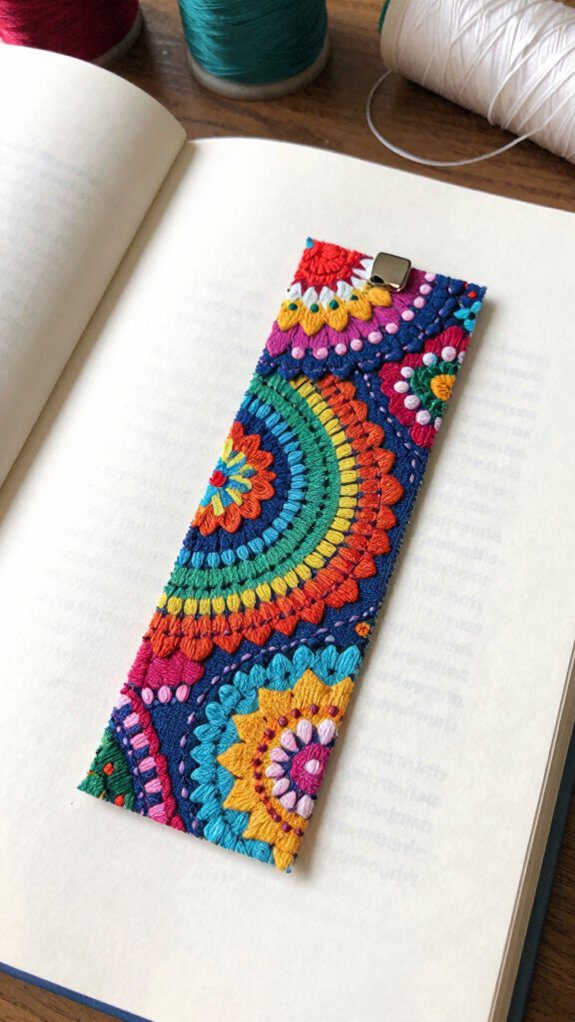
I love magnetic fabric bookmarks because those two small sewn-in magnets give a no-slip hold that keeps your page secure without bending the spine. I’ll show you how to sandwich the magnets between fabric and interfacing, stitch around the edges, insert the magnets through a small opening, and then topstitch to seal it so the grip stays reliable. With a few fabric choices you can make them playful or elegant, and they’re great gifts that actually stay put.
No slip hold
Although magnetic bookmarks look elegant, I love how simple they are to make and how reliably they hold a page without slipping. I want you to feel welcome to try one—these use small, flat magnets sewn between two fabric pieces so the magnetic properties do the work. Choose fabrics that reflect your style; lighter cottons with fusible interfacing give structure without blocking the magnets.
- Cut two rectangles (about 2” x 6”).
- Add lightweight fusible interfacing for durability.
- Position tiny flat magnets between layers, positioned to attract.
- Sew around edges, leave an opening to turn.
- Top-stitch to secure magnets and finish edges.
I’ll guide you step-by-step so we can make bookmarks that belong in any book and any heart.
Ribbon Tie Bookmark
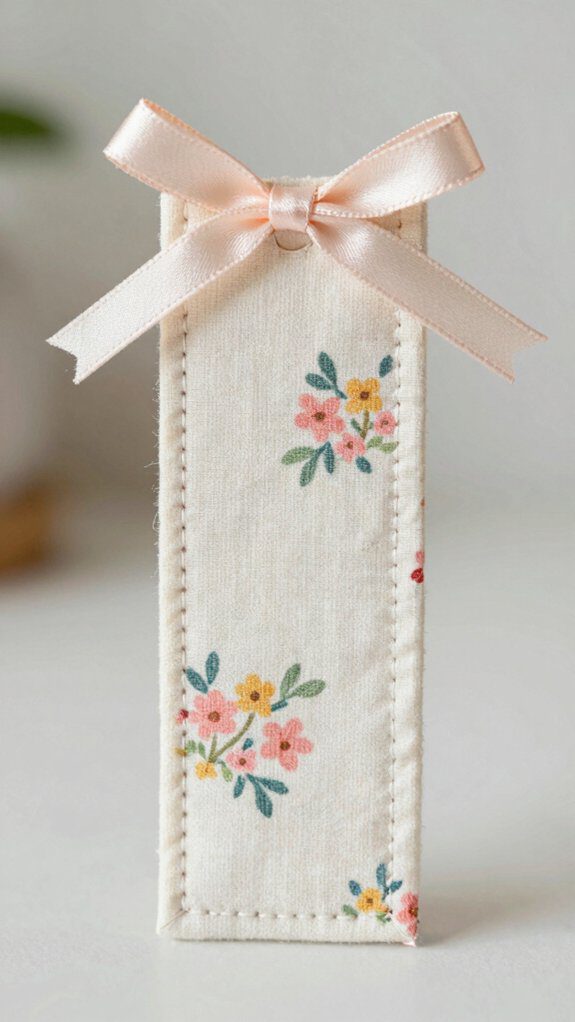
I love how the Ribbon Tie Bookmark gives you an adjustable closure that keeps pages snug whether the book is thick or thin, and you can adjust it by sliding the ribbon or choosing a stretchier elastic. Start with the 2 1/2 x 8 and 2 1/2 x 10 fabric strips and clip the ribbon into the fold before sewing so the tie sits exactly where you want it, then leave the bottom open to feed in the elastic and test the fit. If you want a cleaner look or a bit more hold, try topstitching after turning it right side out and add a little machine embroidery to mark your favorite tension.
Adjustable closure
One simple trick I love is the adjustable ribbon-tie bookmark, which gives you a neat pocket and a tidy ribbon closure that you can lengthen or shorten as needed. I’ll walk you through a friendly method that emphasizes adjustable sizing and easy changes to ribbon length so everyone feels confident crafting one.
- Cut a 2 1/2 x 8 in fabric strip for the body.
- Cut a 2 1/2 x 10 in strip for the pocket.
- Insert a folded ribbon between layers before sewing to hide raw edges.
- Stack right sides together with batting out, leave an opening to turn.
- Turn, press, then top-stitch all around to secure the ribbon and finish.
You can lengthen or shorten the ribbon later to match any notebook height.
Pocket Style Bookmark
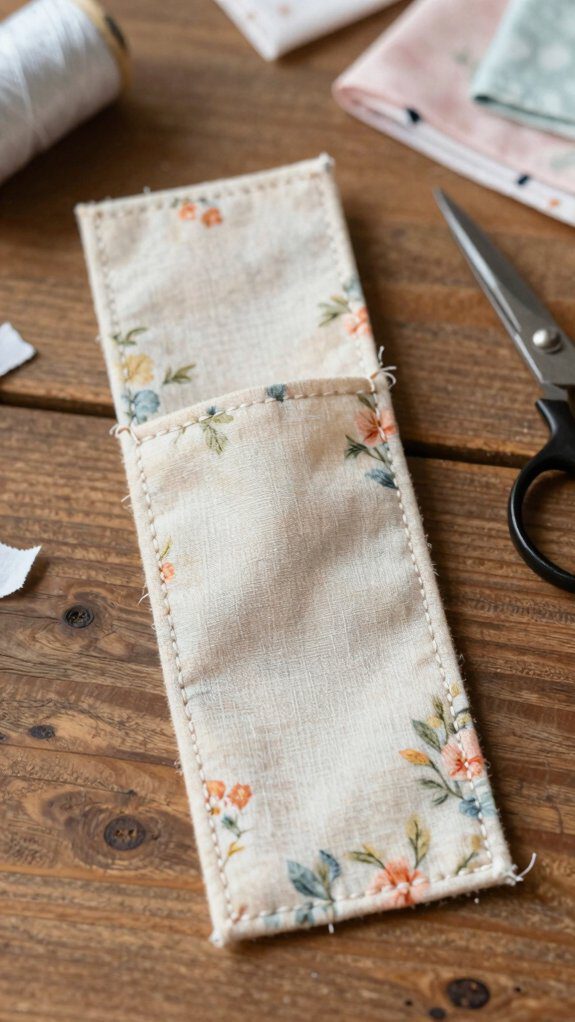
I love the pocket style bookmark because it not only marks your page but also holds small notes, receipts, or a grocery list right inside the book. Start by folding and topstitching the 2 1/2 x 10-inch pocket piece, then stack the two 2 1/2 x 8-inch strips with the elastic tucked in so you can leave the bottom open to feed the elastic through later. After you sew and turn it right side out, press it flat and add an optional bottom or middle topstitch to keep notes secure and even create a tiny pen or pencil slot.
Holds small notes
Because pockets make things instantly more useful, I love adding a little fabric pocket to a bookmark so it can hold tiny notes, receipts, or reminders. I use two fabric strips, one a bit longer to form the pocket, fold that strip in half, and topstitch the edges for secure note storage and reliable pocket functionality. It’s reassuring to know my thoughts stay put.
- Fold pocket strip in half before attaching
- Topstitch edges to prevent slipping
- Use elastic so the bookmark fits snugly
- Personalize with colors or embroidery
- Test with receipts or sticky notes
I find this design keeps journals tidy and makes sharing notes cozy. Try different fabrics; they create a small, practical companion you’ll want to use every day.
Lace Trimmed Design
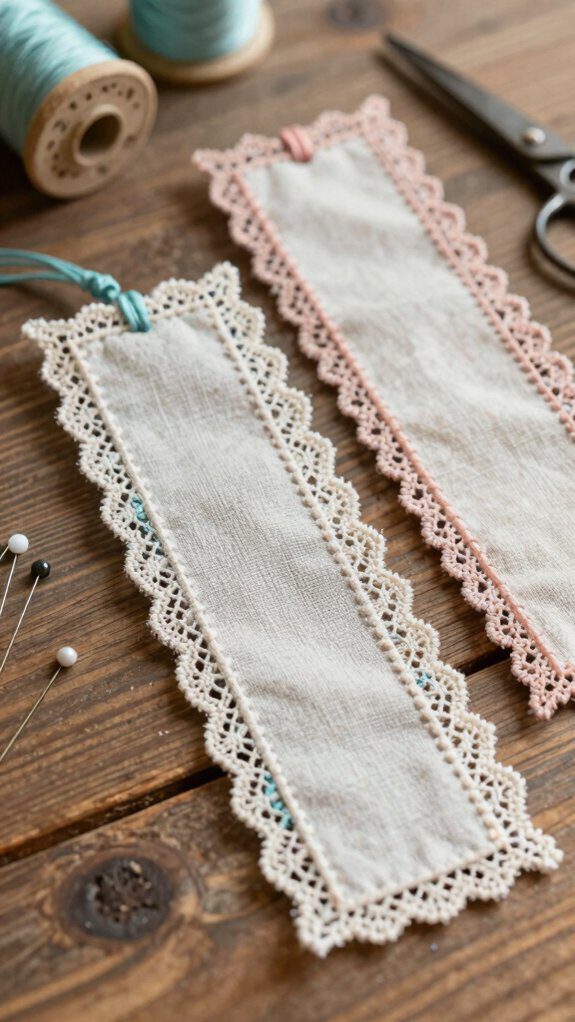
I love using lace trim to give a fabric bookmark a vintage inspired finish, and it’s an easy way to add old-world charm without much fuss. Start with a 3” x 5½” rectangle and pin the lace along the edge before machine-stitching it neatly in place, then sandwich with a backing, turn, press, and topstitch for a polished look. That simple seam and the delicate lace instantly feel more antique than modern, so try cream or tea-dyed lace against florals for a classic contrast.
Vintage inspired finish
When I want a bookmark that feels like it came from an old-fashioned stationery shop, I reach for soft cottons or faded florals that play nicely with delicate lace; these fabrics give a vintage look much more quickly than bold, modern prints. I use vintage fabric selection tips and straightforward lace sewing techniques to get that timeless feel. Start by cutting a 3″ x 5½” piece and trimming lace slightly longer than the edge. Sew lace to one edge before assembling, right sides together, and leave a turning gap. After turning, topstitch around the bookmark to secure the lace and give a crisp finish. Here are quick reminders:
- Choose faded florals or soft cottons
- Cut to 3″ x 5½”
- Attach lace first
- Sew with seam allowance
- Topstitch neatly
Button Accent Bookmark
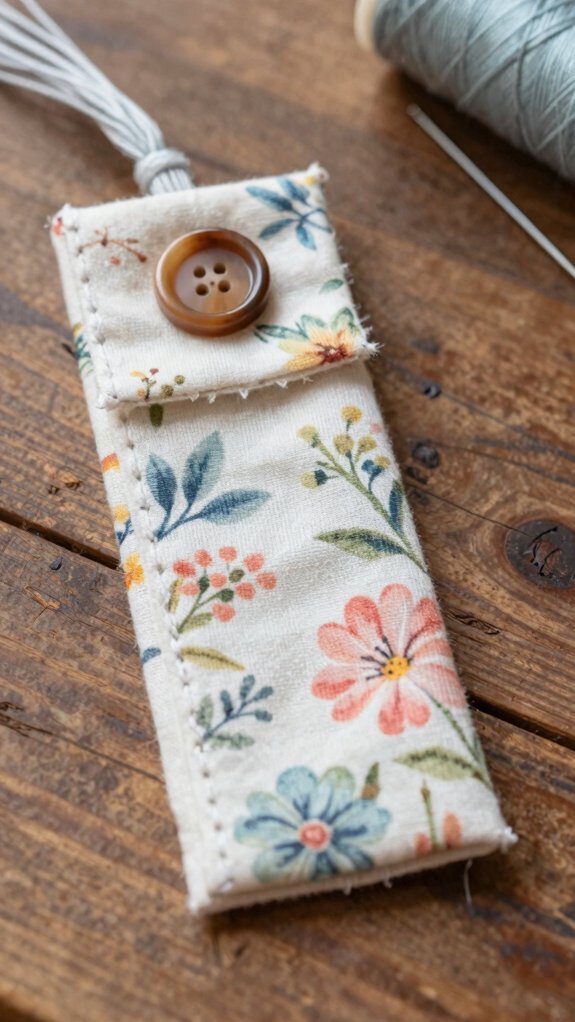
I love adding a button as a decorative closure detail because it both looks charming and keeps the bookmark snug in your book. I usually pick a button that contrasts the fabric and sew it at the top or center so it won’t get in the way, and you can even combine it with a ribbon loop or a bit of embroidery for extra flair. If you want a bolder look, choose a unique shape or bright color; for a subtle style, match tones and use a small, understated button.
Decorative closure detail
Although a tiny detail, a button can turn a plain fabric strip into a charming, useful bookmark, and I’ll show you how to do it so it looks neat and stays secure. I use a 2 1/2″ x 8″ fabric strip and pick a button that fits the loop comfortably; button color choices help set the mood—contrast for pop, coordinating for subtlety. Sew the button firmly onto one end so the loop from the opposite end slips over it easily. I like contrasting or matching thread and simple sewing techniques that strengthen the attachment without bulk.
- Choose a button size that fits your loop
- Match or contrast thread for interest
- Position button for easy closure
- Reinforce with extra stitches
- Gift-wrap for friends and family
Reversible Fabric Bookmark
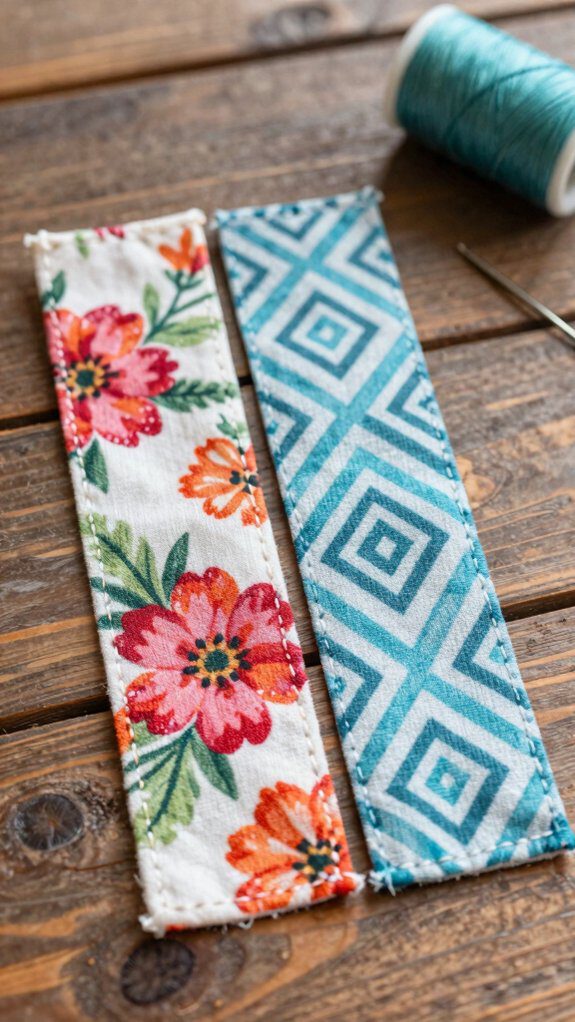
I love making reversible fabric bookmarks because you get two looks in one—pick a bold print for one side and a subtle stripe for the other so you can switch styles with your mood. Cut two 2½” x 8″ rectangles, add thin batting between them, sew right sides together leaving a gap, then turn, press, and top-stitch for a neat finish that really shows off both patterns. This quick, customizable project makes a thoughtful gift or a personal treat, and it’s great for testing fabric combinations without committing to a full project.
Double-sided pattern
When you want a bookmark that can switch up your look as easily as you flip a page, I love making a reversible fabric bookmark—it’s simple, sturdy, and fun to personalize. I use double sided fabrics and reversible designs to make each piece feel like two gifts in one. Start by cutting two rectangles (about 2″ x 6.5″), place them right sides together, and fuse interfacing to the wrong side of one piece for structure.
- Cut two matching rectangles.
- Fuse interfacing to one wrong side.
- Sew with a 1/4″ seam, leaving a gap.
- Turn right side out, press flat.
- Topstitch and add ribbon or appliqué.
These steps build confidence, let you share styles, and create bookmarks that belong on anyone’s shelf.