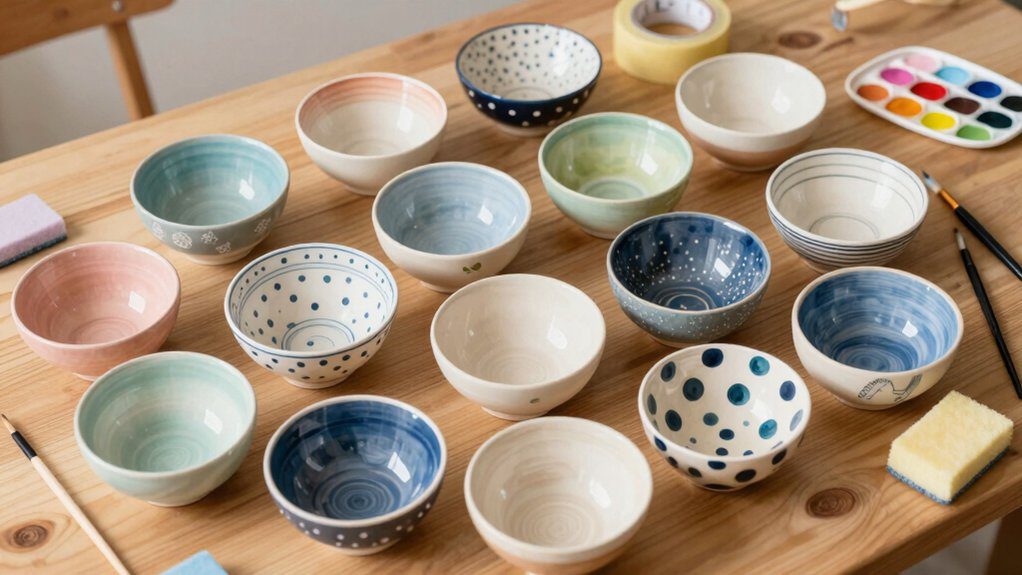
15 Easy Bowl Pottery Painting Ideas for Beginners
You’ve got this! I’d start with simple polka dots using a dotting tool—they’re foolproof. Try half-dipped designs by taping your bowl halfway and painting one bold color for instant impact. Rim details using a fine-tip pen add polish without stress. Want something softer? Pastel ombre fades beautifully when you blend wet paint gently. Single flowers, personalized initials, color blocking, and starry nights all work great too. Even a smiley face counts! Each technique builds your confidence, and there’s so much more waiting as you delve deeper.
Love cozy DIY projects? 💕
Get free printable guides, exclusive tutorials & surprise craft goodies straight to your inbox.
Disclosure: This post may contain Amazon affiliate links, at no extra cost to you. Content on DiyCraftNest is created with research support from AI tools and carefully reviewed, edited, and fact-checked by the lead author, Daniel Pat, to ensure accuracy and reliability. Learn more
Key Takeaways
- Start with polka dots using a dotting tool or paintbrush handle for uniform 2–6 mm dots spaced 1–1.5 cm apart.
- Paint a minimal smiley face using two dots and a curved smile with a paint pen in just two thin coats.
- Create a half-dipped two-tone bowl by taping at the midpoint and painting one half for a sleek modern look.
- Add a simple rim detail by painting one continuous 2–5 mm line near the edge using a fine-tip paint pen.
- Use toothbrush splatter technique with diluted acrylic paint for quick speckled effects; test consistency on scrap paper first.
Simple Polka Dot Pattern
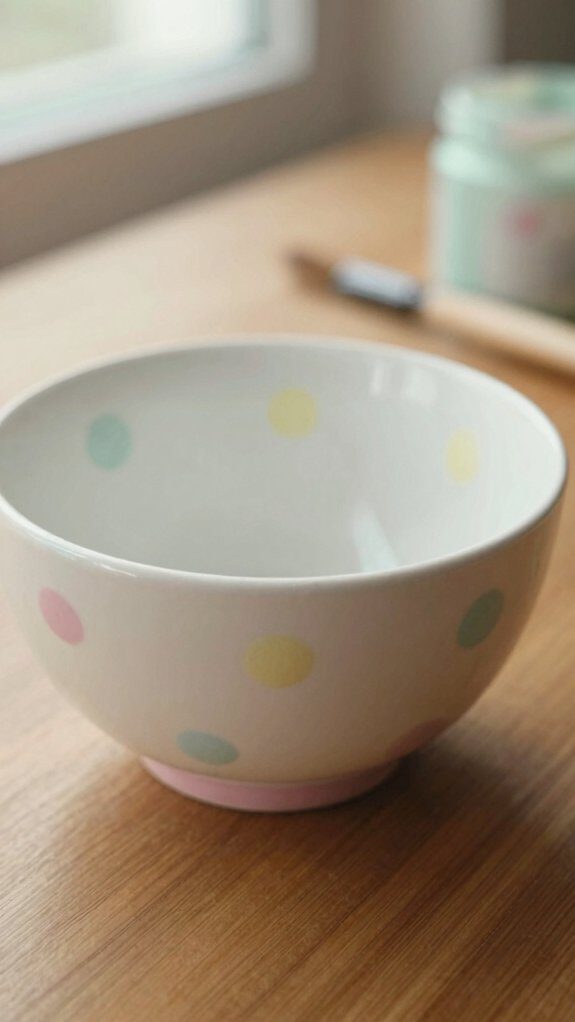
The polka dot design is hands-down one of the easiest patterns you can paint on a bowl, and it’s surprisingly satisfying to create.
I’d recommend planning your dot spacing at 1–1.5 cm apart for smaller bowls, which keeps everything balanced without looking crowded.
For contrast combos, try white dots on navy or black on pastels—these combinations really pop!
I use a dotting tool or paintbrush handle (2–6 mm for small dots) to keep them uniform.
Let each color dry completely before adding another layer.
You’ll love how professional your finished bowl looks with minimal effort.
Half-Dipped Color Design
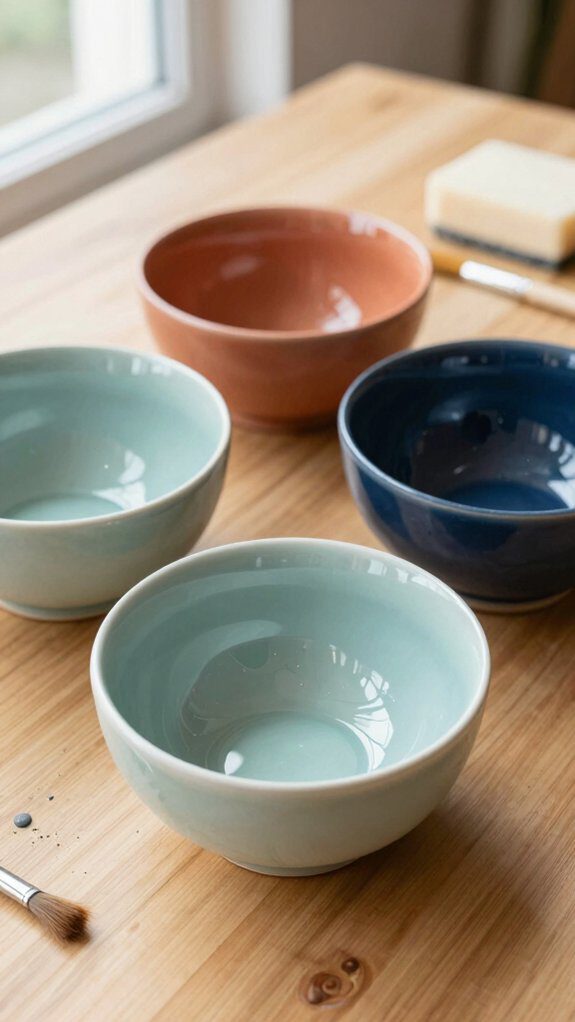
I love the half-dipped design because it gives you that sleek, modern two-tone look without requiring elaborate techniques or steady hands.
You’ll tape off the bowl at the halfway point with painter’s tape, then paint one color on top and either leave the bottom natural or add a contrasting color for maximum impact.
The result? A clean, gallery-worthy finish that looks way more impressive than the effort you put in.
Clean two-tone look
When you’re ready to level up your bowl painting skills, a half-dipped design offers that satisfying, gallery-worthy look without requiring advanced techniques. I love how angled masking tape creates crisp boundaries for a professional finish.
You’ll tape the rim at the halfway point, then dip your bowl’s bottom half into paint using steady, horizontal strokes. The matte contrast between painted and unpainted surfaces looks incredibly polished.
Remove your tape while paint’s still tacky—this prevents peeling and reveals sharp edges. Once dry, seal everything with food-safe spray sealer.
You’ve just created something genuinely impressive that belongs in any pottery lover’s collection.
Minimal Line Rim Detail
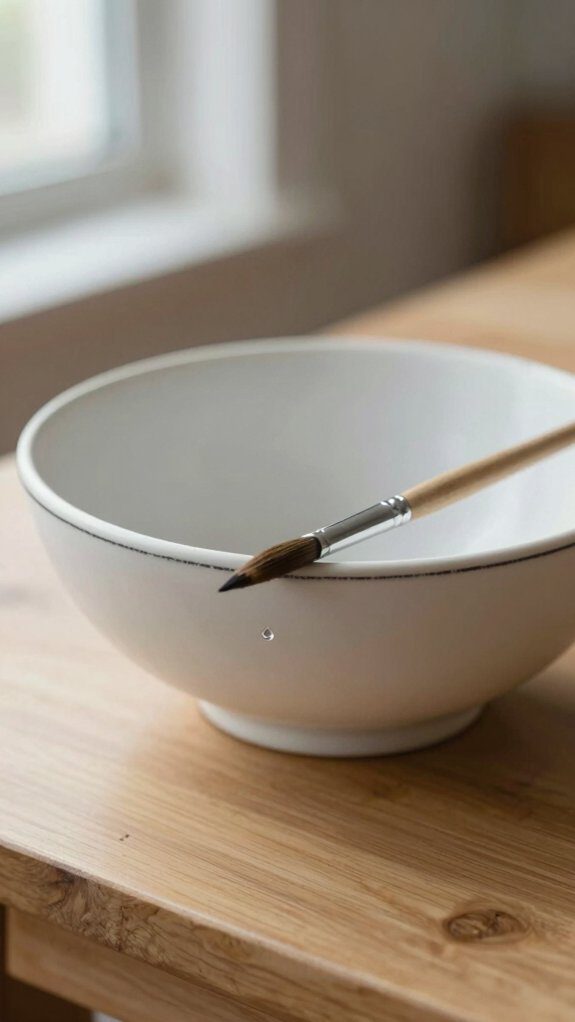
If you’re looking for a simple yet sophisticated way to finish your painted bowl, a minimal line rim detail is exactly what you need.
I love how a subtle metallic edge transforms an ordinary bowl into something special. Use a fine-tip paint pen or small brush to paint one continuous line 2–5 mm from the rim. Turn your bowl slowly on a lazy Susan to keep the distance uniform.
Choose contrasting colors like matte black, navy, or metallic gold, applying two thin coats rather than one heavy coat. This textured relief rim technique gives your bowl that polished, gallery-worthy finish you’re after.
Pastel Ombre Fade
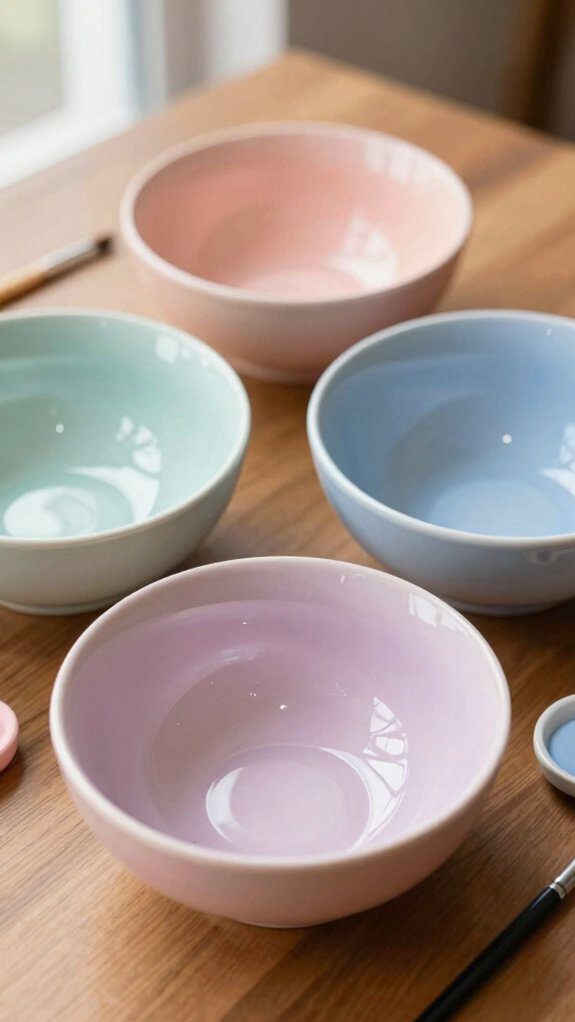
I’ll share a transformative trick that transforms your ombre from blotchy to beautifully smooth: soft blending is where the magic happens, and honestly, it’s easier than you’d think.
The key is catching those color overlaps while they’re still wet, then using a clean, dry brush or soft makeup sponge to gently feather the edges together in short strokes until the colors melt into one another effortlessly.
Once you master this blending technique, you’ll be amazed at how professional your pastel ombre looks—it’s the difference between a pretty bowl and a wow-worthy piece.
Soft blending technique
Creating a dreamy pastel ombre fade on your bowl is easier than you’d think, and it’s one of the most satisfying techniques you can master as a beginner.
While your paint bands are still wet, grab a clean, damp flat brush and blend adjacent colors with gentle back-and-forth strokes for 10–20 seconds until edges soften beautifully. Proper brush care—rinsing between strokes—prevents color mudding.
For flawless results, respect layer timing by letting each blended section dry 5–10 minutes before applying diluted glazes. This patience creates that coveted translucent, ethereal finish that’ll make your bowl look professionally crafted and uniquely yours.
Single Flower Motif
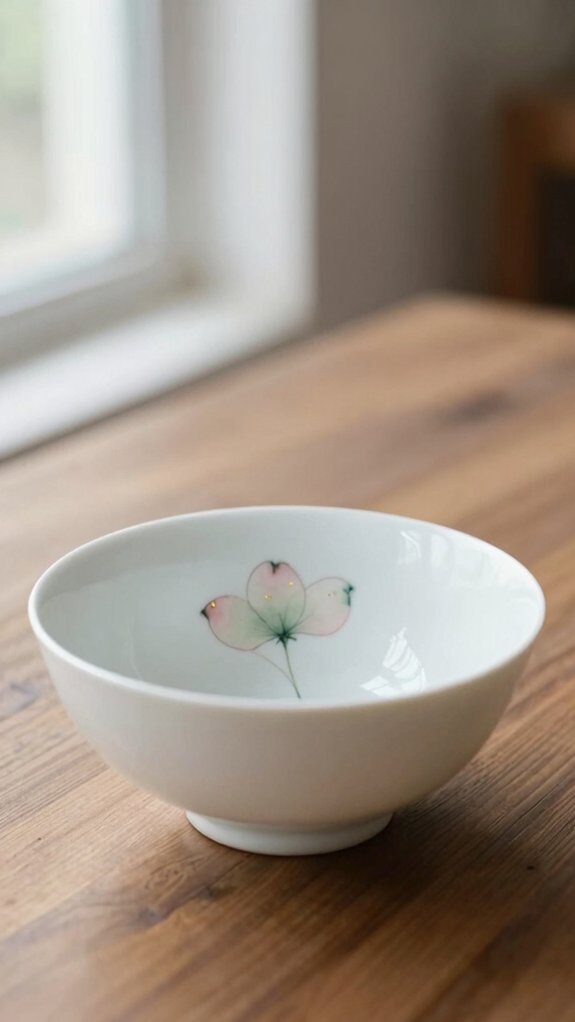
What’s one of the easiest ways to create a stunning bowl design that’ll impress everyone? A single flower motif!
I sketch my bloom lightly at the bowl’s center, using a centered radial composition that naturally draws the eye. With just 2–3 contrasting colors—think cadmium yellow and alizarin crimson—I paint petals using 3–5 round brush strokes, then add stems with a liner brush.
The floral negative space around my flower keeps things balanced and uncluttered. I finish by layering subtle shadows and white highlights with a dry brush, giving dimension without overcomplicating things. Finally, I seal everything with food-safe sealer for lasting beauty.
Scattered Tiny Hearts
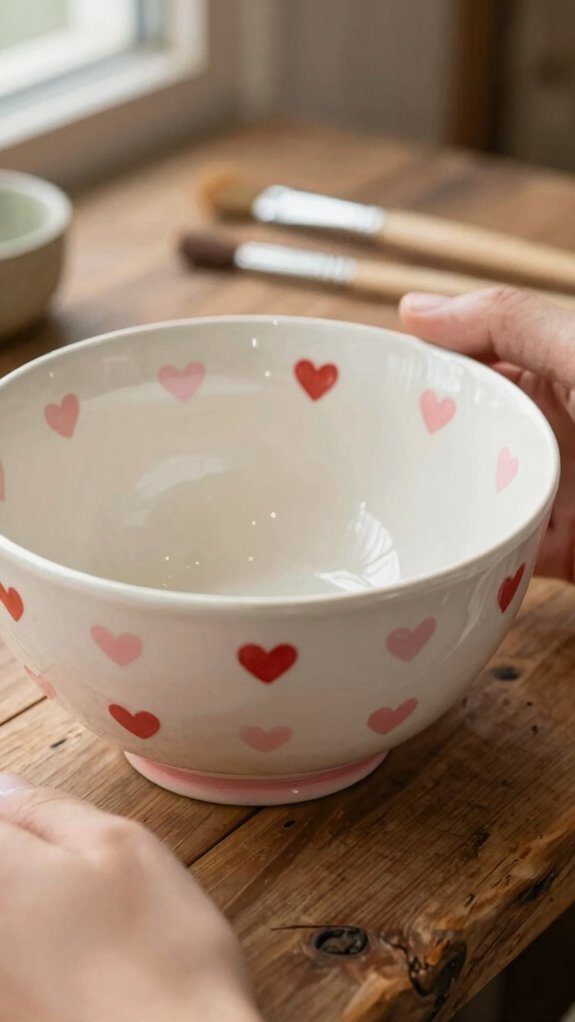
Once you’ve mastered the focused elegance of a single flower, you’re ready to try something that feels playful and free—scattered tiny hearts across your bowl’s surface.
I love how this design welcomes you into a community of artists who embrace imperfection. Here’s what you’ll need:
- A small round paintbrush or 1–2 mm paint pen for consistent shapes
- Two to three contrasting colors like blush pink, coral, and gold
- Light pencil dots marking 15–25 placements to keep your scattered pattern balanced
Space your tiny hearts 8–12 mm apart, paint each as two touching teardrops, then seal with food-safe enamel after 24–72 hours. You’ve got this!
Basic Stripe Pattern
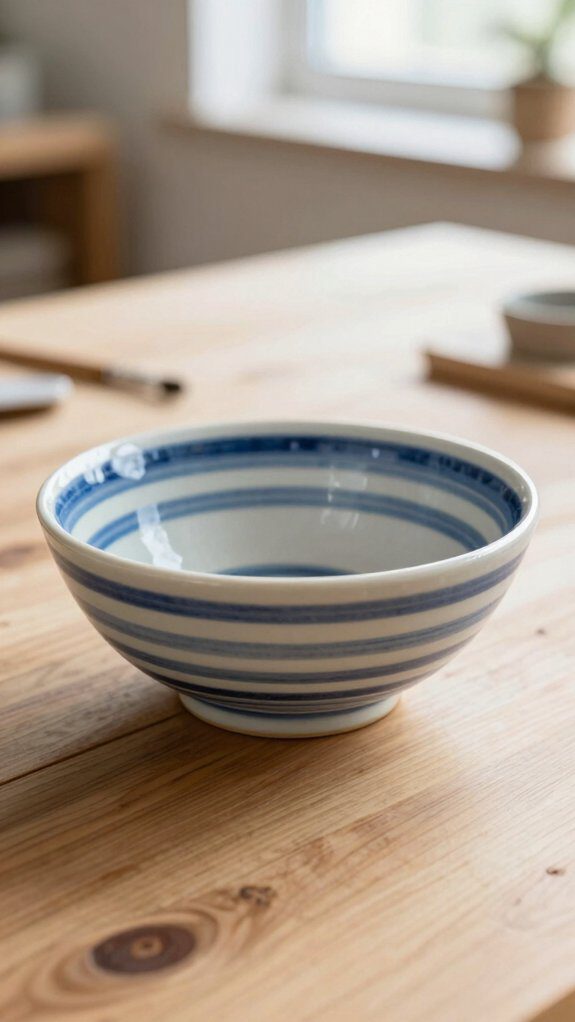
I’ve found that the secret to crisp, professional-looking stripes is nailing your spacing from the start—grab a ruler and some painter’s masking tape, then measure out equal intervals (like 1/2″ tape alternating with 1/4″ gaps) before you paint a single stroke.
This method takes just a few extra minutes upfront but saves you from wonky lines and the frustration of repainting, and you’ll end up with a polished look that honestly rivals pieces you’d see in a shop.
Once you’ve got your tape positioned evenly around your bowl, you’re ready to move forward with the actual painting, knowing your foundation is rock-solid.
Even spacing method
Because stripes look so much better when they’re evenly distributed around your bowl, I’m going to walk you through a simple measurement technique that takes the guesswork right out of the equation.
Here’s what I do:
- Wrap paper around your bowl and mark where it meets
- Divide that total by your desired stripe count for perfect width
- Use measured masking tape or a pencil to mark concentric guidelines
I apply tape firmly, leaving equal exposed bands. This method works beautifully inside too—just use a compass for those concentric guidelines.
You’ll love how professional your stripes look when they’re perfectly spaced. Trust me, this little trick transforms everything!
Monochrome Matte Finish
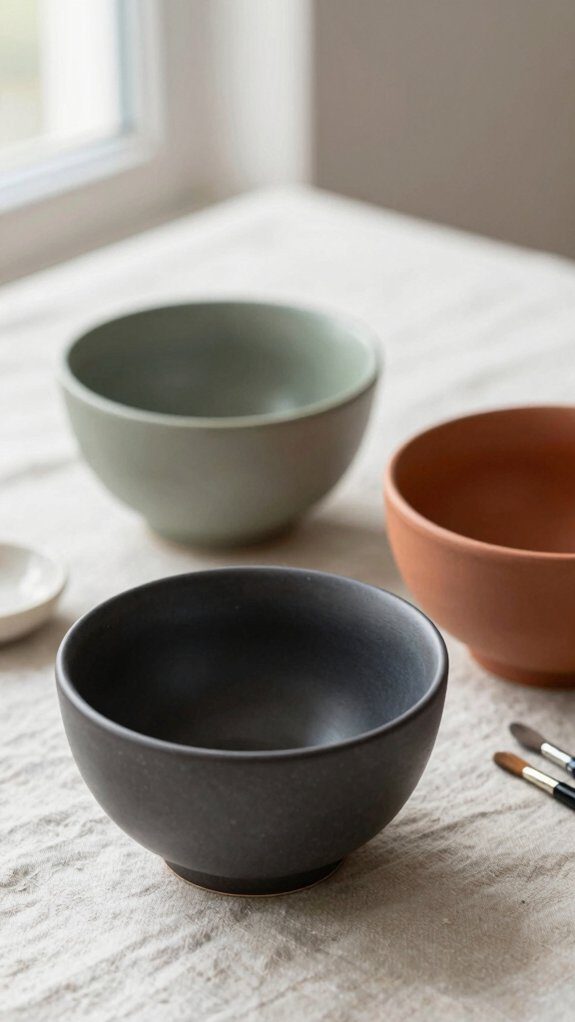
If you’re drawn to sleek, understated elegance, a monochrome matte finish might be your ideal starting point for bowl painting. I recommend selecting one ceramic acrylic and applying two thin coats for even coverage.
After lightly sanding your bisque bowl and priming with gesso, you’ll create depth through tone layering—using lighter and darker shades of your single color. The matte texture hides imperfections beautifully while giving your piece a sophisticated feel.
Once your paint cures fully, seal everything with matte polyurethane in two thin coats. This minimalist approach lets you focus on technique without color complexity, building confidence for future projects.
Speckled Paint Effect
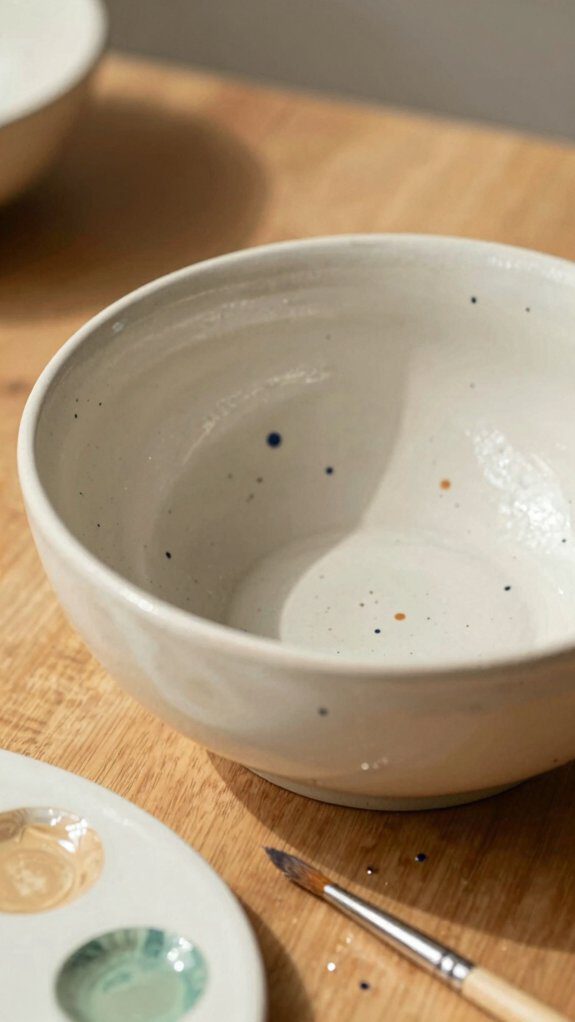
I’ve found that the toothbrush splatter trick is the easiest way to create a speckled effect on your ceramic bowl, and it’s honestly pretty fun once you get the hang of it.
All you need is a stiff-bristled toothbrush, some thinned acrylic paint (about 10–20% water mixed in), and a little practice flicking your thumb across the bristles to release fine droplets.
The key’s finding the right paint consistency so the specks spray smoothly without dripping, which is why testing on scrap paper first really does make a difference.
Toothbrush splatter trick
Transform your bowl with a fun and surprisingly easy technique: the toothbrush splatter trick creates a beautiful speckled effect that looks more impressive than it actually is.
Here’s what makes this toothbrush technique so satisfying:
- Simple setup – you’ll only need diluted acrylic paint and an old toothbrush
- Splatter control – holding your brush 8–12 inches away gives you fine, even speckles
- Quick results – you’ll see immediate, gorgeous effects
Dip your bristles lightly, then tap the handle with your thumb to flick droplets onto your bowl.
Practice on scrap ceramic first to master your paint consistency and flicking force, then seal everything with clear spray sealer once dry.
Rainbow Rim Accent
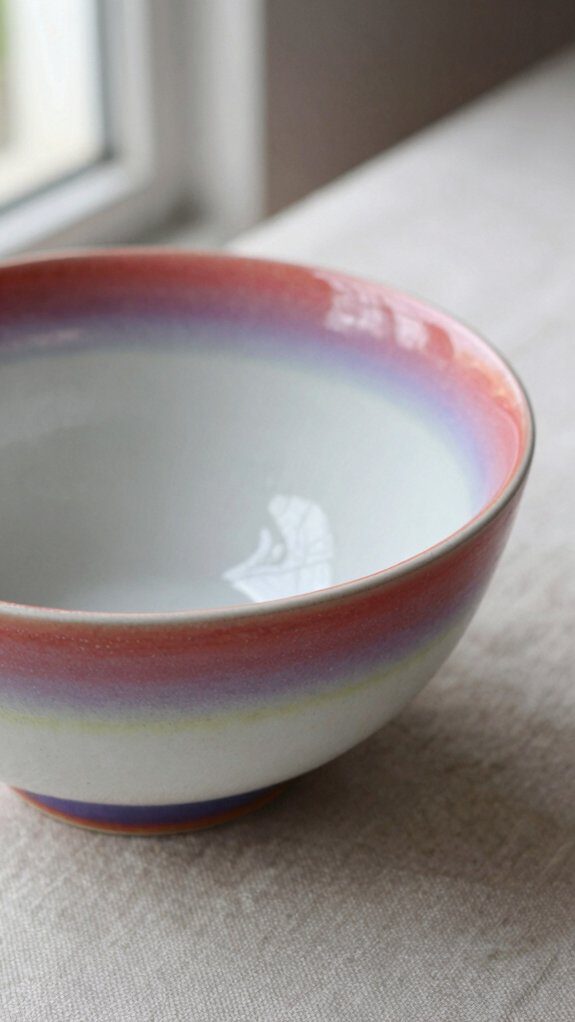
One of my favorite beginner-friendly techniques is painting a rainbow gradient right around the bowl’s edge—it’s visually striking without being overly complicated.
I start by masking the rim with low-tack painter’s tape, lightly sanding the edges to prevent seepage on curved surfaces. Using five to seven rainbow colors, I apply thin layers with a small flat brush, blending adjacent hues while wet for smooth shifts. Each layer dries ten to fifteen minutes before the next application. This gradient glazing method creates professional-looking edge texturing that transforms an ordinary bowl into something truly special and uniquely yours.
Leaf Stamp Design
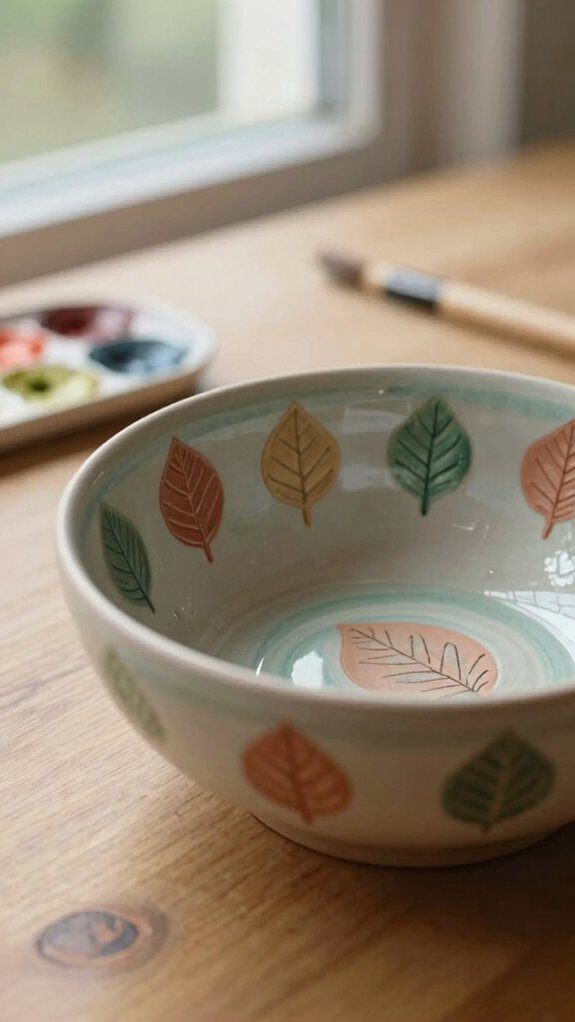
I’ve found that stamping is hands-down the easiest way to create beautiful leaf designs without needing any artistic skill.
You can grab a silicone leaf stamp (1–2 inches wide) or quickly carve one from a foam sheet, then use a thin foam brush to apply acrylic paint and press it onto your bowl for consistent, crisp impressions.
It’s satisfying to watch the pattern come together, and you’ll get even better results if you reapply paint every 3–4 stamps to keep the impressions looking fresh and vibrant.
Easy stencil method
Getting your hands on a leaf stencil opens up a world of natural, organic designs that look far more complicated than they actually are. I’ll walk you through my favorite approach:
- Cut a leaf from 200–300 gsm cardstock, keeping it 1.5–3 inches for perfect bowl fit
- Use low-tack painter’s tape for curved adhesion on bisque or matte glazed surfaces
- Apply acrylic paint with a makeup sponge using light dabbing motions for crisp edges
I love varying green shades and offsetting multiple leaves through stencil layering, creating beautiful overlap. After 30–60 minutes of air-drying, seal with food-safe enamel for everyday bowls. You’ve got this!
Name or Initial Inside
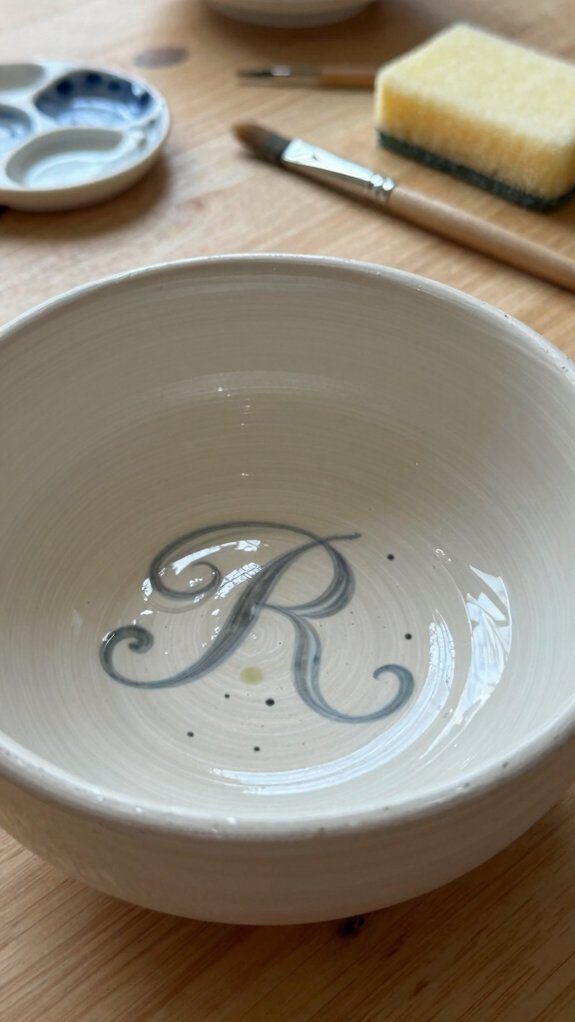
Since personalization makes a bowl truly special, painting a name or initial inside is a fantastic way to create a custom piece that’s uniquely yours. I recommend lightly sketching your design first using a pencil, then choosing between script style lettering for elegance or bold block letters for clarity. Monogram placement matters—center your design for balance. Use contrasting colors like navy on white for visibility, and test on scrap ceramic first. For food-use bowls, position lettering at least one inch from the rim to prevent utensil damage. Seal everything properly, and you’ll have a personalized treasure.
| Technique | Best For | Tips |
|---|---|---|
| Pencil sketch | Planning layout | Light, erasable lines |
| Script style | Elegant monograms | Practice beforehand |
| Block letters | Clear readability | Use stencils for precision |
| Contrasting colors | Maximum visibility | Test before committing |
Color Block Base Design
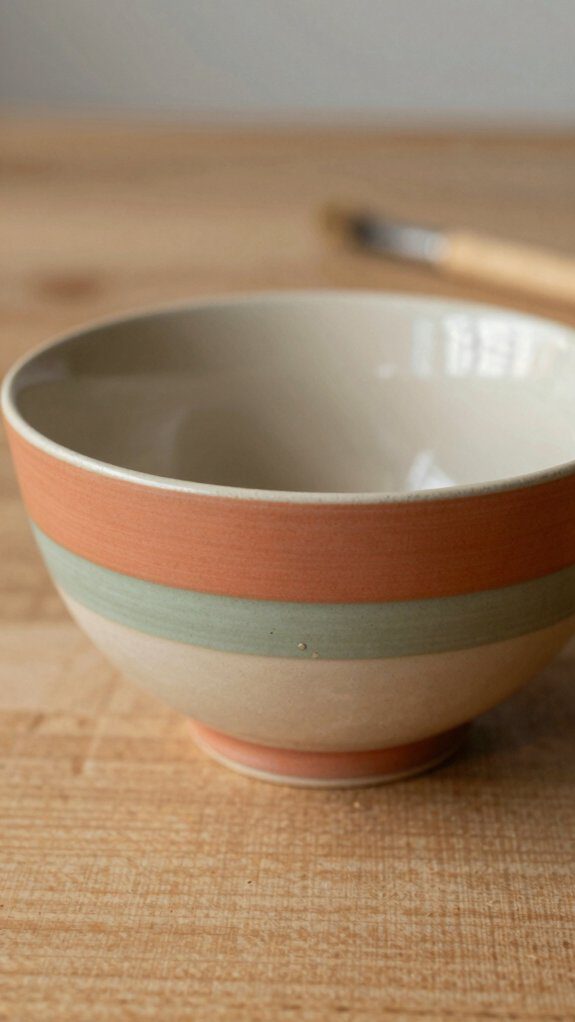
I love color blocking because it’s one of the easiest ways to make your bowl look professionally designed—you don’t need elaborate brushwork or artistic skills, just bold, simple shapes and a steady hand with tape.
The beauty of this technique is that you’re working with large geometric sections, so even if your lines aren’t perfectly straight, the impact comes from the color contrast itself, not precision.
I’ll walk you through exactly how to plan your colors and create crisp edges that’ll make you feel like a pro.
Bold simple shapes
Color blocking is one of the easiest and most satisfying ways to transform a plain bowl into something striking—and I love it because you don’t need any elaborate painting skills to pull it off.
Here’s what makes this technique so rewarding:
- Geometric cutouts create clean, modern edges using painter’s tape
- Negative space balances bold colors and prevents overwhelming designs
- Simple shapes like circles and stripes deliver maximum impact
I divide my bowl into thirds or use a central circle with side blocks.
A compass helps trace perfect curves before taping.
I apply two thin acrylic coats, waiting 15–30 minutes between applications.
The result? A gallery-worthy piece that looks professionally designed, even though you’re totally in control.
Starry Night Dots
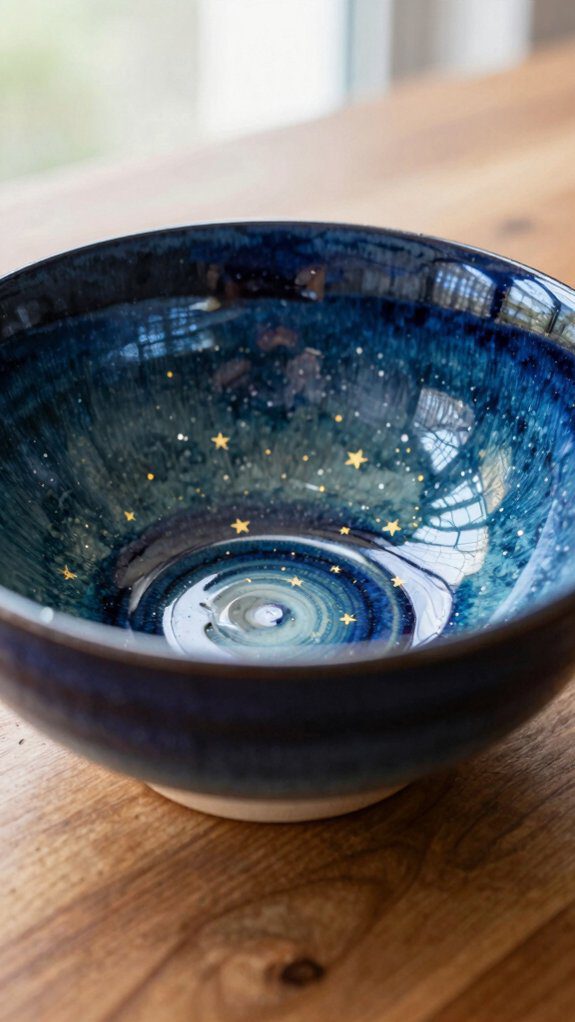
When you’re ready to create something truly magical on your bowl, the Starry Night Dots technique is one of my favorite ways to transform a plain surface into a mesmerizing night sky.
Start with a dark blue or black base coat, then dip a toothpick into white paint to create varying dot sizes.
The glow technique enhances your design—add diluted halos around select stars for twinkling effects.
For a constellations guide, sketch light pencil lines connecting dots into recognizable patterns like Orion.
Finally, seal everything with clear spray sealer. You’re joining a community of artists creating celestial masterpieces!
Minimal Smiley Face Bowl
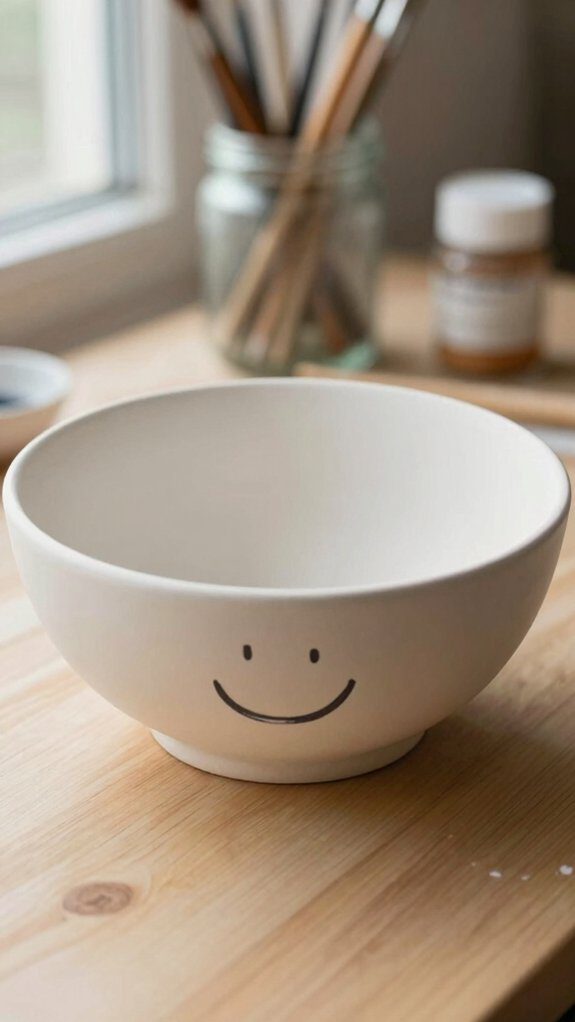
If you’re looking for a design that’s both adorable and achievable for beginners, a minimal smiley face is your perfect starter project. I love this approach because it strips away complexity—you’re just painting two simple dots and a curved smile on a clean background, which means you can nail it with minimal stress.
It’s the kind of project that makes you feel genuinely proud once it’s done, even though you didn’t spend hours perfecting intricate details.
Cute and beginner friendly
The simplest designs often make the best first projects, and a minimal smiley face is proof of that. I love how playful proportions and expressive simplicity create something genuinely charming on a ceramic bowl.
Here’s what makes this perfect for beginners:
- Minimal materials needed—just a pencil, paint pen, and two colors
- Quick execution—sketch lightly, paint two coats, and you’re done
- Forgiving design—slight imperfections actually add character
I sketch two dots about 1.5 inches apart, then add a gentle curved smile centered below. Two thin coats with drying time between each guarantees durability. You’ll feel proud displaying your creation—it’s genuinely adorable and totally achievable.