24 DIY Stone Walkway Installation Tips for Beginners
Disclosure: This post may contain Amazon affiliate links, at no extra cost to you. Content on DiyCraftNest is created with research support from AI tools and carefully reviewed, edited, and fact-checked by the lead author, Daniel Pat, to ensure accuracy and reliability. Learn more
Love cozy DIY projects? 💕
Get free printable guides, exclusive tutorials & surprise craft goodies straight to your inbox.
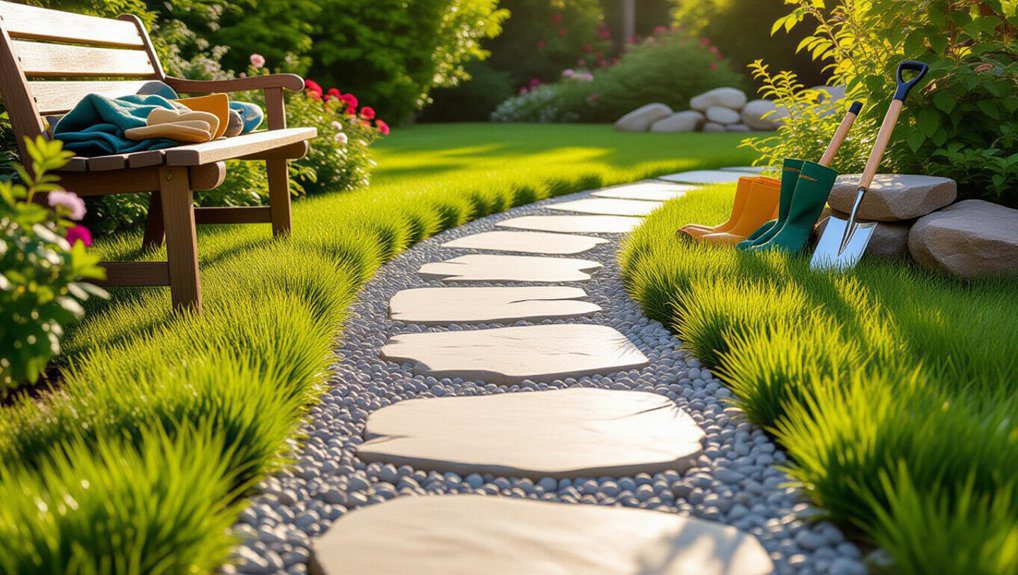
If you want to build a smooth stone walkway, start by planning and marking your path with string or hoses for accuracy. Dig a trench about 5 inches deep and compact the soil firmly to keep stones stable. Lay crushed stone and ground cover fabric for drainage and weed control, then add a level bed of sand to set your stones. Choose thick, textured flagstones spaced comfortably, and finish with edging to keep everything neat. Stick with dry weather for best results, and you’ll create a walkway that’s both durable and lovely. Keep going to find even more handy tips!
Key Takeaways
- Plan your walkway layout using string or garden hoses for clear design visualization before digging.
- Excavate a 5-inch-deep trench with a slight slope and compact the soil base to ensure stability and drainage.
- Lay landscape fabric and add crushed stone and paver sand layers to create a solid, weed-resistant foundation.
- Space flagstones 18-24 inches apart, ensure leveling, and fill gaps with jointing sand or fine gravel for stability.
- Install durable edging and maintain a consistent 1-2% slope to secure stones and promote proper water runoff.
Plan and Mark the Path
Before you dig a single inch, it’s crucial to plan and mark your stone walkway carefully, so the path looks great and feels just right underfoot. Start by choosing the exact location and use string or garden hoses to outline your path design. This visual guide helps you see curves or straight lines distinctly.
For marking techniques, stakes and string define height and positioning, ensuring the walkway is steady and inviting. Don’t forget to check for underground utilities before you begin.
Laying stones on the ground beforehand lets you perfect spacing and design, making the project truly yours.
Dig the Proper Trench Depth
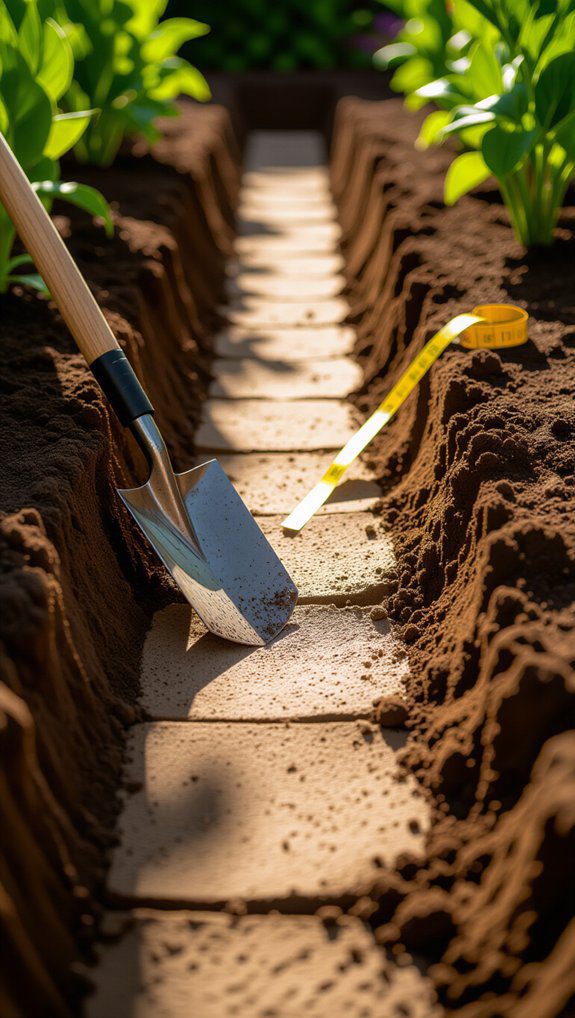
Digging the right trench depth is one of the most important steps to get your stone walkway looking great and lasting long.
I aim for trench dimensions about 5 inches deep, a bit wider than the stones themselves, which makes placing and leveling easier.
Keep the sides straight and the bottom even to create a stable base. Also, drainage considerations matter—a slight angle away from buildings helps prevent water pooling.
Here’s what I focus on:
- Trench depth: roughly 5 inches
- Width: slightly wider than stone size
- Slope trench gently for water runoff
These steps set you up for success!
Compact the Soil Base
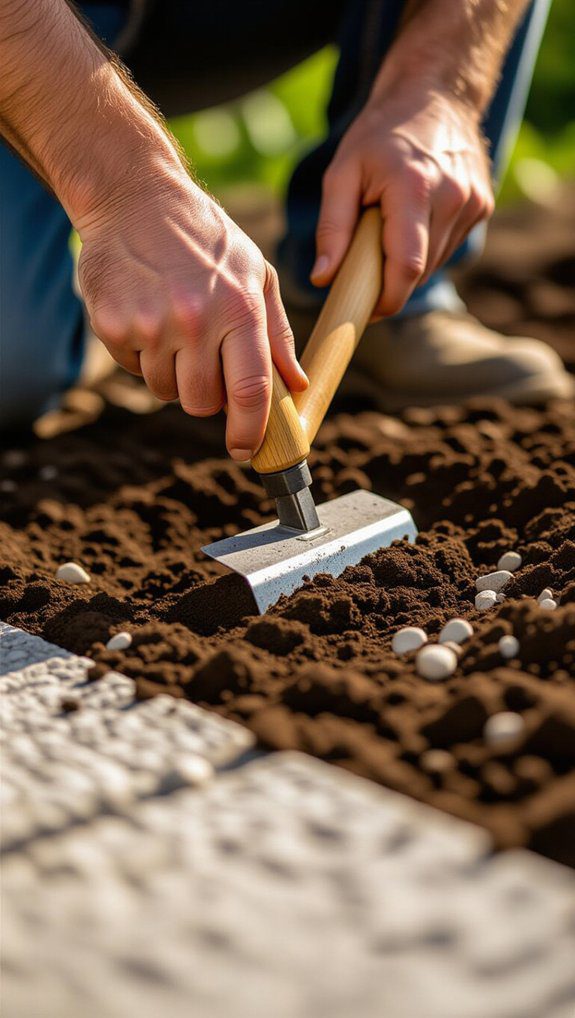
One of the most important steps I never skip is compacting the soil base, because a firm foundation means your stones won’t shift or sink over time.
Before compacting, I lightly moisten the soil—this soil moisture helps it bind better during compaction. I use a hand tamper for small areas or a mechanical plate compactor for larger spaces, pressing firmly down about 5 inches deep.
Good compaction techniques not only stabilize the walkway but also improve drainage, preventing water from pooling under the stones. I always check for uneven spots early on to keep everything steady and strong.
Add Crushed Stone Layer
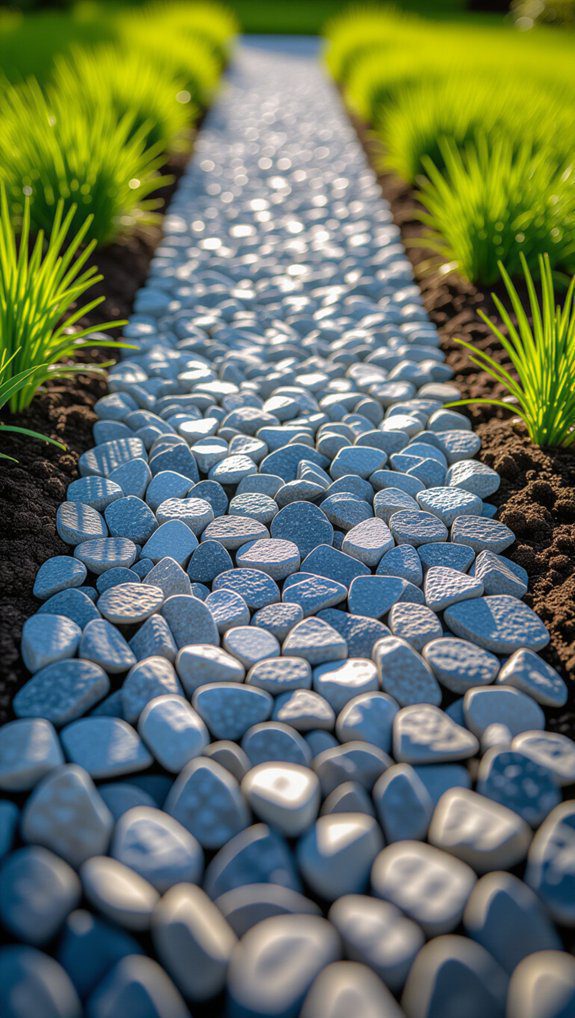
Since a solid base is key to a lasting walkway, I always add a 2.5-inch layer of crushed stone after compacting the soil. Choosing the right crushed stone types, like granite or limestone, guarantees good drainage and durability.
I follow these compaction techniques to get it right:
- Level the stone evenly and slightly slope it away from structures.
- Lightly dampen the stone before compacting to reduce dust.
- Use a tamper to compact the layer thoroughly, preventing movement.
This layer creates a stable foundation and protects your walkway from water damage. Trust me, it’s worth the effort!
Install Landscape Fabric
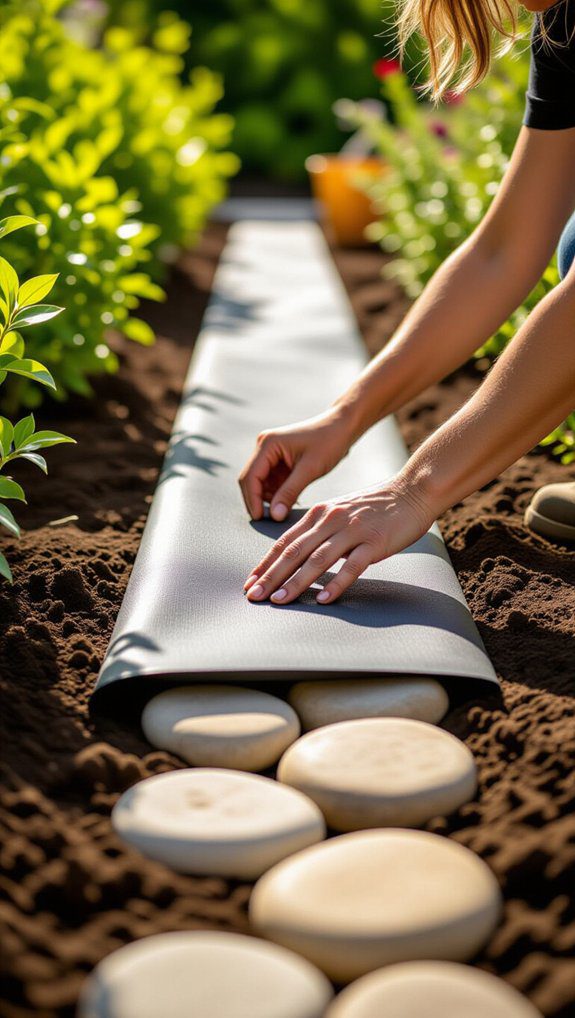
After laying down that sturdy crushed stone layer, it’s time to add terrain fabric, which acts like a shield for your walkway. Scenery fabric benefits include moisture retention and weed prevention, keeping your path neat and lasting longer. I cut the fabric to fit, overlapping edges by 12 inches, then secure it with staples to stop moving. Here’s a quick guide to fabric installation techniques that helped me:
| Step | Why It Matters |
|---|---|
| Cut to size | Full coverage |
| Overlap seams | Blocks weeds better |
| Secure tightly | Prevents slipping |
This creates a strong barrier we all want!
Level with Sand Base
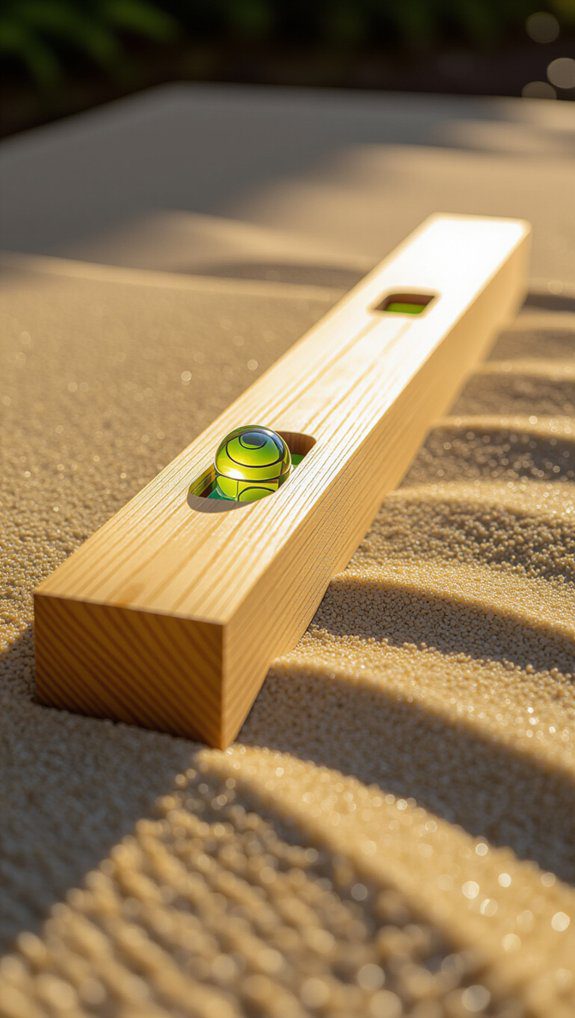
A smooth, well-leveled sand base is key to making your stone walkway last and look great.
I start by spreading 1.5 to 2 inches of paver sand, then carefully apply sand leveling techniques to guarantee it’s even. Adding a slight slope helps with drainage improvement methods, preventing water pooling.
To keep things stable, I use a tamper to compact the sand firmly. Here’s what I focus on:
- Use paver sand or stone dust for good drainage and support
- Create a slight slope for water runoff
- Compact thoroughly to avoid future settling
This foundation sets you up for success!
Lay the Stepping Stones
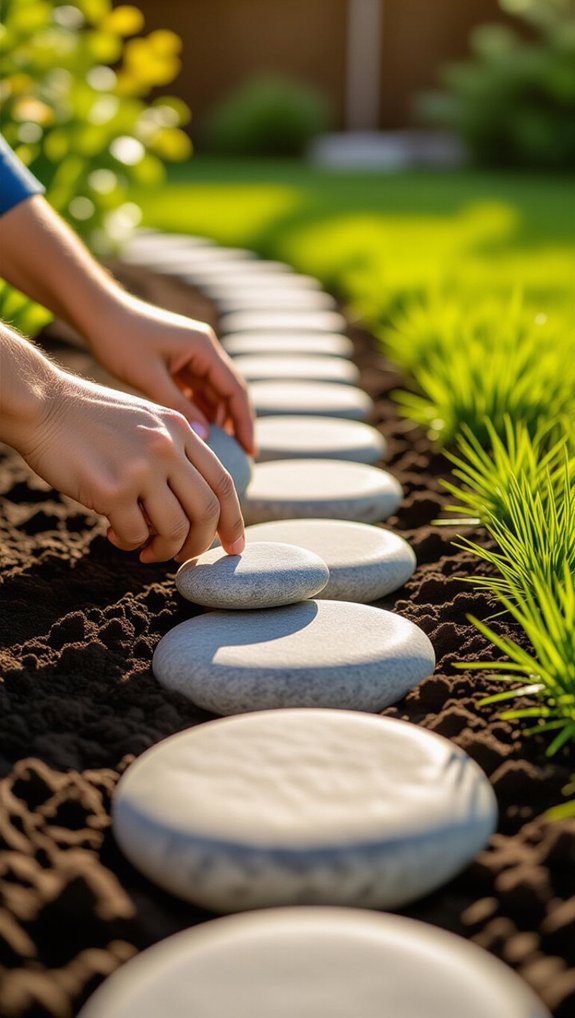
Laying the stepping stones is where your walkway really starts to take shape, and it’s one of the most rewarding parts of the process.
I begin by placing each stone carefully into the bed, paying close attention to stone arrangement for a neat, inviting path. I wiggle each stone gently and tap it down with a rubber mallet to guarantee proper stone leveling, so it sits flush and safe.
Stepping back often helps me see the overall flow, and I fill gaps with sand or gravel to keep everything stable and weed-free. You’ll love watching your pathway come alive!
Check Levels Carefully
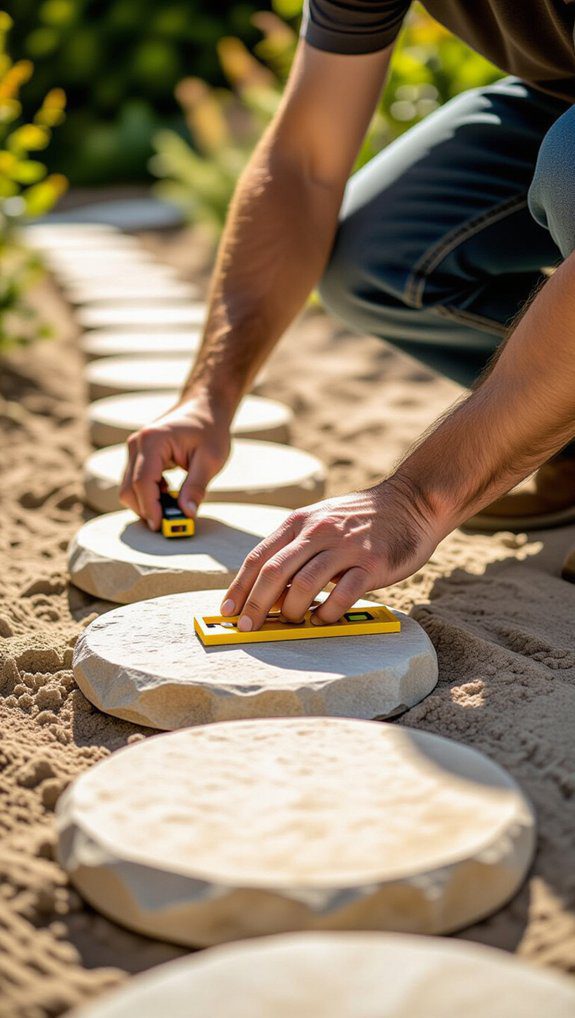
Since the stones form the heart of your walkway, checking their levels carefully is a step you don’t want to rush. I always use a level tool after placing each stone, tapping gently with a rubber mallet to make quick level adjustments.
This not only keeps the walkway safe by minimizing trip hazards but also guarantees proper drainage. Remember, safety measures matter as much as aesthetics!
Here’s what I focus on:
- Frequent level checks during installation
- Visual assessments from a distance
- Adjusting stones before the base sets
Taking your time here really pays off for a smooth, safe path we all enjoy.
Space Stones Evenly

Even though it might seem like a small detail, spacing your stones evenly makes a huge difference in both how your walkway looks and how comfortable it feels to walk on.
I’ve learned that keeping stones about 18 to 24 inches apart fits most walking strides and lets two people stroll side by side easily. Using simple spacing techniques like a measuring tape or string line helps me maintain consistent gaps, which ties the stone patterns together beautifully.
Fill Gaps with Gravel
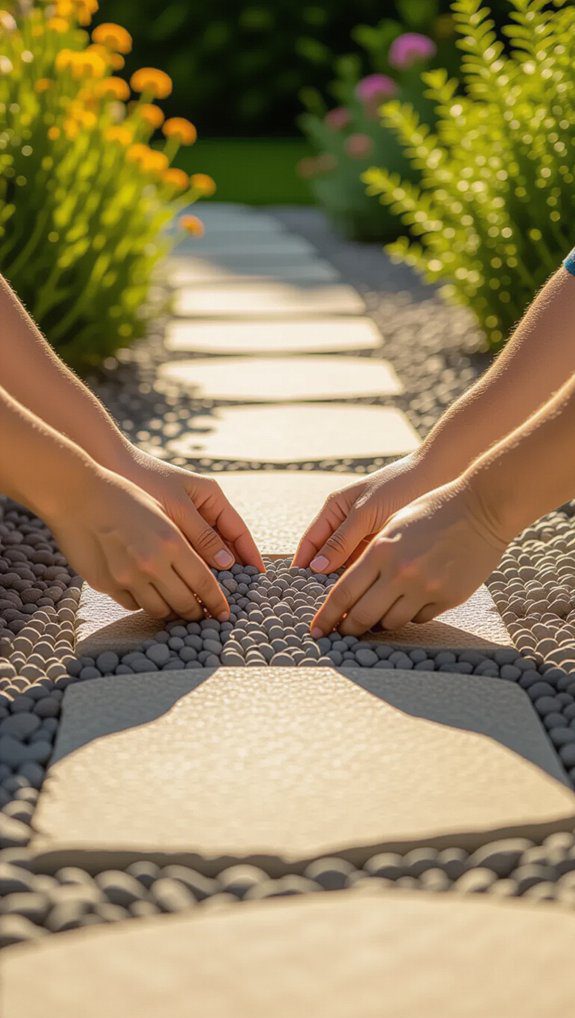
One of the best ways to make your stone walkway both sturdy and attractive is by filling the gaps between the stones with gravel. This step not only boosts stability but also keeps weeds at bay for a cleaner look.
To nail gravel maintenance and aesthetic consistency, I recommend:
- Using fine gravel or jointing sand that compacts well
- Choosing gravel colors that complement your stones
- Checking gaps regularly to refill as needed
This approach improves drainage and keeps your path looking sharp, making your walkway a welcoming part of your outdoor space.
Install Edge Restraints
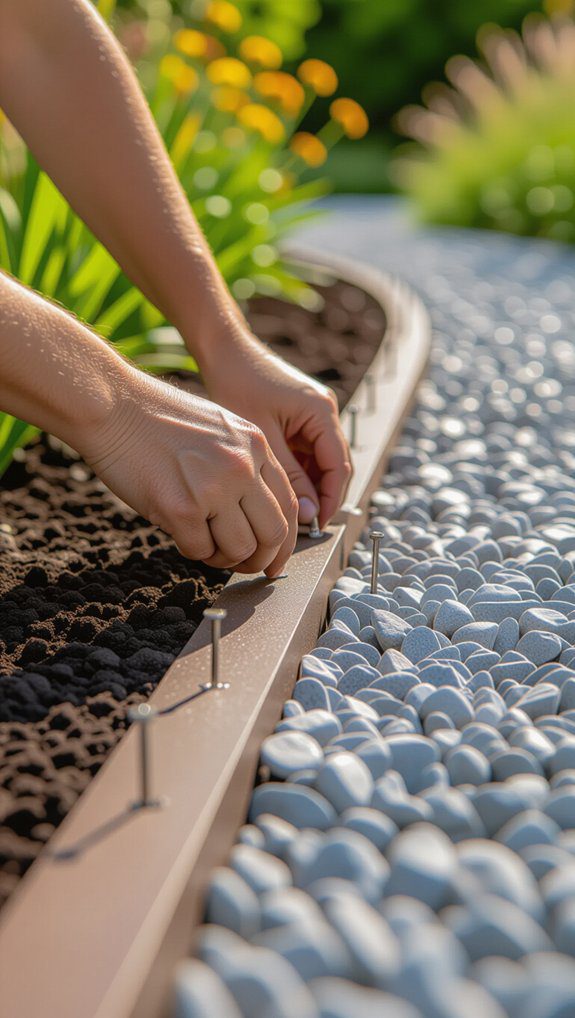
Three key reasons make installing edge restraints a must-have for your stone walkway: they keep everything neatly in place, help maintain the shape over time, and stop stones or gravel from spilling out.
When choosing edge material selection, consider galvanized steel for durability, wood for a natural look, or bricks for classic charm.
For installation techniques, dig a trench deeper than your restraints’ height to secure them firmly. Use stakes or anchors to prevent movement, especially in busy areas.
Use Landscape Edging

After setting up edge restraints, I like to add scenery edging for an extra layer of control and style.
Terrain edging benefits go beyond looks—it keeps stones contained and cuts down on weeds, making your walkway neat and low-maintenance.
When choosing edging material options, think about durability and how well they match your garden’s vibe.
Here are my top picks:
- Galvanized steel for a sleek, modern edge
- Wood for a warm, natural feel
- Recycled materials to stay eco-friendly and creative
This little step really ties the whole walkway together, giving it a polished, lasting finish.
Flagstone Selection
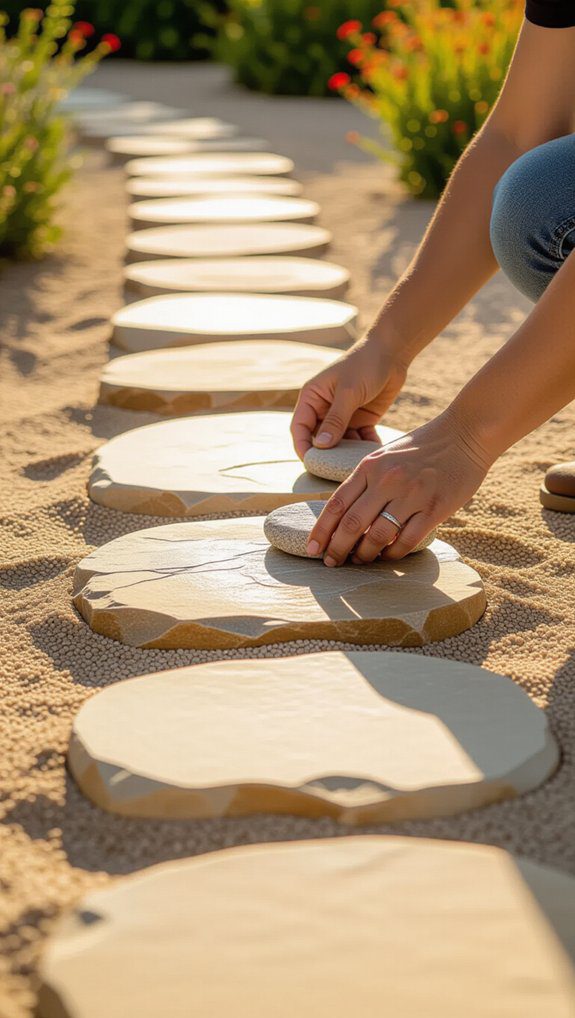
Choosing the right flagstone can really make your walkway stand out and feel sturdy underfoot. I always look for stones at least 1.5 inches thick and about 18 to 24 inches wide for stability. Matching flagstone colors and textures with your garden creates a cozy, inviting vibe. Don’t forget slip resistance—safety matters, especially when wet. Here’s a quick guide to help you pick:
| Thickness (inches) | Size (inches) | Texture Type |
|---|---|---|
| 1.5+ | 18–24 | Rough |
| 1.5+ | 18–24 | Smooth |
| 1.5+ | 18–24 | Textured/Varied |
Choose what feels right for your space!
Natural Stone Options
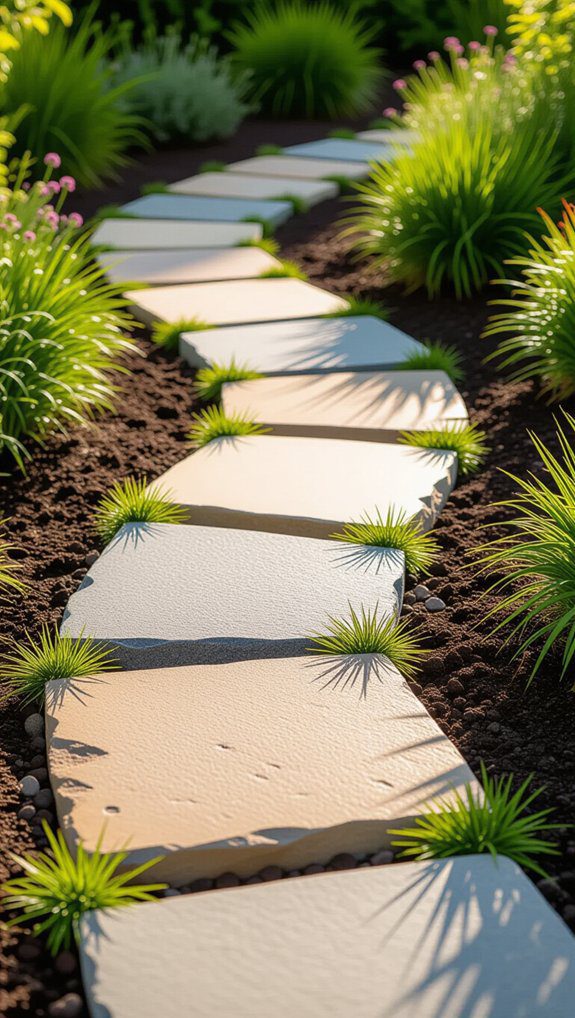
Moving from flagstone choices, let’s investigate some other natural stone options that can really improve your walkway.
Each stone offers unique stone durability and color variations that bring personality to your path. Here are three popular picks to contemplate:
- Slate: Known for its rich, layered texture and excellent durability.
- Limestone: Offers softer hues and a smooth surface, perfect for subtle elegance.
- Granite: Extremely tough with bold color variations that stand out beautifully.
Choosing stones at least 1.5 inches thick guarantees stability, while arranging them creatively adds charm and blends your walkway into the scenery effortlessly.
Concrete Paver Choice
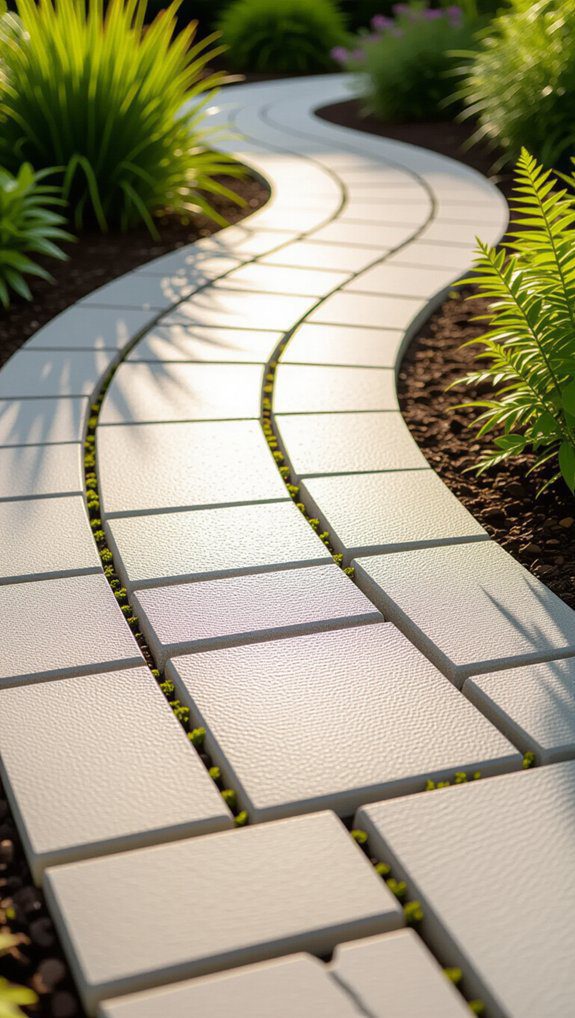
When I picked out concrete pavers for my walkway, I learned that thickness and size really make all the difference. I chose pavers at least 1.5 inches thick and between 18 to 24 inches wide to guarantee they’d hold up well underfoot.
Next, I investigated texture options—from smooth for a sleek, modern feel to textured surfaces that add grip and charm.
Don’t forget paver color! Picking tones that blend with your home and surroundings helps create a welcoming, unified look.
It’s worth taking time to find durable pavers that suit both style and weather conditions perfectly.
Base Panel Installation
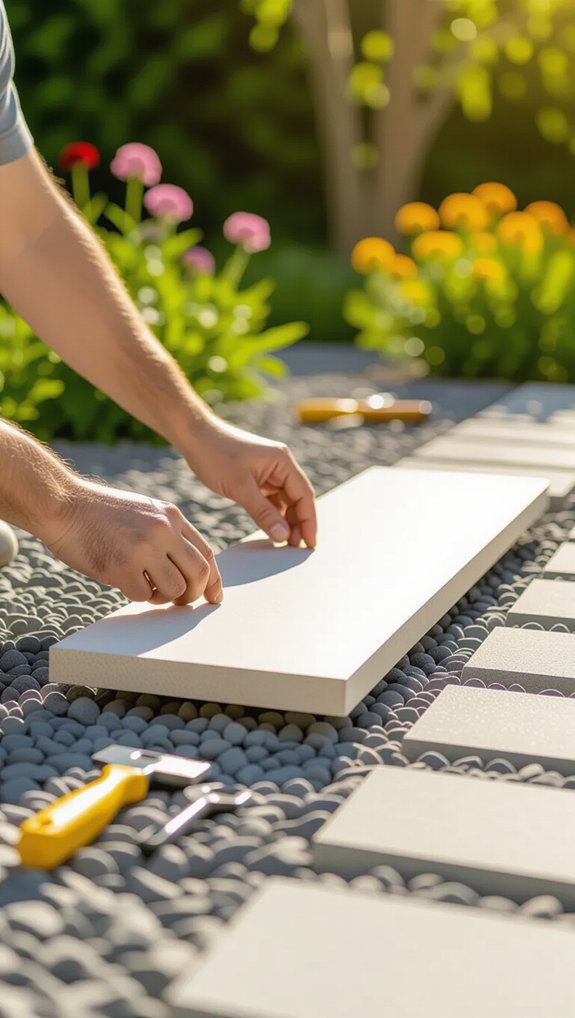
Before you lay down the base panel, it’s essential to prepare the ground carefully so your walkway stays strong and level for years to come.
Start by clearing grass and debris, then dig about 5 inches deep. I use installation tools like a tamper to compact the soil firmly, ensuring a solid foundation.
Next, I lay ground cover fabric to block weeds while allowing drainage, followed by a 2-inch layer of paver sand, leveled perfectly.
Here’s a quick checklist for base panel materials and prep:
- Clear and excavate the area
- Compact soil with a tamper
- Layer ground cover fabric and paver sand
This prep sets you up for success!
Maintain Proper Slope
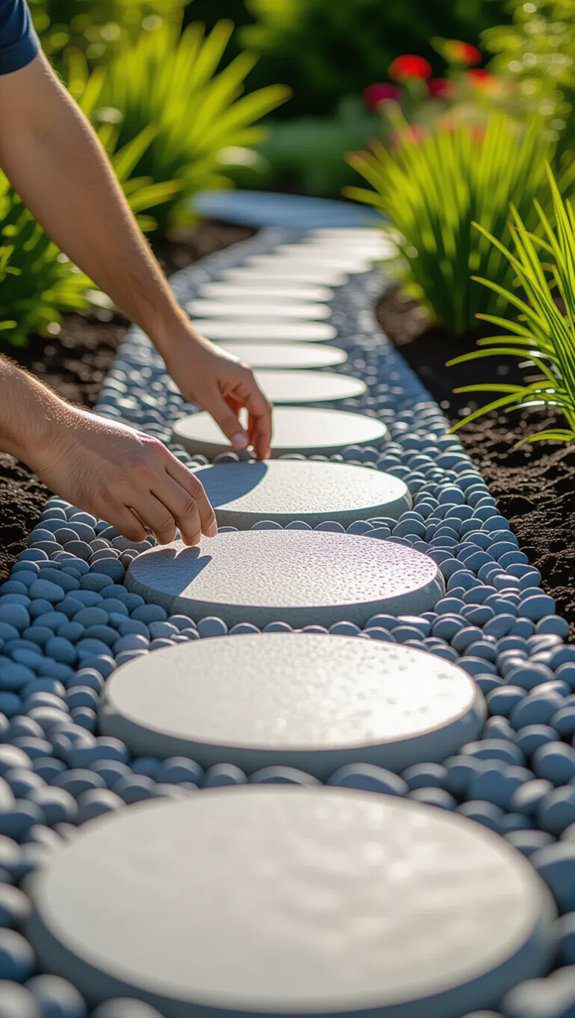
Once you’ve laid down a solid, level base panel, it’s time to think about the slope of your stone walkway. Proper slope measurements are key for effective drainage techniques, preventing water pooling and tripping hazards. I use a level or string line to keep the slope consistent—aiming for 1-2%. Here’s a simple guide to maintain the right slope:
| Task | Recommended Slope |
|---|---|
| Drainage efficiency | 1-2% |
| Safety (trip risk) | Consistent slope |
| Aesthetics | Gentle gradient |
| Tools | Level, string line |
| Inspection Frequency | After heavy rain |
Regular checks keep your walkway safe and beautiful!
Slope Away from House
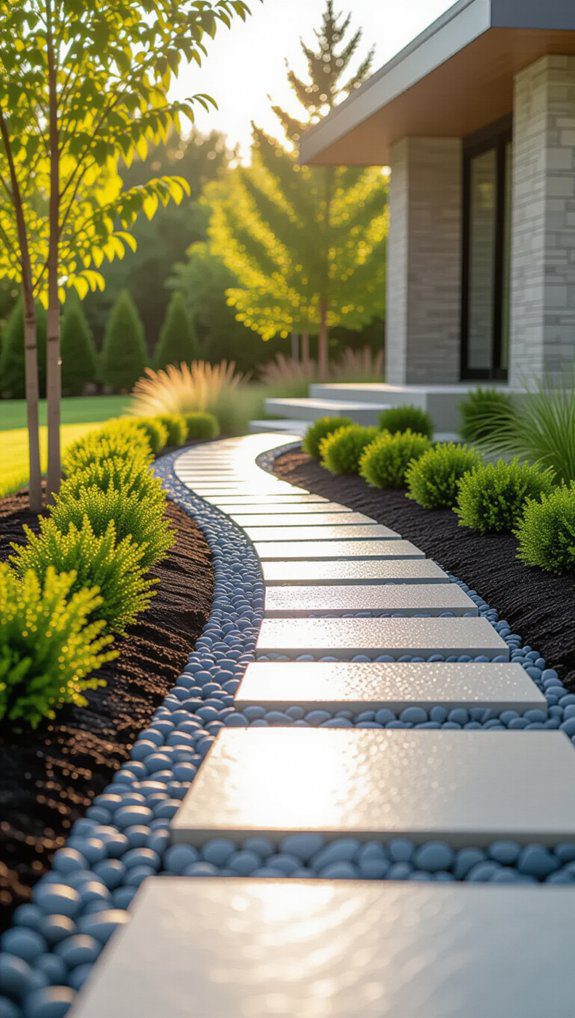
Since water can cause serious damage to your home’s foundation, I always make sure the stone walkway slopes away from the house.
Proper slope maintenance is key for effective drainage solutions. I aim for at least a 1-inch drop every 4 feet, using a level to check as I go.
Here’s what I focus on:
- Adjusting base material to keep the right gradient
- Considering yard’s natural topography to avoid water traps
- Inspecting after rains to fix any settling
This way, I protect my home and keep the walkway safe and dry.
Remove Excess Material
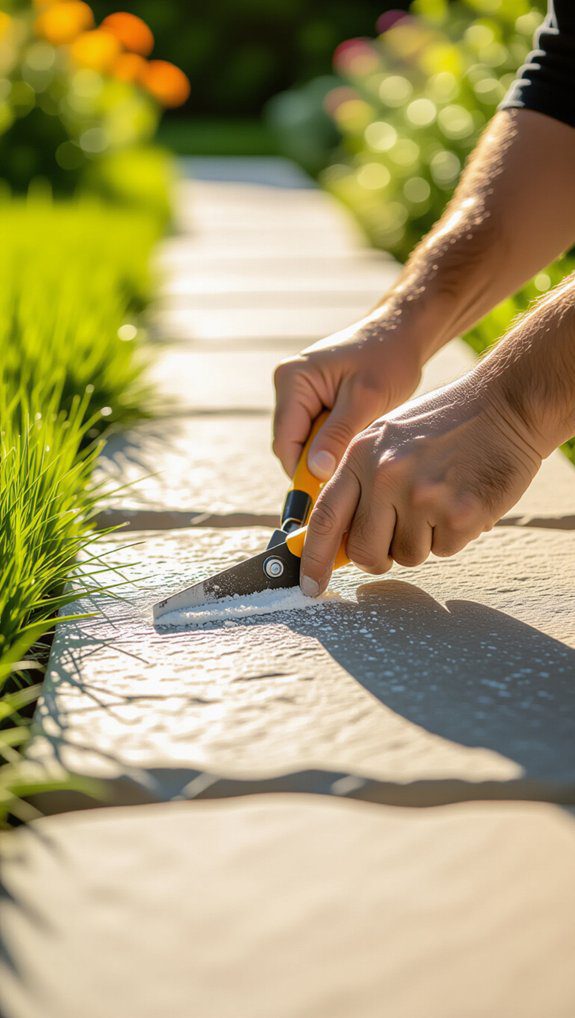
I like to start by carefully removing any excess grass and vegetation along the edges of the walkway using a spade or sod cutter, which helps me create a crisp, clean outline for the path.
Next, I focus on debris removal, clearing away any loose soil or rocks that could interfere with stone placement.
It’s important to keep an eye on excess material throughout the process because even small bits can affect how level the stones sit.
Taking these steps guarantees the walkway looks neat and stays sturdy, making the whole project feel more manageable and rewarding.
Tamp Foundation Firmly

Tamping the foundation firmly is one of the most important steps to get right when building your stone walkway. It guarantees a stable base by compacting the soil, preventing future displacement or sinking.
Before you start, remember these key points:
- Slightly moisten the soil to improve soil moisture for better compaction techniques.
- Use a tamper or plate compactor to press down the soil evenly at least 4 to 5 inches deep.
- Check for soft spots and retamp if necessary to maintain a solid, level foundation.
Getting this step right helps your walkway last and feel secure underfoot.
Create Uniform Bed
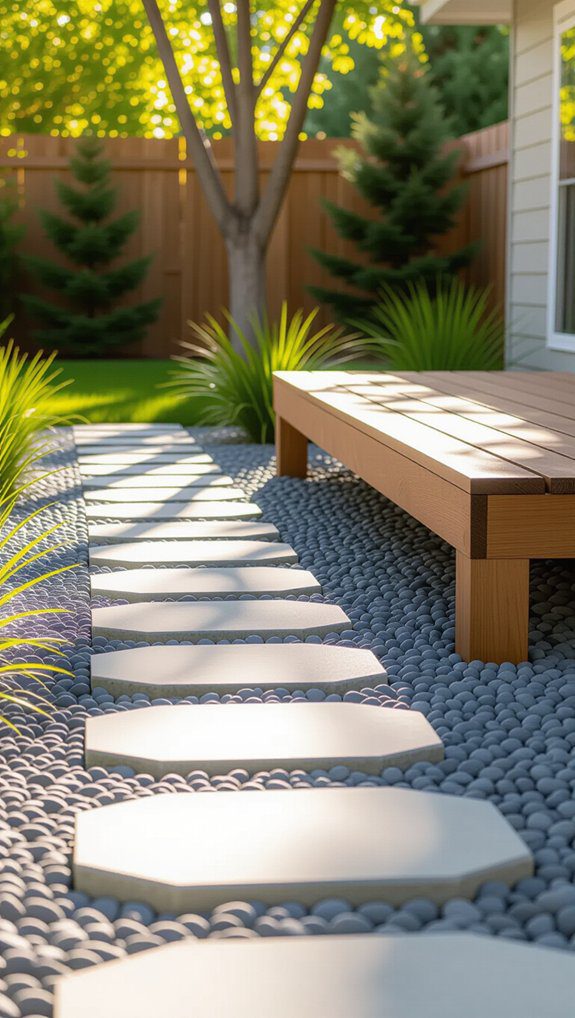
A solid, uniform bed is the key to making your stone walkway both sturdy and attractive. For bed preparation, start by spreading your base materials evenly to at least 2 inches deep.
Use a metal rake to smooth out any high or low spots—this helps each stone sit level and snug with its neighbors. Don’t forget to compact the base thoroughly with a tamper; this keeps everything from moving later on.
Adding a slight slope encourages water drainage away from your path, protecting your walkway’s longevity. Keep checking the bed’s uniformity as you go—it makes all the difference!
Add Finishing Touches
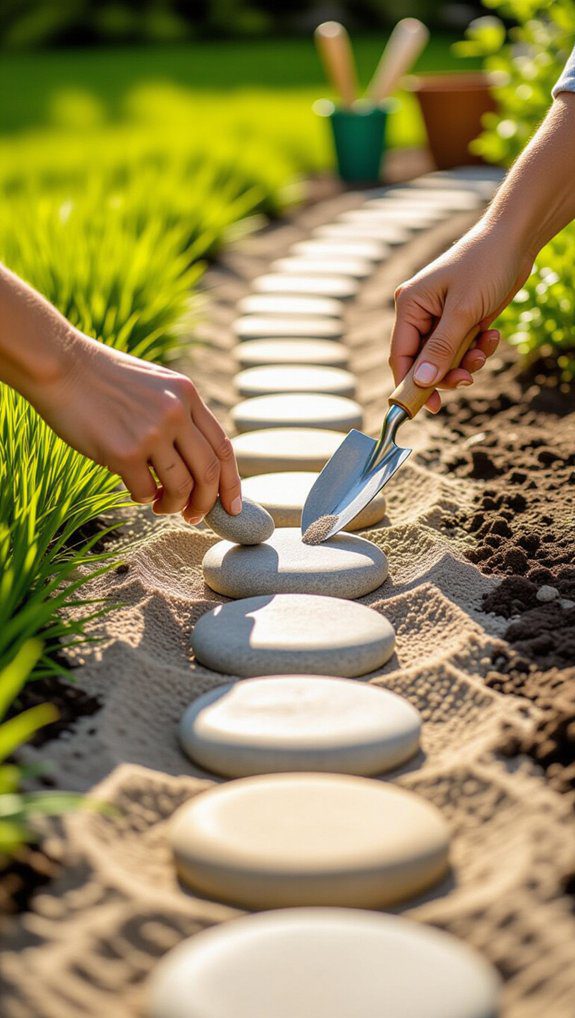
Once you’ve laid your stones firmly in place, it’s time to add those finishing touches that really bring your walkway to life.
These small details improve pathway aesthetics and make your project feel truly yours. I like to:
- Fill gaps with jointing sand or fine gravel to stabilize stones and keep weeds out.
- Apply decorative finishes like a layer of pebbles or gravel for a modern, polished look.
- Secure edges with plastic or metal edging, keeping everything neat and preventing stones from moving.
These steps add charm and durability, making your walkway a welcoming part of your outdoor space.
Clean Excess Debris
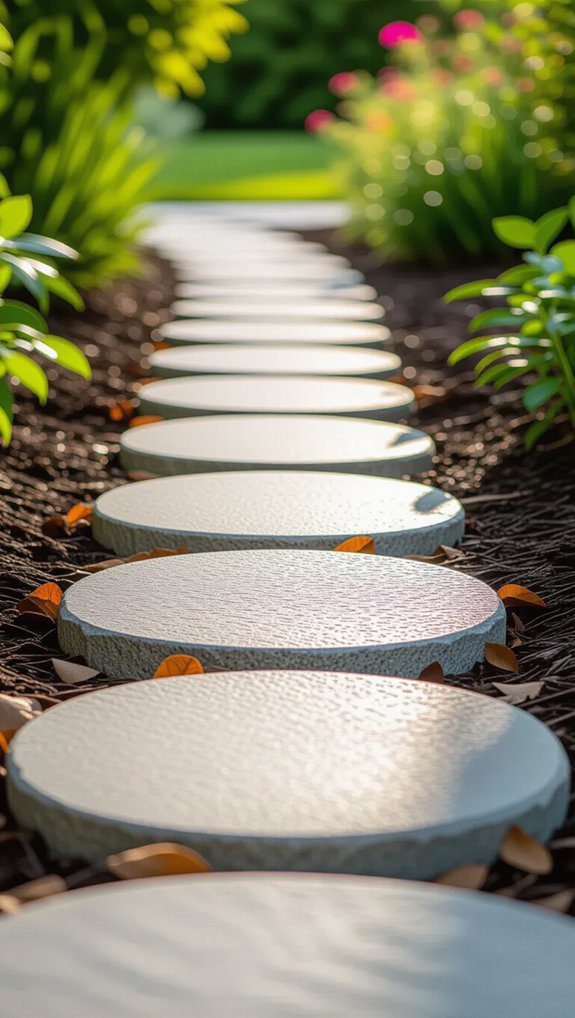
Now that you’ve added those finishing touches to your walkway, it’s time to focus on cleaning up any leftover debris. Proper debris removal keeps your workspace organized and safe, making your finished walkway look even better. Here’s a quick guide to assist:
| Task | Tip |
|---|---|
| Clear debris | Use a rake or broom |
| Remove soil | Shovel excess soil carefully |
| Check utilities | Avoid damage by locating lines |
| Final sweep | Guarantee smooth, safe surface |
Keeping your workspace organized boosts efficiency and pride in your project. Let’s keep it neat and beautiful!
Weather Considerations
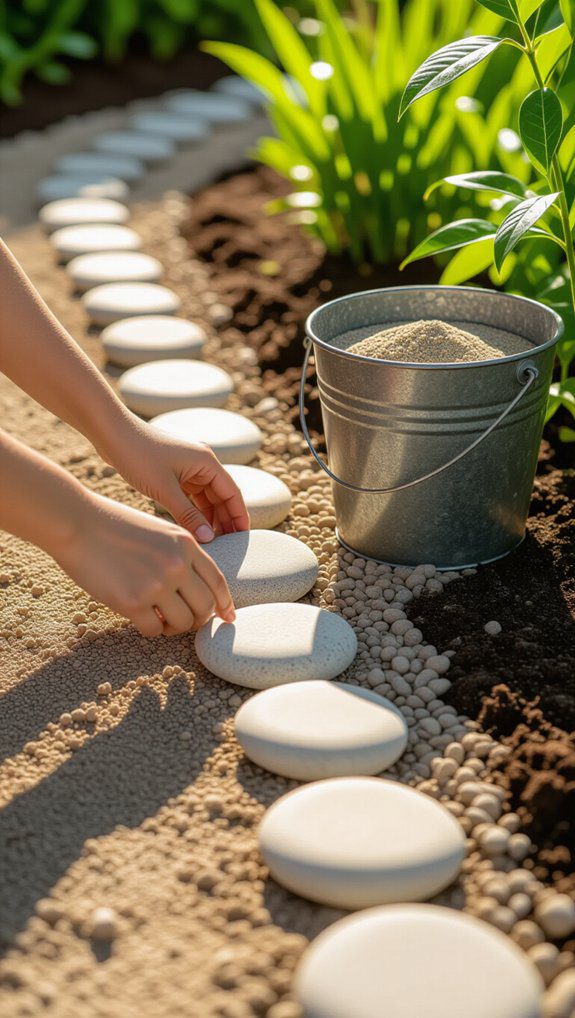
While you might be enthusiastic to get started, picking the right weather for installing your stone walkway makes a big difference in how smoothly the project goes.
I’ve learned that paying attention to weather patterns and seasonal timing really pays off. For the best results, I recommend:
- Choose dry weather to keep the ground firm and avoid mud.
- Avoid extreme heat or freezing temperatures to guarantee adhesives cure properly.
- Plan your project for spring or fall when temperatures are just right.
Checking long-term forecasts helps prevent unexpected rain or snow from messing up your hard work.
Together, we’ll make your walkway last!