DIY Moss Ball Project (Step-by-Step Beginner Guide)
A moss ball’s a living sphere you create by wrapping a soil ball with moss and securing it with twine—perfect for beginners! You’ll mix peat moss, bonsai soil, and bentonite clay into a firm grapefruit-sized ball, then cover it with pre-moistened sheet or sphagnum moss. Choose small plants like pothos or ferns, wrap everything snugly with 3–4 yards of twine using diagonal crisscrosses, then soak it weekly in water. Display it hanging or in a decorative bowl with indirect light. Stick with us to uncover specific techniques that’ll make yours thrive.
Love cozy DIY projects? 💕
Get free printable guides, exclusive tutorials & surprise craft goodies straight to your inbox.
Disclosure: This post may contain Amazon affiliate links, at no extra cost to you. Content on DiyCraftNest is created with research support from AI tools and carefully reviewed, edited, and fact-checked by the lead author, Daniel Pat, to ensure accuracy and reliability. Learn more
Key Takeaways
- Prepare a firm, moldable soil ball by mixing peat moss, bonsai soil, and bentonite clay until it holds shape without dripping.
- Pre-moisten sheet or sphagnum moss for better pliability, then drape and overlap pieces around the soil ball with ½–1 inch overlap.
- Secure moss using 3–4 yards of natural twine, starting with an equator knot and crisscrossing diagonally 8–12 times total.
- Choose small plants with compact root systems like ferns, pothos, or Haworthia; gently remove nursery soil and loosen compacted roots.
- Soak finished kokedama in room-temperature water for 5–10 minutes every 7–10 days; rewrap twine every 4–6 months as needed.
What Is a Moss Ball?
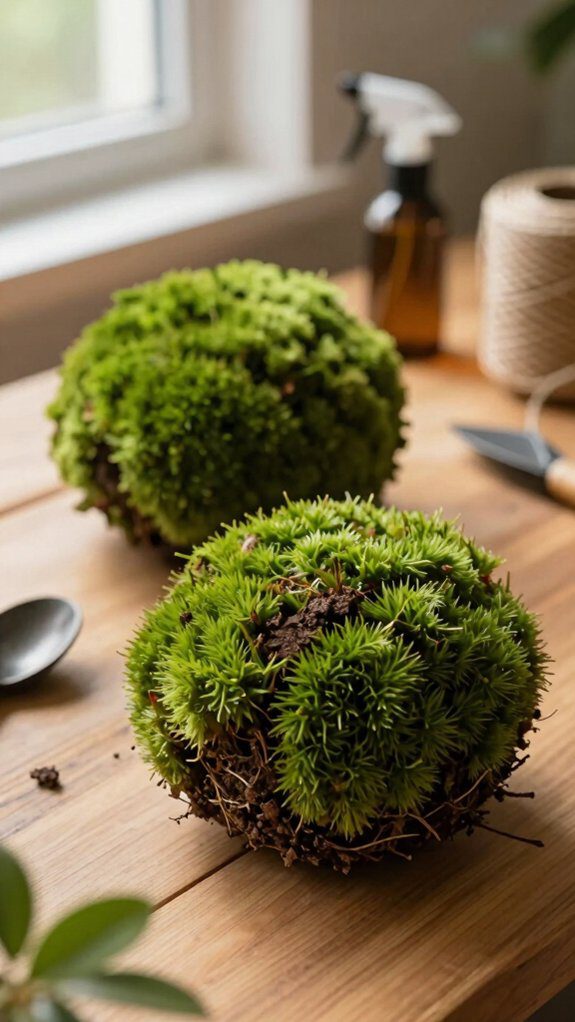
Ever heard of a kokedama? It’s a Japanese-inspired living planter that’s become a beloved choice for plant lovers everywhere. A moss ball encases your plant’s roots in a compact, moldable soil core, then wraps it all in soft moss—creating a pot and decorative piece in one. What makes kokedama special is its history, rooted in Japanese bonsai traditions, combined with real ecological benefits. The live moss retains humidity naturally while supporting healthier roots, and you’re embracing sustainable, soil-free gardening. It’s essentially a plant’s cozy home that looks strikingly beautiful hanging or displayed on your shelf.
Materials You Will Need
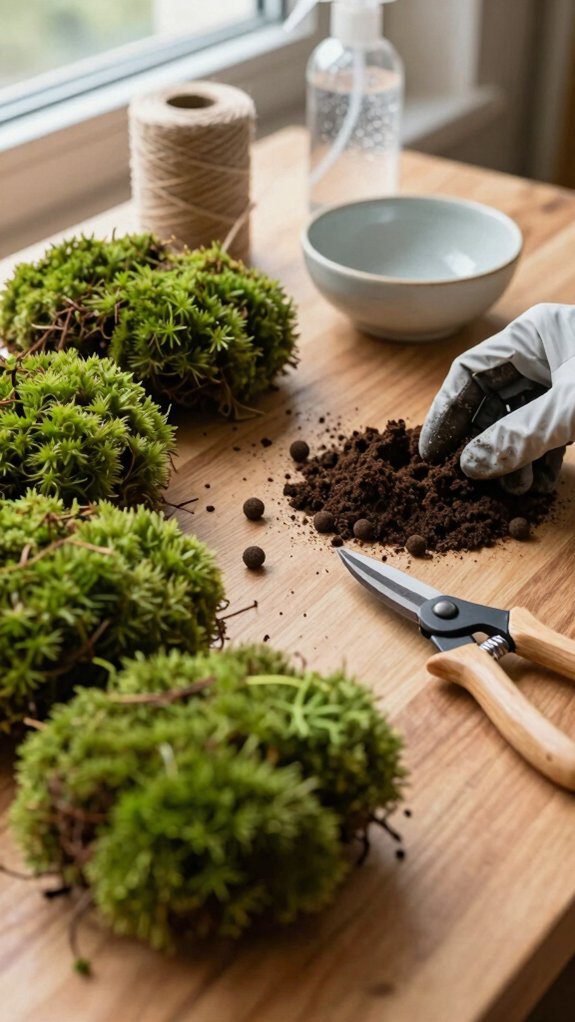
Before you start crafting your moss ball, you’ll want to gather a few key supplies that make the whole process smooth and enjoyable.
I’d recommend collecting potting soil, sheet moss or sphagnum moss, twine or string for wrapping, a small plant like a fern or pothos, and scissors for trimming—these basics are probably already in your home or easy to find at a garden center.
Having everything prepped and within arm’s reach means you can focus on the fun part of shaping your living sphere without hunting for supplies mid-project.
Potting soil
Getting the soil mix right is absolutely essential to your moss ball’s success, and honestly, it’s easier than you’d think. I combine 2 quarts peat moss with 2 quarts bonsai or cactus soil to create the perfect foundation. The soil composition needs balance—airy yet moisture-retentive. I’ll add 1 pound bentonite clay as a drainage additive to help everything hold together beautifully. Moisten gradually until the mix forms a firm, moldable ball without dripping. For succulents, I adjust toward grittier mixes to prevent root rot.
| Component | Amount | Purpose |
|---|---|---|
| Peat Moss | 2 quarts | Moisture retention |
| Bonsai/Cactus Soil | 2 quarts | Drainage & aeration |
| Bentonite Clay | 1 pound | Cohesion & moldability |
Sheet moss or sphagnum moss
Now that you’ve got your soil base ready, it’s time to pick the moss that’ll wrap around your ball and give it that gorgeous, living appearance. You’ve got two main choices, and I’ll help you decide which works best for your project.
- Sheet moss offers neat, clean coverage and easier wrapping
- Loose sphagnum provides superior water retention for moisture-loving plants
- Pre-moistening both types improves pliability and adhesion before application
- Storage options vary—refrigerate sphagnum or keep sheet moss dry until use
Sheet moss comes in adhesive-backed varieties that speed up application, while loose sphagnum shines for plants needing consistent moisture.
Twine or string
Securing your moss ball requires the right binding material—it’s what holds everything together while letting your kokedama breathe and thrive.
I recommend natural jute or cotton garden twine, 2–3 mm thick, cutting 3–4 yards per moss ball. It grips nicely and allows airflow.
If you want an invisible look, clear fishing line serves as an excellent twine alternative, though it demands careful tension to avoid cutting into moss.
Start wrapping with a 4-inch tail tucked underneath, then finish with decorative knots like a square or double knot.
Replace your twine every 4–6 months when it frays, keeping tension snug without strangling roots.
Small plant (fern, pothos, ivy)
What’s the secret to a stunning kokedama? Choosing the right plant! I’ve found that small plants with compact root systems work best. Here’s what’ll make your project succeed:
- Select ferns (rabbit’s foot, maidenhair), pothos cuttings, baby ivy, or epiphytic hoyas
- Match plants to your humidity preference—ferns thrive in humid environments while pothos tolerates drier air
- Remove nursery soil gently and perform light root pruning to loosen compacted roots
- Avoid large, deeply rooted plants that’ll cause your moss ball to fall apart
For typical 3–4 inch specimens, I create a grapefruit-sized soil ball. This snug fit encourages healthy root spread while keeping your kokedama manageable and beautiful.
Scissors
Once you’ve selected your plant and prepped those roots, you’ll need the right cutting tools to shape your moss ball into a polished masterpiece.
I recommend keeping three scissors types handy: sharp garden shears for general trimming, small embroidery scissors for delicate crown work, and pruning scissors for thicker stems.
Sharp blades make clean cuts without crushing roots, while dull ones cause damage.
Blade maintenance matters—sanitize between plants with isopropyl alcohol to prevent disease spread.
Store your scissors dry and occasionally oil the pivot point.
These cutting techniques combined with proper care keep your tools performing beautifully throughout your project.
Bowl of water
Your soaking station is just as important as your cutting tools—think of it as the spa where your finished moss ball gets rejuvenated. You’ll want to gather these necessities:
- A shallow bowl or bucket (2–3 quarts) that fully submerges your kokedama for 5–10 minutes
- Room-temperature water filled 3–6 inches deep, allowing your moss ball to sink completely
- Diluted liquid fertilizer at half-strength for monthly feedings during growing season
- A humidity tray with 1 inch of water for passive rehydration when managing multiple balls
Keep a separate bowl for mixing soil and moss, then reserve your clean soaking bowl exclusively for finished kokedama. This prevents debris transfer and pest contamination, protecting your watering schedule success.
Best Plants for Moss Balls
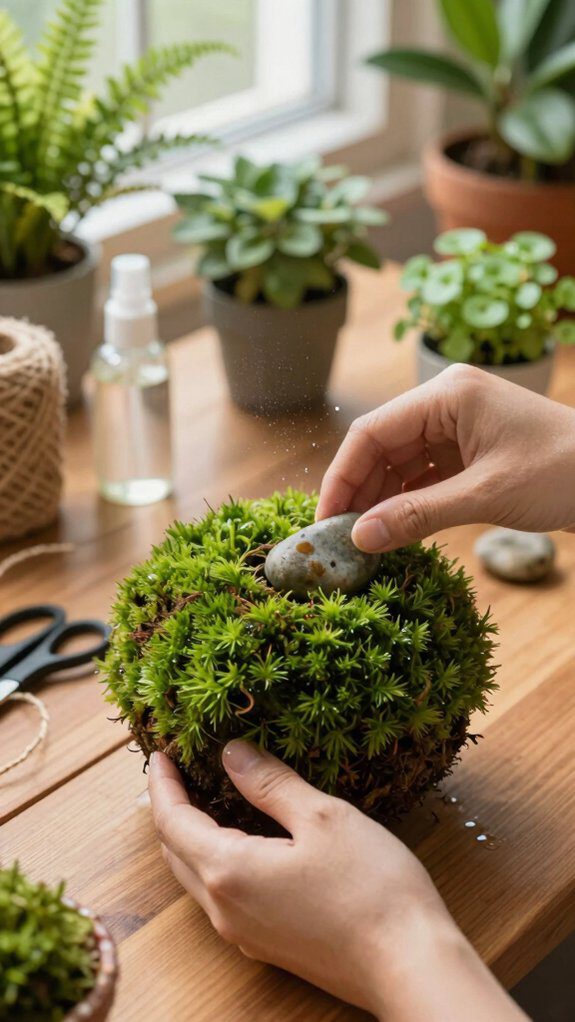
If you’re looking to keep your kokedama project simple and stress-free, I’ve got great news—some plants are naturally perfect for moss balls and won’t demand constant attention.
Compact species with shallow roots like Hoyas, Peperomias, and small Philodendrons thrive in the cozy confines of a moss ball because their growth stays manageable and their roots won’t quickly outgrow the space.
The real bonus is that many of these low-maintenance plants can handle the occasional missed watering, making them ideal if you’re new to this whole moss ball thing.
Low-maintenance indoor plants
When I’m choosing plants for a kokedama, I always look for species that’ll forgive me if I accidentally skip a watering or two—and there’s actually a solid selection of beauties that thrive in moss balls without demanding constant attention.
- Hoyas tolerate slight drying between waterings and display gorgeous trailing vines
- Compact succulents like Haworthia need less frequent watering with proper drainage
- Peperomia prefers brighter light and drier intervals, making it genuinely low-maintenance
- Epiphytic ferns stay healthy with weekly soaking in humid conditions
These drought-tolerant options join our kokedama community perfectly, creating an air-purifying display that genuinely rewards our care.
Step 1: Prepare the Soil Ball
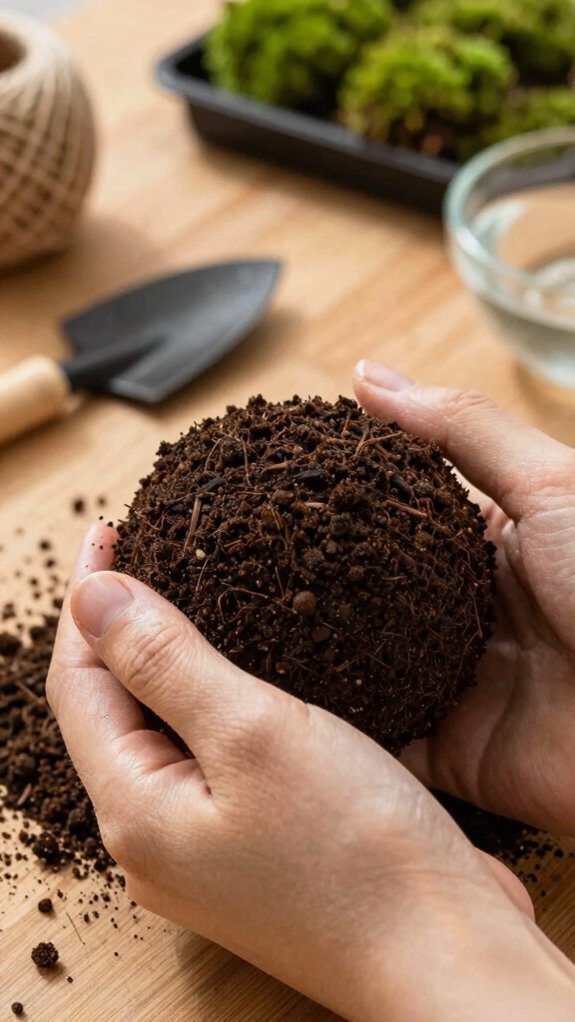
I’m going to start by mixing up the perfect soil blend, and getting the texture just right is absolutely key to your moss ball’s success.
You’ll want that moist but firm consistency—think of it like modeling clay that holds its shape when you squeeze it but doesn’t feel soggy or crumbly.
Once you’ve got the texture down, you’ll be ready to form your soil ball and move on to nestling your plant inside!
Moist but firm texture
The texture of your soil ball makes all the difference—get it right, and you’ll have a sturdy foundation that holds together beautifully; get it wrong, and you’re looking at a crumbly mess or a waterlogged disaster.
Achieving that perfect moisture balance takes tactile testing:
- Squeeze the mixture firmly—it should feel like a packed snowball, holding its shape without collapsing
- Check for springback; the ball should resist slightly rather than staying compressed
- Observe for oozing; any water dripping means you’ve overdone it
- Knead gently if crumbling occurs, adding water drop by drop
This sweet spot guarantees your moss ball stays intact throughout the wrapping and growing process ahead.
Step 2: Wrap with Moss
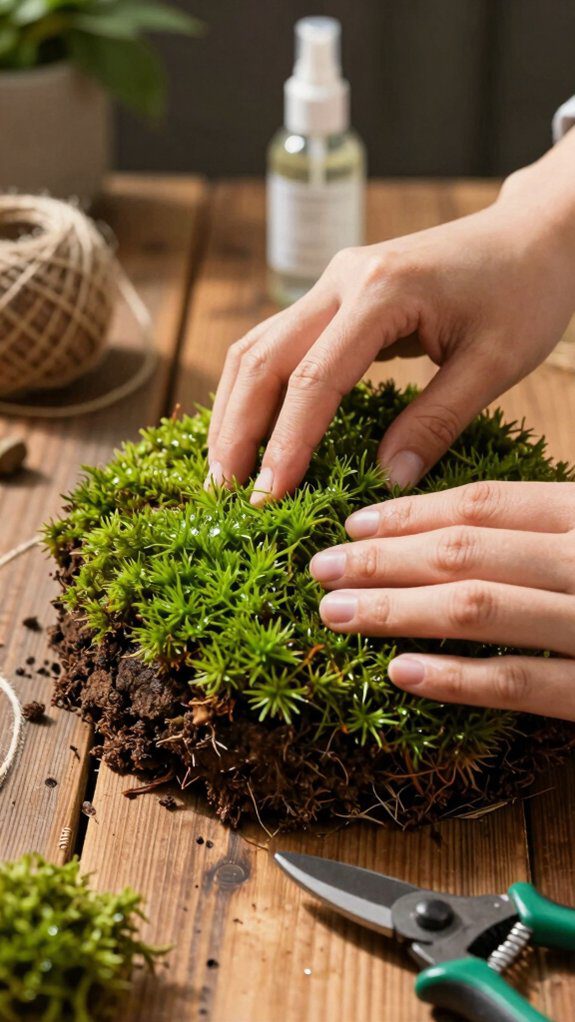
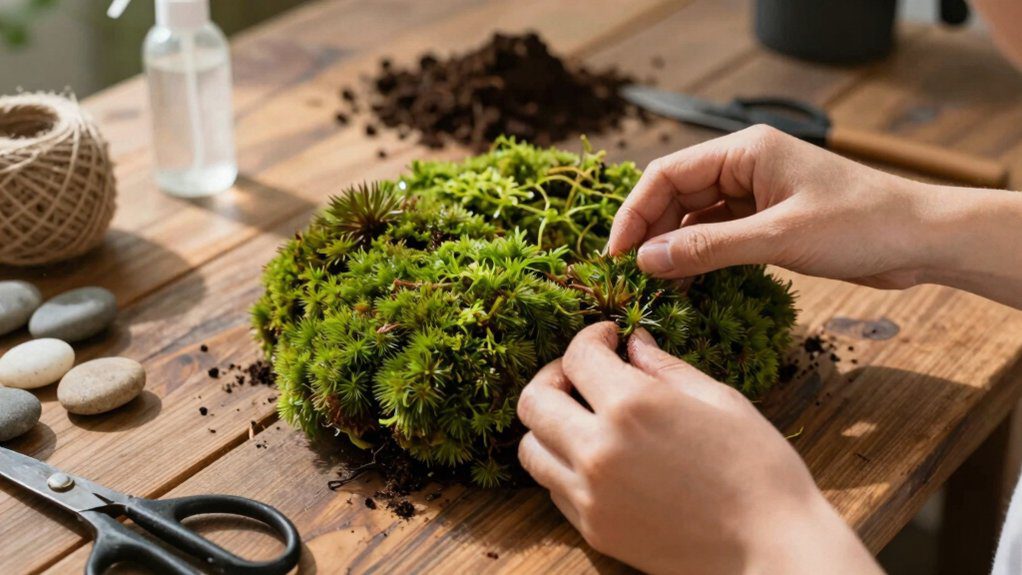
Now comes the satisfying part—draping your pre-moistened moss evenly around the soil ball so it looks polished and professional. I like to think of it as wrapping a delicate gift: you’ll smooth the moss gently with your fingers, overlapping the sheets slightly and tucking any loose edges into crevices so everything stays secure and your roots stay hidden.
With practice, you’ll develop a feel for how much moss you need (usually a handful or two for a grapefruit-sized ball) and how to create those seamless seams that make your finished kokedama look really put-together.
Even coverage technique
Once you’ve got your base ready, it’s time to transform it into a lush green sphere with the moss wrapping—and this is where precision really pays off. I’ve found that thoughtful technique creates beautiful, professional results you’ll feel proud displaying.
- Start with pre-moistened moss to keep it pliable and tear-resistant
- Drape a large central piece first, then overlap edges by ½–1 inch
- Cut moss into 6–8 wedge shapes for spherical coverage testing
- Secure with greening pins or twine, adjusting as you go
After moss sewing everything snugly, gently rinse and retighten for seamless coverage. You’re building something special here!
Step 3: Secure with Twine
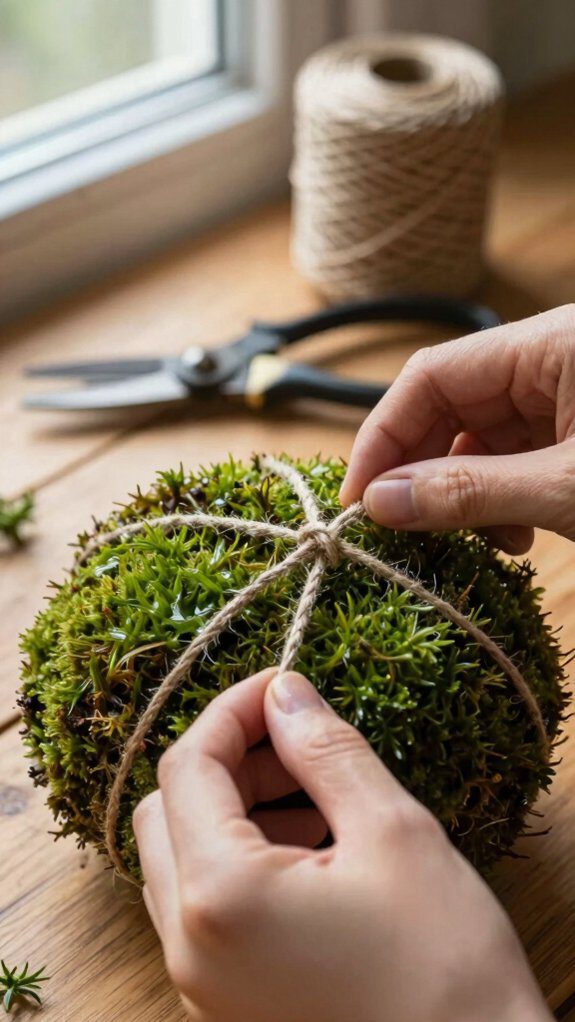
Now I’ll secure this moss ball with twine using a crisscross binding method that’ll keep everything compressed and in place.
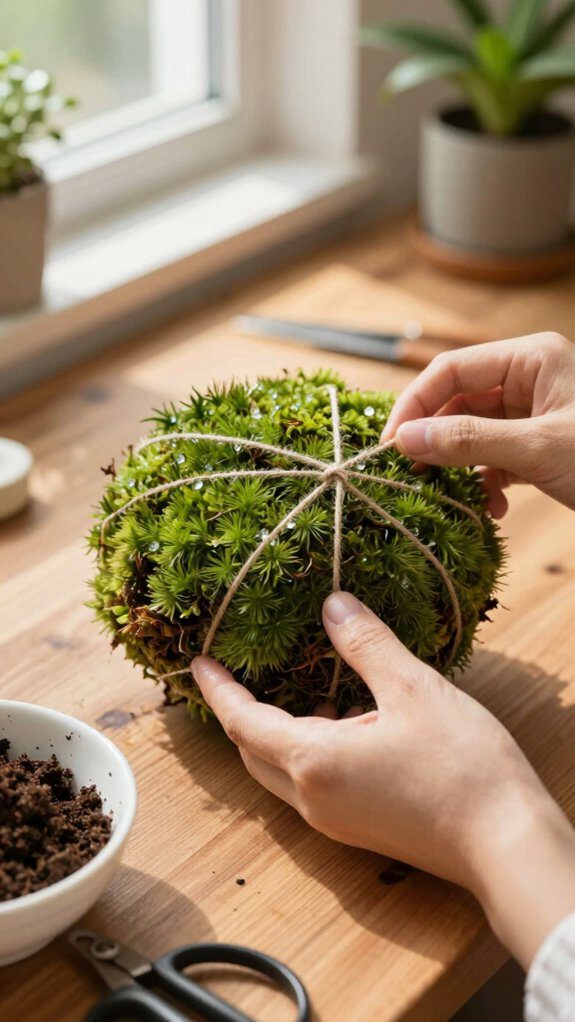
I start by tying a double knot around the equator, then wrap the twine diagonally over the poles and back again in different directions—think of it like wrapping a present from every angle—making 8 to 12 passes total.
As I go, I’ll tuck and reshape any loose moss with my fingers to fill gaps and guarantee the whole ball stays nice and tight.
Crisscross binding method
Transform your moss ball into a sturdy, long-lasting creation by wrapping it securely with twine—the final step that holds everything together.
- Cut 3–4 yards of garden twine or fishing line, leaving a 4-inch tail for anchoring
- Wrap the equator first to stabilize your moss ball before crisscrossing
- Alternate directions (over one axis, then across) to create even decorative patterns
- Cross at least 6–8 times, adjusting thread tension so wraps grip firmly without crushing moss
Tuck the final end under existing wraps and knot it securely to your starting tail. You’ve joined our community of moss ball creators!
Check tension monthly and rewrap every 4–6 months to keep your creation thriving.
Step 4: Shape and Adjust
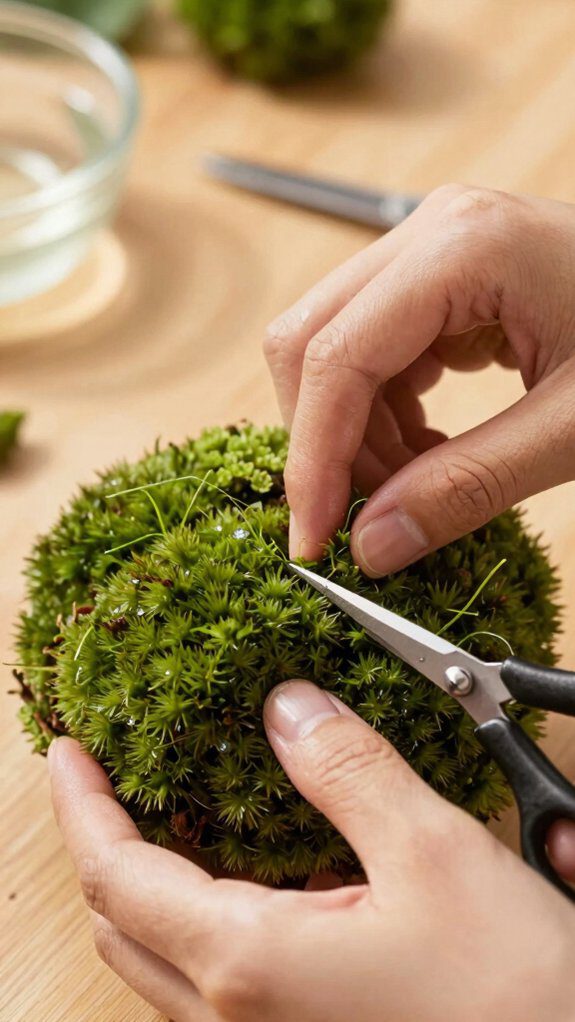
Now that you’ve wrapped your kokedama with twine, I want to help you achieve that satisfying compact and smooth finish that makes it look professionally done.
As you’re securing the moss, use your scissors to trim any scraggly bits hanging over the edges, then reshape the whole ball with your hands to keep it nice and even.
You’ll want to recompact any soft or squishy spots you feel, since a firm, well-balanced sphere will hold together way better and look way more polished than a lumpy one.
Compact and smooth finish
Once you’ve wrapped your soil ball with pre-moistened moss, it’s time to transform it into a polished sphere that’ll make you proud. This moss sealing stage separates casual attempts from professional-looking results.
Here’s how to achieve that flawless finish:
- Press firmly with both palms to eliminate air pockets and create uniform density
- Use thumbs and fingertips to tuck stray edges into seams for seamless coverage
- Roll gently over a flat surface in circular motions to even bumps
- Apply consistent pressure methods to maintain a smooth, grapefruit-sized sphere
These finish techniques guarantee your moss ball looks gallery-worthy and ready for display.
How to Water a Moss Ball
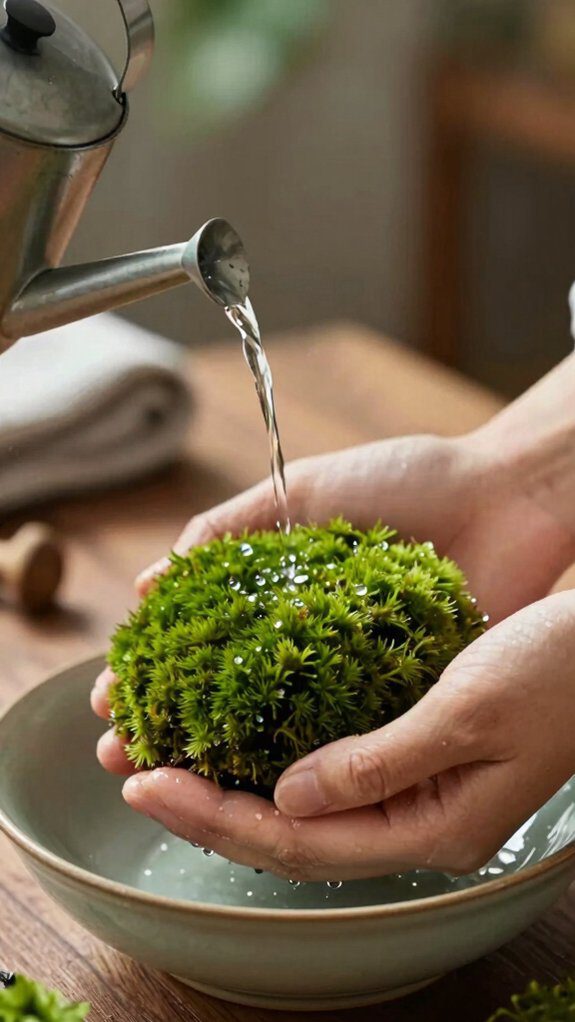
Now that your moss ball’s shape is set, keeping it hydrated is key to keeping your plant happy and healthy.
I recommend using the soak and drain method, which is honestly the easiest way to water your kokedama—just submerge the entire ball in room-temperature water for 5–10 minutes until it feels completely saturated, then let it drip dry for a few minutes before putting it back on display.
This method not only rehydrates the moss but also gives your plant a thorough drink that’ll keep it thriving between waterings.
Soak and drain method
Because moss balls thrive on moisture but hate sitting in soggy conditions, the soak and drain method’s your best bet for keeping them perfectly hydrated.
I’ve found this technique transforms how I care for my kokedama collection.
- Submerge your moss ball completely in water for 5–10 minutes until it feels noticeably heavier and saturated
- Lift it out and let excess water drip off for 1–2 minutes before returning it to display
- Test readiness by picking up your ball—when it feels light compared to its soaked weight, it’s time to water again
- Consider water quality and adjust misting frequency based on your indoor humidity levels
Most indoor kokedama need soaking every 7–10 days, though hanging displays may require more frequent attention during warmer months.
Where to Display Your Moss Ball
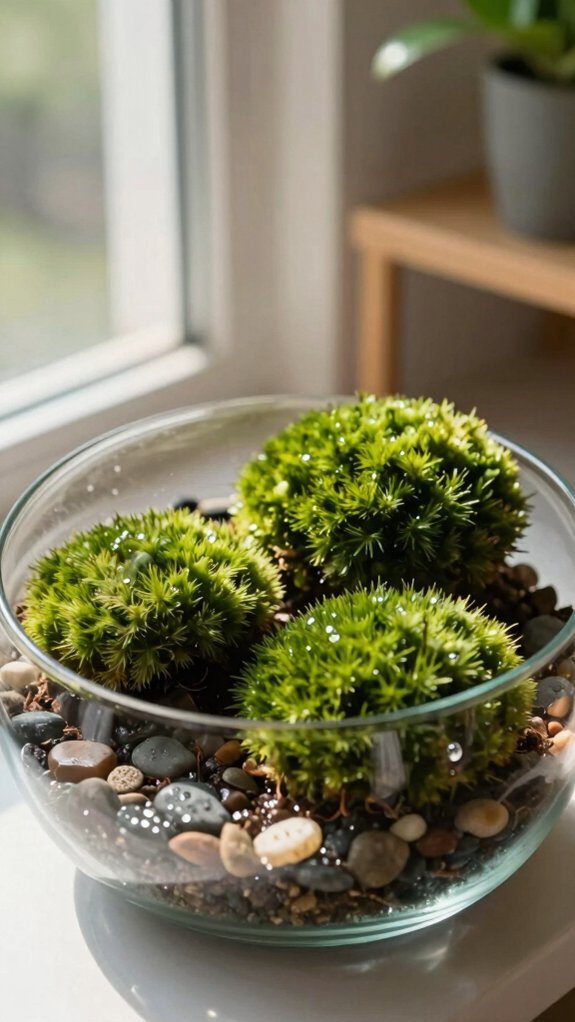
Now that you’ve mastered watering your moss ball, let’s talk about finding the perfect spot to display it—because where you place it makes a real difference in how happy your plant will be.
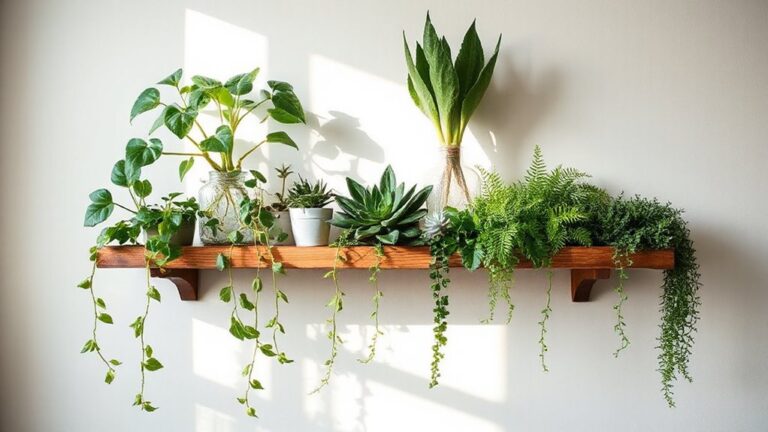
You’ve got some great options, whether you want to hang it from twine in a bright corner or nestle it into a decorative bowl on a shelf, and I’m excited to show you how to make the most of each one.
The location you choose will actually affect how often you need to water and how well your moss ball thrives, so let’s investigate what works best for different spaces in your home.
Hanging option
Hanging your kokedama is honestly one of the most rewarding ways to display it—it saves precious shelf space and puts your living sculpture right where you (and your guests) can admire it.
I’ve found that hanging transforms any room into a lush sanctuary. Here’s what makes this display option shine:
- Use a sturdy 3–4 yard garden twine or fishing line with a secure 4-inch tail
- Position your macramé hanger in bright, indirect light away from direct sun and drafts
- Water every 5–10 days by submerging for 5–10 minutes when the ball feels light
- Place a tray underneath to catch drips and protect your furniture
Your air plants and trailing varieties thrive suspended!
Decorative bowl styling
If you’re looking for a display method that’s both practical and gorgeous, decorative bowl styling might be your answer.
I love pairing my moss ball with a shallow ceramic or glass bowl filled with decorative pebbles—it’s functional and beautiful. The pebbles catch excess water while elevating my kokedama for better drainage.
I create color contrast by choosing pebbles that complement my plant’s vibrant green. Adding seasonal accents like small branches or stones keeps my display fresh throughout the year.
Spacing multiple moss balls two to three inches apart guarantees airflow while creating a cohesive, welcoming arrangement that invites everyone to admire my handiwork.
Care and Maintenance Tips
Once you’ve created your moss ball, keeping it thriving is actually pretty straightforward—it just requires paying attention to a few key things like watering, feeding, and light.
- Watering: Submerge your indoor kokedama for 5–10 minutes every 7–10 days when it feels light, adjusting frequency for seasonal adjustments and air humidity changes.
- Feeding: Add half-strength organic fertilizer monthly during growing season to soaking water for direct root nutrition.
- Light: Match species needs—bright indirect for Hoyas, medium for philodendrons—avoiding direct sun on moss.
- Maintenance: Inspect twine every 4–6 months and rewrap when needed to preserve ball integrity.
Common Mistakes to Avoid
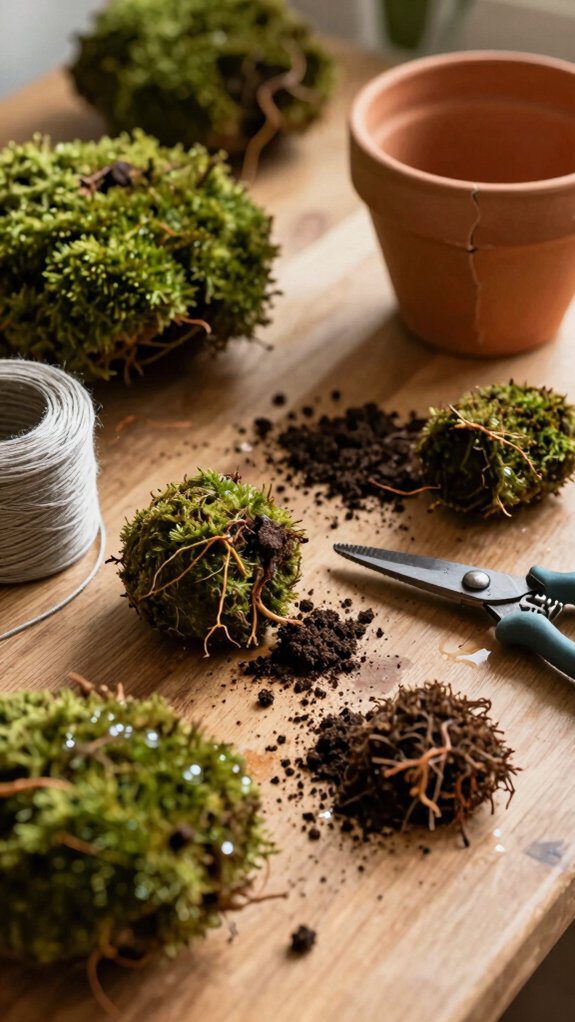
Even though moss balls seem forgiving, I’ve found that a few common pitfalls can quickly derail your project—but the good news is that they’re all totally preventable once you know what to watch out for.
When sourcing moss, always remove dirt and debris from underneath, then pre-moisten it so it adheres properly without gaps.
Avoid overly wet soil that causes root rot; aim for moist, not dripping.
Wrap your twine tightly using 3–4 yards in multiple directions—loose wrapping lets everything fall apart.
Finally, test drainage by submerging your finished kokedama for 5–10 minutes.
Proper humidity control prevents problems down the road.