17 DIY Ideas With Architectural Salvage for Unique Home Decor
You can transform forgotten architectural salvage into stunning décor by repurposing old doors as headboards or dining tables, converting window frames into gallery walls or mirrors, and turning salvaged columns into statement floor lamps. Cast iron brackets make excellent shelving, while antique mantels create focal points instantly. Reclaimed wood becomes coffee tables with character, architectural molding frames your favorite photos, and stair spindles transform into candle holders. Each project combines sustainability with personality—and there’s plenty more creative possibilities waiting to inspire your next project.
Love cozy DIY projects? 💕
Get free printable guides, exclusive tutorials & surprise craft goodies straight to your inbox.
Disclosure: This post may contain Amazon affiliate links, at no extra cost to you. Content on DiyCraftNest is created with research support from AI tools and carefully reviewed, edited, and fact-checked by the lead author, Daniel Pat, to ensure accuracy and reliability. Learn more
Key Takeaways
- Transform salvaged doors into dining tables by reinforcing undersides with plywood and pairing with reclaimed bases or hairpin legs.
- Repurpose old window frames as multi-pane photo galleries by layering images behind panes with protective glass backing for seasonal swaps.
- Convert multi-pane windows into mirrors by having mirrored glass cut to fit while preserving original sashes for vintage character.
- Create reclaimed wood coffee tables using estate sale boards, porch corbels as legs, and salvaged hardware as decorative corner accents.
- Build floor lamps from salvaged columns by drilling centered holes, threading wiring through, and securing to sturdy bases with drum shades.
Vintage Door Headboard

A salvaged door isn’t just for entryways—it’s a gateway to creating a stunning bedroom focal point that’ll have guests asking where you found it. I love hunting for chippy vintage doors at salvage shops for about $50, then transforming them through cleaning, sanding, and paint distressing.
The architectural details like a repurposed transom or raised panels instantly add character above your bed. I secure mine firmly to the wall, then incorporate wall sconces on either side for ambient lighting.
Finishing with stain or protective sealant preserves that beautiful patina while keeping it durable. It’s an affordable, personalized statement that truly reflects your style.
Old Window Frame Wall Art
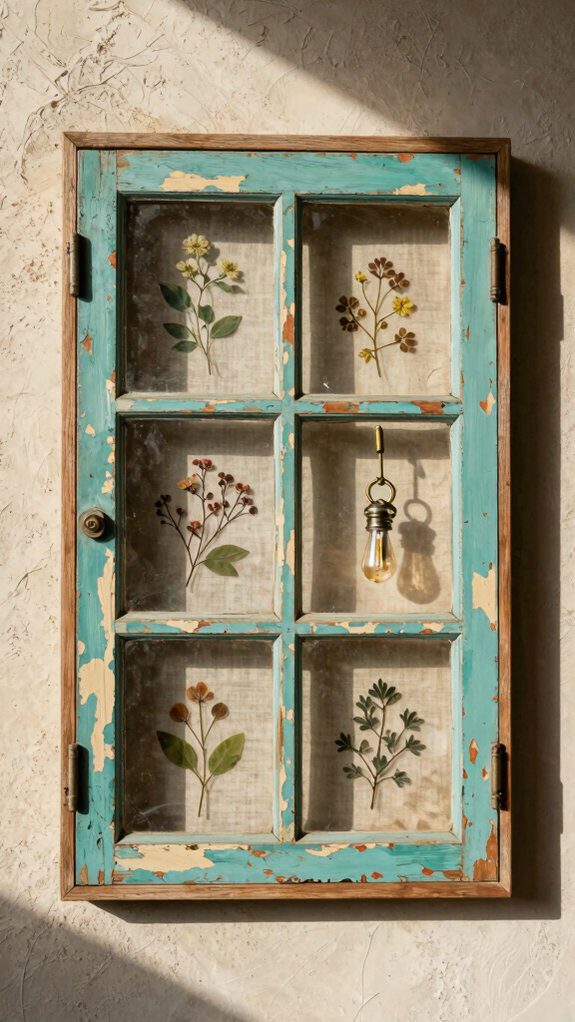
If you’re looking for a creative way to showcase your favorite memories, I’ve found that layering photos behind each pane of an old window frame creates a stunning gallery wall that feels both personal and polished.
You can arrange Instagram prints, family snapshots, or even botanical illustrations in a grid pattern, using thrift-store glass as backing to protect each image while keeping that vintage charm intact.
The beauty of this approach is that you can swap out photos whenever you want, turning your salvaged frame into a flexible display that grows and changes with your life.
Layered photo display option
One of my favorite ways to breathe new life into salvaged window frames is transforming them into lively photo displays that’ll make your guests stop and stare.
I love creating layered depth by leaning a large mantel-mounted window frame behind smaller frames or decorative cloches. This technique gives your display a sophisticated, collected-over-time feel.
I use textured backing like painted plywood or beadboard to anchor photos securely while adding visual interest.
What I really enjoy is seasonal swapping—rotating family photos, travel snaps, or holiday cards keeps things fresh without major effort. It’s a simple way to celebrate memories while showing off architectural charm.
Salvaged Column Floor Lamp
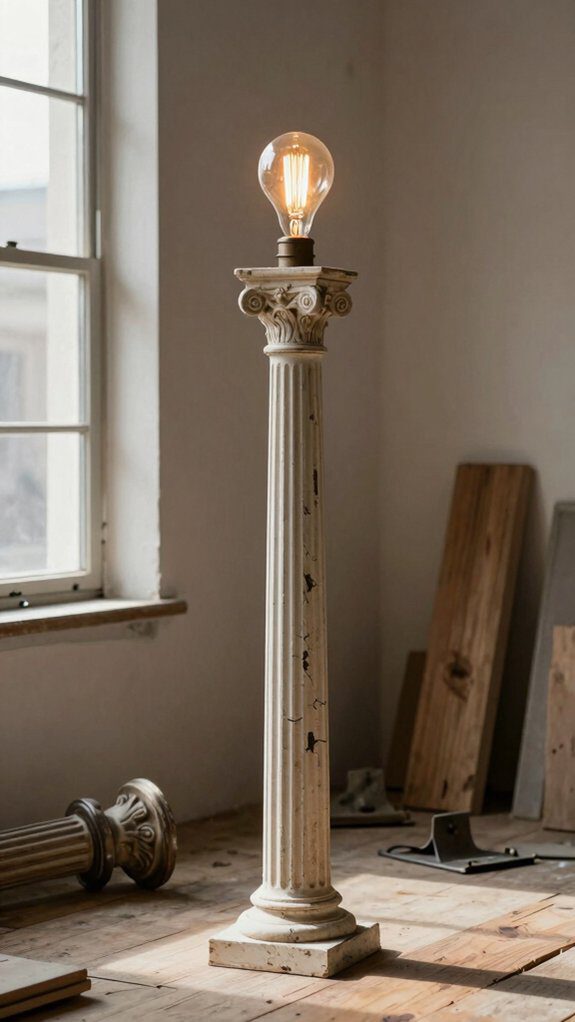
Transform an old porch or stair column into a striking floor lamp that’ll instantly elevate your space with genuine architectural character.
I’ve found that an upcycled lampstand becomes a conversation starter when you source a chunky column from flea markets or vintage shops—aim for 30–48 inches tall.
A custom wiring guide using standard lamp kits simplifies the process: drill a centered hole, thread the wiring through, and secure everything to a sturdy base plate.
Paint, whitewash, or embrace the original patina.
Position your new lamp in reading nooks or flanking consoles, paired with a neutral drum shade to showcase those beautiful architectural details.
Antique Mantel Shelf
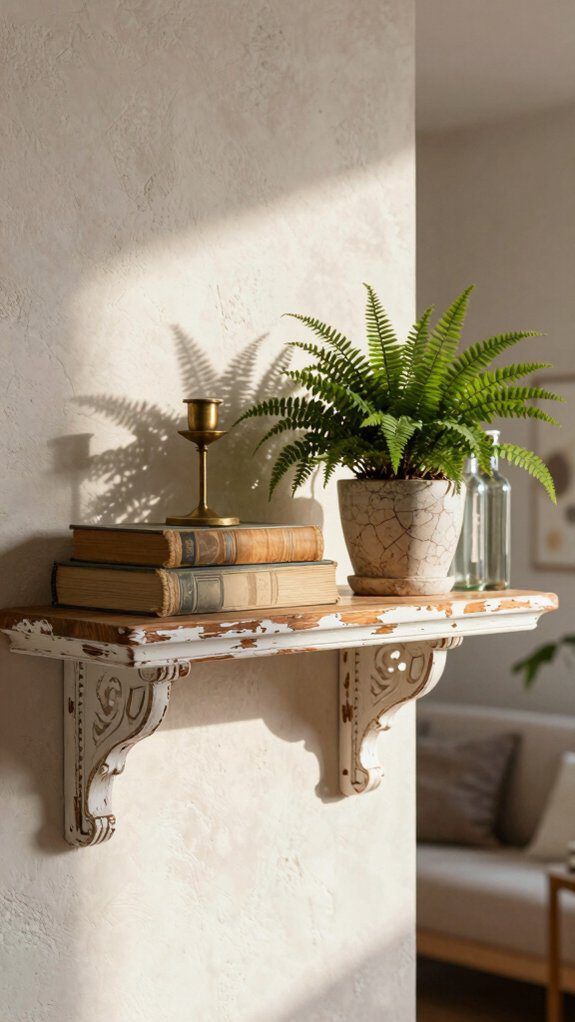
While that salvaged column lamp brings warmth to a reading corner, an antique mantel shelf can become the showstopping centerpiece of an entire room—and I’m not talking about just hanging it above a fireplace.
I’ve uncovered you can find affordable mantels at estate sales or vintage markets like Nashville’s Flea Market. Position yours as a freestanding focal point on a large wall or behind a sectional to create a stunning faux fireplace display.
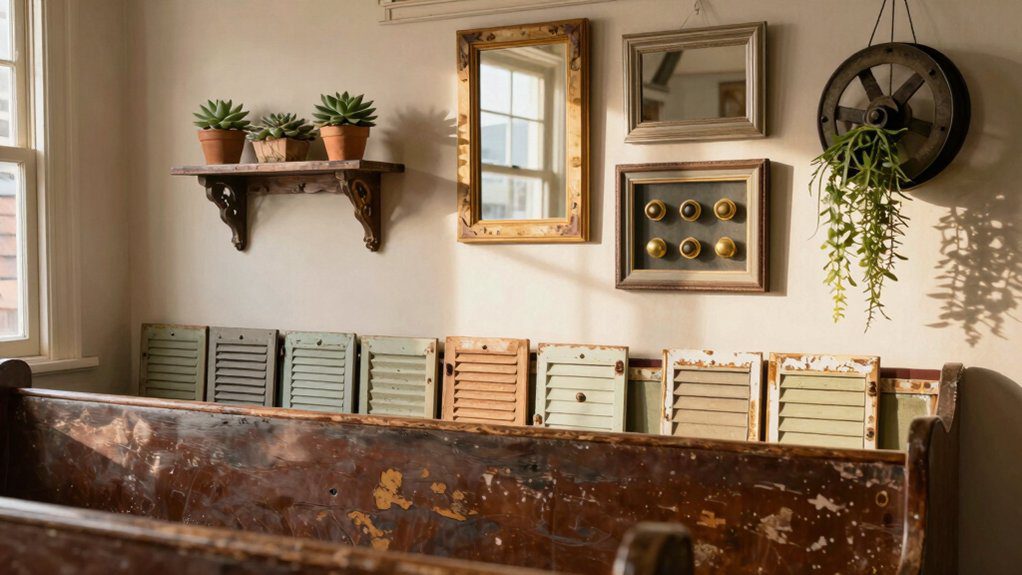
Layer salvaged arches, shutters, or windows behind it, then style with seasonal displays—spring florals or cozy fall accents add instant texture. You can even incorporate outdoor integration by placing weathered mantels on covered decks.
Minor restoration through cleaning, sanding, or staining transforms these architectural treasures into personalized focal points.
Reclaimed Wood Coffee Table
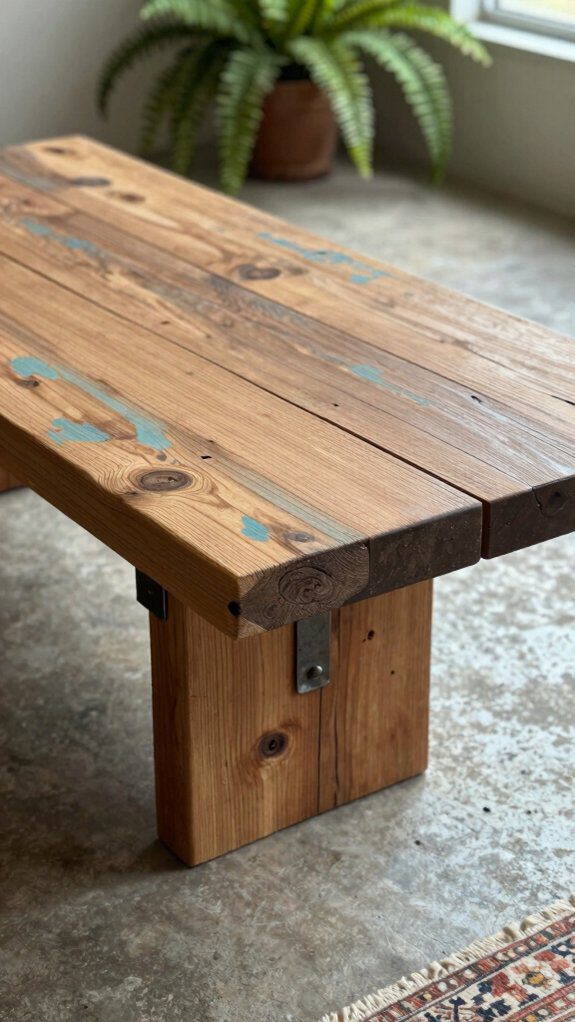
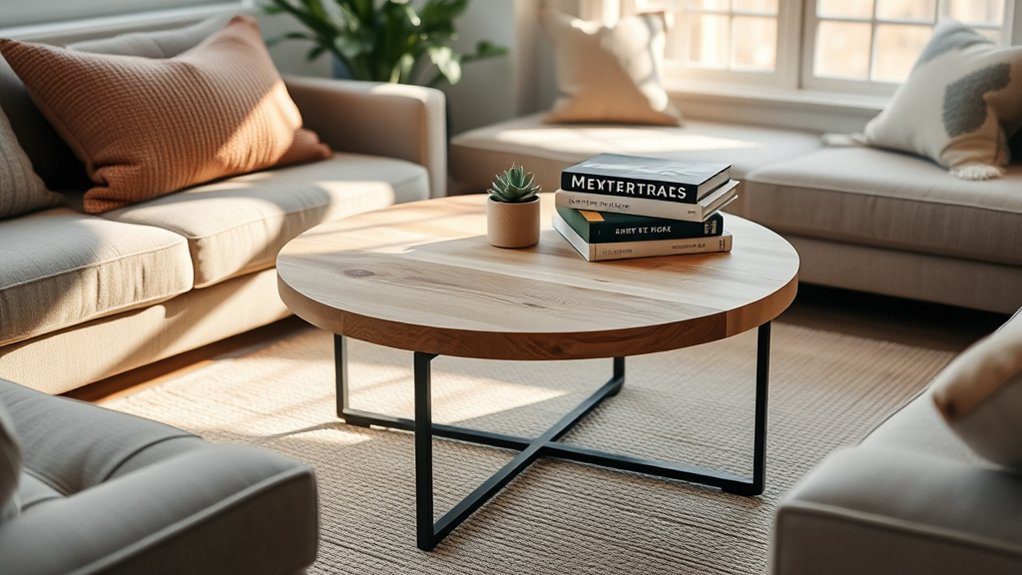
Building a reclaimed wood coffee table lets you create a one-of-a-kind centerpiece that’s both functional and full of character.
I love sourcing materials from estate sales and barn finds—often free or dirt cheap. Here’s what makes this project special:
- Weathered finishes add authentic charm without extra work
- Heavy porch corbels become stunning statement legs
- Pocket screws and biscuits join boards flawlessly
- Salvaged hardware becomes decorative corner accents
- Hidden storage shelves from fence pickets enhance functionality
After sourcing your wood, I simply clean and sand gently to preserve patina, then seal with clear poly. Adding inset mirror panels creates polish.
You’re building heirloom-quality furniture while joining a community of creative reusers.
Iron Gate Garden Trellis
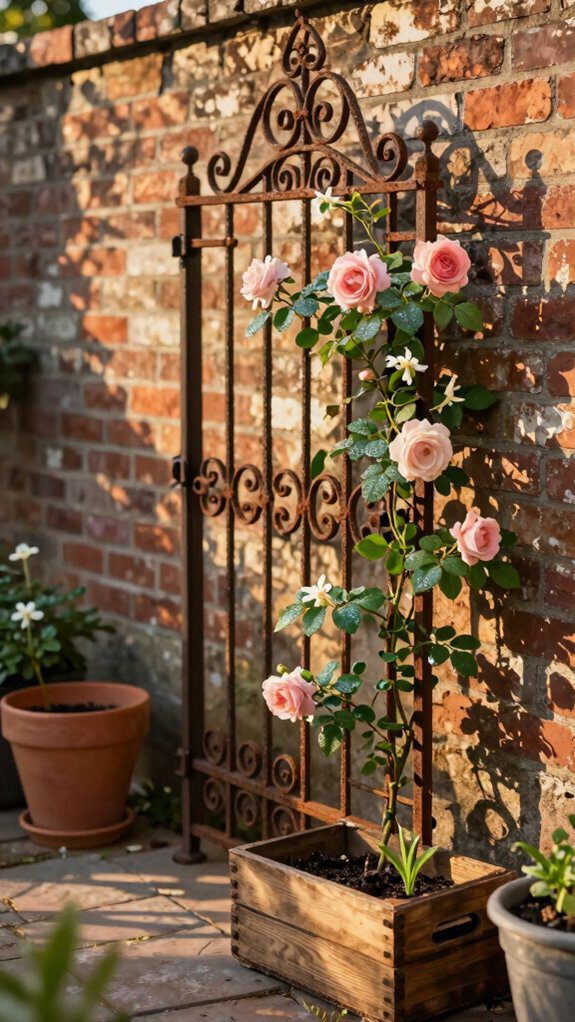
I’ve found that transforming a salvaged iron gate into a garden trellis creates one of the most striking outdoor statement pieces you can build with your own hands.
Whether you’re anchoring a chippy wrought-iron fence section vertically into the soil or mounting an ornate gate against a wall, these repurposed pieces instantly add architectural character that store-bought trellises just can’t match.
The best part is that your climbing roses, clematis, and sweet peas won’t just thrive on this sturdy support—they’ll frame it beautifully, turning your garden into a showstopper that’ll have neighbors asking where you found such a gorgeous focal point.
Outdoor statement piece
Because salvaged iron gates carry so much character and history, they’re perfect candidates for transforming into stunning garden focal points. I’ve found that these ornate pieces create an incredible rustic archway while adding patio privacy to outdoor spaces.
Here’s what makes this project special:
- Set posts into 12–18-inch concrete footings for stability
- Space climbing plants 12–24 inches apart for even coverage
- Brush loose rust and apply clear rust-converting sealer to preserve patina
- Attach a timber or steel frame for load distribution
- String fairy lights and hang planters for layered depth
Your salvaged gate becomes a conversation-starting focal point that reflects your unique style.
Vintage Drawer Wall Shelves
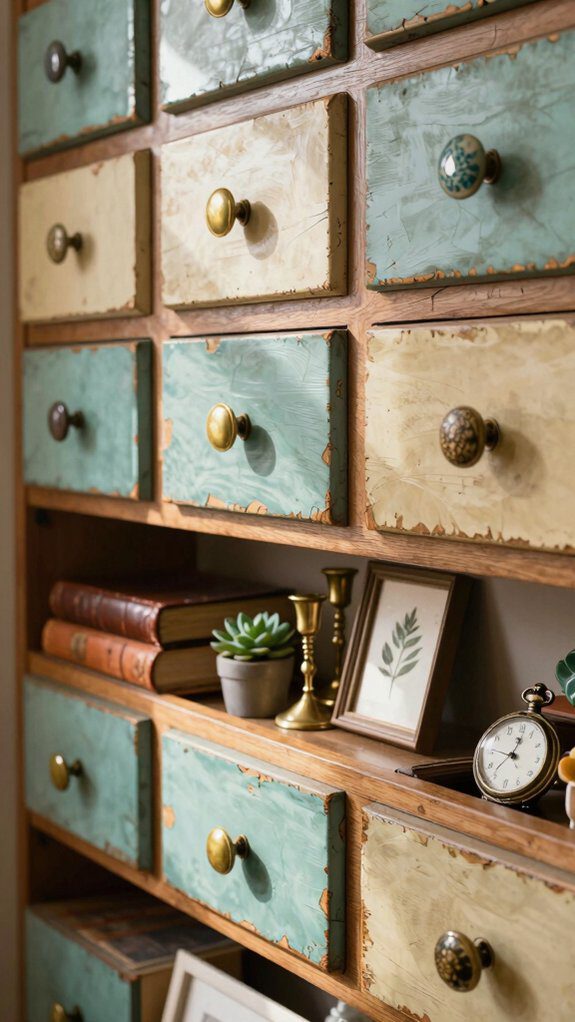
Salvaged drawers are one of my favorite home-decor secrets because they’re already built for storage—you just need to flip your thinking and mount them sideways on your walls.
I love creating drawer galleries by grouping three to five mismatched antique pieces in staggered arrangements that add layered depth and character. You can display candles, framed photos, or jars inside.
For outdoor spaces, I seal drawers with exterior varnish and transform them into herb planters. Remove the drawer box entirely and add pegboard for craft supplies or succulents.
These vintage treasures give your home authentic charm while keeping things organized beautifully.
Old Shutter Room Divider
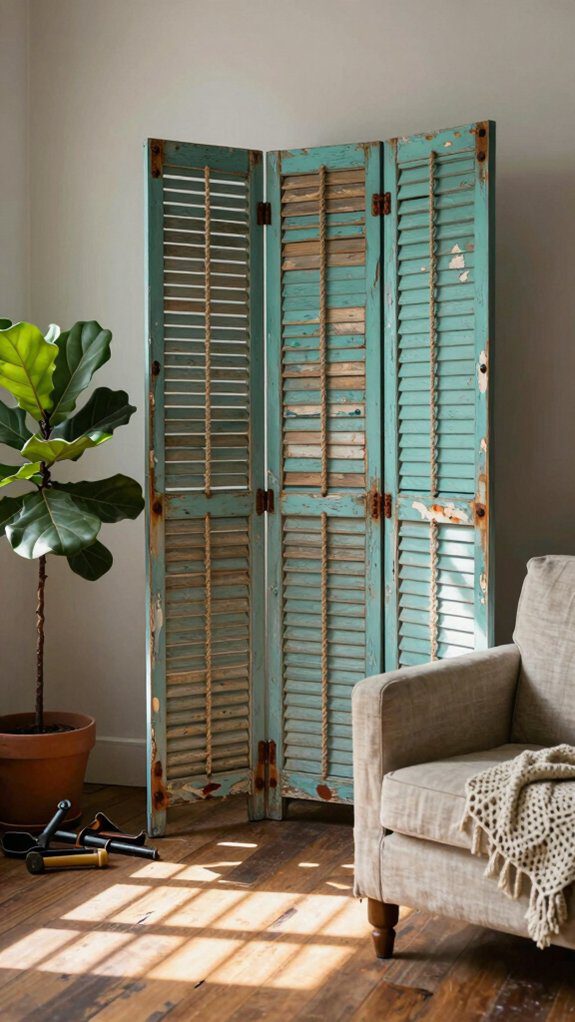
Room dividers don’t have to be boring—and that’s where old wooden shutters come in! I love transforming reclaimed shutters into portable panels that add character while solving space problems. Here’s how I create privacy shutters that work:
- Hinge three or more shutter panels together using exterior or piano hinges
- Sand, seal, or paint shutters from flea markets to match your style
- Attach caster wheels for easy mobility and stability
- Mount paired shutters on barn door tracks for sliding separators
- Add shelves, hooks, or narrow consoles for storage and display
These flexible screens fold compactly for storage and adjust beautifully to any room.
Salvaged Corbel Bookends
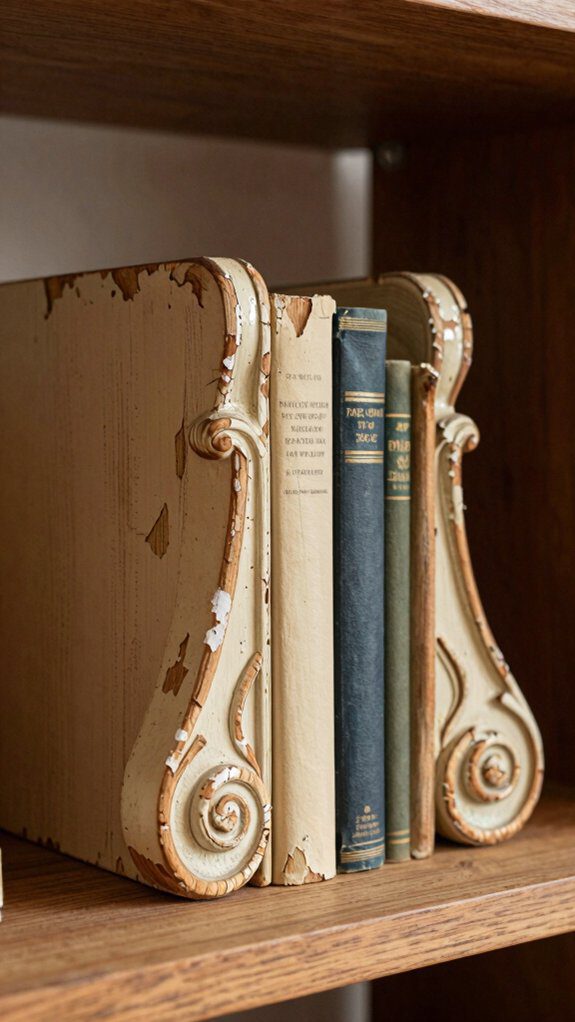
I love how salvaged corbels transform a simple bookshelf into something with real character and rustic charm.
When you pair these architectural gems as bookends—whether you’re using matched vintage pieces or mixing and matching different styles—they instantly enhance your shelf styling with texture and history.
The best part is that you can hunt for them at flea markets and estate sales, then customize them with felt pads and stabilizing brackets to create bookends that are both beautiful and functional.
Rustic shelf styling
Architectural brackets—those charming L-shaped supports originally designed to hold up shelves and cornices—make fantastic bookends when you repurpose them on display shelves. I’ve uncovered they’re perfect for creating that rustic vignette you’re craving.
Here’s how I style mine:
- Paint corbels in soft, distressed finishes like duck-egg blue or chippy white
- Pair bookends with weathered baskets and mason jars for layered texture
- Add glass cloches or small columns between books for visual interest
- Attach rubber pads underneath to protect your surfaces
- Mix salvaged spindles and finials for coordinated charm
This approach transforms practical supports into styled displays that feel authentically yours.
Window Pane Mirror
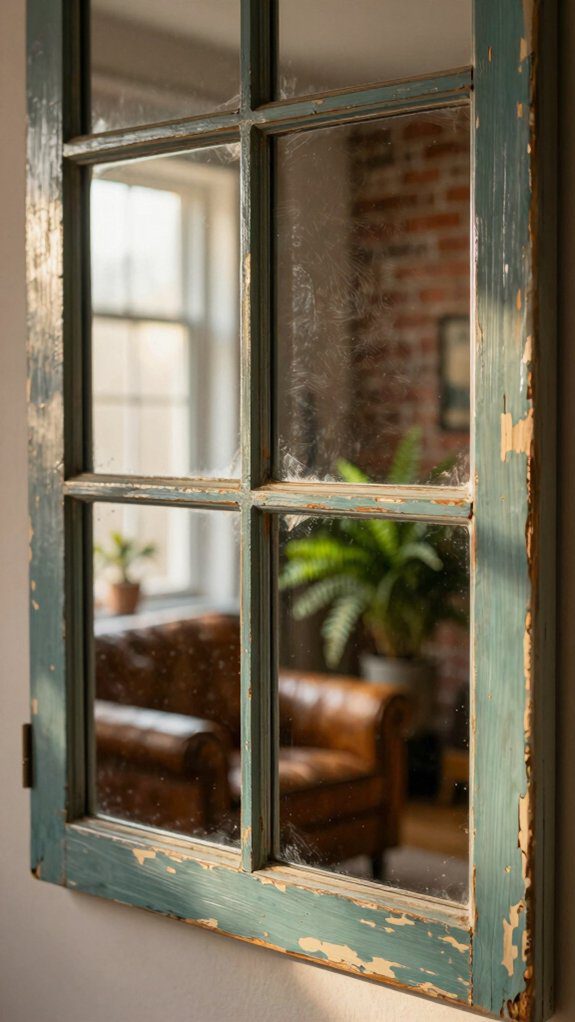
One of the easiest and most rewarding salvage projects you’ll tackle is transforming an old multi-pane window into a stunning mirror. You’ll remove the panes, have a glass shop cut mirrored glass to fit, then secure it—all for around $30. Keep those original sashes and muntins for authentic vintage character.
Mount your mirror conversion above a mantel or dresser to become an instant focal point that enlarges your space visually. For seasonal styling, hang wreaths or swap decor around the frame. Secure it properly using D-rings or French cleats on studs, ensuring safety while celebrating salvaged beauty.
Reclaimed Wood Accent Wall
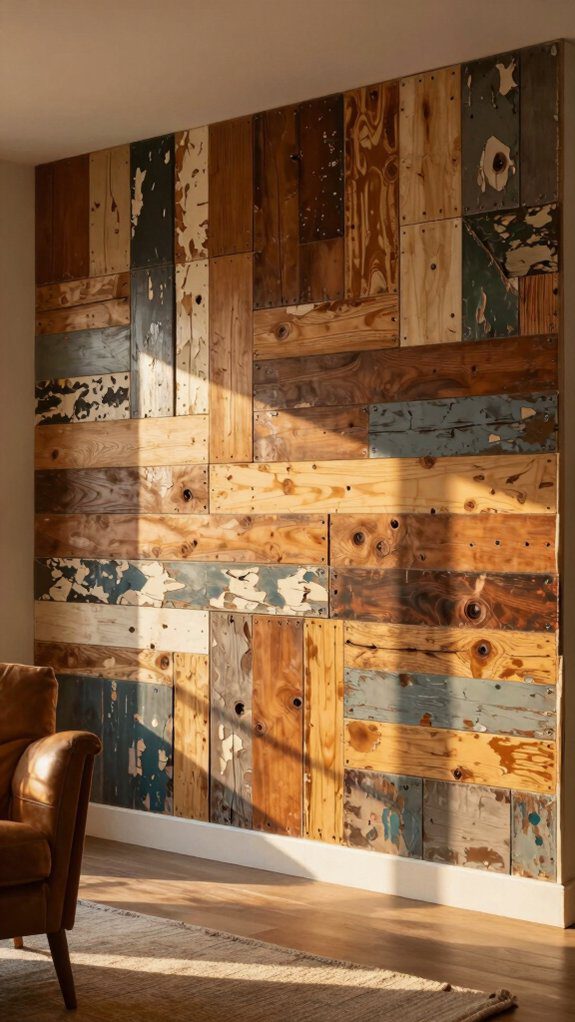
Transform a plain wall into a rustic showstopper by salvaging affordable barn wood, fence pickets, or weathered boards from flea markets and estate sales—sometimes even free if you’re willing to haul them away yourself. I’ve found that mixing architectural fragments like shutters and beadboard creates visual interest without extra expense.
Installation tips:
- Mount 1×2 furring strips to studs first
- Screw boards into furring, not drywall
- Stagger end joints across rows
- Leave varied gaps for weathered texture
- Sand minimally to preserve original patina
The weathered texture speaks volumes, requiring little restoration. Save your most beautifully patinated boards for prominent spots, and watch your accent wall become your home’s character centerpiece.
Vintage Grate Wall Organizer
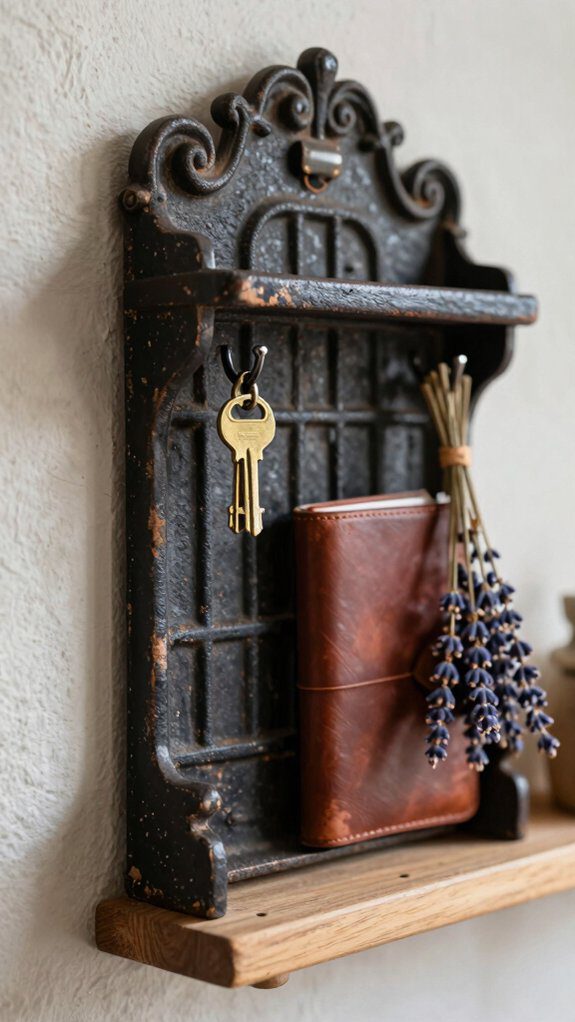
Salvage an old iron grate—whether it’s from a fireplace, garden fence, or architectural salvage yard—and you’ve got yourself the foundation for a stylish wall organizer that’s both functional and full of character.
I love mounting mine on reclaimed wood backing for stability, then adding hooks and S-rings for hanging keys, mugs, and jewelry while preserving that beautiful patina.
Transform sections into magnetic memoboards by attaching small mirrors or plexiglass panels, creating perfect spots for photos and postcards.
For mudrooms, I seal with rust-inhibiting primer and fasten a shallow tray beneath to catch mail and gloves.
It’s practical organization with authentic charm.
Antique Door Dining Table
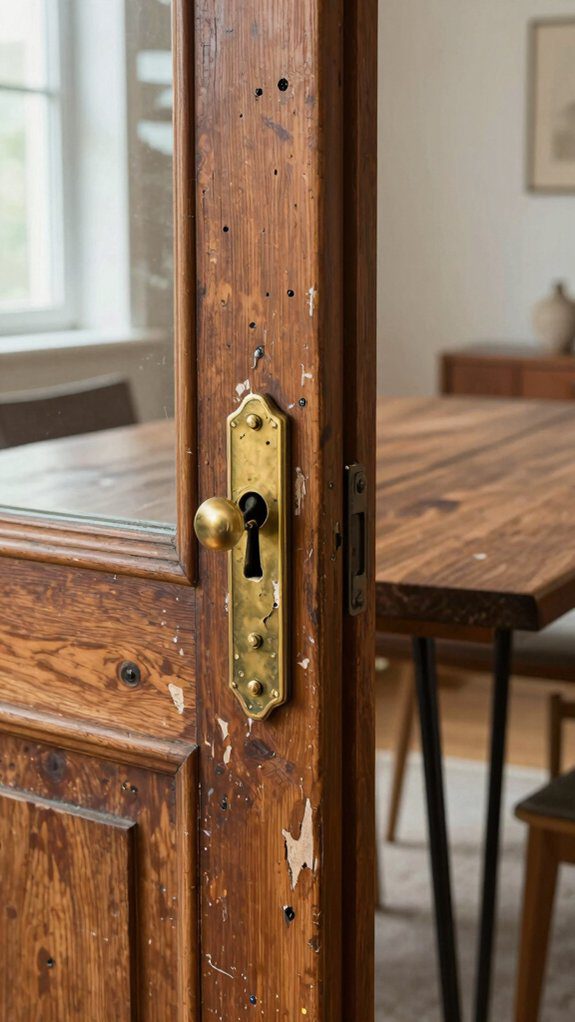
I’ve found that an antique door dining table becomes an instant farmhouse focal point because it brings genuine character and history right into your dining space.
When you top a salvaged door with hairpin legs or reclaimed supports, you’re creating a conversation starter that no mass-produced table can match.
Whether you position it as a statement centerpiece or lean it against a wall as a buffet, this piece practically begs guests to ask about its origins and story.
Farmhouse focal point
One of my favorite salvage projects is turning an antique door into a stunning farmhouse dining table—it’s the kind of piece that instantly becomes a conversation starter in any room.
I’ve found that barn doors work beautifully as tabletops when properly reinforced. Here’s what I do:
- Source doors from estate sales ($40+) for authenticity
- Reinforce undersides with plywood substrates
- Pair with reclaimed barn-wood bases for stability
- Add tempered glass tops ($30) for protection
- Arrange with farmhouse chairs for that cozy, gathered-around feeling
The result? A rustic focal point that tells your home’s story and invites everyone to belong.
Cast Iron Bracket Shelving
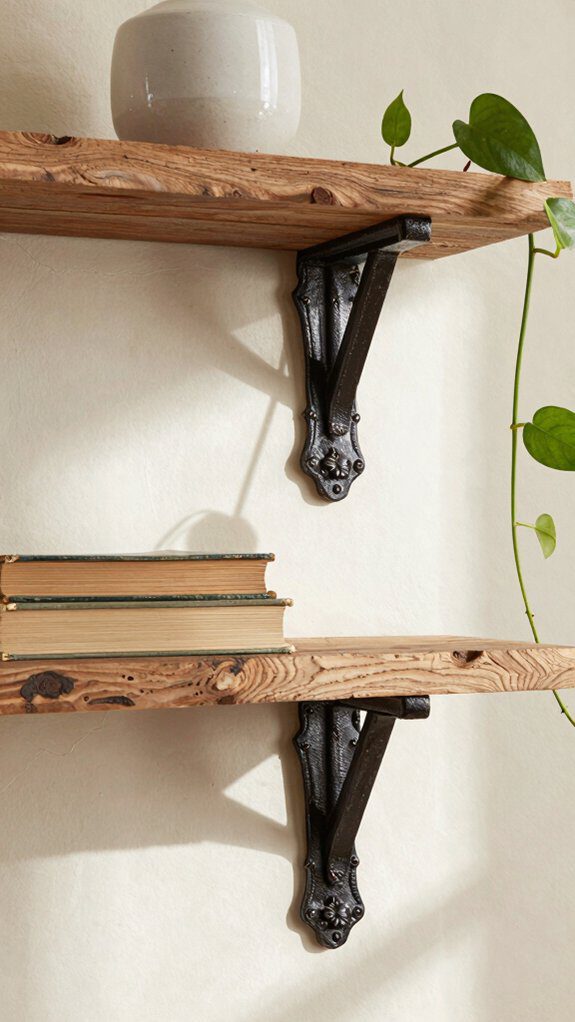
Transform forgotten treasures into functional art by repurposing vintage cast iron brackets—those heavy-duty gems you’ll unearth at flea markets and estate sales—into striking shelves that blend industrial chic with farmhouse warmth.
I pair these beauties with reclaimed wood, spacing brackets 12–18 inches apart for medium loads. After weight testing your bracket’s capacity (typically 50–200+ lbs), mount using lag screws into studs or heavy-duty anchors. Wire-brush away rust, then seal with clear coat or oil-rubbed finish to preserve patina.
Reserve ornate pieces for lightweight displays—books and photos—while chunky corbels become dramatic statement shelves that showcase your salvage style.
Architectural Molding Picture Frames
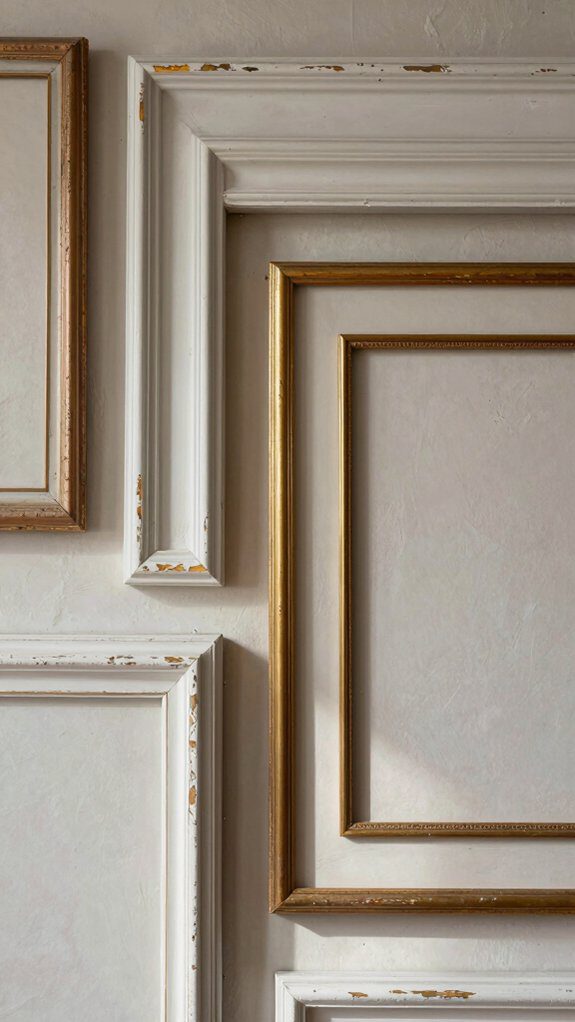
Reclaimed molding and salvaged trim are perfect materials for crafting picture frames that feel authentically vintage—and honestly, they’re way more interesting than store-bought options.
I’ll show you how to create frames that celebrate architectural character:
- Glue or nail molding pieces onto board backing to frame photos or prints
- Use beadboard or old window sash as creative backing materials
- Repurpose old window frames for mirrors (or attach cut mirrors for around $30)
- Apply paint distressing to blend repairs and highlight details
- Add period hardware like brass key plates or finials to corners
Your salvaged frames tell stories that mass-produced ones simply can’t match.
Salvaged Metal Light Fixture
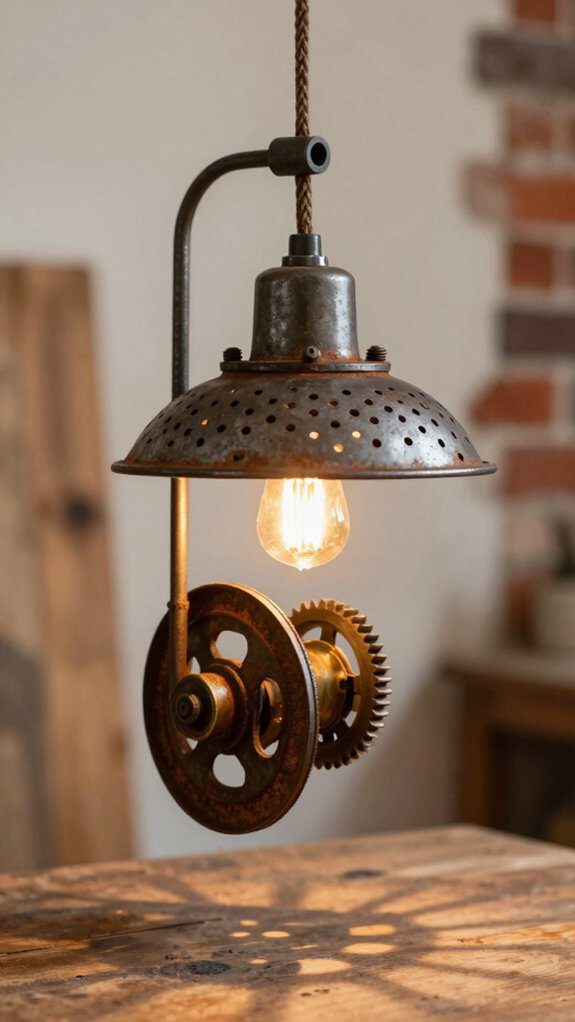
When you uncover a vintage brass pendant shade or ornate chandelier fragment at a flea market or estate sale, you’ve stumbled onto something special—a lighting piece that carries genuine character and history.
I love transforming these treasures into striking focal points. An upcycled pendant clusters small brass finials or faucets onto new cords, creating geometric interest. For outdoor spaces, I rewire salvaged fixtures into charming outdoor lanterns after replacing cracked sockets and ensuring safety compliance. You can also skip electrical work entirely—use them as candle holders or decorative sculptures. Either way, you’re joining a community of creative homemakers who value authenticity and sustainability.
Old Stair Spindle Candle Holders
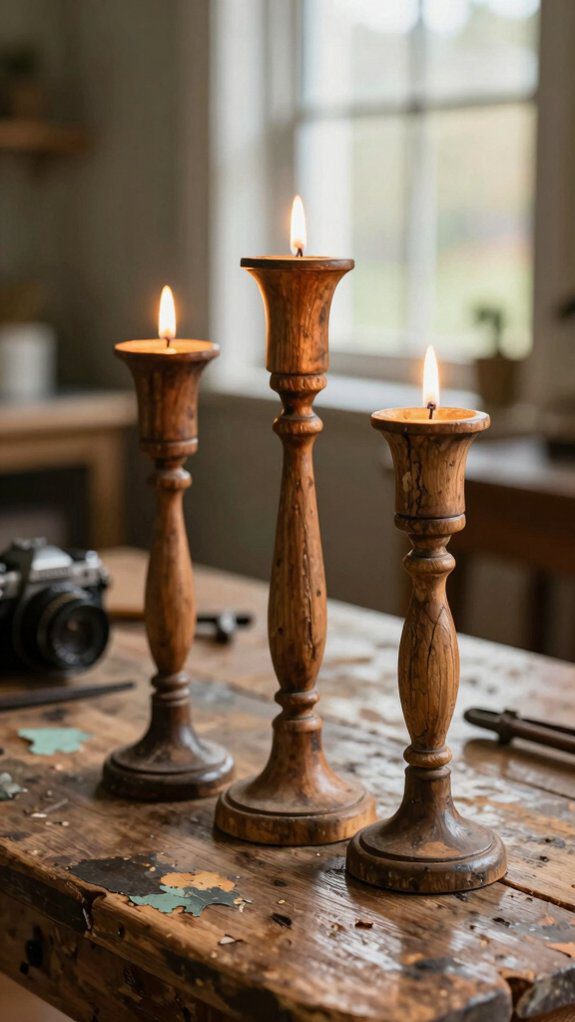
I’ve found that old stair spindles make fantastic decorative centerpieces when you transform them into candle holders—they’re inexpensive treasures you can snag at estate sales or antique malls.
By cutting spindles into varied heights (think 6–10 inch sections), sanding them smooth, and drilling a hole on top for your candles, you’ll create a visually interesting grouping that adds character to any table.
The real magic happens when you arrange these holders at different heights together, letting the wood grain and patina tell their own story while casting a warm glow across your room.
Decorative centerpiece idea
Because they’re affordable, readily available, and surprisingly elegant, salvaged stair spindles make fantastic candle holders that’ll instantly raise your mantel or dining table.
I love creating a salvage centerpiece by grouping spindles at varying heights on a tray.
Here’s what makes a stunning spindle grouping:
- Drill centered holes down each spindle’s length
- Cut spindles to different heights for visual interest
- Stabilize with epoxied brass candle cups or plywood bases
- Mix in complementary salvage pieces like rosettes and corbels
- Keep original chippy paint for authentic character
This approach transforms humble finds into an arrangement bursting with historical charm and personality that brings everyone together.