23 DIY Flower Bed Borders Easy Garden Edging Ideas
If you want easy, stylish garden edges, I’ve got you covered with 23 DIY flower bed borders! From sleek metal edging that lasts and shapes easily to charming wood borders that feel rustic and natural, plus stone or brick for sturdy, classic looks. You can even try budget-friendly options like recycled materials or rubber. Each choice brings something special, whether it’s simplicity, durability, or eco-friendly appeal, and exploring these ideas will definitely spark your creativity for your garden’s perfect finish.
Love cozy DIY projects? 💕
Get free printable guides, exclusive tutorials & surprise craft goodies straight to your inbox.
Disclosure: This post may contain Amazon affiliate links, at no extra cost to you. Content on DiyCraftNest is created with research support from AI tools and carefully reviewed, edited, and fact-checked by the lead author, Daniel Pat, to ensure accuracy and reliability. Learn more
Key Takeaways
- Use metal edging for a sleek, durable, and low-maintenance flower bed border that can be shaped into curves or unique designs.
- Create rustic charm with natural log or woven willow edging, both eco-friendly and effective at soil retention and weed control.
- Lay stone, brick, or river rock edging for sturdy, natural-looking borders that improve drainage and define garden beds neatly.
- Decorative options like recycled glass bottles, painted slate, or bamboo provide colorful, customizable, and unique garden edges.
- Budget-friendly alternatives include recycled materials, plastic edging, and natural rocks, offering creative and cost-effective garden borders.
Metal Edging Solutions
When you want a flower bed border that looks clean and modern, metal edging solutions are a fantastic choice to contemplate.
I’ve found that metal edging benefits include its sleek style and impressive durability—it resists rust and corrosion, so it lasts.
Plus, metal edging installation is pretty straightforward; you usually need just a few basic tools to create crisp, defined lines around your garden beds.
What I love most is how easy it’s to shape metal edging into curves or unique designs, adding a personal touch to your outdoor space without much upkeep afterward.
Wood Timber Borders
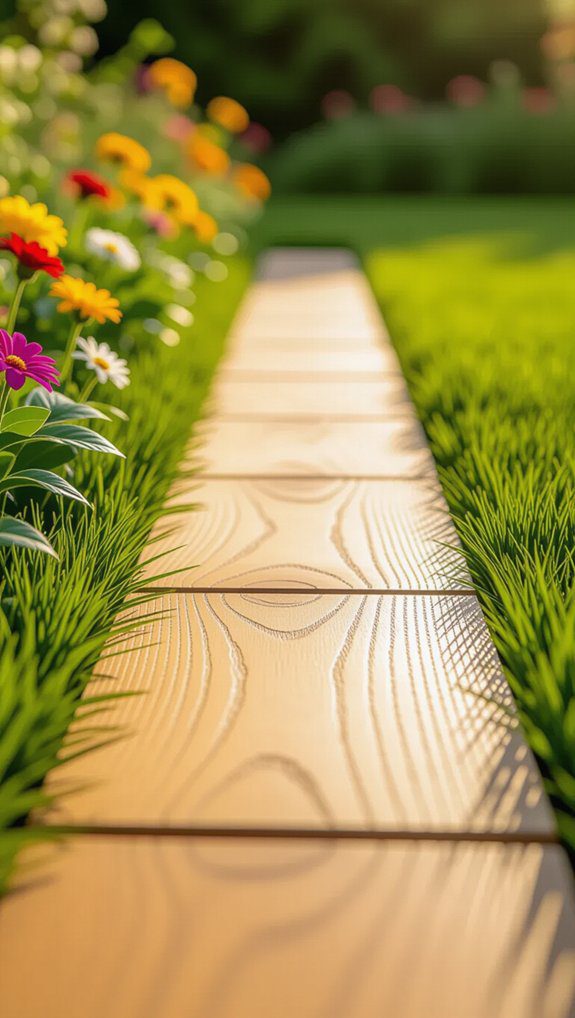
Wood timber borders bring a charming, rustic feel to any flower bed, instantly making your garden look warm and inviting.
I love using untreated 2×4 lumber because it’s easy to customize with paint or stain, boosting the aesthetic appeal to match my outdoor style.
To keep it sturdy, I secure the timber with stakes or 2xEDGE Staples—no trenching needed!
Remember, timber treatment is key; applying a wood preservative helps prevent rot and extends the border’s life.
With just a little upkeep, your timber edges will last for years, adding both beauty and function to your garden space.
Natural Log Edging
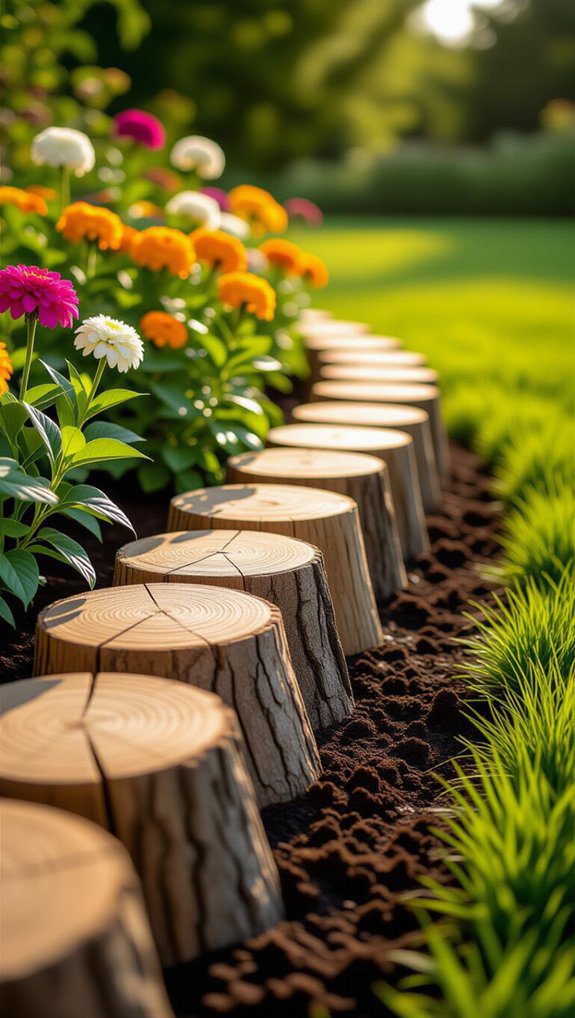
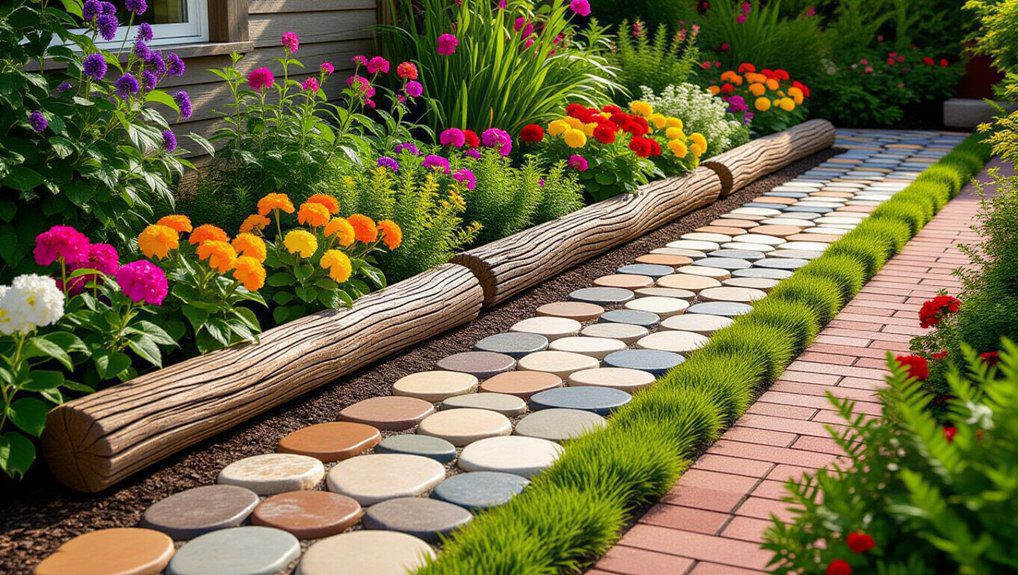
Nothing adds a cozy, natural charm to a flower bed quite like natural log edging. I love using logs because they blend effortlessly with garden scenery, giving a rustic, organic feel.
To get the best log durability, I always pick logs free from rot and pests, then treat them with a natural wood preservative—that’s key for pest prevention. You can easily cut logs to size and nestle them along your flower bed’s edge, securing with soil or mulch.
This not only defines your garden but also helps stop grass from sneaking in and prevents soil erosion.
Stone and Brick Edging
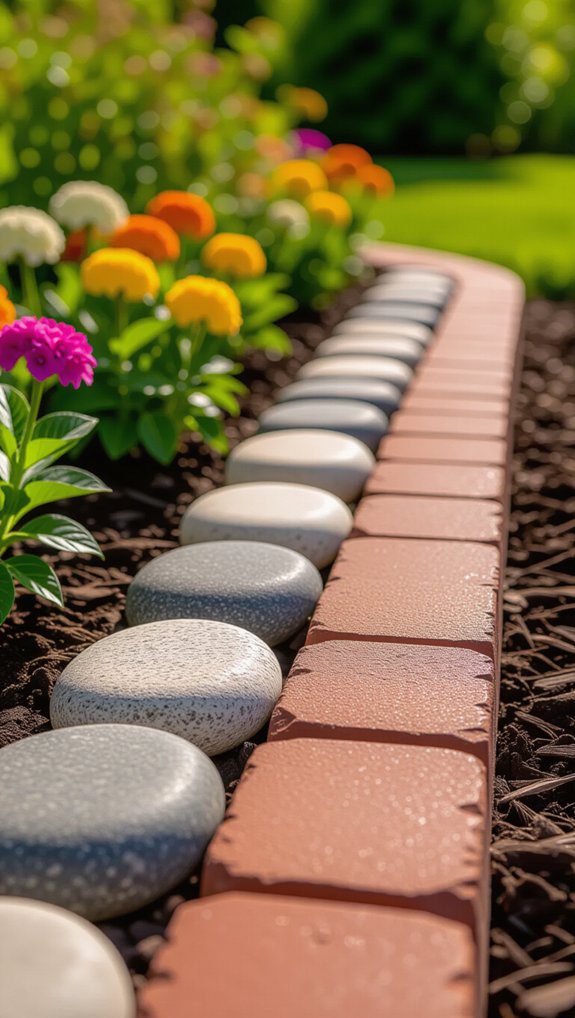
If you love the natural vibe that logs bring to your flower beds, you’ll also appreciate the charm that stone and brick edging can add.
I’ve found that stone color variations—from soft grays to warm browns—bring a rustic feel that blends beautifully with plants.
Brick edging offers endless creativity with brick pattern designs, letting you create unique, classic borders.
Both options form sturdy barriers to keep weeds out and beds neat.
Just remember to dig a shallow trench and compact the soil for stability.
Check regularly for adjustments to keep your garden looking sharp and welcoming all season long.
Terracotta and Ceramic Borders
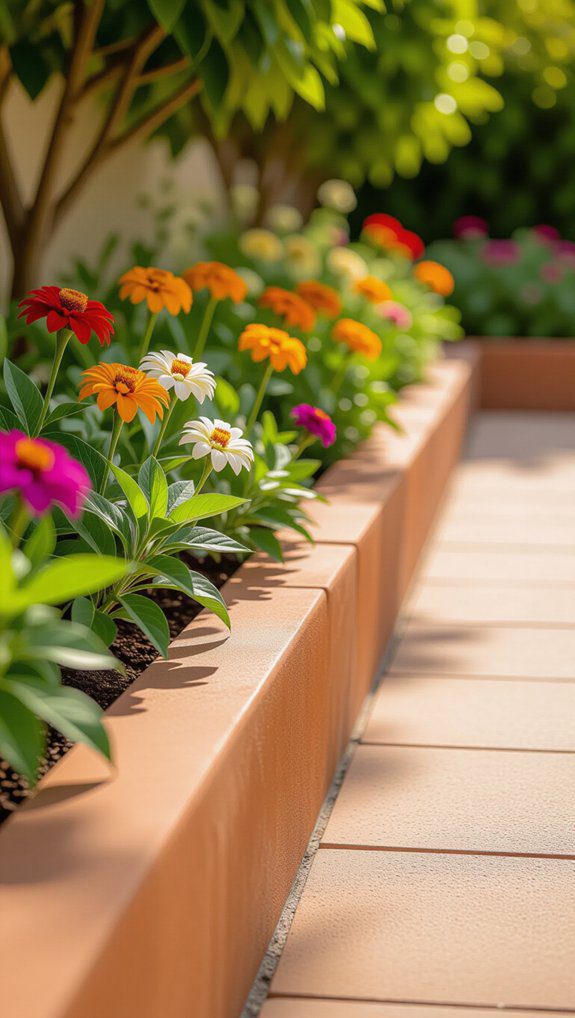
While terracotta and ceramic borders might seem like just pretty accents, I’ve found they offer so much more for your flower beds. Their terracotta aesthetics bring warmth and charm, creating a cozy garden vibe.
Plus, ceramic durability means they stand up to weather without losing style. Here’s why I love them:
- They come in various colors and shapes, perfect for personalizing your space.
- Terracotta’s porous nature helps with drainage, keeping plants happy.
- When installed well, they create a neat, defined edge that truly improves your garden’s look.
They’re both beautiful and practical!
Recycled Glass Bottle Edging
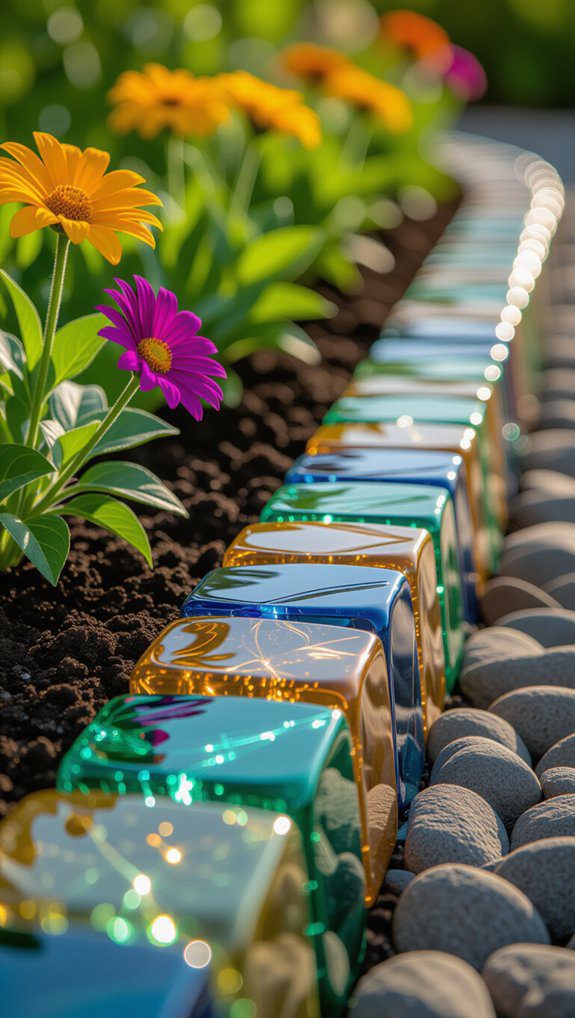
One of the most charming and eco-friendly ways to border your flower beds is by using recycled glass bottles, and I can’t wait to share how simple and rewarding this project can be. This creative use of bottles adds color and sparkle while supporting sustainable gardening. Simply dig a trench, place bottles upright or sideways, and bury part for stability. Here’s a quick guide:
| Bottle Style | Placement | Effect |
|---|---|---|
| Upright | Shallow trench | Rustic, light-catching |
| Horizontal | Half-buried | Whimsical, colorful |
| Mixed Colors | Any | Vibrant, eye-catching |
| Clear Glass | Sunny spots | Reflects light beautifully |
Living Plant Borders
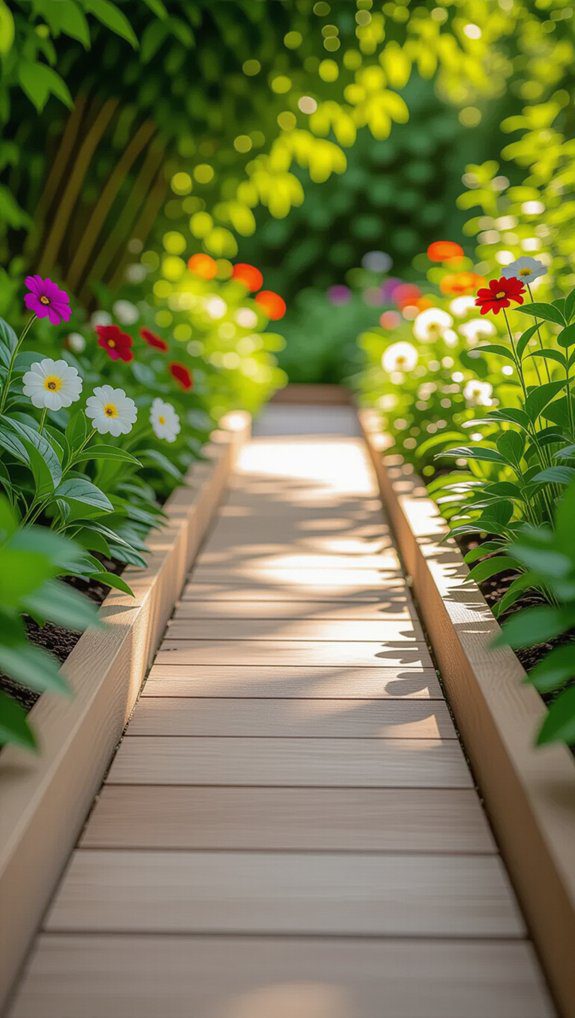
Recycled glass bottles create a charming border full of color and sparkle, but if you’re looking for something that grows and changes with the seasons, living plant borders offer a wonderful alternative.
They’re eco-friendly and add natural beauty with texture variety. Here’s why I love them:
- Perennial choices like mondo grass mean your border fills in year after year.
- Plants such as Dusty Miller help keep weeds at bay.
- They adjust easily to different soils and need little upkeep.
Living borders create a cozy, vibrant edge that welcomes you home every time.
Concrete Block Edging
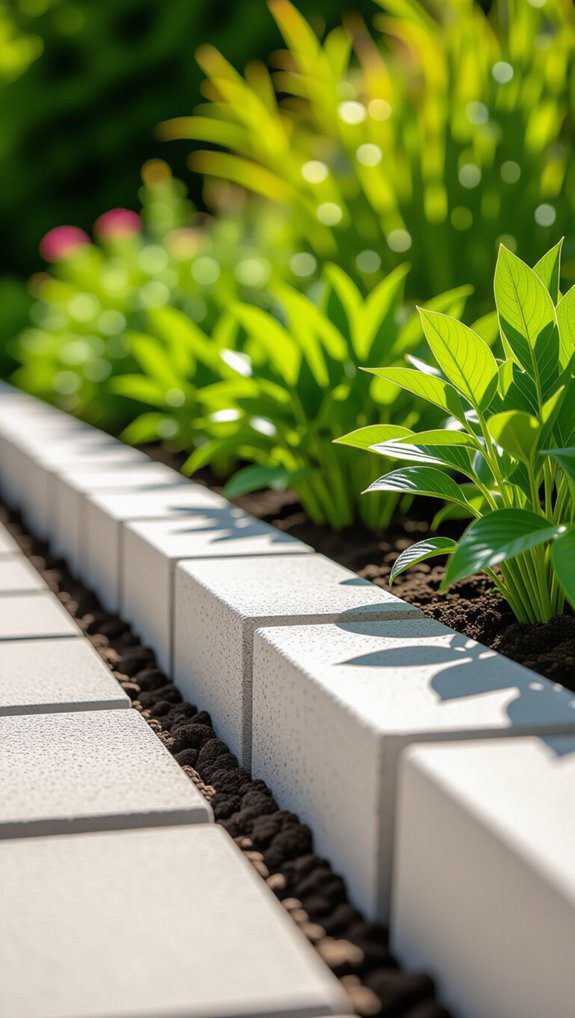
Concrete block edging offers a sturdy and reliable way to define your flower beds, and I’ve found it’s one of the best options if you want something both practical and customizable.
The concrete block benefits include durability and resistance to weather, which means less upkeep for you. Plus, with various concrete block designs, you can create patterns that fit your garden’s style perfectly.
To install, just level the soil, add gravel for drainage, and stack the blocks. You can even paint or stain them to match your surroundings.
It’s a fun DIY project that brings beauty and function together effortlessly.
Corrugated Metal Edging
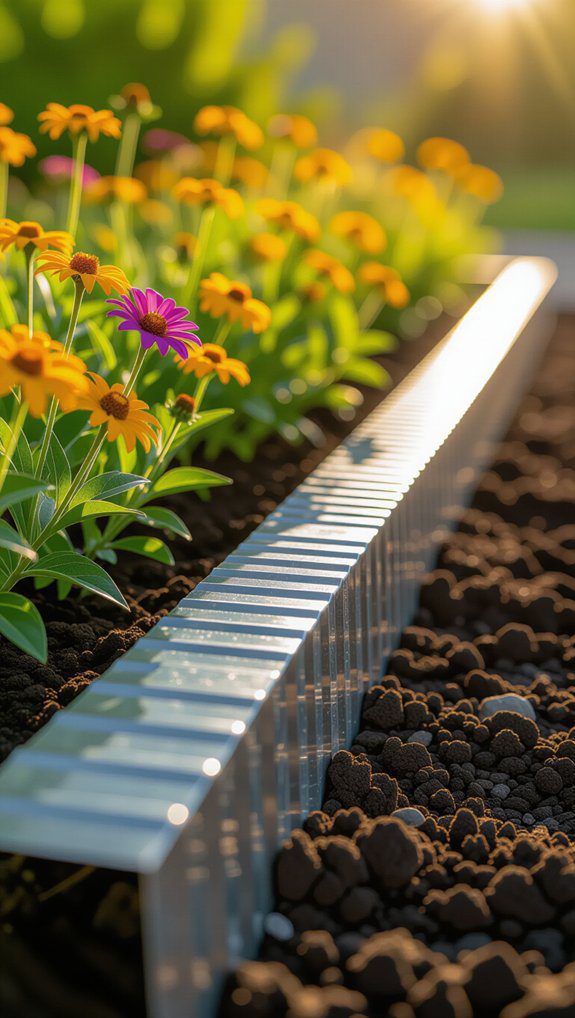
If you’re looking for a fresh way to frame your flower beds, corrugated metal edging might be just the thing to try after working with concrete blocks.
The corrugated benefits include durability, rust resistance, and a sleek, modern look that really makes your garden pop.
Here are my top installation tips:
- Use simple tools to cut and shape the metal to fit curves.
- Secure the edging firmly to keep grass and weeds out.
- Choose to paint it or leave the natural finish for style versatility.
This edging creates a sturdy, attractive border that feels like it belongs in your garden family.
Landscape Timber Installation
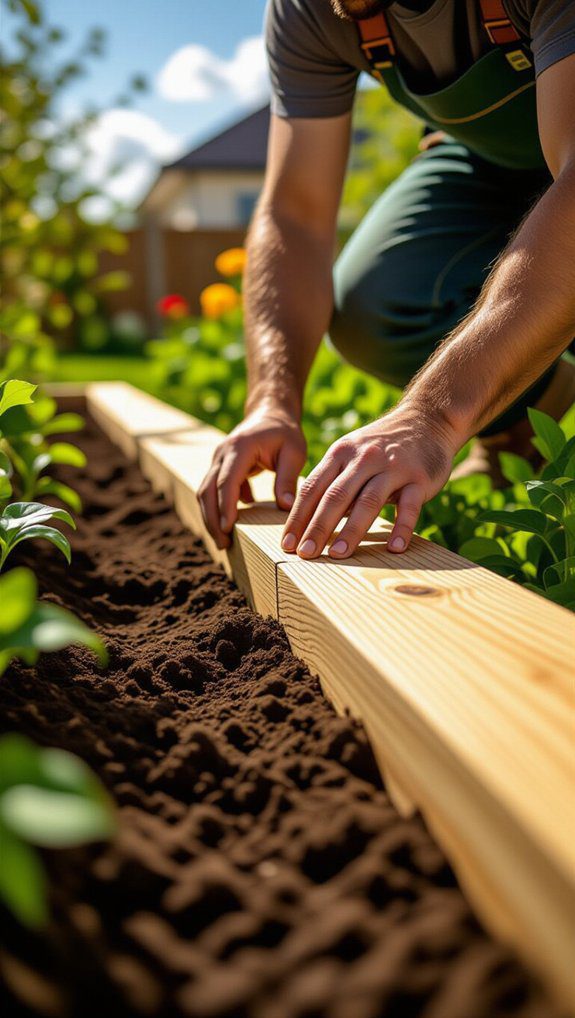
Although terrain timbers may seem simple, they offer a charming and practical way to define your flower beds with ease.
The scenery timber benefits include easy installation—you just tap them in with a rubber mallet, no trenching needed! Plus, they’re versatile, fitting any garden shape.
You can choose from various timber color options or paint untreated lumber with exterior paint to match your style and protect against rot.
Their rustic look naturally separates beds from lawns and helps keep weeds at bay.
Give your garden that warm, inviting border that feels like it belongs—simple, sturdy, and truly yours.
Decorative Fork Borders
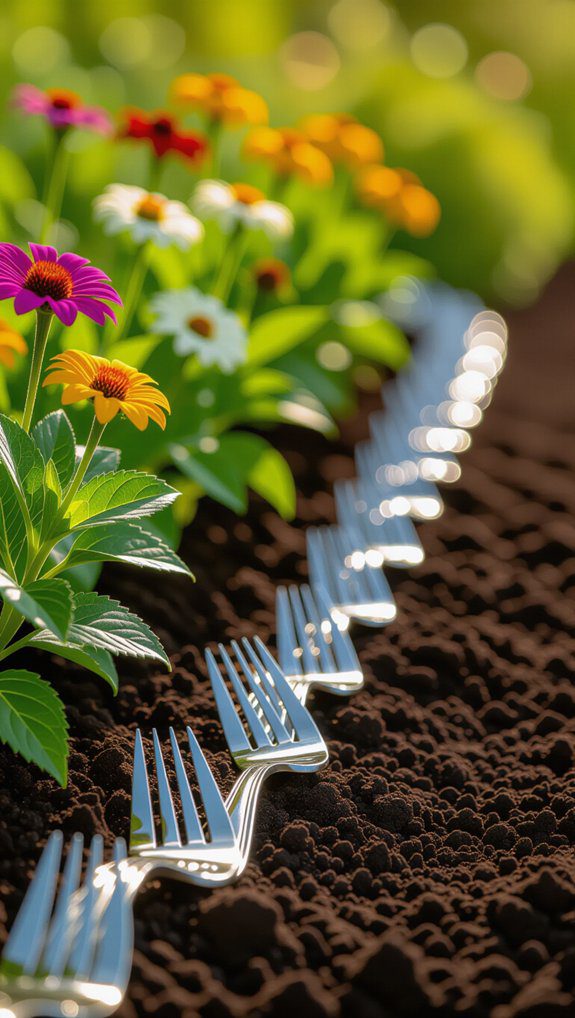
When you want to add a playful and creative twist to your flower bed borders, decorative fork borders are a fantastic choice.
I love how fork aesthetics bring garden creativity to life, turning something simple into art. Here’s how you can try it:
- Gather old forks and decide if you want to paint them or keep their natural shine.
- Push the fork tines into the soil evenly along your flower bed edge.
- Step back and enjoy the whimsical charm they add to your garden space.
It’s eco-friendly, budget-friendly, and perfect for small or accent borders.
Give it a go!
Bamboo Edging Options
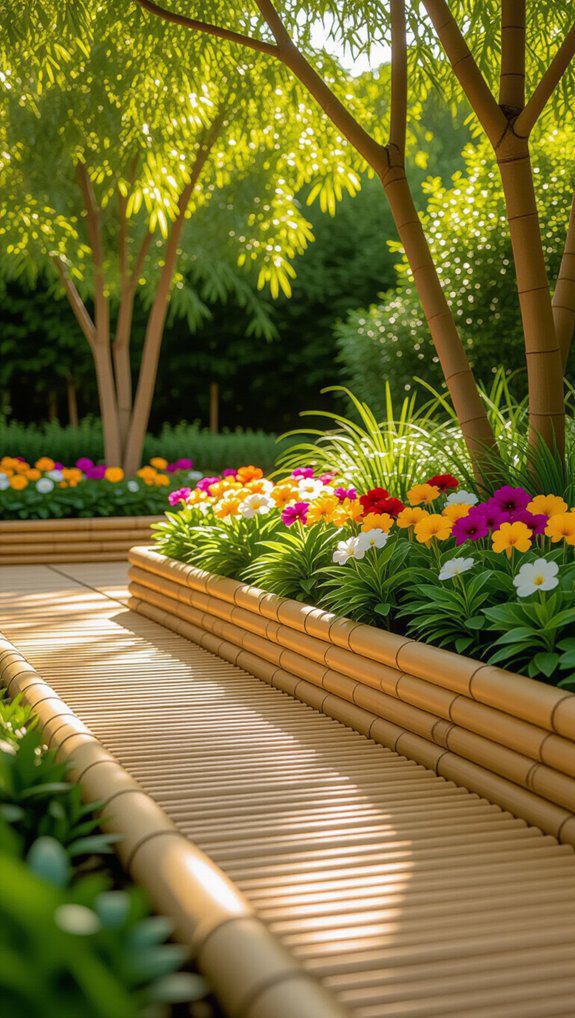
Because bamboo offers a natural, rustic charm, I’ve found it to be one of my favorite choices for flower bed borders.
Bamboo aesthetics blend beautifully with garden greenery, giving a warm, earthy look that feels inviting. Its lightweight, flexible nature makes installation around curves easy, so you don’t need special tools.
Plus, bamboo durability means it resists pests and weather, lasting for years with little upkeep. You can choose different heights and thicknesses to match your style.
Bamboo also promotes healthy soil by allowing good drainage and air flow—helping your flowers thrive naturally.
Woven Willow Edging
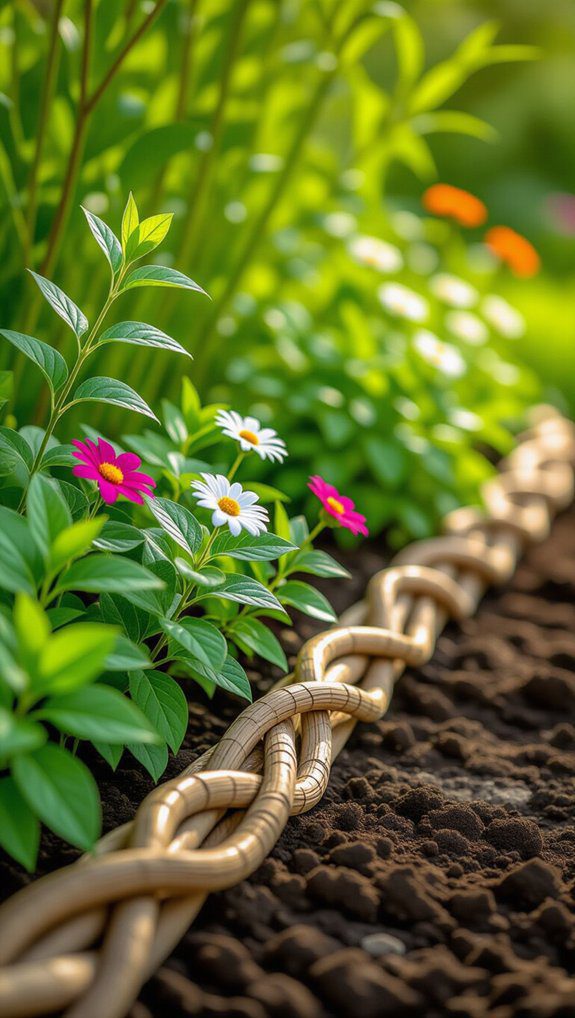
If you’re looking for a border that feels both natural and charming, woven willow edging might just be the perfect fit for your flower bed.
It’s eco-friendly and adds rustic garden aesthetics that blend beautifully with nature. Here’s why I love it:
- Easy to weave flexible willow rods into a neat, fence-like border.
- Keeps soil and mulch in place while naturally deterring weeds.
- Requires simple willow care to last several years.
This border invites a warm, connected vibe to your garden, making you feel part of something truly green and alive.
Painted Slate Borders
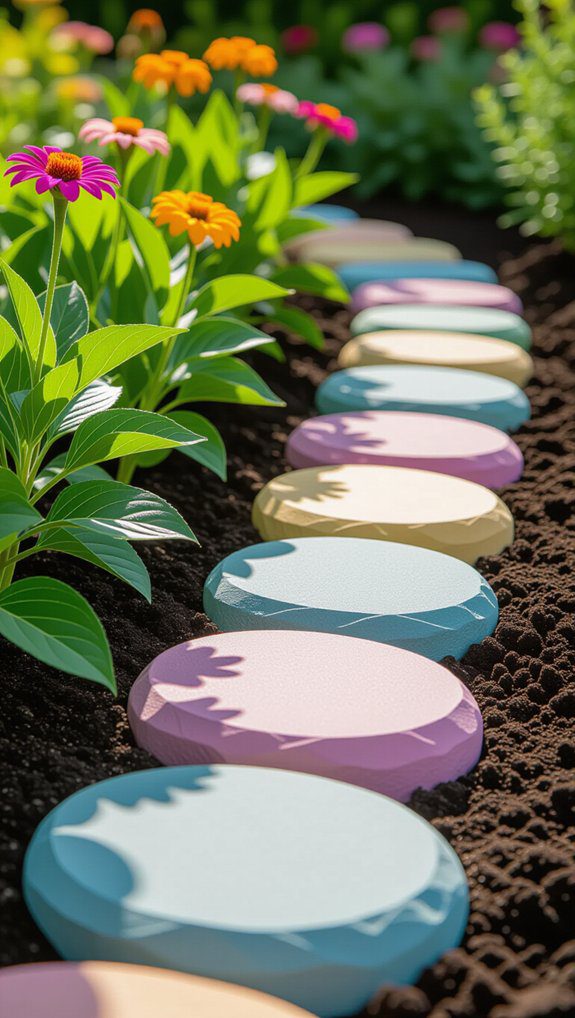
Woven willow adds a cozy, natural touch to your garden, but if you’re looking to brighten things up with a splash of color and a more polished feel, painted slate borders offer a fantastic alternative.
I love how painted slate colors can be customized to match any garden style, creating a unique, artistic edge. Slate’s durability means it stands up well to weather, while its smooth surface helps keep grass and weeds at bay.
For easy upkeep, I follow simple slate maintenance tips like gentle cleaning and occasional touch-ups. Setting them in a shallow trench keeps everything neat and tidy.
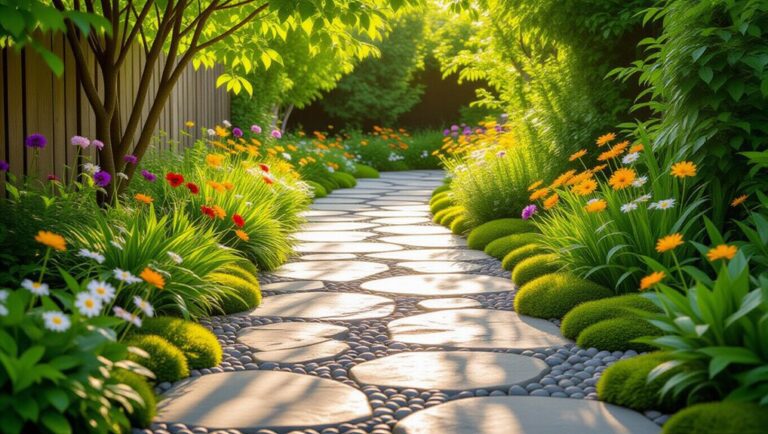
River Rock Edging
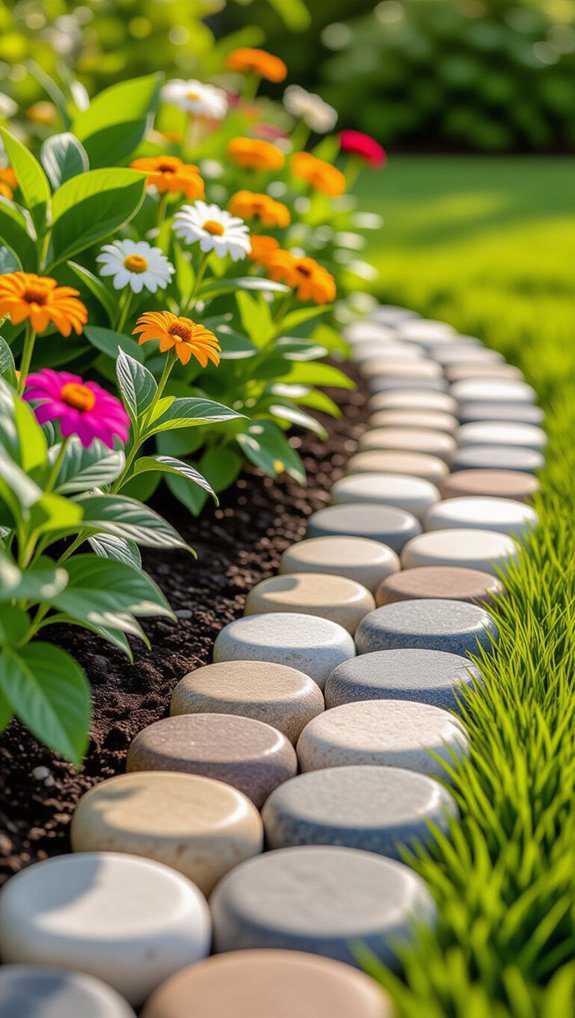
One of the easiest and most charming ways to define your garden beds is with river rock edging. I love how it creates a natural look that pops against the greenery.
Plus, the river rock benefits go beyond beauty—it improves drainage since water flows between the stones.
Here’s what helps with river rock maintenance:
- Lay weed fabric underneath to keep bothersome weeds at bay.
- Check regularly for grass or weeds sneaking through, then pull them by hand or spray gently.
- Choose sizes and colors that fit your garden’s vibe perfectly.
It’s a simple, welcoming way to boost your garden’s charm!
Scalloped Terracotta Design
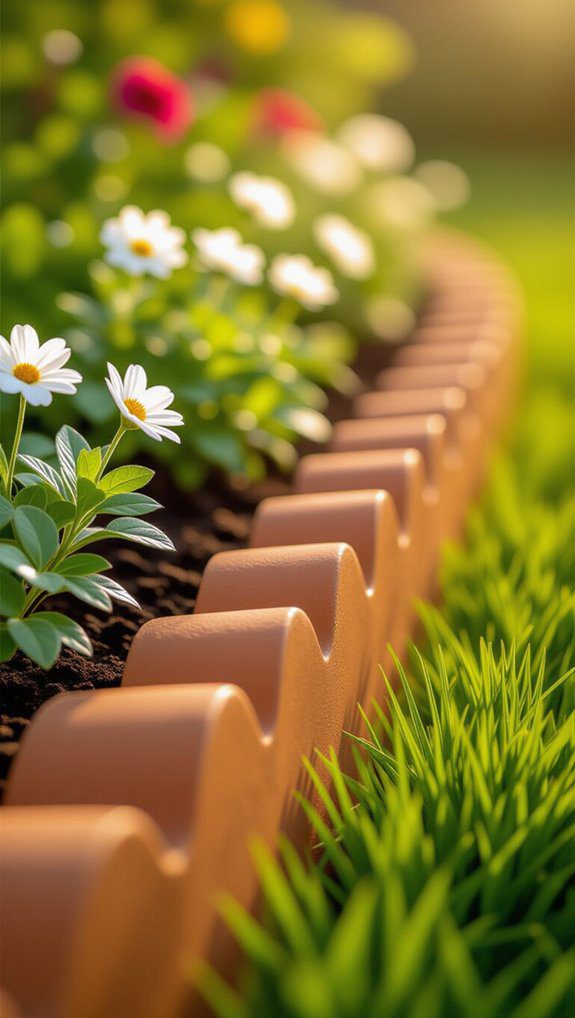
Although river rock edging offers a natural charm, scalloped terracotta design brings a whole new level of warmth and personality to your flower beds. I love how the scalloped pattern adds a playful, rhythmic flow that contrasts beautifully with colorful blooms. Plus, terracotta benefits include durability and weather resistance, so your border stays lovely year-round. Installation is simple with pre-formed sections that bend easily around curves. Here’s a quick look:
| Feature | Benefit | Tip |
|---|---|---|
| Scalloped pattern | Adds charm | Use gentle curves |
| Terracotta | Weatherproof | Seal for longevity |
| Pre-formed | Easy install | Position carefully |
| Natural color | Versatile style | Paint if desired |
Hand Edging Technique
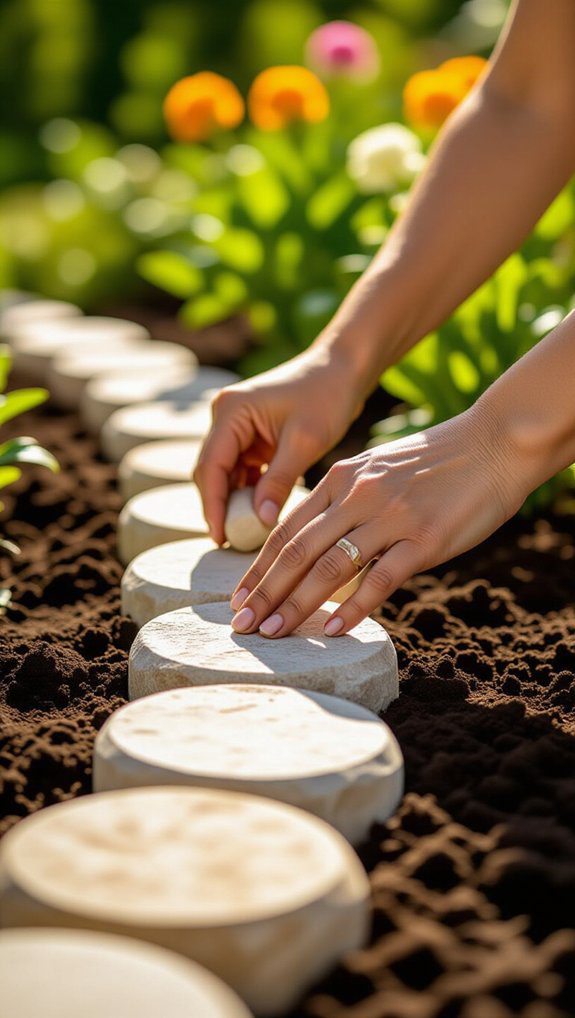
If you want a clean and crisp boundary between your lawn and flower beds without spending a lot, hand edging is a fantastic technique to try.
It’s all about using a flat shovel to define your garden’s shape with precision. Here’s how I approach it:
- Start with good soil preparation—work when the soil is soft for easier cutting.
- Use your shovel to cut 2–4 inches deep, creating a neat edge.
- Keep up with edge maintenance by removing any grass or weeds creeping in with a spade or hoe.
It’s simple, cost-effective, and keeps your garden looking sharp!
Raised Bed Construction
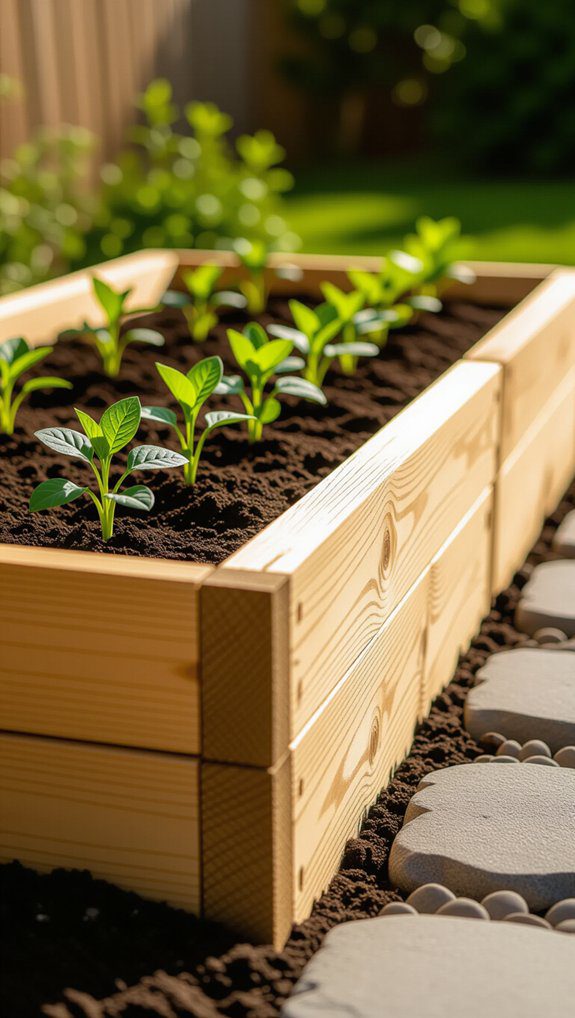
Building raised beds can transform your garden by giving you more control over soil quality and making planting easier on your back. Raised bed benefits include improved soil preparation and better root growth. I like using untreated wood for a natural look, but concrete blocks work too. Remember to add gravel for drainage. Here’s a simple way to think about it:
| Raised Bed Benefits | Soil Preparation Tips |
|---|---|
| Easier planting | Mix topsoil and compost |
| Better root development | Guarantee good drainage |
| Reduces back strain | Use organic materials |
You’ll feel connected to your garden in no time!
Layered Stone Borders
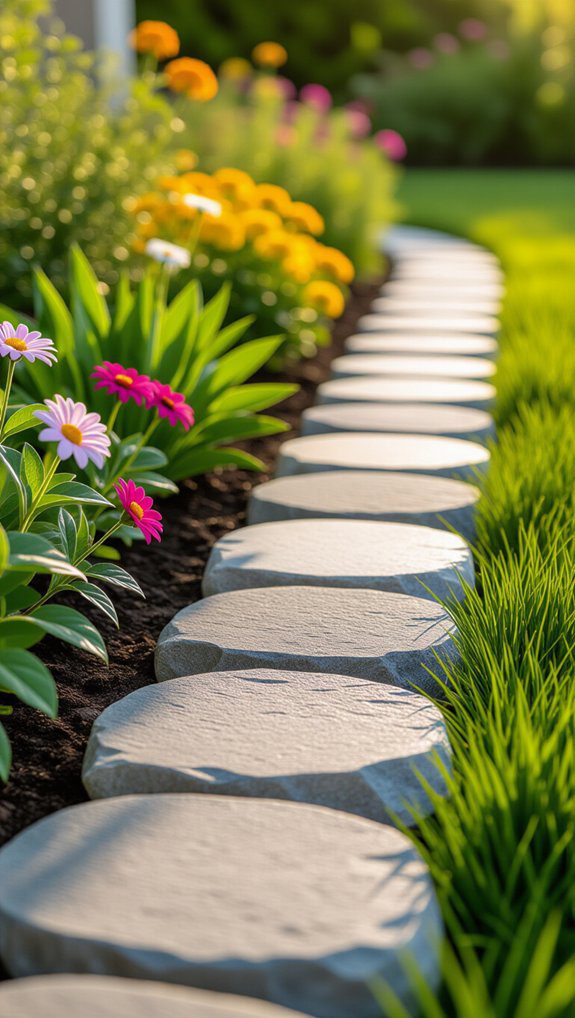
Few garden features add as much charm and function as layered stone borders. When choosing stone selection, I recommend local rocks for their natural look and cost savings.
For installation tips, stacking stones in a staggered pattern without mortar creates a flexible, rustic edge that holds up well. Here’s how I approach it:
- Gather various sizes and shapes for texture and interest.
- Build a defined barrier to keep weeds out and separate grass from beds.
- Stack stones carefully, ensuring stability without glue for durability.
This method’s both practical and welcoming—perfect for any garden community!
Rubber Mallet Installation
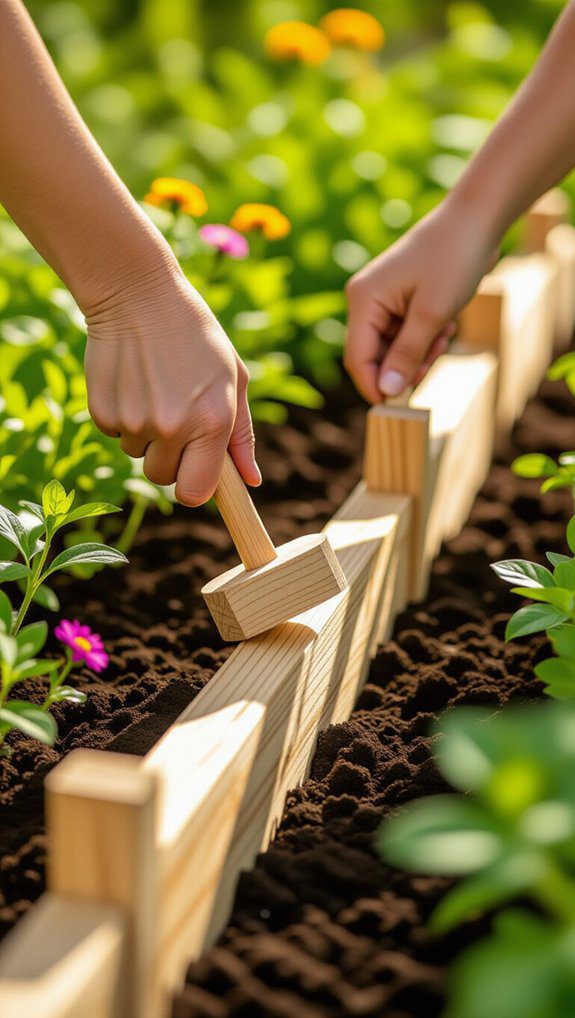
Using a rubber mallet is one of the smartest moves you can make when installing pound-in edging for your flower bed borders.
Here’s a quick tip: place your edging in a shallow trench first, then tap the center gently with the mallet. This technique guarantees even penetration without bending the pieces.
I love how these mallet techniques make installation easier, especially in tough soil, and reduce the need for cutting sod.
Plus, if any edging shifts over time, just tap it back into place. Trust me, these installation tips will make your garden borders look sharp and last longer!
Budget-Friendly Alternatives
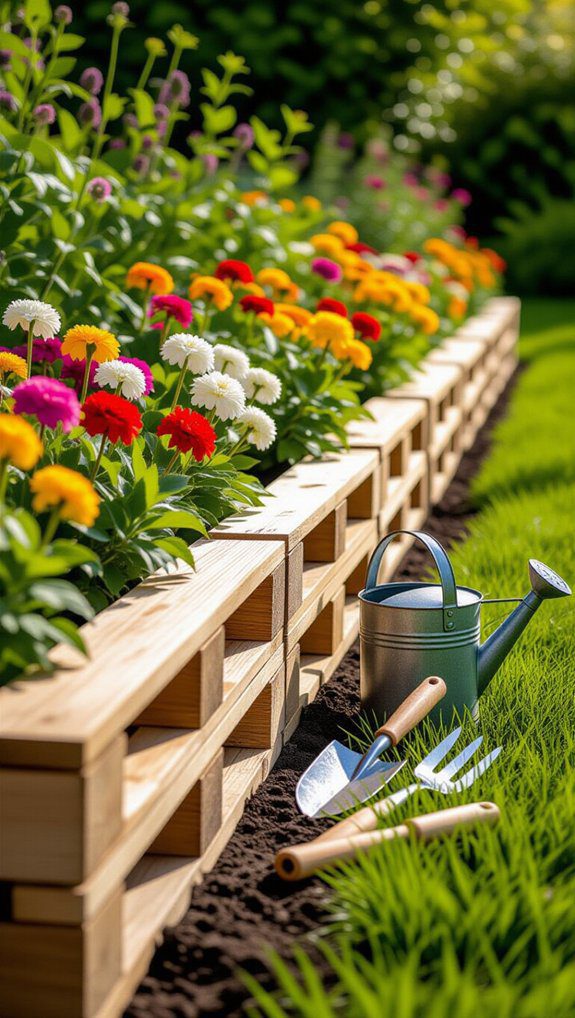
When you’re looking to spruce up your garden without breaking the bank, there are several budget-friendly alternatives for flower bed borders that can fit both your style and wallet.
I love using recycled materials to create creative designs that feel personal and eco-friendly.
Here are my top three picks:
- Plastic edging – affordable, colorful, and easy to customize.
- Natural rock – often free or low-cost, adds a rustic charm.
- Recycled rubber – durable, eco-friendly, and neat-looking.
These options let you craft beautiful borders without spending a fortune, making your garden uniquely yours.
Professional Edge Maintenance
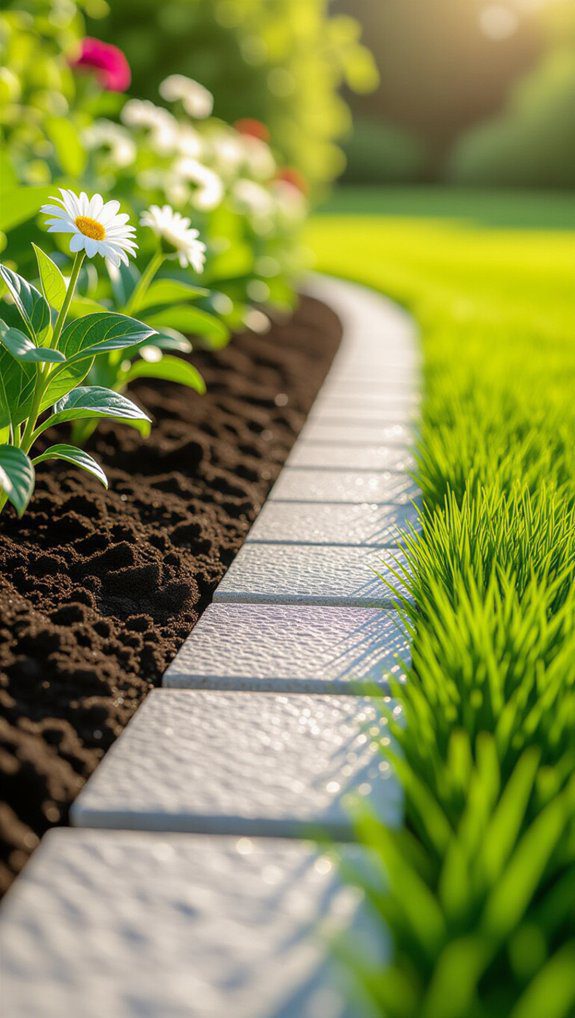
Although setting up your flower bed borders is exciting, keeping those edges neat takes a bit of regular care, and I’m here to walk you through it.
Professional edge maintenance involves smart edge maintenance techniques like using string trimmers or energy edgers to stop grass and weeds from creeping in. Sometimes, hand tools like spades work wonders for tidying up smaller spots.
I also swear by mulch—it locks in moisture and keeps weeds down. Don’t forget to check your edging materials now and then to fix wear and tear.
These professional landscaping tips make your garden look sharp and healthy all season!