15 Creative Ways to Upcycle a Mirror Frame
I’ve got 15 fun ways to upcycle a mirror frame you can try right now: paint it bold or use chalk paint for a matte look, sand and stain wood for natural grain, wrap with jute rope for a coastal vibe, glue on beads or mosaic tiles for texture, add gold leaf for glam, attach driftwood for rustic charm, use metal accents for an industrial twist, carve or layer overlays for depth, or remove the frame for a sleek frameless finish—keep going and you’ll find step-by-step tips next.
Love cozy DIY projects? 💕
Get free printable guides, exclusive tutorials & surprise craft goodies straight to your inbox.
Disclosure: This post may contain Amazon affiliate links, at no extra cost to you. Content on DiyCraftNest is created with research support from AI tools and carefully reviewed, edited, and fact-checked by the lead author, Daniel Pat, to ensure accuracy and reliability. Learn more
Key Takeaways
- Paint the frame in a bold, pastel, or neutral color using chalk paint for a matte finish and seal for durability.
- Stain or refinish wooden frames to enhance grain, layer shades for depth, and protect with a clear sealant.
- Add texture with rope wrapping, glued wood beads, or mosaic tiles for coastal, boho, or colorful looks.
- Apply metal accents, gold leaf, or layered wood trim to introduce industrial, glam, or dimensional details.
- Remove or slim the frame for a frameless modern look, then mount securely and consider LED backlighting for ambience.
Painted Frame Refresh
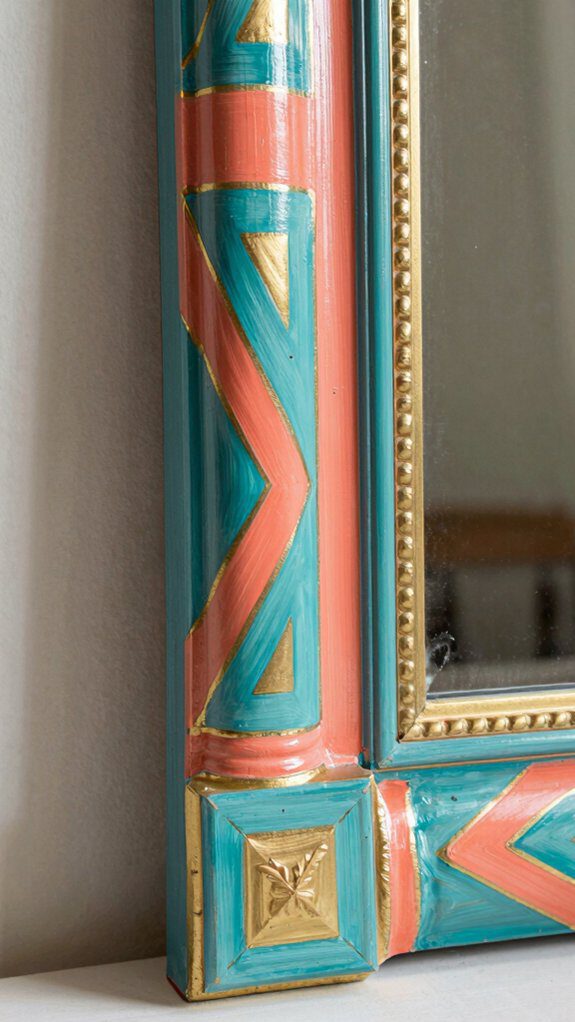
If you want a quick way to breathe new life into an old mirror, I often start with a painted-frame refresh because it’s fast, affordable, and totally transformative. First, frame color selection sets the mood—bold hues make a statement, soft pastels invite calm, and neutrals help a mirror belong in any room. I clean and lightly sand the frame so paint sticks, then choose chalk paint for a matte, vintage feel. For paint application techniques, I use smooth strokes for even coverage, then try dry brushing or gentle distressing to add texture and character. After the paint dries, I seal the surface with a clear topcoat or wax to protect it from scratches and everyday wear.
Wood Stain Makeover
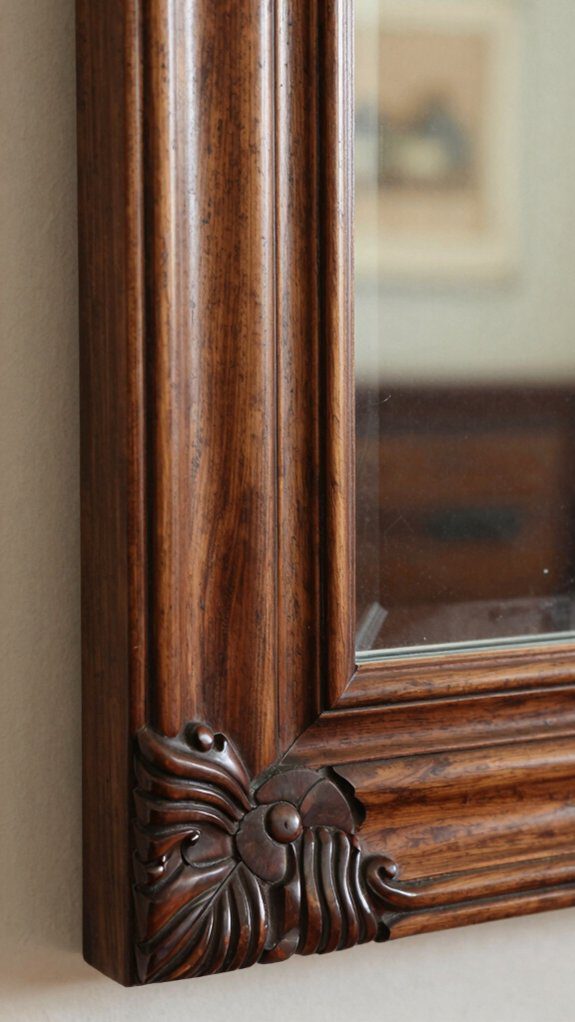
I’m excited to talk about a natural finish update that can really bring a tired mirror frame back to life. Start by sanding and cleaning the wood so the stain soaks in evenly, then pick a shade—from deep walnut for drama to light oak for a rustic look—and try layering two stains if you want extra depth. Finish with a clear sealant to protect the color and keep the grain looking rich for years.
Natural finish update
When you give a mirror frame a natural wood stain makeover, you bring out the grain and texture in a way that adds instant warmth and organic charm to a room. I love taking a tired frame, cleaning and sanding it smooth, then choosing stain color selection that fits the space—walnut for cozy, pine for airy, cherry for classic. Follow wood finish techniques: wipe, test on scrap, and apply evenly so the stain penetrates.
- Clean and sand for an even surface.
- Apply coats, drying between layers for depth.
- Seal with clear polyurethane to protect and add sheen.
I’ll walk beside you through each step so we both feel confident and proud of the finished, natural look.
Rope Wrapped Border
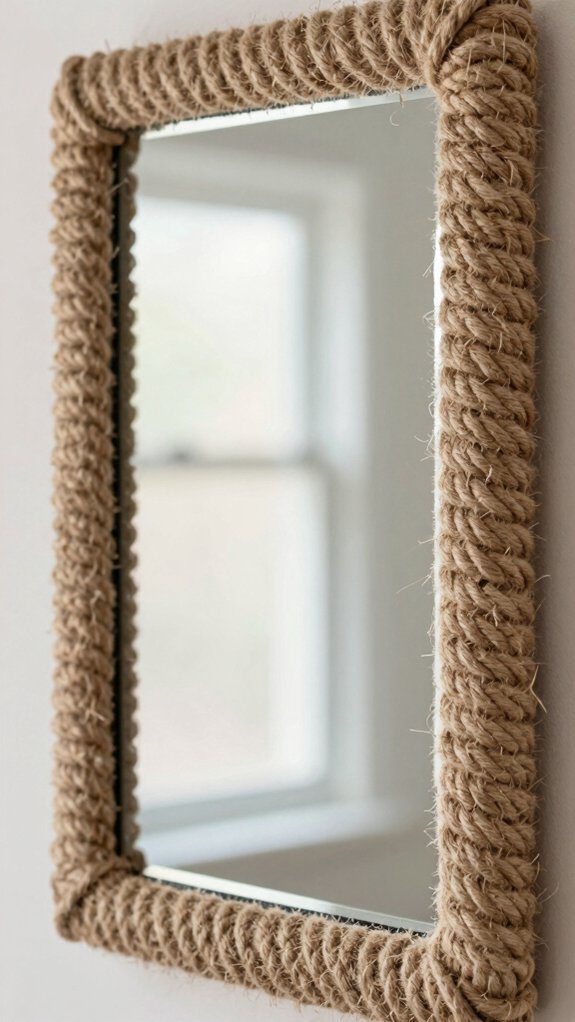
I love how a rope-wrapped border can give a mirror a coastal texture look, turning a plain frame into a breezy, beachy focal point. I usually use natural jute or sisal rope because it’s lightweight and easy to wrap tightly—I secure the end with hot glue and add glue every few inches so the rope stays flush and neat. For extra flair I’ll tuck small shells or beads into the rope at intervals, which makes the piece feel more personal and helps it read even more nautical than a plain wrapped frame.
Coastal texture look
Because I love the relaxed feel of the shore, I like to give a plain mirror an instant coastal makeover by wrapping its frame in natural jute or sisal rope — it’s simple, tactile, and instantly beachy. I measure the perimeter first so I won’t run out, then use a hot glue gun to secure the rope as I wrap, working in small controlled sections to avoid slipping. I finish with a light sealant to protect against humidity and keep the texture intact.
- Measure perimeter + add overlap.
- Glue in small sections; press firmly.
- Add shells or tiny anchors, then seal.
This coastal decor project brings seaside inspiration into our shared spaces, inviting friends to feel at home beside your new textured mirror.
Mosaic Tile Frame
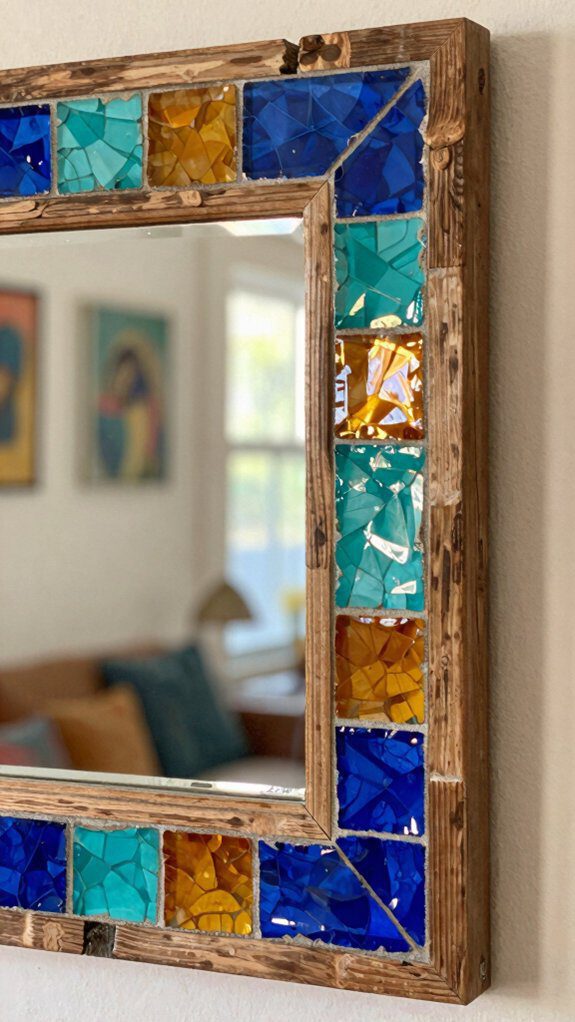
I love how a mosaic tile frame adds colorful surface detail that really makes a mirror pop, so I’ll show you how to pick and place pieces for the best effect. Start by mixing tile sizes, shapes, and colors—use tiny glass tiles for shimmer, broken ceramics for pattern, and larger pieces as focal points—then lay them out dry to balance the design. Once you’re happy, glue them with thin-set mortar, grout the gaps, and seal the grout for a durable, bathroom-safe finish.
Colorful surface detail
One of my favorite ways to add colorful surface detail is to turn a plain mirror into a mosaic tile frame that really pops. I love sharing mosaic tile techniques and color selection tips so we can create something that feels like home. Start by arranging tiles of different sizes and hues around the frame to add depth; I stick them with a strong adhesive and let them dry fully.
- Pick a palette: choose complementary shades for cohesion.
- Vary sizes: mix small accents with larger tiles for texture.
- Grout and seal: fill gaps for a polished, durable finish.
We’ll work side by side conceptually—your choices reflect your style, and the finished mirror will welcome everyone who sees it.
Gold Leaf Accent
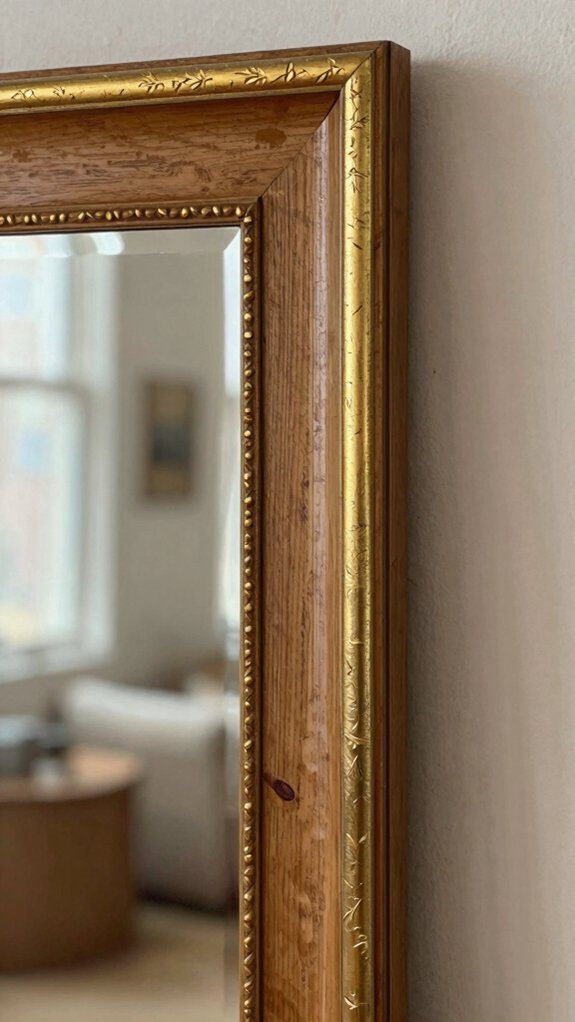
I love adding a gold leaf accent to a tired mirror frame because it gives instant vintage glam that feels both elegant and cozy. Start by brushing on adhesive size until it’s tacky, press the delicate gold sheets only where you want highlights—corners, raised carvings, or a thin inner trim—and seal it with a clear finish so the shine lasts. Be patient and work slowly (those sheets tear easily), and you’ll get a precise, museum-worthy look that outshines simple paint.
Vintage glam touch
When I want to give a mirror frame a vintage glam touch, I reach for gold leaf because it instantly lifts the look from plain to luxurious without feeling over-the-top. I love how vintage elegance shows up when you combine a dark base coat with careful gold application; the contrast makes details pop and invites admiration. Work in a ventilated space, use adhesive sizing, and smooth with a soft brush to avoid wrinkles.
- Prep: paint a dark base for depth.
- Apply: brush sizing, lay gold leaf gently, smooth seams.
- Protect: seal with a clear topcoat for durability.
I’ll walk you through each step, so you feel confident creating a warm, shared finishing touch for your home.
Fabric Covered Frame
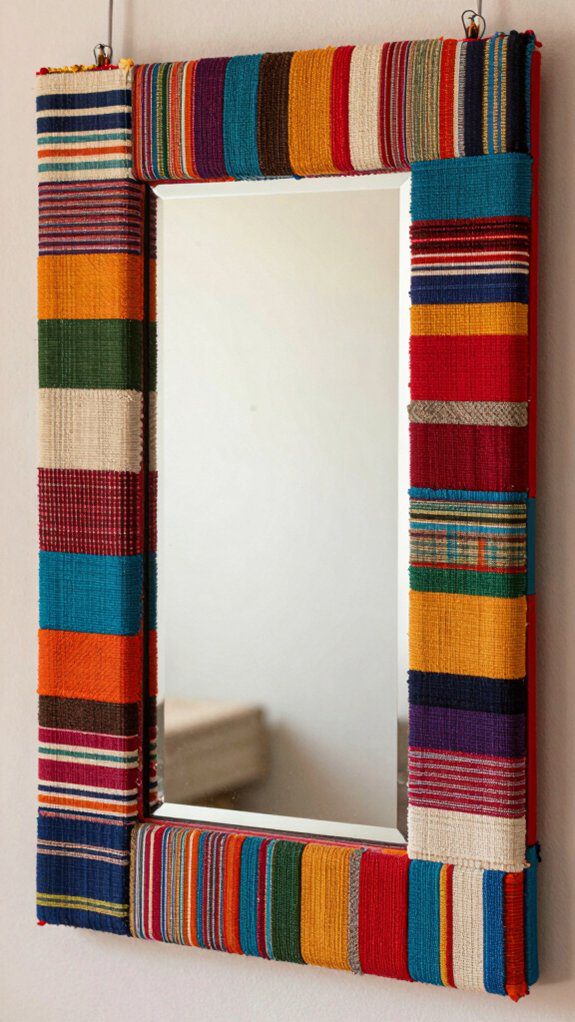
If you want to give a plain mirror frame a cozy, custom look, try covering it with fabric—I’ll walk you through the simple steps and share tips so it looks neat and professional. I start by choosing fabric with the room’s colors and textures in mind; fabric selection tips include picking a medium-weight cotton or linen for easy handling and durability. Measure the frame, cut with a few extra inches, and wrap tightly. For adhesive application techniques, I use a strong fabric glue applied in thin, even lines so the fabric lays smooth and wrinkle-free. Finish with coordinating trim or ribbon to hide raw edges. Swap fabrics seasonally to keep the space feeling fresh and welcoming.
Pressed Flower Design
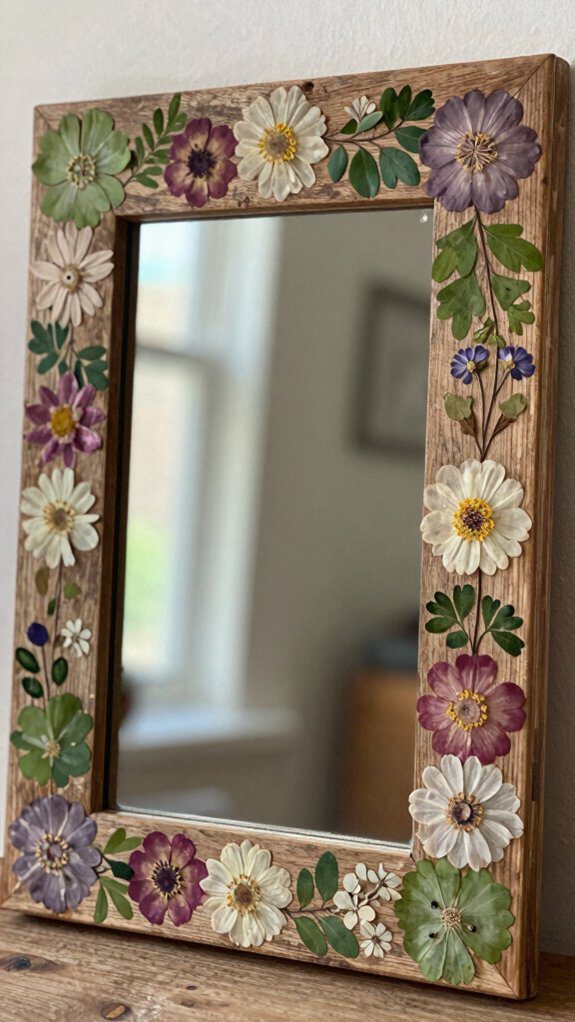
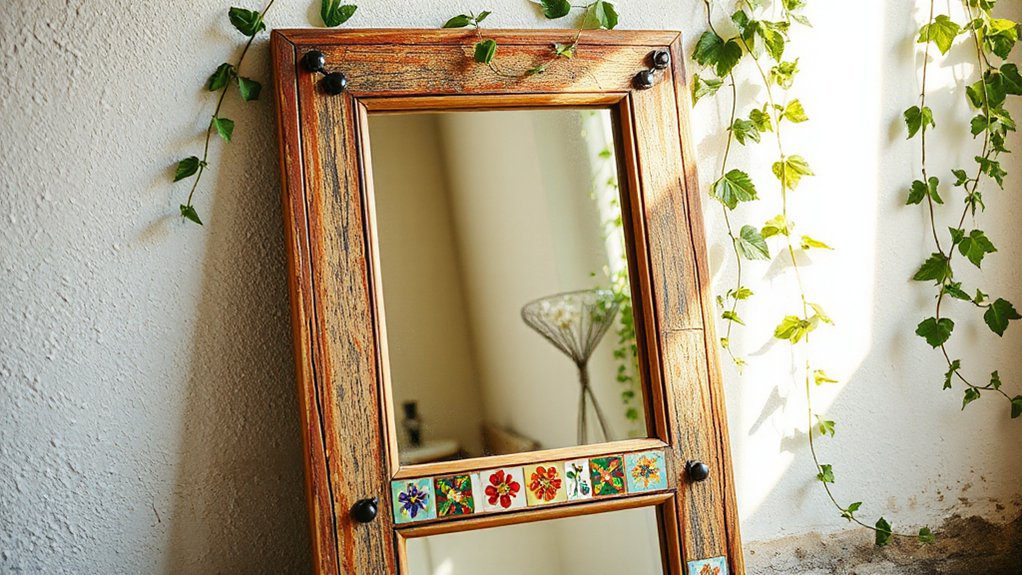
I love turning a plain mirror frame into botanical wall decor by pressing colorful flowers and arranging them like a tiny garden under glass or in a shallow shadow box. I’ll pick flat, well-dried blooms and layer different petals and leaves for texture, then secure them with clear adhesive or a thin resin coat so they stay safe and glossy. For a cohesive look, I usually use a natural or rustic wood frame so the organic colors really pop against the mirror.
Botanical wall decor
Botanical charm adds instant personality to a plain mirror frame, and I’m excited to show you how pressed flowers do that beautifully. I love how botanical wall decor brings people together; sharing blooms makes a mirror feel like part of our home story. Here’s a simple plan I follow:
- Choose fresh blooms, press between books or a flower press for weeks.
- Arrange and attach with clear adhesive or resin for secure placement.
- Seal with UV-resistant spray to guard color and aid mirror preservation.
I compare finishes and usually pick resin for durability, but adhesive works for delicate layouts. This project feels sustainable and personal, and I promise it’s doable—step by step, you’ll create a framed mirror that welcomes and connects.
Distressed Antique Style
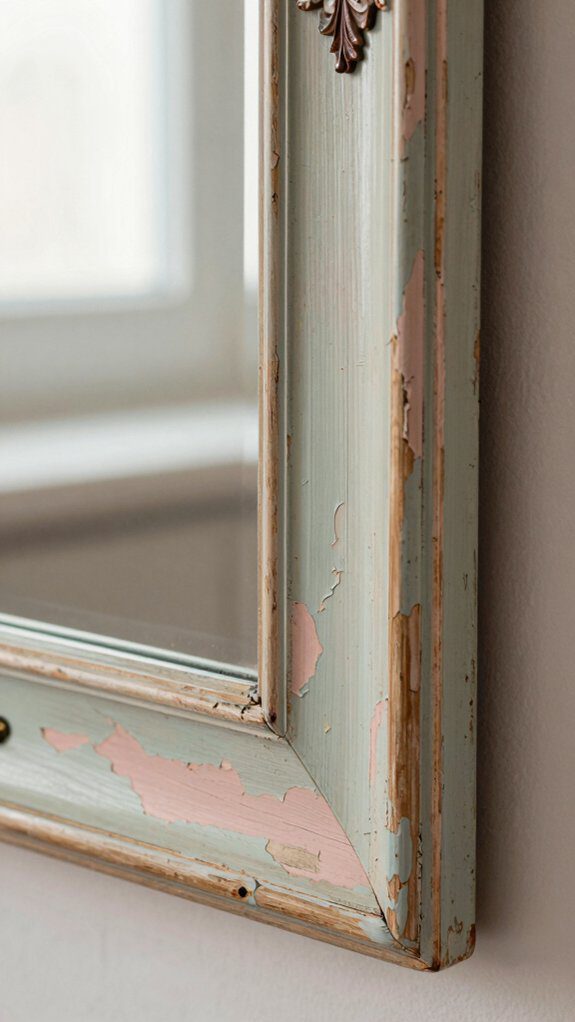
I love the warm, worn look a distressed antique finish gives a mirror frame, so I usually start with a neutral chalk paint base and let it dry completely before I do anything else. Then I gently sand edges and raised details to reveal hints of the original color, and I often add a dark wax or glaze to bring out depth and make the aged areas pop. Finally, I might add a small stenciled motif or rub-on transfer for character and seal everything with a clear topcoat so the finish lasts without losing its vintage charm.
Aged finish effect
When I want a mirror frame to look like it’s been around the block a few times, I start with a neutral base coat and build up darker layers for depth—this gives the finish a believable history without looking fake. I use aged texture techniques like sanding edges to reveal that base, then add glaze or antiquing wax to enrich shadows and create a soft sheen. For vintage paint application, dry brush lighter tones over raised details to bring them forward.
- Sand edges and corners to reveal base coat.
- Apply glaze or antiquing wax, wipe for subtle depth.
- Dry brush highlights, then seal with matte or satin topcoat.
I invite you to try these steps; they’re simple, shared, and comforting.
Beaded Frame Edge
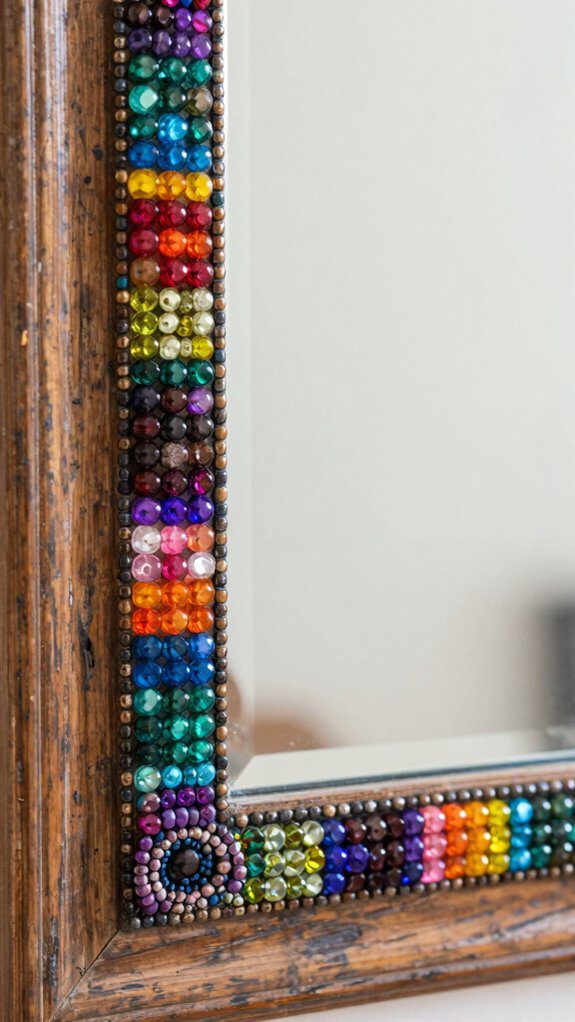
If you’re looking for a simple way to give a plain mirror a warm, boho-farmhouse lift, try gluing flat-back wood beads around the edge—you’ll get texture and charm without a ton of fuss. I start at the corners and work around so bead size and pattern feel balanced; larger beads make a statement, smaller ones read delicate. I dry-brush both beads and frame for a cohesive, rustic look. Be mindful of glue application—use small dots, press briefly, and remove glue strings as you go for a clean finish. We’ll share this project like friends swapping tips, so you won’t feel alone trying it.
| Bead size tip | Glue application tip |
|---|---|
| Mix sizes | Use tiny dots |
| Corner start | Wipe strings immediately |
Chalk Paint Finish
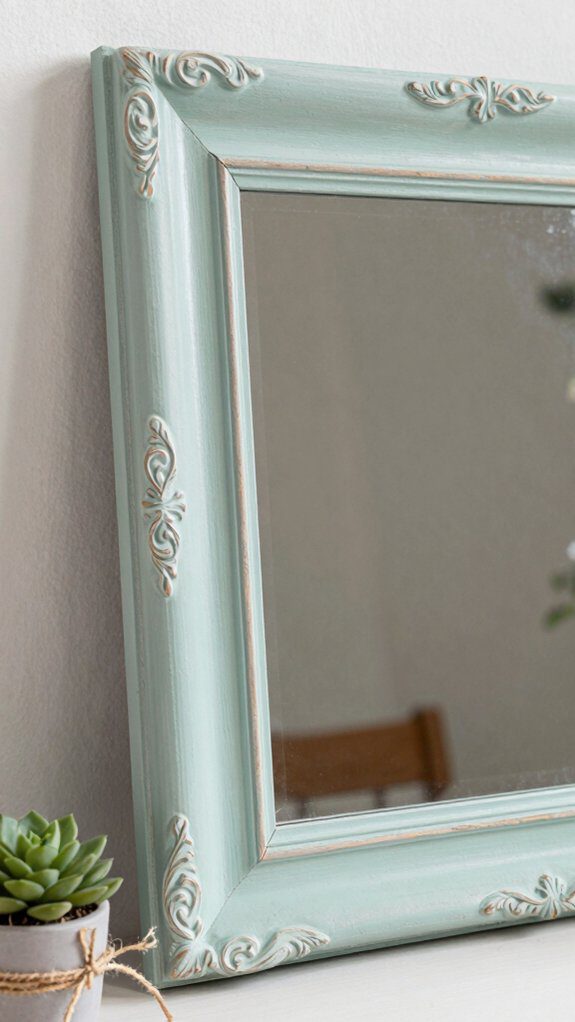
I love using chalk paint on mirror frames because it gives that matte farmhouse look instantly and usually only needs one or two coats, so you can finish a project in an afternoon. I’ll sand the edges lightly after the paint dries to create soft distressing for a vintage vibe, and then seal it with wax or a clear sealer for extra protection. It’s water-based so cleanup’s easy with soap and water, and you can pick from lots of colors to match any room.
Matte farmhouse look
Although rustic styles can feel fussy, I find a matte farmhouse look on a mirror frame is surprisingly simple and satisfying, and I’ll walk you through the basic approach so you can get it right the first time. I love how chalk paint brings rustic charm and farmhouse aesthetics without complicated prep. First, clean the frame and sand lightly so paint sticks. Then apply multiple thin coats of chalk paint, letting each dry to avoid drips. After the final coat, distress edges with sandpaper or a damp cloth to reveal warmth beneath. Seal everything with a matte sealer for durability.
- Clean + sand
- Thin coats, dry between
- Distress lightly, seal
You’ll feel proud displaying a cozy, shared-style piece.
Wallpaper Inlay Frame
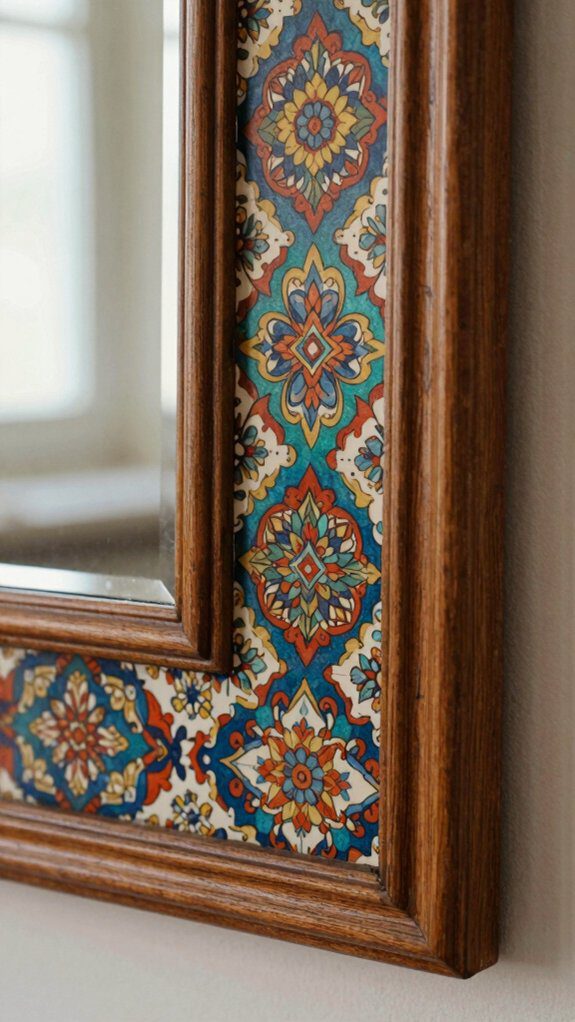
I love using a patterned background as an inlay to turn a plain mirror frame into something eye-catching, and it’s easier than you might think. Start by measuring the inner edge, pick a wallpaper pattern that matches your room’s colors and scale (small prints for narrow frames, bolder patterns for wider ones), and cut with slight overlaps so it fits perfectly. Use a strong adhesive, smooth out bubbles, then seal the edges with a clear coat or trim for a clean, durable finish.
Patterned background
If you want to give an old mirror a fresh, eye-catching look, try inlaying a patterned wallpaper or contact paper into the frame — I’ve found it’s one of the quickest ways to add color and texture without a full makeover. I lean on pattern selection tips: pick bold prints or textured papers that echo your room, and clean the frame first so the paper sticks smoothly. I use careful adhesive application techniques, smoothing from center outward to avoid bubbles, then trim edges with a craft knife for a crisp fit. Seal with a clear coat for durability. Try this simple checklist to get started:
- Prep surface, choose pattern.
- Apply adhesive, smooth paper.
- Trim edges, seal finish.
You’ll feel proud showing it off.
Driftwood Frame Build
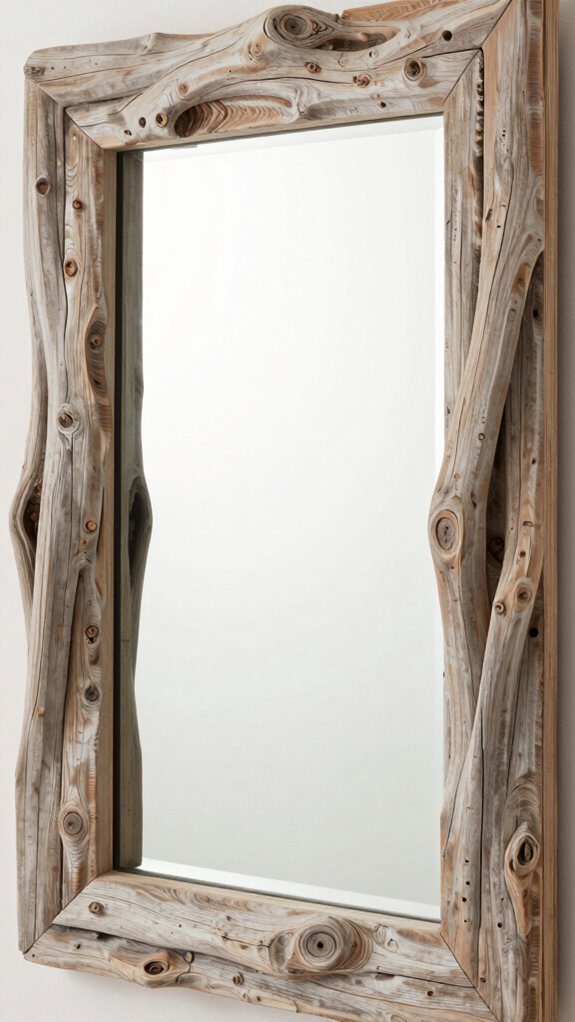
I love how a driftwood frame can bring an organic coastal vibe to a mirror, and I’ll show you simple, practical ways to build one. Start by collecting naturally weathered pieces of varying lengths and thicknesses, then arrange them around the mirror and secure with strong adhesive or screws for durability. I suggest lightly sanding sharp edges, finishing with a clear sealant to protect the wood, and keeping the look uneven and textured for that true beachy charm.
Organic coastal vibe
While I wanted a frame that felt like a fresh breeze off the shore, I also wanted something practical and easy to build, so I chose peel-and-stick wood flooring in weathered gray-browns that mimic real driftwood. I glued panels around the mirror, filled seams with wood filler, sanded smooth, and kept original trim to honor the piece’s history. I hot-glued flat-back wood beads along edges and dry-brushed light paint for a cohesive driftwood texture that whispers coastal elements.
- Cut and stick planks; sand seams.
- Hot-glue beads; dry-brush for weathering.
- Retain trim; seal with matte finish.
You’ll join a cozy community of makers who love simple, meaningful transformations.
Metal Accent Detailing
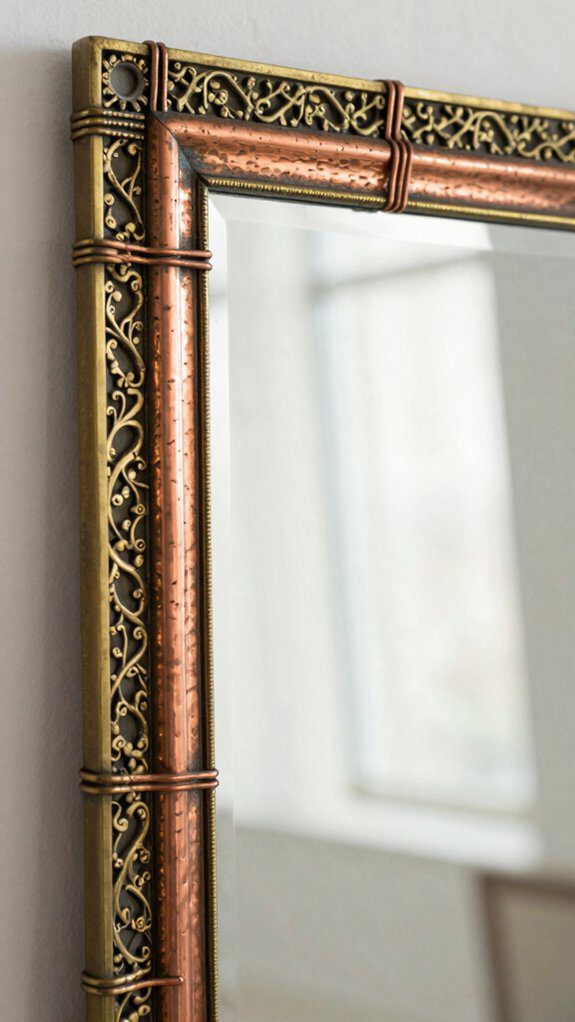
I love pairing metal accents with a mirror frame because that industrial contrast instantly sharpens a soft wood or painted surface and gives the piece a modern edge. Try adding slim aluminum corner brackets, a brass geometric trim, or a few repurposed metal strips for visual punch and extra support—each option changes the mood from sleek to rustic depending on finish and placement. Start with small samples taped on to compare shiny, brushed, or lightly rusted looks, then screw or epoxy pieces in place so the style and strength both hold up.
Industrial contrast
If you want a mirror frame that feels modern and a little gritty, I’ll show you how metal accents can give wood a whole new attitude. I love pairing reclaimed wood with slim metal strips or corner brackets to create an industrial contrast that feels both warm and bold. Think about metal selection tips: choose steel or brass for strength and patina, or aluminum for lightness. I follow industrial design trends but add my own cozy twist so everyone feels welcome.
- Use metal strips to define the border.
- Add corner brackets for durability and style.
- Spray-paint or seal to match wood tones.
Those simple steps make the frame durable, attractive, and perfect for shared spaces.
Carved Overlay Add-On
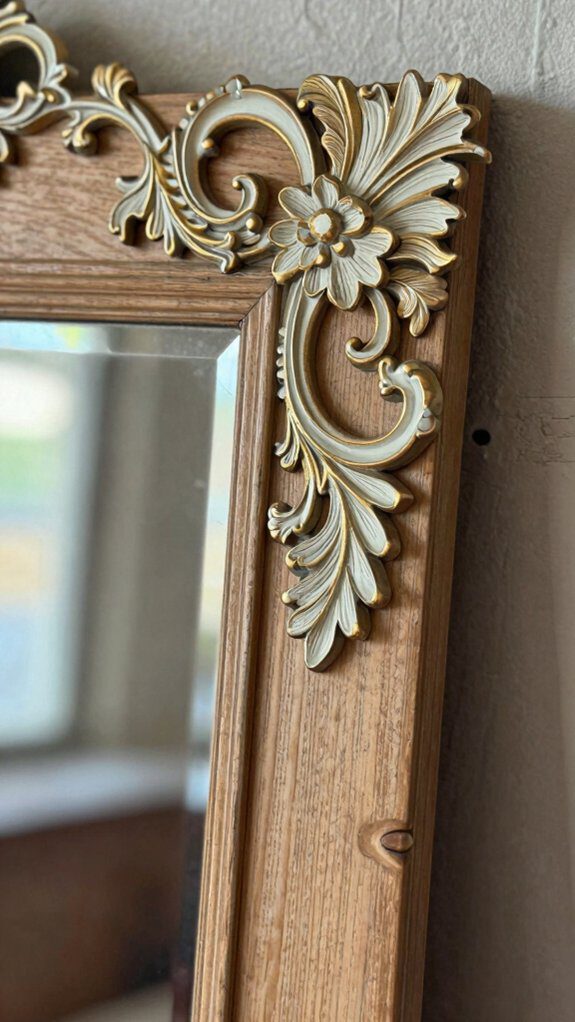
I love using carved overlay add-ons to build a layered depth effect on a mirror frame because they instantly give the piece more dimension and visual interest without redoing the whole thing. I usually cut lightweight wood or MDF shapes, stack them in varying heights, and attach them flush with glue and small nails so the layers look intentional and sit snug against the original frame. Then I finish with paint or stain—either matching for a subtle raised look or contrasting for bold shadow play—to make each layer stand out.
Layered depth effect
Three simple layers can turn a plain mirror into something that really pops, and I’ll show you how a carved overlay add-on creates that layered depth effect without heavy tools or fuss. I love using lightweight foam or thin wood for layered design techniques because they’re easy to cut and customize; floral or geometric carvings add personality and invite others to connect with the piece. I’ll walk you through a short checklist to get started:
- Trace and cut three layer shapes, from base to top, matching your frame.
- Carve or rout designs on middle/top pieces, sand edges for cohesion.
- Glue layers with adhesive, paint or stain contrasting colors for depth perception improvement.
Finish by sanding seams so the overlay blends like it belongs.
Minimal Frame Removal
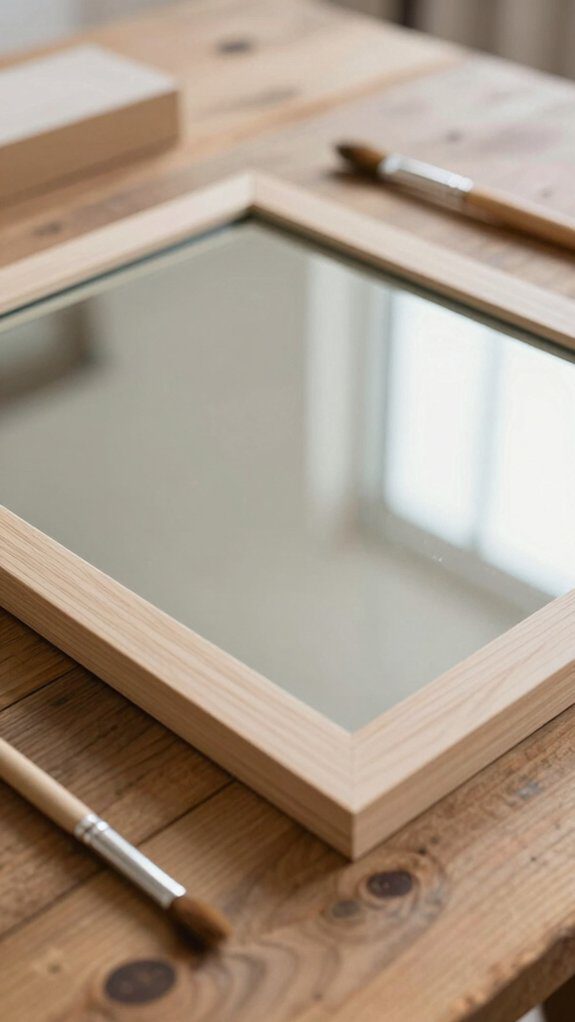
I like keeping most of the original frame when I want a frameless modern look, because removing only the outer trim lets the mirror read cleaner without risking its stability. I’ll often apply peel-and-stick panels or slim vinyl directly to the remaining frame and fill seams with wood filler so the edges look seamless and polished. That way I save time and effort, preserve support for the glass, and still get the sleek, contemporary finish you see in modern spaces.
Frameless modern look
When you want a clean, contemporary look, I’ll show you how to remove a mirror’s bulky frame with care so the glass stays intact and your wall gains a sleek focal point. I love the frameless benefits: it brightens rooms and highlights modern aesthetics while making a shared space feel curated and welcoming. Start slowly with a utility knife to cut through caulk, then pry gently to avoid chips.
- Score adhesive, work around in sections, lift frame slowly.
- Sand or paint the mirror edge for a polished seam.
- Mount with mirror clips or adhesive strips; add LED strips for subtle glow.
You’ll get a seamless, modern result that feels like it belongs to everyone in your home.