15 Air Dry Clay Trinket Dishes That Are Easy, Minimal, and Stylish
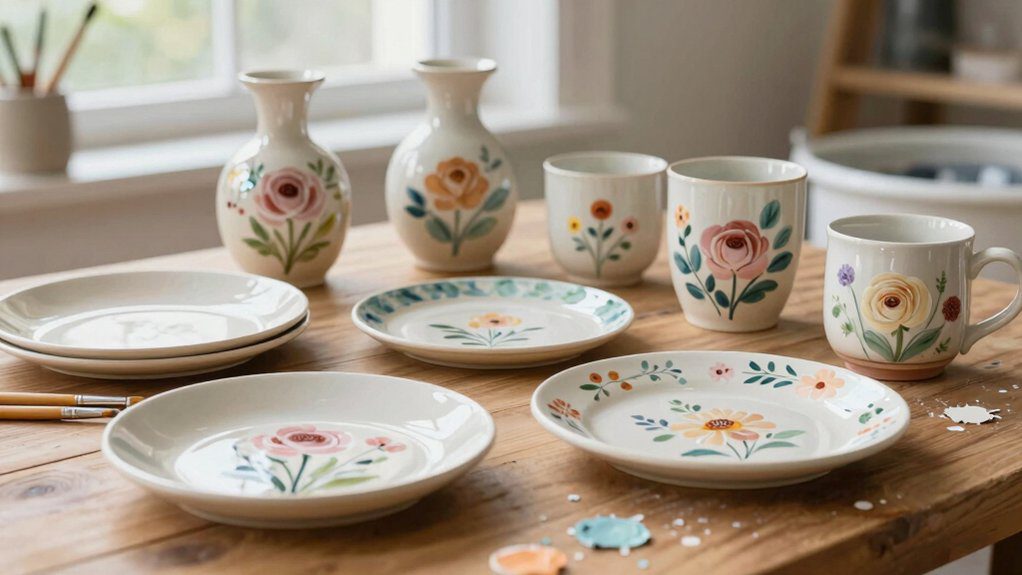
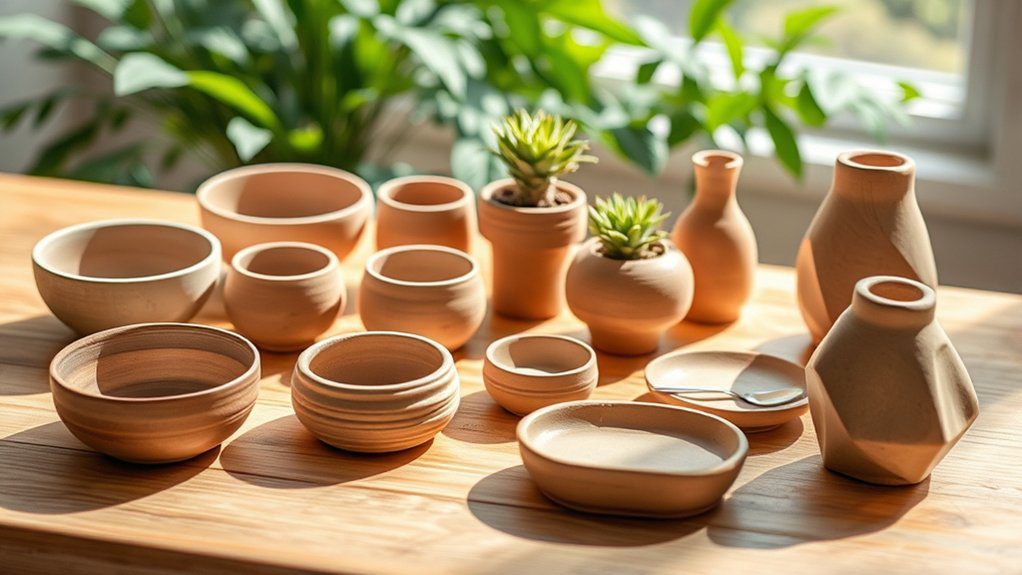
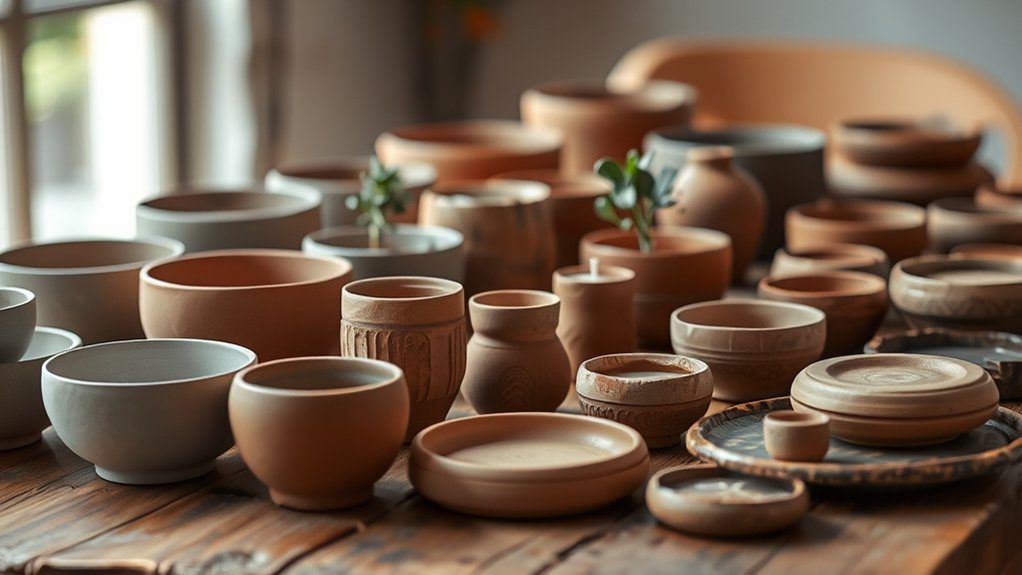
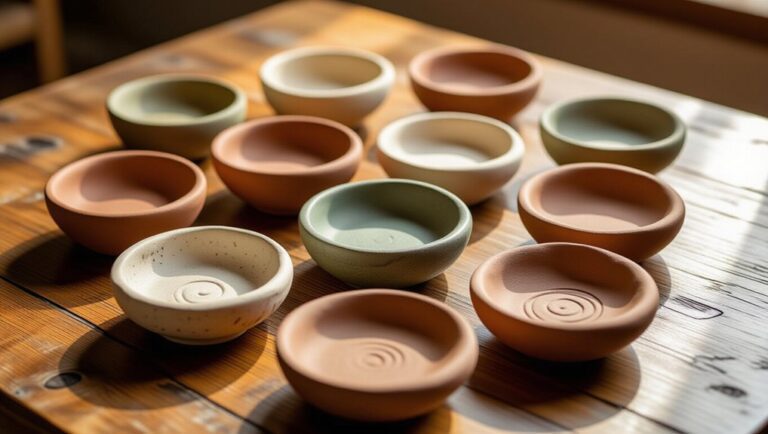
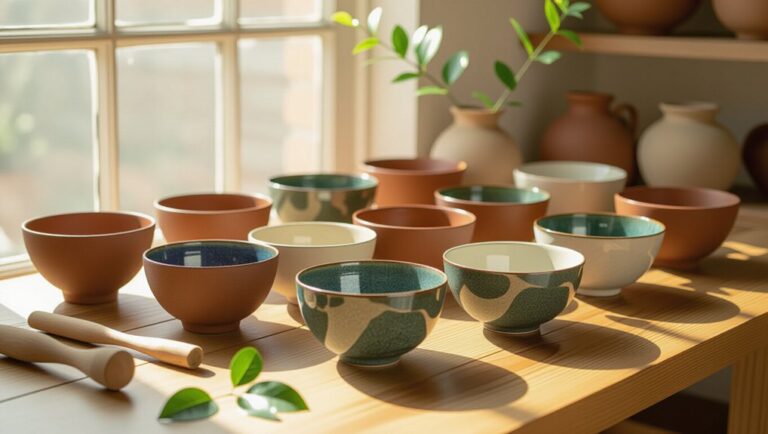
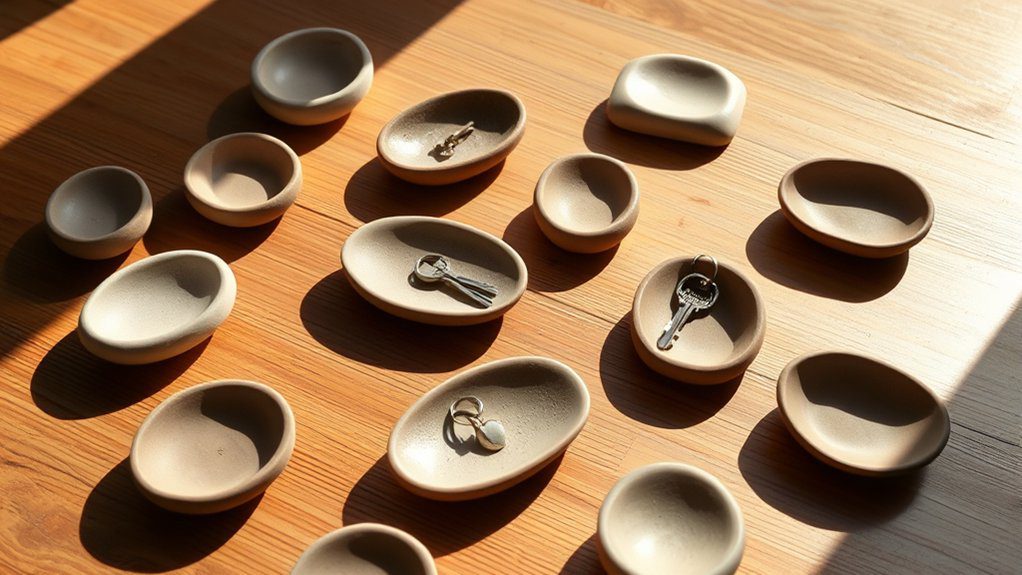
I’ve put together 15 easy, minimal air-dry clay trinket dishes you can make at home, from smooth round and leaf shapes to marbled, speckled, scalloped, and geometric styles. I’ll walk you through rolling clay to 4–6 mm, using bowls or leaf veins for shapes, pressing texture mats, and smoothing edges with water for a clean look. I’ll also cover drying on curved molds, sealing or painting, and clever details like raised ring mounds and gold rims—keep going for step-by-step tips.
Love cozy DIY projects? 💕
Get free printable guides, exclusive tutorials & surprise craft goodies straight to your inbox.
Disclosure: This post may contain Amazon affiliate links, at no extra cost to you. Content on DiyCraftNest is created with research support from AI tools and carefully reviewed, edited, and fact-checked by the lead author, Daniel Pat, to ensure accuracy and reliability. Learn more
Key Takeaways
- Choose simple round or leaf shapes rolled to 4–6 mm for minimalist, easy-to-make trinket dishes.
- Use texture mats or real leaves to add subtle, nature-inspired detail without clutter.
- Dry pieces on a curved form for 24 hours and flip to prevent warping and ensure even curing.
- Create functional variations like ring holders or personalized name dishes using raised mounds or letter cutters.
- Finish with sealing or acrylic paint for durability and a polished, minimalist aesthetic.
Minimal Round Trinket Dish
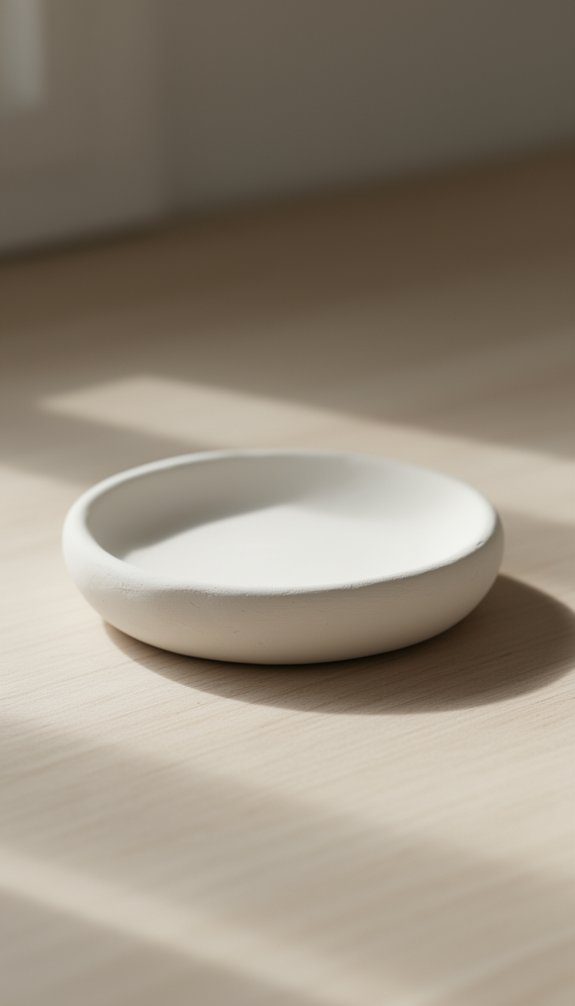
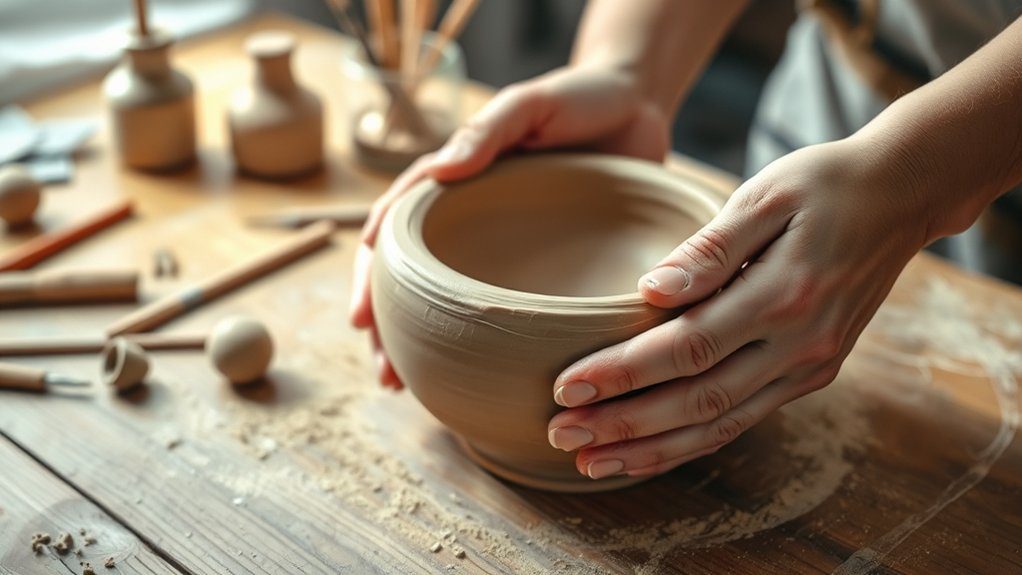
A simple round trinket dish can be one of the most satisfying little projects you’ll make, and I’ll walk you through it step by step. I roll air dry clay to about 4–5 mm so the dish feels sturdy yet stays light. I trace a bowl bottom for a perfect circle, wetting edges to smooth seams; that makes finishing easier and cleaner. Before cutting, I press a texture mat onto the clay to add subtle interest that still reads minimalist design. I dry it on the bowl for 24 hours, then flip to finish both sides, and optionally paint or seal.
Leaf Shaped Trinket Dish
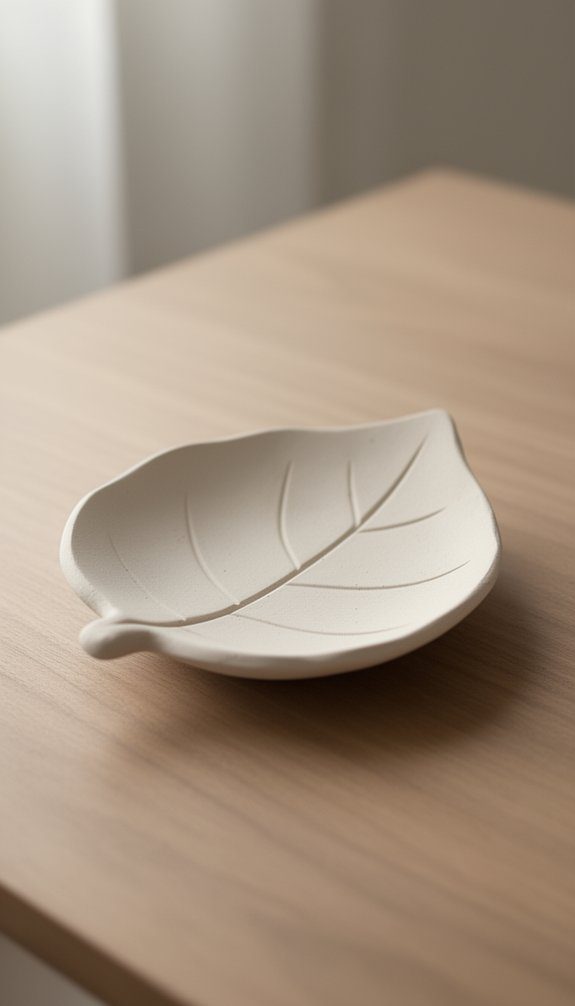
Leaf-shaped trinket dishes are one of my favorite quick projects because they look intricate but are surprisingly simple to make; I’ll walk you through rolling the clay, cutting the shape, and adding veins so yours comes out clean and natural. I roll clay to about 4 mm for strength, then cut with a template or freehand for unique edges. I press real leaves or use a texture mat for veins, then dry flat or drape over a bowl for a gentle curve, flipping after 24 hours. After fully dry, paint or seal using clay finishing options to protect and finish.
- Roll to 4 mm
- Texture and vein
- Dry, flip, finish
Ring Holder Trinket Dish
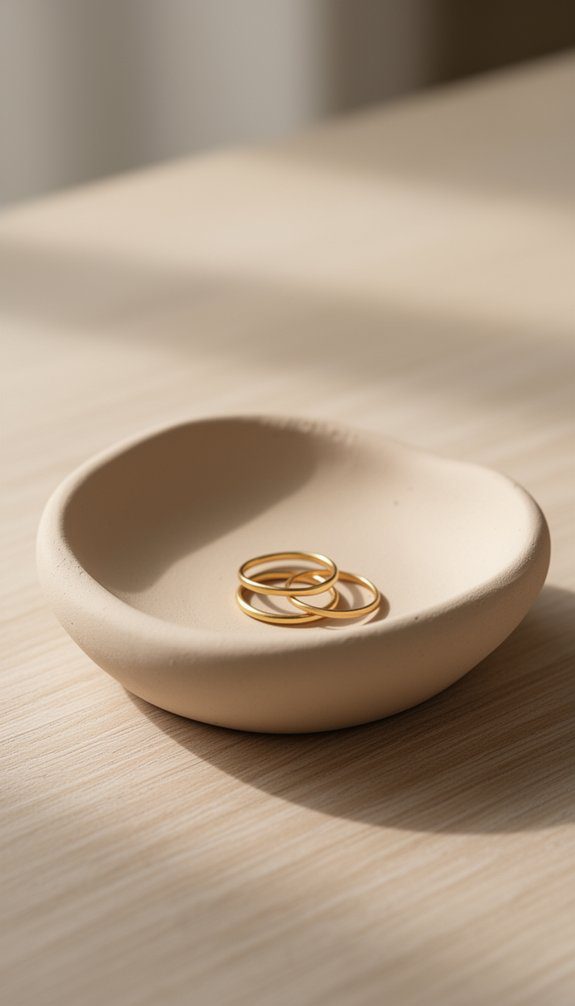
If you liked making the leaf dish, you’ll enjoy this small, practical ring holder that uses almost the same steps but gives your rings a safe little home. I roll clay to about 5 mm, then press it over a bowl to form a shallow dish, smoothing edges with a bit of water for a clean look. I add a raised center mound so rings won’t slide off, which makes this one of my favorite ring holder designs. After drying on the mold at least 24 hours, I paint or seal it and add simple clay embellishments for a personal, cozy finish.
Marbled Clay Trinket Dish
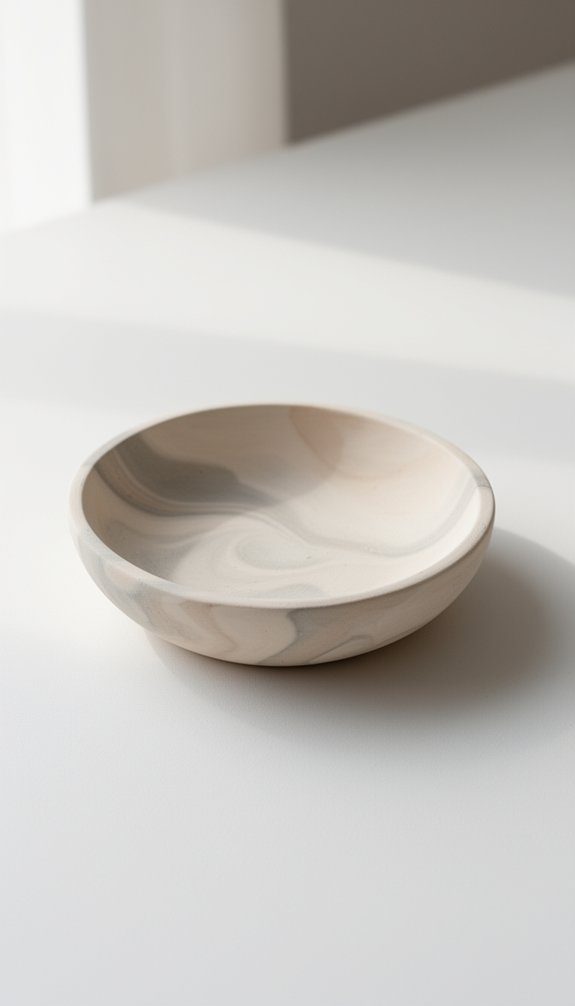
When you want something that looks both elegant and a little playful, marbled clay is a perfect choice, and I’ll show you how to get that swirled look without overworking the colors. I start by tearing small pieces of different clays, kneading gently so marbled clay techniques keep veins of color. Roll to 4–6 mm, cut with a bowl, then press a texture mat for interest. Dry on a curved form for 24+ hours, flipping to avoid warping. Seal when fully dry and consider acrylics to improve color. Try these simple steps together:
- Mix small pieces gently.
- Roll and cut shape.
- Texture, dry, then seal.
Gold Edge Trinket Dish
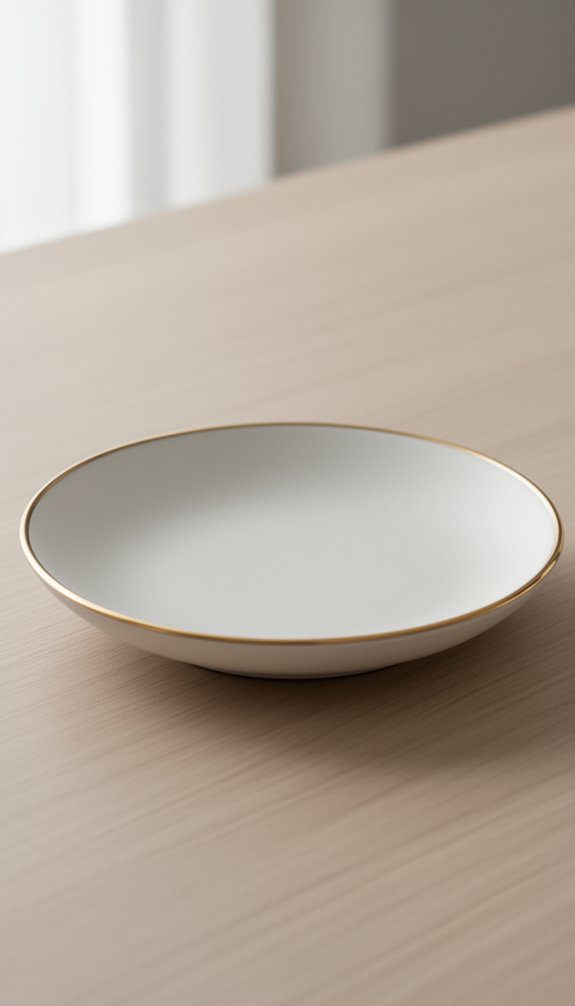
Because a thin gold rim can turn a simple trinket dish into something that feels special, I like to start by shaping the clay to about 5–6 mm thick so the dish stays sturdy and won’t crack as it dries. I use gentle dish shaping techniques and water to smooth surfaces, then carve ruffles or patterns with a scalpel before it fully firms. After 24 hours dry time, I carefully do gold leaf application or metallic paint along the edge, then seal everything with clear sealant for protection. Join me—these small steps make a minimal piece feel like home.
Heart Shaped Trinket Dish
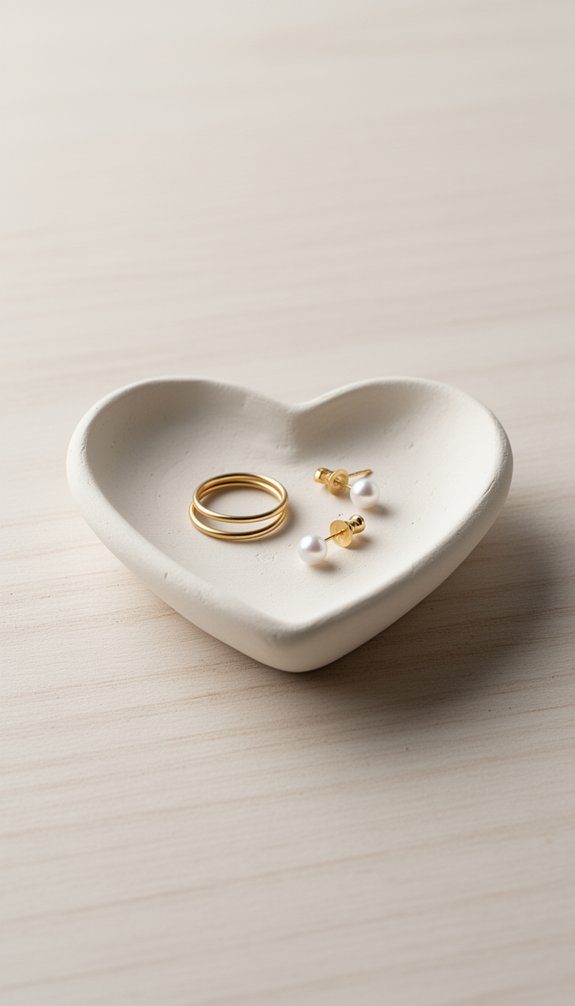
One of my favorite quick projects is a heart-shaped trinket dish, and I like to roll the air-dry clay to about 4–5 mm so the shape stays sturdy without feeling bulky. I use a cutter or trace a heart, smooth edges with water, and press a texture mat for personality. Dry it on a gentle form about 24 hours, flip for even curing — these are basic heart dish techniques and clay drying tips I swear by. Then paint and seal if you want durability. We’re in this together; small rituals like this build craft confidence.
- Trace, cut, smooth
- Texture, press, personalize
- Dry both sides
Shell Inspired Trinket Dish
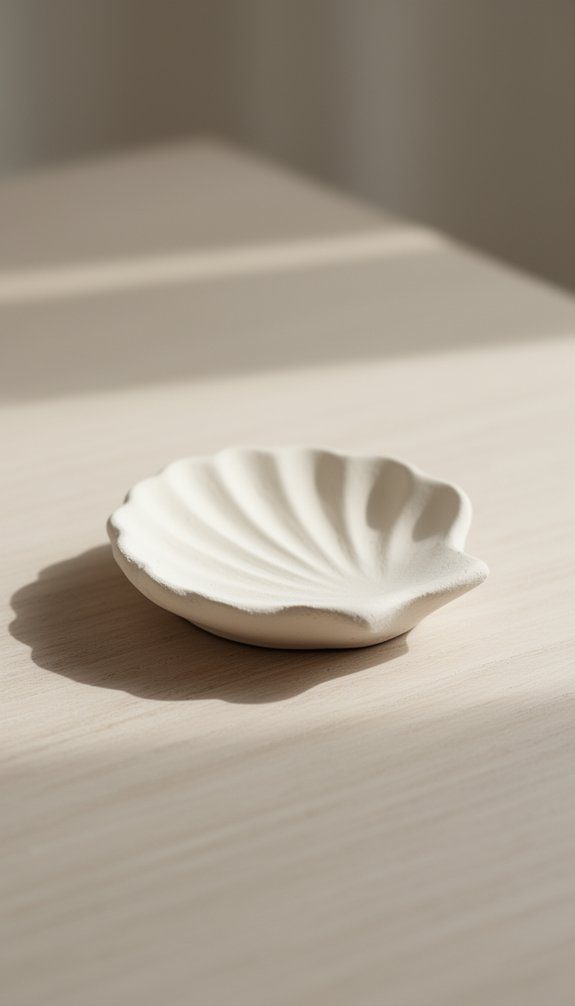
A few simple tools and about an hour of shaping will get you a lovely shell-inspired trinket dish, and I’ll walk you through the easy parts so it looks natural and holds up. I start by forming a 5–6 mm base using a bowl or my hands, then pinch the edges to create the shell’s curve and ridges with intentional shell design techniques. For clay texture options, I press a texture mat or natural materials like leaves onto the surface before it sets. Dry on a form at least 24 hours, flip once for even drying, then paint and seal for long-term use.
Terrazzo Style Trinket Dish
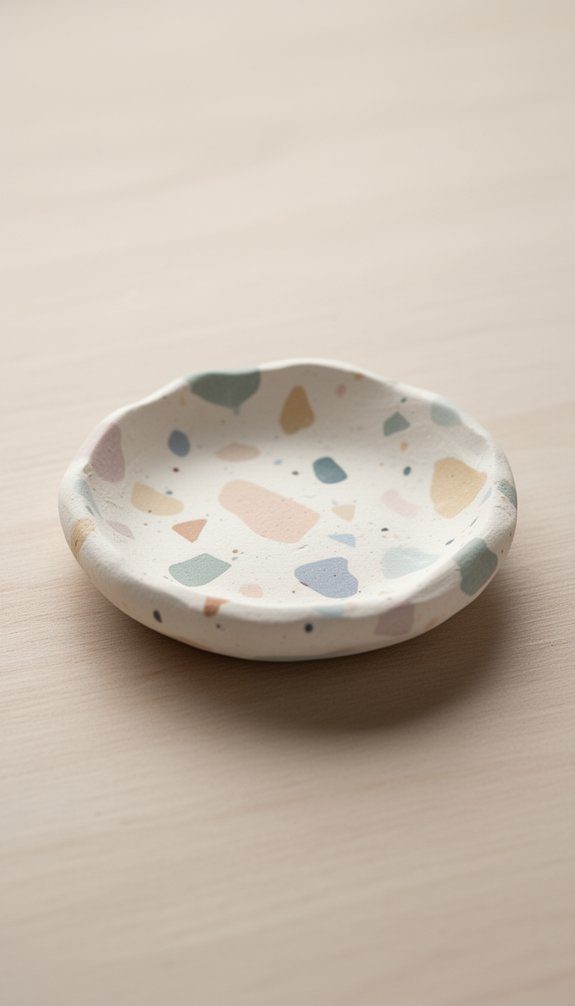
For this terrazzo-style trinket dish, I’ll show you how to get that speckled, colorful look without any elaborate equipment — just rolled-out air dry clay, small clay chips or stones, and a few helpful tools. I roll my clay to about 4 mm, press colorful chips into the surface using terrazzo design techniques, then cut a shape with a template. I add texture with a mat, dry on a form for 24+ hours, turning to avoid warping, and seal after painting details. Try harmonious color combinations for a cohesive feel; it’s simple, friendly, and made together.
- Roll, press, cut.
- Texture, dry, flip.
- Paint, seal, enjoy.
Pressed Flower Trinket Dish
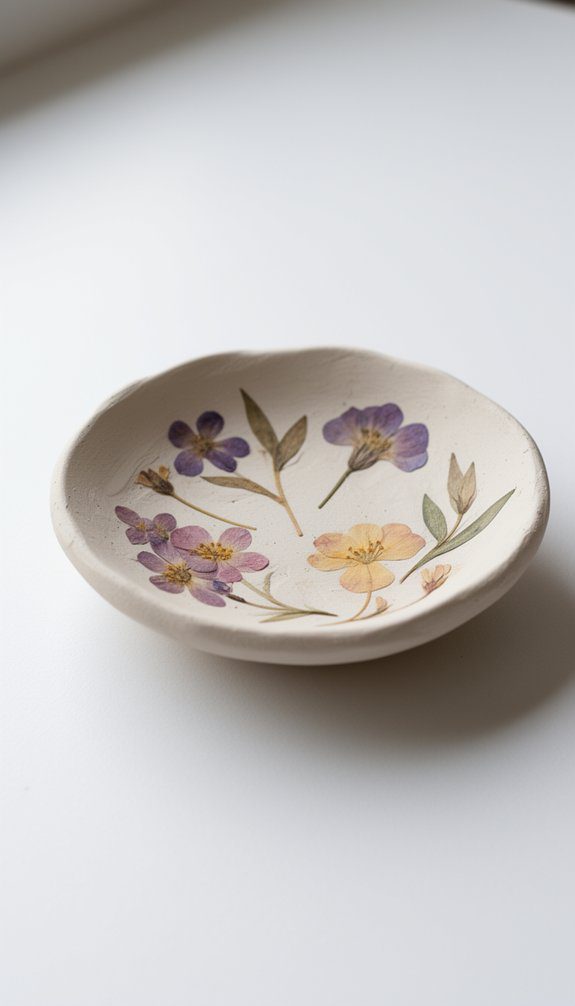
If you want a keepsake that feels like a pocket-sized garden, press dried flowers into rolled air-dry clay and you’ll get delicate, natural impressions that are as pretty as they are personal. I roll clay to about 5–6 mm for an even base, then place flat dried blooms and use pressed flower techniques to gently embed them so details show. I cut with a circular cutter, smooth edges with water, and dry on a flat surface 24 hours, flipping halfway to follow clay drying methods for even cure. Finally I might add paint accents and seal with clear acrylic for protection.
Celestial Moon Trinket Dish
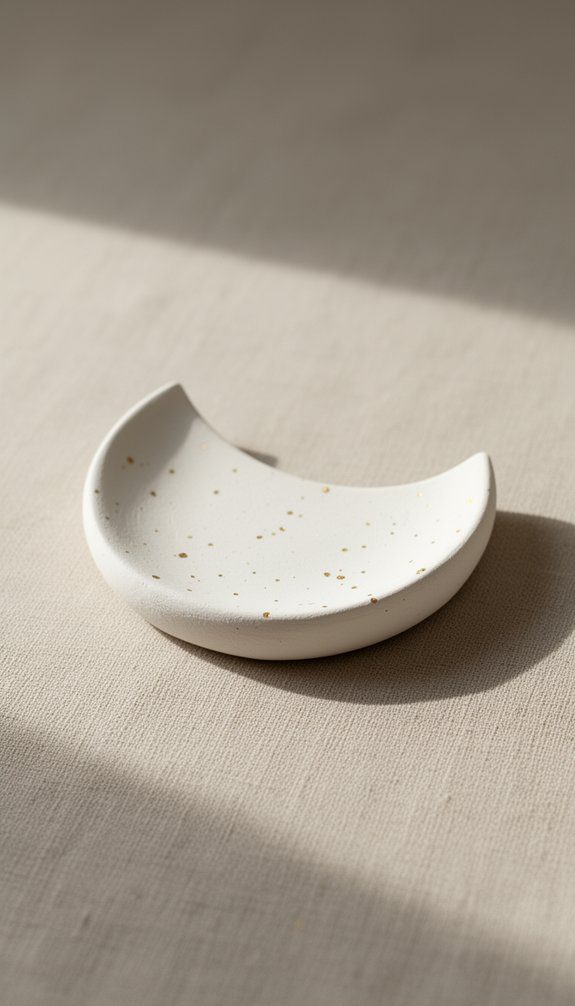
When I want something that feels a little magical, I roll out air-dry clay to about 5 mm and cut or shape a crescent moon—smoothing the edges with a damp finger or sponge so it looks crisp and comfy to hold. I use moon dish techniques: a cutter or hand-sculpting, then imprint stars or textures for celestial design inspiration. Dry it flat for 24+ hours, flipping for even drying, then paint with acrylics and seal. We make pieces that feel like home, so here are simple steps I follow:
- Shape crescent, smooth edges.
- Add textures and stars.
- Dry, paint, seal.
Boho Pattern Trinket Dish
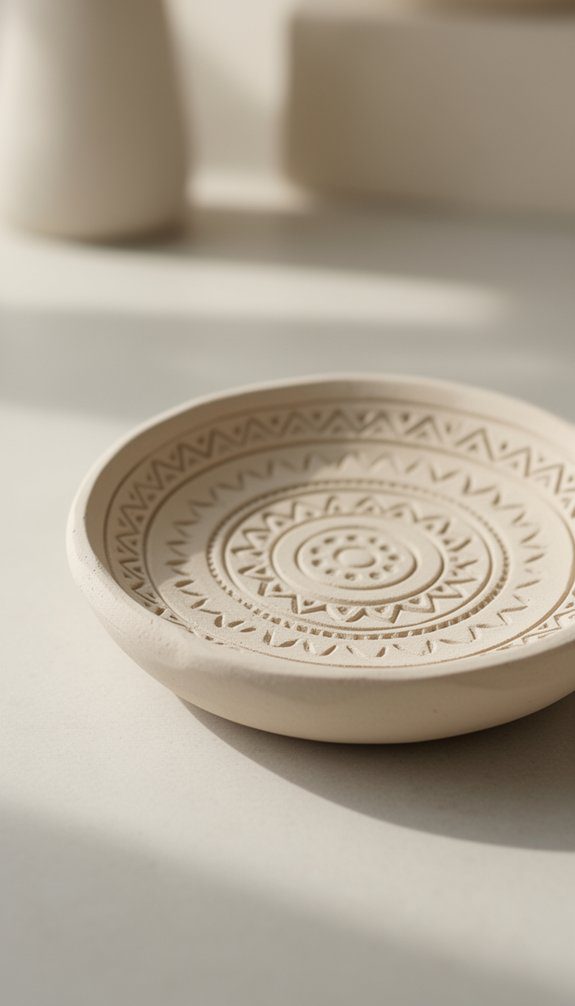
Although I love the clean look of a simple dish, I turn to boho patterns when I want something with a relaxed, arty vibe, and I’ll show you how to make one step by step. Start by rolling air dry clay to 4–5 mm for even clay textures. Impress boho patterns using texture mats or tools before cutting an organic or circular shape, using a bowl as a form for that free-flowing look. Dry the piece on the form 24 hours, then turn it to finish drying both sides for durability. Once fully dry, paint with acrylics and seal for protection and style.
Geometric Trinket Dish
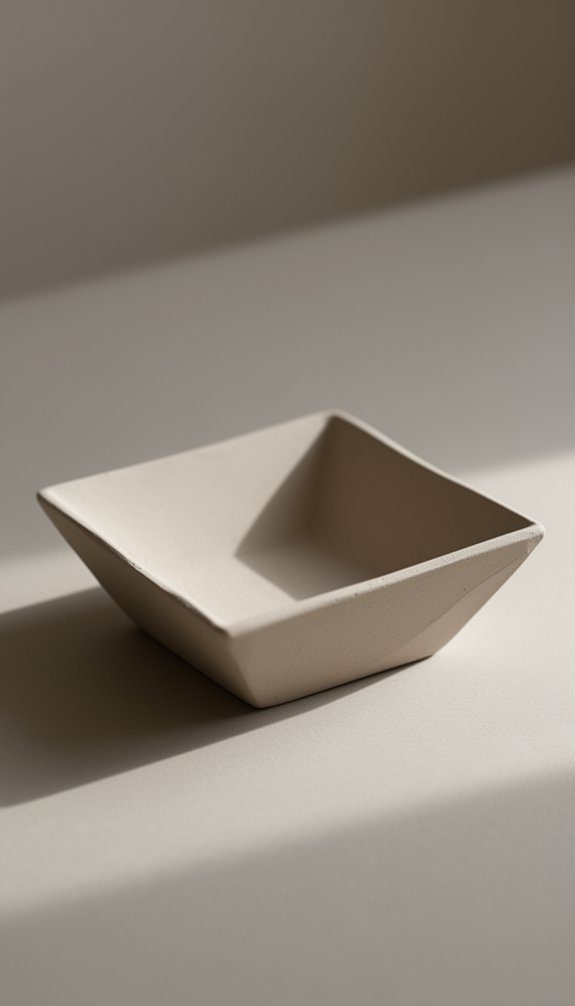
Geometry can feel crisp and modern, and I love using those clean lines to make a trinket dish that looks sharp and stylish on a dresser or desk. I find geometric inspiration in simple shapes and modern designs, and I’ll walk you through my favorite method so you feel confident creating one too.
- Roll clay to 4 mm on a smooth surface, press texture mats if you like, then cut precise shapes with templates.
- Lift and mold around a form for depth, smoothing edges with water for a polished look.
- Dry 24 hours on the form, then remove and seal for durability.
Personalized Name Trinket Dish
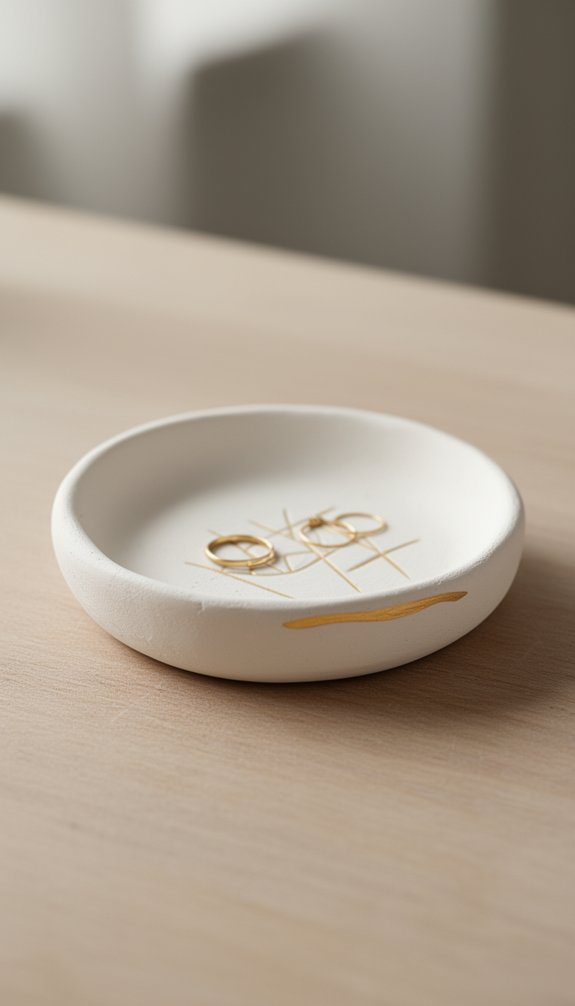
A personalized name trinket dish is a simple way to make something both useful and meaningful, and I’ll show you an easy method that gives neat, lasting results. I roll air dry clay to 5–6 mm for strength, trace a bowl for a clean circle, and smooth edges with water for a polished look. For personalization techniques, I use letter cutters or a scalpel to create creative imprints of a name, then dry the dish on the mold 24 hours before flipping to finish drying. Once fully dry, seal and optionally paint the name to protect and brighten it.
Scalloped Edge Trinket Dish
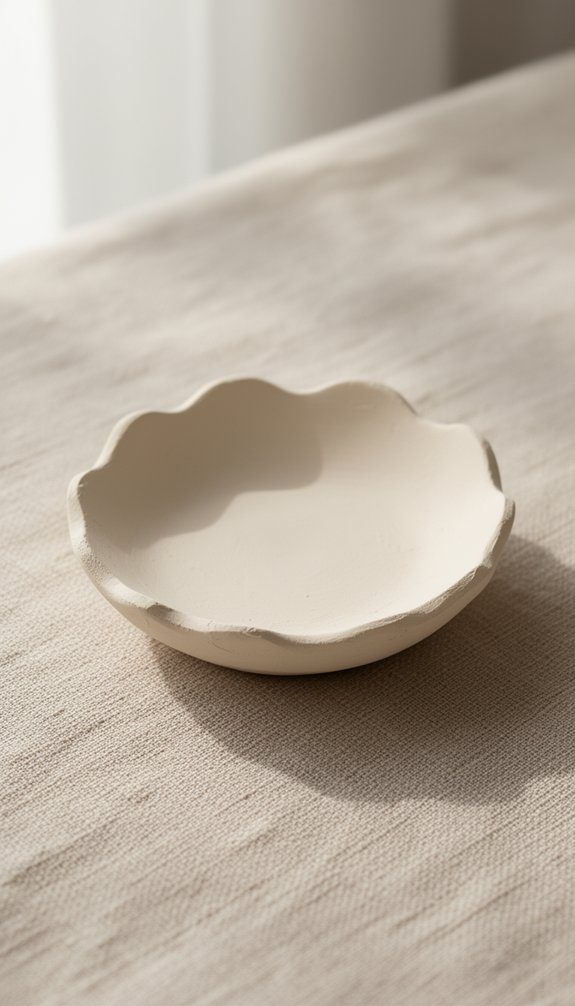
You’ll get a pretty scalloped edge trinket dish by rolling air dry clay to about 5 mm, tracing a bowl for a neat circle, and using a scalpel to cut and define ruffles around the rim. I like to smooth edges with a little water and, if I want more interest, press a texture mat before shaping for subtle depth. Let it rest and follow clay drying tips: leave flat and undisturbed for about 24 hours, then seal and paint. Here are three friendly reminders:
- Use a bowl for consistent size.
- Define ruffles with steady scalpel cuts.
- Seal to protect your scalloped design techniques.
Speckled Neutral Trinket Dish
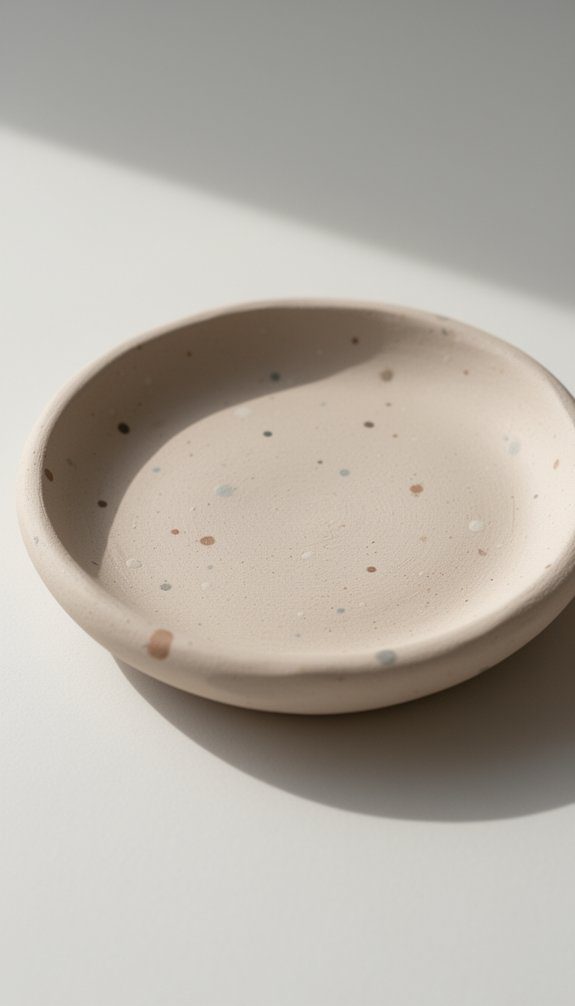
If you liked the scalloped dish, try something softer and more organic with a speckled neutral trinket dish—I’ll show you how to get that calm, stone‑like look without any fuss. I condition air dry clay to an even texture, roll to 4–5 mm with guides, then add speckled texture by mixing tiny colored clay bits or pressing a speckled mat. Cut with a bowl, smooth edges using water, and dry on a form for 24 hours. Seal for durability and optionally paint with acrylics before sealing. We make pieces that feel like home together.
| Step | Tool | Tip |
|---|---|---|
| 1 | Clay | Condition evenly |
| 2 | Guides | Roll 4–5 mm |
| 3 | Cutter | Use bowl edge |
| 4 | Water | Smooth edges |
| 5 | Sealant | Protect finish |