
Air Dry Clay Tic Tac Toe 7 Simple Steps to Make It
I’ll help you make an air dry clay tic tac toe set in 7 simple steps: knead clay, then roll a 4–5 mm base and cut it with a round template. Roll a coil, score both sides, add clay glue (3:1 water), and attach it as a raised rim. Score a hashtag, glue on thin 2–3 mm strips, then smooth. Roll pieces 2–3 mm, cut 6–8, mark Xs and Os, dry flat, sand, paint, and seal. Stick around for extra finishing tricks.
Love cozy DIY projects? 💕
Get free printable guides, exclusive tutorials & surprise craft goodies straight to your inbox.
Disclosure: This post may contain Amazon affiliate links, at no extra cost to you. Content on DiyCraftNest is created with research support from AI tools and carefully reviewed, edited, and fact-checked by the lead author, Daniel Pat, to ensure accuracy and reliability. Learn more
Key Takeaways
- Gather air dry clay, rolling pin, circular cutter, sharp knife, and clay glue made from 3:1 clay-to-water.
- Knead clay well, then roll an even 4–5 mm sheet and cut a circular base for a sturdy board.
- Make a raised rim by scoring base and coil edges, brushing clay glue, attaching the coil, and smoothing seams.
- Score a hashtag grid, add thin 2–3 mm clay strips with glue, and press gently for crisp, straight lines.
- Roll a 2–3 mm sheet for pieces, cut 6–8 X and O shapes, clean edges, then dry fully before optional painting.
Supplies for an Air Dry Clay Tic Tac Toe Set
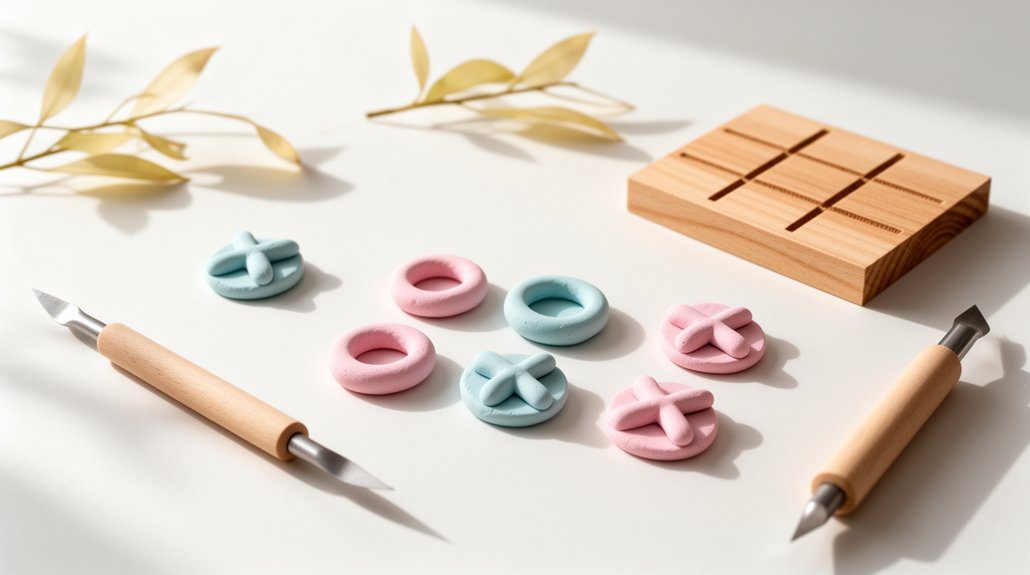
Before the clay gets messy, let’s gather a simple “toolkit” for your air dry clay Tic Tac Toe set so everything feels easy and organized. I like setting up a flat, clean workspace so you can join in without stress.
For clay types, choose air dry clay you can smooth easily. You’ll need a rolling pin, a circular object to cut the board, and a cookie cutter for pebbles. Keep a sharp knife or clay cutter for crisp edges, plus tools for scoring and smoothing. Use a straw or small screwdriver to mark Xs and Os. Mix clay glue (3:1 water). Add paint, and optional gloss or clear polish for game variations.
Roll the Clay Base to the Right Thickness
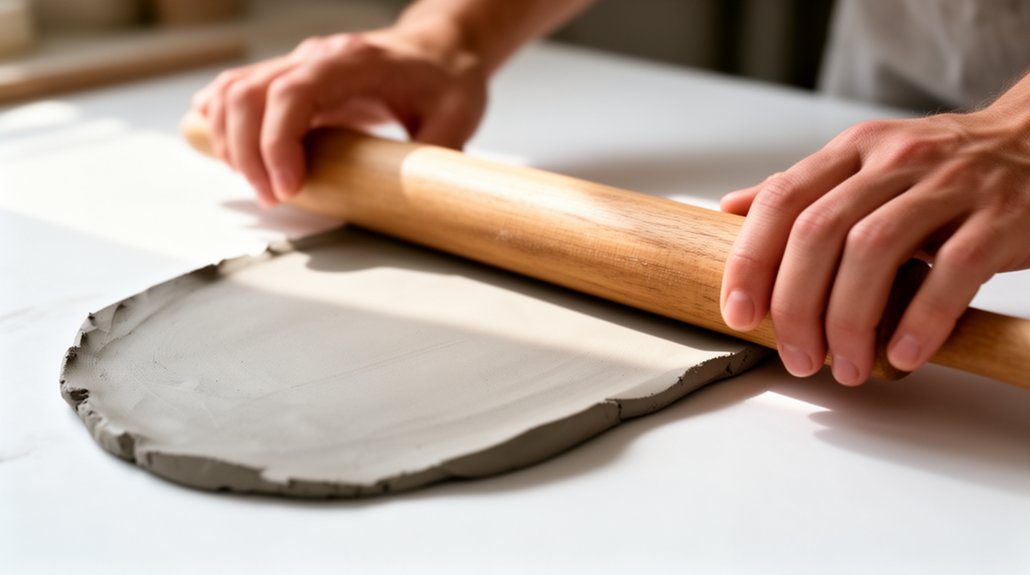
A good, even clay base is what makes your Tic-Tac-Toe board feel sturdy and look polished, so I take a minute to get the thickness just right. First, I knead the air dry clay until it’s soft and pliable, like warm bread dough, so it won’t crack while I work.
Next comes clay rolling. I roll slowly and check from every side, aiming for 4–5 mm. That sweet spot gives stability without feeling bulky, and it keeps thickness consistency across the whole piece. When it looks even, I press a circular object down and cut out my base shape cleanly.
Build the Raised Edge on the Tic Tac Toe Board
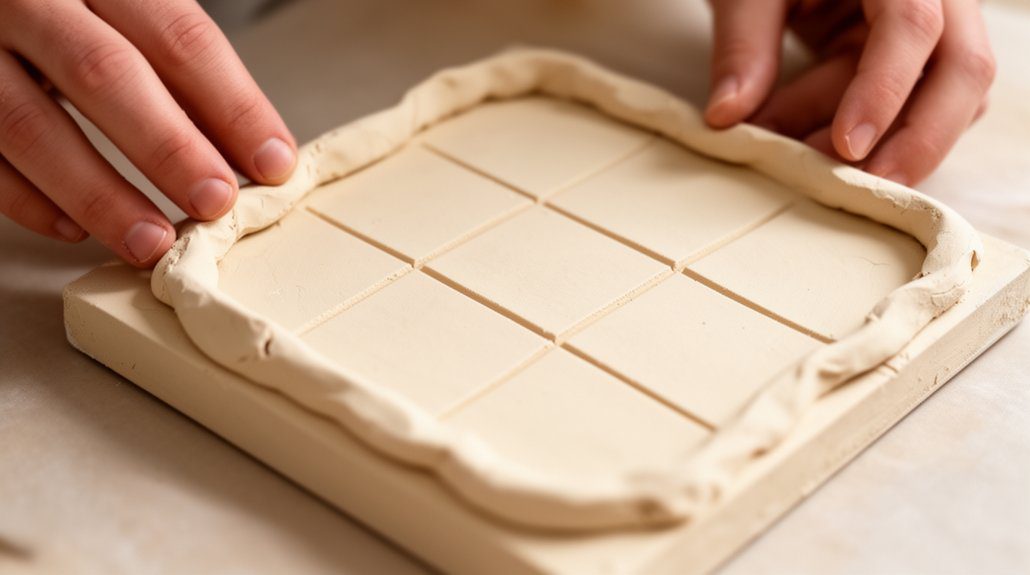
Now that my base is rolled smooth and cut clean, I like to give it a neat little “frame” by building a raised edge. I roll a fresh coil to match the base’s circumference, then test-fit it so we’re crafting as a team.
| Step | Why it matters |
|---|---|
| Roll coil | Fits your board |
| Score both edges | Strong bond |
| clay glue application (3:1 water) | Locks it in |
| Trim and close gaps | Seamless look |
| Dry fully | Ready later |
These raised edge techniques keep everything tidy. I cut off extra clay, press gently, and smooth the join.
Add the Grid Lines With Scoring and Clay Strips
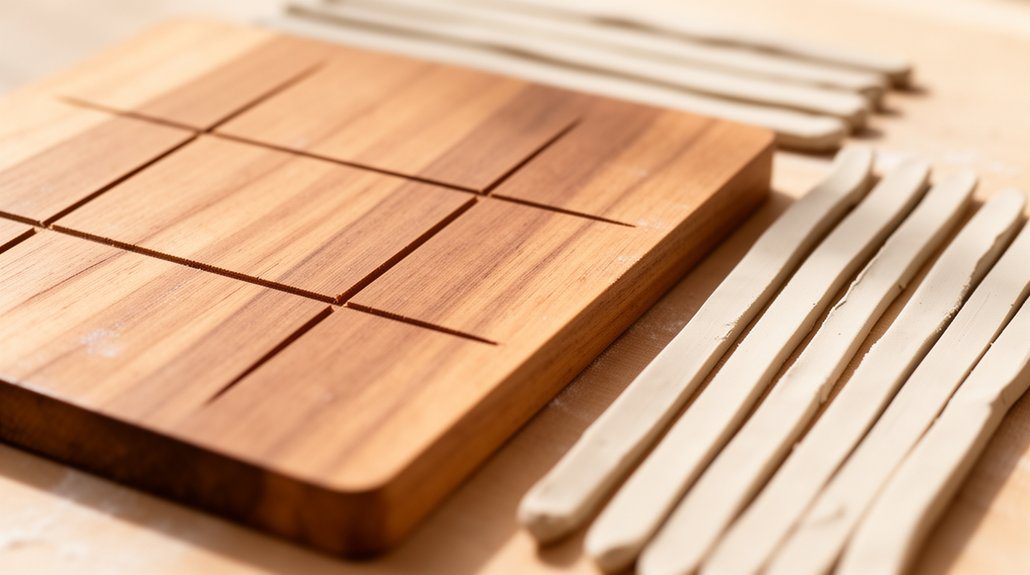
Once the raised edge feels firm and tidy, I switch gears and lay out the tic-tac-toe grid so it looks crisp and stays put. I start by scoring a neat hashtag symbol right on the base, using simple scoring techniques to mark where each line will sit.
Next, I roll extra clay into thin strips, about 2–3 mm thick. I make them long enough to span the board and snug between my scored guides. Before I set each strip down, I brush a little clay glue along the scored edges, then press gently. Finally, I smooth gaps with a tool for a clean finish.
Cut Out and Mark the X and O Pieces

Grab your rolling pin and let’s crank out the game pieces—this is where the board starts to feel like real tic-tac-toe. Roll a smooth clay sheet to 2–3 mm, then use a cookie cutter to punch out 6–8 matching clay shapes. Keep the count even so our set feels fair and complete.
Now for marking techniques: I press a straw straight down to make clean O rings, and I use a small screwdriver to score crisp X lines. Tidy rough edges before moving on.
- You’ll feel proud seeing the first perfect pair.
- It’s fun knowing we’re making this together.
- Every mark makes the game feel more “yours.”
Dry Without Warping, Then Sand Smooth
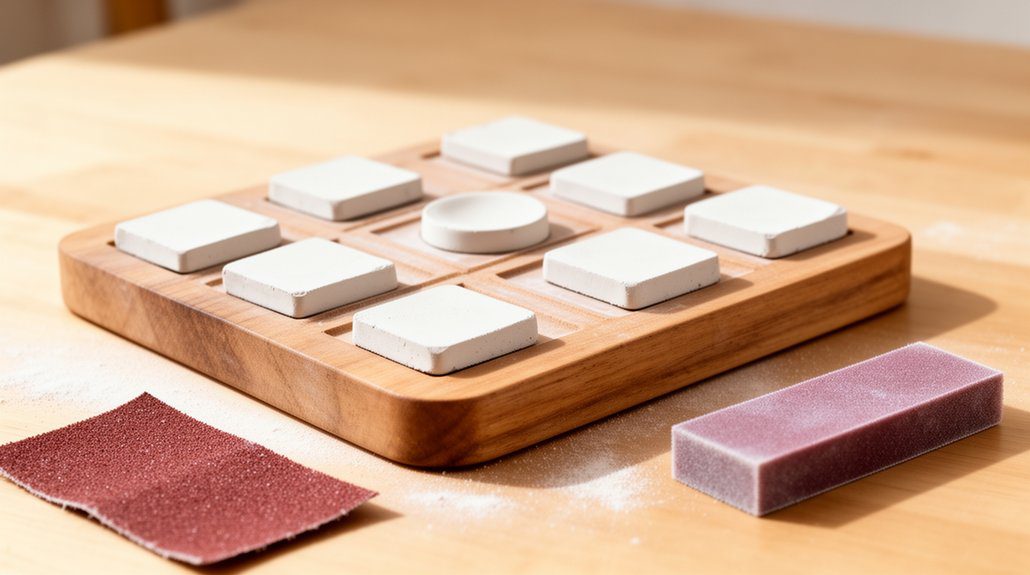
Although it’s tempting to rush the drying step, I slow down here because even, gentle drying is the secret to pieces that stay flat and game-ready. I make sure each X and O is the same thickness—about 2–5 mm—so nobody dries faster than the others.
Next, I set everything in a cool, dry spot, away from sun or heaters. I also flip the pieces a few times to balance moisture loss; it’s simple moisture management and one of my favorite drying techniques. If one curls, I lightly dampen and reshape it, then let it dry again. Finally, I sand with fine grit for smooth edges.
Paint and Seal Your Clay Tic Tac Toe Game
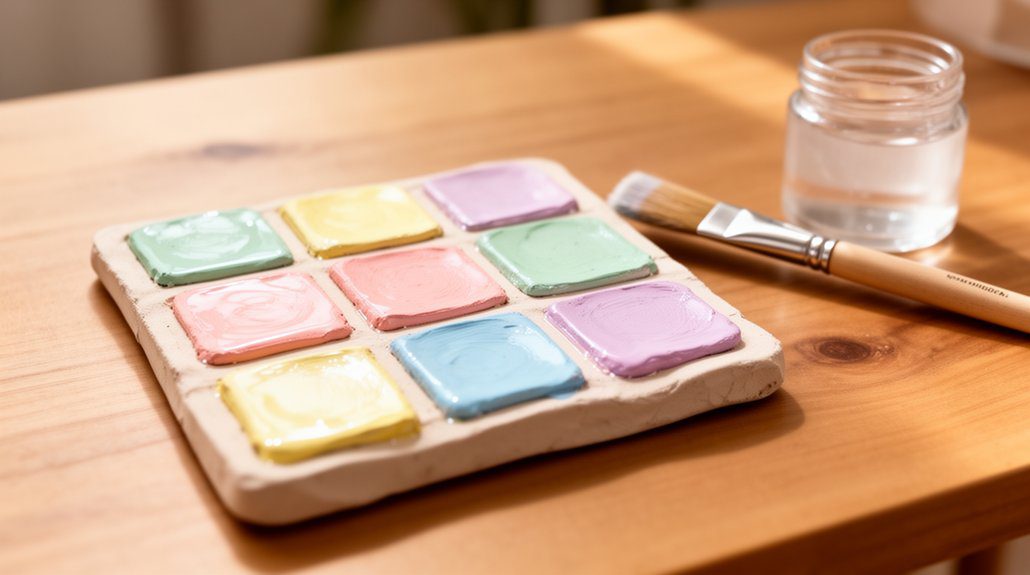
When my clay X’s and O’s feel totally dry and cool to the touch, I move on to the most fun part—adding color and shine. I pick paint colors that feel like “us,” then use acrylics for bright coverage and fast drying. For easy paint techniques, I start with thin coats, let each layer set, and add a second coat for a smooth finish.
- You’ll feel proud seeing your set come alive
- Friends will want to play and belong at your table
- Your gift will feel personal and loved
Next, I choose sealing options: glossy clay finish or clear nail polish. I let it cure fully before touching.
Frequently Asked Questions
How Do I Store the Set to Prevent Chips and Cracks?
Store it like a little treasure: I nest pieces in padded storage solutions, keep them separated, and tuck everything in a snug box. I’ll add protective coatings, avoid heat and humidity, and you’ll feel included, too.
Can This Be Made Outdoors-Safe for a Garden or Patio?
Yes, you can, but I’d seal it with a weatherproof coating for outdoor durability. I’ll apply multiple thin coats, especially on edges, then store it covered between games so our set stays welcome outside.
Is Air Dry Clay Safe for Young Kids to Use?
Yes, air dry clay is typically safe for young kids if you choose non-toxic brands and supervise them. For air dry clay safety, I’ll help you pick kid friendly materials, avoid dust, and wash hands.
How Can I Personalize It With Names, Patterns, or Themes?
I personalize it by carving or stamping names, adding custom designs like dots, stripes, or hearts, and painting shared colors. You can build themed sets—space, animals, or holidays—so everyone feels included and connected.
What Are Quick Repair Options if a Piece Breaks Later?
If a piece breaks, I’d use glue options like super glue or PVA, then reinforce with patch techniques: fresh clay or epoxy putty. I’ll sand, repaint, and seal, so your set stays ours.