10 Useful Clay Projects for Everyday Use
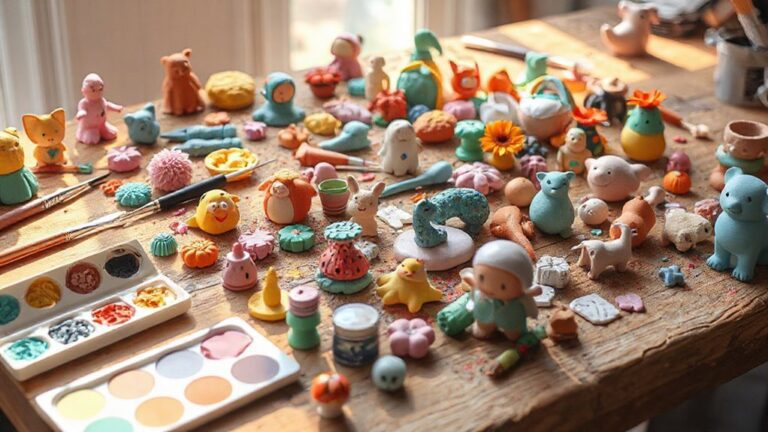
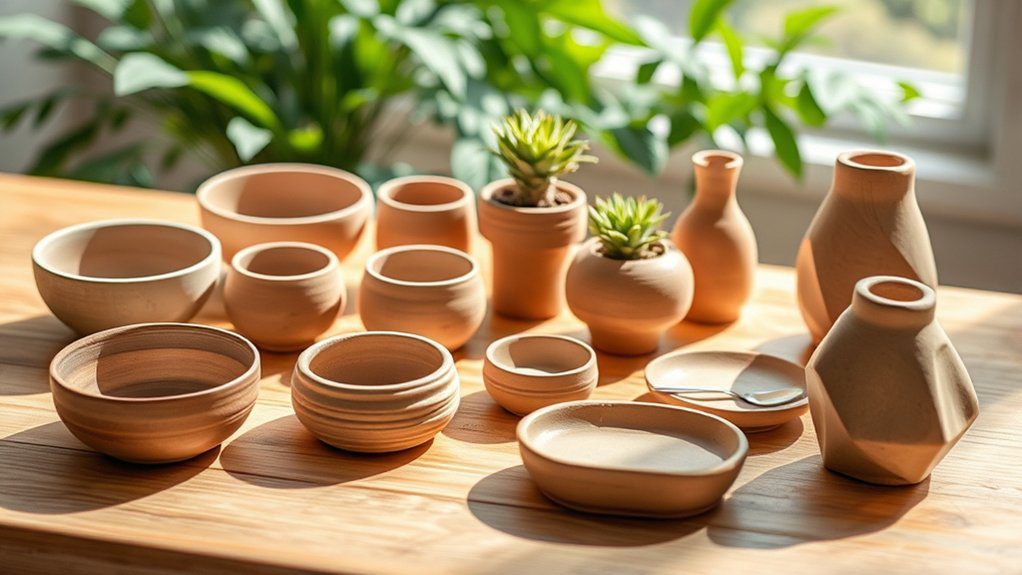
I’ve got 10 clay projects you’ll actually use: coasters to protect tables, trinket dishes for drop-zones, ring and earring holders to stop losing jewelry, magnet vases (just press in strong magnets), plus a spoon rest, salt spoons, bookends, and two easy extras—key bowls and phone stands. Air-dry clay firms up fast but needs 24–72 hours to fully dry, especially if it’s thick or humid. Flip pieces, sand gently, then seal with clear acrylic for durability. Stick around for the simple steps and cute design ideas.
Love cozy DIY projects? 💕
Get free printable guides, exclusive tutorials & surprise craft goodies straight to your inbox.
Disclosure: This post may contain Amazon affiliate links, at no extra cost to you. Content on DiyCraftNest is created with research support from AI tools and carefully reviewed, edited, and fact-checked by the lead author, Daniel Pat, to ensure accuracy and reliability. Learn more
Key Takeaways
- Make air-dry clay coasters to protect tables from moisture and heat; roll flat, press a cup shape, and smooth edges.
- Create trinket dishes to catch keys and small items; form round or leaf shapes and smooth rims with damp fingers.
- Build ring holders with a small dish and cone to prevent lost rings; size up for chunky rings and seal for durability.
- Craft earring holders with slots and hooks to prevent tangles; customize with paint or marbling for easy everyday access.
- Improve results by drying 24–72 hours, flipping pieces on cardboard, sanding with fine-grit paper, and sealing with clear acrylic.
Air-Dry Clay Basics: Drying, Sanding, Sealing
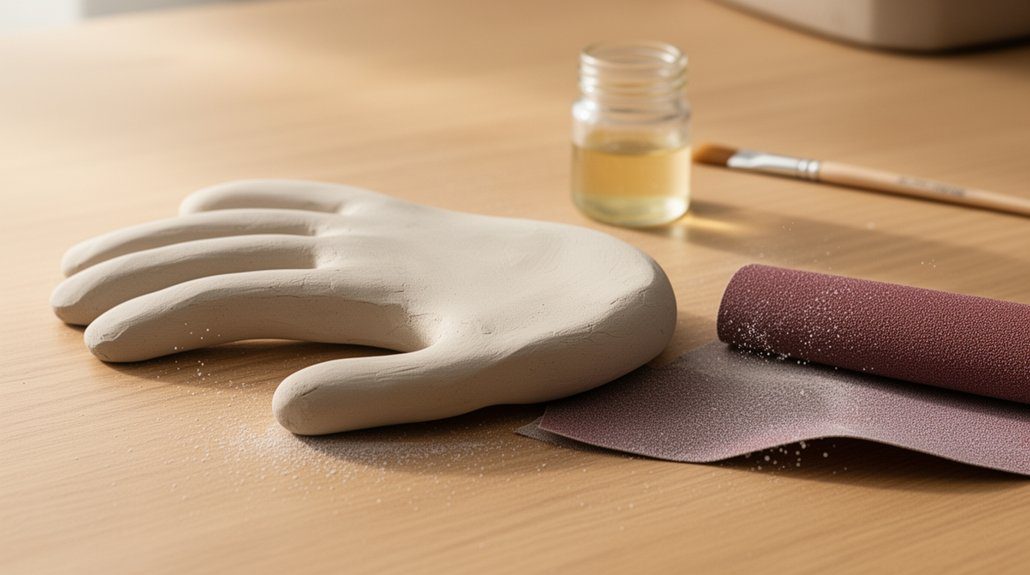
Although air-dry clay feels firm pretty quickly, I always remind myself it needs real time to finish drying, sanding, and sealing if I want it to last. I plan for 24–72 hours, because thicker pieces and humid rooms slow things down. For drying techniques, I flip my piece every few hours and keep it on a breathable surface like cardboard.
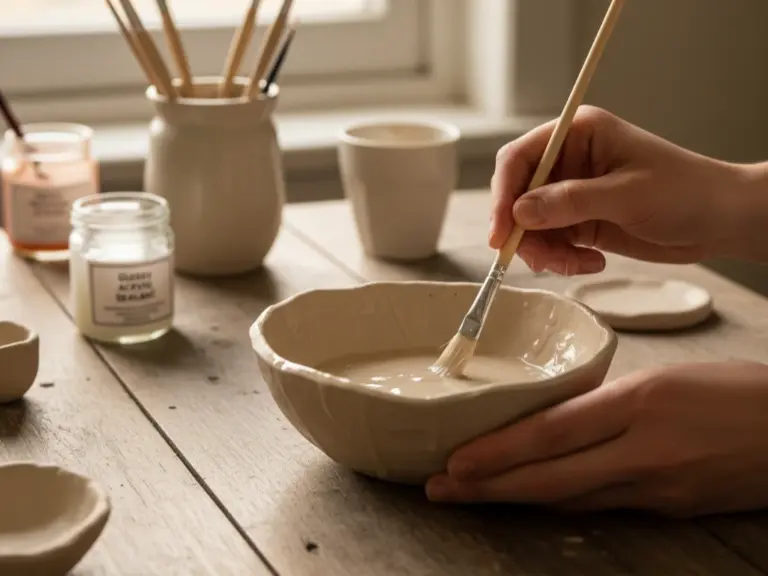
Once it’s fully dry, I sand gently with fine-grit paper to smooth bumps without gouges. Then I use water-based sealing methods: clear acrylic sealer or glaze. I brush on several thin coats for even, drip-free protection.
Air-Dry Clay Coasters to Protect Tables
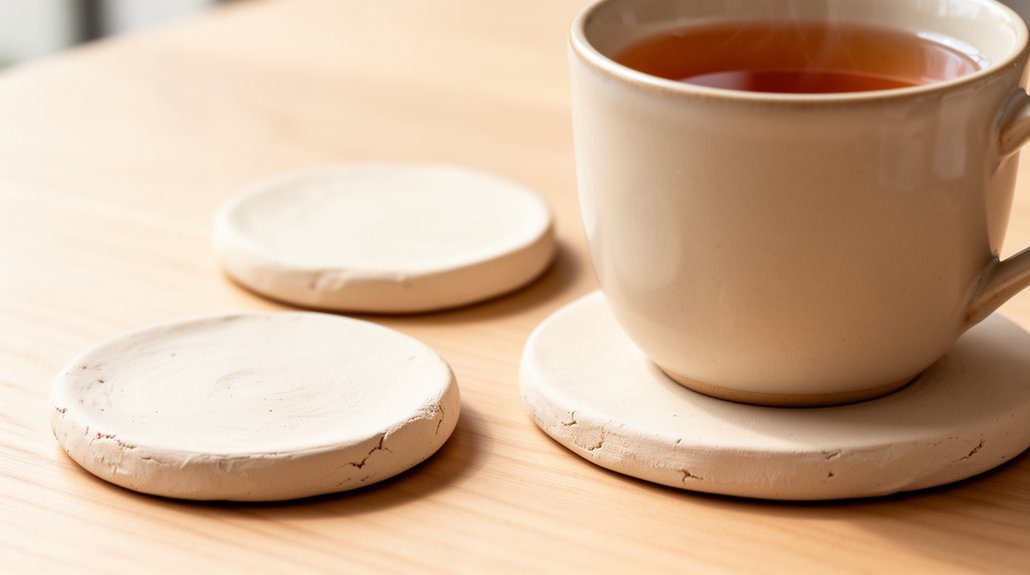
A good set of air-dry clay coasters does more than look cute—it protects your tables from sweaty glasses, small spills, and even a bit of heat from mugs. I love how this project helps you feel part of the crafty crowd fast: just roll clay flat, press a cup down, and smooth the edges. Try simple crafting techniques like stamping, carving, or adding texture with lace for standout coaster designs. They’re lightweight, easy to wipe clean, and make sweet gifts.
| Look | Vibe |
|---|---|
| Floral press | Cozy brunch |
| Geo lines | Modern hangout |
Air-Dry Clay Trinket Dishes for Daily Drop-Zones
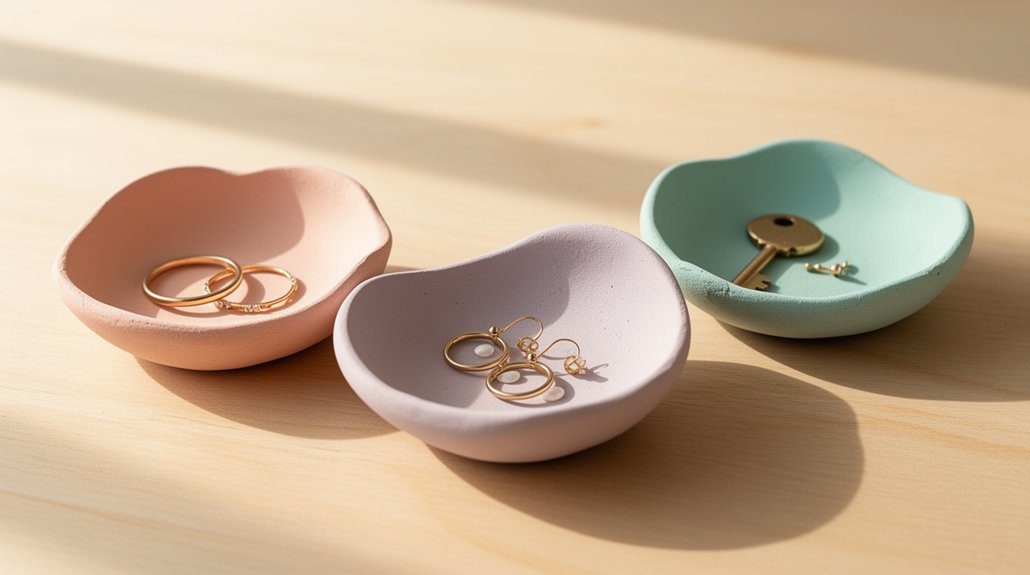
Coasters protect your tables, but I also love clay projects that save my sanity—like a trinket dish that catches all the tiny stuff I’m always setting down and instantly forgetting. I place one by the door, one on my desk, and suddenly everyday organization feels doable, like we’re all in on the same secret.
To make yours, I roll air-dry clay, press it into a bowl shape, and smooth the edges with a damp finger. Trinket dish customization is the fun part: go round, leaf-shaped, or square, then paint with acrylics or add simple gems. Keep it for dry items only.
Air-Dry Clay Ring Holder for Sink or Bedside
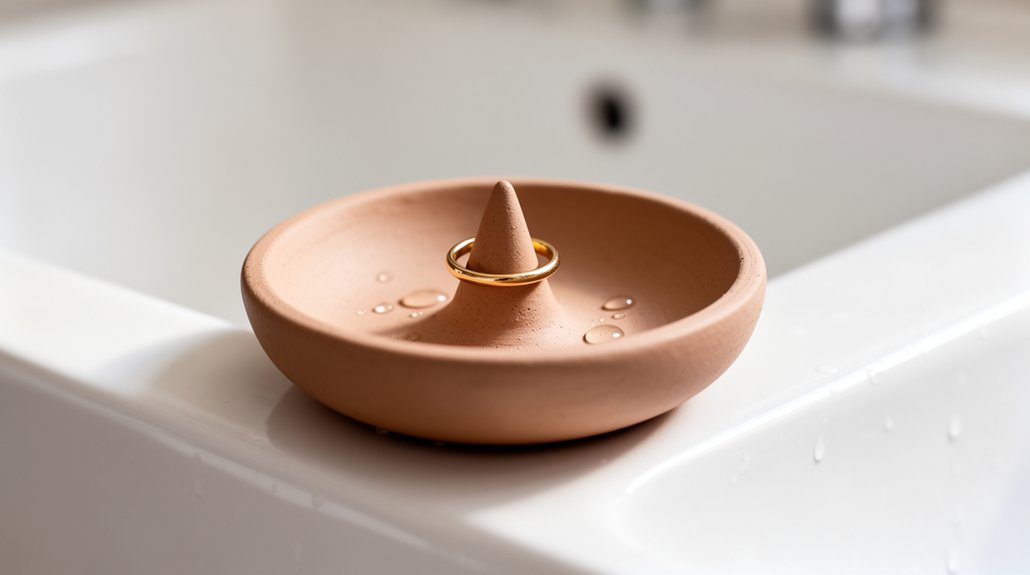
Whenever I’m about to wash my hands or climb into bed, I like having a tiny air-dry clay ring holder right where I need it, because it saves me from that panicky “Where did my ring go?” moment. You can shape one fast: roll a small ball, press a shallow dish, then add a little cone or spike for the ring. Keep the ring design simple, or make it a heart or seashell so it feels like “you.” Play with clay colors, then paint and add a clear glaze for durability. Make it bigger for chunky rings.
Air-Dry Clay Earring Holder to Prevent Tangles
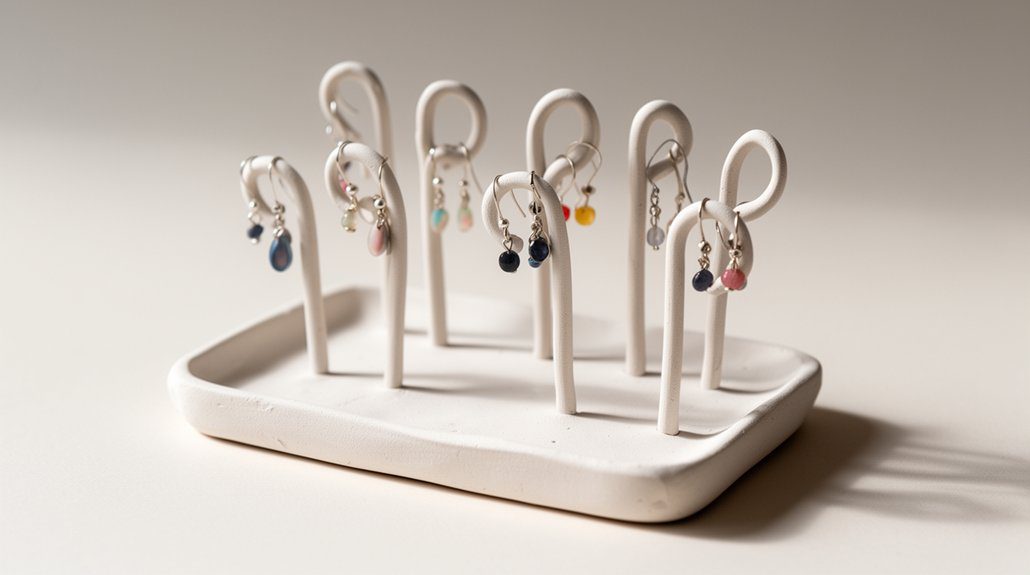
After making a ring holder for the sink or bedside, I like to give my earrings their own “home” too—because nothing steals your morning like digging through a knot of studs, hoops, and backs. With air-dry clay, I shape a small stand that feels like it belongs in your space and mine, turning earring organization into a calm, shared ritual.
- Add tiny hooks for hoops and dangles
- Press slim slots for studs and pairs
- Paint or marbling for creative customization
It dries fast, so beginners can win quickly. Once it’s set, you’ll grab and go, tangle-free.
Air-Dry Clay Photo Holders for Desks and Shelves
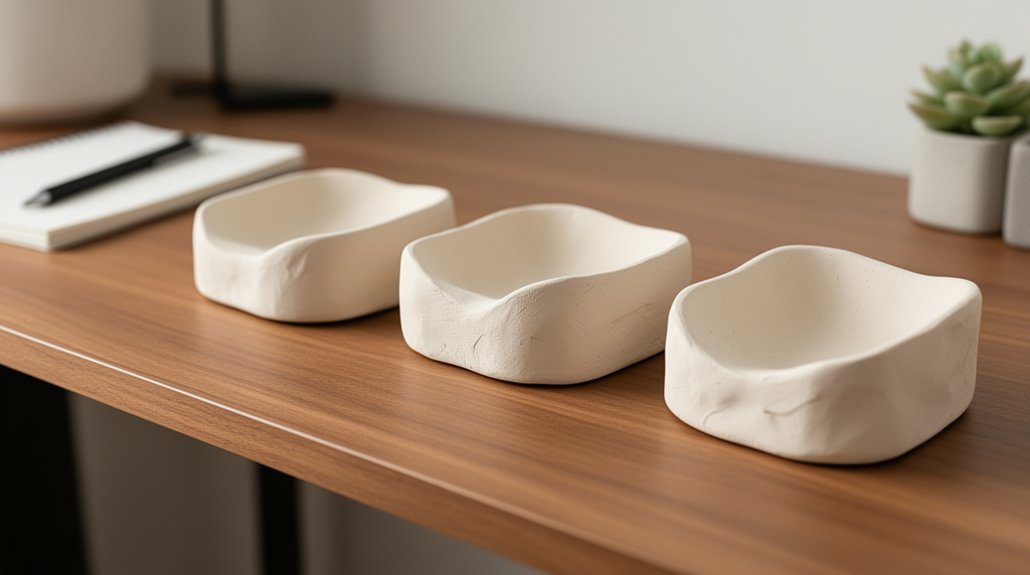
A tiny photo stand can feel like a little anchor on a busy desk, keeping your favorite faces in view without taking up much space. I shape air-dry clay into small arches, hearts, or simple blocks, then cut a neat slit for the picture. For photo holder designs, I match the mood of your room: smooth and modern, or bumpy and playful. Try clay color combinations like white and gold, pastel swirls, or earthy speckles. It dries fast, so beginners won’t feel stuck waiting. Make a set for your shelf, or gift one so someone feels included.
Air-Dry Clay Magnet Vases (How to Add Magnets)
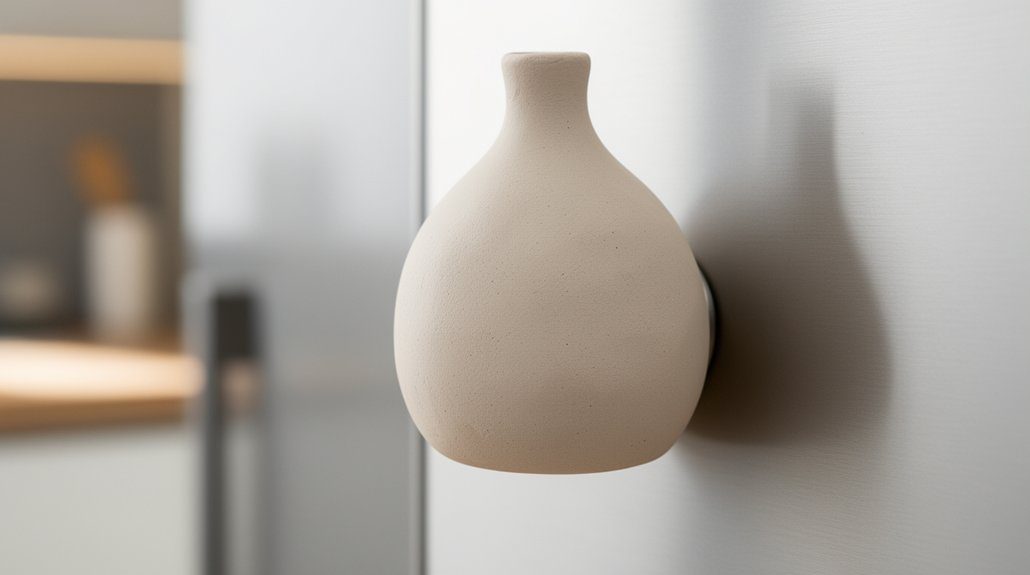
Because tiny flowers deserve a spot where you’ll actually notice them, I love turning air-dry clay into mini magnet vases that stick right to your fridge or a magnetic board. I sculpt a small vase with a hollow center, then let it dry completely so it won’t warp.
To add magnets, I glue a strong one on the back and press it firmly, checking magnet strength so it can hold up without sliding. Keep the vase lightweight, and you’ll feel like part of a crafty little club.
- Acrylic paint and sealant
- Beads, dots, and patterns (decorative techniques)
- Herbs or mini blooms
Air-Dry Clay Spoon Rest for Cleaner Counters
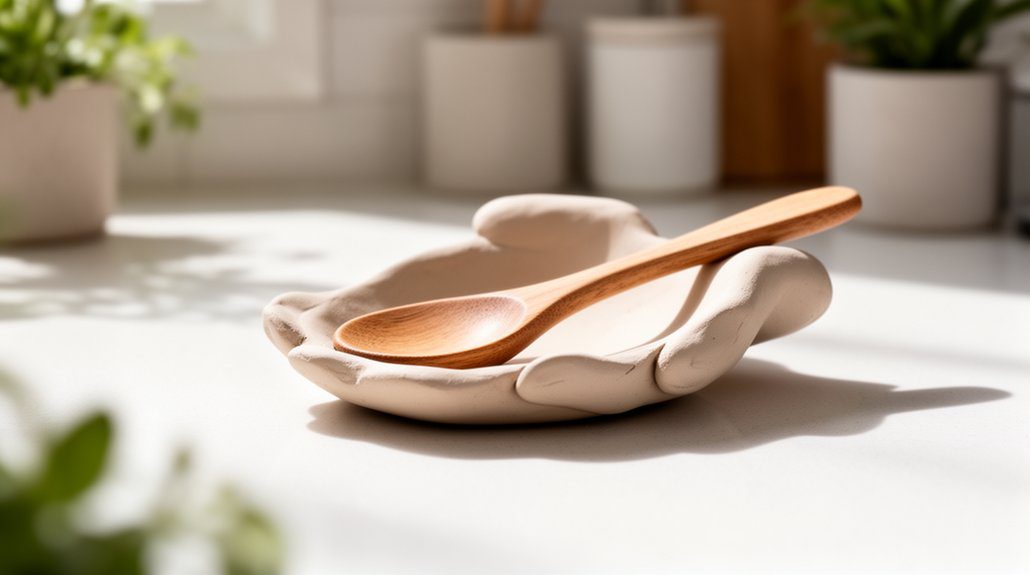
Tiny clay projects don’t have to stay on the fridge—sometimes they belong right next to the stove, where the mess happens. I love making an air-dry clay spoon rest because it gives every sticky spoon a home, so your counters feel calmer and more cared for.
I roll a thick slab, then pinch up a shallow bowl and add a small ridge to catch drips. Air-dry clay is non-toxic, and you don’t need special tools or baking. After it dries, clay decorating is easy: paint, dots, or stripes to match your kitchen. Seal with clear glaze for shine and quick cleanup.
Air-Dry Clay Salt Spoons for Cooking and Gifting
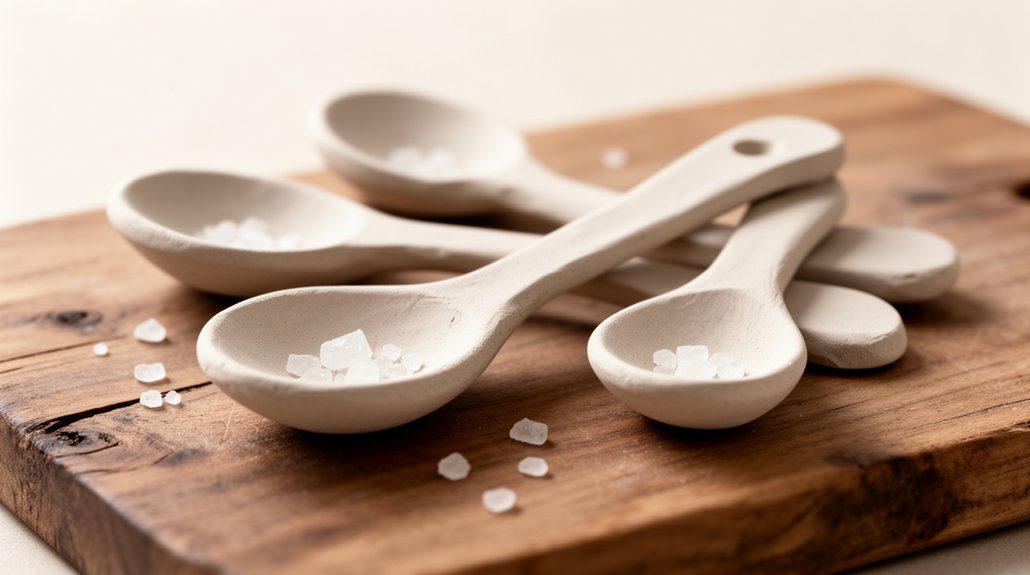
One of my favorite little kitchen upgrades is an air-dry clay salt spoon—it’s useful for scooping salt or spices, but it also adds a pretty, handmade touch right by the stove. I shape mine small so it measures pinches nicely, then smooth the bowl for easy pouring. Try these customization techniques to make it feel like it belongs in your kitchen:
- Tint clay, or paint bold stripes for quick spice spotting
- Press lace, leaves, or stamps for texture and grip
- Seal with a food-safe finish for durability
For gifting ideas, I pair a spoon with gourmet salt in a jar.
Air-Dry Clay Bookends to Keep Shelves Tidy
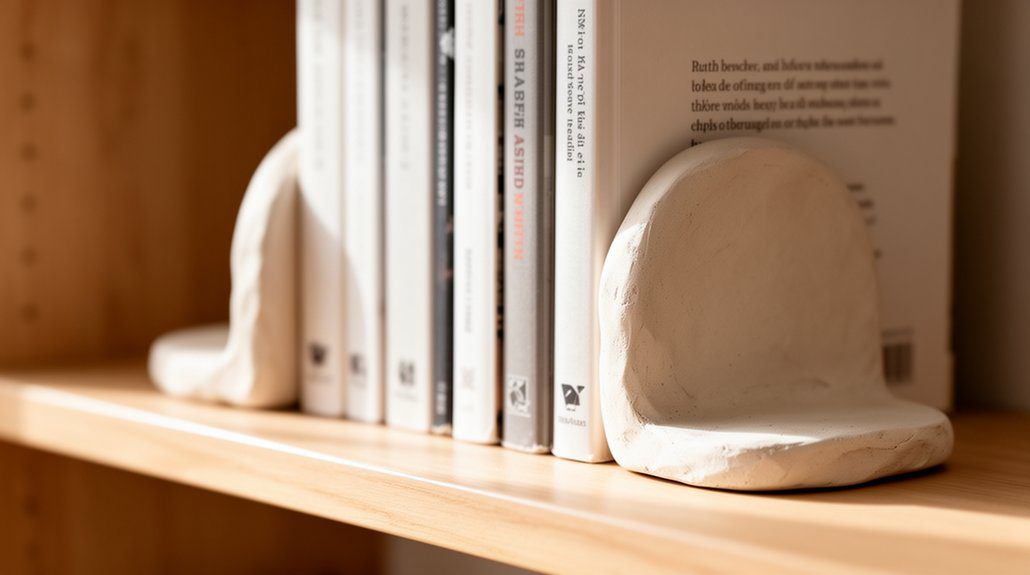
Even if your shelves look neat at first, a row of books can start to lean and slide the moment you pull one out—so I love making air-dry clay bookends that hold everything steady while showing off a bit of personality. This beginner project lets you try simple molding, then customize colors to match your room. I like testing clay design ideas by sketching bookend shapes first.
| Mood | Detail | Result |
|---|---|---|
| Cozy | soft pastels | calm shelf |
| Bold | bright stripes | happy pop |
| Proud | your initials | “we belong” vibe |
After drying, I paint, seal, and enjoy tidy, creative order.
Frequently Asked Questions
What Clay Tools Are Essential for Beginners on a Budget?
I’d start with clay tool necessities: a needle tool, wire cutter, wooden rib, metal scraper, sponge, and basic loop tool. I’d choose budget friendly options like kitchen knives and credit cards—you’ll fit right in.
Can Kids Safely Make These Projects, and What Age Is Appropriate?
Yes—kids can safely make them if you follow Kids’ Safety basics; I know you’re worried about mess or sharp tools, but I’ll guide you. Use Age Guidelines: 3+ supervised, 8+ mostly independent, 12+ kiln.
How Do I Fix Cracks or Breaks in Dried Air-Dry Clay?
I fix cracks in dried air-dry clay by sanding edges, moistening seams, and pressing fresh clay in. For breaks, I use clay adhesives and smart repair techniques, then seal, paint, and share.
What Paints or Finishes Are Food-Safe for Clay Items?
I recommend FDA-compliant epoxy or clear polyurethane labeled for indirect food contact as food safe sealants, plus non toxic paints marked AP Certified. I can’t promise safety otherwise, so let’s choose labeled products together.
How Should Finished Clay Pieces Be Stored to Prevent Warping?
Like a lullaby for your work, I store finished pieces flat, fully cured, and supported. For clay storage, I avoid heat, sun, and weight. To help preventing warping, I use breathable boxes and spacers together.