19 Upcycle Clothes DIY Refashioning Ideas for a Fresh New Look
I’ll show you 19 easy upcycle ideas to make old clothes look new, starting with reshaping oversized pieces by adding darts or taking in seams for a tailored fit, then shortening hems to crop tops or add lace panels, and redesigning sleeves into puffs, flares, or sleeveless cuts. Try waist cinches with elastic or ties, insert panels for texture, move or restyle pockets, swap buttons, or turn scraps into accessories—keep it practical, step-by-step, and if you keep going you’ll pick up detailed how-tos and tips.
Love cozy DIY projects? 💕
Get free printable guides, exclusive tutorials & surprise craft goodies straight to your inbox.
Disclosure: This post may contain Amazon affiliate links, at no extra cost to you. Content on DiyCraftNest is created with research support from AI tools and carefully reviewed, edited, and fact-checked by the lead author, Daniel Pat, to ensure accuracy and reliability. Learn more
Key Takeaways
- Convert oversized shirts into fitted dresses or tops by taking in side seams and adding darts for a tailored silhouette.
- Crop tees, jeans, or dresses and finish with raw edges, fringes, or added trims for modern length updates.
- Redesign sleeves into puffs, flares, or sleeveless cuts to instantly change a garment’s style and proportion.
- Mix fabrics or add patchwork panels and trims to refresh texture, conceal wear, and create unique color contrasts.
- Add functional details like new buttons, repositioned pockets, waist ties, or elastic waistbands to improve fit and utility.
Oversized Fit Reshape
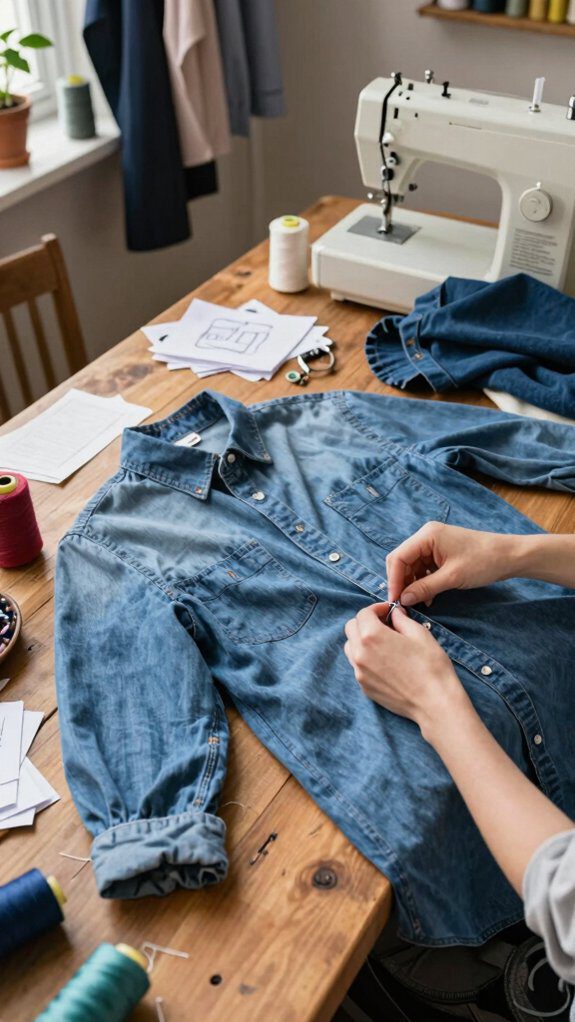
I love taking oversized pieces and turning them into a tailored, modern silhouette because it instantly sharpens your look without buying new clothes. Start by pinning the sides or adding darts for a slimmer waist, or try converting a roomy men’s shirt into a fitted dress with simple seams and a belt for waist definition. These small changes are practical, sustainable, and a fun way to make a unique piece that fits you better and feels more intentional.
Tailored modern silhouette
Because reshaping oversized pieces can make them feel intentional instead of sloppy, I like to start by imagining how I want the silhouette to sit on my body — closer at the waist, softened at the shoulders, or cropped at the hip. I use tailored techniques like taking in seams, adding darts, or shortening sleeves to create a structured, modern aesthetics look that still feels comfortable. First I pin where I want contours, then try the piece layered or solo to compare shapes. Hem adjustments and subtle tucks turn bulky into flattering, and sometimes I leave roomy sleeves to balance a nipped waist. This approach upcycles with purpose, lets me express myself, and helps me belong to a more sustainable, stylish community.
Length Adjustment Makeover
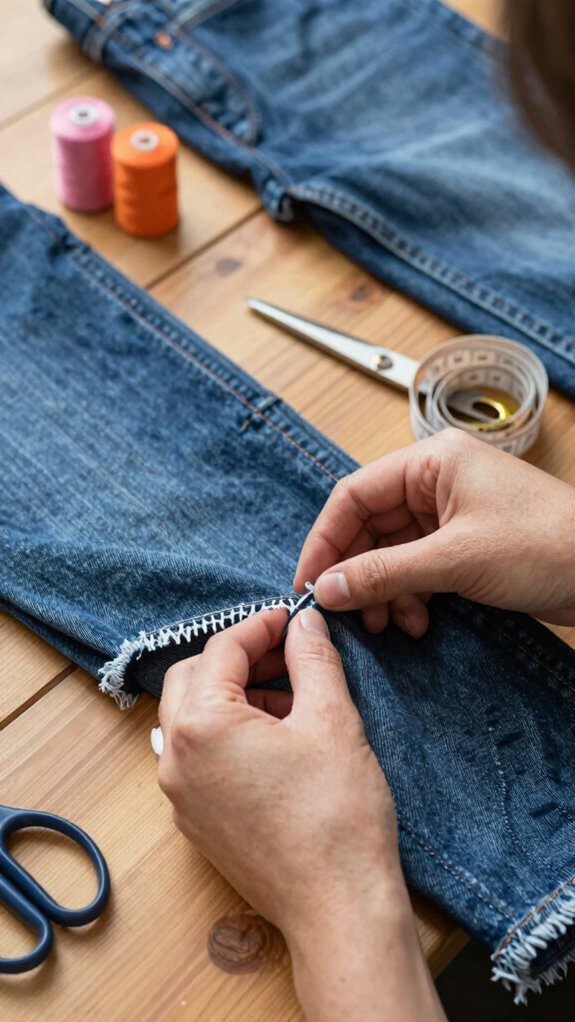
I love showing how a simple length change can totally refresh a piece, so let’s talk about cropping or extending style to make clothes work for you. Try garments on, mark the new hem with pins or chalk, and decide whether you want a cropped top, a midi from a long dress, or added fabric for length—cut one leg at a time for denim shorts and finish raw edges to avoid fray. These tweaks improve fit and style and help your wardrobe last longer, so you get a fashionable look while cutting waste.
Crop or extend style
When I want to give a piece of clothing new life, changing its length is one of the quickest and most satisfying fixes—cutting a long tee into a cropped top, turning worn jeans into cool shorts, or adding fabric to extend a dress can completely change the vibe. I love how a simple crop top update feels bold but friendly; I cut to the length that flatters me, hem or leave a raw edge, and I’ve got an instant summer piece. For dress extension, I add a coordinating border or lace panel to the hem, which makes an old dress feel intentional and new.
| Idea | Result |
|---|---|
| Cut tee | Trendy crop top |
| Old jeans | Summer shorts |
| Hem tweak | Cleaner finish |
| Fabric add | Dress extension |
Sleeve Redesign Project
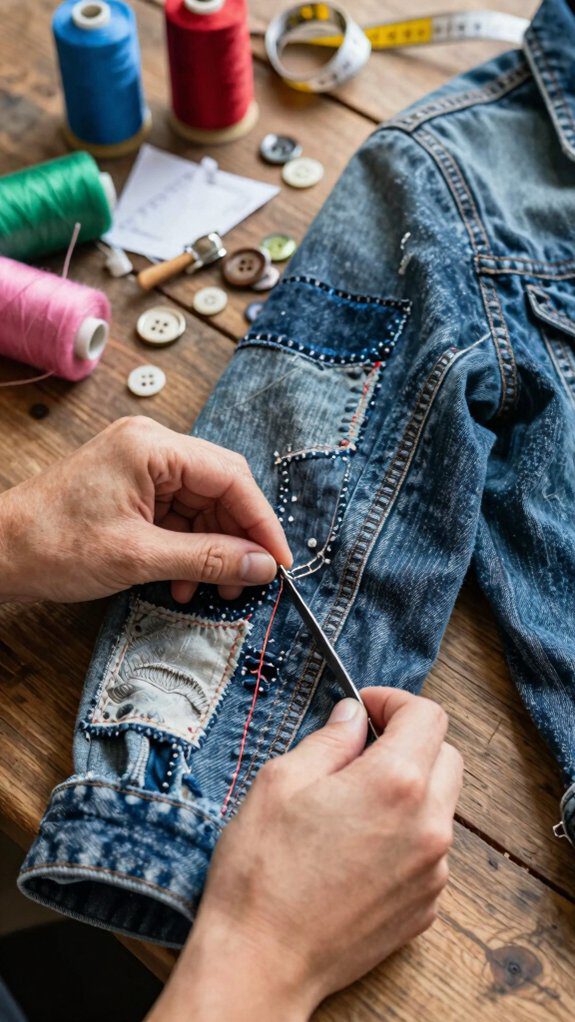
I love transforming sleeves because a simple change can make a top feel brand new, so let’s look at three easy routes: puff, flare, or cut. For a puff sleeve, gather fabric at the shoulder and cuff for a playful, vintage vibe; for a flare, widen the lower sleeve or add a triangular panel to create movement; and if you want heat-friendly simplicity, cut off sleeves cleanly and finish the raw edge with a narrow hem or bias tape. I’ll walk you step-by-step through measurements, stitching tips, and fabric choices so you can pick the style that matches your wardrobe and skill level.
Puff, flare, or cut
Anyone can take a tired top and turn its sleeves into the star of the show, and I’m excited to walk you through three easy ways to do it—puff, flare, or cut. I love showing puff styles first: gather fabric at the shoulder, add a little elastic or a neat hem, and those volume details give a romantic lift that feels fresh. Next, try flare variations by widening the sleeve toward the hem; a single straight cut and a clean finish create flowy movement with boho charm. Finally, cut techniques are quick—shorten long sleeves to short or cap lengths for warmer days. These sleeve innovations are simple fashion transformations that invite creativity and help us belong to a playful, confident wardrobe.
Waistline Transformation
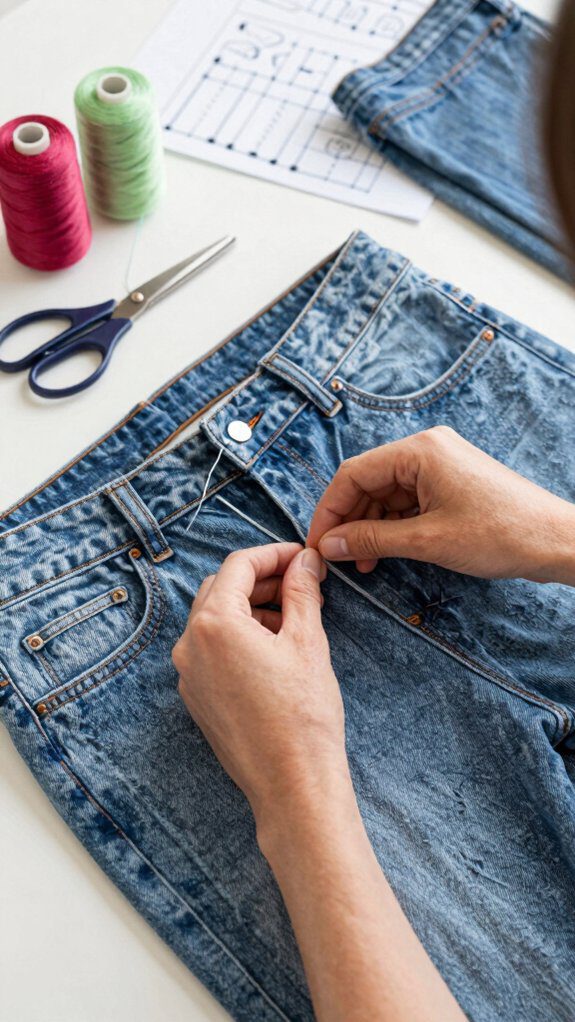
I love showing how a few simple changes at the waist can give a garment a cinched and defined fit that feels custom-made. I’ll walk you through practical options—adding elastic, sewing darts, or repurposing existing fabric into a new waistband—so you can compare which method suits your piece and skill level. With clear steps and small tools, you’ll see how these tweaks make clothes more flattering and longer-lasting, whether you’re turning a maxi into a skirt or reshaping a shirt into a dress.
Cinched and defined fit
Because a simple change at the waist can remake a whole outfit, I love showing easy ways to get a cinched, defined fit that flatters your shape and still feels comfy. First, add elastic or a drawstring to dresses or oversized shirts for instant waist definition and adjustable comfort; it’s quick and forgiving. Next, try darts or tucks on blouses to tailor the fabric and create clear silhouette improvement without altering the whole piece. For skirts, sew in an elastic waistband or use a belt to highlight your waist; you can also cut a dress at the waist and attach a fitted band to make a high-waisted skirt. Finally, add a peplum for feminine flair and structured cinch—mix fabrics for contrast.
Layered Panel Insert
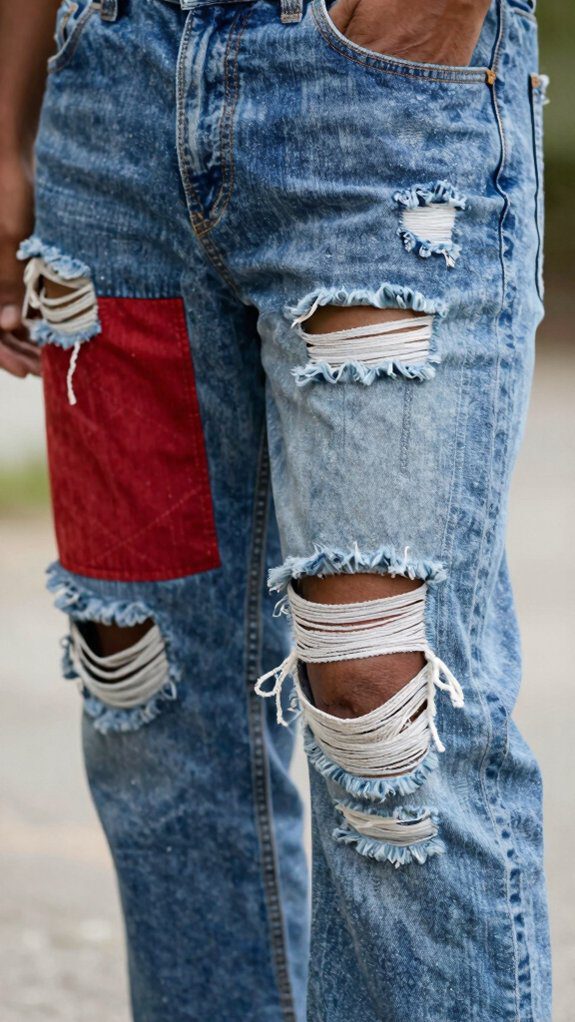
I love using layered panel inserts to add movement and shape to a plain top or dress, and you can do it by cutting contrasting fabric from old shirts or skirts and sewing them in as panels. Start with a mock-up using safety pins so you can see how the fabric swings and changes the silhouette, then hem or finish the panel edges to stop fraying and keep a neat line. This simple change can make a garment flow more, create room where you need it, and give your outfit a fresh, tailored look without much fuss.
Add movement and shape
When I want a plain skirt or dress to feel lively again, I turn to layered panel inserts because they add instant movement and shape without needing advanced sewing skills. I like to start by visualizing where motion will help—sides, center, or hem—and cut panels of varied lengths for a staggered effect. Choose contrasting or complementary fabrics to create layered textures and eye-catching energetic designs; lighter fabrics sway, heavier ones hold shape. Sew panels into seams or create faux seams with topstitching. For beginners, pin and baste first so you can tweak placement. This upcycle refreshes garments, saves resources, and builds confidence. Try mixing prints with solids for balance, and you’ll quickly have a unique piece that feels like yours.
Collar Restyle Detail
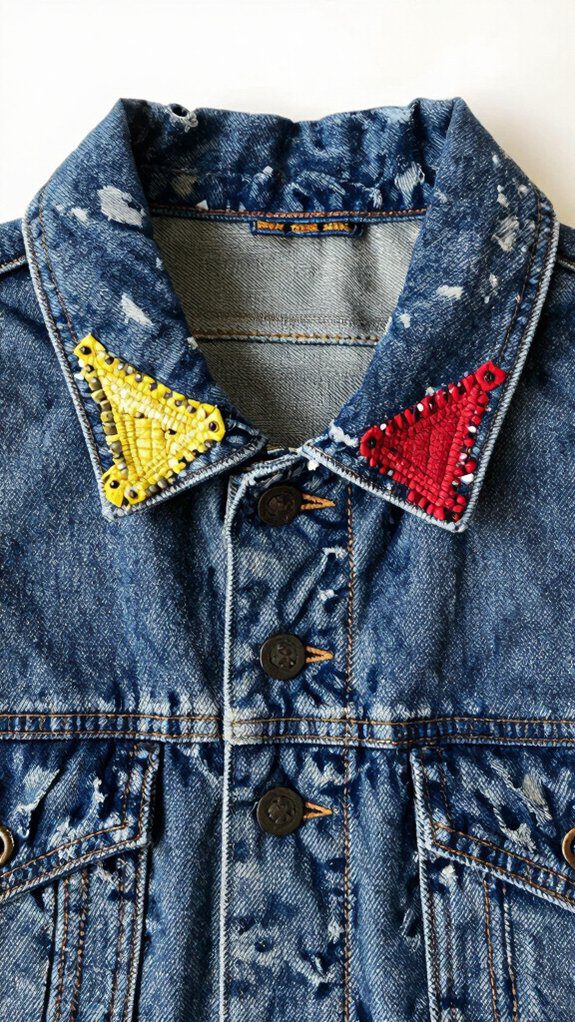
I want to show you how a simple collar restyle can shift the whole neckline and give a shirt new life, whether you swap in lace for a softer look or add a pointed contrast for sharper style. First, I’ll walk you through carefully removing the old collar, choosing a complementary fabric (scraps work great), and pinning a rounded, square, or ruffled replacement so the new neckline sits smoothly. With a little measuring and a few quick stitches, you’ll see how changing the collar shape can turn a casual top into something dressy or keep it relaxed—I’ll compare options and suggest which shapes suit different necklines as we go.
Updated neckline focus
Although a simple collar might seem like a small detail, I can quickly turn it into the focal point of an outfit with a few easy restyle tricks. I like to start by deciding whether I want classic or playful: swapping collar shapes to a Peter Pan for sweetness or a mandarin for sleekness changes the whole vibe. Next, I layer in collar embellishments—lace, contrasting fabric, beads, or a bit of embroidery—to give personality and texture. I’ll show you how to measure, pin, and baste before sewing so mistakes are easy to fix. For dressy looks I add delicate lace and beads; for everyday wear I use bold contrast fabric. These small updates unite my pieces and make me feel confident and connected.
Button and Closure Swap
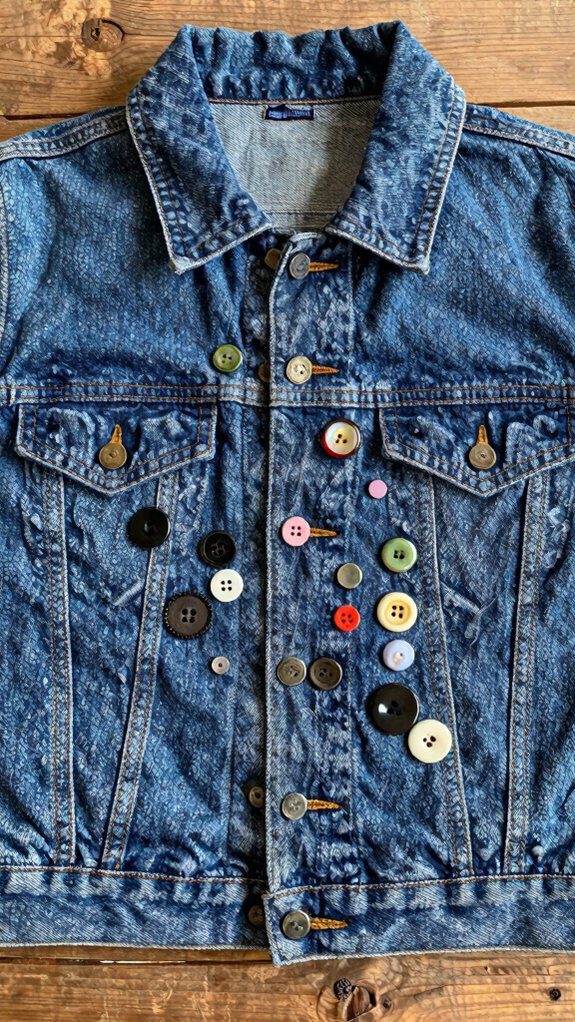
I love how a small button or closure change can make a garment feel brand new, so I’ll show you simple swaps that pack a big visual punch. Try replacing plain buttons with colorful or wooden ones, or swap a zipper for decorative toggles or hooks to add personality and texture; I’ll explain which sizes and materials work best for shirts, jackets, and dresses. These easy, eco-friendly tweaks save money and reduce waste, and I’ll walk you step-by-step so you can pick the right look and attach everything securely.
Small change, big impact
When I want to give a tired shirt or cardigan new life, swapping the buttons is my go-to trick because it’s fast, cheap, and dramatic. I like to start by laying the piece flat and comparing button styles side by side so I can see contrast, size, and texture. For a subtle upgrade, pick matte or wooden buttons; for a statement, choose bright or jeweled ones. If you want a modern edge, try alternate closure options—clips, hooks, or ribbon ties—for a fresh silhouette. Sewing takes less than an hour: remove old buttons, mark new placements, and stitch firmly. This small change feels personal, keeps clothes out of landfill, and helps our little community of makers share style and sustainability.
Fabric Mixing Technique
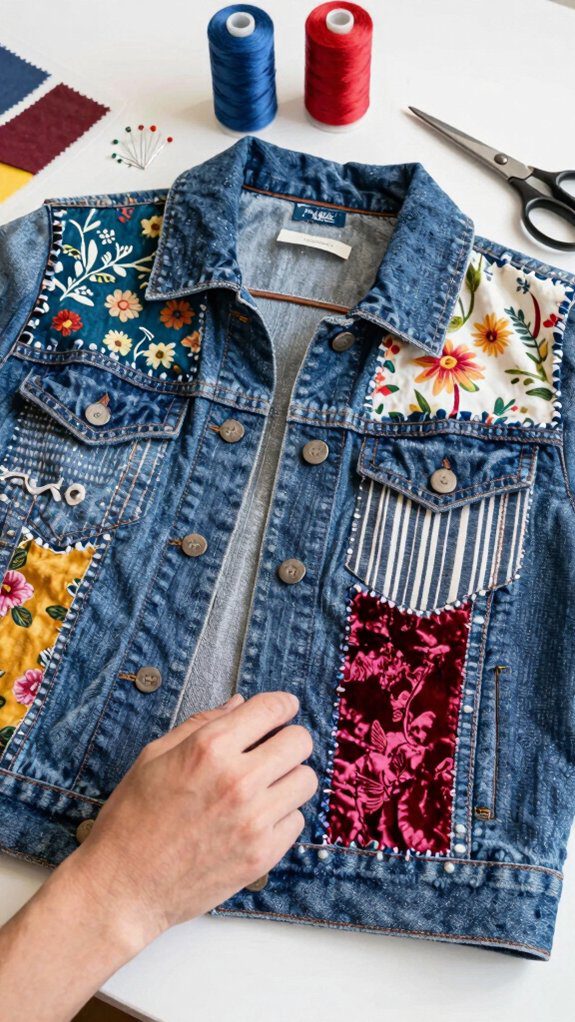
I love mixing different textures like soft cotton with crisp denim or delicate lace because the contrast really makes each piece pop and feel more interesting. Start by comparing weight and drape—pair a structured fabric with a flowing one so the garment keeps its shape but still moves nicely—and use solid colors with patterned accents to guide the eye. I’ll show simple sewing tips for joining fabrics with different stretch and thickness so your upcycle looks intentional and lasts.
Contrast texture play
Because mixing fabrics is like mixing flavors, I love using contrast texture play to give upcycled clothes real personality and depth. I tell you how I pair denim with lace or cotton with chiffon to create textural harmony; fabric contrasts bring balance and interest. Think heavier with lighter: a sturdy jean panel anchors a floaty chiffon skirt, making layers practical and pretty. Try swatches first, feel drape and weight, then pin before sewing. This technique invites creativity and community — share swaps or scraps with friends.
| Combo | Feeling | Tip |
|---|---|---|
| Denim + Lace | Edgy + Romantic | Reinforce seams |
| Cotton + Chiffon | Casual + Airy | Use French seams |
| Wool + Silk | Warm + Sleek | Match thread tension |
Dress from Shirt Refashion
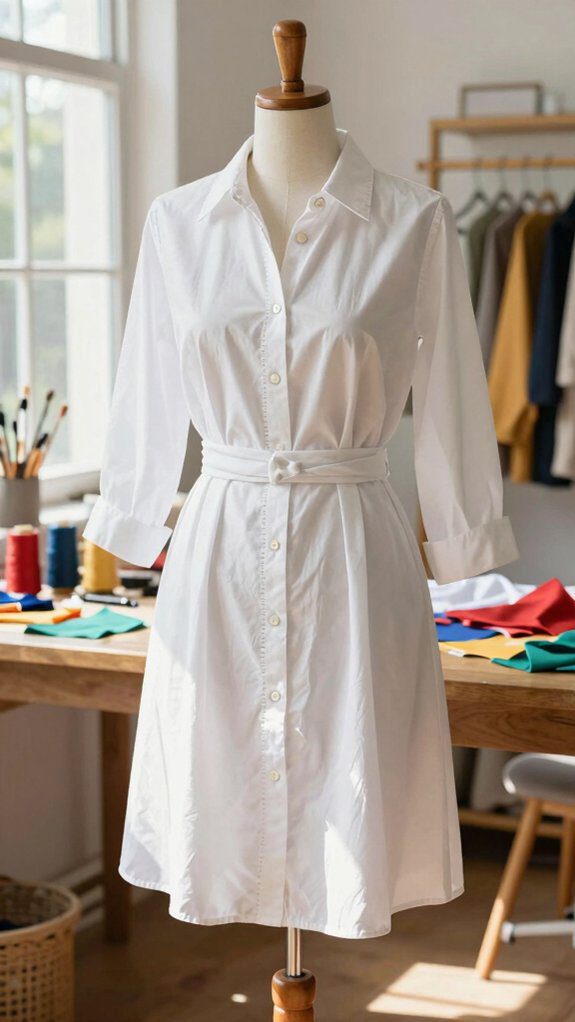
I love turning an oversized button-down into a one-piece dress because it’s quick, practical, and perfect for beginners who want a polished result. Start by pinning your desired length and cutting off or rolling the sleeves, then try the shirt on and take in the sides for a snugger fit before sewing the hem—this gives you a casual tunic or a more fitted dress depending on how much you taper. It’s a fun way to reuse a shirt, saves money and waste, and you can dress it up with a belt or accessories for different looks.
One-piece conversion
When you’re ready to turn an oversized men’s shirt into a fun, easy dress, I’ll walk you through a few simple steps that get great results without any sewing wizardry—though I’ll show you how to sew a neat hem if you want a more finished look. I pick a roomy shirt with a soft fabric choice so it drapes well; you’ll want one that’s comfortable and not too stiff. Mark the length, cut sleeves off or roll them for style, then pin the sides to test fit. Take in seams for a fitted shirt dress or leave it loose for a casual vibe. Add a hem to stop fraying and tidy the look. It’s beginner-friendly, takes an hour or two, and feels great to upcycle together.
Denim Piece Reinvention
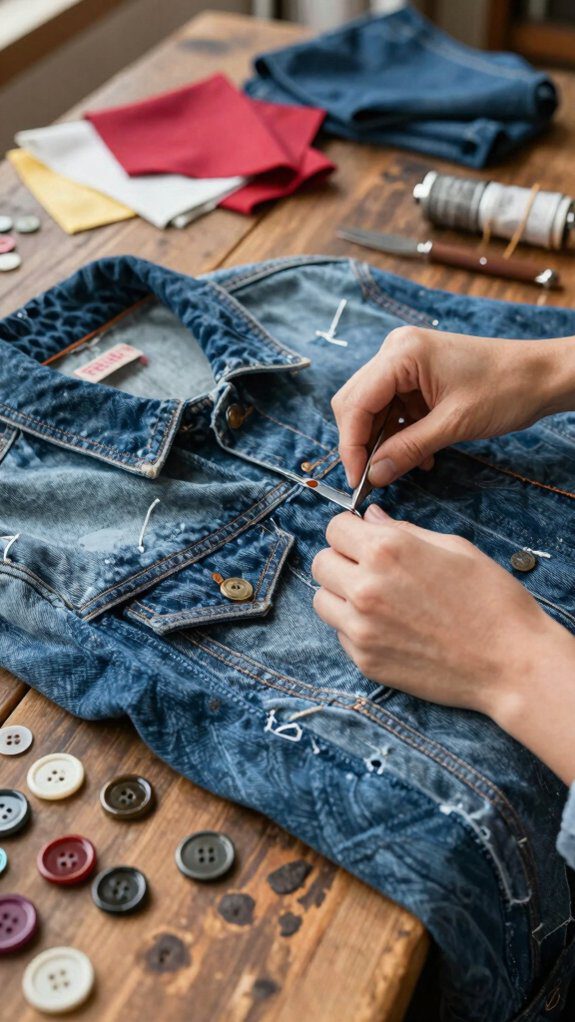
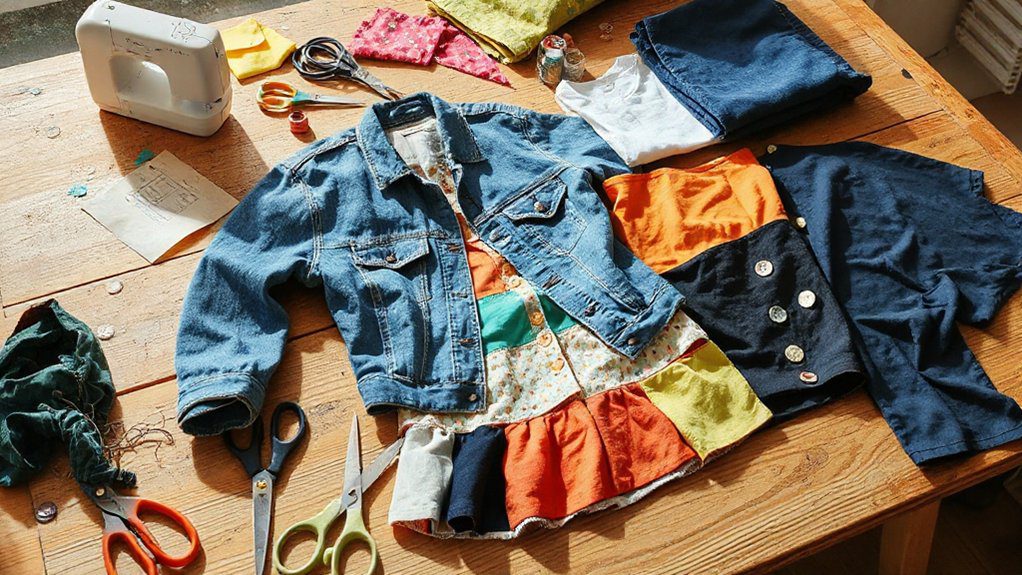
I love taking an old denim jacket or skirt and giving it a fresh life, and I’ll walk you through a few simple ways to do that. Start by swapping buttons, adding lace trim or patches, or cutting hems to change the silhouette—those small changes can make a jacket more fitted or turn a long skirt into a cool mini; if you want bolder updates, try bleaching patterns, sewing on pockets from other jeans, or adding studs for texture and personality.
Jacket or skirt update
Grab a pair of sharp scissors and let’s give that old denim a new life—I’ll show you how to turn a tired jacket into a cropped, on-trend piece or remake jeans into a skirt with clean, wearable results. First, for a jacket update: cut the hem where you want the crop, wash to fray the edge, and try distressing or adding embroidery along seams. Next, for a skirt update: measure from waist to desired length, cut and sew a straight hem or leave raw for texture, then add lace or fabric patches for personality. Use denim embellishment techniques like fabric paint or simple stitch motifs to tie pieces together. These sustainable fashion practices reduce waste and help us express style while belonging to a creative community.
Patchwork Construction
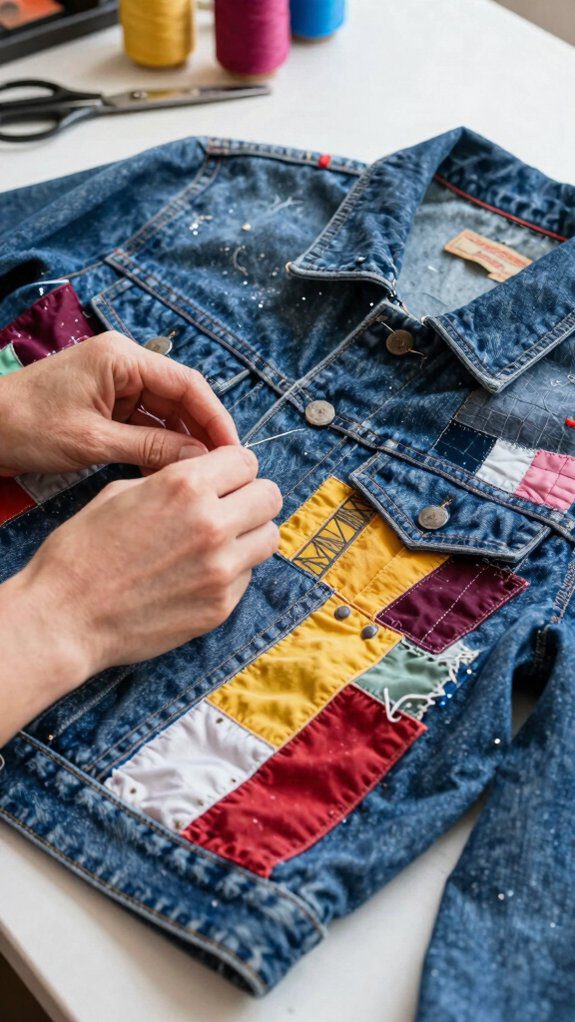
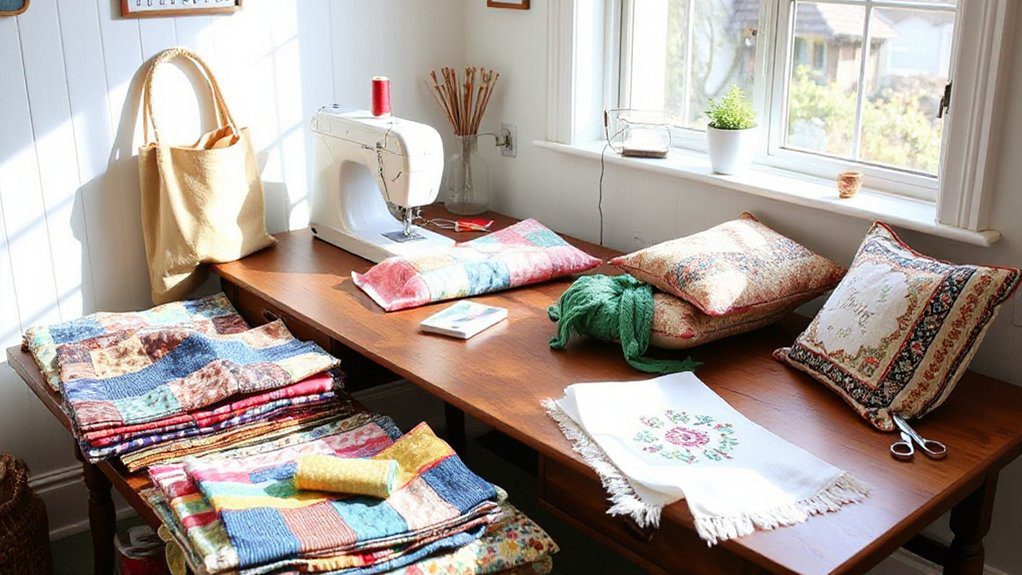
I love using patchwork construction for creative fabric reuse because it turns scraps and old clothes into bright, useful pieces that feel personal. I’ll pick coordinating colors and textures, lay out a few mock arrangements to compare patterns, and then cut and sew with neat seams so the result looks intentional and lasts. If you want something quick, start with larger squares for a bag or cushion; for smaller projects, mix tiny scraps for a textured jacket panel.
Creative fabric reuse
Because patchwork lets me play with shape, color, and texture, I jump into it whenever I want to give old clothes new life. I use creative expression to choose scraps that sing together, balancing prints and solids so pieces don’t fight. Patchwork construction supports fabric sustainability by turning scraps into quilts, bags, or patched jackets, and it reduces waste more than tossing them. I’ll walk you through simple steps: sort by color and weight, sketch a layout, stitch small blocks, then join and press seams. It’s practical, social, and rewarding—share patterns and tips with friends to learn faster and feel connected.
- Sort scraps by color and texture
- Start with uniform block sizes
- Use scraps for pockets or trims
- Press seams as you go
- Share and swap leftover pieces
Embroidery Accent Upgrade
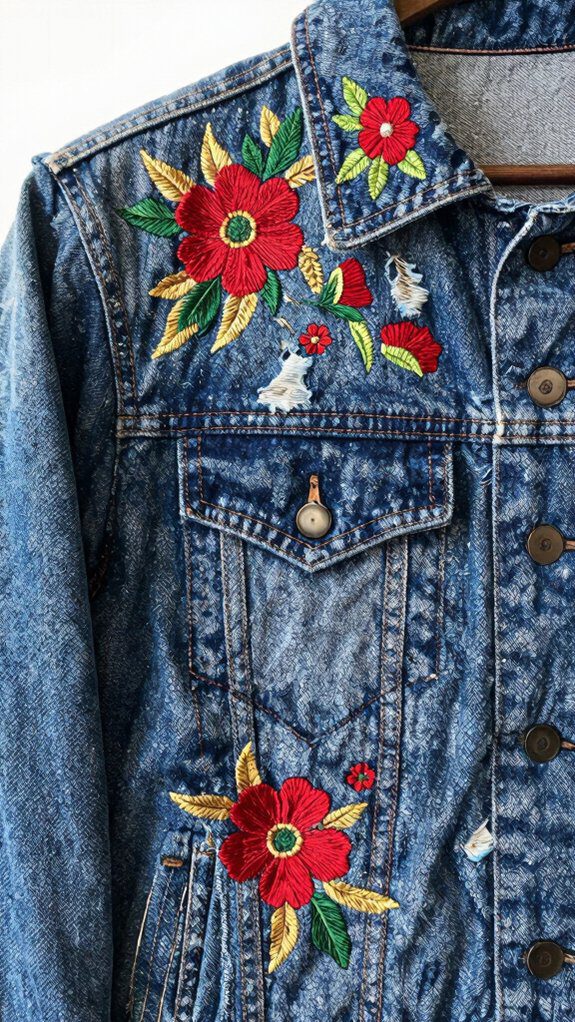
I love adding handmade visual detail to a plain tee or denim pocket because a few simple stitches can turn it into something totally personal and stylish. Start with small, quick motifs—like a tiny floral on a collar or a stitched line along a hem—so you can finish in under an hour and compare how a neat outline versus a filled satin stitch changes the look. These little accents also hide stains or worn spots and keep pieces wearable, so you get creativity, function, and sustainability all at once.
Handmade visual detail
A little embroidery can turn a boring T‑shirt or pair of jeans into something you’ll reach for every morning, and I’m here to show you how to do it without fuss. I love using simple embroidery techniques to add handmade visual detail that feels like ours—personalization ideas that welcome friends into our creative world. Start with project planning: pick fabric selection that holds stitches, choose stitch styles you enjoy, and consider thread choices for bold color contrasts.
- Quick floral motifs in 30 minutes
- Geometric pattern mixing for modern flair
- Reinforce seams while adding art
- Match stitch styles to garment weight
- Sustainable upcycle tips and ideas
Together we’ll use design inspiration, artistic expression, and smart pattern mixing to make unique pieces.
Asymmetrical Cut Design
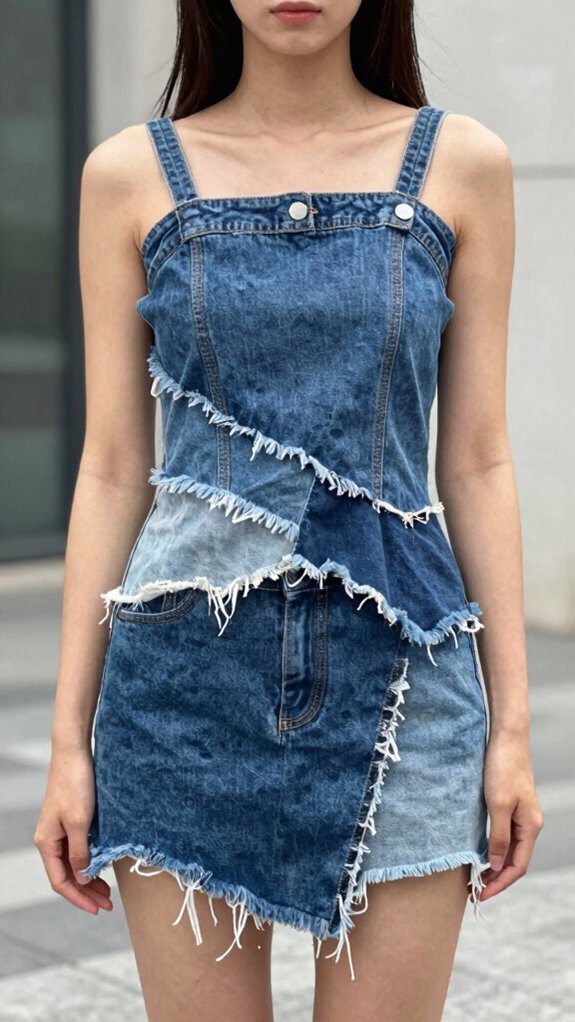
I love how an asymmetrical cut can give a plain tee or dress a modern fashion edge, with uneven hems or necklines that instantly feel more lively. You can get that look by simply trimming one side of a hem, angling a neckline, or raising a shoulder seam, and I’ll walk you through which cuts work best for different body shapes so you get the effect you want. Try a subtle high-low hem for everyday wear or a bold diagonal cut for evening outfits, and I’ll show simple measuring tips to keep your new silhouette balanced.
Modern fashion edge
When you want to give an old shirt or skirt a fresh, modern edge, try an asymmetrical cut—I’ve found that uneven hemlines and mismatched lengths turn plain pieces into statement items without much fuss. I love how asymmetrical layering and modern patchwork let us express ourselves while keeping things wearable. Start by sketching a slanted hem or staggered panels, then pin and test the look on. Cutting is simple; a few hand stitches or a quick run on a machine finishes it. This approach builds community—you’ll swap ideas and fabrics with friends and feel proud of sustainable choices. Try these ideas to get started:
- slanted hem T-shirt remix
- staggered skirt panels
- mixed-fabric patch seams
- diagonal pocket accents
- layered tunic overlays
Tie or Wrap Feature
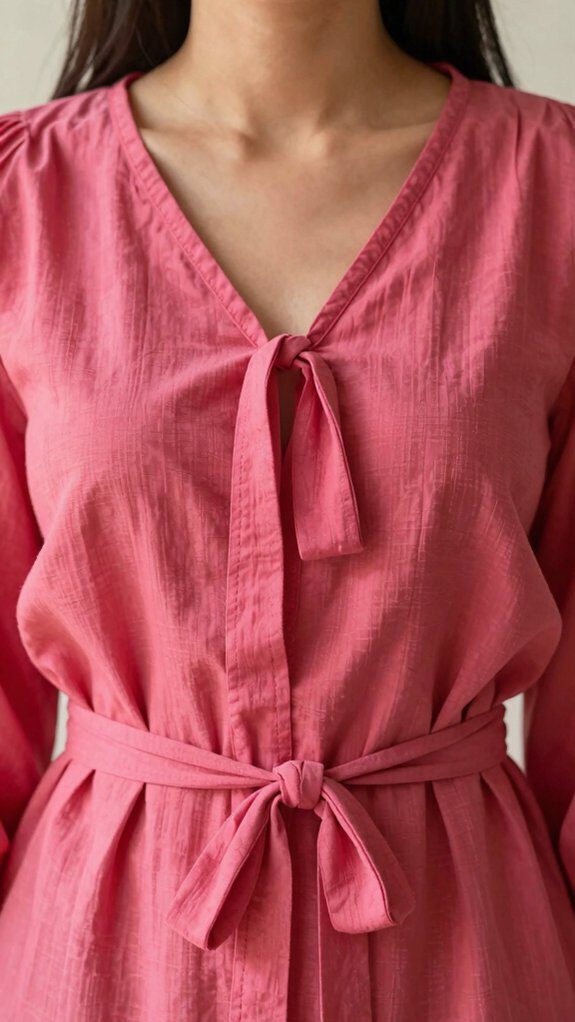
I love using ties and wraps because they give you an adjustable styling option that can turn an old top into a custom-fit favorite. You can cinch a dress at the waist for an hourglass look, knot sleeves for a playful vibe, or wrap a makeshift belt to change the silhouette on the fly, so one piece works for different body types and occasions. Try tying in different spots and using contrasting fabric strips to see what flatters you most, and don’t be afraid to experiment until the fit feels just right.
Adjustable styling option
If you want a simple way to make an old dress or top feel brand-new, I’ll show you how adding a tie or wrap feature can do exactly that — and make the piece way more useful. I love how tie versatility and wrap functionality let me change a garment’s look in seconds. I’ll guide you through why it works and how to try it yourself.
- Choose a soft fabric strip for comfort and easy draping.
- Sew or safety-pin ties at the side seams for adjustable fit.
- Use a longer wrap to create a faux-wrap dress for formal or casual wear.
- Knot at the back to accentuate the waist without permanent alterations.
- Follow a simple tutorial to match length and placement to your body.
This small change builds community-style confidence and stretches wardrobe life.
Dye or Color Refresh
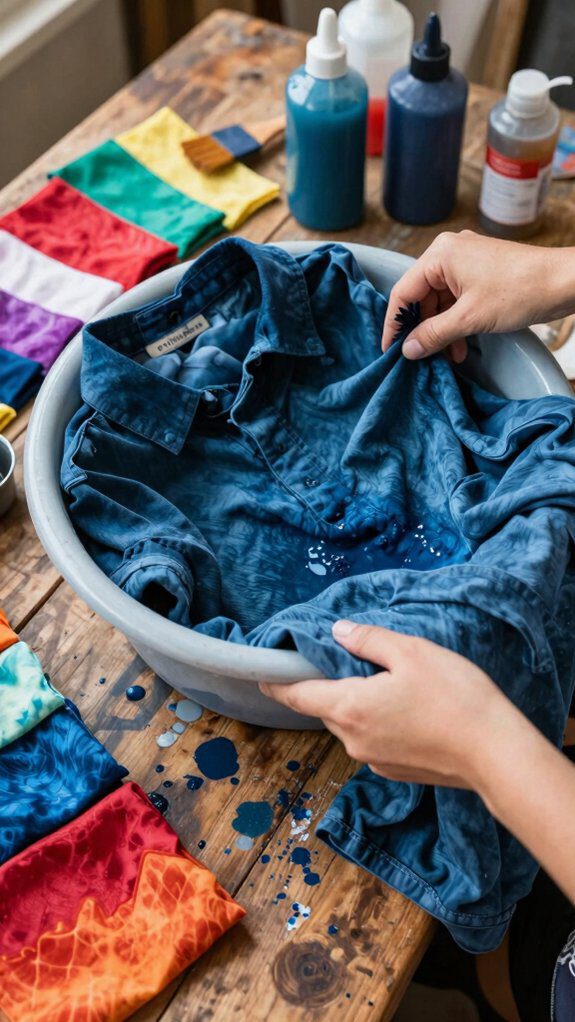
I love how a simple color change can give a piece a whole new tone and mood, whether I want something calm and muted or bold and energetic. I’ll usually choose natural dyes for soft, earthy hues or synthetic dyes when I need bright, consistent color, and I’ll test a swatch first so I’m not surprised. For a quick update I might do an ombre or dip-dye to shift the vibe gradually, or fully recolor a faded tee to mask stains and make it feel brand new.
New tone, new mood
When I want to give a tired shirt or pair of jeans a fresh start, I reach for dye or a color-refresh trick that fits the fabric and my mood—sometimes a quick rinse with a brighter shade, other times a slow, natural dye bath from onion skins or avocado pits. I think about color psychology and how a new tone can shift emotional expression; changing blue to warm rust can feel like wrapping yourself in sunset company. Natural dyes cut waste and feel gentle on the planet, while synthetic options give bolder consistency. Try small tests first, compare tie-dye, ombre, and full immersion, and use dye to hide stains or revive faded threads.
- Test fabric swatches first
- Pick colors that match your mood
- Use natural dye recipes
- Try ombre or tie-dye
- Seal color with proper rinsing
Hemline Detailing
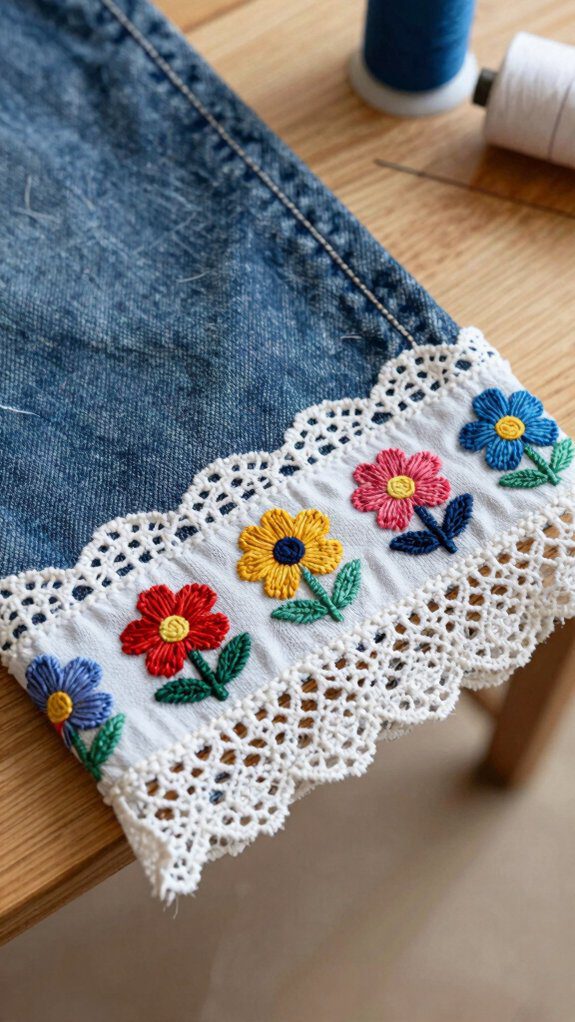
I love turning a plain hem into something playful, so I often add fringe or let a raw edge show for an instant style boost. Try cutting thin strips for a tidy fringe or gently pulling threads on a raw edge for a soft, boho look, and compare them side by side to see which suits your piece—fringe feels lively and textured, while a raw edge reads casual and modern. To keep things neat, use a zig-zag stitch or a narrow strip of fabric behind the fringe to prevent too much unraveling, and experiment with length or asymmetry to match your body shape and outfit vibe.
Fringe or raw edge
Fringe and raw-edge hemlines are an easy, stylish way to give old clothes new life, and I’ll show you simple steps so you can try them right away. I love fringe techniques and raw edge styling because they’re quick, forgiving, and make pieces feel personal. Start with denim, tees, or cotton; measure and cut strips or a clean line, then leave the hem unsewn for that boho vibe. For less fray, sew a zig-zag stitch before trimming. To add texture, cut narrow strips and pull threads gently.
- Cut to desired length and test on scrap fabric
- Use scissors and ruler for straight lines
- Zig-zag stitch prevents excessive fraying
- Pull threads for textured fringe
- Embrace imperfections for unique style
Pocket Repositioning
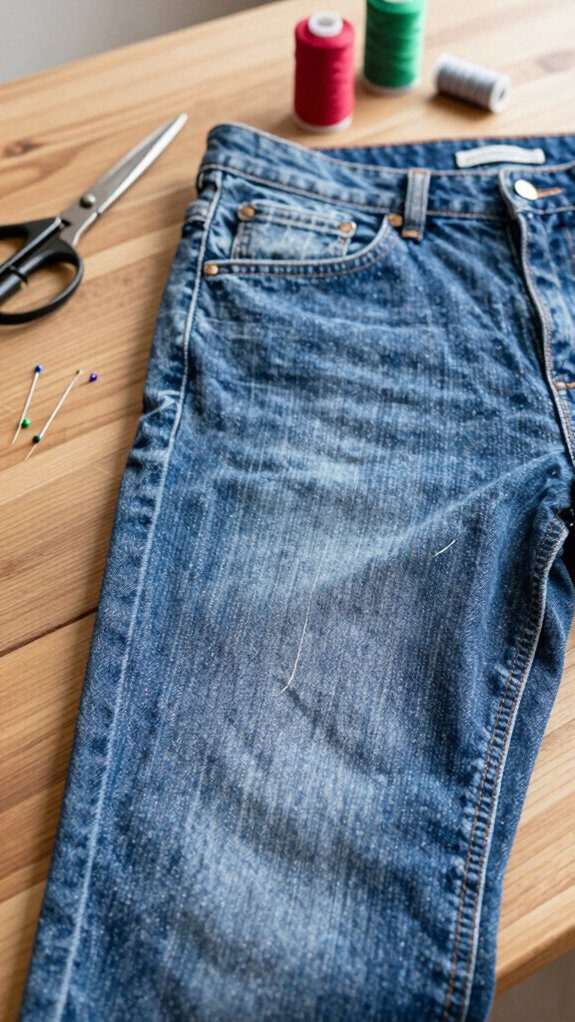
I love how a simple pocket move can change both how a piece looks and how I use it, so let’s talk about functional style changes you can make with pocket repositioning. Start by unpicking the stitches and testing new spots—higher pockets keep things secure, side-seam or lower pockets make a relaxed, casual vibe, and angled pockets can feel more modern—then pin and try the garment on before sewing. Remember to match your fabric and stitch technique to prevent puckering or fray, and if you’re adding pockets to a thin fabric, reinforce with interfacing for a neat, lasting finish.
Functional style change
When I want a garment to work better for my day, I often start by moving or adding pockets — it’s one of the quickest ways to boost both function and style. Repositioning pockets turns ordinary pieces into practical favorites; thoughtful pocket placement balances comfort with look, and it’s a simple step toward functional fashion. I remove pockets carefully, test new spots against how I move, then sew them back securely so they last. This small change feels creative and communal — like sharing a secret hack with friends — and it helps clothing live longer.
- Test pocket placement while wearing the garment
- Use matching fabric for a seamless look
- Reinforce seams for durability
- Add pockets to skirts and dresses
- Keep proportions balanced for style
Statement Strap Addition
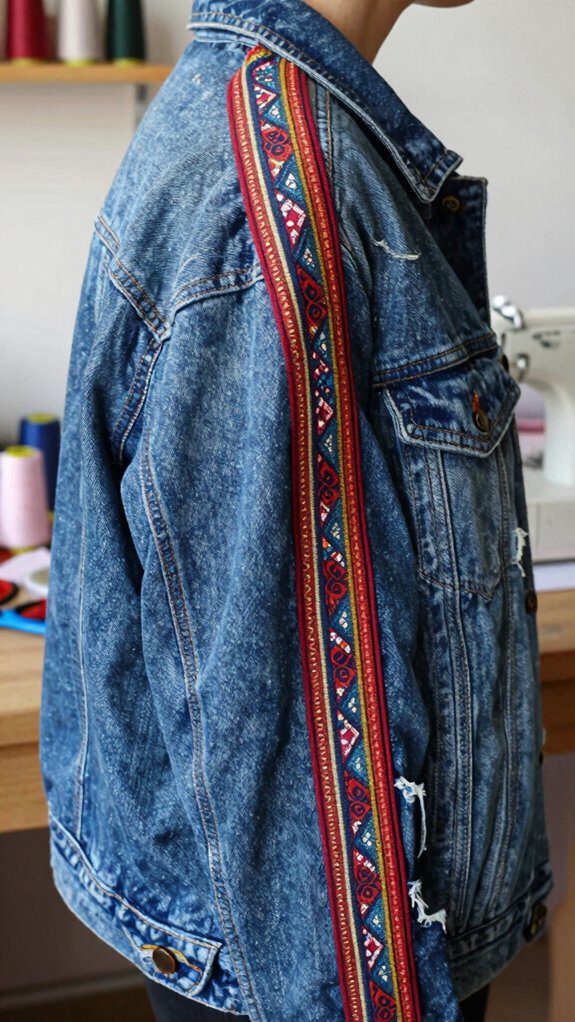
I love adding statement straps because they instantly create visual interest and turn plain pieces into attention-grabbing favorites. I’ll show you simple ways to choose materials—like lace for softness, beads for sparkle, or repurposed belts for edge—and compare how each option changes the look and feel of a dress, top, or bag. With a few clear measurements and placement tips, you’ll see how small changes to strap width, color, or embellishment make a big visual impact while keeping things practical and wearable.
Visual interest point
A statement strap can turn a plain top or dress into something eye-catching, so I like to start by thinking about both shape and material before I cut anything. I focus on a visual interest point where the strap meets the garment, because statement strap creativity lives there and gives bold design inspiration. I choose leather for structure, printed fabric for fun, or repurpose a belt for texture. I test length and width with pins, compare single versus double straps, and try asymmetry for drama. It’s sustainable, personal, and practical — a strap can change fit or convert a top into a dress. I’ll walk you through simple steps so we craft something that feels like yours.
- Choose material for contrast
- Test placement with pins
- Mix colors or patterns
- Add small embellishments
- Secure with strong stitching
Accessory from Scraps
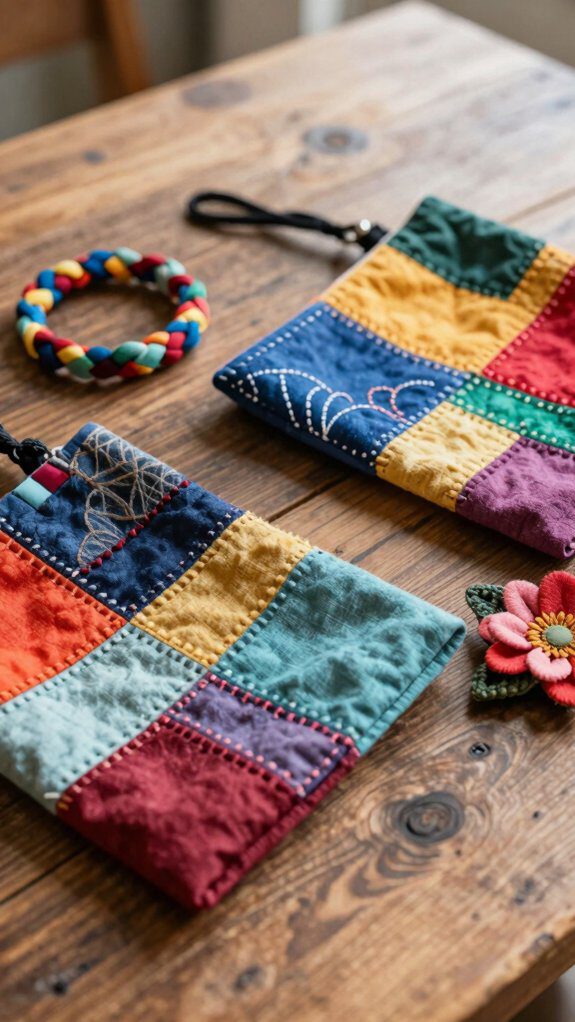
I love showing you how to turn tiny fabric scraps into useful accessories while keeping a zero-waste finish, and I’ll show simple ways to stitch, knot, or glue edges so nothing frays or gets tossed. For example, sewing a narrow hem or folding and topstitching a headband strip gives a clean look, while t-shirt tote fringe can be tied tightly to avoid loose ends—both methods save scraps and trim waste. Stick with neat seams, trimmed threads, and small leftover patches for jewelry wraps, and you’ll get professional-looking pieces without creating extra trash.
Zero-waste finish
When you look at a pile of tiny fabric scraps, it’s easy to think they’re useless—but I see opportunity and style waiting to happen. I love a zero-waste finish because it turns every leftover stitch into a small triumph for sustainable fashion and makes eco friendly accessories that feel personal. I’ll walk you through simple steps and tips so you feel part of this creative community.
- Sort scraps by color and texture for coordinated pieces.
- Use tiny triangles for braided keychains or grosgrain leftovers for hairbands.
- Sew scraps together edge-to-edge to avoid trimming waste.
- Add snaps or ribbon loops instead of bulky seams to save fabric.
- Follow online tutorials to learn techniques and build confidence.
I promise it’s practical, satisfying, and helps build a greener wardrobe.