17 Upcycle Button Down Shirt Ideas for Easy Refashioning
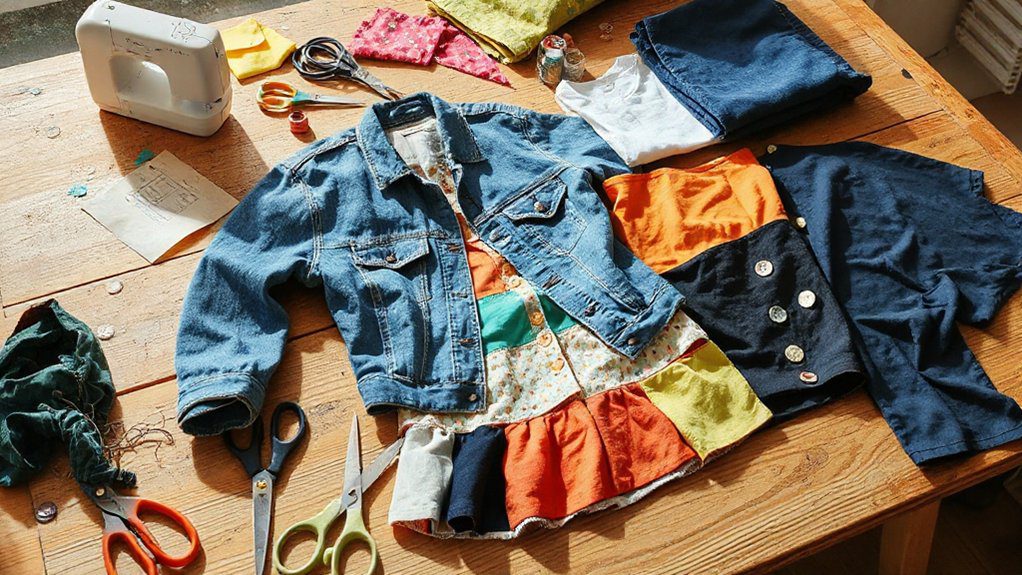
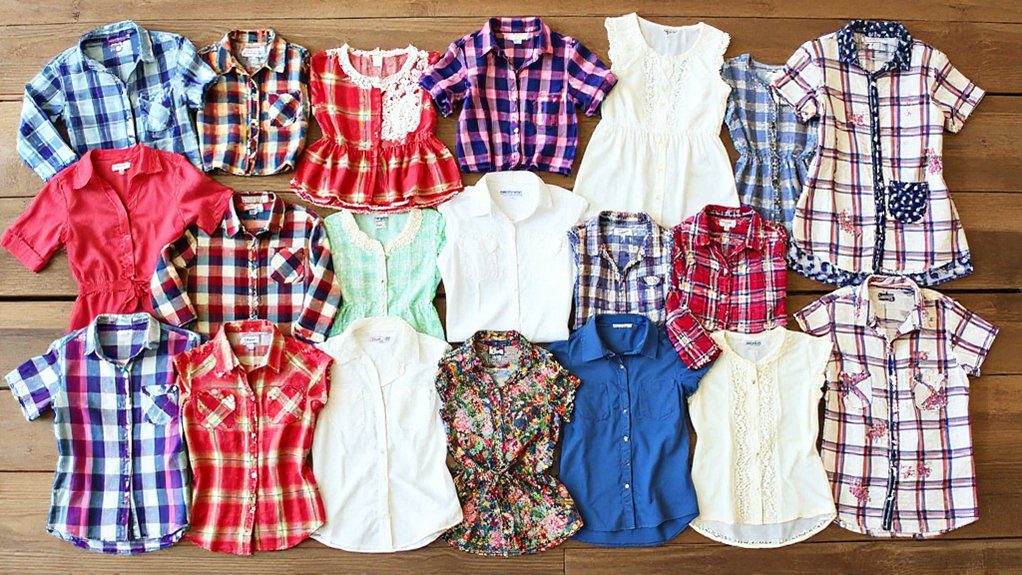
I’ve got 17 easy ways to refashion a button-down into something fresh: shorten it into a shirt dress or crop it for high-waist pairing, cut sleeves for a breezy tank, or remove the collar for an off-shoulder top. Try a tie-front, add a peplum, or make a vest by removing sleeves. Patchwork backs, embroidered accents, swapped buttons, and scrap accessories are quick upgrades. Each idea includes simple steps and materials, and if you want, I’ll show specifics next.
Love cozy DIY projects? 💕
Get free printable guides, exclusive tutorials & surprise craft goodies straight to your inbox.
Disclosure: This post may contain Amazon affiliate links, at no extra cost to you. Content on DiyCraftNest is created with research support from AI tools and carefully reviewed, edited, and fact-checked by the lead author, Daniel Pat, to ensure accuracy and reliability. Learn more
Key Takeaways
- Turn an oversized button-down into a relaxed shirt dress by shortening the hem and adding a waist belt or elastic for shape.
- Convert a button-down into a trendy cropped top by cutting above the waist and finishing the hem or adding a knotted front.
- Make a sleeveless summer top by removing sleeves and finishing armholes with a narrow hem or bias tape.
- Add personality with quick upgrades like swapping buttons, embroidered accents on collars/cuffs, or patchwork back panels.
- Create accessories and small projects—pouches from cuffs, chokers from collars, or button covers—from leftover scraps for zero-waste refashioning.
Shirt Dress Conversion
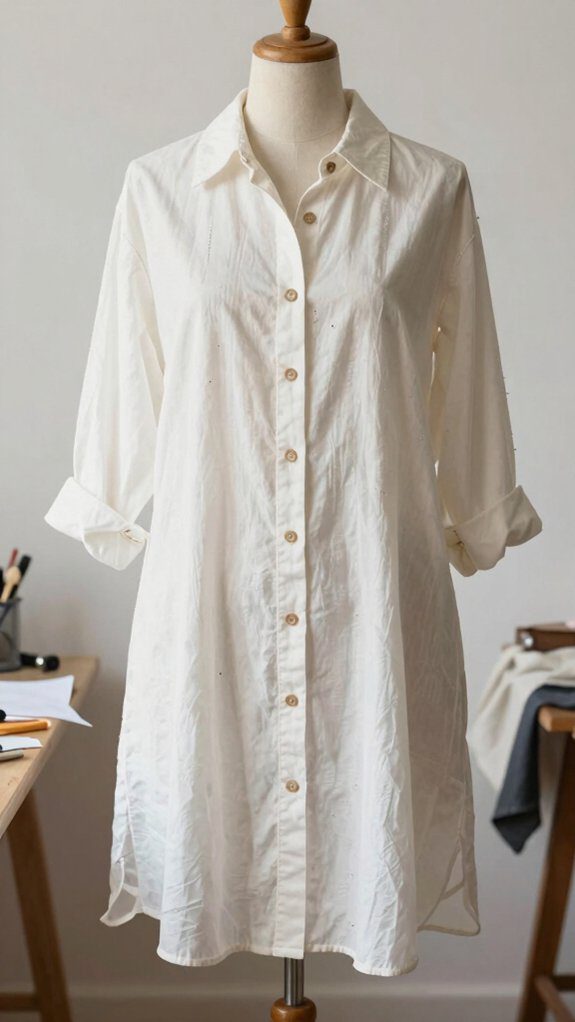
I love turning a roomy button-down into a relaxed everyday shirt dress because it’s quick and comfortable, and you don’t need elaborate tailoring to get a great result. Start with a lightweight cotton shirt, shorten the hem to your preferred length, and add a simple belt or elastic at the waist to give shape without fuss. For a casual look compare leaving the sleeves rolled and loose versus cuffing them for a neater vibe, and add small touches like a ruffle or shifted buttons if you want a bit more personality.
Relaxed everyday look
Even if you’ve never picked up a sewing needle, I’ll walk you through turning a roomy button-down into an easy, breezy shirt dress that’s perfect for everyday wear. I love how casual layering meets effortless chic in this relaxed everyday look; it’s minimal sewing, big payoff. Pick a lightweight cotton or linen shirt, trim to your ideal length, and use the original buttons as a tidy front closure. Add a belt to define the waist or leave it loose for a boxy vibe.
- Choose breathable fabric and try patterns that feel like you.
- Cut evenly, hem simply, and test the fit.
- Use existing buttons—no buttonholes to sew.
- Style with sandals or sneakers for versatile wear.
It’s sustainable, personal, and so wearable.
Cropped Shirt Style
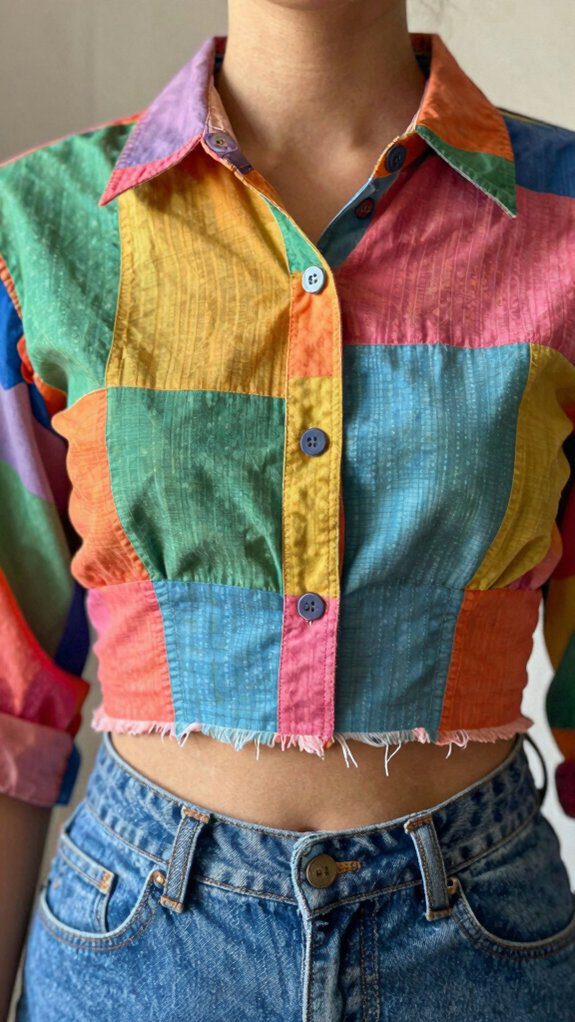
I love turning a button-down into a cropped shirt because it gives a fresh, modern casual fit that pairs perfectly with high-waisted jeans or skirts. I usually mark the hem where it hits my natural waist, cut a bit longer for a clean tuck option, and finish the edge with a simple stitch or a frayed look for extra character. With minimal sewing and a few embellishments like embroidery or a raw edge, you can create anything from relaxed weekend wear to a neater, polished top.
Modern casual fit
If you’re looking for a quick way to modernize a men’s button-down, I love cutting the bottom off to make a cropped shirt—it’s fast, fun, and gives you an instant trendy silhouette you can wear every day. I aim for a modern casual fit that balances cropped layering and stylish proportions so you feel comfy and confident.
- Cut the hem above the waist for high-waisted jeans or skirts, or leave a bit longer for relaxed fits.
- Add a side slit or slightly curved hem to soften the look and personalize proportions.
- Try dyeing (tie-dye or ombre) to make the piece totally yours and match your vibe.
- Finish with ruffles, a knotted front, or cropped sleeves for extra character.
Tie-Front Redesign
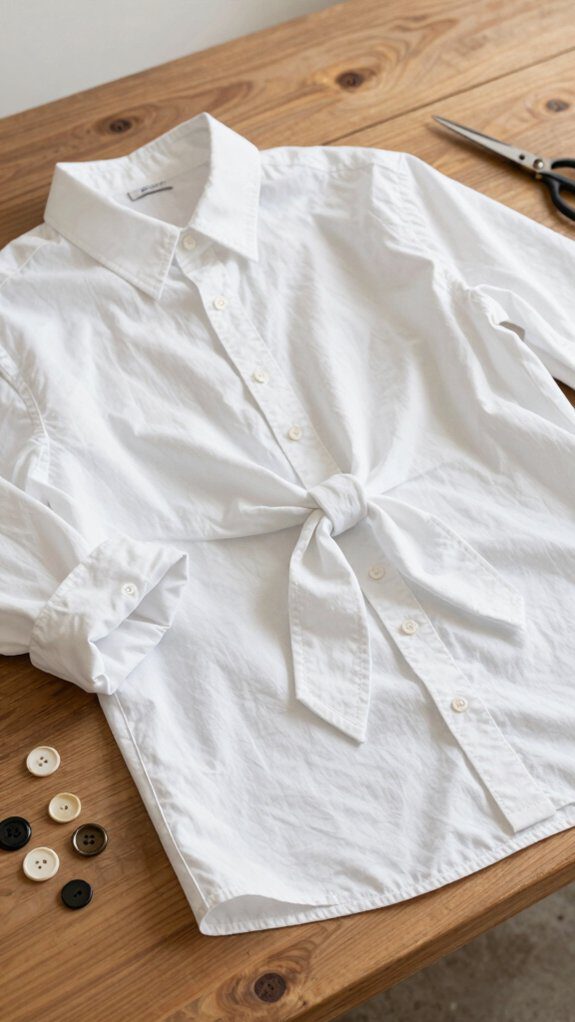
I love how a tie-front redesign gives you an adjustable waist detail, so you can knot tighter for a cropped look or leave it looser for more coverage. I’ll show you simple seam placements and how to use the shirt’s original buttons to secure the ties, which makes the fit easy to tweak throughout the day. With a few small stitches and the right knot technique, you’ll have a versatile top that pairs perfectly with high-waisted jeans or skirts.
Adjustable waist detail
One of my favorite quick makeovers is turning a plain button-down into a tie-front top that cinches at the waist for a flattering, adjustable fit. I love how the adjustable waist detail gives a custom fit and creates a stylish silhouette, and it’s a project that makes you feel part of a creative community. Gather the front, tie low or high, and you’ve got a new look with minimal sewing.
- Use existing hem or cut two strips from excess fabric for durable ties.
- Gather fabric evenly, pin, then sew a small channel or tack to secure.
- Try different tie positions to compare looks—cropped, centered, or slightly off-center.
- Pair with jeans or skirts for instant outfit variety and less waste.
Sleeveless Summer Cut
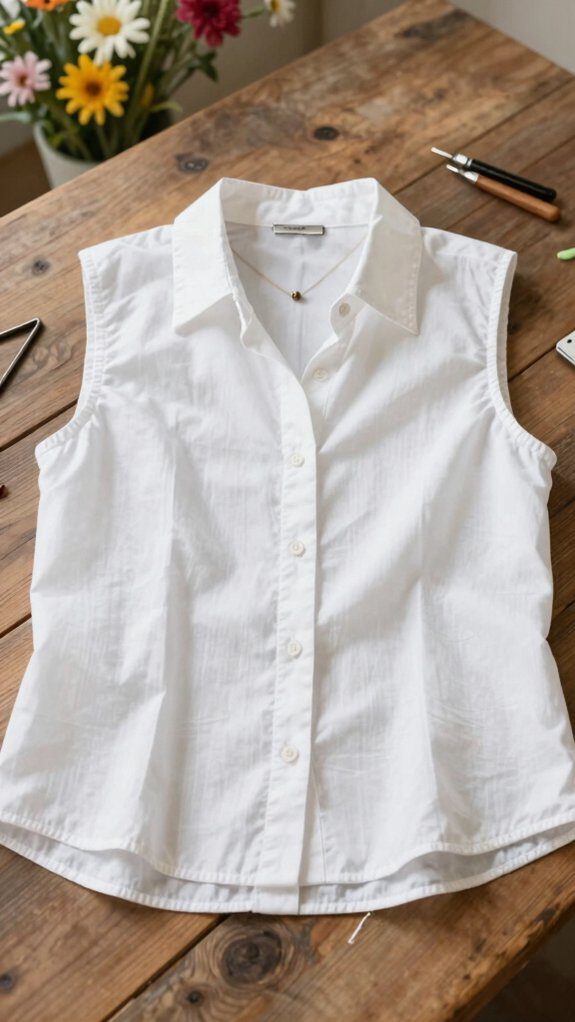
I love turning a cotton button-down into a lightweight sleeveless summer top because it’s cool, comfy, and perfect for hot days. Start by cutting off the sleeves at the seam and finishing the armholes with a narrow hem or bias tape, then compare options like reshaping the neckline or adding a small ruffle for a breezy, feminine touch. If you want extra movement, use the leftover fabric to make a short peplum or shorten the hem for a tank-style fit, which keeps the look airy and sustainable.
Lightweight refashion
When the temperature climbs, I love turning an old button-down into a breezy sleeveless top that’s perfect for hot days and easy to make; start by carefully removing the sleeves and collar so you get a clean edge and a fresh silhouette. I follow a simple lightweight refashion process that fits our shared love of sleeveless styles and summer trends, and I want you to feel welcome trying it too. Use a Scout Tee pattern for shaping, keep existing buttons for charm, and consider indigo dye for a trendy twist. Step-by-step, you’ll shape the bodice, finish seams, and try it on until it feels right.
- Remove sleeves and collar cleanly.
- Use a Scout Tee pattern guide.
- Retain or reposition buttons.
- Dye for color and personality.
Layered Vest Creation
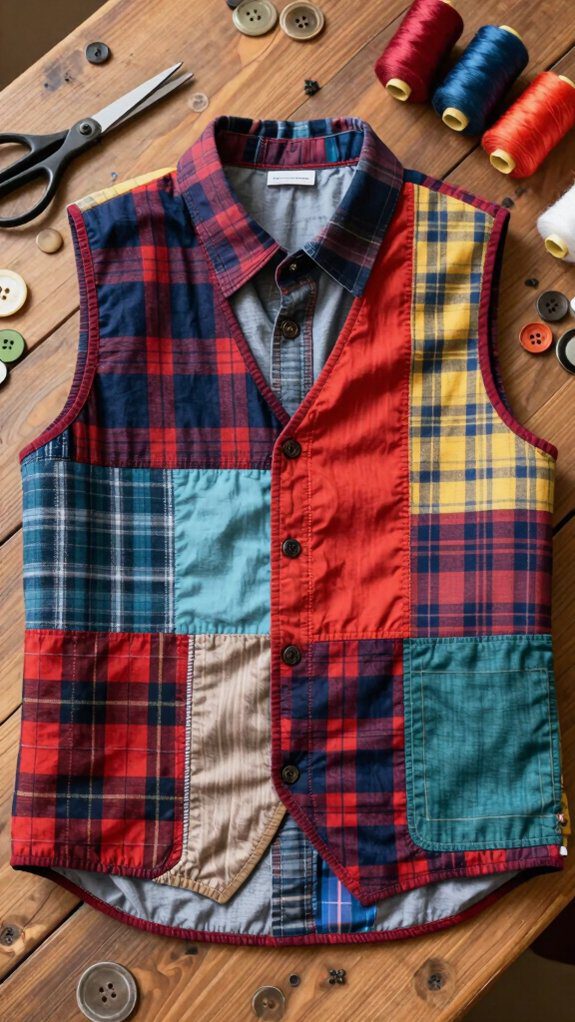
I like using a button-down as outerwear by transforming it into a layered vest that still shows the original placket for easy closure and style. First I remove the sleeves and collar, then I cut the body into the vest shape I want and add lining or interfacing so it holds up like a true outer layer. Finally, I reposition the shirt pockets and add small embellishments—patches or decorative stitching—to make the vest both practical and uniquely mine.
Button-down as outerwear
Although it sounds elaborate, I’ll show you how to turn an ordinary button-down into a breezy layered vest that livens up any outfit, and it’s easier than you might think. I love this project because it keeps the collar and placket for structure, and it makes me feel part of a community that values creativity and sustainability. Start by perfecting sleeve removal techniques: carefully seam-rip or trim and finish the armholes with a simple hem. Think about fabric choice considerations—lightweight cotton or linen drape best for layering. Personalize with patches, embroidery, or a contrasting back panel. It’s beginner-friendly, needs basic sewing, and becomes a unique outerwear piece you’ll reach for often.
- Keep collar + placket
- Remove sleeves neatly
- Choose light fabrics
- Add personal touches
Wrap Top Transformation
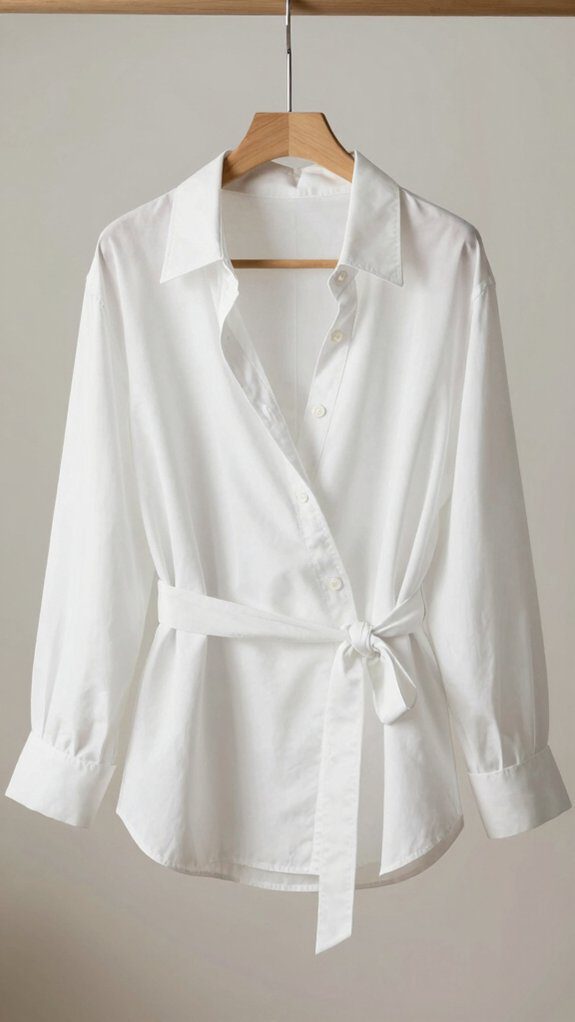
I love how a simple wrap top transformation can create a flattering silhouette that highlights your waist and balances your proportions. By cutting a men’s button-down at the waist and reattaching the sides into ties, you get a neat V-neck and adjustable fit that works better than a boxy shirt, and you can use the collar and buttons for structure. Try different patterns and tie placements to see what shapes you like best—it’s an easy, sustainable project that really upgrades an old shirt.
Flattering silhouette
When you turn a men’s button-down into a wrap top, you’ll get a flattering silhouette with surprisingly little sewing, and you’ll have fun customizing the fit as you go. I love how the existing button placket can become a focal point, so I plan changes around it and test silhouette types—A-line, fitted, or relaxed—against my body shape. Fabric choices matter: lightweight cotton drapes differently than silk or chambray, so try scraps before cutting. I trim length, add a tie belt, or sew a soft ruffle to lift the design. I invite you to experiment with patterns and adjustments until it feels like yours.
- Use placket as wrap anchor
- Test drape with fabric scraps
- Adjust length for balance
- Add tie or ruffle for fit
Peplum Hem Addition
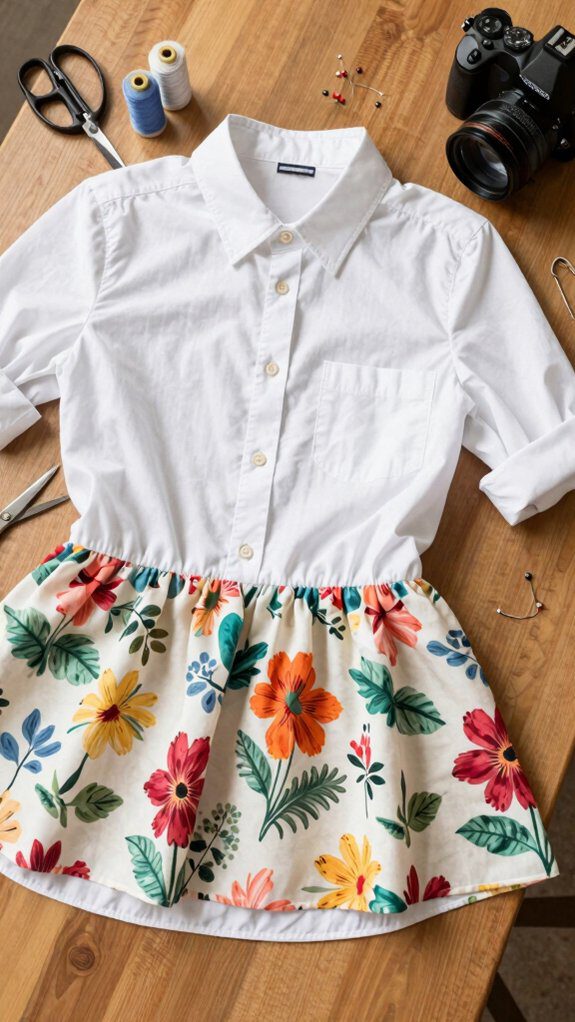
I love how adding a peplum hem can instantly give a button-down a feminine shape update, making a straight-cut shirt feel more fitted at the waist and playful at the hips. Start by cutting the shirt to your preferred length, then attach a gathered or flared fabric panel—try lace for dressy looks or a contrasting cotton for daytime wear—so you can compare textures and decide what flatters you most. It’s an easy, beginner-friendly tweak that keeps buttons and pockets useful while turning a basic shirt into something chic and fun.
Feminine shape update
Although it sounds upscale, adding a peplum hem is a simple way I can turn a plain button-down into something flirty and waist-defining, and I’ll walk you through it step by step. I love how peplum styles offer instant waist improvement and a playful silhouette that still feels comfy and wearable for our group projects or weekend outings.
- Measure 8–12 inches from the shirt bottom, cut a straight base for attachment.
- Use excess fabric to cut a circular or semi-circular peplum piece for gathering and volume.
- Gather evenly along the top edge, pinning to match the shirt base for balanced fullness.
- Sew with matching thread, press seams, and try it on to tweak the fit.
This refashion feels sustainable and proudly handmade.
Back Panel Statement
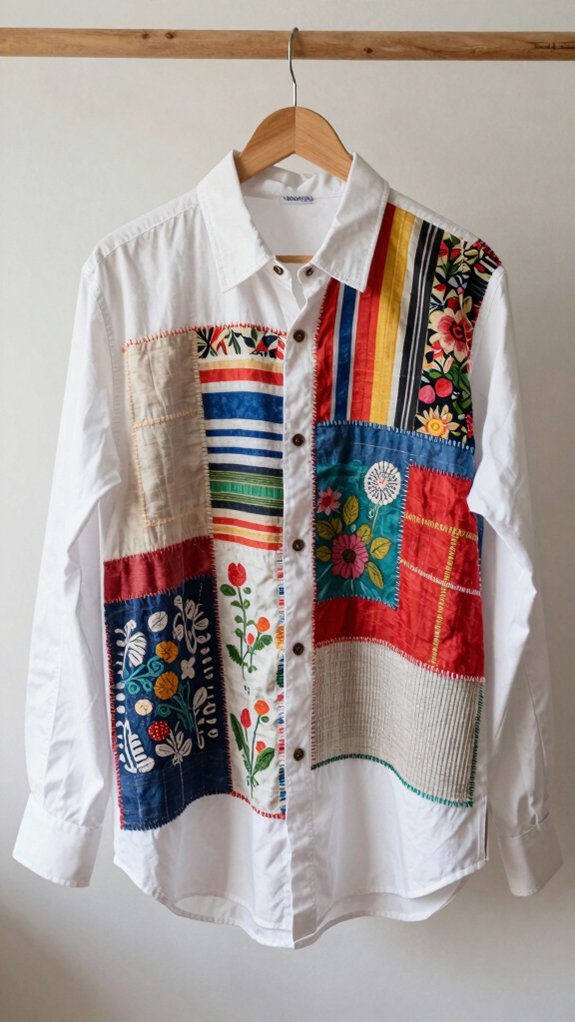
I like using the shirt’s back panel as a bold front statement by inserting a contrast fabric strip down the center, which instantly changes the look without complicated tailoring. You can keep the original buttons and sew the new fabric in place, or position the insert so pockets sit neatly against the contrasting color for added function and flair. After you stitch it, try a quick dye or button-imprint test to see how the colors and textures play together before finishing the edges.
Contrast fabric insert
One simple way I give an old button-down new life is by inserting a contrast fabric panel across the back, and it really transforms the shirt’s look and fit. I love mixing textile combinations—cotton with chambray or silk with linen—to make a bold, personal statement while keeping things wearable. Measure carefully, cut the original back out, and stitch in the new panel so seams sit neat and smooth. This tweak updates style, adjusts drape, and saves fabric from the landfill.
- Choose a contrasting color or texture to highlight the panel.
- Use leftover garment fabric for perfect coordination.
- Fit the panel to add volume or slim the silhouette.
- Finish seams cleanly for a polished, long-lasting result.
Off-Shoulder Redesign
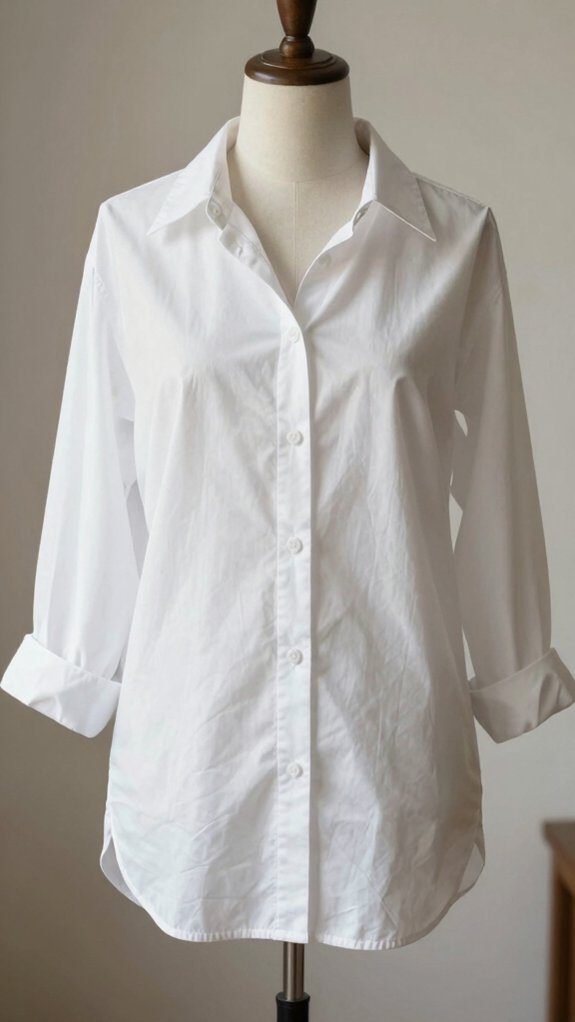
I love turning a plain button-down into an off-shoulder top because it’s a trend-forward style that looks chic without fuss. I usually remove the collar, fold the neckline down, and add a bit of elastic or a neat stitch so the shoulders sit comfortably below the arms, keeping the original buttons for charm. For a playful finish I’ll sew on a ruffle or lace trim—it’s an easy, beginner-friendly tweak that freshens your wardrobe while using what you already have.
Trend-forward style
Although it might sound tricky at first, I promise transforming a plain button-down into an off-shoulder top is easier than you’d think and looks instantly chic. I love how this trend-forward style feels like a badge of belonging—you’re joining a creative upcycling community that values sustainable fashion and personal flair. Start by removing the collar and loosening the sleeves for a relaxed fit; lightweight cotton or linen works best for drape and comfort. Use the existing buttons and placket to keep structure, or add elastic or ruffles at the neckline for a feminine finish. Here are quick steps to inspire you:
- Remove collar and stabilize neckline.
- Soften or shorten sleeves for balance.
- Reuse buttons/placket creatively.
- Add elastic or ruffles for shape and flair.
Button Swap Upgrade
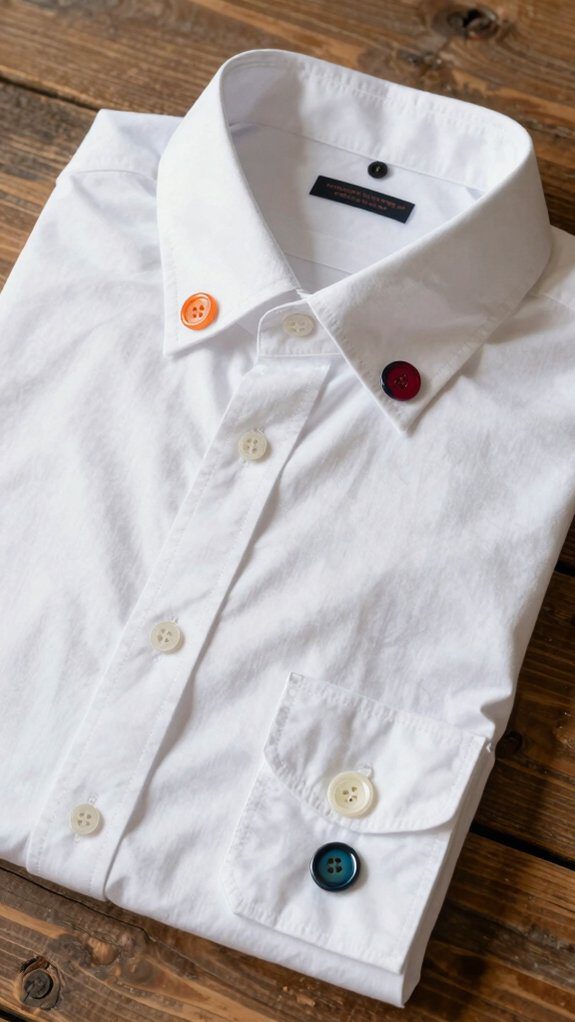
I love how a simple button swap upgrade can act as a small detail refresh, turning a plain shirt into something that really pops. I’ll show you practical tips—pick contrasting or complementary buttons, use a needle and thread to sew them on securely, and consider sizes and finishes so the new buttons balance the fabric. It’s quick, eco-friendly, and one of the easiest ways to personalize old shirts without buying anything new.
Small detail refresh
When I want to give a shirt a quick personality boost, I swap its buttons—it’s fast, satisfying, and you can do it while watching a show. I talk you through a small detail refresh that makes your shirt feel like new. Think about button materials and color combinations: plastic for light casual shirts, metal for a sharper edge, or wooden/vintage buttons for warm texture. Match weight to fabric so they sit right and won’t pull.
- Choose buttons that contrast or complement for bold or subtle changes.
- Test a spare button on the placket before sewing all.
- Use short stitches and reinforce high-stress buttons.
- Keep old buttons in a labeled jar for future swaps.
You’ll love how this tiny change builds a shared style language.
Oversized Fit Tailoring
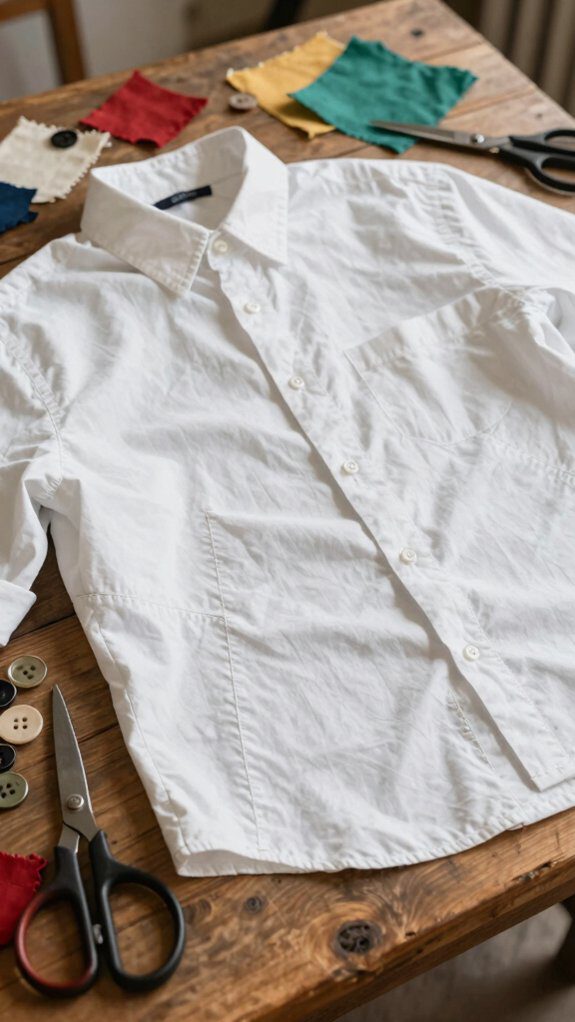
I’m excited to show you how tailoring an oversized button-down can create structured clean lines that make the shirt look polished and modern. Start by pinching and removing excess fabric at the sides and sleeves, realigning the shoulder seams so the lines sit straight, and hemming the bottom for a crisp edge—compare the original boxy shape to the new fitted silhouette to see the difference. You can keep the shirt’s character by reusing its buttons or pockets, and try rolling or shortening the sleeves to additionally sharpen the overall look.
Structured clean lines
A roomy silhouette feels surprisingly elegant, and I’ll show you how oversized fit tailoring can turn a simple button-down into a polished, relaxed piece you’ll reach for all the time. I love working with oversized proportions to keep structured clean lines while giving us relaxed elegance and movement. Use the shirt’s existing seams, then lower shoulder seams and extend sleeve hems for that modern, laid-back look. Add small tucks or knife pleats at the back or sides to keep edges crisp without tightening the fit. Layer a tee or light sweater under it for warmth and shape, and remember longer sleeves can be cuffed for variety.
- Drop shoulder adjustment for comfort and style
- Extend sleeve length, finish with neat cuff
- Add side or back tucks for definition
- Preserve collar and placket for polish
Patchwork Fabric Mix
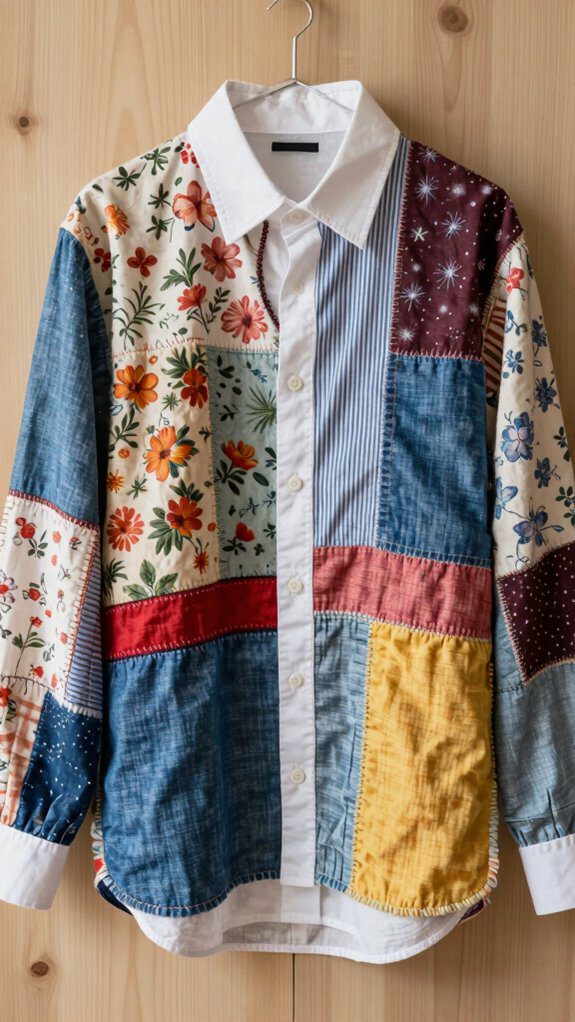
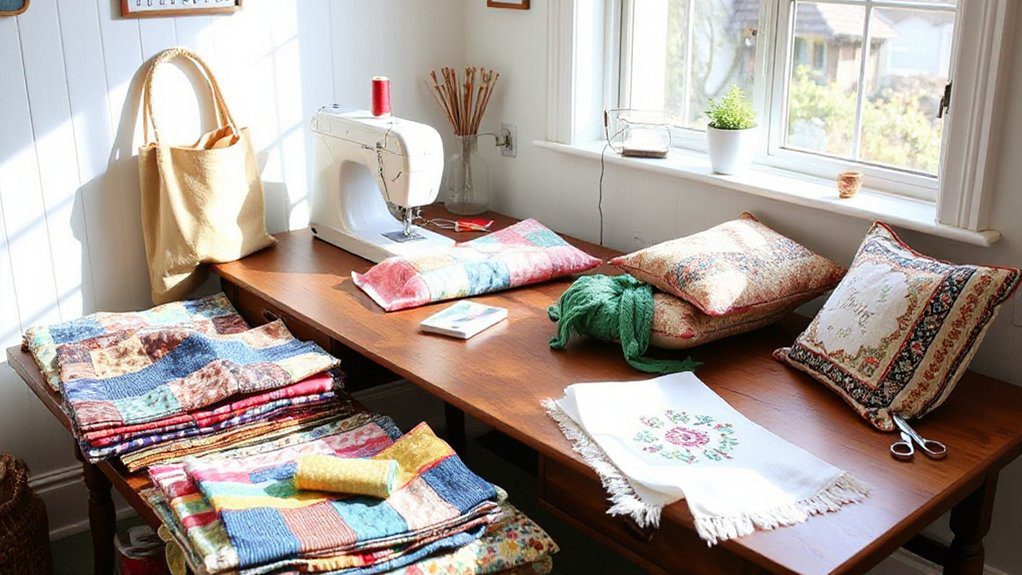
I love using patchwork fabric mix to play with colors and textures from different button-down shirts, and I’ll show you how to arrange squares and strips so they balance eye-catching prints with solid pieces. Start by laying out scraps on a flat surface to compare scale and contrast, then swap pieces until a pleasing rhythm appears—think small checks next to bold stripes or soft solids to calm busy patterns. With simple sewing steps you can turn that layout into a bag, pouch, or jacket panel that’s unique, waste-saving, and totally yours.
Creative textile play
Three quick cuts and a pile of leftover shirt bits can turn into something amazing, and I’ll show you how patchwork fabric mix makes that happen. I love textile experimentation because it’s playful and rooted in sustainable design; you’ll feel seen joining a community that cares about creative reuse. Start by sorting scraps by color, texture, and pattern, then lay out contrasts next to harmonies to see what sings.
- Quilt small squares for a shirt yoke to add texture and warmth.
- Appliqué bold prints onto cuffs for an easy focal point.
- Mix lightweight and textured pieces in panels for balance.
- Use scraps for matching accessories—pockets, headbands, or a pouch.
I’ll guide you step by step, with tips on stitch choice and layout.
Pocket Relocation
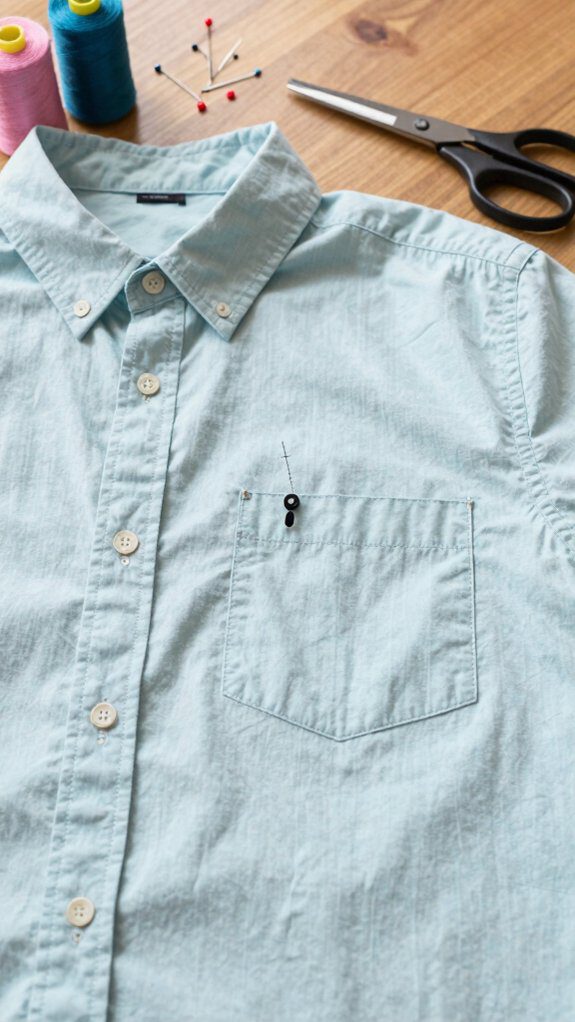
When I move a pocket on a button-down, I think about how its new spot will change the shirt’s visual balance—shifting a pocket up or to the side can make a torso look longer or draw the eye to a particular area. I’ll use the original pocket stitching as a guide or add a contrasting fabric pocket to create a deliberate focal point, and I always test placement with pins so the pocket stays practical and reachable. Try comparing one centered chest pocket versus two offset pockets on either side to see which look feels more balanced and suits your style.
Visual balance change
Although it might seem small, moving a shirt pocket can totally change how the whole piece looks, and I’ll show you how to do it so the result feels intentional and flattering. I love how pocket placement shifts visual proportions, helping a shirt feel more balanced and more like you. Try moving the pocket higher to lift the eye and lengthen the torso, or center it over a seam for cohesion. Use the original pocket fabric as a contrasting detail so it reads as design, not a patch. Play with shape or size to personalize the look, but keep positioning with buttons or seams for a tidy finish.
- Move higher to elongate.
- Position with seams/buttons.
- Use contrast fabric.
- Resize or reshape.
Asymmetrical Cut Design
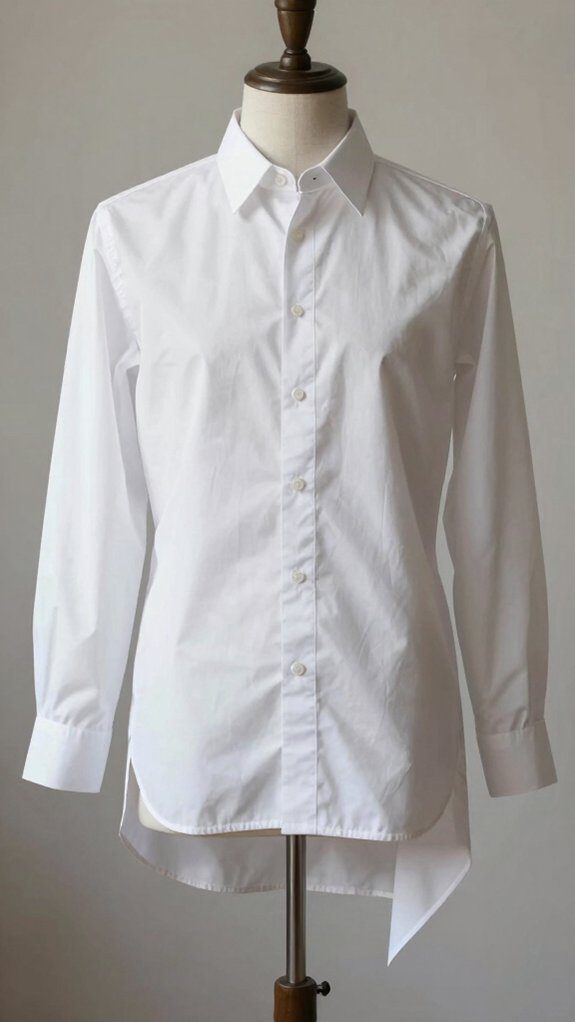
I love giving a button-down a contemporary edge by cutting an asymmetrical hem—one side longer than the other instantly modernizes the shirt and adds playful movement. Start by deciding how dramatic you want the difference, mark your line distinctly, and cut slowly so the angle stays even; a high-low or angled side works great for layering and dressing up or down. You can also position the longer side to highlight a pocket or the buttons, which turns those details into stylish focal points.
Contemporary edge
Since I love giving old shirts fresh personalities, the asymmetrical cut is one of my go-to moves for a contemporary edge — you keep the shirt’s original buttons and collar but chop the hem at an angle so one side drapes long while the other sits cropped. I use edgy layering to mix longer panels over slim jeans or tuck the cropped side into a skirt for contrast; unique silhouettes pop when you add a belt or statement necklace. Try gentle draping on the long side to emphasize movement, or stitch a weight inside the hem so it hangs cleaner. We belong in creative spaces, so test angles with chalk, cut progressively, and wear what feels like you.
- Start subtle
- Use chalk guidelines
- Add accessories
- Test before finishing
Embroidered Accent Detail
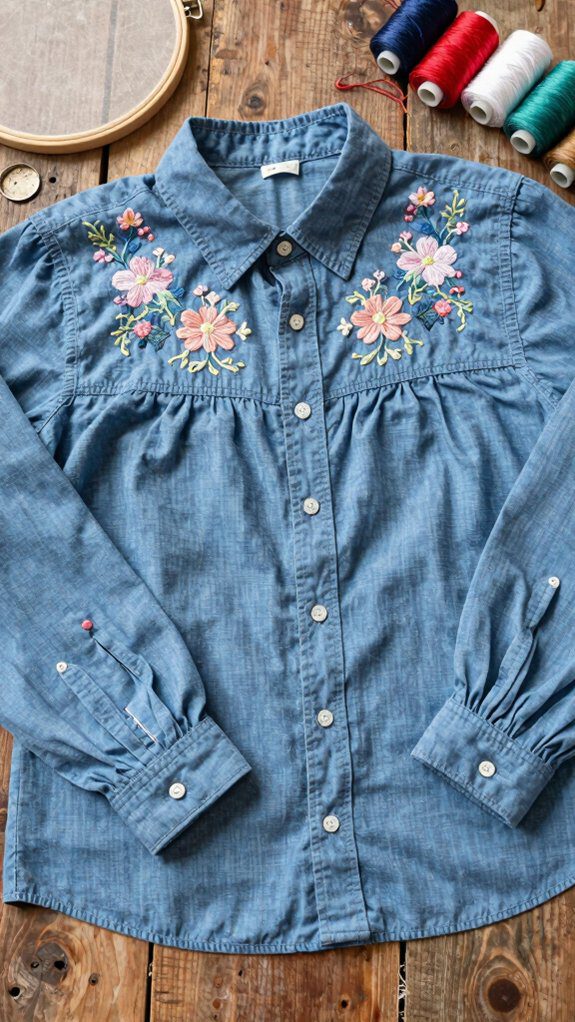
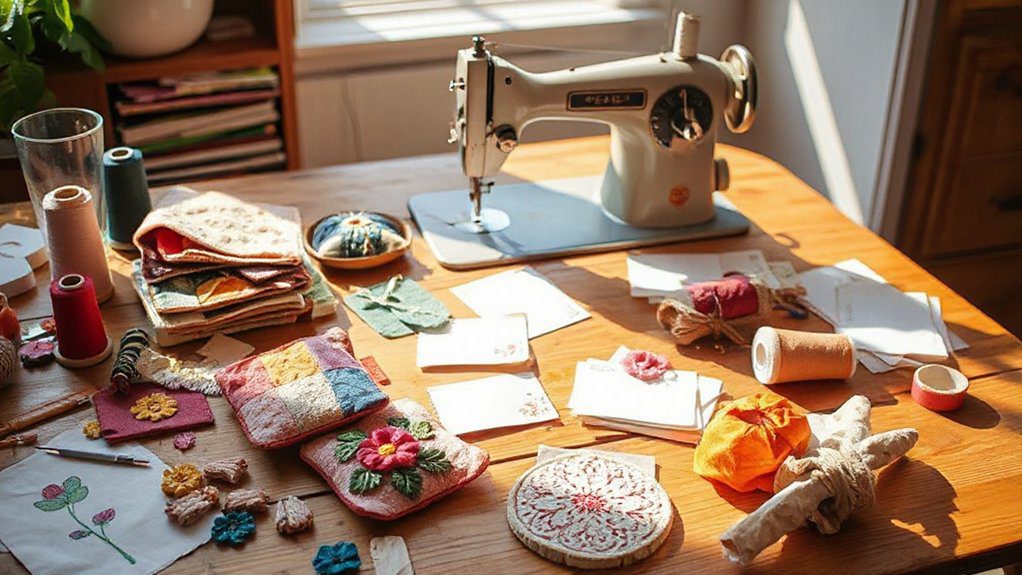
I love how a few stitched accents give a handmade finish that makes a plain button-down feel intentionally yours, so I’ll show you easy places to stitch like collars, cuffs, or pockets. Start with a simple floral or geometric motif using contrasting thread for punch, and I’ll walk you through beginner-friendly stitches that don’t need elaborate tools. With a little practice you’ll see how embroidery not only boosts style but also repairs and refreshes the shirt, so it lasts longer and feels special.
Handmade finish
A little embroidery can turn a plain button-down into something I’ll reach for first in my closet. I love how a handmade finish makes a shirt feel like ours — personal and warm — while using simple hand embroidery techniques that anyone can learn. I pick cuff or collar spots, choose contrasting thread colors, and stitch a few motifs with satin stitch or back stitch. It adds texture, character, and sustainable fashion benefits by keeping clothes out of landfills.
- Pick a small area: cuff, placket, or pocket.
- Choose thread color that pops against the fabric.
- Start with satin or back stitch for clean lines.
- Finish edges and reinforce seams for durability.
These steps build connection and confidence as you upcycle.
Matching Set Creation
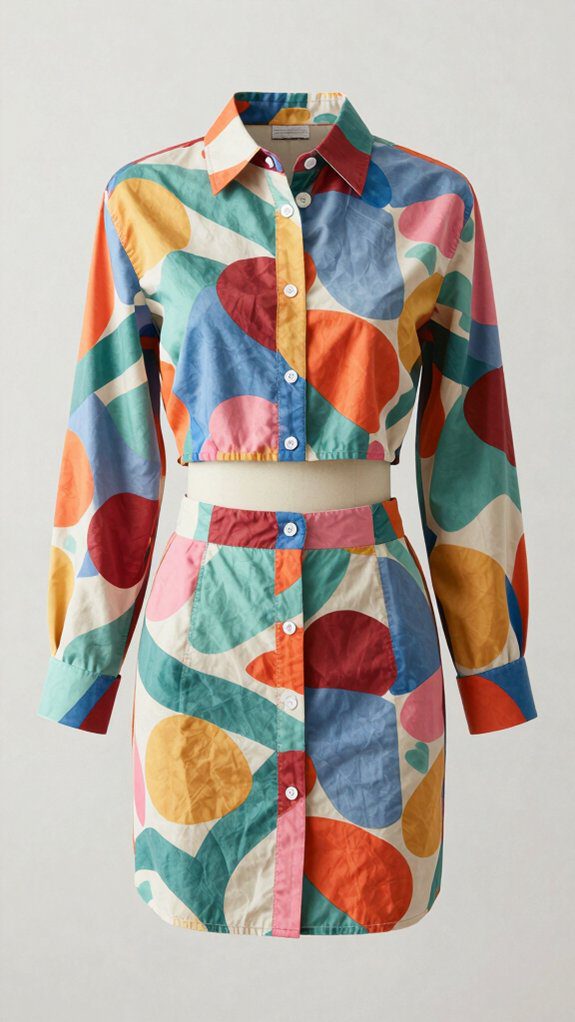
I love turning a button-down into both a top and a coordinating piece, like a cropped shirt paired with a skirt or shorts made from a second shirt so the colors and fabric match. Start by comparing collars, cuffs, and pattern placement—use one shirt for the bodice and the other for the skirt panels or pockets, and don’t be afraid to mix a solid with a stripe for contrast. Crop or reshape the top and adjust waistlines on the bottom for a flattering fit, then add ruffles, pockets, or switched button placement to make the set feel finished and uniquely yours.
Shirt to coord piece
When you strip a men’s button-down into two coordinating pieces, you get more than a quick upcycle—you get a whole outfit that feels intentionally made. I love turning a shirt into a coord style set: a cropped top plus skirt or shorts using the roomy fabric. I keep buttons and pockets for function and charm, and add a waistband or ruffle to change the silhouette. Choose matching garments with coordinating colors or patterned trims so they read as a set, not random halves. I want you to feel included in the process, so here are four quick steps I follow:
- Cut and plan pattern placement.
- Reuse buttons/pockets.
- Add waistband or ruffle.
- Mix fabrics for cohesion.
Accessory from Scraps
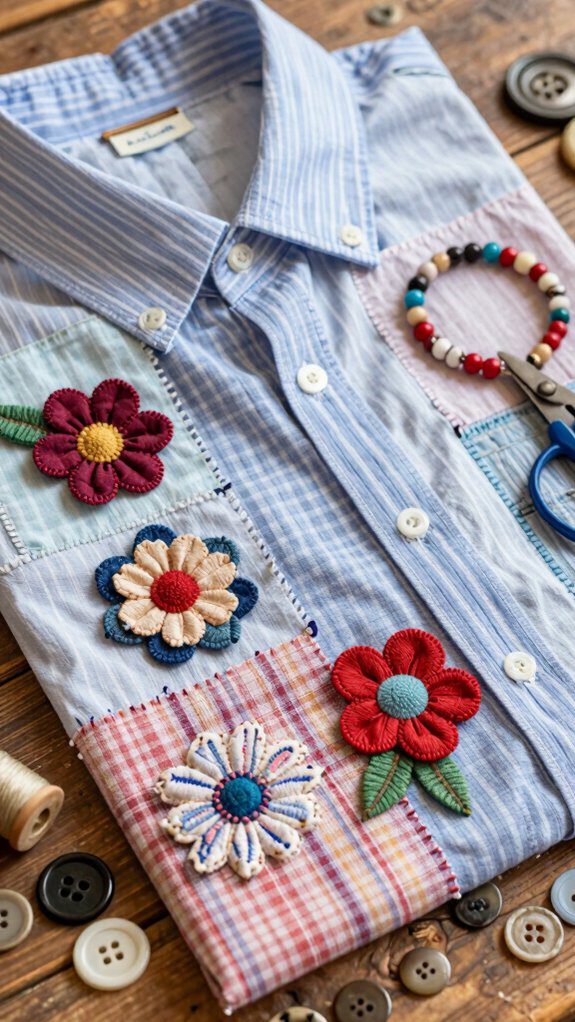
I love turning tiny scraps from a button-down into useful accessories, and one of my favorite goals is zero-waste reuse so nothing gets tossed. Start by comparing small pieces—cuffs make pouches, collars become chokers, and leftover fabric covers buttons or clips—and pick the simplest project to match your skill level. I’ll walk you through easy steps and clear tips so you can make pretty, practical items that cut waste and add personality to your day.
Zero-waste reuse
Although it might look like little more than odds and ends, I love turning shirt scraps into useful accessories that keep fabric out of the trash. I use simple upcycling techniques to make pouches from cuffs, scrunchies from sleeves, and tote bag panels from ties, and that boost in fabric sustainability feels great. Mixing scraps creates patchwork pieces that tell a story, and collars become quirky keychains or necklaces.
Here are quick ideas to try:
- Turn a cuff into a zipper pouch—sturdy, lined, and gift-ready.
- Braid ties for a small wristlet or strap—durable and stylish.
- Sew scrunchies or headbands from sleeve strips—easy and fast.
- Patchwork coin purse from mixed shirt leftovers—unique and zero-waste.
Join me; we’ll make useful things and keep textiles out of landfills.