10 Quick Small Clay Projects for Beginners
I’ll help you knock out 10 quick clay projects in one sitting using air-dry clay or Sculpey III, plus a rolling pin, small knife, and a few sculpting tools on a clean craft mat (keep a spray bottle handy). Start with a pinch pot bowl, then a 15-minute trinket dish. Next, roll easy beads, shape a ring cone holder, cut textured slab earrings, stamp a tile coaster, and make four fridge magnets. Stick around for simple paint-and-seal tips.
Love cozy DIY projects? 💕
Get free printable guides, exclusive tutorials & surprise craft goodies straight to your inbox.
Disclosure: This post may contain Amazon affiliate links, at no extra cost to you. Content on DiyCraftNest is created with research support from AI tools and carefully reviewed, edited, and fact-checked by the lead author, Daniel Pat, to ensure accuracy and reliability. Learn more
Key Takeaways
- Start with beginner-friendly clay like air-dry clay or Sculpey III, and work on a clean craft mat to prevent sticking.
- Use simple tools: rolling pin, small knife, basic sculpting tools, plus a spray bottle to keep clay moist.
- Make a pinch pot bowl by rolling a ball, indenting with your thumb, then pinching and turning for even walls.
- Create a trinket dish by rolling a 1/4-inch slab, cutting a circle, lifting edges, and drying 24–48 hours before painting.
- Craft quick accessories like beads and textured slab earrings; shape, poke holes or cut forms, dry fully, then paint and assemble.
Tools, Clay Types, and Setup for Beginners
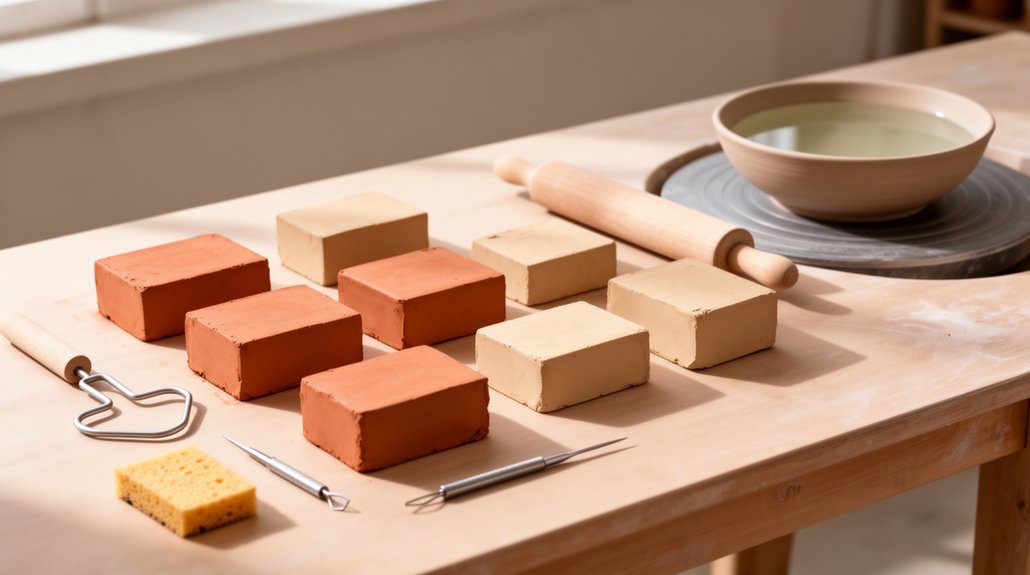
A simple clay toolkit can feel like a tiny art studio right on your table, and I like to start by picking the easiest clay and a few go-to tools. For beginners, I recommend air dry clay because it’s safe, needs no oven, and works for all ages; Sculpey III is also friendly and versatile. I keep a rolling pin, a small cutting knife, and a few sculpting tools nearby for shaping and details. For setup, I lay down a craft mat on a flat, clean surface. A spray bottle keeps clay moist. Simple clay storage and workspace organization help us feel ready together.
Make a Small Pinch Pot Bowl
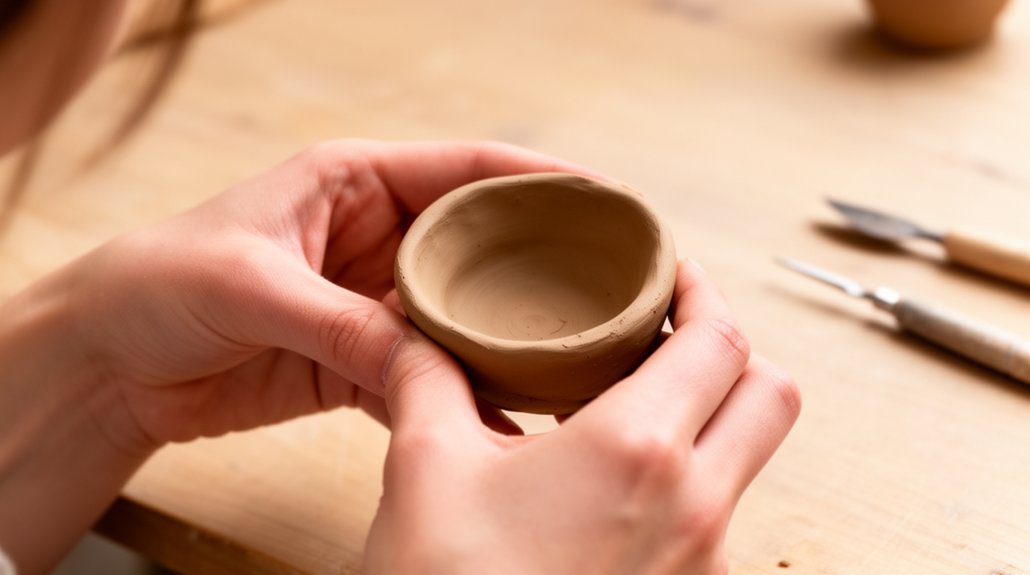
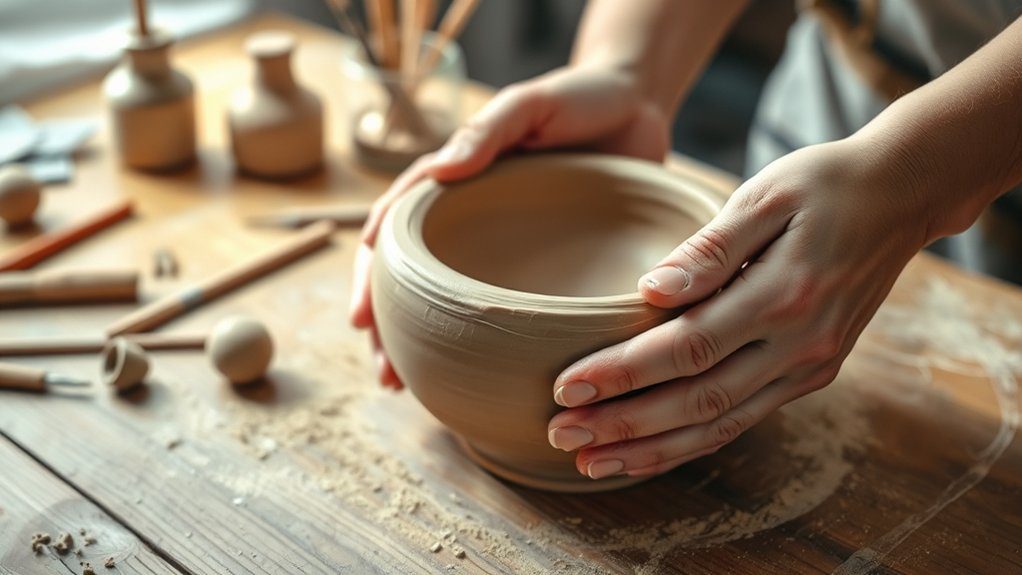
With your clay, a few simple tools, and a clean work surface ready to go, I like to start with a project that feels almost impossible to mess up: a small pinch pot bowl. Roll air dry clay into a smooth ball, then press your thumb into the center to make an indent. Next, I pinch and turn the edges slowly, keeping the wall even—these pinch pot techniques make it feel like we’re crafting together. Once you like the shape, add texture with a fork, stamp, or pencil for creative designs. Let it dry fully before painting.
Make a Small Trinket Dish (15 Minutes)
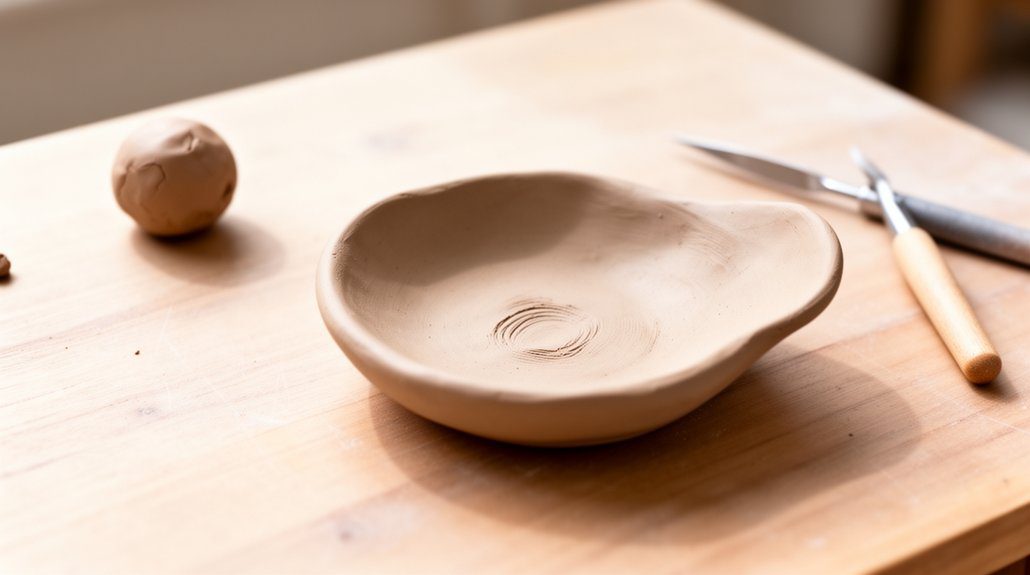
Even if you’ve never molded clay before, you can knock out a cute little trinket dish in about 15 minutes, and it’s perfect for holding rings, coins, or hair pins. I start with a small chunk of air dry clay and roll it to about 1/4 inch thick, like a cookie dough sheet. Then I use a round cutter or flip a small bowl over the clay and trace a circle. Next, I lift the edges and press them upward, smoothing bumps so the sides match. Let it dry 24–48 hours, then paint if you’d like.
Make Easy Clay Beads for Bracelets
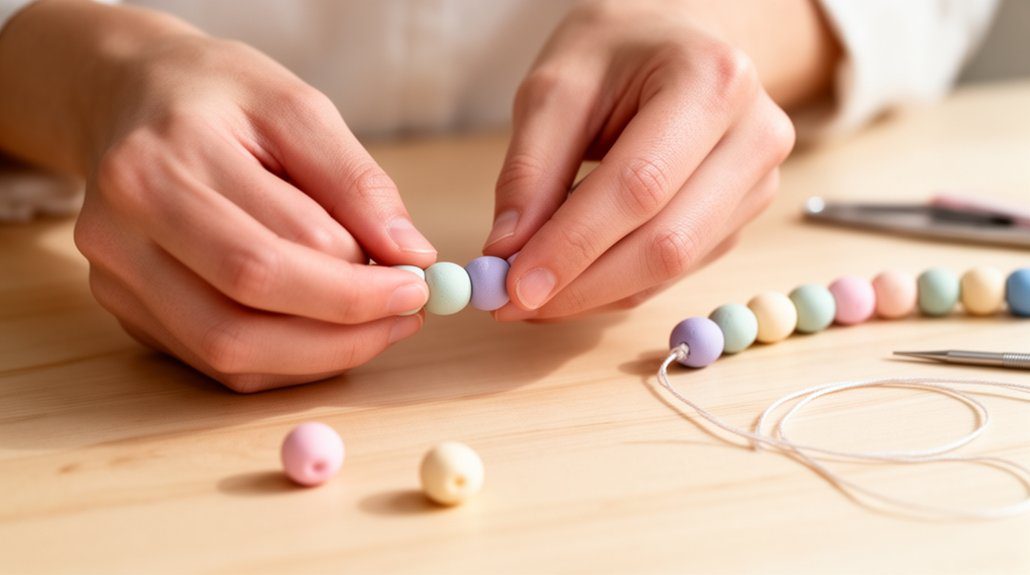
Once you’ve got that trinket dish drying, you can use the leftover clay to make beads for a bracelet—tiny projects that feel like snack-size art. I pinch off small bits and roll them into smooth spheres or little cylinders, keeping them the same size so your bracelet looks polished. Next, I poke a clean center hole with a skewer.
Let them dry about 24 hours. Then comes bead color selection: paint, markers, or a sprinkle of glitter. Finally, I string them on elastic cord or wire and knot or clasp the ends. My bracelet styling tips: mix sizes, repeat colors, and add one “hero” bead.
Make a Small Ring Cone Holder
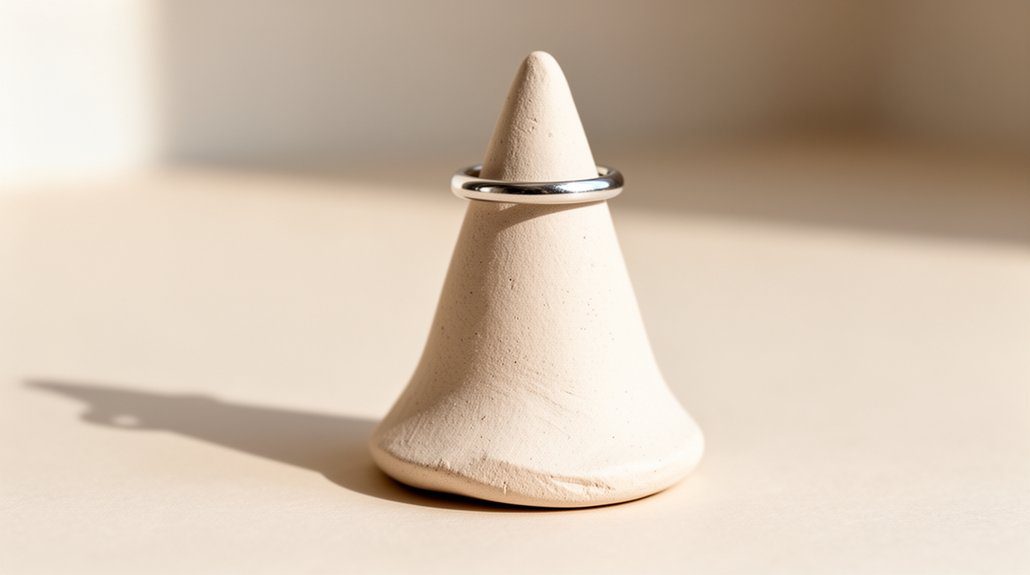
Two minutes into this project, you’ll see why a small ring cone holder is one of my favorite beginner wins: it’s quick, cute, and genuinely useful. Grab air dry clay, pinch off a chunk, and roll it into a smooth cone. I make the base a little wider than a cookie so it won’t tip over.
Now for ring holder design fun: gently twist the cone for a modern look, or press in dots and lines for texture. After it dries, use clay personalization techniques like painting your colors. You’ll end up with a sweet ring home for your bedside or bathroom.
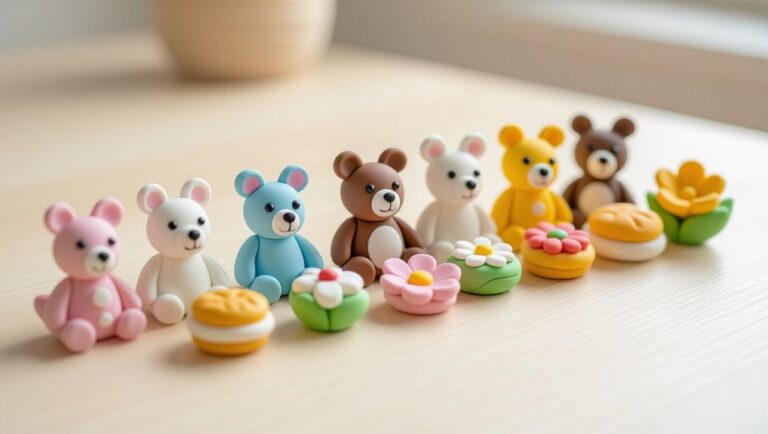
Make a Cute Mini Clay Figurine Without Tools
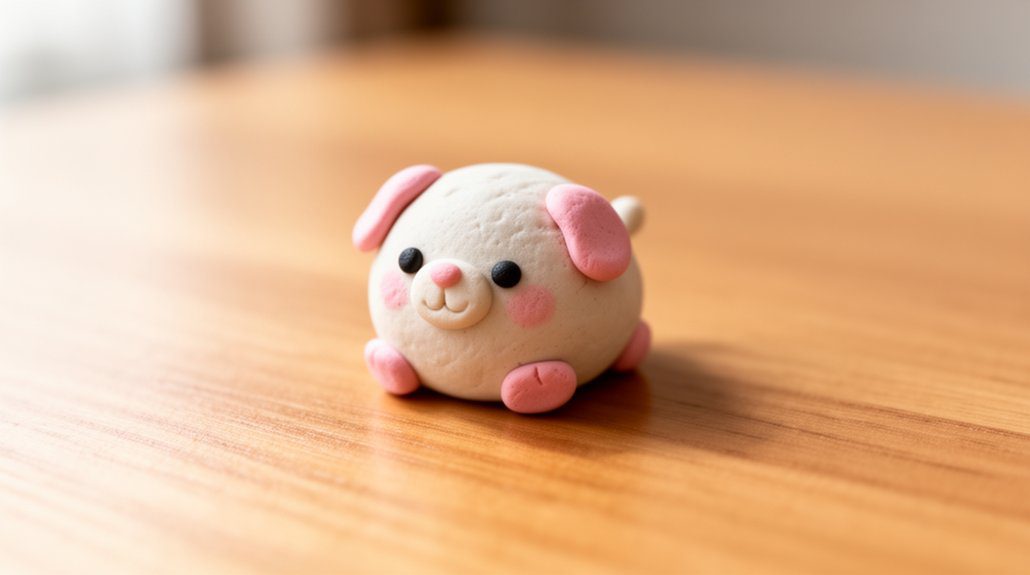
In just a few minutes, I can turn a small lump of air dry clay into a cute mini figurine using only my hands—and you can, too. First, I roll a sphere for the head and a short cylinder for the body, then press them together gently.
Next, I use beginner clay techniques like rolling tiny snakes for arms and legs, and pinching for ears, cheeks, or a little smile. For mini figurine customization, I mix colors for shirts, hats, or bags. If you want extra flair, I add a bead or paint simple patterns. Let it dry fully, then share it proudly.
Make Small Textured Slab Earrings
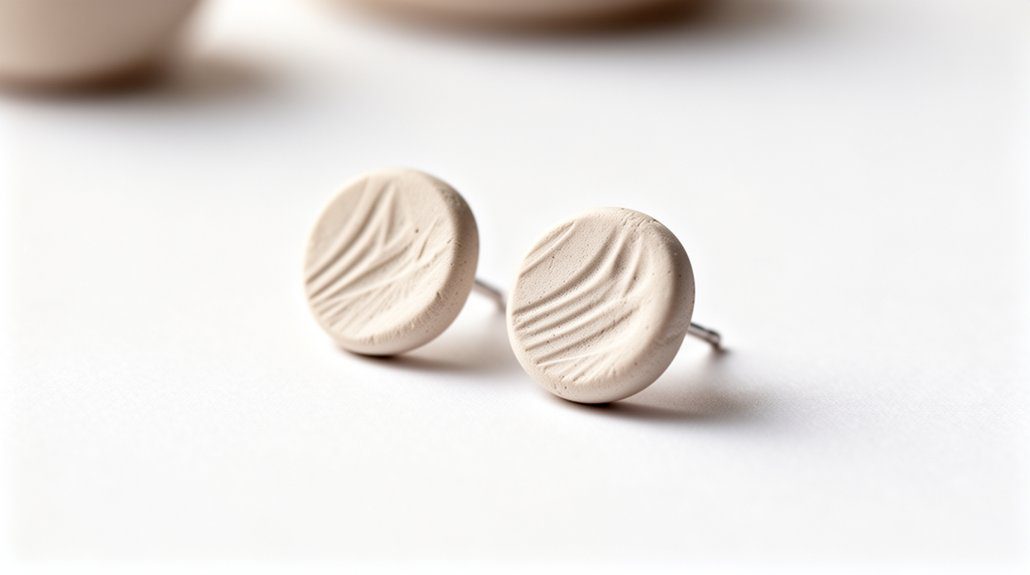
A tiny clay slab can feel like a blank canvas for your ears, and I love how quickly it turns into a pair of statement earrings. Roll air-dry clay into a thin sheet, like a soft cookie dough, then press in textured designs with stamps or a textured mat. Cut matching shapes, circles, arches, or little leaves, and smooth the edges with a damp finger. Let them dry fully (usually 24–48 hours), so they don’t bend. Afterward, paint, add tiny dots, or seal for extra pop—easy earring customization. Finally, attach hooks or studs, and you’re in the handmade club.
Make a Stamped Clay Tile Coaster
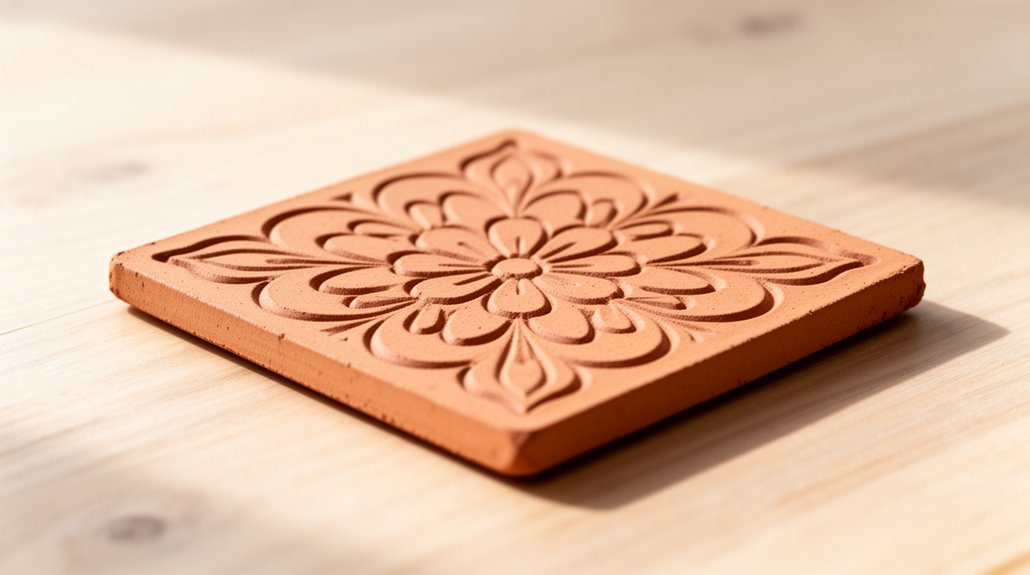
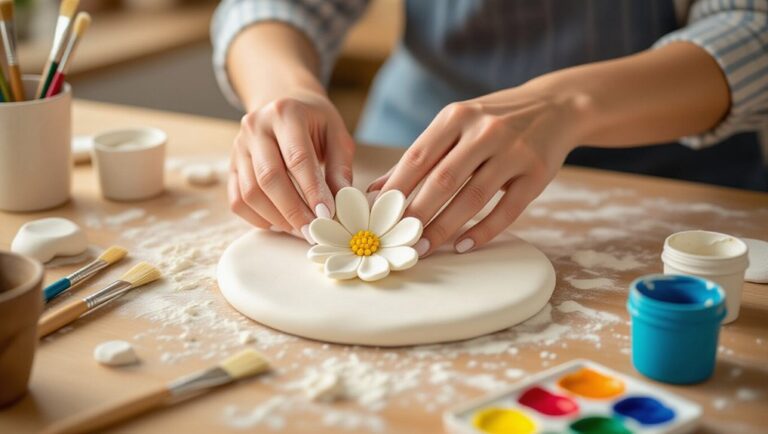
Coasters are the tiny heroes of a table, and making one from stamped clay feels like crafting a little piece of home décor you’ll actually use. I roll out air-dry clay to about 1/4 inch thick, like a sturdy cookie. Then you and I get to play: I press stamps or texture tools into the surface for stamped designs that feel personal, not perfect. Smooth the edges with a damp finger. Now comes patience—clay drying takes 24–48 hours, longer in humidity. When it’s fully dry, I paint or seal it for shine and splash protection, then gift it proudly.
Make Small Clay Fridge Magnets (Set of 4)
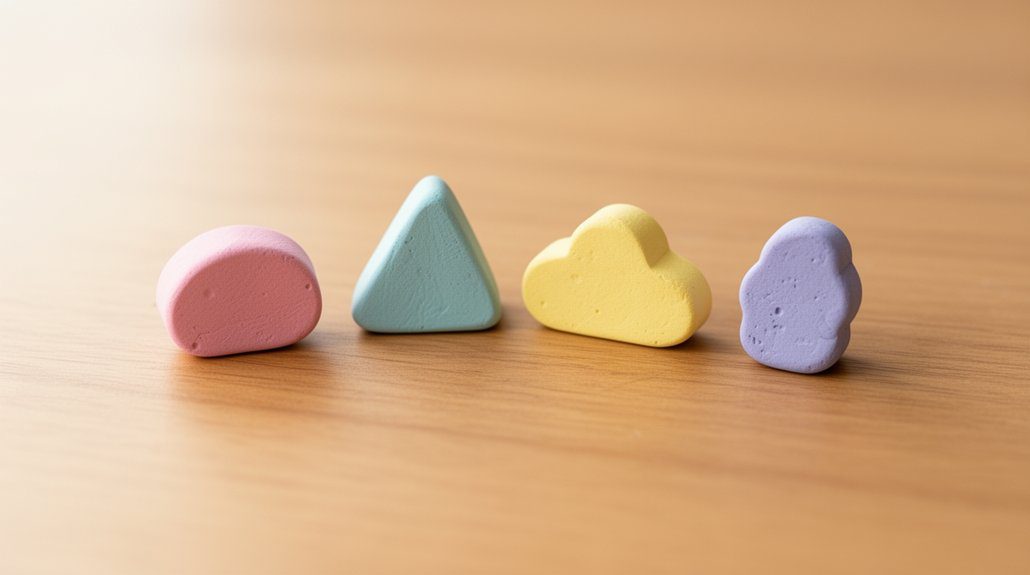
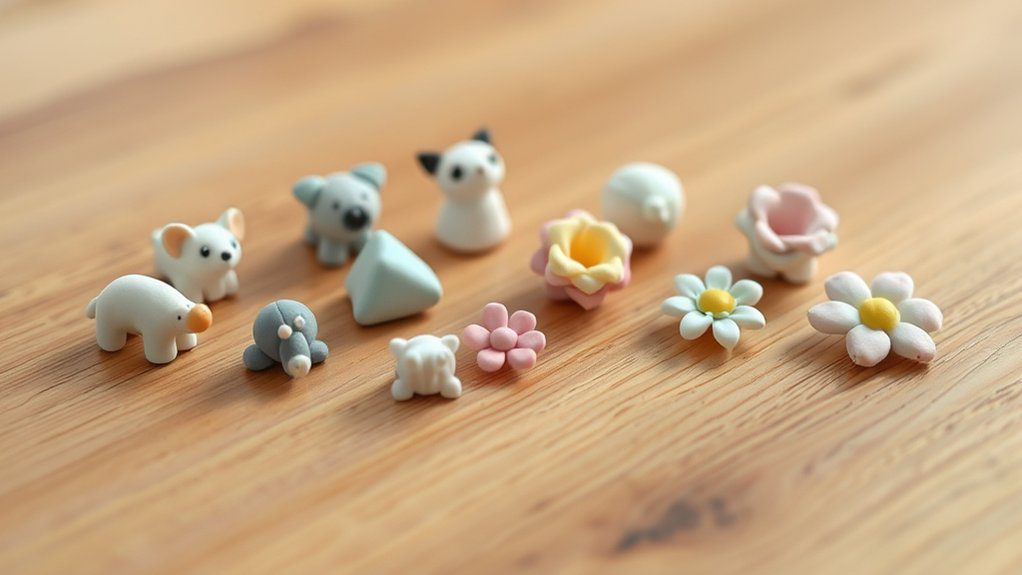
Four tiny clay fridge magnets can brighten up your kitchen fast, and I love this project because it’s beginner-friendly and doesn’t require any special tools—just air-dry clay, your hands, and a little imagination. I roll out a small slab, then pinch and cut four shapes: a flower, a simple cat face, a heart, and a bold triangle for creative designs that feel like “us.” Let them dry fully on a flat surface so they don’t curl. When they’re firm, I flip each piece and plan magnet attachment: dab strong adhesive, press on a small magnet, and hold.
Paint, Seal, and Finish Small Clay Projects Cleanly
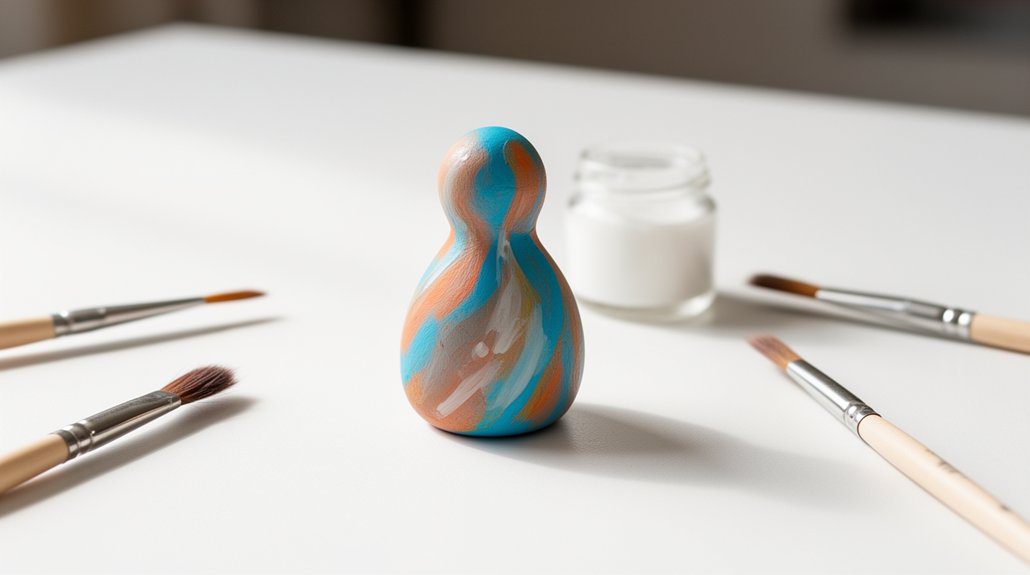
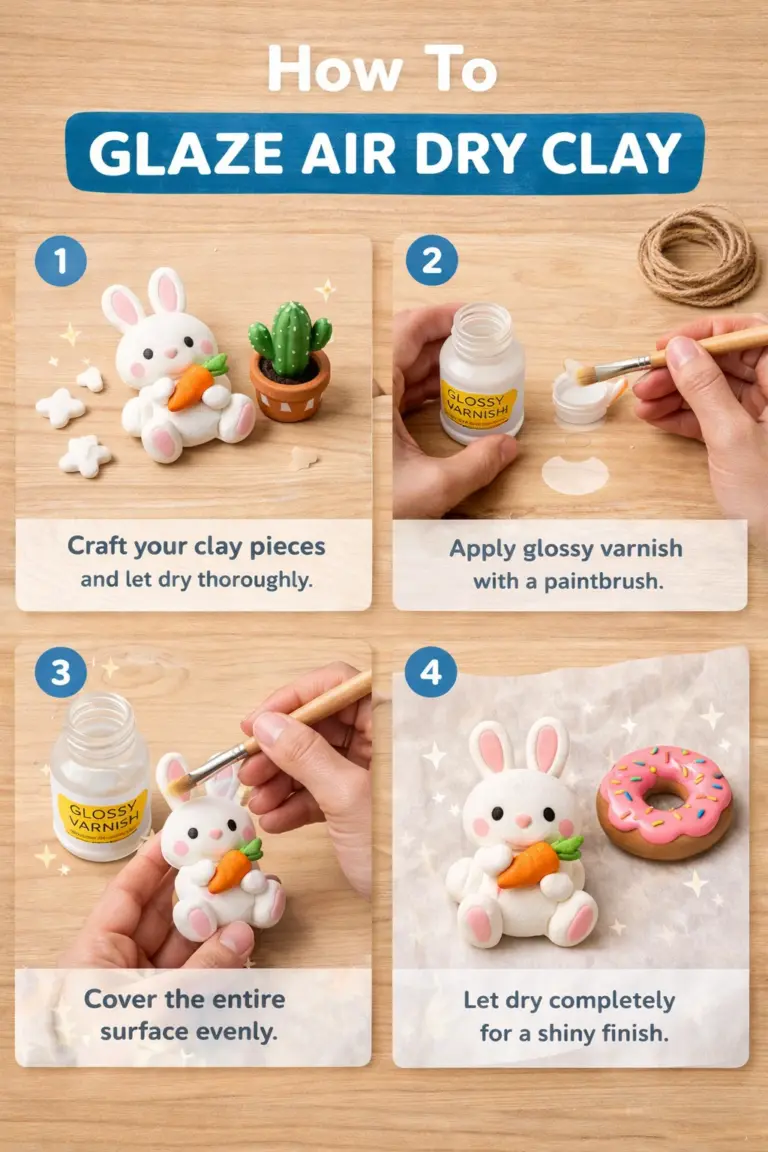
Before I call any small clay piece “done,” I take a few minutes to paint, seal, and finish it cleanly so the colors pop and the surface holds up to real life. First, I lightly sand rough spots, then use acrylic paint because it grips air-dry clay and stays bright. I keep my painting techniques simple: thin layers, let each coat dry, and use a tiny brush for edges. Next, I wait until everything’s fully dry—no rushing—so nothing smears. For sealant application, I use clear acrylic varnish (brush or spray) in good ventilation for an even, durable shine.
Frequently Asked Questions
How Do I Fix Cracks After the Clay Has Already Dried?
I fix dried clay cracks by widening them slightly, brushing on slip, then pressing in fresh clay for crack repair. After it dries, I sand smooth and use clay sealing so your piece matches ours.
What’s the Safest Way to Make Clay Projects Food-Safe?
To keep your pieces kitchen-friendly, I’ll fire them properly and use certified food safe glazes; I’ll avoid mystery coatings and choose non toxic sealants only for exteriors. We’ll test for leaks, together.
How Can I Prevent Dust or Pet Hair From Sticking to Drying Clay?
I prevent dust and hair by covering drying clay with an upside-down plastic bin, cleaning my workspace, and misting lightly. For dust prevention and pet hair solutions, I keep pets out, wear lint-free clothes.
How Do I Store Unused Clay to Keep It From Drying Out?
I store unused clay by wrapping it tightly in plastic, then sealing it in airtight containers; these clay storage methods keep moisture in. You’ll feel at home labeling dates, spritzing lightly, and rewrapping swiftly.
Can I Recycle Failed Clay Pieces Back Into Workable Clay?
Yes, you can—because even your clay deserves a second chance after its dramatic collapse. For clay recycling, rehydrate, wedge, and remix using simple clay techniques. Don’t worry; we’ve all failed here together.